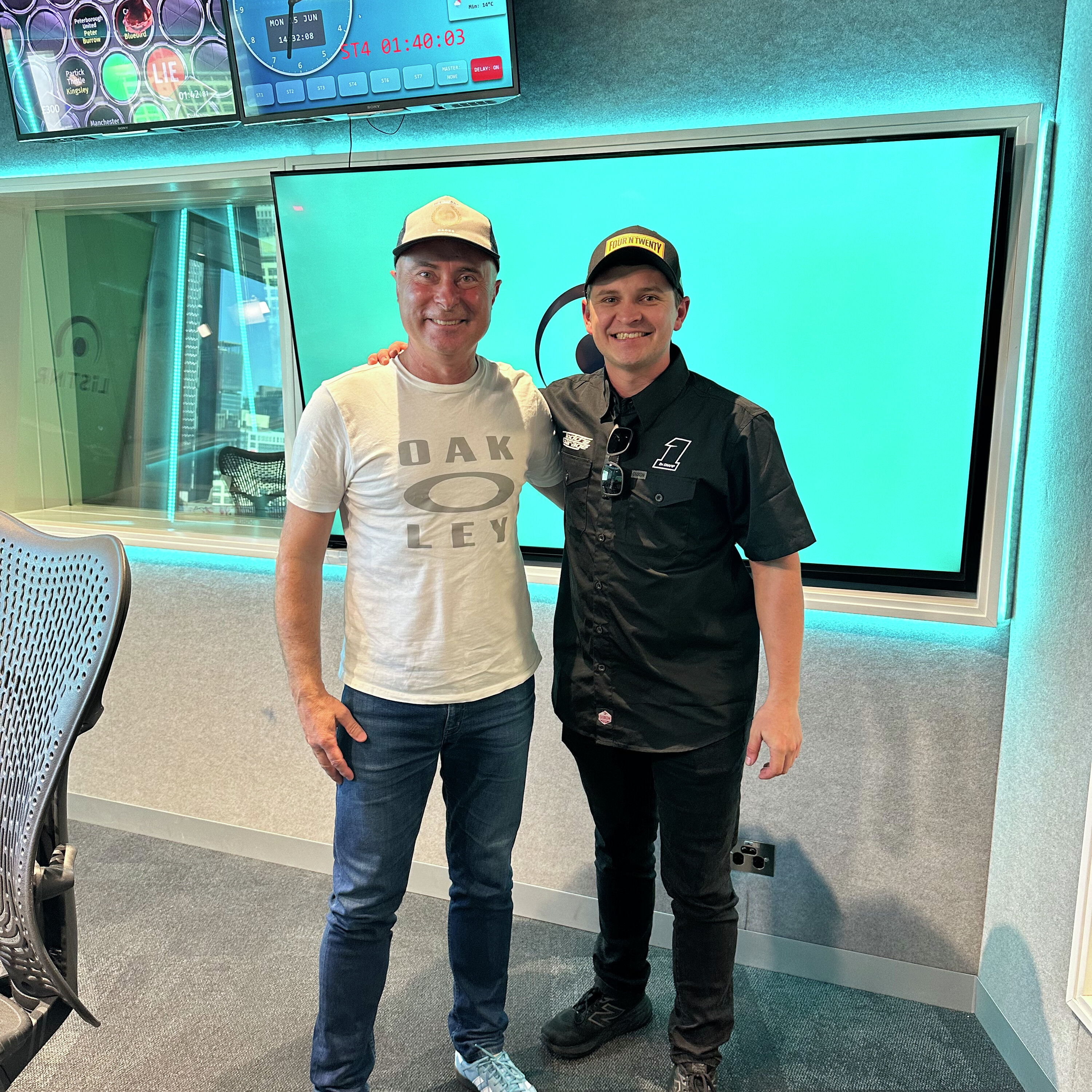
Todd Hazelwood | Part 2 - DJR jumpsuits and Todd’s Garage
About this episode
Rusty and Todd Hazelwood (Part 2) connect Todd’s racing roots and DIY garage mindset to the bigger career ladder—Super 2 success, the lack of a guaranteed promotion plan, and how wildcard opportunities and sponsor support helped them create momentum. Todd then shifts to DJR and his “one man band” Todd’s Garage vision: Trans Am learning, workshop-style tuning, and a pivot toward Porsche. The conversation also touches on Bathurst pressure, pit-lane value, and reliability setbacks—plus a classic-car garage thread with Falcon projects.
The serious health scare as a youngster and how it made him determined to realise his dreams.
Mortgaging the family home and vital funding coming through while he was on track.
Reality TV wins and putting the suit on for a critical meet with Matt Stone.
Surrounding himself with good people to win Super 2 in a car that was stickered from top to toe.
Timing and the commitment needed to graduate to the big league of Supercars.
Plus the frustrations of having what it takes but not being able to fully show it.
And how the switch to a co-driver role changed paddock perceptions after a dominant Bathurst win with his mate Brodie Kostecki and Erebus.
Oh and the pie warmer in Todd’s Garage, the covid resto purchase and conquering Trans Am.
The convo gets deep at times making for a very memorable ep of Rusty’s Garage.
Head to Rusty's Facebook, Twitter or Instagram and give us your feedback and let us know who you want to hear from on Rusty's Garage.
See omnystudio.com/listener for privacy information.
See omnystudio.com/listener for privacy information.
Bathurst 2023
"And I basically, I think the tipping point was at Bathurst 2023. Like I felt like I wanted 2023 to be the year I invigorated myself."
Bathurst 2023 is the big Australian race event people talk about in the Supercars world. It’s the kind of race where a good or bad result can really change how the season feels for a driver.
Bathurst 2023 refers to the 2023 running of the Bathurst race weekend, which is a major event in Australian touring-car and Supercars culture. For drivers, it’s a high-pressure race where results can strongly affect momentum, confidence, and career opportunities.
supercars
"So I hadn't had a race win in supercars and just, I actually felt like my worth in pit lane was diminishing as well, which is a horrible feeling."
“Supercars” is the top touring-car racing series in Australia. When they say they haven’t had a race win in supercars, they mean they haven’t won in that main series.
“Supercars” is the name of Australia’s premier touring-car racing series (often called Supercars Championship). When the speaker says they hadn’t had a race win in supercars, they mean they were chasing wins in that specific top-level category.
pit lane
"So I hadn't had a race win in supercars and just, I actually felt like my worth in pit lane was diminishing as well, which is a horrible feeling."
Pit lane is the service area alongside the track where teams stop for scheduled work during a race. It’s where mechanics and crew do things like car servicing and where a driver’s relationship with the team can affect how smoothly stops go.
co-driver
"because you've [1629.5s] gone back to being a co-driver, but the contribution to that collective has been powerful for you, [1635.7s] hasn't it?"
A co-driver is another person who drives the race car with you. In long races, you swap so both drivers can keep the car fast and under control.
A co-driver is a second driver who shares driving duties with the primary driver, especially in endurance racing. The role is about consistent lap times, managing traffic and tire/brake wear, and helping the team execute the race plan.
you're only as good as your last race
"And it's a famous saying in our sport, you're only as good as your last race. [1640.1s] So that's why you never lose sight of what your goal might be."
It’s a saying in racing that what you do most recently matters most. Even if you had good results before, people judge you by your latest race.
This is a common motorsport mindset: your most recent performance shapes how others judge your form, confidence, and results. It reflects how racing is measured by outcomes on track, not just past reputation.
DJR
"And, you know, and again, the fact that DJR has been my dream as a kid, seven year old kid with the DJR suit... So to be part of that inner four walls now is, you know, you say, essentially I am living the childhood dream."
DJR is a racing team in Australia. Todd is saying he joined Dick Johnson Racing long-term, and it’s a big personal milestone for him.
DJR refers to Dick Johnson Racing, a well-known Australian motorsport team strongly associated with Ford racing. In this segment, Todd Hazelwood describes signing a long-term contract with DJR, framing it as a childhood dream.
Will Davo
"Awesome. What is the vibe like in there at the moment? Obviously, you know, Will Davo moved on yet there's a new CEO there, Megan Foster..."
Will Davo is mentioned as someone who left the team. That change is part of the reason the host asks about the current team vibe.
Will Davo is referenced as having moved on from the team, which sets up the discussion of current leadership and team direction. The mention is about internal staffing changes rather than technical racing details.
Megan Foster
"Obviously, you know, Will Davo moved on yet there's a new CEO there, Megan Foster, who's ex, Audubon, for example."
Megan Foster is the new CEO Todd is talking about. He’s saying the leadership change is part of why the team feels more organized this year.
Megan Foster is named as the new CEO in DJR’s organization. Todd also notes her prior experience at Audi-related work (“ex, Audubon”), using it to frame her leadership background and the team’s current direction.
CEO
"Obviously, you know, Will Davo moved on yet there's a new CEO there, Megan Foster..."
CEO means Chief Executive Officer. It’s the top leader who sets direction for the whole organization.
CEO stands for Chief Executive Officer, the top executive responsible for overall company strategy and leadership. In this context, Todd is discussing how new leadership affects team organization and performance.
TransAm
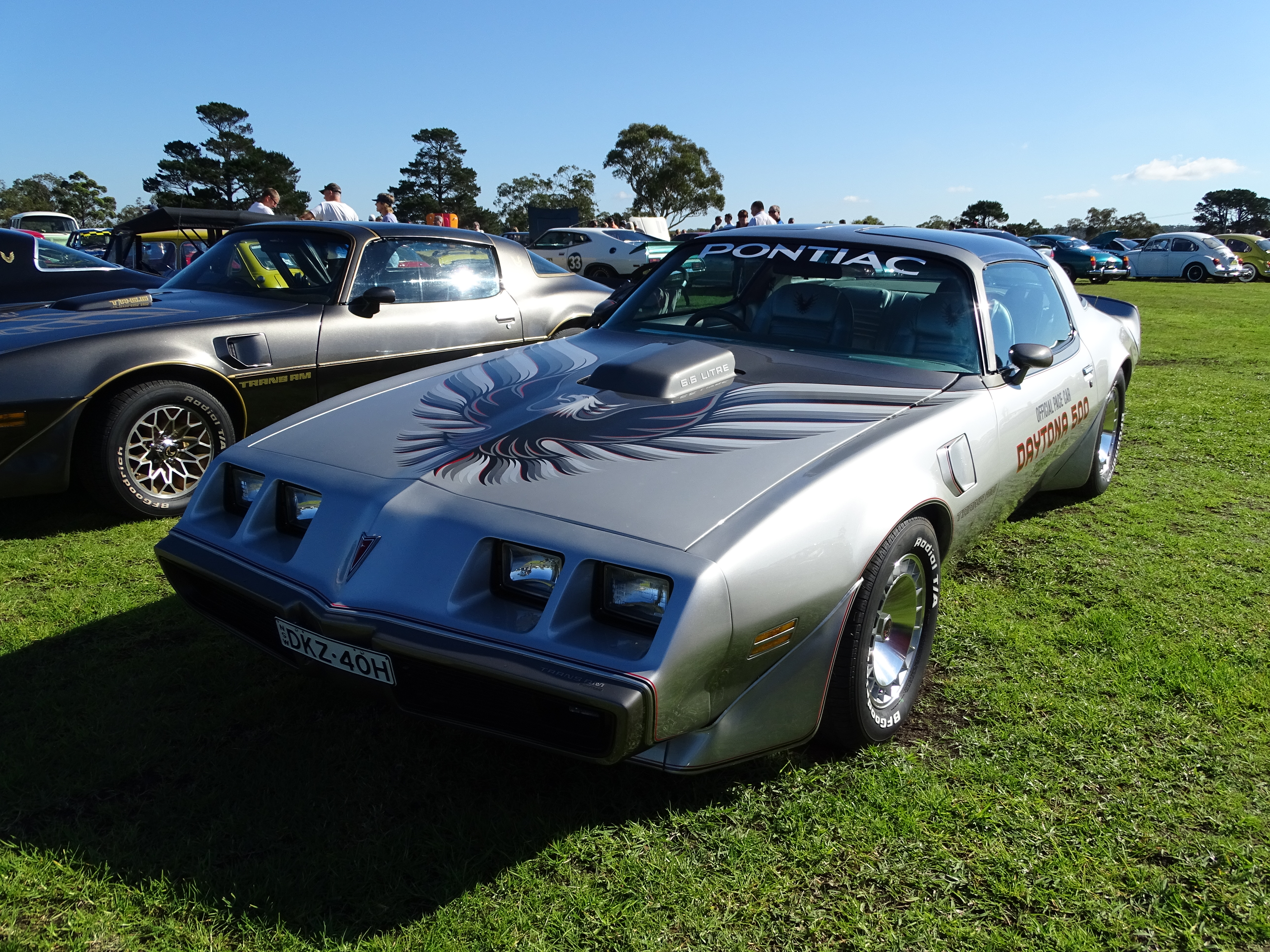
"bit clunky, but then once then Brodie stepped back in, I was like, all right, I'm going to make this TransAm has got to be my thing. I sort of made it my pet project to really show what we're about"
TransAm is a racing series. Teams tune their cars to match the rules and make them faster on track, and in this story they improved the car enough to win races and a championship.
TransAm refers to the Trans-Am racing series, where cars are prepared to a specific rule set and are tuned for track performance. In this segment, the host talks about maximizing the car’s setup to make it quicker, then achieving podiums, race wins, and a championship.
fine tooth comb
"we sort of pulled apart the car and went through it with a fine tooth comb going, all right, how do we maximize this thing?"
“Fine tooth comb” is a metaphor for extremely detailed inspection and analysis. In racing terms, it describes going through the car’s systems carefully to find opportunities to improve performance and reliability under track conditions.
hot rock
"going, all right, how do we maximize this thing? How do we hot rock the hell out of it and make it as quick as we can?"
“Hot rock” here is basically slang for really pushing the car hard. They’re talking about tuning and driving it in a way that gets the most speed and quickest lap times.
“Hot rock” appears to be slang for pushing the car hard—aggressively using the engine and drivetrain to extract maximum speed and acceleration. In context, it’s paired with “maximize” and “make it as quick as we can,” describing performance-focused tuning.
Ipswich
"then we got our first race win, then we dominated here at Ipswich and all of a sudden we're in championship contention."
Ipswich is where they raced and did really well. The point is that their car improvements showed up as strong track results at that event.
Ipswich here is a race venue used in the Trans-Am category’s calendar. The speaker says they “dominated here at Ipswich,” which implies a track where their setup and tuning translated into strong results.
championship contention
"then we dominated here at Ipswich and all of a sudden we're in championship contention. It's like, all right, we've come a long way in a couple rounds here."
It means they were doing well enough that they could still win the season overall. In racing, that comes from scoring points consistently across multiple events.
“Championship contention” means the team’s results are good enough that they’re realistically in the fight for the season title. In motorsport, it’s about accumulating points across rounds so you’re still mathematically and strategically able to win the championship.
hoist
"just looking under a car under a hoist for 10 minutes going, you know, how can we make this baby quicker?"
A hoist is a car lift. It raises the car so you can safely look underneath and work on things that you can’t reach while it’s on the ground.
A hoist is a lift used to raise a car so mechanics can inspect and work underneath. In the segment, the speaker describes looking under a car on a hoist as part of the ongoing tuning and improvement process.
54 Zephyr
"I love my record player, put records on. I'm in the shed working on my 70s Falcon. I've got a 54 Zephyr that I'm restoring."
They mention a 1954 Ford Zephyr they’re restoring. It’s an older classic car project, and it’s part of the kind of vintage cars they love working on.
The “54 Zephyr” refers to a 1954 Ford Zephyr, a mid-century British Ford sedan that’s become a classic restoration target. In the episode, it matters because the speaker is actively restoring it, showing their focus on older, enthusiast-driven projects.
Gatton
"And this XC wagon popped up on marketplace out at Gatton. Very discreet description. It was just"
Gatton is a place in Queensland, Australia. The host is saying they found the car for sale there.
Gatton is a town in Queensland, Australia. Mentioning it provides local context for where the speaker found the Ford Falcon XC wagon for sale.

Ford Falcon station wagon
"Ford Falcon station wagon, all original. It had a, you know, the typical one photo, look like the car just being hosed off, pulled out of the shed."
This is a Ford Falcon wagon—an older Australian family car with a big, practical back. Rusty is saying this one is mostly untouched, so it still looks and feels like it did when it was new.
The Ford Falcon station wagon is an Australian-built family car known for its practical, long-wheelbase wagon layout and classic “country car” vibe. In this story, Rusty is describing one that’s been kept “all original,” which matters because it preserves the factory look and feel rather than being heavily modified.
unmalested
"I thought, maybe it's unmalested, might not be touched. Buggard, I'll go have a look."
“Unmalested” means the car hasn’t been changed much from how it came from the factory. People like it because it stays more original.
“Unmalested” is enthusiast slang meaning the car hasn’t been modified or “messed with” from its original configuration. In a collector context, it usually implies fewer non-factory parts and better preservation of the car’s stock character.
surface rust
"So I went out to this, this shed out at Gatton, you could tell they're being parked outside for a few years because it had a bit of surface rust. The paint was all dull."
Surface rust is light rust on the outside of the metal. It can sometimes be cleaned up and fixed if it hasn’t eaten through the metal.
Surface rust is corrosion that’s mostly on the outer layer of metal rather than deep structural damage. It often shows up on cars that have been stored outside, and it may be removable with cleaning and refinishing if it hasn’t spread into the metal.
buff
"But I was sort of walking around the car going, man, this is all like the interior was like brand new. The bodywork needed a bit of work, but like acrylic paint, you know, good buff and sort of could see the potential"
“Buff” means polishing the paint to make it look shiny again. It can help a dull finish without needing a full respray.
“Buff” refers to polishing the paint to remove oxidation and restore gloss. It’s often used on dull, sun-faded paint to improve appearance without repainting the whole car.
idling away
"A couple hornets nests and a couple of blocked knot, cleaned out the car body and she just peered like a kid and just sat there idling away."
“Idling away” means the engine is running while the car is parked. If it can idle smoothly, that’s a good sign the car’s not totally dead mechanically.
“Idling away” describes the engine running while the car is stationary, typically at a low, steady RPM. It’s a quick, practical sign the basics (fuel/ignition and general mechanical condition) are working after a period of storage.
resto work
"Yeah, Todd's Garage has definitely been a dream since COVID. Again, I love my old cars, I love resto work, I love working on cars and at the start of the year,"
“Resto work” means restoring a car. People do it to make an older car look and drive like it’s supposed to, often by fixing worn parts and improving the condition.
“Resto work” is shorthand for restoring a car—typically bringing an older vehicle back to a desired condition, either stock or modified. It often includes bodywork, mechanical refreshes, and sourcing period-correct parts or rebuilding worn components.
one man band
"So I thought, stuff it, I'll do it myself. I'll be a one man band and I'll do the ultimate challenge where I prep the car, engineer it, race it and try and win it."
He’s saying he’s going to do most of the work himself instead of relying on a big crew. In racing, that’s unusual because there are usually many people helping with setup and engineering.
“One man band” here means running the project largely solo—handling prep, engineering, and race execution without a large team. In motorsport terms, that’s a big operational shift because race programs usually rely on multiple specialists.
sponsorship deals
"And the way the world of sponsorship and marketing is focused now. There's so much influence on story, the story and the backbone of cars and, you know, sponsorships getting harder and harder to be able to put together, you know, sponsorship deals to go racing."
Sponsorship deals are agreements where brands provide money, products, or services in exchange for marketing exposure tied to a team or creator. In modern motorsport and racing media, these deals often depend on audience reach across social platforms.
YouTube
"So you need to be a bit more creative with how you socially engage with, you know, social media or whether it be YouTube, Facebook or, you know, all the platforms that we love to hate."
YouTube is a video website where creators post content. He’s talking about using it to build an audience and help get support for racing.
YouTube is referenced as a platform for building an audience and attracting sponsorship for a racing program. For many modern motorsport creators, video content is a key channel for demonstrating credibility and reach to potential partners.

90s Skylines
"there's, there's a tuning market, people that love their 90s Skylines or love, you know, taking cars with Dino or straight line running, or there's the Resto market, which is, you know,"
“Skylines” are Nissan cars. The “90s Skylines” are the 1990s versions that many car fans love to modify and tune.
“Skylines” refers to Nissan’s Skyline line, which became especially popular in the 1990s for its performance variants and tuning culture. When someone says “90s Skylines,” they’re pointing to that era’s cars as a major part of the tuning enthusiast base.
Resto market
"there's, there's a tuning market, people that love their 90s Skylines or love, you know, taking cars with Dino or straight line running, or there's the Resto market, which is, you know, rock and roll events and going to Coorley Rocks, which I went the other week and things like that."
The “resto market” means the part of the car hobby where people restore older vehicles. It’s about fixing them up and keeping the classic-car scene alive.
“Resto market” is shorthand for the restoration-focused side of the automotive hobby—people buying, fixing, and improving older cars. In this context, it’s contrasted with other segments like tuning and motorsport, and it’s tied to events and community culture.
Coorley Rocks
"or there's the Resto market, which is, you know, rock and roll events and going to Coorley Rocks, which I went the other week and things like that. Then there's like the special projects division, which is working with brands, maybe building a"
“Coorley Rocks” sounds like a local car event people go to. It’s used here as an example of the classic-car/restoration community getting together.
“Coorley Rocks” is referenced as a specific event tied to the restoration/classic-car community. It’s mentioned as an example of the kind of gatherings that support the “Resto market” segment.
paint scheme
"You have walked in with the hat on the paint scheme looks cool. How, I mean, 420, this is gold, mate. Liquid gold."
A “paint scheme” just means the car’s paint and graphics design. It’s the overall look of the car’s exterior, often used to show sponsor branding.
A “paint scheme” is the planned visual design for a car’s exterior—colors, finishes, and graphics—often tied to sponsorship and branding. Here it’s described as looking “cool” and “liquid gold,” linking the livery to the 420 brand.
420
"You have walked in with the hat on the paint scheme looks cool. How, I mean, 420, this is gold, [2772.4s] mate. Liquid gold. You've ended up with, with some support there too, which is tremendous."
“420” here isn’t just a number—it’s the name of a brand. They’re talking about it as part of the car’s look (the paint scheme) and as a sponsor.
“420” is being discussed as an Australian brand tied to the car’s paint scheme and sponsorship. In this context, it’s less about the number itself and more about the brand identity and marketing partnership around the race car.
name your rights
"Initially, it's really cool and obviously pitched to them about doing name your rights as a major sponsor for the car. At the start of the year for actually one of the, one of their other brands called on the menu."
This phrase is about sponsorship. It means the sponsor gets to put their name and branding on the car or event in a prominent way.
“Name your rights” sounds like a sponsorship rights package where a brand’s name is used prominently on a car, team, or event. The host frames it as a major sponsor role, implying branding visibility in exchange for support.
Request an Explanation
Heard something you'd like explained? We'll add it to this episode.
Sign in to request explanations for terms you heard.
Want to learn more?
Browse our glossary for plain-English explanations of automotive terms, jargon, and concepts.
Help improve this episode
See something that's not quite right? Our annotations are AI-generated and can sometimes miss the mark. Click the flag icon on any annotation to suggest a correction.