
Tread Patterns - DWA! Podcast Ep. #935
About this episode
Tire talk kicks off with a practical lament: the Yokohama A008s they liked aren’t available in 13-inch sizes anymore, so they point listeners toward Michelin PE2s. They get into tread personality—knobby ice-tire blocks with molded words, a “ramen tire” pattern, and even a squared-off S look—plus fitment constraints and asymmetrical tread ideas. The conversation then widens into driving feel and ownership stories, from gloves and coastal fog to break-in after projects and long-commute comfort.
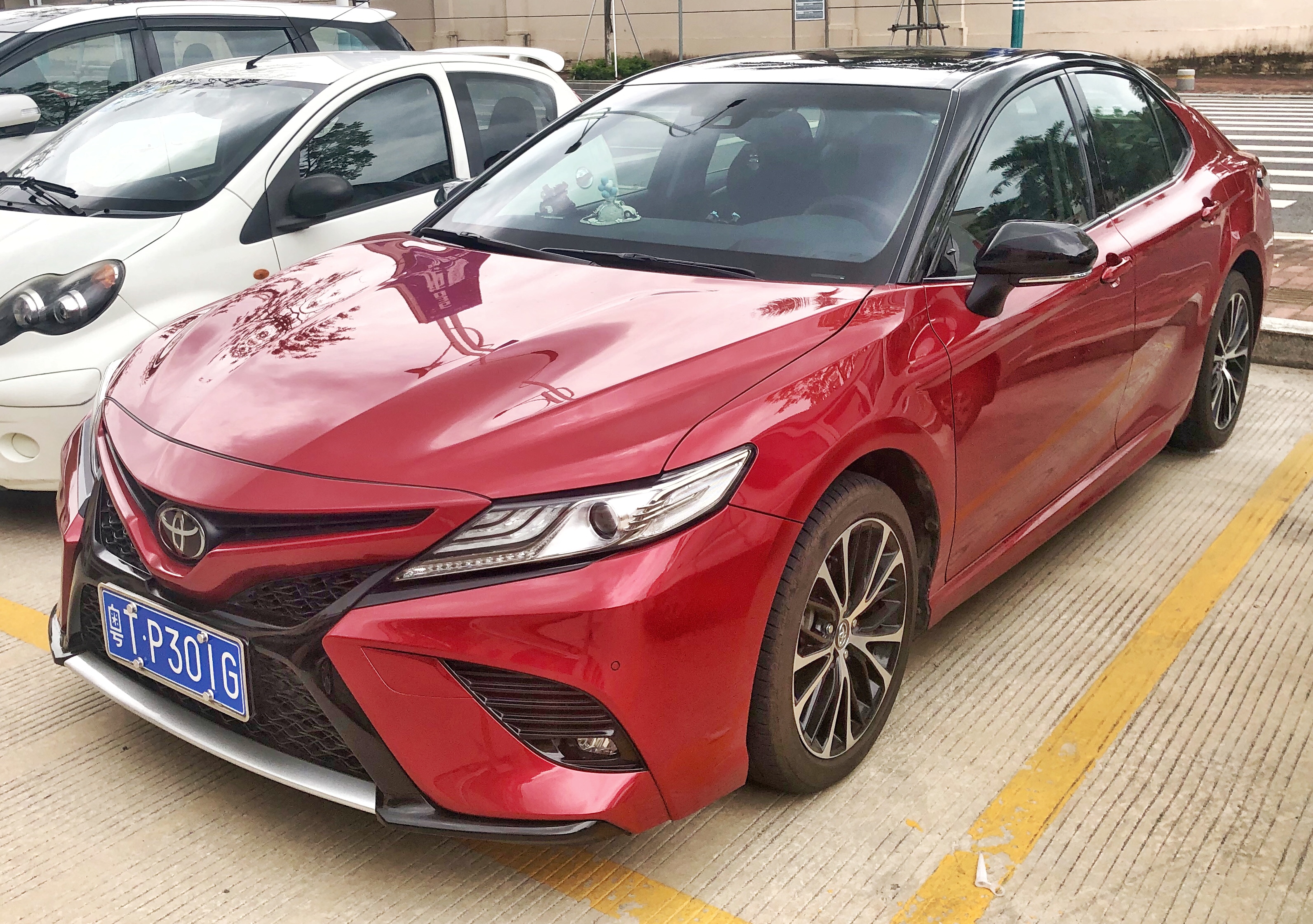
Toyota Camry
"Side of his little head. White on gray Toyota Camry. Egasidal vehiculum."
A Toyota Camry is a regular everyday car (a sedan) made for commuting and errands. People talk about it a lot because it’s common and usually aims to be dependable. In the episode, it’s just being referenced as a specific car model.
The Toyota Camry is a mainstream midsize sedan known for being practical and comfortable for everyday driving. It often comes up in conversations because it’s common on the road and typically represents a “safe choice” for commuting and reliability-focused buyers. In the podcast, it’s mentioned as a recognizable example of a typical Toyota sedan.

Chevrolet Corvette
"Egasidal vehiculum. There's no doubt Corvettes are fast. I'm riding dirty right now."
A Chevrolet Corvette is a sports car designed to go fast and feel exciting to drive. It’s known for quick acceleration and strong performance. The episode brings it up because the speaker is emphasizing how fast Corvettes can be.
The Chevrolet Corvette is a performance sports car built by Chevrolet, famous for strong acceleration and a driver-focused feel. It’s often discussed because it delivers “supercar-like” speed and handling at a more attainable price than many exotic cars. The podcast mentions Corvettes specifically in the context of how fast they are.

Hyundai Santa Cruz
"...n the hills a bit because that helps like here in Santa Cruz. Land will probably have fog for an hour"
The Hyundai Santa Cruz is a smaller SUV-like vehicle that also has a truck bed. It’s meant for people who want to carry stuff but don’t need a big pickup. The episode mentions it in the context of driving conditions like hills and fog.
The Hyundai Santa Cruz is a compact crossover with a pickup-style bed, aimed at buyers who want versatility without going full-size truck. It’s relevant in the podcast because the speaker mentions driving in hills and dealing with fog, which highlights how owners think about real weather and terrain. The Santa Cruz is being referenced as part of that practical, everyday driving setup.
tire tread
"what's your favorite tire or tire tread [379.5s] from a visual perspective?"
Tire tread refers to the pattern of grooves and raised rubber on the outside of a tire. It affects traction, water evacuation, and how the tire looks—so the hosts are discussing both performance-related and visual aspects.
Yokohama A008s
"I just sadly realized the Yokohama A008s [385.5s] are no longer available in the 13 inch size. [388.6s] I was planning on getting."
Yokohama A008s is a specific tire model, and the hosts are discussing its availability in certain rim sizes. They also describe the tread pattern visually—“dimples”—which is a common way enthusiasts identify and compare tire designs.
dimples
"The A008 is like, [396.1s] you guys would recognize if you see it. [397.5s] It's got the dimples on it. [399.3s] It's like, it's pretty cool."
In tire-talk, “dimples” usually refers to small raised features in the tread blocks or sipes that can influence how the tire grips and how it wears. Here, the hosts use the dimples as a visual identifier for the Yokohama A008s.
Michelin PE2s
"Check the Michelin PE2s. [409.4s] They're making 13s in those and 14s and 15s [412.5s] in select sizes. [425.8s] I think Michelin Pilot Exalto is the PE2s."
Michelin PE2s is a specific tire model that the hosts recommend as an alternative because it’s available in 13-inch sizes (and other select sizes). They connect the PE2s name to “Michelin Pilot Exalto,” indicating the tire’s full model naming.

Porsche 944
"I think Elaine had those on his, you had them on your 944 too, right? [425.8s] I think Michelin Pilot Exalto is the PE2s."
The Porsche 944 is a classic Porsche sports car. Here, they’re saying they used the same tire model on a 944 before, which helps you understand what that tire feels like on a real car.
The Porsche 944 is a front-engine, rear-transaxle sports coupe from Porsche, known for its balanced handling and classic 1980s/early-1990s design. In this segment, it’s mentioned as a past vehicle that ran Michelin PE2 tires, tying the tire choice to a specific enthusiast car platform.
ice tires
"And these were ice tires. I believe it. They're ice, right? I mean, they were knobby as shit."
Ice tires are special winter tires made for cold, icy roads. They’re designed to grip better on ice and snow than regular tires, mainly through a softer rubber and a tread pattern that can bite into the surface.
Ice tires are winter tires designed specifically for very cold conditions and icy roads. They typically use a softer rubber compound and a tread pattern that helps grip on snow and ice, often with more aggressive “biting” edges.
knobby
"They're ice, right? I mean, they were knobby as shit. Yeah."
“Knobby” means the tire has chunky, raised tread blocks. Those blocks help the tire grab snow and ice better, though the tire can be louder and wear quicker on regular dry roads.
“Knobby” refers to a tread design with raised, blocky lugs. Those lugs increase traction by creating more edges to grip snow and ice, but they can be noisier and wear faster on dry pavement.
tread block
"It was actual text, right? It was like font. It was the, the, the, the tread block was words."
A tread block is one of the raised “chunks” on the tire’s outer surface. The size and shape of those chunks matter because they help the tire grip and move water/slush out of the way.
A tread block is one of the individual raised sections on a tire’s tread surface. In winter tires, the shape and arrangement of tread blocks strongly affect how the tire channels slush, flexes for grip, and creates traction edges.
Dunlop formula are D 98 J
"It's called the, it's, it's the formula, [502.7s] a Dunlop formula are D 98 or something like that. ... [523.7s] If you look up again, Dunlop formula are D 98 J."
Dunlop is a tire brand. The “D 98 J” part sounds like a specific tire model code—basically the exact version of that tire.
Dunlop is a tire brand, and “Formula” followed by a code like “D 98 J” appears to be a specific tire model/variant. Enthusiasts often hunt these older or niche tire codes because the tread and sidewall styling can be distinctive.
tread pattern
"And it has like a squiggly ramen, like imagine top ramen with that looks like. [511.8s] That's what the tread pattern looks like."
The tread pattern is the design on the outside of the tire. That pattern helps the tire grip the road and can help push water away on wet pavement.
A tire’s tread pattern is the specific shape of the grooves and blocks on the tire’s contact surface. It affects how the tire grips in different conditions (like wet roads) and how it channels water.
Yokohama AVS AV ones
"You have the Yokohama AVS AV ones. [537.7s] Those are sick. [538.2s] Yeah."
Yokohama is a tire maker. “AVS” is a name for a specific line of tires, and the host likes how these ones look.
Yokohama is a tire brand, and “AVS” refers to a particular Yokohama tire series. The host is praising them as “sick,” implying the tread/sidewall styling and overall look are part of the appeal.
sidewall design
"Yeah. [538.4s] They've got those also have the dots that those. [542.3s] I mean, and sidewall design is a thing also for sure."
The sidewall is the part of the tire on the side. Its design includes the look and the printed markings that tell you which tire it is.
The sidewall is the tire’s outer wall between the tread and the bead, and its design includes both styling and printed information. Sidewall design can matter for identification (tire model/size) and for how the tire looks on the wheel.
Michelin TB 15
"So speaking of which, the look up a Michelin TB 15 that has [549.6s] a really good tread pattern and a good sidewall rounded really clean..."
Michelin makes tires. “TB 15” sounds like a specific tire version the host is pointing to because it has a great look.
Michelin is a tire brand, and “TB 15” appears to be a specific tire model/variant the host is using as an example. The segment is about how certain tires have standout tread and sidewall styling.
Redistan grip classic
"Look at hub. It's the red, the Redistan grip classic, which I think would look sick on."
That sounds like a specific tire style the host likes. They’re talking about it mostly because of how it looks and the tread design.
“Redistan grip classic” appears to be a specific tire model/line the host is considering. The key point is that it’s being chosen for its look (the red sidewall styling) and the tread design, not just for raw performance.
upsize
"Actually, it would look so rad, but you have to upsize. I actually like I looked this up for you because I was thinking"
“Upsize” here means going to a bigger wheel size. That usually requires matching tire sizing so everything still fits correctly.
In tire/wheel talk, “upsize” means increasing the wheel size (and typically changing the tire sidewall height to keep overall diameter close). This can change ride feel, steering response, and how the tire fits the vehicle.

Land Rover Defender
"like how rad those would look because Logan got them on his old Defender and like they only make them in 16s."
The Land Rover Defender is a tough, off-road SUV with a big enthusiast community. Here it’s mentioned because someone put these wheels/tires on one and it looked great.
The Land Rover Defender is a rugged off-road SUV known for its boxy, utilitarian design and strong aftermarket support. In this segment it’s referenced as the vehicle that previously had the same tire/wheel look, showing how popular this style is on classic 4x4s.
16 inch steely
"like they only make them in 16s. And at the time I looked up like steelies like the aluminum steelies that they make for vanigans. And there's some people that rock them, dude, like it's like a 16 inch steely."
A “16 inch steely” is a 16-inch steel wheel. It’s a common wheel type on vans and rugged builds because it’s tough and practical.
“16 inch steely” refers to a 16-inch steel wheel (often called a “steelie”). Steel wheels are common on vans and off-road builds because they’re durable and can be easier/cheaper to replace than many alloy wheels.
15 inch wheels
"Well, I bought those. I bought those 15 inch wheels."
“15 inch wheels” means the wheel diameter is 15 inches, which directly affects tire sizing and fitment. Smaller wheel diameters often allow taller sidewalls, which can change ride comfort and pothole protection.
aggressive all terrain kind of look
"It's kind of a more aggressive all terrain kind of look. [632.4s] He was really happy with them though."
“All-terrain” tires are designed to handle a mix of pavement and light off-road use, typically with deeper tread blocks and more void space. An “aggressive” all-terrain look usually means more pronounced tread patterns for traction and durability off-road.

Ferrari F40
"I've always liked the P zero off an F 40. [650.3s] The rear P zero tread block is just like complex,"
They’re talking about a Ferrari F40 and the Pirelli P Zero tire that was associated with it. The point is that the tire’s tread design helped the car feel grippy and responsive.
The speaker is referencing the Pirelli P Zero tire used on a Ferrari F40. The Ferrari F40 is a landmark supercar from the 1980s, and tire choices like the P Zero are part of why it’s remembered for sharp, confidence-inspiring grip.
asymmetrical
"Oh, that's the Pirelli asymmetrical, right? [659.3s] That's got like it's like all sorts. [661.1s] It's like two tires joined together."
“Asymmetrical” means the tire’s tread isn’t the same on both sides. It’s designed to work better for turning and grip in different directions.
An asymmetrical tire has different tread patterns on the inside vs. outside shoulders. That lets engineers optimize steering response and cornering grip—often with better performance when the tire is loaded in turns.
Pirelli
"Oh, that's the Pirelli asymmetrical, right? [659.3s] That's got like it's like all sorts."
Pirelli makes performance tires. In this segment, they’re talking about a Pirelli tire with an asymmetrical tread design to help grip and steering feel.
Pirelli is a tire brand that’s especially known for performance tires and motorsport involvement. Here it’s tied to a specific tire construction described as “asymmetrical,” which typically means the left/right sides are tuned for different grip and handling behaviors.

BMW E28
"I remember, I think I think that they also use that in the, when they had the E 28 M five, that campaign, right? It was like levitating and it had those tires on it."
The BMW 5 Series is a comfortable, higher-end sedan. It’s designed for everyday driving with a focus on comfort and features. In the episode, it’s mentioned because the speaker remembers an old BMW promotion involving an M5 model.
The BMW 5 Series is a midsize luxury sedan known for comfort, technology, and a range of performance options depending on the model. It’s brought up in the podcast through a specific memory of a BMW campaign involving the “E28 M5,” which is a performance variant from an earlier era. The mention is more about the car’s place in BMW’s history and marketing than about current ownership.
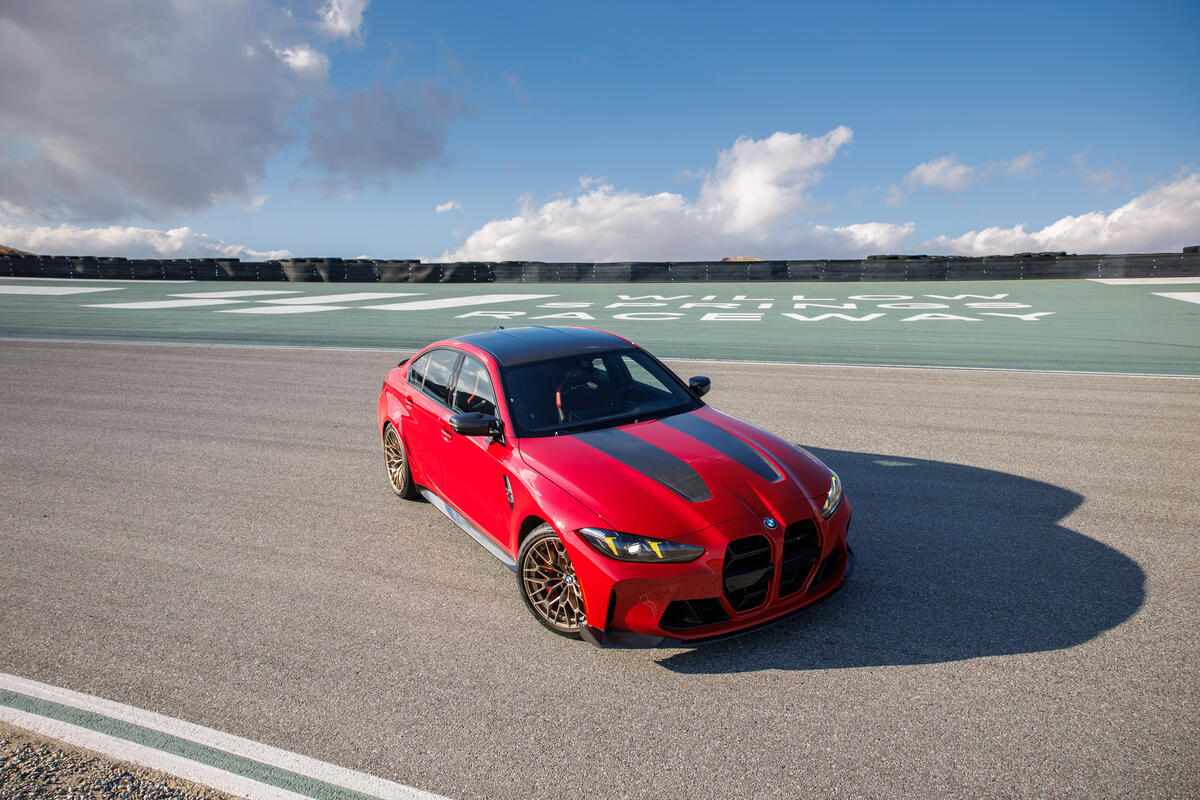
BMW M3
"Actually, I just dropped off the M three at B line yesterday and I was talking to Ryan and we were kind of laughing about the days when you would be like, what are you doing this weekend?"
The BMW M3 is BMW’s high-performance version of the 3 Series. People like it because it’s built to feel sporty and handle well, not just to get you from A to B.
The BMW M3 is BMW’s performance-focused “M” model, known for being a driver’s car with a high-revving engine and a chassis tuned for sharp handling. In enthusiast circles, different M3 generations are often treated as distinct eras of BMW’s sport-sedan philosophy.
junkyard
"You want to go to the junkyard? I saw that there's a car that has some parts I need. Yeah. Let's go to the junkyard and you spend like six hours at the junkyard."
A junkyard is where you can find parts from old cars. People go there when they need a specific part that’s hard to buy new.
A junkyard is a place where old cars are dismantled for usable parts. Enthusiasts use them to find discontinued or hard-to-source components, often saving money compared with buying new or rare aftermarket parts.

Wagon R Wagon
"...bout a time where I had to buy a part for my V 70 R wagon up in Santa Rosa. And I spent like an entire day ..."
The Wagon R is a small wagon-style car made to be practical and easy to live with. It’s designed to fit a lot of space in a small footprint. The podcast brings it up because the speaker is talking about having to find parts and doing repairs.
The Wagon R is a small, practical vehicle known primarily as a compact “boxy” wagon designed for easy city driving and efficient packaging. In the podcast, it’s referenced in a personal story about spending a long time sourcing a part for a different wagon, which shows how owners of these vehicles often get hands-on with repairs. The mention is tied to ownership experience rather than performance.

Volvo V70 R wagon
"Like I was thinking about a time where I had to buy a part for my V 70 R wagon up in Santa Rosa."
The Volvo V70 R wagon is a sportier, higher-performance version of Volvo’s V70 family wagon. It’s the kind of car people pick when they want something practical, but still more exciting to drive.
The Volvo V70 R is a performance-oriented version of the V70 wagon, built for enthusiasts who wanted a practical family car with more power and sportier tuning. The “R” badge typically indicates Volvo’s higher-performance trim, often with upgraded drivetrain and suspension compared with standard V70s.
shakedown
"Anyways, how many miles for a shakedown after project do you think is proper? I've heard one 2550 and 125 as intervals discuss gives a little shock at the end."
A “shakedown” is a short test period after you build or modify a car. The goal is to find issues right away before you drive it harder or farther.
A “shakedown” is an initial test period after a major project (like an engine swap) to catch problems early. Enthusiasts often drive in controlled intervals before doing harder use, because new or recently changed components can fail or need adjustment.
engine swap
"Are we replacing a motor? We're putting wheels on like what's totally. I mean, it depends on, on, on whether you're doing a completely new swap that's been done like 10 times across the country and like there's all sorts of ancillary shit that's going to go wrong."
An “engine swap” is when you put a different engine into a car. It’s more than just bolting it in—there are other systems that have to work together, so people test the car in steps first.
An “engine swap” means replacing the car’s original engine with a different one, which usually requires matching electronics, mounts, cooling, exhaust, and drivetrain connections. Because so many “ancillary” systems must be integrated, swaps often need staged testing before full confidence.

BMW E30
"So I did two rallies on my E 30 before it ran perfectly and had no issues. So that's like the first time you ran it."
“E30” is a BMW 3 Series from the late 1980s/early 1990s. People love it for projects and swaps, so it often shows up in discussions about how long to drive before pushing the car.
“E30” refers to the BMW 3 Series generation from the 1980s to early 1990s. It’s a popular platform for engine swaps and rally-style testing because many parts and swap setups are well-documented by the enthusiast community.
transmission swap
"It's like, okay, like transmission swap or, you know, I don't know. Yeah."
A transmission swap means replacing the car’s gearbox with another one. After that kind of repair, it’s common to drive for a while to make sure shifting feels right and nothing is overheating.
A transmission swap is replacing a car’s transmission with a different unit, often to fix a failure or change the setup. After a swap, the car typically needs some break-in and monitoring because shifting behavior and fluid condition can take time to stabilize.
heat cycles
"Yeah. Yeah. Yeah. It's all relative, but I don't think after like a hundred miles of heat cycles and shifting and, you know, getting things hot and cold, I think that's probably pretty good."
Heat cycles just means the car gets hot and then cools down again and again. After enough of those cycles, problems that don’t show up right away—like issues with shifting or worn parts—can start to appear.
Heat cycles are repeated rounds of the drivetrain and fluids warming up and cooling down. In a transmission context, that matters because thermal stress can reveal weak links like worn seals, degraded fluid, or shifting issues after the system has been through many temperature swings.
turbo failure
"Like and then they had turbo failure and leaks and that's where I feel like with a car like that, like it's more like more than more often than not it's going to be leaks or like"
A “turbo failure” is when the turbocharger doesn’t work right anymore. That can make the car feel weak and may cause warning lights or rough running.
“Turbo failure” means the turbocharger stops working correctly—often due to oil starvation, bearing wear, or damage from heat and boost pressure. When it fails, boost drops and the engine may run poorly or trigger warning lights.
sensor failures
"it's more like leaks or like sensor failures or like relays and shit like that."
A “sensor failure” is when a sensor in the car gives wrong information. The computer may then not run the engine as it should, which can cause rough running or warning lights.
“Sensor failures” are when one of the car’s electronic sensors (like airflow, boost, temperature, or crank/cam position sensors) stops reading correctly. The engine control unit (ECU) may then adjust fueling/ignition poorly, causing drivability issues or limp mode.
relays
"it's more like leaks or like sensor failures or like relays and shit like that. And so it's not like super catastrophic."
A relay is like an electrical switch controlled by the car’s computer. If it fails, a specific system might stop working even though the car otherwise seems okay.
Relays are electrically controlled switches that route power to components like fuel pumps, cooling fans, or turbo-related actuators. If a relay fails, the affected system may not run even though the rest of the car is fine.
turbocharger
"But yeah, I mean, it's it just kind of especially a turbo early turbo car like that. It is impressive."
A turbocharger is a device that helps the engine breathe by forcing more air in. It can boost power, but it also adds extra heat and stress to the engine.
A turbocharger is a forced-induction device that uses exhaust gas to spin a turbine, which compresses incoming air. That compressed air lets the engine make more power, but it also increases heat and stress—so oil supply and cooling matter a lot.
Mercedes
"So not Nate says, what's the consensus on what year Mercedes quality took a dip looking"
Mercedes is the car brand being discussed. The hosts are asking about which years Mercedes cars were known for having worse quality than usual.
Mercedes refers to the Mercedes-Benz brand, and in this context the hosts are discussing the brand’s historical build-quality trends. The question is about when “Mercedes quality took a dip,” which is a common enthusiast topic tied to specific model years and production changes.

Mercedes-Benz E55 AMG
"So not Nate says, what's the consensus on what year Mercedes quality took a dip looking at Mercedes around 2003 CLK E 55, etc. My 100 mile round trip commute with my NC Miata in Detroit is becoming gnarly."
The Mercedes-Benz E55 AMG is a faster, higher-performance version of the Mercedes E-Class. It’s meant for drivers who want more power and a sportier feel. In the episode, it’s mentioned because the speaker is talking about which Mercedes years were better in terms of overall quality.
The Mercedes-Benz E55 AMG is a performance-focused version of the E-Class, built to deliver much stronger power and a sportier driving experience than a standard E-Class. It’s discussed in the podcast in the context of Mercedes-Benz quality trends around the early 2000s, including models like the CLK and E55. The mention suggests the speaker is weighing which years and models are worth considering for a long commute.
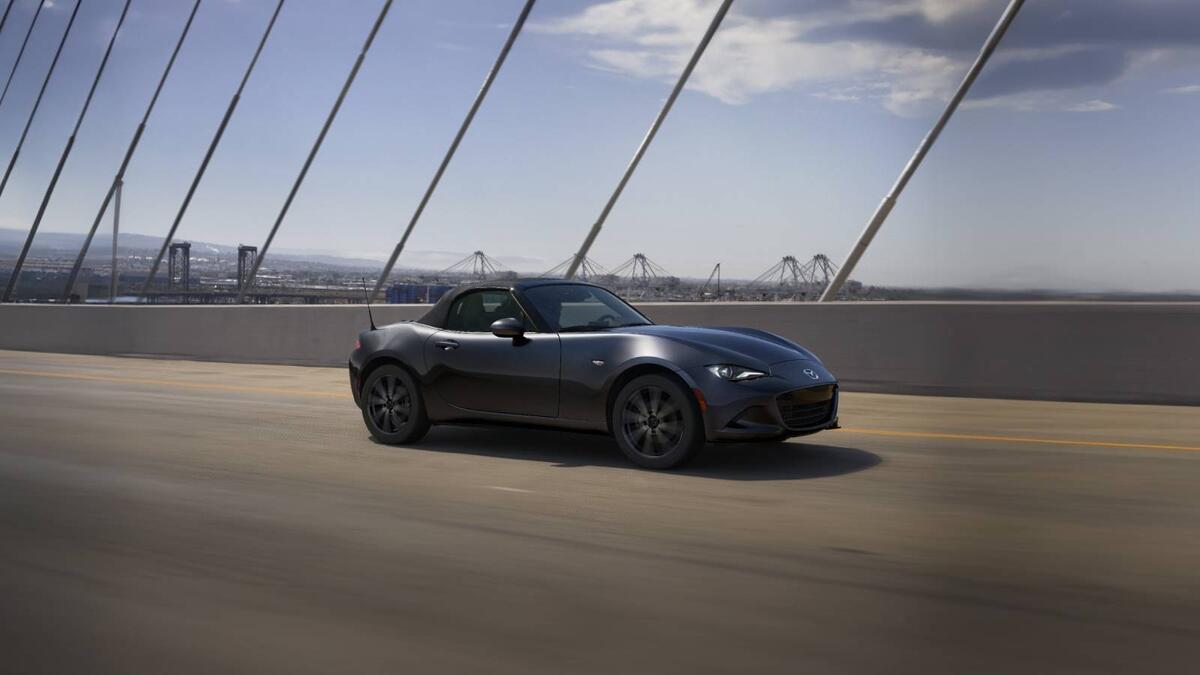
Mazda MX-5 / Miata
"...5, etc. My 100 mile round trip commute with my NC Miata in Detroit is becoming gnarly. Just now becoming ..."
The Mazda Miata is a small two-seat convertible that’s meant to be fun to drive. It’s popular because it feels light and responsive. The podcast mentions it because someone is using one for a long daily commute.
The Mazda MX-5 Miata is a lightweight, affordable roadster known for nimble handling and fun, simple driving dynamics. It’s frequently discussed by enthusiasts because it’s easy to enjoy on everyday roads and can make long drives feel less stressful. In the podcast, it’s referenced in the context of a 100-mile commute becoming “gnarly,” highlighting how the car fits into daily use.

W126
"I would say like after the W126's and stuff, that feels like a shift from like a very analog old car, very solid bank vault, traditional Mercedes to like a little bit more electronic controls..."
W126 is a Mercedes-Benz model generation name. The idea here is that older W126-era Mercedes cars feel more old-school and mechanical than newer ones.
W126 refers to the Mercedes-Benz S-Class generation from the late 1970s through the 1980s. The hosts contrast it with newer Mercedes models by describing it as more “analog” and mechanically straightforward—often associated with simpler systems and a very solid, traditional feel.
HVAC
"traditional Mercedes to like a little bit more electronic controls and like HVAC and vacuum assisted stuff that got a little weird."
HVAC is the car’s heating and air-conditioning system. It controls how hot or cold the cabin gets and how air moves around inside.
HVAC stands for Heating, Ventilation, and Air Conditioning—the system that controls cabin temperature and airflow. The hosts mention HVAC as part of the shift toward more electronic controls in later Mercedes models.
vacuum assisted
"electronic controls and like HVAC and vacuum assisted stuff that got a little weird."
Vacuum-assisted systems use suction from the engine to help run parts of the car. The point being made is that some of those older-style helpers can feel odd when combined with newer electronics.
“Vacuum assisted” refers to using engine vacuum pressure to help operate certain systems (commonly related to braking and other actuators). The hosts suggest that as Mercedes added more electronics, some vacuum-assisted behavior became less straightforward or more “weird” compared with older setups.

W211s
"their W211s that are V six, you know, rear wheel drive E class, very comfortable, very safe,"
W211 is the Mercedes E-Class generation from the mid-2000s. They’re saying it’s a common taxi platform because it’s comfortable and feels safe for everyday use.
W211 refers to the Mercedes-Benz E-Class generation used in the mid-2000s. The hosts describe it as rear-wheel-drive and powered by a V6 in the context of taxi fleets, emphasizing how it can feel comfortable and safe for daily driving.
rust issues
"So then the one after that, he was saying that they're actually, they went down dramatically. Like he was talking about rust issues, like shit that never existed before."
“Rust issues” means the car starts corroding—usually on the body or underbody. In this discussion, they’re saying some later years had more rust than earlier ones.
“Rust issues” means corrosion problems that can develop in specific areas of a car’s body or underbody. The hosts are implying that later production years of the Mercedes-Benz E 55 wagon had corrosion problems that weren’t as common earlier.
soft touch stuff
"And then also materials like just really cheap, like, you know, soft touch stuff and that peeled and that broke."
“Soft touch” is the nicer-feeling coating on some interior parts. They’re saying that on certain years it can peel off and get damaged over time.
“Soft touch” materials are interior coatings or plastics designed to feel nicer to the hand, often with a rubbery or matte finish. The hosts are saying that on some years, these materials can peel and break, which is a common kind of interior wear problem.
V six
"I've seen some really good ones, even on Craigslist, like under a 100000 miles, 75,000 miles for a V six E class and really good condition."
A “V6” is an engine with six cylinders. It’s a common layout in many cars because it usually feels smooth and provides decent power for everyday driving.
“V6” refers to an engine with six cylinders arranged in a V shape. It’s commonly used in luxury cars because it can deliver smooth power without the added complexity of some higher-performance or forced-induction setups.
The less complex, the better
"The less complex, the better, right? You're talking about rural drive or not. Not all will drive."
They’re basically saying: simpler cars are easier to live with. Fewer complicated features can mean fewer things to break and less hassle over time.
This is an ownership philosophy: choosing cars with fewer complicated systems (like avoiding turbocharged setups or highly featured variants) to reduce potential failure points and simplify maintenance. In this segment, it’s used to justify recommending naturally aspirated, simpler drivetrains for commuting.
turbos
"You're talking about no turbos. Cause if you start getting into turbos in those cars, then it's really, it's a whole other thing."
“Turbos” are engines with a device that forces extra air in to make more power. They can be great, but they’re more complex than simpler engines.
“Turbos” is shorthand for turbochargers, which use exhaust energy to spin a turbine and force more air into the engine. Adding turbocharging can increase performance, but it also adds complexity and can change maintenance considerations versus simpler naturally aspirated engines.
super charged
"So like the E 55 was super charged and it has air suspension. Like, do you need that in Michigan?"
A supercharger is a device that forces extra air into the engine. More air usually means more power, but it also adds extra parts that can be more expensive to maintain.
A supercharger is a forced-induction device that compresses incoming air before it enters the engine. That lets the engine make more power than it would naturally aspirated, but it can also change how the car behaves and adds components that may require more care over time.
air suspension
"So like the E 55 was super charged and it has air suspension. Like, do you need that in Michigan?"
Air suspension uses air bags instead of metal springs. It can make the ride smoother and sometimes lets the car adjust its height, but it’s more complicated than a basic suspension system.
Air suspension uses air-filled springs (instead of steel coils) to adjust ride height and damping characteristics. It can improve ride comfort and make the car feel more “settled,” but it adds complexity and potential maintenance cost compared with simpler suspension setups.
rear wheel drive
"Um, but yeah, like the 500 formatic is one to avoid, but like a V six rear wheel drive, but with all like the nice features like my wagon had."
Rear-wheel drive means the back wheels do the work of moving the car. In this discussion, they’re treating RWD as part of a simpler, more desirable setup for commuting.
Rear-wheel drive (RWD) means the engine’s power is sent to the rear wheels. Enthusiasts often prefer it for predictable handling and straightforward mechanical layout compared with more complex drivetrains like all-wheel drive or some turbocharged configurations.
ventilated seats
"So, like the 500 formatic is one to avoid, but like a V six rear wheel drive, but with all like the nice features like my wagon had. So, you know, ventilated seats and all the good stereo and all that stuff."
Ventilated seats have fans that blow air through the seat to help keep you cool. It’s a comfort feature that can make commuting feel nicer.
Ventilated seats have built-in fans and channels that move air through the seat cushions to help cool occupants. They’re a comfort feature that can make long drives more pleasant, especially in hot weather.

LS 430
"I mean, my mind immediately starts to think like LS 430 over any of this stuff. You know, just like because it's like you're also and now you're talking about a Toyota that's got nicer materials that's very well made."
The Lexus LS 430 is a luxury car (a big sedan) from the mid-2000s. The point here is that the host thinks it’s a smart alternative because it’s well-made and keeps its value.
The Lexus LS 430 is a mid-2000s luxury sedan known for its smooth, reliable V8 and long-distance comfort. In this segment, the host brings it up as a benchmark alternative to other luxury options, largely because it’s well-built and tends to hold value.
hold their value
"Those are really nice and they hold their value pretty well too. Like the long-term effect matters, but just I think also in terms of cost,"
“Hold their value” means the car doesn’t lose its resale price as fast as other cars. The idea is that it can be cheaper to own over the long run because you can sell it for more later.
“Hold their value” refers to how well a car retains its resale price over time. The host connects this to long-term ownership cost, arguing that some choices are financially safer because they depreciate less.

Miata
"A hundred mile commute. Wow. In a Miata. Come on."
The Miata is a small, fun-to-drive Mazda roadster. In this conversation, it’s mentioned because someone is joking that you could even do a long commute in one.
The Mazda Miata is a lightweight, rear-wheel-drive roadster famous for being fun to drive and relatively affordable to own. Here it’s used as the punchline for a “hundred mile commute,” highlighting that some drivers choose a small sports car even for long daily trips.
Air-cooled
"Air-cooled everything says what's somewhat new car built in the last 10 years or so provides the best impression of driving an older car."
An air-cooled engine uses air moving over the engine to keep it from overheating, instead of coolant. The hosts are using it to talk about why some older cars can feel different to drive than newer ones.
Air-cooled engines rely on airflow and fins to remove heat instead of using a liquid coolant system. Enthusiasts often associate air-cooled designs with a different driving feel and maintenance profile, which is why the hosts bring it up when talking about what older cars feel like versus modern ones.

Dacia Logan
"...t this question earlier because we, our colleague Logan has the final Econoline van produced."
The Dacia Logan is a simple, lower-cost car designed for everyday driving. It’s meant to be practical rather than fancy. The podcast mentions it as part of a conversation involving the name “Logan.”
The Dacia Logan is a budget-oriented sedan designed to provide basic transportation at a lower cost. It’s mentioned in the podcast because a colleague named Logan is associated with the final Econoline van produced, and the conversation includes the Dacia Logan name as part of that segment. The reference is more about the name and context than detailed performance or ownership experience.

Econoline van
"I was thinking about this question earlier because we, our colleague Logan has the final Econoline van produced. So what is that?"
The Econoline is a Ford van that’s been around for a long time. The hosts are talking about when Ford stopped using the Econoline name and moved to the Transit van instead.
The Econoline is Ford’s long-running full-size van line, best known in enthusiast circles for its work-van roots and huge aftermarket support. In this segment, the hosts are discussing the end of the Econoline nameplate and how it was replaced by the Transit line.
Starcraft conversion
"It was like a Starcraft conversion or something. [1547.5s] And we thought it was super baller. [1548.9s] It had a CRT TV in it."
They’re describing a van that was modified by Starcraft for a special purpose. The example they give is that it even had a TV inside, showing it was customized for a specific kind of use.
A “Starcraft conversion” refers to a third-party upfit of a van into a specialized configuration. In this case, the speaker mentions a CRT TV inside, highlighting how these conversions were often aimed at specific uses rather than factory luxury.
CRT TV
"It had a CRT TV in it. [1550.7s] And yeah, that's the one you want, right? [1552.9s] But like in 95, that was the last of that year, I think."
CRT TV means an older style TV screen technology. The point here is that the van had a very old-school setup inside.
CRT TV stands for “cathode-ray tube” television, a display technology common in older vehicles and homes. The mention is mainly used to emphasize how old-school the van’s interior setup was.
A-pillars
"But I was thinking more like, like the stuff that we appreciate in a modern car that's vintage, that's in a modern car, right? Like attributes like then a pillars, you know, simplicity of interior minimal screens, manual transmission, you know, like those things."
A-pillars are the vertical supports at the front of the car that hold up the roof near the windshield. They’re bringing it up as part of the simpler, more old-school design they like.
A-pillars are the front roof supports that sit between the windshield and the side windows. The hosts mention them as part of the “modern car but vintage feel” idea—essentially pointing to simpler, more traditional vehicle design rather than heavily screen-driven interiors.
manual transmission
"Like attributes like then a pillars, you know, simplicity of interior minimal screens, manual transmission, you know, like those things."
A manual transmission means you change gears yourself with a clutch pedal and a shifter. They’re saying they like that more old-school driving feel compared to many modern cars.
A manual transmission (stick shift) is a gearbox where the driver selects gears using a clutch pedal and gear lever. The hosts list it as a “vintage” attribute they like, contrasting it with modern cars that increasingly use automatic or dual-clutch systems.

Mazda Cx50
"I will say that our Mazda CX-50 is a very like traditional car... even, you know, non-CVT transmission, a regular shifter, no auto start, stop start."
The Mazda CX-50 is a Mazda crossover. The point here is that it feels simpler and more old-school to drive—less like a computer full of features and more like a normal car with a regular shifter.
The Mazda CX-50 is a crossover built around a more traditional, straightforward driving experience rather than lots of modern “gadget” features. In this segment, the hosts highlight that it uses a conventional shifter and avoids some newer convenience/automation tech, which makes it feel more old-school behind the wheel.
CVT transmission
"Even, you know, non-CVT transmission, a regular shifter, no auto start, stop start."
CVT stands for a transmission that can smoothly change gear ratios without distinct “gears.” The speaker is saying they prefer the non-CVT feel because it tends to feel more direct and less “rubbery.”
A CVT (continuously variable transmission) uses a belt or chain and variable pulleys to keep the engine in its most efficient RPM range. The hosts contrast this with a non-CVT setup, implying a more direct, conventional feel when driving.
auto start, stop start
"Even, you know, non-CVT transmission, a regular shifter, no auto start, stop start."
Stop-start is the system that turns the engine off when you’re stopped at a light and turns it back on when you’re ready to go. The speaker is saying they prefer a car that doesn’t do that automatically.
“Stop-start” (often called auto start/stop) automatically shuts the engine off when the car is stopped and restarts it when you lift off the brake. The hosts mention it as a feature they don’t want, because it can make the car feel less natural or less “old-school.”
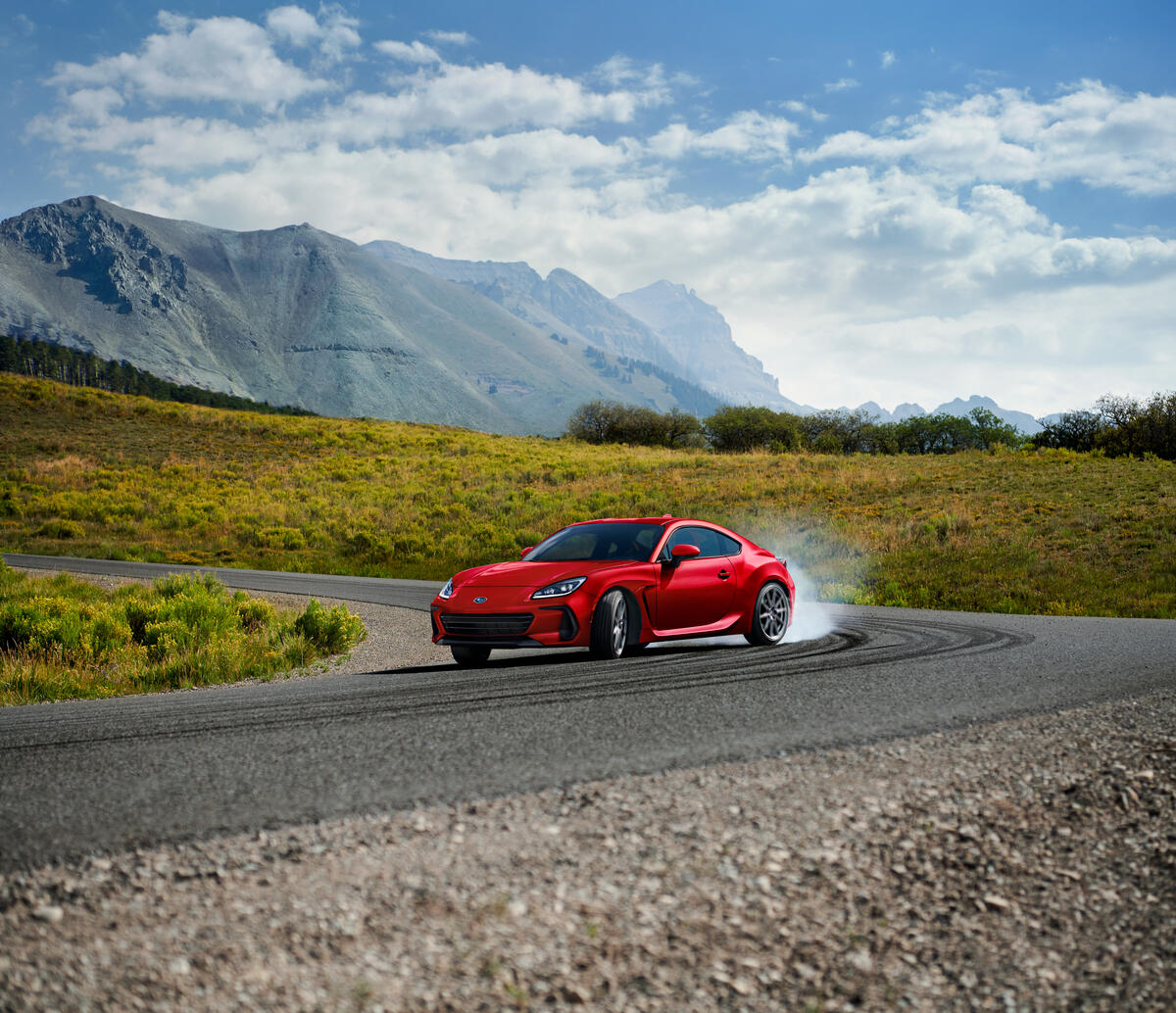
Subaru BRZ
"...rn like performance, like real. I mean, obviously BRZ and the outer sports cars, but like as a, as a pr..."
The Subaru BRZ is a small sports car with two doors. It’s made to feel fun and responsive when you drive. The podcast mentions it as an example of a performance car that’s meant for driving enjoyment.
The Subaru BRZ is a compact sports coupe designed for balanced handling and an engaging driving feel. It’s often discussed as a “real driving” car because it’s built around driving dynamics rather than luxury features. In the podcast, it’s mentioned alongside other performance-oriented cars as part of a conversation about what feels genuinely sporty.
analogness, rawness, connectedness
"It’s got that analogness, that rawness, that connectedness."
They’re describing a driving feel. “Analogness” means it feels more like a traditional car you can sense with your hands and feet, and “connectedness” means the car responds in a direct, natural way.
In enthusiast talk, “analogness” usually means the car communicates through mechanical feel and direct controls rather than screens and heavy electronic mediation. “Rawness” and “connectedness” describe how immediate the steering, throttle, and chassis responses feel—like you’re more physically “in touch” with the car.
power distribution
"And the car is doing, and the chassis is doing all this weird shit with like electronic, you know, power distribution."
“Power distribution” is how the car decides where its power goes. The computer can shift it around based on what the car senses, which can make the driving feel different.
In an electronically controlled car, “power distribution” refers to how the vehicle allocates torque and/or electrical power across systems (and sometimes across wheels) based on sensors and control software. This can change how the car responds moment-to-moment, especially compared with more mechanically direct setups.
DCT
"And then they had the DCT, the one that we had. Yeah."
DCT means a dual-clutch automatic transmission. It shifts gears quickly because it’s ready with the next gear already lined up.
DCT stands for dual-clutch transmission. It uses two separate clutches for odd/even gear sets, allowing very quick gear changes with less interruption than a traditional automatic.
steering feel
"The only thing I could improve would be the steering feel. It was a num, but otherwise, I mean, it was, it was great."
“Steering feel” is the driver’s feedback through the steering wheel—how directly and consistently the car responds to inputs. It’s influenced by the steering system design (mechanical vs electric assist), alignment, tire behavior, and how much the car’s electronics filter or intervene.

Land Rover Range Rover
"...er car that I think if you went 10 years ago is a Range Rover, which still has like low sills, a lot of switch ..."
A Range Rover is a luxury SUV made for both comfort and rougher roads. It’s known for having a higher ride and lots of features inside. In the episode, it’s brought up as a recognizable kind of SUV with a specific look and layout.
The Land Rover Range Rover is a luxury SUV known for off-road capability and a high-end interior. It’s frequently mentioned because it combines rugged design elements with many comfort and convenience features. The podcast references it as an example of a vehicle with distinctive styling and practical ground clearance details.

G-Class G Wagon
"...ould just keep making, you know, like it's like a G wagon. They should have just kept that as like the Rang..."
The G-Class is a luxury SUV with a very recognizable, boxy shape. It’s built to handle rough roads while still feeling upscale inside. The episode mentions it as part of a discussion about what the car should be called or how it’s been positioned.
The Mercedes-Benz G-Class (often called the G-Wagen) is a rugged luxury SUV known for its distinctive boxy design and long-running heritage. It’s frequently discussed because it has stayed recognizable over many years while still offering modern luxury features. In the podcast, it’s referenced as something Mercedes should have kept as “the Rang…”—a comment pointing to the vehicle’s identity and naming.

Toyota Land
"...ey do in like South America that look like a 1984 Toyota Land Cruiser, but they're all, but they're brand new a..."
The Toyota Land Cruiser is a tough SUV designed to handle rough roads and long trips. It’s known for durability and off-road ability. The episode references it because people still like the look of the older Land Cruiser style, even in newer builds.
The Toyota Land Cruiser is a rugged, body-on-frame SUV built for long-distance durability and off-road capability. It’s discussed often because it has a reputation for being tough and capable in harsh conditions. The podcast mentions newer vehicles that resemble a classic 1984 Land Cruiser, emphasizing the enduring design and capability appeal.
half cage
"Lane has a real Matt Chewer says, when running a rear seat delete and half cage combo in your car, would you prefer to leave the rear interior bare metal race car spec..."
A half cage is part of a roll cage installed inside the car. It helps protect you in a crash and can also make the car feel more solid, especially for track driving.
A half cage is a partial roll cage—typically installed behind the front seats and covering key areas for driver protection. Compared with a full cage, it’s less intrusive and lighter, while still improving safety and rigidity for track use.
rear seat delete
"Lane has a real Matt Chewer says, when running a rear seat delete and half cage combo in your car, would you prefer to leave the rear interior bare metal race car spec..."
A rear seat delete means removing the back seats from the car. People do it to save weight and make the back area more useful for gear or racing-style setup.
A rear seat delete is when the factory rear bench (and often its mounting hardware) is removed to save weight and free up space. In enthusiast builds, it’s commonly paired with other track-focused mods to make the car feel more like a stripped race car.
bare metal race car spec
"...would you prefer to leave the rear interior bare metal race car spec or cover with some sort of soft material like cloth, Alcantara leather..."
“Bare metal” race-car spec means the inside is left exposed instead of being covered with trim. It can save weight, but it usually makes the car louder and less comfortable.
“Bare metal” race-car spec means leaving the interior panels exposed—often after removing trim and sound-deadening—so you can see the metal structure. It’s usually done for weight savings and a track/race aesthetic, but it can make the cabin louder and less comfortable.
Alcantara leather
"...or cover with some sort of soft material like cloth, Alcantara leather, et cetera, GT three club sports spec leather, leather floor."
Alcantara is a soft, suede-like material used inside cars. It’s popular because it looks nice and feels grippy, even though it’s not real leather.
Alcantara is a synthetic suede-like material often used for interior trim because it feels grippy and looks upscale. It’s commonly used on steering wheels, headliners, and seats, and it can be used to dress up a stripped interior without going full “bare metal.”
GT three club sports spec
"...Alcantara leather, et cetera, GT three club sports spec leather, leather floor. Dude, no, but I do love this question..."
“GT3 club sport spec” is a more track-focused interior style you’ll see on some GT3 cars. It usually means lighter, more race-like materials instead of a fully cushy street interior.
“GT3 club sport spec” refers to a track-oriented interior option associated with Porsche GT3 models, typically emphasizing lightweight materials and a more race-like cabin. The idea is to balance usability with a stripped, motorsport feel—often with specific upholstery and floor treatments.
air conditioning
"...I used to just rip everything out, fuck it, air conditioning, all of it, you know, and it was metal on the back."
Air conditioning is the system that cools the cabin. Some people remove it in lightweight, track-style builds, but then the car is less comfortable day-to-day.
In stripped builds, removing components like air conditioning is often done to reduce weight and simplify the interior. The tradeoff is that the cabin can become much less livable in hot or cold weather, and it can also change how the car feels acoustically.
tinny
"...Otherwise anyone that looks in there just looks unfinished and it's like tinny as hell in there and loud."
“Tinny” is how people describe a harsh, echoey sound. If the interior is mostly bare metal with less padding, you can hear more road and mechanical noise.
“Tinny” is a description of harsh, high-frequency sound that can happen when an interior lacks insulation and sound-deadening. Bare metal and minimal trim reflect more noise, making the cabin feel louder and less refined.
strip all the tar
"Oh yeah, I could see that and it's impossible to make it look good bare metal unless you're painting it, which even then it's really hard. Like you have to strip all the tar and like, yeah, it's pain in the ass."
“Tar” is a messy coating used to reduce noise or protect surfaces. Removing it takes time and effort, especially if you’re trying to expose and refinish the metal.
“Tar” here likely refers to factory sound-deadening or underbody coatings that can be messy to remove when preparing a bare-metal interior. Stripping it is labor-intensive because it often requires scraping and chemical/heat methods to get the surface ready for finishing.
xDrive
"the first gen X one X drive 35 I based on the E 91 wagon lifted a bit"
xDrive is BMW’s all-wheel-drive system. It helps the car keep traction when the road is slippery.
xDrive is BMW’s branding for its all-wheel-drive system. It’s designed to send power to the wheels with the most traction, improving grip in low-traction conditions like rain or snow.
hydraulic steering
"lifted a bit and 55 and hydraulic steering ZF six only though"
Hydraulic steering means the car uses fluid pressure to help you turn the wheel. It can change how the steering feels compared to electric power steering.
Hydraulic steering uses a pump-driven fluid system to assist turning effort. Compared with electric power steering, it can feel different in weight and feedback, and it also introduces additional fluid/pump components that can become service items.
ZF six
"hydraulic steering ZF six only though and not the ZF eight no manual option."
ZF is a company that makes transmissions. “ZF six” here means a six-speed automatic transmission, which changes how the car shifts gears.
“ZF six” in this context refers to a ZF automatic transmission variant with six speeds. ZF is a major supplier of transmissions, and the number of gears affects shift behavior and how the engine stays in its efficient rev range.
ZF eight
"hydraulic steering ZF six only though and not the ZF eight no manual option."
“ZF eight” means an eight-speed automatic transmission made by ZF. More gears can help the car shift smoothly and keep the engine in the right range.
“ZF eight” refers to a ZF eight-speed automatic transmission. More gears can help keep the engine closer to its optimal operating range, but it also means more complexity in the gearbox control and internal components.
body control modules
"They just, they had so many issues, mainly electronic like coil failures and body control modules and trying to think of all this stuff like everything electronic failed."
Body control modules are the car’s electronics that run a lot of the “body” features like lights and locks. If they fail, the car can act strangely because multiple systems are affected.
Body Control Modules (BCMs) are electronic units that manage many vehicle body functions—things like lighting, locks, wipers, and other comfort/accessory systems. When BCMs fail, you can get a wide range of weird electrical behavior because so many systems depend on them.
coil failures
"They just, they had so many issues, mainly electronic like coil failures and body control modules and trying to think of all this stuff like everything electronic failed."
“Coil failures” usually refers to ignition coils (or coil packs) that generate the high voltage needed to ignite the air-fuel mixture in each cylinder. When coils fail, you can get misfires, rough running, and warning lights, and the car may feel like it’s “falling apart” electronically because the engine management reacts to misfire events.

2016 X1
"I, we had, we bought a 2016 X1 brand new and had it for like four years and it was an awesome car. Like it actually drove really well."
The BMW X1 is a small luxury SUV/crossover. The speaker is talking about their 2016 X1 and how impressed they were with how it drove.
The BMW X1 is a compact luxury crossover, and the 2016 model is known for being a smaller, more maneuverable alternative to bigger BMW SUVs. In this segment, the key detail is that the speaker bought a 2016 X1 and found it drove really well, highlighting how the drivetrain and gearing can make a difference in real-world feel.
eight speed
"It was what he's describing as the mini based, but I was really impressed. It actually drove really well and because of the eight speed, it had the turbo four"
An eight-speed transmission means the car has eight different gear ratios. More gears can help the engine stay in the right range so the car feels smoother and more responsive.
An “eight-speed” transmission has eight forward gears, which helps keep the engine in a more efficient or responsive part of its powerband. The speaker connects the eight-speed setup to why the 2016 BMW X1 felt especially good to drive.
turbo four
"It actually drove really well and because of the eight speed, it had the turbo four"
“Turbo four” means the engine has four cylinders and it uses a turbo to boost power. It’s a common way automakers make smaller engines feel stronger.
“Turbo four” refers to a turbocharged inline-four-cylinder engine. It’s a common modern downsized setup: a smaller engine with a turbo to produce power while aiming for better efficiency than a larger naturally aspirated engine.
B58
"I think it's like a much better design is that that motor, the B 58 is super rattly. [2401.9s] It's like this, it had like this rattly direct injection four sound that was really gross"
B58 is the name BMW uses for a specific engine family. People talk about how it sounds and feels, and in this case the speaker says it can be kind of rattly.
B58 refers to BMW’s B58 engine family, a turbocharged inline-6 used in many BMW models. Enthusiasts often discuss its sound and character because some setups can feel “rattly” or noisy depending on load, exhaust, and direct-injection behavior.
direct injection
"It had like this rattly direct injection four sound that was really gross [2406.8s] and terrible."
Direct injection means the car squirts fuel straight into the engine’s combustion area. It can make the engine run more efficiently, but it may also sound a bit different—sometimes even a little rough or “rattly.”
Direct injection is a fuel system where gasoline is sprayed directly into the combustion chamber instead of into the intake port. Because the spray and combustion events happen very precisely, it can improve efficiency and power, but it can also produce a different (sometimes noisier) sound character than older fuel systems.
panoramic roof
"except for the, [2414.3s] the shade for the panoramic roof fell out of the track."
A panoramic roof is the big glass roof you can see through from inside the car. If something in the roof mechanism fails, mechanics may have to take apart a lot of interior trim to fix it.
A panoramic roof is a large glass roof panel (often with a sliding section) that spans much of the cabin. Because it’s a complex, multi-part assembly, leaks, track failures, or trim detachment can require significant disassembly to access the underlying components.
warranty
"it was under [2424.7s] warranty, so it was like a 7000 dollar repair, but and then at the bottom, [2434.5s] it's at zero because it was covered under warranty."
A warranty is coverage that pays for certain repairs for a limited period. Here, the speaker says the expensive repair was covered, so the owner didn’t have to pay the full cost.
A warranty is the manufacturer’s promise to pay for certain repairs within a defined time/mileage window. In this segment, the speaker emphasizes that the repair cost was covered, which can dramatically change the owner’s out-of-pocket expense for a major interior/roof job.
headliner
"They pulled the all the headliner, the fucking all of the pillar shit, the carpet, the seats, [2444.3s] like everything because it's all stupid."
The headliner is the fabric or panel on the inside of the car’s roof. If the problem is up in the roof area, shops often have to remove it to reach the parts underneath.
The headliner is the interior ceiling panel material, usually held in place by clips, adhesive, and trim pieces. When a roof-related issue needs repair, removing the headliner is common because it provides access to the roof structure and wiring.
sidewall and shoulder
"So they have a great little rounded sidewall and shoulder that fits, you know, you know, Radwater cars really well."
The sidewall is the tire’s outer wall. The shoulder is the part near the edge of the tread, and its shape can change how the tire feels when you turn.
The sidewall is the tire’s vertical outer surface, while the shoulder is the area where the tread transitions toward the sidewall. Together, their shape influences steering response and how the tire loads during cornering.
grip level
"It's not like over stylized, but the grip level is like adequate. It's not the most, it's not the most grippy thing out there,"
Grip level is how well the tire can hold the road. Higher grip means the car can turn and accelerate without the tires sliding.
Grip level describes how much lateral and longitudinal force the tire can generate before it slips. It’s a practical way to talk about tire compound and tread design without getting into lab measurements.
Request an Explanation
Heard something you'd like explained? We'll add it to this episode.
Sign in to request explanations for terms you heard.
Want to learn more?
Browse our glossary for plain-English explanations of automotive terms, jargon, and concepts.
Help improve this episode
See something that's not quite right? Our annotations are AI-generated and can sometimes miss the mark. Click the flag icon on any annotation to suggest a correction.