
Tuesday Updates - Podcast Takeover Edition
About this episode
The hosts use a Tuesday shop update to walk through current Jeep projects, from a transmission rebuild and bench testing to a CJ-7 refresh and a badly damaged JL 3.6. Along the way they dig into parts logistics, reseller-brand customer service, and the reality that hidden problems often surface only after teardown. The conversation also covers vintage-engine timing issues, staffing changes, and the shop’s ongoing push to keep big builds moving while life and family projects pile up.
We want to hear from you, Send us a Text
This episode is essentially a deeper dive into our weekly Tuesday Facebook Live shop updates. Instead of quick walkarounds, we’re taking the time to really get into the details behind the builds you see in the background every week at SFJ4x4. From vintage Jeeps getting a second life to modern rigs being dialed in for performance and reliability, we break down what each project needs, where it’s at, and what challenges we’re working through. If you’ve ever wanted more than just a quick update and a glance around the shop, this episode gives you the full story behind the builds keeping us busy.
Thanks for listening, give us a review and check us out on YouTube -SFJ4x4 and visit our website to grab some great gear or products for your Jeep, SFJ4x4.com. Don't forget, you can email [email protected] for special content requests, blind react videos, suggestions, special guests, or general questions. Check out our Patreon patreon.com/ISpeakJeep
lift kit
"It's before the couch got its lift kit That is, before that seat got a lift kit So quite literally just as a refresher"
A lift kit is a set of parts that raises a vehicle higher off the ground. People usually do it to fit bigger tires or to make the car better for rough roads.
A lift kit raises a vehicle’s ride height by changing suspension components (or using spacers) to create more clearance. On a Jeep, it’s commonly done to fit larger tires and improve off-road capability, though it can affect ride quality and alignment.

Jeep Cherokee
"And then the couch or seat that Scott is on is quite literally the back seat out of a Cherokee chief That Greg did arts and crafts on and gave it a lift kit"
They’re talking about a Jeep Cherokee. They’re saying Scott’s seat came from the back seat of that Jeep.
The speaker is referencing a Jeep Cherokee as the source of a seat. In this context, “Chief” is being used as part of the model/trim name, but the exact official trim wording isn’t fully clear from the transcript.

Jeep Gladiator
"Good morning gentlemen, we love the new ride of Jenna's Gladiator Great job Oh, I'm so glad, I'm so glad to hear that"
Jeep Gladiator is a Jeep pickup truck. It’s basically a Jeep you can drive daily, but with a truck bed for hauling and off-road fun.
The Jeep Gladiator is Jeep’s midsize pickup truck, built on a truck-like platform with Jeep-style off-road capability. In this segment, it’s referenced as the “new ride,” meaning the owner’s specific Gladiator setup is being praised.
cool wheels
"It came in cool wheels And honestly there's a perfect conversation Where we have an opportunity to talk a little bit about customers, customer jeeps"
They mean the wheels look nice—like a style you’d choose because you like how it looks on the car.
“Cool wheels” is casual shorthand for aftermarket or visually appealing wheel designs. In this context, it’s about choosing a wheel style that looks good on the Jeep and ties into the owner’s overall theme.
full size spare
"It's a Gladiator We don't often times think about buying a full size spare Per se, right?"
A full-size spare is a spare tire that’s basically the same size as your regular tires. That means it’s usually safer and easier to drive on than the smaller temporary spare.
A “full-size spare” is a spare tire/wheel that matches the size and type of the tires on the vehicle, rather than using a smaller temporary “donut.” This matters because it can maintain more consistent handling and drivetrain behavior if you have to drive on the spare.
fifth matching wheel
"And a year or two later we went to get that fifth matching wheel Lowly hold doesn't exist Wheels are really like sneakers"
They’re talking about getting a spare wheel that matches the other wheels you bought. It’s easy to buy four at once, but the exact same one can be hard to find later.
A “matching wheel” means the spare wheel is the same style/size as the other wheels, so the vehicle keeps a consistent look and tire setup. The speaker is pointing out that after buying four matching wheels, it can be hard to find the exact same one later for the spare.
JKS suspension
"Give it that nice JKS suspension Get some really good quality tires on the ground for them"
JKS suspension means aftermarket suspension parts from a company called JKS. People upgrade it to help the Jeep handle rough roads better and often to get a little more ground clearance.
“JKS” refers to JKS Manufacturing, a well-known aftermarket suspension brand in the Jeep community. A “JKS suspension” typically means upgraded suspension components designed to improve ride height, articulation, and off-road capability compared with stock.
fifth full size tire
"And we did end up getting them a fifth full size tire It just happens to be mounted on a 20 inch OE aluminum wheel"
A “fifth full size tire” means the spare is a normal full-size tire, not a small emergency-only one. That makes it easier to keep the vehicle behaving normally if you have a flat.
A “fifth full size tire” means carrying a full-size spare that matches the other tires in size and overall role, rather than a smaller temporary spare. This matters for drivability and safety because it allows more consistent handling if you need to use the spare.
20 inch OE aluminum wheel
"It just happens to be mounted on a 20 inch OE aluminum wheel As a fun fact, again life lessons learned"
“OE” means it’s like the factory wheel. A “20 inch aluminum wheel” is a larger wheel made of aluminum, and that size can be harder to match with a spare.
“OE” means original equipment—parts that match what the vehicle came with from the factory. A “20 inch aluminum wheel” is a factory-style wheel size and material, which affects tire fitment and availability of matching spares.
five tire rotation
"They don't expect you to do the same five tire rotation that your Wranglers do That was your Jeff"
“Five tire rotation” means you rotate all five tires, including the spare, so they wear more evenly. Some Jeeps are set up for that, but others aren’t.
A “five tire rotation” is rotating all five tires (including the spare) to keep tread wear even. This is common on some Jeep setups that use a full-size spare, but it’s not always expected on every model because the spare may not match the others.

Jeep Wrangler
"They don't expect you to do the same five tire rotation that your Wranglers do That was your Jeff"
The Jeep Wrangler is Jeep’s off-road SUV. They’re contrasting how Wrangler owners typically handle tire rotation with how the Gladiator’s spare tire is set up.
The Jeep Wrangler is Jeep’s off-road SUV line. Here, they compare Wrangler ownership practices—specifically tire rotation expectations—to the Gladiator’s different spare-tire arrangement.
transmission build
"You did a full transmission build and it was gorgeous But we learned something valuable about parts availability and eras of T176s"
A transmission build means rebuilding the gearbox inside the car. The shop takes it apart, checks parts, replaces what’s worn, and puts it back together so it shifts correctly.
A “transmission build” is the process of taking a transmission apart, inspecting the internal parts, replacing worn components, and assembling it back to a working specification. In enthusiast and repair circles, it often implies careful setup and sourcing the right parts for the specific transmission model.
T176s
"But we learned something valuable about parts availability and eras of T176s And I was able to showcase that on the live last week"
“T176” is the name of a specific Jeep transmission type. Different versions made in different years can use different parts, so what’s available (or fits) can vary.
“T176” refers to a specific transmission model used in some Jeep applications. The speaker mentions “eras of T176s,” meaning different production years or variants can have different internal parts availability and compatibility.
synchronizers
"And what they're speaking of is we actually found a build tolerance issue with synchronizers Basically, out of two complete kits, I finally have enough in-spec synchros for one transmission"
Synchronizers are parts inside the transmission that help gears engage smoothly. If there’s a tolerance problem, it can prevent the gears from lining up correctly, which can cause rough shifting.
Synchronizers are internal components in a manual or manual-like gearbox that match gear speeds so shifts can happen smoothly. If synchronizers have a “build tolerance issue,” it can mean the parts don’t fit or function within the required manufacturing/assembly limits, affecting shift quality or durability.
build tolerance issue
"And what they're speaking of is we actually found a build tolerance issue with synchronizers Basically, out of two complete kits, I finally have enough in-spec synchros for one transmission"
A “tolerance issue” means a part’s measurements are slightly off from what the transmission needs. That can lead to parts not fitting right or not working as intended.
A “build tolerance issue” means parts or machining dimensions don’t fall within the acceptable measurement range needed for proper assembly. In transmissions, even small tolerance differences can cause fitment problems or improper operation of precision components like synchronizers.
in-spec synchros
"Basically, out of two complete kits, I finally have enough in-spec synchros for one transmission And in hindsight, when you go on to your supplier's website and all their synchros are out of stock"
“In-spec” means the parts meet the required standards. Here, it sounds like only some synchronizers from the kits were good enough to use.
“In-spec” means the synchronizers meet the required engineering specifications (correct dimensions/quality). “In-spec synchros” implies some supplied parts were out of spec, so only the acceptable ones could be used to complete a transmission.
transmission won't come out of gear
"But if your synchronizers do not move smoothly, your transmission won't come out of gear Even though it's in neutral, it is not in neutral So that means that, you know, trying to shift is a problem"
If the transmission can’t fully disengage, it may act like it’s still in gear even when the shifter is in neutral. That can cause shifting problems and odd driving behavior.
When a transmission “won’t come out of gear,” the gearbox is failing to disengage the currently selected gear. That can happen from internal wear or sticking components, and it can make the car behave as if it’s still engaged even when the shifter is in neutral.
leak-free
"And what really upset me more than anything is I worked really diligently on a couple of these recent builds To make them as leak-free as possible, which old stuff, that's a challenge And thankfully, I was playing with 80s-ish, late 70s, early 80s stuff"
“Leak-free” means you’re trying to stop oil or other fluids from seeping out. It usually takes careful reassembly and new seals so everything seals properly.
“Leak-free” work in builds means ensuring fluids don’t escape from seals and joints after assembly. On older vehicles, achieving this often requires careful cleaning, correct gasket installation, and attention to how parts mate together.
gasket kit
"And so then it takes us, you know, a whole new gasket kit And having to clean surfaces, mating surfaces again And do significant due diligence to make sure that you're resetting yourself at zero all over"
A gasket kit is a set of replacement gaskets used when reassembling an engine or transmission to restore sealing. Using a new gasket kit matters because old gaskets can compress or deform, leading to leaks after reassembly.
mating surfaces
"And so then it takes us, you know, a whole new gasket kit And having to clean surfaces, mating surfaces again And do significant due diligence to make sure that you're resetting yourself at zero all over"
Mating surfaces are the two flat areas that get bolted together. If they’re not clean and smooth, the seal can fail and you can get leaks.
Mating surfaces are the contact faces where two parts join—like the housing surfaces around a gasket. Cleaning and preparing them is critical because debris, old gasket material, or uneven surfaces can prevent proper sealing and cause leaks.
oil
"So I actually filled it up with oil over the weekend And let it sit and think about it Make the vehicles think about what they've done sometimes"
They added oil and let the car sit so everything settles. Then they test it to make sure it runs the way it should.
They’re talking about adding engine oil (or possibly another oil in the drivetrain) and letting it sit so the system can stabilize before testing. In practice, oil level and condition can affect how smoothly components behave during a run.
bench test
"So that today I can run it around a little bit more and make sure everything's behaving A little more bench test at application Put the top cover on after that, shift it through all the gears"
A bench test means checking a part while it’s out of the Jeep, on a workbench. It’s a way to make sure the fix actually worked before you put everything back.
A bench test is when a component is tested outside the vehicle (on a workbench) to verify it works correctly. It helps confirm operation before reinstalling, especially after repairs or replacements.
wire was literally split
"And the wire was literally split Oh, we're talking about the grand wagon here?"
They found the wire itself was broken. A damaged wire can make the Jeep act weird because electricity can’t travel properly.
A split or damaged wire can cause intermittent electrical faults, sensor errors, or no-start/limp-mode behavior depending on what circuit it belongs to. Finding physical damage is often more reliable than guessing based on symptoms alone.
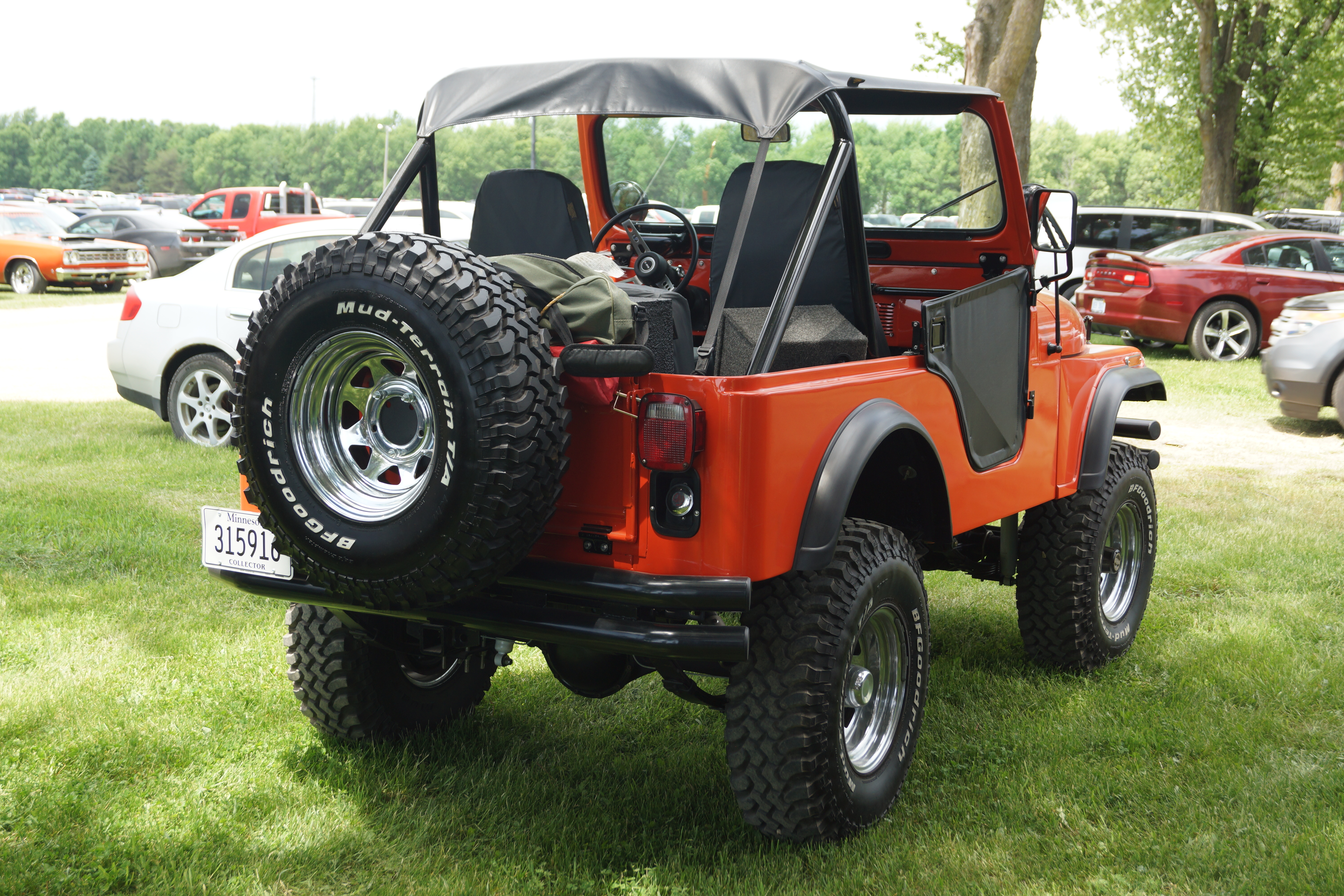
Jeep Cj5
"And what I actually had told Rob in regards to this yellow one and this particular CJ5 And a little bit of the wagon is It happens to DIYers constantly"
The Jeep CJ-5 is an older Jeep model that a lot of people restore and modify. They’re using it as an example while talking about what DIYers often get wrong.
The Jeep CJ-5 is a classic, open/utility-style Jeep produced for decades, known for being popular with DIY restoration and upgrades. Here, it’s referenced as part of the host’s discussion about lessons learned during projects.
Quadra Tech
"I actually saw a whole thread and blow up on one of the Jeep Life groups this weekend where they were just lambasting Quadra Trek, Quadra Tech and Extreme Terrain And basically people had taken their corners"
Quadra Tech is another company name tied to Jeep parts. They’re bringing it up because people were criticizing where they got parts or how things turned out.
Quadra Tech is referenced alongside other Jeep-related retailers, suggesting it’s part of the aftermarket parts/accessories market. The segment frames it as a source of controversy in a community discussion.
Quadra Trek
"I actually saw a whole thread and blow up on one of the Jeep Life groups this weekend where they were just lambasting Quadra Trek, Quadra Tech and Extreme Terrain And basically people had taken their corners"
Quadra Trek is a name people associate with Jeep parts or accessories. The discussion here is about what customers experienced and why some people were upset.
Quadra Trek is mentioned as a vendor/brand in the Jeep parts and accessories ecosystem. The hosts are discussing community backlash toward certain sellers or product sources.
resellers
"They're just resellers Correct They don't manufacture anything really And even when they do have a house brand, they're not manufacturing it"
A reseller is a company that sells items made by someone else. The host is saying that if a reseller just repackages and sells the product, the quality may depend on the original manufacturer.
A reseller is a business that sells products made by others rather than manufacturing them itself. The host uses this to explain why a brand might have “bad parts” even if they put their name on the packaging—because the underlying product may be sourced from an outside supplier.
glass tops or plastic tops
"Is that they, it was one of their glass tops or plastic tops Their clear lids, basically their version of clear lids And it was trash"
This is talking about a clear roof/cover accessory—either made of glass or plastic. The host thinks the plastic version was too thin and didn’t perform the way the buyer expected.
“Glass tops or plastic tops” refers to clear roof/cover style accessories used on vehicles—often to let in light while providing some weather protection. Here, the host is criticizing a “clear lid” style version made from thin plastic, implying it didn’t meet expectations for fit, durability, or appearance.
Extreme Terrain
"They jumped online to be like, extreme terrain has always been the best customer service You know, and they were like, we had problems with my barricade bumper And by this and that, you know, my tactic wheels or whatever they were"
Extreme Terrain is a company that sells Jeep aftermarket parts. The hosts are talking about how their customer service works and how it relates to the parts people buy.
Extreme Terrain is an aftermarket parts retailer that sells Jeep accessories and upgrades. In this segment, it’s discussed in the context of customer service and how customers may be using the brand to get support for specific parts.
barricade
"we had problems with my barricade bumper And by this and that, you know, my tactic wheels or whatever they were ... Which is what barricade is"
Barricade is a brand that makes Jeep accessories like bumpers. The speaker is saying it’s usually the cheaper option people choose when they want the look or function without paying top dollar.
Barricade is an aftermarket parts brand referenced here specifically for a bumper. The discussion frames it as a more budget-friendly “value brand” option compared with pricier bumpers.
tactic wheels
"we had problems with my barricade bumper And by this and that, you know, my tactic wheels or whatever they were And I thought to myself, those are all just burner brands for extreme terrain"
The host mentions “Tactic” as a wheel brand. They’re using it as an example of the different aftermarket brands people might be buying through the same retailer.
“Tactic” is referenced as a wheel brand in the context of aftermarket wheels for a Jeep. The speaker groups it with other brands that are associated with Extreme Terrain’s store ecosystem.
Walmart
"I'm gonna make it really relatable for people They're Walmart, they have their great value brand Which is what barricade is"
Walmart is being used as a metaphor for a cheaper, value-focused option. The host is comparing that idea to how certain Jeep parts brands are marketed.
Walmart is used as a comparison point for a “great value” brand strategy. The speaker’s point is that some aftermarket brands are positioned as budget alternatives while still being sold through a larger retailer.
Amazon
"Yeah And they go, well, at least I didn't buy it at the discount food store, right? No, I didn't buy it on Amazon, I bought it from a Jeep supplier"
Amazon is mentioned as an alternative place someone could have bought parts, but the speaker emphasizes the customer bought from a Jeep supplier instead. This highlights how the retailer/source can matter in customer expectations and support.
value brand product
"Hey, I'm sorry, you weren't happy with your value brand product And here, I'm just gonna give your money back"
A “value brand” is basically the cheaper version of a product line. People choose it to save money, but the quality or support can be different than the more expensive options.
“Value brand” refers to a lower-cost brand or product line positioned as a cheaper alternative. In automotive contexts, it often implies parts or accessories that may have different fit/finish, warranty terms, or quality control compared with premium brands.
synchro problems
"Likewise This is the time I've had synchro problems in any transmission I've ever built"
Synchros help the transmission smoothly switch gears by getting the gears spinning at the right speed. If the synchros are worn, shifting can feel rough or may grind.
“Synchro” (short for synchronizer) problems are issues with the transmission’s ability to match gear speeds before engagement. When synchros wear or fail, shifting can become difficult and may cause grinding or harsh engagement.
cores
"When we had enough cores to do that with regularity And that whole scenario here is Why we kind of got out of the used part sales game with regularity"
“Cores” are the old, used parts they collect so they can rebuild them. If they have enough cores, they can keep rebuilding and sending out replacements.
In parts rebuilding, “cores” are the worn or used units that customers return for rebuilding. Having enough cores lets a shop rebuild and ship replacements consistently.
used part sales game
"Why we kind of got out of the used part sales game with regularity Because our ability to pull a reproduction part out of the box And then go to one of our storage units"
They’re talking about selling used parts to customers. They’re saying they stopped because the used parts weren’t consistent enough to guarantee correct fitment.
This refers to the business model of selling used components from inventory. The hosts explain they moved away from it because fitment differences between parts (even when they’re “the same” on paper) made used parts less predictable.
reproduction part
"Because our ability to pull a reproduction part out of the box And then go to one of our storage units And take an original in hand and go"
A “reproduction part” is a brand-new part made to copy an older factory part. They’re saying they check whether it matches the original so it will fit correctly.
A “reproduction part” is a newly manufactured component made to match an older OEM (original equipment manufacturer) part. The discussion suggests they can pull a reproduction part from the box and compare it to an original to verify fitment.
thread pitch
"Hey, do these things line up appropriately? Is the thread pitch just a little bit different? Is the hardware mounting bore a little smaller or a little bigger?"
“Thread pitch” means how closely the ridges on a bolt or screw are spaced. If it’s slightly different, the bolt may not screw in right or may not hold securely.
“Thread pitch” is the spacing between threads on a screw or bolt. Even small differences in thread pitch can prevent a part from tightening correctly or sealing properly.
hardware mounting bore
"Is the thread pitch just a little bit different? Is the hardware mounting bore a little smaller or a little bigger? And that's one of the big reasons we don't sell used parts anymore"
A “bore” is the size of the hole. If the mounting hole is a little too big or too small, the bolt or bracket may not line up or fit correctly.
A “bore” is the internal diameter of a hole, and “hardware mounting bore” refers to the hole size where a fastener or mounting hardware goes. If the bore is slightly larger or smaller, the part may not align or secure properly.
marketplace
"Nate saying he found a good deal of marketplace for a set of five wheels When he needed the upgrade Eric Elliott said good morning guys"
“Marketplace” means an online place where people list items for sale. They’re saying they found wheels there for an upgrade.
Here, “marketplace” is an online buying/selling platform where people source parts. The speaker mentions finding a marketplace listing for wheels when they needed an upgrade.
Alibaba
"And then Nate also said skip the resellers, go to Alibaba I wanted to skip over that but I'll read it"
Alibaba is a website where you can buy products from many different sellers, often directly. The comment suggests skipping middlemen/resellers to try to save money.
Alibaba is a global e-commerce platform often used to source aftermarket or bulk automotive parts. The speaker’s advice (“skip the resellers, go to Alibaba”) implies they think direct sourcing can reduce cost.
hookroad.com
"Charles said what do y'all think of hookroad.com? YJ Bumpers You know, I heard a couple people talk about hook or hook"
They’re talking about hookroad.com, a company that sells aftermarket parts for Jeeps. The discussion compares it to other aftermarket brands and focuses on quality and customer support.
The hosts are discussing hookroad.com, a retailer/manufacturer of aftermarket Jeep accessories. In this segment, “Hook” is framed as a Chinese-made brand competing in the same space as other aftermarket companies.
Rough Country
"I don't say that in a derogatory sense By any stretch of the imagination I do think that no different than Rough Country The only thing about hook is that they've been around for a pretty long period of time"
Rough Country is a company that makes aftermarket off-road parts for vehicles like Jeeps. The hosts are comparing how Rough Country’s quality and customer support stack up against Hook.
Rough Country (often abbreviated RC) is an aftermarket parts brand known for Jeep lift kits, bumpers, and other off-road upgrades. The hosts compare Hook’s quality and customer service to Rough Country’s reputation and product sourcing.
EAG
"Honestly, I had a whole conversation about EAG [1374.1s] E-Auto Grills [1375.5s] If you don't know what EAG stands for [1377.6s] It stands for E-Commerce"
In the episode, EAG is a shorthand for a Jeep parts seller/brand. They say it stands for “E-Commerce,” meaning it’s connected to selling parts through online channels.
EAG is explained in the segment as “E-Auto Grills,” with the acronym standing for “E-Commerce.” It’s being used to describe a parts brand’s origin/identity tied to online sales and aftermarket Jeep accessories.
JK
"And all of a sudden with the boom of the JK [1388.8s] They were like, we can sell a bunch of Jeep parts"
“JK” is Jeep-speak for a specific Wrangler generation. The hosts are saying that when that Wrangler was popular, more aftermarket Jeep parts businesses had a chance to sell a lot.
“JK” refers to the Jeep Wrangler generation commonly called the JK (2007–2018). In the segment, they connect EAG’s growth to the “boom of the JK,” meaning demand for aftermarket parts increased as that Wrangler generation became popular.
EconX container
"Because we can stamp them over here in Asia [1390.8s] And throw them in an EconX container [1396.0s] They make decent enough stuff as well"
They’re describing how the parts were made overseas and shipped in a container before being sold. It’s basically the shipping step in getting aftermarket parts to the market.
An “EconX container” is mentioned as part of the logistics for importing parts. The idea is that parts were manufactured overseas (in Asia), shipped in shipping containers, and then sold as replacement Jeep parts.
OPAR
"But there was also an OPAR [1403.6s] OPAR was kind of cool [1405.7s] I'm not saying anything bad about these folks"
OPAR is mentioned like a specific Jeep parts brand or product. The speaker doesn’t fully explain what it stands for here, but they’re saying it was interesting.
OPAR is referenced as another aftermarket Jeep-related brand or product line, described as “kind of cool.” The segment doesn’t expand the acronym, but it’s treated as a distinct entity in the replacement-parts ecosystem.
three and a half inch lift
"Nate said he's been running the rough country three and a half inch lift and the Gladiator for four years with zero issues."
A lift raises the car. A 3.5-inch lift is a pretty noticeable height increase, which can change how the Jeep fits tires and how it drives.
A “lift” is a suspension modification that increases ride height, usually by changing springs/struts or adding a lift kit. A 3.5-inch lift is a significant change that can affect driveline angles, steering geometry, and tire clearance.
manufacturer quality issue
"There's a production break. Hey, there's a manufacturer quality issue Whatever it might be and then we're able to have that manufacturer step up and Compus the kit in a in a fast manner to resolve the issue"
This means the problem likely came from the way the part was made, not from something the owner did wrong. The goal is to get the maker to fix it.
A “manufacturer quality issue” means the problem is traced to how the vehicle or component was built, not to the owner’s actions or installation. The speaker describes escalating the issue to the manufacturer so they can address it quickly.
drop ship
"Okay ship it or drop ship it here They never even see it most of the time or if they do it's really Intermiss so when we're like, hey, we're having this problem then they have to go, okay"
“Drop ship” means the product ships straight from the supplier to the buyer, rather than sitting in a middle warehouse. The point is that the maker may not notice problems quickly.
“Drop ship” is a logistics model where the seller doesn’t hold inventory; instead, the supplier ships the product directly to the customer. The speaker uses it to explain that manufacturers may not even see the product in real-world use.
Dino shop
"We have a a spectacular CJ 7 that just came back from the Dino shop Yep, and is working beautifully"
A “dyno shop” is where they test an engine on a machine that measures how much power it makes. It’s commonly used to tune the car so it runs better.
A “dyno shop” refers to a facility that uses a dynamometer (dyno) to measure engine output like horsepower and torque under controlled conditions. Bringing a vehicle to a dyno shop is often used for tuning and verifying performance.
AMC bell
"We also made its transmission not leak as much as possible It was a turbo 400 with an AMC bell"
A bellhousing is the part that bolts the engine to the transmission. Saying “AMC bell” means they used a specific bellhousing style/part to make the Turbo 400 fit correctly.
An “AMC bell” refers to a bellhousing associated with AMC (American Motors Corporation) engine-to-transmission mating. Bellhousings are the housings that connect the engine to the transmission, and the correct one is crucial for fitment and alignment.
break in the cam
"[1681.7s] Seals it needed and kind of refresh it [1685.6s] Break in the cam get everything working."
Cam break-in is a careful first-run routine after installing a new cam. It helps the moving parts wear in the right way so they last longer.
“Cam break-in” is the initial running procedure for a new or freshly rebuilt camshaft and related valvetrain components. The goal is to establish proper wear patterns and lubrication so the cam and lifters/valves seat correctly, which helps prevent premature wear.
valve seals
"[1720.6s] Kind of there's a particular when the engine is not working, right? The valve seals are bad [1727.2s] You know the the exhaust collector is not fully see whatever it might be"
Valve seals help keep engine oil where it belongs. If they wear out, oil can leak into the engine and burn, which can cause bad smells and smoke.
Valve seals are small rubber seals that keep oil from leaking down into the engine’s combustion chambers through the valve guides. If they harden or fail, you can get oil burning, smoke/odor, and rough running—often described as a “smell” when the engine isn’t right.
exhaust collector
"[1727.2s] You know the the exhaust collector is not fully see whatever it might be [1731.7s] And this is also testament to having a engine builder that is quality"
The exhaust collector is where exhaust gases come together on their way out of the car. If it’s not sealing or flowing right, you can get fumes/smells and the engine may not run as smoothly.
An exhaust collector is part of the exhaust system where exhaust gases from multiple cylinders merge into a single pipe or section. If it’s cracked, leaking, or not flowing correctly, it can affect exhaust flow and contribute to smells or performance issues.
motor mounts
"[1748.9s] New motor mounts things are correct addressing little things as you're there [1753.4s] If that hardware is worn replace it that kind of stuff and now we have a very smooth running"
Motor mounts hold the engine in place and help reduce shaking. If they’re worn out, the engine can move more than it should and the car can feel rough.
Motor mounts are the brackets and rubber/isolator components that hold the engine in place and reduce vibration. Worn mounts can cause excessive engine movement, vibration, and misalignment of related components; replacing them is part of a thorough restoration.
Holly sniper
"[1760.1s] No odor [1762.7s] Best 304 v8 we can have correct and it is a Holly sniper [1767.4s] If you're injected and that's why it went for the tuning hit the key it fires right up"
Holley Sniper is an aftermarket fuel-injection kit. It helps the engine start easier and run more smoothly than a traditional carburetor.
“Holley Sniper” is an aftermarket fuel-injection system (by Holley) that replaces carburetion with electronic fuel control. It’s commonly used to modernize older engines for easier starting, better drivability, and more consistent fueling.
part time kit in the transfer case
"[1771.5s] Very confidence inspiring transmission works great does have our part time kit in the transfer case that we've done [1777.4s] Previously so that one. I'm very excited for that to go off"
The transfer case sends power to the front and rear wheels on 4x4 trucks. A part-time setup lets you use 2WD most of the time and switch to 4WD when you need it.
A transfer case is the gearbox that splits power to the front and rear axles in 4x4 vehicles. A “part-time” setup typically means the vehicle can run in 2WD for normal driving and switch to 4WD when needed, often using a kit or conversion components.
hemi
"We're not getting to put a hemi in there. We're not doing an LS This is basically a bone stock 18"
“Hemi” is a type of V8 engine design known for making strong power. They’re mentioning it as a possible swap, but saying they’re not doing that one.
“Hemi” is shorthand for Chrysler’s hemispherical combustion-chamber engine design, commonly associated with V8 performance. Here it’s used as an example of a different engine they’re not installing into the Jeep.
LS
"We're not getting to put a hemi in there. We're not doing an LS This is basically a bone stock 18"
“LS” is a common GM V8 engine family people often swap into other cars. They’re saying they’re not installing one of those engines in this Jeep.
“LS” refers to GM’s LS-series V8 engine family (often swapped into other vehicles). The hosts mention it as another popular engine swap option they’re not doing for this Jeep.
bone stock
"This is basically a bone stock 18 Early 19 JL you mm-hmm. It is orange."
“Bone stock” means the Jeep is basically as it came from the factory, with no big upgrades. They’re saying this one isn’t being turned into a custom swap build.
“Bone stock” means the vehicle is essentially unmodified from the factory—no performance upgrades or major changes. They’re emphasizing this Jeep is staying with the original-style setup rather than being heavily modified.
upper radiator hose
"We've had a rash and we I have also talked about the upper radiator hose likes to migrate off. Yep mm-hmm"
The upper radiator hose is a rubber hose that moves coolant to help the engine stay cool. If it comes loose, coolant can leak out and the engine can overheat.
The upper radiator hose is the coolant line that carries hot engine coolant from the engine to the radiator for cooling. If it “migrates off,” it can cause coolant loss and overheating, which can lead to serious engine damage.
overheated
"They had lost a significant amount of coolant and it got driven overheated a lot. Yeah, and Now we are seeing carnage inside a three six"
“Overheated” means the engine got too hot. When that happens for too long, it can damage the engine internally.
“Overheated” means the engine temperature exceeded safe operating limits. Prolonged overheating can warp components, damage internal parts, and accelerate failures—exactly what they’re linking to the engine “carnage” they’re seeing.
coolant
"They had lost a significant amount of coolant and it got driven overheated a lot. Yeah, and Now we are seeing carnage inside a three six"
Coolant is the liquid that keeps the engine from getting too hot. If the Jeep loses coolant, it can overheat and cause major engine problems.
Coolant is the fluid that absorbs heat from the engine and carries it to the radiator to be cooled again. In this segment, they say the Jeep lost a significant amount of coolant, which led to repeated overheating and internal engine damage.
camshaft failures
"When we took it apart now, everyone knows about camshaft failures and that kind of stuff I have never seen a both lobes on one cylinder completely gone"
The camshaft controls when engine valves open and close. If it fails, the engine can run badly or misfire, and in severe cases parts can be destroyed.
Camshaft failures happen when the camshaft lobes and related surfaces wear or break down, preventing correct valve timing. In this case, they’re saying they’ve seen camshaft-related issues, but this particular failure pattern was unusual and severe.
misfiring
"I have never seen a both lobes on one cylinder completely gone Mm-hmm wonder why it was misfiring on that cylinder"
A misfire is when a cylinder doesn’t fire properly, so the engine runs rough or loses power. They’re saying the cylinder misfire matched what they found inside.
Misfiring means one or more cylinders aren’t burning fuel correctly at the right time. They connect the misfire on a specific cylinder to the camshaft lobe damage they found during teardown.
spark plugs
"Two of the two of the spark plugs Smash the electrodes were smashed shut Filter"
Spark plugs are the small parts that create the spark to start combustion in each cylinder. If they’re damaged, the engine can misfire and run poorly, and it may point to a bigger problem.
Spark plugs ignite the air-fuel mixture in an engine’s cylinders. When spark plugs are described as damaged (like smashed electrodes), it can indicate misfires and sometimes deeper issues such as combustion problems or mechanical wear.
electrodes
"Smash the electrodes were smashed shut Filter We actually great crime scene it"
On a spark plug, the electrodes are the parts that actually make the spark. If they’re broken or bent, the engine may not ignite fuel properly.
The electrodes are the metal tips on a spark plug that create the electrical spark. If the electrodes are “smashed,” the plug may not fire correctly, leading to misfires and rough running.
filter
"Filter We actually great crime scene it Looked like a crime scene. It was the most spectacular Plugged filter I've ever seen in my whole entire life"
A filter is there to catch dirt so it doesn’t damage the engine. If a filter gets “plugged,” fluid can’t flow well, and that can cause serious engine problems.
A filter in this context is likely an oil or fuel filter that traps debris before it circulates through the engine. A “plugged” filter means it’s restricted, which can reduce flow and contribute to oil pressure and lubrication failures.
fly-by-night guys
"when they started to wear out it was the the kind of fly-by-night Cardi a resident loan in the can yeah, you know, they used to joke about throwing sawdust in the in the in the Because that sawdust would actually absorb the oil"
“Fly-by-night” is a way of saying someone is sketchy and not trustworthy. In car terms, it usually means they try to hide a real problem instead of fixing it correctly.
“Fly-by-night” refers to shady, short-term operators who do questionable repairs or scams rather than proper fixes. In automotive stories, it often describes attempts to temporarily mask a real mechanical problem instead of repairing the root cause.
throwing sawdust in the engine
"they used to joke about throwing sawdust in the in the in the Because that sawdust would actually absorb the oil and it would fill a You know a bearing journal that had gone bad, and so it would quiet it down"
This is a described “old school” scam where sawdust is added to absorb oil and temporarily quiet engine noise. It doesn’t fix the underlying bearing or lubrication damage and can make the situation worse over time.
rod bearings
"Yeah, temporarily this was a real thing that that scam artist dealers or fly-by-night guys did leather instead of Being in rod bearings exactly and and you would do it just a long to make it go away type of deal"
Rod bearings are small bearing surfaces that help the crankshaft and connecting rods move smoothly. If they wear out, the engine can start knocking and may suffer major damage.
Rod bearings are the bearings inside the engine that support the connecting rods on the crankshaft. If rod bearings are worn (“gone bad”), they can cause metal-on-metal contact, low oil pressure, and catastrophic engine damage.
engine remanufacturers
"Engine remanufacturers do not have JL three six engines ready to rock and roll right You can buy them in the used market from you know crash"
These are shops that rebuild old engines so they work like new. They usually inspect and replace worn internal parts, rather than just selling a used engine as-is.
Engine remanufacturers rebuild used engines back to specified tolerances and performance targets. The key difference versus a random used engine is that remanufactured units are typically inspected, re-machined, and assembled with controlled parts and processes.
salvage Jeep
"You can buy them in the used market from you know crash Situations, you know like a salvage Jeep Obviously a number of hemi swap companies are selling cheap three sixes"
A salvage Jeep is a car that was written off after damage. If you buy parts or an engine from it, you may save money, but you often don’t know how the engine was treated before.
A salvage vehicle is one that has been declared a total loss by an insurer, usually due to damage. Buying engines from salvage cars can be cheaper, but the engine’s prior condition and maintenance history are often unknown.
reman with a warranty
"So there is a time and a place where a reman with a warranty with you know Appropriate stuff makes sense."
A “reman” is a rebuilt engine. Getting it with a warranty means the seller will help if something goes wrong instead of you eating the cost.
A “reman” is short for a remanufactured engine—rebuilt to a like-new standard. The warranty matters because it shifts some risk away from the buyer if the engine fails due to internal issues.
catastrophic engine damage
"Chrysler is aware of the catastrophic nature that these new engines Go can happen can happen and I say that from a sense that Literally on the motor it has a sticker says if catastrophic engine damage has occurred. Please replace these parts"
This means the engine has suffered a major failure. Once it gets to that point, the damage can be so bad that the right fix is often to replace parts (or the engine) rather than trying to patch it.
“Catastrophic engine damage” refers to severe internal failure—damage so extensive that the engine may be beyond economical repair. The speaker notes Chrysler labeling that instructs replacement of certain parts if that kind of damage has occurred.
Chrysler
"So, you know, I think that these engines are so good Until they're not so like think about back in the day if you had a cordless electric screwdriver"
They’re mentioning Chrysler because the engine has guidance from the manufacturer. The point is that Chrysler expects certain failures can happen and tells you what should be replaced.
Chrysler is referenced as the manufacturer/brand behind the engine labeling and guidance. In this context, they’re portrayed as acknowledging how severe failures can occur and providing instructions on what to replace.
old engines would like slowly lock up
"old engines would like slowly lock up and take its last breath and you're like, hmm I think it's gonna leave me stranded where the new ones are like do-do-do-do. Bam. Boom. You're done"
They’re describing how older engines might get worse over time until they seize and stop. Newer engines may fail suddenly, so you might not get as much warning.
The speaker contrasts failure modes: older engines may degrade gradually (e.g., internal wear leading to increasing friction) until they “lock up” and stop running. Newer engines are described as failing more abruptly, which can change how and when drivers notice trouble.
clear the codes
"“But that dissonance because we had to keep explaining because they're like but it runs so well” ... “After you clear the codes and after you do…”"
When a car detects a problem, it stores a code in its computer. “Clearing the codes” wipes those stored warnings, but if the problem is still happening, the light can come back.
“Clearing the codes” means resetting the car’s onboard diagnostic trouble codes (DTCs) after a fault is found. It can temporarily turn off the check-engine light, but it won’t fix the underlying problem if the cause is still present.
f-head motor
"“Back to vintage. Yep. So we have a really cool Jeep is a wheeler, but vintage” ... “It has f-head motor in it…”"
An F-head is an older engine design where the valves and combustion chamber are set up differently than modern engines. It matters because it affects how the engine breathes and how it’s built or repaired.
An “F-head” engine is an older cylinder-head design where the intake and exhaust valves are arranged in a specific layout (with the valves in the block and a combustion chamber shaped by the head design). It’s associated with early Jeep-era engines and is a key detail when discussing vintage engine building.
carburetor
"Everybody was blaming the carburetor. We don't got the gang together. Everybody beat the dead horse. That was the carburetor"
A carburetor is the part that mixes fuel and air for the engine. If it’s not working right, the engine may run rough or refuse to start, so mechanics often check it first.
A carburetor is a fuel-mixing device that meters gasoline and mixes it with air before it enters the engine. If it’s dirty or misadjusted, the engine can run poorly or not start, which is why people often blame it when drivability issues show up.
f head l head situation
"So I start digging into it now on an f head l head situation Your oil pump is driven off the cam"
“F-head” and “L-head” describe different flathead-style cylinder head designs used on older engines. They’re mentioned because oiling and timing layouts can differ, affecting how systems like the oil pump are driven and why timing matters for lubrication.
distributor
"Because the distributor drives the oil pump. So it doesn't matter where you put the oil pump in on that [2389.2s] Well, and that's actually uh amc v8 same thing."
On older engines, the distributor is like a switch that sends spark to the right spark plug at the right time. If it’s put in wrong or timed wrong, the engine can start firing in the wrong order and run poorly.
A distributor is an ignition component used on many older engines to route high-voltage electricity from the ignition coil to the correct spark plug. It also coordinates spark timing with engine rotation, so if it’s installed or timed incorrectly, the engine can misfire or run on the wrong cylinders.
firing off of number four and said number one
"Each the first one couldn't get the run second one got the run, but they don't know how [2412.4s] I'm checking it. It's actually firing off of number four and said number one."
The engine is supposed to spark in a specific cylinder order. Here, it’s sparking the wrong cylinder (#4 instead of #1), which usually means something is installed or timed incorrectly.
This describes an ignition timing/order problem where the engine’s spark events are happening for the wrong cylinder (e.g., cylinder #4 firing when it should be #1). That kind of mismatch often points to incorrect distributor indexing/rotation, wrong wiring, or an installation error after prior shop work.
go back to the original cause
"Which all you're doing is just [2447.2s] moving the band aid [2448.8s] And it that's why I say at this point the best thing to do is go back to the original cause"
The hosts are describing a troubleshooting strategy: when multiple shops have “layered” fixes on top of an initial mistake, the best approach is to identify and correct the original root cause. Otherwise, later repairs can mask the real issue and create additional problems.
3b
"[2488.3s] And he has a 3b and he has an f head and he's had that for ever"
“3B” sounds like a nickname or code for a particular engine setup. The speaker is using it to talk about which engine/head version someone has.
“3B” appears to be shorthand for a specific engine/head configuration or identifier used in the Jeep/engine community. In this context, it’s paired with “f head,” suggesting the speaker is referencing particular early Jeep engine variants rather than a generic term.

Chevrolet Corvette
"... we are far more closely aligned with harleys and corvettes where There is dedicated community because of th..."
The Chevrolet Corvette is a sports car built for fast driving and performance. People who like Corvettes often form strong communities around the model. It’s mentioned because it’s a well-known car that many enthusiasts talk about together.
The Chevrolet Corvette is a performance sports car known for its strong engine options and long-running reputation as an enthusiast favorite. It often comes up in podcasts when discussing car communities and the idea of dedicated fan groups around specific models. In this episode’s context, it’s mentioned alongside other enthusiast cultures to highlight how certain vehicles build loyal followings.
1920s technology
"[2575.9s] the motor that [2577.9s] Basically is a base of this engine in this 63 63 is a 1920s technology. Correct. So by the time [2587.3s] This jeep was produced that everyone else had walked away from"
They’re saying the Jeep’s engine design is based on something much older—like ideas from the 1920s. The point is that this Jeep kept using an old-school approach longer than other cars.
The host is describing the Jeep’s engine design as being based on very old technology—specifically comparing it to 1920s-era engineering. This is meant to highlight how long some Jeep powertrain concepts persisted, even as other manufacturers moved on.

Grand Wagoneer
"We're same thing in 91 When the grand bagoneer came out with a still carbureted 360 Everybody else had moved on."
The Jeep Grand Wagoneer is a big Jeep SUV. The hosts are using it as an example of a time when Jeep still used older engine tech while other brands had switched to newer systems.
The Jeep Grand Wagoneer is a full-size SUV known for its V8 engines and classic, old-school character. In this segment, it’s used as an example of a model that arrived with older technology (carburetion) when competitors had already moved on.
carbureted
"When the grand bagoneer came out with a still carbureted 360 Everybody else had moved on."
“Carbureted” means the engine uses a carburetor to blend fuel and air. It’s an older style of fuel system, and it usually needs more careful tuning as parts wear out.
“Carbureted” means the engine uses a carburetor to mix fuel and air before it enters the cylinders. Compared with fuel injection, carburetors can be more sensitive to tuning and wear, especially as engines age.
4x4 shop
"it doesn't always make sense to go to your local 4x4 shop and let alone ... shops open and close daily whether it be Standard automotive import, you know racer car or 4x4, right?"
A “4x4 shop” is a repair shop that mainly works on four-wheel-drive vehicles. The point here is that even specialists may not know every old or unusual setup they see.
A “4x4 shop” is a specialized repair business focused on four-wheel-drive vehicles. The hosts are discussing how specialization can help, but it doesn’t guarantee every shop will be familiar with every older or niche powertrain.
engine builder
"I think that that's part of the thing. He just took it to a reputable engine builder, right? That doesn't mean that that engine builder understood"
An engine builder is a specialist who rebuilds an engine’s internal parts. The hosts are saying that a good one is more likely to know what to do when a normal shop might not.
An engine builder is a shop or specialist that rebuilds internal engine components to restore performance and reliability. In the segment, the hosts mention taking an engine to a reputable builder as a way to get the right expertise for a specific, possibly unfamiliar, setup.
hemmies
"All different hemmies may not know anything about an f-head or an l-head. There you go. There you go. Perfect perfectly said"
“Hemmies” is a common enthusiast nickname for Chrysler HEMI engines, known for their hemispherical combustion chambers. The hosts use it as shorthand for people who work on or talk about these engines, and they’re saying not everyone knows the older head-layout terminology.
right hand drive
"And for those that don't know we're talking about uh 2015 Right hand drive right hand drive JKU JKU It's got a lot of Postal miles on it... right hand drives pretty much always have had Not the most love from the home mothership with wiring"
Right-hand drive just means the steering wheel is on the right side of the car. That can make repairs and wiring more complicated because the layout and parts may be different than the left-hand-drive versions most people are used to.
“Right hand drive” means the steering wheel is on the right side of the vehicle (common in some countries). Converting or maintaining a right-hand-drive Jeep often involves extra wiring and parts differences compared with left-hand-drive versions.
replacement harness
"The only thing that was great on this is we actually found a listing or part number for the Uh replacement harness. Mm-hmm. So that gave us some hope"
A “wiring harness” is the car’s main bundle of wires. If it’s damaged or unreliable, replacing it can fix a lot of electrical problems at once.
A “replacement harness” is a full wiring harness—bundles of wires that connect sensors, switches, modules, and power/ground points. Swapping it is often used when wiring has been damaged, modified, or is unreliable, especially in vehicles with known wiring complexity like right-hand-drive conversions.
charging batteries
"Right now. We're charging batteries and kind of getting ready to blow the cobwebs out of it"
Charging the batteries means topping up the car’s electrical power before you try to start or test things. It helps avoid weird electrical errors that can happen when the battery is weak.
“Charging batteries” refers to restoring battery voltage before electrical work or startup. In projects involving wiring harness replacement, ensuring strong battery health helps prevent low-voltage faults and makes diagnostics more reliable.
KMC beadlocks
"Um, it's got some sick KMC beadlocks on it. Yep, 37s a fit appropriately with some sweet fender flares"
Beadlocks are special off-road wheels that grip the tire more tightly. That helps the tire stay put when you air down for rough terrain, and KMC is the wheel brand they’re using.
“Beadlocks” are wheels designed to clamp the tire bead more aggressively, helping prevent the tire from slipping on the rim during low-pressure off-road use. KMC is a wheel brand, and beadlock setups are common on rock-crawling and trail rigs.
37s
"Um, it's got some sick KMC beadlocks on it. Yep, 37s a fit appropriately with some sweet fender flares"
“37s” means tires that are about 37 inches tall. Bigger tires can help the vehicle handle rough trails, but they’re also heavier and may need extra clearance.
“37s” is shorthand for 37-inch tires, a common size in off-road circles. Larger tires increase ground clearance and can improve traction, but they also add weight and can require suspension and clearance work.
fender flares
"Yep, 37s a fit appropriately with some sweet fender flares That didn't belong on it."
Fender flares are add-on pieces around the wheel area. They help cover wider tires and protect the body from dirt and rocks.
Fender flares are extensions mounted to the wheel arches to cover wider tires and protect against mud, rocks, and debris. When someone runs larger tires (like “37s”), flares help with both coverage and fitment.
Request an Explanation
Heard something you'd like explained? We'll add it to this episode.
Sign in to request explanations for terms you heard.
Want to learn more?
Browse our glossary for plain-English explanations of automotive terms, jargon, and concepts.
Help improve this episode
See something that's not quite right? Our annotations are AI-generated and can sometimes miss the mark. Click the flag icon on any annotation to suggest a correction.