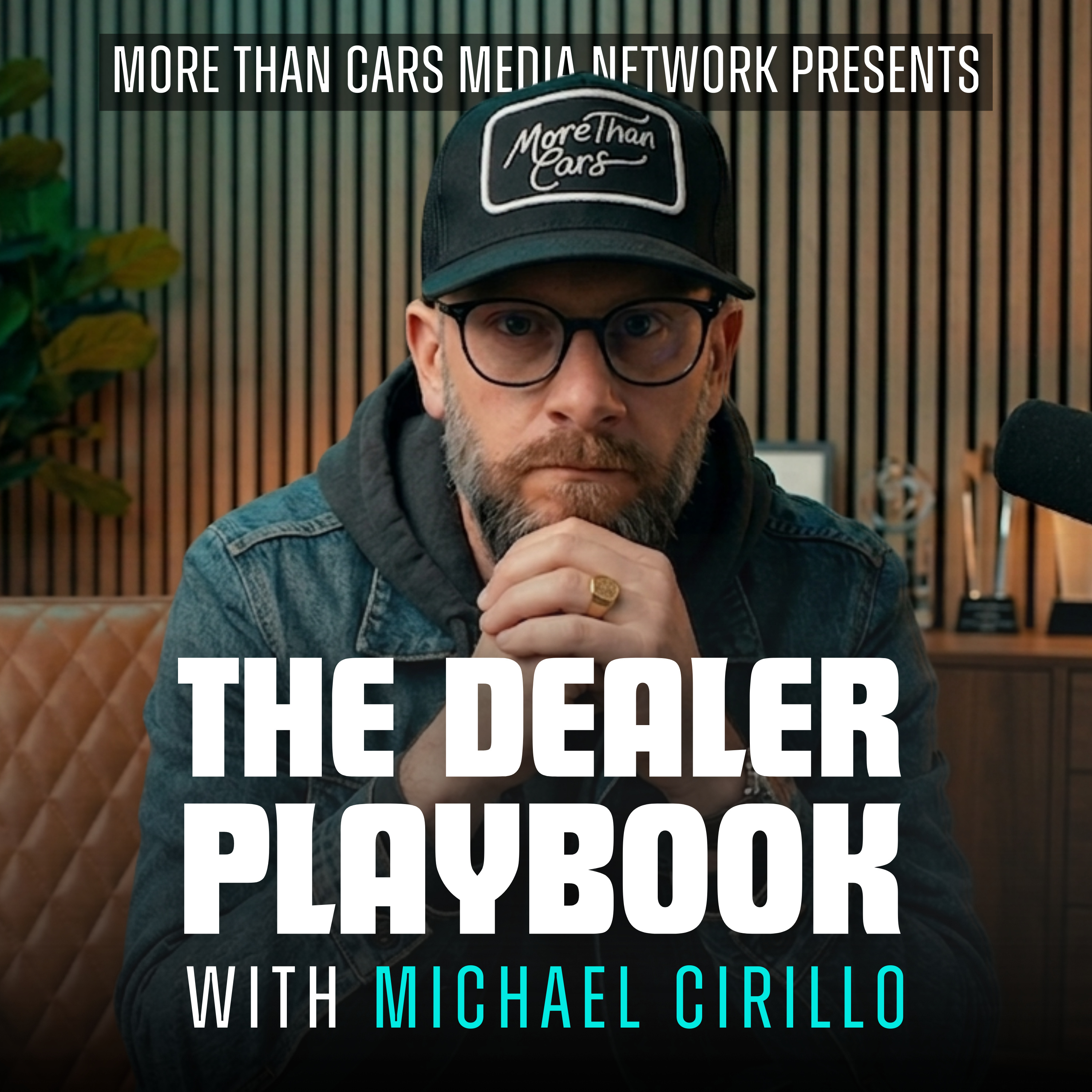
"Wearing the story" — Marketing cars through authentic connection | Paul J Daly, Founder/CEO ASOTU
About this episode
Paul J Daly and the host dig into how podcasting becomes a branding engine, not just a content channel. Using the “town” metaphor, they argue that strong brands act like beacons that attract people who see themselves reflected in the message. The conversation connects podcast consistency to unexpected outcomes: speaking gigs, books, relationships, and even inbound business leads. They also touch on ASOTU, More Than Cars, and how authentic, adjacent content can build a loyal community without chasing celebrity-scale numbers.
Is your dealership marketing feeling hollow? Are you chasing digital trends only to find your message falls flat? Many in automotive retail are struggling to cut through the noise, constantly investing in strategies that fail to build genuine connection or long-term loyalty.
This isn't just about selling cars; it's about building a brand that resonates deeply with your community and stands the test of time.
In this episode, you’ll learn:
- How to build an authentic brand that attracts customers who *choose* your dealership.
- The difference between fleeting "hype" and lasting, trustworthy dealership leadership.
- Why a targeted approach to automotive sales content creates a powerful inbound lead engine.
- How even a small audience can translate into massive dealer growth and business opportunities.
- The essential truth about connecting with customers: people buy stories, not just products.
Paul J. Daly, Founder and CEO of ASOTU and host of Automotive State of The Union, shares his insights on why authentic connection is the ultimate marketing advantage in today's landscape.
Timestamps
00:00 Controversial Brand Question
00:36 Intro
05:10 Your Podcast Town
07:15 See What Happens
09:03 Big Guests Build Credibility
10:36 Inbound Sales Engine
14:30 Does Podcasting Still Work
15:50 Niche Down Till It Hurts
17:31 Dealerships Are Unique
18:37 Wearing The Story
19:40 Stradivarius Story Effect
22:31 Real Vs Fake Content
28:15 Known To Trusted
33:49 Contact And Wrap Up
Follow The Dealer Playbook so you never miss an episode.
authentic connection
"Okay, I have a controversial question. Yes, I'm gonna put you on the spot. [25.6s] What's a brand that most people in automotive think is strong that you actually think is kind of hollow"
Authentic connection means being real with customers instead of using the same scripted pitch. In car sales, it’s about building trust so people feel understood, not pressured.
“Authentic connection” refers to building trust with buyers by communicating in a genuine, personal way rather than relying on generic sales messaging. In automotive marketing, this often means aligning the brand story with real customer experiences and consistent dealer behavior.
ASOTU
"Paul J Daly, Founder/CEO ASOTU"
ASOTU is referenced as the founder/CEO’s company in the episode context. In a marketing-focused episode, it likely represents the business platform or brand behind the host’s work.
brand story
"And then there will be whichever one he uses as an example [20.6s] I'm gonna turn this camera off right now, so I don't give you any tells here's the question stretchy pants"
A “brand story” is the narrative a company uses to explain who it is, what it stands for, and why customers should care. In retail automotive, a strong story can make marketing feel more meaningful and help buyers remember the dealer or manufacturer.
dealer playbook
"One of the things that I enjoy most about producing the dealer playbook is hearing from you the messages that I get of people who are [42.5s] Getting so much value out of the podcast applying it to their day-to-day workflows and"
A dealer playbook is like a guidebook for how a car dealership should run its marketing and daily processes. The goal is to help dealers improve results using proven steps.
A “dealer playbook” is a structured set of strategies and tactics for running a dealership more effectively. In this episode, it’s framed as actionable marketing and workflow guidance for retail auto teams.
competitive advantage
"Even more relevant today than ever with this surgeon popularized AI and people wondering well [90.1s] What can I do next? How can I have a competitive advantage?"
A competitive advantage is what helps a business stand out and get more customers than others. In car sales, it’s often about how you market and connect with people, not just the cars you have.
In automotive retail, “competitive advantage” means having a repeatable edge that helps you win customers more effectively than other dealers. It can come from better marketing, stronger customer experience, or a clearer brand story that resonates with buyers.
starting a podcast and staying consistent
"I think it's also like see what happens when you do things and just starting a podcast and staying consistent [495.1s] You kind of define what it is that you're about and you get your a chance to flesh out your thinking and you attract the other people"
They’re talking about how sticking with something (like posting regularly) helps people understand what you’re about. Over time, that consistency can lead to more connections and opportunities.
The hosts discuss how launching a podcast and maintaining a consistent schedule helps define a creator’s brand and message. They also connect consistency to building relationships and attracting like-minded people.
dealers compressed podcast
"My the first podcast I started was called the dealers compressed podcast [523.1s] Which then morphed into clarity compressed because I branched out just from automotive."
The “dealers compressed podcast” is mentioned as the host’s first podcast, which later evolved into “clarity compressed.” This matters in the context of the episode because it illustrates how content positioning can shift while still building an audience.
clarity compressed podcast
"My the first podcast I started was called the dealers compressed podcast [523.1s] Which then morphed into clarity compressed because I branched out just from automotive."
They talk about a podcast called “clarity compressed” that started as something automotive-focused and then broadened out. It’s part of the story of how the host built their brand over time.
The hosts mention the “clarity compressed” podcast as an evolution of an earlier show, expanding from automotive into broader brand, strategy, and personal development topics. This is relevant because the episode is about marketing cars through authentic connection.
brand as a beacon
"So when you ask the third notable guests, you say, oh these other two and then you have three or five [573.5s] Yeah, well, and it's like what you just said. It's like your brand is a beacon. It's a reflection back"
The segment frames personal or business branding as a “beacon,” meaning it attracts the right audience and opportunities. The idea is that credibility and visibility compound as more notable guests or partners get involved.
Jaco
"I think a lot of the reasons because I mean gosh who have you had I know Jaco, right? [583.0s] You've had Jaco on the show."
“Jaco” is referenced as a guest on the show, but the transcript doesn’t provide enough detail to identify the person or company. It’s still relevant as part of the hosts’ argument about using guests to build brand momentum.
Gary Vaynerchuk
"You've had Jaco on the show. Oh, Gary Vaynerchuk guy Kawasaki Donald Miller [589.2s] Yeah, unreal unreal heavy hitters, right?"
They mention a well-known marketing figure as someone who was on the show. The point is that having famous guests can help build credibility.
Gary Vaynerchuk (likely Gary Vaynerchuk/Gary Vaynerchuk) is name-dropped as a guest, described as a “heavy hitter.” In a marketing/branding discussion, notable guest appearances are used as credibility signals.
Kawasaki
"Oh, Gary Vaynerchuk guy Kawasaki Donald Miller [589.2s] Yeah, unreal unreal heavy hitters, right?"
Kawasaki is mentioned among guest names, but the transcript doesn’t clarify whether it’s the motorcycle brand or a person with that name. Given the episode’s marketing focus, it’s likely a name-drop rather than a technical automotive reference.
Donald Miller
"Oh, Gary Vaynerchuk guy Kawasaki Donald Miller [589.2s] Yeah, unreal unreal heavy hitters, right?"
They mention Donald Miller as someone who’s been on the show. The takeaway is that having well-known guests helps the podcast (and brand) grow.
Donald Miller is name-dropped as a guest, reinforcing the hosts’ point that notable guests help establish credibility and attract further opportunities. The excerpt doesn’t tie him to any specific automotive product or brand.
brand resonance
"They see a reflection back of something that resonates with them. And I mean, this is what you're saying hits me because This This isn't about a podcast it is about brand"
Brand resonance is when a brand feels like it matches who you are. People are more likely to pay attention when they feel the message speaks to them.
Brand resonance is when a brand’s message, values, or identity “clicks” with a person, making them feel understood and connected. The segment suggests that marketing works when it reflects something the audience already values, rather than pushing a hard sell.
inbound sales mechanism
"Right because of a podcast I have an inbound Sales mechanism with no outbound sales team. Yes and a full pipeline that has a wait list now"
Inbound means people find you first. Instead of you chasing leads with ads or cold outreach, your content (like a podcast) builds trust so prospects reach out on their own.
An inbound sales mechanism is a strategy where potential customers come to you because of content, community, or brand trust rather than you actively pitching them. In this segment, the podcast is framed as a way to generate leads and build a pipeline without traditional outbound sales activity.
outbound sales team
"Sales mechanism with no outbound sales team. Yes and a full pipeline that has a wait list now Because every time we get on a call"
An outbound sales team refers to salespeople who actively seek prospects—through cold calls, emails, direct outreach, or scheduled pitches. The speaker contrasts this with a podcast-driven inbound approach, implying a different cost structure and sales process.
full pipeline
"Yes and a full pipeline that has a wait list now Because every time we get on a call"
A pipeline is just the list of potential buyers you’re working with. “Full” means you have plenty of people at different steps, not just a few leads.
A “full pipeline” means there are many active leads moving through the sales process at different stages. The speaker ties this to podcast-driven inbound leads that create consistent demand and even a wait list.
wait list
"Yes and a full pipeline that has a wait list now Because every time we get on a call"
A wait list indicates demand is high enough that new prospects can’t be immediately served, so they’re queued. In the context of the segment, it’s used to illustrate how consistent inbound interest can build momentum for automotive-related businesses.
no pitch deck
"he was coming from outside of Automotive, he's like, okay, we got dude. We got a sales call coming up and like we have no pitch deck We got no thing and I'm like"
A pitch deck is a slide presentation used to persuade prospects with key points, visuals, and proof. The segment highlights that the team could run sales calls without a formal pitch deck, implying the podcast/brand narrative did much of the selling.
niche down till it hurts
"But John Lee Dumas was the first guy that said to me you got a niche down till it hurts. Hmm. I fully agree."
It means picking a very specific group of customers and speaking directly to them. Instead of trying to be for everyone, you become the “best fit” for one type of buyer.
The idea is to narrow your target audience so specifically that it feels uncomfortable, but it makes your message more relevant and effective. In automotive marketing, that means focusing on a particular buyer type (like enthusiasts, families, or luxury shoppers) rather than trying to appeal to everyone.
minimal viable audience
"I think I know Seth Godin calls it this but it's it's it's like you have to find the minimal viable audience. How small can you get it and be like this is the smallest audience?"
It’s about finding the smallest audience you can work with and still make your business succeed. You don’t need huge numbers if the people you reach are the right customers.
“Minimal viable audience” is the smallest group you can consistently reach while still meeting your business goals. The hosts connect it to marketing cars: you don’t need massive follower counts if you can reach buyers with high lifetime value.
high lifetime value customer
"You're not successful until you and every headline and every one of these posts like hey if you want a 2000 followers or 2000 download the reality is you don't need that many especially if you work with anybody that's got a high like a high lifetime value customer"
Lifetime value means how much money a customer is likely to bring you over the years. If you can reach the people who will keep buying and using the dealership, you don’t need millions of followers.
A high lifetime value (LTV) customer is someone who is likely to spend more over time—through repeat purchases, service, referrals, or long-term brand loyalty. The hosts argue that automotive marketing can be effective with smaller audiences if those audiences contain high-LTV buyers.
hard asset based
"Like the the core product is something that spins all the wheels is the fact that a consumer needs to buy a car and drive a car It's moving molecules. It's not tech based. It's hard asset based"
It means the main product is a real, physical thing. In car sales, the “thing” is the vehicle itself, not just an app or online service.
“Hard asset based” describes an industry where the core product is a physical good—here, the car—rather than purely digital or software-based value. The hosts use this to frame why automotive marketing is fundamentally about helping consumers buy and drive a vehicle, even as tech companies support the process.
tech stack
"And there are 16,000 new car dealers in the US and countless other independence like no two letters same. Yes No to do like even if they sell the same car in the same type market the tech stack They use is different"
A “tech stack” is the set of software tools and systems a dealership uses to run operations—often including CRM, marketing automation, lead tracking, and inventory/website platforms. The hosts emphasize that even dealerships selling similar cars can have very different stacks, which affects how they market and convert leads.
people-centric approach
"Flex more than cars. We have like this people-centric approach, right?"
Instead of selling a car like it’s just numbers and features, a people-centric approach focuses on what the buyer actually cares about. It tries to make the brand feel personal and trustworthy.
A people-centric approach in automotive marketing means designing the message around the customer’s identity, values, and lifestyle—not just the product specs. It’s about building trust and emotional connection so the car becomes part of the buyer’s story.
wearing the story
"But the point is it's like what I'm I'm not wearing the watch. I'm wearing the story And that's what a podcast could to bring it all the way back"
The phrase means the real value is the meaning behind something, not just how expensive it is. Applied to cars, it’s about selling the feeling and personal connection, not only the specs.
“Wearing the story” is a marketing concept where the value isn’t just the object (like a watch), but the meaning behind it—who gave it, what it represents, and the relationship. In automotive terms, it maps to selling the experience and identity a vehicle supports, not only the purchase price.
dealer should have a podcast
"And that's what a podcast could to bring it all the way back That's when you said dealer should have a podcast and his partner should have a pocket"
They’re talking about dealers using podcasts to connect with customers. If you post consistently and share real stories, people start to trust you more.
The hosts discuss using a podcast as a marketing channel for dealers. The idea is that consistent, authentic content helps customers feel connected to the dealer and their partner, which can translate into sales conversations.
Wear the story
"Wear the story and that's really what a great brand is like I'm not [1181.3s] You know what a Strativarius is the violin?"
It means the brand should have a real, interesting reason for existing—not just flashy ads. When people feel like they understand the “why” behind a product, they’re more likely to want it.
The hosts use “wear the story” as a metaphor for branding: customers connect more deeply when a product has an authentic narrative behind it. In automotive marketing, that means tying a vehicle (or brand) to real heritage, engineering intent, or customer experiences rather than empty claims.
Strativarius story (real vs fake)
"[1181.3s] You know what a Strativarius is the violin? [1183.8s] Yeah, you heard the story you've heard the story about like they got a pro violinist"
It’s a story about how people can tell the difference when they believe they’re using the real, special item. The point is that how something is presented and the meaning behind it can affect how good it feels.
The Stradivarius “real vs fake” story is used to argue that perceived quality is strongly tied to context and belief—people play better when they’re using the real thing and feel part of the moment. In automotive terms, it supports the idea that delivery, presentation, and authenticity can change how a customer experiences a car.
micro brands
"[1245.0s] And I didn't know you could buy watches there [1246.8s] So I wasn't going with the intention to buy but it was micro brands micro brands being [1252.9s] Yes niche down brands right they're not a Rolex. They're not an Omega."
“Micro brands” are small, niche brands that typically don’t have the mass-market recognition of big luxury names. In the watch example, the point is that a compelling story can make an unfamiliar brand feel desirable—an approach that can apply to niche automotive brands or specialty trims.
Rolex
"[1252.9s] Yes niche down brands right they're not a Rolex. They're not an Omega. [1257.4s] They're not a long gene"
Rolex is a very famous luxury watch brand. The speaker mentions it to show the difference between big, well-known brands and smaller ones that rely more on their story.
Rolex is used as the example of a mainstream, widely recognized luxury watch brand. The contrast helps illustrate how “story-driven” marketing can elevate lesser-known brands by making them feel special and credible.
Omega
"[1252.9s] Yes niche down brands right they're not a Rolex. They're not an Omega. [1257.4s] They're not a long gene"
Omega is a well-known luxury watch brand. It’s brought up to compare big-name recognition versus smaller brands that need a stronger story to stand out.
Omega is another mainstream luxury watch brand mentioned to set up the contrast with micro brands. The takeaway is that brand awareness isn’t the only driver—authentic storytelling can create desire even when customers don’t already know the name.
podcasting as real human connection
"...That's all that's why podcasting. It's like it's you it's real..."
They’re saying podcasts work because they feel human and trustworthy. Instead of sounding like an ad, it feels like real conversation, which helps people trust what you’re selling.
This segment frames podcasting as a tool for building trust through real, human communication. For car marketing, it highlights why long-form conversations can outperform generic content: listeners feel like they “know” the people behind the brand.
AI-faked content / fake podcasting
"That's why I think like when people start to fake stuff with AI like fake podcasting fake content... Humans are really good at smelling out the BS."
They’re warning that AI-made marketing can feel fake. Car shoppers are usually careful and will notice if something doesn’t seem real or consistent.
The hosts discuss how AI-generated or “faked” content may briefly get attention but is likely to be detected by skeptical audiences. In automotive marketing, authenticity matters because buyers often research heavily and can spot inconsistencies across reviews, social proof, and dealer claims.
marketing cars through story (watch story example)
"...this ties it all back it the watch story is the cleanest example... But the story behind the watch... You did and you didn't buy one in the moment..."
The hosts use a watch story as an analogy for how “what you’re buying” is less important than “why you’re buying it.” The takeaway for automotive retail is to connect the vehicle to a personal narrative (adventure, community, identity) so the customer remembers the reason, not just the product.
brand hype vs authenticity
"What I will say is that I think from a hollow standpoint one of the probably like eight out of ten times... The more hype there is around the brand the more hollow it actually is"
Sometimes companies get famous just because people are talking about them. The point here is that real trust usually comes from doing the work, not just marketing noise.
The hosts discuss how heavy “hype” around a brand can sometimes signal a lack of real substance or depth. They contrast that with brands that manage to be both popular and authentic, often because they’ve built credibility over time.
high churn and low loyalty
"the products that probably have the most hype probably also have like a high level of churn and a low level of loyalty"
“Churn” means customers don’t stick around. The idea is that hype alone can bring short-term interest, but loyalty usually needs real value and consistency.
They describe a pattern where products with lots of hype tend to have high churn (people stop buying or leave quickly) and low loyalty. In contrast, companies that combine hype with “depth” can build more durable customer retention.
Vincue
"I think one of the companies I'm gonna shout this one out because I've seen it... Vincue is a company that's got has had has a lot of hype right now"
They mention Vincue as an example of a brand that’s popular right now, but they argue it’s not just marketing—there’s real effort behind it.
The speaker calls out Vincue as a company currently benefiting from hype, but claims that when you meet the people there’s also “depth.” This is used as an example of a brand that manages to combine attention with substance.
Russ flips whips
"another influencer Russ flips whips... when you go back seven eight nine years and Russ posts this stuff"
They’re talking about an influencer and saying you can tell whether it’s real by checking if they were making similar content years ago.
“Russ flips whips” is referenced as an influencer with significant current hype. The speaker argues that you can verify credibility by looking back at older videos to see consistent effort over time.
soda con
"...the reason I want people to come to a soda con because we can say all we want... That this is a different event... the people are so open-handed from the beginning..."
They’re talking about a specific event called “soda con.” The point is that it’s designed to feel more welcoming and community-driven than a typical car-industry conference.
“Soda con” is presented as a dealer-focused event meant to create a different experience than typical industry conferences. The hosts emphasize that the atmosphere—openness, helping each other, and less vendor pressure—is part of the value.
vendors
"...worry that you're Going to get like barrage by vendors just wanted to look at your badge and scan your badge..."
“Vendors” are companies that supply products or services to dealerships (often marketing, software, or automotive services). The speaker implies that typical events can feel vendor-driven, while this one is structured differently.
elevate the experience across the board
"...in order for to elevate the experience across the board across the industry... I think you have to prove that you're not idealistic..."
The phrase “elevate the experience across the board” refers to improving how customers and industry participants experience the buying journey and dealer ecosystem. In automotive marketing, that usually means aligning people, process, and communication so the experience feels consistent everywhere.
mechanics of this formula
"...I need to put the mechanics of this formula in place"
“Mechanics of this formula” suggests the hosts are moving from high-level storytelling to the practical steps that make the marketing approach work. In automotive retail, this often means defining repeatable processes for lead handling, follow-up, and customer experience.
Request an Explanation
Heard something you'd like explained? We'll add it to this episode.
Sign in to request explanations for terms you heard.
Want to learn more?
Browse our glossary for plain-English explanations of automotive terms, jargon, and concepts.
Help improve this episode
See something that's not quite right? Our annotations are AI-generated and can sometimes miss the mark. Click the flag icon on any annotation to suggest a correction.