
A lively debate unfolds as Max and Matt explore their mutual indifference towards Fords, questioning whether they're missing out on the brand's allure. They discuss classic models like the Escort and Cortina, comparing their appeal and rising auction prices to more beloved alternatives. The conversation also touches on the Hillman Imp, its quirky design, and whether it deserves preservation or destruction. Additionally, they delve into the significance of car interiors, sharing personal experiences and preferences, making for a humorous yet insightful episode about classic car culture.
How come we’re not fussed by fast Fords? Should we save or crush that dumpy Mini rival, the Hillman Imp? And is it weird to get hung up about classic car interiors? All that plus our thoughts on the NEC show, your views on whether to fix your cars at home and the usual knockabout from the two hosts. If you like classic cars, you'll love this podcast. Click play to get involved!
"Now, that's one of the cabinet ones that's one people want. I mean, that's actually like it. I do like those escorts as a mark two."
The Escort Mark II is a small car made by Ford in the 1970s. It was known for being light and easy to drive fast, which made it a favorite among car enthusiasts.
The Ford Escort Mark II is a compact car produced by the British‑American automaker Ford in the 1970s and early 1980s. It was popular for its lightweight chassis and tunable performance, especially in the RS2000 variant.
"It's not quite the UK spec. It's got the wrong wing mirrors... 35,000 pounds for a 1980 right hand drive Ford Escort Mark to RS 2000."
Right‑hand drive means the steering wheel is on the right side of the car, so you drive on the left side of the road. It’s common in places like the UK and South Africa.
Right‑hand drive (RHD) refers to vehicles where the steering wheel is on the right side of the car, common in countries like the UK and South Africa.
"You know, if you had this in your garage, it's going to be much more interesting than, you know, a modern classic."
A modern classic is a newer car that people now love and want to own or fix up because it looks cool and works well.
A "modern classic" refers to a relatively recent car model that has gained iconic status and is now considered desirable for collection or restoration.
"Who got electric windows? No, it's not. I don't think so. No, I wind up."
Wind up windows are the old-fashioned way to open and close car windows by turning a knob or lever, instead of using a button.
Wind up windows refer to manual power window mechanisms that use a crank or lever to raise and lower the glass, common before electric windows became standard.
"And certainly, I don't think you aspire now to owning a blue Cortina 1.6 GL."
The Cortina is a small car from Ford that many people used as their first car. It’s known for being simple and easy to keep running.
The Ford Cortina 1.6 GL is a compact family car produced by Ford in the UK during the 1970s and early 1980s. It was popular as an affordable, reliable daily driver.
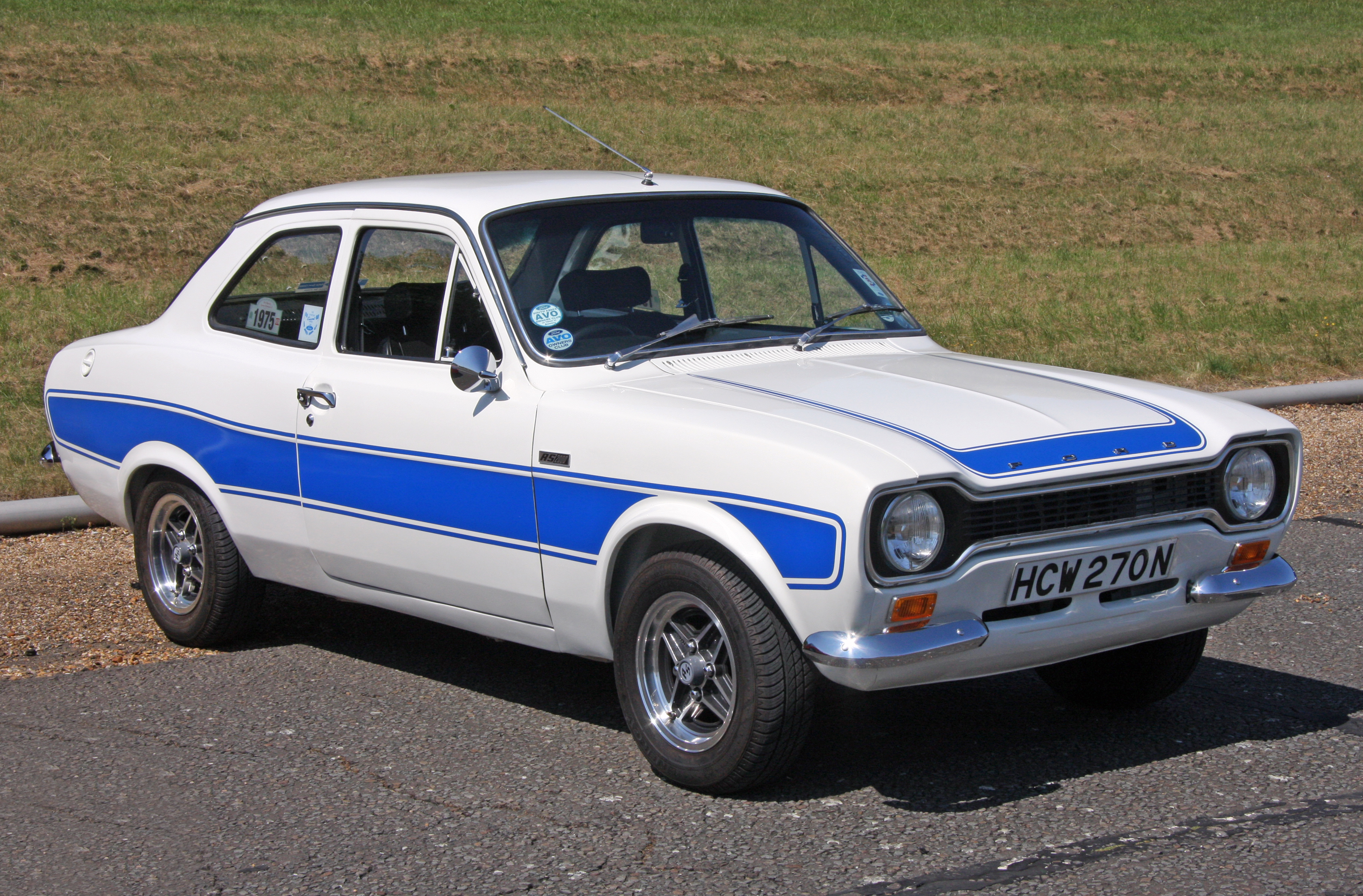
"Doyle drove the RS2000 we talked about, and then Bodi drove this Capri 3.0."
The RS2000 is a small, fast car made by Rover. It has a light body and a powerful engine for its size.
The RS2000 is a lightweight sports car produced by Rover in the late 1970s. It features a small, high-revving engine and a lightweight chassis that makes it popular among enthusiasts.
"[656.0s] And this 1981 is nice, but I reckon that's probably the last year I'd have a Capri. [662.0s] The only Capri I kind of gets me excited is the Mark 1."
The Ford Capri is a fun, sporty car that was made in the UK. It looks cool and can be driven fast, especially the older versions.
The Ford Capri is a British-made sports coupe produced by the American automaker Ford from 1970 to 1985. It was popular in Europe for its stylish design and performance options, especially the early Mark 1 models.
The Ford Zephyr is a classic British car from the 1960s and ’70s. It was a comfortable family vehicle with a spacious cabin, often used as a daily driver.
The Ford Zephyr was a mid‑size family car produced by the British manufacturer Ford from 1958 to 1975. It was known for its roomy interior and smooth ride, making it popular among families in the UK.
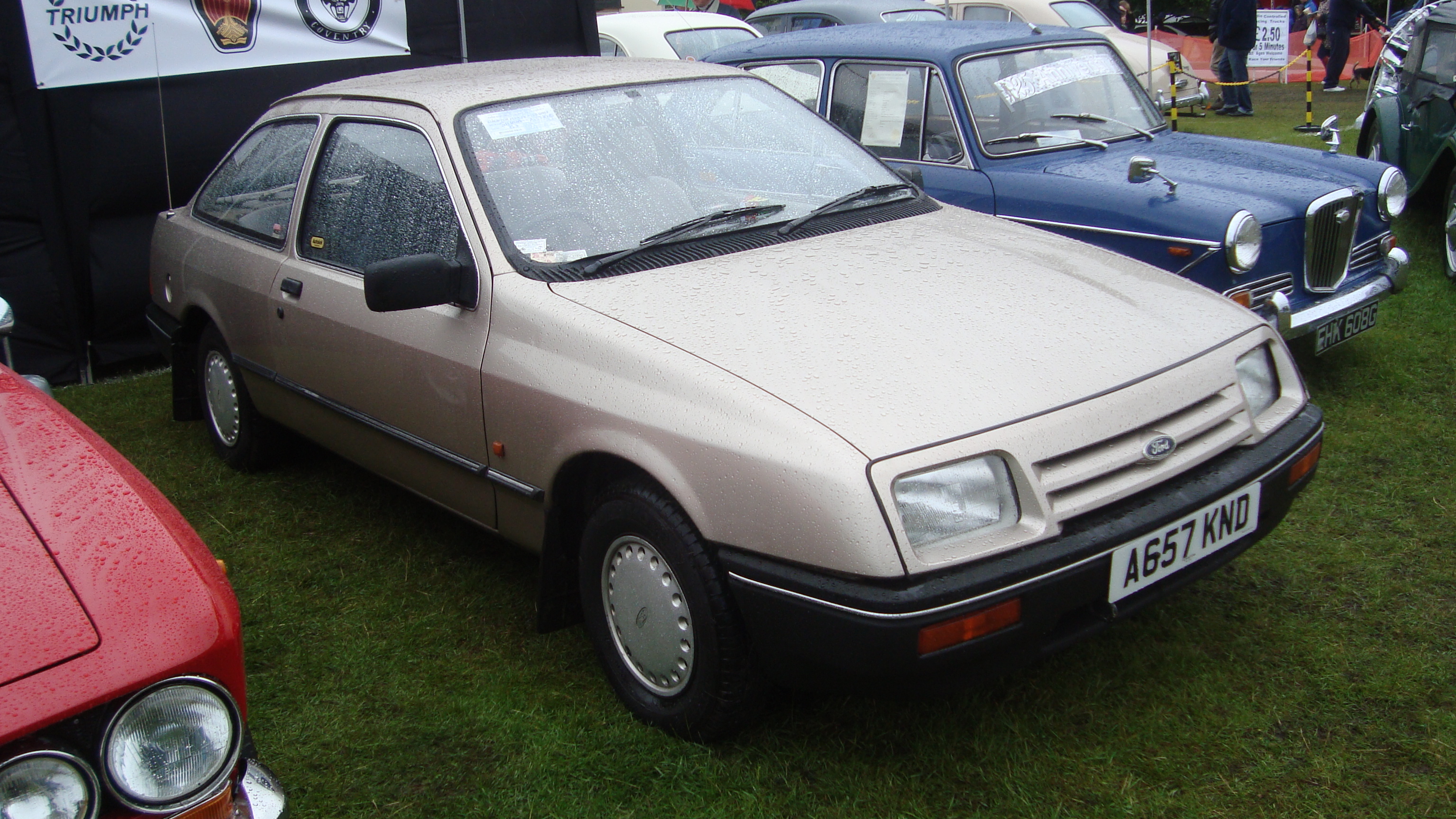
The Rover SD1 is a stylish British car from the late 1970s. It was one of the first cars to use a sleek, aerodynamic shape.
The Rover SD1 is a mid‑size executive car produced by British manufacturer Rover from 1976 to 1985, known for its aerodynamic design and advanced features.
"[802.0s] Granada versus the Rover P6 or SD1.
[804.0s] Rover P6."
The Rover P6 is a classic British car from the 1970s and '80s. It has a boxy look, runs on the back wheels, and was popular in the UK.
The Rover P6 is a mid-size executive car produced by the British manufacturer Rover from 1975 to 1985, known for its distinctive design and rear-wheel drive layout.
The MG Capri is a small, fast car from Britain that was popular in the 1970s and early 1980s. It has a rear‑wheel drive layout, meaning the engine powers the back wheels.
The MG Capri is a British sports coupe produced from 1972 to 1985, known for its lightweight design and rear‑wheel drive layout.
"But in the 60s, they were a genuine rival to the Mini."
The Mini is a small, popular car from Britain that was very common in the 1960s and 1970s. It’s known for its clever use of space and distinctive look.
The Mini is a compact British car produced from 1959 to 2000, famous for its space‑saving front‑wheel drive layout and iconic design.
"And it used a re-worked rally engine. I think an aluminium engine block."
Rally engines are built to be very powerful and tough, so they can handle rough racing tracks without breaking.
A rally engine is tuned for high power output and durability under extreme conditions, often featuring higher compression ratios, upgraded cooling, and reinforced components.
Car
Stag Driver
"[1221.0s] But it's something different. If you pull up a stag driver, that's right."
The Stag Driver is a classic American muscle car from the late 1970s, famous for its big engine and unique look.
The Stag Driver is a 1977–1981 American muscle car built by Stag Motors, known for its distinctive styling and high-performance V8 engine.
"They just were worried about switches and cigar lighters."
A cigar lighter is a little electric device in cars that lets you light cigarettes or cigars without needing a match. You press it, and it heats up to create a flame.
Cigar lighters are small, built‑in electric or battery‑powered devices found in many cars that allow drivers to light cigars, cigarettes, or other small items without a match. They usually consist of a metal contact that heats up when pressed, producing a flame.
"[2434.0s] And also that sort of 60s Mercedes design was beautiful."
Mercedes-Benz is a famous German car company that makes fancy, high‑end cars. They’re known for good safety and smooth driving.
Mercedes-Benz is a German luxury automaker known for its high-quality vehicles and innovative design. The brand has a long history of producing iconic cars that set standards in safety, performance, and style.
"If you have a look at this page, you'll see the Citroen SM. Now, the Citroen SM had such a stylish dashboard."
The Citroën SM was a fancy small car from the 1960s that had smooth lines and special tech for its time.
The Citroën SM (Super Mini) was a luxury coupe produced from 1965 to 1971, notable for its aerodynamic design and advanced features like power steering and a hydraulic suspension.
"And then you notice all the kooky bits, like Citroen's at the 70s, had a stereo, but the stereo wasn't on the dashboard."
Citroën is a car company from France that makes cars with unique and sometimes quirky features. They’re famous for creative ideas like putting the stereo in a weird spot.
Citroën is a French automobile manufacturer known for its innovative designs and engineering. The brand has produced iconic models such as the 2CV, DS, and many others.
Select text to request an explanation
There's a plane droning over me, actually. Can you hear that? Oh no. There's somebody droning in my head for that. The tire kickers, classic car chat with Max and Matt. Hello there and welcome to the latest pearls of wisdom from two bloats who know absolutely nothing. It's the tire kickers and thankfully so far talking about classic cars is still tax-free. In this episode, Matt and I have just one thing in common.
I don't like forts, but are we missing out on the Blue Oval's finest? The tire kickers. Also, imp. Huh? What is it good for? Absolutely nothing. Well that's according to you. Say it again. So we'll go to war over whether the poor hillman imp should be crushed or caressed. Plus classic cars are all about the looks but what about the interiors? Is it time to give the wooden dashboards some love? So buff up your walnut and get that cockpit shining. It's episode 45 of the tire kickers.
The independent podcast awards. This is the tire kickers. Now, it's not often that I agree with you. Well, never to be honest because you're wrong. Sorry, sorry. Just rewind to say that again. I'm going to slightly agree with you on this one briefly. You and I do share one thing. And that is that Ford's leave us a bit cold. They're a bit met a bit vanilla. I always, for example, take a golf GTI over an XR3i, the Rover SD1 over a Granada,
which a bus rather than driver Sierra. Lots of people love them, but I'm from a BL household and Ford's have never really lit my fire. And to be honest, I'm not sure why.
Well, I think there is something about what you grew up with because I grew up riding in the back of those kooky citrons like GSAs and BXs with those up and down suspension. So I can't get that excited about the core teamers and comprise that my mate's dad's had. I did own a fiesta once in the 90s. Yeah, it was fine. It was one of the new ones. And it was fine for daily.
Honestly, I can't have ever thought about it. You know, a day after I sold it. So there was no kind of emotional connection with it.
Yeah, but people are now buying old fast forwards for more money than they spend on a house. Now, remember, there was that mark to white 2.escoote, 1800 RS, at historic Sinjilai, that went for 278,000 pounds.
Those 1990s escort RS Cosworths are going for well over 100,000. And at the NEC Classic Motor Show, there was a rally mark on Ford Focus that went for 393,000. Now, OK, it had been used by Colin McCray, but that's really rare for our e-money for a Ford.
To be fair, the auction is, I'll say those particular ones you mentioned there are kind of one off type things. I mean, I think the escort that people were fighting over, there was two guys from the Middle East and they both wanted it and it was kind of a battle to get it.
But it is fair to say that the Fords are going for big money now, aren't they? I mean, maybe we're just being a bit mean about them or maybe a bit stupid, actually. I mean, lots of people love Fords. So maybe we should take another look at them.
Well, let's pull some up that are advertised on the internet at the moment and see see what we're doing wrong. I mean, let's have a look at this one. I'll stick to something screen there. So mark to Ford Escort RS 2000.
Now, that's one of the cabinet ones that's one people want. I mean, that's actually like it. I do like those escorts as a mark two. So it's a good looking car.
It's the two door and it's got the Drupes Newt style RS 2000. No, so I mean, I don't mind RS 2000s, but they're going for big money, aren't they?
And it probably have a bit of poke in it and it'd be a bit fun to drive, wouldn't it? Yeah, the two liter engines on these mark twos were good.
And also they were so light. They're really light at the back. You could spin these around in circles for hours and hours and hours.
I mean, the RS 2000s, you know, nice car. I mean, yeah, it's an okay drive. It's quite a nice drive. I still don't get why it's quite so expensive.
I mean, this one here, it's from South Africa. So it's slightly an old one. It's not quite the UK spec. It's got the wrong wing mirrors.
But it's 35,000 pounds for a 1980 right hand drive Ford Escort Mark to RS 2000. Now that is a lot of money, you know, 35 grand can buy you a lot.
Escort RS 2000. I mean, it's nice, but is it that nice? I mean, it's got a spoiler on the back. I suppose outside I'm just looking at the interior.
Yeah, I mean, it's got a rev counter speed or gearbox, a couple of switches. That's it. And, you know, they do, you know, going back to the original point about the RS 2000s,
they do drive quite nicely. But that is huge amount of money for a shopping escort underneath, which is what it is basically.
No, okay. And what's that up for as well? What's what? 35,000.
Yeah. So that's a lot of money. That's Austin Haley money, isn't it? Or is Jaguar E type money now?
Yeah. Which, which would you rather have? I think it comes back to the thing we get, and this is going to probably be the summary of this is that if you grew up with Ford,
if you grew up lasting after these things, if these were on your bedroom walls, you revered them, then 35 grand, you're crimp and say to get it because that's the car you want to us to you and I, you know, VL and Citroen kids, then this really doesn't have that emotional connection.
Don't give away the ending before we've got that. This is like somebody came out and tells telling you what's happening in a film while you're just watching it. Oh, don't get attached to that character.
Well, you get killed by the end of it. I don't know. Just could you just go fast to sleep.
Right. Let's have another one there. Have you got one? What about a cool teen or something?
Well, this is the problem. You see the problem with these high end prices for this stuff as it drags up the prices of the really boring stuff.
So here's Exhibit A, a boring boring 1980 mark, five Cortina 1.6 GL. Now this is so dull. You barely see it if it drove past you. Now this, if you put this, I'll put this on your screen now.
Oh, yeah, yeah.
Blue Cortina Mark, five, four door 1.6. It's about as boring as it can get, isn't it?
These were boring in the day and they're boring now as classics. It's a GL. So it might have a little bit of extra walnut in it and a little bit of extra spec.
But because the Ford prices are so high, this is being dragged up. So I don't know whether you can see the price yet, but I'm going to tell you it is 13,991.
So pretty much 14 grand for a Mark 5 Cortina.
Yeah. And these were, you know, for kids like us, 70s, kids like us in the 80s. These were the cars that we grew up there on every street corner.
I won't know these, these Cortina Mark fives. And you know, every, every other mate's dad had one. I found being a side Ford interesting, but, but not for very long.
You can't have found that one interesting. I'm just looking at it. I mean, again, you know, it's just bland Ford.
It is bland, isn't it? Yeah.
There's nothing in there of any interest.
No, I can't. When I pop the garage door up and get excited about this, no, not really. I mean, I know this, let's be fair because I think it sounds like we've been a bit snobby about this.
You know, if you had this in your garage, it's going to be much more interesting than, you know, a modern classic. For me, it would be, I'd be, I'd be much more interested in going around in this and driving around.
But I don't think I'd be that excited about that. It's a G L K. It's got the Rostar wheels, I think.
What did you get in the G L? Did you get like tape cassette player or something? You must have got something. It's wind up windows.
Who got electric windows? No, it's not. I don't think so. No, I wind up. No, it's wind up windows.
I mean, you've got the slightly bigger wheels. You've got the passenger door mirror, headrests. And you've got a radio, I think.
What it was like here, wasn't it? It was those days where they listed passenger door mirror and body styling, something or other as like an extra wheel.
The wheels still have wheels. They're just little the styling cues. I just, it just doesn't spark anything in me.
I don't get excited about that. And as you say, this is 14 grand. Again, you know, contextualize this.
The four-the-money, you could be sitting in an MGB or a Triumph stag or, you know, something a bit more interesting than this.
Or a nice old Mercedes or something like that. For that money, that 10 to 20 grand. There's a lot of competition in that.
Easily, you're in a 1, 2, 3, 2, 30. Yeah.
Well, all of a sudden, it's one. Yeah, 70s one. Just something with a bit of soul to it.
I can't imagine that, you know, you think it, wow, you know, all I want in my life is a, you know, Cortina.
Was it a 1.6? 1.6 GL.
No. But if that was, I mean, it's price, isn't it? If that was four grand, I wouldn't have a problem with it.
Yeah, you can have a bit of a laugh in that. But 14,000.
And I think this is the core problem for me with the forwards. Is this Cortina? Is this is not really, you know, it's a classic car because it's old.
But I don't think people aspire to it because I'm not sure people aspire to these in the period, did they?
And certainly, I don't think you aspire now to owning a blue Cortina 1.6 GL.
Well, I was going to say, if it was four grand, then that's a good gateway car to get into classic cars, isn't it?
You could run around and enjoy that. You could, you could get a tater for it, see if it's for you.
And then you could get an appetite to get something a bit more off the beaten track.
But when it's 14,000, you've got to argue that actually there's better stuff around.
Have we got anything else that we can look at?
Yeah, let's have a look at the Capri. Everybody loves the Capri.
This is the same year as that Cortina, actually, a 1980 Capri 3.0.
So this is the very top of the tree of Capri's. And this is quite nice.
For those people at roughly our age, if you think of the professionals,
Doyle drove the RS2000 we talked about, and then Bodi drove this Capri 3.0.
So they are quite nice.
And I don't mind Capri's, to be honest.
I think early Capri's Mark 1s and Mark 2s, and these early kind of Mark 3s are OK.
But they hung around too long these Capri's. They made them for too long.
So 3.0. So all the sunroof engines nice.
Wheels on a Capri always look a bit small, but here's the kicker, 38,000 pounds.
Wow. 38,000 pounds. A 1980 silver Capri.
It's clean underneath, but it is a nice car.
And it does.
It should be.
It's too fresh out for that.
Yes, Ali.
It is a nice white. It's tricked out. It does look sporty.
But again, it's just that looking at it. I don't get the chills.
I don't want to jump inside it and drive it because it's just that forward thing.
I think it is because it was so every man.
Although the Capri was, was the pin up.
I mean, the Capri was quite posh, but the problem with the Capri is by the 1980s,
certainly by 1980 and later.
I think the Capri carried on to 1986.
You know, these kind of sports cars have been overtaken by hot hatches, you know,
GTIs, Peugeot 205s, Golf GTIs, that kind of stuff.
That was hot.
If you were still driving a Capri in the 1980s, to be honest, you were a bit of a knob.
Because it was just an old car.
It was kind of an old car harking back to the 60s and 70s.
People weren't into those kind of sports cars.
They found the hot hatches were sexier.
So the older Capri's, I mean, it just should have been put out to pasture a lot earlier.
It overstayed its welcome.
And this 1981 is nice, but I reckon that's probably the last year I'd have a Capri.
After that, it was just a bit naff.
The only Capri I kind of gets me excited is the Mark 1.
Because I just think it just looks so retro.
But I wouldn't, you know.
You see, that's exactly the point.
Because the Mark 1 was actually a groundbreaking design, wasn't it?
It was an interesting design.
By the time you got to this kind of like Mark 3, it was boring.
And like a lot of Ford's in the 1980s, they were just dull.
You know, the Cortina Mark 3, the Coke bottle Cortina, was a nice-looking car.
You get to that Mark 5 we talked about, boring.
And so lots of this is a problem with Ford.
Is that their cars just got more boring and more boring and more boring.
And then you got to the Sierra, you got to the Mondayo, you got to even to the Focus.
You know, some of them drove quite nicely.
But very boring, plain vanilla, mere designs.
Well, it might come as a surprise to anybody listening to this.
But, you know, what do we know?
You know, because probably chances are here, we're probably talking nonsense.
Because there is a market for Ford's.
They go like hotcakes in terms of sales.
They are, you know, fair to say that an 80s or 70s Ford
creates much more excitement these days than a 60s car.
Because there's a market for it.
I mean, they are still pin up cars for a lot of people.
You know, I mean, you look at the NEC,
we recently, the NEC, that loads of them about, aren't there?
There was loads of cars.
And we posted that shot of the Arthur daily stand.
And, you know, there was, there was Ford's on there.
And that, no, people were still asking about that Cortina, the brown Cortina on there.
So, I just think we're not the market for it.
I mean, I'm going to give you some quick fire choices here.
Because I have had Ford's in my past.
I've had a Mark III coat bottle Cortina years and years ago.
Right.
I had a Mark IV zodiac, which you've got to be quite a Ford nut to know what that looks like.
But it's a big kind of looking car.
Looks like a Zephyl looking car.
Yeah, exactly.
And then I had a Mark III Granada estate for a while when I was, when I first moved to London.
I did too.
But, yeah, and it was, you know, it was a bit vanilla.
I remember getting in that and you could engage reverse or get out, walk around the car,
and then get back in the car by the time reverse actually engaged.
Because it was so knackered.
Anyway, here's some quick fire choices about Ford's versus others.
See which you would prefer.
So, here we are.
Capri versus MGBGT.
Oh, MGBGT, I think.
Sierra versus a Cavalier.
That's not much of a choice.
I'll go Cavalier.
Cavalier.
Cavalier.
Okay.
Granada versus, say, a Rover SD1.
Thought you were going to say P6 then.
I did want to cross down because I knew you'd have, yeah, knew you wouldn't have the P6.
Actually, asking you the question.
Granada versus the Rover P6 or SD1.
Rover P6.
Because it's really.
I don't like him.
We've crushed him on a previous episode, but it's more interesting.
True.
Eskort versus the Golf.
When people talk about golf, so Germany glays over.
Okay.
I'll upgrade it.
XR3 versus GTI.
XR3.
Oh.
Okay.
Fiesta versus a Mini.
Mini.
What about you?
If I read that list to you, Capri, MGBGT.
MGB.
Sierra Cavalier.
And Boss.
Now it's time for Crash or Correst.
And this time around, it's the Mini rival with the engine out back the Hillman M.
These are the eight great hymns.
With a super-modern aluminium engine at the rear.
With Synchro Mesh on all four gears.
With independent suspension on all four wheels.
Vanuverable, manhandable, comfortable.
The windows roll down.
The rear seat falls down.
The rear window lifts up.
The eight great hymns.
From the exciting range of roots cars.
All part of the new deal from roots.
Test drive one.
At your local roots dealer.
Now I'd forgotten hymns even existed.
But in the 60s, they were a genuine rival to the Mini.
A small Scottish-made car to take on the world.
At Newsflash, it didn't.
So should we round up all the survivors and recycle them into something more useful?
Whoa, whoa, whoa, whoa.
Hold on a minute.
Let's give you a bit of quick history.
This was, of course, the roots group.
Small economy car from 1963 to 1976.
As we mentioned, the engine wasn't out front.
It was out the back.
And it used a re-worked rally engine.
I think an aluminium engine block.
And a cylinder head.
Which had a bit of a reputation for overheating.
Shock horror.
British car.
60s, 70s.
Now, the thing about it is, it's one of these classic British car stories,
where all the component parts have come together to sort of bust the plan, basically.
It was made at the Linwood plant in Scotland.
Now do you know why it was built there, Max?
There was probably a government grant or something, wasn't it?
Exactly.
Because roots was based in the Midlands, wasn't it?
That's right.
The roots was based in Coventry.
Now here's to his problem number one.
Roots was based in Coventry, but they wanted a government grant.
The government said, you can have a grant.
You've got to build it somewhere where they need the work.
So they picked near a ship building plant in just north of Glasgow, Linwood.
So they had people building a car who'd never built cars before.
They were all shipbuilders.
So it kind of looked all right in paper, but the management was 300 miles away.
So there's problem number one.
So they started knocking these things out.
And it sort of went okay to start with.
But it was kind of born out of necessity.
It came after the Suez crisis and that it needed for small cars.
But it was a real-world drive car when front-wheel drive cars were just coming into fashion.
And everything about it just didn't really work.
It was basically gunning for the mini market, wasn't it?
Yeah, and that's its main problem.
It's this problem in the past and its problem now.
The mini was a much better small economy car,
which is why they made five million millis versus half a million imps.
Now I hadn't thought about these either until I saw one in the summer.
And there was a couple of them and you just think well they were a bit lumpy-dumpy.
And then I remember that my mate and my dad's had one.
We hadn't had one part in a garage for a week or so.
And I remember thinking it was sort of kooky car then.
But I looked at this one in the summer and I just thought well I got chatting to the owner
and it was a sort of young girl who she was about 20s.
And the family were into imps and she just was really enthusiastic about it.
She said I use it as a daily car, it's really fun.
And you look at it again and you think it's not the prettiest thing.
And I don't think Roots cars were the prettiest things.
They were quite well made Roots cars, but they weren't generally stuff to kind of fall over
and trip over yourself.
No, that's like overheating problem, didn't it?
It actually had an overheating problem that owners of cars made by Triumph,
particularly the Stags, might actually recognize, isn't it?
Because there was an aluminium head thing going on and they would warp
if the right coolant wasn't used.
Yeah, it was a usual story with the imp, that it was not a great design
and then it was the maintenance schedule that wasn't kept to.
This is why you like it, you've got some kind of empathy with it.
Yeah, a lot of affinity with it.
But the good thing is obviously when it breaks down,
it's going to be warm, isn't it, especially in the winter when you push it
because that engine's in the back.
Yeah, exactly, because it boiled over.
But it had a few compromises, obviously the engine in the back,
you think as a family car you've got to load your stuff into a small cubby in the front and stuff.
But it was actually quite roomy.
The question is though, Max, what's it like to drive?
I had a look around Steve, I could find a review video on YouTube.
There's a good classic World TV one.
They take it out for a spin and while they're driving it,
they've got the minis arch rival very much in mind.
Immediately, it feels different to a mini.
Because you've got all the way to the back, the front is lighter,
data and the steering feels fantastic.
This car is so light on its feet, but unlike the mini,
it's got that swing from the rear effect that you get from old rear-wheel drive cars.
It's remarkably light when it's feet this thing
and gives you so much confidence to chuck it around.
The massive steering wheel in this car just isn't needed frankly.
And it's so flingable, it's hardly anybody roll.
The ride is a little bit bouncy if I'm honest,
but I still say it was more comfy than a mini.
I definitely better start my seat more if I was driving BMC's little car around here
rather than roots.
I'm pulling it into a corner, it just sticks.
And then there's that little engine.
Put your foot down.
It's a sweetie.
A sweetie, there you go, Max and Sauer faced old you, wants to crush it.
Why would you crush that? It sounds quite fun.
Well, it's because of the engine and this is actually what happened to most imps.
Is they were crushed because people took the engine out of the back
and used them in racing cars because they were aluminium.
They were very light and very effective.
The imp was kind of a donor to a lot of racing cars around from the 70s aces.
And that's why they weren't that popular because, I mean, as a car, they were okay.
The engine was quite good if it was looked after, but it was nothing special.
And of course, like I said earlier, there was the mini.
And the mini did drive better than the imp.
You know, the mini is front engine, front wheel drive,
and the imp is rear-enginened, rear-wheel drive.
So it's just a basic balance, isn't it?
It's like a VW Beetle. It's kind of a bit tail heavy.
And that it doesn't give the best handling that you could get.
Yeah, but this is more of an oddity, isn't it?
I mean, there weren't as many made as the mini.
The mini was like something like 5.3 million of them made.
The hillman imp was about 440,000 made between 63 and 76.
And there's only 769 license still on the road
and another 630-odd in garages somewhere soon.
So you're already looking at something's a bit rare, right?
As you say, you don't see them very often.
You know, values are between like 5 and 7K.
Even the top ones are only a little sort of 10 to 12.
That's a lot of car. It's fun.
It's a different choice to a mini.
You've got that kookiness.
You've got the engine in the back.
Yes, it might overheat. Yes, the water pump might blow up.
It doesn't matter. That's all part of the fun of ownership, isn't it?
But it's something different. If you pull up a stag driver, that's right.
It's all right. I'll look after you.
We can all be friends together.
But you know, the minis aren't perfect.
You know, they're not trouble-free.
Most classic cars are perfect.
No, they're not perfect.
But they are a bit more chuckable into corners.
And I think if you're going to put the two back to back, you'd probably always go for the mini
because it just feels more secure.
And it's just it got a bit more fun in the corners.
I don't mind the imp.
I like the various.
They brought out lots of variants of it.
There was the estate, which is quite an ugly looking car, but odd in a nice way.
There was the van.
And then there was that lovely. Have you seen this?
See something that's not quite right? Our annotations are AI-generated and can sometimes miss the mark.
Click the flag icon on any annotation to suggest a correction.