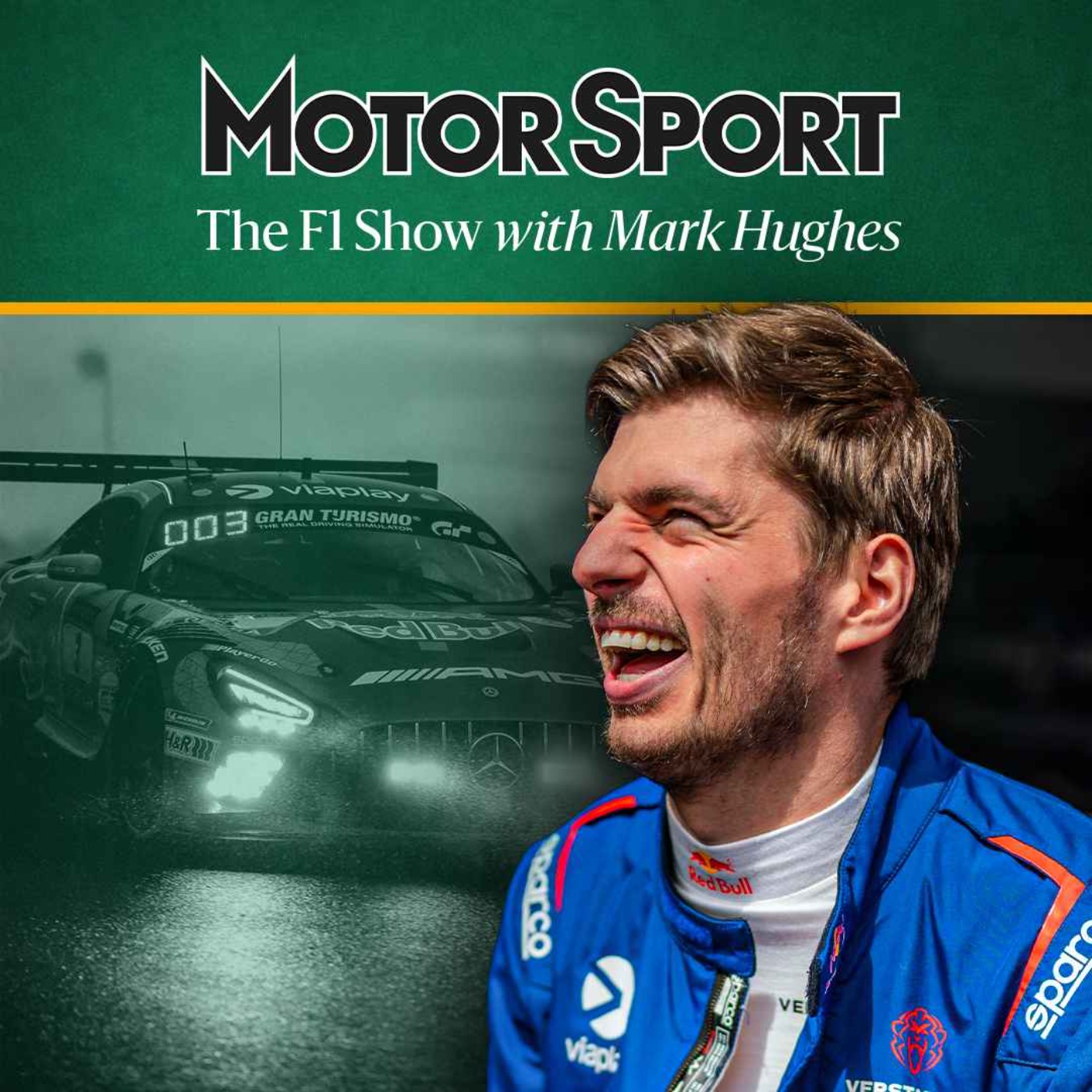
Why Verstappen at the Nürburgring was awe-inspiring in a way F1 can't be
About this episode
Max Verstappen’s Nürburgring 24-hour run is framed as a spectacle F1 can’t quite replicate: the hosts point to night-time overtakes, rapid adaptation, and the sheer terror of catching slower traffic “at a rate of knots,” including a pass where the car is “part on the grass at ridiculous speeds.” They also explain why lap-time comparisons are misleading due to “code 60s” and multi-class chaos, then broaden to how extra scrutiny and safety margins differ between GT racing and F1.
Did Max Verstappen show why F1 drivers are racing's elite? Will other drivers follow in his footsteps? And could F1 do anything to make its races as exciting as the Nürburgring 24 Hours?
Mark Hughes and Bryn Lucas examine those questions and more after an exhilarating weekend in the Eifel mountains.
Plus: Ahead of the Canadian Grand Prix, are we set for an historic Formula 1 world championship battle, or will Mercedes vring an upgrade to blow the opposition away?
Mark also answers your questions on why F1 keeps changing its engine rules and how Ferrari can possibly work out whether its many upgrades actually work.
More on the stories that really matter, in the latest episode of the Motor Sport F1 Show.
Subscribe now for every weekly episode and tell us what you want to know from Mark. Send us a message on social media or find this podcast at https://go.motorsportmagazine.com/42JLouD and drop your questions in the comments. He'll answer a selection of the best every week.
Read Mark's column every Wednesday at https://go.motorsportmagazine.com/42JLouD
Hosted on Acast. See acast.com/privacy for more information.
overtakes
"It was sensational, outrageous overtakes, what we expected of Max Verstappen because he's Max Verstappen, but it was still fantastically impressive to watch... some amazing overtakes that he did and to get himself up from 10th to the front"
An overtake is when a driver passes another car on track. It usually happens when the passing car times it well and has enough speed to make the move safely.
An overtake is when one car passes another during a race. In endurance racing and sprint racing alike, overtakes are often the most visible moments because they require speed, timing, and risk management.
lower class cars
"at night how dramatic it looked and you see catching lower class cars at a rate of knots and it looks terrifying"
In some races, different types of cars race together. “Lower class cars” are the slower group, and faster cars have to deal with them while they’re trying to keep their own momentum.
In multi-class racing, “lower class cars” are competitors in slower categories that share the track with faster cars. Catching them quickly is a big part of race pace because traffic affects braking points, lines, and overtaking opportunities.
pass on manoeuvres part on the grass
"you see him completing pass on manoeuvres part on the grass at ridiculous speeds."
The driver is passing while the car is partly off the main road surface (on grass). Grass usually grips worse than pavement, so it can be scary and easy to lose control.
This describes a driver making a pass while the car is partially on the grass, using the available grip and track position to complete the move. It’s risky because grass generally provides less predictable traction than tarmac, especially at high speed.
Nürburgring 24 hours
"Max Verstappen's performance at the fantastic Nürburgring 24 hours is the story that everyone is talking about and that's where we're going to start things off, this time on the Motorsport F1 show with Mark Hughes."
The Nürburgring 24 hours is a race that lasts an entire day at the Nürburgring track. Cars and drivers have to keep going for 24 hours, so it’s about staying fast and consistent the whole time.
The Nürburgring 24 hours is a 24-hour endurance race held at Germany’s Nürburgring circuit. Because it runs for a full day, it rewards consistency, strategy, and driver stamina—not just outright speed for a single lap.
code 60s
"but you know, you look at it and go okay, there's no dialing, there's no slow creep and that was incredible and I think with the Nurburgring 24 it's hard to compare lap times because there's always back, there's always traffic, there's always code 60s going on around the track"
A “code 60” is when the race is effectively slowed down because something is happening on the track. Everyone has to drive much slower, so lap times during that period aren’t a fair comparison.
“Code 60” refers to a safety-car-style speed limit period where drivers must slow down to 60 km/h (or follow the posted limit) due to an incident on track. It heavily affects lap times and makes comparisons between sessions or drivers less “apples-to-apples.”
back, traffic
"it's hard to compare lap times because there's always back, there's always traffic, there's always code 60s going on around the track"
“Traffic” here means you’re not just racing the clock—you’re also dealing with slower cars on the same track. That can slow you down and makes lap times harder to compare.
In endurance racing, “traffic” and “back” describe how faster cars get slowed by being stuck behind slower cars (or lapped traffic). This changes the rhythm of a lap and makes lap-time comparisons across drivers or sessions difficult.
qualifying lap
"Yeah and it was just the, I mean you can, you can say well that they were race laps and trying to convert them to how it might have been in a qualifying lap"
A qualifying lap is when drivers try to set the fastest time possible to determine where they start the race. It’s different from race laps because the conditions and goals are different.
A qualifying lap is a lap driven to set the best possible time for grid position, typically with minimal traffic and maximum performance. The host contrasts race laps (with traffic, strategy, and constraints) versus qualifying-style laps to explain why comparisons to Formula 1 are “imprecise.”
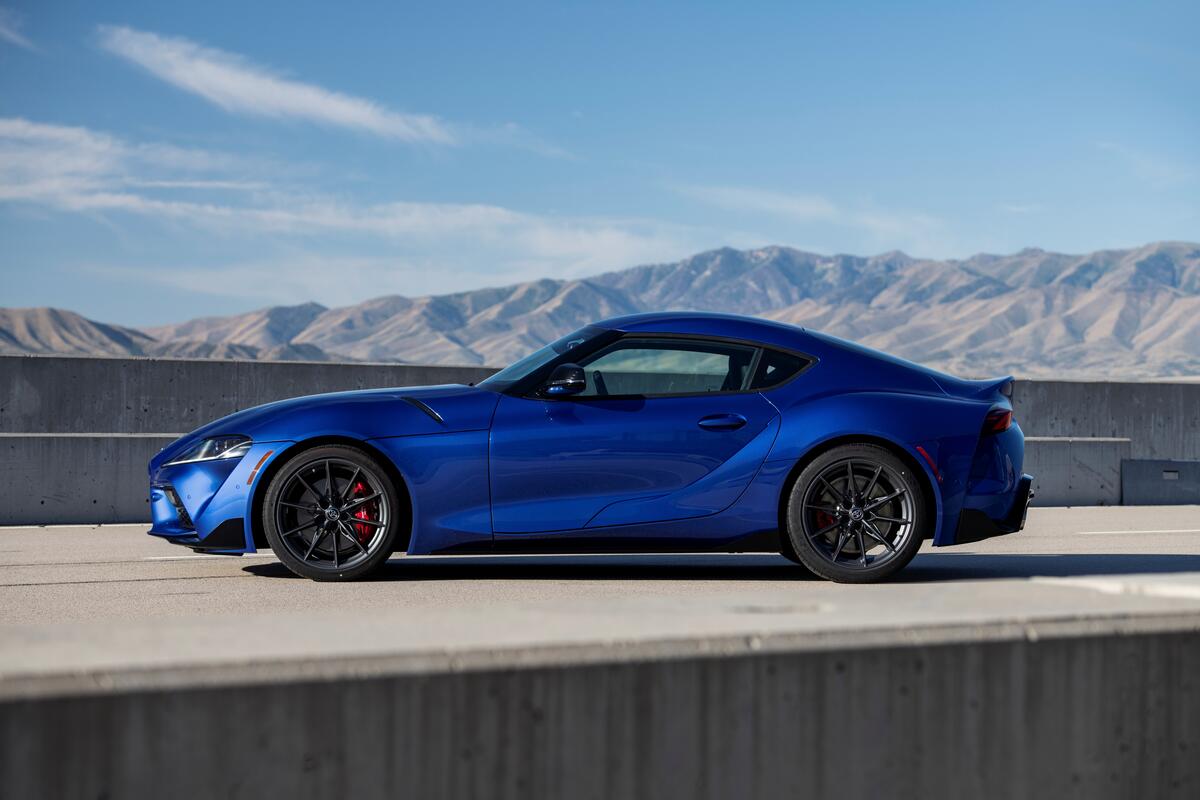
Toyota A90
"just were given their head and trying to sort of equate that to how it might be in Formula One's very, very imprecise task, but of their race laps he was sort of 0.16, the equivalent on a 90 second lap, I worked it out on just on percentage terms, it would be 0.16 quicker than Juncadella and about"
The Toyota Supra is a sports car built for fast driving and good handling. People often use it as an example of performance because it’s designed to be quick on a track. In the podcast, it’s mentioned to help compare how different cars can perform in different types of racing.
The Toyota Supra is a performance sports car known for its strong straight-line pace and driver-focused tuning. In a motorsport discussion, it can come up as a reference point for how lap times and vehicle behavior translate between road-going performance cars and racing formats. The podcast’s mention ties the idea of “equating” performance across very different contexts, like Formula One versus other timed laps.
race pace
"you would typically expect to see a different pattern when everybody's given their head than when they're driving to a constrained race pace"
“Race pace” is the speed drivers aim for during the race while thinking about the whole stint, not just one lap. It’s usually a bit more controlled than going all-out for the fastest possible lap.
“Race pace” is the speed drivers target over a stint while managing tires, fuel, and overall strategy rather than pushing for a single best lap. The transcript notes that the pattern of performance can differ between “given their head” (more freedom to attack) and constrained race pace.
passing manoeuvres part on the grass
"you see them catching lower class cars are red of knots and it looks terrifying and you see them completing passing manoeuvres part on the grass at ridiculous speeds"
The host is describing scary overtakes where a driver has to go onto the grass/runoff to get past. It’s intense because it’s not the normal racing line and it can be unpredictable.
This describes overtakes where drivers use runoff areas or grass to complete a pass—something that’s especially dramatic at circuits with limited overtaking space. It highlights how endurance racing can involve multi-class traffic and high-risk, high-commitment moves.
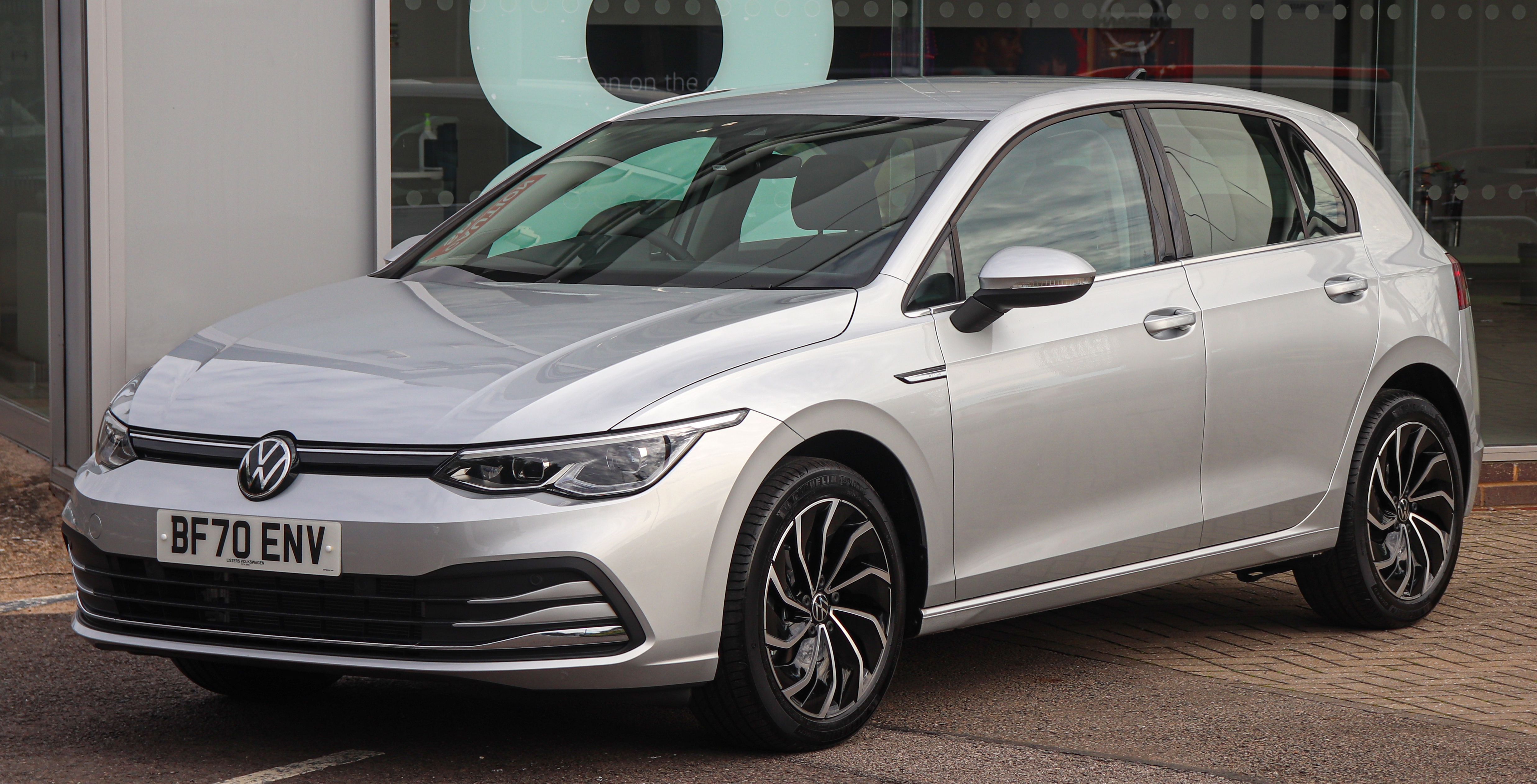
Volkswagen Golf
"...the lower category classes, maybe in a Volkswagen Golf GTI, something like that, in a TCR class and all ..."
The Volkswagen Golf is a compact car, and the Golf GTI is a faster, sportier version. Some racing series use cars that are based on models like the Golf GTI, such as in TCR. The podcast is pointing to that connection between everyday cars and race cars.
The Volkswagen Golf is a compact hatchback that’s widely used as a performance platform, including versions like the Golf GTI. In motorsport contexts, it’s often referenced because similar “production-based” cars can be adapted for lower-tier racing categories such as TCR. The podcast’s mention uses the Golf GTI as a familiar baseline for what those race cars are meant to resemble.
TCR class
"something like that, in a TCR class and all of a sudden there's no Max Verstappen"
TCR is a type of race series for cars that are based on models you can buy. It’s a different style of racing than Formula One.
TCR is a touring-car racing formula built around production-based front-wheel-drive cars, with standardized rules and performance balancing. Saying “TCR class” signals a specific kind of racing series and car type that’s very different from Formula One machinery.
on-boards
"There's been a lot of social media clips going around, I don't think you've seen these with on-boards and you [351.5s] know there's a driver driving along and all of a sudden Max Verstappen appears in the background"
On-boards are race cameras mounted on the car. They show the action from the driver’s perspective so you can see things happening around them.
On-boards are camera views mounted on a car (often on the driver’s helmet or dashboard) that show what the driver sees during a race. The host mentions on-board footage to explain how Verstappen’s presence can be spotted in the background.
GT3
"how other drivers were dealing with the extra scrutiny because they're all GT3 drivers, they [374.1s] used to having some level of scrutiny"
GT3 is a racing category for sports cars that are based on real models. It’s known for close competition, and the host is saying these drivers are used to some attention already.
GT3 is a class of sports-car racing based on production grand tourer models, using balance-of-performance rules to keep different cars competitive. The host contrasts GT3’s “normal” scrutiny with the extra attention Verstappen brings.
GT World Challenge Europe
"they used to having some level of scrutiny with GT World Challenge Europe and the other champions, [378.6s] IGTC for example"
GT World Challenge Europe is a sports-car racing series. The host is saying GT3 drivers are used to being watched there, before Verstappen’s extra spotlight.
GT World Challenge Europe is a major endurance-focused GT racing championship featuring multiple GT classes, commonly including GT3. The host uses it as an example of where these drivers already experience a certain level of media and competitive scrutiny.
IGTC
"IGTC for example, but this is a different level of scrutiny so I wonder for his teammates"
IGTC is a GT racing grouping/series name used for international sports-car events. Here it’s just another example of where these drivers already get some scrutiny.
IGTC refers to the International GT Challenge, a GT racing category/structure used for international GT events and championships. In the segment, it’s mentioned as another place where GT3 drivers already deal with a baseline level of attention.
toe-to-toe
"so I wonder for his teammates how much more pressure was put on them when Max Verstappen went toe-to-toe Maro Engel"
“Toe-to-toe” just means competing very directly, like you’re fighting for position at the same speed. The host is using it to emphasize how close Verstappen’s battle was.
In racing talk, “toe-to-toe” means running side-by-side or directly competing at the same pace, often with frequent position battles. Here it’s used to describe Verstappen and Engel’s direct on-track rivalry, which increases the spotlight on the whole team.
on the pace
"you see that and F1 on a on a new you know the first laps of the weekend you know very very often three or four seconds faster than anybody else he's straight on it so he is he's recognized as the best in F1 at the moment..."
“On the pace” means you’re going as fast as the top cars. If someone is on the pace right away, it usually means they and the car are working well immediately.
“On the pace” means a driver is matching the speed of the front-runners—typically reflected in lap times and consistency. In racing, being on the pace early suggests the car setup and driver adaptation are working immediately.
discipline
"it's very different discipline and it would to get a proper reading of it would require them to be as familiar with it all as as he was..."
Here, “discipline” means the type of racing and what it demands. F1 and GT3 are different, so the skills that make someone great in one don’t automatically transfer perfectly to the other.
In motorsport, “discipline” refers to the specific style and demands of a racing category (for example, F1 vs GT3). Different disciplines reward different skills—car control, braking/traction habits, tire management, and racecraft.
corner speed
"want to break and at what corner speed they want to take in they they're they're having to pull themselves back because they're finding that they the car just won't do what they they're asking"
Corner speed is just how fast the car is going while it’s turning. In racing, going faster through corners is usually a big deal because it helps you be quicker overall.
Corner speed is how fast a car is traveling as it goes through a turn. In racing, it’s a key performance metric because higher corner speed usually means more time gained without necessarily increasing straight-line speed.
brake locks
"and it just means you're going to be slow because you're going to be having snaps and moments and things like that and brake locks so yeah you need but you do need to be understanding the dynamics of it"
Brake lock-up is when the tires stop rolling while you’re braking. That can make the car harder to steer and can make you stop less efficiently.
Brake lock-up is when the wheels stop rotating under braking, usually because the brakes are applied harder than the tires can grip. It can reduce steering control and increase stopping distance, so drivers manage braking to avoid it.
dynamics
"brake locks so yeah you need but you do need to be understanding the dynamics of it but intuitively yeah it's easier to do that than it is for a drive that's already at his limits"
In this context, “dynamics” means how the car behaves under forces—especially during braking, turning, and acceleration. It includes things like tire grip limits and how weight shifts, which determine whether the car responds predictably to driver inputs.

GT3 car
"it's easier to do that than it is for a drive that's already at his limits say in a a gt3 car would be to push up to a car with a formula one level of performance"
A GT3 car is a race version of a normal road car, built to compete in GT3 racing. It drives differently than an F1 car, especially in how it grips the road and how it behaves when you push hard.
A GT3 car is a purpose-built race car based on a production model, built to a standardized “GT3” rule set used in endurance and sprint racing. Compared with Formula 1, GT3 cars have very different aerodynamics, tire behavior, and braking/traction limits, so adapting driving technique can be challenging.
Formula one
"say in a a gt3 car would be to push up to a car with a formula one level of performance you know that that's that that would be a more difficult thing to do"
Formula One is the highest level of open-wheel racing. The cars are built to go extremely fast, and they handle differently than many other race cars.
Formula One (F1) is the top tier of open-wheel racing, where cars are engineered around extreme aerodynamic grip and very high-performance tires. The key point here is that F1-level performance demands different braking, cornering, and throttle control than other categories.
contract clauses limiting other racing
"why don't they is it is it a clause in their contract why can't they all just say do you know what i'm going to take this weekend off boston i'm going to go and do gt"
They’re talking about how racing drivers’ contracts can limit what other races they’re allowed to do. That can determine whether they can take a weekend off and race in another series.
The hosts discuss how drivers may be restricted by contract clauses that limit them from racing in other series during the season. This affects whether they can choose to do events like GT racing on their free weekends.
run off
"…the level of risk on circuits with uh that sort of level of uh you know run off and track side danger it just reached formula one could not…"
Run-off is the space next to the track meant to catch a car if it goes off-course. Better run-off can reduce how bad crashes get, so it matters a lot for safety.
Run-off is the paved or graded area beside the track intended to slow and contain a car that leaves the racing surface. Its size and safety features strongly influence how severe an accident can be, which is why the host links it to the “level of risk” at different circuits.
track side danger
"…the level of risk on circuits with uh that sort of level of uh you know run off and track side danger it just reached formula one could not…"
“Track-side danger” means what’s sitting near the track that a car could hit if it leaves the racing line. If those areas are more dangerous, crashes become more severe.
“Track-side danger” describes hazards located near the edge of the racing surface, such as barriers, walls, or other objects that a car might hit after going off track. The closer and more unforgiving those hazards are, the higher the consequences of an error at speed.
engine rules
"one wishes formula one could come up with a set of engine rules that everyone agrees on and stick with them but looking back at the formula one's history we see that frequent changes to the engine rules have been the norm"
F1 has rules that tell teams what kind of engine they’re allowed to use. When those rules change, it can force teams to redesign their engines to stay competitive.
In Formula 1, “engine rules” are the regulations that define what engine designs teams are allowed to build and how they can develop them. Changes to these rules can dramatically shift which technologies are competitive.
turbo
"it only started coming in in the wake of reno coming in with the turbo and in the late 70s and sort of build up in the 80s"
A turbo is a device that uses the engine’s exhaust to push extra air into the engine. More air generally means more power, which is why it mattered a lot in racing.
A turbocharger uses exhaust gas to spin a turbine that forces more air into the engine, allowing higher power output from a smaller displacement. In F1 history, turbo adoption is a major turning point because it changed how teams chased performance.
Reno
"it only started coming in in the wake of reno coming in with the turbo and in the late 70s and sort of build up in the 80s"
This is talking about Renault, a big Formula 1 engine brand. The point is that their turbo-era push influenced how the sport’s rules and competition evolved.
“Reno” here refers to Renault, the engine and team brand that helped drive the shift toward turbocharged power in Formula 1. Their involvement is described as creating pressure for rule changes as teams wanted to exploit new technology.
Ferrari
"but prior to that in the 50s there'd be manufacturers but they did sort of pulled out with various financial and image associations with it with the danger in one case so by the 60s it was just Ferrari plus a lot of specialized British constructors making"
Ferrari is one of the best-known Formula 1 teams. The host is saying that, at that time, Ferrari was basically the main manufacturer still heavily involved.
Ferrari is referenced as the remaining major Formula 1 carmaker by the 1960s, after other manufacturers reduced involvement. The episode frames this as a reason engine-rule stability was possible before later manufacturer pressure returned.
Coventry Climax
"kit cars basically so the Coventry Climax was the the standard supply for most of the field"
Coventry Climax was a company that built F1 engines for multiple teams. When many teams used the same engine, the cars tended to be more evenly matched.
Coventry Climax was an engine supplier that provided power units for many F1 teams in the early era. In this context, Mark Hughes is describing how a dominant engine package helped standardize competitiveness across the field.
Cosworth DFV
"and then that was replaced by the Cosworth dfv in the latter part so that that was why there was no impetus to change formulas ... it allowed F1 to flourish and allowed F1 to have a field of quite closely matched cars and especially in the dfv era"
Cosworth DFV was a famous F1 engine used by lots of teams. If many teams have similar engines, the cars can end up competing more closely.
The Cosworth DFV (Double Four Valve) was a landmark Formula 1 V8 engine used widely in the 1960s and 1970s. Hughes is pointing out that the DFV era produced a field of closely matched cars because many teams ran the same core engine concept.
3L naturally aspirated 86 back down to 66 era
"in fact about the 3L naturally aspirated 86 back down to 66 era from Formula 1 and he argues it was the greatest era"
He’s talking about the rulebook that limited engine size and whether engines could use turbocharging. Different limits create different kinds of race cars and different racing eras.
This phrase refers to Formula 1 engine-displacement rules and how they changed over time, specifically the shift from a 3.0-liter naturally aspirated period toward earlier 2.0-liter ("66 era") rules. Hughes is using it to frame why that stretch of regulations is considered a distinct era of racing.
regulations
"so yeah they had to start limiting it and that's that's been the process ever since it's been a constant sort of push of more performance the constant raining back by the regulations"
In F1, regulations are the rule changes that cap or shape technical development—especially power, fuel/energy usage, and aerodynamic limits. Hughes describes a recurring cycle where teams push performance, then the rules rein it back to keep the sport competitive and safe.
ICE engine
"he's trying to butter you up here ... he's trying to butter you up here I think surely every team's ICE engine is delivering maximum allowable power ... um no no it's not doesn't work quite like that they're limited"
ICE means internal combustion engine—an engine that burns fuel to make power. In F1, the rules limit what the engine can do, so it’s not just a simple "always maximum" situation.
ICE stands for internal combustion engine, meaning the power unit that burns fuel to produce motion. The listener question is about how much power an ICE engine can deliver under F1 constraints, and Hughes responds that it doesn’t simply mean "maximum allowable power" at all times.
fuel flow limit
"they either they turn the for a fuel flow limit or not quite some time ago and they reduce that fuel limit for for this year"
It’s a rule that limits how much fuel the car is allowed to burn. If you can’t use more fuel, you have to make the engine get more work out of every drop.
A fuel flow limit caps how much fuel the engine can consume per unit time. In F1, that constraint forces teams to extract more efficiency from the same amount of fuel, which then affects engine design choices.
feasible horsepower limit
"and that is defined the feasible horsepower limit but you still have to optimize your engine design within that limitation"
It means there’s a practical cap on how much power the engine can make because of the rules. The team still has to design the engine to get the most power it can within those limits.
The feasible horsepower limit is the maximum power output the engine can realistically achieve under the current constraints (like fuel flow). It’s not just a number on paper—teams still have to engineer the engine to operate efficiently within that ceiling.
combustion chamber design
"the implication of a different fuel flow I mean is different combustion chamber design which might mean different optimum valve angle design"
That’s the shape inside the engine where the fuel-air mixture burns. If you change that shape, the engine can burn fuel more effectively and make better power.
Combustion chamber design is how the engine’s cylinder space is shaped to control how fuel and air burn. Changes here can influence efficiency, power, and how well the engine meets limits like fuel flow.
valve angle design
"different combustion chamber design which might mean different optimum valve angle design different camshaft design"
The valves control how air and exhaust flow in and out of the engine. Their angle affects how smoothly the engine breathes and how efficiently it burns fuel.
Valve angle design refers to the geometry of how intake/exhaust valves are positioned relative to the cylinder head. It affects airflow and combustion efficiency, so it can be tuned to match the engine’s fuel/air strategy under regulations.
camshaft design
"different combustion chamber design which might mean different optimum valve angle design different camshaft design"
The camshaft is like the engine’s timing controller for the valves. Its design changes when the valves open, which changes how the engine breathes and burns fuel.
Camshaft design determines valve timing and lift by controlling when and how far valves open. In an F1 engine, camshaft choices are tightly linked to combustion chamber and airflow design to hit efficiency and power targets.
interdependencies of upgraded elements
"how can Ferrari possibly evaluate the impact of 11 items upgraded at the last Grand Prix without thoroughly confusing themselves by the interdependencies of the differing elements upgraded"
Interdependencies of upgraded elements means one change can affect the performance of other systems, so you can’t evaluate each part in isolation. In F1, multiple engine and aero changes can interact, making it hard to know what caused any improvement or problem.
sprint weekend
"the problem is you you limited in how much you can test um on a sprint weekend like that was you you limited even in how much you can assess it during a practice laps"
A sprint weekend is an F1 format where a shorter race (the sprint) happens on a weekend, affecting setup and development priorities. Because the schedule is compressed, teams have less time to test upgrades and gather clear performance data.
practice laps
"you you limited even in how much you can assess it during a practice laps um and if you want to if you want to make progress"
Practice laps are the times teams drive to learn how the car is behaving. If there isn’t much practice, it’s harder to tell whether an upgrade is truly helping.
Practice laps are the on-track running sessions used to evaluate car behavior, test settings, and assess upgrades. In F1, limited practice time can make it harder to separate the effects of multiple changes.
airflow
"all part of this is the airflow we're trying to get this from there to there [1627.7s] with this much force under you this speed and this mass um so it it is really just one big upgrade"
Airflow is how air flows over and around the car. F1 teams use it to help the car stick to the track at high speed.
In race cars, airflow is how air moves around the body and wings, and it strongly affects downforce and drag. Teams try to shape airflow so the car stays planted at speed while still being efficient.
tires started to overheat
"even in the sprint um leclerc was pushing piastry very hard for second place and he led the early parks of [1675.7s] grand prix and it was only latterly when the tires started to overheat that you got to began to fall"
Tire overheating means the tires get too hot. When that happens, they don’t grip as well and the car can slow down.
Tire overheating is when the tire temperature rises beyond the range where it can generate grip efficiently. Once that happens, the tire’s behavior changes and the car can start losing pace relative to others.
thermal degradation
"the Ferrari has been the car that was the hardest on the tires in terms of the thermal um degradation [1709.8s] of the rear tires and that was exposed first on the Ferrari uh and i think yes if they'd had more knowledge of of the car they could probably have done a better setup for that"
Thermal degradation means the tires get too hot and start working worse. Heat can wear them out faster or make them lose grip.
Thermal degradation is how heat damages a tire’s performance over time. In this segment, the speaker says the Ferrari was hardest on the tires because it caused the rear tires to overheat and lose effectiveness.
200 sensors
"there are 200 sensors or something on the car measuring loads and [1761.9s] yaw and air speeds and you're just looking at that you're looking at gps traces"
F1 cars have lots of sensors that collect data while driving. That data helps the team figure out what the car is doing and how to improve it.
F1 cars are instrumented with many sensors to measure vehicle behavior in real time. The speaker mentions sensors for loads, yaw, and air speeds, which teams use to understand what the car is doing and why lap times change.
yaw
"there are 200 sensors or something on the car measuring loads and [1761.9s] yaw and air speeds and you're just looking at that you're looking at gps traces"
Yaw is how the car rotates left or right, like the front end steering slightly away from where the car is going. It affects stability in corners.
Yaw is the car’s rotation around its vertical axis—basically how much the nose points left or right relative to its direction of travel. It’s a key variable for stability and cornering balance.
gps traces
"yaw and air speeds and you're just looking at that you're looking at gps traces [1768.4s] driver feedback and you're trying to just merge them all to do it together"
GPS traces are track maps showing the exact path the car takes. Teams use them to compare driving lines and where the car is faster or slower.
GPS traces are recorded lines of where the car travels on track, including speed and position over time. Teams compare traces between drivers and sessions to see how lines and braking/turn-in points differ.
Miami
"...it's it's we've seen that it's not miami told us that it's not necessarily going to be a season of mesedes domination..."
Miami is one of the F1 races being used as an example. The speaker is saying that what happened there doesn’t necessarily predict the whole season.
Miami is referenced as a specific Grand Prix where the speaker observed performance patterns that didn’t match earlier expectations. The key point is that track characteristics (like tire temperature behavior) can strongly influence which teams look fastest.
two tenths edge
"...it looked it looked as though they had that handy edge and if they could just maintain that by development and keep that two tenths edge um they was looking like a mesedes season it may it may still be that..."
“Two tenths” is shorthand for 0.2 seconds. If a team has a “two tenths edge,” it means they’re expected to be about 0.2 seconds quicker per lap than the others.
In F1 talk, “two tenths” usually means a gap of about 0.2 seconds per lap. When someone says a team has a “two tenths edge,” they mean that—under similar conditions—their car is expected to be roughly 0.2 seconds faster than rivals.
tires to get too hot
"...miami presented a very particular challenge because of the tendency of the tires to get too hot so there was a particular way of of driving that that rewarded that and which if you didn't master punished you..."
Race tires work best within a certain temperature range. If they get too hot, they can lose grip, so the driver has to change how they drive to stay fast.
F1 tires have an operating temperature window. If they overheat, grip and performance can fall off quickly, changing the “best” driving style and making car behavior more difficult to manage.
Montreal
"...so i don't think you're going to see that in montreal it should be a more conventional set of demands where a bigger variation of styles and techniques work..."
Montreal is another F1 race the speaker is comparing to Miami. They expect it to be different enough that the same problems (like tire overheating) may not matter as much.
Montreal is mentioned as a next race where the speaker expects different demands than Miami. The implication is that circuit layout and conditions can change which driving styles and setups work best.
stop start choppy starts
"...and now it's also been a very stop start choppy starts of the season with what's been going on in the middle east and who knows whether there'll be more changes..."
“Stop-start” means sessions get interrupted and restarted. That can make it harder for teams and drivers to get tires and the car working the way they want.
“Stop-start” and “choppy” conditions refer to race weekends where sessions are interrupted or disrupted, often by incidents or changing circumstances. In F1, that can affect tire warm-up, car setup, and how teams learn the car’s behavior.
pit stop
"[2097.8s] do you think there are some drivers that actually maybe respond better to the stop [2102.2s] start nature that's that's happened so far well i think we talked earlier on about max for stop"
A pit stop is when the car stops in the pits to swap tires. Since tires control grip, when you do it can make you faster (or slower) than your rivals.
A pit stop is when an F1 car enters the pit lane to change tires and execute part of the race strategy. Because tires affect grip and speed, pit stop timing can swing the race by changing how long a driver can run fast on a given tire set.
wet weather testing
"[2187.4s] sort of nervous excitement about it um i think uh we've spoken on here before pia gazley's done [2193.0s] quite a bit of wet weather testing now um he's done he's done another one at magna cura"
Wet weather testing is when teams practice in the rain to learn how the car behaves. It helps drivers and engineers figure out how to brake, turn, and accelerate safely on a slippery track.
Wet weather testing is practice sessions where teams run cars in rainy conditions to understand traction, braking, and tire behavior. In F1, this matters because the car’s grip and stability can change dramatically when the track is wet.
torque
"[2204.5s] because the torque of these cars is so instant because you're from the big electrical power [2210.6s] that it's very very difficult to control"
Torque is the “pulling force” that makes the car accelerate. In the rain, that immediate power can be hard to control because the tires can lose grip quickly.
Torque is the rotational twisting force an engine or motor produces, and in F1 it strongly influences how quickly the car accelerates. Mark Hughes is pointing out that with the cars’ instant torque delivery, it’s harder to modulate power on a wet surface without losing traction.
electrical power
"[2204.5s] because the torque of these cars is so instant because you're from the big electrical power [2210.6s] that it's very very difficult to control"
Modern F1 cars use a hybrid system, including an electric motor. That electric boost can come on very suddenly, which can make the car harder to control on wet roads.
“Electrical power” refers to the hybrid energy systems in modern F1 cars, where an electric motor contributes to acceleration. Because that power can be delivered very quickly, it can make throttle control more demanding—especially on low-grip wet tracks.
safety car
"temptation to just push a little bit hard a little bit harder and yourself yeah probably safety car interruptions"
A safety car is when officials bring out a slower car to control the race after something unsafe happens. Everyone has to slow down, and that can completely change race strategy.
A safety car is a pace car deployed when there’s danger on track (like debris or an accident). It neutralizes the race so cars slow down and bunch up, which can drastically change strategy and tire/wear management.
tire performance
"it can be a circuit which brings out a big variation in tire performance between different cars"
Tire performance is how much grip the tires give you, and how that grip changes as the race goes on. Different cars can end up with different tire temperatures and wear, so they don’t all feel the same grip.
Tire performance refers to how well the tires generate grip and how that grip changes over time and conditions. On a circuit that encourages frequent pushing near barriers, tire temperature and wear can vary between cars, affecting lap times and consistency.
downforce
"braking performance and stability which is not a straightforward thing with the the latest regulations now that we've trimmed so much downforce off the cars"
Downforce is the aerodynamic “push” that presses the car onto the road. If the rules reduce it, the car has less grip, so braking and turning become more difficult to control.
Downforce is the downward aerodynamic force that presses the car onto the track, improving traction and stability. When regulations “trim” downforce, cars have less grip at speed, making braking and cornering harder to manage—especially when drivers need to run close to barriers.
braking performance and stability
"braking performance and stability which is not a straightforward thing with the the latest regulations"
Braking performance is how well the car slows down. Braking stability is whether the car stays predictable and doesn’t get out of shape when you brake hard.
Braking performance is how effectively the car slows down, while braking stability is how well it stays controllable under braking forces. In modern F1, with reduced downforce and tight track limits, getting both right is crucial for confidence when committing to late braking and precise line choice.
thread the needle
"balance that allows the driver to be confident to really throw it in you know thread the needle between those those walls"
It means driving with extremely small margins—like fitting through a tiny gap. In this context, it’s about staying close to the walls while still keeping the car under control and fast.
“Thread the needle” describes driving a very narrow margin between grip limits and track boundaries. Here it’s about placing the car precisely between the walls and the braking/handling demands so the driver can stay fast without losing control.
Request an Explanation
Heard something you'd like explained? We'll add it to this episode.
Sign in to request explanations for terms you heard.
Want to learn more?
Browse our glossary for plain-English explanations of automotive terms, jargon, and concepts.
Help improve this episode
See something that's not quite right? Our annotations are AI-generated and can sometimes miss the mark. Click the flag icon on any annotation to suggest a correction.