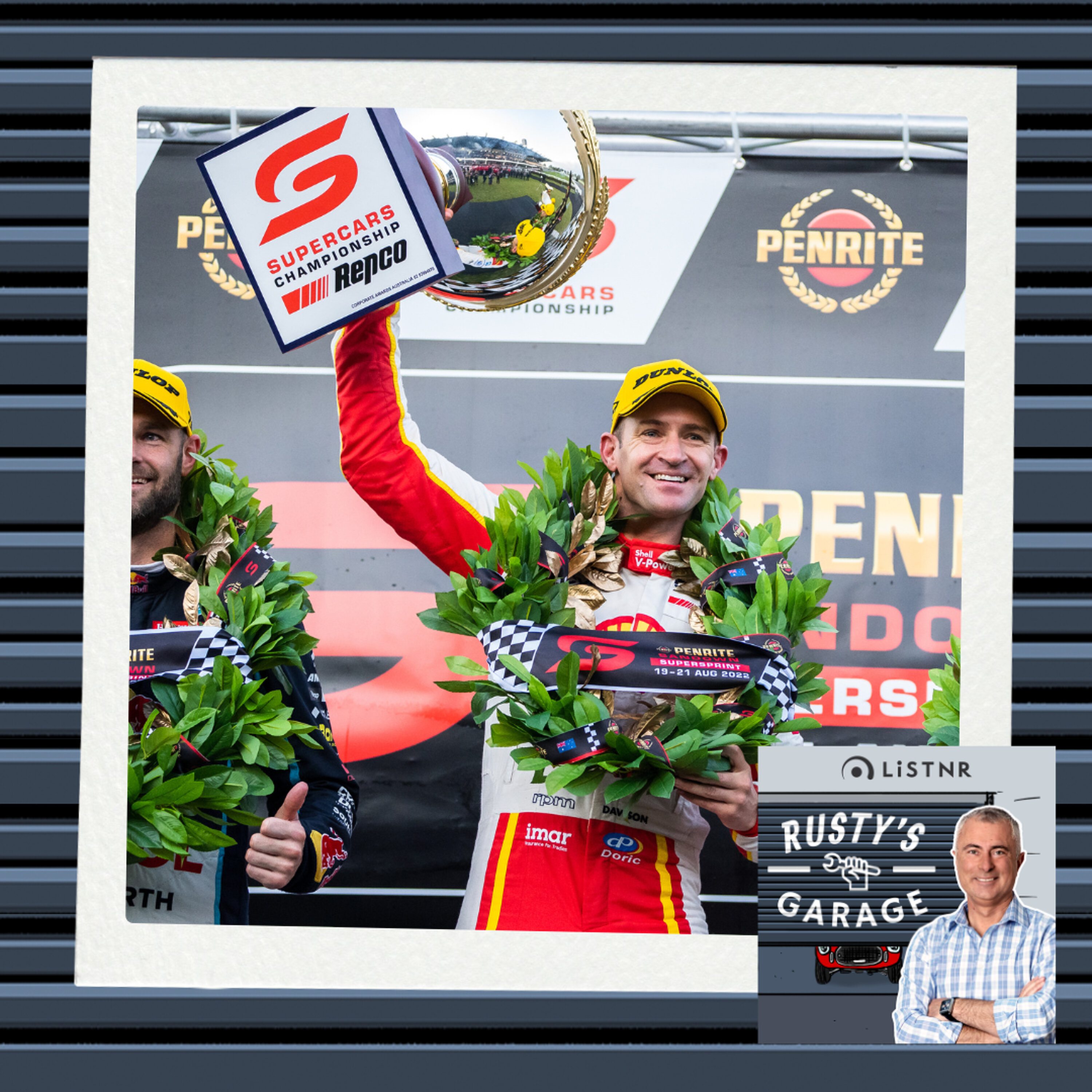
Will Davison shares his remarkable journey through motorsport, reflecting on his family’s racing legacy and his own experiences in F1 testing and Supercars. He recounts thrilling stories, including racing against legends like Kenny Smith and his time in Europe, where he faced fierce competition. Davison discusses the challenges of transitioning to Supercars, his memorable Bathurst win with a small team, and the lessons learned throughout his career. His candid insights into the sport's pressures and the excitement of new opportunities with Groves Racing make for an engaging listen.
"I'd lost a couple of spots to some of those Formula Toyota cars because they're just so different. The characteristics are very fast in the straight, but I was all over them in the corners."
Formula Toyota is a type of race car used in a specific racing series. These cars are built for speed and handling on the track, which makes them very different from regular cars you see on the road.
Formula Toyota refers to a single-seater racing series that uses Toyota engines and chassis. These cars are designed for competitive racing and are known for their lightweight and agile handling, making them quite different from standard road cars.
"Testing the ground effects and how you got to drive it. Having a chat with Kenny Smith when I got out of the car and doing and throwing, which doesn't matter at all."
Ground effects are special designs in race cars that help them stick to the track better by using air to create pressure underneath. This helps the car go faster around corners without losing control.
Ground effects refer to aerodynamic features in a car that create downforce by utilizing the airflow underneath the vehicle. This technology allows cars to maintain better traction and cornering speeds, especially in racing.
"And I just had to go and clarify something with him and say, was your first New Zealand Grand Prix in 1965? He said, yeah."
The New Zealand Grand Prix is a famous car race that takes place in New Zealand. It has a long history and includes many different types of race cars.
The New Zealand Grand Prix is a prestigious motor racing event that has been held since 1950, featuring various classes of racing cars. It is part of the New Zealand motorsport calendar and attracts both local and international competitors.
"...his team were first and second in the British Formula Renault Championship when I was fourth, Lewis Hamilton third."
The British Formula Renault Championship is a racing series for young drivers using similar cars. It's a way for them to gain experience and potentially move up to bigger racing leagues like Formula 1.
The British Formula Renault Championship is a single-seater racing series that serves as a stepping stone for drivers aiming to progress to higher levels of motorsport, such as Formula 1. It features cars that are designed to be affordable and competitive, allowing young drivers to showcase their talent.
"...the journey we went on to get over to the Formula Ford Festival after I'd won the Australian Formula Ford Series...."
The Ford Festiva is a small, budget-friendly car that was made in the early 1990s. It’s known for being easy to drive and not costing much to fill up with gas, which makes it a good option for people who need a simple car to get around town.
The Ford Festiva is a subcompact car that was produced by Ford from 1990 to 1993. It is known for its affordability, fuel efficiency, and compact size, making it a popular choice for city driving. The Festiva is often discussed in automotive circles for its role as a practical and economical vehicle during its production years.
"Did we do British Formula Ford, which was very big back then over there? Yeah, it was just, yeah, it was one of those journeys that British Formula Renault went pretty quick."
British Formula Ford is a type of car racing that helps new drivers learn how to race. It's a popular series for those starting their racing careers.
British Formula Ford is a single-seater racing series that serves as an entry-level category for aspiring race car drivers. It is known for its competitive nature and has been a stepping stone for many successful drivers in motorsport.
"So I just remember the thrill of going testing and I mean, I thought I knew what pushing the limit was, but you thought you were pushing the limit."
'Pushing the limit' means driving as fast as you can without losing control of the car. It's about testing how much the car can handle.
'Pushing the limit' refers to driving a vehicle at or beyond its maximum performance capabilities. In racing, this means finding the edge of grip and speed without losing control.
"But just hardcore racing, just testing every week, the mileage you're doing. You know, you get a few days off and just driving around the country and you get to Formula Three."
Formula Three is a type of car racing that helps young drivers learn and improve their skills before moving on to bigger races like Formula One. The cars are fast and designed for racing on tracks.
Formula Three is a class of open-wheel motorsport that serves as a stepping stone for drivers aiming to reach higher levels of racing, such as Formula One. It features single-seater cars that are designed to be lightweight and fast, emphasizing driver skill and engineering.
"...hearing the Jordans doing straight line testing or Mark Shanae and the Williams..."
Williams is another famous Formula One racing team that has been around since the late 1970s. They are known for their strong engineering and have won many championships over the years.
Williams Grand Prix Engineering is a British Formula One racing team founded by Frank Williams in 1977. The team has a rich history in the sport, known for its engineering excellence and multiple championship wins.
"...waking up every morning hearing the Jordans doing straight line testing or Mark Shanae and the Williams..."
Jordan was a Formula One racing team that competed in the sport during the 1990s and early 2000s. They were known for their colorful cars and for giving opportunities to new drivers.
Jordan Grand Prix was a Formula One team founded by Eddie Jordan in 1991. The team was known for its vibrant colors and competitive spirit, often fielding young and talented drivers.
Concept
F3
"And then F3 testing, all the engineers, they just, they loved F3. Everyone would stand on the pit wall, see who's flat through cops."
F3 stands for Formula 3, which is a type of car racing that helps young drivers gain experience before moving to more advanced racing series like Formula 1. The cars are fast and designed for racing on tracks.
F3, or Formula 3, is a class of open-wheel auto racing that serves as a stepping stone for drivers aspiring to reach higher levels of motorsport, such as Formula 1. It features single-seater cars that are designed for high-speed competition on various circuits.
"I'll never forget that first day in an F3 car at Silverstone. And it, you know, it went really well..."
Silverstone is a well-known racetrack in England where many important car races happen, including Formula 3. It's a popular place for drivers to test their cars and compete.
Silverstone is a famous motor racing circuit in the United Kingdom, known for hosting the British Grand Prix and various other motorsport events, including Formula 3 races. It has a rich history in motorsport and is a key venue for testing and racing.
"And, you know, we had a great time, finished the end of that 0-3, changed teams to our own menu motorsport because I'd had a bit of a tough run with Alan Dock in the mid-year."
'0-3' is a shorthand that might refer to a specific racing season or results. It's a way to talk about performances in a particular time frame.
The term '0-3' likely refers to a specific racing season or event, indicating a period of performance or results. In motorsport, such references are common to denote a timeframe or a series of races.
"...pole position the last round, finished second, Pico Jr. got me at the start."
Pole position means starting the race in the very front spot. It's given to the driver who had the fastest time in qualifying, which helps them get a better start.
Pole position is the starting spot at the front of the grid in a race, awarded to the driver with the fastest qualifying time. It is a significant advantage as it allows the driver to start the race ahead of all competitors.
"And then that led to the official tests with Hi-Tech, which was the Renault Young Driver program. And really, this was the highlight of my career..."
The Renault Young Driver program helps young drivers get better at racing. It gives them chances to race and learn, which can help them move up to bigger competitions.
The Renault Young Driver program is an initiative by Renault to support and develop young racing talent. It provides drivers with opportunities to gain experience in competitive racing environments and potentially advance to higher levels of motorsport.
"I remember being at F1 Paddock, you know, for doing a Minardi PR thing"
The F1 Paddock is like a backstage area at a concert, but for Formula 1 racing. It's where all the teams work on their cars and meet with fans and reporters during races.
The F1 Paddock is the area in a Formula 1 race where teams set up their garages and hospitality areas. It's a hub of activity during race weekends, where teams prepare their cars and engage with sponsors and media.
"...if I make Formula One, I'll get cleared from a contract..."
Formula One is a top-level car racing series where teams compete in fast cars on different tracks. It's very popular and known for its exciting races and advanced technology.
Formula One is the highest class of international auto racing for single-seater formula racing cars. It features a series of races known as Grands Prix, held on various circuits around the world, and is known for its advanced technology and high speeds.
"I hadn't tested the car, hadn't driven it since Bathurst."
Bathurst is a famous race track in Australia known for its challenging turns and hills. It's best known for a big race called the Bathurst 1000, where cars race for a long time.
Bathurst refers to the Mount Panorama Circuit in Australia, which is famous for hosting the Bathurst 1000, a prestigious endurance race. The track is known for its challenging layout and elevation changes, making it a favorite among drivers and fans alike.
"Although Will and I were only doing half a day each. Misano, wasn't it? Misano."
Misano is a race track in Italy where cars and motorcycles compete. It's famous for its twists and turns, making it a favorite among racers.
Misano is a motorsport circuit located in Italy, known for hosting various racing events, including MotoGP and car racing. It has a rich history in motorsport and is popular among drivers for its challenging layout.
"What was the horsepower back then? Oh, 900 plus, yeah."
Horsepower tells you how powerful a car's engine is. The higher the horsepower, the faster and more powerful the car can be.
Horsepower is a unit of measurement for power, commonly used to describe the output of engines. It indicates how much work an engine can perform over time, which is crucial for understanding a car's performance.
"Just full throttle up the back straight to see, I'll just get all these shift lights up and you're like bang, give a gear. And you don't even give a shift light yet."
Shift lights are lights on the dashboard that tell you when to change gears in a car. They help drivers know the best time to shift for better speed.
Shift lights are indicators on a vehicle's dashboard that signal the driver when to shift gears for optimal performance. They are commonly used in racing to help drivers maximize engine power and efficiency during acceleration.
"It was very edgy that Minardi, but still very easy to drive, very user friendly."
Minardi was a Formula One racing team from Italy that competed for many years. They were known for being smaller than other teams but were good at finding and training new drivers.
Minardi was an Italian Formula One team known for its participation in the sport from 1985 to 2005. The team was often seen as a smaller, independent outfit but had a reputation for developing young drivers and innovative designs.
"...the brake graph and he said, this is your like third run, you've done 5.1G at the end of the back straight. And they said, we rarely see that so quick."
G-force is how we measure the force of acceleration. If you feel like you're being pushed back in your seat when a car stops quickly, that's G-force at work!
G-force is a measurement of acceleration felt as weight. In this context, 5.1G indicates the driver experienced forces more than five times their body weight during braking, which is significant in performance driving.
"Like, I'm like, you're the Holden Racing team. Like, you can't."
Holden is a car brand from Australia that made many types of cars, including sports cars. They are well-known for their involvement in racing.
Holden was an Australian automobile manufacturer known for producing a range of vehicles, including performance cars and family sedans. The brand has a rich motorsport heritage, particularly in touring car racing.
Term
FG
"I got two full-spect, triple-8 FGs coming, like full chassis."
FG is a model of a car made by Ford in Australia. It was used for everyday driving and also in racing.
The FG refers to the Ford Falcon FG, a model of the Ford Falcon produced in Australia. It was known for its performance and was popular in both the consumer market and motorsport.
"It was actually really hard because I'm like, DGR, I got two full-spect, triple-8 FGs coming, like full chassis."
Triple Eight is a racing team in Australia that builds and races cars in competitions. They are very successful and have won many races.
Triple Eight Race Engineering is a successful Australian motorsport team that competes in the Supercars Championship. They are known for their engineering excellence and have won multiple championships.
"...is there one that you... Yeah, I'm going to say Project Blueprint. I am. I mean, the 22 DGR Shell V-Power Mustang."
The Ford Mustang is a famous sports car from America that many people love for its speed and design. It's been around for a long time and comes in different versions.
The Ford Mustang is an iconic American muscle car known for its performance and style. It has been in production since 1964 and has gone through several generations, each offering various trims and performance options.
"...it would lift off the throttle and it would spray out the brake ducts and I had, like, all these adjustments on the steering wheel..."
Brake ducts are like air vents for the brakes. They help keep the brakes cool by directing air to them, which is important when driving fast to avoid overheating.
Brake ducts are channels that direct airflow to the brake components, helping to cool them during operation. This is crucial in high-performance driving situations to prevent brake fade.
"...and it just helped your degradation massively."
Tyre degradation is when tires wear out and don't work as well anymore. This can happen quickly when driving fast or on a racetrack.
Tyre degradation refers to the wear and loss of performance of tires over time, especially under high-stress conditions like racing. Managing this is crucial for maintaining speed and control.
"...We had engine fuel maps. There was a lot of adjustment back then..."
Engine fuel maps help the car's engine know how much fuel to use at different speeds and conditions. This helps the car run better and save fuel.
Engine fuel maps are pre-defined settings that control the air-fuel mixture delivered to the engine at various RPMs and loads. They are crucial for optimizing performance, fuel efficiency, and emissions.
"you're going to get to drive a TA2 car, a Trans Am car at Highland, it's going to be great that you're going to get a chance to do that."
Trans Am is a type of car racing in the United States where specially modified cars compete against each other. It's known for exciting races and has been around for many years.
Trans Am is a popular American sports car racing series that features modified production cars. It has a rich history and is known for its competitive racing environment, showcasing various manufacturers and models.
Select text to request an explanation
A Listener Production
G'day, it's Rusty here, all set for part two of my feature episode with Will Davison, if you've somehow missed part one.
Head back to the garage library and enjoy the listen. Will's recollection of his family racing history is brilliant.
The story of a World War II Spitfire race avoiding capture is incredible.
There's also Will's own story of his early years, how he stopped racing for a little while in carts before a light switch moment
that saw him back in, deeply committed and on the pathway to a career behind the wheel.
In both Europe in single-seaters and in Australia in supercars.
And they are the chapters that we're going to focus on in this second part.
A little footnote, I don't get to every story. I should have covered how Will and Rihanna, his wife, met for example.
But Will has shared a little bit of that already with our good friend of the podcast, Aaron Noonan, the V8 Sleuth.
And he did that pod prior to the pandemic. You might enjoy that at some stage.
There is a little bit of road noise and some wind noise that creeps in at times in this second part,
but I'm not going to make any apologies for that. It's nice to be outside and in a relaxed setting.
Let's get back to it now.
Right, for this second half, we're actually outside on a nice outdoor setting.
The lake Topor is across the road from us.
Before we get into Europe and supercars and whatever else, I want to tap into today.
You actually raced that car we spoke about at the beginning of the first half.
Nearly got a podium too. That was good, wasn't it?
Yeah, the race from me came out. In reality, with such limited laps, I'm off the start.
I just didn't know how to play it. Even just open-wheeler flow.
Opening a few corners at cars next to me, I was very cautious.
It started coming to me and I was a bit disappointed.
I'd lost a couple of spots to some of those Formula Toyota cars because they're just so different.
The characteristics are very fast in the straight, but I was all over them in the corners.
I actually just wanted clear air because I just wanted to enjoy the car and let it loose.
I started to do that. By the end, I started to figure the car out.
I was in this little battle with someone, which was fun, but I didn't really need for that to be happening.
We had a really fun little race, but I was actually frustrated because I really wanted to test the maximum potential of that car.
I got close to be honest. If we started now, I actually feel like quite at one with the car, which is great.
Testing the ground effects and how you got to drive it.
Having a chat with Kenny Smith when I got out of the car and doing and throwing, which doesn't matter at all.
I still like to understand every car I drive. I think at the end there, I really start to understand it.
Apologies for a little bit of the wind noise kicking in. It's coming off the lake.
Glad you mentioned Kenny Smith. He's kindly agreed in recent days to come on the podcast.
I don't know how the hell we're going to keep it to one or two parts because he's just done so much in his time.
Again, a little reflection of your love of history. You enjoyed that chat today.
I enjoyed the whole weekend. I kept saying to him, Kenny, this is an honour to be on the track with you.
I've always, through my dad, who's always just worshipped Kenny and you always keep an eye on him and just one of the...
Crazy. He finished fifth today. Amazing.
He was saying, I wanted to come up next to your wheel and I could see him in my mirror there under the safety car.
But just what a privilege, what a legend that we won't see the likes of Kenny Smith ever again.
And just at the end, having a chat with him, just actually watching the telecast, the little feature story.
And I just had to go and clarify something with him and say, was your first New Zealand Grand Prix in 1965?
He said, yeah. And I said, well, Lex was on the front row with Jim Clark, Graham Hill, and he was killed two weeks later.
And he said, that is exactly right, Will. And he said, I was in a Lotus 22 or whatever he said he was in.
But to think, there he was with Dash today. He grabbed my little son through Dash in his race car.
We got a photo. So there's, he's raced my grandfather. He's raced my dad. He's raced me.
Unreal.
And just, he's out there, just still loving it. Unreal. I love that stuff more than anything.
That was a real privilege today to just be sitting next to him, getting changed with him, getting in the race car, real old school stuff. Just the best.
The brilliance. That naturally leads me to your time in the UK chasing the single-seater dream.
You stitched together, mate, quite a group of backers and people, and that was hard work to pull it off and to go there.
How do you frame that sort of chapter of your time now?
Yeah, it all came back to me this weekend. I saw Richard Dutton on the grid today from 4Tech Motorsport, and I haven't seen him in 20 years.
He hasn't changed. I mean, his team were first and second in the British Formula Renault Championship when I was fourth, Lewis Hamilton third.
I had meetings with Richard Dutton. So I mean, throw that into the mix as a deja vu this weekend.
One seeing all these young kids with these dreams and aspirations and feeling it, smelling it, tasting it.
But then to see like that, it's just blown me away this weekend because it's so long ago.
But yeah, we had a good crack and we were very firmly fixated on getting to Europe.
I think now my dad probably wasn't that much older than I am now at that period.
Just what he did for me to help my dream come true and a lot of his friends and backers and the journey we went on to get over to the Formula Ford Festival after I'd won the Australian Formula Ford Series.
And just step by step work out what to do. I mean, I remember it so clearly. Was it Formula Renault?
Did we do British Formula Ford, which was very big back then over there?
Yeah, it was just, yeah, it was one of those journeys that British Formula Renault went pretty quick.
I remember first getting over there and I was probably in a four car team, very established teammates who had, my teammate Rob Bell had actually won the winter series.
Lewis Hamilton was new to the series, but he'd done the winter series.
So even the rookies had just done three or four races. I'd never driven wings and slicks. I never knew any of the circuits.
So I just remember the thrill of going testing and I mean, I thought I knew what pushing the limit was, but you thought you were pushing the limit.
And it was just you do all these official test days and you're just half a second off and bit by bit.
And I used to hear it from my career and all my friends that had worked in Europe, but it's to the level, you know, the level you've got to get to.
It's just the best schooling because you think you're on it and you're absolutely nowhere and you've just got to dig and dig and dig and take risks, tear corners off.
I mean, we didn't have the budget to, but you're there every day. There's just cars hanging out of the fence and you've just got to push the limits and all the circuits there are very unforgiving.
So I just remember always trying to push myself and ended up fourth in the championship that first year, my rookie year or pretty much equal third with Lewis in points.
And had a really, you know, it was the lead car in my team at Motor World, which I didn't expect. There were some amazing drivers on the grid that year.
It's quite a roll call. I mean, I won't be able to recount them all and some of them may be from different parts of your time in Europe.
But I mean, you talked Lewis there a moment ago. I mean, I think Lucas Degrassi was over it there.
You know, this goes on years to grass. I mean, Formula Renault was Jamie Green and we had, you know, it was Pat Long. We had a Nesta Visa.
I mean, you had a lot of GT guys. I mean, Formula Three was the list went on the year I was there was obviously PK Junior.
And we had the Carlin boys, Alan Vandermover it was. And gosh, who else?
So it's Will Powers, Robert Dahlgren, but then Formula One was Scott Speed. But Kubica, I mean, as when Ryan Briscoe won the Euro series that year.
Christian Clean, we added the Malbra Masters.
Also a lot, a lot, a lot of big names. I'm probably missing a Heaps, Nico Rosberg.
Just yeah, it was a pretty, pretty cool era to be a part of.
What were some of them like back then? Because I mean, Lewis is now a seven time world champion.
I mean, life changes significantly for him and for all of you.
But but you're all young youngsters having to go back then. Were they easy going?
Were they all these, you know, staunchly competitive types?
What were they? They're all differently, you know, programmed probably.
But what were most of them like?
I'm just kids. But it's dog eat dog. It's aggressive there.
You go there and it's a real hype note just to the sheer aggression of the racing.
It's just ingrained in everyone. It's the best of the best from every country.
Trying to fit into, you know, very few slots.
But everyone lives in a hub as well. So every weekend you're not racing.
You're all out. There's a Krapati crew, you know.
My mates were all Irish. It was actually, Susie Stoddart, sorry, was in the form of the Renault.
Susie Wolf. So it's a good friend of mine. She actually did form the Renault the year I did it.
Catherine Legg was in there. There's a couple of females.
But Susie was part of the crew with Adam Carroll.
He was a great driver, did some Formula One testing.
It was Mike Conway, James Rosada, some guys that are in Formula Renault the year I did it.
At least it's all coming back to me now.
But there was a great party crew, Hakey Covalain.
And I mean, there's a lot of guys part of that crew, James Courtney, obviously the Aussie.
But yeah, there was a real hub, a real camaraderie, just wild, wild childs.
You know, we're all having a good time.
But just hardcore racing, just testing every week, the mileage you're doing.
You know, you get a few days off and just driving around the country and you get to Formula Three.
It got real serious. The budgets get serious.
And just even the engineers, the mechanics, you know, when I went to dockings, you're based at Silverstone.
I lived in Buckingham. You'd wake up every morning hearing the Jordans doing straight line testing
or Mark Shanae and the Williams, I'd just get out there and go to the workshop.
It was all very open then. But that was just normal living for me.
And then F3 testing, all the engineers, they just, they loved F3.
Everyone would stand on the pit wall, see who's flat through cops.
And I remember my first day in an F3 car and it was like, you're a big boy once you get in an F3 car.
Because out fast, you know, and everyone loved F3.
So that was a really exciting step. I'll never forget that first day in an F3 car at Silverstone.
And it, you know, it went really well, which led us to probably fast-track that process to make it happen to get into Formula Three.
Yep. You worked, I mean, among the different backers and things, I think there was a bit of support from the Australian Motorsport Foundation
and so on to stitch all this together. And you put your neck out on the block, mate.
Didn't you basically to have a crack at this?
Yeah, we really did rightly or wrongly. I mean, yeah, I mean, Dad, I mean, man of times when we enter F3,
you know, Scott Speed was my teammate, so fully Red Bull backed.
He'd won the first Red Bull scholarship. Red Bull didn't have an F1 team.
But I remember him being a flamboyant American, telling me he's going to be in F1 in two years with his Formula One Red Bull team.
And I was sort of like, right, sure enough, it happened.
But, yeah, that was when, yeah, Helmut Marco was at our, you know, our test down in Spain that year.
But Scott wasn't established. But, yeah, it was, where was I going with that? Where were we going?
Well, I mean, just the way that you committed to it, mate, and how big that wall is.
So we were down on budget, yeah. And the amount of times we were getting in and, you know, I'd get a rock up and snetted
in an Alton Park and couldn't get in the car. You know, money hadn't gone through and Dad's been up all night
trying to big borrow and steal, you know, to the point where we, you know, got underway in F3.
We had some very loyal friends of my dad's that really put their necks on the line, the infancy.
But then we got our sort of investment scheme up and not scheme, it sounds wrong, doesn't it?
Program. Program, yeah.
Because I'd actually, you know, very early in preseason testing, I'd top preseason testing
and sort of got some good media on site. I didn't really know what I was doing, but I was very fast,
very quick in a form of three, but it was a very sporadic year.
Then we were sort of nowhere for a few rounds and came out in third round of the series and dominated.
So we got some good momentum, but we really didn't have any funding, came back to Australia.
And that's when we had...
But you did regularly, mate, I think, didn't you? You jetted backwards and forwards.
That's right. I remember coming back in May and we were an ambassador with the Grand Prix Corp,
but we had a big fundraising night where we launched this investment program where people could buy shares in my career.
And, you know, Peter Brock was there. Actually, Shane Warren was on his band that year,
but his brother Jason had got Shane a part of it to try and get him some positive publicity.
And I remember sitting with him doing a thing with the Herald Sun.
But that night, I mean, we had Sammy Newman, Brocky, Shane speaking,
and just all the who's, who are businessmen and media in Melbourne trying to generate interest and money.
And did we do it the right way? I don't think there was such thing as a right way.
But we tried our best. We tried our utmost.
And, you know, we had a great time, finished the end of that 0-3,
changed teams to our own menu motorsport because I'd had a bit of a tough run with Alan Dock in the mid-year.
It's no point throwing good money after bad. Was it me? Was it the car we needed to know?
And straight to topping two official tests at Brands Hatch,
pole position the last round, finished second, Pico Jr. got me at the start.
But on the GP circuit, wow, F3 car around Brands GP.
Memories now that I think back, you know, through Hawthorne's Dingle Dell,
I mean, just being on pole, I was really on top of my game then.
And then that led to the official tests with Hi-Tech, which was the Renault Young Driver program.
And really, this was the highlight of my career, but the low light because we had no more funding.
But I was ready to go and, you know, I topped those two official days,
but they weren't just any British days. They were two weeks for Macau.
So you had Rosberg come out from Europe. He was with Carl.
And Lewis was in British F3 by now he'd won the Renault series.
Kibitz, who was there, all the British guys, P.K. and Powers there.
I mean, everyone. And I topped the days. Degrassi was in the car next to me
and really was in a sweet spot with a British F3 car at that F3 car.
But we didn't get in that program, which was going to obviously underwrite the funds moving forwards.
I think he told me too in the way that all kind of shook out in the end.
And he's still got a good relationship with him to this day.
I think it was Mark Webber partly involved in actually letting you know ultimately what they decided.
You were clinging and clearly felt like you had the right stuff for them,
but they went a different direction.
Yeah, yeah. I mean, I see this through my eyes.
I'm actually really close with Mark now. I'm more on a mate front, which is great.
But, you know, then you imagine me just bright-eyed kid and he's in Formula One.
He's fighting his own battles. He's only two years into Formula One at this stage,
which I hold him even in high regard now that I think he was actually just a young bloke.
Now that I'm 40, he was 20s, Jaguar 03, first year.
But I just never forget we lived a few miles apart.
We'd often do dinner, you know, once a month, this little restaurant in Merzlo or Winslow.
He'll probably, he definitely was that.
But I mean, I just, yeah, I just, he'd always go out of his way,
he'd invite me to dinner, then he'd invite me to his house.
Let's go running. He'd show me up in training.
I think it was a kind of a sly.
And I think back now, because I thought I was fit and I was not fit.
I mean, I trained, but Mark, you're like,
okay, come on, mate, we're going for a 12k run.
And I remember, I can't let Mark Webber down.
And he's just there waiting. I remember him once, you know,
I'm just keeping up and he's in the middle of this dirt driveway
and the bush doing push-ups waiting for me.
And I'm like, yeah, yeah, no worries, 12k.
And I just remember this is humiliating.
I think it was just a sly sort of.
This is what it takes.
This is what it takes, mate, you know.
And so he rubbed off on me in a great way all the time
to the point where I remember I came home from an F3 race.
And it was the day after the Italian Grand Prix, Monday morning.
He'd ring me to check on my weekend.
Oh, nice.
And now I think back on, how did you have capacity to worry about young Aussies?
The show's who Mark is.
And then the invite me to Silverstone.
I just remember Jaguar in the middle of the garage,
he's testing in and out, just standing there next to his cockpit.
I'm just amazing stuff.
But yes, he was helping me.
But then we had some management and I thought we had a pretty good link.
But you learn, live and learn.
And not that Mark and Anne wanted to manage me.
There might have been an opportunity.
But obviously then Will Power inevitably came over
and then he ended up getting in with Mark and Anne.
And then it quickly, I felt like there was a divide.
Not Mark, he was always personally great.
But things got fickle and I understand what it takes.
I remember being at F1 Paddock, you know, for doing a Minardi PR thing
because we had the test and something was said to me that, you know,
don't use Mark's name.
I noticed then that it was, it really upset me,
but it was one of those divides.
We're not at war now.
We're back in this guy and this is what it takes.
This might be how I saw it.
But very quickly, they were looking after someone else and not me.
And I'll probably have a huge regret on not getting involved there.
But yeah, anyway, it's one of those things I don't know how it could have played out.
But, you know, we did things the best we could.
We snuck back over there in 04.
Campbell Walker, I remember, was the phone call to just get some funds to get us started.
Had three podiums in the first four rounds.
In British F3, I was third in the points.
But we just couldn't keep going.
We're just getting further and further into a whole of debt.
So we hung in there to get back for the F1 test.
And there's a bit going on in this next phase with V8s
and that's still the F1 test, which is something else.
Before we come to F1 test and Supercars, one or two quick things.
Firstly, Zenith moment in F3, the thing where you feel like you were just at your peak
or that you're perhaps proudest of.
And the moment your mate will power on it to throttle you.
Well, I suppose I won.
I won very early and I dominated.
I mean, I pole fast slap, but I didn't really know what I was doing.
So I can't really say I'm much proud of that.
They're a tricky thing, those F3 cars, though, aren't they mate?
They're beautiful, I think, when they're at the window.
I wish I had an experience with Davidson after 20 years in Supercars,
which I would say mechanically and process wise with tyre management set up.
I wish my experience in a young me now could go and do.
Because I look at some of the stuff now and it stares me in the face
of just obvious engineering 101.
So yeah, amazing times early, but I wouldn't say I was, although I dominated early,
I wouldn't say I was at the top of my game.
By the end of the year, that brand's GP, where pressure was at the highest,
like we were pretty much coming home and I had to perform.
Again mate, at a peak moment.
Which is a message I probably have for young guys of this day.
Some things I wish were different in my career,
but what I do know is the perception train and the perception wave
changes very quickly in this sport.
But when there's an opportunity there, you've got to strike
and you can't let it go.
And I think any time I've had an opportunity to win or I've had a good car,
I've grabbed it and I've performed when it matters.
There might be a lot of other bad performances,
but there's moments in time when you look back one critical test,
one critical moment where you've got to go whack.
And I think, yeah, I was able to do that pretty well in my career
when I needed to.
Good stuff. Power. What happened at that time?
I don't know where you were. I can't remember where you were.
Was it Donington?
It was Donington.
It was luck.
I can tell you that area of the paddock and I haven't been there for 20 years.
I mean, by now, Will's, he's been over when he had no budget.
He'd slept on my floor, but he's got some backing.
He was with Forteck, Richard Dutton, who I saw today, his team.
The upended things are docking, I think.
And this was 04, yeah, so he was, now we're at war a bit.
And it was a wet race.
It was the first race of the 04 season, I think.
It was a wet dry.
I actually do remember it back straight coming under that bridge at Donnington,
double coppers coming out of coppers.
He got a run, I think.
And I've just sort of driven him over and I pushed him into the grass, I suppose.
I don't know.
But yeah, it's just very much everything you've seen with Will Power from a long way back,
the pointing, the screaming, like, you know, probably mimicking or miming the worst words
you can think of.
You are effing.
But this is hundreds of metres away.
And he's, yeah, and he just sort of grabbed me and, yeah, he was like, oh, he's very much power.
And we're kind of mates, you know.
I wouldn't say confronting, but that's Will to a T.
I've got some other good Will Power stories, but I love him.
He's great.
He quickly burns off.
And it's from the right place because he feels someone's done something dirty to him
or not right, although he was.
I know when you catch up now, you have beautiful conversations.
We always have.
Even that moment didn't carry on.
That didn't last.
I mean, the end of 03, that round at Menus where I polled, Will was in the 4TEC car.
So he'd started the year in a ralt, down the back of the field.
The last four or five rounds, he'd got in a 4TEC car and started coming up.
6, top 7, round me.
And then Brans, he had a big accident in the back section and cracked his helmet.
And there's a wonderful photo because people forget, but I loaned him my spare helmet.
So the last round of the 03 British F3 is Will Power.
You'll see in a 4TEC white car is a Will Davison helmet.
It's like the Schumacher Coulthard in the McLaren.
But yeah, we were very good, good mates.
And yeah, that was just out of nowhere, but Will doesn't care.
No mates on the track.
And he's very much like that.
He separates the two hand in hand.
He still does it today.
So you come back to Oz, ultimately, and with a fair bit to repay which is sorted.
But initially, I think, for the idea of a supercar's thing, does it come about from an ultra-passionate Oscar Furonotto and team dynamic?
What was the first kind of foray and how did that come about?
How did that start?
Yeah, it was before we went back in 04.
Oscar had reached out and was really the only supercar team.
Or maybe Willsey was behind that, I believe, a lot as well.
I mean, Simon were good friends.
And Simon has since said, hey, I was the one pushing because he'd done British Formula 3.
You've got to remember, Simon had been down that route in the late 90s when Mark Webber was in British F3.
Willsey had quite a good career in the UK and lovely bloke.
So anyway, Oscar was the point of contact.
And they were very much keen to get me commit to me without even turning a wheel in a supercar.
Mark, I said, obviously, just come back from British F3 with Alan Docking.
He'd done a similar route.
And everyone saw what he did when he jumped in a supercar.
So obviously, that was a bit of the flavour of the month.
And so I turned it down.
I really wanted to get back in 04.
Like I could have jumped in probably for 04, I think.
But I'm going to say full time.
I can't remember that.
But there was definitely interest there.
OK.
I just said, we'll just stay in touch.
We'll just stay in touch.
So obviously, the first thing when I had to return home in July, August, was give them a call.
Say, I'm home.
I don't know what I'm doing.
Within two days, I was at Malalar doing a ride day with some passengers.
And again, like I said, I just, I remember sitting next to Simon Willes,
H-Pattern breakpoints, V-shape, the Kirby used.
So I just got in, picked it up really quick.
And then did some laps in the middle of the day on my own, which not really meant to.
And I'm like, that's like nearly as quick as we've ever gone here.
Or a few tenths off Willes is ever gone or talk about just maximising opportunities.
But I don't know.
I loved it.
I really loved it.
Radically different to the F3 thing.
Oh my gosh.
Yeah.
Oh, and I found that out soon.
You go around a different circuit, and all of a sudden you realise.
But whatever is at Malalar and in that car and copping Simon and just, yeah,
it just all came to me very quickly.
And from that moment on, they threw me into Winton two weeks later.
So you tell their kids today in Super 2 that it got Super 2 for years, rookie days.
I mean, they threw me out in a main game.
I'd done 14 laps in a supercar.
Like, imagine how out of my comfort zone I was, and it was wet,
and I'm out there mid-season with all the scapey and Garth and Russ just shoving me out of the way.
Like, I was just getting in everyone's way.
But then it was wet, and again, I finished the practice session in 11th or something
in my first ever session.
So it was sort of, yeah, very quick debut, and then I did the enduroes with Dynamic.
It wasn't nothing to ride home about, but enough where they committed and offered me
a full-time seat for the 0506 season.
But I had written in there, if I make Formula One, I'll get cleared from a contract
because I was still going back in November to test the Formula One.
So I was still doing some Formula Holden tests to stay sharp.
And that leads to a whole new story as to what happened in 05,
because that never obviously eventuated.
But I debuted with them at the Grand Prix in 05.
Tony Longhurst bought a franchise.
So I rocked up at Clipsoil.
I'd finished well at the Grand Prix.
I had a sixth place finish.
I hadn't tested the car, hadn't driven it since Bathurst.
I'd since driven Formula One.
I'd say five months have gone.
You don't get a test day straight in.
Then qualified 12th or 13th and finished sixth in this wet dry race.
And then went out of laid, and Longhurst needed me to sign a contract to drive his car.
And I didn't want to sign that.
But obviously Willsie was supposed to team.
You had a lot of typing with something with what you already had.
So I was left without the drive.
But I was contracted to get the drive.
So that left me on the sidelines.
Got me up to DJR for the enduro's the next morning after the Grand Prix.
But then it had nothing to do all year.
It did A1 GP, which was great.
But it was in no man's land.
At that point in my career, it was the only time I felt like I was in no man's land a bit.
No one to take my calls.
I was thinking, oh, this is a bit of a worry.
Until one pivotal moment at a Super 2 race, which DJR ran me out at QR, where I won.
And the floodgates opened again, the perception train.
I did nothing different from the Thursday at Queensland Raceway to the Sunday.
Put in a good performance.
And the world changed for me that next week.
Stone brothers were on the phone and all sorts made from what I can gather.
One little kind of footnote in all of that is that the F1 test with Manati is kind of burbling away.
I think, isn't it, mate?
I mean, tell me about that.
You've driven the two-seater on a number of occasions at Albert Park since then to go and do that.
What the heck was that like?
Yeah, just a combination of just everything you dreamed of as a kid.
Although feeling quite ready.
Just, yeah, just, I mean, I'd spent a few days in Fanzar and with the engineer and then there's a four-day test.
So it was done properly.
They really did it well for us.
Although Will and I were only doing half a day each.
Misano, wasn't it?
Misano.
They had a four-day test and they had a lot of their current Grand Prix drivers.
A bunch of other young guys doing multiple days at Pasta Malonado.
Christian Albers, Patrick Frisaka, who actually ultimately ended up in the Grand Prix seats the next year.
And Will and I had one day.
The number was big, mate, that they wanted if you were to come and have a full-time gig.
I think relatively speaking, wasn't it?
Yeah, I mean, it never really, it briefly got to that.
But the day went really, really well.
I remember just sitting in that car and there's another great story where Will was meant to be in the morning.
Power.
Power.
So I was very relaxed arriving.
I'm going to chat to him about this one day, but his girlfriend at the time worked for Ann Neal and Mark Carey.
And I had no idea.
Actually, I was fine, but he'd been there testing in an F3000 the week before.
I'd never seen the track.
He was really taking it serious.
I mean, I was, but I've got it on video because my mate was there filming.
So I'm very relaxed.
Rock up at 8 a.m.
I'm not in the car at all one, so I'm not panicking yet.
Roll in and I just get a tap on the shoulder.
I got to Davidson, like get in the motor home, like you're in the car in 30 minutes.
And I've got on camera, the mechanics of the car, they're going, what?
Like Davidson, because they were shocked because the belts are different, the seats, the sticker on the night.
Everything had to, and I'm like, what?
They're like, power's having a meltdown because it was icy cold, freezing.
I think he thought it was going to be slippery.
I'm going to ask him.
I don't care.
I love it about him.
And I didn't have a leg to stand on, but I think it worked well because I know I got on it very quick.
There was nothing wrong with the track conditions.
And I actually just, one of my strengths, probably in my career, always did get up to speed very fast.
And I really picked it up.
We had a datum lap of a 13 from Tiago Monteiro and my head's like, oh, I'll be doing an 18.
Like I'm not going to, you hear the noise the day before watching at the screen.
I'm like, oh, that thing looks too fast.
It's sitting in it just that moment.
The moment before I left, I just never forget it, the big bridge stones and all the setup.
It's just that moment.
I'll never forget sitting there going, this is it.
Like this is it.
And then rolling down the lane.
What did it feel like?
Oh, I mean, it's just like a race car until you open it up, until you were just like on another stratosphere.
The first time.
What was the horsepower back then?
Oh, 900 plus, yeah.
But just, yeah, just incredible feeling.
Just the first time you, yeah, just an installation lap.
Just full throttle up the back straight to see, I'll just get all these shift lights up and you're like bang, give a gear.
And you don't even give a shift light yet.
All right, out third to fourth right.
Oh, I get it all the way.
You just can't explain it to people.
And then just the braking force.
And then you stop doing install bang two laps and I just straight away, just straight away hard in the TC first second.
And it was just like a rocket.
But I just, the cars are very, very nice.
It was very edgy that Minardi, but still very easy to drive, very user friendly.
But you just like so fast.
Your brain can't comprehend it, but it does everything so well.
The flux gears, early electronics, the braking force, like it stops for you.
Yeah, it's something I wish everyone could actually experience because it's, particularly when I felt on top of it, although my neck wasn't on top of it.
I was on top of it and I got up to speed like really quick.
And actually, I remember the engineer said, I don't think we've ever, in like my second run.
I remember he showed me the brake graph and he said, this is your like third run, you've done 5.1G at the end of the back straight.
And they said, we rarely see that so quick.
And there was still another 20 meters or so, which I got in my last two tire runs, new tire runs.
But I got to a very good break point very quick.
And it was just like insane.
So good, man.
Yeah, it was really cool.
Again, etched in your memory, which I think is, yeah.
Listen, Frosty, on my last new tire run, I was at the, would I sport it now, quickest time of the week, 11-1 by Christian Albers.
I think Will and I did 11-5 or something.
Well played.
But my last run, which, because I was actually a bit up on power in all the runs, we did the identical time in the end.
But my last run, the second last corner, I just went so deep this run.
I was so committed.
My head was flopping around everywhere like a rag doll.
Like I just went to like 60 meters at the end of the back straight.
And I was just hanging on just in the traction controls like, and then the second last guy just went in so deep.
And I just, I've still got, I can still see it, just big inside lock, Bridgestone.
Ran past the corner.
I'm just hard on the gas in the TC.
Like I'm in the marbles and I'm like, no.
Like I did the 11-5 and they're like, great job, great job.
Very good time.
And I dumped like four, five, 10s.
And it was like 11-1 was the time of the week and he'd done 200 laps, Albers.
And I'm like, we did 30, 20, 30 laps.
So, yeah, I always kicked myself because it actually could have been exceptionally good.
We still did very well, but I felt too good because we were never really going to get the seat.
I mean, the engineers were actually pushing for us.
Well, we love you to, I just remember, I love you to drive here next year and will we see you.
And so you sort of feel like, oh my God, I'm going to be there, the PR people that back in my head.
I'm like, this ain't happening.
Yeah.
And we could have for like half the budget, the others paid maybe $6 million.
Yeah.
She had a brief.
That's a bit of sweet, mate, isn't it?
Yeah, it really was.
Yeah, anyway, good times.
Let's come to DJR.
You, I think, have a fun exchange with Stevie Johnson in a nightclub.
What are you doing for the Enduros?
Off you go.
Then that leads to a super two drive that you've talked about.
Let's come back to what you said there a moment ago.
I mean, I alluded to Stone Brothers.
That was just one of many that I think were on the phone, mate, in the wake of that.
Everyone kind of realized what Ambrose had done had obviously, and among others, had changed a bit of thinking.
And was that what was going on with you here?
Like we need to invest in a young person and move them on.
I think, obviously, JC was coming back.
He'd driven with HRT, the 500M05, myself.
I mean, Frosty had been in with Larkham.
Jamie had just done GRM.
No, he'd just done a year at Tasman and did very well.
So I think there was quite a few of us amongst, I mean, I actually got offered the Tasman seat by Kevin Murphy.
Oh, right.
And I was, yeah.
Did you have a discussion with Roland, too?
Yeah, so 100%.
Sorry, I'm just getting to that.
I was like, who am I replacing?
And it was kind of they were talking to JR, Stephen Richards, and then I'm like, what if that doesn't sign?
I mean, because Jamie's gone great.
And it was kind of like, oh, well, Jamie, now you think back and going, this is so cutthroat.
Like they were willing to just, and I just didn't make sense of it.
And you do what you've got to do.
But it sat really uncomfortably for me.
And I've had a few of those stories in my career where when you're hot, you know, everyone talks to you and they're going to get rid of your teammate.
And they talk to you very openly, like you're the flavor of the month.
And then I've had that to some, I won't mention names, but some really high up teammates where they're speaking to you pretty badly about them.
But I'm like, so what happens when I have a couple of bad races?
Like, how quick are you going to throw me to the woods?
And sure enough, it's what happens.
So I very quickly learnt that early on, although you've got to go for it.
But yeah, there was obviously, I flew up to Triple 8, met with Roland.
He was very much after the Enduros, wanted to chat, meet me.
We'll make a decision after Bathurst.
Stone Brothers were much the same.
I sat down with Ross and Jimmy at Oren Park 04.
I remember I was there with Dynamic, but, you know, I was in awe.
I mean, Ambrose was there.
That was Pertick.
They were the championship-winning organization.
So that was the dream scenario, really at that moment.
And the Tasman thing popped up and then DJR, sort of after the Super 2 conica series or...
What about Ross?
What would it have been back then?
No, Nernse is going to kill me.
He will kill me too.
Ah, it had a crazy name, I think, in that year, didn't it?
Yeah.
Anyway, yes.
Super 2, as we now know it.
I will.
Don't beat yourself up on that one.
Crikey, there's no point on that.
Anyway, it doesn't matter.
So, yeah, that weekend had a great run and things heated up real quick.
And I got DJR, then, yeah, made a big move to put a really good offer to me for three years.
Again, they had a very established legend in Glen Seaton with a contract.
Things feel a bit...
Yeah, feel a bit close to home 20 years later for me now.
Particularly, I'm at Run Group with Aaron Seaton.
We talk about it.
I'm like, wow, how's that for a full circle life moment?
But, yeah, that was great.
And that was going to be right now, the moment deal.
And I honestly didn't back myself enough to wait till after Bathurst.
I'm like, what if I put it in the fence?
Like, I'm on the momentum train.
I've got to grab this.
The pressure's not great.
They haven't done much for a few years.
This is probably a good scenario for me.
I remember rolling up the San Am 500 and I believe Roland offered me the seat.
He met my dad and said, let's do it.
So I don't know the exact story.
But I remember that.
And I was like, oh my gosh, we hadn't actually put ink to paper.
But we'd done a handshake.
We were a long way down the route and stuck by it.
And I don't have regrets.
I've obviously seen what Jamie's done.
I think a few years into my career, I think I could have done wonderful things at that team.
But I'm not going to sit there and go, oh, if I made that decision,
I'd have seven championships like Jamie Winkup.
I just, a lot of people would just think that, you know, the tall poppy,
a lot of young drivers think, poor me, I didn't get that run if I had that car.
It's not true.
There's a lot that comes to it.
There's a lot of self critiquing.
There's a lot of lesson learning, a lot of looking yourself in the mirror.
There's a lot of failure in yourself that you've got to analyze and make sure
you're your own hardest taskmaster to constantly better yourself.
And I think it's like we touched on earlier.
It's a fine line in this sport to letting your guard down and looking like you're vulnerable
and being real and being hard on yourself and being real to make sure you constantly learn
and better yourself.
So I stuck by the, I want to learn in a lower pressure scenario.
I want to make sure when I get that call up with a big team, I'm ready to strike.
Yep.
And three years at DJR by year two, three, we got a car better.
I won my first couple of races in 08, fifth in the championship.
And it was a hard decision to leave, but holding racing team and bang.
So, you know, run her up in year one and was ready to take on a Garth Tander as a teammate.
I think if I went in as a rookie, like I was in 06 next to Craig Lowndes,
I think I would have been eating live.
Really?
Well, I think it would have been quick on my day.
But yeah, I wasn't ready.
I made so many mistakes in 06, but it didn't matter so much because DJR sort of weren't
in a great place yet.
Jamie had come off Tasman of two seasons.
So he won on debut at Clipsel.
I wouldn't have done that.
He was driving so well at the end of 05.
He was firmly, you know, doled into V8 supercar racing.
So he jumped in that triple eight and he was only maybe 10th in that first championship.
He was still pretty on it.
You choose your words the way you want to hear.
Which DJR chapter do you love the most and why?
I would say two polar opposite chapters.
That's a good answer.
Yeah.
The first one was more family orientated.
It was the last of DJR built BHAG chassis shell.
They had some real tough financial times.
But I grew with them through 07 and 8 and the relationship with Jim Beam.
Adrian came on board, Scotty Sinclair, Mark Wolfrey Numbers and Stevie Jay, the Johnson family.
To be honest, that podium was Steve in 07 at Bathurst, which was in a very tough time for
the family and the team.
And then to 08 really come out of my skin.
Adrian had come on board.
We've got some triple eight supports and still a very old chassis, but some uprights and
shocks and bits and bobs and sent in the car to a wind tunnel.
So to then take those steps together with the team.
And yeah, I was just, only time in my career, I still say to this day, I felt like I was myself.
Like I'd go in every day and I could never get back to who I was then.
I don't know if the sport damaged me or let me put my shield up.
I've just never felt like I've been able to be myself since that era and drive freely, just drive freely.
I didn't overthink anything.
I mean, data is more paramount in racing these days and everyone's got better.
I think I've got better.
But as a driver, I think I would be better with less data, less information, more freestyle.
Because the more I've thought and had data to analyze and it sort of goes against my grain a little bit.
But I was so free then.
I did not think about anything.
I mean, I was very pure.
And I think I was driving so well on that 2008, which got me into the 09 HRT.
And I was much the same that year, but things got very serious to bigger teams.
The last iteration of DGR, post-Pensky team was incredible.
Like when I came in, those Gen 2 Pensky cars, the systems in the team.
Like when I got there, all ownership was out the window.
So it was running on autopilot.
But it was still some incredible people there.
With the Pensky flavor or DNA in it.
And I just got them a, wow, like the workshop, the methodical nature of everyone had their job, everyone knew what they were doing.
And by then Pensky had gone, but it was still incredible.
And we started, the team started losing its way a bit, but we still had the core engineering group mechanics, the people and the cars that were engineered.
So through 2022, like that car is the best supercar I've ever driven.
Eight poles or those lap records filled totally underappreciated for what we did that year.
And even Anton and I, what we both did at times, because, you know, things had changed a lot from Pensky.
Like it was a different kettle of fish, but still with the core wonderful staff, still the same cars, still doing the basic preparation and engineering group to make those cars wonderful like they were.
Like they were freaking awesome.
So on that element, I feel like that was awesome.
Totally opposite to the other era at DGR, but felt like I did some great things, but was very underappreciated.
A thought on HRT.
Rob Crawford comes knocking.
Scafi is going to, you know, you're going to replace Scafi basically year one for you there.
Lots of great positives in that.
But there were times where year two was really tough, wasn't it?
In 09?
Yeah, with the whole racing scene.
Oh yeah.
I mean, that was phenomenal.
Like, I remember when that phone call came with Craig Wilson and Rob Crawford to go and meet at this pub, this hotel.
I just kept having to ask, like, to replace Mark Scafi.
Like, I've been through, I've come home from Europe with no money, signed a team dynamic, which, you know, screwed because I had no money.
Yep.
DGR nearly on two, three occasions.
You know, they'd nearly shut down.
I was in conversations with Stone Brothers for 07.
Jim Beam actually came in and paid me extra because otherwise I would have been able to get out of my contract.
Not that I wanted to, but I was led to believe the team wasn't going to continue.
So there was a lot going on in that 06-7 where I could have ended up at Stone Brothers.
But Jim Beam, you know, were amazing.
They were so fun.
They were great people.
You kept them too, mate.
They stayed with you.
Yeah, personally.
I hate the Holden Racing team.
So that, you know, they obviously the survivor of the team Charlie bought in 08, you know, the team was in a great place.
But 09, you know, finally, I'm like, we're finally in a good place at DGR.
Like, everything's great.
But how do I turn it?
Like, I'm like, you're the Holden Racing team.
Like, you can't.
That's it.
You've made it in my mind.
Not made it, but they're not going to go bankrupt next year.
You know what I mean?
Like, it was, and everything I'd been through, I just, I just couldn't say no.
It was actually really hard because I'm like, DGR, I got two full-spect, triple-8 FGs coming, like full chassis.
I'm at one with this team and I caught anyone a championship.
I think I probably would have too if I stayed.
Oh, really, I was in great form with that team.
But I always knew it was going to be short term.
Sure enough, what happened at the end of 10?
Like, everything at the team sort of went pear shaped again.
And I knew HRT in my eyes was a long-term prospect and, oh, no, I still have no regrets.
You know, Phillip Island 500 victory, Bathurst 1000, Barry Sheen medal runner-up in the championship.
2010, the worst year of my career, but learnt the most lessons ever through those tough times.
Very political, large organization, made a scapegoat, like, really, which just wasn't prepared for it
mentally, how to deal with that and how quick it turned on me.
So, yeah, I look at those lessons as actually, everything happens for a reason.
I don't sit there going, oh, I should have stayed DJI, I would have won the championship.
Or, you know, I went to FPR and that was, you know, I could have stayed at HRT.
I had a one-year offer to stay, but I had a three-year offer at FPR.
And they were like, they believed in me.
I mean, that was a lot more money to go to FPR.
And I still would have stayed at HRT if they just offered me two years.
I thought they were going the wrong way as a team with the cars in 2010.
FPR were on the right path with Campbell Little.
They were battling Triple 8, you know, Frosty and Jamie.
And gosh, I made that decision.
But I still went into that last meeting and said, it's two years, I'm not staying.
But I thought they were going to adjust the one year to a two year.
I went into the meeting, I'll never forget it.
And they said, no, we're not budging.
So I was like, oh, decision, mate, I'm going to FPR.
A lot more money, a lot better race car.
And they're on a trajectory that you work for, yeah.
And had probably the best three, most, yeah, three just amazing years.
Grant McPherson, FPR, we're on a great trajectory.
It was probably at the peak of my powers in 2012.
Trading Post Falcon.
Epic battles with Jamie and stuff, yeah.
Just won a lot of eight races, 18 podiums, threw away a lot of great wins.
But, you know, it was really, really memorable years.
11, 12 and 13, which got my confidence back.
It was the first step to continue to believe in yourself.
Because 2010 just destroyed me.
And then bang, you know, pole second race back with FPR.
And it was just some real lessons I learned out of that whole ordeal,
which I carried through the rest of my career.
Great stuff.
I want to, I'm a huge believer in crediting.
And you told Noon, so I would encourage people to go to his podcast
and listen to it about the fact that I think it was year one at HRT.
You basically committed your salary, your contracted earnings
to going towards paying back all the debt from overseas,
coming to an arrangement there for credit to you.
I think you basically lived off personal sponsors that year.
Amazing.
That's a story to listen to in Noon's podcast.
I love what you just said about the framing around the FPR chapter.
But you've talked fondly in this conversation
about a couple of single car teams that you've been with.
And some of the moments where let's call it your fight backs,
you're against the odds,
you're whatever you want to call it, performances.
And in a very, very small Queensland-based team with John O'Web,
you win another Bathurst mate.
What was that day like?
And, you know, in the midst of some of these other operations
that you've driven for and raced for and you do it?
Yeah, I wish I was spoken about a little more.
Because, yeah, it's sort of one of those things that doesn't happen very often.
I mean, I always thought it should.
I mean, there's no reason you can't.
And even that day, though, when I was in the battle all day,
you know, I'd shane behind me.
And now I know there was things why I ran out of fuel across the finish line
with a KRE engine and he didn't, you know, which I found out the next year,
you know, that little tricky maps at 70% throttle.
Then they had special lights set up that basically when you're in a slipstream,
instead of the lift and coast, once you get that momentum up to about 260, 270 kph,
once you get the throttle out to about 60%, it goes into a really lean map
and it's monster fuel save.
Oh, wow.
And they had a lot of straight line of fish.
There's just a lot of little things you're up against in the pit lane
and to beat those monsters on the big day is not one magical thing.
There's just a lot of little things.
So obviously a few things worked out our way that day, but that was magical.
That was magical.
Six people in that team.
Six, seven people.
And to still see some of them today that I think probably got more appreciation
for what I did that day than a lot of the higher end people in our sport,
the people that were working with me that day and my engineer, Jeff Slater,
and you've forever got that bond, a little team, to achieve that together.
Yeah, so that was magical.
It was actually a pretty good year in 2016 and I'd come from Erebus where again,
2015, I think I probably was driving some of the best races of my career.
I'm in a murk.
I remember some of the top fives I had passing AAA, Jamie.
A lot of them aren't wins, but I had like a 1 in Perth that year.
I knew I was driving well.
These are things, I think I was 14th in the championship.
No one will ever know, but I know I was sort of driving very well.
I vividly remember Perth, mate. I remember it.
Yeah, yeah, yeah.
Yes, and then it led to Techno and obviously they just had Shane,
who'd been pretty stellar in that six car,
but things changed a bit as well for 16 financially and things were getting a bit tougher.
But we still had a good core group and at times I had a magical AAA car.
One, two, three with Shane and Jamie.
There were many times where I, at Tassie, I won and I was past Lounzie and I was coming to Shane
and with pole position and I had big tie life on those boys.
And then we had a bunch of good races early where...
There's probably someone else to say, but I gather...
I was nicknamed for many years after by Couchy and Winkup, Terry.
Terry Tyware.
Because Roland pulled them all in a meeting, I gather,
and had on a big whiteboard, Will Davison,
and you need to study what the F he's doing on tyres,
because he's destroying you.
And you imagine the engineers all sitting there going,
Right on, Roland.
Right on, mate.
But then everyone, Couchy and Jamie's like,
Mate, we've got to watch what you're doing.
They were being a bit cocky, but they're like,
Old Terry, Terry Tyware.
So they still do this.
No, they call me Terry Tyware.
But there was some really good times in that year where I was...
I loved the car.
I mean, it was the closest I ever got to AAA,
but the times you're like, I no wonder they've just absolutely killed us for years
because there were times I felt a bit of that at Tasmania,
and I'm like, oh, this thing's incredible.
And I wasn't AAA.
We had the older equipment.
We had some of the older stuff, but that was a fun year
to get a bit of confidence back, to be honest.
A couple to finish here, because time is going to beat us.
My dinner's going to happen inside and stuff,
and you've been really great with your time, which I appreciate.
Firstly, you have driven all the chapters so far of Supercast, right?
Is there, you know, whichever iteration, is there one that you...
Yeah, I'm going to say Project Blueprint.
I am.
I mean, the 22 DGR Shell V-Power Mustang.
Absolutely sensational car.
Oh, my gosh.
Some of my pole apps, super soft tires,
but some of the tricky, dicky stuff we had going on
with the rollbar system and just amazing sensation.
But Project Blueprint, like 2012, Trading Post Falcon,
but even like battling Jamie for those years,
the philosophies of the chassis, twin springs in the front, the rear,
you know, the open damping, and then we had 2012, you know,
we had a 50-litre water tank in the back of our car,
which we learned from AAA on the Vision, that would cool the rims.
Cool everything down.
It would lift off the throttle and it would spray out the brake ducts
and I had, like, all these adjustments on the steering wheel
that would shift, you know, the water brakes from cooling your front discs,
the brakes weren't big enough on those cars.
So if I'd get, like, seven laps in, I'm like, brakes are good.
I'm going to start winding a bit of water, dark blue seven, to the rear,
and it was, you get, like, 20, 30 degrees out of the rim, or the tyre,
and it just helped your degradation massively.
Unbelievable.
But then you're like, I'm using a lot of water, brakes are going,
wind it back to the brakes for a few laps.
Front tyres are going, because the rear's that good.
Then we actually added more water, so I could then wind water to the front tyres
when they went away.
We had engine fuel maps.
There was a lot of adjustment back then, and there was a lot of,
we're all doing similar lap times, but in totally different way.
You're racing Garth at HRT, or whatever it was, with a full-point squirt,
triple-eight flow, FPR flowing mid-corner.
The cars were so different.
Some had top-end engines were different, and I missed that.
There was a lot of character looking in the cockpits of the cars,
and the exhaust notes of a GRM car to a Perkins car,
triple-eight to HRT note, FPR note, the gear shifts, the dashes,
like everyone, there was a lot of ingenuity and character that I really miss
in the current generation.
The Gen 3 car hasn't done a whole lot for me on that front.
I'm not going to ask you how you feel about the events of recent months.
I reckon you've touched on it a little in this podcast.
I reckon that's for a book one day with noons or someone.
When you have the benefit of time to frame it the way you want to frame it, right?
Let's talk with a positive to finish.
You're off to groves.
Yeah.
You're going to do the bath is 12 hours.
You're going to do them in there in a great space and stuff at the moment.
You feel like I seem from this conversation like your head's in the right space for all this.
Are you excited about that?
Tell me about that.
Everything happens for a reason, and I won't talk about everything,
because I will touch on happily that this sport doesn't owe anyone anything,
and there's no time for hard luck stories, and I get it from everyone's avenue.
Even when I feel hard done by and poor me, if you carry that attitude through your career,
you're screwed.
You can carry it for one day.
If you have a bad race, poor me.
You've got to press on, and everything does weirdly happen for a reason,
whether that's not getting deep.
That might be how you react without knowing it.
If something kicks you down, you react in a way you wouldn't have otherwise reacted,
which leads you to a new opportunity.
There were some morally some things that have upset me a bit,
but I'm cool.
I appreciate certain things and decisions people like to make,
and I'll use it to make me better again.
I'll look at the positives of what's gone down unexpectedly for me at the moment.
I've got a good memory.
I remember certain things, and to me at this stage of my career,
it's a dog eat dog sport, so I've survived a lot,
and there's no friends in the track,
but I still like to have a bit of class and hold my head high
as to being an honest, good person with morals,
and that goes a long way.
Sometimes a motor sport doesn't get you a long way,
but ultimately it all catches up in the end.
So there's a few things I've remembered have gone down,
and it'll better me, and I'm excited where it's led me,
it's led me to new pastures that are ahead this year with Groves,
which they seem like amazing people.
I've been honestly the last few years keeping a close eye on what they've been doing anyway.
Anton, who's a wonderful teammate,
really good friend of mine, great mates with Brenton.
So a few times a few years ago we'd have breakfast,
and I'd just hear the way they speak about their stuff,
what they were trying to create,
and Anton and I would talk about it a lot,
and it was like, I raked that,
and I've been chatting to Kouchy the last little bit through just Gen 3,
and I'm like, I'd love to work with someone like you,
you guys get it, I like what you're doing,
and never thought a star's at a line,
but so happens they're two young drivers,
they're also people that the last 12 months,
I've been able to actually admire young talent,
which I've never been able to do in my career,
but it must mean I'm letting go a bit,
because I'm like, I like those kids,
I like who they are, I like their attitudes, I like their skills.
So I think, yeah, it's good timing,
and I'm excited for this next chapter,
and they've got me in their GT program,
and yeah, I'm just looking forward to seeing how I grow
as a person in this next phase, which I still don't know yet,
but yeah, I'm just going to embrace it.
Dinner is served, mate.
Thank you very, very much for this.
I've enjoyed spending summer with you,
you're going to get to drive,
we learned today from Josie and Tony Quinn and the crew,
you're going to get to drive a TA2 car,
a Trans Am car at Highland,
it's going to be great that you're going to get a chance to do that.
What I have greatly appreciated about this conversation
is the wonderful recollection you give
around your family's history in this sport,
I find that fascinating, I just love that.
Your vivid memory of all of those things,
and the kind of, please don't mate,
beat yourself up on things along the way
that you may or may not have done,
you're in a great phase now with your family,
with what you're doing,
you've done some very cool shit along the way,
and you know what, you're just turning a page here,
mate, it's a new chapter, enjoy it, thank you very much.
Yeah, thanks mate.
To be honest on one thing, I will never lose,
and no one will ever know,
but to be a professional driver for so long,
and to have actually got myself to a level that I had for so long,
I know, like I picture 250k races,
1-2 with Winkup,
no mistakes up against every wall of the Bathurst,
it's all in, there's hundreds of them,
of being at that level, where even I every now and then go,
you were at a good level, some of the quali laps,
but I just picture those moments between walls,
and some of the things I've seen and done,
it's awesome, and it's for nothing but my grandkids
or my kids one day, and just myself,
I sleep with it every night, so do the mistakes,
but it's a beautiful sport, and it's a beautiful feeling
to have driven some amazing race cars, amazing teams,
and been able to execute, always want more,
but I'm proud of a lot of the things I've done as well.
It's beautiful mate, put the stories that we haven't covered here,
down on paper one day with Noons, thanks for chatting with us.
Sorry for the blabbing, cheers.
No, it's all good, it's great, thank you.
Rusty's Garage is written and presented by me, Greg Rust.
Series editor and producer is Joel Harrison.
Audio production by Link Kelly.
If you've got a guest suggestion,
get in touch with me on social media.
The Garage, it's where a journey begins
with a tank full of passion-fueled stories.
Request an explanation for:
2 cars
2 cars featured
Request an Explanation
Heard something you'd like explained? We'll add it to this episode.
Sign in to request explanations for terms you heard.
Want to learn more?
Browse our glossary for plain-English explanations of automotive terms, jargon, and concepts.
See something that's not quite right? Our annotations are AI-generated and can sometimes miss the mark.
Click the flag icon on any annotation to suggest a correction.