Russ Evans and Chris Carter field a wide range of DIY-friendly questions: diesel fuel additives, topping off oil after an oil cooler install, and a recurring Acura MDX oil pressure light likely caused by a failing oil pressure sending unit connector. Calls also cover diagnosing a Ford Fusion tire-pressure recalibration issue, whether 2018 Fusion shocks/struts are due, reviving two vehicles that sat for 10 years, and a deep dive into a 4L60 transmission that lost third/fourth. The show also tackles throttle-body surging on a Jeep Wrangler, a brake pedal that won’t build on a classic disc conversion, and dual-tank fuel pump grounding.
Call our show live 866-594-4150 and get help on the live show. Looking to save money on car repairs? Tune in to our latest episode of Under The Hood for practical automotive advice that can help you avoid costly repairs. Here are today's calls 1. What Diesel Fuel additive should I use? 2. Do I need to add more engine oil when I add an Oil Cooler? 3.Why is my Oil Pressure Light on? 2010 Acura MDX 4. Do I need new Struts? 2018 Fusion 5. 18 Fusion Oil leak between Engine and Transmission 6. 06 F150 and Ford Ranger sat 10 years. What do I need to do? 7. 06 Tahoe bad Transmissions 8. CRV TPMS system fix 9. 03 Buick Park Ave vibrates on take off 10. 16 F150 300k Transmission Flush or not? 11. 12 Jeep Wrangler runs rough after new engine and the old one too 12. Low Brake Pedal after Disc Brake Conversion how to fix it? 13. Why does my rear Fuel Pump not work on my F150?
"That's where Hunter Douglas comes in. Hunter Douglas shades are designed to do more than cover windows. They shape the light itself."
Hunter Douglas makes window shades. The point here is that their shades are made to fit and are installed professionally, so they can control light and privacy better than generic options.
Hunter Douglas is a major manufacturer of window-covering systems, including shades designed to control how light enters a space. In this segment, the brand is used as an example of a “precision engineered” product that’s measured and installed for a tailored fit.
"Like Berkeley won classics, your key
to collect your car insurance.
And road ready wheels, replica OEM wheels"
Car insurance is what helps pay for repairs or losses if something bad happens to your car or if you cause damage to someone else. Different plans cover different types of problems, so it’s worth checking what yours includes.
Car insurance is a policy that helps pay for damage or losses if you crash, your car is stolen, or you cause damage to others. The type and coverage level (liability, collision, comprehensive) affects what situations are covered and how much you pay out of pocket.
"And road ready wheels, replica OEM wheels
add huge savings.
Use the offer code hoodie for even more."
“Replica OEM wheels” are aftermarket wheels made to look like the original equipment manufacturer (OEM) wheels that came on the car. They’re often marketed as a more affordable way to get the same style, but fitment and quality can vary by brand.
"[182.3s] What brand of additive does Russ recommend
[185.1s] for diesel 6.7 engines in the fuel, fuel additive?
[189.5s] Hot shot secret, EDT, Everyday Diesel Treat.
[193.2s] That's what I would put in there to run it"
EDT is the name of a specific diesel fuel additive product. It’s meant to be used in diesel fuel, not gasoline.
“Everyday Diesel Treat” (EDT) is a specific Hot Shot Secret fuel additive product. The point of mentioning it is that different additives target different fuel types and goals, so using the right one for diesel matters.
"[182.3s] What brand of additive does Russ recommend
[185.1s] for diesel 6.7 engines in the fuel, fuel additive?
[189.5s] Hot shot secret, EDT, Everyday Diesel Treat.
[193.2s] That's what I would put in there to run it"
Hot Shot Secret is a brand that makes additives you pour into your fuel. The host is saying it’s a good option for diesel engines.
Hot Shot Secret is an aftermarket fuel additive brand. In this episode, it’s recommended for diesel applications as a way to improve fuel performance/combustion and reduce deposits, depending on the product.
"[201.4s] I called in about putting an oil cooler
[203.0s] in my 2018 Crosstrek.
[206.2s] I got the answer I was looking for,
[207.6s] but I have another question."
An oil cooler helps keep your engine oil from getting too hot. When you add one, you usually need to add extra oil because the cooler holds some of the oil too.
An oil cooler is a heat-exchanger that lowers engine oil temperature by routing oil through an additional cooling circuit. After installing one, the engine’s total oil capacity effectively increases, so the dipstick level may read low until the cooler is filled.
"So I don't know, Mishimoto is the one he was talking about and I've got those coolers too. They might add a little bit of capacity."
Mishimoto makes aftermarket cooling parts for cars. Here, they’re mentioned because their oil cooler can change how much oil your engine needs.
Mishimoto is an aftermarket performance and cooling-parts brand known for products like oil coolers and radiator upgrades. In this context, they’re being referenced as the likely manufacturer of the oil cooler that changes the oil capacity.
"I mean, you could wiggle the wire around a little bit [332.6s] when it's warm, maybe it'll start acting up. [336.9s] That'd be a great tell of what's going on."
Wiggling the wire or connector while the issue is happening is a common diagnostic technique for intermittent sensor/wiring faults. If the warning light changes when the harness is moved (especially when warm), it strongly suggests a connection or wire problem.
"They do have an oil level sender,
[410.7s] which looks like a little flag floating"
An oil level sender measures the engine’s oil level (how much oil is in the pan) rather than oil pressure. Because oil level and oil pressure are different, the dashboard warnings can point to different problems depending on which sensor is failing.
"Usually when shocks fail, struts fail,
[548.8s] it's a softer ride, more bouncy ride, not a jarring ride.
"
If the ride gets softer and bouncier, it can mean the suspension dampers aren’t working well anymore. The car doesn’t settle down after bumps as quickly.
A softer, bouncier ride is a classic symptom of worn suspension dampers (shocks/struts). It happens because the suspension can’t control oscillations after bumps, so the car continues to bounce longer than it should.
"So they suggested maybe it's a seal or something. Can I do anything about that?"
A seal is a part that helps keep oil from leaking out. If a seal is worn or damaged, oil can seep out and you may need to replace that seal.
A seal is a rubber or composite barrier that prevents fluid from leaking out of a joint or rotating shaft area. If the leak is suspected to be a seal, the fix usually involves identifying the exact source and replacing the failed seal (sometimes requiring removal of nearby components).
"I would use a fuel system cleaner in the tank of both of those vehicles, like CRC guaranteed to pass the G2P."
CRC is a company that makes car maintenance chemicals. Here they’re suggesting a CRC fuel cleaner to help break up buildup in the fuel system.
CRC is an automotive chemicals brand known for products like fuel system cleaners and other maintenance additives. In this context, the host is recommending a specific CRC cleaner to help remove deposits from the fuel system.
"because it's sat, and the varnish has already begun to accumulate in there. And that'll help you out a lot."
Varnish is gunk that forms when old gas ages and breaks down. It can stick to parts of the fuel system and make the engine run poorly.
Varnish is a sticky, amber-like deposit formed when fuel breaks down over time. It can clog or foul fuel injectors and contribute to poor fuel delivery, especially after long storage.
"[1018.0s] The tires actually look really good.
[1019.7s] There's no weather cracking at all.
[1021.9s] Then you might be a little better off the frame."
Weather cracking means the tire rubber is starting to dry out and split. If you see cracks, the tire may not grip as well and could be less safe.
Weather cracking is small surface cracks in the tire’s sidewall or tread area caused by aging and exposure to heat, sunlight, and ozone. It’s a sign the rubber is deteriorating, which can reduce traction and increase the risk of a blowout.
"then the biggest thing you can do is frequent oil changes. Three months, three thousand miles, good quality oil, run it."
Changing your oil regularly keeps the engine lubricated and helps prevent buildup. It’s one of the simplest ways to protect the engine over time.
Frequent oil changes help keep engine oil clean and at the right viscosity so it can lubricate properly. This is especially important if an engine has shown signs of wear or if you’re trying to prevent low oil pressure issues from getting worse.
"There's just sludge, you know, just a little bit of clutch material
in the bottom of the pan.
There's no shards in it."
Sludge is gunk inside the transmission made from old fluid and tiny wear particles. It can make the transmission work less smoothly because the fluid can’t flow and lubricate properly.
Transmission sludge is thick, dirty buildup formed from degraded fluid and wear particles. It can reduce lubrication and hydraulic pressure, contributing to delayed or missing shifts and solenoid/valve body issues.
"It sounds like the transmission may just be out. It probably, you probably blew that fuse because it probably did have a shorted solenoid on the first transmission, but it also had a slippage where it's bad."
Your transmission is the part that helps the engine send power to the wheels. If it’s failing, the car may shift poorly, slip, or not engage gears correctly.
The transmission is the gearbox that changes engine power into the right gear ratios for driving. When it fails, you can see symptoms like slipping, delayed engagement, or the car not moving in certain gears.
"So we start by checking to make sure we have no codes in there. And then we make sure that those solenoids are actually applying when the, when the scanner tells them to apply either the A or B solenoid."
Codes are error messages stored in your car’s computer. A scanner can read them to help pinpoint what system is failing.
“Codes” usually refers to diagnostic trouble codes (DTCs) stored in the car’s computer. Scanning for codes helps confirm whether the issue is electrical (like solenoids) or mechanical (like internal clutch wear).
"Seriously, sponsored jobs posted directly on Indeed are 95% more likely to report a higher than non-sponsored jobs... this is a job for indeed sponsored jobs."
A sponsored job is a job posting you pay to boost so more people see it. The goal is to get more applicants faster.
“Sponsored jobs” are paid job listings that get promoted more prominently than standard postings. In recruiting, this can increase the number and quality of applicants you receive.
"Seriously, sponsored jobs posted directly on Indeed are 95% more likely to report a higher than non-sponsored jobs... When you need the right person to cut through the chaos, this is a job for indeed sponsored jobs."
Indeed is a website where companies post job openings. This ad is saying that paying for a “sponsored” listing helps it get seen more.
Indeed is a job-search platform where employers can post listings. The sponsor is emphasizing “sponsored jobs” to improve visibility and response rates.
"Check out car-part.com... Over 200 million parts strong all across North America... Over 4,000 recyclers to choose from."
car-part.com is a website for finding used car parts. It helps you locate parts from salvage yards/recyclers.
car-part.com is an online marketplace for used auto parts, connecting buyers with recyclers across North America. The episode segment highlights using it to source parts for cars of different ages.
"Whichever you choose, buying recycled is good for the environment and good for your wallet."
Recycled parts are used parts taken from cars that are being dismantled. They’re usually cheaper than new parts and can be more eco-friendly.
Recycled parts are used components sourced from vehicle recyclers/salvage yards. They can reduce cost versus new parts and are often better for the environment by extending parts’ service life.
"Many of those from Road Ready Wheels are about half of that, saving you some serious cash.
Use your factory TPMS sensors and caps too.
Go to roadreadywheels.com to find out more."
This is a wheel company that sells aftermarket wheels. The point here is that their wheels cost less than buying new wheels from a dealership.
Road Ready Wheels is an aftermarket wheel brand mentioned as offering lower-cost wheels compared with dealer pricing. The host frames them as an alternative that can still provide a good fit and appearance.
"Many of those from Road Ready Wheels are about half of that, saving you some serious cash.
Use your factory TPMS sensors and caps too.
Go to roadreadywheels.com to find out more."
TPMS sensors are the little parts that tell your car how much air is in each tire. When you change wheels, you may be able to reuse your existing sensors so you don’t have to buy new ones.
TPMS sensors are the tire-pressure monitoring sensors that measure tire pressure and trigger warnings when tires are under- or over-inflated. “Caps” refers to the valve caps that can be part of the TPMS setup, and the episode suggests reusing the factory sensors when installing new wheels.
"Berkeley One Classics ensured me with an agreed value policy.
That means if you suffer a loss, there's no haggle over the value of your vehicle."
Agreed value means you and the insurer pick a value for the car ahead of time. If the car is totaled, you’re paid based on that agreed number.
Agreed value is the core idea behind certain specialty insurance policies: the insurer and owner agree on a fixed value for the vehicle. This helps avoid disputes over market value after a total loss.
"Just visit them on the web at BerkeleyClassics.com and use their online quote tool or give them a call 1-800-603-3330.
That's 1-800-603-3330."
This is the website for the insurance company mentioned in the segment. It’s where you can request a quote online or contact them by phone.
BerkeleyClassics.com is the website for Berkeley One Classics, referenced as the place to request an insurance quote. The segment also provides a phone number for listeners who prefer to call.
"So I do all my diagging through the phone and listening and talking with him and helping him. And I do it with my father and everybody else."
Instead of going straight to a shop, the speaker talks to the owner by phone to figure out what the car is doing and what might be wrong. It can help you decide what to check or whether a repair is urgent.
The segment describes diagnosing through phone conversations—collecting symptoms, interpreting what the customer reports, and guiding next steps without being physically present. This is a key idea for the episode’s theme: fixing or narrowing down problems without immediately going to a mechanic.
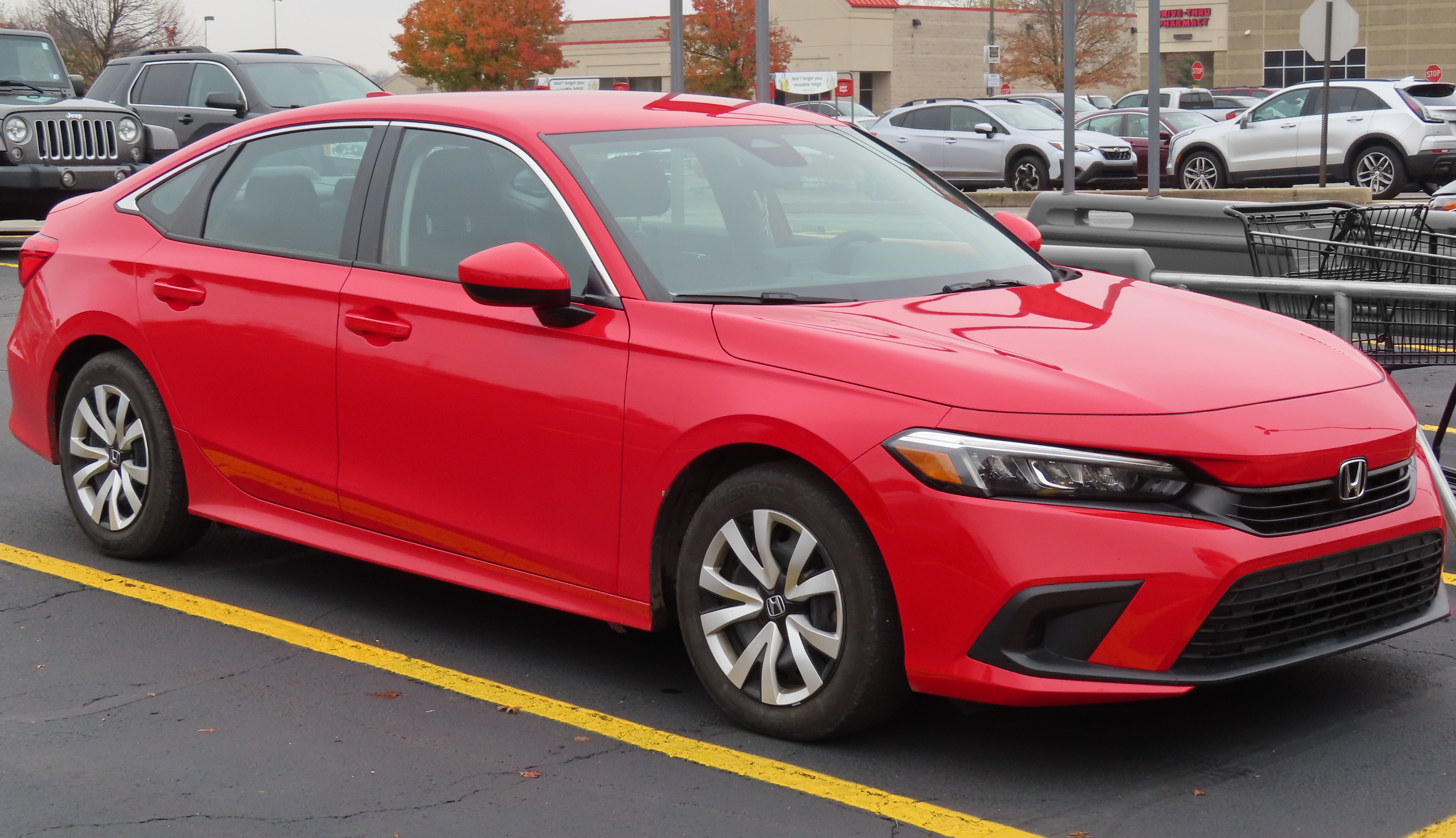
"I have a Honda Civic 2022 and I got a note on it the other day on the screen that said, tire pressures low, check pressures, calibrate sensor through auto settings.
And first of all, I thought, uh, it's a lot of things on the dashboard."
This is a Honda Civic from 2022. Your car has a system that monitors tire pressure and warns you if the tires aren’t at the right levels. Sometimes it also needs a quick “reset” after you adjust pressures.
The Honda Civic is a compact car, and the 2022 model uses a tire-pressure monitoring system to watch each tire’s pressure. When the system detects a mismatch, it can show warnings on the instrument panel and suggest calibration.
"So I guess my question is what's causing that throttle body to do that? It's like somebody's sitting in it, tapping the accelerator with their foot."
The throttle body is like an air gate for your engine. If it’s moving or changing when it shouldn’t, the engine can feel like it’s revving or surging by itself. The car’s computer watches it and tells it what to do.
The throttle body is the air-control valve that regulates how much air the engine can breathe. When it “acts up” (like moving when it shouldn’t), it can cause idle surging or throttle-related drivability issues. Modern cars use sensors and the engine computer to command and monitor throttle position.
"So when they did the conversion, did it come with the master cylinder?
Yeah, it was all, yeah.
Well, the master cylinder come with the front disc brakes and then this conversion
kit added on to the back."
The master cylinder is the part that your brake pedal pushes to pressurize brake fluid. If it doesn’t match the type of brakes you installed, you can end up with a weak or “no pedal” feeling.
The master cylinder is the hydraulic pump that converts pedal force into brake fluid pressure for the calipers/wheel cylinders. If the master cylinder is mismatched to the brake setup (for example, front discs plus rear drums vs rear discs), pedal feel and braking balance can be wrong.
Select text to request an explanation
Spring has a way of reintroducing your home to the light.
The days stretch a little longer.
Mornings feel softer.
Your home opens up after a long winter.
But with more light comes more glare, more heat, less privacy.
The kind of upgrade that doesn't just refresh your room,
it elevates it.
And because you'll work with a local expert,
every detail is handled for you from inspiration
to installation.
Here's a store in your area where you can get Hunter Douglas
shades.
Ready to get started?
Visit Monteriors.net or call 406-587-7472.
That's Monteriors.net.
Happy Earth Month.
Garnier is proudly partnering with the National Park
Foundation, the official nonprofit partner
of the National Park Service.
Garnier's support of the National Park Foundation's Service
Corp program is enabling young adults and veterans
to help care for and enhance the national parks
that we all love.
Want to lend a hand?
Explore Garnier's partnership with the National Park
Foundation and learn how you can help support
our national parks at GarnierUSA.com slash NPF.
Welcome to the Under the Hood Show podcast.
If you haven't checked us out on our YouTube channel
or seen our Facebook live videos,
we'd love for you to go check us out there.
Who brings us the Under the Hood Show podcast?
Like Berkeley won classics, your key
to collect your car insurance.
And road ready wheels, replica OEM wheels
add huge savings.
Use the offer code hoodie for even more.
And by car dash part, over 200 million use parts
ready to ship to you fast.
Thanks for listening to the Under the Hood Show podcast.
And subscribing to the podcast and downloading
the podcast and disseminating the podcast amongst
your loved ones and your not so loved ones.
Your brother, you know, you're in-laws.
I mean, they're fine.
Thanks for all the good to subscribe them to.
Yeah, but you know, they're fine.
And don't forget, yeah, YouTube and Facebook.
Thanks for subscribing to that.
The numbers keep going up.
I love it.
Here is the Under the Hood Show podcast.
This is Under the Hood.
Welcome to the Under the Hood Show.
We are glad to have you with us.
Russ Evans is here to answer your automotive questions.
Thanks for joining us under the hood.
Shannon Nordstrom is not here to answer
your automotive questions.
And I already double checked that I can see he's not there.
So I'm just, and I'm not waiting for him to say
or not say anything.
I just know he's not there.
I'm 100% positive.
I'm Chris Carter.
I am here to answer your calls at 866-594-4150.
We had a couple of questions come in on the chat
before we started.
So I'm gonna mark, we're coming to you in just seconds.
Stay right where you are.
But these were relevant and I think very simple to answer.
What brand of additive does Russ recommend
for diesel 6.7 engines in the fuel, fuel additive?
Hot shot secret, EDT, Everyday Diesel Treat.
That's what I would put in there to run it
for the general consumer.
You wanna go and pick it up off the shelf,
put it in, good stuff.
I called in about putting an oil cooler
in my 2018 Crosstrek.
I got the answer I was looking for,
but I have another question.
Should the oil still be filled to the full mark
on the dipstick or add more?
To the full mark, but you're gonna wanna fill it up
if you knew that it took 4.6 quarts before
and you just are in the habit of dumping that in,
well put it in now, start the car, shut it off,
wait a few minutes then check the oil
because it's gonna take a little bit more in the cooler.
Like on my truck, I know it takes eight quarts of oil,
but I got a different cooler on it.
So now it takes nine and a half.
So if I dump eight in there and then I start it,
the stick's gonna be really low.
And then go to the full mark.
So then I put it the rest of the way
to get to the full mark, correct, so.
So if he's had the cooler for a while
and it's at the full mark, he's good to go.
Yeah, it might be so small in that car
that it's not taking a lot
because that's a water to oil type cooler,
I believe on that one.
So I don't know, Mishimoto is the one he was talking about
and I've got those coolers too.
They might add a little bit of capacity.
866-594-4150, let's talk to Mark.
You're on the end of the hood show, Mark.
What can we do for you?
Hello guys, thanks for your time on this.
You bet.
I have a 2010 Acura MDX
that's kind of just a odd little problem
that we get the check-in oil light
that comes on every once in a while
and it'll just flicker,
it'll just sit there and flicker on and off
and then it goes away.
And it'll do it sometimes when we hit bumps.
So I'm not sure if I've got maybe an electrical issue
or maybe we have an oil sensor problem.
But it does, I've taken it in
and make sure that we've got oil in it
and it's always cool.
So any guidance?
Yeah, I think it probably is electrical.
It's probably the electrical connector
at the sending unit on the engine.
And when you purchase those, the sending,
if you find out you need it,
I mean, you could wiggle the wire around a little bit
when it's warm, maybe it'll start acting up.
That'd be a great tell of what's going on.
But if you find that it is bad,
you can buy the part, the sending unit
and you can buy the electrical connector, that pigtail.
They sell them almost always for sensors.
Standard, our partner is standard.
They sell the sensor
and then they sell the connector
to plug into their sensor.
They should all be the same
because various sensors will fit the same vehicle, of course,
but if you get the sensor and the connector
from the same company,
you're assured that you get a perfect fit every time.
And I would do them both together.
And we do that a lot on cars where we're replacing sensors.
We do the pair because then we know
we're not gonna have an issue caused by,
we don't wanna put a new sensor in
and have the customer come back with the same issue tomorrow
because it's got a bad connector
and then have to give them the connector for free
because, well, we missed it.
Okay, so is that the oil sending unit?
Is it actually an oil sending unit?
It is an oil pressure sending unit on there.
You're talking about the red oil can light
that's blinking, right?
Right.
Yeah, that's the oil pressure sending unit.
They do have an oil level sender,
which looks like a little flag floating
with some waves onto there,
but it's red for oil.
The coolant's usually yellow on there
with a little wave underneath.
Right, because the shop had taken it to,
they said, well, it's full of oil.
We're not sure what that would be causing that.
So I was like, was there an oil sending unit in it?
And they were like, well, we're not sure.
So, I was just like, okay, well, yeah, I know.
So I might bring it to you guys
and let y'all take a look at it, actually.
Okay, there you go.
We do a lot of work at our shop.
We like it when people bring stuff to us.
And that's a great, talking to you
and being able to explain the problem
and then bringing it in is a good way to do it.
Especially when it's the same problem.
Yeah, yeah, exactly.
And we do a ton of engines and transmissions at our shop
and of course other general repair as well.
And a lot of it comes from people
that hear us on the radio show
and they're like, I tried to talk to another shop
about an engine and transmission
and I just, I feel comfortable going in.
You'll explain it to me.
Once it's in your shop,
just like you're explaining what's on the radio
before you even really have seen the car
and know for sure.
So they feel more comfortable with it.
866-594-4150.
I forgot for a second there, did you hear me pause?
I was like, huh, what comes after the 866?
It's 594-4150.
Let's talk to Tom, you're on the under the hood show.
Tom, what can we do for you?
Yeah, hey, I got two questions for you
regarding my 2018 Ford Fusion 4-cylinder turbo.
Anyway, I've got 96,000 miles on it
and I was curious,
would it be time to think about changing
all the shocks in this thing?
You know, my wife seems to be a little sensitive
to the ride and thinks it's getting worse or whatever.
So could it be time to change them or what?
Usually when shocks fail, struts fail,
it's a softer ride, more bouncy ride, not a jarring ride.
So if it runs, if it jars you
and you think that's a bounce, that's different.
Bounces, you know, when it's bouncing
like a trampoline up and down,
but jarring is when it's hitting you like a hammer.
I have two comments here.
One, Tom, yes, when your wife says
that's when it's time to do it.
Secondly, how much are struts gonna be for this?
Cause that might change her mind.
18 Fusion 4 struts might be $1,000, $1,200, some new ones.
Yeah, so and it's likely.
Total?
Yeah, okay.
And it's likely not, that's probably not why it feels,
it may just be normal.
You drive it, it's like when you get new speakers for a car
and you go, these sound so great
and then your ears get used to it
and you're like, they're not loud enough anymore.
It just happens.
I think that, so the ride, if it's really rough,
the struts on those cars usually don't do that.
They usually get bouncy as they get weak.
Some of the Chevy trucks will be hard as a board
because they'll lock up in the front
and then they'll be jarring, not bouncy.
But in your car, it'd be more of a,
hey, it's riding softer like the old 70s cars used to do.
They just kind of float and they bounce a lot.
Once you stop, they're still swaying.
Tom, do you agree with her?
It just doesn't bother you or you don't notice?
Well, I kind of don't agree, but you know,
she just mentioned it to me.
So, you know, I thought, I told her I would check
with some experts like you guys about that.
And so I did.
And I still, yeah, I was kind of trying to price it out
and it looked like to me like it'd be a $1,000 job
if I had somebody do it, like you say.
But I do have another question regarding this car.
Anyway, I took it in to get an oil change the other day
and they said that I have a slight leak
or something between the engine and the tranny.
And on the side of the tranny or something,
there's a rod and it shows, you know,
kind of like a stain from oil or something.
So they suggested maybe it's a seal or something.
Can I do anything about that?
Or what do you guys think?
Well, they need to isolate that,
find out exactly where it's coming from.
They can put dye in the oil and use a UV light
and run it and watch it, observe that as it's running
and see where it starts to seep from.
That'll be the first place that starts coming out
that has died over just the dark colored oil
is gonna tell you where that leak's coming from.
So that's the first step, you need to isolate it
because right now it's just kind of going everywhere
and seeping or creeping all over like a sponge.
It could be coming from any number of things.
We don't see a lot of leaks on those cars in that area.
So I'm curious to what that might actually be.
It might just be leaking right there.
Or leaking above and running down.
Yeah, yeah, that's what I was thinking.
And the other thing is about that is
when I park it in the garage,
I don't have like a spot on the concrete
or something from a leak in that area.
That's good.
So that's why I was wondering.
Well, there we go.
I think we just lost Tom.
Yeah, Tom, thanks very much for the call.
Good luck.
I hope that helps you get your saddle.
Because that's a tough one, right?
I mean, because if you're driving it more regularly,
you might not notice it being different.
You might think it's fine.
If you get in it less often, you might notice it more,
but also who cares what you think it's my car?
866-594-4150.
Let's talk to Mark in Nebraska.
Mark, you're on the end of the hood show.
What can we do for you?
Well, I purchased two vehicles 10 plus years ago,
and I'm finally getting around to working on them.
Anyway, so they've both been sitting for 10 years?
Yes.
OK.
Anyway, the one's a 5-4 engine in an 06-F150.
And it's got 82,000 miles on it.
And the other one is a 2004 Ranger with a 3.0
that has about 84,000 miles on it.
What do I need to do to get these running?
Do I have to do a fuel system flush,
or what's your recommendations?
Well, they're going to be dirty.
If they've sat that long, the fuel's
going to be dirty in that rail.
So that long, you could smell the gas and see.
But if it smells like turpentine,
it doesn't smell like fresh gas anymore.
If it does, you're fine.
But if it doesn't, you're going to have
to get that fuel out of the vehicle.
And then you're going to have to put fresh fuel in it.
And then I would make sure you can even get it started.
As far as turning over and stuff,
unless you're either going to have severe damage,
like a valve was open and you've got a cylinder rusted
so heavily, you can't even turn the engine over,
or everything's going to be just fine.
More than likely, it'll be just fine.
We don't have that much humidity where
we've got that big an issue long enough.
I would see if you could turn them over by hand first, just
to make sure that they do move, get a good battery in there,
crank the engine over.
It's not going to start up right away, probably,
because it's been sitting a long time.
So it's probably going to crank long enough to get a little bit
of oil pressure going.
But once you get the thing started,
I would use a fuel system cleaner
in the tank of both of those vehicles,
like CRC guaranteed to pass the G2P.
It would run that in there to clean out that fuel system,
because you're going to need the fresh gas in there,
but you're going to need a cleaner in there
to clean off all the gunk that's
going to be on the injectors and in the fuel rail
on those engines, because it's sat,
and the varnish has already begun to accumulate in there.
And that'll help you out a lot.
Then you want to want to check them over.
Once they are running, you're going
to want to check them over really thoroughly
and make sure the brake lines are still good shape,
not rotted out, or rodent chewing on something,
or rusted through.
Brake lines can rust on those vehicles.
Brakes are most important, right?
Brakes are most important.
You've got to stop, no matter if you don't go,
but if you don't stop, that's a bigger problem.
Tires after 10 years?
OK. Oh, yeah, inspect all that.
Yeah, because they're well obvious.
They're going to be need to be replaced.
Anyways, aren't they for being pretty close?
How old were they before they parked it?
I mean, they may be 10 years old before that.
Yeah.
Well, they had new tires put on right before they were parked.
OK.
And they were kind of both vehicles are kind of involved
in a legal battle.
So they parked inside or outside perhaps.
One was inside the other outside.
OK.
The tires actually look really good.
There's no weather cracking at all.
Then you might be a little better off the frame.
The frame in the 06 is still got nice black paint on the whole frame.
So, I mean, there's no rust at all on that, that particular vehicle.
Interior looks spotless and almost like new.
So, OK, but that you're a five four.
Did that give much for trouble?
Oh, yeah, we put we replaced
hundreds and hundreds of those engines for timing issues
because by the lower oil pressure, as parts started to wear inside.
But if you've got a good one that has low miles on it and it runs great now,
then the biggest thing you can do is frequent oil changes.
Three months, three thousand miles, good quality oil, run it.
You may be fine for a very long time.
Mark, thanks very much for the call.
Good luck with both of those.
Is that can I can I trailer it to your shop
and have you guys go through the fuel lines and all that?
I mean, if I you can, but it's it can get expensive.
You know, you don't just do a part and go when you look at the whole thing
over real quick and then you drive it, then you still because it's that's
a long you can't guarantee anything.
But you can you can give it a once over and see what's going on.
Instead of me trying to put stuff in getting a fuel.
A lot of it can be a hard part for somebody at home.
We have specialized equipment to remove tanks.
Yeah, that's what I was thinking about there.
Eight six six five nine four four one five.
Oh, let's talk to AJ and Georgia.
You're on the end of the hood show.
AJ, what can we do for you?
Hey, guys, I'm on with my cousin Cameron here.
He's the one down there in Georgia.
He's got a oh, oh, oh, four wheel drive.
Two hundred forty five thousand and seven miles exactly on it.
Is it a four L 60 transmission in it?
Oh, God, no.
He hit it dear on the way home.
Cross the trans trans cooler.
We won't get back home just a couple of miles by time he got back there.
There was just enough transmission fluid to be in the bottom of hand
and whatever was left in the torque converter.
He had no third gear, no fourth gear.
He did a filter change.
And put more transmission fluid in it with some Lucas nose flip.
Didn't help it at all.
So he went to a yard, grabbed another transmission, did a full tranny swap.
Oh, with a new torque converter, new fluid.
It only grabbed third once at a high rev right around 30.
And he ran out of gas.
It put more gas in the car.
Never grabbed third ever again.
It tops out in second gear and free schools up.
As if third gear never even exists.
It doesn't even stay engaged in second.
It's like it tries to grab third.
Like if you were to drop your car down into neutral.
There's no gear at all.
So he pulls the cool pulls the whole transmission out.
Before even pulled out, we noticed going on the fuses.
PCMB fuse was blown.
We replaced that.
The transmission fuse was fine.
There's no codes in it.
So we pulled the train that he just got, popped the pan out.
Shards in the bottom of the pan.
I'm like, all right, well, let's look at the other one.
Look at the other one.
There's just sludge, you know, just a little bit of clutch material
in the bottom of the pan.
There's no shards in it.
Nothing on the magnet.
So if he decides, all right, let's take that one back, get our money back,
because obviously that's trash.
Refills, there's old torque converter.
Replaces solenoids A and B, which is shift solenoids for first and second
and third and fourth.
Puts it all back together, throw it more fluid in it, sticks it back up in.
Still no third, no fourth.
It's not throwing any codes.
It didn't pop PCMB again.
Transmission fuse is still fine.
And we are, we are at a standstill as the.
I don't, I hate all my transmissions.
They're not my, my go to, I'm an engine guy.
I carry things apart, I put them together.
It sounds like the transmission may just be out.
It probably, you probably blew that fuse because it probably did have a
shorted solenoid on the first transmission, but it also had a slippage where it's bad.
What you're describing is exactly what we see when those transmissions go out.
They go first, second, they try to apply pressure to third gear for, for pressure.
Just a direct clutch and it, there's just nothing there.
The clutch is completely burned out of the seals blown out of it.
And then you need to replace it.
So we start by checking to make sure we have no codes in there.
And then we make sure that those solenoids are actually applying when the, when
the scanner tells them to apply either the A or B solenoid.
And if all that's working, then out it comes and we put another transmission
there, but it sure sounds like that's what's going on.
Also, if you find you have to look locally and see, but there may be a
transmission shop that's able to do a dyno test of your transmission on the bench.
When it's out of the vehicle, you can bring him your transmission.
They hook it up to the input of it and then they run it and shift it manually
to see if it works and they could tell you if it's bad or not.
AJ, thanks very much for the call.
We're going to take a break.
If you want to stick around there, AJ, and come back after the break and you
have more questions to do that, otherwise we'll take the break and come back.
The end of the hood show podcast is brought to you by exclusive sponsors
like Berkeley One Classics celebrating 50 years, your key to collector car insurance.
And by car-part.com with over 200 million parts.
Find them online at car-part.com and by road ready wheels.
OEM replica wheels at a huge savings road ready wheels.com.
Thanks for listening to the under the hood show podcast.
Spring has a way of reintroducing your home to the light.
The days stretch a little longer.
Mornings feel softer.
Your home opens up after a long winter.
But with more light comes more glare, more heat, less privacy.
That's where Hunter Douglas comes in.
Hunter Douglas shades are designed to do more than cover windows.
They shape the light itself.
From beautifully diffused morning sun to complete privacy at night.
Every shade is custom crafted to fit your home perfectly.
These are not off the shelf window treatments.
They're precision engineered, professionally measured and expertly installed.
The kind of upgrade that doesn't just refresh your room, it elevates it.
And because you'll work with a local expert, every detail is handled for you.
From inspiration to installation.
Here's a store in your area where you can get Hunter Douglas shades.
Ready to get started?
Visit Monteriors.net or call 406-587-7472.
That's Monteriors.net.
This Mother's Day.
Celebrate all the women who make life brighter with a gift from Pandora Jewelry.
Choose jewelry that reflects what she means to you and the moments you share.
Make it even more meaningful by personalizing your piece with an engraving in your own handwriting.
Something no one else has.
Either a date, a name or something unique to you.
Because the best Mother's Day gift says more than I love you.
It says I appreciate you.
It says I see you.
Find the perfect Mother's Day gift at your local Pandora store or online at pandora.net.
This is Martha Stewart from the Martha Stewart podcast.
Ever wonder how to make hosting look effortless?
Here's a secret.
When prepping for cooking and baking, get ahead of the mess with new Reynolds Kitchen's countertop prep paper.
Just lightly wet the counter so the paper grips.
Lay it down and drips and spills stay on the paper, not on your counter.
Cleanup is as simple as lifting it away to reveal clean counters.
Effortless, it is, thanks to Reynolds Kitchen's countertop prep paper.
Wet it, set it, prep it, done.
Available in the Reynolds Wrap aisle at Walmart.
All right, quick quiz for the hiring managers out there.
What's worse, being understaffed or being poorly staffed?
Well, that's a trick question because both are recipes for chaos.
Either way, just say to yourself, this is a job for indeed sponsored jobs.
You'll get matched with candidates that meet the skills, certifications and everything else you're looking for.
Or go a different way and get no traction.
Seriously, sponsored jobs posted directly on Indeed are 95% more likely to report a higher than non-sponsored jobs.
It really is a no-brainer.
Spend less time searching and more time actually interviewing candidates who check all your boxes.
Less stress, less time, more results.
When you need the right person to cut through the chaos, this is a job for indeed sponsored jobs.
And listeners of this show will get a $75 sponsored job credit to help your job get the premium status it deserves at Indeed.com slash podcast.
Just go to Indeed.com slash podcast right now.
Indeed.com slash podcast.
Terms and conditions apply.
Need to hire?
This is a job for indeed sponsored jobs.
When you need parts for your car, finding them is half the battle.
And we have a great source for you to find those parts you need at great prices.
If you need parts, whether it be for a brand new car or going back about 20 years, it doesn't matter.
Check out car-part.com.
It's fast and it's easy.
Over 200 million parts strong all across North America.
Over 4,000 recyclers to choose from, giving you the largest selection available.
Whether it's an engine, transmission, doors, seats or wheels, you can find them on car-part.com.
We even let you know what parts from other models and years fit your car.
Many recyclers supply pictures of their parts too.
We even have a mobile app.
Search US and Canada or buy from your local independent recycler.
Whichever you choose, buying recycled is good for the environment and good for your wallet.
If you're a repair shop, there is a professional version available for you at no charge.
That's car-part.com.
Car-part.com.
Check it out today.
Mercedes Cadillac Ford Chevy Chrysler and many more with the OEM fit and look that you want.
Save 10% at checkout when you use the code HOODY for being a loyal under-the-hood show listener.
New OEM wheels can be expensive with some wheels that cost 500 or more from the dealer.
Many of those from Road Ready Wheels are about half of that, saving you some serious cash.
Use your factory TPMS sensors and caps too.
Go to roadreadywheels.com to find out more.
That's roadreadywheels.com.
When I got my first specialty car, I called up my agent and had him put it under my regular auto policy and had very minimal coverage.
Even dropping coverage in the storage months to keep the cost down.
That was before I met the professionals at Berkeley One Classics.
I'm Shannon Nordstrom, host of the Under the Hood Show with Russ Evans and Chris Carter.
Berkeley One Classics ensured me with an agreed value policy.
That means if you suffer a loss, there's no haggle over the value of your vehicle.
They also show me that I could insure my vehicle for what it was really worth and keep my coverage year round and still save money.
I did not know that my homeowners policy did not cover my car when it was stored in my garage for the winter.
For 50 years, Berkeley One Classics has insured a wide range of vehicles from sports cars and rare exotic cars to antique vehicles including cars, trucks, tractors and motorcycles.
Berkeley One Classics makes it easy to get a quote.
Just visit them on the web at BerkeleyClassics.com and use their online quote tool or give them a call 1-800-603-3330.
That's 1-800-603-3330.
Welcome back, everybody.
It's time to get back under the hood with our motor medics.
866-594-4150.
That's the number to reach us here at the Under the Hood Show.
Don't forget, if you miss an episode, you can find out wherever you get your podcasts.
You can watch the show on our YouTube channel.
If you subscribe there and join the Hoodie fan club at UnderTheHoodShow.com, you could win a hoodie.
Like Caleb Donaldson, congratulations for everybody here at the Under the Hood Show.
And from our partners over at Berkeley One Classics, they're celebrating over 50 years of collector car coverage.
All right, let's go back to AJ.
AJ, what's next on this transmission?
What's your next question?
So, with this post-ainty cell noise being replaced on this transmission and the PCMB fuse being replaced with no codes being present,
if we run through with the scanner, because you've got a scanner specifically for transmissions,
if it's shown that those cell noids are firing and it's not shifting, then the clutches are toast, which is what I was thinking to begin with.
Right.
And you can use the scanner with the bi-directional controls to turn those cell noids on and off.
So you could go to shift cell noid A, turn it on and off, and you could feel it with the pan off, you could feel it click.
And then you go to B and it would click the pressure controls on all of them.
You could activate and see if you could feel that.
All right.
Well, not quite the hopeful news we were looking for, but I do appreciate your guys' time.
Thank you.
Thanks very much for the call.
Yeah, listen, I listen to you guys as much as I can.
I'm in New York state.
I got introduced to you guys because I'm a, unfortunately, I'm locked up at the time.
So I get to listen to you guys on our podcast up here.
It's awesome to listen to you guys.
So I do all my diagging.
I've worked for Ford and GM and Mazda and Subaru.
So I do all my diagging through the phone and listening and talking with him and helping him.
And I do it with my father and everybody else.
Are you using the inmate tablet phone?
Yeah.
One of my, one of our good customers is the, is the guy who supplies those.
Well, his boss supplies them.
It's a newer thing, what they're doing with the newer units, as you know.
And then he, he's the rep that goes around and, and, and sets them up.
But they've been, we actually have a lot of, a number of people now that interact with the show every week using that.
And a couple of them now have moved on and are working in auto repair shops and they're doing really well.
So it's, it's pretty cool.
Yeah.
I started working in the O6 for Ford when I came out of the company.
And then I worked on it off between Ford and GM and, you know, Mazda when it was part of Ford and Mazda afterwards.
So last time I worked for a shop was in 15 years ago and you know, I now act like an early at four point.
So I felt working because I believe in the months you made in the week.
Oh, we're just losing you.
Yeah.
Just as we talked about it.
Must be the phone.
Yeah.
Oh, no.
We just lost the, it's just getting too crackly there.
AJ, but thanks very much for the call.
Good luck.
Hang in there.
The, uh, I liked that, uh, you could sense after he explained that he doesn't like transmissions and he's an engine guy, his entire call came into focus.
Like, oh, he's, he's got all this info because he's, he's mad at the dumb transmission for not.
I like, yeah.
It should work.
Yeah.
I like that.
AJ, thanks very much for the call.
866-594-4150.
I want to, uh, I have a question here from Chris from the under the hood show.
I have a Honda Civic 2022 and I got a note on it the other day on the screen that said, tire pressures low, check pressures, calibrate sensor through auto settings.
And first of all, I thought, uh, it's a lot of things on the dashboard.
That was on the instrument panel.
What kind of, what kind of car is it?
It's a 22 Honda Civic.
Oh, there you go.
So, um, and then wait, I have more.
So I checked the, the pressures.
One of them was, uh, about four or five pounds low.
So then I recalibrated.
Then I got the notice again, two days later and two of them were high.
I put them all at 33, 32, where they're supposed to be.
And then what do you do?
What are you doing?
Nothing.
Don't do that.
Nothing.
Don't put them all 33.
I got you.
You just, you stay here.
Don't do that.
Put that down.
Put that down.
I gotta go get some coffee.
Put that down.
As soon as I started asking my question, you stopped paying attention to me.
33 pounds.
Uh, and then it was over when I recalibrated or when I, I got this message again and
they weren't, it said they had low pressure, but there wasn't.
There was two that were higher and then I recalibrated it again and now it's fine
for a couple of days.
Is that just the sensors going?
There's no sensors in the car.
There's no recalibrate.
There's no pressure sensor in there.
No air pressure sensor.
It's a, it goes by circumference of the tire and the air pressure in the tire
through your ABS system.
That's why it's got it.
Yeah.
That's why you hit the reset button on the dash and it resets it.
That's why it said through the auto calibrate system.
It's not through the air pressure.
You're not learning the sensors.
Wish all cars were that way.
It just makes it so much easier for people.
So if you rotate tires on a Honda, you change the air pressure.
You, some of those CRVs and things have a button on the dash that looks like a
tire pressure monitor light on the left to the left side under your headlight
switch, but it's on the dash on the left.
You push it and hold it and then it comes on and works.
Otherwise you go into the info center and you go to tire pressure, learn and
hit the button and it'll say drive it up to 20 miles and it relearns.
So it's just telling me something's wrong.
Make sure everything's go out with your tool.
Check that it's 32 PSI and then reset it.
It's right because if you, if you reset it and you don't have the pressure right,
you could set it for like, you know, put them at 20 pounds and reset it and then
it's going to think it's right.
I can take one off and reset it and it would read as correct.
Right.
Cause I'm resetting it to, I mean, that wouldn't be advised.
Wouldn't take, you're doing it.
You quit.
What are you doing?
Nothing.
What are you doing?
This is what I deal with.
Now you have to pay attention because I'm going to take a call.
Okay.
This isn't my problem anymore.
Now it's Shirley's problem in Idaho.
And she's important.
Shirley, what can we do for you?
You're on the end of the hood show.
Okay.
I got a 203 Buick Park Avenue and it drives okay, but when I stop at a stop light and
then go to start up, it starts kind of jerking.
And I'm wondering what that could be.
Is it jerking forward like it's, like it's chugging or it's back and forth on the, are
you feeling it on the steering wheel or in the driving?
In the, in the driving.
Okay.
So it's.
Engine or it could be a misfire, but it could be transmission too.
But on that thing, you really want to go, you really want to go into a shop and have
them take a peek at that and see, there's just so many things that it could be causing
that type of thing, you know?
Mm hmm.
It, yeah, only when I stop, I stop, stop sign or stop light or whatever.
And does it do it every?
Sometimes it don't do it.
Okay.
No, sometimes it don't do it every time.
Does it do it every time you drive it?
Like if you're, if you're going to drive it for the day and you stop 15 times, is it
going to do it at least once every time you drive it?
Mm hmm.
Okay.
Especially when I start up.
Yeah, it kind of, kind of misses or something.
Yeah, it's, you're going to have to get that in to find out for sure what it is.
Cause they're, like I said, it could be transmission related.
It could be an axle thing doing that.
They're going to be any check engine lights on that?
Not necessarily.
It could even be a tire thing going on.
Um, you know, an O three, it could be a number of things causing that an engine
mount that's worn can cause them to shake like that as you take off.
I mean, we recently worked on a Bonneville that was similar to this and there's
transmission to had a torque converter issue.
So it may be something you can live with that you don't have to fix right away,
but definitely, yeah, definitely.
It's not even got a hundred thousand miles on it.
Right.
And then this one didn't either.
I don't think, but you know, you got to, you just going to have to.
Have to have a shop, take a peek at it and see what they see.
Okay.
There you go, Shirley.
Thanks very much for the call.
Good luck.
Yeah, that's the one of those where you got to figure out if it's worth living
with or not for a while to see if, if, cause that's what, that's why I don't
bring mine in cause I feel fine.
I get used to it.
It'll be fine.
Eight, six, six, five, nine, four, four, one, five out.
That's the number to reach us here at the end of the hood show.
Let's go to Minnesota and talk to Dan.
You're on the end of the hood show.
Dan, what can we do for you?
Recently, I just bought a 2016 F-150 with the five liter Coyote engine in it.
And the truck has three hundred and fourteen thousand miles on it, but they
are all interstate miles.
The guy used it for work travel.
And I'm just going to kind of use it as the utility slash plow truck around the,
around the farm there.
And, um, I did all the regular maintenance to it that I thought it would
need, but he did tell me that the transmission fluid has never been touched.
And I just don't know which way to go with that one.
I'm wondering what you recommend.
There isn't a regular dipstick you can pull out to look at the condition of it.
So I, I really don't know.
I called the dealership.
They told me I should flush it.
And I don't know if that's good advice.
Yeah.
You know, having even seen it.
Well, if it's age, if it's old enough that, you know, you, you got a 16,
I mean, it's 10 years old, almost 11 years old for model year.
Um, it's time to definitely flush that transmission.
They have a cooler built onto the front edge of the transmission.
So it's, it's more difficult to flush that you need special
fittings for your flush machine, which Ford will have a lot of times
transmission shops and some independence and things will have those as well.
But, um, we would, we would not take the pan off and change the fluid.
That way we would do a complete flush of it to, to make it.
This thing, let me, let me ask you this for us.
It's got 300,000 miles on it.
Fluid's never been changed.
He's going to get half the driveway plowed before it blows up.
Yeah.
Yeah.
Yeah.
It's probably what they're probably going to find is, I mean, if it's flushable,
that's the only thing we would do is a flush.
But if the fluid, the fluid, there's a little cap on the passenger side and
you can take off that cap and inspect that fluid.
It's got a little tiny dipstick in there about two inches long.
And if you look at it and it's really black, don't touch it because it's just
saving money for a replacement.
Yeah.
Yeah, I, I mean, it ships by and I don't really have any concerns, but I'm
just, they say this engine capable of getting 400,000 miles.
I'm hoping to do that honestly.
It can.
We do a lot of engines in those trucks because the transmissions hold up so well.
People are like, yeah, I'll just put an engine in there.
You know, and a little going back a little bit too, that we don't put very
many transmissions and they're pretty tough.
But, but 300,000 highway miles, which I believe, by the way, when, when he
first said it, I was like, ah, come on, but it's 10 years.
He's got 300,000 miles on it.
That's legit.
But as soon as he starts pounding on that thing, it's going to show.
It's going to be an issue, isn't it?
Well, only if the transmission's already worn, if the clutches are worn.
Yeah, but if the clutches are in good shape, you should be fine.
Dan, good luck.
Thanks very much for the call.
Russ has more hope for you than I do.
866-594-4150.
Let's go to Kansas and talk to Dennis.
You're on the end of the hood show.
Dennis, what can we do for you?
Yeah, I called in, oh, six, eight months ago.
I had a 2012 Jeep Wrangler with a 3.6 that the idle was rough, not rough, but
up and down all the time.
So what I did, this is what I've done to it so far.
We put the cam phasers in, wires plugged, evap system twice, two rounds of
catalytic converters, and after all this, the mechanic scoped the motor to see what
was going on.
Uh, and he said the motor's just shot.
That's why it's acting this way.
So we put a new motor in, you know, what the heck, why not?
So put a new motor in and I had another place put a new transmission.
And at the time they put in a new throttle body and I get all this back thinking, boy,
this is going to be the, you know, the best ever still does it.
I took that air intake off and you can watch that butterfly in the throttle body
just jump intermittently.
No, and it'll do it, you know, one mile and you stop and it does it.
Next, it could go maybe 10 miles and don't do it.
So I guess my question is what's causing that throttle body to do that?
It's like somebody's sitting in it, tapping the accelerator with their foot.
Well, you know, you need to look at the computer data and see if there's a
reason for it to change and that's going to be tricky.
Even a very trained technician is going to have a time trying to figure that out
because that thing should change with engine load.
It should change with engine RPM.
It should change with throttle input.
I mean, the one thing you can look at at home real easy is throttle input.
If you're sitting there parked and you're watching that thing jump around
and the throttle pedal is moving when nobody's foot is on it.
That's a problem right there.
Either the computer is bad, the wiring is bad or that accelerator pedal is bad.
It shouldn't have any input.
It should be rock solid when nobody's touching it.
That's the easy part.
Everything else is going to be based on what the computer sees.
The load changes slightly, which it's going to do a thousand times a minute
when it's idling because it's just normal for it running.
That's going to be really tricky.
But if you're getting a surge and that surge is following along with that
that throttle body, yeah, that's that's not good.
OK, so I can back up and see if they can
they've had this on computers and no engine, no check engine lights or none of that.
You know, it just it's just like it's haunted, like it's Christine in the G form.
That's what it looks like.
But so anyway, I'll hook it back up and see.
But I got can I have a second question?
Sure.
I got a 64 and pallet at that, of course, no computers, none of this, other stuff.
I put this brakes on all the way around.
And I cannot get a pedal over about an inch and a half off the floor.
And I push the fluid, I pulled the fluid,
taking the calipers off and make sure the bleeder valve clear up, you know,
like it should be at the conversion kit, of course.
But I just can't get no pedal.
So when they did the conversion, did it come with the master cylinder?
Yeah, it was all, yeah.
Well, the master cylinder come with the front disc brakes and then this conversion
kit added on to the back.
There you go.
And of course, there's the four, there's the four wheel drive or the four wheel
proportioning valve I put in for four disc brakes.
Well, that's that's the, you just stated the problem right there.
You got a master cylinder that came with a front disc brake conversion kit.
Those kits almost always come as a front disc brake conversion to be
able to put front disc brakes on the car when you've got rear drum.
So when you add, when you add the rear disc brakes, the rear disc brake kit
should have come with a different master cylinder because it takes a different
amount of fluid, it takes less fluid to push out a wheel cylinder than it does
to push out a piston of a large piston.
So call that company you got it from and say, Hey, I had a front
disc brake conversion kit already on it.
I put rear brakes on it.
I'm supposed to put a different master cylinder on it.
They'll tell you, Oh yeah, let's go with a different master cylinder.
And that'll, that'll take up that it'll, it has a bigger piston.
So you look at the master cylinder, you probably have one that has both,
you know, the front's got a bigger than the rear.
Right.
This one's going to have two big ones on it for four wheel disc brakes.
So you wouldn't have any idea just off the top of your head, which it might be
without, I don't even know if this company's still in.
It was kind of one of them.
You can get it from any, any of the brake companies.
You get ahold of Will Wood or any, anybody like that that does, that does
brakes and they'll, they'll be able to hook you up with the correct master
cylinder to, to feed rear disc brakes.
Dennis, thanks very much for the call.
Good luck.
I feel bad for Dennis because he's making all the right decisions.
Yeah.
It's just not working out.
Well, at least, uh, with this, the 64 and pal SS are to be like, Hey, I had one
of those go on the honeymoon, um, the, um, that's a pretty easy fix.
A master cylinder, you know, probably a hundred to 200 bucks and you bolt it on,
you bleed it, you're good to go.
Uh, but it's definitely, if you have one with the wrong size piston, it's not
going to, the pedals going to be low.
Let's go to Minnesota and talk to Eric here on the end of the hood show.
Eric, what can we do for you?
I've got a 95, 150 and I've got, it's got the dual tank system on it.
The front pump works, but the rear one does not.
Just wanted to know if there's a, the rear ones, does that have to have a ground
on it to work or how does that work on them?
Both the pumps have to have a ground.
They're, they're separate from the tank.
They run off to the frame and they ground together there in the driver's side.
But yeah, each pump has its own power and its own ground to run it.
Because, uh, because the gauge, uh, the gauge works on the back one, just
that the pump itself does not work.
So that's, you know, by chance, where the ground would be at?
Was it in the harness or on the frame or it goes, it goes into the harness and
then runs through the harness and comes out of it on the driver's side and bolts
to the frame room.
Okay.
That'd be toward the front then on the driver's side or hot as that could be
anywhere from the front tank, about a foot forward of the front tank all the way
to the rear somewhere in between the two tanks.
I've seen it anywhere in that location, depending on what company is building
their harness.
All that's going to say, does, uh, it's going to be above a broken wire in the
harness, bad ground or how is that used?
Could definitely be a broken wire in that harness causing that.
We see that often enough.
They just vibrate around over the years and corrode and break off.
But then you have to take the whole harness apart just to find the wire then,
correct?
Well, you start at the back.
You unplug the pump and you hook a voltmeter to that ground and see if you've
got continuity to the frame.
If you've got good continuity, it's got a good ground.
You don't need to fix that at something else.
But if it's open, you could run a new wire if you want without taking the whole
harness open, just go from the pump to the frame.
Uh, that's going to say, could it be a, could it be a bad power wire too?
Or just a bagged an old ground to it?
Could definitely be a bad power wire or a bad switch on the dash that switches
those tanks.
That could be bad as well.
You can, you can check at the switch and see if you've got power coming out
for the front and for the rear.
Well, I've, I've already replaced that, uh, switch to switch on it.
And I still didn't do anything.
So I thought I was wanting to just got a bad ground or for just a bad power wire.
If you replace the switch and the front tank works, it means you've got power
coming into the switch and it should be switching at the wire coming out.
But then you need to follow that wire from there all the way back to the tank
and see if there's power at the back that matches the power at the front.
When you flip that switch to the rear tank.
Well, then you probably had to, but most likely is the, cause I, as I said,
the gauge works on it.
Just that pump itself doesn't work.
So that's why I was wondering if it's a bad power wire for just an old ground to
it could even be the pump.
Yeah, it could even be the pump that's bad.
Eric, thanks very much for the call.
Good luck.
That's going to do it for the end of the hood show.
I do want to say real quickly, we had a comment on Facebook that I very
unfortunately predicted a few months ago on the show.
The question is, what do you think of an E85 conversion for a daily driver?
No.
And we were talking months ago, someone said they didn't want E85 and we weren't
hearing anything about it.
And I made the joke that once gas prices go up, we're going to see a lot of
EVs and all of it.
And now you don't want that because it's still, even at today's prices,
you were still going to pay more by running E85 burning faster than you
would if you just put the regular fuel in there.
It's going to do it for another hour of the end of the hood show.
Until next time, you can find us at under the hood show.com.
Thanks for listening.
Thanks for watching the end of the hood show.
With Russ Evans, this is Shannon Norton from thanking you for tuning into the
Nordstroms under the hood show.
Have a great day and remember PTLA.
The opinions heard on this program based on the many years of experience of
Russ and Shannon are offered for entertainment value only and as a guide
to your repair needs.
No claim to repair or cause is given or implied.
Always consult with your own certified technician and follow all safety
procedures before attempting any repair.
To be a part of the show, call 866-594-4150.
Find out more by visiting under the hood show.com.
Under the hood is produced by Prairie House Productions.
All content is the property of Nordstroms Automotive Incorporated and may
not be used without our permission.
Copyright Nordstroms Automotive Inc.
Request an explanation for:
1 cars
1 cars featured
Request an Explanation
Heard something you'd like explained? We'll add it to this episode.
Sign in to request explanations for terms you heard.
Want to learn more?
Browse our glossary for plain-English explanations of automotive terms, jargon, and concepts.
See something that's not quite right? Our annotations are AI-generated and can sometimes miss the mark.
Click the flag icon on any annotation to suggest a correction.