A live backyard studio chat covers Courage’s trip to Street Legal Dragway for 330-foot, unprepped street-legal runs—how check-in works (web app, live stats), staging with a light tree, and why being perfectly positioned matters. They compare tire choices, launch control/traction control tradeoffs, and discuss manual vs automatic consistency. Chris then reviews his Nissan 370Z ownership: firm suspension, low seating, occasional drone, limited cargo space, and why the analog feel still beats modern “iPad on wheels.” V8 talk closes with Chevy’s rumored larger V8 direction.
In this episode of Cool Cars with Chris, we take a deep dive into street legal drag racing, real-world car performance, and what makes driving feel truly exciting.
Recorded live from the backyard studio, Chris and Courage break down their experience at a street legal dragway, including what it’s like to race your own car, how a 330-foot drag strip works, and what beginners need to know before hitting the track.
We also explore the raw driving experience of the Nissan 370Z, and why it stands out in a world full of modern, digital sports cars. From exhaust sound and suspension feel to road trip comfort, this episode highlights what makes analog cars so engaging.
Plus, we get into a full discussion on V8 engines, including real-world ownership, fuel economy, and why V8 power still matters in today’s turbocharged era.
📲 FOLLOW & CONNECT
Love cars, racing, and real automotive talk? Stay connected and don’t miss future episodes:
How drag racing staging lights (the tree) actually function
Beginner drag racing tips and common mistakes
Manual vs automatic performance on short drag strips
How tires and grip affect your race times
What it’s like driving a Nissan 370Z daily
Analog vs digital driving experience (and why it matters)
Real talk on owning a V8 truck
Why modern cars feel different—and sometimes less exciting
00:00 🎙️ Intro – Live from the Backyard Studio 00:25 🏁 What Is a Street Legal Dragway? 02:25 📍 Track Location + Fire Scare Story 04:06 🚗 How a 330-Foot Drag Strip Works 07:31 🧾 Registration, Staging & How Runs Work 08:49 🚦 Drag Racing Lights Explained (Tree System) 11:22 🛞 Why Tires Matter (Street vs Track Setup) 12:35 ⏱️ Improving Times & Breaking Into the 5s 13:53 ⚠️ Risks of Drag Racing Your Daily Car 15:38 🔥 Why Short Tracks Are Easier on Cars 16:25 ⚙️ Manual vs Automatic – Which Is Faster? 19:20 💸 Cost to Race + Unlimited Runs Explained 20:22 🚀 Launch Control & Traction Control Tips 22:36 🐍 Hellcat vs Grip Launch Story 24:07 🛣️ Nissan 370Z Road Trip Experience 27:13 🔊 Exhaust Sound, Drone & Driving Feel 30:15 🎮 Analog vs Digital Cars – What Feels Better? 31:06 📱 Why Modern Cars Feel Like Video Games 35:16 💰 Old 370Z vs New Z Price Comparison 37:13 🧭 Interior Gauges & Driver Experience 42:12 🛻 Ford Roush F-150 V8 Talk 43:59 ⛽ V8 Fuel Economy & Real Ownership 50:30 🔥 Why V8 Engines Still Matter Today 55:00 🎯 Final Thoughts – Track vs Street Driving 57:32 👋 Outro
In this episode of Cool Cars with Chris, we break down the full street legal drag racing experience, including how a street legal dragway works, beginner drag racing tips, and what to expect on a 330-foot drag strip. We also dive into a real-world Nissan 370Z review, covering its analog driving feel, exhaust sound, suspension, and how it compares to modern digital sports cars. Plus, we talk manual vs automatic drag racing, launch control, traction control, and how tire setup impacts performance and race times. To top it off, we get into why V8 engines still matter, including ownership insights on a Roush F-150, fuel economy, and why V8 power continues to dominate car culture. If you’re into car podcasts, drag racing, sports cars, or automotive performance, this episode is packed with real-world experience and enthusiast insights.
"It's Paris, Paris, not Paris, France. So he flies his car on a plane after he runs it in Le Mans, he goes over and goes to the Eiffel Tower in Paris..."
Le Mans refers to the 24 Hours of Le Mans, one of the most famous endurance races in the world. Mentioning it signals that Courage’s car experience includes high-level racing, even if the current segment is about drag-style track days.
"they actually have a street legal side show is what they call it. Is that where they do? Like we just said, the donuts and stuff..."
Donuts are when a car spins around in a circle using tire spin. It’s fun to watch, but it needs a safe, controlled area so nobody gets hurt.
Donuts are a driving maneuver where the car rotates in a circle while the tires lose traction. In a controlled event setting, they’re often used as a crowd-pleasing burnout/traction demonstration, but they still require space and safety barriers.
"So it's, it's the two, so you have two sets of these small yellows and then they, they that tells you that you're staged. Like you come up to the line and you can see like, if you're at the car wash, it's kind of the car wash a lot."
“Staged” means your car is lined up correctly at the start. The lights confirm you’re in the right position so you can race.
Being “staged” means your car is positioned correctly at the start line and the system confirms it. In the transcript, the small yellow lights indicate that the car is in the proper spot and ready for the start sequence.
"stage if you need to and got the water, you know, for, for doing burnouts, which this is the first time like I never usually do burnouts when I'm there."
A burnout is when you briefly spin the tires to heat them up. The goal is to make the tires grip better when you start your run.
A burnout is when you spin the tires (often at low speed) to heat them up and sometimes to clean off the tread. In drag racing, tire temperature and surface condition can affect how well the tires hook when you launch.
"They do have bracket racing coming up, which they actually have some money involved with that. So, you know, that's, uh, bracket racing is interesting."
Bracket racing is drag racing where you pick a target time and try to hit it. Consistency is the big deal, not just having the fastest car.
Bracket racing is a drag racing format where competitors race to a chosen target time (a “bracket”) rather than just winning by raw speed. It rewards consistency—good reaction time and repeatable launches matter as much as peak performance.
"It was like, like, if you hear like a misfire, like when a car starts to misfire."
A misfire means the engine doesn’t burn fuel correctly in one or more cylinders. It can make the car run rough and might cause damage if you keep driving it.
A misfire is when one or more cylinders fail to ignite properly during combustion. It can feel like a stumble or loss of power and can also damage the engine if it keeps happening.
"Yeah. Also, it's like hard to find a stick shift these days, you know, and I think too, because you have to be shifting, using the clutch and letting the clutch out and figuring all that timing on that and everything"
A “stick shift” means the car has a manual gearbox. You have to use the clutch and shift yourself, so it takes more timing than an automatic.
“Stick shift” is a common way to refer to a manual transmission. It requires the driver to use the clutch and shift gears, which adds timing and coordination compared with an automatic.
"it's probably easier to get your faster time with an automatic than with a manual."
An automatic transmission shifts for you. That can make launches and acceleration more consistent because you’re not coordinating the clutch and timing.
An automatic transmission changes gears without the driver operating a clutch pedal. In drag/acceleration contexts, automatics can sometimes produce faster or more consistent times because the car controls shift timing and RPM matching.
"it kind of figures out what speed, what RPM, and it matches. Yeah. So kind of make sure that the, the RPM matches the thing and that kind of stuff."
RPM tells you how fast the engine is spinning. When shifting, the car tries to make the RPM line up so the next gear feels smooth.
RPM (revolutions per minute) is how fast the engine is spinning. During upshifts and downshifts, matching RPM helps the transmission engage the next gear smoothly and prevents driveline shock.
"Well, in the drag situation, potentially, although it does slip though, when it does slip, it does do it's traction control stuff. And you're like, Oh man, slow me down and whatever and stuff."
Traction control is a system that stops your tires from spinning too much. It does that by reducing power, which can help you launch, but it can also make you slower if it cuts power at the wrong time.
Traction control is a driver-assist system that detects wheel slip and reduces engine power (and/or applies brakes) to regain grip. In drag racing, it can be helpful to prevent wheelspin, but it can also slow the car by cutting power when you want maximum acceleration.
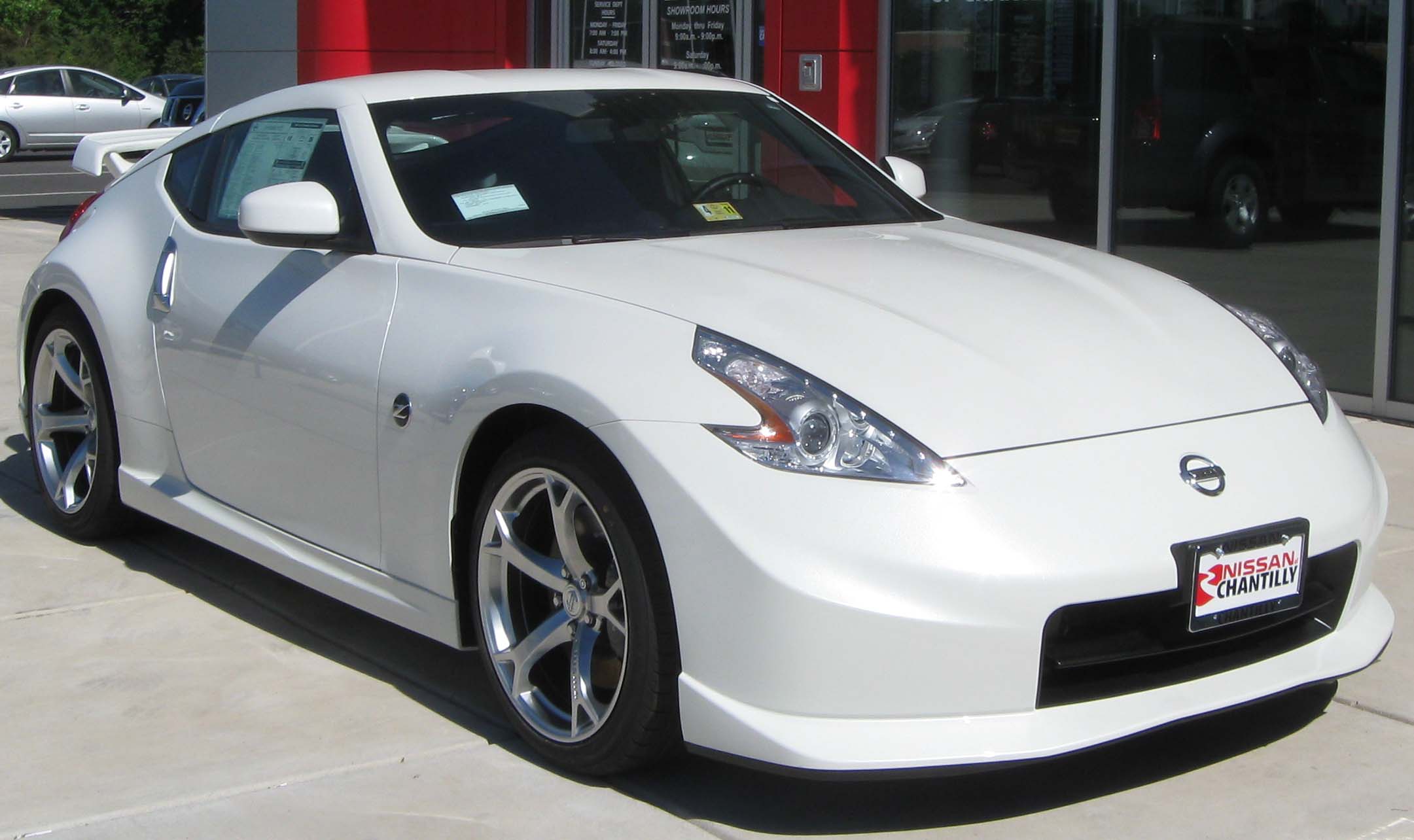
"What I love most about this Z, about the 370Z versus a lot of cars out there, is that when I drive the car, especially now they have the exhaust all done, it sounds great, is that it just feels very analog and it just feels like a classic sports car."
The Nissan 370Z is a sports car from Nissan. The host is saying it feels old-school and fun to drive, not like a numb, overly computerized car.
The Nissan 370Z is a modern take on the classic Z-car formula, built around a driver-focused layout and a naturally aspirated V6. In this segment, the host highlights how it feels “analog” and classic when driving, especially with the exhaust setup.
"So it was a $12,000 difference or price hike versus in 10 years for the car. And it's a totally different car."
A price hike just means the car costs more than it used to. They’re comparing the newer Z’s cost to an older baseline.
A “price hike” is an increase in the cost of a car compared to an earlier model year or generation. In this segment, it’s used to compare how much more expensive the newer Z is versus the older one.
"...the engine is smaller, but more power with the turbos and digital, everything and a lot kind of stuff and everything, that kind of thing."
Turbos are devices that help the engine make more power by pushing extra air in. That can make a smaller engine feel stronger.
“Turbos” refers to turbochargers, which force more air into the engine to make more power without increasing engine size. Modern turbo setups can also change how the car delivers torque and acceleration.
"...just like the indistinguishable like gauge clusters of like the old, like your Z and like, you know, just, just those analog gauges, like are really cool to look at."
Analog gauges are the traditional needle-and-dial instruments. They’re often easier to glance at and feel more “old-school” in the car.
Analog gauges use physical needles and dials to show information like speed, fuel level, and engine temps. Enthusiasts often prefer them because they’re easy to read at a glance and provide a more “mechanical” feel.
"...I love the big tack in the middle. And it just, you know, it's like the big giant tack is what you see in the car..."
The tach shows how fast the engine is spinning (RPM). It helps you know when to shift or how hard the engine is working.
A tachometer (“tach”) measures engine RPM (revolutions per minute). It’s especially important in performance driving because RPM helps you judge where the engine makes power and when to shift.
"...the important thing is your, your oil temperature on your left and in the middle, I was in a battery voltage."
Oil temperature tells you how hot the engine oil is. If it’s too hot (or not warm yet), it can affect how well the engine is protected.
Oil temperature is the temperature of the engine’s lubricating oil. Monitoring it helps you avoid overheating and can indicate whether the engine is fully warmed up before hard driving.
"They sell those jumpers you can buy. Costco sells everything. I was there today. My gosh. You know, so, but, but yeah, I think it's, it's running pretty good. It does have a weighted shifter on the car, not, not your stock shift knob."
A weighted shifter is a heavier shift knob/lever. People add weight to make shifting feel steadier and more satisfying.
A weighted shifter adds mass to the shift lever/knob, which can make the shifter feel more stable and reduce “buzziness.” It can also change how the car’s shift feel is perceived, even if the transmission internals are unchanged.
"Ford has a system, it's like an oil, oil life percentage on all their vehicles. And so you can go into the app on your phone or app, app on the dash and it'll tell you basically when you get your oil changed, reset it back to 100%"
Oil life percentage is an onboard calculation that estimates when engine oil should be changed. Instead of using only mileage, it factors in driving conditions and sometimes oil condition to estimate remaining life.
"Other truck had it too. So Ford has a system, it's like an oil, oil life percentage on all their vehicles."
Ford has a feature that estimates when your oil needs changing. It shows a percentage and you can check it on the dash or phone app.
Ford uses an onboard oil-life monitoring system on many vehicles, showing an oil-life percentage and prompting oil changes. The speaker describes using the Ford app/dash to reset and monitor that estimate.
"[2636.3s] It's not bad for, yeah, for a big V8 like that. Yeah. Yeah."
A V8 is an engine with eight cylinders. It usually makes strong power and sounds great, but it can use more fuel than smaller engines.
A V8 engine is an eight-cylinder configuration arranged in a V shape, commonly associated with strong power and a distinctive sound. In this segment, the V8 is directly tied to fuel economy expectations and why the truck feels “thirsty.”
"[2648.4s] It's not bad for, yeah, for a big V8 like that. Yeah. Yeah. What does my FX 45 like it was rated. [2643.0s] It's like highway was, was 18 or something like that. Oh my gosh. Yeah. Yeah. Well, it's also a [2648.4s] 10 speed."
A “10 speed” means the transmission has more gear ratios than a typical older automatic. That can help the engine run at lower, more efficient RPMs when you’re cruising on the highway.
A “10 speed” automatic transmission means the gearbox has ten forward ratios, which can help keep the engine in a more efficient RPM range. More gears often improve highway cruising efficiency and can make the vehicle feel smoother.
"[2687.5s] And of course it came with a whole Roush package, which had [2690.9s] the exhaust already done, wheels already done, tires already done, shocks already done."
When they say the exhaust is already done, it means someone upgraded the pipes and mufflers. That usually changes the sound a lot, and sometimes helps performance too.
“Exhaust already done” indicates the vehicle has been upgraded with a different exhaust system than stock. Exhaust changes can affect sound, throttle response, and sometimes power depending on the design and supporting modifications.
"[2687.5s] And of course it came with a whole Roush package, which had [2690.9s] the exhaust already done, wheels already done, tires already done, shocks already done."
Shocks control how the truck moves over bumps. If they’re upgraded, the ride can feel more stable and less bouncy.
“Shocks already done” means the suspension damping has been upgraded from stock. Better shocks can improve ride quality and control, especially when the truck is loaded or driven aggressively.
"[2715.3s] feel and it is four wheel drive and it has all that stuff. And it even has a V8,"
Four wheel drive means the truck can send power to all four wheels. That helps with traction on slippery roads or when you want more confidence off the pavement.
“Four wheel drive” (4WD) means power is sent to both the front and rear axles for better traction. In this context, it’s part of why the truck feels capable and why it has a similar “Raptor-like” vibe.
"Now the good news is my truck has lots of extra features, including a bigger
fuel tank. It has the upgraded optional upgraded fuel tank of 36 gallons."
Your fuel tank holds the gas your car or truck uses. A bigger tank usually means you can drive farther before needing to stop for gas.
A fuel tank is the reservoir that stores gasoline for the engine. The segment highlights that a larger tank increases driving range, which matters when towing or traveling long distances where gas stations may be less convenient.
"so one thing about V eights, which might be like a small little segue. We don't have to spend a lot of time talking about this, but, you know, we do, we talk a lot about like V eights and, and, you know, maybe not getting great gas mileage."
They’re talking about V8 engines—engines with eight cylinders. People like them because they usually feel powerful and sound great, but they can use more gas than smaller engines.
The speaker is discussing why V8 engines still matter, especially in the context of fuel prices and modern emissions rules. V8s are known for strong low-end torque and a distinctive sound, but they often struggle with fuel economy compared to smaller engines.
"But, but, you know, we do, we talk a lot about like V eights and, and, you know, maybe not getting great gas mileage... Chevy basically, you know, coming out with the grants for it and, and coming out with a bigger V eight than they've already had is, it seems like an interesting move kind of in this day and age."
“Chevy” means Chevrolet, a major car brand. The host is saying Chevrolet is still investing in bigger V8 engines even though the world is pushing toward cleaner, more efficient cars.
“Chevy” refers to Chevrolet, a brand within General Motors. The speaker attributes a new V8 direction to Chevrolet, framing it as a notable move given today’s emissions and fuel-economy pressures.
"but it's apparently going to have forged internals as like stock components within it. So that's, that's pretty impressive."
Forged internals are stronger versions of the engine’s internal parts. The idea is that they can handle more stress, which is helpful for performance or higher power.
“Forged internals” means key internal engine parts (like pistons and connecting rods) are made by forging, which can increase strength and durability. This is often used in performance engines to handle higher stress, heat, and power.
"...Dodge has gone like a totally different direction and they're trying to maybe come back now and put a V eight in the new charger and everything."
They’re talking about the Dodge Charger and how Dodge is trying to bring back a V8-style approach. That matters because the Charger is known for big-engine performance.
The Dodge Charger is being discussed in the context of a shift back toward a V8. That’s significant because the Charger has historically been a V8 muscle car, and the “come back now” framing highlights a brand strategy change.
"...Chevy already has been like killing it with the Corvette and all these different variations, but they put the V eight in though..."
They mention the Chevrolet Corvette because it’s one of the most famous V8 sports cars. The point is that Chevy has kept leaning into V8 performance.
The Chevrolet Corvette is referenced as the example of a brand “killing it” with V8s and multiple variations. The Corvette is a key American performance benchmark, often used to compare how different manufacturers treat V8 power.
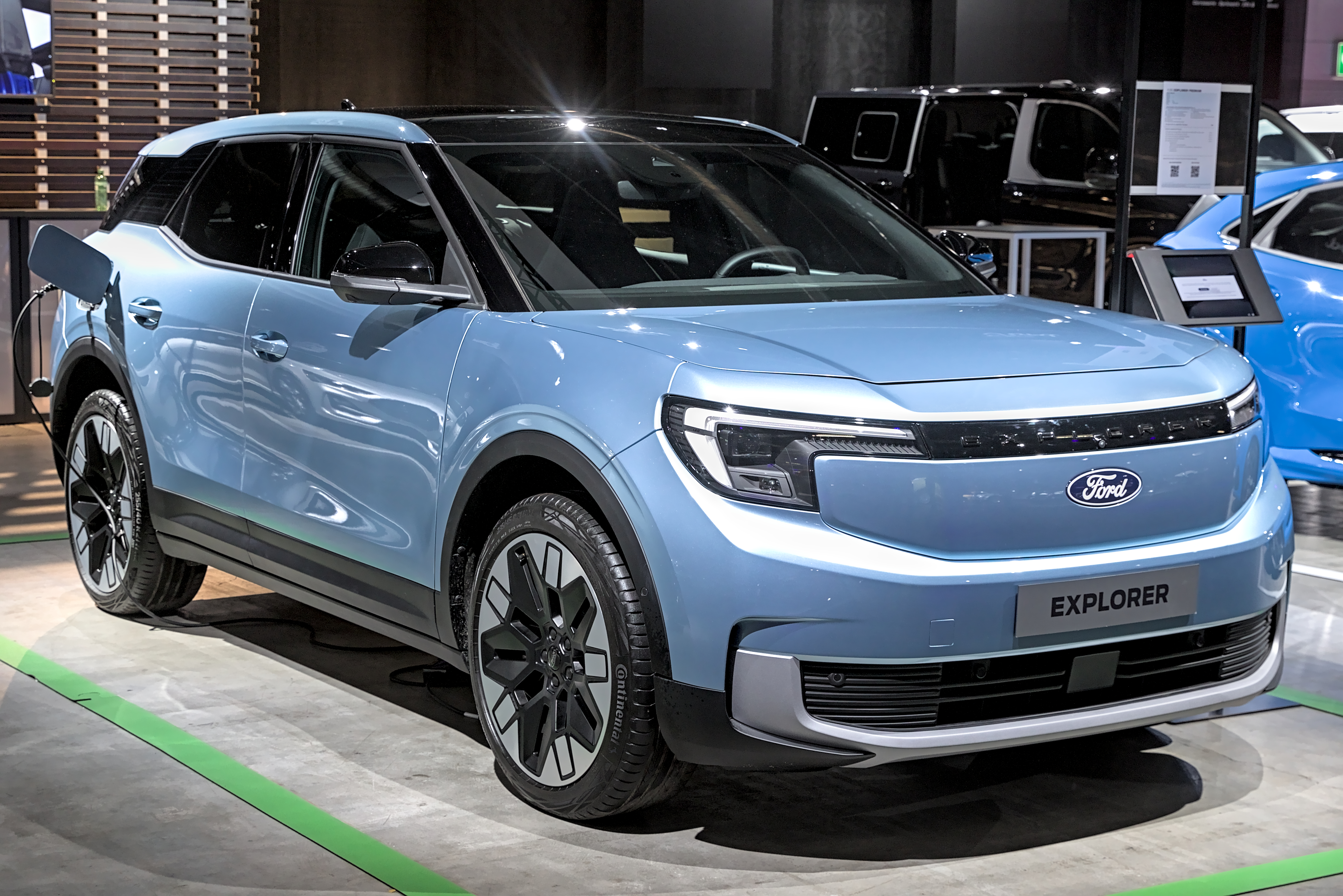
"...my ex-wife had to explore and going bigger because I remember her Explorer was a good size, but like she was always filled with stuff..."
The Ford Explorer is a popular SUV. People like it because it’s roomy, and in the story it sounds like it carried a lot of stuff.
The Ford Explorer is a midsize SUV known for being practical and family-friendly. In this segment, it’s mentioned as a “good size” SUV that still felt packed with stuff, which is a common reason people choose larger SUVs.
"...I remember I rented a expedition once and with the EcoBoost, I think it was fast for being..."
EcoBoost is Ford’s name for turbocharged engines. A turbo helps the engine make more power, so the car can feel quick even if it’s not a big V8.
EcoBoost is Ford’s branding for turbocharged engines (often paired with direct injection). The idea is to make smaller engines feel strong by using turbocharging to boost power without needing a large displacement V8.
🎙️ Intro – Live from the Backyard Studio
🏁 What Is a Street Legal Dragway?
📍 Track Location + Fire Scare Story
🚗 How a 330-Foot Drag Strip Works
🧾 Registration, Staging & How Runs Work
🚦 Drag Racing Lights Explained (Tree System)
🛞 Why Tires Matter (Street vs Track Setup)
⏱️ Improving Times & Breaking Into the 5s
⚠️ Risks of Drag Racing Your Daily Car
🔥 Why Short Tracks Are Easier on Cars
⚙️ Manual vs Automatic – Which Is Faster?
💸 Cost to Race + Unlimited Runs Explained
🚀 Launch Control & Traction Control Tips
🐍 Hellcat vs Grip Launch Story
🛣️ Nissan 370Z Road Trip Experience
🔊 Exhaust Sound, Drone & Driving Feel
🎮 Analog vs Digital Cars – What Feels Better?
📱 Why Modern Cars Feel Like Video Games
💰 Old 370Z vs New Z Price Comparison
🧭 Interior Gauges & Driver Experience
🛻 Ford Roush F-150 V8 Talk
⛽ V8 Fuel Economy & Real Ownership
🔥 Why V8 Engines Still Matter Today
🎯 Final Thoughts – Track vs Street Driving
👋 Outro
Select text to request an explanation
Hey, what's happening? How are you doing today? Thank you so much for being here. I am Chris
and you are listening to the world famous cool cars with Chris. And on today's fantastic
episode, this episode was recorded entirely live in studio C B. That's right. Studio
Courage's backyard. Yeah. We are doing the show live from the backyard once again. Such
an amazing, amazing studio to be at. Such a chill vibe. I love it so much. But today
Courage took his car to the street legal Dragway. It is like a 330 foot like raceway.
You pay money, you get the race. He's going to tell us all about his experience there
today, what it's like, what it's like. If you were to take your car there, what to expect,
things like that, little rules that we don't really know about first time going, stuff
like that. And of course, you know, I do have that brand new, well new to me Nissan
370Z and I'm going to tell you why it means so much to me versus like a new modern sports
car. Why do I like this one particularly? You'll find out on this episode and topping
it off. We're talking about V eight engines. Yeah. You know, I have a V eight in my truck.
It is a, you know, Ford Roush F one 50 four by four with the coyote V eight. So we're
talking V eight talk on this episode. Let's go.
Yeah. This is turning into the spot. This is the new podcast studio coming from the
backyard. It's nice little setup here, you know, aside from the toys and everywhere,
but other than that, you know, and you got kids, you got little ones in the backyard.
Looks great. You got the lawn all done. It looks fantastic back here. Nice little table
setup. I love it, man. I love to go to backyard preparing a little bit more for summer. Yeah,
I'm sorry. I was going to clean those toys up, but yeah, they, they, the kids, the hardest
thing has been trying to keep the kids off the lawn now because we got a whole like two
weeks set period with it. So they've been, we've been creative of how we let them play
out here, but not getting, getting the mix with the lawn. But yeah, yeah, I remember
my little backyard, I had my old house kind of was very similar to this, very similar.
You know, I mean, yeah, my was kind of more of a triangle shape. Here's like a rectangle
shape, you know, kind of a lot, but, but all good. But today being that it's Saturday courage
himself here, just how to take his hot rod and car up to the track that we're just track
located, by the way.
It's Paris, Paris, not Paris, France. So he flies his car on a plane after he runs it
in Le Mans, he goes over and goes to the Eiffel Tower in Paris, just a nice little stop
on the way back. And it's only, I mean, you know, it's like a 30 hour drive, a 30 day
drive or whatever it is, or whatever over there. So Paris, California, it's up north
of Temecula area, but how many miles? It's like right next door, isn't it?
No, it is. It's a, it takes me about 30 minutes, 35 minutes with no traffic. So it's, it's
pretty much all freeway. So it's on the two 15 or 15, two 15. Okay. Yeah, I think it's
bottled up like crazy.
Yeah. Now it's before the 91.
Yes. Before the 91. Okay. And so, and it's, it's, it's pretty on the, it's on the way
to Merino Valley, which just to throw in there, Merino Valley had a pretty big fire yesterday
up there. And it was actually, I looked at the evacuation zone and it literally was right
up to that little facility where the, where the drag strip is. And I like messaged the
guy that owns it yesterday. I was like, is everything good? Like are you guys still
planning it? And it's like, yeah, everything should be good. And this morning, like we
looked at watch duty where we'd look at fires and stuff. And it was, they pretty much it
contained it and kind of the winds are going the opposite of that direction. So they were,
they were good, but you know, it was a little bit of a, you know, kind of, oh shoot, like
they might not be having this because the evacuations was right there.
Was it like less crowded than normal because of this?
Yeah. This was probably the most crowded I've seen it for sure.
I think the thing was everybody was evacuating and they just all went to there.
Yeah. We can get home. So we're just going to go here instead. Yeah.
Well, so it's a race track. Now they just have a what size or what length track is this?
Yeah. You can almost call it proprietary at this point because it's like no other track
is like this short, but this a 330 foot unprepped drag strip.
It's a parking lot, right?
Yeah. It's so sort of like, you know, eight, eight miles already, you know, some people
would be all that's so short. So 330 is like even more 30. That's not very far.
I mean, I have to measure it, but I'm trying to think how far that is. Like
it's distance. I'm trying to think it's all probably across, across a normal parking lot.
I would think probably size of like those deep ups are in the way or whatever kind of
turns are kind of, you know, you know, Costco or something. Maybe I depends, you know,
I just think of race that your local Costco, like they'll do donuts and burnouts in the
Costco or especially in the range. I remember like a lot of rain nights.
There was this Walmart, not that far from a station, you know, delivering at,
and, you know, when it rained, people take their, whatever, like their own side show
they make and it's so easy to break loose in the Walmart parking lots.
Well, the, the, the statute of limitations is up on this, but when I first got my Z actually
way back in college days, Walmart parking lot went like, I'd never like slid a car or anything,
went to a parking lot, did it. And I still vividly remember that I was very, very close to a light
pole coming around, but, you know, but I still like, for some reason I just had the confidence
that like, I know where the car is. I'll still make the bin and like, you know, it was fine, but
I still don't know where that confidence came from.
Once you start going, once you start going to like in a, in a turn and you're hitting it,
you're, and you're sliding and you're just turning, doing like a donut, like you're
orienting and kind of figure out like, where am I all of a sudden, am I close to something
or not? So when you do that, not, so you should do this, but if you ever do do something like
that, makes you have plenty of space on your side of your vehicle. No cars, no kids, no people,
nothing like that around, because you very easily don't do it, leaving cars and coffee.
Oh, that's the place you got to do it though. Do it, leaving cars and coffee and makes you
like, Hey, check over there. Look at me. Check what I'm going to do. Hey, how you doing? Watch
this ladies. And then you just burn out, slide and he hit a pole and you say, yeah,
I was about to do that. You know, you know, daddy will buy me another one. I don't care.
Hold my coffee while I go do this. Hold my coffee or whatever. Hey, there's a tiny
holy beer. That's what it is. But that's, so you went up there today and it's been kind of warm
today with the fire going on, everything else too. Went up to the race track. What is this
place called by the way? Does it have a name? Street legal Dragway. Street legal Dragway.
Wow. And they, yeah, they, they're, they've started kind of spinning it off a little bit
now with like, they, they actually have a street legal side show is what they call it.
Is that where they do? Like we just said, the donuts and stuff, but it's actually all done at
like a, like a contained area where we're not next to people, right? Or a fence line or like,
they have like tires or something. No, it's like the, those big concrete dividers, those
hard. Should we hit that thing? Yeah. Well, you don't, yeah, you don't want to be the one to
hit it, but luckily like your damage is contained within that, your car and then the barrier.
I would have rather had like the little bumpers you have at like K one speed where you hit the
wall, you know, it's like plastic with like the tires, you know, the kind of like in the spring,
it's like, it's like it's plastic barricade spring on those side of that.
You just do a Mario car and just bounce right or whatever. But, but that's pretty cool. So you
went up there today. How many laps did you do or how many runs runs did you get to do?
Yeah, I'd say I probably did about seven or eight runs because they, they were gotten really
efficient would get, it was a lot of people. So how long does it take to go through each run from
like, like, okay, I know you got to like, obviously you race it, but like when you get there, check
in like, is there, is there a waiting waiting list? How's it work? Yeah. So it's a, they have
staging lanes. So when you first get there, you check in, you register, which shout out to them,
I was telling you before, but they, they actually created this. It's still a web, web based app,
per se, but they created all of the registration is on online. Now you just go in,
put in your information and you create a profile. So if you go to the track pretty often, you can
just go to your profile, pay for your ticket and go race, but they actually have live stats now.
So instead of doing print out time cards, you just go in while like, while you're at the track,
and you can check your time cards and everything. And so it's a real smooth dialed in system. And
I was really impressed that they've kind of switched over so quick from just the, the dinosaur age
of just handing you a piece of paper with your time card on it to this whole app setup kind of
thing. But when you roll up, yeah, you basically register and then you go to like their staging
lanes, which they have three, they, they have three rows essentially where they kind of stage
you off from the track. And then they send you down kind of the, the runway, I guess you can
say until you get to the actual drag strip. And there's a tree that like a light tree, right?
Yeah. Is it good? Was it like yellow, green, red, red, yellow, green?
So it's, it's the two, so you have two sets of these small yellows and then they,
that tells you that you're staged. Like you come up to the line and you can see like,
if you're at the car wash, it's kind of the car wash a lot. It'll make the automatic one where
like you got to get in there, but at the sensors are based on when your car is positioned. So
like if your car is not positioned right, it'll like warn you and you have to get like right
in the right spot. Okay. So you don't try cheating. Is that what it is?
Yeah. They want to make sure you're not cheating. You're like a foot over the edge.
Yeah. The thing about it is it sucks when you do that, because then you have to,
you got to reverse back and you got to restart the process to stage properly.
Oh, so you can't just like pull it back and stop and be good. You have to like,
no, you got to go back. Yeah. You got to go back, get out of like, get out of the trees
line of sight and then kind of creep back into it. So, you know, I, some people, it's their first
time ever doing it. So you can't, you can't blame them, but every once in a while you get somebody
that hasn't done it before. And they got it, you know, they got guys that are nice and kind of
coaching them through how to line up and everything. How would you know where to spot though? How would
you know when you pull up, like how do you even know where to put your car? Yeah. It's so as you
come up, like the, the, the idea is to kind of creep forward so that you can, you see the first light
and then you creep just a little bit further. Like really it's like, if you drive a manual car,
you shouldn't really be using the gas at all. Like you come up to a certain point, you kind of
coast up and then you wait for that first light. When you see that, that means you go, you, you got
probably like another couple of inches of movement and then you'll see the red, the second yellow
light on the tree. And that's where you stop. That's the first light says you're there. And the
first and second light says you're locked in, you're locked in your stage. Now this is so that
cars can be like equally like at the same spot. Exactly. Ideally. Yeah. Okay. So they don't do
the old like the fast and furious one where the spray paint on the ground and they'll run across
the thing. Yeah. And remember that when you would be, you like Brian pulled up and he pulled back
or whatever kind of thing. That's what they, I wonder where they got it from. I don't know.
And there's no like dude, like is it fast and furious three where you're like, he, he like,
does this cool move where like he winks at the, you ready, you ready? And he like, he like,
does this thing with his hands where he says like, go or whatever kind of thing.
Nobody's sitting over there. I would match. I'm sure, I'm sure it's all like
digital and stuff for safety or whatever it's up to. You do have guys that are like on, on your
sides, like kind of here and there and there. Like I said, they're the ones kind of helping you
stage if you need to and got the water, you know, for, for doing burnouts, which this is the first
time like I never usually do burnouts when I'm there. What's the advantage of that? The advantage
is like with, so spoiler is that I got a set of kind of more race oriented tires. They're,
they're like really low tread wear, pretty much track tires. Like you would never want to be driving
with them on in the rain. They're really low tread wear, but they have a lot of grip and they're
really, they're really hard compared to a lot of like street tires. And so those tires are ideal.
They, their ideal grip is when they're hot. Don't they slip the first though? If you have enough
heat in them, you, they, they grip really, really well. Like, you know, they, shout out to Toyo.
They got a really good. So you had this on the car today. Yep. Yep. So I switched them. I got a,
I got a set of cheap, you know, 18 inch wheels and through some 18 inch to 45 tires on them.
And it made a lot of difference. Let's just say that. I saw some tires in your garage.
Are those your original? Those are the original ones. Yeah. So those are the pilot sports that
came on the car. And so they're great tires for track use. And they're even good, like for grip,
like initially, but they really kind of fall flat when you're like for a front wheel drive car to
get like, get a good amount of power put down and for them to grip. I didn't have any issues gripping
with the, with the Toyos that I had on them. So, you know, I didn't make a difference in your time.
So when I would go previously, when I went on the Michelins, I would, you know, I would struggle to
get and whether what's good and what's bad times, we won't get into that. But I would struggle to
get anything lowered in like a six, three. Like, you know, I got, there was one time where I got a
six, two, and I was like, everything dial, perfect launch, no wheel spin. And I was never able to
replicate it. Pretty much like even my like worst runs with the new tires, I was always at like a
six, one. No matter. Wow. Look at that. So I know that I can crack into the fives. Like I,
that's my goal is to get it like. Do you get like a trophy or a t-shirt or something?
They do have bracket racing coming up, which they actually have some money involved with that.
So, you know, that's, uh, bracket racing is interesting. I won't get into it because there's
a lot of nuance, but bracket racing or something is like, you come in with a pool. Yeah. You know,
there's a pool based on like how many drivers and everything, but it's, it's, it's not always the
fastest driver that's going to win the pool because you, because it's based on basically your
consistent timing. So like if you're in a certain bracket, you can win a race with a, with the car
that's in a faster bracket than you just be basically because there's just a timing difference.
And when you start in some different things like that, but it's a cool way to kind of walk away
with some, with some cash kind of here and there. Has anybody blown their car doing this there?
Not drag racing. I mean, I guess you could say like,
there's some purpose built drag cars that you have seen like a personal car,
like someone has a personal car and they are just like going beyond red line to get that
into the fives or they, or they miss a, that miss a shift or money shift or something.
I probably do that in my car. And so, and then all of a sudden bang and then you see like,
you know, smoke and they seem just coasting to the end. The time, the, from what I've seen,
I've met like outside of the purpose built race cars, maybe having some malfunction or something.
I haven't seen any, like anybody's personal car. I did see it at the, at the street legal
side show, the street legal takeover that they did. Some guy had a Z and he was,
he was drifting around going to have 350. Yep. Yep. And, and all of a sudden,
like you started to hear like it, it started struggling a little bit and all of a sudden,
like you saw, you started seeing like the coolant kind of the coolant ring.
What was it? Was it like a rod or something? I think he just overheated.
Oh, I think he, I think he just overheated and then finally like the car just like,
you know, just gave, I don't know if he blew a coolant hose.
Oh, that could have been it too.
Yeah. You know, or something.
He said, he said he heard it. I just kind of wondering if it got, what a sound it was making.
It was like, like, if you hear like a misfire, like when a car starts to misfire.
Yeah. I think it'll like, it'll be like a rod knocking kind of sound, maybe.
Yeah. Like I said, I don't know if he actually really like blew his motor or anything. I think
it was just, I think the, I think, but again, like it's a risk you take.
Oh, that is a big risk, man.
So you take a risk, man, for sure.
But it's a bit calculated cause like, you know, I've been out there a few times and,
and I kind of know the car. I know like the limits and because it's such a short track too,
like, you know, you're not really like overheated.
You don't really have a difference when it's short track like that.
Yeah. Like you're not in it, like say in a quarter mile drag strip,
like, you know, you're, you're in it for a while. Like you're going through third,
fourth, maybe even fifth gear in some certain cars.
You're like, I'm at the top of second at the end of this one.
Okay. So, so you're just going one, two.
Basically. Yeah.
Interesting. Interesting.
A lot of guys, like, you know, the real power builds too, they're like, you know,
maybe some of like the, the real purpose built, like, you know, the, the, the drag racers with
like the, the sequential shifts, like, you know, they, they might have like a one, two, three, maybe,
but well, you think there's the cars that you see there are a lot of automatic.
Some of them are like some of the drag cars, like R. Yeah.
I mean, like regular people's cars and stuff.
Like you get a mix, but you do get fewer, I'd say you get fewer manuals than you get
automatics for more, more automatics.
Yeah. Uh-huh.
Yeah. Also, it's like hard to find a stick shift these days, you know, and I think too,
because you have to be shifting, using the clutch and letting the clutch out and figuring
all that timing on that and everything and make sure it's running great that it's probably easier
to get your faster time with an automatic than with a manual. And since like with my old car,
had the sync grab, I think your car has sync grab too. It doesn't. So, so it has, so it probably
helps with shifting. So you make a much smoother shift than I probably could, which means I
probably get a lower time.
Well, but it doesn't really help you when you're up shifting now with sync.
It does. The other car did. Yeah. Yeah. Because, because the way the system works both ways.
Oh, so it's actually, it'll bring your art.
It'll match your art. So when you land a gear, when you go up, up shifting,
it'll make sure it's perfectly aligned.
So my car doesn't do that on the up. I don't think it does. I'll double check.
You have to check on that because I think, I think I was kind of surprised by that. So
I know the downshift, it blips the throttle and stuff, but I heard it works both ways.
The system is within like the shifter, like somewhere inside the shifter is where the system
is. And that's how it kind of knows what, whatever gear you're going to be going into,
whether it's up or down, it kind of figures out what speed, what RPM, and it matches.
Yeah. So kind of make sure that the, the RPM matches the thing and that kind of stuff.
I heard it works both ways. So, and I know it's kind of tell when you're up shifting,
you're, you're running the car and you're going through one, two, you're going through the gears
and you're, and you're accelerating. It's kind of hard to tell, you know, because if you,
usually you're pretty good about the smoothness of shifting at an up, on an up acceleration shift,
it's probably much easier and smoother to do normally than a downshift.
Then a downshift. Yeah.
So that's probably why you don't notice it. Like I didn't really notice it either,
but then I'm like, I read about it. I was like, Oh, okay. Cause that's kind of makes sense.
Yeah. That's my little secret. Cause, cause to be honest, like people are kind of,
when they find out that it's a manual, the one, when they find out as a manual,
then I didn't even know like, first of all, I was just, oh, that Hyundai is a manual.
Like they were surprised by that. But then when they kind of see,
not to say that I'm like super skilled or anything, but I've really gotten pretty consistent
and knowing like where my shift points are and everything they're like, you know, we,
like the way that like we hear it when it goes online is like pretty consistent.
We thought for sure that it was an automatic and it's probably a part of that sync.
Part of that. I'm going to look that up now for sure.
The sync graph might actually be just helping you like just, you know, just, just a little finesse,
just a little finesse on that shift that you may not even notice.
And then does yours, now keep your ears on and off. Yeah. Okay. Let me try off and see.
So how many runs did seven runs today? Seven or eight runs. Yeah.
Now you get to pay for each run or pay for the whole day.
No, you see, they do a two run, a two run minimum is like 20 bucks or something like that.
And then unlimited is 40 bucks. So
Do you do the unlimited when you do it?
Yeah. Yeah.
Okay. I guess the way to do it. Now when you do it like that, how quickly
do you go from like finish the race back to back to back?
Yeah. And that's, that's where it really just depends on the day.
Like today was definitely a pretty busy day.
Like you had a wait time.
You had a wait time for sure. You know, I would say about 10 minutes.
Like it's probably like average your wait time from finishing your race to getting back up.
That's what you had today. Yeah.
Uh-huh.
What is it normally like a day you've been there before?
Like earlier, because I mean, they've grown a lot in the two and a half years.
They've been around. So like early days, like, you know, it was like a couple of minutes,
like two or three minutes in your back.
Give me time enough time for your car to like, you know, cool down.
And like, yeah, because I was kind of wondering about that. If you're, if you're like, you know,
I know it's only 300 feet or whatever you said it was.
I think that, I mean, you still want your car to cool back down and like give it a break.
Yeah.
Like, you know, before you run it again.
Yeah. You do want to have a little bit more of a gap.
And, and to be honest, the interesting thing is, because I use launch control in, in my car.
Look at that. Yeah.
Yeah. It encourages cheat code right there.
My little, my little launch control helps out a little bit.
Although I found out that using launch control with traction control on kind of, kind of shoots
you in the foot.
Oh, so you take it off?
So I, yeah. So now I have to take traction control off and that's helped me a lot too.
Working with my Z though, taking the traction control off.
Would it be a benefit to that? I have no idea.
Well, in the drag situation, potentially, although it does slip though,
when it does slip, it does do it's traction control stuff.
And you're like, Oh man, slow me down and whatever and stuff. So you don't want that.
You got to really, you know, for you as well, like you probably would want to have some stickier
tires in the back. If you were really trying to get like a good time, because it'll be real easy.
If you say, if you, do you have launch control or do you just have traction control?
I think such a classic. I think it's like old school.
Talking about that too, which I definitely want to get, you want you to share your thoughts on
that too, but not having launch control, especially with a rural drive car like that,
you, you, you would probably like, if you over rev it and just overwhelm the tires,
then yeah, you're probably going to get a whole bunch of wheel spin.
But, you know, traction control might benefit you in that instance, but for front wheel drive,
the issue is that it'll start to cut power. And like when you're, when you're in it and you're,
you know, foot to the floor, but the car is like pulling back power because of traction control,
that, that defeat in 330 feet, that kills your time instantly.
Yeah. I think every little like micro, micro, microsecond, that much time makes a difference,
you know, versus we're like, I mean, I guess even with a quarter mile, like everything really counts.
You get a little bit more time to kind of get, get that, but like you see ones where like a,
you know, say an all wheel drive car races a rear wheel drive car in a quarter mile.
And the all wheel drive car leaves them like at the start because it just has a better launch.
But then like, you know, but then the rear wheel drive car, you know, maybe it has more power
or whatever. Like the V8 or something like that. Yeah. Like it'll, it'll start to gain
on them and it'll end up winning at the end. Cause there's just a lot more distance to overcome.
But with 330 feet, like, you know, if you have situations where a high horsepower,
I actually came pretty close with a Hellcat on one of the runs because, and I could tell,
like he just, he just burned out basically at the launch and I gripped. And so I was ahead
for a little while, but once he finally got his grip, he kind of took off and we were basically
neck and neck. Like six seconds here. So it's probably pretty, that's pretty quick. Yeah.
It's funny you say this about the racing is that the other night I was coming home from work
and I'm just tired. It's like three in the morning, you know, and these kids were in this
older Mustang. It had to been like, I'm not sure the, it was like probably a 95 or 97.
Oh yeah. Four Mustang GT. Kind of the bubbly. Yeah. Bubbly style. All kind of beat up.
And they were wanting to race me so bad. And we're in a stoplight and I'm like looking over
and these kids were just revenue and they just like took off and then went to the next stoplight
and they're looking at me and like, I'm like, guy, it's three in the freaking morning. You know,
like it's three in the morning. I'm like a block from the house. Like I just want to get home.
Kind of a thing, but like, why is everyone a race? But it's my car. You know, it's like,
it's like, I, it's what I heard about. We have like a hot car, like the Z people want to race it.
People want to, you know, like, like I heard that. I remember with the other car too. Even
like when I used to have my Mercury Cougar back in the day, same thing. People want to race me
in that thing too. One guy was in the freeway, want to race, want to race. I can't agree with
that nonsense. You know, like that's dangerous. It's on the street and stuff too. And you know,
I mean, yeah, but the place like, you know, race legal, it's, it's what it's all about,
being legal and then doing it and not getting, you know, tickets or crashes and things like that.
But speaking of the Z though, I do want to get some of your thoughts on, on, on, on just
taking a trip in the Z taking a road trip. Yeah. First off, taking a road trip in the Z
is great as long as you never, ever, ever getting traffic, which is kind of hard to do. And, and
also too, that Z, like I, I got to take it to another mechanic and have them like look at the
suspension because I know it's very firm, very soft, but we live in a world here. There's potholes
and variations of like depth of the freeway where it kind of dips and comes back up and
different things. And the car easily bottoms out. And if, if you're hitting some potholes,
it's very, very stiff suspension, very stiff. It's like bang, bang, bang. I figure out a way
to get over speed bumps very slowly. That's not that bad of an issue. Even steep, really steep
ones. And you're okay. Once you go over nice and slow, you hit them hard. Even like a little faster
than one mile an hour, you're banging, you're banging and clanging under the car. And so,
and the seats like really like low to the ground. I think, I think, well, the car's got a lot of
miles on it. And I think either the last guy was a real big guy or what the deal was because
it feels like the entire like cushion is gone. It feels like you're sitting on the floor. Like
it literally feels like you're sitting on the floor. My dad had a hard time getting in the car.
So he was like, this car, so where's the handle at? I can't get in this car. It's like literally
on the ground. And I think cause it's on the ground, your seats on the ground,
the suspension is very, very tight, very, very, it's, it's lowered a little bit. I don't know
give you a little nausea. It makes you a little nauseous when you take corners tight and kind of
zig around stuff. Like when I was running, when I took it over, when I took it the first time
after the exhaust and I took it on the, the back hills, back in the hills there and the
twisty turns and I was kind of like zigging around the turns a little bit and hitting them with some
Gs. And I don't know if it's just a whole set up to set up that way or what the deal is, but I
started feeling a little seasick. I go car sick, which usually the driver doesn't feel car sick.
Usually, but I started feeling car sick. I'm driving the thing by old cars. It's kind of a trip.
That's honestly a big fear of mine to be totally honest because I think I told you that I get
pretty easily car sick being a passenger in a car. There's the, you know, we've been like
taking Ubers from an airport when I'm out of town or whatever. There's a certain, but like one of my
fears is like for that to start happening when I'm driving, because then it's like, I love driving,
I love being in the car. Like now it's like, I can't be a passenger or a driver.
Like maybe I'm still learning the car. I'm still like trying to figure it out, but like what it
can do on the turns and like, it's just that quick on like left to right, left to right, hitting the
turns hard and like the Gs and like just, and just kind of like being in the car and you're
so low to the ground. I mean, the car is great. The car runs fantastic. The engine's incredibly
smooth. Like all the way up attack, it's incredibly smooth sounding engine. Now that I have the
exhaust done on the car, I love it even more. I just want to like, I like to cruise around and
just put it in neutral and just rev the engine for the hell of it. Like I do that a lot. I come
to a stop and I'll just like rev the engine. It's like its own soundtrack.
If you, if you, if you spotted 370Z around San Diego, that tends to rev at lights.
That's me. That's me. It sounds great. Like it has like this real nice purr to the engine.
It sounds amazing. Nice. And it's not, like it's not super raspy, although it is droney though
on the road trip. It does. I was going to ask you about that. Yeah. I bought resonators. I put
resonators on it because they said if you didn't put resonators on there, it would be really loud
and droney. Great. So throw the resonators on there. They did that, but it's certain RPMs at
certain speeds, certain size of the free, if you want up a hill or whatever, real drone,
like a lot of drone, like, like, like you have to like almost plug your ears kind of drone.
Yeah. But it only happens at a certain RPM and a certain gear and a certain incline or something
like that where you're kind of using the right amount of torque in the engine or whatever.
It's usually, I feel like would V six is particularly, it's usually around like 2,500 to
between 2,500 and 3,000 RPM.
It depends. Because sometimes I'll be cruising on a flat road and you don't really hear it.
And there's sometimes you're kind of going on a slight incline. You do hear it. So,
you know, I'm trying to find the sweet spot where it happens is if you go faster,
you don't really hear it. And sometimes you do. Or like downshift, maybe.
Yeah. Something like that. So, but the suspension is very, very tough and it's very,
very low to the ground. So it's for road tripping, you know, there's not a lot of space in that car,
by the way. You know, I mean, it is a sports car after all. I think it's designed when they sold
the car and like their whole commercial pitch was like, you know, we can put like, you know,
two sets of golf clubs in here and like, that's it. Parallel. Parallel. Maybe one set for sure.
Like take it to the golf course, your golf clubs are in the back and that's all you got space for.
Find whatever, you know, kind of thing. It's not a family car and it never really was supposed to
be a family car or maybe like a weekend getaway car kind of thing. You can put two suitcases back.
Like I said, the other one I've taken, you know, on a getaway and put two suitcases back there,
not a lot of stuff, like maybe two carry-ons and a few backpacks and you're full. The whole thing
is pretty much full or whatever. And I never really realized too that how shallow the, you know,
the, the trunk, the basically the hatch is too. Like when the actual like window, like the door
comes down, you mean? Yeah. Like it's not very deep. Correct. Yeah. Well, it is deeper towards the
seats towards the bumper is when it kind of slopes back. So that's where you have to like,
put like the things you have to like, when you put stuff in the back, you realize you cannot go
over this little lip here where the trunk meets the back, like the top of trunk hatch meets the
back. Yeah. This is like your line level. You can't go exceed this level because it won't close
the door. Although I did see a Z or something the other day. And I don't know if it was a Z or
what a car was. A car like that had a hatch and it couldn't fit whatever they had in the back. So
you can see it was like jarred open a little bit like that. So that is a thing. Maybe put like a
strap or something. Can't even keep them flying open. Yeah. But the car runs good when you get the
RPM stuff to get rolling through the gears. What I love most about this Z, about the 370Z versus
a lot of cars out there, is that when I drive the car, especially now they have the exhaust
all done, it sounds great, is that it just feels very analog and it just feels like a classic
sports car. Even though it's a fairly new-ish car, like new modern-wise, it doesn't feel modern-wise.
Not like in a bad way. It doesn't feel like an old bucket of bolts, you know, but it feels like
a vintage classic fun sports car. It feels like when I drive the thing. That's why I love it.
Versus like the new one, which the new Z's got digital everything, twin turbos, full digital dash,
the Mustangs, you get the EcoBoost with the, you know, 4-cylinder, but they still have the full
digital experience. It's like driving a video game and at your end cars, same thing. They all
digital turbo, a lot of stuff. A lot of the modern cars, almost like all modern cars,
tons of sports cars, they're all going in this full digital cluster. Now, people love that because
you can do all kinds of cool things with the gauges and you can do all kinds of different,
you know, different modes. You can put it in a different thing. You can see more stuff.
But the thing about the 370 is that it's such an analog experience that it just feels raw.
There's vibration in the car. You feel vibration in the shifter. You can see the shifter actually
moves when you're in high gear on the freeway and you throttle it down and you let the throttle.
The shifter actually like moves. The shifter from the torque of the engine actually physically
like moves and vibrates. And so it has this whole like feeling that it feels very connected to the
car versus like an iPad on wheels or whatever kind of thing. And that's why I love the car.
You know, when you brought that up, it really made me think because some of the criticism of
like the last generation Z, the 370, you know, the whole run was just that it was,
it had been going on for so long. That is true. You know, with very minimal updates,
like kind of power updates here, you know, some things there. But to be honest, and like you said,
and kind of this day and age where everything is kind of almost feeling the same because
it's using the same recipe. If we want more screens, we want more power. Do we turbo charge
the cars? Things like that. You know, we're, it's almost like now people are looking back
to something that's more. That's what I do. I looked at newsies too. They're really,
really expensive. I mean, I even did a comparison check. So the seeds that I bought now, it's,
it's, I actually found the, the window sticker online. I went on through car facts. I was able
to get a copy, a copy of the window sticker of my original, the original price because it's
a base model. It's not even like a sport. It's the only base model. It was 30,000.
Really? Yeah. 30,000 and change. That's, I didn't know those were that like in 2016, 30 grand.
That was a deal back then. Yeah. Well, don't forget it's the base model had the, had the
base radio had no synch rev. It had, you know, the basic stuff or whatever on the Z.
But you still got the same power as like you got pretty much all the experience.
Yeah. That's, that's kind of the thing with the Z's. I remember is that unless you,
unless you went Nismo, taking Nismo aside, every single Z from the base model to the touring or
whatever the top in line one is before the Nismo, they all had that same 3.7 liter VQ engine,
all same power output and everything. Now the difference is when you go to like a touring,
I think my previous Z was a sport edition because it had the bigger brakes. It had the
synch rev and I think it had the LDS differential, little bit differential.
Yours does. So, yours is base. It doesn't have those things at all. And so, because it doesn't
have those things, it feels even more like a catalog. It feels even more like a classic
sports car because it didn't have those things. Although on the other car,
other than the synch rev, I didn't really notice the LDS. Yeah.
And oh, the LSE. LSE, LSE. I don't want to keep saying it. Yeah. But anyway, yeah. So,
I didn't really notice that. And so, maybe it was working. Maybe it wasn't. I didn't really
notice it. And so, in the new car, did I really notice a difference? Not really. I don't know.
And of course, the other Z had aftermarket radio anyways. So, I didn't know if he even had like
their version of maps and their version of stuff on the car. I don't know if he even had
that because they had a different thing anyways. So, but it's very similar in a lot of ways. But
I think the other one, I think retailed for like, I think 37 in 2011. And this one's a 2016
and it retailed for a 30. But what's funny is that I decided to throw into AI asking questions
about this, throwing my little sticker in there. And I just get curious. I was like,
if you were to take a brand new Z today, new Nissan Z today, compare the specs for the one I have
to say a new one today, how much do you think a brand new Z specced out like I have would cost
today? So, like your spec, like the base model, but with the new Z? Correct.
Interesting. I feel like that would, but you could probably still get that for under 40.
42. 42. Okay.
Yeah. 42. Now, that's not, now I'm not assuming that the dealership has markups and like whatever
dealership stuff, you know, formats or whatever else they add on there onto the thing. It's
kind of like, like the entry price, whatever 42 and change is what, is what they, AI was saying
for like a new Z. So it was a $12,000 difference or price hike versus in 10 years for the car.
And it's a totally different car. I get it. It's totally different, bigger. I mean,
the engine is smaller, but more power with the turbos and digital, everything and a lot kind
of stuff and everything, that kind of thing. But I just love the raw organic feel of it,
maybe because of like analog records and like, you know, live music and like acoustic guitars.
And I like, you know, that, that kind of stuff, you know, just like the indistinguishable like
gauge clusters of like the old, like your Z and like, you know, just, just those analog gauges,
like are really cool to look at. And like, yeah, I love the big tack in the middle. And it just,
you know, it's like the big giant tack is what you see in the car and the, you know, speed is to
the right and the, on the left side, it's like your fuel gauge and like your digital cluster,
what's looks like a Casio calculator kind of thing, you know, your clock and like, you're
right. Yeah. One of the top, top, top three, like gauges on the dash, which is like important
thing, important thing, clock. Well, actually it's important thing, not really important thing
and that a clock and the important thing is your, your oil temperature on your left and in the middle,
I was in a battery voltage. Yeah. Do you really need that? I mean, I mean, the car is starting,
obviously, but the, while the, while the car's running, do you need your battery voltage going
on? I mean, you already know the car's on. I mean, I mean, unless you're trying to like
jump another car or something like that, which who would be jumping a car off a Z, you know,
the battery is such a small little battery, nothing. It's some old lady going to be in
a Costco parking lot, like late before they close. Well, tell her, go back to go back inside.
They sell those jumpers you can buy. Costco sells everything. I was there today. My gosh.
You know, so, but, but yeah, I think it's, it's running pretty good. It does have a weighted
shifter on the car, not, not your stock shift knob. It's got a weighted shifter when I first got the
car. I'm sorry. When I first drove the car as a test drive, I noticed that right away. And for me,
when I first drove it, it felt easy to shift. Like really, really easy. I remember you were
describing that and I couldn't quite like, I guess picture how, what you were describing when
you were saying it. It was felt, it felt loose, but not in a bad way. It felt loose. Like it's
as easy to like drive kind of loose because when I drove that 350, it was very notchy,
very tight, very like, like flick of a wrist going in there. Now this, now this you can move.
It has a little more play with this one moving from gear to gear, not so tight. Maybe because
it's older. I don't know. Maybe because it has a weighted shift knob. I don't know. Maybe they
remodeled the transmission or something. I don't know. Maybe it has a new clutch. I don't know.
So, but everything runs fine. The oil is running great. It hasn't burned any oil at 1000 miles.
It hasn't burnt any oil. That's one thing I was worried about with this car. That would burn
some oil being that many miles on a, on a, you know, VQ, but it hasn't. It's running good. It feels
great. I think it's a great car. Yeah. Now, I mean, you know, Z's are Z's and a lot of those
Nissan product products are actually like solid, like, you know, the Z's, the G's, the G's. Well,
the rear wheel drive version, I heard like that. Like as long as there's a rear wheel drive Nissan,
I think you're safe because the rear wheel drive ones does use a VQ platform in them.
It's when you get to like the front wheel drive ones, like the Ultima or the Ultima or the ones
that had the CVTs. That's the one. Those things are hot garbage. CVTs. Yeah. I had a, I always
tell my wife that I forget that we own this car, but I had a like a 2016 Ultima for like a year
and a half, maybe two years. And, and it was like, you know, right around 70,000 miles,
it was like, you know, we, it was back when like you could sell stuff on CarMax for like more than
the car was worth really because we just had a car shortage. And you know, we were like,
you want to give us what for this car? It was like 13 grand or something.
It's just when like the chips were like, they had issue with new cars because they couldn't get
the chips in the new car. So that's all the used cars were like getting really crazy prices for
used cars and stuff. Yeah. So we were like, at that time, it was right around 70,000 miles when
that's when they say a lot of times the CVTs starts to have issues. We were like, that's it.
Take it. Take it. Take it. Take it. You want to give us as much for, again, what a deal.
That's crazy. I remember a guy at work had one, he had a bunch of problems with his,
and then another guy had a bunch of problems with his, and I just,
they're just flooded with problems on those cars. But I remember when they first like
came out, there was an article about them coming out. I remember reading about that.
And I've been like hearing about it. And they got an ad or I think it was on a magazine or
something. They were advertising it, saying like no shift shock, automatic, smooth, all the way
through. And I'm like, that sounds interesting when how they make that work, you know, like,
because one thing about automatics, you get the shift shock, even my truck has a shift,
it was a shift shock when it shifts gears, you feel it, you know, it's pretty smooth,
but it's not like, it's not really, I mean, it's, I mean, you, you notice it's shifting,
you know, there's a shift. I think when you get to like, cause my truck has a, it's a 10 speed.
So when you get to like, you know, five, six, seven, it's pretty smooth.
You don't really notice that this really just incremental.
On my, on my truck in the center, you can choose to see this or not, but I always
choose to see the actual number of what gear you're in. It'll like light up like one,
two, three, whatever. And you can see, oh, I'm in six, I'm in seventh or whatever.
And so as you're cruising, like it gets, it goes through and put, when you get on the freeway,
you're moving along, it gets up to high, high speed, high gear pretty quickly. So when it gets
to those middle ones, it kind of goes through them pretty quickly. You just see them on the dash
kind of like move from five, four, whatever, go up, you know, but you don't even like feel them,
you know? I'm not going to want to hope that transmission lasts a long time
because I mean, I haven't heard any horror stories, but people have said horror stories.
That's what any car, you know, any car, people will say, oh, I've heard this car has got this
problem or that car has got this problem. Yeah. It's really good with anything out there really.
So, but I've had anything major with this truck. It does burn some oil though. I tell you how
much it does burn oil. I get, I get to check it around because my oil, I have one of those oil
like percentage things on the truck. Yeah. Other truck had it too. So Ford has a system,
it's like an oil, oil life percentage on all their vehicles. And so you can go into the
app on your phone or app, app on the dash and it'll tell you basically when you get your oil
changed, reset it back to 100%. Just like your phone battery, it just drops so often. And the
way I think it works, it doesn't work off mileage. There's a sensor or something that like
sees the oil, maybe sees the darkness of the oil or something. And then it like tells you a
percentage based on that. And it kind of calculates like how much you drive. Cause I know if you tow
a lot, that was when we were talking about that. Yeah. It will, it will also, even though you
changed it last week, it'll show like 50%. Like I just changed it. But yeah, but like, I guess
you use it or whatever kind of thing. I kind of, it's kind of cack, it's a nice little system. So
I've been using that to figure out where to change the oil on the truck. But like at like 50%,
it's like down to court or whatever, maybe even more. And so, but it's got, it takes eight
courts of oil and then the truck. So yeah. So I have to be a moral. It's a five liter, right?
Yeah. It's a 5.0 coyote and those are known to burn oil. And so, you know, I've got I think 72,000
on the truck now. You know, it's getting up there. It's not like a hundred yet, but it's getting
up there. So I want to make it last. I mean, I drive the truck today of your house here and I'm
like, man, I really liked this truck. Yeah. Like I told you when he rolled up, I was like,
it was like, that doesn't sound like the Z. And I just kind of forgot that the truck exists.
And I was like, I haven't used it in a while. It's like, I've been sitting there. It's like,
drive me, drive me. You haven't driven me in forever. Well, because gas is six bucks a gallon.
It's like, because you're thirsty. That's why. But surprisingly, it does. I think,
I think on the highway, it's like rated for like 22 miles a gallon.
It's not bad for, yeah, for a big V8 like that. Yeah. Yeah. What does my FX 45 like it was rated.
It's like highway was, was 18 or something like that. Oh my gosh. Yeah. Yeah. Well, it's also a
10 speed. And I think it helps with that because the 10 speed helps and that kind of thing. So,
but, but I'm like, man, this is really like up the drive. Like this is a really nice truck.
Yeah. Like it's when I bought the thing, you know, a lot of the bells and whistles the
truck had. I'm like, I really need all those nonsense. But what's funny, one thing really
kind of sold me on the truck. Well, a lot of things sold me on the truck when I bought it.
But I think one thing I kind of, I kind of liked was like, it had a full glass roof that you can
like sunroof, moonroof, like from front to back. Yeah. So you can remove it back and take the
whole thing off and all that. It feels like, not quite a convertible, but it feels like a
convertible because you can see through the sky and all that. Yeah. I guess it's kind of cool.
I kind of dig that. And of course it came with a whole Roush package, which had
See something that's not quite right? Our annotations are AI-generated and can sometimes miss the mark.
Click the flag icon on any annotation to suggest a correction.
Report incorrect info
Suggest better explanations
Flag missing cars
More from Cool Cars with Chris: Car Talk, Driving Tips & Auto Life