Celebrating Autocar's 130th anniversary, this episode features a visit to the British Motor Museum with Stephen Lang, the head of collections. The discussion revolves around the significance of Autocar's paper archive finding a new home at the museum, alongside its extensive collection of British automotive history. Listeners will enjoy insights into various unique exhibits, including the first Land Rover and gas turbine cars, as well as the personal stories behind iconic vehicles. The episode highlights the importance of preserving automotive heritage and the role of archives in storytelling.
On Autocar's 130th anniversary, the physical archive of our magazines has a new home: the British Motor Museum in Gaydon.
To mark the occasions, this week Steve Cropley and Matt Prior visit the British Motor Museum in Gaydon and take a tour with Head of Collections Stephen Laing, stopping by cars and exhibits old and new as they make their way from the museum entrance to the archive rooms.
"...the museum was fairly much a collection to do with Rover Group and British Leyland. That's where our collection started out in the 1970s."
Rover Group was a company in the UK that made cars. They were known for brands like Rover and MG, which were popular in Britain.
Rover Group was a British automotive manufacturer known for producing a range of vehicles, including the Rover and MG brands. It played a significant role in the UK's automotive history, especially during the 20th century.
"...the museum was fairly much a collection to do with Rover Group and British Leyland. That's where our collection started out in the 1970s."
British Leyland was a big car company in the UK that made many different types of cars, including popular brands like Austin and Jaguar. They had some tough times in the 1970s.
British Leyland was a major British automotive manufacturer formed in the 1960s, known for producing a variety of vehicles under several brands, including Austin, Morris, and Jaguar. It faced significant challenges in the 1970s and eventually collapsed.
"...You will see some lotuses in a little while. We've got some Roots Group cars that we didn't use to have..."
Lotus is a car company from the UK that makes sports cars known for being very light and fast. They have a history in racing and are famous for models like the Elise.
Lotus is a British automotive company known for its lightweight sports cars and innovative engineering. Founded in 1952, Lotus has a rich motorsport heritage and is recognized for models like the Elise and Exige.
"...some of the smaller manufacturers, the Caterons,..."
Caterham is a British car company that makes small, lightweight sports cars. Their most famous model is the Caterham Seven, which is known for being fun to drive.
Caterham is a British manufacturer known for its lightweight sports cars, particularly the Caterham Seven, which is a modern interpretation of the classic Lotus Seven. The brand is celebrated for its focus on driving enjoyment and performance.
"...the lilac ones for those who are aficionados of Morris miners, Morris ran a competition to find the oldest Morris miner and a chap wrote in and said, oh, I've got this really old Morris miner..."
The Morris Minor is a small car from Britain that was popular in the mid-20th century. It's known for its unique shape and was one of the first cars that many families could afford.
The Morris Minor is a classic British car produced from 1948 to 1971. It is known for its distinctive styling and was one of the first cars to be mass-produced in the UK, making it an iconic symbol of post-war motoring.
"...the safety cycle. So the cycle we know today with two wheels the same size rather than the kind of penny farthing design..."
A safety cycle is a type of bicycle that has two wheels of the same size. This design is safer and easier to ride than older bicycle designs that had one big wheel and one small wheel.
The safety cycle refers to a type of bicycle that features two wheels of equal size, making it more stable and easier to ride compared to earlier designs like the penny farthing, which had a large front wheel and a small rear wheel. This design became the standard for modern bicycles.
"...we're just around the period of the London to Brighton run, the veteran car run, which is really an international motoring institution..."
The London to Brighton run is a famous event where old cars drive from London to Brighton. It's a way to celebrate the history of cars and see vintage vehicles on the road.
The London to Brighton run is a historic motoring event that celebrates early automobiles, where participants drive from London to Brighton, showcasing vintage vehicles. It is an important tradition in the automotive community.
Car
Walsley tricycle
"...this car in front of us is a, is a three wheeler is a Wallsley tricycle built in 1896 designed by Herbert Austin..."
The Walsley tricycle is one of the first motorized vehicles, built with three wheels and a small engine. It shows how cars started to develop from bicycles in the late 1800s.
The Walsley tricycle is an early motor vehicle built in 1896, notable for its three-wheeled design and single-cylinder engine. It represents the transition from bicycles to motorized vehicles in automotive history.
"...it's got a kind of tiller steering. So there's no steering wheel or it's got a single wheel at the front. And the gearbox, like another of his early Wallsley cars is by tightening and loosening a belt..."
Tiller steering means using a lever to steer the car instead of a round steering wheel. It's common in older or smaller vehicles and gives a different feel when driving.
Tiller steering is a type of steering mechanism where a lever is used to control the direction of the vehicle instead of a traditional steering wheel. This design is often found in smaller or vintage vehicles, providing a unique driving experience.
"...the gearbox, like another of his early Wallsley cars is by tightening and loosening a belt. So that's the effectively the clutch."
The gearbox helps the car change speeds and power from the engine to the wheels. In this case, it works by tightening or loosening a belt, which is different from most modern cars.
A gearbox is a mechanical device that transmits power from the engine to the wheels, allowing the vehicle to change speeds and torque. In this context, the gearbox is operated by adjusting a belt, which is a unique feature.
"...it's got two brake shoes on each wheel, one of them operated by the foot brake. And then it's also..."
Brake shoes are parts that help stop the car by pressing against a drum. This car has two brake shoes on each wheel, which helps it stop better.
Brake shoes are components of a drum brake system that press against the inner surface of a brake drum to create friction and slow down the vehicle. In this case, the vehicle has two brake shoes on each wheel, enhancing its braking capability.
"...that cars were going to be called auto cars. And they've come to be called motor cars or automobiles. So he was..."
Motor cars are what we commonly call cars today. They are vehicles that run on engines or electric motors instead of being pulled by horses.
The term 'motor cars' refers to vehicles powered by an internal combustion engine or electric motor, distinguishing them from horse-drawn carriages. The term evolved as automobiles became more common in the early 20th century.
"...called motor cars or automobiles. So he was wrong, wasn't he? But that was his view..."
Automobiles are another word for cars. They are vehicles that can move on their own without needing to be pulled by something else, like a horse.
The term 'automobiles' is a broader category that includes all self-propelled vehicles, typically referring to cars. It encompasses various types of vehicles designed for passenger transport.
"...himself was quite adventurous and he took this car 250 miles from the factory in Birmingham to Rill. It was a kind of test drive..."
A test drive is when someone drives a car to see how it feels before deciding to buy it. It's a way to check if they like the car.
A test drive is an opportunity for potential buyers to drive a vehicle before making a purchase decision. It allows them to assess the car's performance, comfort, and features in real-world conditions.
"So there were 48 pre-production cars and this is the very first of those pre-production Land Rovers."
Pre-production cars are the first versions made before a car goes into full production. They help manufacturers test and improve the vehicle.
Pre-production cars are prototypes built before mass production begins. They are used for testing and validation of design and functionality.
Car
Land Defenders
"And we've got the Defenders today, which was a very much more complicated thing, but deliberately designed for the farmer or the tradesman."
The Land Rover Defender is a tough vehicle made for off-road driving, often used by farmers and workers. It has a strong design that connects to the original Land Rover models.
The Land Rover Defender is a modern iteration of the classic Land Rover, known for its ruggedness and off-road capabilities. It was designed to cater to farmers and tradespeople, reflecting its utilitarian roots.
"I mean, you see cars like this driving around all the time. It's just a series one Land Rover."
The Land Rover Series One is the first model made by Land Rover, created for tough outdoor use. It started the brand's legacy of making durable vehicles.
The Land Rover Series One is the original model of the Land Rover brand, introduced in 1948. It was designed for utility and off-road capability, laying the foundation for the brand's reputation.
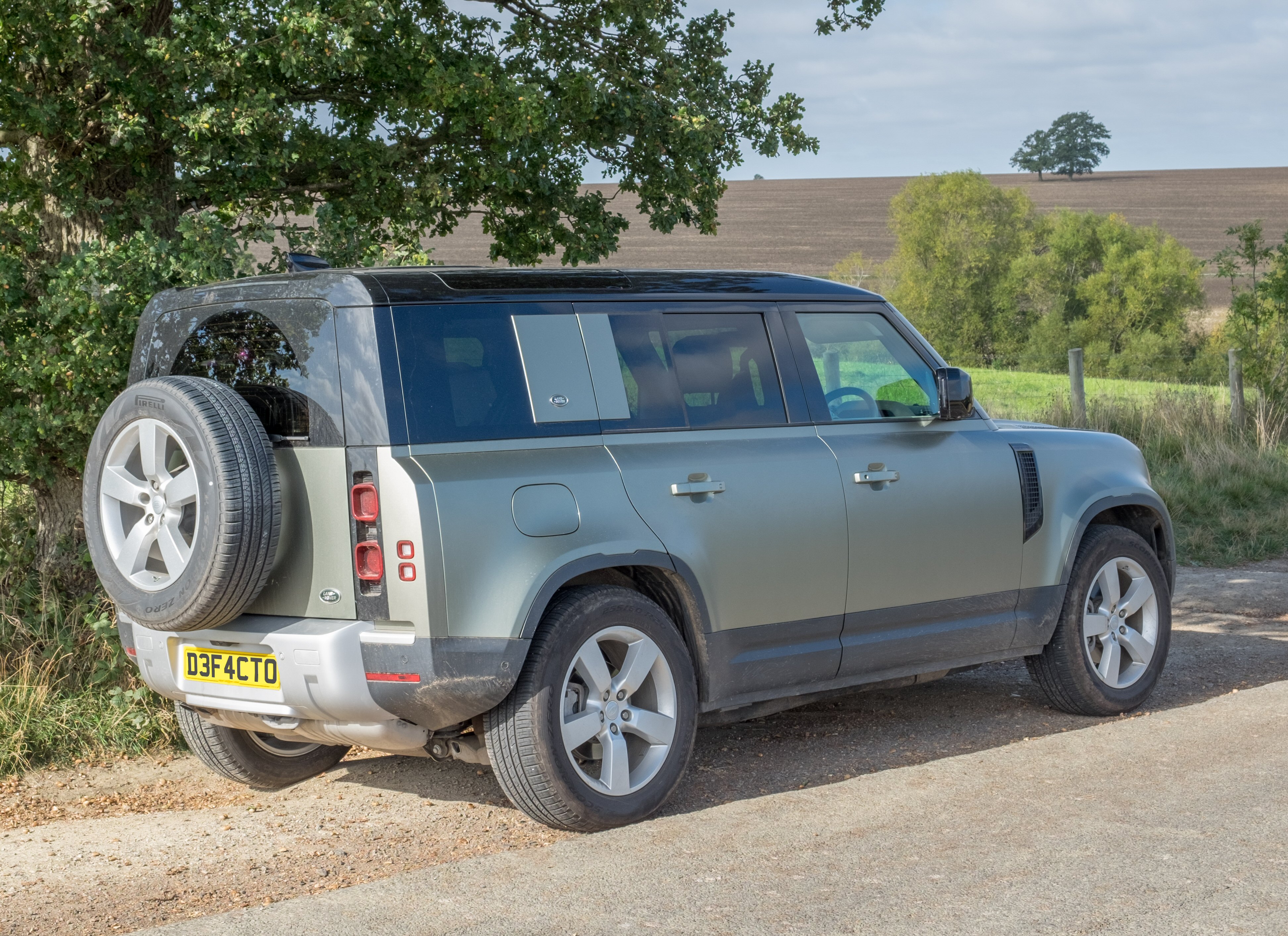
"It made use of aluminium, of which there was a supply just after the Second World War. And I think it surprised them how popular it was, because it soon outpaced their car production and became a model that they would continue with."
The Land Rover is a tough car made for driving on rough terrain, like farms or off-road trails. It's known for being very reliable and capable in tough conditions.
The Land Rover is a series of four-wheel drive vehicles produced by Rover, originally designed for agricultural and off-road use. It became popular for its ruggedness and versatility.
"...because just from the Wallsley that you were talking about to HUE, we've walked past a Model T Ford..."
The Model T Ford is one of the first cars that was made for regular people to buy. It was very popular and helped many families own a car for the first time.
The Model T Ford, produced from 1908 to 1927, was the first affordable automobile and is credited with putting America on wheels. Its mass production revolutionized the automotive industry.
"...a Fox old 3098, the first MG. Is it the first MG or not quite? So not the first one, but..."
MG is a brand that makes sports cars, which are fun to drive and often have a stylish design. They have been around for a long time and are known for being sporty and affordable.
MG is a British automotive marque known for its sports cars and was founded in the 1920s. The brand has a rich history and is associated with affordable sports cars.
"...Road Rover, for example, which was the kind of first thought about it would eventually become a Range Rover, but very different thing..."
The Range Rover is a fancy SUV made by Land Rover. It's known for being good off-road and having a lot of luxury features inside.
The Range Rover is a luxury SUV produced by Land Rover, known for its off-road capability and upscale features. It has evolved over the years from a utilitarian vehicle to a high-end luxury model.
"...first thought about it would eventually become a Range Rover, but very different thing, but a slightly more ro..."
The Range Rover is a fancy, high-end SUV that can drive well on rough roads and is very comfortable inside. It's like a mix of a tough vehicle for outdoor adventures and a luxury car for city driving.
The Land Rover Range Rover is a luxury SUV known for its off-road capabilities and premium features. It has become an iconic vehicle that blends ruggedness with sophistication, making it a popular choice among those who seek adventure without sacrificing comfort.
"...the part of the Vauxhall collection, which we look after, Vauxhall's heritage collection, is the Wayne Cherry Era SRV..."
The Vauxhall SRV is a unique car from the 1970s that was designed but never made for regular sale. It has a very unusual look, which makes it stand out in car history.
The Vauxhall SRV is a concept car from the 1970s designed by Wayne Cherry, known for its unique and unconventional styling. It was never mass-produced but remains a notable part of Vauxhall's design history.
"...there's a lot of thought given to the aerodynamics. And if you open up the door, there's all kinds of gauges to do with airflow..."
Aerodynamics is about how air flows around cars. Good design can help cars go faster and use less fuel.
Aerodynamics refers to the way air moves around objects, particularly vehicles. In automotive design, good aerodynamics can enhance performance, fuel efficiency, and stability.
"which is a kind of convertible version of a P4, was powered by a Rover gas turbine engine in 1950. So essentially it was the world's first gas turbine powered car, so it won a lot of awards."
A gas turbine engine is a type of engine that works by burning fuel to create hot gases, which then spin a turbine to produce power. It's different from regular car engines that use pistons to create power.
A gas turbine engine is a type of internal combustion engine that converts natural gas or other liquid fuels into mechanical energy. It is commonly used in aircraft and some specialized vehicles, providing high power output and efficiency.
"Yeah. The famous Rover BRM racing car. This race twice, am I right? That's right. This is the gas turbine that probably everybody knows. This is the Rover BRM, which raced at Le Mans in 1963 and 1965."
The Rover BRM is a special racing car that used a different type of engine called a gas turbine. It raced in a famous car race called Le Mans in the 1960s.
The Rover BRM was a unique racing car that utilized a gas turbine engine, competing in the prestigious Le Mans race in the early 1960s. Its innovative design and technology made it a notable entry in motorsport history.
"...am Towns, who built things like the Aston Martin Lagonda and lots of well-known car designs. But originall..."
The Lagonda is a fancy car that looks very different from most cars because of its unique design. It's known for being luxurious and has some cool technology features.
The Aston Martin Lagonda is a luxury saloon car known for its futuristic design and advanced technology for its time. It represents a unique blend of British craftsmanship and innovation, making it a rare and collectible vehicle.
"Is it got like a lot of turbo lag? If you imagine the worst turbo lag and then expand that quite a lot, that's what it's like."
Turbo lag is the wait time you feel when you press the gas pedal before the car speeds up. It happens because the turbocharger needs a moment to start working and give extra power.
Turbo lag refers to the delay between pressing the accelerator and the turbocharger delivering increased power. This occurs because the turbo needs time to spool up and generate boost, which can affect throttle response.
"about, but there are lots of everyday cars here. And what we find with visitors is they'll spend some time looking at, I don't know, C-type Jaguar or RS 2004, whatever their real fancy desire car, Aston Martin DB5, they spend more time with things that mean things to them personally."
The C-Type is a classic racing car from Jaguar that was built to be fast and stylish. It's famous for winning races and is loved by car collectors.
The Jaguar C-Type is a classic sports car that was designed for racing in the 1950s. It is celebrated for its aerodynamic design and success in competitions, making it an important part of automotive history.
"...atever their real fancy desire car, Aston Martin DB5, they spend more time with things that mean thing..."
The DB5 is a stylish and fast car that became famous because it was used by James Bond in movies. It's a classic car that many people dream of owning because of its beauty and history.
The Aston Martin DB5 is a classic British sports car, famously associated with the James Bond film franchise. Known for its elegant design and powerful performance, it represents a blend of luxury and speed, making it a highly coveted collector's item.
"...drive. And so we're just standing next to a Ford Anglia. It's actually a 1-2-3E, not a 105E, so it's the ..."
The Ford Anglia is a small, old-fashioned car that many people in the UK used to drive. It's known for its unique look and became famous in the Harry Potter movies.
The Ford Anglia is a classic compact car produced in the 1950s and 1960s, known for its distinctive design and popularity in the UK. It gained additional fame as the car used by Harry Potter's family in the films, making it a nostalgic symbol for many.
"...thing really if you look at what goes on in that MGB for instance it's not a million miles away from a..."
The MGB is a small, fun sports car that people loved to drive in the 1960s. It's not too expensive, and many car lovers enjoy restoring and taking care of these classic cars.
The MG MGB is a classic British sports car that gained popularity in the 1960s for its affordable price and sporty design. It is known for its fun driving experience and has a strong following among classic car enthusiasts.
"...ys you said to some manufacturer you know the the Audi A3 is all very well mate but could you possibly jus..."
The Audi A3 is a small, fancy car that is comfortable to drive and has a nice interior. It's a good choice if you want something that looks good and works well for everyday use.
The Audi A3 is a compact luxury car that combines performance with practicality. It is known for its high-quality interior, advanced technology, and efficient engines, making it a popular choice among those seeking a premium small car.
Select text to request an explanation
Hello, welcome to the AutoCard podcast, brought to you in association with Anderson EV, makers
of top quality home chargers. Anderson-ev.com for more details. Morning, Steve.
Morning mate, how are you?
Very well mate, tell me where we are and why?
Well, here we are in the British Motor Museum, in the boardroom thereof,
in the company of Stephen Lang, who's the head of collections here, so main man in effect,
apart from the CEO of course. And we're here on the occasion of AutoCard's 130th anniversary,
aren't we? It's official 130th birthday is 2nd of November, but I think this is going to go out
on the 5th or something, am I right? Yes, yes, that's my understanding. So yes, Stephen, welcome
to the podcast. Thanks for having us. It's AutoCard's 130th. There's something else to say
about this week, what's happening with the AutoCard physical organ?
First of all, welcome to the British Motor Museum. I know it's a favourite haunt of yours,
so I'm glad to see you back. And for us, AutoCard's so relevant because our collection charts the
motor industry and the motor car, and alongside it, AutoCard's done exactly the same thing. So
it's two stories in parallel and a lot of overlapping. So it's very much the story of
the motor industry, like we like to talk about here. And we're delighted that the archive here
will become the official home of AutoCard's paper archive. So I know your listeners love
delving through the digital archive, but we will be home of the paper copies from now.
As long as they continue to be produced, which I hope they do because I love
reading a theme rather than watching it on a screen. Yeah, there's still something special
about the paper, isn't there? Especially the old ones. We've just been looking at a few of them and
we're going to look at some more in a minute. And yeah, they're great to hold in your hands,
aren't they? Yeah, and they're slightly distracting as well because you go online and you're kind of
looking for a specific thing, although sometimes you can go down a rabbit hole. But when you kind
of feel the magazine and turn the next page over, there's something else there, or there's an advert
or an illustration and that gets you interested in something else. So they're very of their period
inserted texture really, I guess. No doubt. Yeah. And we are, well, we've just had a quick,
because we can't help it every time we come here, we get sort of distracted by some exhibits.
We're going to have a look around some and chat to you about some of the significant ones
in a moment, but it's quite the place here, isn't it? I love it. I've been here quite a few years
and there's still something new for me. We have around about 400 cars here from all different
areas of Britain's motor industry, all fascinating in their different ways, whether they're
worn-offs or something you'll see in the street. And behind that, we've got this amazing archive,
which has been talking about where the auto car archive is going to live,
which is the history that goes behind it in papers and pictures and film. So it's fascinating for me
every day I walk to work. I didn't know, because I've been around the museum a lot,
I've never been in the archive room before. And when you just opened the door, I had a bit,
one of those sort of, well, you know, moments that sort of rated the lost archive for a moment.
The old vanishing point, yeah. Yeah, just a big long corridor of stuff,
like, wow, goodness me, there's a lot, there's a lot in here. That's a moment that always gives me
some amusement, because everybody kind of has an idea about the museum. I'm not sure they
necessarily have an idea of the scale of what we've got until they walk into the door.
But I think people have no idea of what's in an archive, certainly one of the scale of ours.
So I love the wow moment that people have, just like you've done when they walk through the door.
Stephen, you've been here a good long while, you didn't expect to be here this long. Just tell
us the story of your involvement with this place, will you? I'm not sure I expected to be here at
all, Steve. By background, I'm a material scientist. And just before I joined, I was doing
research at Imperial College down in London. And I kind of fancied to change, really, and
to get out of London. So I cast about thinking, well, what kind of things do I like? Well,
I quite like museums and archives. I wonder what a career in one of those would be like.
So I wrote to a few museums, including here, and said, how do you get into it and what does it
involve? Can you give me any tips and that kind of thing. And really fortunately, the curator
at the time here said, well, we're pretty new, because it was about 11, 12 months after the
museum had opened here at Gayden. Come along, I can give you some work for a short amount of time.
And the kind of stars aligned, really. And I decided, well, let's let's take that opportunity.
So I first came here just helping out with curatorial things and collection things. And then
after a few months have turned into a few more months, the curator decided she would like to go
on to pastures new. So I was at the right place and the right time and was able to kind of carry on.
It's a really different place now. It's the same building, but it's a really different place in
terms of what's in our collections and how it looks. Well, you've expanded it deliberately,
haven't you, to encompass as many British marks as possible? Yes. Originally, when the museum was
first opened, it was fairly much a collection to do with Rover Group and British Leyland. That's
where our collection started out in the 1970s. You might like to say a lot of things about Beale,
but one fortunate thing was that somebody had the idea that they should keep all of their corporate
history. So we're very lucky because other big companies haven't done the same thing. So that's
the basis of our car collection. Since then, the whole motor industry is very different and we
wanted to live up to our name. And now we're the British Motor Museum and really make sure we
represent lots of different marks. Yeah, lots of forwards, lots of voxels. Yeah, and other things
that have come in more recently. You will see some lotuses in a little while. We've got some
Roots Group cars that we didn't use to have and some of the smaller manufacturers, the Caterons,
the TVRs. So we've really in the past few years made it our mission to fill in the gaps. Of course,
if something from the Beale sphere comes along that we haven't got that we think we should have,
that still gets its place in the museum. Places are always short, of course. We've got 400 or so
cars here and slightly bursting at the scene. But that's, you know, it's a big industry and
there's lots to say and lots of people are interested in lots of things. So how did it
start? How did the museum come about? Well, it goes back about 50 years. Actually, the original
exercise was an auditing one. British Leyland had got a lot of old cars and heritage stuff around
all its businesses and somebody was sent out to find them all. So the very first makings of the
collection were way back in 1974 or 1975. And over that time it grew and eventually we had our own
museum in London and now this fabulous place in Gayden. And today, of course, it's very different.
It's not just the British Leyland marks. It's actually all of the motor industry. We've begun
to acquire all sorts of different marks to make us live up to our name, British Way to Museum,
I guess. And also our collection is now in the Charitable Trust. So we are an independent museum
that has to make its own way. So whether you support us by visiting or joining us online,
adopting one of our cars, or even coming to a conference here, you're all helping to support
the trust that looks after Britain's motoring heritage. You were in London first?
Yeah. So we had a museum down in Sion Park in the 1990s, which was the London Transport Museum
before it moved, wasn't it? And then it was taken over by, was the Fairly New Trust by then,
and we lived there for a few years before moving here to Gayden.
And this building that we're in now, so there's two big buildings here. This one was built first,
I guess the one we're in, the big round... So the original museum building, the main museum
building was opened in 1993 with support from Rove Group at the time. So they invested quite a
lot to set it up with the trust at the time. And the second building we built about 10 years ago,
mainly because we had lots of cars in storage and we wanted to group them all together. But in
that process we thought, well, let's let people look at what we do behind the scenes, if you like.
So we also have our workshop there now, so you can see my team working on the collection every
day, all sorts of... It might be one day, something that's 1900 and something that's
2016, the next day. And you've got the first Morris mine, haven't you? Yeah, the rest is history.
Yeah, and that's got a fascinating story too. I really love the story about that car.
Yeah, it went off when it got returned to you just after many years. Yeah, so when the millionth
miner was launched, the lilac ones for those who are aficionados of Morris miners, Morris ran a
competition to find the oldest Morris miner and a chap wrote in and said, oh, I've got this really
old Morris miner. When it arrives and we've got pictures of it, looked a bit of a wreck really,
it turned out to be the very first one. So it was an amazing coincidence. So he got a new
Morris miner million and the company got the first Morris miner, which is a proud part of our
collection today. Fantastic. And again, you asked me, why have I loved this collection for so long?
Well, those are the little stories that are always fascinating. Yeah. All right, well, how about we
go and look at some stuff? Yeah, let's do it. Super. So Stephen, here we are at the entrance to
the BMM. Well, two things. Picture of the founder, Peter Mitchell, who deserves all of our admiration,
doesn't he? Absolutely. The building we're standing in opened in 1993 and it was Peter's vision.
We'd had a museum before that, but it wasn't as grand as this or able to accommodate the
amazing collection we've got. So Peter, still a patron of ours, was very much the vision between
the old Dusty Museum and the fantastic bright, architecturally amazing place we've got there.
And they're rather, also rather fittingly by a bicycle, which is, I suppose, where cars came
from in a sense. Absolutely. I think it's fascinating to see how, in particular places like Coventry,
which had a strong manufacturing industry in the bicycle, spawned the companies that would make
motor cars. So we're standing in front of a rover safety cycle. And in the 1880s,
Rover were the first company really to make the, what's called the safety cycle. So the cycle we
know today with two wheels the same size rather than the kind of penny farthing design into a
successful model. And in fact, Rover were one of the world's leading manufacturers of all kinds of
cycles. Their Thoraners had made machines for people like Queen Victoria a few years later
than this machine, which is 1886. They won all sorts of titles in the 1908 Olympics at London on
racing cycles. And that, of course, that curiosity for the cycle made them curious about their
motor car when that. Now there's something in this entrance that you particularly wanted to see.
What was that? Well, this is, this means something to, well, lots of things mean something to me
because I've driven them, but we're just around the period of the London to Brighton run, the
veteran car run, which is really an international motoring institution. And this car in front of
us is a, is a three wheeler is a Wallsley tricycle built in 1896 designed by Herbert Austin, who
designed the first Wallsley cars. And it's a little single cylinder thing with a few horsepower.
And we were just talking about Peter Mitchell. Peter Mitchell and I shared this car on the London
to Brighton run a few years ago when I was much lighter and fitter really. And we kind of managed
about just over 60% of the run before it had enough. So the seat's only about one and a half
bums wide. You must have been pretty squint in there. I had the job of largely facing backwards
when I wasn't driving, which is quite entertaining when you can see the rights of the modern driver's
eyes directly. But for the listener, it's got a kind of tiller steering. So there's no steering
wheel or it's got a single wheel at the front. And the gearbox, like another of his early Wallsley
cars is by tightening and loosening a belt. So that's the effectively the clutch.
And this foot and this large lever pedal on the sort of on the footrest goes all the way across.
Is that the brakes? So that's one of the brakes. So it's actually quite advanced because it's got
two brake shoes on each wheel, one of them operated by the the foot brake. And then it's also
got a handbrake that you can push as well when you're getting slightly frightened. I'm interested
to see that this is called Auto Car Number One. Our editor, Henry Sturmey, decided that cars were
going to be called auto cars. And they've come to be called motor cars or automobiles. So he was
wrong, wasn't he? But that was his his view that he christened the porcelest carriage and auto car,
didn't he? The other thing about this is because there weren't really any motor shows per se or
there were only one or two really for the pioneer motorists. This was exhibited at the National
Cycle Exhibition. So it was trying to appeal to people who were buying things like that
rover cycle over there. The other fascinating thing was Austin himself was quite adventurous
and he took this car 250 miles from the factory in Birmingham to Rill. It was a kind of test drive,
which is quite a thing. And he made it back again.
Let's just wander along here. There's one of your star exhibits I think is this Land Rover
registered HUE 166. Famous. Why famous? So there were 48 pre-production cars and this is the very
first of those pre-production Land Rovers. So this is the genesis of all the work that went from
those wacky sentistier things into what became one of the most enduring, I think, British
notary icons really. And we've got the Defenders today, which was a very much more complicated
thing, but deliberately designed for the farmer or the tradesman. But it's still quite believable,
isn't it? I mean, you see cars like this driving around all the time. It's just a series one Land
Rover. So they were right quickly, weren't they? And right up until the kind of final Defenders,
old school Defenders, more recently, visually, you could see the kind of the whole heritage of
the car and its design really. I think the other really interesting thing about the Land Rover is
that Rover designed it just to be a car that would last a few years to get them over that post
World War II period and then they could go back to making cars. So it's designed to outdo the jeep,
because the Wilkes Brothers had a jeep, so they kind of thought we can do this better.
It made use of aluminium, of which there was a supply just after the Second World War.
And I think it surprised them how popular it was, because it soon outpaced their car
production and became a model that they would continue with. I mean, this starts on the key
and you get it out quite often, don't you? Absolutely. It's very popular in the kind of
top 10 most popular cars in the museum. This is definitely it. People make a pill,
Dravidge, to come and see it. Amazing. I think the other great thing about this car is
it had a little bit of foresight by the Rover company to find it and buy it back.
So in the days when these things were made, they were saleable things and this ended up
with the farmer and it spent 10 years doing what it was designed to do. It was only in the late 50s
that it was bought back when the Land Rover was around about 10 years old and restored and became
something that was important to the company. And now they use the HUE 166 on labels
all over the moderns, don't they? Absolutely. Do you know how different the
production series one was from these pre-production? There were some chassis details
and body panels and that type of thing, but largely it's pretty much close to
as the first series one cars would have been. Yeah. It's amazing to walk into this place because
just from the Wallsley that you were talking about to HUE, we've walked past a Model T Ford,
a Fox old 3098, the first MG. Is it the first MG or not quite? So not the first one, but
back to Cornwall to re-enact it is trial at Blue Hills Mine on the Land's End trial,
which was great fun. Yeah. And then opposite is a bunch of a dozen Fords that Ford has a deal
with you to supply about a cold clump of Fords and renew them every so often. Yeah. So they've
got a fantastic collection. We've got some of our own Fords, but it's great to have the benefit of
of the things that they've got kept away that people don't see very often. And we haven't mentioned
we just walked past two brand new lotuses, more about Lotus later perhaps, but that shows you
the contrast of what we do here. History doesn't stop. So what we have in the museum has to be up
to date as well as something that's from the 1880s or the 1890s. Yeah. Are you running out of room
to put new things? Yes, very much. So 10 years ago, we built another building, which is kind of more
of our storage building where our workshops are with some expansion space. But of course, as we've
broadened the collection, we've got more stuff. And of course, people are interested in different
things. So we're now having to collect the things that people are interested in seeing.
Yeah. Let's go somewhere else in the museum. You can show us another favorite.
So Stephen, here we are amongst quite a big selection of prototypes you've got here,
all kinds of things, sports cars, off-roaders, concept cars of various kinds, little cars,
all kinds of things. One of the brilliant things about being a museum that's related to the motor
industry is we've had this access to the things that were designed but never made or the things
that were nearly made, but then didn't quite get there. And that's one of the unique things really
about our collection is the variety of contexts and engineering cars. And they're all fascinating
in their ways. You say what we have, and this is just a small selection,
and ranges from lots of different dates, but lots of different types. So we've got
Road Rover, for example, which was the kind of first thought about it would eventually become
a Range Rover, but very different thing, but a slightly more road-going
Land Rover project. It's pretty ugly, let's be honest. It looks like a caravan on wheels,
and they were fascinating because they gave them to employees to test out. So they really
had a number of cars and they lent them to people. And we actually had a couple of people visit in
the last couple of years whose families, or they, had them in their families, and they were people
who worked for Rover. Isn't that amazing? We have some absolutely bonkers cars. The part of the
Vauxhall collection, which we look after, Vauxhall's heritage collection, is the Wayne
Cherry Era SRV, which is, it slightly reminds me of the Pink Panther car.
But it's a silver thing. It's very wedge-shaped, very off that kind of 70s period. But it's quite
a trick car, you know. So there's a lot of thought given to the aerodynamics. And if you open up the
door, there's all kinds of gauges to do with airflow and all that kind of thing as well. So it's quite
a sophisticated thing. And yet 1970. Do they conventionally open doors? They are conventionally
opening doors, but they have a lot of stuff in the panels. Oh, it's a four-seater. Good, not great.
You can see all the kind of switches and dials. So I think it still looks futuristic,
in the way in 2025. Can you imagine 50 something years ago? It would have been
startling. And I think it shows the strength of British car design. And people say to us,
oh, what's happened to the Britain's motor industry? But this is the kind of thing we're
still brilliant at in this country, whether it's... Vauxhall design was a really big deal,
absolutely, absolutely. And then we have more quirky things, but
a real contrast is the Crompton Leyland electric car. So that's an early 1970s
idea for an electric city car built on a mini subframe. Looks quite credible, doesn't it?
But designed by Crompton for Donald Stokes, who was the boss of the company at the time,
and then they sent it to Italy to have this body made. And we've got some great pictures of it in
Italy having its body made by Michelotti and then sent back. So when people... We've got all the
discussion about the electric vehicle and that kind of thing. It's not really a new discussion.
In fact, some of the cars in the early 1900s were powered by electricity as well. So it never quite
goes away. Yeah, there was chat in the early copies of the auto car about the problem would be the
availability. There wasn't widespread availability of petrol, but there was electricity. So it was...
I remember finding in an auto car, I think it was 1912, there was a little cartoon of the car
of the future, and it was somebody filling up a car with hydrogen out of that car. How interesting.
That's interesting. Show us the jet cars. I love this place for the Rover jet cars,
which never went anywhere, but you've got a wonderful collection, haven't you?
I mean, I'm looking at four of them, aren't I? Yep. So we have pretty much all of them apart from
Jet 1, which was the very first Rover gas turbine car, which is in the Science Museum in London.
So Rover did a lot of work on jet engines during the Second World War,
and whilst Rolls Royce then took on the kind of aircraft side of that after the war,
the Rover guys with all the things that they learned about it said, could we make this into the next
form of propulsion for our passenger cars. So Jet 1, which was a total experiment,
which is a kind of convertible version of a P4, was powered by a Rover gas turbine engine in 1950.
So essentially it was the world's first gas turbine powered car, so it won a lot of awards.
See something that's not quite right? Our annotations are AI-generated and can sometimes miss the mark.
Click the flag icon on any annotation to suggest a correction.