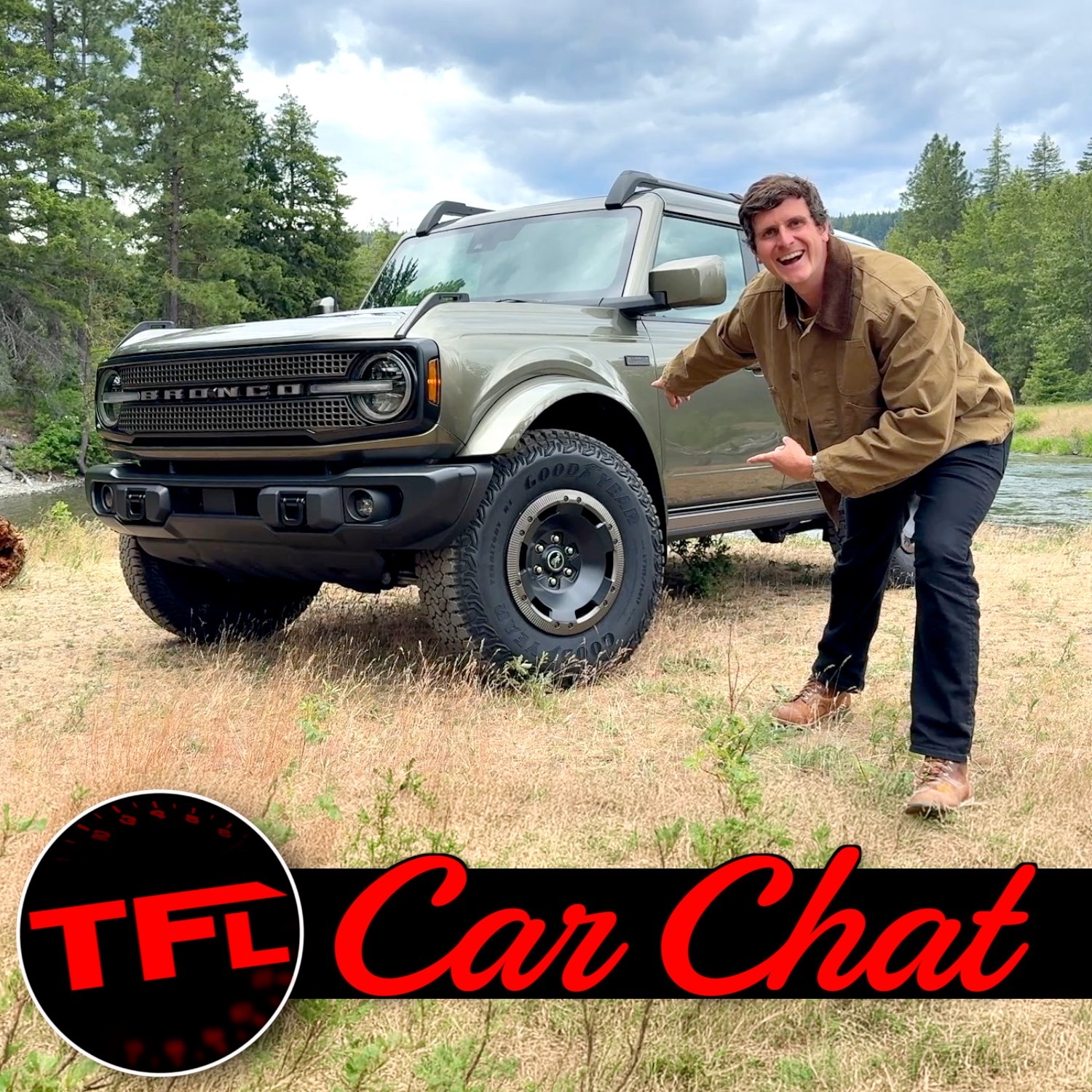
2027 Ford Bronco Filson! Is This The Ultimate Bronco + Unfortunate Car Updates! | Ep. 341
About this episode
The conversation kicks off with the “Ford Bronco Filson” special edition, explaining it’s a collaboration between Ford and Filson and then digging into the rugged-yet-premium interior, including pleated leather and covered door-card storage. They also pivot to broader Bronco updates—like “20% quieter” cabin claims—and debate how far Ford could push the platform toward luxury. Later, they get into “unfortunate car updates,” from V8/width trail-fitment talk to a long stretch of real-world repair and wiring stories.
( https://www.alltfl.com/ ) Check out our new spot to find ALL our content, from news to videos and our podcasts! In this episode of TFL Car Chat, Tommy and Kase dive into the newly unveiled 2027 Ford Bronco Filson edition, an ultra-premium, outdoorsy collaboration inspired by rugged Pacific Northwest style. Built to feel more like a high-end luxury cruiser, this version focuses heavily on premium comfort, featuring plush leather seats, durable fabric accents, and a much quieter cabin that blocks out annoying wind noise.
Switching from trail rigs to high-end speed, the hosts react to Audi's striking new supercar concept. Packing nearly 1,000 horsepower from a hybrid engine, its sharp, blocky angles look completely different from the smooth luxury styling Audi is famous for. Kase shares his firsthand experience driving Audi's latest high-performance electric car, explaining that while the dizzying acceleration is almost stomach-churning, the coolest feature is an advanced suspension system that automatically pops the car up when you open the door to make climbing in and out easy. Finally, the guys wrap up the show by laughing through their own ongoing garage disasters, venting about the absolute nightmare of fixing tangled wiring and the endless frustration of installing, removing, and rebuilding old parts on Tommy’s classic Jeep and Kase's project Land Rover.
( http://www.patreon.com/tflcar ) Visit our Patreon page to support the TFL team!
Advertising Inquiries: https://redcircle.com/brands
Privacy & Opt-Out: https://redcircle.com/privacy

Ford Bronco Filson
"So I was just in Washington for the launch of a new edition of the Ford Bronco called the Ford Bronco Filson. Now this is a collaboration between Ford and an apparel company called Filson..."
This is a special version of the Ford Bronco. Ford teamed up with Filson (a clothing brand) to make it feel more outdoorsy and rugged, not just a standard Bronco.
The Ford Bronco Filson is a special-edition Ford Bronco built around a collaboration with Filson, an outdoor apparel brand. It’s notable because it ties Bronco’s off-road identity to a rugged, heritage-style package rather than being a purely mechanical change.

Ford Explorer
"...of sense, because if you think, for example, Ford Explorer, Eddie Bauer edition, right, it's something that ..."
The Ford Explorer is a midsize SUV meant for carrying people and gear comfortably. An “Eddie Bauer” edition is a specific version of the Explorer with extra features. The episode brings it up to explain how different trims can feel different.
The Ford Explorer is a midsize SUV known for family-friendly space and a wide range of trims. The episode specifically references the Eddie Bauer edition, which is a particular trim level that typically adds comfort and convenience features. That kind of detail matters because trim choices can change what you get without changing the core vehicle.
Eddie Bauer
"Ford Explorer, Eddie Bauer edition, right, it's something that they've done in the past. Eddie Bauer is actually gone now."
Eddie Bauer is a clothing brand. The hosts are talking about how car makers have used Eddie Bauer as a special edition theme, and how that partnership has changed over time.
Eddie Bauer is a clothing brand that has been used by automakers as a trim/edition theme. The episode frames it as a past Ford collaboration (like the Eddie Bauer edition on the Ford Explorer) and notes that Eddie Bauer is “gone now,” affecting what people can buy.
Orvis
"Do you remember the Orvis edition jeeps? Yeah."
Orvis is an outdoor brand. The hosts are mentioning it as an example of car makers doing special editions with clothing/outdoor brands.
Orvis is an outdoor/lifestyle brand that has been used in the past for vehicle edition collaborations. The host brings up “Orvis edition jeeps” as an example of how these brand partnerships have existed for years.
Carhartt
"And even nowadays, Ford on the Super Duty trucks is doing their Carhartt version of it. [111.8s] Carhartt thing."
Carhartt is a brand known for durable work clothes. The hosts are using it as an example of how Ford makes truck editions that tie into popular clothing brands.
Carhartt is a workwear brand that automakers sometimes partner with for special edition trims. The host specifically mentions Ford using a Carhartt version on the Super Duty trucks, as another example of lifestyle-brand collaborations.
pleated leather
"So it's, it's got this pleated leather on the inside with this green kind of, it almost looks like tin cloth style bolstering."
Pleated leather just means leather that’s stitched or shaped with small folds. It makes the seats and panels look more detailed and upscale than plain smooth leather.
Pleated leather refers to leather upholstery that’s shaped with small folds/creases for a textured, tailored look. It’s often used to make interior trim feel more “luxury” and visually distinctive compared with flat, smooth leather.
bolstering
"So it's, it's got this pleated leather on the inside with this green kind of, it almost looks like tin cloth style bolstering."
Bolstering is the padded, shaped part of a seat that helps hold you in place. It’s usually the side areas that feel thicker so you don’t slide around as much.
Bolstering is the padded, contoured section of a seat (or sometimes door trim) that supports your body. In this case, the host describes green bolstering that visually resembles “tin cloth,” emphasizing a specific look and shape rather than just flat upholstery.
door cards
"And almost on the door cards, instead of an open pocket, it looks like a, like a leather one with a little cover."
Door cards are the inside panels of the car doors. They’re the parts you see when you open the door—often with armrests and storage.
Door cards are the interior panels on the inside of a car door, typically combining trim, armrests, and storage pockets. This segment focuses on how the Bronco Filson’s door cards use a covered leather piece instead of an open pocket.
magnet
"So there's this little like leather stitched thing with a magnet."
They’re saying that little cover is held in place with a magnet. So it stays shut neatly without needing a complicated latch.
A magnet retention feature means the covered storage/trim piece is held closed or in position by a hidden magnet. It’s a common way to keep small interior covers tidy and secure without visible latches.
glazed glass
"It has like new glazed glass, which is supposed to help with sound detaining. It's the most quiet Bronco ever, Fox shock."
They’re talking about improved window glass. Better glass can help keep road and wind noise from getting into the cabin.
“Glazed glass” here refers to upgraded window glass (often laminated or specially treated) designed to reduce cabin noise. The idea is that better glass helps block sound from getting into the vehicle.
sound detaining
"It has like new glazed glass, which is supposed to help with sound detaining. It's the most quiet Bronco ever, Fox shock."
“Sound detaining” is being used to describe sound-deadening—materials and design choices that reduce how much noise reaches the cabin. In this context, it’s tied to the Bronco’s quieter ride via insulation and glass changes.
Fox shock
"It's the most quiet Bronco ever, Fox shock. So it's, it's going to be really soft and squishy."
Fox makes performance suspension parts. If the Bronco has Fox shocks, it usually means the ride is tuned with higher-end shock absorbers to smooth out bumps.
Fox is a well-known suspension brand, and “Fox shock” means the Bronco is using Fox shock absorbers. Shocks strongly affect ride comfort and how the vehicle feels over bumps—especially when the goal is a softer, quieter ride.
ventilated seats
"And then first Bronco ever, did you know this? You couldn't get a Bronco with ventilated seats."
Ventilated seats have built-in fans that blow air through the seat. That helps keep you cooler, especially in warm weather.
Ventilated seats use fans (and often temperature control) to move air through the seat cushions. They’re a comfort feature that can be a differentiator on higher-end trims, especially in hot weather.

F-150 Raptor
"...don't think I noticed either. Even like a $90,000 Raptor didn't have ventilated seats. Bad journalists."
The Ford F-150 is a large pickup truck. The episode talks about a more expensive version and points out that it didn’t have certain comfort features like ventilated seats. It’s mentioned to show that higher price doesn’t always mean every feature you expect.
The Ford F-150 is a full-size pickup truck and one of the most popular trucks in its class. The episode mentions a high-end Raptor and notes the absence of ventilated seats, which points to how even expensive trims can vary in comfort features. That’s why the F-150 comes up—trim content and expectations matter to buyers.
defender here, you know, the luxury kind of premium thing
"So the whole thing is just supposed to be more isolated from the world and like it's very clear they're trying to go after like defender here, you know, the luxury kind of premium thing. Yeah."
They’re saying Ford is trying to make the Bronco feel more like a luxury version of an off-road SUV—more like what people expect from a Defender.
The hosts are describing a strategy of pitching the Bronco as a more “luxury” alternative to the Land Rover Defender. That means focusing on quieter cabin comfort, premium materials, and upscale features rather than only raw off-road capability.

Land Rover Range Rover
"... lot of luxury four by fours. Um, yeah, defender, Range Rover, G wagon, Lexus GX, there's, there's a lot of nic..."
The Range Rover is a luxury SUV made for comfort, with the ability to handle rough terrain too. People talk about it a lot because it’s one of the best-known high-end four-wheel-drive SUVs. It’s usually chosen for a mix of comfort and capability.
The Land Rover Range Rover is a luxury SUV that’s built around comfort, refinement, and serious off-road capability. It’s often discussed alongside other high-end luxury four-wheel-drive vehicles because it represents the “premium” end of the segment. That makes it a common reference point when talking about what luxury SUVs are supposed to do.

Land Rover Defender
"Um, yeah, defender, Range Rover, G wagon, Lexus GX, there's, there's a lot of nice four by fours out there on the market."
The Land Rover Defender is a classic, body-on-frame-style off-road SUV known for its traditional, durable engineering and strong aftermarket support. Here, it’s used as a benchmark for how luxury “outfitter” conversions can make a Defender feel more premium—especially when dressed up with leather.

G-Class G Wagon
"Um, yeah, defender, Range Rover, G wagon, Lexus GX, there's, there's a lot of nice four by fours out there on the market."
The Mercedes-Benz G-Class is a luxury SUV that’s also capable off-road. The hosts are saying the Bronco could be upgraded to feel more like that—more comfortable and premium—rather than just rugged.
The Mercedes-Benz G-Class (often called the “G wagon”) is a luxury off-road SUV famous for its boxy design and traditional mechanical layout. The hosts compare the Bronco’s potential to become more “G wagon like” by adding premium materials and insulation for a quieter, more upscale ride.

Lexus Gx
"Um, yeah, defender, Range Rover, G wagon, Lexus GX, there's, there's a lot of nice four by fours out there on the market."
The Lexus GX is a luxury SUV that’s also meant to handle rough roads. The hosts mention it as an example of a “luxury 4x4” that already exists in the market.
The Lexus GX is a luxury SUV built around off-road capability, commonly associated with a more traditional, rugged feel than many crossover-based luxury models. In this segment it’s listed as one of the luxury 4x4 options that already serves buyers who want premium comfort plus off-road credibility.
luxury outfitters for vintage four by fours
"Yeah. I think you could do a lot with it, especially if you look at the world of luxury outfitters for especially many vintage four by fours."
This is about companies that buy older rugged 4x4s and then modify them to feel more like a luxury vehicle. The hosts say people pay a lot for things like leather interiors and a more comfortable ride, and Ford could do that kind of work better.
“Luxury outfitters” refers to specialist companies that take older, rugged 4x4s and convert them into more premium, comfort-focused vehicles. In this segment, the hosts argue that customers pay for upgrades like leather and better insulation, and that Ford could engineer the Bronco platform to achieve similar results without needing a small shop conversion.
solid axle
"Ford could absolutely do a better job of engineering their Bronco into something like that than any small outfit or cam because we've driven some pretty luxurious old school solid axle defenders that were not spectacular."
A solid axle is a suspension setup where both wheels on an axle are connected by one sturdy bar. It can be great for off-road durability, but the hosts are saying some older converted Defenders still don’t feel very refined.
A solid axle is a suspension design where the left and right wheels are connected by a rigid axle beam, so they move together as a unit. The hosts mention “solid axle defenders” to argue that even with traditional hardware, some vintage conversions don’t end up feeling truly luxurious.
V8
"But a V8 powered Bronco, they're like, you know, everybody's been asking for this in [462.9s] the engine department."
A V8 is a type of engine with eight cylinders. More cylinders usually means more pulling power, which can help on hills and trails, but it can cost more to build and may use more fuel.
A V8 is an engine with eight cylinders arranged in a “V” shape. In an off-road SUV like the Bronco, a V8 typically means stronger low-end torque and more effortless power for climbing and towing, but it can also increase cost and fuel use.
Raptor engine
"I'm like, Oh hell yeah, they put the Coyote in it, but no, they put the Raptor engine [467.6s] in it"
The “Raptor engine” means the kind of powerful engine Ford uses in the Raptor off-road trucks. The host is saying this Bronco would get that same kind of punch, not a more basic V8.
The “Raptor engine” refers to the high-output V8 used in Ford’s Raptor off-road trucks. The point here is that the Bronco would get a more extreme, performance-focused powerplant than a typical Bronco, which changes how capable it feels on trails.
Coyote
"I'm like, Oh hell yeah, they put the Coyote in it, but no, they put the Raptor engine [467.6s] in it"
“Coyote” is Ford’s nickname for a specific V8 engine family. People were hoping that engine would show up in the Bronco, because it’s known for being strong and responsive.
“Coyote” is Ford’s nickname for its modular V8 engine family (commonly associated with the 5.0L V8 used in Mustangs). The host is contrasting what people expect (a Coyote V8) versus what Ford actually put in this Bronco concept.
wide bodied
"I wouldn't be mad about the extra power in a vehicle that's not wide bodied because [484.7s] looks aside"
“Wide-bodied” means the car has been made wider with flared fenders. The host is saying that being wider can be a problem on real trails, even if the engine is more powerful.
“Wide-bodied” describes a vehicle that has widened fenders/arches compared to the standard body. The host is connecting that width to fitment and trail practicality, arguing that extra power is less useful if the vehicle can’t fit where people actually drive.
trails purely for the practicality and functionality of a an off-road vehicle and of a four by four
"looks aside, which are controversial in themselves, there's a lot of trails purely for the practicality [492.3s] and functionality of a an off-road vehicle and of a four by four."
They’re talking about how off-road cars should be judged by whether they work on actual trails. Even if a vehicle is powerful, it still has to fit and be practical where people drive.
This is a discussion of how off-road vehicles are judged by real-world trail usability, not just styling or spec-sheet power. The host emphasizes that width and fitment matter as much as engine output for a four-wheel-drive vehicle.
Bronco Raptor
"The Broncos already pretty wide in Sasquatch form and a lot of our trails here in Colorado [502.4s] will just absolutely not fit a Bronco Raptor."
The Bronco Raptor is the most hardcore off-road version of the Bronco. Here they’re saying it can be too wide for some trails, even though it’s built to be capable off-road.
The Ford Bronco Raptor is the Bronco’s most extreme off-road variant, tuned for bigger obstacles and higher-speed trail driving. In this segment, the host argues that its wider stance (and related fitment) can make it impractical for many Colorado trails.
Sasquatch form
"The Broncos already pretty wide in Sasquatch form and a lot of our trails here in Colorado [502.4s] will just absolutely not fit a Bronco Raptor."
“Sasquatch” is an off-road package for the Bronco. It typically includes bigger tires and a wider setup, which is great for rough terrain but can make the vehicle harder to fit on narrow trails.
“Sasquatch” is a Bronco package/trim level focused on off-road hardware—most notably larger tires and wider stance. The host uses it to explain that even a non-Raptor Bronco can already be wide enough to struggle on tight trails.
first edition
"[556.0s] They have a cool copper color, which is going to be part of a first edition they're doing."
A “first edition” usually means an early, limited special version of a car. It often comes with a unique look or extra features—here, they’re saying the copper color is tied to that edition.
A “first edition” is a limited early production run or special launch package, usually with unique colors and/or equipment. In this segment, the copper color is described as part of that first-edition offering.
Iron Sands Copper
"It's called Iron Sands Copper, and then it's got power running boards."
Iron Sands Copper is the name of the Bronco’s paint color. It’s basically the official color name Ford uses for that specific shade.
Iron Sands Copper is a specific paint color name used on the Ford Bronco Filson edition. Color names like this are part of how limited editions are marketed and can also help you identify the exact trim/edition on a used listing.
power running boards
"It's called Iron Sands Copper, and then it's got power running boards. So like, you know, I'm glad that they kept it Sasquatch and I'm glad that they kept"
Power running boards are automatic steps on the side of the truck. They pop out to help you climb in, then tuck away when you’re driving.
Power running boards are motorized side steps that deploy when you open the door and retract when you don’t need them. On an off-road Bronco, they’re especially useful because higher ride height makes getting in and out harder.
17-inch wheels
"I'm glad that they kept it Sasquatch and I'm glad that they kept it on 17-inch wheels. So it's still going to be off road."
The wheel size affects the tire’s shape. For off-roading, a certain wheel size can help the tire handle bumps and rocks better.
Wheel size matters for off-road driving because it affects tire sidewall height and how the tire can absorb impacts. The host points out that staying with 17-inch wheels helps preserve the Bronco’s off-road character.
22s
"Yeah. There's no 22s on it. And it's cool that it still has front and rear lockers."
“22s” means very large wheels. The host is saying this Bronco isn’t going to be fitted with big, flashy wheels that can make off-roading less ideal.
“22s” refers to 22-inch wheels, which are typically associated with a more street-focused look. The host contrasts them with the Bronco’s off-road wheel choice, implying that larger wheels can reduce tire sidewall and off-road compliance.
front and rear lockers
"And it's cool that it still has front and rear lockers. So this will go anywhere that a, in theory, a normal Sasquatch Bronco will go, minus maybe"
Lockers are traction helpers that keep the wheels from spinning uselessly when they’re on slippery ground. Front and rear lockers mean the truck can get grip in more situations.
Lockers are off-road differentials that can force both wheels on an axle to rotate together, improving traction when one wheel loses grip. Having both front and rear lockers is a big deal for a Bronco because it helps it crawl through difficult terrain.
Philsen
"One of the things that I'm a little bit confused about is, so I had never heard, not that I know everything. Obviously, I'm such a style magnet here, but I'd never heard of Philsen."
Philsen sounds like a brand that’s involved with this special Bronco edition. The host is basically saying not many people seem to know it.
Philsen appears to be the name of a brand or partner being discussed in relation to the Bronco Filson edition. The host is surprised listeners haven’t heard of it, and questions whether a bigger brand partnership would have made more sense.
Pendleton blankets
"Oh, I've heard these blankets are legendary. Yeah, the Pendleton blankets."
Pendleton is a well-known outdoor clothing and blanket brand. Here they’re saying the blankets are famous—part of the outdoorsy vibe of the event.
Pendleton is a heritage American textile brand best known for wool blankets and apparel. In this segment, the hosts call the “Pendleton blankets” legendary, tying the brand to the outdoorsy, lifestyle side of the collaboration.

Ford Ranger
"...ut I would bet you anything there's going to be a Ranger Philson and an F-150 Explorer Philson."
The Ford Ranger is a pickup truck, meaning it has a bed for hauling things. It’s built to be useful and capable, including on rough roads. The episode mentions it in the context of how different versions of trucks and SUVs can be compared.
The Ford Ranger is a pickup truck designed for work and off-road use, with a focus on practicality and capability. In the podcast context, it’s brought up as part of a comparison about different models and how people might “stack” performance or special editions across the lineup. That’s why it’s mentioned alongside other Ford vehicles.
Ford F150
"but I would bet you anything there's going to be a Ranger Philson and an F-150 Explorer Philson."
The F-150 is Ford’s popular full-size pickup. The host thinks they’ll put the same kind of special branding on an F-150 as well.
The Ford F-150 is Ford’s full-size pickup truck, and the host is predicting a collaboration/branding extension onto it (“F-150 Explorer Philson”). This is notable because it implies the partnership could target Ford’s most mainstream truck lineup, not just the Bronco.
horsepower
"It's 987 horsepower. [936.7s] Which is enough. [938.1s] Yeah, yeah."
Horsepower is a way to describe how strong a car’s engine is. More horsepower often helps the car go faster, but it’s not the only thing that affects acceleration.
Horsepower is a measure of engine power—how quickly the engine can do work. In practice, higher horsepower usually means the car can accelerate harder, but it doesn’t tell the whole story because weight, gearing, traction, and torque also matter.

Audi R8
"[976.9s] So do you think that, okay, do you think this thing looks better [979.9s] than an Audi R8?"
The Audi R8 is a famous Audi supercar with the engine mounted near the middle of the car. People compare other Audi supercars to it because it’s one of the brand’s most recognizable performance models.
The Audi R8 is Audi’s mid-engine supercar, known for its V10 (in many versions) and all-wheel-drive traction. It’s often used as a benchmark when Audi launches new high-performance cars, because it represents the brand’s “everyday supercar” formula.
hybrid system
"They're saying around 10,000 RPM with a hybrid system, two electric motors in the front, and one paired up with the gas powertrain."
A hybrid system means the car uses both a gas engine and electric motors. The electric part can help with acceleration and power delivery, while the gas engine handles the rest.
A hybrid system combines an internal-combustion engine with one or more electric motors. In this segment, the host describes a setup with electric motors working alongside the gas powertrain, which is why the car can target very high engine speeds and strong acceleration.
10,000 RPM
"They're saying around 10,000 RPM with a hybrid system, two electric motors in the front, and one paired up with the gas powertrain."
RPM is how fast the engine spins. “10,000 RPM” is very high, and it usually means the car is designed to feel more like a race engine, especially when combined with electric assist in a hybrid setup.
RPM (revolutions per minute) is how fast the engine is spinning. Mentioning “10,000 RPM” signals a high-revving supercar character, and pairing it with a hybrid system suggests the gas engine is expected to operate at very high speeds while the electric motors assist.
0-60
"Also, reasonable amount of acceleration and top speed, I think 217 miles an hour, and 0-60 in something like 2.6 seconds."
0-60 is how fast the car goes from standing still to 60 mph. Lower numbers usually mean quicker acceleration.
0-60 time is the elapsed time it takes a car to accelerate from 0 mph to 60 mph. It’s a common performance metric because it roughly captures how quickly the car can get moving in everyday driving.
boost mode
"Well, yeah. I tried not, I didn't do the boost mode, which I probably should have because we're filming,"
Boost mode is a “extra power” setting that makes the car feel faster for a short time. It can be limited by things like battery temperature or how much charge is left.
Boost mode is a vehicle setting (common on EVs and performance cars) that temporarily increases power output for quicker acceleration. It’s usually limited by battery temperature, battery state-of-charge, or traction limits, so it may not be available for long.
EV
"So accelerating hard in an EV is an experience, I think for all car people the first time,"
EV just means the car runs on electricity, not gasoline. Electric cars can feel extra punchy when you accelerate quickly.
EV stands for electric vehicle, meaning the car is powered by one or more electric motors instead of a gasoline engine. Because electric motors deliver torque instantly, hard acceleration can feel very different from gas cars.

Audi RS e-tron GT performance
"So my level of interest in putting the pedal to the metal in that Audi RS e-tron GT performance that we have here at the office, my interest in that's pretty limited... I actually think that that RS e-tron GT performance is a reasonably fun handling car."
This is a high-performance electric Audi. The host is saying it’s not only fast in a straight line—it also feels fun to drive because it grips well and steers quickly.
The Audi RS e-tron GT performance is an electric grand tourer built around a performance-focused drivetrain and chassis tuning. In this segment, the host highlights how it feels in motion—especially its handling balance and grip—rather than just straight-line speed.
low center of gravity
"Oh, yeah. Very low center of gravity, quick steering, 265 width P0s in the front, 305s in the rear."
Low center of gravity means the car’s mass is concentrated closer to the ground. That typically reduces body roll and helps the car feel more stable and responsive when you turn or change direction.
265 width P0s
"Very low center of gravity, quick steering, 265 width P0s in the front, 305s in the rear. So it's got a lot of grip."
That “265” is the tire width, measured in millimeters. Wider tires usually grip the road better, which helps the car feel planted when you drive hard.
“P0s” here refers to the tire model/series the host is using as shorthand, and the “265 width” is the tire width in millimeters. Wider tires generally provide a larger contact patch, which can increase grip—especially noticeable in a performance EV.
305s in the rear
"265 width P0s in the front, 305s in the rear. So it's got a lot of grip."
“305” is the rear tire width in millimeters. Wider rear tires can help the car stick to the road better when you’re driving aggressively.
“305s” indicates the rear tire width (305 mm). Pairing wider rear tires with a performance setup can improve traction and stability, particularly during hard acceleration or cornering.
straight line acceleration
"it's just the straight line acceleration thing in an EV. Nauseating. Can be a little nauseating."
This is how fast the car speeds up when you go straight. Electric cars can feel especially intense because they deliver power immediately.
Straight line acceleration is how quickly a car speeds up in a straight path, usually measured by feel or by 0–60/quarter-mile times. EVs often excel here due to instant torque, which can also make the experience feel intense or even uncomfortable.
suspension
"The crazy thing about that car is the suspension is apparently pretty wild. Yeah, so it does some crazy things."
Suspension is what helps the car absorb bumps and stay controlled. The host is saying this car’s suspension behaves in a surprising or dramatic way.
Suspension is the system that connects the wheels to the car’s body and controls how the car moves over bumps and during cornering. When the host says the suspension is “wild,” they’re implying it has unusual tuning or behavior that affects ride and handling.
sway bars
"Yeah. [1227.0s] And to my understanding, I think it kind of takes [1229.3s] a place of sway bars."
Sway bars (also called anti-roll bars) are components that reduce body roll by linking the left and right suspension. The host suggests the new suspension system can “take a place” of sway bars, implying it can control roll behavior electronically/actively instead of relying solely on a mechanical bar.
carbon ceramic brakes
"That plus the package that gets it massive carbon ceramic brakes is $11,000."
These are high-end brake rotors made from a special ceramic material. They’re designed to keep braking strong even when you drive hard, but they cost a lot more than normal brakes.
Carbon ceramic brakes use carbon-fiber ceramic discs instead of traditional cast-iron rotors. They can resist fade better under hard driving and often feel more consistent, but they’re expensive to buy and replace.

Porsche Taycan
"So that's probably based on the new second gen Taycan then, right? Yes."
The Porsche Taycan is an electric car made by Porsche. The episode mentions the “second gen” Taycan, meaning a newer version of the same model line. That matters because newer generations can bring changes to how the car drives and what tech it has.
The Porsche Taycan is an all-electric performance sedan from Porsche. The podcast asks whether the discussion is “based on the new second gen Taycan,” which matters because Porsche’s second-generation updates can change performance, efficiency, and technology. That’s why the Taycan is specifically tied to generation details in the conversation.
brutalist
"I would describe it as being brutalist. [1306.6s] It is striking."
“Brutalist” is a style word that usually means a design looks tough, plain, and very geometric. In this case, they’re saying the car looks more industrial than traditionally beautiful.
“Brutalist” is a design description borrowed from architecture, usually meaning bold, raw, and utilitarian-looking forms. Here it’s used to describe the new Vellari’s styling—lots of straight lines, verticals, and right angles rather than “classic” curves.
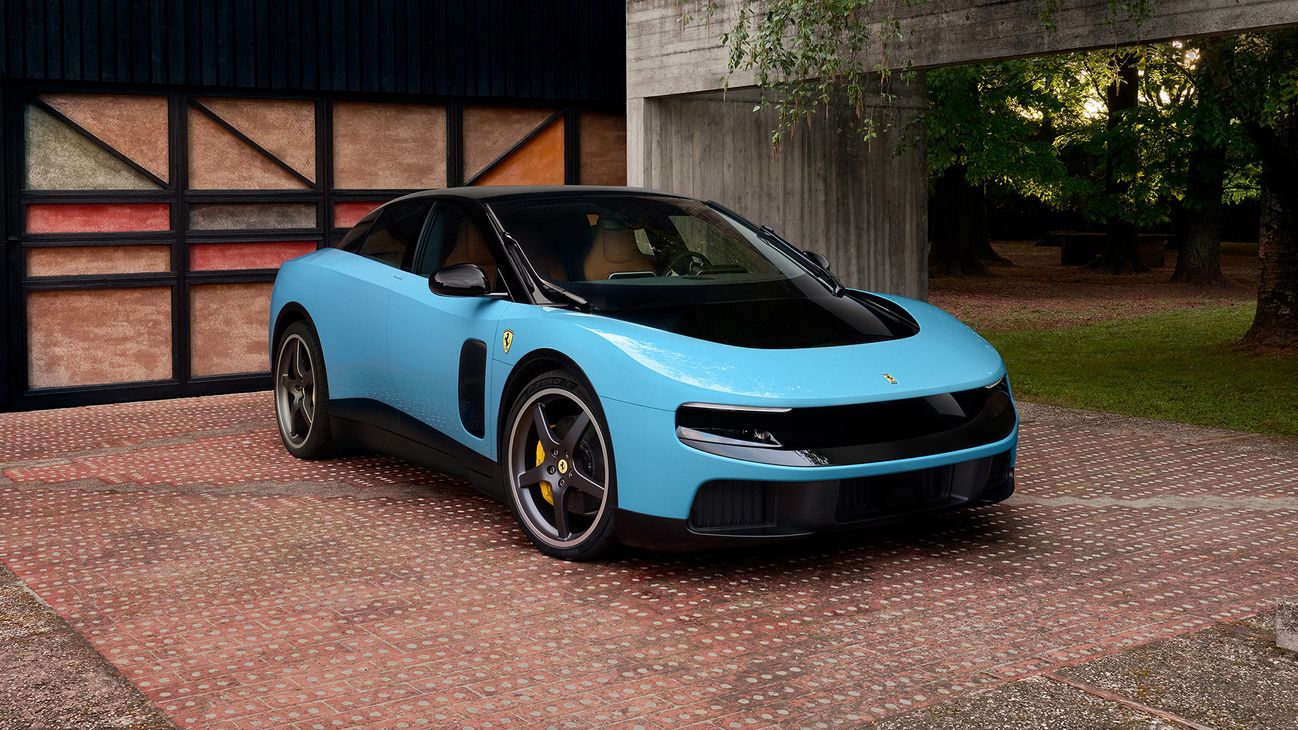
Ferrari Luce
"...better than like that. Well, it's better than the Luce. And even I think it's better than that new AMG M..."
The Ferrari Luce is mentioned in the episode as part of a comparison. It sounds like the speakers are talking about which car is “better” or “more like” something else. The episode doesn’t provide enough detail here to treat it as the main topic.
The Ferrari Luce appears in the episode as a reference point in a comparison, but the name itself is likely being used as part of a discussion about a different car’s identity or naming. Without more context, it’s best understood here as a mentioned model name rather than the main subject. That’s why it’s included briefly in the conversation.
AMG Mercedes
"Well, it's better than the Luce. [1367.1s] And even I think it's better than that new AMG Mercedes [1369.5s] four-door thing, for sure."
AMG is Mercedes-Benz’s performance brand. The host is using it as a comparison point for looks, saying the car they’re talking about looks better than that newer AMG Mercedes four-door.
AMG is Mercedes-Benz’s performance brand, known for higher-output engines and sport-tuned dynamics. The host is using “AMG Mercedes” as a styling benchmark—saying the new car’s look is better than a specific new four-door AMG Mercedes they’re referencing.

Audi Tt
"This is a much more attractive car. [1374.1s] It's got a little bit of Audi TT in it, too,"
The Audi TT is a small Audi sports car with a very recognizable look. Saying the design has “a little Audi TT in it” means it borrows some of that familiar Audi styling shape and vibe.
The Audi TT is a compact sports coupe/roadster known for its distinctive, rounded “bubble” styling and driver-focused interior. When the host says the new design has a bit of Audi TT in it, they’re pointing to that recognizable Audi design language—especially the proportions and surfacing cues.
Formula 1
"I think that this makes a lot of sense for Audi [1380.3s] to do, obviously, their involvement in Formula [1384.8s] 1, infusing some performance and some excitement back into their lineup."
Formula 1 is the highest level of professional race car driving. The hosts are saying Audi’s racing involvement can make its regular cars feel more exciting.
Formula 1 is the top tier of international open-wheel racing, and it’s often used by car brands as a technology and marketing platform. Here, the hosts suggest Audi’s involvement in Formula 1 helps “infuse” excitement back into its lineup.

Audi e-tron
"And we were just talking about that e-tron. [1395.3s] And that's obviously a very fast car."
The Audi e-tron is Audi’s electric SUV. The hosts mention it because it’s an example of an Audi that feels quick, not just serious or conservative.
The Audi e-tron is Audi’s early all-electric SUV line, known for bringing a more performance-oriented EV feel to the brand. In this segment, it’s used as an example of an Audi that’s “very fast,” even if other models feel more buttoned-down.
LED light signatures
"And they had the first cars I remember seeing with the actual LED light signatures, which was super cool."
An LED light signature is the unique “shape” of a car’s lights—like the pattern you see in the headlights or taillights. The hosts say Audi was early in using these recognizable LED patterns.
An LED light signature is a distinctive arrangement of LED lights (often for headlights/taillights) designed to be recognizable at a glance. The hosts call out Audi as having early examples of these “signatures,” which helped the cars look more modern and styled.

first-gen A5
"So that whole generation, first-gen R8, first-gen A5 and S5. [1445.0s] Q7."
The Audi A5 is a compact luxury coupe/fastback line, and “first-gen” here refers to the original generation of that model family. The hosts group it with other early Audi performance/design hits to describe a period when the brand felt more youthful.

Audi S5
"So that whole generation, first-gen R8, first-gen A5 and S5. [1445.0s] Q7."
The Audi S5 is the sport version of the A5. “First-gen S5” means the earliest generation, and the hosts use it as part of a lineup that felt more exciting in the 2000s.
The Audi S5 is the sportier, higher-performance variant within the A5 family. By calling out the “first-gen S5,” the hosts are pointing to an earlier era when Audi’s lineup felt more energetic and less purely conservative.
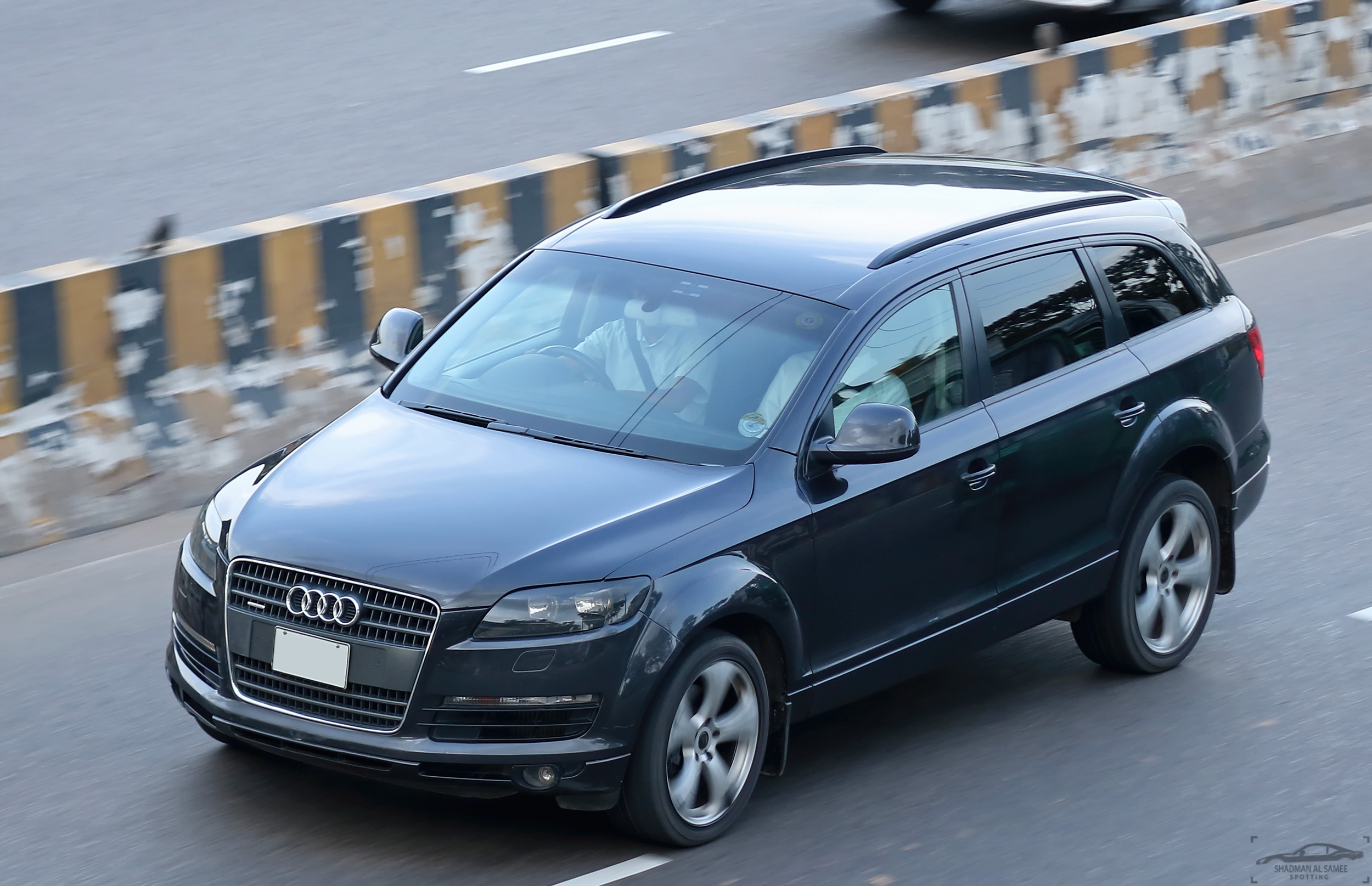
Q7
"So that whole generation, first-gen R8, first-gen A5 and S5. [1445.0s] Q7."
The Audi Q7 is Audi’s larger luxury SUV. The hosts mention it alongside other early Audi models to say the brand felt more characterful back then.
The Audi Q7 is Audi’s midsize luxury SUV, and it’s mentioned here as part of the same early lineup the hosts associate with distinctive styling. In this context, it supports their point that Audi’s “soul” showed up across multiple body styles.

Tesla Cybertruck
"...om slash TFLCar. Chris says the Audi looks like a Cybertruck had a baby with a roadster."
The Tesla Cybertruck is an electric pickup truck. It’s known for its unusual, sharp-edged look. In the episode, it’s used as a reference for how another car’s design resembles it.
The Tesla Cybertruck is an electric pickup truck with a distinctive angular design and a focus on modern EV performance. The episode references it as a visual comparison point, saying another car looks like a Cybertruck had a baby with a roadster. That kind of comment usually comes up because the Cybertruck’s shape is instantly recognizable.

Land Rover Discoveries
"So Casey and I both own Land Rover Discoveries that we both haven't driven in about a year."
The Land Rover Discovery is a big SUV that’s built to handle rough roads and still work for everyday life. Here, the hosts are talking about their Discoveries and how they try not to drive them much.
Land Rover Discovery is a full-size SUV known for its off-road ability and family-friendly practicality. In this segment, the hosts mention owning multiple Discoveries and trying to keep mileage low, which hints at how enthusiast-owned these can be.
LS swapping
"So Casey's LS swapping his Land Rover, it's going brilliantly and it's almost done."
An “LS swap” is when someone replaces the original engine with a GM LS V8 engine. People do it because the LS engines are popular, have lots of parts available, and can make the car feel much stronger.
“LS swapping” means replacing a car’s original engine with a GM LS-series V8 (commonly from cars like the Chevrolet Camaro/Corvette). It’s popular because the LS engines are compact, powerful, and have strong aftermarket support, but the swap often requires matching electronics, cooling, and drivetrain components.
transmission
"Well, the LS has swapped and it's great. Even at this point, the transmission is great."
The transmission is the gearbox that helps the engine send power to the wheels. In an engine swap, it has to work correctly with the new engine so the car can drive properly.
In this context, “transmission” refers to the gearbox that connects the engine to the drivetrain. When doing an LS swap, the transmission often has to be compatible with the LS engine’s power delivery and the rest of the 4WD system.
transfer case
"Even at this point, the transmission is great. So naturally now the transfer case is. So it's just one thing at a time."
A transfer case is part of a 4-wheel-drive system that sends power to both the front and rear wheels. If you change the engine or transmission, you may need to adjust or work on the transfer case so everything still works together.
A transfer case is the gearbox in a four-wheel-drive vehicle that splits power between the front and rear axles. During an engine swap, the transfer case may need to be addressed to ensure the drivetrain ratios and connections work correctly with the new engine and transmission.
four wheel drive
"if you wanted a four wheel drive SUV with an LS, why didn't you just buy a Tahoe?"
Four wheel drive means the car can send power to all four wheels. That helps it grip better on slippery or rough ground like snow, mud, or gravel.
Four wheel drive (4WD) is a drivetrain setup where power is sent to all four wheels, improving traction on loose surfaces like dirt, snow, and mud. It’s commonly discussed for SUVs because it changes how the vehicle behaves off-road and in low-grip conditions.
LS
"if you wanted a four wheel drive SUV with an LS, why didn't you just buy a Tahoe?"
“LS” is a type of GM V8 engine that a lot of people use for engine swaps. It’s popular because it’s relatively easy to work with and there are lots of parts and guides for it.
“LS” refers to General Motors’ LS-series V8 engine family, which became popular for swaps because it’s compact, modern, and has strong aftermarket support. In the context of an SUV build, it usually means the vehicle has been modified to use an LS engine rather than its original powerplant.

Chevrolet Tahoe
"...l drive SUV with an LS, why didn't you just buy a Tahoe? Which kind of misses the point."
The Chevrolet Tahoe is a large SUV made to carry lots of people and handle bigger tasks like towing. The episode brings it up as a simple, practical option if you want a big SUV. It’s mentioned to highlight what the “point” of a different vehicle might be.
The Chevrolet Tahoe is a full-size SUV that’s built for space, towing, and family hauling. In the podcast, it’s mentioned as a “why didn’t you just buy a Tahoe?” kind of point, implying that the Tahoe is the straightforward choice when you want a large SUV with a traditional approach. It comes up because it represents a common, practical alternative.
Land Rover Discovery One
"But I bring it up because our friend Joe, who runs a YouTube channel called Lost Cause Ranch, he was the one that did my head gaskets on my Discovery One."
A Land Rover Discovery One is an older Land Rover SUV that people often keep for years and work on themselves. “Head gaskets” are an important engine part, and when they fail it usually means the engine needs repair.
Land Rover Discovery One is the first-generation Discovery SUV, known for its off-road capability and a fairly DIY-friendly reputation compared with many modern vehicles. It’s also a popular platform for long-term ownership projects, which is why “head gaskets” come up in enthusiast circles.
head gaskets
"he was the one that did my head gaskets on my Discovery One."
The head gasket is a seal inside the engine that keeps fluids and combustion gases in the right places. If it breaks, the engine can start mixing coolant/oil or overheat, and it usually requires a serious repair.
Head gaskets are the sealing layer between an engine’s cylinder head and the engine block. If they fail, you can get problems like coolant mixing with oil or combustion gases leaking, which often leads to overheating and major engine work.
cooling system
"[1718.2s] So in terms of refining the cooling system [1721.3s] and plenty of other things in the swap, [1725.4s] he actually knows what to do."
The cooling system is what keeps the engine from getting too hot. If you swap in a different engine, you may need to adjust the cooling setup so it runs at the proper temperature.
A cooling system is the set of components that keeps an engine at the right temperature by moving coolant through the engine and radiator. When doing an LS swap, the cooling system often needs reworking so the new engine doesn’t overheat under load.
flat fender Jeep
"we stuck an engine and a transmission transfer case in your flat fender Jeep. That's right."
A flat fender Jeep is an older Jeep style with distinctive, boxy fenders. They’re describing rebuilding it with the main drivetrain parts so it can actually drive and go off-road.
A “flat fender Jeep” refers to classic Jeep models with the early, squared-off fender design that’s strongly associated with vintage off-road culture. In this segment, the host says they installed an engine, a transmission, and a transfer case into it—turning it into a functional off-road vehicle rather than a static project.
Willy C.J. 2A
"So like about 150 years ago, I bought this green Willy C.J. 2A and..."
The Willys CJ-2A is an old Jeep model that’s famous for being tough and simple. Here, they’re talking about buying one and using it off-road as a hands-on project.
The Willys CJ-2A is a classic early Jeep model (Willys) that became a foundational name in civilian off-roading. The host describes buying it and then taking it off-road, which fits the CJ-2A’s reputation as a simple, rugged platform for learning and wrenching.
plug and play wiring harness
"So I bought like this plug and play wiring harness. I'm trying to find a good picture of it. And the story with the plug and play wiring harness is like it's all pre-labeled"
It’s a wiring kit that’s made to be easier to install. The wires are usually labeled and meant to connect with fewer custom cuts and splices.
A plug-and-play wiring harness is an aftermarket wiring kit designed to connect to the vehicle with minimal splicing. It typically comes pre-labeled so you can route wires to the right circuits and reduce troubleshooting time.
fuse box
"it's all pre-labeled and there's a little fuse box. So the way Jeep had developed the Willys was to catch fire."
A fuse box is where the car’s fuses live. Fuses are safety devices that break the circuit if something electrical is drawing too much power.
A fuse box is the centralized location where fuses are housed to protect electrical circuits. If a circuit draws too much current, the fuse blows to prevent wiring damage or electrical fires.

Jeep Willys
"...ittle fuse box. So the way Jeep had developed the Willys was to catch fire. So there are very few fuses in..."
The Jeep Wrangler is an off-road SUV that’s built for rough terrain. The episode talks about a design detail related to the vehicle’s electrical system and fuses. That kind of detail matters because it can affect how dependable the car is.
The Jeep Wrangler is a rugged off-road SUV known for its removable top and doors on many versions and its strong trail heritage. The episode mentions a “Willys” development story involving fuses, which ties into how the vehicle’s design and electrical setup can affect reliability and safety. That’s why the Wrangler comes up in a technical, systems-focused way.
fuse block
"So now I've got a fuse block and then it's just really overwhelming because you've got like 27 feet of wires that go in every direction."
Think of a fuse block as a structured “home” for multiple fuses. It helps keep the fuses organized instead of having them scattered around the wiring.
A fuse block is a mounting point or assembly that organizes multiple fuses in one place. Compared to scattering fuses around the harness, a fuse block can make wiring and diagnostics easier.
soldering
"and then when you start putting things where they need to go and then when you start soldering things together, it is a genuinely very satisfying experience."
Soldering is when you melt solder to permanently join two wires together. It can make the connection more solid, as long as it’s done correctly and covered so it won’t short.
Soldering is a method of joining wires by melting solder to create an electrical connection. In automotive wiring, it’s often used for more reliable, low-resistance joints than some quick-connect methods—when done with proper heat control and insulation.
carburetor rebuild kit
"So I bought a new old carburetor rebuild kit [2001.8s] for this little Carter carburetor [2003.6s] that was like last milled in the 80s."
A carburetor rebuild kit is a set of replacement rubber parts and small pieces you install to bring an old carburetor back to good working order. It helps stop leaks and restores the carburetor’s ability to mix fuel and air correctly.
A carburetor rebuild kit is a package of replacement parts—typically gaskets, seals, and small wear items—used to restore a carburetor’s fuel/air metering and sealing. The goal is to fix issues like leaks, poor idle, or inconsistent mixture by renewing the components that wear out or harden over time.
Carter carburetor
"So I bought a new old carburetor rebuild kit [2001.8s] for this little Carter carburetor [2003.6s] that was like last milled in the 80s."
Carter is a company that made carburetors for older cars. Here, the host is working on a Carter carburetor and worrying that the replacement parts may not seal as well after being stored for decades.
Carter is an American carburetor brand known for producing carburetors used on many older vehicles. In this context, the speaker is rebuilding a Carter carburetor and is concerned about whether the kit and seals will still perform after long storage.
new old stock
"I bought one of the last new old stock ones. [2024.2s] But the problem is, even though it's expensive [2026.5s] and I'm sure the quality of parts was high,"
New old stock means the part is “new” but it was made years or decades ago and just sat in storage. It can still be good, but rubber seals inside can age, so it might not work as perfectly as you’d expect.
New old stock (NOS) refers to parts that were manufactured long ago but never sold or installed. NOS can be desirable because it may match original-spec materials, but long storage can still degrade rubber seals and gaskets, reducing sealing performance.
gaskets are quite as sealedy
"after sitting in a box for 45 years, [2030.9s] I'm not sure the gaskets are quite as sealedy [2035.3s] as they once were."
This is about gasket sealing performance—how well the gasket compresses and forms a tight barrier to prevent fuel/air leaks. Old gaskets and seals can harden or lose elasticity after decades in storage, which can lead to seepage even if the parts are “new old stock.”
fuel pump
"because I'm gonna hook the fuel pump up to it and see where the gas is coming from."
A fuel pump is the part that sends fuel to the engine. They’re using it like a controlled test to see where the fuel is escaping.
A fuel pump supplies fuel under pressure to the fuel system so the engine can get a steady flow. Here, the host plans to hook the fuel pump up to the setup to trace where the gas is leaking from.
oil filter
"maybe my oil filter is gonna get in the way of the alternator and I gotta take it off for the 19th time."
The oil filter cleans the oil that lubricates the engine. They’re running into a tight-space issue where the oil filter is in the way of another part, so it has to come off repeatedly.
An oil filter is a replaceable component that traps contaminants in engine oil before the oil circulates through the engine. In this segment, the host is describing a packaging/clearance problem where the oil filter interferes with the alternator, forcing repeated removal and reinstallation.
alternator
"maybe my oil filter is gonna get in the way of the alternator and I gotta take it off for the 19th time."
The alternator charges the battery and powers the car’s electrical stuff while the engine is running. In this case, it’s just the part that’s getting in the way.
The alternator is the engine-driven generator that powers the vehicle’s electrical system and recharges the battery. The host mentions it as a clearance problem area—something that may require removing the oil filter to access or service it.

Chevrolet C10
"So if your wife comes to you and is like, [2128.6s] I need you to put a wiring harness in my Chevy C10. [2132.2s] I will say I know a great guy named Andy."
A Chevy C10 is a classic Chevrolet pickup truck. Here they’re discussing doing electrical work—specifically installing the wiring harness—on one of these older trucks.
A Chevrolet C10 is a classic full-size pickup line (often from the 1960s) that’s popular for restorations and upgrades. In this segment, they’re talking about installing a wiring harness in a Chevy C10, which is a common type of project on older trucks.
rat's nest
"The wiring. [2146.0s] Who's to know how that was to happen? [2147.7s] The wiring under the dash is a bit of a rat's nest."
“Rat’s nest” just means the wires are messy and tangled. When wiring looks like that, it’s harder to figure out what’s connected to what.
“Rat’s nest” is a slang term for wiring that’s tangled, poorly routed, or hard to trace—often with extra splices or non-factory modifications. They’re describing the wiring under the dash as messy, which usually makes troubleshooting and future repairs more difficult.
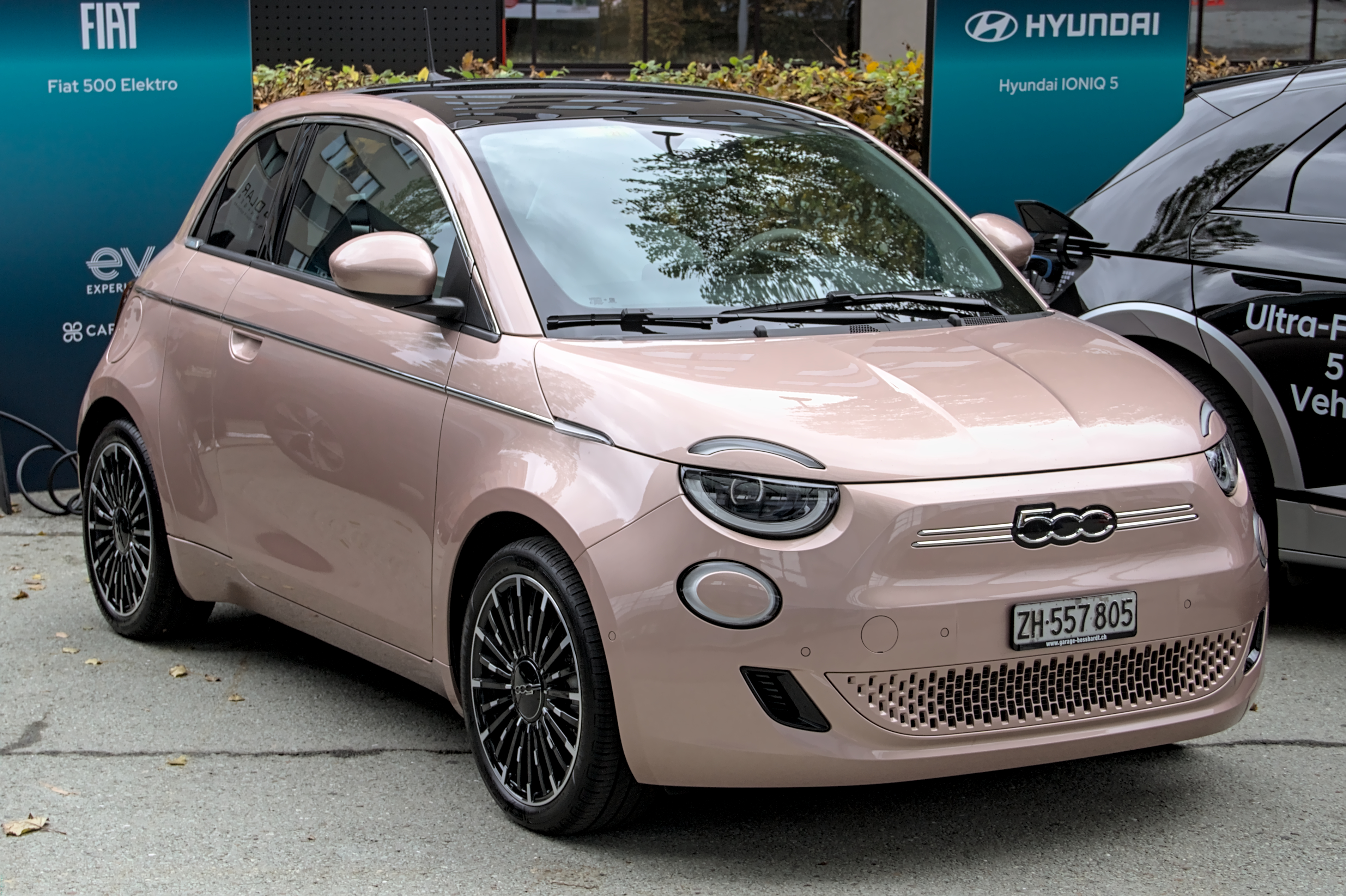
Fiat 500e
"that you'll rewire her 500E? [2190.0s] Her fiat 500E, I let him dead. [2194.0s] That is decidedly a less cinematic picture [2199.4s] that I'm picturing. [2203.4s] Tommy and like his mechanics onesie."
The Fiat 500e is the electric version of the Fiat 500. It doesn’t use a gas engine, so it has lots of electrical wiring, and the dash area can be where technicians need to reach connectors and cables.
The Fiat 500e is Fiat’s electric version of the classic 500, using a battery and electric motor instead of a gasoline engine. In this segment, they’re talking about accessing and working under the dash, which is where many EVs and modern cars route wiring and control modules.
high voltage cables
"Just nipping high voltage cables left and right. [2214.7s] But the thing I'm realizing is you got to embrace"
In an electric car, high voltage cables carry the big electrical power that runs the drivetrain. They’re not like the small wires in a normal car, and they need extra care because they can be dangerous.
High voltage cables are the insulated wiring used in electric vehicles to move power between the battery pack, inverter, and motor. They’re treated differently from normal 12V wiring because they can be dangerous if damaged or handled incorrectly.
wire nuts
"So yeah, I've seen, I've seen wire nuts under there. [2229.3s] Like, you know, if you pull a light fixture in your house [2233.5s] and there's the wire nut joining wires."
Wire nuts are twist-on electrical connectors commonly used in household wiring to join conductors. The host is comparing them to what they saw under the dash, implying the repair or splicing method may be improvised or not ideal for automotive standards.
dipstick
"So I put a good quart in it, checked, dipstick, still dry."
A dipstick is a simple tool you pull out to check how much fluid is in a car. Here, they’re using it to see if the transmission has enough fluid.
A dipstick is a removable rod used to check fluid level in a vehicle system. In this context, they’re checking transmission fluid level to see whether the transmission was filled properly.
carbureted 350
"It runs really well. Carbureted 350. It's snappy."
“Carbureted” means the engine uses a carburetor to blend fuel and air. “350” usually means a V8 engine with a displacement around 350 cubic inches.
“Carbureted” means the engine uses a carburetor to mix fuel and air before it enters the engine. A “350” typically refers to a 350 cubic-inch V8 displacement, which is commonly associated with Chevrolet small-block engines.

Toyota RAV4
"...but I'm like, if someone doesn't, if someone is a RAV4 owner of this podcast and doesn't know that smell..."
The Toyota RAV4 is a compact SUV that many people use for everyday driving. The episode mentions a particular smell that RAV4 owners might recognize. That implies there’s a common, noticeable thing people associate with it.
The Toyota RAV4 is a compact SUV that’s widely known for being practical and easy to live with. The episode references a recognizable “smell” associated with RAV4 owners, which suggests a discussion about a common issue or a distinctive trait people notice. That’s why it’s brought up—something about the RAV4 is memorable enough to be joked about.
powertrain
"All the oil that's leaked onto the outside [2417.9s] of your powertrain is getting really warm."
The powertrain is basically the car’s “power system.” It’s everything that helps the engine’s power get to the wheels. If oil leaks onto it, it can get very hot and smell like hot oil.
In car terms, the powertrain is the set of components that generate and deliver power to the wheels—typically the engine, transmission, driveshaft(s), and differential. When oil leaks onto the outside of the powertrain, it can get hot and start to smell strongly.
coolant temp
"So coolant temp is fine. [2433.3s] That's all you need."
Coolant temp is how hot the car’s cooling liquid is running. If it stays normal, it usually means the engine isn’t overheating and the cooling system is working.
Coolant temp is the temperature of the engine’s cooling fluid. It matters because the engine needs to stay in a safe operating range; if coolant temperature is stable, it usually means the cooling system is doing its job.
leaks like a sieve
"So I have a transmission to stick in that car [2471.3s] because it leaks like a sieve. [2473.0s] Right."
That phrase means the leak is really bad—like it’s pouring out. With a transmission, low fluid can cause overheating and damage.
“Leaks like a sieve” is a vivid way to describe an extremely severe fluid leak. For a transmission, heavy leaking can quickly reduce fluid level, which can lead to overheating and accelerated wear.
Request an Explanation
Heard something you'd like explained? We'll add it to this episode.
Sign in to request explanations for terms you heard.
Want to learn more?
Browse our glossary for plain-English explanations of automotive terms, jargon, and concepts.
Help improve this episode
See something that's not quite right? Our annotations are AI-generated and can sometimes miss the mark. Click the flag icon on any annotation to suggest a correction.
1 community members have helped improve this episode.