
AAH #787 - Ford's Reorg; The 2026 Arsenal of Democracy; Geely Takes Aim At Toyota
About this episode
Ford’s EV chief Doug Field’s departure sparks debate on whether Ford is fixing a risky handoff from Skunk Works to legacy operations. The panel breaks down Ford’s new end-to-end product-creation organization under COO Kumar Galhotra and what it could mean for the Universal EV platform and an upcoming mid-size electric pickup (Ranchero). They also weigh EV market uncertainty, charging/infrastructure progress, and the growing threat from Chinese automakers—plus how legacy OEMs are increasingly partnering to buy technology. The discussion widens to U.S. “arsenal of democracy” talk, where GM/Ford may be asked to support defense production, and ends with Nissan’s AI push and Jili’s hybrid/AI claims targeting Toyota.
Geely
"(Episode title context: “Geely Takes Aim At Toyota”)"
Geely is a big Chinese auto company. The episode title suggests they’re being discussed as part of the broader EV competition story.
Geely is a Chinese automotive group with major investments in EVs and partnerships worldwide. While this transcript segment doesn’t explicitly mention Geely by name, the episode title indicates Geely is a central topic, likely tied to competition with Toyota in EVs.
journalists get to see cars before the general public
"So here's something so as you as you all know, journalists get to see cars before the general public gets to see cars, right, been that way for quite a while. So on this day in nineteen sixty four, a car was shown to journalists."
This is about the media access pipeline in the auto industry: journalists typically get early access to new vehicles for reviews and coverage before public launch. That timing affects how cars are marketed, how early impressions form, and how manufacturers manage messaging.

Ford Mustang
"So on this day in nineteen sixty four, a car was shown to journalists. What car was shown to journalists? And I am convinced every single one he knows the answer to the Mustang."
The Ford Mustang is a famous Ford sports car. It became popular in the 1960s, and the hosts are talking about an early moment when journalists got to see it before most people.
The Ford Mustang is one of Ford’s most iconic nameplates, originally introduced in the mid-1960s as a sporty, mass-market pony car. In this segment, the hosts reference a specific day in 1964 when a Mustang was shown to journalists, tying the discussion to Mustang’s early publicity and launch era.
Ford Motor Company
"So here's something so as you as you all know, journalists get to see cars before the general public gets to see cars, right... So which leads us to what I believe has to be a vital topic for this afternoon. Ford Motor Company's reorganization I will call it, and Doug Field leaving the company."
Ford Motor Company is the automaker behind the Mustang and many other brands. Here, the hosts discuss Ford’s internal reorganization and leadership changes, which can affect product planning, engineering priorities, and how quickly new programs get approved.
Doug Field
"So which leads us to what I believe has to be a vital topic for this afternoon. Ford Motor Company's reorganization I will call it, and Doug Field leaving the company."
Doug Field is a senior automotive executive associated with product and engineering leadership. The segment frames his departure as significant, implying it could influence Ford’s technical direction and how major vehicle programs are managed.
company reorganization
"So which leads us to what I believe has to be a vital topic for this afternoon. Ford Motor Company's reorganization I will call it, and Doug Field leaving the company."
A company reorganization is when leadership and teams are restructured—often to change decision-making, align departments, or shift resources toward new priorities. In automaking, these moves can directly impact program timing, engineering culture, and how cross-functional teams collaborate on future vehicles.
iBOT program
"Where he was the chief engineer of the iBOT program. Now that you'll remember that was the wheelchair that they made that would elevate people so if you were in a wheelchair, you wouldn't have to look up at people to talk to them."
The iBOT was a special kind of powered wheelchair. It could raise the person up so they weren’t stuck looking up at everyone else during conversations.
The iBOT program refers to a specific wheelchair project associated with DECA Research and Development Corp. The iBOT was designed to help wheelchair users navigate and interact more easily by elevating the user so they can see and talk at a more normal eye level.

Porsche Cayman
"that they made that would elevate people so if you were in a wheelchair, you wouldn't have to look up at people to talk to them. Speaker 2: You would look at this, is that Dean Cayman's company company. Speaker 4: Okay, so then Dean Dean Cayman. Then they segued into"
The Porsche Cayman is a sports car made by Porsche. It has the engine placed toward the middle of the car, which helps with handling. It may be mentioned because the seating position and cabin shape affect how people can see and talk to each other.
The Porsche Cayman is a mid-engine sports car from Porsche, designed to feel balanced and responsive in driving. It’s the kind of car that can be discussed in terms of how it’s packaged for occupants and visibility, including how people interact with the car’s seating position. The podcast context suggests a focus on accessibility and how the cabin layout affects who you can see when talking.
Apple
"Okay, he leaves there and he goes to Apple. He was the vice president of Mac Hardware Engineering... Then from there he goes back to Ford..."
Apple is mentioned because the person worked there on product and hardware engineering roles. That kind of experience can matter for cars today because vehicles are increasingly software-and-tech driven.
Apple is mentioned in the executive’s background, including roles tied to hardware engineering and special products. In an automotive context, this kind of experience is often associated with product design discipline and software/hardware integration—relevant to modern vehicle programs.
Tesla
"He leaves Apple, goes to Tesla, spends five years in total at Tesla where he was first the VP of Vehicle Programs, then he was the senior VP of Engineering."
Tesla is mentioned as part of the executive’s career path, where the person spent time leading vehicle programs and engineering. While Tesla isn’t the focus of a technical automotive explanation here, it signals experience in EV/vehicle software and program management.
UEV
"Yeah yeah, the UEV. This is modular assembly vehicle done with the skunk Works out in California."
UEV is a label for a new kind of vehicle program Ford is working on. The important part is that it’s meant to be built using a modular approach, so Ford can develop and produce it more efficiently.
UEV here is shorthand for a forthcoming Ford “modular assembly vehicle” program. In this context, the key idea is that Ford is trying to build a vehicle platform using modular, repeatable manufacturing and engineering processes to speed up development and rollout.
modular assembly vehicle
"This is modular assembly vehicle done with the skunk Works out in California. You're right, I'm really excited about this program."
A modular approach means the car is built from repeatable parts and systems. Instead of designing everything from scratch, manufacturers reuse the same building blocks across different vehicles.
A “modular assembly vehicle” approach means designing vehicles around standardized modules (like common platforms, subassemblies, and software/hardware building blocks) that can be reused across multiple models. That typically reduces engineering time and makes it easier to scale production and update features over time.
skunk Works
"This is modular assembly vehicle done with the skunk Works out in California. You're right, I'm really excited about this program."
“Skunk Works” is basically a nickname for a special team that works fast on big, experimental projects. The idea is to move quicker than normal corporate processes.
“Skunk Works” is a term for a highly focused, fast-moving internal R&D group that works with fewer constraints to develop advanced projects. In automotive, it often implies rapid prototyping and tight integration between engineering, manufacturing planning, and software development.
end to end organization product creation and industrialization
"So they announced yesterday that they're going to be creating a new end to end organization product creation and industrialization to develop to deliver one of the most intensive product, software and services roll out in Ford's history."
This is about organizing the whole process—from designing the product to getting it built at scale. The goal is fewer gaps between teams so new vehicles and features can launch more smoothly.
“End to end” product creation and industrialization describes reorganizing how a company moves from concept to mass production. It typically aims to reduce handoff delays between engineering, manufacturing engineering, supply chain, and software/services teams so the rollout is faster and more coordinated.

Ford Five
"platform that we talked about, he probably figured it's time to move on to someplace else. Speaker 6: Yeah, I think it's worth noting that he was five years at Ford. Five years for a Silicon Valley executive to spend an all maker is an eternity. The fact"
The Ford Five Hundred is a sedan model that Ford made in the mid-2000s. A sedan is a car with a trunk for cargo. The podcast mentions it as part of a discussion about Ford’s product plans during that time.
The Ford Five Hundred was a full-size sedan produced by Ford in the mid-2000s, intended to replace older large-car offerings. It’s often discussed because it represents a specific era of Ford’s attempts to reshape its lineup and platform strategy. In the podcast context, it’s referenced as part of a broader conversation about moving on to other projects after time at Ford.
Universal EV platform
"...Ford's EV vision beyond the Universal EV platform is a little unclear. You know, they have some EV's going on in China, with JMC..."
An EV platform is the basic “skeleton” a car is built on. A universal platform means the company tries to use the same foundation for many different electric cars so they can build them faster and cheaper.
A “universal” EV platform is a shared vehicle architecture meant to underpin multiple electric models. The idea is to reuse core engineering (like battery packaging and drive-unit integration) to reduce cost and speed up development across different vehicle types.
JMC
"...they have some EV's going on in China, with JMC, and they've got some partnerships with Volkswagen and Renault in Europe..."
JMC refers to a Chinese automotive group that Ford is working with for EV efforts in China. Partnerships like this are often used to localize production, meet regional regulations, and share development costs.
Volkswagen
"...and they've got some partnerships with Volkswagen and Renault in Europe, but their US vision is a little unclear."
Volkswagen is another automaker Ford is partnering with in Europe. These kinds of deals can help both companies move faster on electric cars without paying for everything alone.
Volkswagen is mentioned as part of Ford’s EV partnerships in Europe. Cross-brand partnerships are common in EVs because they can spread platform, battery, and software development costs across more vehicles.
Ford Model E
"...Doug was running the skunk Works essentially. He had been running Ford Model E, you know, which was Ford's electrical stuff..."
Ford Model E is Ford’s internal group for electric cars. It’s basically how Ford organizes its EV work separately from its gas-car work.
Ford Model E is Ford’s internal business unit focused on electric vehicles and related technology. The discussion contrasts it with Ford Blue (internal combustion-focused), highlighting how Ford organizes EV vs. ICE workstreams.
Ford Blue
"...a year ago Ford gave Dad to Andrew Frick, and Frick was running Model E and Ford Blue, which is all their ice stuff."
Ford Blue is Ford’s group for gas-powered cars. In this conversation, they’re using it to show how Ford separates EV planning from traditional vehicle planning.
Ford Blue is Ford’s internal organization for traditional internal-combustion (ICE) vehicles and related programs. In the segment, it’s contrasted with Ford Model E to explain how leadership and resources are split between EV and gas-car strategies.

Ford Model
"... the skunk Works essentially. He had been running Ford Model E, you know, which was Ford's electrical stuff, a..."
The Ford Model T is an old car model made by Ford. It’s important because it helped make cars more affordable for more people. The podcast brings it up when talking about Ford’s past and how the company developed new technology.
The Ford Model T is the early, highly influential mass-produced car that helped make automobiles affordable and widespread. It’s often referenced when discussing Ford’s history and engineering breakthroughs. In the podcast context, it appears alongside mentions of Ford’s electrical efforts, tying the conversation to how Ford evolved over time.
vehicle integration and quality and launch readiness
"Okay, so the organization as engineering manufacturing, engineering, software and Digital systems, EV platform development, vehicle integration and quality and launch readiness."
This is the work that makes sure all the car systems work together and that the car is ready to be produced. It includes quality checks and getting the program ready for real-world manufacturing.
This phrase refers to the late-stage engineering and program management work needed to combine subsystems into a complete vehicle, verify quality, and prepare for production launch. It’s the bridge between “design on paper” and “cars that can be built reliably at scale.”
purchasing
"There's one thing missing. It should have purchasing too, but it doesn't."
Purchasing is the part of a car company that works with suppliers and buys parts. If it’s not included early, the team can get stuck later with higher costs or parts that aren’t available when the car is supposed to launch.
Purchasing is called out as a missing function in the proposed end-to-end organization. In automotive programs, purchasing affects supplier selection, pricing, lead times, and material availability—so excluding it can create cost or supply-chain surprises late in development.
income state
"...my my first thought was, oh, they want to take Model E off their income state. Yes, that's where everybody can see"
This sounds like the speaker is talking about where the EV team currently sits inside Ford. They’re wondering if the reorganization is meant to change how that EV group operates.
“Income state” appears to be a transcription error for “incumbent” or “in-house” context—i.e., where Model E is currently housed internally. The point being made is that leadership may be reorganizing EV work, potentially changing how Model E is structured or accounted for internally.
reorg of the way they do engineering
"Speaker 4: So basically this is this, This is a reorg of the way they do engineering it Ford Okay, so basically who else does it?"
A “reorg” is when a company reshuffles how teams are organized. In this case, Ford is changing how its engineering groups are grouped and who they report to, which can affect how quickly cars and tech get developed.
The hosts are describing a reorganization (reorg) of how Ford structures its engineering work. Instead of engineering being organized purely by function, it’s being reorganized into business units and regional responsibilities, which changes reporting lines and how projects get funded and executed.
General Motors
"Speaker 4: Oh that's right. General Motors have been doing this for like ever, right, I mean, if you look at their operations, it's you know, all global, so you do it that way."
They’re bringing up General Motors as an example of how another big automaker organizes its teams. The point is that Ford is moving toward a structure GM has already used.
General Motors is referenced as an example of a company that has long used a similar organizational structure. The implication is that GM’s global operations and regional/business-unit approach can be a model for how Ford is reorganizing its engineering and product development.
platforms and performance vehicles
"At the same time, you've got a situation where it'sti like this now is going to be going more on a on a geographical basis. So in Italy they'll be doing platforms and performance vehicles."
A “platform” is like a shared foundation for multiple cars. If Italy is handling platforms and performance models, it likely means they’re focusing on the common vehicle design and the sportier variants.
The segment mentions “platforms and performance vehicles” being handled in Italy. In automotive, a platform is a shared vehicle architecture (hard points, packaging, and often powertrain mounting) that multiple models can use, which helps reduce cost and speed up development.
EV's and software
"In France EV's and software or the US, but doing trucks and jeep."
EVs aren’t just batteries and motors—lots of the driving behavior is controlled by software. If a region is assigned “EVs and software,” it usually means they’re trying to develop the car’s tech as one package.
The hosts say France will focus on EVs and software. Modern EV development is tightly linked to software-defined functions—like battery management, power delivery, and driver-assistance—so grouping EV hardware and software teams can streamline integration.
virtual development
"In Germany it will beating eights AI in virtual development. So for it is basically saying, h let's bring it in like General Motors is doing it."
Virtual development means testing and designing cars using computer simulations instead of building everything in the real world first. It can make development faster and cheaper because you catch problems earlier.
The transcript mentions Germany doing “virtual development” for “beating eights AI.” Virtual development typically means using simulation tools (digital twins, modeling, and AI-assisted design/testing) to validate engineering decisions before building physical prototypes, reducing time and cost.
Kumar Ghultra
"with this new reorganization, everything's going to report up to Kumar Ghultra. This is a big, big for Kums."
They’re talking about who will be in charge after the reorganization. When teams “report up” to a person, that person typically has more control over priorities and decisions.
The transcript says “everything’s going to report up to Kumar Ghultra,” tying the reorganization to a specific executive. In corporate restructuring, reporting lines determine decision authority for engineering, product planning, and budgeting.
gardening leave
"You know, what do they call it in Formula one? [593.4s] A gardening leave, oh where you have to go, you know, tend to your garden for a year before he can join another team."
It’s like a cooling-off period after someone quits. They’re paid to stay away from work so they can’t immediately take secrets or know-how to a competitor.
“Gardening leave” is a period where an executive or engineer is kept out of active work after leaving a company. In motorsport, it’s used to prevent immediate switching to a rival team, protecting sensitive strategy and technical knowledge.
product development organization
"And it [632.2s] sounds like some of the learnings out of the Skunkworks maybe apply to the larger product development organization. It's well [637.8s] in terms of speed, cost, Conning et cetera."
A product development organization is the part of a company responsible for turning ideas into real vehicles—engineering, design, validation, and program management. The segment contrasts “skunk works” speed with how those methods might scale across the larger development organization.
mid size electric pickup truck
"So I'm more interested to hear how Ford really does this with this next step in this mid size electric pickup truck. Have you heard anything about what the next [674.7s] model will be that will get that UBX plate TV."
They’re talking about Ford’s next electric pickup that’s meant to be in the middle size class. The conversation is about how Ford will build it and what the company calls it internally or on the way to launch.
The hosts discuss Ford’s next mid-size electric pickup truck and how Ford will execute the program after leadership and organizational changes. They also reference an “UBX” plate, implying a specific naming/branding or program code tied to the upcoming vehicle.

Ford Ranger
"Okay, So they're going to be coming out with a mid sized truck. Okay. Last year, the Ranger, their mid sized truck seventy one thousand."
The Ford Ranger is a mid-size pickup. They’re comparing it to other Ford trucks to talk about where a new electric one might fit in terms of size and cost.
The Ford Ranger is Ford’s mid-size pickup truck. In this segment, it’s used as a benchmark for pricing and size versus Ford’s other small/mid-size offerings, and the discussion sets up how a new electric mid-size truck could slot into that lineup.

Ford Maverick
"Last year, the Ranger, their mid sized truck seventy one thousand. Okay, Maverick one hundred and fifty five thousand."
The Ford Maverick is a smaller pickup than the Ranger. They’re using it as a reference point to guess how big (and how priced) a new electric mid-size truck could be.
The Ford Maverick is Ford’s smaller, entry-level pickup positioned below the Ranger. Here it’s referenced to estimate where a future electric mid-size truck might land—between the Maverick and Ranger—based on size and packaging.

Toyota Tacoma
"...thousand isn't even in the breathing space of the Tacoma, and it's an electric vehicle. What's happened to..."
The Toyota Tacoma is a pickup truck that’s meant for work and rough roads. It’s popular because it can handle towing and driving off pavement. The podcast mentions it in the context of comparing it to an electric vehicle.
The Toyota Tacoma is a midsize pickup truck known for off-road capability and everyday usability. It’s often used as a benchmark in discussions about truck pricing and capability, and the podcast context contrasts it with an “electric vehicle” claim. That makes it relevant when talking about how traditional trucks compare to newer powertrains.
electric platform
"But I think the good news is with an electric platform, you can have the interior space of a mid sized truck on a smaller footprint, so that gives them some packaging efficiencies there."
An electric platform is the “underlying layout” built for an electric powertrain. The idea is that it can make it easier to fit more passenger space into a smaller vehicle.
An electric platform is a vehicle architecture designed around electric motors and battery packaging rather than adapting an existing gas-car layout. The hosts argue that using an electric platform can improve packaging—like fitting more interior space into a smaller footprint—because the drivetrain layout can be more flexible.
packaging efficiencies
"But I think the good news is with an electric platform, you can have the interior space of a mid sized truck on a smaller footprint, so that gives them some packaging efficiencies there."
Packaging efficiency means using the car’s space well. For EVs, the battery and motor can be arranged in ways that may leave more room for people and cargo.
Packaging efficiency refers to how effectively a vehicle uses its space—turning the available dimensions into usable cabin, cargo, and component room. In an EV context, the battery and motor placement can free up space and reduce wasted volume compared with some traditional layouts.
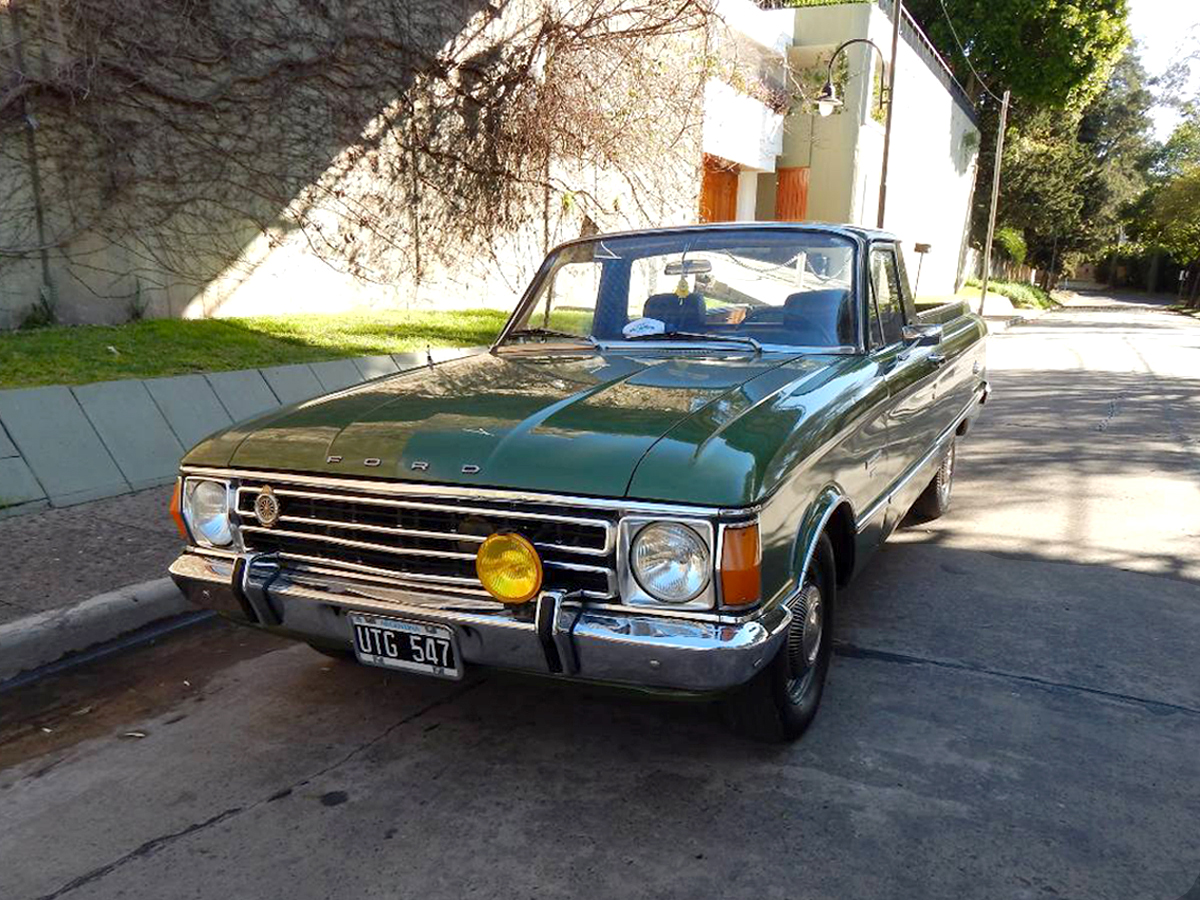
Ranchero
"With the Ranchero, it's basically like a sedan without a with a box on the back. Yes, the old car based utilities. Well if Ford has talked about electrifying iconic nameplates, so Ranchero is definitely."
The Ranchero is an older, well-known vehicle concept. They’re saying the new “Ramchero” idea is similar—car-like up front, with a more useful box area in back.
The Ranchero is referenced as an iconic nameplate—described as being like a sedan with a box on the back. The segment connects it to the idea of electrifying “iconic nameplates,” implying a modern EV could revive that old utility concept.
car-based utilities
"Talking and were enough With the Ranchero, it's basically like a sedan without a with a box on the back. Yes, the old car based utilities."
“Car-based utilities” means a utility vehicle that’s built like a regular car underneath, not like a traditional truck. The idea is you get some truck-like usefulness without the full truck structure.
“Car-based utilities” refers to utility vehicles built on a passenger-car platform rather than a traditional body-on-frame truck architecture. The hosts use this to describe the Ranchero concept—essentially a sedan-like base with a boxy rear for utility.
Universal Electric Vehicle platform
"Speaker 4: But I mean when they made this announcement yesterday though, they're talking about how by twenty twenty nine, Ford will refresh eighty percent of its North American portfolio by volume and seventy percent of its global portfolio bay volume. This includes the first vehicle on the Universal Electric Vehicle platform, a mid size pickup, the next generation F one, P fifty, and F series Super Duty."
An EV platform is like a shared “foundation” for multiple electric cars. If Ford uses one platform for many models, it can make building them cheaper and faster.
A “Universal Electric Vehicle platform” is a shared vehicle architecture designed to underpin multiple EV models. Using one platform can reduce engineering complexity and cost, and it helps manufacturers scale EV production across different body styles and sizes.

Ford F-Series Super Duty
"Speaker 4: ...the next generation F one, P fifty, and F series Super Duty. So all they're talking about is trucks, right you know."
The Ford Super Duty is the bigger, tougher version of Ford’s pickup line, built for heavy towing and work. The hosts are pointing out that Ford is prioritizing trucks like this in its future plans.
Ford’s F-Series Super Duty is the heavy-duty version of the F-Series, aimed at towing and work use. In this segment, it’s listed as part of Ford’s planned lineup refresh by 2029, reinforcing that Ford’s near-term strategy is heavily truck-focused.

Ford F-150
"Speaker 4: ...This includes the first vehicle on the Universal Electric Vehicle platform, a mid size pickup, the next generation F one, P fifty, and F series Super Duty."
The Ford F-150 is Ford’s most popular pickup truck. They’re saying Ford plans big updates to it as part of a broader refresh of their lineup.
The Ford F-150 is the company’s best-known full-size pickup, and “next generation F one” in the transcript refers to the upcoming F-150 redesign. The segment frames it as part of Ford’s plan to refresh most of its lineup by 2029, with major emphasis on trucks.

Ford Expedition
"...ough Ford makes a lot of money and navigators and expeditions too, So I'm not sure why they unless you just wan..."
The Ford Expedition is a large SUV made by Ford. It’s meant for people who need more room, like families or road trips. The podcast mentions it while discussing why Ford makes money on different vehicle types.
The Ford Expedition is a full-size SUV built for larger families and long-distance driving, typically with more space than smaller SUVs. It’s relevant in business or product discussions because it’s part of Ford’s higher-volume, higher-profit SUV lineup. The podcast context suggests it’s being considered alongside other Ford products and why it fits into the broader strategy.
body-on-frame
"Speaker 5: I think body on frame is really the operative idea here, not necessarily truck with a bid in the back, just anything that's big and can can tow."
Body-on-frame means the car is built on a sturdy “frame,” and the body is attached on top. It’s often used for trucks because it’s good for towing and carrying heavy stuff.
Body-on-frame is a construction method where the vehicle’s body sits on a separate ladder frame. It’s common in trucks and many tow-capable SUVs because it can handle heavy loads and easier integration of drivetrain and suspension components.
battery plants
"Speaker 5: What I'm watching carefully is to see whether there's some uptick or slow of the decline of evs generally in the United States, because I'm interested in the future of Ford and Stilantis and GM and we want to see these companies recoup some of their massive investment into batteries, battery plants, all kinds of technology."
Battery plants are factories that build the batteries for electric vehicles. Automakers are spending a lot of money on them, so they’re watching whether EV sales are rising or slowing down.
Battery plants are manufacturing facilities dedicated to producing EV batteries (cells, modules, and packs). The segment discusses how automakers are making “massive investment” in these plants and are now watching EV demand trends to see if those investments pay off.
Stilantis
"Speaker 5: What I'm watching carefully is to see whether there's some uptick or slow of the decline of evs generally in the United States, because I'm interested in the future of Ford and Stilantis and GM and we want to see these companies recoup some of their massive investment into batteries, battery plants, all kinds of technology."
They likely mean Stellantis, the big automaker behind brands like Jeep and Ram. The hosts are talking about how major automakers are dealing with EV sales and battery investments.
“Stilantis” is almost certainly a transcription error for Stellantis, the automaker formed from the merger of Fiat Chrysler and PSA. The segment groups Stellantis with Ford and GM when discussing EV demand and how companies try to recover battery-related investments.
battery chemistries
"Speaker 5: ...They're beginning to switch chemistries now. And we know that early on in this the first quarter certainly was down a lot."
Battery chemistry is the exact type of battery materials inside an EV. Changing chemistry can help improve things like range, cost, or how easy the battery is to make.
Battery chemistry refers to the specific materials used in EV battery cells (for example, different lithium-ion formulations). The hosts mention that automakers are “switching chemistries,” which typically aims to improve cost, energy density, safety, or supply-chain resilience.
EV infrastructure continues to expand
"And I think to your point about EV a option, even with all the question about oil prices, EV infrastructure continues to expand. You know, at the IONA and all the other charging companies are still building their charging units out..."
Even if gas prices are high or uncertain, EV charging stations are still being added. When there are more places to plug in, EVs feel less risky to buy because you’re less worried about running out of charge.
The discussion is about how charging networks keep growing even when gasoline prices are volatile. More chargers and better coverage reduce “range anxiety” and make EV ownership feel more practical, which can increase demand over time.
Circle K
"I own to deal with Circle K stores right they're putting in three hundred stations glow nationwide."
Circle K is a store chain. They’re adding EV charging stations at their locations, which makes it easier to charge while you’re out running errands.
Circle K is a convenience-store chain that’s investing in public EV charging. When retailers like Circle K add chargers at high-traffic locations, it improves charging convenience and helps EV drivers find reliable places to stop.
time it takes to charge
"On top of that, and one of the metrics has been the time it takes to charge."
How long it takes to charge is one of the biggest reasons people hesitate to buy an EV. If charging takes less time, EVs feel more like normal cars for everyday use.
Charging time is a key adoption metric because it directly affects how EVs fit into daily life and road trips. Faster charging reduces the “stop time” penalty versus refueling a gas car, which can shift consumer buying decisions.
Superchargers
"And so now they have these superchargers... they were talking about a five minute charge for a battery... they were having the cables come from above..."
Superchargers are fast EV charging stations. They’re built to charge cars quickly, and the equipment design matters because it affects how easy it is to plug in.
“Superchargers” refers to fast-charging stations designed to add significant battery energy quickly. The segment highlights both charging speed targets and the physical design of the charging setup to improve usability.
cables come from above (charging connector design)
"they were doing something interesting, which was they were having the cables come from above as opposed to being something you pulled out and then dragged over to the car... Older buyers and consumers have had trouble with some of these supercharger cables because they're super heavy..."
They’re talking about changing how the charging cable is positioned. Instead of you pulling a heavy cable across to the car, it hangs from above so it’s easier to plug in.
The segment discusses a design approach for fast-charging hardware: routing cables overhead so they hang and are easier to handle. This addresses a real usability issue—heavy, awkward cables—especially for older drivers, and it can improve the overall charging experience.
data center gets built next door (electricity demand constraints)
"That's, of course, until the data center gets built next door. It sucks in all the electricity."
The joke points to a real constraint: charging stations need substantial electrical capacity, and local grid upgrades can lag behind demand. If a large new load (like a data center) comes online nearby, it can strain power availability and affect charging performance.
put everything under one roof
"[1159.4s] I mean, more like Tesla, [1166.8s] Speaker 4: A lot like in the olden days."
Instead of having different teams pass work back and forth, “under one roof” means one group manages the whole project. That can make decisions faster and reduce confusion.
“Under one roof” describes consolidating responsibilities so a single organization owns a program end-to-end—from early design through engineering and manufacturing. The idea is to reduce handoff delays and misalignment between departments.
EV group vs ICE group
"[1220.0s] Well, again, you have the you have the EV group, and then you have the ICE group. And you know, [1226.0s] so this guy's dealing with explorers and this guy's dealing with mocking..."
They’re talking about a company splitting into two teams: one focused on electric cars (EVs) and one focused on gas cars (ICE). If those teams don’t agree, it can get confusing for how the brand is marketed and sold.
The “EV group” and “ICE group” split the organization by powertrain strategy—electric vehicles versus internal combustion engines. The hosts are questioning how marketing and sales coordination works when two separate business units control different product lines.
Renault
"[1237.0s] but it's interesting. You know, we saw this week that [1241.2s] Renault announced it is going to be laying off fifteen to twenty percent of its engineers..."
Renault is being discussed as a company that plans to cut some engineering jobs. That matters because fewer engineers can slow down or reshape future car development.
Renault is mentioned in the context of a planned engineering layoff of 15–20% over the next two years. This is relevant because staffing changes can affect development timelines, especially during the transition to new powertrains.
Stellantis
"[1241.2s] Renault announced it is going to be laying off fifteen to twenty percent of its engineers over the next two year period. And Stilantis announced it will be getting rid"
Stellantis is mentioned as another automaker making engineering cuts. When companies reduce engineering staff, it can change how quickly new vehicles get developed.
Stellantis is mentioned as announcing it will be getting rid of engineers (the transcript cuts off mid-sentence). Like Renault, this signals how major automakers are reshaping engineering resources, which can influence product plans and timelines.
Leap Motor
"Speaker 4: Wasn't it Leap Motor Motor? ... Speaker 2: This is why they bought leap Motor. This is why they spent a billion and a half euros to have a twenty percent stake in Leap Motor..."
Leap Motor is a Chinese company that builds electric cars. The discussion suggests Stellantis is using Leap Motor’s know-how so it doesn’t have to start from scratch on EV technology.
Leapmotor (Leap Motor) is a Chinese EV manufacturer. The hosts say Stellantis signed a deal with Leap Motor and that Stellantis even took a stake in the company, aiming to use Leap’s technology to avoid spending far more to reinvent EV systems.
market share pressure on incumbent producers in Europe
"Speaker 5: So they're eating the market share of these of these incumbent producers in Europe. And so it's not at all surprising that they would be cutting back..."
The hosts describe Chinese EV brands gaining market share in Europe, which forces established automakers to respond. This is a common competitive dynamic: when new entrants grow quickly, incumbents often cut costs, slow spending, or re-plan product timelines.
cut their way to prosperity
"Speaker 5: ...And so it's not at all surprising that they would be cutting back, trying to you would say, cut their way to prosperity."
“Cut their way to prosperity” refers to cost-cutting and restructuring as a strategy to restore profitability. In automaking, this often means reducing headcount, slowing non-core projects, and partnering externally for technology rather than funding everything internally.
investing in new technology instead of reinventing EV technology
"Speaker 2: ...spent a billion and a half euros to have a twenty percent stake in Leap Motor, is so they wouldn't have to spend another ten billion to sort of reinvent electric technology..."
The segment argues Stellantis bought a stake in Leap Motor specifically to avoid spending enormous sums to “reinvent” EV technology. This is a strategic approach: using an existing EV platform/technology partner can reduce time-to-market and development risk.
value-oriented small electric vehicle
"...the vehicle that they're looking at is a typically European type value oriented vehicle, a small electric vehicle that will be very affordable."
The hosts describe a “value-oriented” small EV strategy—aiming for affordability rather than competing head-on with premium models. This matters because price is a major driver of EV adoption, especially when incumbents are under pressure from lower-cost Chinese offerings.
legacy automakers retrench after EV losses
"Speaker 2: Yeah, I think we're at a point now where the legacy automakers are going to really retrench. You know, they've written off tens of billions in EVY losses..."
The hosts think older car companies are pulling back because they’ve lost a lot of money on EV plans. So they’re likely to cut spending and be more careful about where they invest next.
The segment suggests legacy automakers are “retrenching” after writing off large EV-related losses. This implies a shift toward tighter budgets, slower EV expansion, and more selective investment as companies try to regain financial stability.
fully electric van
"Well, you saw Forge just introduce the trans City in Europe, which is a fully electric van, but it's built by their partner GMC in China. So they're leveraging the Chinese technology with a Ford brand..."
A fully electric van doesn’t use gas or diesel—it’s powered by a battery. The main things to check for a business are charging convenience and whether it can do the work you need it to do.
A fully electric van runs only on electricity, typically using a battery pack and one or more electric motors. For businesses, the big questions are charging access, total cost of ownership, and whether the vehicle’s range and payload fit daily routes.
GMC
"...it's built by their partner GMC in China. So they're leveraging the Chinese technology with a Ford brand..."
GMC is mentioned as the company helping build the vehicle in China. It’s basically about using a partner’s manufacturing to speed things up.
GMC is referenced as the partner that builds the van in China. In this context, it highlights how automakers can outsource manufacturing and leverage partner capacity to bring products to market faster.
Chinese EV technology underneath
"...may not even know it's Chinese technology underneath, but it meets their needs from a business standpoint."
They’re saying the van might look like a normal product from a familiar brand, but the core electric-vehicle tech comes from China. That can affect things like software updates and long-term support.
The hosts describe a scenario where the visible brand/product is European-market-facing, but the underlying EV technology is Chinese. This matters because it changes how you evaluate the vehicle—software, supply chain, and long-term support may differ from traditional legacy approaches.
Changan
"...partnered up right now. You've got Mazda with Changan, You've got JLR with Cherry..."
Changan is the Chinese company Mazda is partnering with. It’s part of a bigger trend where older automakers team up to get EV know-how faster.
Changan is cited as Mazda’s partner in a broader trend of legacy automakers teaming up with Chinese firms. These partnerships often focus on EV platforms, battery/supply chain relationships, and software capabilities to improve competitiveness.
Mazda
"Whether there's so many of them that are partnered up right now. You've got Mazda with Changan, You've got JLR..."
Mazda is brought up as an example of a traditional automaker teaming up with a Chinese partner. The goal is to move faster into EVs without starting from scratch.
Mazda is mentioned as one of the “legacy makers” partnering with a Chinese company (Changan) to compete in a changing EV landscape. The point is that partnerships are becoming a common strategy to access technology and scale faster than developing everything in-house.
Cherry
"...You've got Mazda with Changan, You've got JLR with Cherry, You've got BMW in Great Wall doing Minis..."
“Cherry” is the company JLR is said to be working with. The point is that these partnerships help brands get new technology faster.
“Cherry” is referenced as JLR’s partner, continuing the theme of cross-border alliances for EV and platform development. The underlying idea is that partnerships can provide technology and cost advantages that are hard to replicate quickly internally.
JLR
"...You've got Mazda with Changan, You've got JLR with Cherry, You've got BMW in Great Wall doing Minis..."
JLR is mentioned as part of the partnership trend. It shows that even big European brands are teaming up to get EV tech and compete.
JLR (Jaguar Land Rover) is mentioned as another legacy maker partnering with a Chinese company (Cherry). This illustrates how European brands are using alliances to access EV technology and reduce time-to-market.
BMW
"...You've got BMW in Great Wall doing Minis, You've got Mercedes and Jeally doing smart..."
BMW is mentioned as working with a Chinese partner to build vehicles. It’s an example of premium brands adapting by partnering instead of doing everything alone.
BMW is mentioned in connection with a partnership involving Great Wall to produce “Minis.” This is an example of how even premium brands are using Chinese manufacturing/partners to expand product lines and compete on cost and speed.
Jeally
"...You've got Mercedes and Jeally doing smart, got vwxpang in China."
“Jeally” is the Chinese partner mentioned with Mercedes. It’s part of the idea that automakers are teaming up to move faster in EVs.
“Jeally” is mentioned as Mercedes’s Chinese partner in the smart-brand context. This is used to illustrate the broader theme: legacy brands are relying on Chinese partners for technology and scale.
Mercedes
"...You've got BMW in Great Wall doing Minis, You've got Mercedes and Jeally doing smart..."
Mercedes is mentioned as part of a partnership strategy with a Chinese company. The goal is to keep up in the EV race by sharing technology and resources.
Mercedes is mentioned as partnering with a Chinese company (Jeally) to produce “smart.” The broader point is that legacy automakers are forming alliances to access EV and software capabilities and compete globally.
Great Wall
"...You've got BMW in Great Wall doing Minis..."
Great Wall is the Chinese company mentioned as part of the production setup. It’s basically about using a local partner to build cars more efficiently.
Great Wall is referenced as the Chinese partner involved in BMW’s production strategy (“doing Minis”). This highlights how Chinese manufacturers can provide manufacturing scale and local supply chains that help partners move faster.

Transit City
"...t some of these brands are going global, like the Transit City. And it sounds like Stillans and Elite Motor want..."
“Transit City” sounds like a name for a transit-related vehicle or project. The podcast brings it up while talking about companies expanding their offerings to other countries. It’s mentioned more like a program than a specific car model.
“Transit City” in this context sounds like a transit-focused vehicle or program name rather than a widely recognized production model. The podcast mentions it alongside other brands going global, suggesting it’s part of a discussion about expanding transit-related offerings internationally. Because the name is used as a brand/program reference, it’s likely being discussed for its role in mobility or distribution rather than as a specific consumer car.
zero net zero by this date
"...guess what, We're going to restore all of this m all all of this legislation and regulation, and you guys have to be zero net zero by this date..."
They’re describing a scenario where new rules require automakers to hit very strict emissions/energy goals by a deadline. If the rules change again, companies may have to spend a lot of money to comply.
The segment references “zero net zero” requirements being restored by a future U.S. administration, forcing automakers to spend money to meet emissions/energy targets. This is about regulatory compliance risk: policy changes can quickly alter investment priorities and costs.
Universal Electric Vehicle program and platform
"...if you're an automaker today and you don't become a fit like the best of the Chinese, which we're doing with the Universal Electric Vehicle program and platform in the US..."
Ford is talking about a “Universal Electric Vehicle” program and platform. That usually means building EV technology in a way that can be used across multiple models, which helps reduce cost and speed up development.
Ford’s “Universal Electric Vehicle program and platform” is described as the company’s approach to become competitive with leading Chinese EV makers. A shared platform strategy typically means designing components/software architecture to support multiple vehicles, improving speed and reducing costs.
joint venture
"Speaker 2: ...if you're going to a lot him men, you have to force them to do a joint venture with a legacy automaker where they're a minority partner, just like the Chinese forced all the you know, the foreigners to come into their market."
A joint venture is a partnership where two companies share the work and the risk. Here, it’s about a Chinese company teaming up with an established (legacy) automaker so they can enter the U.S. market more quickly. The “minority partner” part means the legacy automaker still has majority control.
A joint venture is when two companies team up to build or sell something together. In this discussion, the idea is a Chinese automaker partnering with a “legacy automaker” in the U.S., with the Chinese company as a minority partner. The point is to gain access, scale, and manufacturing capability faster than going it alone.
Trump administration
"Speaker 2: And at the same time he's telling the Trump administration, don't let any Chinese cars in..."
The Trump administration is the U.S. government leadership under Donald Trump. In this segment, they’re talking about rules and pressure that could affect whether Chinese cars can enter the U.S. and whether companies must partner with U.S. automakers.
The “Trump administration” refers to the U.S. federal government under Donald Trump, which in this context is discussed regarding policy toward Chinese cars. The transcript claims the speaker wants restrictions like not letting Chinese cars in, and also discusses forcing joint ventures. For listeners, this is about how trade and regulatory policy can shape automaker strategy and market access.
BYD
"Speaker 6: What the rumors at Ford was looking up with byd or another Chinese automaker to discuss some sort of joint venture in the US."
BYD is a big Chinese car company, especially known for electric vehicles and battery technology. The hosts mention rumors that Ford might have been talking with BYD about working together in the U.S. The idea would be to combine Ford’s experience with BYD’s EV know-how.
BYD is a major Chinese automaker known for EVs and batteries, and it has been expanding globally. The transcript mentions rumors that Ford was looking at BYD (or another Chinese automaker) for a possible joint venture in the U.S. That kind of partnership would typically aim to combine Ford’s legacy footprint with BYD’s electrification and manufacturing strengths.
Japanese Automatic Automotive Manufacturers Association
"Speaker 2: Look, you know JAMMA in Japan, you know the Japanese Automatic Automotive Manufacturers Association... had a five alarm fire meeting..."
This is an organization where Japanese car companies coordinate and talk strategy. In the segment, they’re described as trying to make the whole Japanese industry more competitive, not just one company at a time. It’s like industry-wide teamwork.
This refers to an industry association representing Japanese automakers. The transcript describes it organizing a coordinated effort to improve competitiveness across the Japanese auto industry rather than acting only as individual companies. The key takeaway is that automakers sometimes collaborate through industry groups to share strategies and push common initiatives.
commonize components
"Speaker 2: ...one of which is borrowing ideas right from the Chinese. Commonize components across the industry..."
Commonizing components means using the same parts across many different cars. That can lower costs and speed up production because factories don’t have to make everything from scratch. The tradeoff is that some cars may feel less unique.
To “commonize components” means designing parts so multiple models (and sometimes multiple brands) can use the same hardware. The transcript frames this as a strategy borrowed from China to reduce cost and complexity. For listeners, it’s important because it affects everything from supply chains to how unique a car feels.
thermal efficiency
"Speaker 6: ...they just ... forty eight percent thermal industry a thermal efficiency, which is an industry best."
Thermal efficiency is a measure of how well an engine turns fuel into motion. If it’s higher, the engine wastes less energy as heat, so the car can go farther on the same fuel. The segment is saying China’s tech is getting very strong here.
Thermal efficiency is how effectively an engine converts fuel energy into useful work (instead of wasting it as heat). The transcript claims a Chinese hybrid system has “industry best” thermal efficiency around 48%, which would be a major performance and emissions advantage. Higher thermal efficiency generally means better fuel economy and lower CO2 for the same power output.
internal combustion (ICE)
"Speaker 6: I think the other wild card is internal combustion... they now really really need to be worried about Chinese internal combustion... Well guess why they can't. Now they got ice too."
Internal combustion is the traditional engine that burns fuel to make power. The hosts are saying the Chinese auto industry isn’t only strong in electric cars—they’re also improving gas/hybrid technology. So competition could hit even buyers who aren’t shopping for EVs.
ICE stands for internal combustion engine—cars that burn fuel to create power, typically gasoline or diesel. The transcript argues that beyond EVs, Chinese automakers are also advancing ICE technology, including hybrid systems. The implication is that competition isn’t limited to electric vehicles; it also includes more efficient combustion and hybrid powertrains.
Formula one engines
"...Formula one engines are fifty one percent. Now Formula one is no cost. I think the engines are like ten million bucks apiece..."
Formula 1 engines are purpose-built racing power units designed to maximize performance and efficiency under extreme conditions. The speaker uses them as a benchmark for thermodynamic efficiency, noting that costs are effectively “no object,” which allows teams to use advanced technology and aggressive tuning.
duty cycle
"...you could get to forty eight percent in a full a pure ice you know, and duty cycle because once you go e Rev you can play a lot of tricks..."
Duty cycle is basically how an engine is used over time—like how often it’s running hard versus cruising. The point is that real driving conditions make it harder for a gas engine to hit the same efficiency as a purpose-built race engine.
Duty cycle is the fraction of time an engine or system operates in a particular mode or at a particular load. The speaker is arguing that you can’t easily match Formula 1-like efficiency in a pure internal-combustion setup because real-world operating patterns limit how much you can optimize combustion.
thermodynamic efficiency
"And that's how they get this high thermodynamic efficiency. But think about it, they're only a couple of percentage points or so off what a Formula one engine is..."
It’s basically a measure of how well the engine turns fuel into motion instead of wasting it as heat. If efficiency is higher, you typically get better mileage and less energy wasted.
Thermodynamic efficiency is how effectively an engine turns fuel energy into useful work. Higher efficiency usually means less wasted heat and better fuel economy, and it’s a big reason why modern powertrains—especially electrified ones—can outperform older designs.
higher compression
"...a lot more EGR, higher compression, ratio, et cetera. And that's how they get this high thermodynamic efficiency."
Higher compression means the engine squeezes the air-fuel mixture more before ignition. In general, that can improve efficiency and power, but it also increases the risk of knock, so modern engines rely on careful calibration and supporting technologies to make it work reliably.

Ford Edge
"...Speaker 2: They're good vehicles with the leading edge technology in the world at very affordable. Speak..."
The Ford Edge is a midsize SUV made by Ford. It’s designed for regular driving and family use. The podcast mentions it as a vehicle that offers newer features without being extremely expensive.
The Ford Edge is a midsize crossover SUV positioned for everyday use with modern features. In the podcast context, it’s described as offering “leading edge technology” at an affordable price point, which makes it relevant to discussions about value and mainstream appeal. It’s the kind of model that often comes up when talking about how Ford competes in the SUV market.
EV segment
"They had plans to dominate the EV segment. They went"
The EV segment just means the market for electric cars. The point here is that China planned years ago to build the technology and factories needed to sell lots of EVs.
The EV segment refers to the market category for electric vehicles, including battery-electric cars and often broader electrified drivetrains. When the speaker says China planned to dominate the EV segment, they’re talking about long-term industrial strategy: battery supply chains, vehicle platforms, and manufacturing scale.
lithium
"out around the world, locking up supplies in lithium, rare earths, manganese, cobalt, all that kind of stuff."
Lithium is a material that’s widely used in EV batteries. If countries can’t get enough lithium, it can slow down how many electric cars they can build.
Lithium is a key raw material used in most modern EV batteries, typically in lithium-ion chemistries. Securing lithium supplies is part of why EV production depends on global mining and refining capacity.
rare earths
"locking up supplies in lithium, rare earths, manganese, cobalt, all that kind of stuff."
Rare earths are special metals used in electronics and some electric-car components. If one country controls most of the supply, it can affect how easily other countries can make EVs.
“Rare earths” refers to a group of elements used in various EV and battery-related technologies, including magnets for some electric motors and refining/processing needs across electronics. Because supply is geographically concentrated, they become a strategic resource.
manganese
"rare earths, manganese, cobalt, all that kind of stuff. And there's a learning cycle too."
Manganese is another metal that can be used in EV batteries. It’s part of the reason battery production needs several different raw materials.
Manganese is used in some lithium-ion battery cathode chemistries and can help with performance and cost. The mention highlights how EV supply chains rely on multiple battery materials, not just lithium.
cobalt
"rare earths, manganese, cobalt, all that kind of stuff. And there's a learning cycle too."
Cobalt is a metal that has been used in many EV batteries. It matters because getting enough of it can be difficult and expensive, so it affects EV production.
Cobalt is used in many lithium-ion battery cathodes and has historically been important for energy density and stability. Because it’s a constrained and politically sensitive supply chain material, it often comes up in discussions about EV scaling and sourcing risk.
EV learning curve
"As you start to do these things, you make a lot of mistakes, and slowly but surely you refine and get better at that. That's sort of the history of the auto industry, right."
They’re saying new industries get better by trying things, making mistakes, and improving. For EVs, that means companies learn how to build them and supply the materials more efficiently over time.
The hosts describe how the auto industry improves by iterating through mistakes—essentially a “learning curve” where processes get better over time. In the EV context, that means manufacturing, supply chains, and technology adoption improve as companies gain experience and refine execution.
COVID restrictions disrupting travel to China
"And then just about the time the Chinese were hitting the inflection point a hockey stick on this learning curve, COVID hit and so nobody outside of China was traveling to China, and they didn't go there for at least three years, maybe closer to four."
They’re saying COVID slowed down travel and business activity involving China. That can delay how quickly companies elsewhere can work with Chinese suppliers and ramp up production.
The segment ties COVID-era travel restrictions to a pause in global movement and business travel to China, which affected how quickly other countries could engage with Chinese supply chains and markets. For EV and auto manufacturing, travel and logistics constraints can slow coordination, procurement, and ramp-up timelines.
national strategy vs subsidies
"But here's the difference. Gary So has a national plan. China has a national strategy. China has thrown two hundred and fifty billion dollars of subsidies into this. What plan does the US have?"
The hosts contrast China’s national strategy and large-scale subsidies with the US approach. In automotive terms, subsidies can accelerate EV and battery investment by lowering costs for manufacturers and speeding up supply-chain buildout.
Alex Partners
"...we’ve got to give a great shout out to our sponsor, Alex Partners. The automotive and industrial sectors are undergoing a historic transformation electrification, digitalization..."
Alex Partners is the company sponsoring this segment. They’re pitching themselves as a help for companies trying to change fast—like shifting to EVs and rebuilding supply chains.
Alex Partners is the podcast sponsor mentioned during the break. The company positions itself as a consulting partner that helps automotive and industrial firms execute major transformations across operations and leadership.
electrification, digitalization, supply chain reinvention
"The automotive and industrial sectors are undergoing a historic transformation electrification, digitalization, supply chain reinvention, regulatory shifts. The pace is accelerating and the pressure to adapt is real."
They’re saying the auto industry is changing in a few big ways at once. Cars are moving toward electric power, companies are using more software and data, and they’re redesigning how parts get made and delivered. All of that has to happen quickly to stay competitive.
The sponsor is describing a multi-part industry shift: electrification (moving to EV powertrains), digitalization (using software/data across operations), and supply chain reinvention (rebuilding sourcing and logistics). In practice, these changes affect everything from factory tooling to supplier relationships and product planning.
Request an Explanation
Heard something you'd like explained? We'll add it to this episode.
Sign in to request explanations for terms you heard.
Want to learn more?
Browse our glossary for plain-English explanations of automotive terms, jargon, and concepts.
Help improve this episode
See something that's not quite right? Our annotations are AI-generated and can sometimes miss the mark. Click the flag icon on any annotation to suggest a correction.