
A record number of Americans are struggling to make their car payments, particularly among subprime borrowers. The episode discusses the alarming rise in auto loan delinquencies and the implications for both consumers and lenders. With interest rates soaring and financial literacy declining, many borrowers are trapped in a cycle of debt. The hosts also touch on the potential for increased used car inventory as repossessions rise, and the dangers of extending loan terms to keep the market afloat. The conversation highlights the need for better financial education and responsible lending practices.
Today on CarEdge Live, Ray and Zach discuss the latest auto loan delinquency rate data...Tune in to learn more! Hosted by Simplecast, an AdsWizz company. See https://pcm.adswizz.com
for information about our collection and use of personal data for
advertising.
"...buy here, pay here, auto financing market where dealers sell and directly finance vehicles for customers with poor or limited credit..."
'Buy here, pay here' means you can buy a car and get a loan from the same dealership. This is helpful for people who might not qualify for loans from banks because of their credit history.
'Buy here, pay here' is a type of auto financing where the dealership sells the vehicle and also provides the financing directly to the customer. This model is often used for buyers with poor or limited credit histories, allowing them to purchase a vehicle without going through traditional banks or lenders.
"...just floated the concept of a 15 year auto loan in order to make automobiles more affordable. Which we know..."
A 15 year auto loan means you can take a long time to pay off a car, which can make monthly payments smaller. However, it might cost more in the end because of interest.
A 15 year auto loan is a financing option that allows consumers to pay off their vehicle over a longer period, potentially lowering monthly payments but increasing total interest paid. This concept has implications for vehicle affordability and long-term financial health.
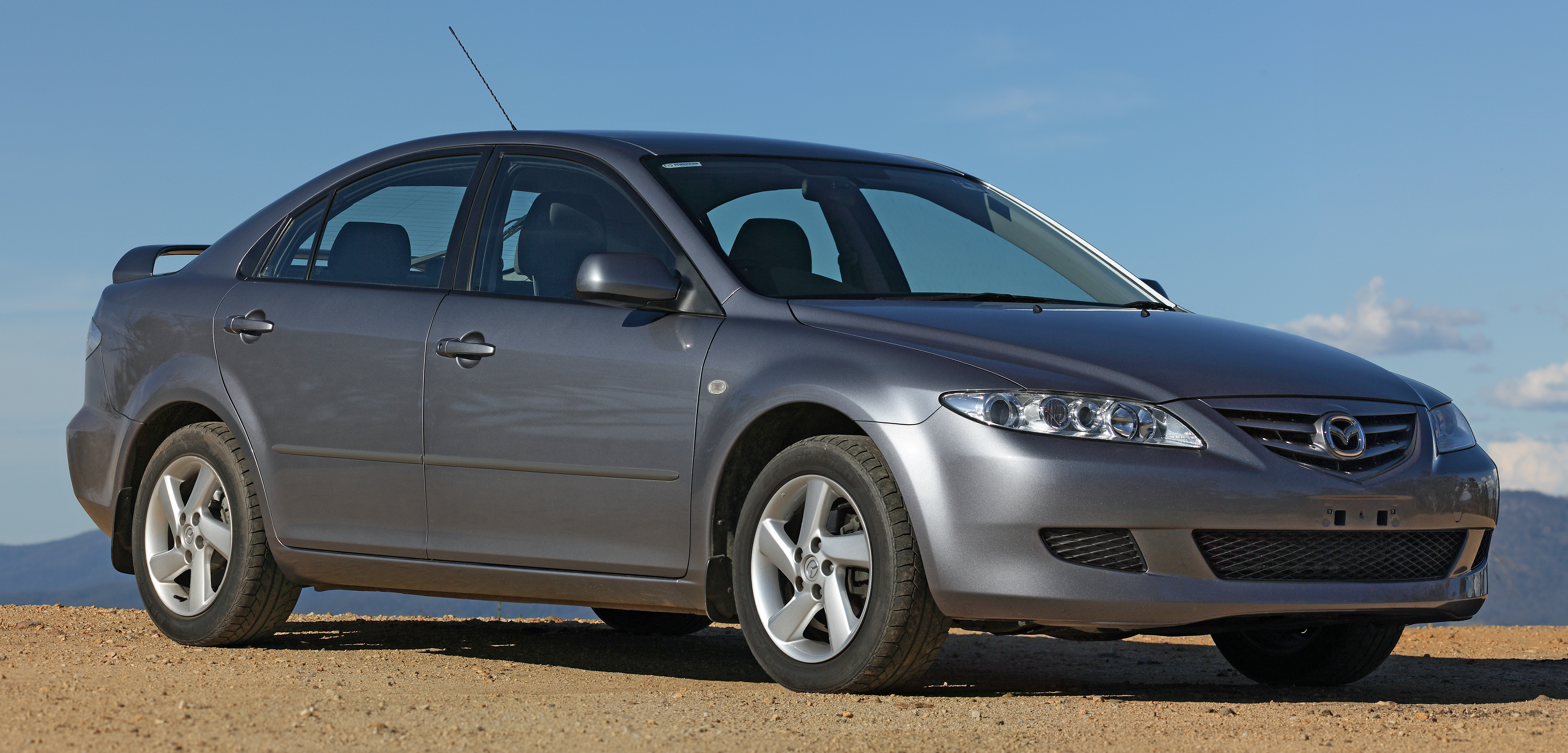
"...here's another example. This was posted on X a while ago, 2018 Mazda Mazda 3. Ultimately what ended up happening here..."
The Mazda 3 is a small car that is fun to drive and looks good. The 2018 version has good fuel economy and comes with modern tech features.
The Mazda 3 is a compact car known for its sporty handling and stylish design. The 2018 model features a range of efficient engines and advanced technology options.
"...ple. This was posted on X a while ago, 2018 Mazda Mazda 3. Ultimately what ended up happening here"
The Mazda 3 is a small car that many people like because it looks good and is fun to drive. It's known for being reliable and having good fuel economy, which means it doesn't use too much gas. People talk about it because it's a great choice for anyone looking for a compact car.
The Mazda 3, also known as the Axela in some markets, is a compact car that has gained popularity for its sporty design and engaging driving dynamics. It is significant for its balance of performance, efficiency, and technology, making it a strong contender in the compact car segment. Discussions about the Mazda 3 often focus on its reliability and value for money.
"...is you have a consumer agreeing to a 30% interest rate."
A 30% interest rate means you pay a lot more money on top of the price of the car when you borrow to buy it. It's a very high rate and can make it hard to keep up with payments.
A 30% interest rate on an auto loan is extremely high and indicates the cost of borrowing money to finance a vehicle. Such high rates can lead to significant financial strain on borrowers, making it difficult to afford monthly payments.
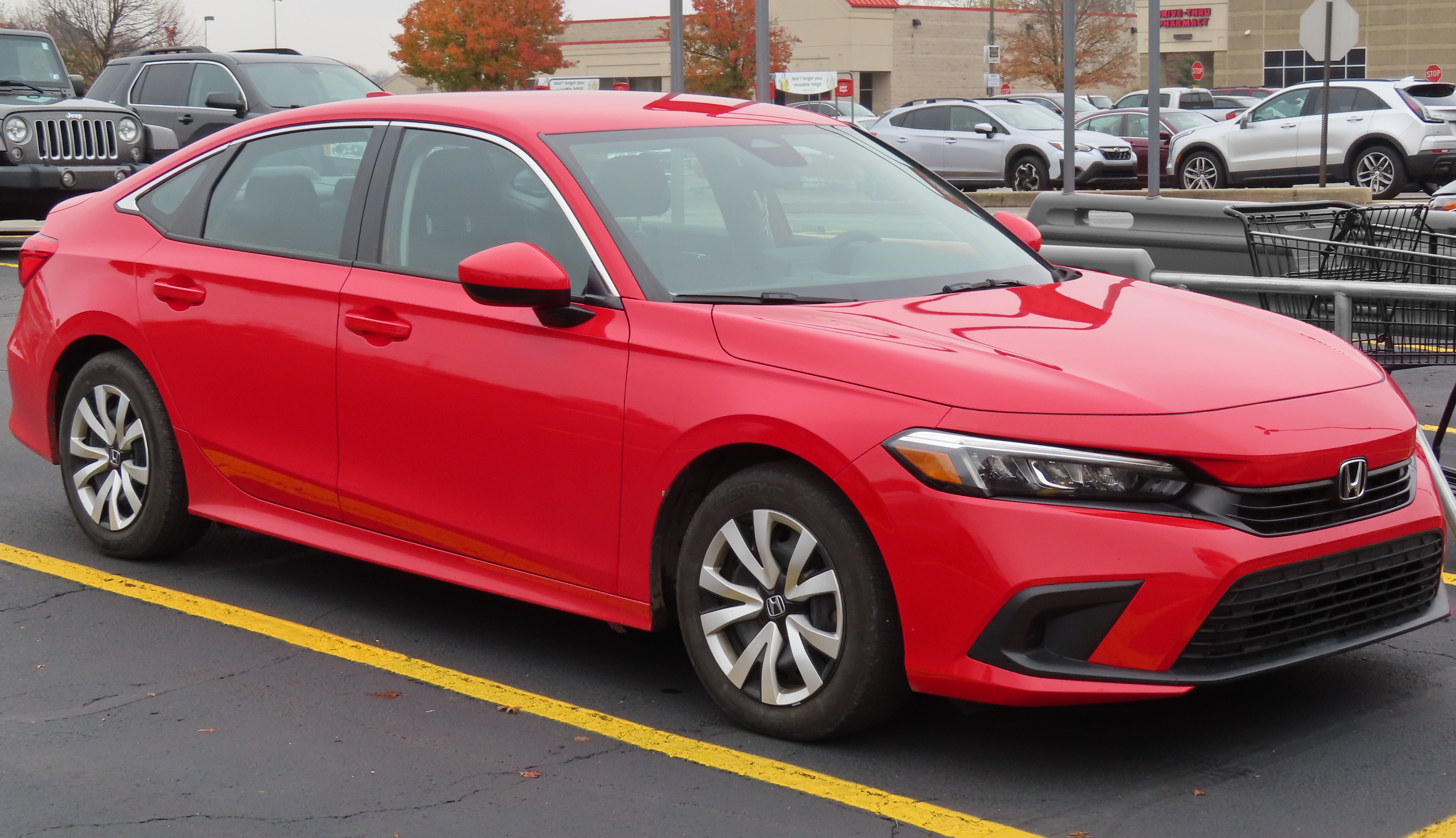
"...let's say you're in the market for that new Honda, drum roll please. We've got the Civic right here."
The Honda Civic is a small car that many people like because it's dependable and gets good gas mileage. It's been around for a long time and comes in different styles and features.
The Honda Civic is a popular compact car known for its reliability, fuel efficiency, and sporty design. It has been a staple in the automotive market since its introduction in the early 1970s, appealing to a wide range of drivers.
"...scrolling there, buddy. Dang, for some reason the Civic Hatchback, I don't have it, let me find a different one."
The Honda Civic Hatchback is a small car that has a back door that opens up, making it easy to load things inside. It's popular because it's reliable, saves gas, and has a sporty feel when driving. People like to talk about it because it's a good option for those who need a practical yet fun car.
The Honda Civic Hatchback is a versatile version of the popular Civic compact car, known for its practicality and sporty performance. It has a reputation for reliability and fuel efficiency, making it a favorite among drivers who want a car that is both fun to drive and economical. The hatchback design offers additional cargo space, which adds to its appeal.
The Honda CR-V is a small SUV that offers a lot of space for passengers and cargo. It's known for being reliable and good for everyday use.
The Honda CR-V is a compact SUV known for its spacious interior, reliability, and fuel efficiency. It is a popular choice among families and individuals looking for a versatile vehicle.
"So the expected, what is this? Cost to own for this particular vehicle over five years is $9,795 for insurance."
Cost to own is how much money you will spend on a car over time. This includes things like insurance, gas, and repairs. It's good to know this before buying a car.
Cost to own refers to the total expenses associated with owning a vehicle over a specific period, including insurance, maintenance, fuel, and depreciation. It's an important factor for potential buyers to consider.
"...think about the total cost of ownership, not just the car payment. The car payment's like,..."
Total cost of ownership means looking at all the expenses you'll have when you own a car, not just the monthly payment. It includes things like insurance, gas, and repairs.
Total cost of ownership (TCO) refers to the comprehensive assessment of all costs associated with owning a vehicle over a specific period. This includes not only the car payment but also insurance, maintenance, fuel, and depreciation.
"...not just the car payment. The car payment's like,..."
A car payment is the amount of money you pay each month to own or lease a car. It's usually based on how much the car costs and how long you take to pay it off.
A car payment is the monthly amount paid to finance or lease a vehicle. It is typically determined by the vehicle's price, the loan terms, and the interest rate.
"...in some cases then the insurance might be more than the car payment."
Insurance for a car is a way to protect yourself financially if your car gets damaged or if you cause an accident. You pay a monthly fee for this protection.
Car insurance is a contract between the vehicle owner and an insurance company that provides financial protection against damage or theft of the vehicle, as well as liability for injuries or damages to others in an accident.
"...or whatever maintenance might be or that you should set aside on a monthly basis..."
Maintenance is the work you need to do on your car to keep it in good shape. It includes things like changing the oil and checking the brakes.
Maintenance refers to the regular services and repairs needed to keep a vehicle running smoothly. This can include oil changes, tire rotations, and brake inspections.
"...whatever the difference between what they get and what is still owed on the vehicle that's known as a deficiency balance..."
If a car is sold for less money than what you owe on it, the leftover amount is called a deficiency balance. You still have to pay that leftover amount even after the car is sold.
A deficiency balance occurs when a vehicle is sold for less than the amount owed on the loan. This means that the borrower is still responsible for paying the remaining balance after the sale of the vehicle at auction.
"...to get a pre-purchase inspection done by an outside independent source, so that they might be able to see things that the dealer missed"
A pre-purchase inspection is when a mechanic checks a used car to make sure it's in good condition before you buy it. It helps find problems that you might not see just by looking at the car.
A pre-purchase inspection is a thorough examination of a used vehicle by a qualified mechanic before purchase. This inspection can uncover hidden issues that may not be apparent during a casual inspection or test drive.
"The idea of a 15-year car loan come, that's like, that's a sign that things are bad for sure."
A 15-year car loan means you have 15 years to pay back the money you borrowed to buy a car. It can make monthly payments smaller, but you end up paying a lot more in interest, which isn't usually a good sign for the economy.
A 15-year car loan is a financing option that allows buyers to pay off their vehicle over a period of 15 years. While it may lower monthly payments, it often results in paying significantly more interest over the life of the loan and can indicate financial instability in the auto market.
"Well, you know, we already, we've already espoused that 84 month, 96 month car loans"
An 84-month car loan means you have 7 years to pay off the money you borrowed for the car. It can make your monthly payments lower, but you might end up paying more in interest overall, which isn't ideal.
An 84-month car loan is a financing option that allows buyers to pay off their vehicle over a period of 7 years. While it can make monthly payments more affordable, it can also lead to higher overall interest costs and may reflect economic challenges in the auto market.
A 96-month car loan means you have 8 years to pay back the money you borrowed for the car. It can help keep monthly payments low, but you might pay a lot more in interest in the long run, which isn't usually a good sign.
A 96-month car loan is a financing option that allows buyers to pay off their vehicle over a period of 8 years. Similar to longer loan terms, it can make monthly payments more manageable but often results in higher total interest payments and may indicate economic uncertainty.
"...nd this concept card and it screams Ray, the 1951 Buick Le Sabre. Deb, what am I about to look up here?"
The Buick LeSabre is a large car that was made for many years and is known for being very comfortable to ride in. It was popular because it had a lot of space inside and was designed to be a smooth drive. The 1951 version is special because it looked very modern for its time and had some cool features.
The Buick LeSabre was a full-size car produced by Buick from 1959 until 2005, known for its spacious interior and smooth ride. It holds significance as a classic American sedan that represents the brand's focus on comfort and luxury during its production years. The 1951 Buick LeSabre concept car is particularly notable for its futuristic design and innovative features for its time.
Select text to request an explanation
Two hours ago, Kyle arrived at the bar.
Hey, what's everyone drinking?
30 minutes ago, Kyle got his friends another round of drinks.
Cheers!
Five minutes ago, Kyle decided to drive home drunk.
A minute ago, a law enforcement officer pulled up behind Kyle.
Sir, have you been drinking tonight?
A chain of events that began two hours ago
is about to change Kyle's whole world.
Drive sober or get pulled over, paid for by NHTSA.
Ever see an idea so clearly in your head
but struggle to make it real?
We've all been there.
With Wix, you can build a website for your business
just the way you pictured it.
Get the best of both worlds
with AI and drag and drop tools all in one place.
Stay in your creative flow
and use AI when you want, how you want.
Create a website your way.
Try it out at wix.com.
If you're a maintenance supervisor
for a commercial property,
you've had to deal with everything
from leaky faucets to flickering light bulbs.
But nothing's worse than that ancient boiler
that's lived in the building since the day it was built.
50 years ago, it's enough to make anyone lose their cool.
That's where Grainger comes in.
With industrial-grade products
and dependable fast delivery,
Grainger can help with any challenge
from worn-out components to everyday necessities.
Call, clickgrainger.com or just stop by.
Grainger, for the ones who get it done.
It's noon here in Veteran City, New Jersey
and 9 a.m. in Los Angeles, California.
And this is Car Edge Live for Monday, November 17th
with your host, me, Ray here in Venter
and well, Zach there in LA.
And may I say, you know, I read a lot of comments
in our comment section
and people comment often
that what we're doing is God's work.
Now, what we're doing is just trying to help people.
What you did yesterday is God's work.
And what do I mean by that?
My son is in LA because he attended a fundraiser
for the Lung Cancer Foundation of America yesterday.
And I lost my wife, his mother to lung cancer
eight years ago, eight and a half years ago.
And for you to do what you do,
that's God's work.
What we do, this is just abject BS, okay?
We are helping people, but not to the same degree
that what you're doing out there in California today
is that's real work.
Thank you, dad.
Good to say that.
Proud dad moment, which I appreciate.
For those of you that are unfamiliar earlier this year,
fortunate to join the board
of Lung Cancer Foundation of America.
So working with that team really closely.
If you know anyone who's been impacted by lung cancer,
if you yourself have been impacted with lung cancer,
or quite frankly, if you have,
even if you haven't smoked in your lifetime,
you should just contemplate getting a screening.
One cancer dad, the incidence rate actually happens
as significantly to non-smokers as it does to smokers.
So please, I actually, dad,
one of the things I wanted to talk to you about
is you should get a screening.
You're of age, you were a smoker earlier in your life.
You absolutely should get a lung cancer screening.
And yes, it was really fun out there yesterday
doing this fundraiser.
So I appreciate it, dad.
Today's show, we'll get on to the car talk
in just a moment here, is brought to you by caredge.com.
So if we can help you out folks,
please check it out.
It's a company my dad and I started six dog on years ago.
So please, if you are interested in buying a car,
if you need help buying a car,
check out our car buying service.
It's $150 off or caredge pro, it's 15% off.
Check out the website caredge.com, learn
why caredge is built to help you buy a car,
not here to help the dealer sell one.
Now, the big story this morning, dad,
that I wanted to spend time on,
thanks again for shining that bright light on me.
I really appreciate it,
is we have record setting number of Americans.
We have a record setting number of Americans
who are choosing to stop paying their car loans.
The latest and greatest data shows
that we have the highest incidence rate
of auto loan delinquency,
especially among subprime borrowers.
And as far as the data set goes back, dad.
So let's start the conversation here.
Subprime auto delinquencies climb again
as financial strain deepens for many borrowers.
What's going on when it comes to auto loans
and those who have borrowed money to buy vehicles
here in the United States?
Well, let me first say this.
I don't think more Americans are refusing
to make their insane car payments.
I think they are unable to make
their insane car payments.
If suddenly you have to make a choice
between food and a car payment,
I'm just guessing, I'm spitballing here,
but I'm guessing food wins out over car payment.
And so, what we're seeing
is the highest delinquency rates on subprime loans.
Now, what are subprime loans?
People with credit scores below 600 or below 620?
People who have exhibited in their lifetime
an inability to handle their credit
in a manner in which the banks would like them to.
And so because of that, for them to get credit
that when they do, it's at rates
that are from say 19.99%, the 29.99%.
And if you look at this chart, dad,
then what becomes even more damning
is what we're looking at here is the incidence rate
of delinquency broken down by subprime versus prime credit.
The prime is the blue line, subprime is the red line.
The record-setting auto loan delinquencies
and ultimately what will yield repossessions
is disproportionately impacting those
that have poor credit to your point.
Look at that line, that subprime auto loan
delinquency rates are the highest we have ever seen.
This goes back to the early 90s.
Yet prime delinquency rates are actually quite low
relative to historic levels that we've been at.
So this is, to your point,
those that get stuck with the 19 plus percent interest rates.
Those are the people who, I said they are refusing
to make their insane car payments.
I think you could be on this line.
They just can't afford to make those car payments.
And then it exacerbates what we're seeing here
in the chat from Igor, 3 million repos
are expected when this year ends.
That's what financial institutions are saying,
more repossessed vehicles making their way back
into the market.
This chart is scary, all caps on that.
The fact that subprime delinquency rates are skyrocketing
the way they are is not a good sign.
It's not only is it scary, it's damning.
And what do I mean by that?
These subprime lenders who are praying
on these subprime customers
know that a bigger chunk of their loan portfolio
is not going to get paid.
They know that a higher percentage of their customers
are going to be unable to make those payments
that they just signed those people up for.
They know it and they know it
when they approve them for the loan.
So it's damning on a couple of levels.
One, it's almost predatory for some of these lenders
to approve loans that they're approving.
And it is a continuation of financial suicide
on behalf of people who have proven over the course of time
that they are unable to properly handle credit
when it is extended to them.
So it's damning in the sense that we failed these people.
We have failed to educate the vast majority
of people here in the United States.
Financial literacy is probably at the lowest levels
it's been in years.
And there's no reason for that
between the advent of the internet
and all the information that is available out there
for people to allow themselves to get into these situations
because they haven't been properly educated
as to the risks involved.
That's a shame on the customer.
That's a shame on the lenders.
That's a shame on our educational system.
It is just damning as an abject failure
on behalf of society to be able to control itself.
For sure, Dad, but we are starting to see
some of the ramifications
and it is damning what's happening
to some of these businesses.
Primal End, this comes from Reuters,
which serves the quote, buy here, pay here,
auto financing market where dealers sell
and directly finance vehicles for customers
with poor or limited credit,
filed for bankruptcy protection last month.
Tricolor, which sold cars and provided auto loans
most of the low income Hispanic communities
in the Southwestern United States
also filed for bankruptcy in September.
A further deterioration in credit quality
could weigh on lenders, especially at a time
when investors are highly sensitive
to signs of stress and loan portfolio.
So it seems like that.
It's like we're peeking our head out
from under the covers just a little bit
and saying, I don't know,
maybe we made some bad decisions
making all these auto loans.
And I do, once we get through the acknowledgement
that something bad, very bad,
is happening in the auto industry,
this does ultimately mean
there will be more used vehicles for sale
in the United States as repossessed vehicles
make their way to dealer auctions.
We've seen now for multiple weeks in a row
used car depreciation at the wholesale auctions,
unprecedented levels,
yet as supply builds up,
that should further decrease the price point
for used cars.
So there is a story here for those of you
that are in the market and contemplating shopping,
but obviously the bigger story right now
is we set ourselves up,
we being the foundation of American capital
is that we set ourselves up for failure here
by approving so many damn auto loans
that people can no longer make good on.
And we look at the percentage of delinquencies
continue to increase.
And we would say normally to ourselves
as we see that,
well, then my guess is that lenders
are going to cut back on the loans
that they're willing to make.
And the opposite of that is true.
Okay, lenders are loosening credit standards
once again to be able to keep the market going.
Okay, and one more.
This is my favorite example of it,
dad, the Wells Fargo one.
Yeah.
This is the most asinine thing we've probably ever seen.
Wells Fargo is pushing deeper into riskier auto loans
and internal memo obtained by car dealership Guy News
shows the bank's dealer pilot program
will now approve borrowers with FICO scores above
or equal to 540 at up to 150% of loan to value ratio,
borrowers with FICO's of 500 to 539 at 110%.
Explain why this is not backwards.
Well, okay, because these are people
that have already proven they can't handle
their credit obligations.
I mean, crap that,
even if you can handle your credit obligations
150% fast enough.
So what does that mean?
We've had this conversation before.
Let's say a car has a value of $10,000.
What Wells Fargo is saying is they will finance
150% of that, which means they finance $15,000.
So $10,000 of that $15,000 is collateralized
by the vehicle and the other $5,000
is collateralized by the air that we breathe.
And there is nothing there for them
to get their money back if the customer,
not if, when the customer goes bad.
So it is, we are perpetuating this house of cards
in the auto industry, okay?
Where we say, well, we need to extend terms
and we need to loosen credit standards
in order to keep enough people in the market to buy cars.
I don't know, somebody in the Trump administration
just floated the concept of a 15 year auto loan
in order to make automobiles more affordable.
Which we know-
What go wrong with a 15 year auto loan?
Which we know just to pull it up on the screen,
here's another example.
This was posted on X a while ago, 2018 Mazda Mazda 3.
Ultimately what ended up happening here
is you have a consumer agreeing to a 30% interest rate
for 75 months.
Yes.
And ultimately you're spending $42,217
to afford a 2018 Mazda 3
that was never worth $42,000 to begin with.
What's the downside to this, Dad?
It was 13,9 was the selling price.
Yes, you think about it.
This is the downfall.
The assumption is paying back, Zach,
is three times the value of the damn car ship on.
Think of that.
Oh, man.
And if-
It's affordable.
It's affordable on a monthly payment basis.
I'm just pulling your leg.
Yeah, no, no, absolutely.
And that is one of the contributors to this house
of cars.
You know, if a building is built on a flimsy foundation,
I believe there was this really expensive bridge
that was built in China recently that just collapsed
like three months after they opened it
after they built the damn thing.
So if something is built on a flimsy foundation,
the likelihood of that foundation holding is pretty slim.
And so when I talk about this house of cars in financing
at a certain point, it's all going to come tumbling down.
Now, when is that point?
I don't know.
When we start to consider a 20-year auto loan instead
of 15-year?
You know, we are committing more and more people
to financial suicide in this country
in an effort to keep the economy going
and selling goods and services that people just can't afford.
It's that simple.
Yeah.
Oh, man, Jerry hits an album ahead here.
Your payment is going towards interest
and not the principal.
You'll end up forever upside down,
which dad then exacerbates the need, quite frankly,
to keep the lights of the carousel going
or the lights of the, I guess, what the hell am I trying
to say, to keep the lights on.
Is that exasperates the need for Wells Fargo to do 150%
loan-to-value ratio for those who do not
deserve 150% loan-to-value?
Which to be clear here, no one
should take on 150% loan-to-value ratio
when financing anything, because to your point
earlier, it's a non-collateralized loan at that point.
I mean, you literally, you're buying a $10,000 car,
but you're financing $15,000 for it.
But to Jerry's point, it's because you're forever upside down.
This is a very dangerous cycle.
And yes, my dad did mention the 15-year car loan thing.
This is from cars.com.
15-year car loans aren't a thing,
but Americans are getting more comfortable with long loan
terms.
There is that rumor spreading online
that our current administration is interested in proposing
a 15-year auto loan.
And a 50-year mortgage.
I mean, we're going to be Japan with a 100-year mortgage.
This thing is, dad.
Just because you can afford it on a monthly basis
does not mean you can actually afford it.
You have a 10% bill.
Let's talk about that for a moment here.
Let's talk about how much car you can afford.
How much car can you afford?
What's your way of thinking about that?
Well, the way I've thought about it,
and if the world bought into the way I think about it,
the auto industry would collapse tomorrow.
Because the way I think about it is that no more than 10%
of your gross monthly income should go towards your automobile.
Not just the auto loan, your automobile.
So what do I mean by that?
Well, gas, insurance, maintenance,
that all gets wrapped in into the 10%.
So if you make $4,000 a month gross, $48,000 a year,
on my 10% rule, you can afford to spend $400 a month
towards your automobile.
And that has to include your automobile insurance,
your gas, your maintenance, and your car payment.
Now, $400 a month is not going to equate to a $40,000 or $50,000
or $60,000 automobile in today's world.
So that's where the dilemma is.
There's so many people out there that are trying to spend
20%, 25% of their gross monthly income
towards an automobile.
And that's what's getting everybody in trouble.
And so if the world revolved around that 10% rule,
maybe we'd be selling 12 million new cars a year instead
of 15 to 16 million.
Maybe we'd be selling, I don't know how many used cars a year,
but it would be less.
Because at that point, people would
be spending in the range that they can actually afford.
Wix, it's where website creation meets AI
and where your boldest ideas become real.
It just takes one platform to build a site that looks great
and does everything you need it to.
And it just takes one person, you,
to start taking care of business like a 10-person team.
With AI tools for creating an entire website from scratch
or testing new ways to make money,
Wix is there with you from day one.
Try it out now at Wix.com.
Save over $200 when you book weekly stays with Verbo.
This winter, if you need to work,
why not work from a chalet?
If you haven't seen your college besties since, well,
college, you need a week to fully catch up
in a snowy cabin.
And if you have to stay in a remote place
with urine laws, you should save over $200 a week.
That's the least we can do.
So you might as well start digging out the lawn, Johns,
because saving over $200 on a week-long
snowcation rental is in the cards.
Book now at Verbo.com.
Dad, you have a great guide back on caredge.com.
So go ahead, folks, please, Google search.
How much car can I afford space car edge?
And this guide will pop right up,
everything you just said as long,
as well as this OG video we created.
I mean, this is years old at this point.
I don't even recognize those two guys
and the thumbnail right there.
You gotta go check out this page
and learn more about the 10% rule.
And Dad, I see multiple people in the chat
asking questions when it comes to car insurance,
because we know car insurance has gone up
so much here in the United States.
And that obviously factors into how much car you can afford.
For those of you that are unfamiliar,
go to caredge.com.
And then in the top navigation,
click on insurance up there.
Not only can we help you research
when it comes to finding expected insurance costs
when you go to buy a vehicle,
we can also help you shop those insurance rates.
So please, please, please go here,
click on compare quotes.
And again, just to demonstrate,
if you're on the car edge,
so I'll click on shop new for a moment here.
And let's say you're in the market for that new Honda,
See something that's not quite right? Our annotations are AI-generated and can sometimes miss the mark.
Click the flag icon on any annotation to suggest a correction.