
April 21, 2026 | Dealer who helped launch Amazon Autos explains why he’s opting out
About this episode
Tariffs are squeezing Hyundai, GM reveals Mary Barra’s ~$30M pay, and the FTC is pushing dealers to report competitors over deceptive advertising—especially bait-and-switch and missing required fees. Retail coverage turns to digital retailing: Route 1 Fusion promotes faster online trade/valuation and F&I product presentation. The standout segment is a conversation with Venart’s Andrew Wright, who helped launch Hyundai’s Amazon Autos but opted out, citing F&I disclosure/compliance concerns, limited product offerings, and unclear results after 18 months. He sees the platform more as marketing than a proven sales engine.
Andrew Wright, managing partner at Vinart Dealerships, explains why he chose not to participate in Hyundai’s Amazon Autos partnership despite helping establish the program. The FTC wants dealers to report competitors who violate advertising rules. Plus, Hyundai’s CEO says tariffs are hurting the company.
digital retailing
"Consider RET1 Fusion for your dealership's digital retailing. Customers can build vehicle financing options online with estimated payments, trade-ins, and you can even showcase optional protection products."
Digital retailing means buying a car with more steps done online. Instead of only talking to a salesperson, you can often get payment estimates and trade-in details through a website.
Digital retailing is the process of moving parts of the car-buying journey online—like payment estimates, trade-in evaluation, and product add-ons. The goal is to reduce friction so customers can get to a purchase decision faster.
RET1 Fusion
"Consider RET1 Fusion for your dealership's digital retailing. Customers can build vehicle financing options online with estimated payments, trade-ins, and you can even showcase optional protection products."
RET1 Fusion is software dealers use to sell cars online. It can show customers estimated monthly payments, take trade-in info, and offer add-on protection products right in the shopping flow.
RET1 Fusion is a dealership-focused digital retailing platform. It helps dealers offer online vehicle financing estimates, handle trade-in inputs, and present optional protection products during the shopping process.
tariffs
"Hyundai's CEO says tariffs are squeezing the automaker. ...where a 15% tariff hits about half the vehicles it sells here."
Tariffs are taxes imposed on imported goods, which can raise the cost of vehicles and parts when automakers rely on cross-border supply chains. The segment frames tariffs as a squeeze on automakers and a reason they may cut costs or adjust pricing.
GM
"GM discloses CEO Mary Barra's compensation last year a cool $30 million, ...According to a filing with the SEC, GM bumped Barra's total comp up about 1.4% from 2024."
GM is General Motors. The segment talks about CEO Mary Barra’s pay and points to official paperwork (SEC filings) as the source of the numbers.
GM (General Motors) is referenced for CEO Mary Barra’s compensation and for the SEC filing that details how her pay changed year over year. The segment uses GM’s disclosures as a major business headline.
FTC
"and the FTC wants dealers to report competitors who break advertising rules. Plus, Andrew Wright of Vinart dealerships talks about why he chose not to participate in Hyundai's Amazon Auto's partnership, despite helping establish the program."
The FTC is a U.S. government agency that helps police misleading or unfair advertising. Here, it’s asking dealers to flag competitors that break the rules for car ads.
The FTC (Federal Trade Commission) is a U.S. agency that enforces consumer protection and advertising rules. In this segment, it’s pushing dealers to report competitors who violate vehicle advertising requirements.
Vinart dealerships
"Plus, Andrew Wright of Vinart dealerships talks about why he chose not to participate in Hyundai's Amazon Auto's partnership, despite helping establish the program."
Vinart dealerships is the dealership group connected to the guest. The key point is that the dealer chose not to join a big retail partnership, showing not everyone benefits the same way.
Vinart dealerships is the dealership group mentioned as the employer of Andrew Wright, who discusses opting out of Hyundai’s Amazon Autos partnership. This is relevant because it highlights how dealer incentives and participation can vary even within major retail programs.
SEC
"According to a filing with the SEC, GM bumped Barra's total comp up about 1.4% from 2024. And here's a number."
The SEC is the U.S. agency that requires public companies to report important information. In this case, it’s the source for the official compensation numbers mentioned for GM’s CEO.
The SEC (Securities and Exchange Commission) oversees public-company disclosures in the U.S. The segment references an SEC filing to discuss GM CEO Mary Barra’s compensation details.
bait-and-switch tactics
"week that dishonest advertising, like bait-and-switch tactics, diverts traffic from honest dealers."
It’s when a dealership advertises something to get you to come in, but then tries to steer you to a different deal after you’re there. The goal is usually to get you to spend more or accept terms you didn’t expect.
“Bait-and-switch” is a deceptive sales practice where an ad lures customers in with one offer, then pressures them into a different (often worse) deal once they’re at the dealership. In car retail, this can show up as advertising a low price or vehicle availability that doesn’t actually match what buyers are offered in person.
out-the-door price
"The FTC clarified that document fees must be included in advertised vehicle prices. Here to talk more about it is our own Paige Hodder..."
Buyers usually care about the final total they pay, not just the sticker price. Rules like this are meant to make the advertised number closer to what you’ll actually pay at the end.
While the transcript doesn’t use the exact phrase “out-the-door,” the document-fee rule is directly about the difference between an advertised price and the total amount a buyer pays at purchase. “Out-the-door” pricing is the practical number consumers care about because it includes fees and taxes.
F&I compliance conference
"in Vegas at a dealership F&I compliance conference, essentially. And we heard stories of, in the past, some of these cases or little things get started because it's actually a dealer that reports another dealer..."
F&I is the part of a dealership deal that covers financing and add-on products. A compliance conference is where dealers learn how to follow the rules so they don’t get in trouble for misleading sales or paperwork.
An F&I compliance conference focuses on rules and best practices for “finance and insurance” activities at dealerships, including how products are sold and how disclosures are handled. The compliance angle matters because many advertising and pricing issues intersect with how deals are structured and presented to customers.
dealer reporting to state attorney generals
"we heard stories of, in the past, some of these cases or little things get started because it's actually a dealer that reports another dealer, not necessarily to the FTC, but sometimes to state attorney generals."
Dealers can also complain to state authorities, not just federal regulators. That means one dealer’s bad behavior can lead to investigations from different government offices.
The segment describes how dealers sometimes report other dealers to regulators—sometimes not just the FTC, but also state attorney general offices. This matters because it shows enforcement can come from multiple levels of government, and dealers may face pressure from both federal and state actions.
consumer complaints
"I think the FTC really relies a lot on consumer complaints. Someone who comes into the dealership maybe has a bad experience and reports it."
Instead of acting on ads alone, regulators also look at what customers report when they feel misled. If enough people complain, it becomes more likely the FTC will investigate.
The FTC often uses consumer complaints as a key input for investigations, because patterns of customer harm can be hard to detect from advertising alone. Complaints can trigger scrutiny once they “bubble up” enough to justify enforcement action.
NADA
"Let's get NADA involved in that conversation. And I think that's a really kind of a different tone rather than the relying solely on consumer complaints."
NADA is a dealer trade organization. It helps represent car dealerships as a group, so it can weigh in on industry rules and disputes.
NADA refers to the National Automobile Dealers Association, an industry group that represents franchised car dealers. In the segment, the host suggests involving NADA to address competitive behavior and enforcement of rules, rather than relying only on customer complaints.
Amazon Auto's partnership
"Andrew Wright of Vinart dealerships discusses why he opted out of Hyundai's Amazon Auto's partnership despite being the first dealer to partner with the venture to get it started."
They’re talking about a deal between a car brand and Amazon to change how people buy cars. The key point is why one dealership decided not to join that program.
The segment discusses Hyundai’s partnership with Amazon Autos and why a dealer chose to opt out. This is a retail/distribution topic—how big-tech and automakers try to reshape the car-buying journey, and how dealers respond.
Route 1 Fusion
"Route 1 Fusion is an expanded digital retail solution built to enhance your dealership's customer engagement and improve the results of your online efforts. Many customers expect a fast, online-friendly experience and prefer clarity early in the process, especially if they have a vehicle to trade."
Route 1 Fusion is software dealerships pay for to help sell cars online. It’s designed to make the shopping experience quicker and clearer—especially things like estimating your trade-in value and setting up appointments.
Route 1 Fusion is a dealership software subscription aimed at improving digital retailing. The segment highlights features like trade and valuation estimates, appointment scheduling, pre-qualification tools, and product presentations to help shoppers move from online to in-store faster.
trade and valuation feature
"With a subscription to Fusion, you can benefit from its trade and valuation feature that empowers customers to estimate the value of their current vehicle early in the process. This helps customers arrive in store better prepared, make expectations around payments and equity more realistic, and move conversations and decisions faster."
This is a tool that estimates what your current car might be worth. The idea is to give you a clearer number sooner so you can plan your next steps and avoid surprises later.
A trade and valuation feature estimates the value of a customer’s current vehicle early in the shopping process. In the segment, it’s positioned as a way to set more realistic expectations around equity and payments, which can reduce friction when the customer arrives at the dealership.
equity
"This helps customers arrive in store better prepared, make expectations around payments and equity more realistic, and move conversations and decisions faster."
Equity is basically how much value you have in your current car. If your car is worth more than what you owe, you have positive equity that can help with the next purchase.
Equity here refers to the difference between a customer’s trade-in value and what they still owe (if anything) on that vehicle. The segment ties equity to making payment expectations more realistic during the trade-in conversation.
appointment scheduling
"Fusion also supports other features that include appointment scheduling so customers can view your availability and book a time. Pre-qualification tools with subscription provide quick, credit-based payment options..."
Appointment scheduling means customers can book a time to visit the dealership online. It helps the dealership move faster because people commit to a visit instead of just browsing.
Appointment scheduling lets customers pick a time to come in, directly from the dealership’s online experience. The segment frames it as part of reducing delays between online research and in-store visits, improving conversion and lead quality.
pre-qualification tools
"Fusion also supports other features that include appointment scheduling so customers can view your availability and book a time. Pre-qualification tools with subscription provide quick, credit-based payment options..."
Pre-qualification tools help you get an early idea of what kind of monthly payment you might qualify for. It’s meant to speed things up so you’re not waiting until you’re at the dealership to find out.
Pre-qualification tools are online steps that estimate credit-based payment options before a customer applies in person. In the segment, they’re described as quick and designed to keep shoppers moving forward while reducing uncertainty about payments.
credit-based payment options
"Pre-qualification tools with subscription provide quick, credit-based payment options and production product presentations allow you to present products earlier..."
These are estimated monthly payment numbers based on your credit. The goal is to help you understand what you might be able to afford before you get deep into the process.
Credit-based payment options are estimated financing terms (like monthly payments) derived from a customer’s credit profile. The segment presents them as a way to give shoppers clarity early, so they can decide faster and engage more productively.
Hyundai
"Welcome back to Daily Drive. I'm Kellyn Walker. Hyundai was the first auto maker to partner with Amazon to sell vehicles on its platform. Andrew Wright helped establish the program for Hyundai dealers..."
Hyundai is the car brand in this story. They were the first to work with Amazon to sell cars through Amazon instead of only through traditional dealerships.
Hyundai is described as the first automaker to partner with Amazon to sell vehicles through Amazon’s platform. That matters because it changes how customers shop and how dealers participate in the sales process.
F&I portion of the process
"...the decision that I made not to participate in the pilot really revolved around some concerns that I had with respect to the F&I portion of the process and how trade-ins were going to be handled. ...the real big one was F&I. And F&I was a challenge for me because they were limiting the products that we could offer on the platform..."
F&I is the finance-and-paperwork part of buying a car. It’s where you handle things like the loan details and optional add-ons, and the dealer is worried the online flow doesn’t meet disclosure rules.
F&I stands for finance and insurance—the part of a car deal where customers discuss and sign financing terms and optional products like warranties and insurance add-ons. The speaker argues the Amazon process limits what dealers can offer and may conflict with “100% disclosure” expectations for F&I.
trade-ins
"...some concerns that I had with respect to the F&I portion of the process and how trade-ins were going to be handled. The folks at Amazon had specific ideas that they were set on implementing regarding how trade-ins were going to be handled specifically by a third party as opposed to by the dealer."
Trade-ins are the customer’s current vehicle being used as part of the purchase price for a new car. Here, the speaker says Amazon had specific plans to handle trade-ins through a third party rather than through the dealer, which was a concern.
100% disclosure
"...I had concerns about requirements for 100% disclosure with our customers. So my fear and the advice I was given by my legal counsel was that the Amazon process was not compliant with the 100% disclosure rules that largely govern the F&I portion of the automobile transaction."
“100% disclosure” means the buyer should be told everything they need to know before signing the paperwork. The dealer is saying the Amazon process might not allow the dealership to provide all required information.
“100% disclosure” refers to the expectation that customers receive complete, accurate information about F&I products and terms before signing. The dealer claims the Amazon platform’s workflow would prevent the dealership from meeting those disclosure requirements.
entirely online transaction
"...Amazon was not willing to allow us to do that. So they wanted it basically to be an entirely online transaction. The customer came in, we gave them the keys and they left."
An “entirely online transaction” describes a sales flow where the customer completes most steps digitally and the dealer’s role is reduced to handing over the keys. The speaker says this approach can work for speed and convenience, but he’s worried about compliance and the ability to complete required F&I disclosures and paperwork.
Amazon platform
"I applaud Hyundai for trying to be innovative and progressive... from the standpoint of offering Hyundai products and services via the dealers on the Amazon platform... reporting mixed results at best in terms of actual sales and transactions"
They’re talking about selling cars through Amazon instead of only through a traditional dealership website or showroom. Amazon brings shoppers to the listing, but the dealer/OEM still has to make money on the deal. The big issue is whether it actually sells enough cars to be worth it.
The speaker is discussing how dealers list and sell Hyundai products through Amazon’s e-commerce platform. In this model, Amazon acts as the customer-facing marketplace while dealers handle the retail relationship and fulfillment. The key question is whether the platform drives meaningful sales volume and profitable transactions for dealers and OEMs.
marketing play
"I think it started as a marketing play and I think it remains a marketing play... the big question marks right now that still remain 18 months into this"
They’re suggesting this is more about getting attention and leads than making lots of immediate sales. Even if not many cars are sold, the brand might still benefit from being seen by more shoppers. The real question is whether it leads to profitable deals.
The speaker characterizes the Amazon-dealer effort as primarily a marketing play rather than a direct sales engine. That means the value may come from brand visibility and customer discovery, even if transaction volume is modest. They emphasize that profitability and transaction quality are still unclear 18 months in.
OEMs get eyeballs on their products
"I think it remains an area where a lot of OEMs are starting to feel that they can get eyeballs on their products on the Amazon platform"
They mean car companies want more people to notice their cars online. Since Amazon is where a lot of shoppers already go, it’s a convenient place to show products. The goal is more attention and potential leads.
This refers to the strategy of using a major online marketplace to increase product visibility for OEMs (original equipment manufacturers). The speaker argues that Amazon’s reach makes it attractive for brands trying to reach customers where they already shop. It’s an example of how automotive retail is shifting toward digital discovery.
mixed results at best
"Some of my dealer colleagues have opted to say in the program... reporting mixed results at best in terms of actual sales and transactions"
Dealers who tried this aren’t getting great results overall. The number of actual car sales seems low, and making money on those sales is harder than expected. So it’s not a clear win yet.
The speaker reports that dealers participating in the Amazon program are seeing mixed outcomes. Specifically, they mention limited sales volume and difficulty achieving strong profitability. This highlights that early digital retail experiments may not translate into consistent dealer economics.
incentives
"But Amazon is also taking it upon themselves to offer additional incentives to induce customers to transact on the platform... another added layer of complexity from an incentive standpoint"
They’re saying Amazon may offer extra deals or money-off offers to get people to buy through Amazon. That can change how customers decide where to purchase. It also adds complexity because the incentives may not match what the car brand or dealer offers.
The speaker notes that Amazon adds incentives to encourage customers to transact on the platform. This creates a competitive incentive environment where customers may receive different offers depending on whether they go through Amazon or the OEM/dealer channels. Incentives can affect both conversion rates and dealer/OEM profitability.
inducement to transact on the platform
"I don't know what that's necessarily doing to promote transparency, but it's definitely an inducement to transact on the platform. So I'm sure that's why they're doing it."
They’re talking about incentives that encourage people to actually buy through that online platform. The goal is to get more completed sales there, not just browsing.
An “inducement” here means incentives designed to push dealers or shoppers to complete transactions through the platform rather than elsewhere. In automotive retail, these incentives can affect dealer participation, pricing strategy, and how shoppers move through the buying journey.
transact in person in the dealership
"And I think that the vast majority of consumers still want to transact in person in the dealership. They want to see it, feel it, touch it, smell it, drive it before they buy it."
They’re saying most people still want to go to a dealership to look at the car, touch it, and drive it before they commit. Even if online shopping exists, the “real” decision often happens face-to-face.
This highlights the traditional dealership sales model, where customers prefer to inspect vehicles physically and test drive before buying. The hosts argue that most consumers still trust the in-person process, especially for evaluating options and making informed decisions.
uncharted territory
"I'm not really sure how you gauge success in an endeavor of this nature. I think it's uncharted territory, right? We have to figure out if it is more of an advertising or a marketing play,"
They mean this is a new kind of car-buying setup, so there aren’t clear rules yet for what “good” looks like. It’s hard to judge results because the market is still figuring itself out.
“Uncharted territory” refers to the lack of established benchmarks for measuring performance in a new online automotive retail model. Without historical data, success metrics like conversion rate, dealer participation, and transaction volume are harder to interpret.
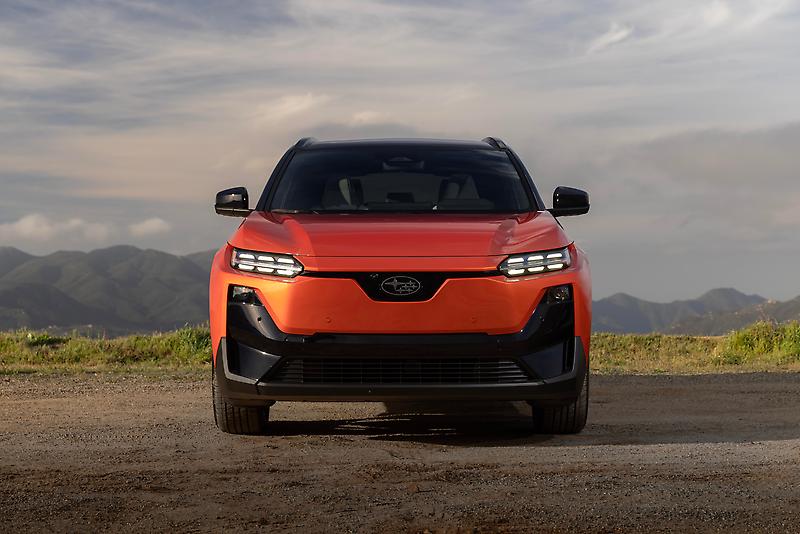
Subaru Uncharted
"...cess in an endeavor of this nature. I think it's uncharted territory, right? We have to figure out if it is ..."
“Subaru Uncharted” doesn’t clearly match a standard car model you’d see listed like a typical sedan or SUV. It likely refers to a special Subaru vehicle or project meant to show off an exploration or off-road idea.
“Subaru Uncharted” isn’t a widely recognized production model name; it sounds more like a concept, special project, or branded campaign tied to Subaru’s exploration/off-road theme. It’s the kind of vehicle that might be discussed in a podcast when the conversation is about trying something new or pushing into “uncharted territory.”
how many people are going down the path towards a transaction, but end up not consummating that transaction
"I think it really boils down to how many eyeballs are you getting on your products? And how many people are going down the path towards a transaction, but end up not consummating that transaction, right?"
They’re talking about how many people start the buying process online but don’t actually end up purchasing. Success isn’t just views—it’s whether shoppers follow through to a real sale.
This is describing a conversion funnel for online car retail: traffic/eyeballs lead to interest, then to intent, and finally to a completed purchase. “Not consummating” captures drop-off points where shoppers don’t finish buying, which is crucial for judging whether the platform is effective.
protection package
"...they're exploring payment options, maybe protection package options, accessories, things like that..."
A protection package is usually a bundle of extra add-ons the dealer offers along with the car. It can include things meant to protect the vehicle or extend coverage, depending on what the dealer includes.
A “protection package” typically bundles dealership add-ons that cover things like vehicle protection, appearance protection, or extended coverage plans. The segment mentions it as part of payment/offer options shoppers may be presented during the buying process.
accessories
"...protection package options, accessories, things like that. But maybe they're just not comfortable transacting on the platform..."
Accessories are optional extras you can add to a car—like add-on features or upgrades. Dealers often try to sell these as part of the overall deal.
Accessories are optional add-ons installed on a vehicle, such as appearance items or convenience upgrades. In the context of online retail and dealer offers, they’re part of what shoppers may be offered alongside the base vehicle and financing.
success ... quantifiable
"...If success isn't gauged in numbers... Well, I mean, I still think there is the success lies in the numbers... what are we quantifying?..."
They’re arguing about what “success” should mean for a car-selling platform. Is it only the number of cars sold, or should it also include how many people are seriously shopping online and taking steps that suggest they might buy?
The hosts debate how to define and measure success for an online car retail program. Instead of only counting vehicles sold, they discuss using quantifiable engagement and intent metrics (site visits, page views, and submitted information) to understand performance.
VDP or an SRP page
"...those numbers of people that are visiting the site that are shopping for vehicles that are clicking around that are looking at the equivalent of a of a VDP or an SRP page that are actually penciling a deal..."
When you shop online for a car, you usually see a search results page first, then a page for a specific car. The hosts are talking about tracking how many people actually look at those pages and seem ready to buy, not just how many cars end up sold.
VDP (Vehicle Detail Page) and SRP (Search Results Page) are the main pages shoppers interact with when browsing inventory online. The discussion is about measuring success not just by sales, but by how many visitors engage with these pages and show intent to transact.
penciling a deal
"...clicking around that are looking at the equivalent of a of a VDP or an SRP page that are actually penciling a deal or are submitting information..."
“Penciling a deal” means doing the math to see if the purchase works for your budget. It’s basically the point where someone isn’t just looking—they’re trying to figure out if they can actually make the deal happen.
“Penciling a deal” refers to running the numbers to see whether a car purchase makes financial sense—typically factoring price, trade-in value, financing terms, and any add-ons. In this segment, it’s used as a proxy for “real buying intent” beyond casual browsing.
transact in a physical dealership
"...we start to learn more about the desire of our customers to transact in all alternative places and platforms... the vast majority of consumers still want to transact in a physical dealership..."
Even though people shop online, the hosts say most buyers still want to finish the purchase at a real dealership. That’s where the final negotiation and paperwork usually happen.
The hosts emphasize that most consumers still prefer to complete the purchase in person at a local dealership. This highlights an important retail reality: even with online discovery and lead capture, the final steps of negotiation and paperwork often remain dealership-based.
100% online transactions or partial online transactions
"choosing to go down the path of 100% online transactions or partial online transactions. So we need to learn from that. We need to make sure we have the tools and the resources to be there for our customers where they want to transact"
They’re talking about buying a car either completely online or using a mix of online and in-person steps. The big idea is that the “best” process depends on what customers want and how the dealership is set up to deliver it.
The segment contrasts fully online car buying/selling with hybrid models that mix online steps (like shopping, financing, or paperwork) with in-person delivery. For listeners, this matters because it changes how pricing, trade-ins, and customer service are handled across the process.
OEM partners
"And I look forward to the opportunity to work with all of my OEM partners to develop processes and solutions that are going to meet the customer where they want to be met and service them how they want to be serviced."
OEM partners are the car companies themselves—the brands that build the vehicles. Dealers work with them so the buying and service process matches what the brand wants.
OEM partners are the original equipment manufacturers (like automakers) that set brand standards, programs, and distribution requirements. In retailing, working with OEM partners often means aligning dealership processes with the automaker’s sales and service expectations.
Carvana
"I don't care what Carvana is doing. I don't care what Tesla does. We can learn from those organizations because they've built robust platforms that deliver an experience that more and more customers do like"
Carvana is a company known for selling cars with a heavy online focus. They’re being used here as an example of how a strong online process can be something customers actually like.
Carvana is referenced as an example of a company that built an online-first used-car retail platform. The point is that even traditional retailers can learn from Carvana’s “robust platform” approach to customer experience.
Tesla
"I don't care what Carvana is doing. I don't care what Tesla does. We can learn from those organizations because they've built robust platforms that deliver an experience that more and more customers do like"
Tesla is being referenced as a company that sells and supports cars in a very streamlined way. The host is saying other retailers can learn from that approach to make the process smoother for customers.
Tesla is mentioned alongside Carvana as another example of a company that has built a streamlined, platform-driven customer experience. In this context, it’s used to argue that retailers can compete by adopting similar strengths in online transactions and transparency.
Request an Explanation
Heard something you'd like explained? We'll add it to this episode.
Sign in to request explanations for terms you heard.
Want to learn more?
Browse our glossary for plain-English explanations of automotive terms, jargon, and concepts.
Help improve this episode
See something that's not quite right? Our annotations are AI-generated and can sometimes miss the mark. Click the flag icon on any annotation to suggest a correction.