
April 24, 2026 | Stellantis bets on four core brands; growing fixed ops revenue
About this episode
Stellantis is narrowing focus to four core brands—Jeep, Ram, Peugeot, and Fiat—using shared platforms and selective rebadging to improve efficiency across its wider portfolio. Cox Automotive is buying AI data-management firm FullPath to help dealers clean customer records and market more effectively. Porsche adds a coupe version to the electric Cayenne lineup, banking on U.S. buyers who already prefer the coupe look. The show also digs into Chinese EV pricing in Canada—why it’s cheaper and what dealer contracts should protect—plus Cox’s fixed-ops study highlighting rising competition and the need for better service retention via transparent pricing and video inspections.
Stellantis is focusing investments on Jeep, Ram, Peugeot and Fiat to lead its turnaround. A look at the questions dealers and customers should ask before embracing Chinese vehicles. Plus, Cox Automotive’s Skyler Chadwick discusses how dealerships are growing service and parts revenue.
digital retailing
"Consider RET1 Fusion for your dealership's digital retailing. Customers can build vehicle financing options online with estimated payments, trade-ins, and you can even showcase optional protection products."
Digital retailing means buying a car through a website or app. You can usually choose options and see payment estimates, which can make the whole process faster and easier.
Digital retailing is the process of selling cars online—configuring the vehicle, estimating payments, and handling trade-in and add-ons—before the customer ever reaches a salesperson. It’s meant to shorten the sales cycle and improve conversion by giving buyers transparency and speed.
RET1
"Consider RET1 Fusion for your dealership's digital retailing. Customers can build vehicle financing options online with estimated payments, trade-ins, and you can even showcase optional protection products."
RET1 is software dealerships use to sell cars online. It helps customers pick a car and see financing estimates right on the website, often including trade-in and add-on protection options.
RET1 is a dealership-focused digital retailing platform. The idea is to let customers build a vehicle and financing options online, including trade-ins and optional protection products, so the dealership can move faster and close more sales.
Stellantis
"Today on the show, Stellantis is placing its bets on four core brands. ... Stellantis is placing its bets on four brands, Jeep, Ram, Peugeot, and Fiat."
Stellantis is a big car company that owns multiple brands. Here, they’re planning to focus on a smaller set of main brands and use shared vehicle designs to cut costs.
Stellantis is the automaker behind brands like Jeep, Ram, Peugeot, and Fiat. In this segment, they’re described as reorganizing around four “core brands” and using shared platforms plus rebadging to improve efficiency across a large portfolio.
Cox Automotive
"Cox Automotive buys AI company FullPath and Porsche adds a coupe version to its electric Cayenne lineup. Plus, Cox Automotive's Skyler Chadwick talks about how dealerships are growing service and parts revenue."
Cox Automotive provides services and software to car dealerships. In this segment, they’re buying an AI tool and combining it with their existing dealer platforms to help dealers market more effectively.
Cox Automotive is a major automotive services company that owns dealer-focused tools and marketplaces. Here, it’s buying an AI company (FullPath) and plans to combine that AI with existing Cox products like VIN Solutions and AutoTrader to help dealerships use customer data for marketing.
Porsche
"Cox Automotive buys AI company FullPath and Porsche adds a coupe version to its electric Cayenne lineup. Plus, Cox Automotive's Skyler Chadwick talks about how dealerships are growing"
Porsche is the sports-car brand mentioned here. The host says Porsche is adding a coupe-style version to its electric Cayenne lineup.
Porsche is mentioned in connection with an upcoming electric Cayenne coupe version. This is notable because it signals Porsche expanding its EV lineup and adding a new body style to the Cayenne platform.
service and parts revenue
"Plus, Cox Automotive's Skyler Chadwick talks about how dealerships are growing service and parts revenue. I talk about it all the time. Your cash cow to your dealership is your fixed operations."
Service and parts revenue is what a dealership earns when customers bring cars in for repairs and when the dealer sells replacement parts. It’s important because it tends to be more consistent than new-car sales.
Service and parts revenue is the recurring income stream from workshop labor and replacement components. The segment ties this to dealership fixed operations, highlighting why dealers invest in service processes and customer retention.
fixed operations
"I talk about it all the time. Your cash cow to your dealership is your fixed operations. It means it's so important to the growth of your business on both the front end and back end."
Fixed operations is the part of a dealership that makes money from servicing cars—like repairs, maintenance, and selling parts. The point is that it’s steady income, not just one-time sales.
Fixed operations (often called “F&I” in broader dealership contexts, but here specifically the service/parts side) refers to the dealership’s ongoing revenue from maintenance, repairs, and parts sales. The host calls it the dealership’s “cash cow,” emphasizing its importance to growth on both the front end and back end.
Ram
"Stellantis is placing its bets on four brands, Jeep, Ram, Peugeot, and Fiat. That's what five sources told Reuters."
Ram is the pickup-truck brand under Stellantis. The segment says Ram is one of the brands Stellantis is focusing on more heavily.
Ram is named as one of Stellantis’s four core brands. The implication is that Ram will benefit from more dedicated resources and strategy, while other brands are expected to rely more on shared technology.
Jeep
"Stellantis is placing its bets on four brands, Jeep, Ram, Peugeot, and Fiat. That's what five sources told Reuters."
Jeep is a well-known SUV brand. In this story, Stellantis is saying Jeep will be one of the main brands it prioritizes.
Jeep is one of Stellantis’s four core brands in the plan discussed. The segment frames Jeep as a brand that will receive more strategic focus while other brands get a smaller share of investment.

Jeep Brands Jeep
"Let's run through all the news you need to know to keep up in the auto industry. Stellantis is placing its bets on four brands, Jeep, Ram, Peugeot, and Fiat. That's what five sources told Reuters."
The Jeep Grand Cherokee is a Jeep SUV that’s built for both everyday driving and tougher terrain. The podcast is referencing Jeep in a larger company plan about which brands get focus. That matters because it can affect what kinds of updates and new vehicles come next.
The Jeep Grand Cherokee is a well-known midsize luxury SUV from Jeep, typically associated with strong off-road capability and family-friendly comfort. In the podcast context, it’s mentioned as part of Stellantis’s broader strategy that includes Jeep as one of its key brands. That kind of business news can be relevant because it often influences future product planning, updates, and investment in models like the Grand Cherokee.
Peugeot
"Stellantis is placing its bets on four brands, Jeep, Ram, Peugeot, and Fiat. That's what five sources told Reuters."
Peugeot is a major European car brand. Here, Stellantis is saying Peugeot is one of the main brands it will build around.
Peugeot is included among Stellantis’s four core brands. In the plan, Peugeot is expected to anchor shared platforms and technology, with other brands leaning on that core for efficiency.
Fiat
"Stellantis is placing its bets on four brands, Jeep, Ram, Peugeot, and Fiat. That's what five sources told Reuters."
Fiat is an automaker brand, especially known for smaller cars in Europe. In this story, Stellantis is listing Fiat as one of the brands it’s prioritizing.
Fiat is named as one of Stellantis’s four core brands. The segment suggests Fiat will be used as part of the strategy to concentrate investment and leverage shared platforms across the group.
shared platforms
"Instead of killing off brands, Stellantis is betting on shared platforms and some strategic rebadging to squeeze more efficiency out of its sprawling portfolio. CEO Antonio Filosa officially unveils the plan next month in Detroit."
Shared platforms are when different cars are built on the same basic “skeleton.” It helps companies build more models with less cost and effort.
Shared platforms mean multiple vehicle models are built using the same underlying architecture (like chassis and major components). Automakers do this to reduce development and manufacturing costs while still offering different body styles and branding.
rebadging
"Instead of killing off brands, Stellantis is betting on shared platforms and some strategic rebadging to squeeze more efficiency out of its sprawling portfolio. CEO Antonio Filosa officially unveils the plan next month in Detroit."
Rebadging is when the same car is sold with a different brand badge on it. Companies do it to offer similar products under different names without redesigning everything.
Rebadging is when a vehicle is sold under a different brand name, often with cosmetic changes, while using the same underlying product. In Stellantis’s case, it’s described as a way to stretch shared platforms across multiple brands.
fixed ops revenue
"Published: 2026-04-24T18:00:00Z | Stellantis bets on four core brands; growing fixed ops revenue"
Dealerships make money in two big ways: selling cars and running the service department. “Fixed ops revenue” means the service/repair/parts side, which can be steadier month to month.
“Fixed ops” (fixed operations) refers to dealership revenue streams outside of selling new cars—mainly service, parts, and maintenance. When the segment says “growing fixed ops revenue,” it’s about increasing profit from keeping customers’ vehicles maintained rather than relying only on vehicle sales.
FullPath
"Cox Automotive is buying up FullPath, an AI company that helps dealerships wrangle messy customer data and actually use it for marketing. The plan is to pair FullPath with Cox's existing tools like VIN Solutions and AutoTrader."
FullPath is an AI tool aimed at dealership marketing. It helps sort out messy customer information so dealerships can actually use it to reach the right people.
FullPath is described as an AI company that helps dealerships clean up messy customer data and then use it for marketing. The segment says Cox will pair FullPath with its existing tools to improve how dealers target customers.
VIN Solutions
"The plan is to pair FullPath with Cox's existing tools like VIN Solutions and AutoTrader. Cox says dealers will be able to clean up their"
VIN Solutions is a dealership data tool tied to vehicle identification (VINs). The segment says Cox wants to combine it with AI so dealers can use their data more effectively for marketing.
VIN Solutions is mentioned as one of Cox Automotive’s existing tools. In context, it’s part of the stack Cox plans to pair with FullPath so dealerships can better manage and act on customer and vehicle-related data.
AutoTrader
"The plan is to pair FullPath with Cox's existing tools like VIN Solutions and AutoTrader. Cox says dealers will be able to clean up their"
AutoTrader is a car listing and marketing platform. Here, it’s mentioned as part of Cox’s toolset that will be enhanced with AI to help dealers reach customers.
AutoTrader is referenced as another Cox Automotive platform. The segment frames it as part of the ecosystem that will work alongside FullPath and VIN Solutions to help dealers improve marketing and customer engagement.
CDK Global
"Cox spotted holes in what it offers dealers and he thinks competitors like CDK Global and Reynolds and Reynolds are probably watching closely"
CDK Global makes computer systems that car dealerships use to run day-to-day business. The episode is basically saying new AI tools could disrupt companies like this.
CDK Global is a major provider of dealership software used for sales, service, and inventory operations. When the hosts mention it alongside other competitors, they’re pointing to how dealership tech vendors are being pressured by new AI-driven tools and platforms.
AI acquisitions
"...competitors like CDK Global and Reynolds and Reynolds are probably watching closely, maybe even shopping for their own AI acquisitions."
An AI acquisition is when a company buys another company that has AI technology. The goal is usually to use that AI to sell cars more efficiently or improve how dealerships communicate with customers.
The phrase implies companies in dealership software and related services may buy AI-focused startups or technology to improve how they market and sell to customers. In practice, this can mean better lead targeting, faster quoting, and more automated customer engagement.
Reynolds and Reynolds
"Cox spotted holes in what it offers dealers and he thinks competitors like CDK Global and Reynolds and Reynolds are probably watching closely"
Reynolds and Reynolds is another company that supplies software to car dealerships. In this segment, they’re mentioned as competitors that could react to new AI products.
Reynolds and Reynolds provides dealership management systems and related software. The hosts are framing it as part of the competitive landscape Cox is challenging, with AI potentially changing how these vendors deliver value.

Porsche Cayenne coupe electric
"And Porsche is adding a coupe version to its Cayenne electric lineup. The 2026 Cayenne coupe electric arrives this summer in three flavors, base, s, and turbo."
Porsche is launching an electric Cayenne with a more sloped, coupe-like shape. It’s still an all-wheel-drive EV and uses a big battery, plus fast-charging tech Porsche calls 800-volt.
Porsche is adding a coupe-style body to its Cayenne electric lineup for 2026. The segment says the 2026 Cayenne coupe electric uses the same 113 kWh battery and 800-volt architecture, and it’s offered with all-wheel drive in multiple trims.
coupe version
"Why the coupe? Turns out 40% of the more than 20,000 Cayenne sold in the U.S. last year were coupes."
A coupe version is basically a more stylish, sloped-roof shape compared with a boxier SUV. The hosts are saying Porsche is doing it because many buyers already choose that look and will pay more for it.
A coupe-style body on an SUV platform typically means a more sloped roofline and a sportier silhouette. The segment frames it as a demand-driven move, noting that a large share of Cayenne sales in the U.S. were coupes and customers pay extra for the look.
113 kilowatt hour battery
"All pack the same 113 kilowatt hour battery with 800 volt tech and all-wheel drive."
That 113 kWh number is how much electricity the EV can store in its battery. More battery capacity usually means you can drive farther, but real-world range still depends on how you drive.
A 113 kWh battery is the energy storage capacity of the EV’s pack, which strongly influences potential driving range. Larger capacity generally means more usable energy, though actual range depends on efficiency, speed, temperature, and drivetrain.
800 volt tech
"All pack the same 113 kilowatt hour battery with 800 volt tech and all-wheel drive."
800-volt tech is an EV charging setup that can help the car add energy faster at the right chargers. It’s like using a higher-pressure water system to fill a tank quicker.
800-volt EV architecture is designed to support faster charging by allowing higher voltage to flow through the system. In many cases, it reduces charging time when paired with compatible high-power chargers.
all-wheel drive
"All pack the same 113 kilowatt hour battery with 800 volt tech and all-wheel drive."
All-wheel drive means power goes to both the front and rear wheels. That can help the car grip better on wet or slippery roads.
All-wheel drive (AWD) sends power to more than one axle, improving traction and stability, especially in low-grip conditions. For EVs, AWD can also help deliver stronger acceleration by distributing torque effectively.
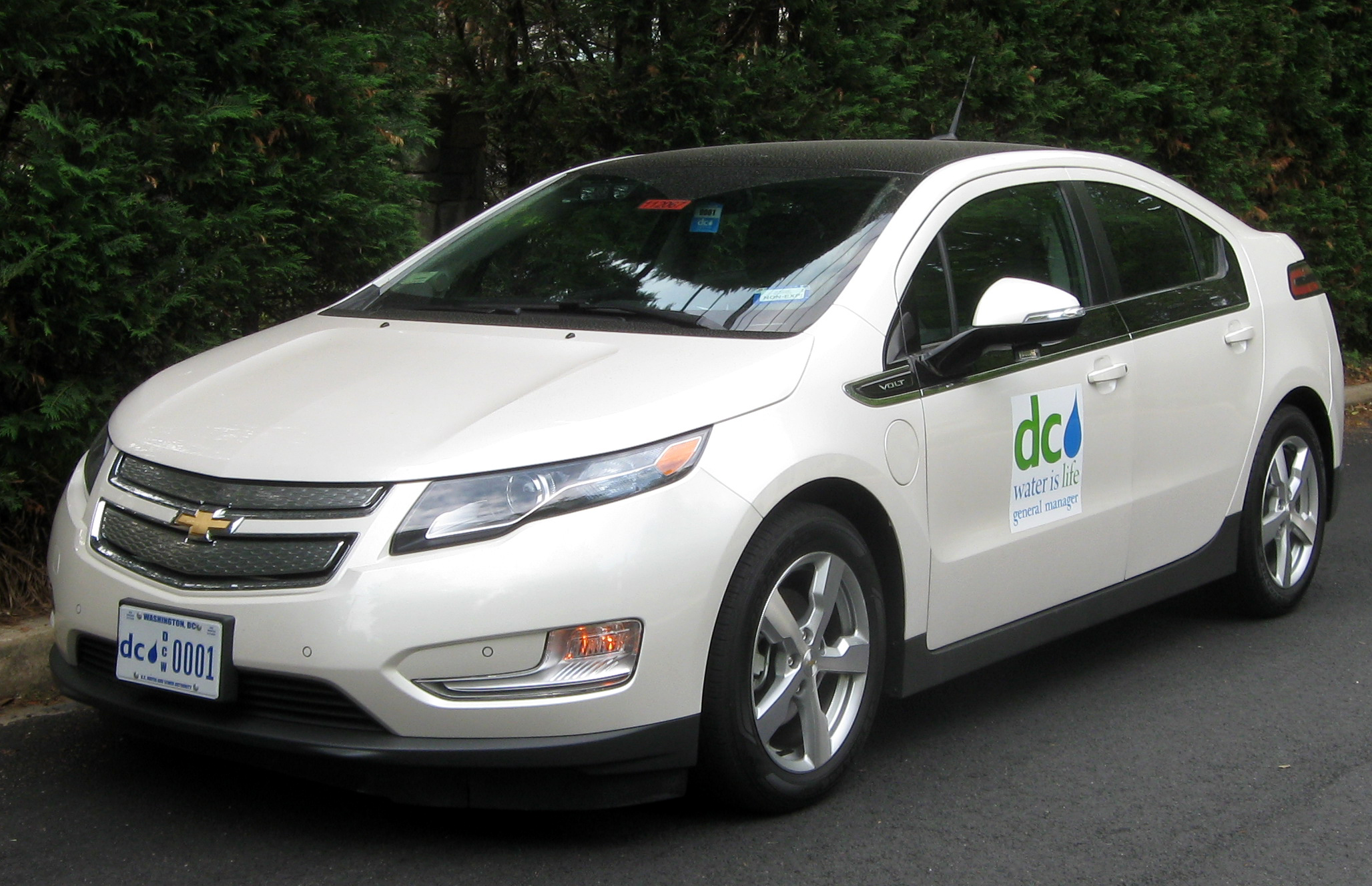
Chevrolet Volt
"... pack the same 113 kilowatt hour battery with 800 volt tech and all-wheel drive. You'll pay about five ..."
The Chevrolet Volt is a car you can plug in to charge, and it can also use gasoline when the battery runs low. The podcast is describing a version with a bigger battery, faster-charging-style electrical hardware, and all-wheel drive. That combination is meant to help it drive farther on electricity and handle better.
The Chevrolet Volt is a plug-in hybrid that’s designed to run on electricity for daily driving, then switch to a gasoline engine when needed. The podcast mentions a setup with a large battery and 800-volt technology plus all-wheel drive, which is notable because higher-voltage systems can improve charging speed and power delivery. It’s discussed in the context of how the next iteration is engineered to make electrified driving more capable.
BYD
"Chinese EVs are coming to North America. Brands like BYD and Cherry will reach the Canadian market soon and will offer lower prices than legacy automakers."
BYD is a Chinese car brand that’s starting to sell more in North America. The episode is using it as an example of why prices are getting more competitive.
BYD is a Chinese automaker mentioned as one of the brands entering North America and expanding into Canada. The segment connects BYD’s arrival to pricing pressure on traditional automakers.
Cherry
"Chinese EVs are coming to North America. Brands like BYD and Cherry will reach the Canadian market soon and will offer lower prices than legacy automakers."
Cherry is mentioned as another Chinese EV brand that’s expected to arrive in Canada. The point is that these new brands may undercut prices.
“Cherry” is referenced as a Chinese EV brand coming to Canada alongside BYD. The context suggests it’s part of the wave of lower-priced Chinese EVs challenging legacy automakers.
global rules of trade
"And it's because China does not necessarily play by the global rules of trade. They undercut everyone at every turn."
This is about how countries play by the same economic rules when trading goods. If they don’t, it can make some products cheaper than they otherwise would be.
“Global rules of trade” refers to the international framework that governs tariffs, subsidies, and fair-market competition. The segment argues that if a country doesn’t follow those norms, it can distort pricing and make imported goods cheaper.
dump them and undercut everyone
"They undercut everyone at every turn. We've seen this in solar panels and steel. They offload these and dump them and undercut everyone."
The idea here is that some companies may be selling products for less than others, to win customers. The hosts are saying that can happen when trade rules and pricing pressures don’t work the same way.
The hosts describe a trade dynamic where Chinese producers allegedly sell at very low prices—likened to “dumping”—to gain market share. This is presented as a key reason EVs can be priced far below what legacy automakers can offer.
Uber did when it arrived on the scene
"I kind of liken it to what Uber did when it arrived on the scene. They undercut cab services so that they gained market share."
They’re comparing EV pricing to how Uber grew—by charging less to pull customers from existing services. The idea is that the low prices help a new player gain market share.
The Uber analogy is used to explain a market-share strategy: entering with lower prices to attract customers away from incumbents. The hosts connect that playbook to how Chinese EV makers may price aggressively to win adoption.

Ford Mach-E
"...it becomes really easy to offer your vehicles for much less than, say, a Ford Mach-E or an electric Volkswagen..."
The Ford Mach-E is an electric Ford SUV. The hosts mention it to compare how much Chinese EVs can undercut pricing.
The Ford Mach-E is Ford’s electric crossover/SUV that competes in the mainstream EV market. In this segment, it’s used as a reference point for pricing versus cheaper Chinese-built EVs.
China is so cheap
"This is why China is so cheap. They use 10 times the coal-powered electricity that Canada does. And so when you add all of these factors up..."
The hosts say Chinese EVs can be cheaper because the whole system behind them—like energy costs, production scale, and government help—lowers the cost to make the cars. They also claim labor and policy factors play a role.
The hosts attribute China’s lower EV pricing to a mix of factors: energy costs, scale, and—critically—labor practices and government support. They argue these inputs reduce the overall cost to build and sell vehicles compared with North American production.
Canadian Automotive Dealers Association
"This week, the Canadian Automotive Dealers Association warned its 3,500 members to take extra care when striking contracts..."
This is an organization that represents car dealers in Canada. In this segment, they’re telling dealers to read the contract details carefully before signing up with new overseas brands.
The Canadian Automotive Dealers Association (CADA) represents auto dealers in Canada and issues guidance on how dealers should negotiate agreements. Here, it warns members to scrutinize contracts with Chinese or overseas automakers building sales networks.
read the fine print
"What's the concern there? I mean, the concern is read the fine print. What is it that a Chinese brand is asking you to do?"
They’re basically saying: don’t sign until you understand all the details in the contract. The worry is that the new brand may require things that limit the dealer’s control.
“Read the fine print” is shorthand for contract diligence—especially around control, obligations, and exclusivity in dealer agreements. The hosts connect it to concerns that some new entrants may demand different terms than legacy automakers.
online sales model
"They don't want an online sales model only is one of the things that Cata is telling them to look out for."
An “online sales model” typically means selling vehicles directly through digital channels rather than relying on traditional dealer-led retail processes. The concern raised is that this can change how dealers are compensated and what authority they retain in the sales network.
cybersecurity of these vehicles
"I've written about the cybersecurity of these vehicles. There is a lot of mistrust with China and Chinese brands..."
They’re talking about the security of connected features in modern cars—like software and internet-connected systems. The point is that there are worries about whether those systems are safe and trustworthy.
The hosts mention concerns about vehicle cybersecurity, implying risks related to connected-car systems, data handling, and potential vulnerabilities. This is used to support broader distrust and policy caution around certain foreign automakers.
General Motors
"...someone like a Stellantis or a General Motors. All of that mistrust is coming out right now..."
General Motors (GM) is referenced as another example of a “trusted global partner” for North American manufacturing partnerships. The mention supports the segment’s theme of reducing geopolitical and supply-chain risk.
49,000 of these vehicles entering Canada
"...as we're about months away from 49,000 of these vehicles entering Canada."
They’re saying a lot of cars are about to arrive in Canada soon. That’s why dealers and regulators are paying close attention to the contracts and trust issues.
This is a market-timing reference: the hosts say a large number of vehicles are expected to enter Canada in the coming months. It frames why dealer-network and policy concerns are becoming urgent.
EV pivot
"Some automakers raced to go all in on EVs before market headwinds pushed them into an about face. Now, a new report suggests that the bigger risk may be pivoting back too fast."
An EV pivot means a company changes its plan for electric cars. If they switch direction too quickly, it can be risky because it affects costs, product plans, and profits.
An EV pivot refers to how automakers change their strategy around electric vehicles—either accelerating EV investment or backing off when demand, regulations, or costs don’t match expectations. The episode frames this as a risk: pivoting too fast or too often can hurt profitability.
Boston Consulting Group
"On this week's episode of the Automotive News Shift Podcast, a conversation with Eric Jesse, managing director at Boston Consulting Group. He explains what BCG is hearing from automakers and suppliers as they try to stay profitable through an uncertain transition."
Boston Consulting Group is a consulting company that helps businesses plan strategy. In this episode, they’re talking to automakers and suppliers about how to stay profitable while the industry changes.
Boston Consulting Group (BCG) is a major global management consulting firm. In automotive, BCG often advises automakers and suppliers on strategy during big transitions like EV adoption and cost restructuring.
digital retail solution
"Row one fusion is an expanded digital retail solution built to enhance your dealership's customer engagement and improve the results of your online efforts. Many customers expect a fast online friendly experience and prefer clarity early in the process, especially if they have a vehicle to trade."
Digital retail is the online process dealerships use to help you shop and buy a car. It’s meant to make things clearer and faster—especially when you’re trading in a vehicle.
A digital retail solution is software that helps customers shop for and finance a vehicle online, often including trade-in estimates, pricing transparency, and scheduling. The goal is to reduce friction so shoppers can move from browsing to buying with less back-and-forth.
Row one fusion
"Row one fusion is an expanded digital retail solution built to enhance your dealership's customer engagement and improve the results of your online efforts. Many customers expect a fast online friendly experience and prefer clarity early in the process, especially if they have a vehicle to trade."
Row one fusion is a software tool dealerships can use to help customers shop online. It’s designed to make it easier to get trade-in value, schedule a visit, and keep the buying process moving.
Row one fusion appears to be a dealership software product focused on digital retailing. It’s positioned as a way to improve online customer engagement and convert more shoppers by adding tools like trade-in valuation and appointment scheduling.
trade and valuation feature
"With a subscription to fusion, you can benefit from its trade and valuation feature that empowers customers to estimate the value of their current vehicle early in the process. This helps customers arrive in store, better prepared, make expectations around payments and equity more realistic and move conversations and decisions faster."
This feature estimates what your current car might be worth as a trade-in. Knowing that up front can help you understand how it affects your payment and what to expect when you visit the dealership.
A trade-and-valuation feature estimates the value of a customer’s current vehicle early in the shopping process. That early clarity can help customers set realistic expectations for equity and payments before they ever arrive at the dealership.
equity
"This helps customers arrive in store, better prepared, make expectations around payments and equity more realistic and move conversations and decisions faster. The result is higher quality leads, more productive interactions and a smoother transition from online to in store."
Equity is basically whether your trade-in is worth more than you owe on it. If it’s worth more, it can help your deal; if you owe more than it’s worth, it can make the new car cost more.
Equity in a trade-in context is the difference between what your current vehicle is worth and what you still owe on it (if you have a loan). Positive equity can reduce the amount you need to finance on the new car; negative equity can increase it.
appointment scheduling
"Fusion also supports other features that include appointment scheduling so customers can view your availability and book a time. Pre-qualification tools with subscription provide quick credit based payment options and production product presentations"
Appointment scheduling is the ability to choose a time to come into the dealership. It helps both you and the dealer avoid waiting around and keeps the process on track.
Appointment scheduling lets customers pick a time to visit the dealership, often directly from the dealership’s website or digital retail platform. It reduces delays and helps the dealership plan staffing and inventory readiness for the customer’s visit.
pre-qualification tools
"Fusion also supports other features that include appointment scheduling so customers can view your availability and book a time. Pre-qualification tools with subscription provide quick credit based payment options and production product presentations"
Pre-qualification tools are an early check that estimates what kind of financing you might qualify for. It can make the in-deal financing part faster because you’re not starting from zero when you arrive.
Pre-qualification tools are digital steps that estimate a customer’s credit eligibility and potential payment options before they fully apply. This can speed up the financing conversation in-store and reduce the time needed to finalize a deal.
fixed ops business
"Service and parts revenue is critical to dealership profitability and dealerships are finding new ways to grow their fixed ops business."
In dealership terms, “fixed ops” means the money they make after you buy the car—like repairs, maintenance, and parts. It’s important because it can be more consistent than selling new cars.
“Fixed ops” (fixed operations) refers to the dealership side of the business focused on service, parts, and related customer support after the sale. It’s often a steadier profit driver than new-vehicle sales because it relies on ongoing maintenance and repairs.
fixed ops and ownership study
"Cox Automotive just released its 2026 fixed ops and ownership study with insights on how dealers can capture more revenue. Skyler Chadwick from Cox Automotive spoke with automotive news senior retail editor Dan Shine about the key findings."
This kind of study tracks what happens after you buy a car—like when people get maintenance or repairs. It helps explain why customers might stop using a dealership even if they still have warranty coverage.
A “fixed ops and ownership study” looks at how vehicle owners use service channels over time—especially after the initial purchase period. The “ownership” part matters because it connects dealership service performance to when customers are still under warranty versus when they start shopping elsewhere.
KPI
"I would say the majority of the dealerships that are being affected right now, one of the top metrics that I see in KPI is that competition is intensifying."
KPI just means a “scorecard metric” a business watches to see how well it’s doing. Here, it’s being used to describe what dealerships track as competition increases.
KPI stands for Key Performance Indicator, a measurable metric used to track business performance. In this context, the host is using KPI language to describe how dealerships monitor competitive pressure and customer behavior.
competition is intensifying
"one of the top metrics that I see in KPI is that competition is intensifying. You know, we're seeing almost 300,000 new independent repair shop, your general repair shops, your tire shops, those types of things, those quick loops is growing 12% since 2018"
The segment highlights intensifying competition for dealership service revenue from independent repair shops, tire shops, and other “general repair” businesses. This matters because it can pull customers away from dealerships even when dealerships have strong parts-and-labor offerings.
independent repair shop
"we're seeing almost 300,000 new independent repair shop, your general repair shops, your tire shops, those types of things, those quick loops is growing 12% since 2018"
Independent repair shops are regular local garages that do car repairs and maintenance. If they’re growing, they’re taking some of the customers who might otherwise go to a dealership.
Independent repair shops are non-dealership businesses that perform maintenance and repairs, often competing directly with dealerships for routine service. Their growth can pressure dealership service departments on both price and convenience.
year two mark
"but one of the things that's interesting to me is that we're seeing those customers drop off and servicing their vehicle at that year two mark. You know, and those customers still have more time of warranty on their vehicle"
“Year two” is basically the second year of owning the car. The point here is that people start switching away from dealership service around then, even if their warranty hasn’t fully run out.
The “year two mark” refers to a point in vehicle ownership when customers often reassess where they service their cars. The host notes customers are dropping off at this stage even though warranty coverage may still exist, which suggests dealership retention strategies may need to start earlier.
white space
"over the last week is that we've got to learn how to manage our white space, right? Our unused opportunity and our capabilities have been able to help retain those customers..."
“White space” here means there’s business you could be doing, but you’re not doing yet. They’re saying dealerships should use what they already have to keep customers from going elsewhere.
In a dealership context, “white space” refers to untapped opportunities—capabilities or capacity the dealership already has that it isn’t fully using to retain or win customers. The hosts connect it to keeping customers from leaving by matching service demand with what the dealership can offer.
defection rate
"Yeah, that's really actually surprising, right? You know the defection rate for most, you know, warranty goes three years and after that... really about 70% of the people then go elsewhere for their repair business, but after year two it's kind of startling."
Defection rate just means how many customers leave you. Here, they’re saying once the warranty period is over, a lot more people start going to other shops or other dealerships.
The defection rate is the percentage of customers who stop using a dealership for service and repairs and take their business elsewhere. In this segment, the hosts note that after the warranty window, the rate rises sharply, which is a warning sign for dealership service retention.
warranty goes three years
"You know, the defection rate for most, you know, warranty goes three years and after that, you know, whatever accepted numbers, really about 70% of the people then go elsewhere..."
They’re using the warranty period as a timeline. The point is that when warranty coverage is no longer protecting the customer, many people start shopping around for repairs.
The segment uses the typical warranty duration as a benchmark for customer behavior. It suggests that once warranty coverage ends (or even after year two), customers become more willing to switch to other repair options, affecting dealership service revenue.
cost of walking away from a customer
"Yeah, I think another big part of that wake-up call is that cost of walking away from a customer, right? That 12% number where you now are attaching that dollar amount... up above $12,000 now."
“Cost of walking away from a customer” frames customer retention as a financial equation, not just a relationship issue. Here, the hosts attach a dollar value to expected service spend—implying that losing a customer to a competitor can mean losing thousands in future service revenue.
age of the vehicle has gone up
"And the reason is we know that is because the age of the vehicle has gone up, right? We saw it from 12.6 to 12.8 this year."
Older cars usually need more repairs and maintenance. So if the average car on the road is getting older, dealerships should expect more service business.
The “age of the vehicle” is a demand driver for service and parts: older vehicles generally require more maintenance and repairs. The hosts cite an increase (from 12.6 to 12.8) as evidence that more customers are likely to be in the market for dealership service.
customer retention
"Another important thing about retention and the old saying, sales sells the first car, service sells the rest is that I think in the study it said returning customers are two times more likely to buy their next new vehicle from their dealership if they're getting good service there."
Customer retention just means getting people to keep coming back. In car sales, it’s not only about selling the first car—service visits help build trust so they’re more likely to buy again later.
Customer retention is the idea that keeping existing customers coming back to the same dealership (for service and future purchases) is more profitable than constantly chasing new buyers. The segment ties retention to service quality and trust, arguing that good service increases the odds customers buy their next vehicle from the same dealership.
sales sells the first car, service sells the rest
"Another important thing about retention and the old saying, sales sells the first car, service sells the rest is that I think in the study it said returning customers are two times more likely to buy their next new vehicle from their dealership if they're getting good service there."
It means dealerships often make their real long-term money from service after the first sale. If you keep customers happy with repairs and maintenance, they’re more likely to buy another car from you.
This is a common dealership business mantra: the initial sale brings the customer in, but ongoing service revenue and satisfaction keep them loyal. The segment uses it to support the claim that service impacts future new-vehicle sales.
dealership service experience builds trust
"And I think it was 56% of consumers with prior dealership service experience say high trust is in the dealership is a top reason they consider purchasing a new vehicle."
If a dealership has serviced your car well before, you’re more likely to trust them. That trust makes you more willing to buy your next car from them too.
The segment emphasizes that prior service experience can strongly influence how much customers trust a dealership. That trust then affects whether they consider buying their next vehicle from the same place.
menu pricing
"if dealerships are able to have a little bit of menu shopping and then also comparisons... they should... get those costs for a repair job or for a break job or whatever it might be. So I guess by menu pricing and how that transparency and pricing can help a dealership."
Menu pricing means you can see prices broken down for typical repairs or services instead of guessing what it will cost. When pricing is clear, customers feel more comfortable choosing that dealership.
Menu pricing is when a dealership offers clear, itemized prices for common service and repair work (often with standardized options). The segment suggests that menu pricing and clear comparisons make it easier for customers to understand costs and choose the dealership.
ghost shop their competitors
"they should, you know, kind of ghost, you know, shop their competitors, you know, the guy down the street and kind of get those costs for a repair job or for a break job or whatever it might be."
Ghost shopping is like secretly checking what other shops charge. The goal is to learn the real prices so you can compare and price your own service more fairly.
Ghost shopping is when a dealership (or its marketing team) secretly contacts competitors to get real-world pricing and service information. The segment frames it as a way to benchmark repair costs so the dealership can offer more transparent, competitive pricing.
oil change
"when you think about it as a consumer, the first thing I'm going to look at is what can I do to get an oil change? What's going to cost me to get an oil change in my vehicle?"
An oil change is regular maintenance where the old engine oil is replaced. The hosts are saying people often start by checking what an oil change will cost before they book other service.
An oil change is routine maintenance that keeps an engine’s lubrication system working properly. In the segment, it’s used as an example of the first service item consumers check for price and availability before scheduling anything else.
trust and transparency in dealership pricing
"So what we really got to do is dealerships, we've really got to close that gap in and making sure that we create trust and transparency and those gaps of making sure that we do the pricing, right?"
They’re talking about being upfront about what things cost and why repairs are needed. The idea is that if customers can see the pricing clearly, they trust the shop more.
The hosts argue that dealerships can reduce customer skepticism by being transparent about pricing and repair recommendations. They frame “trust and transparency” as closing the gap between what customers expect and what the dealership actually charges.
general maintenance repair
"And everybody thinks that the dealerships are more expensive when it comes to general maintenance repair. That's not true, right? Our study shows that $261 is the average across our OEM dealerships. And if you go to a general repair, it's $275."
They’re comparing what it typically costs to get routine service and repairs done at different places. The point is that dealership pricing may not be as high as people assume.
This contrasts “general maintenance repair” work with dealership service pricing. The hosts use average cost figures to argue that dealership service can be competitive versus independent/general repair shops.
video walk-arounds
"Other part of transparency is video, video walk-arounds, video inspections by the technician. Here's your car up on the lift. Your brakes have this much left, your tires look good, but you know, kind of going around and sending that video to the customer."
Instead of just telling you what’s wrong, the technician records a video showing the problem areas. The goal is to make it easier to understand why the repair is needed and to build confidence in the recommendation.
A video walk-around is a technician-led recording of the vehicle’s condition, typically showing wear items and explaining what needs attention. In the segment, the hosts cite that seeing the condition on video increases customer approval of recommended repairs.
video inspections by the technician
"Other part of transparency is video, video walk-arounds, video inspections by the technician. Here's your car up on the lift. Your brakes have this much left, your tires look good, but you know, kind of going around and sending that video to the customer."
The mechanic records the inspection while the car is up on the lift. That way, you can actually see what they’re talking about instead of relying only on their words.
This refers to technicians documenting the inspection results on video—often while the car is on a lift—so customers can see the evidence behind the recommendation. The segment highlights a study where customers who see video are more likely to approve recommended services.
recommended services approval rate
"And the study said almost half, 49% customer said being able to see a video and have why a repair is needed, they're more, you know, half are more likely to approve those recommended services than without video."
This concept is about how customers decide whether to authorize suggested repairs. The segment cites survey results (49%) indicating that customers who can see video evidence and understand why repairs are needed are more likely to approve those recommendations.
technician as a doctor analogy
"Yeah, I think that this is thinking about the technician being your doctor, right? Your advisor is just kind of the front desk person and we walk into an actual doctor's office, right? The technician is the actual doctor, right?"
The “technician as your doctor” analogy positions the technician as the expert who diagnoses and explains issues, while the service desk is more like the front desk. It’s used to describe how video helps customers understand the diagnosis and feel more confident about the recommended work.
trade-in decision influenced by repair costs
"And I think that's a big thing that why consumers are saying, hey, you know, we're starting to see also see that dollar amounts as well having an effect on if I'm going to even trade in that card. So that goes back to that buying their next vehicle from you as a dealership."
The segment connects transparency and repair recommendations to later customer behavior—specifically whether a customer keeps the current vehicle or trades it in. It suggests that seeing repair cost “dollar amounts” can shift the customer’s decision-making about their next vehicle.
trust and transparency with our customers
"is a major factor in building trust and transparency with our customers. What are the implications for dealers?"
They’re talking about being honest and clear with customers. When customers understand what’s being done and what it costs, they’re more likely to come back.
The episode links customer trust and transparency to better retention and improved service outcomes. In dealership operations, transparency often means clear communication on pricing, work performed, and why repairs are recommended.
service conversation between those two departments
"I think the biggest thing is getting ourselves a service conversation between those two departments on key. And I think that that is a big factor."
They’re saying the dealership should have better communication between the people who sell cars and the people who service them. When those teams work together, customers get clearer answers and a smoother experience.
The speaker is emphasizing coordination between sales and service teams (or service and parts) so customers get a seamless experience. In practice, that can mean aligning how trade-ins, service needs, and scheduling are handled so customers feel informed rather than bounced around.
value trade
"33% of our consumers want a value trade on their vehicle. That takes both of those partners into play there too as well."
A “value trade” is when the dealership makes the trade-in offer feel fair and worthwhile to the customer. The goal is to keep the customer in the dealership ecosystem instead of taking the car elsewhere for repairs.
A “value trade” refers to offering a trade-in deal that’s positioned around perceived value to the customer, not just the lowest possible trade allowance. The transcript ties it to both departments working together, suggesting it’s part of a broader strategy to keep customers from going to independent “general repair” shops.
Cox on motive
"I think some of our tools here at Cox on motive, like one of our three X time in our scheduling platform, you know, change the focal point..."
They mention a dealership software tool (“Cox on motive”). It’s used to help manage scheduling and decide how to encourage customers to book at certain times.
The speaker references “Cox on motive,” which appears to be a scheduling/operations software platform used by dealerships. The context suggests it includes tools for managing appointment timing and marketing/scheduling focus.
general repair
"We cannot continue to lose more than 12% of our customer base to general repair as a dealership."
“General repair” means going to a non-dealership shop for maintenance or repairs. The speaker is saying the dealership loses customers when they choose those shops instead of staying with the dealership.
“General repair” refers to customers taking their vehicles to independent repair shops instead of the dealership’s service department. The transcript frames it as a measurable loss (over 12% of the customer base) and positions dealership service trust/transparency as the countermeasure.
front end and back end
"It may just so important to the growth in your business on both the front end and back end."
“Front end” is selling cars. “Back end” is the money from service and parts after the sale.
“Front end” typically means vehicle sales, while “back end” usually means service and parts revenue. The transcript uses this to argue that fixed ops growth supports the dealership’s overall business health.
vehicle history
"And those are the best types of cars to buy is that vehicles you know that you've done service on and you know the vehicle history of that vehicle."
“Vehicle history” is what’s known about a car’s past, like whether it was serviced regularly. If you can see that history, it’s easier to trust the car and feel better about buying it.
“Vehicle history” means documented records about a car’s past—especially maintenance and repairs, and sometimes ownership and accident information. In used-car buying, a known history reduces uncertainty and can increase buyer confidence and perceived value.
service lane
"I always say to dealerships all the time the best auction that's happening in your service is in your in your service lane."
The “service lane” is the dealership area where vehicles are brought in for maintenance and repairs. The hosts are emphasizing that the best “auction” inventory is often the trade-ins that come from customers who already used the dealership’s service department, because the dealer has more complete service records and trust.
consumer experience
"So it's really a big focal point to make sure that our service and parts and also our sales departments are working closely together to make sure we maximize the consumer experience for sure."
“Consumer experience” just means how good the whole buying-and-owning process feels to the customer. Here, they’re saying sales, service, and parts should work together so customers don’t get bounced around.
“Consumer experience” in this context is the end-to-end journey a customer has with the dealership—how smoothly sales, service, and parts support each other. The transcript highlights cross-department coordination to improve trust, turnaround times, and overall satisfaction.
Cox study
"Skyler really appreciate you jumping behind the numbers and giving us a little bit deeper dive into that Cox study."
Cox Automotive is a company that studies how people buy and service cars. When they publish a study, it usually helps explain what customers care about—like whether service history makes them more confident buying a used car.
A “Cox study” refers to research conducted by Cox Automotive, a major auto-industry data and analytics company. In dealership discussions, these studies often quantify how consumers shop, what drives trust, and how service history affects purchase decisions.
fixed op strategies
"You can get the latest news on fixed op strategies, brand investments and everything happening in the auto industry at AutoNews.com."
“Fixed ops” is the part of a dealership that makes money from keeping cars running—like repairs, maintenance, and selling parts. A “strategy” is just the plan for how they grow that business over time.
“Fixed ops” (fixed operations) refers to the dealership side of the business that isn’t selling new cars—mainly service, parts, and collision/repair. “Strategies” here means how automakers and dealers try to grow profit and customer loyalty through service and parts, not just vehicle sales.
Request an Explanation
Heard something you'd like explained? We'll add it to this episode.
Sign in to request explanations for terms you heard.
Want to learn more?
Browse our glossary for plain-English explanations of automotive terms, jargon, and concepts.
Help improve this episode
See something that's not quite right? Our annotations are AI-generated and can sometimes miss the mark. Click the flag icon on any annotation to suggest a correction.