ARS On Winning TX2K, 2000hp Camaros, and Why MoTeC Runs Everything
About this episode
Texas 2K becomes the backdrop for a deep dive into how their Camaro program evolved—roll-cage work, transmission/gear changes, and MoTeC sensor/EGT updates—while they juggle a fleet that sometimes arrives “untested.” Qualifying setbacks (red lights, cone hits) and grudge/no-prep uncertainty push constant strategy shifts. The episode then zooms out to MoTeC’s role in firmware, CAN integration, wiring documentation, and on-the-fly tune switching, plus the real-world costs and durability limits behind 1000–2500+ hp builds.
ARS joins Minnoxide for a round two, and this time they're breaking down how they built and tuned a fleet of four cars to compete at Texas 2K, why MoTeC runs on everything they touch, and what it takes to build 1,000hp and 2,000hp Camaros that can do it all.
Take your build up a whole new level with 6XD Gearbox: https://6xdgearbox.com
Code "Minnoxide5" for 5% off
High Performance Academy: https://hpcdmy.co/Minnoxide
Use code "MINNOX" for 55% off ANY course
Use Code "MINVIP" for $300 of the MINVIP Package
Tuned By Shawn: https://www.tunedbyshawn.com
Code "Minnoxide" for 5% off!
Ship With Sure Thing Logistics: https://www.surethinglogistics.net
MORE BIGGER Turbo T-Shirts: https://www.minnoxide.com/products/more-bigger-t-shirt
0:00 - Intro, Texas 2K Prep: Four Cars and No Sleep
4:19 - Billy's Car: Bump Box and Running Sevens
6:55 - How the Shop Evolved Since Last Time
17:38 - Breaking Down a 1,000hp Build Start to Finish
25:17 - Compressed Air Supercharging: What It Is and Why It Hasn't Taken Off 38:00 - Billy's Car Next Step: Chasing Sixes with a Solid Nine Inch
48:26 - All About MoTeC: ECUs, Firmware, and Why ARS Uses it On Everything
53:19 - The Texas Scene and Why People Are Moving for It
1:11:41 - Grudge Racing: The Car That Never Lights Up a Board
1:15:01 - How Tuning Changes Every Single Run
1:18:00 - The Sixth Gen Leaderboard and What's Coming
1:27:23 - What's Next for ARS: Roll Racing, New Dyno, and the 200mph Goal
Texas 2K
"Texas 2K was awesome. Okay, because I was up in the suite. I was watching you guys race up there ... you guys actually won that weekend, right?"
Texas 2K is a drag-racing event in Texas. The hosts are describing their team’s preparation and how they won that weekend.
Texas 2K is a drag-racing event in Texas where teams bring cars to compete in timed runs. In this segment, the hosts talk about how their team prepared and ultimately won that weekend.
Magnuson Supercharged
"That was a Supercharged car too, right? Magnuson Supercharged, Turbo 400, Motec."
A Magnuson supercharger is a forced-induction device that pushes extra air into the engine. More air usually means more power, which is why it’s popular on drag cars.
“Magnuson Supercharged” refers to a supercharger brand (Magnuson) used to force more air into the engine. On drag cars, this is a common way to make very high power by increasing intake pressure.
Turbo 400
"Magnuson Supercharged, Turbo 400, Motec."
“Turbo 400” is a well-known GM automatic transmission used in drag racing. People choose it because it can handle a lot of power and torque.
“Turbo 400” is shorthand for the GM TH400 automatic transmission, widely used in drag racing. It’s known for handling high torque loads and is often paired with high-horsepower builds.
roll cage
"But like, we did a whole roll cage in it. So, we switched from like a car that's going to kill you. Yeah, a six point Bolton roll cage to a poblem roll bar in it."
A roll cage is a metal safety frame inside the car. It helps protect the driver in a crash and is common on race cars.
A roll cage is a reinforced metal framework inside the cabin designed to protect occupants during a crash. Drag cars often add or upgrade roll cages to meet safety requirements and to stiffen the chassis for better control under hard launches.
EGTs
"And we updated a lot of the electronics like added EGTs, like we knew we were going to push the car harder."
EGTs are sensors that measure how hot the exhaust gases get. If the exhaust is getting too hot, it can be a warning sign that the engine is under too much stress.
EGTs (exhaust gas temperatures) are sensors that measure how hot the exhaust is. Drag teams use EGT data to monitor engine stress and combustion quality, especially when pushing harder with forced induction and aggressive tuning.
converter changes
"And we just saw it like state or converter changes. And we updated a lot of the electronics like added EGTs..."
A torque converter is part of an automatic transmission. Changing it can change how the car launches and how it feels as the engine speed rises during a run.
“Converter changes” refers to swapping or modifying the torque converter in an automatic transmission car. In drag racing, changing the converter can alter launch characteristics and how the car multiplies torque at different engine speeds.
trunk breathers
"We did like trunk breathers on all of them. So, if something were to blow up, it ends up in the trunk."
Trunk breathers are vents that let air move in and out of the trunk. The goal is to prevent pressure buildup or to help manage what happens if something goes wrong.
Trunk breathers are vents/air passages added to the trunk area to manage pressure and fumes. In drag-racing setups, they can help route or contain airflow so components don’t get stressed if something fails.
12 rib
"The two IPSI came out with the 12 rib that allowed us to spin these blowers without breaking belts. So, we upgraded those on all the cars including Dan's."
A “12 rib” belt has more ridges that grip better. That helps it survive higher loads when the supercharger is working hard.
“12 rib” refers to a multi-rib belt design used to drive the supercharger. More ribs increase belt surface area and grip, helping the blower spin harder without the belt slipping or breaking.
bump box
"Like we had to teach, we taught him how to use the bump box Monday morning of Texas 2K... We just ran out of time. And that's why I laugh about it."
A bump box is a racing gadget that helps control the engine when you’re getting ready to launch. It’s used to make the start more consistent so the car can hook up and go hard.
A bump box is a launch-control device used in drag racing to control engine RPM and timing during the start. It helps the driver stage and “bump” the car consistently so the car leaves the line with the right conditions for traction and power delivery.
pits
"Like we had to teach, we taught him how to use the bump box Monday morning of Texas 2K last year in the pits."
The pits are the service area at a race event where teams work on cars between runs. The hosts mention teaching someone how to use the bump box in the pits, which is where staging, preparation, and adjustments typically happen.
burnout
"We had to teach him everything with the car from how to do a burnout. So, the first time I've heard a story like that too."
A burnout is when you spin the tires on purpose for a short time. It warms the tires so they grip better when you launch.
A burnout is when the driver spins the tires briefly to heat them up and improve traction for the launch. In drag racing, it’s part of the routine prep so the car can transfer power to the ground more effectively.
Dino
"And I'm like, we were on this last year's, the prior Texas 2K, I was on the Dino Monday night with that car... And we left Monday morning fresh from the Dino on the trailer."
“Dino” is slang for a dyno, which is a machine that tests how much power an engine makes. They’re saying the car was freshly tested/tuned before it went through the event’s inspection.
“Dino” is shorthand for a dynamometer (dyno), a machine used to measure engine output and tune performance. The hosts mention coming off the dyno and going straight into tech, implying they were fresh from tuning/testing before the event.
tech
"Billy was already standing outside of tech, dropped him his car off and went through tech... And then here, let's learn how to use a bump box."
“Tech” is the inspection before the car is allowed to race. They check safety items so the car is ready to run.
“Tech” refers to the event’s technical inspection, where officials check the car’s safety and compliance before it can run. The segment describes dropping the car off at tech immediately after dyno work, emphasizing how safety and readiness come first.
qualifying
"So we're in qualifying, [389.3s] trying to qualify in the tree just red lit us for no reason. And then so we went back up to redeem ourselves"
Qualifying is the practice-and-tryout part of a race where you make your best run to earn your spot for the next round. If something goes wrong, like a bad reaction or a cone hit, that run might not count.
Qualifying is the session where drivers try to post their best time or speed to determine their starting position or bracket placement for eliminations. In drag racing, it’s where you’re trying to get a clean, fast run that counts toward your advancement.
red lit
"trying to qualify in the tree just red lit us for no reason. And then so we went back up to redeem ourselves"
A red light happens when you launch before the race system says it’s time. That run usually doesn’t count because it’s considered a mistake at the start.
A “red light” means the driver started too early at the start line, triggering the timing system to record a false start. In drag racing, a red-light run is typically disqualified or doesn’t count toward your results.
clips the cone
"and the Billy does go sevens, but clips the cone. So that didn't count."
If you hit a cone during your run, officials may treat it like you broke the rules or left the lane. Even if your time is quick, that pass might not count.
“Clipping the cone” refers to touching or hitting the small marker cone during a drag run, usually near the staging/track area or lane boundary. It’s often treated as a rules violation that can invalidate the pass even if the time looks fast.
seven second pass
"So then we finally got our real seven second pass and I put the laptop down the rest of the weekend"
A “seven second pass” is a quick drag-race run where the car’s elapsed time lands in the 7-second range. It’s basically a brag about how fast the car is.
A “seven second pass” means the car ran the quarter-mile in the 7-second range (or a similar drag-racing elapsed time target). It’s a shorthand enthusiasts use to describe how fast a car is without listing exact numbers.
laptop
"So then we finally got our real seven second pass and I put the laptop down the rest of the weekend because you can't shoot yourself in the foot against all the cars over there."
In this context, the “laptop” is being used for tuning and/or data review during a race weekend. Teams often use laptops to read logs, adjust settings, and verify that the car is behaving correctly between runs.
MoTeC
"So that that car has probably got 100 200 hours to finish a project that big, I can install a MoTeC wire whole car. So those projects could take up so much time."
MoTeC is a brand of high-end race electronics. People use it to control the engine and to log data so they can tune the car more accurately.
MoTeC is a performance electronics brand best known for engine management and data-logging systems used in serious builds. In the transcript, “MoTeC wire whole car” and “I want a MoTeC” point to using MoTeC to control and monitor the car’s systems for high-power, high-precision results.
supercharger system
"So with the yellow car, Todd, he's building the cast, the compressed air supercharger system in which someone's fabricating all that because we don't do fabrication here, but Brandon has to wire the whole car."
A supercharger is a device that pushes extra air into the engine. More air usually means more power, but it has to be installed and wired correctly.
A supercharger system forces more air into the engine, which can dramatically increase power. In this context, they’re talking about a custom setup that includes fabrication and wiring work to integrate it into the car.
pro mod
"This is like the two questions on like a car of that caliber. It's like, you can't ask how much or how long like, it's, it's, it's a pro mod."
Pro Mod is a drag-racing category for cars that are heavily modified for maximum performance. Builds are more complex because the cars are already set up for serious racing.
Pro Mod (short for Pro Modified) is a drag racing class for highly modified cars, typically with extreme power and purpose-built safety structures. The transcript implies scheduling and build planning are different because these cars are already at a high, specialized baseline.
frame rail
"like full double frame rail car, really wild. Like it went there for like a cage update, it's coming back like 3500 horsepower Camaro."
Frame rails are the strong metal parts that form the car’s main structure. When they’re reinforced for drag racing, it helps the car survive big power and hard acceleration.
Frame rails are the main structural members of a car’s chassis that carry loads and support the drivetrain and suspension. In drag builds, “full double frame rail” suggests significant reinforcement work to handle the stresses of very high power and hard launches.
cage update
"like it went there for like a cage update, it's coming back like 3500 horsepower Camaro."
A “cage” is a roll cage, which is safety metal inside the car. Updating it usually means improving crash protection for racing conditions.
A “cage” in drag racing is a roll cage—an internal metal safety structure that protects occupants during crashes. A “cage update” implies the car’s safety structure was modified or upgraded to meet current requirements or better match the car’s new configuration.
testing
"And that doesn't even account for any of the testing"
In high-power drag builds, “testing” refers to structured runs and data collection to verify tuning, reliability, and safety before committing to more aggressive performance. The transcript suggests scheduling must account for testing time beyond just parts and fabrication.
Magnuson 2650
"So like, I love the business side of things. So it's like, are you seeing more like Magnuson 2650 builds coming in now as well? ... almost every car that we're doing for 1000 horsepower is 2650"
Magnuson 2650 is a type of supercharger. It’s designed to force more air into the engine, which is one of the main ways people make big horsepower.
A Magnuson 2650 is a specific supercharger model (a roots-style blower) commonly used on high-output builds. It’s popular because it can move a lot of air at relatively low engine speeds, which helps support very high horsepower targets.
centrifugal supercharger
"if there is a super charger, like a super charger install, it's going to be a Magnuson, maybe like a C seven Corvette weekend warrior ... wants a little more power like an A&A kit, like the centrifugal supercharger."
A centrifugal supercharger is a forced-induction system that uses a spinning wheel to push more air into the engine. More air usually means more power.
A centrifugal supercharger uses an impeller (like a turbo’s compressor) to spin and accelerate air, then feed it into the engine. Compared with some other blower types, it often makes strong power as RPM rises, which is why it’s common in street and kit-based setups.

Chevrolet Corvette
"if there is a super charger ... it's going to be a Magnuson, maybe like a C seven Corvette weekend warrior, older person that's just cruising around wants a little more power"
The Chevrolet C7 Corvette is a Corvette generation that a lot of people modify. Here, it’s being used as an example of a car that owners upgrade with superchargers for more power.
The Chevrolet C7 Corvette is a seventh-generation Corvette known for being a popular platform for supercharger and high-horsepower upgrades. In this segment, it’s referenced as a common “weekend warrior” target for boost kits.
crank driven pro charger
"we pro charge, like we marks as a whole separate conversation on that, but we're putting a crank driven pro charger on his but that's when we're trying to make a really big power."
A crank-driven supercharger gets power directly from the engine. That usually means it can add boost early and help make big horsepower.
A crank-driven ProCharger refers to a supercharger that’s mechanically driven by the engine’s crankshaft (not by exhaust gases like a turbo). Because it’s tied directly to engine speed, it can deliver boost quickly and is often chosen for high-power builds.
port the stock 01 supercharger
"But almost every car that we're doing for 1000 horsepower is 2650 or you could port the stock 01 supercharger. And that's what's been popular this past few months."
Porting is basically “tuning the inside” of the supercharger by reshaping passages so air flows better. It’s a way to get more out of the original supercharger.
“Porting” a supercharger means machining or reshaping internal passages to improve airflow and reduce restrictions. When someone says “port the stock” unit, they’re typically referring to modifying the factory supercharger rather than replacing it with a different blower.
sequential transmissions
"And when we're talking sequential transmissions, there's no one on the planet [1034.4s] with a stronger gearbox than 6XD."
A sequential transmission is a gearbox where you shift through gears in order—like step-by-step. Racers like it because it can shift quickly and predictably.
A sequential transmission lets you shift only forward or backward through gears in order, rather than using an H-pattern. It’s common in racing because it can make gear changes faster and more consistent under load.
6XD
"And when we're talking sequential transmissions, there's no one on the planet [1034.4s] with a stronger gearbox than 6XD. And the proof is in the pudding here folks. [1038.2s] Half the FD field is rocking a 6XD and even 3000 horsepower vipers have not been able to tame [1043.8s] the best that 6XD has to offer."
6XD is a gearbox brand focused on high-strength transmissions for motorsports and high-power builds. In this segment, the host claims that many FD (Formula Drift) cars use 6XD gearboxes and that even very high-power cars (like “3000 horsepower vipers”) can’t outmatch what 6XD offers.
FD
"Half the FD field is rocking a 6XD and even 3000 horsepower vipers have not been able to tame [1043.8s] the best that 6XD has to offer."
FD refers to Formula Drift, a professional drifting series. Saying “Half the FD field” implies a large share of competitive drift cars use the same gearbox brand, which is meant to support the strength claim.
fuel system
"Yeah, I mean typically if I'm doing a [1068.5s] supercharger and a fuel system, which we're doing port injection on everything, [1072.6s] we're not installing methanol."
The fuel system is everything that supplies fuel to the engine. When you add boost (like with a supercharger), you usually need more fuel delivery capacity to keep the engine running safely.
A fuel system upgrade typically includes the components that deliver enough fuel for higher airflow—such as pumps, regulators, injectors, and lines. In forced-induction builds, the fuel system is critical because the engine needs additional fuel to maintain safe air-fuel ratios.
rear wheel
"From start to finish from a bone stock car to [1112.0s] 1000 rear wheel off the dyno tuned and picked up on a Saturday in a perfect world."
“Rear wheel” power is the power measured at the wheels. It accounts for losses between the engine and the drivetrain, so it’s a real-world number.
“Rear wheel” power refers to horsepower measured at the driven wheels on a dyno, after drivetrain losses. It’s a practical number for enthusiasts because it reflects what actually reaches the road rather than what the engine makes on paper.
tune
"We've turned them, we've turned them those and I'll try to put in a tune there just to like [1127.7s] break it up a little bit for him, something small. I'm like, here, go tune something like [1133.2s] relax."
A tune is the computer settings for the engine. When you change parts, the tune has to be updated so the engine gets the right fuel and timing.
A “tune” is the calibration of the engine control unit (ECU), adjusting parameters like fuel delivery and ignition timing to match the car’s hardware. After hardware changes (supercharger, fuel system, port injection), a proper tune is needed to get performance and keep the engine operating safely.
trans break
"But then the trans break is on this half bridge and all that stuff."
A trans break is a drag-racing feature that “holds” the transmission so the car can build RPM/boost without launching yet. Then you release it to start the car with a more consistent launch.
A trans break is a transmission control strategy used in drag racing to hold the transmission in a specific gear state before launch. By preventing the car from moving while the engine builds boost or RPM, it helps the driver stage and then release for a consistent, hard launch.
wiring schematic
"Yeah, so I print the so motec, you could get a wiring schematic from every harness, I print that harness out."
A wiring schematic is a map of how the wires are connected. It helps you troubleshoot and confirm which wire goes to which sensor or control.
A wiring schematic is a diagram that shows how each wire in a harness connects to specific inputs and outputs. In race-car electronics, it’s essential for troubleshooting and for making sure the same harness can be configured correctly across different cars and setups.
inputs and outputs
"And then I write where all my inputs and outputs are. And then it's also saved in the software where all the wiring's at."
Inputs are sensor signals the computer reads, and outputs are commands the computer sends to controls. If you mix them up, the car can’t run the way the setup is intended.
In engine management, “inputs” are signals coming from sensors (like pressure, temperature, or speed), while “outputs” are commands sent to actuators (like solenoids, ignition, or boost control). Correctly assigning which input/output belongs to which function is critical when building or changing race-car configurations.
smooth boost
"But on a blower car, I might be using it for smooth boost."
Smooth boost is a control strategy that manages how quickly and how steadily boost pressure rises. In practice, it’s about reducing harsh transitions (which can cause wheelspin, traction loss, or driveline shock) by using the ECU’s boost-related outputs and control logic.
blower car
"But on a blower car, I might be using it for smooth boost."
A blower car has a forced-air system that pushes more air into the engine. Different forced-air setups need different computer settings, so the wiring/output plan can be different too.
A blower car uses a supercharger (often a positive-displacement type) to force air into the engine. Because boost behavior differs from nitrous or turbo setups, the MoTeC output assignments—like what controls “boost” or “smooth boost”—can change between platforms.
firmware
"if you want to put motec on a car, you have to write the software firmware firmware... Now motec makes their own firmware."
Firmware is the controller’s built-in instructions. Think of it like the setup that tells the MoTeC computer how to work with your car.
Firmware is the built-in software that tells an ECU/controller how to operate and how to interpret inputs. The host explains that MoTeC requires the right firmware so the controller “knows” how to talk to a particular car’s sensors and systems.
relay box
"Okay. So it starts like motec itself is a relay box. Okay, a bunch of relays in there."
A relay box is basically an electrical switching system. It helps control what gets power and when, but it still needs the right configuration to work with a specific car.
A relay box is a control unit that uses relays—electrically operated switches—to route power and signals to different components. The host describes MoTeC as starting as a relay-based box that still needs the correct firmware to function in a specific vehicle.
gear position switch
"does it have a cool and pressure sensor gear position switch is going to run a trans break"
A gear position switch tells the computer which gear the transmission is currently in. That information helps the engine-management system make the right decisions.
A gear position switch (or sensor) tells the ECU what gear the transmission is in. In the segment, it’s mentioned as one of the inputs MoTeC needs to correctly control functions like launch/drag features.
CAN bus
"easy or no, I mean, you talk can right like the car communicates on let's say can one, okay, on an m 182 car and then you have a can three."
CAN bus is the car’s internal communication system. Instead of every computer running separate wires, they share messages over a shared network so everything can coordinate.
CAN bus (Controller Area Network) is a vehicle wiring network that lets multiple electronic control units (ECUs) share data over a small number of wires. It’s how modern cars coordinate sensors, actuators, and displays without each module needing its own dedicated wiring for everything.
PMU
"So when we run out of outputs, we have to run an ECU master PMU, I'm gonna put that on can three can basically allows two wires to send a ton of messages to do what you want to do."
A PMU is a module that helps the car control more electrical things at once. It’s like an expansion box so you can run extra sensors/outputs without wiring everything directly.
PMU (power management unit) is an electronics module used to expand the number of controllable outputs and manage power/loads for accessories and sensors. Here, the host uses a PMU/ECU master PMU to add more channels for signals while still communicating over the CAN network.
lambda controller
"Because if you go put the lambda controller on at 1000 megabits, and then you don't have it programmed for the 500, the car communicates at a crash, the whole bus and nothing works."
The lambda controller helps the engine get the right fuel-to-air mix. In this discussion, it’s also important because it needs to be configured correctly to communicate with the rest of the car.
A lambda controller manages the air-fuel mixture using oxygen (lambda) sensing, typically to keep combustion efficient and emissions-compliant. The segment highlights that if it’s set up for the wrong communication speed, it can disrupt the entire network.
megabits
"Because if you go put the lambda controller on at 1000 megabits, and then you don't have it programmed for the 500, the car communicates at a crash, the whole bus and nothing works."
Megabits here means how fast the car’s computers are trying to talk to each other. If one module is set to the wrong speed, the whole communication system can fail.
Megabits refers to data rate (how fast information is sent) on a communication link. On CAN-based systems, mismatched bus speeds can prevent modules from talking correctly, which can cause a total loss of communication on the network.

Lancia Lambda
"... are programmed, right? Because if you go put the lambda controller on at 1000 megabits, and then you don'..."
The Lancia Lambda is an older car model made by Lancia. The podcast mention seems to use the word “lambda” in a technical way, not necessarily to talk about driving it. So it’s likely referenced because the name stands out.
The Lancia Lambda is a historically important early 20th-century car from Lancia, known for engineering innovations for its time. The podcast context mentions “lambda controller” and “1000 megabits,” which sounds like a technical wordplay or analogy rather than a deep dive into the original vehicle. It’s still discussed because the name “Lambda” is distinctive and can come up in technical conversations.
scavenge pumps
"Yeah, we do so many of them that it's very clear on what we're doing and how these things communicate and what we could expect from the product. But like Billy's car, we add e gt like we're out of inputs and outputs on the m 182. So now we got to go run a whole second ECU in there to communicate to add the e gt's and then to run all his outputs like his ice tank, his scavenge pumps, all that"
Scavenge pumps are pumps that remove fluid from where it collects and send it back to where it belongs. In a race car, they’re often controlled electronically and need to be wired into the system.
Scavenge pumps are used to pull fluid (often oil or other liquids) out of a low point and return it to a reservoir, preventing pooling and starvation. The segment treats them as controlled outputs that must be integrated into the wiring/output capacity of the ECU/PMU setup.
compressed air
"plus all the pressure sensors like, like compressed air, Motek doesn't care what it is, like you write it into the firmware..."
Compressed air means air that’s been squeezed into a smaller space so it has more pressure. They’re using that high-pressure air to help make power in a way that feels unusual.
Compressed air systems use pressurized air as a power-adder or control medium instead of (or alongside) traditional boost methods. The host is describing a setup where pressure sensors and a controller strategy let the system deliver very high power, making it feel “weird” but effective.
manifold pressure
"stupid fast, comparable to 20 pounds of boost on a car, they're running like 10 pounds of manifold pressure. Okay."
Manifold pressure is how hard the engine’s intake system is pushing air into the engine. Higher numbers generally mean more air, which can translate to more power.
Manifold pressure is the pressure in the engine’s intake manifold, which strongly influences how much air (and therefore potential fuel/combustion) the engine can use. The host compares the system’s effect to “20 pounds of boost” and says they’re running about “10 pounds of manifold pressure,” framing it like a boost-equivalent power level.
compressor
"So why hasn't it taken off price? The compressor is $10,000 that you're going to have to put in your trailer."
A compressor is the machine that increases the pressure of a gas—in this case, compressed air for the system. The host discusses the compressor as the expensive core hardware (around $10,000) that you’d need to add to a trailer setup.
nitrous bottles
"Then you need four or five mother bottles, like those big nitrous bottles in your trailer."
Nitrous bottles are containers that hold nitrous oxide, a chemical used to make extra power when injected. Racers often bring them in a trailer because you need multiple bottles for repeated runs.
Nitrous bottles store nitrous oxide (N2O) under pressure for injection into an engine to increase power. The host is comparing the logistics/cost of their compressed-air setup to the way racers haul multiple nitrous bottles in a trailer.

Dodge Charger
"...f cars. So it's, I think it's able to match a pro charger car at that power. So if I'm understanding this c..."
The Charger is a powerful car made by Dodge. It’s known for having strong acceleration, and people often modify it to make even more power. In the podcast, it sounds like they’re talking about how much power it can handle.
The Dodge Charger is a large, performance-oriented sedan/coupe-style muscle car that’s commonly discussed for its power potential and straight-line speed. The podcast context suggests a comparison involving supercharging (“pro charger”) and matching high power levels. That’s why it comes up: the Charger platform can be tuned and built to reach very serious performance numbers.
floater rear end
"It's going to be a sub 3000 pound double frame rail floater rear end, really gnarly turbo 400, zoomies, Lexan, everything."
“Floater rear end” describes a rear axle setup where the axle shafts are supported differently than in a conventional rear end, often to improve durability under heavy torque. It’s a common choice in high-power drag cars where the drivetrain sees brutal loads.
zoomies
"really gnarly turbo 400, zoomies, Lexan, everything. It's going to be cool. 14 inch rear wheel."
“Zoomies” is slang for open exhaust headers or short exhaust stacks that dump near the engine bay. They’re often used on drag cars to reduce exhaust restriction and to make the car sound and respond more aggressively.
Lexan
"really gnarly turbo 400, zoomies, Lexan, everything. It's going to be cool. 14 inch rear wheel."
Lexan is a lightweight plastic used on race cars instead of glass. It’s tough enough for racing and helps keep weight down.
Lexan is a brand name for polycarbonate plastic, commonly used in race cars for lightweight, impact-resistant windows. It’s often chosen to reduce weight versus glass while improving safety and durability.

Blazer SS
"What do you have? Like a plaid or something? No, we got a Blazer SS. A Blazer EV SS. We took it. How do you like it? I love it."
They’re talking about a Chevrolet Blazer SS that’s electric. The point is it’s fast and fun to drive, even if it’s not a traditional gas race car.
The Chevrolet Blazer SS is being discussed here in an electric form (“Blazer EV SS”), which is notable because it’s positioned as a quick, modern daily/enthusiast EV. The host highlights its acceleration and how it fits into their lifestyle and track-adjacent world.

Chevrolet Blazer EV
"...e a plaid or something? No, we got a Blazer SS. A Blazer EV SS. We took it. How do you like it? I love it. Th..."
The Blazer EV is an electric SUV made by Chevrolet. Instead of using gasoline, it runs on electricity. The podcast sounds like someone is talking about how they like the Blazer EV, possibly a sportier version.
The Chevrolet Blazer EV is an all-electric version of the Blazer nameplate, aimed at people who want an electric SUV. The podcast context includes “Blazer SS” and “I love it,” suggesting they’re discussing a higher-performance trim or a specific electric Blazer experience. It’s mentioned because electric SUVs like this are increasingly part of performance and daily-driving conversations.
zero to 16
"I love it. They're great. It goes zero to 16, 3.4 seconds. It's like we drive an electric car..."
They’re using a quick “zero to 16” number to describe how fast the car gets moving. It’s basically an easy way to brag about acceleration.
“Zero to 16” is shorthand for acceleration from a standstill to 16 (typically 16 seconds in drag-racing-style talk, or a specific speed marker depending on context). It’s used to quickly communicate how hard the car launches without getting into full test procedures.
MoTeX
"You got to take a moment and say I'm driving a 1200 wheel C7 on MoTeX manual transmission through the back streets..."
MoTeX here is the computer that controls the engine. For big-power cars, it helps the car run correctly and safely by letting the tuner dial in the settings.
MoTeX is being referenced as the engine-management/control system the host associates with how the car runs. In enthusiast circles, this kind of standalone ECU setup is used to precisely control fuel, ignition, and boost for high-power builds.
1200 wheel
"You got to take a moment and say I'm driving a 1200 wheel C7 on MoTeX manual transmission..."
“Wheel” means the power number measured at the tires, not just what the engine makes on paper. “1200 wheel” is a way of saying it’s making huge horsepower in real-world drivetrain terms.
“Wheel” power refers to horsepower measured at the wheels on a dyno, after drivetrain losses. Saying “1200 wheel” signals an extremely high-output build where the engine and supporting hardware are pushing far beyond stock levels.
manual transmission
"You got to take a moment and say I'm driving a 1200 wheel C7 on MoTeX manual transmission through the back streets..."
A manual transmission means the driver selects gears using a clutch and gear lever rather than an automatic gearbox. In high-power cars, manual setups can be chosen for driver control and because they’re often paired with specific clutch and driveline hardware.
rod bearings
"We might be pulling oil pans, checking rod bearings, like that's that's a full time job when you're at the track."
Rod bearings are small bearing surfaces inside the engine that help the crankshaft move smoothly. If they wear out or get damaged, the engine can fail—so race teams check them on big-power cars.
Rod bearings are the bearings between the connecting rods and the crankshaft. In extreme builds, checking rod bearings is critical because high loads and oiling issues can cause bearing wear or failure, which can quickly end an engine.
pulling plugs
"Like you're talking 2500 horsepower car, we're going to be pulling plugs between rounds. We might be pulling oil pans, checking rod bearings..."
“Pulling plugs” means taking the spark plugs out to check how the engine is burning fuel. Race teams do it to make sure the car isn’t running too hot or too aggressively.
“Pulling plugs” means removing spark plugs to inspect them or service the ignition system during a race weekend. On very high-power cars, plug checks can reveal whether combustion is safe (or if there’s detonation/overheating) and whether tuning needs adjustment between rounds.
LME block
"So this one's getting that LME block LME LME is like if you had to pick go to an LME catalog and just pick the baddest thing they make that's it for the LTE platform."
An engine block is the main foundation of the engine. “LME block” means they chose a race-focused block from LME to handle very high power.
An “LME block” refers to an engine block supplied/built by LME, typically as a purpose-built foundation for high-power engines. The speaker frames it as choosing the “baddest” option from an LME catalog, implying a stronger, race-oriented block for extreme builds.
billet motor
"He went his fastest fast one day and he just walked up to me he's like let's put a billet motor and I'm like okay."
A billet motor means the engine uses machined, high-strength parts instead of cast ones. That’s helpful when you’re trying to make huge power and keep it together under stress.
A billet motor typically means an engine built from billet-machined components (often for the crankshaft, rods, or cylinder components) rather than cast parts. Billet parts are stronger and more consistent, which is useful when building engines for extreme power and high RPM.
Maggie
"Yeah, you can only have so many of you though... I think he knew number one we knew we were out of motor with the Maggie we make let's say at 4000 pounds we go the speed we went we're making 1400 crank we already knew we're out of Magnuson."
“Maggie” is slang for the supercharger on the car. It’s the forced-air device that helps the engine make more power, and the team is saying it has a limit.
“Maggie” is a common nickname for a supercharger brand/model—most often a Roots-style blower used on drag cars. The speaker is saying the car’s boost/power is constrained by what that supercharger can produce, even after adding a bigger engine and nitrous.
billet block
"so right now it's F3 112 billet block L and me manifold intercooler built into it and everything turbo 409 inch"
A billet block is an engine block made from a solid piece of metal instead of being poured into a mold. It can handle more stress, which matters when you’re pushing the engine with big boost. It’s a common upgrade for very high-power builds.
A “billet block” means the engine block is machined from a solid billet of metal rather than cast. Billet components can be stronger and more consistent for extreme boost and high cylinder pressures. In high-horsepower drag builds, the block often becomes a critical strength limit.
intercooler
"L and me manifold intercooler built into it and everything turbo 409 inch so our next limitation on that car is chassis"
An intercooler cools the hot, compressed air coming from the turbo or supercharger. Cooler air helps the engine make more power and can prevent damage. It’s a key part of many boosted race engines.
An intercooler cools the compressed air from a turbo/supercharger before it enters the engine. Cooler intake air is denser and can reduce the risk of knock, allowing more timing and boost safely. That’s why intercoolers are central to high-boost forced-induction setups.
solid nine inch
"but we actually are converting Billy's car now to solid nine inch so we're going to put in a Bolton nine inch so we could get anti-squat and actually have a full nine inch"
A “solid nine inch” is a rear-axle setup that uses a sturdier, solid axle design. It’s often chosen for drag racing because it can take harder launches and put power down more reliably. It’s not as comfortable as some independent setups, but it’s built for strength.
A “solid nine inch” refers to converting to a solid rear axle using a Ford-style “nine-inch” differential housing. Compared with independent rear suspension, a solid axle can better handle the shock loads of drag launches and high traction setups. The tradeoff is ride/handling changes, but it can be more durable at extreme power.
anti-squat
"so we're going to put in a Bolton nine inch so we could get anti-squat and actually have a full nine inch"
Anti-squat is how the suspension is set up to control how the car’s rear moves when you launch. The goal is to keep the tires planted and make the car hook consistently. It’s a tuning lever for drag-race traction.
Anti-squat is a suspension geometry effect that reduces how much the rear of the car lifts or squats under acceleration. In drag racing, controlling squat helps keep the tires in the best traction window and can improve consistency. It’s often tuned through link angles and rear-axle/suspension setup.
Bolton nine inch
"so we're going to put in a Bolton nine inch so we could get anti-squat and actually have a full nine inch"
“Bolton nine inch” is a specific rear-axle/differential setup they’re planning to install. For drag racing, the exact parts in the rear end matter because they need to survive hard launches. They’re choosing it as part of a stronger nine-inch conversion.
“Bolton nine inch” appears to be a specific nine-inch rear-axle/differential supplier or kit referenced by the hosts. In drag racing, the exact differential/axle housing and components matter because they determine strength, serviceability, and how the rear suspension is packaged. The context is a conversion to a full nine-inch setup for durability and traction.
nine inch differentials
"the weak link on these is we're ripping the the nine inch differentials out of the independent suspension so we started welding them to the chassis so they can't move but you'll break axles"
The “nine inch differential” is the rear-axle gear mechanism that sends power to the two back wheels. In this build, they’re talking about locking it down to stop unwanted movement under hard launches. It’s about making the drivetrain survive and hook.
“Nine inch differentials” refers to the differential unit in a nine-inch rear axle setup. The differential is the gear assembly that splits torque between the two rear wheels. The hosts discuss removing these differentials from an independent suspension and welding them to the chassis to prevent movement—an extreme durability/traction approach.
axles
"so started welding them to the chassis so they can't move but you'll break axles I don't care how nice the axles are you're going to break them so you switch to a solid axle"
Axles are the parts that transfer power from the rear gears to the wheels. When you launch hard with a lot of horsepower, the axles can snap if they’re not strong enough. That’s why they’re talking about breaking axles as a limiting factor.
Axles are the shafts that transmit torque from the differential to the wheels. In high-power drag launches, axle strength and joint design become critical because shock loads can exceed what the axles can handle. The transcript explicitly warns that even nice axles will break if the drivetrain is forced into a harsher setup.
pop the motor
"so we actually started game planning today I was like at a certain point I'm gonna pop the motor so we want to get an aluminum rotted motor and some fire hoops and just build that motor stronger"
“Pop the motor” means taking the engine out so you can rebuild or upgrade it. It usually happens when the current engine isn’t going to last or isn’t strong enough for the next step. Here, they’re planning a stronger engine build for racing.
“Pop the motor” is slang for removing the engine from the car to do major work—often because the current setup is near its limit or needs a stronger build. In this segment, it’s tied to planning an upgraded engine package to increase durability and power margin for racing.
fire hoops
"so we want to get an aluminum rotted motor and some fire hoops and just build that motor stronger I I feel like we're 400 horsepower shy from reaching the limit of where his car's at"
“Fire hoops” sounds like a nickname for ignition parts that help the engine burn fuel reliably. When you’re making big power, you need the spark/ignition to be up to the job. They’re talking about upgrading the engine’s ability to handle the tune.
“Fire hoops” is likely slang for ignition-related components (commonly spark plugs/ignition parts) used to support higher boost and more aggressive tuning. In boosted racing, ignition quality and heat range matter because misfires or detonation risk increase as cylinder pressures rise. The transcript pairs it with “build that motor stronger,” implying a supporting upgrade for combustion control.
aluminum rotted motor
"I was like at a certain point I'm gonna pop the motor so we want to get an aluminum rotted motor and some fire hoops and just build that motor stronger"
This sounds like they’re talking about an engine built with aluminum parts. Aluminum can help keep the engine lighter and can help it handle heat better. They’re aiming for a stronger setup for racing.
“Aluminum rotted motor” appears to be a transcription of “aluminum … motor,” likely referring to an aluminum engine block or aluminum-based engine components. Aluminum is often used in race engines to reduce weight and improve heat management. The hosts connect it to building a stronger engine for higher power.
scramble button
"was some good contenders in it um Billy had a scramble button I was like if you don't care about this grab this one bro"
In drag racing, a “scramble button” is a switch the driver can hit to change how the car behaves right at launch. The goal is usually to prevent the tires from spinning too much and help the car get moving straight.
A “scramble button” is a driver-controlled switch used in drag racing to change how the car launches or responds under traction-limited conditions. It’s typically used to help manage wheelspin or keep the car stable during the start sequence.
750
"and it got hot and we ran that time in the heat I was like noon and we went 750 and then the final pass the winning one was like a 760"
Here “750” is shorthand for a fast elapsed time number on the drag strip (like 7.50 seconds). They’re comparing how close each run got to that target.
In this context, “750” refers to a time slip target in the 1/8-mile class (e.g., 7.50 seconds). Drag racers often talk in shorthand like this when discussing incremental improvements and pass-to-pass results.
760
"and then the final pass the winning one was like a 760 yeah so we floated between a 758 we're like don't red light"
“760” is shorthand for a time they ran on the strip (like 7.60 seconds). The point is that the winning run was slightly quicker than the earlier target.
“760” is shorthand for another elapsed-time result (e.g., 7.60 seconds) used to describe the winning pass. In drag racing, small changes in ET (elapsed time) can reflect big differences in traction, tuning, and launch consistency.
red light
"yeah so we floated between a 758 we're like don't red light just let the other guy go you're fine"
A “red light” is when the car launches before it’s allowed. In drag racing, that usually means you lose the run even if you go fast.
A “red light” happens when the car leaves the starting line too early and triggers a false start. In drag racing, it typically results in an automatic loss regardless of how fast the car runs afterward.
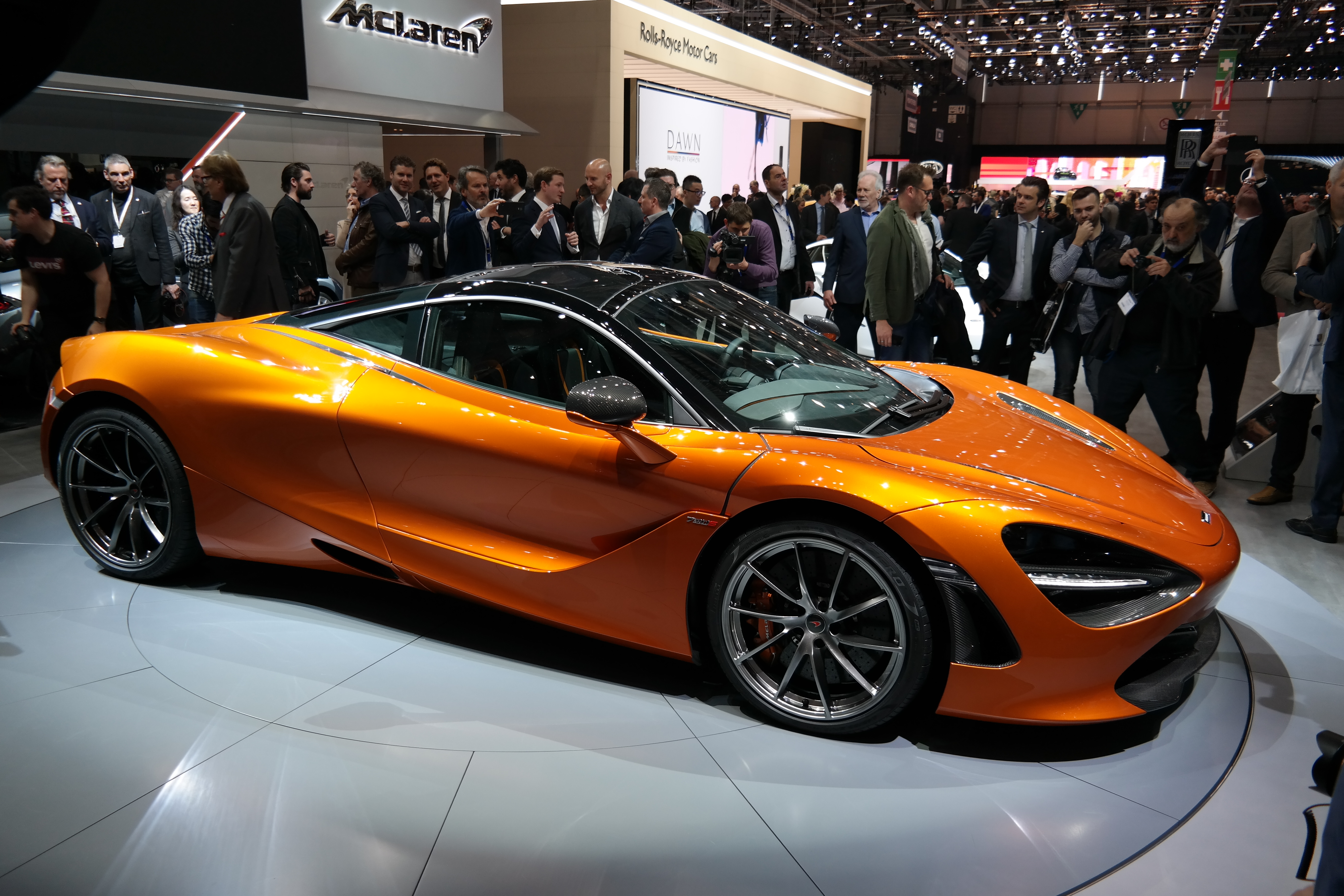
Mclaren 720S
"...huge barrier period so I think I could get to the 720s with the weather alone weather and a little bit o..."
The 720S is a very expensive, very fast supercar made by McLaren. It’s designed to accelerate hard and handle well at speed. The podcast mention suggests that how fast it can go can change depending on the weather and grip.
The McLaren 720S is a high-performance supercar built for extreme acceleration and advanced aerodynamics. The podcast context references getting to “the 720s with the weather alone,” which implies performance depends on conditions like traction and temperature. It’s discussed because the 720S is a benchmark car for fast, repeatable runs when conditions are favorable.
60 foot
"I need to 60 foot like we're 60 footing 1 1 or 1 2s where marks car 60 foot so 1 1 and 4 000 so it's like we got more left in the 60"
“60 foot” is how quickly the car gets to the 60-foot mark after the start. It’s a big deal because a better launch usually means faster overall times.
“60 foot” refers to the elapsed time/distance the car takes to reach 60 feet down the track, a key indicator of launch quality in drag racing. For high-power cars, improving 60-foot times often requires better traction and suspension setup more than just engine power.
wheelie
"because the car's doing this if you saw that car down the track it looks like it's doing a wheelie a whole damn track"
A “wheelie” is when the front end comes up during launch. If it happens too much, it can actually make the car slower because the tires aren’t gripping the track the way they should.
A “wheelie” is when the front wheels lift off the ground during acceleration. In drag racing, excessive wheel lift usually wastes traction and can slow the car because the driven tires lose effective contact and the suspension geometry changes.
770 2 millimeter turbo
"with the 770 2 millimeter turbo I was out the limitation is the limitation 72 mil on the impeller size so we are limited by that"
That “770” is basically the turbo’s size/type. The “2 millimeter” part is a measurement that helps determine how much air the turbo can move, which affects boost and power.
A “770” turbo refers to a specific turbocharger size/series, and the “2 millimeter” detail points to a compressor-related dimension that affects airflow. In drag-racing setups, turbo sizing directly influences how much boost the engine can make and how quickly it can reach it.
72 mil on the impeller
"I was out the limitation is the limitation 72 mil on the impeller size so we are limited by that"
Inside the turbo there’s a spinning wheel (the impeller). Its size affects how much air the turbo can pump, which limits how much power you can make.
The impeller is the rotating wheel inside the turbocharger’s compressor. Its size (here described as “72 mil”) helps determine the compressor’s airflow capacity and the boost/power limits for a given turbo setup.
billet stuff
"it's not as stout as the billet stuff um it's still got water in it"
“Billet” typically means parts machined from a solid block of metal rather than cast. In high-boost engines, billet components are often used because they can be stronger and more consistent, improving durability under extreme loads.
aluminum rods
"we would switch to like fire hoops with aluminum rods to like they're more forgiving on the bigger boost application"
The rods connect the pistons to the crankshaft. Using aluminum rods can reduce weight, but they still have to be strong enough for the high power and boost they’re running.
Connecting rods (“rods”) connect the pistons to the crankshaft, and their material affects strength and reliability at high RPM and high cylinder pressures. Aluminum rods are lighter than steel, which can help with engine response, but they must be chosen carefully for the boost and power level.
dyno
"we recently purchased a new dyno like our other dyno did really good like thousand horsepower 1200 horsepower car is very reliable"
A dyno is a machine that tests the engine on a stand. It helps teams measure power and tune the car without having to do everything on the track.
A dyno (dynamometer) measures engine output under controlled load, letting teams tune fuel, ignition, and boost safely. Drag-racing teams often use dyno results to validate power targets and to compare changes between engine setups.
turbocharger
"the blue one's a 2000 horsepower car it's got 20 80 millimeter turbos on it the blue one so i have multiple 2000 horsepower cars lined up this year"
A turbocharger is a device that uses the engine’s exhaust to spin a fan that pushes more air into the engine. That extra air helps the engine make more power, but it needs the rest of the setup tuned correctly.
A turbocharger uses exhaust gas to spin a turbine, which drives a compressor to force more air into the engine. In high-power builds, turbochargers are central to making big horsepower, but they also require correct plumbing, fueling, and engine management to avoid detonation and overheating.
billet one piece fittings
"all billet one piece fittings that crimp together that are rated at like aren't they in california yeah they're from california maybe you go see that yeah so you go see yeah that'd be a really good one"
Billet one-piece fittings are heavy-duty connectors made from a solid chunk of metal. They’re used in race cars because they’re less likely to leak and can handle very high pressures.
Billet one-piece fittings are machined from a solid block of metal (billet) and made as a single piece rather than assembled from multiple parts. In high-boost, high-pressure plumbing, they’re used to reduce leak points and improve strength under extreme pressure.
crimp rated to 500 psi
"that crimp rated to like 500 psi on stuff so we we are pushing like how much 500 okay where a transmission's got like 90 100 you know coolant pressure"
“Crimp rated” means the connection is built to safely handle a certain amount of pressure. PSI is a pressure measurement, and 500 psi is very high—so it’s meant for extreme racing setups.
“Crimp rated” refers to the maximum pressure a crimped connection is designed to withstand without leaking or failing. PSI (pounds per square inch) is a pressure unit; 500 psi is extremely high for fluid/plumbing systems and indicates race-level components meant for harsh conditions.
mill spec wiring
"all our wiring comes from motec it's all mill spec wiring from motec all the right dtm connectors we use"
Mill-spec wiring means the wires are built to very strict, high-durability standards. Race cars shake and heat up a lot, so better wiring helps prevent electrical problems.
Mill-spec wiring refers to wiring built to military-grade specifications for durability, insulation quality, and resistance to heat and vibration. In race cars, this matters because wiring failures can cause intermittent sensor/ECU issues or even total power loss.
flex fuel
"but i'll still take in a flex fuel come around tune a car and do some headers"
Flex fuel means the car can run on different fuel blends, often including ethanol. Since ethanol needs different fueling than regular gasoline, the car has to be set up to adjust automatically.
Flex fuel means the engine can run on more than one fuel blend—commonly gasoline and ethanol blends. Because ethanol has different energy content and fueling needs, flex-fuel setups require sensors and tuning so the ECU can adjust fueling accordingly.
suspension and brakes
"[2615.8s] do a lot of like suspension and brakes and stuff but that's like i'm not against it but like i do [2620.5s] like the piece of having a month long two week one week long project where it start to finish"
Suspension is what helps the tires stay planted and controls how the car rides over bumps. Brakes are what slow the car down by pressing pads against rotors.
“Suspension” is the system that connects the car to its wheels and controls ride quality and tire contact. “Brakes” are the components that slow the car by converting motion into heat at the brake pads/rotors.
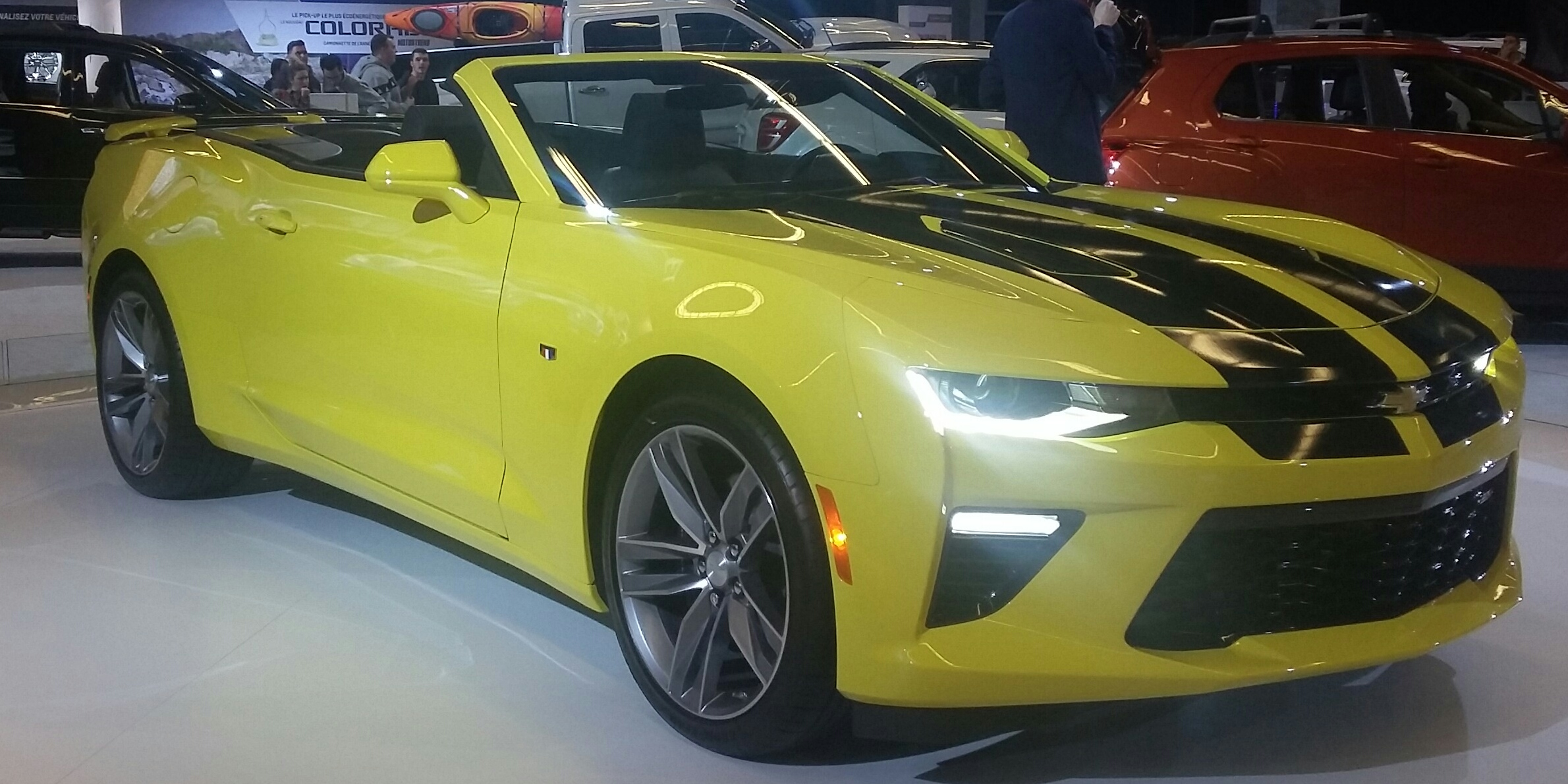
Sixth Gen Camaro
"but as far as the sixth gen Camaro we've been in this platform since it was produced so i think we're still getting a couple more 2027"
“Sixth gen Camaro” means the current-era Camaro generation. They’re talking about how long they’ve been working on that generation since it came out.
The “sixth gen Camaro” is the modern Camaro generation (2016–2024) known for bringing back a more aggressive, performance-focused design. The hosts discuss how long their shop has supported this platform and how their experience spans multiple model years.
twin turbo kits
"so our fabricator he just got a z06 and he's making twin turbo kits for them now oh so we'll get to play with that"
A “twin turbo kit” adds two turbochargers to the engine to make more boost and more power. It’s a bigger upgrade than things like cam changes.
A “twin turbo kit” is an aftermarket forced-induction setup that uses two turbochargers to increase engine boost pressure. Kits are popular because they provide a more complete, engineered path to higher power than smaller “mild” upgrades like cams.

Ford F150
"...'s around or something but he's he's big into the f150 stuff and and uh he's yeah when are you gonna sta..."
The F-150 is a large pickup truck made by Ford. It’s designed to haul things and handle daily driving, and many owners customize them. The podcast mention suggests the truck is a major topic for the person speaking.
The Ford F-150 is a full-size pickup truck known for being versatile—used for work, towing, and everyday driving. The podcast context suggests the speaker is “big into the F-150 stuff,” implying they’re discussing builds, performance, or ownership details around this specific truck line. It comes up because the F-150 is a common platform for modifications and practical performance upgrades.
mileage
"nothing the cars are just getting older now so it's hard to find someone with mileage that you're not doing a disservice by working on it"
“Mileage” just means how many miles a car has been driven. They’re saying that if a car is already very high-mileage, big upgrades might not be worth it or could be risky.
In enthusiast talk, “mileage” is often shorthand for how worn a specific engine or chassis may be, which affects how safe or worthwhile a major modification is. Here, the speaker argues that working on very high-mileage cars can be a “disservice” because the money spent may not translate into durable results.
Request an Explanation
Heard something you'd like explained? We'll add it to this episode.
Sign in to request explanations for terms you heard.
Want to learn more?
Browse our glossary for plain-English explanations of automotive terms, jargon, and concepts.
Help improve this episode
See something that's not quite right? Our annotations are AI-generated and can sometimes miss the mark. Click the flag icon on any annotation to suggest a correction.