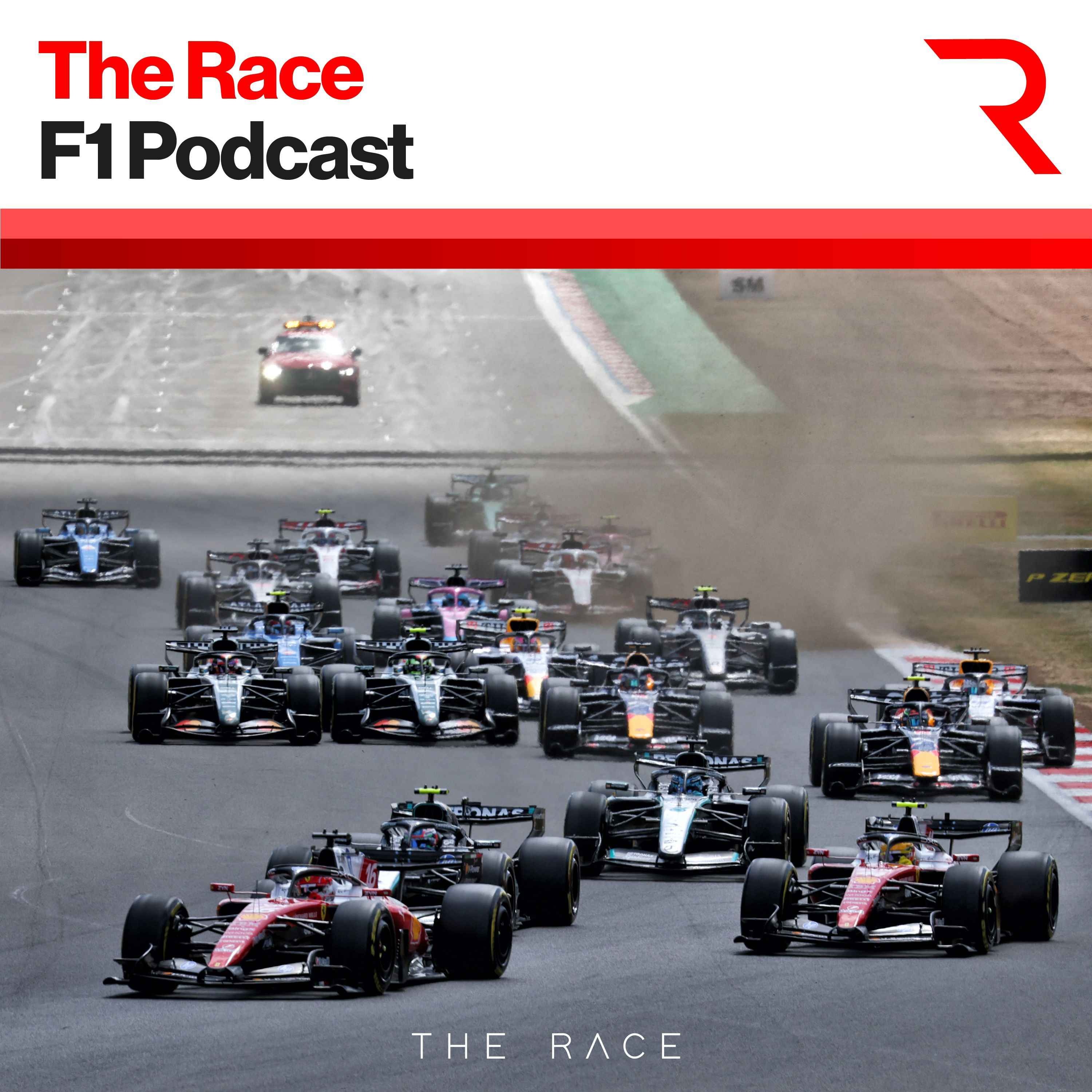
British GP: Revitalised Leclerc wins - but did F1 ruin the finale?
About this episode
Charles Leclerc rebounds to win a chaotic British GP, but the bigger talking point is the controversial finish under the safety car. The panel dissects how a software/communications glitch reportedly displayed an “SC in this lap” message, then got rescinded, leaving lap cars to un-lap and the restart to occur only after the following lap—per the rulebook. Fans wanted a one-lap shootout; the hosts argue procedures were followed, yet debate whether regulations should adapt for time-critical late-race scenarios, comparing it to Abu Dhabi 2021.
Charles Leclerc hit back after his poor run of form with victory in the British Grand Prix. But where did his and Ferrari’s unexpected turn of pace come from, was there any hope a win without Antonelli hitting trouble while rapidly closing in on the lead, and was he fortunate to avoid a last-gasp challenge after the late safety car?
Edd Straw is joined by Jon Noble and Josh Suttill to answer all of those questions, plus they debate the other big talking points from a busy Silverstone weekend, including more anger for Max Verstappen and mixed feelings for the home drivers.
Get bonus F1 podcasts, extra content and ad-free listening, sign-up to The Race Members' Club on Patreon today.
Hosted on Acast. See acast.com/privacy for more information.
Charles Leclerc
"The race is on and Charles Leclerc hit back after his poor run of form with victory in the British Grand Prix."
Charles Leclerc is one of the top Formula 1 drivers, and he drives for Ferrari. Here, the hosts say he bounced back and won the British Grand Prix.
Charles Leclerc is a Ferrari Formula 1 driver. In this segment, the hosts credit him with turning around a poor run of form to win the British Grand Prix.
British Grand Prix
"The race is on and Charles Leclerc hit back after his poor run of form with victory in the British Grand Prix."
This is Formula 1’s main race in the UK. In this part of the podcast, they’re talking about what happened at the end of that race and why it was confusing.
The British Grand Prix is the Formula 1 race held in the UK, and it’s the event being discussed in this segment. The hosts focus on what changed for Charles Leclerc and Ferrari and why the ending was controversial.
Ferrari
"But where did his and Ferrari's unexpected turn of pace come from, and was there any hope of a win..."
Ferrari is the Formula 1 team in this story. The podcast is saying Ferrari suddenly looked faster than expected and helped Leclerc win.
Ferrari is the Italian Formula 1 team and constructor associated with Charles Leclerc in this segment. The hosts discuss Ferrari’s unexpected pace and how it contributed to the win.
un-lap themselves
"So we know that the lap cars were allowed to un-lap themselves, and that happened, and"
“Un-lap themselves” means a slower group of cars gets a chance to catch up so they’re no longer one lap behind. It can affect who’s close enough to fight for position when racing resumes.
“Un-lap themselves” is the process where cars that are a lap down are permitted to regain a lap during race control procedures (like safety car periods). This can change who is effectively “in contention” at the restart and therefore influence the final result.
lap cars
"So it's a really, really weird one, but it is partly to do with quite an important regulation. So we know that the lap cars were allowed to un-lap themselves, and that happened, and"
“Lap cars” are cars that aren’t on the same lap as the leader. The podcast says there’s a rule that can let them catch back up (“un-lap”) during certain race situations, which changes the restart order.
“Lap cars” are cars that are one or more laps behind the leader (or otherwise not on the same lap count). The hosts mention a regulation allowing these cars to “un-lap themselves,” which affects how the field is reorganized during safety car periods and restarts.
sporting regulations
"it's article B5135B for sporting regulations that basically says once the message, so it's"
Sporting regulations are the official rules for how the race is run—like when restarts happen and how safety-car situations are managed. They don’t change the car; they control the race process.
Sporting regulations are the rulebook sections that govern race procedures—how starts, restarts, penalties, and safety-car phases are handled. They’re distinct from technical rules about the car itself, and they heavily influence race outcomes in chaotic moments.
safety car
"once the message lapped cars may now overtake has been sent to all competitors, the safety car will return to the pits at the end of the following lap."
The safety car is a special car that comes out to slow everyone down when something unsafe is happening on the track. It controls the restart so the race can finish under fair, orderly conditions.
In Formula 1, the safety car is a pace car deployed to control the field when there’s danger on track (like an incident or debris). When it’s out, cars follow it at reduced speed and the race restart timing is managed so teams can’t gain unfair advantage.
lapped cars
"once the message, so it's article B5135B for sporting regulations that basically says once the message, so it's when the message lapped cars may now overtake has been sent to all competitors"
A lapped car is a car that’s fallen behind the leaders by at least one full lap. During restarts, there are specific rules about when those cars can pass so the race stays fair.
Lapped cars are cars that have been overtaken by the race leader and are one (or more) laps down. During safety-car restarts, rules often specify when lapped cars may overtake so they can rejoin the correct order without creating an unfair advantage.
one-lap shoot out
"It feels like we were robbed of a really great one-lap shoot out there."
A “one-lap shoot out” is a fan-friendly way to describe a restart or finish where the race is effectively decided over a single lap. It’s not a formal F1 term, but it captures the idea that the outcome could have been settled quickly if the timing of the restart had allowed it.
yellow
"whether it was possible to have cleared the, cleared the yellow and then given that command, maybe"
“Yellow” means there’s a warning on track—usually for an accident or danger ahead. Drivers have to be careful and follow the rules until the situation is cleared.
“Yellow” refers to yellow flag conditions, which warn drivers of a hazard ahead and require caution. In F1, yellow-flag periods can trigger safety-car procedures and affect when cars are allowed to overtake and how the restart is handled.
clearing Max's car
"there was a very brief window on that critical lap where they were just clearing Max's car and they were within seconds of feeling that maybe we can get this rolling without the car 100% out of the way."
In F1, “clearing” means making sure a car is moved out of the way so it doesn’t block the track. For a restart, officials want the track to be safe and unobstructed before racing resumes.
“Clearing” a car in F1 refers to getting a car out of the way so it no longer blocks the track or creates a hazard for the restart. It’s about ensuring the racing line is safe and that officials can manage the restart without dealing with an unresolved obstruction.
restart sequence
"But that would have, you were kind of them preempting circumstances where if there was a problem then being in the car, you'd have started the restart sequence without anything kind of defined and definite."
The restart sequence is the official step-by-step process for getting the race going again. It’s designed to make sure everyone restarts safely and at the right time.
The “restart sequence” is the ordered set of steps race control uses to restart the race after a stoppage or safety car period. It includes timing, signaling, and how teams prepare their cars so the field can resume racing safely and consistently.
red flag restart
"If they knew it couldn't finish under the safety car, potentially I'd have been up for a one lap shootout with a standing start red flag restart would have been just as fantastic."
A red flag means the race is stopped for safety. After the problem is handled, the race can restart using a specific restart procedure instead of continuing normally.
A “red flag restart” is when race control stops the race completely (red flag) and later restarts it under a new procedure. In F1, a red flag can be used for serious incidents or unsafe conditions, and the restart format can differ from a normal restart.
standing start
"potentially I'd have been up for a one lap shootout with a standing start red flag restart would have been just as fantastic."
A standing start restart means the cars are stopped before they go again. When the restart happens, they accelerate from a dead stop, which can change how hard it is to get traction and get going quickly.
A “standing start” restart means cars are stationary when the race restarts, rather than rolling away behind the pace car. This changes launch dynamics and can significantly affect traction, reaction time, and how quickly cars can build speed.
gravel trap
"I mean, only a very small number of you who are listening will have ever had to clear a racing car from a gravel trap and it's not the work of a moment."
A gravel trap is a safety zone next to the track made of loose stones. If a car crashes or goes off, the gravel helps slow it down, but it can be hard and slow to get the car back out.
A gravel trap is a run-off area filled with loose gravel designed to slow down and stop a car after it leaves the track. In F1, it’s a safety feature, but clearing a car from it can take time and can affect race control decisions.
two lap shootout
"So we had that in Baku 21, wasn't it? Where we had that like two lap shootout after the red flag."
They’re talking about a restart where drivers only race for a couple of laps to finish the event. It can be exciting, but it may not reflect how a normal race would play out.
A “two lap shootout” refers to a short restart format where the race is effectively reduced to just a couple of laps after a red flag. It’s discussed here as a possible solution to safety interruptions, but one that may distort strategy and order.
software error
"And the FI has said that the safety car in this lap message was displayed erroneously due to software error."
They’re saying the wrong information was shown because of a computer/software mistake. Since a lot of race operations are automated, that kind of error can cause real confusion during the race.
A software error here refers to an incorrect automated or digital message being displayed to teams/officials about race control actions. In modern F1, many race operations are automated, so software mistakes can cascade into timing and procedural confusion.
automated systems
"Yeah, a lot of those software, the night errors, a lot of automated systems. So a lot of things happen these days, they're automated to make things easier rather than people manually type things down."
Automated systems are computer-driven processes that handle parts of race operations. They can make things faster and easier, but if something goes wrong, it can still cause problems.
Automated systems are computer-controlled processes used in modern F1 to manage information flow and race operations. The discussion highlights the tradeoff: automation can reduce manual work, but it can also introduce failures when inputs or logic are wrong.
one lap race
" [504.3s] You're all still upset about Abu Dhabi. [506.0s] So do you want the one lap race at the end or don't you? [509.0s] I do want the one lap race. [510.6s] I would absolutely have loved to have had a one lap race today."
They’re talking about a finish where, after the race is interrupted, there’s only one lap left to race for positions. It’s meant to make the ending more exciting and decisive.
A “one lap race” refers to a restart format where, after a late interruption (like a Safety Car period), the remaining competitive action is limited to just a single lap. In F1 discussion, it’s often used as shorthand for a dramatic finish that maximizes racing time at the end.
red flagged
" [518.0s] I would be up for races if there's a safety car period with a set number of laps to go. [524.4s] It's automatically red flagged to guarantee at least one lap of racing."
A red flag is when race officials stop the race right away because it’s not safe to continue. After that, they decide what happens next—like whether and how the race can restart.
A red flag in Formula 1 means the race is stopped immediately for safety reasons (for example, a serious crash or hazardous conditions). When a race is red-flagged, officials decide how to handle the restart or whether the race can be resumed under specific regulations.
rulebook
"because there were decisions made that they didn't actually follow the letter of the rulebook. We're based on interpretation and any and all and freedoms within the regulations"
The rulebook is the official set of rules that tells teams and officials how the race should be handled. The point being made is whether officials followed the rules exactly or interpreted them more loosely.
The rulebook is the formal set of regulations that governs how F1 events are run, including procedures for safety cars, restarts, and race control decisions. The discussion here contrasts strict adherence to the letter of the rules versus interpretation.
race director
"any and all and freedoms within the regulations for the race director to decide when the safety car comes out, which weren't really the intention of this very article that's come up today."
The race director is the top official who runs the race behind the scenes. They decide things like when the safety car should come out and how the race should restart.
The race director is the senior official in charge of race control decisions, including how and when procedures are applied (like deploying the safety car and managing restarts). Their calls are meant to follow the regulations, but they also involve interpretation in edge cases.
green flag finish
"because of this desperation to have a green flag finish. And yes, they should have that if possible."
A green-flag finish means the race ends while cars are racing normally, not slowed down behind the safety car. People like it because the result comes from actual racing, not a controlled pace.
A green-flag finish means the race ends under normal racing conditions rather than being concluded behind the safety car. Teams and fans often prefer it because it avoids the outcome being shaped by pacing and restart timing.
Friday data debrief
"something happened in that Friday evening debrief or as Leclerc was pouring over the data there. He found something."
The hosts focus on what Leclerc learned during the Friday evening debrief and how it influenced the weekend’s setup and strategy. The implication is that early data helped him “click” into a winning direction.
sprint weekend
"It clearly was a benefit to having a bit of a sprint weekend because you can kind of back-to-back stuff."
A “sprint weekend” is when F1 has an extra, shorter race before the main Grand Prix. It helps teams learn more quickly and adjust the car for the big race.
A “sprint weekend” is an F1 format where a shorter race (the Sprint) happens before the main Grand Prix. It gives teams extra on-track running and data opportunities, and it can affect how they set up the car for the race.
Fred Visser
"but it's a great vindication and I heard from Ferrari team boss Fred Visser. And yeah, he thought that it was all a confidence thing."
Fred Visser is a senior Ferrari team leader. Here, he’s explaining that Leclerc’s improvement wasn’t just luck—it was tied to how the car felt and how confident Leclerc was in it.
Fred Visser is Ferrari’s team boss (as referenced in the segment), so his comments carry weight about how the team interprets Charles Leclerc’s performance swings. In this discussion, he frames Leclerc’s turnaround as largely confidence- and setup-related rather than a single mechanical fix.
Lewis Hamilton
"Actually, the most revealing thing in the press conference, Lewis Hamilton talked about having said that Charles Leclerc went up a bit on balance."
Lewis Hamilton is one of F1’s most successful drivers. Here he’s talking about how small setup changes can change how the car behaves, and he’s connecting that to what Leclerc was doing.
Lewis Hamilton is a multi-time Formula 1 World Champion and a key voice in race-weekend analysis. In this segment, he discusses how Charles Leclerc’s car balance changed—specifically mentioning adding wing—showing how driver feedback and setup adjustments translate into lap-time behavior.
balance
"Lewis Hamilton talked about having said that Charles Leclerc went up a bit on balance. He said he added a bit more wing."
“Balance” is how the car behaves as a whole—whether the front and rear feel coordinated. If the balance is right, the driver can push harder with confidence.
In F1, “balance” is how the car’s front-to-rear behavior matches the driver’s needs—how it transitions between braking, turning, and acceleration. Small changes (like wing or differential settings) can shift balance enough to change lap-time performance.
wing
"He said he added a bit more wing. Whereas I felt Leclerc was a bit oversteery with the diff settings that we had."
In F1, “wing” refers to aerodynamic surfaces that generate downforce. Adding wing increases downforce (and usually grip), while removing wing reduces it—both can strongly affect balance, turn-in, and how the car feels under load.
diff settings
"Whereas I felt Leclerc was a bit oversteery with the diff settings that we had. And so I took out wing."
“Diff settings” are changes to how power is shared between the wheels. That affects how the car grips and turns—so it can make the car feel more oversteery or more stable.
“Diff settings” are the drivetrain differential adjustments that control how torque is split between the driven wheels. In an F1 context, changing differential behavior can alter traction and rotation, which can show up as oversteer/understeer depending on the car and track conditions.
oversteery
"Whereas I felt Leclerc was a bit oversteery with the diff settings that we had. And so I took out wing."
“Oversteery” means the car’s back end feels like it wants to swing out more than you expect. Drivers often try to adjust the setup so the car turns predictably instead of getting too loose.
“Oversteery” describes a handling condition where the car’s rear tends to rotate more than the front, making it want to turn (or slide) too much. In F1, that feeling is often linked to setup choices like aero balance and differential/drivetrain settings.
comfortable window
"that if you can get the car into a comfortable window where it's well balanced, you're happy to drive it."
A “comfortable window” is the sweet spot where the car feels stable and easy to drive fast. If the setup puts the car there, the driver can attack the track more consistently.
A “comfortable window” is the range of conditions (setup, grip level, tire state, and operating behavior) where the car feels predictable and easy for the driver to push. Getting into that window improves consistency and confidence, which can translate into better lap times.
sliding
"It's not sliding. You're not having a wheel spin... You're sliding more again after that."
Sliding means the tires aren’t gripping as they should, so the car doesn’t follow the exact line. Too much sliding makes the car slower because you’re not using traction effectively.
Sliding is when the car’s tires lose grip and the car rotates or drifts from the intended line. In F1, excessive sliding usually indicates traction loss, which can reduce acceleration, increase tire temperatures, and hurt lap time.
wheel spin
"You're not having a wheel spin. Suddenly, you're harvesting more."
Wheel spin is when the tires start slipping and spinning faster than the car is moving. It’s usually a sign the tires don’t have enough grip, which can make the car slower and heat the tires up.
Wheel spin is when a tire loses grip and the wheel rotates faster than the car is actually moving. In racing, it usually means traction is being exceeded, which can overheat tires and cost acceleration and lap time.
harvesting more
"Suddenly, you're harvesting more. You're not using as much energy to get up to speed."
“Harvesting” here means the car recovers energy instead of wasting it, especially when slowing down. That recovered energy can then be used later to help the car accelerate faster.
In F1-style energy management, “harvesting” refers to capturing usable energy during braking and deceleration (via the car’s energy recovery system). More harvesting means you can deploy more energy later for acceleration and faster lap times.
energy down the straights
"You have more energy down the straights, which all translates into quick lap time."
It’s about using the car’s limited energy at the right time—especially on straight sections where acceleration matters most. If you waste energy earlier, you can’t use as much later, so you go slower.
This describes how the timing of energy deployment matters: using recovered energy to accelerate efficiently on straights. If you lose energy earlier (for example due to wheel spin and tire overheating), you’ll have less available for straight-line speed and lap time.
quick lap time
"which all translates into quick lap time. And the margins can be very, very small."
Lap time is how long it takes to do one full lap around the track. In racing, even small improvements can add up to noticeably faster laps.
Lap time is the total time to complete one circuit, and in F1 it’s tightly linked to energy usage, traction, and tire temperature. The speaker is emphasizing that small efficiency gains compound into faster overall laps.
margins can be very, very small
"And the margins can be very, very small. So you have one bit of wheel spin that overheats your tires,"
“Margins” here means the differences between cars are tiny. When it’s that close, one small problem can make you lose time fast.
In F1, “margins” refers to the tiny performance gaps between cars due to efficiency, tire behavior, and driver execution. When margins are small, a single mistake (like one wheel-spin event) can swing lap time quickly.
tires have got hotter
"Your tires have got hotter. You're sliding more again after that."
Tires work best at the right temperature. If they get too hot, they can grip worse, and the car starts sliding more, which makes you slower.
Tire temperature strongly affects grip and wear. When tires overheat, they can lose optimal traction, making the car slide more and forcing drivers to manage throttle/braking to avoid further performance loss.
power unit
"Yeah, I think it's highlighted how compromised [997.7s] they were with the power unit in Austria. [999.7s] There's been so much hype around the Aduo upgrade,"
In F1, the “power unit” is the car’s main engine package. It includes the engine and the hybrid energy system that helps the car accelerate and recover energy.
In Formula 1, the “power unit” is the complete hybrid engine system: the internal-combustion engine plus the turbocharger and the energy-recovery components. It’s the core of how F1 cars make power and manage energy during the race.
Aduo upgrade
"There's been so much hype around the Aduo upgrade, [1002.0s] which was Freud played down before the weekend. [1005.7s] Then they've been quick and qualifying,"
An “upgrade” here means the team brought a new set of parts to improve speed. The point the hosts are making is that it looked promising in qualifying but didn’t fully work in the race.
The “Aduo upgrade” appears to be a specific F1 team hardware update being discussed as a major improvement. In F1 coverage, such “upgrade” packages are usually changes to parts of the power unit and/or its supporting systems intended to improve performance, but they may not show up consistently in race conditions.
engine runs hot
"We know their engine runs hot. [1013.4s] We know they've got a small turbo. [1014.9s] So if you're running in a hot race at high altitude,"
“Engine runs hot” means the engine and its cooling system are operating at higher-than-ideal temperatures. In F1, that can reduce performance and reliability because heat affects efficiency, power delivery, and how hard the car has to work to stay within temperature limits.
small turbo
"We know their engine runs hot. [1013.4s] We know they've got a small turbo. [1014.9s] So if you're running in a hot race at high altitude,"
A “small turbo” is the turbocharger on the engine. It helps the engine make more power, and its behavior can change depending on conditions like heat and altitude.
A “small turbo” refers to the turbocharger size used on the F1 power unit. Turbo size affects boost response and how the engine behaves across different conditions; in hot, high-altitude races, the whole thermal and airflow picture can make the car more stressed.
high altitude
"[1014.9s] So if you're running in a hot race at high altitude, [1017.3s] you are going to be stressed like anything. [1019.6s] They've opened the cooling up in Austria,"
“High altitude” means the track is at a higher elevation. The air is thinner there, which can affect how the engine performs and how hard it has to work.
“High altitude” means the race takes place at a location where air pressure is lower. In F1, that changes engine breathing and can increase the thermal and performance challenges, especially when combined with hot weather.
opened the cooling up
"[1019.6s] They've opened the cooling up in Austria, [1021.42s] "
“Opened the cooling up” means they adjusted the car so it can cool the engine better. It’s like giving the engine more help staying at a safe temperature.
“Opened the cooling up” means the team increased cooling capacity—typically by allowing more airflow through radiators or using revised cooling hardware. In F1, that’s a common response when an engine is running hot, especially after issues in prior races.
aero
"So the aero wasn't as good. So the turbo was running hot."
“Aero” is short for aerodynamics. It’s how the car’s shape and wings push the air around to make the car stick to the track and go fast. If the aero isn’t as good, the car can feel less planted and slower.
In Formula 1, “aero” refers to aerodynamic performance—how the car’s wings, body shape, and airflow generate downforce and reduce drag. When the aero “wasn’t as good,” it usually means less grip and/or less efficient speed through the air.
cooling message
"We remember that cooling message to Lewis Hamilton. And I think everything fell there."
Teams can send a radio message telling the driver to cool things down. That usually means the engine or turbo is getting too hot, so the driver has to drive in a way that reduces heat.
A “cooling message” is a team radio instruction to manage engine or turbo temperatures—often by changing throttle use, lift-and-coast behavior, or deployment strategy. It’s a sign the power unit is approaching temperature limits.
deployment
"I think Mercedes was still better on deployment overall. And on a single lap pace, soft to tires, one-shot qualifying,"
In F1, some power is limited and has to be used strategically. “Deployment” means when the driver chooses to use that extra power and when to save it for later in the race.
“Deployment” is how an F1 driver uses limited energy/power resources during a stint—most notably the hybrid system’s boost and energy management. It’s about timing when to use maximum power versus saving it for later.
one-shot qualifying
"And on a single lap pace, soft to tires, one-shot qualifying, only needing to finish the lap with 0% energy"
“One-shot qualifying” means you basically get one real chance to set your best lap time. So the car setup and tire/energy use are focused on being as fast as possible right then.
“One-shot qualifying” describes a format where each driver has a single attempt/run to set their best lap. That changes strategy: you’re optimizing for peak performance immediately rather than managing a longer sequence of laps.
soft to tires
"And on a single lap pace, soft to tires, one-shot qualifying, only needing to finish the lap with 0% energy"
Soft tires grip the road better, so they can make you faster for a lap or two. The tradeoff is they wear out faster than harder tires.
“Soft to tires” refers to using softer-compound tires, which typically provide more grip and faster lap times but wear out quicker. Comparing teams on “single lap pace” with soft tires highlights who is strongest over one quick run.
0% energy
"one-shot qualifying, only needing to finish the lap with 0% energy rather than maintaining it and getting into a rhythm"
F1 cars have limited extra energy they can use for performance. “0% energy” means the driver used up that allowance by the end of the lap, which is okay in qualifying but not the same as managing energy for a whole race.
“0% energy” refers to hitting the end of the qualifying lap with the hybrid energy budget depleted. In F1, the car’s power unit has constraints, so teams plan how much boost/energy to spend to maximize lap time without exceeding limits.
qualifying to race demands
"means very different demands qualifying to race. But I think we're in a stronger place here than they anticipated it."
Qualifying and the race are different games. Qualifying is about being as fast as possible for one lap, while the race is about staying fast for longer without overheating the car, ruining the tires, or running out of usable energy.
The episode contrasts qualifying and race “demands,” meaning the car’s setup and energy strategy must change between a single fast lap and a longer stint. Qualifying can be optimized for peak output, while the race requires sustained performance, tire management, and energy pacing.
Sprint Pole
"It was one of those weekends that started Superby on Friday with Sprint Pole. He led the first part of the sprint,"
On some F1 weekends, there’s a Sprint race. “Sprint Pole” means you start that Sprint from the front, which usually gives you a big advantage.
“Sprint Pole” refers to winning pole position for the Sprint session, which determines the grid for the Sprint race. It’s a key weekend milestone because it can strongly influence track position and momentum.
jump start
"which should have been second, but he also had the jump start in the Josh."
A jump start means the car got moving too early, before the race start signal. In racing, that’s against the rules and can cost you position or lead to a penalty.
A jump start is when a car launches before the official start signal. In F1, it’s treated as a rules violation and can lead to penalties or an altered race outcome, which is why it’s mentioned as affecting the result.
championship lead
"But ultimately, he's also come out of this race closer to the championship lead. He's 32 points behind Antonelli now."
The championship lead is who’s ahead in the season points race. The hosts are saying this result helped Hamilton get closer to the top of the standings.
The championship lead is the points advantage held by the top driver in the season standings. The segment uses it to explain how the race result changed the title situation, with Hamilton moving closer to the leader.
Kimmy Antonelli
"All right, John, let's talk about Kimmy Antonelli now, sprint race victory, pole position. It was looking great in the race, even though he wasn't leading."
Kimmy Antonelli is a race driver mentioned in this episode. They say he won the sprint race, started from the front (pole), and then had a problem with his front-left area that hurt his result, leaving him 16th.
Kimmy Antonelli is discussed here as a driver who scored a sprint race victory and started from pole position. The segment also describes how a failure involving his front-left wheel guard affected his race outcome, ending with a 16th-place finish in the final classification.
sprint race victory
"All right, John, let's talk about Kimmy Antonelli now, sprint race victory, pole position. It was looking great in the race, even though he wasn't leading."
A sprint race victory refers to winning a shorter, separate race format used in some F1 weekends. It typically awards points and sets the grid for the main Grand Prix, so winning the sprint can strongly influence race strategy and starting position.
pole position
"All right, John, let's talk about Kimmy Antonelli now, sprint race victory, pole position. It was looking great in the race, even though he wasn't leading."
Pole position means starting the race from the very front. It’s usually earned by being fastest in qualifying, and it helps because you’re ahead of everyone else at the start.
Pole position is the starting spot at the front of the grid, awarded to the driver who qualifies fastest. In F1, starting from pole usually provides cleaner air and track position, which can be a major advantage over the race distance.
front left wheel guard
"He was closing in on the clerk, then that front left wheel guard broke and there seemed to be other problems. Ended up 16th in the final classification"
The front left wheel guard is a piece of car bodywork near the front tire. If it breaks, it can mess up how the car handles and can also cause the driver to lose time or retire.
The front left wheel guard is a bodywork component near the front wheel that helps manage airflow and protect parts around the tire. If it breaks, it can expose the car to aerodynamic disruption and debris risk, often forcing the driver to slow down or pit.
final classification
"and there seemed to be other problems. Ended up 16th in the final classification"
Final classification is the official order of finish for the race. It’s the result that determines points for the championship.
Final classification is the official race result list showing where each driver finished after any penalties and retirements are accounted for. A driver’s position in the final classification is what counts for points and season standings.
track limits
"after that five-second penalty for track limits. [1238.8s] Any doubt he'd have won?"
Track limits are the rules about staying within the painted/marked boundary of the track. If you cut corners too much, officials can penalize you because it can help you go faster.
Track limits are the boundaries drivers must stay within during a lap. If a car’s tires cross the marked limits (or the car is judged to have gained an advantage), race control can issue penalties such as time penalties or drive-throughs.
five-second penalty
"after that five-second penalty for track limits. [1238.8s] Any doubt he'd have won?"
A five-second penalty means the race officials add five seconds to a driver’s time because of a rules break. It’s usually for things like going outside the track boundaries (track limits).
In Formula 1, a five-second penalty is a time penalty added to a driver’s race time for an infraction (often track limits). Depending on the race situation, it may be served as a drive-through/stop-and-go or added to the total time at the end of the stint.
hards
"So Kimmy's pace on the mediums was as strong as Leclerc's on the hards. [1267.5s] So the gap was fairly stationary."
“Hards” are the tougher, longer-lasting tires in F1. They usually don’t grip as strongly as softer tires, but they can keep working for more laps.
“Hards” are the hardest tire compound available in an F1 weekend, generally offering lower peak grip but better longevity. This makes them useful for stints where the goal is to keep performance stable over more laps.
mediums
"So Kimmy's pace on the mediums was as strong as Leclerc's on the hards. [1267.5s] So the gap was fairly stationary."
“Mediums” are one of the tire types in F1. They’re designed to be a compromise—good grip, but not as long-lasting as the hardest tires.
“Mediums” are a specific tire compound in F1, typically positioned between the soft and hard options in grip and durability. Teams choose compounds to balance lap-time pace with how long the tires remain effective.
maximum offset
"And then she went for the absolute maximum offset, [1280.3s] which would have given them advantage,"
“Maximum offset” is about timing pit stops so you come out at the best possible moment compared to the cars around you. Teams do it to try to gain track position when the race situation changes.
“Maximum offset” refers to a pit-stop timing strategy where a team schedules its stop to create the biggest possible time gap relative to the car ahead (or behind) when the pit cycle completes. The goal is often to emerge in a favorable position, especially around safety car windows.
wheel shield problem
"I mean, you can argue Woody had done it before that safety car came out. [1290.3s] But that's a very much an if-if-if moment, [1293.9s] if he hadn't had the wheel shield problem."
A “wheel shield” is a piece of car bodywork near the wheel. If it has a problem, it can hurt how the car performs because it changes airflow (and sometimes cooling).
A “wheel shield” is a bodywork element near the wheel intended to manage airflow and cooling. A problem with it can affect aerodynamics and/or cooling, which can reduce pace and complicate strategy during a critical phase.
momentum of the championship
"But this is the perfect evidence of the momentum of the championship. [1304.0s] Sometimes it's out of your control that a couple of races ago,"
This phrase means the team is building confidence and form over multiple races. In F1, that can show up as better strategy and fewer mistakes as the season goes on.
“Momentum of the championship” is a racing concept describing how results, confidence, and strategic execution can build across races and influence future performance. In F1, it often reflects how well a team is managing upgrades, tire/fuel/energy usage, and racecraft under pressure.
straight line deficit
"But overall, he just seemed to be struggling, wasn't he, was complaining of a straight line deficit."
It means the car doesn’t feel as fast when going in a straight line. That can happen if the car doesn’t have enough speed or acceleration at full throttle, often because of how the car is set up or how much air resistance it has.
A “straight line deficit” means the car is slower when accelerating in a straight line, usually measured by top speed and acceleration before braking. In F1, it often points to aerodynamic drag issues or insufficient engine/ERS deployment under full-throttle conditions.
single lap supremacy
"At least in Spain, he had that single lap supremacy over Antonelli."
“Single lap supremacy” refers to being clearly fastest over one qualifying-style lap or one decisive stint segment. In F1 discussions, it highlights a car’s peak performance even if race pace or consistency isn’t as dominant.
Mercedes
"Antonelli was the quicker Mercedes driver... And that's been happening far too often for George Russell."
Mercedes is the Formula 1 team being talked about. They’re comparing how two Mercedes drivers performed, with one being faster than the other.
Mercedes is the Formula 1 constructor/team discussed here, and it’s the context for comparing driver pace. The segment contrasts Antonelli as the quicker Mercedes driver versus George Russell’s struggles.
protest
"There was some rumbling about a protest. Wasn't there an appeal for a review rather about that?"
A protest is when a team formally challenges what happened in a race. Here, they were considering challenging something, but they decided not to.
In Formula 1, a protest is an official challenge to a race result or a steward decision, typically submitted after the race. This segment mentions rumbling about a protest and then notes the team decided not to pursue it.
appeal for a review
"Wasn't there an appeal for a review rather about that? But I presume nothing's come of that."
An appeal for a review means asking race officials to look again at a decision. The hosts are basically saying there may have been talk of that, but it didn’t end up changing anything.
An appeal for a review refers to the process of asking officials to reconsider a decision, such as a penalty, classification, or an incident ruling. The hosts discuss whether what was being discussed was an appeal/review, and then say nothing came of it.
Total Wolf
"It was because the Total Wolf sort of said that they were maybe looking at it in his post-race media session."
This sounds like a transcription error for Toto Wolff, who runs the Mercedes F1 team. The hosts are saying he was looking at things after the race in the usual way teams do.
“Total Wolf” appears to be a mis-transcription of “Toto Wolff,” the Mercedes team principal. The segment attributes the decision-making context to him and describes how teams review incidents after the race.
right review
"Because obviously, you have to do a right review. You need sort of new and significant evidence."
This is the formal process where a team asks officials to look again at a decision from the race. They usually need strong new proof before anything can be changed.
In Formula 1, a "right review" refers to the process where a team or driver seeks an official review of a decision (often involving penalties or race control calls). It typically requires the stewards to consider whether there is enough basis—such as new, significant evidence—to change the outcome.
stewards document
"And the stewards document had already said that they knew Antonelli had this car problem. They'd understood that."
The stewards are the race officials who make calls and penalties. Their document is the official write-up explaining what they decided and why.
The "stewards document" is the official written record produced by the race stewards. It outlines what the stewards knew, what they concluded, and the reasoning behind their decisions—important context for appeals or further review.
Stroll
"I think Stroll also got one of those penalties as well, maybe more than one. But he had downshift problems that caused,"
Stroll is another driver they’re talking about. The hosts say he got penalties, and they connect it to trouble when downshifting (changing to a lower gear).
Stroll is mentioned as another driver who received penalties in the same race context. The segment links at least one penalty to problems with gear changes—specifically downshifts—reported via radio.
downshift problems
"But he had downshift problems that caused, I think I heard on the radio, at least one of those was caused by a weird downshift."
Downshifting is when you change to a lower gear. "Downshift problems" means the car didn’t shift down the way it should, which can affect how the car drives and may trigger penalties or confusion.
"Downshift problems" means the gearbox didn’t execute a downchange smoothly or correctly when the driver requested it. In F1, that can cause drivability issues and may be reported on the radio, sometimes described as a "weird downshift" in the segment.
Russell
"But yeah, Russell now 25 points behind Antonelli. And that's a good numerical outcome for him."
Russell is the driver being tracked in the championship points. The hosts say he’s now 25 points behind Antonelli and that he commented after the race about whether the bad luck has balanced out.
Russell is discussed in the context of the points gap after penalties and race outcomes. The host says Russell is now 25 points behind Antonelli and highlights Russell’s post-race comments about whether bad luck has evened out.
final official classification
"The final official classification's not out, but Sainte seems to have a one lap penalty..."
The “final official classification” means the official final race results. Before that’s published, penalties can still be added, which can change who finishes where.
The “final official classification” is the race’s officially published results after all steward decisions and penalties are applied. Until it’s final, positions can change due to post-race investigations.
one lap penalty
"Sainte seems to have a one lap penalty for a safety car infringement that's just dropped in."
A “one lap penalty” means the driver is punished as if they lost an entire lap. That can move them down the finishing order when the race result is finalized.
A “one lap penalty” is a sanction where a driver is penalized by effectively losing a full lap relative to the field. In F1 results, it can cause position drops and sometimes affects whether a driver finishes ahead of others.
Red Bull
"Let's talk about Red Bull now, Josh, for stepping up that late race crash. Pretty unusual to see him doing that..."
Red Bull is the Formula 1 team mentioned here. The hosts are talking about what happened late in the race and whether it was caused by the driver or the car.
Red Bull is the F1 team being discussed, specifically in relation to late-race crash/incident context involving Verstappen. Team performance and reliability issues often show up as “car” problems or driver frustration in post-race analysis.
late race crash
"Let's talk about Red Bull now, Josh, for stepping up that late race crash."
A “late race crash” is a crash that happens near the end of the race. Because it’s so late, it can strongly affect the final outcome and sometimes brings out the Safety Car.
A “late race crash” refers to an incident occurring near the end of the Grand Prix, often when tire wear, fuel load, and traffic can make cars harder to manage. Late incidents can trigger Safety Car periods and lead to penalties or major result swings.
Verstappen
"Was that driver error failure somewhere in between? Another failure which left the Verstappen quite angry actually after the race."
Verstappen is the driver being discussed. The hosts say he was upset after the race, suggesting something went wrong again—possibly with the car rather than just his driving.
Verstappen is referenced as the driver who was left “quite angry” after the race due to another failure. In F1 coverage, driver emotion is often used as a clue that the issue may have been mechanical or strategic rather than purely driving technique.
downforce
"It hadn't reset properly, which means not enough downforce, which pitched him off because you've got a massive aero imbalance."
Downforce is the “squish” force that presses the car onto the road. More downforce usually means better grip, especially when turning.
Downforce is the aerodynamic force that pushes the car toward the track, improving grip. In F1, if the car doesn’t generate the expected downforce, the balance can shift and the driver can lose control more easily.
airfoil
"In Austria, it was about the airfoil hadn't reattached properly. So the wing was in the right position, just the airfoil hadn't reattached as he turned in."
An airfoil is the wing-shaped part that creates lift or downforce. If it doesn’t sit correctly, the car can lose grip and become unstable.
An airfoil is the shaped surface (like a wing profile) that generates aerodynamic force. Here, the airfoil not reattaching properly after a reset changes how the rear wing produces downforce, leading to instability.
Austria
"In Austria, it was about the airfoil hadn't reattached properly."
“Austria” is where the wing problem happened before, according to the speaker. They’re using it to show the issue isn’t a one-off.
“Austria” refers to the Austrian F1 race weekend where the speaker says the airfoil attachment/reset problem was observed. It’s used as prior evidence that the same underlying wing issue can recur.
corner mode position
"And there's a different mechanism where they rotate around to come back to the corner mode position."
“Corner mode” is the wing’s intended setting for when the car is turning. If it doesn’t reach that position, the car may not have the grip it expects.
“Corner mode position” refers to the aerodynamic setting the wing/adjustable aero is meant to adopt for cornering. The idea is that the mechanism rotates back to a specific configuration that provides the intended downforce and balance in turns.
Belgian Grand Prix
"we will do whatever it takes to be 100% certain it will be safe for the Belgian Grand Prix, which is the next race and is a circuit."
The Belgian Grand Prix is the next Formula 1 race they’re talking about. They’re worried about the rear wing because race circuits punish aero problems quickly.
The Belgian Grand Prix is the next F1 race referenced in this segment. The hosts mention it because it’s a circuit where rear-wing problems would be especially risky.
Miami Grand Prix
"Because this Macarena wing only appeared from the Miami Grand Prix."
The Miami Grand Prix is the race where they say this wing showed up for the first time. It helps explain when the change happened during the season.
The Miami Grand Prix is the race where the speaker says this specific “Macarena wing” first appeared. That timeline matters because it suggests when the team introduced the adjustable aero concept and when issues may have started.
draggy car
"They've got a straight-on speed problem, [1806.0s] which is a combination of a very draggy car."
A “draggy car” is one that pushes too much against the air. That makes it slower, especially when the track has long straight sections.
A “draggy car” means the car has high aerodynamic drag, which slows it down—especially on straights. In F1, reducing drag (or balancing it with downforce) is crucial for top speed and lap time.
gear ratios
"But gear ratios, we know they're short, [1816.9s] so they're not as strong on the straights."
Gear ratios are how the gearbox is set up to match engine speed to road speed. If they’re “short,” the car may feel quick but won’t reach its full speed on long straights.
Gear ratios are the set of transmission ratios that determine how the car’s engine speed (RPM) matches vehicle speed in each gear. If the ratios are “short,” the car may accelerate well but run out of revs too early on straights, hurting top speed.
homologation spec
"It's the same spec, [1836.8s] so it's the same homologation spec as before,"
“Homologation spec” means the officially approved setup under the F1 rules. The host is saying the overall allowed design is the same, but Mercedes has improved how reliably it works.
A “homologation spec” is the approved configuration of an F1 car that teams are allowed to use under the sport’s rules for that season. The host says the car is the same homologation spec as before, but Mercedes has introduced reliability improvements.
Taito Wolff
"but Mercedes has made some reliability improvements. [1842.9s] Taito Wolff said in Austria,"
The host attributes a quote to “Taito Wolff” about the Mercedes update. This is a Mercedes leadership figure commenting on how the changes affect the car.
Taito Wolff is referenced as a speaker who commented on the updated Mercedes package. In the context of F1, this is likely a reference to Toto Wolff, Mercedes’ senior team figure, but the transcript text says “Taito.”
reliability tweaks
"just the way you can run it a bit more aggressively, [1853.2s] confidently, because you've got these reliability tweaks. [1855.7s] It's a fresher engine,"
F1 teams often make small fixes to help the car keep working properly. The goal is to avoid breakdowns and keep the car performing well from start to finish.
In F1, teams make small engineering changes to improve how reliably a car and its components run over a race weekend. These tweaks can reduce the chance of failures and help the car perform consistently rather than degrading as the event goes on.
fresher engine
"[1855.7s] It's a fresher engine, [1856.8s] so it doesn't have an end-of-life degradation. [1859.4s] So it doesn't sound like a lot,"
A fresher engine is one that hasn’t been used as much before. In racing, that usually means it’s less worn out, so it can make stronger performance for longer.
A “fresher engine” in F1 means the power unit has had less prior use, so it’s less likely to have performance drop-off from wear. The speaker links it to avoiding “end-of-life degradation,” implying better output and smoother operation.
end-of-life degradation
"[1855.7s] It's a fresher engine, [1856.8s] so it doesn't have an end-of-life degradation. [1859.4s] So it doesn't sound like a lot,"
End-of-life degradation means the engine gets less effective as it wears out. As parts age, the engine can lose power or feel less smooth, which slows the car down.
End-of-life degradation is performance and efficiency loss as an F1 engine approaches the end of its usable life. Heat cycles, wear, and component fatigue can cause the engine to produce less power or run less smoothly, which costs lap time.
0.05 seconds
"[1860.9s] but F1's all about these 0.05 seconds in all fronts. [1865.2s] So you add in upgrade step,"
In F1, even super-small differences like 0.05 seconds matter a lot. Teams chase tiny improvements everywhere because those fractions can decide who finishes ahead.
In F1, tiny time gaps—like 0.05 seconds—can be the difference between qualifying positions or race outcomes. The speaker emphasizes that the sport is engineered around squeezing out fractions of a second across many areas, not just one big change.
upgrade step
"[1865.2s] So you add in upgrade step, [1867.5s] which Macarena's bringing around hungry time,"
An upgrade step is when a team brings new improvements to the car. Even if each change is small, together they can make the car faster.
An upgrade step is a package of new parts or software changes brought to improve performance at a specific point in the season. In F1, upgrades are often incremental but can combine with other factors (like a fresher engine) to close performance gaps.
mileage
"at the pow-y, and especially when they found the Alpine, [1883.6s] and Williams had access to it this weekend, [1885.2s] and they didn't, so it's still mileage."
Here “mileage” means how much running time or usage they got with the relevant setup. The point is that one team didn’t have the same opportunity as the others, so they couldn’t extract the same benefit.
In this context, “mileage” is being used as shorthand for accumulated usage/track time on components, implying that one team had less opportunity to use or benefit from a specific performance advantage. It’s not about the everyday meaning of car mileage; it’s about how much running time they had with the relevant setup/parts.
racing balls camera
"he basically got squeezed between the racing balls [1919.7s] on the first lap. [1920.9s] It was actually really hard to see, [1922.1s] because I was jumping around the on-balls..."
They’re talking about a particular TV camera angle used in the broadcast. The point is that, because of where the cameras were positioned, it was hard to clearly see what happened.
The host is referring to a specific broadcast camera angle used to show the cars around the track. They’re explaining that the camera alignment made it hard to see Piastri’s car during the squeeze and contact.
Request an Explanation
Heard something you'd like explained? We'll add it to this episode.
Sign in to request explanations for terms you heard.
Want to learn more?
Browse our glossary for plain-English explanations of automotive terms, jargon, and concepts.
Help improve this episode
See something that's not quite right? Our annotations are AI-generated and can sometimes miss the mark. Click the flag icon on any annotation to suggest a correction.