
Classic Auto Mall - #241 - Stewart Howden & Guest Corvette Stingray Designer Peter Brock
About this episode
Peter Brock traces his path from knowing almost nothing about automobile design to shaping some of the most influential performance cars of the era, including the Stingray and Shelby Daytona Coupe. He also explains how the Datsun 510 helped spark the Japanese tuner scene in the U.S., while the show closes with dealership updates, auction news, and a practical detour into the headaches of state-by-state title and registration rules.
Show #241 airdate 04-29-26 Stewart Howden welcomes Peter Brock, C2 Corvette Stingray Designer, Racer and Photojournalist as they discuss his design concepts for the original C2 Stingray as well as his racing career and the #Shelby #CobraDaytona. Steve joins later to talk about new arrivals and the upcoming CAM Auction June 19, 2026. @Chevrolet @GM #1963 #Corvette #Stingray #splitwindow #HarleyEarl #LarryShinoda, #CarrollShelby, #CobraDaytona, #ACCobra, @ZakBrown, #conceptcar @AstonMartin, #FordGT, @Goodyear, #RiversideSpeedway, @Daytona, #LeMans, #Datsun510, #DatsunZcar, @Nissan, #Auction, @Ferrari, #BillMitchell, #TurinAutoShow, SimeoneMuseum.org, Aerovaulttrailer.com, ArtCenterLosAngeles.org
GET OUR FREE APP: https://ClassicAutoMall.appimize.app When it opens click on the ORANGE button to install on your phone or computer for DIRECT ACCESS to our VIDEO and AUDIO shows and our website.
CONTENT NOTE: Contests, Prizes, Offers, Vehicles & other items may no longer be available or offered after each show's original broadcast or posting date.
Recorded in our Showcase Studio just inside the entrance of the Classic Auto Mall in Morgantown, PA, Host Stewart Howden, Classic Auto Mall President and Classic Car Specialist Steve Saffier talk about this unique and amazing place often with amazing guests.
YES...Classic Auto Mall is a REAL former shopping mall that covers almost EIGHT football fields with an average of nearly ONE THOUSAND classic vehicles under one, climate controlled roof and they're all FOR SALE!
Be sure to LIKE and SUBSCRIBE to be informed of new episodes and SEE them on the Classic Auto Mall YouTube Channel. We also invite you to VISIT US IN PERSON at Classic Auto Mall, one hour west of Philadelphia at PA Turnpike Exit #298, VISIT us online at ClassicAutoMall.com or talk to real, live people about visiting, buying or selling your classic on consignment at 610-901-3804.
.
Classic Automall inventory count
"How many cars in inventory, JR? Oh, I heard we got a batch. I'm going to say 829. Oh, goodness."
They’re talking about how many classic cars the shop has for sale right now, and how that number has been going up or down.
The hosts discuss how many cars are currently in stock, comparing different inventory totals (829, 815, 796) and noting that 796 is the lowest they’ve seen in a while. This is a show segment about dealership/consignment supply rather than a technical automotive topic.
Simeon Museum
"You know, you and I actually met at the Simeon Museum in 2022. [93.1s] I won the bid on the jacket and you all, you and Roy Schauberg and Chuck Cantwell signed it. ... [105.2s] That's an incredible collection of stuff. And even more important is the library upstairs."
They’re talking about the Simeon Museum, a museum focused on cars and car history. The hosts say it’s impressive not just because of the cars you can see, but also because of the extra materials upstairs.
The Simeon Museum is discussed as a major car collection destination, with the hosts emphasizing both the visible cars and the “library upstairs.” It’s presented as a place where automotive history and memorabilia are preserved and curated.
Art Center School
"...you quickly realized that you wanted to do design more than anything and ended up at the Art Center School. [163.3s] I guess that's in Pasadena, right?"
They mention Art Center School as the place they went to study design. The point is that it helped them move toward car design instead of staying in a more general college path.
Art Center School is referenced as the school the speaker attended after realizing they wanted to focus on design. In automotive circles, specialized design education is often a pipeline into vehicle styling and product design roles.
Turin Auto Show
"[271.7s] Well, the interesting thing was that in working for Bill Mitchell, he provided the theme because he had gone over to the Turin Auto Show... [285.2s] They were sort of oval shape with a crisp belt line in the middle..."
The Turin Auto Show is a car show where companies display design ideas. The speaker says Mitchell saw inspiration there and brought it back for the Corvette design.
The Turin Auto Show is an automotive exhibition where manufacturers and designers showcase concepts and design trends. Here, it’s the source of the design theme that Bill Mitchell brought back for the Corvette’s styling direction.
belt line
"[285.2s] They were sort of oval shape with a crisp belt line in the middle and a small aerodynamic shape over the top of each tire. [292.6s] And several different carotidias and manufacturers had all followed this theme..."
The belt line is a line on the side of the car that helps define its shape. It’s part of the styling that can also affect how the car’s body guides airflow.
The belt line is the character line running along the side of a car, typically marking the boundary between the upper body and the lower body. Designers use it to shape the visual flow of the body and can also influence how airflow travels along the side.
sketches
"[303.5s] And he brought back a bunch of photographs and laid those out in front of the three of us in the studio and said, this is the idea that I'd like to go and see what you can do with it. [313.3s] So it just went from there and used that theme and Bill kept coming back and look at the sketches. [322.4s] By the time we went to maybe the second or third generation..."
Sketches are early drawings designers use to try out ideas. They’re describing how the design was refined step-by-step using drawings.
In automotive design, sketches are early concept drawings used to explore proportions, surfaces, and styling themes before engineering details are finalized. This segment describes how the team iterated on sketches as the design evolved over multiple “generations.”

Chevrolet Corvette
"...ith General Motors at the time when the actual 63 Corvette came out. Is that correct or did I miss? That's ..."
The Chevrolet Corvette is a sports car made by Chevrolet. It’s known for being a performance car with a distinctive look. People talk about certain early 1960s Corvettes because that’s when the design and features changed in important ways.
The Chevrolet Corvette is a long-running American sports car known for its fiberglass body and performance-focused design. In the early 1960s, it was a major spotlight model for Chevrolet and General Motors, which is why it often comes up in discussions about what was new and when. The 1963 Corvette specifically is frequently referenced because it marked a notable point in the car’s evolution.
racing license
"[343.7s] That's correct. I'd already left and gone back to California. I was more interested in getting... [348.9s] The thing was at that time you had to be 21 years old to get your racing license and I had gone to General Motors before I was 21."
A racing license is the official approval you need to race in sanctioned events. The speaker is saying he couldn’t race yet because he wasn’t old enough.
A racing license is the official permission required to compete in organized motorsport events. Age requirements and licensing rules vary by sanctioning body and series, which is why the speaker mentions needing to be 21.
General Motors
"[364.8s] Well, you went to work at General Motors at 19. [367.9s] Yes. [368.8s] That's hard to believe."
General Motors, or GM, is a big car company. The speaker is saying the person went to work there when they were very young.
General Motors (GM) is a major American automaker that employs engineers and designers across many brands and vehicle programs. In this segment, it’s mentioned as the employer where the guest started working at a young age.
split window
"[408.5s] I mean, you just take a split window out today on the road today and it's just... [414.2s] It's an incredibly beautiful design. [417.4s] And you have to understand that the final version of that car was actually designed by Larry Shinoda and Tony Lapine."
A “split window” is a rear window design where the glass is split into two parts. The speaker is using it as an example of how the Corvette’s look is still easy to recognize.
A “split window” is a distinctive Corvette rear-window design where the glass is divided into two sections. It’s referenced here as a recognizable styling detail that still stands out on today’s roads.
concept car
"[425.7s] I had done the concept car, which was actually a little more graceful and beautiful. [430.0s] But the actual car that you see on the road today was actually Larry Shinoda's car. [434.6s] Gotcha."
A concept car is like a design study or prototype that shows what a future car could look like. Here, the speaker says they worked on a concept that influenced the final Corvette design.
A concept car is a prototype built to showcase design ideas, styling, and sometimes new technologies before a production vehicle exists. In the segment, the guest says they created a concept car that was “more graceful and beautiful” than the final production version.
Bill Mitchell
"But the thing is that we had an extremely powerful, strong leader in Bill Mitchell who really understood the value of design. [475.3s] We had the Mitchell era, and that was the high point, really, of American design."
Bill Mitchell was a top design leader in the American auto world. In this segment, they’re crediting him with steering some of the best-looking cars of the era.
Bill Mitchell was another key American automotive design leader, associated with General Motors. The speaker describes the “Mitchell era” as a peak period for American car design and styling direction.
Harley Earl
"And of course, he learned that working for Harley Earl for 25 years or so. [459.0s] So those two really changed American automotive design completely from the fully engineered automobiles that we saw in the 20s and so."
Harley Earl was an influential designer/manager in the American auto industry. The hosts are saying he helped change how car styling was handled at big companies.
Harley Earl was a major figure in American automotive design, best known for leading General Motors’ design efforts. In the transcript, he’s credited with shaping how cars looked and how design teams worked.
fully engineered automobiles that we saw in the 20s
"And of course, he learned that working for Harley Earl for 25 years or so. [459.0s] So those two really changed American automotive design completely from the fully engineered automobiles that we saw in the 20s and so."
They’re making a historical point: early cars were built with engineering as the main focus, and later the industry put more emphasis on design and styling. The speaker thinks that shift helped create more iconic-looking American cars.
The speaker contrasts early-20th-century car development—focused on engineering first—with later approaches where styling and design leadership played a bigger role. It’s a historical framing of how American car design priorities shifted over time.

Oldsmobile Toronado
"And that just, I mean, the car again, you know, like any of the top cars that Mitchell did, you know, the Toronado or, I mean, they were all under his control. [514.7s] He didn't do personally design those cars, but they were under his direction."
The Toronado is a classic American car model from Oldsmobile. Here it’s brought up as an example of the kind of stylish cars that came from that design leadership.
The Toronado is a personal-luxury coupe from Oldsmobile (a General Motors brand). In the transcript, it’s mentioned as one of the cars designed under Bill Mitchell’s direction, reflecting the era’s distinctive American styling.
after hours
"Well, and Harley Earl was the guy, I read somewhere that, you know, he didn't speak to the designers unless you stayed after hours. [534.0s] And then if you were there after normal quitting time, then he might come over and talk to you at your desk."
They mean he wouldn’t talk to designers during regular work time. He’d wait until after the normal workday ended to meet with them.
“After hours” here refers to working beyond the normal end of the day, when Harley Earl would engage with designers. It’s used to describe how leadership interacted with design staff.
go racing
"And then it was off to California with your ID that said you were 21 and you could go racing. [579.8s] "
They’re saying the person was able to start driving and then pursue racing. It’s about getting into motorsports.
“Go racing” indicates the person’s move into motorsport after getting the ability to drive legally. In this context it’s a personal career path rather than a specific racing series.
engine conversions
"And he had a very interesting garage in Hollywood doing primarily engine conversions and also building his own, what we call the California Specialists at that time..."
An engine conversion is when someone changes a car’s engine to a different one. Here, it sounds like people were swapping in American V8 engines to make the cars faster or easier to build.
“Engine conversions” are swaps where a car’s original engine is removed and replaced with a different engine, often from another model or even a different brand. In this segment, it refers to converting cars to use American V8 power instead of their original setups.
California Specialists
"...what we call the California Specialists at that time, which were sort of home-built cars with American V8s."
“California Specialists” were basically DIY-style race cars built in California. They often used American V8 engines and were made to race against expensive European cars.
“California Specialists” were home-built or small-batch race cars built in California, often using American V8 engines. The idea was to create lightweight, effective track cars that could compete with more expensive European exotics.
American V8s
"...California Specialists at that time, which were sort of home-built cars with American V8s."
An “American V8” is an engine with eight cylinders arranged in a V shape, made by (or associated with) American brands. The speaker is saying these home-built race cars used that kind of engine.
“American V8s” refers to V8 engines commonly associated with U.S. manufacturers, typically known for strong low- to mid-range torque and a big aftermarket. In this context, they’re the engine choice behind the California Specialists.
Old Geller
"And he built a special called the Old Geller, which was very, very popular in Southern California racing."
“Old Geller” is the name of a particular race car they built. It’s mentioned as a standout example of a budget-built car that could still beat expensive European cars.
“Old Geller” is the name of a specific race car built under Max Belchowsky’s direction. The name matters here because it’s the example of a low-cost, home-built car that still performed well against top European machinery.
high RPM
"...every weekend that we had there was a great battle between the California and American V8 Specials and the high RPM Italian cars."
“High RPM” means the engine is revving very fast. Some engines make their best power when they’re spinning at the high end of the rev range.
“High RPM” means the engine is spinning at high revolutions per minute, which often correlates with making power at the top end. The segment contrasts these high-rev Italian cars with the American V8 specials.
221 cubic inch V8 engine
"they were going to use this little 221 cubic inch V8 engine, which was quickly enlarged to 260 cubic inches."
That’s the engine size, measured by displacement. Bigger displacement usually means the engine can make more power, which is why they talk about enlarging it.
“221 cubic inch V8” is an engine displacement measurement (how much total volume the cylinders sweep). In the segment, that engine is described as being enlarged to 260 cubic inches, which increases potential power output.
260 cubic inches
"221 cubic inch V8 engine, which was quickly enlarged to 260 cubic inches. And Ford actually had no interest in using that engine from a performance standpoint at all."
This is the engine size after they enlarged it. Making the engine bigger is one common way to get more power.
“260 cubic inches” is the enlarged displacement of the V8 mentioned earlier. Increasing displacement typically allows more air/fuel mixture to be burned per cycle, which can raise horsepower—one reason this engine swap helped the Cobra succeed.
hot rod the engines
"a couple of good guys in California that knew how to hot rod the engines and put that engine in the AC chassis."
“Hot rod the engines” means modifying an engine to make more power than stock—often through changes to internal components, fueling, ignition, and other performance-focused settings. In the segment, it’s used to describe how a California team helped adapt the engine for racing use in the AC chassis.

Cobra
"And that was the combination that went. Nobody else had ever put anything like that together. And it was immediately successful."
“Cobra” here refers to the Shelby Cobra, the iconic American road-racing car built around an AC chassis and a Ford V8. The episode credits the Cobra’s success to the combination of a lightweight AC platform and a powerful Ford engine.
United States Road Racing Championship
"And in the first year that we ran the cars in 1963, the SCCA had just inaugurated their first professional series called the United States Road Racing Championship."
The “United States Road Racing Championship” is a racing series the SCCA started around 1963, marking a more organized, professional road-racing era in the U.S. The segment uses it to frame when the Cobra’s early success happened.
power of weight ratio
"we showed up with a cobra and just ran away and hit because the power of weight ratio was so good with that car. It was just a natural winner."
“Power of weight ratio” is a performance metric comparing how much power the car makes to how much it weighs. A higher ratio generally improves acceleration and overall responsiveness, which the speaker credits for the Cobra’s early dominance.
427
"I mean, you know, the weight of the 427, the heat from the 427, is a 289 a better car? ... The 427 was really a stock car motor designed for a big, heavy car on it."
“427” is the name people use for a big Ford V8 engine. It’s known for being heavy and making a lot of heat, so it changes how the whole car behaves compared with a smaller engine.
“427” refers to the Ford 427 V8 engine displacement (427 cubic inches). In this context, they’re comparing how that engine’s weight and heat affect the car’s overall suitability versus a smaller engine.
289
"I mean, you know, the weight of the 427, the heat from the 427, is a 289 a better car? ... I don't know."
“289” is the name people use for a smaller Ford V8 engine than the “427.” They’re basically debating whether the smaller engine is the better choice for the kind of car they’re talking about.
“289” refers to the Ford 289 V8 engine displacement (289 cubic inches). They’re using it as a comparison point for whether a smaller engine makes a better car than the larger 427.
GT class
"There was the prototype class and there was the GT class. ... And to run in the GT class ... you had to build 100 or 50 cars and to homologate them as a stock."
The GT class is a race category for cars that are based on production models you could buy. It’s different from prototype racing, which is more like purpose-built race cars.
The GT class is a racing category for Grand Touring–style cars, typically based on production vehicles. The speaker contrasts it with the prototype class at Le Mans, explaining why Ford’s approach didn’t match the rules.
prototype class
"There was the prototype class and there was the GT class. ... So when the first time they showed up with the car ... they put them in the prototype class and they were just cream."
The prototype class is for race cars that are built specifically for racing, not for being sold to the public. The speaker is saying Ford entered the wrong kind of car for the rules they were trying to follow.
The prototype class is a Le Mans racing category for purpose-built race cars rather than production-based cars. The speaker says Ford didn’t understand the class rules and entered their car in the prototype class instead of the GT class.
homologate
"And to run in the GT class, which is what Henry Ford wanted to build a GT car to compete against Ferrari, you had to build 100 or 50 cars and to homologate them as a stock. ... Ford never did that."
Homologation means you have to build enough “real” cars that are similar to the race car. Racing organizers use that to keep the competition tied to production cars.
Homologation is the process of meeting racing rules by building a required number of road cars (or production-based cars) so the race car is considered “based on” something the public can buy. This is why manufacturers talk about building a certain number of cars to qualify for a class.
mid-engine car
"I mean, we've got the chance here to go with Ford Motor Company with a mid-engine car with all the latest technology and everything on it."
A mid-engine car puts the engine closer to the middle of the car instead of at the front. That usually helps the car handle better because the weight is more balanced.
A mid-engine car places the engine near the center of the vehicle, typically behind the driver but ahead of the rear axle. This layout helps balance weight distribution and can improve handling and traction for racing.
GT car
"And I said, well, first of all, they can't build enough cars in time to qualify as a GT car after the prototype."
“GT” is a racing category for sports cars that are related to road-going models. They’re saying Ford wouldn’t be able to make enough cars quickly enough to meet the rules for that class.
“GT” refers to Grand Touring-style racing classes, which are based on production-derived sports cars (though they’re heavily modified). The speaker is saying Ford couldn’t build enough cars in time to qualify for the GT class after the prototype stage.
horsepower
"And they don't have enough horsepower to compete in the prototype class."
Horsepower is a way of describing how strong the engine is. The speaker is saying they didn’t have enough engine power to win in that higher-level racing class.
Horsepower is a measure of engine power output. Here it’s used to argue that Ford didn’t have enough power to compete in the prototype class.
Goodyear
"And I got Carol to speak with the people at Goodyear to put up the money to put a new body of my design on a roadster chassis."
Goodyear is the tire company backing the project financially. They’re helping fund the car so their brand gets visibility from racing.
Goodyear is discussed as a sponsor/funder for the racing program, providing money to build a new body on a roadster chassis. The speaker also frames the effort as a way to gain brand exposure for Goodyear tires.
Ken Miles
"And of course, the only guy that was really backing the program with me was Ken Miles, because he understood what we were doing."
Ken Miles is the driver who supported the project. The speaker is saying Miles understood what they were trying to do and believed in the plan.
Ken Miles is referenced as the key person backing the program because he understood the team’s strategy. In racing history, Miles is known for his work as a driver and his ability to translate engineering intent into results on track.
Riverside
"when we went out with a car that just absolutely annihilated every lap record that we had set with the roadsters, we were three and a half seconds a lap faster than the roadsters at Riverside."
Riverside is a race track they’re using as a reference point. They’re saying the new car was much faster there than the earlier roadsters.
Riverside refers to the Riverside racing venue used for lap-record comparisons in the story. It’s included because the episode uses that track as the benchmark for performance versus the roadsters.
lap record
"when we went out with a car that just absolutely annihilated every lap record that we had set with the roadsters,"
A lap record is the best (fastest) time anyone has done for one full lap of a track. They’re saying this car set a new standard right away.
A lap record is the fastest time achieved for a single circuit of a track under defined conditions. The speaker emphasizes that the car “annihilated” prior lap records, highlighting its immediate competitiveness.
aerodynamic design
"It had its own look, of course, and that was influenced by the design work that had been developed by the Germans in the 1930s. ... with a chopped off tail and it didn't resemble anything of the beautiful swell, you know, raindrop shaped cars"
They’re talking about how the shape of a car affects how air flows around it. Better air flow can make the car faster and more stable, especially at high speed.
The hosts are discussing how aerodynamic concepts—shapes and airflow management—were developed and then applied to car body design. The “raindrop” and “chopped off tail” references point to streamlining ideas aimed at reducing drag and improving stability.
World War Two
"And of course, that information never really became usable over here because World War Two came along. And those ideas never got to be in any sort of production."
They’re explaining that the war disrupted plans for these car design ideas. Because of World War Two, the technology didn’t make it into regular car production.
The speaker says the design ideas didn’t become usable “over here” because World War Two interrupted development and prevented those concepts from reaching production. In automotive history, wartime priorities often pause civilian research and manufacturing.
Ferraris
"But there was no question right off the – it was faster than the Ferraris from the very beginning."
They’re comparing the car to Ferraris to show how impressive its speed was. Ferrari is a brand known for fast, performance-focused cars.
The speaker compares the car’s early speed to “Ferraris,” meaning Ferrari cars. This is used as a benchmark because Ferrari was (and is) strongly associated with high-performance racing and road cars.
caught fire
"And we took it to Daytona and, of course, set the lap record there and led the race until it caught fire and it pits."
They’re saying the car started burning during the race. That usually means something went wrong with fuel, wiring, or a hot component.
“Caught fire” indicates the race car suffered a fire during competition, likely tied to a mechanical or fuel/heat-related failure. In racing, fires can be triggered by things like fuel leaks, electrical faults, or damage from contact.
pit
"... led the race until it caught fire and it pits. But there was no question right off the – it was faster than the Ferraris"
“Pit” is the area where the race team can pull in to fix the car. If something goes wrong, the driver comes in to get help.
“Pits” refers to the pit lane/box area where race teams service the car during a race. When a car “pits” after an issue, it’s usually to stop safely and address the problem.

Ferrari GTO
"If you look at a Ferrari GTO that was built at that same time, there were jewelwork Italian craftsmanship on those cars. So the Daytonas are very, very rough-looking cars compared to those beautiful Ferraris of that period."
A Ferrari GTO is a very rare, famous Ferrari that has a big racing history. The hosts are using it as a comparison point to explain why some cars from that era are worth so much.
The Ferrari GTO is a high-profile, limited-production Ferrari from the early 1960s, famous for its racing heritage and rarity. In this segment, it’s used as a benchmark for craftsmanship and historical value compared with the Daytona.
Cobra Daytona
"I love that the Simeon to see that Cobra Daytona in an as-race condition. Most people would take that car and try to make it perfectly restored in every nut, every bolt and everything. I love that that car has got scrapes and scratches and it's just an as-race condition."
“Cobra Daytona” refers to the Shelby Cobra Daytona, a race-focused version of the Cobra associated with the Daytona racing legacy. The segment discusses how Simeon acquired it and kept it in an authentic, worn “as-race” state rather than fully restoring it.
as-race condition
"I love that the Simeon to see that Cobra Daytona in an as-race condition. Most people would take that car and try to make it perfectly restored in every nut, every bolt and everything. I love that that car has got scrapes and scratches and it's just an as-race condition."
“As-race condition” means the car is preserved like it’s been used in racing, including normal battle scars. Instead of making it look brand-new, you keep the evidence of its real history.
“As-race condition” means the car is kept in the condition it had after racing use—showing wear like scrapes and scratches—rather than being fully restored to a like-new appearance. In the segment, the host praises keeping the Daytona in that authentic, used-for-racing look.
mechanically so that it would run
"Simeon fixed the car up mechanically so that it would run so that he could demonstrate it. But it's actually in a very, very rough surface condition, not even close to what the car was like when it was first acquired."
This refers to restoring or repairing the car’s mechanical systems so it can operate reliably, even if the bodywork and cosmetics remain rough. The segment contrasts mechanical readiness with the car’s degraded surface condition.
historical racing significance
"Sure. And does it have historical racing significance as well?"
“Historical racing significance” means the car’s importance based on its racing history—such as wins, participation, and its role in motorsport lore. The host asks whether the specific car also has that kind of racing pedigree.
FIA race
"And as opposed to the last car built, it only had one FIA race. That was 2286."
FIA races are official, internationally sanctioned races run under the FIA’s rules. If a car had only one FIA race, it means it didn’t show up in many top-level international events.
The FIA is the Fédération Internationale de l’Automobile, the governing body that sanctions major international motorsport events. Saying a car had “one FIA race” means it only appeared in a limited number of officially sanctioned international events.
GT championship in 1965
"So as we got toward the end of the thing, the series that we were running and winning the GT championship in 1965, when that car, the last of the six cars raced at Le Mans by then, the plan was to do something else."
A “GT championship” is a racing series for sports cars that are based on real production models. The year 1965 matters because the rules and competition were different back then.
“GT championship” means a Grand Touring racing series focused on production-based sports cars. “In 1965” anchors the discussion to the specific era of racing rules and competition the cars were targeting.
Le Mans
"So as we got toward the end of the thing, the series that we were running and winning the GT championship in 1965, when that car, the last of the six cars raced at Le Mans by then, the plan was to do something else."
Le Mans is a legendary long-distance race where cars run for about 24 hours. It’s a big deal in racing because the cars have to last and keep performing for a full day.
Le Mans is the famous 24-hour endurance race held in France, where teams race for both speed and reliability over a full day. Mentioning Le Mans signals the cars were competing in top-tier endurance motorsport.
built completely in the United States
"So 2287, the car that we were discussing in the car that's in Simeon, New Zealand, was the only car that was built completely in the United States. That's the car that Ken Miles and myself and John Olsen pretty much put together"
They’re pointing out where the car was made—specifically that this one was built entirely in the U.S. For collectors, that kind of origin detail can make the car more historically interesting.
This highlights a production detail: where the car’s chassis and bodywork were manufactured. In classic racing-car history, “where it was built” can affect provenance, originality, and collector value.
bodies were all built in Italy
"So the next five out of the six Daytonas were all the bodies were all built in Italy. Oh, wow. And they all vary slightly in appearance."
They’re saying the car bodies were made in Italy. That’s important because it can lead to small differences between cars, even if they look similar at a glance.
This refers to coachbuilding/aftermarket body fabrication being done in Italy rather than in the U.S. For collectors, body origin matters because it affects originality and the subtle differences between cars.
hand built
"So each one of the cars is very much hand built. But because they were all painted, you know, blue with white stripes, everybody thought they were identical, but they weren't."
“Hand built” means the cars were made mostly by people, not by fully automated production lines. That’s why even cars with the same colors can still look slightly different.
“Hand built” indicates the cars were assembled with significant manual craftsmanship rather than mass-production methods. That can explain why cars with similar paint schemes still end up with small visual differences.
replica/recreation market
"I think that they're topping out maybe a million, million and a half on the road through these days. So that seems to be about the spot that. And I think one of the reasons is that the car has been so copied by so many different recreators that you can buy a better recreation of that car built privately now than you can an original car."
They’re talking about replica versions of classic cars. The idea is that replicas can be so well made now that they may be a better buy than hunting for a true original.
The segment highlights how the Cobra has been heavily copied, creating a large replica/recreation market. Because of that, buyers may find a better-engineered “recreation” than an original car, especially when originality and provenance are hard to verify.

Shelby Cobra
"So there are two or three different manufacturers that build Cobra Roadsters that are actually a better engineered automobiles than the ones that we actually put together at Shelby's."
The Shelby Cobra is a famous classic sports car. This segment is basically saying that today’s replica versions can sometimes be better built than the original cars.
“Cobra” here refers to the Shelby Cobra, the iconic American sports car associated with Carroll Shelby and Ford V8 power. The hosts discuss how many modern “Cobra Roadsters” exist as reproductions, and how some are engineered better than certain originals.

Datsun 510
"So how did you take a Datsun 510, the boxiest, weirdest looking race car you've ever seen, and make it the coolest to all of us who were growing up in that era?"
The Datsun 510 is a classic Japanese compact car that became popular with car fans. The speaker is saying it went from being overlooked to becoming a favorite.
The Datsun 510 is a compact sedan from Nissan’s Datsun brand, known for its strong enthusiast following and motorsport history. In this segment, it’s credited with being transformed in the speaker’s eyes—from an odd-looking race car to a “cool” icon of that era.
independent suspension
"...if you looked underneath [1563.0s] what was there, I mean, they had full independent suspension on them. [1566.7s] They had disc brakes in the front."
Independent suspension lets each wheel react to the road on its own. That helps the tires stay in contact with the ground more consistently, which improves handling.
Independent suspension means each wheel can move up and down somewhat separately instead of being forced to move together. That usually improves grip and ride control, especially when one wheel hits bumps or uneven pavement during cornering.
disc brakes
"[1563.0s] what was there, I mean, they had full independent suspension on them. [1566.7s] They had disc brakes in the front. [1568.4s] Everything that could make it a good production racing car was in the car."
Disc brakes are the type where pads squeeze a metal rotor to slow the car down. They tend to work better and stay more consistent when you brake hard more than once.
Disc brakes use brake pads clamping onto a rotating disc to slow the car. Compared with older drum brakes, discs generally offer stronger and more consistent stopping power, especially under repeated hard braking.

BMW 2002
"[1574.5s] And since all of the cars that were running in that class, the BMW 2002 and the Albus, [1579.7s] basically had all about the same frontal area, it was a very, very competitive class."
The BMW 2002 is an older BMW compact that racers used a lot. In this discussion, it’s brought up as a rival car that competed in the same kind of racing category.
The BMW 2002 is a compact “02-series” BMW that was a common competitor in classic production-based racing classes. Here it’s mentioned as one of the cars in the same class as the Datsun 510, with similar overall size/shape affecting competitiveness.
frontal area
"[1579.7s] basically had all about the same frontal area, it was a very, very competitive class. [1584.7s] And the fact that we had Italian cars, German cars and Japanese cars all running against [1589.6s] each other brought out a whole groups of different people on it."
Frontal area is how big the car looks from the front. A smaller front usually means the car pushes through the air a bit easier, which can help it go faster.
Frontal area is the size of a vehicle as seen from the front—essentially how much “face” it presents to the air. In racing, a smaller frontal area can reduce aerodynamic drag, which helps top speed and efficiency.
Japanese tuner car market
"...you could buy that car for [1599.6s] $3,500, put a couple of thousand dollars in it with new wheels and stuff on it and have [1605.8s] a very competitive car, not only on the track, but on the street. [1609.6s] And that was really the whole beginning of the Japanese tuner car market that we created [1615.8s] with BRE and those cars."
They’re talking about the early trend where people bought affordable Japanese cars and then upgraded them to make them faster. Because the cars were cheap to start with, it helped create a whole tuning scene.
This refers to the early wave of Japanese cars being bought cheaply and then modified to compete or perform well on track and street. The hosts connect the Datsun 510’s racing success and affordability to the rise of a broader “tuner” culture around Japanese models.
livery
"[1623.5s] And it was just the price was so good, you couldn't beat it for the engineering. [1627.5s] And the livery that you came up with for those were just so iconic. [1631.9s] When you see one, it immediately you know what it is."
Livery is the car’s racing paint job—its colors and graphics. It’s what makes a race car look recognizable immediately.
Livery is the distinctive paint scheme, graphics, and decals used on a race car. In motorsports, a recognizable livery helps build identity and makes cars easy to identify at a glance.
win on Sunday, sell on Monday
"And Dotson at the time, Dotson now became Nissan, but they understood the win on Sunday, sell on Monday, maximum as much as anybody, right? They figured that that was hugely important back then."
It means racing success is treated like advertising. If a brand wins a race, it tries to use that excitement to sell cars the next day.
“Win on Sunday, sell on Monday” is a motorsports marketing idea: success in racing (often on weekends) is used to boost consumer interest and sales right after the event. The phrase emphasizes how racing credibility can translate into showroom demand.
Nissan
"And Dotson at the time, Dotson now became Nissan, but they understood the win on Sunday, sell on Monday, maximum as much as anybody, right?"
Nissan is a car company. The guest is saying that the company behind the racing effort later became Nissan, and they used race wins to help sell cars.
Nissan is the automaker referenced here as the company that Dotson became. The speaker is connecting the racing success to how the brand used that momentum to drive sales.
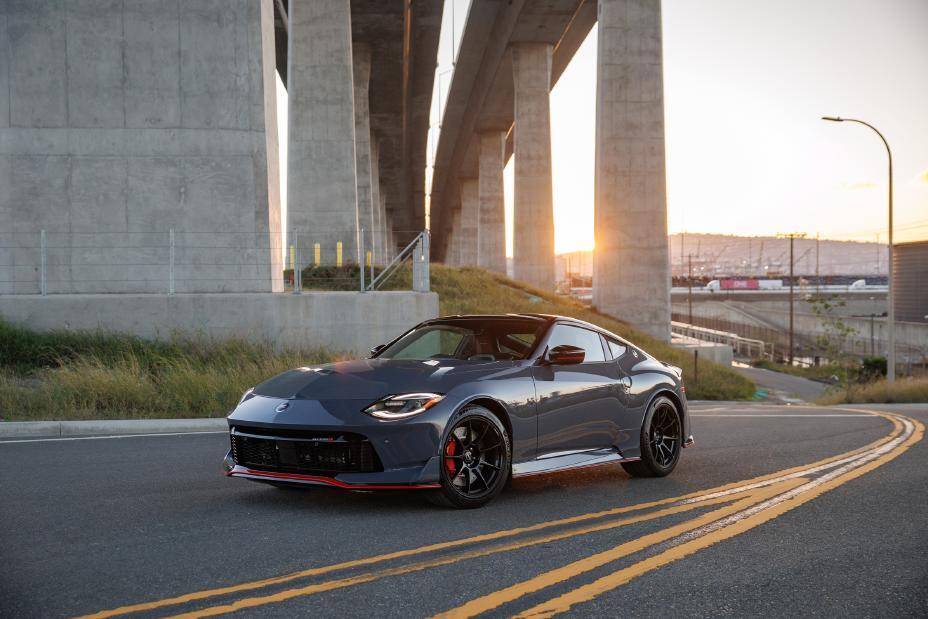
Z Car
"... until Mr. Karayama came in and directed both the Z car and the 510 as cars that he would felt that woul..."
The “Z” refers to a Nissan sports car model line. It’s known for being built to drive in a sporty way. The discussion mentions a person involved in directing the project, which is why it comes up in car history talk.
In this context, “Z” refers to the Nissan Z-car line, which became known for sporty performance and a strong enthusiast following. The mention of Mr. Karayama directing both the Z car and the 510 suggests a development story tied to how these cars were shaped for driving appeal. Z-cars are frequently discussed because they represent a key era of Nissan’s sports-car identity.

Datsun 240Z
"...this is a great car. And it's a good look at the 240Z was such a great looking car. I mean, from a des..."
The Datsun 240Z is an older sports car from the Z model family. It’s known for its attractive design and fun driving character. People talk about it a lot because the 240Z is considered a great-looking classic.
The Datsun 240Z is a classic early member of the Nissan Z-car family, known for its stylish body and sporty performance. It’s often praised for its look and for being a landmark model that helped define the Z-car reputation. In your context, it’s being highlighted as a great-looking car and a standout example of why the 240Z is so memorable.
2026 Rolex Monterey Motorsports reunion
"I wanted to congratulate you though on the fact that you're going to be the grand marshal of the 2026 Rolex Monterey Motorsports reunion."
This is a named motorsports event in Monterey with Rolex branding. They’re talking about it because the guest is going to have an official role there.
This is a specific motorsports event at Monterey, associated with Rolex branding. The hosts mention it as the context for the guest’s role (grand marshal), which frames why they’re discussing cars and the event’s theme.
features Japanese cars this year
"And it's the features Japanese cars this year. So how appropriate is that?"
They’re saying the event will focus on Japanese cars that year. It’s basically the theme of what kinds of cars will be highlighted.
The hosts say the event’s featured cars for that year are Japanese. That’s a programming/theme detail rather than a technical automotive concept, but it’s useful context for listeners about what the show is highlighting.
roll ball trailers
"One of the things I wanted to mention is that today, the one thing that again, that we're very innovative in the market is we build a roll ball trailers to haul race cars and custom cars."
“Roll ball trailers” is how they describe their car-hauling trailer design. It’s built specifically to move cars around safely and smoothly, rather than being a basic trailer.
“Roll ball trailers” refers to a trailer type designed to haul cars using rolling/ball-style components (the exact mechanism isn’t fully clear from the excerpt). The important takeaway is that it’s a purpose-built car-hauling trailer, not a generic utility trailer.
aeroballs
"They're called aeroballs. And not a lot of them out there, but they're the best in the world."
“Aeroballs” is the name they use for their special trailer line. It’s meant to look high-end and be shaped to tow more smoothly while carrying your car.
“Aeroballs” appears to be the brand/model name for the roll-ball trailers the hosts are describing. The key idea is that these trailers are designed with a focus on aerodynamic shape and high-end presentation for hauling race and custom cars.

Eagle Talon
"... that one on your website with the eagle with the talons out, that's amazing."
The Eagle Talon is a compact car made to feel sporty. It’s often talked about because it has a strong performance reputation and a distinctive look. In your clip, the car is being praised based on how it looks in the listing.
The Eagle Talon is a performance-oriented compact car that’s known for its sporty driving character and enthusiast following. In your context, it’s being highlighted by its appearance—specifically a listing photo showing an eagle graphic—showing how the car’s visual identity can draw attention. It’s the kind of car that gets discussed when collectors talk about standout examples on a dealer website.
dragging the box through the air
"[1917.3s] It's totally different. [1918.3s] And it's all in function. [1919.6s] The trailer is so functional in terms of dragging the box through the air."
They’re talking about how air resistance slows you down when you tow something. A trailer can be designed to reduce that resistance.
This is a description of aerodynamic drag: the resistance a vehicle or trailer experiences as it moves through air. The speaker argues that trailer design can significantly change how much drag the “box” shape creates.
tow it more
"[1945.3s] And you're not going to be pushing a square front in through the air and you can make [1949.3s] it aerodynamic and tow it more, make it more efficient. [1952.7s] It becomes really sensational and they come, you know, fully, fully featured, you know,"
They mean towing becomes easier and more efficient. The better the trailer shape is for the air, the less effort it takes to tow.
In this context, “tow it more” is shorthand for towing more efficiently—typically meaning less fuel use and easier towing at speed. It’s tied directly to the aerodynamic improvements the speaker describes.
AeroVault trailers
"Yeah. [1960.0s] We'll throw the website up for the AeroVault trailers and also for BRE as well too."
AeroVault is the name of the trailer brand. They’re telling you to check out the AeroVault website to see the specific trailer design they’re talking about.
AeroVault is the brand name of the trailer being discussed. The hosts are pointing listeners to the AeroVault website, implying these trailers are a specific product line with distinctive design and packaging.
Stingray split windows
"[1983.5s] And of course, I don't know if you saw them. [1986.1s] I just finished two really beautiful Stingray split windows. [1991.6s] I really upgraded a production automobile to look more exactly like the car that I had"
They’re talking about a Corvette Stingray with a special rear window shape. Instead of one continuous window, it’s split into two sections, which makes it look unique and collectible.
“Stingray split windows” refers to a Chevrolet Corvette Stingray with a distinctive split rear window design. The split-window layout is a well-known styling feature associated with early Corvette Stingray models, and it’s often discussed as a signature look for the car’s design history.
studio concept
"[2005.5s] were opened up through. [2006.8s] So it's called the studio concept. [2009.0s] And it's basically sort of what we would do in the studios at GM."
The “studio concept” describes a special, designer-driven version of a production car—typically built to show a particular vision rather than to be mass-produced. In this context, it’s compared to how GM studios would create a unique vehicle for executives or special use.
consignment
"The classic automobile is like going to the greatest indoor car showroom in the country with more than 1000 classic and collectible vehicles for sale via consignment in our eight acre climate controlled showroom."
Consignment means the car owner brings the car to a dealer/showroom, but the dealer doesn’t fully “buy” it up front. The dealer helps sell it, and the owner gets the money once it sells.
Consignment is a selling arrangement where the vehicle owner keeps ownership until it sells, and the show/marketplace handles marketing and sales. The marketplace typically takes a commission, and the owner gets paid after the transaction is completed.
Monterey Historics
"What an amazing, you know, the grand marshal of the Monterey Historics this year. How cool is that?"
Monterey Historics is a big classic-car event near Monterey Car Week. People show up to celebrate and display historic cars, and it often includes special guest roles.
Monterey Historics is a major classic-car event held around Monterey Car Week, featuring historic racing and concours-style displays. It’s known for bringing together collectors, designers, and motorsport figures.
grand marshal
"What an amazing, you know, the grand marshal of the Monterey Historics this year. How cool is that?"
Grand marshal is an honorary role given to a prominent person at an event, often to lead or represent the event’s spirit. In car events, it’s typically awarded to someone with notable influence in motorsport or automotive design.
space race
"He was in the space race for sure. Oh, yeah. You know, such an influence."
The “space race” was a big competition to build better space technology. They’re comparing that kind of forward-thinking to how some car designers were aiming for futuristic ideas.
The “space race” was the Cold War competition to develop spaceflight technology. The hosts use it as a metaphor for how aerospace thinking influenced automotive design and engineering—pushing futuristic shapes and advanced concepts.
aerospace industry
"We talk about this at Lynx, but such an influence from the aerospace industry, the way the airplanes and so many cars had that feel about them, whether it's the Chrome or that."
They mean the airplane/space industry. The idea is that car designers borrowed the futuristic look and engineering mindset that you’d normally see in aircraft.
When the hosts say “aerospace industry,” they’re pointing to how aircraft design and engineering influenced car styling and perception. That can show up in details like streamlined shapes, cockpit-like ergonomics, and a “tech-forward” look.
Chrome
"...whether it was the Chrome or that. And he had a lovely engineer as well for the show."
“Chrome” is the shiny, reflective metal finish you see on some car trim. They’re saying that kind of flashy, futuristic look was part of the inspiration.
“Chrome” is a shiny metal finish (often applied as a plating) used on cars for visual impact. In classic styling, chrome trim and brightwork were used to emphasize lines and give a high-tech, eye-catching look.
auction
"So we've got the auction coming up. June 19th. June 19th is going to be our auction to be at 10 a.m. here at Classic Automall in the Center Mallway."
They’re talking about a classic car auction coming up, and what it means if you want to sell your car there.
The hosts discuss an upcoming classic-car auction, including timing, location, and how many vehicles will be offered. They also cover how consignments and reserves work for sellers.
consigning your car
"And so if you're interested in consigning your car, if it's something that's already here, we can certainly consign it in and just take the pictures that we have now and put it on the auction side of the website."
Consigning is when you let an auction house sell your car for you. They handle the listing and selling, and you only get money if it actually sells.
Consigning a car means you hand it to an auction or dealer to sell on your behalf. The seller typically takes a fee or commission, and you usually get paid only if the car sells.
reserve
"And if it doesn't sell at our auction, if you put a reserve on it, which we are allowing reserve and no reserve, and if you put a reserve on it, it doesn't sell, then you can leave it here and we can still try to sell it for you."
A reserve is a “minimum price” you set before the auction. If the highest bid doesn’t hit that number, the car doesn’t get sold.
A reserve is the minimum price the seller is willing to accept at auction. If bidding doesn’t reach that price, the car won’t be sold (even though bidding may still occur).

1997 Ford F350 XLT Long Bed 4x4 pickup
"So some of the new arrivals this week. How about the 1997 Ford F350 XLT Long Bed 4x4 pickup."
This is a Ford F-350 truck from 1997. “4x4” means it has four-wheel drive, and the long bed gives you more space for hauling. “XLT” is just the nicer equipment/trim level.
This is a 1997 Ford F-350 XLT, a heavy-duty pickup built for work. The “Long Bed” and “4x4” indicate extra cargo length and four-wheel drive, and the “XLT” is the trim level.
460
"Oxford wide over gray, rust free west coast. It's got a 460. Yeah."
“460” is the engine size. Bigger engines like this are usually better for pulling trailers and heavy loads.
“460” refers to the engine displacement—an engine with about 460 cubic inches. In pickup trucks, larger displacement engines are often chosen for strong low-end torque, which helps with towing.

Cadillac Allante
"Next on the new arrival list is the 1993 Cadillac Allante convertible, the last year."
This is a 1993 Cadillac Allante, which is a luxury convertible. The speaker notes it’s the last year it was made, which can make it more desirable to collectors.
The 1993 Cadillac Allante is a luxury convertible that was produced as the final model year. The Allante is known for its upscale design and for being a more “special” Cadillac than the typical sedan.
North Star
"Next on the new arrival list is the 1993 Cadillac Allante convertible, the last year. The one to own because it had the North Star."
“North Star” is the name Cadillac used for a particular engine design. The host is saying that having the North Star engine is what makes this Allante especially worth owning.
“North Star” refers to Cadillac’s engine family used in certain late-1980s through 1990s models. It’s a specific Cadillac powerplant design, and the speaker is implying this engine choice is a key reason the 1993 Allante is “the one to own.”
pinning Farina bodied
"[2334.1s] Right. [2334.3s] And of course they were pinning Farina bodied. [2336.2s] So they were bodied over in Europe built and then they had to shift."
This is talking about how some classic cars got their bodywork from an outside designer/manufacturer. The “pinning” part is about how that body was attached or fitted during assembly.
“Farina bodied” points to coachbuilding/bodywork done by or associated with the Italian design/coachbuilding firm Giovanni Farina (often referenced in classic-car production history). “Pinning” suggests a body-attachment/fitment method used when integrating those bodies into the final vehicle assembly.
shipping the Daytonas over to England
"[2336.2s] So they were bodied over in Europe built and then they had to shift. [2339.4s] He was talking about the Cobras and they were shipping the Daytonas over to England. [2343.2s] It's like even back then when it was a lot cheaper to do stuff like that."
They’re describing how, back then, parts or even whole cars were shipped across the ocean/around Europe to finish the build. It’s a reminder that production wasn’t always done in one place.
The segment highlights international production logistics: cars or body components were shipped between countries (Europe/England) to complete manufacturing steps. This is a common theme in some classic-era specialty and limited-production vehicles.
4 speed automatic transmission
"And the Cadillac obviously has got the 4.6 liter North Star V. 4 speed automatic transmission."
This is an automatic transmission with four gears. It’s older-style compared to today’s cars, which usually have more gears for better efficiency and quieter cruising.
A 4-speed automatic transmission is an automatic gearbox with four forward gear ratios. Compared with modern multi-speed automatics, fewer gears can mean the engine runs at higher RPM more often, especially at highway speeds.

Morgan Roadster
"Another cool car. The 1958 Morgan Plus 4 Roadster. Orange over white."
A Morgan Roadster is a classic open-top sports car. In your clip, it’s referring to the 1958 Morgan Plus 4 Roadster. People mention it because it’s a classic car with a distinctive look and an open-top driving experience.
The Morgan Roadster in your transcript appears to refer to the 1958 Morgan Plus 4 Roadster, which is a classic British open-top sports car. Morgan Roadsters are known for a traditional, old-school feel and a distinctive design that many collectors seek out. It’s mentioned alongside the Plus 4 details because the roadster body style is a key part of what makes that car desirable.

Morgan Plus
"Another cool car. The 1958 Morgan Plus 4 Roadster. Orange over white."
The Morgan Plus 4 is a classic British sports roadster. The “1958 Plus 4 Roadster” is a specific older model year that collectors like. It’s mentioned because the car’s look and condition—like the orange over white color—make it memorable.
The Morgan Plus 4 is a classic British roadster known for its traditional design and driving feel. The 1958 Plus 4 Roadster mentioned in your context is a specific early model year that collectors often look for because it represents the car’s classic styling and character. It’s brought up because distinctive color combinations and well-preserved examples tend to stand out in classic listings.
Numbers matching
"Orange over white. Numbers matching 2 liter 4 cylinder. Long term ownership."
“Numbers matching” means the car still has the original engine/major parts that match the vehicle’s identity records. Collectors like it because it’s more original and harder to fake.
“Numbers matching” means the car’s major components (typically the engine and sometimes the transmission) retain the original serial numbers that came with the vehicle. In classic-car circles, it’s a big authenticity and value signal because it suggests the car hasn’t been heavily swapped or rebuilt with different parts.
2 liter 4 cylinder
"Orange over white. Numbers matching 2 liter 4 cylinder. Long term ownership."
It has a 2.0-liter engine with four cylinders. That usually means it’s not huge-power, but it can still be fun because the car is light and simple.
A “2 liter 4 cylinder” describes an engine with four cylinders and a total displacement of about 2.0 liters. In a small British roadster like the Morgan Plus 4, this typically means modest power but light weight and good driving character.
4 speed manual transmission
"This one's got a 4 speed manual transmission. And it's a little diamond in the rough."
This car uses a manual transmission with four gears. You shift it yourself with a clutch, which can make the driving feel more engaging.
A “4 speed manual transmission” is a gearbox where the driver selects gears using a clutch and gear lever, with four forward ratios. In classic cars, a 4-speed manual is often part of the charm—more direct driver involvement than automatics.
Request an Explanation
Heard something you'd like explained? We'll add it to this episode.
Sign in to request explanations for terms you heard.
Want to learn more?
Browse our glossary for plain-English explanations of automotive terms, jargon, and concepts.
Help improve this episode
See something that's not quite right? Our annotations are AI-generated and can sometimes miss the mark. Click the flag icon on any annotation to suggest a correction.