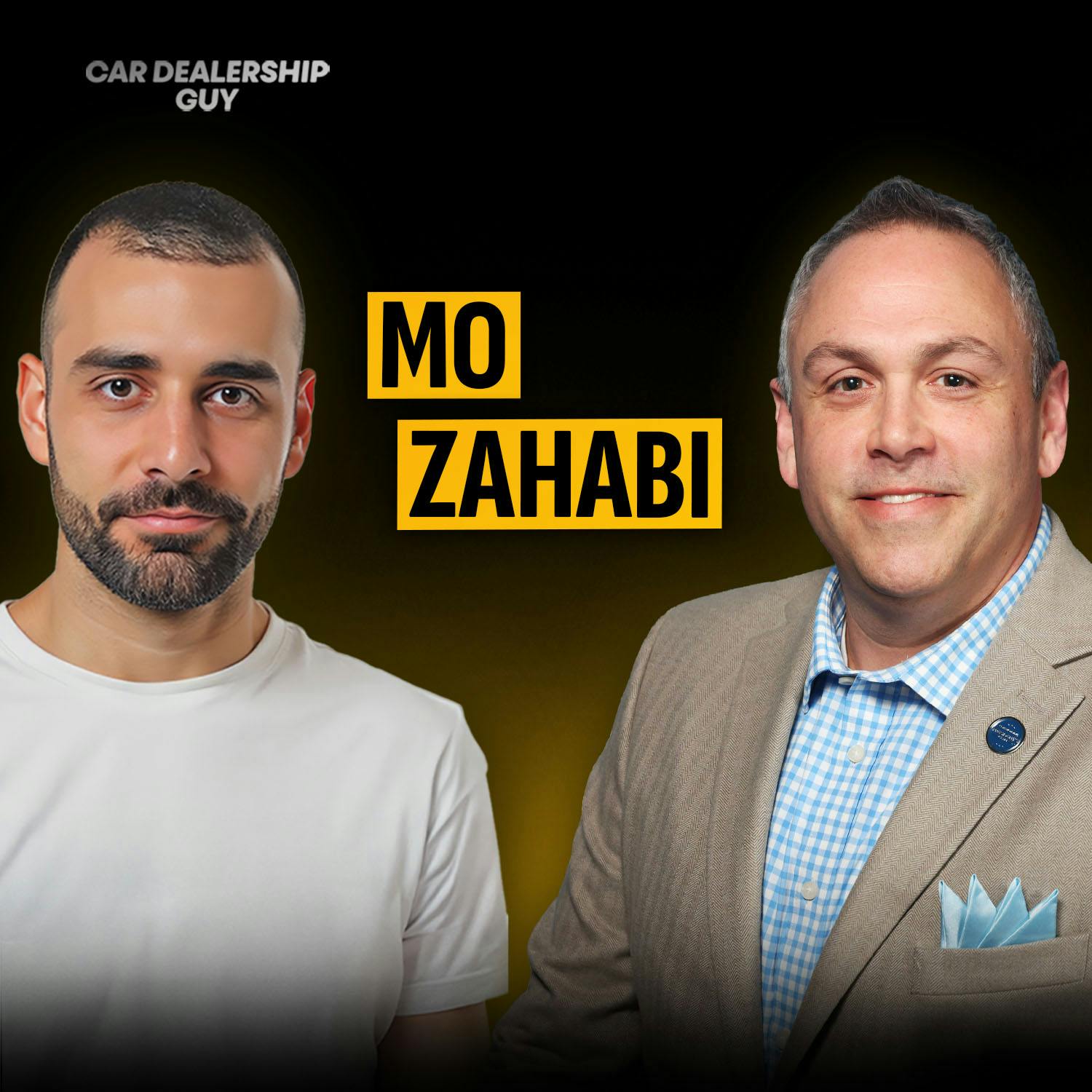
Mo Zahabi, AVP of Product Consulting at Cox Automotive, shares insights on how dealerships can gain a competitive edge by predicting buyers earlier using first-party data. Drawing from his unique background bridging dealership experience and tech innovation, Mo discusses common inefficiencies in dealer marketing and sales processes, emphasizing the importance of reaching customers before they submit leads. He highlights challenges like employee turnover, inventory sourcing, and margin compression, while advocating for smarter data use to improve efficiency, reduce wasted effort, and enhance both customer and salesperson satisfaction.
Today I'm joined by Mo Zahabi, AVP of Product Consulting at Cox Automotive.
Most dealers think the race begins when the lead arrives. But by that point, the customer has often been in-market for five or six weeks already.
Mo breaks down how first-party data inside the Cox Automotive ecosystem can reveal buying signals before a lead ever exists, why fragmented dealership tech stacks create wasted effort and employee turnover, and how dealers can modernize customer engagement by focusing on real behavior instead of outdated tactics.
This episode is brought to you by:
1. Podium - The AI platform trusted by one in three dealerships. Podium helps dealers consolidate sales, service, messaging, and voice into one connected system that actually runs the work. If your AI isn’t driving real outcomes, it’s time to take a closer look @ https://www.podium.com/car-dealership-guy.
2. BizzyCar - BizzyCar helps dealerships identify vehicles with open recalls and automatically schedule service appointments using AI and the industry’s most accurate recall data. The result: more customers returning to your service lane and more recall revenue captured. See how it works at https://info.bizzycar.com/cdg
3. Cox Automotive - Discover what’s driving improved customer experiences—and dealership results. Download the Drivers of Shopper Satisfaction ebook from Cox Automotive today @ https://carguymedia.com/464vOfw
Check out Car Dealership Guy’s stuff:
For dealers:
CDG Circles ➤ https://cdgcircles.com/
Industry job board ➤ http://jobs.dealershipguy.com
Dealership recruiting ➤ http://www.cdgrecruiting.com
Fix your dealership’s social media ➤ http://www.trynomad.co
Request to be a podcast guest ➤ http://www.cdgguest.com
For industry vendors:
Advertise with Car Dealership Guy ➤ http://www.cdgpartner.com
Industry job board ➤ http://jobs.dealershipguy.com
Request to be a podcast guest ➤ http://www.cdgguest.com
Topics:
08:05 The Real Problem at Dealerships Isn’t Margin Compression
09:55 “5 Minute Lead Response?” — You’re Already 5 Weeks Late
10:20 Why Dealers Should Stop Waiting for Leads
11:00 The Customer Data Mistake Costing Dealers Millions
13:40 The CRM Change That Instantly Deleted 850,000 Tasks
19:00 The Difference Between a Smart CRM and a Dumb CRM
21:15 “Playing Poker With the Customer’s Cards Face Up”
26:40 Why F&I Bottlenecks Are Killing Dealership Efficiency
34:20 Dirty Data Is Like Putting Diesel in a Gas Engine
Car Dealership Guy Socials:
X ➤ x.com/GuyDealership
Instagram ➤ instagram.com/cardealershipguy/
TikTok ➤ tiktok.com/@guydealership
LinkedIn ➤ linkedin.com/company/cardealershipguy
Threads ➤ threads.net/@cardealershipguy
Facebook ➤ facebook.com/profile.php?id=100077402857683
Everything else ➤ dealershipguy.com
"Recent dealer-only conversations include Stellantis acquisition caps, AI selection and integration, pay plan revamps,"
AI means smart computer programs that help dealers work better. AI selection and integration means picking the right smart tools and using them in the dealership.
AI selection and integration involves choosing and implementing artificial intelligence technologies to improve dealership operations such as customer engagement, inventory management, and sales forecasting.
"pay plan revamps, cooling new car sales, used car sourcing strategies, and more."
New car sales mean selling cars that have never been owned before. How many new cars sell shows how well the car market is doing.
New car sales refer to the selling of brand-new vehicles from dealerships to customers. Trends in new car sales can indicate the health of the automotive market and affect dealership strategies.
"cooling new car sales, used car sourcing strategies, and more. Don't miss it."
Used car sourcing strategies mean ways dealers find used cars to sell. This helps them have enough cars for customers who want used ones.
Used car sourcing strategies are methods dealerships use to acquire pre-owned vehicles to sell. Effective sourcing is critical for maintaining inventory and meeting customer demand.
First party data is information a car dealer collects about people who visit or buy from them. This helps dealers understand what customers want and when they might buy.
First party data is information collected directly by dealerships from their customers, such as browsing behavior and purchase history. It is valuable for targeting and predicting buyer behavior.
"lots of product direction at Cox Auto, which is influencing thousands of dealers nationwide"
Cox Automotive helps car dealers and companies by giving them tools and technology to sell and manage cars better.
Cox Automotive is a large automotive services company that provides technology, software, and marketing solutions to car dealerships and automotive businesses across the United States.
"That person ended up being the founder of Vin Solutions. So you actually interacted with them on a dealership lot"
Vin Solutions makes software that helps car dealers keep track of customers and sell cars more easily.
Vin Solutions is a software company that provides customer relationship management (CRM) and dealership management solutions to automotive dealerships, helping them track leads and sales.
"...I was as an F&I guy. And when he saw me, he was really mad because I almost got him to quit his job..."
F&I means the part of a car dealership that helps you get a loan to buy the car and offers insurance options.
F&I stands for Finance and Insurance, a department within car dealerships responsible for arranging vehicle financing and selling insurance products to customers.
"...they only did window stickers. And then they introduced the ILM, the internet lead management tool..."
ILM is a computer system that helps car dealers keep track of people who look at cars online and want to buy them.
ILM stands for Internet Lead Management, a tool used by car dealerships to track and manage potential customers who show interest online, helping sales teams follow up efficiently.
"which we tested for a while, but ultimately we didn't create the CRM or desking until I started at bin."
CRM is a tool that helps car dealers keep track of people interested in buying cars and helps them stay in touch and organized.
CRM stands for Customer Relationship Management, a system used by dealerships to manage interactions with potential and current customers, track sales leads, and improve customer service.
"Like I can build reports in Reynolds and Reynolds, I can build reports in CDK."
Reynolds and Reynolds makes computer programs that help car dealers keep track of their cars, customers, and sales.
Reynolds and Reynolds is a company that provides software solutions for automotive dealerships, including dealership management systems that handle sales, inventory, and customer data.
"Like I can build reports in Reynolds and Reynolds, I can build reports in CDK."
CDK is a company that makes software to help car dealers manage their business and customers.
CDK Global is a company that provides software and technology solutions for automotive dealerships, including tools for managing sales, service, and customer relationships.
"So desking and things and being able to push desking in there was because I memorized the keystrokes."
Desking is when car dealers figure out the price and payment plans for a car to help customers understand how much they need to pay each month.
Desking refers to the process in car dealerships where salespeople or finance managers calculate and structure the terms of a vehicle sale, including financing options, trade-in values, and monthly payments.
"We did the same with the actual ADP desk and tool as well."
ADP is a company that helps car dealers with tools to figure out prices and payments for cars.
ADP is a company known primarily for payroll and HR services, but it also offers dealership management tools including desking software to help structure vehicle sales.
""...happy 15 month birthday on your car as a way to engage with the customer and gauge where they are in their life cycle. And I think for salespeople...""
The customer life cycle is like the journey a buyer takes with their car, from when they first get it to when they might want a new one. Knowing this helps car sellers talk to customers at the right time.
The customer life cycle refers to the stages a customer goes through in their relationship with a product or brand, from initial awareness to purchase and eventual replacement or upgrade. Understanding where a customer is in this cycle helps dealers target their marketing and sales efforts more effectively.
""...you know, margin compression as the big problem. But I think that the problem is that most dealers don't really have a pulse on who their customer is...""
Margin compression means dealers are making less money on each car they sell because of things like more competition or higher costs. This makes it harder for them to earn profits.
Margin compression refers to the reduction in profit margins that dealers experience due to increased competition, rising costs, or pricing pressures. It is a key challenge for dealerships trying to maintain profitability.
""I think the big problem that we have right now is dealers wait until they get a lead and then they hurry and they rush...""
A lead is when someone might want to buy a car and gives the dealer their contact info. Dealers use leads to know who to talk to about selling cars.
In automotive sales, a lead refers to a potential customer who has shown interest in buying a vehicle, typically by submitting contact information or making an inquiry. Dealers rely on leads to initiate sales conversations and convert prospects into buyers.
""...and they worry about a five minute response time. Your customer's been in market for five to six weeks...""
Response time means how fast a car dealer answers when someone asks about a car. Being quick can help sell cars, but it's also important to know when to reach out.
Response time in car sales refers to how quickly a dealer replies to a customer's inquiry or lead. Faster response times can improve the chances of making a sale, but focusing solely on quick responses without understanding customer behavior may not be effective.
"This episode is brought to you by Podium. If you're like most dealers, you've probably tried some version of AI by now. The real question is it actually doing the work or just answering with generic messages? In our CDG circles groups, I keep seeing Podium come up when dealers are talking about vendors and it's not hype."
Podium is a company that makes computer programs to help car dealers talk to customers and sell cars better.
Podium is a company providing AI-powered communication and workflow tools for car dealerships, helping them engage customers more effectively and automate marketing and sales processes.
"One in three dealerships is already using Podium and thousands of their customizable AI agents are actively running sales and service workflows every day."
AI agents are computer programs that help car dealers do their jobs better by talking to customers and handling tasks automatically.
AI agents refer to artificial intelligence software programs that automate tasks such as sales and service workflows in car dealerships, improving efficiency and customer engagement.
"Podium's voice AI books, appointments, routes calls correctly and escalates when it should based on your dealership's playbooks."
Voice AI is a smart computer system that listens and talks on the phone for a car dealership. It can book appointments and send your call to the right person so you get help faster.
Voice AI refers to artificial intelligence systems designed to handle voice communications, such as booking appointments, routing calls, and escalating issues based on predefined dealership playbooks. It helps dealerships automate and improve customer interactions over the phone.
"but it's called no longer owns and it automatically scrubs that out of the system. So it says, oh, we'll use, you traded that car into us."
'No longer owns' means the system knows when someone traded in their car, so the dealer stops calling them about that car. It saves time and avoids bothering people.
The 'no longer owns' process automatically identifies customers who have traded in their vehicles and removes them from follow-up communications. This prevents wasted effort on leads that are no longer valid, improving dealership efficiency.
""You know, our performance management, for example, that's something that I always wanted so badly in dealership because I was the nerdy guy like I was early AI before we had AI in the dealership. I made everybody's life easier, but it made my life more complicated. Performance management tools like that, I think really helped the dealers get the most value out of the product.""
Performance management means using special tools to help car dealerships work better and sell more cars. It helps people see how well things are going and what can be improved.
Performance management in a dealership context refers to tools and systems used to monitor, analyze, and improve the effectiveness of sales and operational processes. These tools help dealerships optimize their use of software and resources to maximize value and efficiency.
Term
AI
""like I was early AI before we had AI in the dealership. I made everybody's life easier, but it made my life more complicated.""
AI means smart computers that can learn and help people make decisions. In car dealerships, AI helps find the best ways to sell cars and help customers.
AI, or artificial intelligence, refers to computer systems designed to perform tasks that normally require human intelligence, such as learning and decision-making. In dealerships, AI can be used to analyze data and improve sales and customer management.
"...about like predictive analytics in the dealership which I thought was neat, but can you give us, you know..."
Predictive analytics means using past information to guess what might happen next. For car dealers, it helps figure out when someone might want to buy a car so they can be ready to help.
Predictive analytics refers to the use of data, statistical algorithms, and machine learning techniques to identify the likelihood of future outcomes based on historical data. In the context of car dealerships, it helps predict buyer behavior and optimize sales strategies.
"and it's an aggregation of the data the customer gave us in their journey. So if they went to, let's say, AutoTrader and they put preferences in"
The customer journey is all the steps a person goes through when looking for and buying a car, from searching online to visiting the dealer.
The customer journey refers to the series of interactions and steps a buyer takes from initial research to final purchase of a vehicle. Understanding this helps dealers tailor their sales approach.
"So if they went to, let's say, AutoTrader and they put preferences in or KBB"
AutoTrader is a website where people can look for cars they want to buy. It helps dealers see what kinds of cars buyers like.
AutoTrader is an online marketplace for buying and selling new and used cars. It provides tools for customers to search, compare, and set preferences for vehicles, helping dealers understand buyer interests.
"So if they went to, let's say, AutoTrader and they put preferences in or KBB or they used My Wallet and told you what their range was"
KBB is a company that tells you how much a car is worth and gives you information about cars to help you buy or sell them.
KBB stands for Kelley Blue Book, a trusted vehicle valuation and automotive research company. It provides pricing, reviews, and vehicle history information to help buyers and sellers make informed decisions.
"We gather from Accelerate My Deal as well so if you get a customer and says I put 2,000 down then I put 4,000, then I put five and then I submitted it with three"
Accelerate My Deal is a website where buyers can say how much money they want to put down and make offers on cars, so dealers know how serious they are.
Accelerate My Deal is a digital platform that allows customers to customize and submit their vehicle purchase offers, including down payments and trade-ins. It helps dealerships understand buyer flexibility and financial readiness.
"so if you get a customer and says I put 2,000 down then I put 4,000, then I put five and then I submitted it with three"
A down payment is the first chunk of money you pay when buying a car, so you don't have to borrow as much.
A down payment is the initial amount of money a buyer pays upfront when purchasing a vehicle, reducing the total amount financed. It often affects loan terms and monthly payments.
"This episode is brought to you by Busycar. Are you leaving recall revenue on the table or struggling to reconnect with customers who should be coming back to your service lane? Busycar is the leading AI-powered recall management platform for automotive dealerships."
Busycar is a company that helps car dealers find out which cars need safety fixes and then reminds the owners to bring their cars in for service.
Busycar is an AI-powered recall management platform designed for automotive dealerships. It uses accurate recall data to identify vehicles with open recalls and automatically contacts customers to schedule service appointments, helping dealerships increase retention and service revenue.
"We just came back from NADA. There's a ton of announcements there."
NADA is a big group for car dealers in the U.S. They have meetings where dealers learn about new things in the car business.
NADA stands for the National Automobile Dealers Association, a trade organization representing car dealerships in the United States. It hosts events and conferences where industry announcements and trends are shared.
""because downstream, if you don't have the right data, it's like putting diesel in a regular unleaded car. It's gonna mess things up. So we gotta pay attention to those things.""
Diesel is a special kind of fuel for certain engines. If you put diesel into a regular car that uses normal gas, it can break the car.
Diesel is a type of fuel used in diesel engines, which is different from regular unleaded gasoline used in most cars. Putting diesel fuel into a gasoline engine can cause serious mechanical problems.
The Real Problem at Dealerships Isn’t Margin Compression
“5 Minute Lead Response?” — You’re Already 5 Weeks Late
Why Dealers Should Stop Waiting for Leads
The Customer Data Mistake Costing Dealers Millions
The CRM Change That Instantly Deleted 850,000 Tasks
The Difference Between a Smart CRM and a Dumb CRM
“Playing Poker With the Customer’s Cards Face Up”
Why F&I Bottlenecks Are Killing Dealership Efficiency
Dirty Data Is Like Putting Diesel in a Gas Engine
Select text to request an explanation
CDG Circles signups are back open.
If you want to learn from the best dealers in the country,
this is the digital peer group where it happens.
Over 3,000 dealership rooftops represented.
Recent dealer-only conversations
include Stellantis acquisition caps, AI selection
and integration, pay plan revamps,
cooling new car sales,
used car sourcing strategies, and more.
Don't miss it.
Join us now at cdgcircles.com.
But the efficiency side of that is,
I'm wasting not only me power on that,
but I'm also probably wasting a lot of marketing dollars
at the same time.
So I think the dealers are, you know,
always going to look at the, you know,
marching compression as the big problem.
Today I'm joined by Moe Zahabi,
AVP of product consulting at Cox Automotive.
Most dealerships think the clock starts
when a lead comes in,
but in reality that customer has often been shopping
for five or six weeks already.
Moe breaks down how first party data
from across the Cox ecosystem
can help dealers identify buyers earlier,
eliminate wasted effort caused by bad data
and fragmented tools,
and create a more efficient sales process
that keeps the salesperson with the customer
instead of chasing paperwork.
A big thank you to our sponsors
for making this episode possible.
Podium, busy car.
And of course, Cox Automotive.
And now let's get into the show.
Moe Zahabi on to CDG Podcast, Moe, welcome.
Thanks, Yoshi.
I really appreciate you having me on the show
and looking forward to this little bit
of anxiousness going on, but...
Sorry.
I'd like to be here.
Oh, no, no, just a fun conversation.
With a little, some guest input,
of course we had to send some questions in circles
and ask dealers what questions do they have
for been solutions and other or yourself,
of course, running and leading
lots of product direction at Cox Auto,
which is influencing thousands of dealers nationwide
and inevitably tens of thousands of customers,
if not more.
It's a pretty big responsibility, huh?
Well, I have a question for you here, though.
Well, let's kick it off.
You were, you're part of this, I call it,
a pretty tiny club within Automotive
that has tech background and real dealership experience.
There's some of these people, not too many.
It's an interesting two worlds to kind of bridge.
You were 10 years at a dealership
and you ran into someone on the lot.
I thought this was kind of like a Hollywood story,
so I thought I'd ask you first.
That person ended up being the founder of Vin Solutions.
So you actually interacted with them on a dealership lot,
roughly, let's say, what, 15, 20 years ago?
Pretty incredible.
Tell us about that story.
How did this happen?
Yeah, it was back in 2000, I think, seven.
And I was, like I said, my background, technical.
I was that nerdy guy in the lot.
I had fired dealer specialties.
The dealership that I was working at
may make their a little bit rude.
So they said, well, if you think you can do it,
you go do it yourself.
So I fire these guys and they leave.
And I'm not kidding, it's maybe 15, 20 minutes later,
this little kid walks up and I think Matt was like 19
at the time, jean shorts and a t-shirt.
And he goes, hey, you got to check this out.
And I'm like, are you kidding me?
Well, we talk a little bit, some good conversation.
Same backgrounds, nerdy guys, computer science.
But Matt really had a good solution.
And it really created a partnership
that ultimately pulled me out of dealership.
So then it's incredible, right?
He literally found you at the dealership.
Give us the story.
Why did you decide to do this?
You've been at with Vin or with Cox on a mode of nerve,
but you started with Vin and it's been almost two decades.
Why did you feel at the time,
before we talk about present day and what's coming,
why did you feel compelled to leave the dealership
and go to the tech side?
It was funny because I was going to go run
another software company called Perceptive Software.
I had a friend who was VP there
and he was trying to pull me back
out of the automotive industry.
I had a one year old son, so this was really hard.
But when I let them know I was going to leave,
I called back to, Vin's solution said,
hey, Matt, it's been great,
wanted to let you know we had a really good partnership.
If there's anything I can do to help you in the future,
let me know.
He put me on the phone with Mike Delay,
who is our chief sales officer at the time,
who hired me on the spot.
So the big reasoning behind it, Yosi,
was it was from my kid.
I didn't want to put in the hours that I was putting in
with a one year old and have him grow up not knowing me.
So it was a big leap.
My dad thought I was absolutely crazy
because of positioning that I have myself in
with the dealer group that I was working for.
But he did help me, did support me,
and it turned out to be an excellent opportunity.
And the funny part was Chase Abbott and I
actually worked across the street from each other,
and we met in finance school.
So we knew each other and we started two days apart,
and I tried to hire him to work at the dealer group
I was as an F&I guy.
And when he saw me, he was really mad
because I almost got him to quit his job
to come work for me and I quit my job to go work there.
So it all worked out,
but it was kind of a weird story and how it came together.
Okay, so you meet the founder of Insolutions
that you eventually join and you go to the tech side.
Talk to me about what learnings did you bring over
from your time as a dealer to the tech and product side?
You know, Matt and I had talked a lot before I came over there
and there were some things that we did to help gather data
out of the dealership that made it a little bit easier on him
because of my technical background,
I could explain things that he was trying to learn about
inside the dealership because when I came on board,
they only did window stickers.
And then they introduced the ILM,
the internet lead management tool,
which we tested for a while,
but ultimately we didn't create the CRM or desking
until I started at bin.
And that's a lot of what I was able to take in there.
And unfortunately there was several people
who came out of automotive as well,
but on the technical side,
I was the only one with automotive experience,
but it helped me relate things to math
and obviously my delay at the same time.
But the things that I was able to bring were really
the understanding of how these different systems
that were out there today worked.
Like I can build reports in Reynolds and Reynolds,
I can build reports in CDK.
I know that I memorized all the keystrokes for Reynolds.
So desking and things and being able to push desking
in there was because I memorized the keystrokes.
We did the same with the actual ADP desk and tool as well.
So that's kind of some of what I did there at the beginning.
When I first started, there wasn't a lot of process
either in place.
And that was one of the things that we focused on heavily
was not just bringing customers on board,
but making onboarding better for those customers
because that's a big component of their happiness
and the long run.
So a lot of different areas like that,
I've kind of worked in all different parts of the company
from operations to product, so on and so forth.
You know, what I like about this type of wiring
is that you can see both worlds
and ideally translate problems to real solutions.
Now, I wanna fast forward us to present day
because there's dealers listening
and there's real challenges in the industry
and we're also going through lots of changes in industry,
just technologically as everyone is.
Given your wiring and having been on the dealer side,
Colonel and TechSide, what are you seeing today
as some of the most pertinent challenges for dealers?
I think there's a couple different challenges.
One of them is, I mean, you still see a lot of employee
turnover in the dealership.
And I think that's a direct reflection of the technology.
There's challenges from obviously sourcing inventory,
the economy, the way that's playing out right now.
I think the biggest issue that the dealerships are having
is efficiency.
I think they waste a lot of times
in a lot of different areas.
Trying to pursue customers
and not really chasing them down the right way.
You know, they rely on the old tactics more or less,
you'll see which is, hey, happy 15 month birthday
on your car as a way to engage with the customer
and gauge where they are in their life cycle.
And I think for salespeople, one, that's demoralizing
because there is no win there for them.
And I think for the customer, it's annoying.
But the efficiency side of that is I'm wasting
not only manpower on that, but I'm also probably wasting
a lot of marketing dollars at the same time.
So I think the dealers are always gonna look at the,
you know, margin compression as the big problem.
But I think that the problem is that most dealers
don't really have a pulse on who their customer is
or for where they are in their life cycle.
And I think that creates a big problem for them.
You said two big things there.
First, you started with technological challenges,
impacting turnover, which I wanna understand what you mean.
But let's start with efficiency.
When you say trying to pursue customers
and not going after them the right way,
what is the right way, right?
In your opinion, like how do you,
what's the right way today to interact with customers?
You have tons of resources under your belt, that's obvious.
And so I have to imagine you're spending those resources,
investing them in ways to help dealers solve these problems.
So that's really what I wanna get to.
But talk to me first about what is the,
like when you're saying chasing customers
on the wrong way, what is the right way?
Well, I think the right way is reaching out to a customer
before they reach out to you
and understanding why you reach out to them.
I think the big problem that we have right now
is dealers wait until they get a lead
and then they hurry and they rush
and they worry about a five minute response time.
Your customer's been in market for five to six weeks,
you're late, you're late to the game.
And I think that's a big problem for these dealers.
And what happens with that is you lose customers
because you never got the opportunity to sell them
because you were waiting for the lead.
I think that dealers need to really look at ways
to pull leads forward by understanding
what's going on with that customer.
And a lot of that can be picked up
and derived from first party data on websites,
being able to understand that a customer
has evaluated a trader, configured a dealer,
been on your website platform
and they are back in market and they are likely to buy.
The other side of that is, and you were there,
you know, buy my product.
If you buy my product, you'll make more money.
I always thought that was a horrible way to go about things.
I think that it's not just about profitability,
it is about efficiency.
And if you have efficiency in play,
you can save money for your dealership
and make it more impactful.
I think the dealers today who use data the right way
are making an impact and probably have happier customers
and happier salespeople.
An example of that would be, you know,
I remember calling and saying,
hey, Yossi, how are you doing?
You know that car you have, we really need that trade.
And then you'd go, oh, I got rid of that car
like six months ago, I actually traded it to you.
Well, we've sent you four marketing pieces since then
and my salesperson's called you three times.
Why does that keep happening?
Because you're not using data the right way
and pulling that data out of that pool
so we don't engage with that customer.
That's a lot of lost revenue, that's a lot of lost time.
And I think the dealers that are really hedging the data
are the ones that are in a better place now,
whether it's, you know, knowing the right time
to reach out to a customer or more importantly,
when not to reach out to a customer and waste your time.
This episode is brought to you by Podium.
If you're like most dealers,
you've probably tried some version of AI by now.
The real question is it actually doing the work
or just answering with generic messages?
In our CDG circles groups, I keep seeing Podium come up
when dealers are talking about vendors and it's not hype.
It's because they're meeting the needs of dealers right now.
One in three dealerships is already using Podium
and thousands of their customizable AI agents
are actively running sales and service workflows every day.
What makes them different is they're not just another AI add-on.
They consolidate sales, service, messaging,
and especially voice into one customizable platform
so you're not stacking a bunch of disconnected systems
and let's be real.
The phone is still where a lot of money is won or lost.
Podium's voice AI books, appointments,
routes calls correctly and escalates when it should
based on your dealership's playbooks.
If your AI isn't driving real outcomes,
it might be worth a look.
Check out podium.com slash CDG
or click the link in the show notes below.
What are you doing to support that?
Like how do you fix that?
How do you help dealers fix that?
Well, I mean, we built processes in place for that.
So one of the ones that I love and it kind of gets undervalued
because it's a core component of our solution
but it's called no longer owns
and it automatically scrubs that out of the system.
So it says, oh, we'll use, you traded that car into us.
We can see it trains actually in the data.
Don't follow up, kill follow up process on that.
And then because of our pool of data auto trader,
specifically, you know, we see all those vehicles
out there listed online.
If we see that vehicle listed out online,
we know the customer doesn't own it anymore.
We kill the follow up process.
So putting it in perspective,
and we've had this process for a while
but I love this number because when we set
that process live across our system,
it killed 850,000 pending tasks in a day.
Think about that.
And what specifically, when you say,
was it just duplicative tasks that every dealer
who today is, let's say for example here is a,
you know, on a VinSolutions CRM hypothetically, right?
Is that what we're talking about that just disappeared
or what exactly happened?
That's pretty much what happened.
So it said, hey, listen,
these customers don't own these cars anymore.
There is no reason to call and say happy to your birthday
or, you know, offer them top dollar for their trade.
They don't own it.
So let's shift the follow up
and use that in a different way to engage
with the customer.
Because I mean, here's the thing,
is like if you trade in a car with me
and then I call and follow up and try to get you
to trade in the car, you already traded in,
how well do you think I know you as a customer?
So I want to bring up one question here
from a dominant Texas dealer
who's asking, this is real time from circles.
They're asking with the advent of AI
and so many, you know, new fast moving companies
and they are a, they're a VinSolutions dealer, by the way.
They're asking, how do you plan to invest in the platform
to keep your dominance in the months and year to come?
Can you give us an example of any of those plans?
Now, obviously this is a big question.
This isn't just like, hey, we're gonna do this
and everything's gonna be great.
This is clearly, you know, there's a lot
that goes into planning out the future.
But I think the bigger kind of thematic underlying question
here is, you know, what does the future look like for me
as a dealer who is maybe on VinSolutions or on this platform?
How am I going to stay competitive in the marketplace?
How do you respond to that?
I think that across the board, and it's not just CRM,
it's making the product smarter
and getting it to where data allows us to do more of it.
Because when we talk about AI, for example, AI is only
obviously as good as the data that you infuse it with.
So who has the largest pool of data who can see the most?
And that's really us.
And I love that fact because I'm here.
But I also know that, you know,
the dealerships themselves wanna be more efficient.
They wanna be able to do, I don't wanna say more with less
because I've been out and I've asked dealers this,
if you could do more with less, would you?
And they said, no, what I do is I just hire more people
and sell more cars because I've learned to be efficient.
And I love that.
And I've seen several of your interviews
where they talk about that efficiency angle.
I think that's more of where we're headed with this,
is more transparency, easier to use.
And obviously we've been knocked for UX, we haven't redesigned.
That's part of what's coming with it.
It's just making it more intuitive and more connected.
And I can tell you, when you take several companies
and you try to put them together,
it does take a while to get it right.
But because of the size and the depth and breadth
of what we have, the possibilities of what we can do
with that far exceed, I think, anybody else in the industry.
And it's just because of the scope of the data
and the people behind it.
And that's a big part of what we do.
You know, our performance management, for example,
that's something that I always wanted so badly
in dealership because I was the nerdy guy
that everybody called on to fix every,
like I was early AI before we had AI in the dealership.
I made everybody's life easier,
but it made my life more complicated.
Performance management tools like that,
I think really helped the dealers
get the most value out of the product.
Because if you don't have somebody there
to help you understand not only how to use it,
but ensure that you have metrics that show usage,
why buy the software?
I mean, why not just set the money on fire
in the back of the dealership and the winner
and keep it warm?
That's really what you do if you don't have
that type of system in place to make sure
that you're getting the most out of the decisions.
So I think one of the two things is data and people.
I want to, so I want to touch on the second one.
I'll bite, right?
I want to take it a step further because I agree with you.
I do think that in this age,
it's whoever has the most access to the most information,
you can simply, you know, get the smarter solutions.
But I wanted to distill that to the dealership level.
So you said make the product smarter and you're right,
you do have access, of course, to a plethora of data
because, you know, we'll talk soon,
we'll talk about what it means or, you know,
just to connect its solutions and, you know,
multiple logins, one login, you know,
disparate systems, we'll touch on that too.
But when you say make the product smarter,
can you give me some examples?
I know we had a side conversation before this
about like predictive analytics in the dealership
which I thought was neat, but can you give us, you know,
that could be one, but can you give us that
and other examples of, you know,
when you say make the product smarter, use the data,
how does that actually show up and, you know,
what does that actually look like in my day-to-day
in a dealership?
I mean, I think there's a lot of different areas you'll see.
I mean, you could have a website
and things like experience optimization
which is powered by our first party data
to make sure that the site's optimized for the customer.
I think that when I'm talking about inside the dealership,
you have, like I always said, you have a CRM.
There's a difference in a smart CRM and a dumb CRM.
A dumb CRM I log into and I got to figure out
what I'm supposed to do today.
A smart CRM can use data to highlight
probably the most important customer I could reach out to
and what I need to say and what happened in the past.
You know, give me a quick summary
of what we've done with this customer.
I think those are ways that we can make the experience better
and those are ways we're already doing it.
I think that the predictive side is huge
because it solves that problem that we talked about earlier
which was efficiency and knowing when to reach out
to a customer and what kind of offer to make to the customer
because when we rely on things like predictive analytics
versus predictive insights, we're relying on past data,
history to kind of re-piece together
what we might get in the future, right?
You know, so you always bought this car,
you're gonna buy this car because you always bought that car.
That's not always the case.
Things change, people have kids and they move on to SUVs.
Well, with our technology and how we're able to utilize it
and plug that in, I can see that behavior change
and I can recognize that, hey, wait a second,
this customer that's marked lost, for example,
we see that all the time or that previously sold customer
that we don't think's ready to buy again,
we're picking up those signals that they're back in market.
We can do things like automate lead creation
so we can use our network as a lead generation tool
inside the CRM and I think that's huge right there.
The other side of that is being able to automatically engage
based on situations and say, hey, because of that data,
we're able to acquire from tools like AutoTraderKBBDO.com,
My Wallet, Accelerate My Deal.
We know exactly how a customer wants to buy the car
and how to pencil that customer.
The other side of that is tools like, you know,
Deal Pulse and that's one of my favorite tools
and I know Chase is talking about.
What's that? What's that?
So Deal Pulse is a tool that's built
into our Deal Central application
and it's an aggregation of the data
the customer gave us in their journey.
So if they went to, let's say, AutoTrader
and they put preferences in or KBB
or they used My Wallet and told you what their range was,
we gather all that.
We gather from Accelerate My Deal as well
so if you get a customer and says I put 2,000 down
then I put 4,000, then I put five
and then I submitted it with three,
we know they have more money
and we're able to leverage that
so that if a customer does come in, the manager can see it
and it's, to me, it's like playing poker
with the customer's handspace of, you know,
I can see all those cards.
It's easier for me one to close a deal, right?
If I know what you really want, it's easier to close a deal.
It's also easier for me to call a bluff.
And then, I'm sorry, sometimes you gotta fold
and walk away from a customer, it just happens.
But I wanna know so I don't waste my whole day with them.
So being able to use that information
makes it a big advantage for the dealership.
The other side of that is more money
because if I'm a salesperson and you say,
hey, go get another couple of thousand dollars
out of that customer, most of the salespeople
I knew kinda coward at that point
because they didn't wanna mess up the deal
they already had in place.
So they would go talk to the customer,
come back to the tower and go, they didn't have more money.
But if I can show them that in the data,
this customer actually put down at one point,
they have more money.
You have the confidence now to go out
and ask the customer knowing that.
And I ask a lot of dealers this and they all say yes,
because it's the truth.
That confidence allows me to get more money
for the dealership, we know cash is king.
So I think there's a lot of different ways
that we can use those are a couple of examples
of how we're using it now.
Okay, so I get that from a data and analytics perspective.
I think you brought up a couple of astute points there
specifically with polls and deal polls
and actually having better information
for customer preferences and terms.
I wanna shift it now to the product itself.
One of the biggest pain points I experienced as a dealer
was having disparate systems.
And I think today it's even worse
because today the number of systems dealers are using
is simply at a record high and forget spend
but actual logins, it's just really difficult to manage.
So we've gotten to this point where,
I would say like some of the hottest
early stage startups in our industry are bolt-ons, right?
Because it is simply easier to grow and you can grow quicker.
And in theory, you don't have to take the dealer
out of their current workflow.
So I wanna start this conversation about just
what is your perspective on connecting?
I know you've had a big initiative on connecting
the Cox Automotive solutions,
but can you tell us like what stage is that at?
You know, one of the questions that someone wrote here
specifically was how are you working to continue improving
and evolving the integration of all the systems
at Cox Automotive?
And my guess, and I don't know this
because I didn't ask, but my guess is that they're asking
this because the more connected things are,
the more time I as a dealer save during my day
and things are just easier.
So what's your take on what's the current status
of integrations within your current product ecosystem
and where is it going?
Let's start with current status.
I think the current status is we're highly integrated.
I think some misperception comes from the fragmented UX.
It's like if you have an Apple,
you can use an iPad or an iPhone and a Mac,
they're all different operating systems by the way,
but they work the same, right?
Because they're a common platform.
And I think that's what we're trying to get to
is that common UX UI because I think it will solidify
a lot of the integration that we have.
I think we have like 180 different integrations
across the solutions right now.
In the future, there's obviously going to be more
and we're already working on that.
And I'm talking about like deep more on that.
This is something that we kind of beat up
our own product team about regularly
because that's part of my team's core job is
to take what the customer gives us
and give it back to them in a way
that they can understand it.
And probably 80% of the time,
it's like we need to change this workflow
to make it easier on our dealers.
And one of the key tools that we released,
and we didn't really push it as hard
as I thought we should,
we have a tool called Navigator
that actually works as a Chrome overlay
but works all of our products together.
So I could do like,
I'm in the service department at OC
and I go and I use this Navigator tool,
I can right-click a bin,
automatically see all the opens and declines on it.
I can push that right into viado,
all that information will carry over into viado
in real time, I can put a number on it
and then push it to bin to make an acquisition offer.
And it's just three or four clicks.
We wanted to simplify that
because we understand one, inventory, that's an issue.
But also that process and streamlining it
because to me, the best source of used car inventory
is your actual customer base.
And the best deal you have in your CRM right now
is one of your customers.
So why do we do all these other weird things?
And I think that's what we need to focus on
is what's best and what's the lowest hanging fruit.
And we have a lot of ways to do that
with the different integrations we have.
We've done that in the past, obviously,
with what we talked about predictive insights
because that harnesses auto trader KBB
and all those different sources
and brings them into one aggregate
where we can use it with engagement
for marketing for that matter.
But I think there's a lot of different opportunities for us.
I think service acquisition is obviously one of them.
The other one's gonna be streamlining processes
and downstream, streamlining the actual contracting
and financials side of a deal itself,
because let's face it, I work in dealerships.
Every one of the FNI managers is backed up, booked up.
And I think Chase talked about it like 40 minutes
of dealership time has spent idle.
I wanna make sure I can speed that up.
And I wanna also give the customer an opportunity
to do it a different way if they want to.
So if they wanna go about automated checkout,
let's do that and let them get out of the dealership
because if that makes us the same or maybe more money
because customers usually up pencil themselves,
I think it's gonna lead to a better customer satisfaction
experience as well, make it easier on the dealership
to do their job.
This episode is brought to you by Busycar.
Are you leaving recall revenue on the table
or struggling to reconnect with customers
who should be coming back to your service lane?
Busycar is the leading AI-powered recall management platform
for automotive dealerships.
Using the most accurate recall data available,
Busycar identifies vehicles with open recalls
and automatically reaches out to customers
to schedule service appointments.
The result, you win back lost customers,
increase retention and drive incremental service revenue
all while making the roads safer for everyone.
To learn more about how Busycar can help book more appointments
in your service lane, visit info.busycar.com slash CDG
or click the link in the show notes below.
So Mo, let's fast forward now.
We just came back from NADA.
There's a ton of announcements there.
What is, how are you allocating your time right now, right?
What's, from your perspective,
what's the most important to the dealer body
and how are you investing your time, you know,
within the organization to create new products,
new stands like what's next?
What can you tell us about that?
I think really what we're focused on is how do we,
I mean, I hate drowning the word data,
but how do we use the data?
How do we use our advantage to make the dealers better,
to make their jobs easier,
to make them more profitable at the same time,
to make them more efficient and save them time?
I think there's a lot of different tools
that we're working on to really assist the dealers
in these areas and at the same time,
not really disrupt their process too much.
Tools like AMD Elite with the ability to go ahead
and buy and check out online or tools like Deal Central,
which allow us to deliver a connected experience,
no matter where a customer or the dealer starts it,
we're able to pick up where they left off
with one continuous deal.
And I think that that instills a lot of trust
and transparency for the customer.
But to me, I think tools like Deal Central
really change not the process in the dealership,
but how we handle the process.
Because we always try to put these processes in place
and we have an internet process and a showroom process,
which I think is hilarious, because it's still the dealership.
I don't think it should be a different process.
But once a customer comes into the dealership, we change,
we go back, we revert to the way that it's always been.
Tools like Deal Central, I think,
really give us the ability to change that,
which it changes from that old school
belly-to-belly sales approach,
where we're kind of what duck billing is,
we're two baseball players,
they just keep hitting our hat on each other
and they're not really making any progress with each other.
The customer wants to feel like they're in control.
The dealer wants to feel like they're in control.
So really what we have to do is produce a situation
where the customer has illusion that they have control,
but the dealer really has it.
And I think that's what Deal Central's been able to do,
because we leverage the technology,
tools like Deal Pulse are built into it,
so we understand how to not only engage with the customer,
but how to counter a customer.
And then the technology allows us to solve a big problem
that we always had in dealership,
which is with today's customer,
I never want to leave them alone,
because they can get on their phone
and call another dealership or look on websites.
But fundamentally, I get a customer into a dealership,
I sit him down, I talk to him for two minutes,
and then what do I do?
I get up and I walk to the tower
and I keep the customer alone.
Deal Central allows us to pass that deal back and forth
in real time, whether the customer's there
in the dealership or at home is relevant,
we can move that deal back and forth.
So I think tools that help dealers
solve some of those issues are gonna be a big advantage
for them moving forward.
And then obviously anything that can give them insight
into what's the next best action?
What should I be doing?
What should I be paying attention to?
Are gonna be things that really are a big advantage.
And then just for me personally,
there are certain things that I ask for constantly,
and that's when we're building certain advantages,
and in my opinion, like the service acquisition model
that we have, because of integration with XTime,
Vauto can see service appointments,
and then we know who's coming into the service lane,
we know how to fill holes in our strategy
based off those and push offers to then,
I wanna be able to really increase that functionality
and maybe they message the customer
in VIN solutions from Vauto
because of the type of connectivity.
That's a good example right there.
Most of the time as a desk manager in the dealership,
I wasn't in the CRM, I was working somewhere else.
So again, tools like Deal Central let me know
that, hey, you have a new deal to review,
even if I'm appraising a car in Vauto
or if I'm checking CITs and dealer track,
that type of visibility across the system is huge.
And then the other one is the connectivity
and this has been something we've been working on
for a while, you see, I don't want a salesperson
or a manager to have to log into seven different systems.
I want them to be able to log in once
and navigate across the platforms
based on their permissions
and that's something we already have in play
with our bridge bar.
They can log in, maneuver through the system
and tools like Navigator that we're making now
are just basically like that on steroids more enhanced.
Well, Mo, you mentioned a great example there, right?
If you're in Vauto, you can message the customer
or like, is that, I'm assuming that doesn't exist right now.
That's an idea you have, right?
That's an idea I had.
I actually kind of built it with a Chrome extension
just to prove my point.
I like where your head's at.
So as we wrap up, if, you know, for dealers listening
and that they've just heard how you think
about the product, the direction
and where you're investing in,
of course, the data at the foundation of it,
what's like one thing that you could leave off
a dealer who's listening right now,
just one tactic, one benefit,
something that maybe has been top of mind for you
that they should know about.
It could be a feature,
but just something that today could make your life easier.
Does anything like that come to mind?
Any specific thing?
I mean, if I was back in dealership today,
it'd be putting processes in place
to make sure that our data's accessible and usable.
I think that'd be a big part of what I want to take place
just because I recognize that if you have dirty data.
Mo, is that my job or am I calling you to do that for me?
I think it's a combination of both.
I think that, you know, the dealership's gotta have
some sort of process to handle that
as far as how do we ingest data and where does it go?
And they really need to wrap their hands around
who has my data.
I think that's another part of that.
I think there was another leak today, right?
And that's something that dealers have gotta worry about.
And the more companies that you're connected to,
because there's a lot of dealers out there
that are connected like 15, 16 different vendors
and Joe's cousin startup,
they don't always understand that side of it.
So those are things that I think that they definitely
need to be paying attention to
because downstream, if you don't have the right data,
it's like putting diesel in a regular unleaded car.
It's gonna mess things up.
So we gotta pay attention to those things.
The other one is really, you gotta go back
and inspect what you have in place, what it's doing.
And I can tell you, I go into a lot of dealerships
where the dealer's like, no, we pay this for that.
Well, yeah, you pay that for the base thing,
but you have four or five different ads on.
So you're actually paying him this
and half of it's not getting used.
Why?
So I think it goes back to the inspect what you have
to make sure that it's giving you what you want.
You mentioned dirty data and I'm thinking myself,
I'm dealing with dirty shop base, dirty toilets.
I'm calling you.
What are you most excited about right now
with the pace of just AI in our industry and tech?
As a former developer, it's the pace of development.
I think that what-
It is moving quick.
Right, my 20 year old son works in the house
and he builds bots in his office.
He's 20.
So you gotta think that you got people like that.
Like robots, physical robots or like software?
Like he does stock trading.
You build stock trading bots for his website.
Wow.
And they're really accurate.
It's crazy.
But it's that kind of method.
Incredible.
Yeah, and I think you're gonna see more of it.
I think you're gonna see a rapid pace of development.
I think that you have that law of accelerating returns
where eventually you get the kind of singularity
and you can't really do much more.
But I think that you're gonna see mass development.
But I also think you'll see next year,
we might not hear as much about AI
because people are gonna become desensitized to it
and it's gonna be so ingrained in different products
and processes that we think about it differently.
So there'll be another word next year or the year after.
Yeah, well, I'm seeing human powered
as like the differentiator of certain things.
Well, we'll see where that goes.
Mo Zahabi, Cox Automotive.
Mo, thanks so much for coming on and giving us
a little sneak peek and sharing some tactics
from your perspective.
It's clear that you've had some good amount of time
in a dealership based on some of the things you brought up
and what we discussed.
So it's good to hear it from the perspective
of someone who's been there.
Mo Zahabi, thanks so much for coming on.
I appreciate it.
All right, hope you enjoyed that episode.
Please give the podcast a rating.
Consider subscribing to the show
and check the show notes for links to what we talked about.
Thanks for tuning in.
I'll see you guys next time.
Request an explanation for:
Request an Explanation
Heard something you'd like explained? We'll add it to this episode.
Sign in to request explanations for terms you heard.
Want to learn more?
Browse our glossary for plain-English explanations of automotive terms, jargon, and concepts.
See something that's not quite right? Our annotations are AI-generated and can sometimes miss the mark.
Click the flag icon on any annotation to suggest a correction.