
Driven: Kimera 037, GRP P39; Best Dad Wagons; Project Updates
About this episode
The Smoking Tire kicks off with sponsor reads and a Porsche 992.1 Turbo S giveaway teaser, then jumps into Driven reviews of the Chimera 037 and GRP P39. The hosts dig into the Chimera/GRP builds’ Koenigsegg-powered, twin-charged setups, drivetrain choices, and how donor-car sourcing shapes the cars. They also cover suspension/visibility tradeoffs, Kimera 037 crowd appeal, and practical project updates—plus plenty of side talk on dad-wagon picks and manual-driving tips.
Driving the GRP GTH P39 and the Kimera 037; the best dad wagons on the used market; updates on the Mercedes and Taycan; why buying a used EV makes fiscal sense; and more!
Patreon questions include:
- Cool used 4-door that will impress my kids
- Biggest business mistakes
- Do any 2000s automatics feel "special"?
- Used AMG GT S vs C8 Corvette
- Nissan Z vs the "Altima image"
- Best cool dad wagons
- What to buy after life with a Fiesta ST?
- Car-themed watches
- Best live-axle car we've driven
- Why podcasting from the canyons is weird
- How to travel with a watch/es
- Dumbest marketing badging
- Best modern "duffle shuffle" car?
- Will a NSX restomod work?
- And more!
Recorded May 28, 2026
Vinbidders
Smoking Tire fans get $100 off the listing price with promo code TIRE and by visiting https://vinbidders.com/tire
Go from submitting your car to a confirmed sale in under 1 week with VinBidders. And you only pay $149 if the car sells.
Mac tools
Go to https://mactools.org/tireto learn more and see if there’s an open route near you
Bluechew
Right now, when you buy two months of BlueChew Gold, you get the third for FREE with promo code TIRE. Visit https://BlueChew.com for more details and important safety information
DeleteMe
Get 20% off your DeleteMe plan when you go to www.joindeleteme.com/TIRE and use promo code TIRE at checkout.
Use Off The Record! and ALWAYS fight your tickets! For a 10% discount on your first case go to https://www.offtherecord.com/TST
Want your question answered? Want to watch the live stream, get ad-free podcasts, or exclusive podcasts? Join our Patreon: https://www.patreon.com/thesmokingtirepodcast
Instagram:
https://www.Instagram.com/thesmokingtire
https://www.Instagram.com/therealzackklapman
Enter to WIN our AMAZING 2025 Porsche 911 Turbo S!! https://www.dreamgiveaway.com/tickets/porsche?promo=SMOKINGTIRE
Promo Code Offer: Get 4X bonus tickets with any donation of $25 or more. With every donation you are helping benefit some wonderful veterans' and children's charities.
Podcast Promo Code: SMOKINGTIRE
Want your question answered? Want to watch the live stream, get ad-free podcasts, or exclusive podcasts? Join our Patreon: https://www.patreon.com/thesmokingtirepodcast
Use Off The Record! and ALWAYS fight your tickets! Enter code TST10 for a 10% discount on your first case on the Off The Record app, or go to http://www.offtherecord.com/TST.
Watch our car reviews: https://www.youtube.com/thesmokingtire
Tweet at us!
https://www.Twitter.com/thesmokingtire
https://www.Twitter.com/zackklapman
Instagram:
https://www.Instagram.com/thesmokingtire
https://www.Instagram.com/therealzackklapman

Mercedes-Benz Eclass
"cars. That's why you have more cars than I do. Guys, I really, I need an E-Class Cabrio. Well, as your followers have gone up, your rate has gone up. It's like an appearance fee. No, actually, it's because you can't,"
The Mercedes-Benz E-Class is a comfortable luxury car meant for everyday driving. A Cabrio version is the same idea but with the top that can open. People talk about it when they want that luxury feel in a specific style.
The Mercedes-Benz E-Class is a midsize luxury sedan (and in some versions, a cabriolet) known for comfort, refinement, and a long-running presence in the luxury-car market. It comes up in discussions when someone wants a specific body style like an E-Class Cabrio and is weighing availability and cost. Podcasts often mention it because it represents a mainstream “daily luxury” choice rather than a niche sports car.
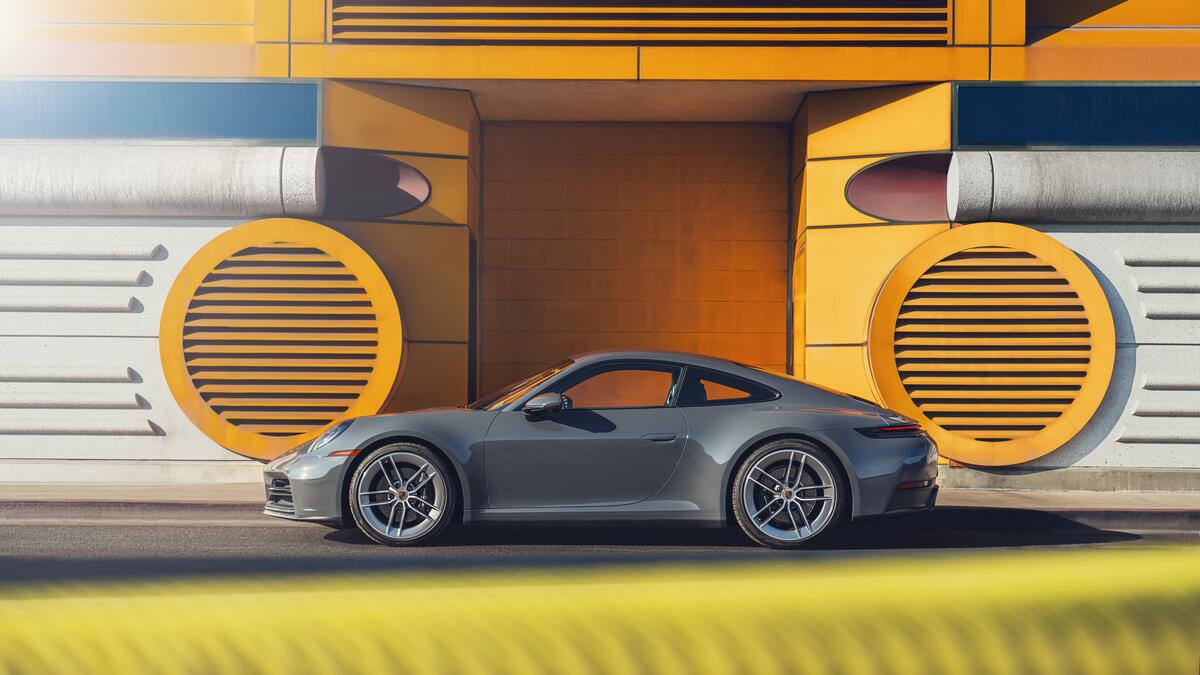
Porsche 911 (992) Turbo S
"So this is a a 992 dot one turbo s that they then take. It's a full carbon body. Everything is full carbon."
They’re describing a special based on a Porsche 911 Turbo S from the 992 generation. The important part is that it starts with a very fast, turbocharged 911, then gets extreme custom bodywork.
This build is based on a Porsche 911 Turbo S from the 992 generation (the host says “992…Turbo S”). The 992-era Turbo S is Porsche’s high-performance, turbocharged 911 platform, and here it’s being turned into an all-carbon, heavily styled special.
full carbon body
"It's a full carbon body. Everything is full carbon. It's as you can see in the photos."
“Full carbon body” means the car’s outside panels are made from carbon fiber. It’s lighter than metal and lets designers make sharper, more aggressive shapes.
A “full carbon body” means the exterior panels are made from carbon fiber composite rather than steel or aluminum. Carbon fiber is used to reduce weight and allow more complex shapes, which is why it’s common on extreme performance and track-focused builds.
Porsche 911 GT1
"Let's just say that it's supposed to be somewhere between like a 959 and a GT one."
They’re comparing it to the Porsche 911 GT1, which is a track-focused 911 from Porsche’s racing history. The comparison is about the car’s aggressive, race-car styling.
The host also compares the car’s look to the Porsche 911 GT1, a race-bred 911 variant built for top-level motorsport and known for its track-focused aero. Bringing up the GT1 suggests the build is chasing an aggressive, motorsport-inspired bodywork language.

Porsche 959
"Let's just say that it's supposed to be somewhere between like a 959 and a GT one."
They’re referencing the Porsche 959, a famous older Porsche supercar. The point is that the new car’s shape is trying to look like that kind of iconic, high-tech era.
The host compares the car’s styling proportions to the Porsche 959, a landmark 1980s supercar known for advanced engineering and rally-derived tech. Mentioning the 959 signals that the build is aiming for a similar “future-classic” silhouette and visual attitude.
940 horsepower
"Having said that, it's 940 horsepower. And it has a pretty cool interior."
They’re quoting the car’s power as “940 horsepower.” It’s basically a way to say how strong the engine is.
“Horsepower” here is the engine’s power output, expressed as a peak rating. The host uses the number to frame how extreme the build is, especially alongside comments about how it drives and accelerates.
Porsche 911 GT3 RS
"It also has the knobs on the steering wheel like the GT3RS that allow you to change modes and stuff quickly, which is pretty cool."
They compare the steering wheel controls to a Porsche 911 GT3 RS. The point is that the car has quick mode-changing controls, like you’d expect on a track-focused Porsche.
The host says the steering wheel has “knobs…like the GT3 RS” that let you change modes quickly. The Porsche 911 GT3 RS is known for driver-focused controls and track-oriented setup changes, so the comparison highlights how this special is meant to feel more like a high-end track 911.
bottom end
"It's like dynamically, it was really good. It was smooth. It rode beautifully, super fast, but without really losing all the bottom end, a very balanced tune."
“Bottom end” means how the car pulls at lower engine speeds. They’re saying it still feels strong even when you’re not revving it high.
“Bottom end” refers to the lower-RPM portion of the powerband—how the car feels when you’re using lower revs. The host says it stays strong without losing “all the bottom end,” meaning it doesn’t feel flat or lazy at lower engine speeds.
shifted really smooth
"It's like dynamically, it was really good. It was smooth. It rode beautifully, super fast, but without really losing all the bottom end, a very balanced tune. It shifted really smooth, really smooth."
They’re talking about how the car changes gears. “Smooth” means it doesn’t feel jerky when it shifts.
“Shifted really smooth” is describing how the transmission changes gears with minimal jerk or interruption. In performance cars, smooth shifting usually indicates good calibration and driveline behavior under load.
geometry
"[512.0s] It doesn't, it didn't like, it's aftermarket stuff, but it doesn't look like full geometry changes."
Suspension “geometry” is the way the wheels are aimed and positioned. If someone doesn’t change the geometry, the car may not be set up correctly for the new suspension or body changes.
In suspension tuning, “geometry” refers to the alignment settings that determine how the wheels sit and how they move—things like camber, caster, and toe. When the host says it doesn’t look like full geometry changes, they mean the suspension wasn’t comprehensively re-aligned after the modifications.
shocks
"[527.4s] ...lengthening of the control arms, which gives you a more precise control over the shocks."
Shocks are what slow down the suspension movement so the car stays settled. Better shock control usually means a smoother, more controlled ride.
“Shocks” (shock absorbers) damp the suspension’s movement so the car doesn’t bounce or oscillate. The host is linking the longer control arms to more precise control of the shocks, implying better suspension behavior over bumps and during driving.
roof scoop
"[570.5s] Well, actually the, the roof scoop is functional. Okay. So a couple of things happened because of that."
A roof scoop is an opening on the car’s body that helps move air where it’s needed. If it’s functional, it can change the sound and airflow coming into the engine/turbo system.
A roof scoop is an intake feature that channels air toward the engine or turbo system (or related airflow paths). Here it’s described as functional, and the host notes it changes what you hear and how the car feels—more intake/boost “whooshing” and turbo noise.
turbo noises
"[576.0s] ...you do hear more turbo noises. [582.7s] For sure... you do get a lot of turbo noise, which is fun."
On a turbo car, the turbo system makes distinctive sounds as it spools and moves air. The host is saying this setup makes those sounds louder and more noticeable.
“Turbo noises” refers to the characteristic sounds from a turbocharged engine—often including intake whoosh and compressor/boost-related sounds. The host says the functional roof scoop increases how much of that you hear, making the car feel more “fun” even if the ride isn’t harsher.

Genesis GV60
"and fucking scooted into the intersection. What was that? Hyundai. What do we have? Oh, it was the Genesis. It was the Genesis G, GV 60. Yeah, that one. That one. It was, it was, this one is actually, the same as that one because I also thought I was going to"
The Genesis GV60 is an electric crossover, meaning it runs on electricity instead of gas. It’s the kind of car you might notice because it can accelerate quickly. In the podcast, it’s brought up because of what it did in traffic.
The Genesis GV60 is a compact electric crossover from Genesis, positioned as a more premium alternative to mainstream EVs. It’s mentioned in the context of an on-road moment (someone scooting into an intersection), which highlights the EV’s quick response and acceleration feel. The podcast uses it as an example of an EV you might notice in real driving.

Hyundai Genesis GV60
"[628.7s] ...the most recent car I had that had it where I thought I was getting rear-ended... [636.9s] and fucking scooted into the intersection. What was that? Hyundai. [641.6s] Oh, it was the Genesis. It was the Genesis G, GV 60."
The host is talking about a Genesis model (the GV60) they owned that used a rear camera for visibility. They’re using it as an example of how annoying (or not) that camera can be.
The host compares the rear-view camera experience to a recent car they had: the Genesis GV60. It’s a modern Genesis crossover/EV platform where the rear visibility is handled via camera rather than a traditional rear window view.
carbon tub
"The CTR3. That's different. That's a carbon tub. It is. But this is like a Gimbala kind of deal."
A carbon tub means the main “safety/structure” part of the car is made from carbon fiber. It’s used because it can be lighter and stronger than traditional metal structures.
A carbon tub is a carbon-fiber monocoque-style structure that forms the core chassis/occupant cell of a car. Because it’s very stiff and lightweight, it can improve handling response and reduce mass compared with heavier steel or aluminum structures.
Techarts
"It's like that. I'm going to say Gimbala. Yeah. Techarts almost more subtle than this."
TechArt is a company that customizes cars—especially Porsches. Here they’re mentioned to compare styling: TechArt’s look is described as more subtle than the car being discussed.
TechArt (spoken here as “Techarts”) is an aftermarket tuner known for modifying Porsche models with distinctive styling and performance-oriented upgrades. In this segment, it’s used as a comparison for how subtle or aggressive the Kimera’s design presentation is versus TechArt’s typical approach.

Lamborghini Gt 350S
"...effort, their dealer network buys everything from GT 350s to Carrera GTs. Here's how they do it. All you do..."
The Lamborghini 350 GT is an older, classic Lamborghini sports car. It’s mentioned because it’s a valuable and collectible model. The conversation is about how people acquire these rare cars.
The Lamborghini 350 GT is a classic early Lamborghini model that helped establish the brand’s reputation for grand touring performance. The podcast context references dealer networks and collecting/availability, which is why this specific model comes up. It’s discussed because it represents a historically important and highly sought-after part of Lamborghini’s story.
differentials
"It's real fast. I mean, when you have this much power, it's enough to that are just, when you're on it, the differentials are just constantly scrambling for power."
A differential is what allows the wheels on an axle to turn at slightly different speeds, like when you’re cornering. In a powerful car, it helps manage how power gets to the wheels so you can keep traction.
In a performance car, differentials are the gear mechanisms that let the driven wheels rotate at different speeds while still sending torque to them. The host says the differentials are “constantly scrambling for power,” which is a lay description of how the car’s traction/torque delivery keeps adjusting as grip changes.
seek traction
"So you got to hang on. If you put your foot down, it's really going to seek traction all the time."
When you accelerate hard, tires can lose grip. “Seek traction” is basically the car trying to keep the wheels from spinning too much so it can keep moving forward effectively.
“Seek traction” describes the way a car’s drivetrain and traction control systems try to maintain grip when torque demand exceeds available tire grip. When the host says “if you put your foot down… it’s really going to seek traction all the time,” they’re describing frequent traction-limited behavior under hard acceleration.

Kimera EVO37
"So, and then we also, I also got to drive the Chimera 037. So this is, I just put another post up before the show started... So the Chimera 037. So they make two versions of this car now, the 037 and 038."

Chimera 038
"So they make two versions of this car now, the 037 and 038. 037 is rear wheel drive. 038 is all wheel drive."
The Kimera 038 is Kimera’s all-wheel-drive version. The episode uses it to show how having power going to all four wheels can change traction and driving feel.
The Kimera 038 is the all-wheel-drive sibling of the Kimera 037, designed to change how power is delivered to the road. In the segment, the host uses the 037 vs 038 split to explain how drivetrain choice affects traction and how the car behaves when you put power down.
all wheel drive
"So they make two versions of this car now, the 037 and 038. 037 is rear wheel drive. 038 is all wheel drive."
All-wheel drive means power goes to all four wheels. That usually helps the car grip the road better, especially when you accelerate hard.
All-wheel drive (AWD) sends power to both the front and rear axles, usually improving traction and reducing wheelspin compared with rear-wheel drive. In this episode, the host uses AWD as the key differentiator between the Kimera 038 and the RWD Kimera 037.
rear wheel drive
"So they make two versions of this car now, the 037 and 038. 037 is rear wheel drive. 038 is all wheel drive."
Rear-wheel drive means the power goes to the back wheels. That often changes how the car feels when you accelerate, especially in corners.
Rear-wheel drive (RWD) means engine torque is sent to the rear axle, which typically gives a more balanced, “driver-focused” feel and can promote oversteer when pushed. The host explicitly contrasts RWD in the Kimera 037 with all-wheel drive in the Kimera 038.
Chimera 039
"The 039 is coming out, which they just announced. Did you see this one? This one is, is the no donor car version."
The Kimera 039 is a new Kimera model they just announced. The big point mentioned here is that it’s a “no donor car” version, so it isn’t built from a previously owned base car.
The Kimera 039 is an upcoming Kimera Automobili model announced during the episode. The host frames it as a “no donor car version,” meaning it’s not built from an existing donor vehicle, which is a major distinction for how these cars are sourced and assembled.
Koenigsegg motor
"Yes. And it's K because it has a Koenigsegg motor. Oh, geez. Yeah. So that'll be a fucking good time."
They’re saying the car uses an engine from Koenigsegg. Koenigsegg makes some of the most extreme performance engines, so that’s a major clue about how fast and dramatic the car will feel.
A “Koenigsegg motor” here means the engine is sourced from or based on Koenigsegg’s high-performance powertrain technology. Koenigsegg is known for advanced forced-induction setups, so the hosts connect it directly to how intense the car should be.
donor car
"It is 2,425 pounds. There is a donor car for these. It's a Lancia Monte Carlo. I say had a donor car chilling there. Yeah. The Lancia Monte Carlo is the donor car."
A donor car is an older car they take parts from to build a new project. In this case, the donor is a Lancia Monte Carlo, and they even reuse parts of the car’s structure.
A donor car is a complete vehicle used as a source of parts and structure for a build, often for registration and legal/structural reasons. Here, the donor car is a Lancia Monte Carlo, and the hosts note they use more than just the VIN—they use chassis bits too.

Chevrolet Monte Carlo
"...he chassis. It is just, it's funny to look at the Monte Carlo. Yeah. You can see what they, what they kept, you..."
The Chevrolet Monte Carlo is an older-style American coupe. People talk about it because it has a unique look and a classic performance vibe. In the podcast, the focus is on its design and what makes it stand out.
The Chevrolet Monte Carlo is a classic American personal luxury/performance coupe, known for its distinctive styling and V8-era heritage. In the podcast, it’s mentioned as something “funny to look at,” with the conversation hinting at what the designers kept from earlier ideas. It comes up because it’s a recognizable piece of automotive history and design.
bespoke
"So there's a donor car in there. So the engine is, is a bespoke, you know. The engine's insane."
“Bespoke” means it’s made specifically for this car, not taken off a shelf. They’re saying the engine was custom-built for the project.
“Bespoke” means custom-built for a specific application rather than a mass-produced engine. In this segment, the hosts say the engine is bespoke, highlighting that the powerplant is tailored to this project’s requirements.
Tal Technica
"The engine's insane. It's a Tal Technica, and a Tal Technica is a company most people have never heard of, but they also make the engine for that crazy Toyota GT thing that I drove."
Tal Technica is the company behind the engine. The hosts describe them as an Italian racing-engine maker, not a brand most people would recognize.
Tal Technica is the company the hosts credit for the engine used in this project. They also connect Tal Technica to another high-performance Toyota application, framing it as an Italian racing-engine specialist.

Toyota Gt
"... of, but they also make the engine for that crazy Toyota GT thing that I drove. So it's a beautiful engine. I..."
The Toyota GT 86 is a small sports car meant to be fun to drive. The podcast is talking about the engine and how it contributes to the car’s character. It’s the kind of car people choose for handling and driving feel.
The Toyota GT 86 is a sports coupe known for a lightweight, driver-focused feel and an emphasis on handling over raw power. In the podcast context, it’s mentioned alongside talk about an engine Toyota makes for a “crazy Toyota GT thing,” highlighting the car’s mechanical appeal. It’s often discussed because it’s an accessible entry point into sports-car driving.
four-cylinder twin-charged, supercharged and turbocharged
"So it's a four-cylinder twin-charged, supercharged and turbocharged. The turbo plumbing is so pretty. Yes."
This engine uses two different forced-air systems: a supercharger and a turbocharger. The goal is to make power show up more quickly and keep it strong across more driving speeds.
“Twin-charged” here means the engine uses both a supercharger and a turbocharger to force more air into the cylinders. Combining supercharging and turbocharging is meant to reduce lag and broaden the power band, which is why the hosts call the setup “insane” and “weird.”
six-speed transaxle
"It's a longitudinally mounted in the back, you know, four-cylinder with a six-speed transaxle."
A transaxle is basically the gearbox and differential packaged together. They’re saying this car uses a six-speed version to fit the drivetrain layout they chose.
A transaxle is a combined gearbox/differential unit, often used to package the drivetrain efficiently and help with weight distribution. In this segment, the hosts specify a six-speed transaxle paired with the longitudinally mounted rear four-cylinder.
longitudinally mounted
"It's a longitudinally mounted in the back, you know, four-cylinder with a six-speed transaxle."
“Longitudinally mounted” means the engine sits front-to-back in the car. That layout can change how the car balances weight and how the drivetrain fits.
“Longitudinally mounted” means the engine is installed lengthwise in the car, with the crankshaft running front-to-back. The hosts mention this layout along with a rear-mounted setup, which affects weight distribution and how the drivetrain is packaged.
twin-charged engine
"But, you know, because you've got this, anyone has ever driven a twin-charged engine. It's really weird."
A twin-charged engine uses two boost systems together. That can make the throttle response and power delivery feel different from a normal turbo-only setup.
A twin-charged engine uses both a supercharger and a turbocharger, which changes how boost builds and how the car responds compared with a single forced-induction system. The hosts say it feels “really weird,” which is consistent with the unusual airflow and boost-control behavior of combined systems.
inline six turbo diesels
"Yeah, the turbo, the turbo [1424.5s] diesels, Volvo inline six turbo diesels. Well, they've been doing, that's funny. They've been [1429.4s] doing twin-charging and they're pastoring or, you know, whatever cars, passenger cars for like,"
An inline-six engine has six cylinders lined up in a row. A turbo diesel is a diesel engine that uses a turbo to make more power.
“Inline six” describes an engine with six cylinders arranged in a single straight line. “Turbo diesels” are compression-ignition engines that use a turbocharger to increase airflow and power.
Volvo
"[1424.5s] diesels, Volvo inline six turbo diesels. Well, they've been doing, that's funny. They've been [1429.4s] doing twin-charging and they're pastoring or, you know, whatever cars, passenger cars for like,"
Volvo is the car brand being mentioned. They’ve used turbo diesel engines and have experimented with twin-charging on passenger cars.
Volvo is the automaker referenced here in connection with inline-six turbo diesel engines and twin-charging. The point is that Volvo has used this kind of forced-induction strategy in passenger-car applications for years.
blower
"So as you go through the revs, you know, you hear the blower and then around 4000 RPM, the blower sort of tapers off and then here comes the turbo."
A blower is a device that forces more air into the engine. Since it’s connected to the engine, it can help you feel power sooner.
In a twin-charged setup, the “blower” is the supercharger that compresses intake air mechanically. Because it’s driven directly by the engine, it can provide boost earlier than a turbo.
wastegate
"And so you get a decent amount of vibration, but all the noises, you get the blower noise, you get the fucking turbo noise, you get the fucking wastegate noise, you get the blow off noise, you get like the exhaust"
The wastegate is a valve that helps control how much boost the turbo makes. It can make a distinct sound when it opens to keep boost from getting too high.
A wastegate controls turbo boost by regulating how much exhaust gas bypasses the turbine. When boost is high enough, the wastegate opens to prevent over-boost, and it can create an audible “wastegate noise.”
blow off noise
"you get the fucking turbo noise, you get the fucking wastegate noise, you get the blow off noise, you get like the exhaust"
That “blow-off” sound comes from a valve that releases extra pressurized air. It helps protect the turbo and keeps the boost system stable when you lift off the throttle.
“Blow off noise” refers to the sound made by a blow-off valve (or diverter valve) when boost is released. It happens during throttle lift or gear changes, venting pressurized air to prevent compressor surge.
vacuum
"And the engine is in vacuum at [1589.4s] the very bottom of the, the power band. So you can't do the thing where you give it no gas and [1595.9s] just engage the clutch from idle."
Vacuum here means the engine isn’t pulling much air/pressure at low throttle. That usually means less torque, so the car can stall if you try to launch it from idle without adding gas.
In engine terms, “vacuum” refers to the low-pressure condition in the intake manifold at low throttle openings. That often corresponds to low torque and less immediate response, which is why the host says you can’t just engage the clutch from idle without stalling.
power band
"And the engine is in vacuum at [1589.4s] the very bottom of the, the power band. So you can't do the thing where you give it no gas and [1595.9s] just engage the clutch from idle."
The “power band” is the RPM range where the engine feels strongest. At the bottom of that range, the engine may not have enough pull to do things like smoothly starting from idle.
“Power band” is the engine’s RPM range where it makes its strongest usable power. When the host says the engine is in vacuum at the very bottom of the power band, they mean it’s operating at low RPM where response and torque are weaker.
torque
"So you can't do the thing where you give it no gas and [1595.9s] just engage the clutch from idle. It doesn't have enough torque at idle to do that. You'll stall it."
Torque is the engine’s pulling force. If there isn’t enough torque at idle, the car can’t get moving smoothly when you let out the clutch, so it stalls.
“Torque” is the twisting force the engine produces, and it’s what helps the car move at low RPM. The host’s point is that the engine doesn’t make enough torque at idle to smoothly engage the clutch without stalling.
tip in on the throttle
"[1604.0s] But the tip in on the throttle is a little inconsistent. So I can't just repeatedly [1612.1s] hold it at 1500 RPM evenly in order to, and I'm driving barefoot."
“Tip-in” is how the car reacts when you start to press the gas pedal. If it’s inconsistent, the car may lurch or not respond predictably, making low-speed control harder.
“Tip-in” describes how the car responds when you first press the throttle from a low setting. If the tip-in is inconsistent, it can make it harder to meter torque smoothly at low RPM, which affects drivability and clutch engagement.

Porsche Carrera GT
"It didn't bother me. It's hard for, it was hard for other people to say that about [1652.0s] the Carrera GT. It doesn't bother me. This one was more like that Bora Motorworks race car, like not, [1656.3s] not at the level of the legends car or those kinds of race cars, but that sort of thing where it's"
They’re bringing up another Porsche they’ve driven where the clutch feel wasn’t easy for everyone. Their point is that clutch behavior can make a car stressful at low speeds, even if it’s fast.
The host mentions the “Carrera GT” as another Porsche with a clutch that’s been hard for other people to tolerate. The comparison is about drivability—how quickly you can learn the clutch and how much feedback it provides through the pedal.

Volkswagen Bora
"...It doesn't bother me. This one was more like that Bora Motorworks race car, like not, not at the level o..."
The Volkswagen Bora is a car model name used by Volkswagen. In the podcast, it’s mentioned because it’s connected to a race car project called “Bora Motorworks.” So the talk is about motorsport use of the name.
The Volkswagen Bora is a model name associated with the brand’s compact-to-midsize sedan lineup in certain markets. In the podcast context, it’s specifically tied to a “Bora Motorworks race car,” meaning the name is being used in a motorsport-related discussion. That’s why it comes up—because it’s connected to racing rather than just everyday transportation.
short throw
"This one was more like that Bora Motorworks race car, like not, [1663.3s] not at the level of the legends car or those kinds of race cars, but that sort of thing where it's [1668.1s] short throw, kind of grabby, but without much feedback through the pedal."
“Short throw” means the pedal/lever doesn’t have to move as far to do the same job. That can make the car feel more sudden or “grabby” when you engage the clutch.
A “short throw” clutch or shifter setup means the lever travel is reduced, so the engagement or shift happens with less pedal/lever movement. The host links it to a “grabby” feel, where the car can react quickly and be harder to modulate smoothly.
group B era
"Exactly. So you might have less torque. I mean, this is like a rally engine from group B era. [1719.4s] And I think I allow, I'm fine with it being a little difficult because it's like, hey,"
“Group B” was a famous era of rally racing where cars were very powerful and wild. Comparing it to that era suggests the engine feels punchy and demanding rather than smooth and easy at low RPM.
“Group B” refers to a historic FIA rally class (1980–1986) known for extremely powerful, aggressive cars. Calling the engine “like a rally engine from group B era” implies a peaky, high-strung character where torque delivery can be dramatic but not necessarily friendly at idle.
alignment
"it just came off the boat like, and it might need an alignment. So okay."
Alignment is when a shop adjusts the angles of your wheels so the car drives straight. If the car feels like it wanders or pulls, alignment is one of the first things to check.
Wheel alignment is the adjustment of how the tires sit relative to the road—mainly camber, toe, and caster. If a car “wanders” or feels unstable, a fresh alignment can restore predictable tracking and reduce uneven tire wear.
shifter throw
"The shifter throw in the shifters dope. It's like a rally style shifter. It's a six speed, but the shift, the throw is real short."
“Shifter throw” is how far the shifter moves when you change gears. If it’s very short, shifts can feel fast, but it may be harder to tell when you’re in neutral.
“Shifter throw” is the distance (or travel) the gear lever moves to complete a shift. Short throw shifters can make shifting feel quicker and more precise, while overly short travel can make it harder to sense neutral.
rally style shifter
"The shifter throw in the shifters dope. It's like a rally style shifter. It's a six speed, but the shift, the throw is real short."
A “rally style shifter” is a shifter setup meant for fast, consistent shifting during racing. It usually feels quicker and more direct than a relaxed street setup.
A “rally style shifter” typically means a shift mechanism tuned for quick, confident gear changes under competition conditions. Rally setups often prioritize short, repeatable lever travel and a tactile shift feel.
gated six speed
"but to have this gated six speed like a Ferrari. I think it would make the driving experience better,"
A “gated” shifter has a defined shift path, like a track, so the lever only goes into the correct gear slots. It helps you avoid grabbing the wrong gear by mistake.
A “gated” manual transmission uses a mechanical shift pattern that physically guides the shifter into specific gear positions. That typically improves shift feel and prevents accidental engagement of the wrong gear.
carbon buckets
"Yeah. I mean, like these, they're carbon buckets, but they do have nice padding."
“Carbon buckets” are race-style seats made from carbon fiber. They grip you with strong side supports so you stay planted during aggressive driving, but they can be less comfortable for long, casual trips.
“Carbon buckets” are lightweight, fixed-back racing-style seats made with carbon fiber. Their deep side bolsters hold the driver firmly during hard cornering, but they can be less forgiving for comfort than adjustable sport seats.
lumbar
"If I was going to buy one of these, I would have a lumbar built into it. You know, it's not a lot of lumbar in this type of seat."
“Lumbar” support means support for your lower back. Seats with good lumbar support help you feel less tired during driving, even if the seat is designed for racing.
“Lumbar” support refers to support for the lower back region of the spine. In performance seats, adding lumbar support can improve comfort and reduce fatigue, especially when the seat is otherwise very fixed and “bucket-like.”
battery cutoff
"So there's a key you can see sticking vertically in the center console. So that isn't a trill, a traditional key. That's a battery tap, a battery cutoff. Oh, it's like a kill switch."
A battery cutoff is a switch that turns the car’s power off at the battery. It helps prevent electrical power from flowing, and some cars use it like a remote “power on” control.
A battery cutoff is a switch that disconnects the car’s battery from the electrical system. It’s commonly used for safety (for example, during service or in emergencies) and can also act like a remote power control for certain builds.
kill switch
"That's a battery tap, a battery cutoff. Oh, it's like a kill switch. It's a fancy, fancy battery tap, but it's the remote."
A kill switch is a switch that shuts the car’s electrical power down. Here, it’s being used like a special remote way to control whether the car has power.
A kill switch is an electrical switch that rapidly disables power to the car’s systems. In this context, the host is describing it as a battery cutoff/remote control feature that prevents the car from being powered normally.
drive mode buttons
"All right. So that and my only other real criticism of the interior on top of that same little structure that you pinch are the three drive mode buttons."
Drive mode buttons are controls that change the car’s behavior. Depending on the mode, the car can respond differently to your inputs like throttle and traction.
Drive mode buttons let you change how the car behaves by selecting different software settings (often throttle response, traction/handling calibrations, and sometimes power delivery). The host is pointing out that this car uses three dedicated buttons for different modes.
SEMA ring light buttons
"So you basically have like 350, 450, 500 horsepower is what... The, but the buttons are those fucking SEMA ring light buttons."
SEMA is a big car-industry show focused on aftermarket parts and custom builds. The host means the buttons look flashy and “show-car” style, like the kind you’d see on heavily modified cars.
SEMA refers to the Specialty Equipment Market Association, which is known for aftermarket and custom-car show culture. Calling them “SEMA ring light buttons” is a stylistic jab: the buttons look like the flashy, illuminated, show-car style common in aftermarket builds.
rally car
"…it fucking, it drives like a rally. I do my kingdom to try one of these on gravel. Oh yeah. I bet you if you had the balls to take one of these on gravel…"
A rally car is designed for race stages on rough, slippery roads like gravel. If a car “drives like a rally car,” it usually means it feels lively and stable on bumpy, low-grip surfaces.
A rally car is built for rally stages—loose surfaces like gravel, dirt, and snow—where traction changes constantly. When someone says a car “drives like a rally,” they usually mean it feels composed over bumps, has quick steering response, and can handle low-grip surfaces confidently.
hypercar
"…this is a departure, a big departure from the traditional hypercar. You know, I think maybe we're at that point…"
A hypercar is a super-rare, very expensive, extremely fast car. Here, the host is saying this kind of car is different from the usual “hypercar formula” and is instead inspired by rally driving.
A hypercar is an ultra-high-performance, very expensive car category that’s typically defined by extreme power, advanced aerodynamics, and cutting-edge engineering. In this segment, the host contrasts traditional hypercars—often mid-engine supercars with similar “formula” styling—with a more rally-inspired approach.
mid-engine
"…you're going to go buy the super fast mid-engine thing that looks basically similar and has a similar structure to all these other hypercars…"
Mid-engine means the engine is placed closer to the middle of the car instead of the front. That can help the car handle better because the weight is more balanced.
Mid-engine describes a layout where the engine sits near the center of the car, typically behind the driver and ahead of the rear axle. This placement helps balance weight distribution and can improve handling feel—one reason many traditional hypercars and supercars use it.
power to weight
"“...Well, the power to weight is crazy. And it's small.” ... “...we can keep the mass tight and keep the car, the package small...”"
Power-to-weight means how much “push” the car has compared to how heavy it is. A lighter car (or more powerful engine) usually feels faster because it’s easier to accelerate.
Power-to-weight is the relationship between an engine’s output (power) and the vehicle’s mass. Higher power-to-weight typically means quicker acceleration and a more responsive feel because the engine has less mass to move.
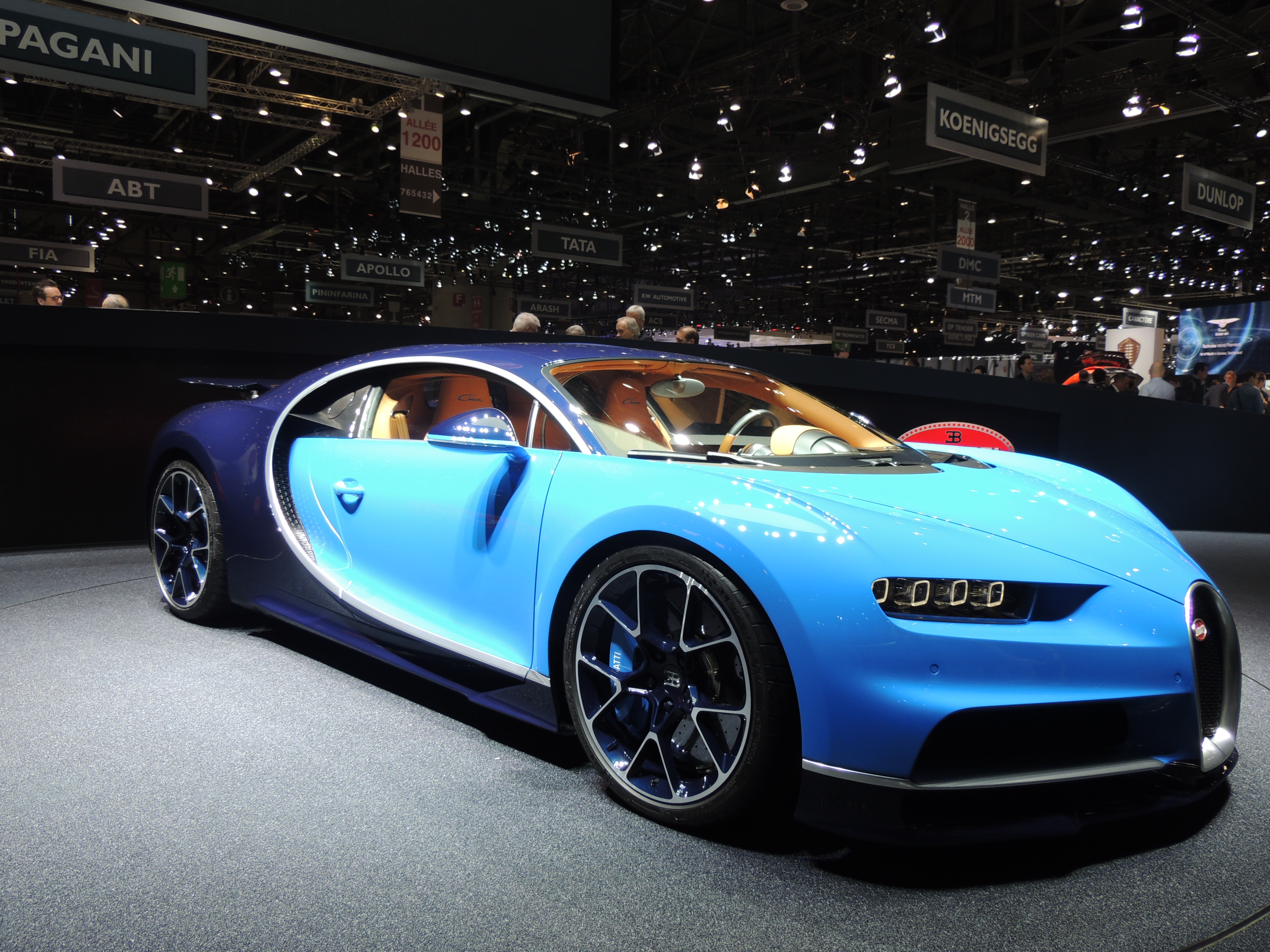
Chiron
"“Also, this power to weight is not too different from a Chiron, you know, Chiron's like 4,400 pounds, a thousand horsepower.”"
They bring up the Bugatti Chiron as a comparison. It’s a very heavy, very powerful supercar, so the driving excitement comes more from big acceleration and top speed than from feeling light and nimble.
The host compares the discussed car’s power-to-weight to the Bugatti Chiron, noting its much higher mass (around 4,400 pounds) and about 1,000 horsepower. The takeaway is that with that much weight and technology, the experience becomes more about acceleration/launch and high-speed capability rather than “light, tossable” feel.
super charger
"“...and then, and just riding the wave of the, of the super charger and that is like, that is a good time.”"
A supercharger is a device that forces extra air into the engine. More air helps the engine make more power, which can make the car feel punchy when you accelerate.
A supercharger is a forced-induction device that uses a belt-driven compressor to push more air into the engine. That extra airflow allows more fuel to be burned for more power, often with strong midrange response.
red line
"“...it doesn't have a crazy high red line. I think the red line might be 7,500...”"
The red line is the “do not go past” RPM limit for the engine. Revving past it can risk engine damage, so it’s a safety boundary.
The red line is the engine speed limit (RPM) beyond which the manufacturer advises against operating. It’s set to protect the engine from damage due to excessive rotational speed.
relaxed sixth gear
"one of the drawbacks from the, the yesterday's driving the Gunther is it does not have a relaxed sixth gear. 80 miles an hour in sixth gear in that car is like 4200 RPM."
A “relaxed” top gear means the engine doesn’t have to spin as fast when you’re cruising. That usually makes the car quieter and more comfortable for long drives. It’s basically about highway gearing being friendly.
“Relaxed sixth gear” is a driving/gear-ratio concept meaning the car’s top gear is tall enough to keep engine RPM low during steady highway speeds. That reduces engine noise and wear and makes long-distance driving more pleasant. The host frames it as important for cars meant to be used on road trips, not just for track sessions.
RPM
"80 miles an hour in sixth gear in that car is like 4200 RPM. So that's a, it's a car that's only geared out to probably 170, 180 miles an hour, even at 1000 horsepower."
RPM tells you how fast the engine is spinning. If RPM is high at highway speed, the engine is working harder just to cruise. They’re using RPM to explain why the car feels busy on the road.
RPM (revolutions per minute) is the engine speed measurement. Higher RPM at a given road speed usually means the car is geared “shorter,” which can increase noise and fuel consumption. In this segment, RPM is used to illustrate how gearing affects highway drivability.
PPF
"They got a lot of fucking dope shit. Cool. And nice, really nice PPF shop as well. And it seems like they service all manner of exotic car down there as well, which is pretty cool."
PPF is a clear protective film that gets put on a car’s paint. It’s there to help prevent chips and scratches from things like rocks and road debris. People use it a lot on expensive cars so the paint stays nicer longer.
PPF (paint protection film) is a clear protective layer applied to a car’s painted surfaces. It helps guard against rock chips, bug splatter, and light scratches, which is especially useful on exotic cars that get driven or tracked. Many shops also apply it in patterns around high-impact areas like the front bumper and hood.
cracked coolant O-ring
"He found, he said, the dreaded cracked coolant O-ring. So apparently there is some kind of O-ring in a coolant channel. And it's a fairly common failure in these E 55 engines."
An O-ring is a rubber seal that keeps coolant from leaking. If it cracks, coolant can get into places it shouldn’t, which can cause extra damage and more work to fix. It’s usually not a “blow up tomorrow” problem, but it can turn into a bigger repair.
A cracked coolant O-ring is a sealing failure in a cooling-system connection. When the O-ring cracks, coolant can leak or migrate through a coolant channel and end up where it shouldn’t, potentially causing secondary damage. The host ties this to a specific engine family (E 55 engines), implying it’s a known weak point rather than a random issue.

Mercedes-Benz E55 AMG
"Tennessee. He found, he said, the dreaded cracked coolant O-ring. So apparently there is some kind of O-ring in a coolant channel. And it's a fairly common failure in these E 55 engines. This metal O-ring cracks and coolant passes through and ends up somewhere it's not supposed to be."
The Mercedes-Benz E55 AMG is a powerful, performance-focused Mercedes E-Class. The podcast mentions a problem where a coolant O-ring can crack, which can cause cooling system trouble. It’s a specific maintenance/repair concern to know about before buying or owning one.
The Mercedes-Benz E55 AMG is a high-performance version of the E-Class, known for its powerful V8 and enthusiast appeal. The podcast specifically calls out a known issue: a cracked coolant O-ring in the E55 AMG engines, described as a fairly common failure in that engine family. That’s significant because it can lead to cooling problems if not addressed.
rebuilding the engine
"But he's, you know, he's rebuilding the engine. It's not just fucking yank it out and drop it into my car and cool it runs."
Engine rebuilding means disassembling the engine and restoring internal components to proper working condition—often replacing worn parts and re-machining where needed. In this context, the host is saying it’s more involved than simply swapping an engine into the car and calling it done.
shock absorbers
"He also said that the standard shock absorbers that they use for E 500s don't actually fit my car because the pickup points are slightly different even though we're going to do the wide body."
Shock absorbers are the parts that help control the car’s bouncing and keep the tires planted. If the mounting points don’t line up, you can’t just use the same shocks from another car.
Shock absorbers (dampers) control how the suspension moves by resisting spring motion. If the mounting “pickup points” don’t match, the shocks can’t be installed correctly, which is why the speaker needs an equivalent shock made for their specific setup.

E 500s
"He also said that the standard shock absorbers that they use for E 500s don't actually fit my car because the pickup points are slightly different even though we're going to do the wide body."
They’re talking about a Mercedes-Benz E 500 and how its suspension parts don’t directly match their car. The key issue is that the shock mounts are in slightly different places, so they need a different shock setup.
The speaker is referencing Mercedes-Benz E 500s, specifically the shock absorber setup used on that model. They explain that the standard shocks for the E 500s don’t fit their car because the mounting/pickup points differ, even though they’re doing a wide-body conversion.
pickup points
"He also said that the standard shock absorbers that they use for E 500s don't actually fit my car because the pickup points are slightly different even though we're going to do the wide body."
Pickup points are the exact mounting locations where a part bolts on. If those spots are slightly different on your car, the suspension parts from another car won’t fit without the right version.
Pickup points are the specific locations on the chassis or body where a component mounts—here, where the shock absorber attaches. Even small differences in those mounting locations can make one model’s shocks incompatible with another, requiring a purpose-made equivalent.
wide body
"He also said that the standard shock absorbers that they use for E 500s don't actually fit my car because the pickup points are slightly different even though we're going to do the wide body."
A wide-body conversion is a modification that widens the car’s fenders and wheel/arch area to fit broader wheels and tires. It often changes how suspension components and mounting clearances work, which can force you to use different parts than the original configuration.
transport you from the airport to the drive in Tenerife in Luches
"And what if they transport you from the airport to the drive in Tenerife in Luches? I could see that happening."
This is a travel/logistics aside tied to the episode’s build and event plans, mentioning getting from an airport to a drive in Tenerife. It’s not a technical automotive topic, but it frames how the hosts will experience the car/build in a specific location.

Taycan
"But the Taycan is fixed back from service. That is such a nice car. Yeah, you, you drove it yesterday for filming and I drove it today. And yeah, the steering is fixed."
The Porsche Taycan is Porsche’s electric car. It’s fast and smooth, and the hosts are saying theirs had a steering issue that got fixed. They also think buying a used Taycan can be a good deal because the prices are coming down.
The Porsche Taycan is Porsche’s all-electric performance sedan, known for quick acceleration and a high-tech, quiet ride. In this segment, they’re talking about a specific Taycan being “fixed back from service,” plus how the steering feel and suspension/control-arm setup affect drivability. They also discuss why used Taycans can be a strong value as prices drop.
control arms
"And it turns out control arms. The steering in it is all, it always surprises me how heavy it is compared to every other Porsche I've driven."
Control arms are parts of the suspension that help hold the wheels in the right position. If they’re worn or not right, the steering can feel weird or inconsistent. The hosts are saying the Taycan’s steering issue came down to these parts.
Control arms are suspension links that connect the chassis to the wheel hub, helping control wheel motion and alignment. If control arms wear out or are misadjusted, steering can feel off because the front wheels don’t track the way they should. That’s why the hosts connect the Taycan’s steering feel to the control arms.
Performance Battery Plus
"I saw a Cross-Series, about four S with, with Performance Battery Plus and mileage in between what mine has now and where I bought it at."
Performance Battery Plus is a better battery setup on certain Taycan versions. A “better” battery can mean more usable range and more consistent power. The hosts mention it while comparing prices on used cars.
“Performance Battery Plus” is a higher-capacity/high-output battery configuration offered on some Porsche Taycan trims. It’s relevant because battery capacity and charging/discharge performance can change real-world range and how consistently the car delivers power. The hosts use it to compare used listings and value.
decrease in value
"I think that car's price highlights what you've said though, that the EVs will continue to decline in value because this is better in every way and yet still cheaper with, you know, has the right miles and all that stuff."
They’re talking about depreciation, meaning the car gets cheaper as time goes on. They think EV prices keep dropping, so a used Taycan can end up costing less even if it’s a great car. The “game” is figuring out how good of a deal you can get while prices are falling.
The hosts are describing depreciation—how an EV’s market price drops over time after purchase. They argue Taycans are “better in every way and yet still cheaper,” which is a sign that used EV values can fall faster than buyers expect. They also frame it as an “interesting game” of how much you can buy for relative to what you pay.
depreciate
"I think it's, will it depreciate more quickly than if you had a car payment on something newer?"
Depreciation just means the car becomes worth less over time. They’re trying to figure out how much money they’re okay with losing each year compared to paying monthly for a newer car.
Depreciation is the loss of a car’s value over time. The host is comparing depreciation on a daily driver to the fixed monthly cost of a car payment, and using that to estimate what they’re “okay with” losing each year.

Mach-E
"Like I, that's what it cost me to lease the Mach-E for three years."
The Mach-E is Ford’s electric car. They’re comparing what it cost them to lease it to what they’re willing to lose on another car.
The Ford Mustang Mach-E is an electric crossover that popularized the modern EV “daily driver” idea. The host compares its lease cost over three years to the depreciation they’re seeing (or expecting) with the Bentley.
lease
"Like I, that's what it cost me to lease the Mach-E for three years."
A lease is like renting a car for a few years with payments. At the end, you typically give it back instead of keeping it.
A lease is a contract where you pay to use a car for a set period, usually returning it at the end rather than owning it outright. The host references leasing the Mach-E to anchor their “cost per month” math against depreciation on the Bentley.
no reserve
"I'm going to slang it when we're done with it. I'm going to fucking let it fly no reserve. Let's see what happens."
“No reserve” means there’s no minimum price at the auction. The car will sell to the highest bidder even if the final price is lower than you hoped.
“No reserve” is an auction setting where the seller doesn’t set a minimum price. If the host “slang[s] it” no reserve, they’re accepting that the car could sell for less than they might otherwise require.

Tesla Model Ss
"I want it to be, but like you see early Model S's and stuff will still sell for 15 grand, right?"
The Tesla Model S is an electric car. The hosts are talking about early versions of it and how they can still be worth a lot of money even years later. They’re using it as an example of why there’s a minimum price a car might stay at if it still runs and drives.
The Tesla Model S is an electric sedan that became a benchmark for early EV performance and tech. In the episode, “early Model S” is used to illustrate how even older examples can still hold meaningful resale value. The key point is that there’s a perceived price “floor” for running, drivable cars.
warranty left
"if it turns out we need the tow vehicle and there's still like, you know, two years of warranty left on this, that's when you should buy it."
“Warranty left” means the car still has warranty coverage for some time. The hosts are saying that’s safer when buying a used car because repairs may be covered. If the warranty is gone, you’re more likely to pay for problems yourself.
“Warranty left” refers to the remaining coverage period on a vehicle’s warranty. The hosts argue that it’s smarter to buy a used car while warranty coverage still exists, because you’re less exposed to repair costs if something goes wrong. They contrast buying before exhausting coverage versus “rolling the dice” after it ends.
paint matched
"what also hinted that it was you is it had the paint matched like skirts."
“Paint matched” means parts of the car are painted the same color as the main body. In this case, they’re talking about wheel-arch areas being painted to match. It’s a visual upgrade that makes the car look more uniform.
“Paint matched” means the body panels are finished in the same color as the rest of the car, rather than using contrasting factory colors. Here, it’s used to describe custom-colored wheel-arch “skirts” that make the Porsche look more cohesive. It’s a common enthusiast customization because it changes the visual identity of the car.
painted wheel arches
"All turbos came with painted wheel arches, but they were all painted black. So this person had them painted white."
Wheel arches are the areas around the wheels. When they’re “painted,” they’re finished in a specific color—sometimes matching the body, sometimes contrasting. The hosts are saying Porsche usually does it one way, but this car was customized to look different.
Painted wheel arches are body-color or color-finished trim around the wheel openings. On some Porsche models, wheel-arch treatment is part of the factory look for certain trims, but it can also be changed with aftermarket or OEM parts. The hosts note that the arches were typically black, and this example was customized to white.
body match
"you can buy the arches in primer from Porsche. So you can, you can change any wagon one into body match."
“Body match” means painting a part so it matches the car’s main color. They’re saying you can buy wheel-arch pieces and then paint them to match your specific car. That way the car looks more “factory” and less mismatched.
“Body match” is shorthand for painting parts to match the car’s body color. In this segment, the hosts explain that you can buy wheel-arch parts “in primer” from Porsche and then paint them to match the wagon’s body. It’s an enthusiast-friendly path to a factory-like appearance without needing a full custom bodywork job.
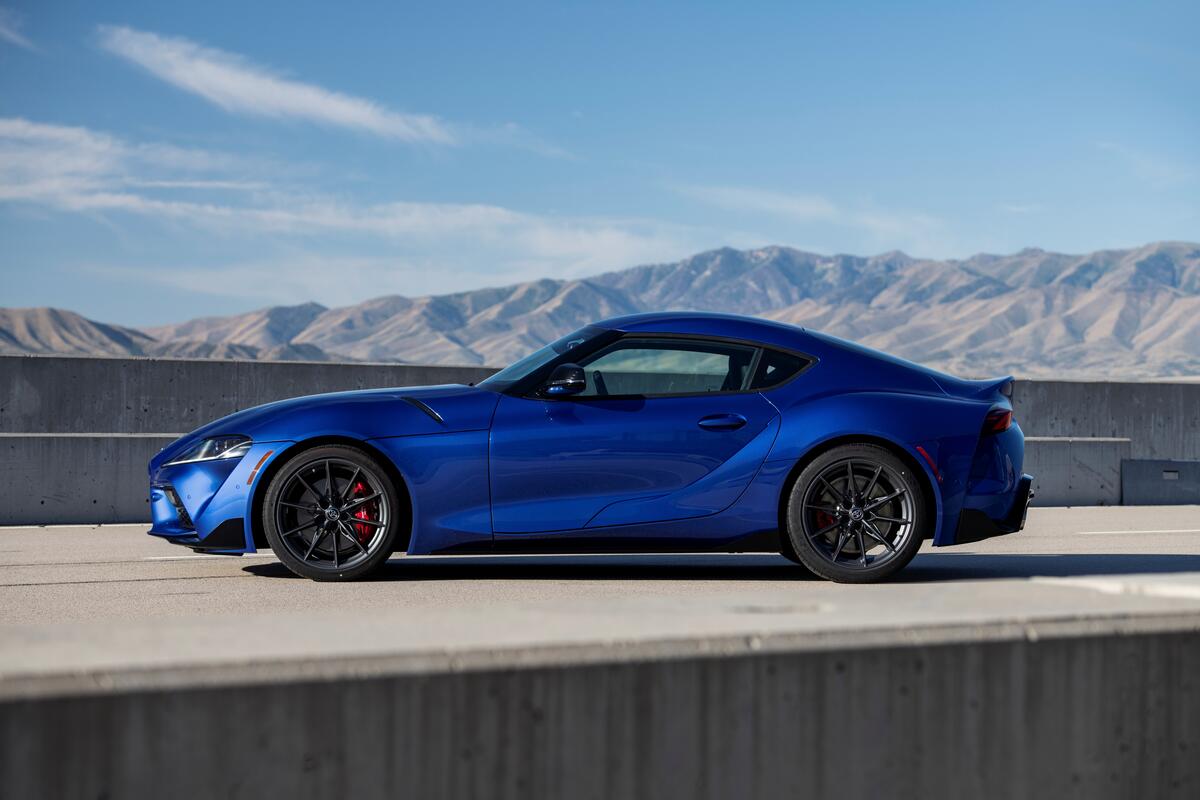
Toyota A90
"Uh, oh, it is losing your company car and needs a new daily with a couple days a week in the office. Maybe it's a 90 minute drive from your house from Bergen County, New Jersey to Southern Connecticut, just past Bridgeport. Holy shit, dude. First off, I don't know if you go there much,"
The Toyota Supra is a sports car that’s meant to be fun to drive. In this discussion, it’s being considered as a daily car for commuting some days. That matters because daily driving is different from weekend driving.
The Toyota Supra is a sports coupe designed for driving enjoyment, typically with a focus on acceleration and a driver-focused layout. In the podcast context, it’s being considered as a replacement daily for someone who commutes a significant distance a few days per week. That kind of use case often comes up because it affects practicality, comfort, and running costs.
tarmac
"Holy shit, dude. First off, I don't know if you go there much, but don't stop in Bridgeport. Secondly, done directly. That's a fucking horrid drive. [3849.7s] That's a terrible drive. You're driving on some really shitty tarmac."
Tarmac just means the paved road surface. If it’s “bad tarmac,” it usually means the pavement is rough or uneven, making the drive less pleasant.
Tarmac is a slang term for paved road surface, especially asphalt. In car talk, it often implies the pavement quality affects grip and ride comfort—bad tarmac can make a drive feel harsh and less confidence-inspiring.
Bear Mountain Bridge
"And I recommend, I mean, if you're a fuck, I reckon, I really recommend going north from Bergen County, Jersey, going across the Bear Mountain Bridge as opposed to going across the Tappan Zee Bridge."
The Bear Mountain Bridge is a major crossing between New Jersey and New York (over the Hudson River). The hosts mention it as a route choice because it can make the overall drive feel more enjoyable than alternatives.
Tappan Zee Bridge
"going across the Bear Mountain Bridge as opposed to going across the Tappan Zee Bridge. Oh, which is gone. And now I think called the fucking Mario Cuomo Bridge"
The Tappan Zee Bridge is a Hudson River bridge in New York. They’re saying it’s not the best choice compared with the Bear Mountain Bridge.
The Tappan Zee Bridge was the Hudson River crossing between Westchester and Rockland counties in New York. The hosts contrast it with the Bear Mountain Bridge, implying the Bear Mountain route is the better driving option.

Aston Martin Rapide
"...ly, or a rally car. But it says, the Aston Martin Rapide is peaking my interest. If that's the case, brave..."
The Aston Martin Rapide is a luxury car with four doors that’s meant to feel sporty. The podcast is saying it’s interesting because it combines comfort with performance. It’s being considered as a potential purchase.
The Aston Martin Rapide is a luxury performance sedan (a four-door) that blends grand-touring comfort with Aston Martin’s sports-car character. In the podcast, it’s described as “peaking my interest,” meaning it’s being considered as a compelling option. It comes up because it offers a different take on performance than a typical two-door sports car.
Best Dad Wagons
"You need the custom wheels because they want the daycare drop-off factor. Also your kids are so young that any car will probably look cool to them."
They’re talking about what kind of car a dad should buy—something practical for everyday life. The main point here is matching the car (and tires) to rough roads and family routines.
This segment is framed around choosing a practical “dad” car for commuting and family use. The discussion focuses on what kind of vehicle and tire/wheel setup makes sense for rough roads and school-drop-off life.
sidewall
"Okay. So you need probably smaller wheels, some sidewall and soft suspension, not sport suspension."
The sidewall is the part of the tire between the wheel and the tread. A taller sidewall can make the ride less harsh and help the tire handle potholes and rough pavement better.
Sidewall refers to the rubber section on the outer edge of a tire between the tread and the wheel. More sidewall (often from using smaller wheels) can help the tire absorb bumps and potholes, which is why the host recommends it for cracked, broken roads.
soft suspension
"Okay. So you need probably smaller wheels, some sidewall and soft suspension, not sport suspension."
Soft suspension is a suspension setup that rides more comfortably over bumps. The host is saying you want that kind of ride for rough roads instead of a stiff, sport-tuned suspension.
Soft suspension means a setup tuned for more compliance—more ability to move and absorb road imperfections. The host contrasts it with sport suspension, arguing that a softer ride helps when the commute involves cracked, low-quality pavement.
sport suspension
"Okay. So you need probably smaller wheels, some sidewall and soft suspension, not sport suspension."
Sport suspension is tuned to feel tighter and more responsive, but it usually rides firmer. The host is saying that firmness can be unpleasant on cracked, rough roads.
Sport suspension is a firmer, more tightly controlled suspension calibration intended to reduce body roll and sharpen handling. The host says it’s the wrong choice for this commute because it transmits more harshness over bad pavement compared with a softer setup.

Audi Allroad
"Like you want a rally car, like literally like as close to rally car as you can get is where you want to be. So like maybe that means like an Audi all-road with like some OZ rally wheels and some cool meaty tires or something, or maybe that means like a Macan."
The Audi Allroad is a wagon-style car that’s made to handle rougher roads better than a normal wagon. The podcast is imagining it with rally wheels to make it feel more like a rally car. It’s basically about versatility plus a rally look.
The Audi Allroad is a wagon/crossover-style vehicle designed for versatility, with added ride height and off-road-oriented capability compared with a standard wagon. In the podcast, it’s mentioned as the closest thing to a rally-style car within that kind of everyday platform, especially with rally wheels. That’s why it comes up: it’s about turning a practical car into something with rally-inspired character.
OZ
"So like maybe that means like an Audi all-road with like some OZ rally wheels and some cool meaty tires or something, or maybe that means like a Macan."
OZ makes wheels (rims). The idea here is to put OZ wheels on the car so it looks more rally-inspired and can run the kind of tires that do better on rough roads.
OZ is a wheel brand known for aftermarket and motorsport-style rims. Here it’s mentioned in the context of fitting “rally wheels” and pairing them with larger, grippier tires for rough-road commuting.
Request an Explanation
Heard something you'd like explained? We'll add it to this episode.
Sign in to request explanations for terms you heard.
Want to learn more?
Browse our glossary for plain-English explanations of automotive terms, jargon, and concepts.
Help improve this episode
See something that's not quite right? Our annotations are AI-generated and can sometimes miss the mark. Click the flag icon on any annotation to suggest a correction.
3 community members have helped improve this episode.