Driven Radio Show #356: John Klinger Part 1
About this episode
Driven Radio Show #356 (John Klinger Part 1) blends classic-car reality checks with the guest’s “analog” mindset. The hosts kick off with summer studio banter, then trade stories about project-car headaches—like a 1958 Thunderbird with nonworking lights and wipers—and the costs and logistics of fixing them. Klinger’s path starts with childhood engine obsession and a year-long, bone-stock 1934 Model A daily-drive challenge. The conversation also covers manual-driving lessons, AC and parts scarcity, and why mechanically simple cars can feel more reliable.
Hosted on Acast. See acast.com/privacy for more information.

1958 T-Bird
"A 58? [89.6s] 1958 T-Bird. [91.4s] Cool-looking car. [92.3s] Yeah, cool-looking car."
A “T-Bird” is the Ford Thunderbird. This one is a 1958 model, and the host is talking about buying it and then finding out some important things like the lights and windshield wipers weren’t working.
A 1958 Thunderbird (often shortened to “T-Bird”) is a classic full-size Ford from the late-1950s, known for its big styling and cruiser character. In this story, the host is buying one sight-unseen-ish and discovering that key electrical systems (lights and wipers) don’t function as described.
high beams
"The thing that I had asked about, the lights don't work, don't work right, high beams [112.6s] don't come on, and the floor switch didn't fix it."
High beams are the bright headlights you use to see farther down the road. If they don’t work, the car won’t be as safe at night and may fail inspection.
High beams are the brighter, long-range headlight setting used when there’s no traffic ahead. If high beams don’t come on, it can make night driving unsafe and can also prevent a vehicle from passing basic roadworthiness checks.
wipers
"The wipers don't work, so the car can't be licensed, even though it was taken pictures [121.5s] with Missouri licenses on it."
Wipers are what clear your windshield when it rains. If they don’t work, you can’t see well in bad weather and the car may not be allowed on the road.
Windshield wipers are the system that clears rain or debris from the windshield for visibility. If the wipers don’t work, the car may be unfit for licensing/road use until the issue is fixed.
can't be licensed
"The wipers don't work, so the car can't be licensed, even though it was taken pictures [121.5s] with Missouri licenses on it."
Licensing means getting permission to drive the car legally. If safety items like lights or wipers don’t work, the car may not be approved until it’s fixed.
Licensing is the legal process that allows a vehicle to be driven on public roads. When key safety equipment like headlights or wipers doesn’t work, the car may fail the requirements needed to register and be road-legal.
blow by
"If the blow by doesn't mean there's an F engine. At worst case scenario, it's about 19 grand."
“Blow by” means some of the engine’s hot gases are getting past the piston seals and ending up in the lower part of the engine. That usually points to wear inside the engine. Here, they’re saying the blow-by results might indicate how bad the engine problem is.
“Blow by” is when combustion gases leak past the piston rings into the crankcase. It’s often a sign of worn rings or cylinder wear, and it can lead to higher oil consumption and contamination. In this context, the speaker is using it as a clue about the engine’s condition.
Holly
"Yes. And I eat the Holly that I bought for it here. You've got a free carburetor good on you and and go from there."
“Holly” likely means a Holley carburetor, which is a fuel-mixing part used on many older engines. The carburetor helps the engine get the right fuel/air mixture. They’re deciding whether to leave it on the car or take it back.
“Holly” here appears to be shorthand for a Holley carburetor. Holley is a well-known aftermarket brand for carburetors used on many older performance and muscle cars. The speaker is discussing whether to keep or remove that carburetor as part of the deal.
carburetor
"You've got a free carburetor good on you and and go from there. I'd keep the Holly."
A carburetor is a device that mixes fuel and air before it enters the engine. It’s common on older vehicles and many classic performance builds, and it can be a major factor in drivability and tuning. The speaker mentions it because they’re treating the carburetor as a valuable part in the transaction.
mechanic special
"Then I I've asked for $5,000 and I'll I'll sell a mechanic special to somebody and, you know, between the 5000 and what I should be able to get out of the car."
A “mechanic special” is a car being sold with problems—usually cheaper—because the next owner plans to fix it. It’s basically “not ready to be a normal daily driver.” In this segment, they’re talking about selling it that way if the other option doesn’t work out.
A “mechanic special” is a car priced and sold as a project—typically with known problems that a buyer expects to diagnose or repair. It’s not a specific mechanical part; it’s a market label for a vehicle with issues that may require significant work. The speaker is using it to describe selling the car “as is” after estimating repair costs.
bringing a trailer
"And I've always had really good luck with bringing a trailer,"
They’re talking about using a trailer to move the car to a shop. That’s common when the car isn’t running yet or needs work before it can be driven.
“Bringing a trailer” here likely refers to using a trailer to transport the car to a shop for repairs or evaluation. That matters because it’s often the practical way to move a non-running or partially repaired project car safely.
brake discs
"[420.2s] We're going to go in July. [422.8s] Made sure I got the AC working. [425.6s] We're going to replace some brake discs. [427.5s] Going to do some stuff with that."
Brake discs are the metal parts your brake pads squeeze to slow the car. If they’re worn out or not smooth anymore, replacing them helps the brakes work better and more predictably.
Brake discs are the rotors that the brake pads clamp onto to slow the car down. Replacing them is common when they’re worn, warped, or have uneven thickness, and it’s especially relevant before a long trip.
Nassau Blue
"And plus it's Nassau Blue. And the new Nassau Blue was a little bit darker than my 65 Nassau Blue, but it's the right color."
Nassau Blue is a particular paint color used on certain Corvettes. They’re saying the new car’s blue is a slightly darker version of the same color they had before.
Nassau Blue is a specific paint color used on some Corvettes. The speaker compares a newer “Nassau Blue” to their earlier 1965 Nassau Blue, noting the newer shade is darker but still the “right color.”
AC
"And first for a Corvette for me for a long time, it has AC. Yeah, I feel incredibly spoiled. And it works."
AC means the car’s air conditioning. It cools the cabin, so the car is more comfortable to drive in warm weather.
AC here means the car’s air conditioning system. The speaker is emphasizing that this Corvette now has working AC, which improves comfort and usability on hot days.
134
"Oh, my God, it does. It does now a big thanks to my brother in law, Mark, who came over and threw some 134 in it. And now it blows nice and cold."
“134” is a type of refrigerant used in car air conditioning. Adding it can restore cooling if the system is low on refrigerant.
“134” refers to R-134a, a common refrigerant used in automotive air conditioning systems. The speaker says their brother-in-law “threw some 134 in it,” meaning he added refrigerant so the AC would blow cold again.
Jonathan Klinger
"Our special guest this week, and he's already he's already popped in just for a second because, well, he knows is Jonathan Klinger. John has built his career around the passion driven side of the automotive industry."
Jonathan Klinger is the guest on this episode. The host says he’s made his career in the enthusiast/restoration side of cars.
Jonathan Klinger is the episode’s guest, introduced as someone who built a career around the passion-driven side of the automotive industry. The host also ties him to McPherson College’s automotive restoration program.
McPherson College
"John has built his career around the passion driven side of the automotive industry. He's a 2004 graduate of McPherson College's automotive restoration program."
McPherson College is where the guest studied automotive restoration. It’s mentioned to explain his training background.
McPherson College is mentioned as the school where Jonathan Klinger studied in an automotive restoration program. The episode uses it to establish his background and credibility in restoration-focused work.

1977 AMC Matador
"She had our family car was a 1987 Mercury stable station wagon that replaced the 1977 AMC Matador when my parents purchased that."
The 1977 AMC Matador is an older American car from the 1970s. The speaker mentions it because it was their previous family car before the 1987 Mercury station wagon.
The 1977 AMC Matador is a full-size American car from American Motors Corporation (AMC) that’s known for being a mainstream family sedan/coupe platform in the mid-to-late 1970s. Here it’s referenced as the car the speaker’s parents replaced with a 1987 Mercury wagon.

Corvette
"It's like, oh, man, I thought I was going to get to see a Corvette. [826.7s] No, it's that piece of junk."
A Corvette is Chevrolet’s famous sports car. The speaker expected to see one, but didn’t.
The Chevrolet Corvette is a long-running American sports car line known for its performance and iconic styling. The host mentions it as the car they expected to see, contrasting it with what they actually saw.

Geo Metro
"Remember the Geo Metro, the little three cylinder? Oh, yeah. [850.9s] They had a very distinctive tail light."
The Geo Metro is a tiny, older compact car. The speaker is describing how its tail lights and headlights were so distinctive that they could recognize it even when it was far away.
The Geo Metro is a small, fuel-efficient compact car from the Geo brand, notable here for its distinctive exterior lighting. The host points out recognizable details like the tail light shape and even a “stamp logo” on the lens, which helps them identify the car from far away.
three cylinder
"Remember the Geo Metro, the little three cylinder? Oh, yeah. [850.9s] They had a very distinctive tail light."
A “three cylinder” engine has three pistons that help make power. It’s a smaller, simpler engine layout often found in compact, efficient cars.
“Three cylinder” refers to an engine with three combustion cylinders. It’s a common way to describe small, economical engines—like the one the host associates with the Geo Metro.

1964 Buick Electra 225
"my family inherited a 1964 Buick Electra 225. I still have. So I've had that car for 30 years."
This is a big, old-school American luxury car from 1964 made by Buick. The “225” is part of the model name that relates to how long the car’s wheelbase is, which is why it feels so roomy.
The 1964 Buick Electra 225 is a full-size American luxury car from the mid-1960s, known for its long-wheelbase comfort and classic Buick styling. The “225” refers to the model’s wheelbase length, which helped define its big, road-trip-friendly proportions.
AACA
"did a did a weekend tour with the Greenhorn region, which is a non-geographic region in the AACA, the antique automobile club of America."
AACA is a classic-car club in the U.S. It’s where owners get together for events like tours and meetups.
AACA stands for the Antique Automobile Club of America, a hobby organization for classic-car owners. In this context, the speaker is talking about a club “region” that organizes tours and events for members.
non-geographic region
"did a did a weekend tour with the Greenhorn region, which is a non-geographic region in the AACA, the antique automobile club of America."
That means the club’s group isn’t organized by state or city. It’s organized around a shared idea or audience, like getting younger people involved.
A “non-geographic region” is a club subdivision that isn’t based on where members live. Instead, it groups people by another shared factor (like age, interests, or a specific mission), which is why the speaker can describe it as “Greenhorn” and aimed at younger members.
MacPherson
"I had it out in MacPherson when I was no, I know, I know. [988.2s] I'm just saying how many people do you meet"
MacPherson is a type of car suspension system. It helps the wheels move up and down while keeping the car stable, and the host is mentioning it like a technical detail about how a car handles.
MacPherson refers to the MacPherson strut suspension design, a common front suspension layout where a strut acts as both the shock absorber and a structural link. In this context, the host is using it as a technical reference point, implying they’re discussing suspension geometry or handling behavior.

AMC Javelin
"And it can be fast relative, like does your AMX qualify? [1028.2s] Yeah. Well, I sold that. [1029.9s] It was a javelin. I had it. [1031.4s] I had an AMC javelin."
An AMC Javelin is a classic American muscle car made by AMC. It’s the kind of car people remember for being fast and fun, and the host is talking about selling theirs and wanting it back.
The AMC Javelin is a classic American muscle car from American Motors (AMC), best known for its aggressive styling and performance options. In this segment, the host uses it as an example of a “fast car” from their early life, and it’s notable because it’s a specific, enthusiast-relevant model rather than a generic car story.

2009 Audi S6
"I have a 2009 Audi S6, [1054.5s] which that was the generation when they crammed that detuned version [1059.8s] of the Lamborghini Gallardo V10 in under the hood."
This is a 2009 Audi S6, which is the sportier version of the A6. The host is saying it’s unusual because it uses a V10 engine related to the Lamborghini Gallardo, which makes it feel like a “sleeper” car—fast but not flashy.
The 2009 Audi S6 is a performance-focused version of Audi’s A6, and it’s notable here because the host ties it to a V10-powered setup. In this segment, the host specifically says Audi “crammed” a detuned Lamborghini Gallardo V10 under the hood, framing the S6 as an unusual, sleeper-style choice.

Lamborghini Gallardo
"which that was the generation when they crammed that detuned version [1059.8s] of the Lamborghini Gallardo V10 in under the hood. [1065.1s] That's just horrible."
The Lamborghini Gallardo is a Lamborghini model famous for a V10 engine. Here, the host is using it as the reference point for the V10 that’s supposedly been adapted into the Audi S6.
The Lamborghini Gallardo is known for its V10 engine, and in this segment it’s referenced as the source of the V10 architecture. The host claims a “detuned” Gallardo V10 was used in the Audi S6, which is the key idea behind the car being an unexpected sleeper.
V10
"of the Lamborghini Gallardo V10 in under the hood. [1065.1s] That's just horrible. [1066.3s] You would have to put up with that."
V10 means the engine has 10 cylinders arranged in a V shape. More cylinders like this often help an engine feel smooth and can support high-revving power.
V10 refers to an engine with ten cylinders arranged in a “V” shape. It’s a specific configuration that usually implies a smooth, high-revving character compared with smaller cylinder counts, and it’s central to why the host thinks this Audi S6 is an unusual sleeper.

Honda S600
"And I just I'm like, you know, I don't know if I'm ready for the perception that me rolling in an S 600 Mercedes. You know, even though most people would not understand that I would have paid"
The Honda S600 is an older, small sports car made by Honda. It’s the kind of car that can attract attention because it’s compact and sporty. The podcast is talking about how it might look to other people if someone drove one.
The Honda S600 is a classic small sports car from Honda, known for its compact size and enthusiast appeal. The podcast references “rolling in an S 600 Mercedes,” which is really about the perception and impression people might have when driving a particular car. It’s discussed because older, smaller sports cars often stand out and can create a specific owner identity.

GMC Acadia
"...ould have paid less than whatever the finance GMC Acadia or Subaru or whatever they're driving. But so tha..."
The GMC Acadia is a mid-size SUV, meaning it’s a larger family vehicle. It’s meant for everyday driving with more room than a small car. The conversation is about comparing costs and financing when choosing one.
The GMC Acadia is a mid-size SUV designed for family use, offering seating space and everyday practicality. The podcast mentions it in the context of financing and comparing what someone might pay for an Acadia versus another vehicle. It’s a common topic because SUVs like the Acadia are often cross-shopped based on monthly cost and features.
ultimate sleeper
"But so that's how I kind of backed into this V10 powered Audi. [1137.3s] I mean, it's for better and worse, it's kind of an ultimate sleeper."
A “sleeper” is a car that doesn’t look very fast, but it actually is. The host is saying this Audi S6 fits that idea because it has a surprising, high-end engine.
An “ultimate sleeper” is a car that looks understated but hides serious performance. The host frames the Audi S6 as a sleeper because it’s a relatively normal-looking luxury sedan that (in his telling) carries a Lamborghini-derived V10.
aspirated amount of torque
"[1147.5s] Well, 450. But yeah, 450 is 450, man. [1150.6s] That's actually aspirated amount of torque. [1153.9s] And I mean, it is a it can be a challenge from a maintenance standpoint."
Torque is the twisting force that helps a car accelerate. “Naturally aspirated” means the engine makes power without a turbo or supercharger, so the way it delivers torque can feel different.
The host is talking about torque as a measurable output, and using “aspirated” to describe how an engine’s torque is produced without forced induction. In practice, naturally aspirated engines tend to build torque differently than turbocharged engines, often with less low-end shove but a more linear pull.
maintenance standpoint
"[1150.6s] That's actually aspirated amount of torque. [1153.9s] And I mean, it is a it can be a challenge from a maintenance standpoint. [1161.6s] I'm saying this nicely."
They’re basically saying, “From the point of view of keeping the car running,” it can be hard. That usually means repairs take longer, cost more, or parts are harder to get.
“Maintenance standpoint” is being used to frame how difficult ownership can be when parts, service knowledge, or repair options are limited. For enthusiasts, this often matters more than raw specs because it affects how usable the car is day-to-day.

Chevrolet Express
"...et somewhere. Now, I still have the Schadenfreude Express. It is at the Mercedes Taylor, where it's been fo..."
The Chevrolet Express is a large van made by Chevrolet. People use it to carry passengers or haul things. The podcast is using it as a named vehicle in their conversation, likely because it has an interesting history or role.
The Chevrolet Express is a full-size van used for passenger transport and cargo work. In the podcast, it’s referenced as “the Schadenfreude Express,” which suggests it’s being treated like a character or project vehicle in their stories. Vans like this often come up in discussions about practicality, ownership quirks, and real-world use.
Mercedes Taylor
"[1199.5s] Now, I still have the Schadenfreude Express. [1202.8s] It is at the Mercedes Taylor, where it's been for a month. [1209.3s] It is so difficult to find parts for it."
“Mercedes Taylor” is where the host’s car is being worked on. They mention it’s been there for a month, suggesting the repair process is taking a long time.
“Mercedes Taylor” appears to be the shop/dealer location where the host’s car is currently being serviced. The key point for listeners is that the car has been there for an extended period, implying ongoing repair delays.
classic center
"[1209.3s] It is so difficult to find parts for it. [1213.0s] It almost defies description. [1217.1s] It's hard to find parts for the classic center."
They’re talking about a place that handles older/classic cars and parts. The point is that even that source doesn’t have the parts they need.
“Classic center” is being used as a parts/service reference point for older vehicles, implying a specialized channel for vintage or discontinued components. When even a “classic” parts source doesn’t have what’s needed, it highlights how rare or unsupported the car’s specific parts can be.
aftermarket
"It's been an aftermarket one, but I don't care. [1240.1s] It looks so damn good."
Aftermarket parts are components made by companies other than the original manufacturer. In this context, the speaker is saying the AMG kit on the car is not factory-supplied, which can affect how easy it is to find matching parts later.
engine out service
"Now, it's one sneeze away from an $8000 engine out service. [1282.5s] You know, it has of the six oxygen sensors for the six of them,"
“Engine out” means the shop has to take the engine out of the car to get to something underneath. That’s usually expensive and time-consuming because it’s a big job.
An “engine out service” is when the mechanic removes the engine from the car to access a component that’s otherwise hard to reach. It usually means more labor time and cost because you have to disconnect and re-install many systems.
oxygen sensors
"You know, it has of the six oxygen sensors for the six of them, [1286.6s] you have to drop the engine out to change it."
Oxygen sensors help the car figure out whether the engine is burning fuel efficiently. If one goes bad, the car may run poorly, and on some cars the sensor is so hard to reach that the engine has to come out.
Oxygen sensors (often called O2 sensors) measure how much oxygen is in the exhaust so the engine control system can adjust the air-fuel mixture. If they fail, they can trigger drivability issues and check-engine lights, and on some engines they’re difficult to access—sometimes requiring an engine-out job.
all wheel drive
"It's all wheel drive, so it works great in northern Michigan. I put snow tires on it and it sounds great."
All-wheel drive means the car can send power to all four wheels. That usually helps it grip better on snow or wet roads, so it feels safer in winter.
All-wheel drive (AWD) sends power to both the front and rear axles, improving traction when roads are slippery. In winter climates, AWD can help the car accelerate more confidently and feel more stable on snow and ice.
differential
"Actually, I've had more than one technician say, you know, the engine and the transmission and the differential is nearly bulletproof."
A differential is a set of gears that lets wheels turn at different speeds when you’re cornering. That helps the car turn smoothly instead of fighting itself.
A differential is the gear mechanism that allows the wheels on the same axle to rotate at different speeds—important when turning. In AWD cars, the differential(s) help manage how torque is distributed to maintain traction and smooth handling.
electronics
"But what will start to, and then I know there's a whole sensor issue sometimes that, you know, can be a little annoying. But what will start to plague cars from a certain era of time? Electronics."
In modern cars, “electronics” refers to the network of sensors, control modules, and software that manage everything from engine behavior to drivability and safety systems. The host’s point is that, for cars from certain eras, failures or annoyances are more likely to come from these systems than from the core mechanical components.
cooling system
"What will put me on the side of the road with no moments notice is [1476.3s] the cooling system in that car, plumbing for the cooling system in a lot of cars"
A car’s cooling system is how it keeps the engine from getting too hot. It uses coolant to carry heat away, and if it breaks, the car can overheat fast.
The cooling system keeps an engine’s temperature in a safe range by circulating coolant through passages and heat exchangers. If it fails, the engine can overheat quickly, which can leave you stranded.
injection molded plastic
"from this era, these injection molded plastic, you know, plastic over time [1490.9s] gets, you know, gets brittle."
Injection molded plastic is a way of making plastic parts by shaping melted plastic in a mold. Over many years, some of those plastic cooling parts can get brittle and crack, causing leaks.
Injection molded plastic is a manufacturing method where plastic is formed into parts by injecting molten material into a mold. In older cars, some plastic cooling components can become brittle over time, increasing the risk of cracking and leaks.
water cooled alternator
"So for example, this car has a water cooled alternator, which I didn't know was [1504.9s] a thing until I had it."
A water cooled alternator is an alternator that uses coolant to stay cool. That can help it run reliably, but it also means there are coolant hoses and connections that can fail.
A water cooled alternator uses engine coolant to help manage heat instead of relying only on airflow. This can reduce overheating, but it also adds coolant plumbing and potential leak points around the alternator.
coolant hoses
"The little coolant hoses that go in and out of that, the elbow is plastic. [1515.4s] Those with a moments notice can just burst in all your coolant [1519.2s] dumps out in a matter of seconds."
Coolant hoses are the tubes that move coolant through the engine. If one splits or a plastic fitting breaks, coolant can leak out fast and the car can overheat.
Coolant hoses are the flexible tubes that carry coolant between engine components and heat exchangers. If a hose or its fittings (like plastic elbows) crack, coolant can dump quickly, leading to sudden overheating and roadside failure.

W140 platform
"First of all, how in the hell did the Mercedes engineers miss doing that on a W140 platform? Because every other thing on the whole damn car is so complicated."
“W140” is a Mercedes S-Class generation code. It’s basically the car’s underlying platform for a specific time period, and the host is saying Mercedes should have handled something better on that design.
“W140” refers to the Mercedes-Benz S-Class platform/chassis code used for the late-1980s through mid-1990s generation. The host is questioning how Mercedes engineers missed a particular issue or solution on that platform, implying it’s a known engineering baseline for that era.
3D print a lot of that stuff
"Two, um, 3D printer, you think maybe you could 3D print a lot of that stuff? Oh, I'm sure you could. Yeah. And that's going to be the solution. And the good news is you can 3D print that stuff in metal."
They’re saying 3D printing could be used to replace parts you can’t easily buy anymore. The key point is that they’re talking about printing in metal, not just plastic.
The host is describing additive manufacturing as a practical solution for sourcing discontinued or expensive components. They specifically mention printing parts “in metal,” which matters because many engine and safety-critical components need metal strength rather than plastic.
3D printer
"Two, um, 3D printer, you think maybe you could 3D print a lot of that stuff? Oh, I'm sure you could."
They’re talking about using a 3D printer to make car parts. Instead of buying the part from a factory, you can potentially print it—sometimes even in metal.
A “3D printer” is being discussed as a potential way to manufacture automotive parts when originals are hard to source. In this context, the host is talking about additive manufacturing for car components, including metal-capable printing.
3D printed in metal oil pump
"we have a project at work in 1927 Chandler that working with a local company, we have a new 3D printed in metal oil pump because the original oil pump in that Chandler engine was cast out of pot metal, which is not a good thing."
The oil pump moves oil through the engine so parts stay lubricated. Here, they’re saying they used a metal 3D-printed oil pump to replace an older one made from a weaker material.
An oil pump is the component that circulates engine oil to lubricate moving parts and manage heat. The host describes a “3D printed in metal oil pump” project to replace an original pump that was cast from “pot metal,” highlighting how modern manufacturing can restore supply for older engines.
pot metal
"we have a new 3D printed in metal oil pump because the original oil pump in that Chandler engine was cast out of pot metal, which is not a good thing."
“Pot metal” is a cheap type of metal alloy that’s commonly used for cast parts. The host is saying that material choice can be a problem for long-term durability.
“Pot metal” is a colloquial term for low-cost metal alloys that are often cast with less stringent quality control. In the excerpt, the host says the original oil pump was cast from pot metal and implies it’s prone to durability problems compared with better-engineered alloys.
coolant system
"Well, and along with the 3D printing, how available are those plastic parts for the coolant system? My male, are they available or is it?"
The coolant system is how a car keeps the engine from overheating. They’re asking whether replacement plastic parts for that system can be sourced.
The coolant system is the network of passages, hoses, and components that moves engine coolant to control operating temperature. The host is asking whether plastic parts for the coolant system are available, which matters because coolant components must tolerate heat and pressure.

Ford F150
"You give 20 grand for it and somebody says, why the hell would you do that? And then you say, Hey, go look at a new F 150 for $80,000. That's why."
The F-150 is a large pickup truck made by Ford. It’s the kind of vehicle people use for hauling, towing, or just daily driving. The discussion is about how much a newer one can cost compared with an older, cheaper truck.
The Ford F-150 is a full-size pickup truck that’s widely used for work and everyday driving. The podcast compares paying around “$20 grand” versus buying a new F-150 for “$80,000,” highlighting how pricing and features can vary dramatically. It’s a frequent topic because it sits at the center of the modern truck market and buyer decision-making.
downshift
"And it doesn't, it doesn't even need to downshift. Like it just, uh, it pulls."
Downshifting means the car changes to a lower gear. That usually helps it speed up faster because the engine can rev higher.
A downshift is when the transmission changes to a lower gear ratio so the engine can spin faster. That typically increases acceleration because the engine is kept in a more powerful part of its rev range.
Autobahn
"I mean, that's built for the Autobahn, so it'll go a lot faster than I've ever had it, but, uh, yeah, nice."
The Autobahn is a German highway system. When someone says a car is built for the Autobahn, they mean it’s comfortable and capable at high, steady speeds.
The Autobahn is Germany’s highway network, famous for long stretches where speed limits may be absent. Cars described as “built for the Autobahn” are typically expected to feel stable and strong at sustained high speeds.
automotive restoration degree
"I can't find anything that says anything about this automotive restoration degree. So, you know, so whatever I, you know, a little bit of time went on."
They’re talking about a school program focused on restoring old cars. It’s about learning how to bring a vehicle back to a proper, working condition—usually with both mechanical work and careful repair.
An automotive restoration degree is an education track focused on returning older vehicles to correct condition, often combining mechanical rebuilding with bodywork and documentation. The speaker is describing how they couldn’t find information about such a program and later found a restoration program through a media sidebar.

64 Buick
"the examples of the work I had done, uh, in the portfolio that I had to submit was actually when I had done a very, uh, what I would now classify as a very amateur engine overhaul of that 64 Buick when I was in high school and I had photos."
They’re talking about a 1964 Buick. They say they practiced by taking apart and rebuilding the engine on that car when they were younger, as part of learning restoration.
The speaker mentions working on a 1964 Buick, which is a classic American car from Buick’s mid-1960s era. In this context, it matters because they describe doing an engine overhaul on it as an early restoration project.
engine overhaul
"the examples of the work I had done, uh, in the portfolio that I had to submit was actually when I had done a very, uh, what I would now classify as a very amateur engine overhaul of that 64 Buick when I was in high school and I had photos."
An engine overhaul means rebuilding the engine more deeply than routine maintenance. It usually involves taking it apart, checking parts, replacing anything worn out, and putting it back together so it runs right.
An engine overhaul is a major rebuild of an engine, typically involving disassembly, inspection, replacing worn parts, and reassembly to restore proper operation. In restoration programs, it’s often used as proof that a student can do hands-on mechanical work, not just cosmetic repairs.

Ford Bronco
"So when Ford came out with the, the new Bronco, uh, there was a couple of events... and in this case, a new, new Braco with a manual transmission."
The Ford Bronco is a popular off-road SUV. Here, the host talks about a Bronco with a manual transmission that restarts the engine automatically after stalling, which can confuse new stick-shift drivers.
The Ford Bronco is a modern SUV known for its off-road focus and strong enthusiast following. In this segment, the host highlights a Bronco variant with a manual transmission and a computer restart behavior when the engine is stalled.

Mustang
"we would gather up classic cars and then there was, you know, a new Mustang or, you know, and in this case, a new, new Braco with a manual transmission."
The Mustang is a famous Ford sports car. Here it’s just mentioned as one of the newer cars that showed up at the event.
The Ford Mustang is Ford’s iconic performance coupe/convertible line. In this segment it’s mentioned as part of the press-fleet cars used alongside classic cars for an event.
clutch
"if you stall it, as soon as you put your foot on the clutch, the computer restarts the engine."
The clutch is the pedal you press when you want to change gears. It briefly disconnects the engine so shifting is smooth.
The clutch is the pedal-operated mechanism that disconnects the engine from the transmission so you can shift gears. In a modern manual-equipped car, the clutch pedal can also trigger engine-control behaviors.
stop auto stop start feature
"it's an offshoot of the, you know, the stop auto stop start feature, you know, I mean, so you saw me and that, that threw me for a loop when that happened"
This is a fuel-saving system that turns the engine off when you’re stopped and turns it back on when you need to go. In this case, it’s acting in a way that surprised someone learning to drive a stick.
Auto start/stop is a system that shuts the engine off when the car is stopped to save fuel, then restarts it when you’re ready to move. The host is describing a related behavior where the computer restarts the engine after a stall, similar in spirit to start/stop logic.
manual transmission
"didn't want to offer out their prized classic car to teach a bunch of strangers how to drive manual transmission, but you would be surprised"
A manual transmission is the kind of car where you choose gears yourself. You use a clutch pedal and a shifter, instead of letting the car pick the gears.
A manual transmission is a gearbox controlled by the driver using a clutch pedal and gear lever. The segment is about getting classic-car owners to let teenagers learn to drive stick in their cars.

Aston Martin DB four
"there was a, um, a race prep Aston Martin DB four that some guys sent us and I'm like, [2379.9s] oh my God, I don't know if we should do this."
Aston Martin’s DB4 is a famous classic sports car. In the story, it’s described as race-prepped, meaning it’s been set up for driving hard, not just cruising.
The Aston Martin DB is a classic grand-touring line, and the “DB4” is one of the most iconic early models. Here it’s mentioned as a race-prepped Aston Martin, meaning it’s been modified for track use rather than left in stock form.

Porsche 356 Continental Cabriolet
"he and his wife brought a, uh, Porsche 356 Continental Cabriolet, which is a pretty rare variant of the 356. Yeah."
This is an early Porsche sports car, and the specific version mentioned is a rare open-top variant. In this story, it’s important because it’s being used to teach teenagers how to drive a manual.
The Porsche 356 is the early, air-cooled sports car that helped define Porsche’s reputation. The “Continental Cabriolet” is a rare variant, and it’s notable here because it’s being used as a teaching car for learning a manual transmission.
65 stingray
"Um, I am proud to say one of my daughters, the, the younger one who's 25, uh, talk about dating yourself. Um, I taught her how to drive a stick in that 65 stingray. We went to a church parking lot"
The “65 Stingray” refers to the 1965 Chevrolet Corvette Sting Ray, a classic American sports car. In this segment it’s used as the first car the host taught his daughter to drive a manual (“a stick”) in a church parking lot.
driving experience events
"you know, for a lot of years that Model A that I drove every day, uh, was used in these driving [2565.8s] experience events. And, and it was a point of pride that, I mean, it was, [2572.3s] I mean, well above 500, um, different people had been in the seat of that car learning how to drive a manual transmission."
“Driving experience events” are organized practice sessions where people learn driving skills. Here, the host describes using classic cars so beginners can practice the basics of a stick shift safely.
“Driving experience events” are structured sessions where people learn driving skills under supervision, often using a specific car and a controlled course. In this case, the host uses classic cars to teach manual-transmission fundamentals at low speeds.
analog experiences
"we live in such a digital world and, and you know, these analog experiences when, you know, you can just, something happens mechanically because of a certain input that you did or did not do."
Here, “analog experiences” means the car feels physical and mechanical, not just controlled through screens or software. You can sense what’s happening because the car responds directly to what you do.
In car talk, “analog experiences” refers to mechanical, real-world feedback—things like how the car responds immediately to throttle, clutch, and steering inputs. The speaker contrasts this with modern digital interfaces that can make driving feel more mediated or “clean” than physically connected.

1930 Model A Ford two door sedan
"Yeah. So from October of 2010 to October of 2011, a bone stock 1930 Model A Ford two door sedan was my only form of transportation and, and the parameters, the self-imposed challenge was it didn't matter what the weather was or what the distance was."
This is a 1930 Ford Model A, an old classic car. The key point is that it’s “bone stock,” meaning it’s basically original, so you can feel how the car reacts to what you do while driving.
The Ford Model A (here, a 1930) is an early-1930s American car known for its simple, mechanical design and classic driving feel. In this story, the host describes using a bone-stock Model A as daily transportation, which highlights how older cars respond directly to driver inputs.
bone stock
"Yeah. So from October of 2010 to October of 2011, a bone stock 1930 Model A Ford two door sedan was my only form of transportation and, and the parameters, the self-imposed challenge was it didn't matter what the weather was or what the distance was."
“Bone stock” means the car is basically as it came from the factory. So you’re experiencing the car the way it was originally built, not a modified version.
“Bone stock” means the car is in essentially factory-original condition, with no meaningful performance modifications. In enthusiast conversations, it’s often used to emphasize that any driving experience comes from the car’s original engineering rather than upgrades.
overdrive
"and now the car has an overdrive in it. So I did put that little modern, uh, goodness. So, but, you know, I, I, I would go 55 if I was on the open road"
Overdrive is an extra “gear mode” that helps the engine run slower when you’re cruising. That usually makes the car feel calmer on the highway and can help reduce wear.
Overdrive is a higher gear ratio that lets the engine spin more slowly at cruising speeds. In older cars, adding or using an overdrive setup can make highway driving quieter and reduce engine wear compared with staying in lower gears.
pro active maintenance
"it, kind of gets back to one of my core interests and old cars. It's the mechanical mastery... pro pro active maintenance, staying up on top of the service. And I change it every thousand miles, um, you know, just being in tune with it and the car is not going to let you down."
Proactive maintenance means taking care of the car before problems happen. The idea is that if you service it regularly, older cars are more likely to run reliably.
Proactive maintenance is the habit of staying ahead of wear items—changing fluids, servicing on schedule, and addressing issues early. The speaker frames it as a key principle for older cars: if you keep them maintained, they’re less likely to leave you stranded.
spark plug changes
"Think about, you know, 100,000 miles between spark plug changes and, you know, you can really abuse and neglect a modern car for quite a long time."
Spark plugs are small parts that help the engine ignite the fuel. The host is saying modern cars can often go a very long time between spark-plug replacements.
Spark plugs are the ignition components that create the spark to start combustion in a gasoline engine. The speaker is contrasting modern maintenance intervals (like changing spark plugs every ~100,000 miles) with older cars that required more frequent attention.
point's ignition
"the old model, model A or anything with, you know, a point's ignition or whatever, you started doing things and, you know, you could pull into the gas station and you think it's running fine,"
Points ignition is an older way of controlling the spark in a gas engine. Because it’s mechanical, it usually needs more tuning and upkeep than modern electronic ignition systems.
“Points ignition” refers to an older ignition system that uses mechanical contact points to control when the ignition spark happens. Compared with modern electronic ignition, points systems typically require more frequent adjustment and maintenance to run correctly.
slow lane
"you just, it was, it's sometimes it's okay to be in the slow lane. And, you know, it taught me a little more patience as a driver..."
They’re using “slow lane” to mean driving at a calmer pace instead of rushing to match everyone. The idea is that it can make you more patient and less stressed while driving.
“Slow lane” here is used as a driving mindset rather than a literal highway lane. The speaker argues that staying in a slower flow of traffic can reduce stress and improve patience, especially when you’re not trying to constantly pass or keep up with everyone else.
distraction
"there's a sense of anxiety if you feel like you're running a little bit behind and there's a clock staring at you the dash or your phone or whatever. When you just, I mean, even if you know you're late... But like the clock's just not there. It's just one, again, one less distraction and you're a little more present with yourself..."
In modern driving, “distraction” refers to anything that pulls your attention away from operating the vehicle safely. The speaker’s point is that a car without a clock (and without electronic time pressure) removes one source of mental distraction, helping the driver stay more present.
the more mechanical it is, and the less electronic it is
"Yes. And it seems like the more mechanical it is, and the less electronic it is, the more of a soul it has. And I really enjoy that."
They’re saying older cars feel more “alive” because they have fewer computers controlling everything. With more mechanical parts, you can often feel what the car is doing more directly.
This is an enthusiast idea that older, more mechanical cars feel more engaging because they rely less on computers and sensors. The host connects that to the idea of “soul,” arguing that simplicity can make the car feel more connected and understandable.
Kia Soul
"... is, and the less electronic it is, the more of a soul it has. And I really enjoy that. Now, two questio..."
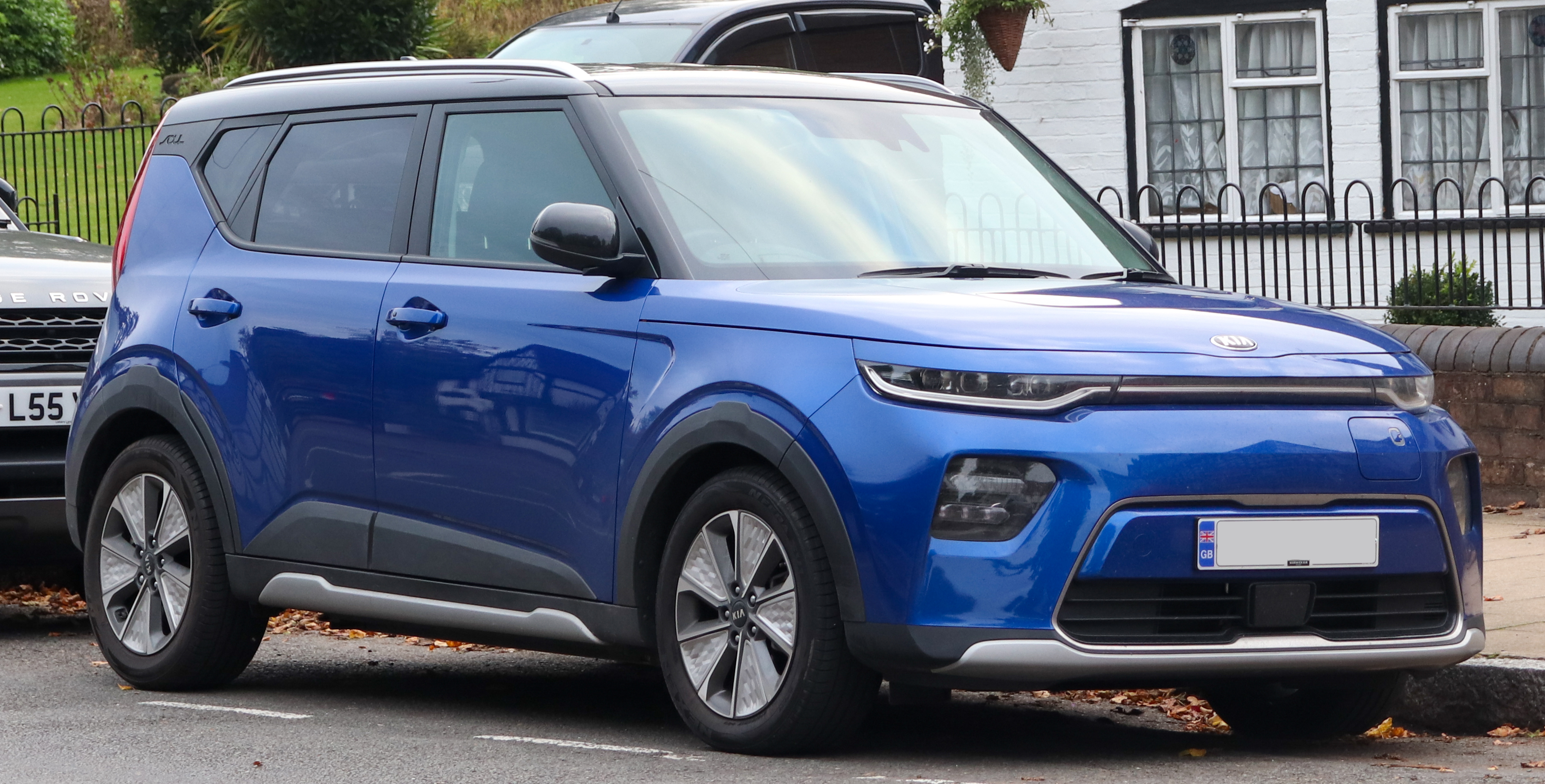
The Kia Soul is a small car that’s shaped more like a crossover than a traditional sedan. It’s designed for everyday driving and easy use. The conversation is basically saying that simpler versions can feel more straightforward.
The Kia Soul is a compact crossover-style vehicle known for its boxy shape and practical everyday use. The podcast’s line about “the less electronic it is, the more of a soul it has” suggests they’re discussing how different versions feel and how tech affects the driving experience. It’s a common car to talk about because it appeals to a wide range of buyers and has multiple trim/feature levels.
watertight-ish
"Now, two questions on the Model A. One, was it watertight-ish? I mean, when you're in it in the rain?"
They’re basically asking: does the car keep you dry in the rain? Older cars with fabric tops can leak depending on the condition of the top and seals.
“Watertight-ish” is the host’s way of describing how well the car’s top and seals keep water out during rain. On older cars with fabric tops, the material and weatherproofing determine whether you stay dry or get leaks.
rubberized canvas
"Well, not fabric. I mean, it's, you know, that, you know, called a rubberized canvas as far as describing what it feels like."
This is describing the material used for the car’s fabric roof. It’s cloth that’s been treated to help it resist water, but it still depends on condition.
“Rubberized canvas” refers to a fabric top material that’s treated to be more water-resistant than plain cloth. It’s a common description for how older convertible or sedan fabric tops feel and resist rain.
cowl
"And if you were in hard enough rain, rain would eventually, you know, come in through the cowl. Oh, sure. Yeah. Yeah, absolutely."
The cowl is the part under the windshield. It helps route rainwater away—if it leaks, water can get inside the car.
The cowl is the body area at the base of the windshield that channels water toward the drainage system. If the cowl area or its seals are compromised, water can enter the cabin during heavy rain.
six-volt electric wiper motor
"but yeah, and I did have one of the few non-stock items I had is I did have a six-volt electric wiper motor instead of the vacuum motor. Although it actually gave me problems towards the end that I kind of wished I would have just had a vacuum motor."
That’s the motor that moves the windshield wipers. This one runs on a 6-volt electrical system, and the speaker says it caused problems later compared with the original vacuum-style setup.
A six-volt electric wiper motor is the power unit that drives the windshield wipers using a 6V electrical system. Many older cars used vacuum wipers, so switching to an electric motor can change reliability and how well the wipers perform over time.
vacuum motor
"six-volt electric wiper motor instead of the vacuum motor. Although it actually gave me problems towards the end that I kind of wished I would have just had a vacuum motor."
Instead of electricity, this uses engine vacuum pressure to run the wipers. If the vacuum system isn’t working well, the wipers can act up.
A vacuum motor is a wiper drive that uses engine vacuum pressure to move the wiper mechanism. On many classic cars, vacuum wipers were common, and if vacuum supply or seals degrade, wiper performance can suffer.
model A4
"sometimes I'd hear people say like, oh, model A4, you'll get 25 miles of the gallon. And I never got anywhere close."
They’re talking about a Ford Model A-era car and arguing about how many miles per gallon it actually gets. The point is that the real numbers were worse than what people claimed.
“Model A4” appears to be the speaker’s way of referring to the Ford Model A, a classic car often discussed with period specs like horsepower and fuel economy. The context is that someone claimed a specific MPG figure, but the owner’s real-world results were lower.
model T
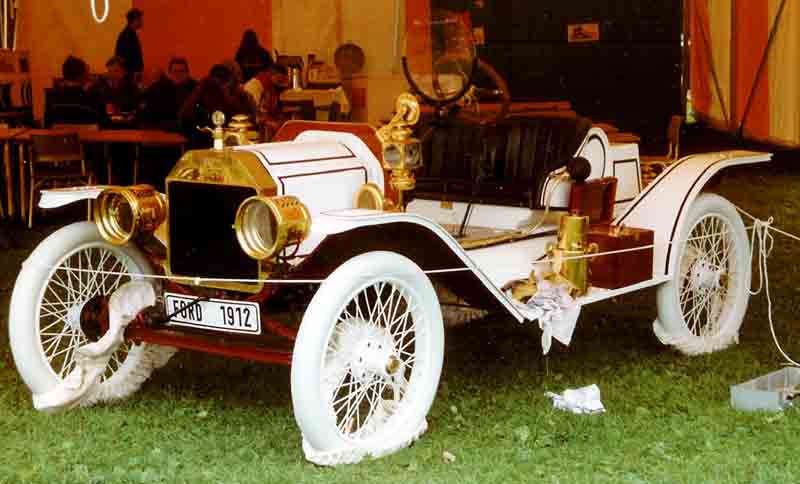
"But anyways, model T was made for a long time. And then, you know, the model A comes out to replace it. And the model T was 20 horsepower."
The Model T is a very famous early Ford from the early 1900s. Here it’s mentioned as the older car that came before the Model A, so they can compare power and how big the upgrade felt.
The Ford Model T is the iconic early-1900s mass-market car that helped popularize affordable personal transportation. In this discussion, it’s used as a baseline for comparing horsepower jumps to later Model A and V8-era hot-rodding.

Flathead V8
"And then, you know, a few years later after model A production, then comes the Flathead V8, which was another sizable jump in horsepower."
The Flathead V8 is an old Ford V8 engine that hot-rodders love. The speaker is saying it was another major jump in power compared with the earlier cars.
The Ford Flathead V8 is a classic early V8 engine design that became a cornerstone of American hot-rodding. Here it’s mentioned as the next big horsepower leap after the Model A era.
high boy
"What was the Flathead V8 that you and I, the hot rod, the high boy that you and I ran around in McPherson for an afternoon, then it's been several years back."
“High boy” is a hot-rod nickname for a car with a taller, more lifted stance. It’s describing the look and how the car sits, not a specific factory model.
“High boy” is a hot-rod style nickname for a raised, more upright stance—often associated with early Ford builds where the body sits higher on the chassis. It’s a look/stance term rather than an official factory trim.
period build
"But that has, that was a period build from the late fifties. And that had, has a Ford Flathead that has a Scott Supercharger."
A “period build” is a car built to feel like it belongs in a specific time period. Instead of modern upgrades, it tries to use the kind of parts and style people used back then.
A “period build” means a car that was modified or assembled to match the look and engineering style of its era, rather than being a modern restomod. In this context, it describes a late-fifties build that uses period-appropriate hot-rodding parts like a supercharger on a Flathead.
Haggerty's collection
"We talked about a lot of Kansas and that's now part of Haggerty's collection, their Haggerty Learning Garage."
Hagerty is a classic-car company that supports car enthusiasts. They also run a learning garage where they show and explain classic-car stuff.
Hagerty is a well-known automotive brand focused on classic cars, insurance, and enthusiast media. The transcript references Hagerty’s collection and their “Haggerty Learning Garage,” which is used to showcase and educate around classic-car technology and history.
Scott Supercharger
"And that had, has a Ford Flathead that has a Scott Supercharger. Now, I don't know exactly what it currently puts out, but it puts out more than a stock Flathead,"
A supercharger is a device that forces extra air into the engine so it can make more power. “Scott” here is the brand of that supercharger.
A supercharger is an engine-mounted forced-induction device that compresses incoming air, allowing more oxygen to enter the cylinders. The “Scott Supercharger” is a specific aftermarket supercharger brand/model, and paired with a Ford Flathead it’s used to increase power beyond stock output.
Ford Flathead
"And that had, has a Ford Flathead that has a Scott Supercharger. Now, I don't know exactly what it currently puts out, but it puts out more than a stock Flathead,"
A “Flathead” is an old-style V8 engine where the valves sit in the engine block. A Ford Flathead is a famous vintage Ford V8 that people often modify for hot rods.
“Flathead” refers to a V8 engine design where the valves are located in the engine block rather than in the cylinder head. A Ford Flathead is the classic Ford V8 from the late 1930s through the 1940s, and it’s a common foundation for hot rods because it’s simple and has a huge aftermarket.
Request an Explanation
Heard something you'd like explained? We'll add it to this episode.
Sign in to request explanations for terms you heard.
Want to learn more?
Browse our glossary for plain-English explanations of automotive terms, jargon, and concepts.
Help improve this episode
See something that's not quite right? Our annotations are AI-generated and can sometimes miss the mark. Click the flag icon on any annotation to suggest a correction.