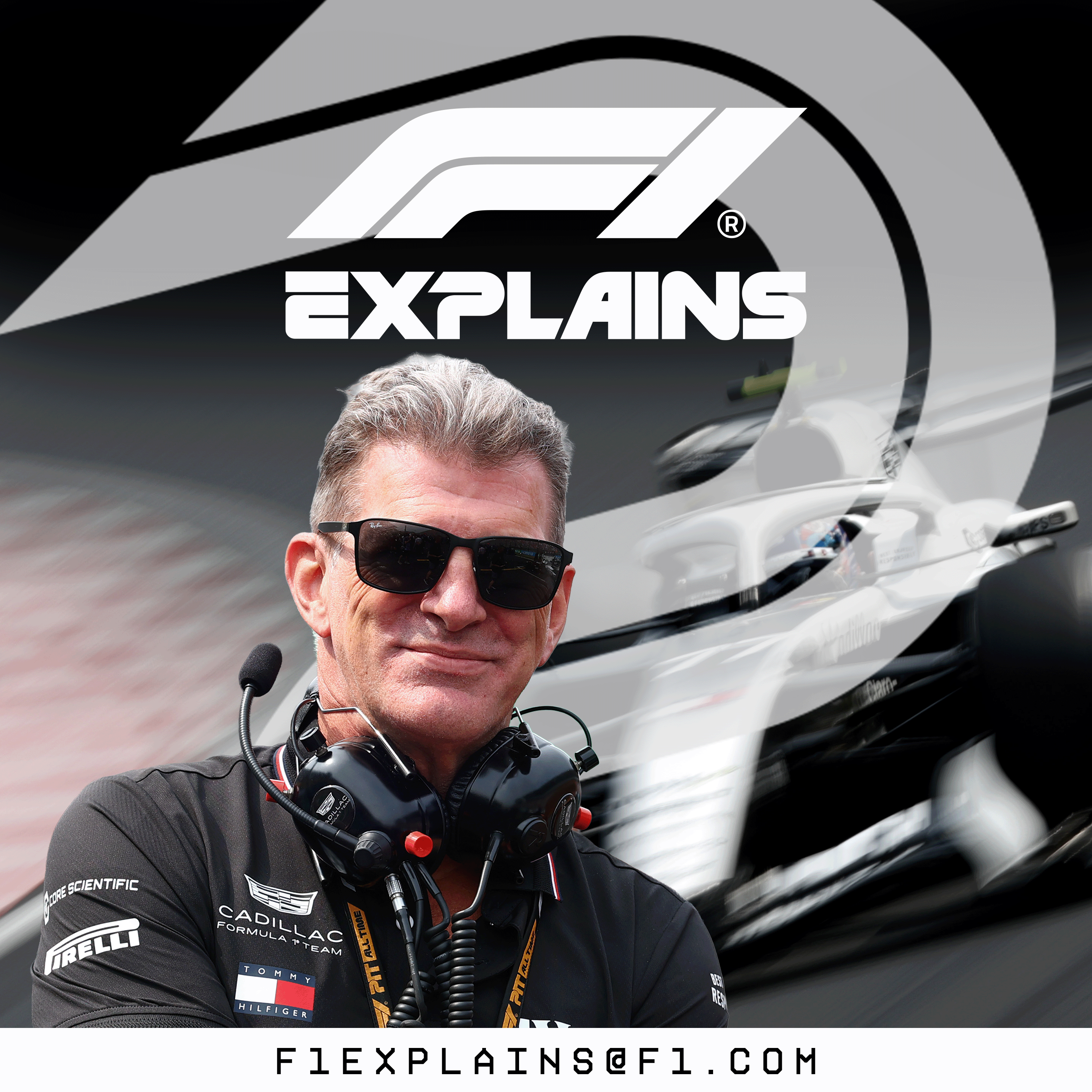
F1 Explains: Ask a Team Principal - with Cadillac's Graeme Lowdon
About this episode
Cadillac team principal Graeme Lowdon joins to unpack the brand-new team’s first three races, where reliability has been a pleasant surprise but outright pace still needs work. He explains how the unexpected break between races has been used to combine upgrade plans, study early data, and keep momentum without losing the progress made so far. The conversation also touches on the rare experience of launching a new F1 team, the emotional milestones along the way, and how Cadillac is balancing factory homework with the pressure to keep improving.
How do Formula 1 teams get all their kit to Grands Prix? What’s the difference between Reserve, Test and Development drivers? And how do team members working back at base during a race weekend help the team at the track?
Cadillac Team Principal Graeme Lowdon joins Christian Hewgill on F1 Explains to answer your questions about the sport.
Graeme also gives his assessment of Cadillac’s first three races as an F1 team and tells Christian what the team are working on during the April break.
AvocadoGreenMattress.com
"And now, during our Earth Month sale, you can get up to 15% off Avocado Mattresses. Just go to AvocadoGreenMattress.com."
This is the company website being advertised in the sponsor break. It’s not related to cars, but it’s a named brand in the transcript.
AvocadoGreenMattress.com is the sponsor mentioned in this ad read. It’s not automotive, but it is a named company/brand appearing prominently in the segment.
Formula 1
"The newest team at F1 is just three racers old. Cadillac have outdone some far more established teams so far. Their brand new car seems to be reliable."
Formula 1 is the highest level of open-wheel racing. The hosts are talking about a new team joining the sport and how it’s doing so far.
Formula 1 is the top level of single-seater circuit racing, and the episode is discussing a new entrant's early progress there. The conversation centers on how a brand-new F1 team is learning, improving reliability, and trying to find more performance.
reliable
"Cadillac have outdone some far more established teams so far. Their brand new car seems to be reliable. Now, they need to make it faster."
This means the car isn’t breaking down much. In racing, that’s a big deal because finishing races matters before you can worry about being fast.
In racing, reliability means the car can complete sessions and races without mechanical failures. Here it’s being used to say the new Cadillac F1 car is holding together well, even if it still needs more speed.
performance
"A few weeks away from the track to do their homework, study their performance so far,"
This is just a racing word for how fast and effective the car is. They’re trying to figure out how to make it quicker.
Performance refers to how well the car goes on track, especially speed, grip, and overall competitiveness. In this context, the team is studying data to understand where they can improve lap time.
F1 Explains: Ask a Team Principal
"[99.4s] work on upgrades, and to answer your questions. [102.1s] Right here on F1 Explains. [104.0s] Hello, everyone. Welcome to the official F1 podcast,"
This is the part of the show where they answer questions about how a Formula 1 team works. A team principal is basically the boss of the racing team.
This is the episode segment framing the discussion as an F1 Explains Q&A with a team principal. It signals that the conversation is meant to unpack how a Formula 1 team is run and how decisions get made.
racetrack
"Usually, we and the rest of the F1 world are at the racetrack, but today, I'm at home. And the teams are, too."
A racetrack is the place where the cars actually race. The speaker is saying they’re usually there, but right now they’re working elsewhere.
A racetrack is the closed circuit where motorsport events are held. Here it contrasts with the team factory, emphasizing the difference between race weekends and off-track preparation.
factory
"And the teams are, too. Well, I say at home, they're at their factories. And Cadillac team principal, Graham Loudon, joins us from the team's UK base at Silverstone."
This is the team’s home base where the cars are designed and worked on. In F1, a lot of the real work happens there instead of at the track.
In Formula 1, the factory is the team’s engineering and manufacturing base where cars are designed, built, and developed. It’s a key part of the sport because so much performance comes from work done away from the circuit.
Silverstone
"And Cadillac team principal, Graham Loudon, joins us from the team's UK base at Silverstone. Graham, welcome to F1 Explains?"
Silverstone is a famous racing place in England. It’s being used here as the team’s UK home base.
Silverstone is a famous motorsport venue in the UK, best known as the home of the British Grand Prix. In this clip it’s mentioned as the team’s UK base, which is a common F1 hub location.
Miami
"that a number of people have asked already what I'm going to do with the long holiday between Suzuka and Miami. And of course, it's far from holiday for us and any of the teams."
Miami here means the Formula 1 race in Miami. They’re talking about the time between one race and the next.
Miami refers to the Miami Grand Prix, a Formula 1 race on the calendar. The speaker is discussing the break between two race weekends rather than a vacation.
Suzuka
"that a number of people have asked already what I'm going to do with the long holiday between Suzuka and Miami. And of course, it's far from holiday for us and any of the teams."
Suzuka is a race track in Japan. The speaker is talking about the gap between that race and the next one in Miami.
Suzuka is the Japanese Grand Prix venue, one of Formula 1’s most famous and challenging circuits. It’s used here as part of the race calendar timing between events.
long holiday
"what I'm going to do with the long holiday between Suzuka and Miami. And of course, it's far from holiday for us and any of the teams."
They’re joking about the time between races. It sounds like a vacation, but for the team it’s actually a busy work period.
In motorsport, a 'long holiday' here is ironic shorthand for the gap between races, not actual downtime. It highlights how teams use the break for preparation, development, and logistics.
mechanics
"The drivers are as well. The engineers are mechanics, even. But like anything, we're just itching to get to Miami and go racing again."
These are the hands-on people who work on the car itself. They help keep it running and make changes when needed.
Mechanics are the crew members who physically build, repair, and maintain the race car. In F1, they work alongside engineers and often travel with the team to execute rapid changes at the track.
engineers
"The drivers are as well. The engineers are mechanics, even. But like anything, we're just itching to get to Miami and go racing again."
These are the people who figure out how to make the car faster and better. In F1, they’re a huge part of the team’s success.
In F1, engineers are the specialists who analyze data, set up the car, and guide performance decisions. The speaker is emphasizing that the whole team, not just the drivers, is working hard during the break.
season so far
"But just before we look at the break, let's look at the season so far. Listen, the car seems to be solid."
It means everything that’s happened in the championship up to now. They’re about to review how the year has gone.
This is a common sports phrase meaning the results and story of the championship up to this point. In F1, it usually leads into a review of performance, standings, and development progress.
the car seems to be solid
"let's look at the season so far. Listen, the car seems to be solid."
They mean the car is doing a good job and isn’t causing problems. It sounds like the team thinks it’s a strong, dependable package.
In racing, 'solid' usually means the car is dependable and well-balanced rather than fragile or unpredictable. It suggests the team is happy with the car’s baseline performance and reliability.
reliability problems
"You've suffered fewer reliability problems than many other established teams. How pleased are you with your first three racers in this Formula One adventure?"
This means the cars were breaking down less often. In racing, that matters a lot because a car that can’t finish can’t score points.
In motorsport, reliability problems are mechanical or systems failures that prevent a car from finishing or performing as intended. This is a major concern in Formula 1 because even small issues can cost points and race results.
regulation change
"that when there is a big regulation change, it does take a little while for everything to settle in. And it reflects just how difficult this game is."
This means the rules changed, so the teams had to adjust their cars and plans. In F1, rule changes can make some teams better or worse very quickly.
A regulation change means the racing rules have been updated, often forcing teams to redesign cars or adapt quickly. In Formula 1, big rule changes can reshuffle the competitive order because teams must interpret and exploit the new rules effectively.
pinnacle of world motorsport
"Formula One is the pinnacle of world motorsport. It's the greatest team game in the world."
This is just a fancy way of saying F1 is the top level of racing in the world. It’s the most prestigious and demanding form of motorsport.
This is a way of describing Formula One as the highest level of global motorsport. It emphasizes the sport’s prestige, technical complexity, and competitive intensity.
field of play
"I think people that we've put together have done an exceptional job in a really short space of time, simply to be on the field of play, if you like. But that was never our target."
This means they’re actually out there competing, not just talking about racing or getting ready. It’s a sports way of saying they’ve made it onto the track.
In this context, 'field of play' means being on the grid and actively competing rather than just preparing or testing. It’s a sports phrase used to say the team has reached the point of actually racing.
Grand Prix to Grand Prix
"that the team's performance is improving Grand Prix to Grand Prix. We've gone quicker in Shanghai than we did in Melbourne. And we went quicker in Suzuka than we did in Shanghai."
A Grand Prix is a race weekend. Here they mean the team is checking if the car is getting better from one race to the next.
This refers to comparing performance from one race weekend to the next in Formula 1. Teams use each Grand Prix as a data point to measure whether upgrades and setup changes are making the car faster.
F1
"Chantel asks, with Bahrain and Saudi not happening in April, will the FIA and F1 let teams work more on the car to allow for changes and improvements? So as we mentioned, Graham, Bernie answered the question"
F1 is Formula 1, the highest level of open-wheel racing. They’re talking about the rules that control how teams can improve their cars.
F1 is Formula 1, the top level of single-seater circuit racing. Here it refers to the championship and its rules about car development during the season.
FIA
"Chantel asks, with Bahrain and Saudi not happening in April, will the FIA and F1 let teams work more on the car to allow for changes and improvements? So as we mentioned, Graham, Bernie answered the question"
The FIA is the group that makes and enforces the rules for Formula 1. They decide what teams are allowed to change on the car.
The FIA is the governing body that writes and enforces many of the rules in Formula 1. In this context, the question is about whether the FIA allows teams to keep developing their cars between races.
work more on the car
"Chantel asks, with Bahrain and Saudi not happening in April, will the FIA and F1 let teams work more on the car to allow for changes and improvements? So as we mentioned, Graham, Bernie answered the question"
This means spending more time improving the race car. In F1, teams can’t just change anything whenever they want, so the rules matter a lot.
This is about in-season car development: making setup, aerodynamic, or mechanical changes to improve performance. In Formula 1, what teams can change is tightly regulated by the sporting and technical rules.
analysis
"What is it you're going to do for the rest of the break in terms of analysis, upgrades? How are you utilizing this time? Actually, all of the team, I'm pretty sure all the teams would be the same as us, which is you already have quite a far-reaching plan for upgrades over multiple Grand Prix and multiple parts of the season, actually."
This means studying the race data to figure out how to make the car better. Teams look at the numbers to decide what changes to bring next.
Here, analysis refers to reviewing data from previous races to understand what worked and what didn't. F1 teams use this to decide which upgrades to prioritize and how to combine them.
upgrades over multiple Grand Prix
"What is it you're going to do for the rest of the break in terms of analysis, upgrades? How are you utilizing this time? Actually, all of the team, I'm pretty sure all the teams would be the same as us, which is you already have quite a far-reaching plan for upgrades over multiple Grand Prix and multiple parts of the season, actually."
They’re talking about how an F1 team plans improvements to the car over several races. Instead of changing everything at once, teams bring new parts in stages and try to make them work together.
This segment is about how Formula 1 teams plan and combine car upgrades across several races rather than bringing one-off changes. In F1, upgrade packages are often scheduled around specific events and development windows to maximize performance gains.
combine some of those upgrades
"What we will have been able to do is optimize how we combine some of those upgrades, you know. So certainly we had some plans already for Bahrain. We had some other plans for Saudi. We had some plans for Miami, and it's given us a chance to combine a number of those upgrades."
Instead of adding one new part at a time, the team can bring several improvements together. That helps them test the changes as a group and can save time.
This refers to bundling multiple development changes into one race package instead of introducing them separately. In F1, combining upgrades can make it easier to evaluate their effect and reduce the risk of conflicting changes.
new team
"I think the other thing for us as a new team as well is it's given us a chance to analyze the first three races. It sometimes strikes me. I don't know how many races, for example, Ferrari have done in their history. Someone will calculate it, but it's a lot. We've done three."
They’re a brand-new F1 team, so they don’t have years of race data yet. That makes it harder to compare themselves with teams that have been around forever.
Cadillac is being described as a new entrant, meaning the team is still in its early development phase and has limited race history to analyze. That affects how much data they have compared with established teams like Ferrari.
Ferrari
"I don't know how many races, for example, Ferrari have done in their history. Someone will calculate it, but it's a lot. We've done three."
Ferrari is the famous F1 team and car brand. They’ve been racing for a very long time, so they have far more experience than a new team.
Ferrari is one of Formula 1's most historic and successful teams, which is why it is used here as a contrast to a brand-new entrant. The comparison highlights how much accumulated race data an established team has.
Formula One experience
"We've got a lot of experience in the team. We counted up a little while back that we had something like two and a half thousand years of Formula One experience in the more senior managers within the team."
This means how long people on the team have worked in Formula 1. In racing, having lots of experienced people can help a team make better decisions and avoid mistakes.
This refers to the accumulated years of working in Formula One across the team's senior leadership. In F1, experience matters because the sport is highly technical, fast-moving, and full of operational details that affect performance and strategy.
home race
"And I think that's another reason why we're just very, very keen to get to Miami. And it's a home race for the team as well."
A home race is like a hometown game in other sports. It’s a race where the team feels especially connected to the location or crowd.
A home race is an event that feels local or especially important to a team because of geography, nationality, or fan base. Teams often place extra emphasis on these races for marketing, hospitality, and morale.
Cadillac Formula One team
"And it's great to have that experience on board as well. And it's been fantastic for me to witness the Cadillac Formula One team go from being an idea on a sheet of paper to team competing in the highest level of motorsport in the world."
Cadillac is the luxury car brand from General Motors. They’re talking about Cadillac’s new Formula 1 team and how it went from an idea to actually racing.
Cadillac is the General Motors luxury brand entering Formula 1, and this segment is about the team project becoming a real racing operation. The speaker is reflecting on the team’s progression from an idea to a competitor at the highest level of motorsport.
paddock
"Have there been moments where you've stood there, I don't know, for example in the paddock in Australia and had those little moments because as you say, you have been with this project right from when it was just being talked about as a hypothetical."
The paddock is the behind-the-scenes area at a race track where the teams work. It’s basically the F1 garage-and-hospitality zone.
The paddock is the area at a race track where teams, drivers, engineers, and media operate behind the scenes. In Formula 1, it’s the central hub for team activity away from the track.
pit lane
"Have you had those moments where you sat on the pit"
The pit lane is the road next to the track where race cars stop during a race. Teams use it for tire changes and repairs.
The pit lane is the lane beside the track where cars stop for tires, repairs, and strategy work during a race. The speaker is about to describe a moment standing there, likely reflecting on the team’s journey in F1.
Monaco
"Hello, to be honest, we did maybe 2010 Monaco on the grid. That was a bit of a sort of, we're okay, we're here."
Monaco is a famous Formula One race held on city streets. It’s one of the sport’s biggest and most glamorous events.
Monaco refers to the Monaco Grand Prix, one of Formula One’s most famous races. It’s often used as a benchmark event because of its prestige and the difficulty of the street circuit.
on the grid
"Hello, to be honest, we did maybe 2010 Monaco on the grid. That was a bit of a sort of, we're okay, we're here."
The grid is the lineup of cars before a race starts. Being 'on the grid' means the team is there and ready to race.
In motorsport, 'on the grid' means being lined up at the starting grid before the race begins. Here it refers to the team being present and officially part of the event at Monaco.
build factories on both sides of the Atlantic
"In reality, it never happened. You never get a chance to bring a huge automotive manufacturer in, start a brand new team, build factories on both sides of the Atlantic,"
They’re talking about setting up big work sites in two different parts of the world. That means the team is serious about having a large operation, not just a small racing outfit.
This refers to establishing manufacturing and operational facilities in both Europe and North America. In an F1 context, that suggests a large, transatlantic organization with significant infrastructure and logistics needs.
manufacturer
"You never get a chance to bring a huge automotive manufacturer in, start a brand new team, build factories on both sides of the Atlantic,"
A manufacturer is a company that makes cars. In racing, having a manufacturer involved usually means the team has a lot of money, engineering support, and resources.
In this context, a manufacturer means a major automotive company that builds cars and can support a racing program. The speaker is emphasizing how unusual it is to bring a large carmaker into Formula One and build a team around it.
on track
"Graham, just finally on the break, I'm really interested in the sort of parallel between you so often hearing Formula One, it said the best way of learning is on track. Now, obviously we've lost out on those two races of on track stuff, but have you been able to find an advantage"
'On track' means the car is actually being driven on a race circuit. The idea is that teams learn fastest when they can test the car in real conditions.
In motorsport, 'on track' refers to actual driving time during testing, practice, or racing, as opposed to simulator work or factory development. The speaker is talking about learning by running the car on the circuit.
time away from the track
"[625.0s] in having time away from the track? [627.6s] And where is that parallel between time on track [630.8s] and actually a bit of extra homework time back at the factory? [634.3s] It genuinely is a kind of two-edge sword"
They’re talking about what happens when F1 teams get a break between races. More time can help them fix problems, but it can also slow down the rhythm they had built up.
This segment is about how a break between races affects a Formula 1 team’s development and preparation. The speaker frames it as a tradeoff: extra time can help the factory catch up, but it can also interrupt momentum.
supply chain
"[642.2s] You know, there's always things in every team [644.9s] where in the supply chain, you know, [647.6s] you need a little bit of extra time [649.5s] maybe to get some components [651.3s] that were going to be pretty tight caught up or, you know, [654.7s] there's always something like that."
This means all the companies and deliveries that get parts to the race team. If something is delayed, the team may not have the pieces it needs for the car.
In motorsport, the supply chain is the network of suppliers and logistics needed to get parts and components to the team on time. Here it refers to the challenge of getting critical F1 parts manufactured and delivered quickly enough to keep up with the season.
components
"[647.6s] you need a little bit of extra time [649.5s] maybe to get some components [651.3s] that were going to be pretty tight caught up or, you know, [654.7s] there's always something like that. [657.8s] But the flip side is we were into a really good momentum"
These are the individual pieces that make up the car. The team needed a little more time to finish or get some of them.
In this context, components are the individual parts that make up an F1 car or support its operation. The speaker is referring to parts that were running close to the deadline and needed extra time to be completed or delivered.
operationally
"...and go to Miami, you know, in the best condition that we can as a team and try and continue that progression, both operationally and performance-wise."
This is about how well the team does its job behind the scenes. It’s not just about the car being fast, but about the people and systems working smoothly.
Operationally refers to how well the team runs its day-to-day racing and engineering processes. In Formula One, that includes everything from pit wall decisions to logistics, preparation, and execution.
pace
"...to go back to the factory, to learn from those first three races, to try and improve the car, to try and keep that reliability up, to try and bring in more pace. But the tricky thing is in Formula One, your 10 rivals have all got exactly the same."
This is just racing talk for speed. When a team wants more pace, it wants the car to be quicker on track.
Pace is racing shorthand for raw speed and lap-time potential. In Formula One, it usually refers to how quickly a car can go over a stint or a whole race weekend, not just top speed.
race finishes
"And we talked about your start to the season here out of six potential race finishes with your two drivers."
A race finish just means the car made it to the end of the race. In Formula One, that matters a lot because cars often break or crash before the finish.
A race finish means a car completes the race and is classified in the results. In F1, finishing is important because reliability and reaching the flag are major parts of performance.
drivers
"out of six potential race finishes with your two drivers. You've got five, Valtteri has finished as high as 13th."
Drivers are the people who race the cars. This part is talking about how the team’s two drivers have been doing so far.
In Formula One, drivers are the racers who pilot the cars for each team. The segment references the team’s two drivers and their early-season results.
13th
"You've got five, Valtteri has finished as high as 13th. It seems like a really solid start way."
This is the place a driver finished in the race. In Formula One, 13th is outside the points, but it can still be a sign of progress for a new team.
A finishing position in motorsport results. Here it shows one of the drivers’ best race results so far, even though it is outside the points-paying positions in F1.
Adobe Jectivist
"[858.3s] Do you feel that? [859.6s] I do. [860.4s] It was our first day at Adobe Jectivist"
This sounds like a name that got misheard by the transcript. It may be a company or event, but the exact wording isn’t clear here.
This appears to be a transcription error for a company or event name, but the exact reference is unclear from the provided excerpt. Because it is not confidently identifiable, it should be treated cautiously.
pit stops
"They're the ones who've designed the car and built the car and do the pit stops and go racing and do all the late nights and all nights."
A pit stop is when the car pulls into the pit lane so the team can change tires or fix things quickly. In F1, these stops are super fast and can decide races.
Pit stops are the brief stops a race car makes in the pit lane for tires, repairs, or other service. In F1, they are a critical part of race strategy and require highly coordinated teamwork.
logistics
"All want to know about logistics, especially interesting given that we're now not racing until Miami. They say moving all of the stuff for a race seems to be a huge undertaking. How do the teams decide which bit of their gear has to be sent by plane, boat or truck?"
This is about how a racing team moves all its stuff around the world. They have to decide what goes on a plane, a boat, or a truck so everything arrives on time.
In Formula 1, logistics means planning and moving all the team's equipment, cars, parts, and personnel from race to race. It includes deciding what travels by air, sea, or road to meet tight deadlines and control costs.
plane, boat or truck
"They say moving all of the stuff for a race seems to be a huge undertaking. How do the teams decide which bit of their gear has to be sent by plane, boat or truck? As we say, Graham, a particularly interesting one, given we're now going from Japan to Miami now."
The team has to choose how to move race gear around the world. Some things go by plane, some by boat, and some by truck depending on speed and cost.
This refers to the different transport methods F1 teams use to ship equipment around the world. Air freight is fastest but expensive, sea freight is cheaper but slower, and trucks handle regional overland moves.
truck based
"So the truck side of thing is fairly easy to define because that's primarily the European races. Those are races that are easier to access from most of the logistics bases for the team."
This means the team loads everything into trucks and drives it to the race. It’s the easiest option when the track is close enough.
Truck-based logistics means moving equipment by road transport, which is practical for nearby races. In F1 this is mainly used for European events because teams can drive gear directly from their bases.
flyaway races
"So the European ones are truck based when it comes to all of the non-European races or flyaway races, as we usually refer to them, then we use a mixture of air freight and sea freight."
These are the races that are far away from the team’s base, so they can’t just drive the equipment there. The team has to ship or fly everything instead.
In Formula One, flyaway races are events outside the team's home region that require long-distance transport, usually by air and sea freight rather than trucks. The term is especially important because it affects how teams plan shipping and logistics.
sea freight sets
"Most teams will have six or seven sets of sea freight which leapfrog around the world. So a set that goes to Melbourne may then go off"
This means a complete batch of team equipment that gets shipped by boat. Teams keep several copies so one can be used while another is already traveling.
A sea freight set is a full package of equipment shipped by sea, often duplicated so teams can keep racing while one set is already on the move. The 'six or seven sets' detail shows how F1 teams rotate hardware around the globe.
sea freight vs air freight
"In general, the rule is if it's heavy and low cost, it'll go by sea. If it's light or expensive, it'll go by air. And when I say expensive, I mean things like the race cars."
This is about how F1 teams move all their stuff around the world. Big heavy items go by ship, and important or expensive items go by plane so the team can race on time.
This segment explains how Formula 1 teams split logistics between sea freight and air freight. Heavy, less time-sensitive equipment travels by ship, while lighter or more valuable items like race cars are flown in.
garage boards
"heavier things like back of house garage boards and all of the paraphernalia that make up the equipment that's needed for a team to operate. That's heavy."
These are the boards and panels teams use to set up their garage area. They help make the pit garage look organized and professional.
Garage boards are the panels, walls, or display surfaces used to set up and organize the team garage. In F1, they help create the working environment and presentation standards teams bring to each race weekend.
paraphernalia
"and all of the paraphernalia that make up the equipment that's needed for a team to operate. That's heavy. We'll buy multiple sets."
This is just a fancy word for all the extra stuff a team needs. It means the tools, gear, and other items that help the team do its job.
Paraphernalia here means all the miscellaneous gear and equipment a team needs to function. It's a catch-all term for the non-obvious support items beyond the cars themselves.
F1 movie pit crew support scene
"was I was watching the F1 movie and there was a few scenes where the pit crew on the grid would radio to an off-site crew who were providing support, data and recommendations for strategy. How many people are usually completing this support?"
They’re talking about a scene in the F1 movie where the race team gets help from people not physically at the track. The question is basically: who are those people, and what do they do?
This segment is about a scene in the F1 movie that shows pit crew members on the grid communicating with an off-site support group for data and strategy help. It sets up the listener’s question about how modern Formula 1 teams are organized behind the scenes.
strategy
"who were providing support, data and recommendations for strategy. How many people are usually completing this support? What are their roles?"
This is the team’s game plan for the race. It covers when to pit, which tires to use, and how to respond to what other teams are doing.
In Formula One, strategy refers to the race plan, including tire choices, pit stop timing, and how to react to changing conditions. The off-site crew is helping with recommendations that affect how the race is managed.
remote garage
"that the question relates to is kind of what most teams refer to as a remote garage."
It’s like a second garage that isn’t at the racetrack. People there watch the race on screens and help the team with advice and information.
A remote garage is an off-site operations center where team members monitor data and support race decisions from outside the circuit. In Formula One, this can include engineers, strategists, and analysts who help the trackside crew in real time.
GM Technical Center
"One is at the GM Technical Center in Charlotte and the other is at Silverstone. Typically, we'll have maybe 25 or so, 25 to 30 people at the facility in Silverstone"
This is General Motors' main engineering campus. The team has people there helping with the race car even when they're not at the circuit.
The GM Technical Center is General Motors' engineering and development hub. In this context, it's one of Cadillac's F1 support bases, where staff handle technical work away from the track.
time zone
"we have the time zone of all of these different facilities and then of course you're racing in a third time zone as well. So it could be Melbourne or Singapore or wherever. I think everyone's body clock gets really messed about"
Different places on Earth use different local times. The team has to coordinate work between places that are hours apart.
A time zone is a region that uses the same local time. In Formula 1 operations, coordinating across multiple time zones matters because engineering teams, factories, and races may all be on different clocks.
Melbourne or Singapore
"So it could be Melbourne or Singapore or wherever. I think everyone's body clock gets really messed about quite a bit because whatever time it is in Silverstone, it'll be a completely different time in the GM Tech Center."
These are race cities in different parts of the world. They show how F1 teams have to work across huge time differences.
Melbourne and Singapore are examples of Formula 1 race locations in very different time zones. They're mentioned here to illustrate how global the schedule is for a team principal and how travel affects operations.
body clock
"I think everyone's body clock gets really messed about quite a bit because whatever time it is in Silverstone, it'll be a completely different time in the GM Tech Center. So while one group are having lunch,"
It's your internal sleep schedule. Traveling across time zones can throw it off and make people tired or out of sync.
Body clock refers to the body's internal circadian rhythm that regulates sleep and alertness. In motorsport, constant travel and odd working hours can disrupt it and affect performance.
brake
"typically it's additional engineering support on, you know, so they're monitoring things like brake, suspension, reliability, all sorts of other things. And then also simulation."
Brakes are what slow the car down. In F1, the team watches them closely because they get incredibly hot and work very hard.
Brakes are the system used to slow and stop the car, and in F1 they're highly engineered for extreme heat and performance. Monitoring brake condition is a key part of race support and setup.
suspension
"on, you know, so they're monitoring things like brake, suspension, reliability, all sorts of other things. And then also simulation. So we have, at present,"
Suspension is the part that lets the car ride over bumps and stay planted. It affects how the car handles and how much grip it has.
Suspension is the set of components that connects the car to its wheels and controls how it handles bumps, grip, and weight transfer. In F1, suspension setup is critical for performance and tire management.
simulation
"And then also simulation. So we have, at present, we have our driver and the loop simulator again based at the GM Tech Center in Charlotte"
This means using computers or a simulator to practice and test ideas before the real race. It helps the team make better decisions without driving the actual car.
Simulation is the use of computer models or simulators to test car behavior and driver inputs before going on track. F1 teams use it to develop setups, strategies, and driver training.
loop simulator
"we have our driver and the loop simulator again based at the GM Tech Center in Charlotte"
This is a racing simulator where a driver can sit in and 'drive' a virtual car. Teams use it to test ideas and practice without being on a real track.
A loop simulator is a driver-in-the-loop simulator, where a real driver sits in a motion or fixed simulator and interacts with a virtual car model. F1 teams use it to evaluate setup changes and race scenarios.
remote race operations
"And so the group there will also be working out what kind of program would be run overnight, I should say overnight, wherever the Grand Prix is, could be the middle of the day in Charlotte. But they'll be working out what should we simulate between, for example, FP2 and FP3 or between Quali and the race or whatever on a normal non-sprint weekend."
They’re talking about how a racing team can work from different places instead of all being at the track. Even if people are far apart, they still act like they’re in the same race control room.
This segment discusses how a Formula 1 team can operate remotely, with staff working from different locations while following the same race-weekend protocols. It highlights the distributed nature of modern F1 team operations.
FP2
"But they'll be working out what should we simulate between, for example, FP2 and FP3 or between Quali and the race or whatever on a normal non-sprint weekend. And we operate with all the same protocols as if somebody was at a race, you know, the same headsets, they have the same intercom system."
This is one of the practice sessions before the race. Teams use it to test the car and figure out how to make it faster.
FP2 means Free Practice 2, the second practice session in a Formula 1 weekend. Teams use it to gather data and refine car setup under conditions closer to qualifying and race trim.
FP3
"But they'll be working out what should we simulate between, for example, FP2 and FP3 or between Quali and the race or whatever on a normal non-sprint weekend. And we operate with all the same protocols as if somebody was at a race, you know, the same headsets, they have the same intercom system."
This is the last practice session before qualifying. Teams use it to make final checks on the car.
FP3 means Free Practice 3, the final practice session before qualifying in a standard Formula 1 weekend. It’s the last chance to test setup changes and compare tire behavior before the competitive sessions begin.
Quali
"But they'll be working out what should we simulate between, for example, FP2 and FP3 or between Quali and the race or whatever on a normal non-sprint weekend. And we operate with all the same protocols as if somebody was at a race, you know, the same headsets, they have the same intercom system."
This is the session that decides where each driver starts the race. Faster laps mean a better starting spot.
Quali is shorthand for qualifying, the timed session that sets the starting order for the race. In F1, qualifying performance is crucial because track position strongly affects race results.
headsets
"And we operate with all the same protocols as if somebody was at a race, you know, the same headsets, they have the same intercom system. And it's really interesting for me because I sit on the pit wall during a race and I'm talking to people and I know them, I know their voice, I have no idea where they're sat."
These are the earphones and microphones the team uses to talk during the race. They help everyone hear each other over the noise.
Headsets are the audio equipment team members wear to communicate clearly in a noisy race environment. They’re essential for coordinating strategy and car setup during sessions.
intercom system
"And we operate with all the same protocols as if somebody was at a race, you know, the same headsets, they have the same intercom system. And it's really interesting for me because I sit on the pit wall during a race and I'm talking to people and I know them, I know their voice, I have no idea where they're sat."
It’s the team’s internal phone system. It lets everyone talk to each other quickly during the race.
An intercom system is the internal communication setup teams use to talk between the pit wall, garage, and other remote staff. In F1, it helps coordinate strategy and car operations in real time.
pit wall
"And it's really interesting for me because I sit on the pit wall during a race and I'm talking to people and I know them, I know their voice, I have no idea where they're sat. Could be in the US, could be at Silverstone, there could be 20 yards away in the garage."
This is where the team leaders sit during a race to watch what’s happening and make decisions. It’s like the team’s control room at the track.
The pit wall is the command area at the edge of the pit lane where team principals and engineers monitor the race and communicate with the garage and drivers. It’s effectively the team’s on-track operations center.
Canadian Grand Prix
"You're sat there on the pit wall at the Canadian Grand Prix, for example, and you've got people talking to you from all over the world. You don't know where they're coming from, but they might as well be next year."
This is the Formula 1 race in Canada. It’s one of the stops on the F1 calendar each year.
The Canadian Grand Prix is the Formula 1 race held in Canada, usually at Circuit Gilles Villeneuve in Montreal. It’s one of the sport’s long-running events and a common reference point when discussing F1 operations and race weekends.
driver roles discussion
"Hi, Hannah, thanks for your question. Hannah says, I would love to learn more about the differences between reserve drivers, development drivers or test drivers. Are there any rules around those roles? Now, obviously, with Cadillac, Graham, you guys have got the IndyCar race winner, Colton Herter, as your test driver."
This part of the episode is about the different jobs drivers can have on an F1 team. They’re explaining who does what and what the rules are.
This segment is about the differences between reserve drivers, development drivers, and test drivers, and what rules apply to each role. It’s a structural topic that frames the Q&A portion of the episode.
IndyCar
"Now, obviously, with Cadillac, Graham, you guys have got the IndyCar race winner, Colton Herter, as your test driver. He's also racing in Formula Two, where he scored points in his first F2 weekend in Australia."
This is a big American racing series with open-wheel cars, kind of like F1’s U.S. counterpart.
IndyCar is a major American open-wheel racing series. It’s often mentioned in F1 contexts because drivers and teams compare talent, experience, and racing backgrounds across categories.
Formula Two
"He's also racing in Formula Two, where he scored points in his first F2 weekend in Australia. So, well done to him. And you've got Gio Grandu as your reserve driver, who's previously raced in F1 with the Salbertine, the Alfa Romeo team."
This is a junior racing series below Formula 1. Drivers often go there to prove they’re ready for F1.
Formula Two is the main feeder series below Formula 1, where young drivers develop before moving up to F1. It’s a key proving ground because performance there is often used to judge future F1 potential.
F2
"He's also racing in Formula Two, where he scored points in his first F2 weekend in Australia. So, well done to him. And you've got Gio Grandu as your reserve driver, who's previously raced in F1 with the Salbertine, the Alfa Romeo team."
This is just a short way of saying Formula Two. It’s the junior series where drivers try to move up to F1.
F2 is shorthand for Formula Two, the feeder series below Formula 1. The acronym is commonly used in motorsport coverage and team discussions.
Alfa Romeo
"...who's previously raced in F1 with the Salbertine, the Alfa Romeo team. Graham, differences in their roles? Yeah, so there are differences to answer Hannah's question."
Alfa Romeo is a car brand, and it also had an F1 team. The speaker is saying the driver used to race for them.
Alfa Romeo is the Italian automotive brand that also competed in Formula 1 under its name in recent seasons. Here it identifies the team Gio Grandu previously raced with.
super license
"So if we start with raced drivers, because that's kind of the most obvious, the raced drivers have to have a full super license. The reserve driver also has to have a full super license because they need to be in a position where they can step in for one of the two raced drivers..."
A super license is basically the special racing license you need to drive in Formula 1. It shows the driver has enough experience and success to be allowed to race at that level.
A super license is the FIA credential a driver needs to compete in Formula 1. It’s awarded based on experience and results, so it’s a key gatekeeper for race and reserve drivers.
reserve driver
"The reserve driver also has to have a full super license because they need to be in a position where they can step in for one of the two raced drivers in the unfortunate circumstance that one of those drivers isn't able to drive..."
A reserve driver is the team’s backup. If one of the main drivers can’t race, this person steps in.
A reserve driver is the backup driver a Formula 1 team can call on if one of its race drivers can’t compete. Teams often use reserve drivers to stay ready for emergencies and sometimes to support development work.
test driver
"Test driver doesn't have to have a full super license. They can play a role in developing the car, so they could be heavily involved in the simulator program and other elements of contributing to the engineering side."
A test driver helps the team improve the car instead of mainly racing it. They may drive in a simulator and help figure out what changes work best.
A test driver is used mainly for development rather than racing. In modern Formula 1, that can include simulator work and helping engineers evaluate car changes.
simulator program
"They can play a role in developing the car, so they could be heavily involved in the simulator program and other elements of contributing to the engineering side."
This is the team’s computer-based driving setup. It lets them practice and test changes without using the real car.
The simulator program is the team’s virtual driving and setup environment, used to test ideas without putting the real car on track. It’s a major part of modern Formula 1 development work.
Formula One regulations
"In the Formula One regulations, each team needs to give the opportunity to a rookie driver to do free practice, one session for a number of occasions, so this here would be four occasions."
These are the official rules for Formula 1. They decide things like who can drive and how teams have to use their drivers in practice sessions.
Formula One regulations are the rulebook governing how teams operate, including driver requirements and session allocations. In this segment, they’re discussing a rule that requires teams to give rookies practice time.
rookie driver
"each team needs to give the opportunity to a rookie driver to do free practice, one session for a number of occasions, so this here would be four occasions."
A rookie driver is a newcomer or very inexperienced driver in Formula 1. Teams have to give these drivers some practice time so they can gain experience.
A rookie driver is a driver with limited Formula 1 experience, usually someone early in their F1 career. Regulations often give rookies mandatory practice opportunities so teams can develop new talent.
free practice
"each team needs to give the opportunity to a rookie driver to do free practice, one session for a number of occasions, so this here would be four occasions."
Free practice is a practice session before the race. Teams use it to try things out and get the car ready.
Free practice is a practice session where teams can run the car without the pressure of qualifying or race results. It’s used to test setups, tires, and driver performance.

Pietro Fittipaldi
"We have Pietro Fittipaldi and Simon Pancino who provide some really essential work on the simulator as well. So you can see there's a real range of roles and locations and they all contribute to the overall objective of the team, but they do so in different ways."
This is a driver’s name, not a car. He helps the team by doing simulator work and giving feedback.
Pietro Fittipaldi is a racing driver mentioned as part of Cadillac's simulator-driver roster. He is not a car model, but a person central to the team-operations discussion.
Simon Pancino
"We have Pietro Fittipaldi and Simon Pancino who provide some really essential work on the simulator as well. So you can see there's a real range of roles and locations and they all contribute to the overall objective of the team, but they do so in different ways."
This is another person’s name. He works with the team in the simulator to help improve the car.
Simon Pancino is another driver mentioned in the simulator program. The discussion is about the people helping the team develop the car, not a vehicle model.
livery
"So in this case, why did Cadillac decide on their black and white colour scheme I love a livery question, Graham. I really do."
A livery is the design and colors on a race car. It’s basically the car’s outfit for the season.
A livery is the visual paint scheme and branding a racing team uses on its cars. In motorsport, it’s a major part of team identity and sponsor presentation.
Newcastle United
"Well, I'd love to say it is because I'm a Newcastle United fan. I'm not sure I could get away with that."
This is a soccer team the speaker mentions as a joke. He’s saying the colors remind him of his favorite club.
Newcastle United is a football club mentioned as a personal reference point for the color choice. It’s not an automotive brand, but it helps explain the speaker’s joke about the black-and-white scheme.
brand
"The colour scheme developed over some time and what we wanted to really show to how we treat the brand actually. And we really liked this dark combination"
They’re talking about the team’s image, not just the car colors. The idea is that the design should make people think of Cadillac in a certain way.
Here, brand refers to the broader identity and image Cadillac wants the team to project, beyond just the race car itself. The discussion is about how visual design communicates values like seriousness, ambition, and heritage.
palette
"And also we have in that palette, we also have silver as well. We don't use it very much,"
A palette is just the group of colors they picked. Here it means the team’s black, white, and silver colors.
A palette is the set of colors chosen for the team’s visual identity. In this segment, it refers to the black, white, and silver color family Cadillac is using.
McLaren
"Yeah, and teams want to give themselves a sense of identity, don't they? I remember Zach Brown saying, when he came into McLaren,"
McLaren is a famous Formula 1 team and car company. They’re being mentioned as an example of a team that has a clear identity.
McLaren is mentioned as another Formula 1 team used as an example of building a strong team identity. The reference is about branding and leadership, not a road car model.
papaya colour scheme
"the bold, papaya colour scheme. Obviously Ferrari have always had the bold red that you associate with it."
This is the bright orange color McLaren uses on its race cars. Teams pick special colors so people can tell them apart quickly.
Papaya is McLaren’s signature bright orange racing color. In Formula 1, teams often build a visual identity around a distinctive livery so fans can instantly recognize them.
national colours
"Grand Prix racing used to be done in national colours. Red actually used to be the national colour of the US. And then it got kind of switched to Italy"
Long ago, race cars were painted in colors that represented their country. It was a way to show where the car came from before teams used their own branding.
National colors were the traditional racing colors assigned to countries before modern sponsor-driven liveries took over. The speaker is explaining how Grand Prix cars used to be painted to represent their nation rather than a team brand.
Grand Prix racing
"Grand Prix racing used to be done in national colours. Red actually used to be the national colour of the US."
Grand Prix racing is the old-school name for big international car races. It’s the tradition that eventually led to Formula 1.
Grand Prix racing refers to major top-level road racing events, especially the historic roots of Formula 1. Here it’s used in the context of old racing traditions and national liveries.
listener questions and inbox shout-outs
"if we haven't answered yours yet. We've got loads to get through. We appreciate and read every single one. And we're working on finding the best guests to answer them. A few shout-outs to some recent e-mailers who are waiting to have their questions answered."
This is the part where the show thanks listeners who wrote in and asks for more questions. It’s basically a mailbag-style outro.
This segment is the hosts wrapping up by reading listener names, thanking people for emails, and encouraging more questions. It functions as a listener-engagement segment rather than a technical discussion.
F1 Beyond the Grid
"Also, just a reminder, F1 Beyond the Grid"
This is another podcast about Formula 1. They’re just mentioning it as a related show people might want to listen to.
This is a reference to another Formula 1 podcast, likely being promoted as a related show. It serves as a show recommendation or cross-promo mention.
F1 Academy
"including Cadillac CEO Dan Tarris, plus F1 Academy Champion Dorian Pan, and the 1997 Formula One World Champion, Jacques Villeneuve."
F1 Academy is a racing series for women drivers. It helps young racers get experience and move up the motorsport ladder.
F1 Academy is a women’s single-seater racing series run alongside Formula 1 weekends. It’s designed to develop young female drivers and give them more high-level racing exposure.
Request an Explanation
Heard something you'd like explained? We'll add it to this episode.
Sign in to request explanations for terms you heard.
Want to learn more?
Browse our glossary for plain-English explanations of automotive terms, jargon, and concepts.
Help improve this episode
See something that's not quite right? Our annotations are AI-generated and can sometimes miss the mark. Click the flag icon on any annotation to suggest a correction.