
Fixed Ops Friday w/ Ryan Downing & Jay Trivedi | Daily Dealer Live
About this episode
Dealer principles Ryan Downing and Jay Trivedi compare how to run fixed operations without relying on month-end hope. Ryan shares lessons from building a multi-state, multi-brand group (GM and CDJR), emphasizing consistent core processes, trusted reporting, and culture built through pruning and promotion. Jay discusses launching his first franchise store and designing daily activity systems that drive results. Between guest talk, the show recaps industry headlines: used inventory forecasts, right-to-repair momentum, shifting vehicle color/resale data, and rising pressure from Chinese automaker policy and competition.
July 18th vote
"a Senate committee is set to vote July 18th on bipartisan legislation"
They’re talking about an upcoming vote in the Senate committee on July 18th. That vote will decide whether a new law proposal advances.
This segment centers on a scheduled Senate committee vote on July 18th. It’s the key near-term milestone for whether the proposed bipartisan legislation will move forward.
Polestar
"Think Polestar, interesting."
Polestar is an EV brand (electric cars). They mention it as an example of the kinds of Chinese-related EV makers that a new US law could target.
Polestar is an electric-vehicle brand known for performance-oriented EVs and a direct-to-consumer sales approach. The host uses it as an example of a Chinese automaker/EV brand that could be affected by proposed US market-entry restrictions.
Biden-era Commerce Department rule
"would codify the Biden-era Commerce Department rule that effectively bars Chinese vehicles from US sale and expand it to cover automobiles, parts and vehicle software developed in partnership"
This is a US government rule made during the Biden administration. The hosts say it already makes it much harder for certain Chinese cars to be sold in the US, and the bill would lock in and broaden that rule.
The “Biden-era Commerce Department rule” refers to a US government regulation issued by the Commerce Department during the Biden administration. In this segment, it’s described as effectively barring Chinese vehicles from being sold in the US, and the new bill would codify and expand that approach.
vehicle software
"expand it to cover automobiles, parts and vehicle software developed in partnership with China or other adversarial nations."
Vehicle software is the computer code inside the car that runs features and services. Here, they’re saying the law would also apply to software, not just the physical cars and parts.
“Vehicle software” means the onboard programs that control and manage vehicle functions, including infotainment, connectivity/telematics, and sometimes driving-related systems. The segment notes the proposed legislation would cover software developed in partnership with China or other adversarial nations.
Chinese connected vehicles
"Slotkin has described Chinese connected vehicles as quote, tick-tock on wheels over data security concerns."
This means cars that can connect to the internet or share data, and that are tied to Chinese companies. The worry is that the data could be insecure, so lawmakers want stricter rules.
“Chinese connected vehicles” refers to cars that use connectivity features (like internet services, telematics, and data exchange) and are associated with Chinese manufacturers. The segment frames the concern as data security, which is why the proposed legislation would target them.
data security concerns
"Slotkin has described Chinese connected vehicles as quote, tick-tock on wheels over data security concerns."
They’re worried about whether connected-car data is protected. That includes information the car sends or receives over the internet.
“Data security concerns” means worries that vehicle-generated or vehicle-transmitted information could be accessed, intercepted, or misused. In the context of connected cars, this can involve risks around telematics data, software updates, and remote services.
reorganized supply chains
"it would give automakers and dealers more regulatory clarity on the competitive landscape and accelerate the broader shift toward reorganized supply chains."
Supply chains are the routes and companies that make and deliver car parts. “Reorganized” means companies may redesign those routes to rely less on certain suppliers or countries.
“Reorganized supply chains” means changing how parts and materials are sourced, manufactured, and delivered—often to reduce dependence on specific countries or suppliers. The segment links the bill to accelerating that broader shift in the auto industry.
Chinese joint ventures
"The bigger policy question of what happens with Chinese joint ventures at brands like Stellanus and Mercedes-Benz remain unresolved."
A joint venture is a partnership between two companies. Here, they mean partnerships involving Chinese partners, and the hosts are saying new rules could change how those deals work.
“Chinese joint ventures” are business partnerships between companies in China and foreign automakers to build or sell vehicles locally. The segment says the policy question of what happens to these partnerships at major brands remains unresolved.
Stellanus
"The bigger policy question of what happens with Chinese joint ventures at brands like Stellanus and Mercedes-Benz remain unresolved."
They’re talking about a big car company that makes lots of different brands. The host is saying the rules could affect how that company works with Chinese partners.
“Stellanus” appears to be a reference to Stellantis, the multinational automaker formed from a merger of Fiat Chrysler Automobiles and PSA Group. In this segment, it’s mentioned in the context of Chinese joint ventures and how policy could affect those partnerships.
Mercedes-Benz
"The bigger policy question of what happens with Chinese joint ventures at brands like Stellanus and Mercedes-Benz remain unresolved."
Mercedes-Benz is a well-known luxury car brand. In this episode, it’s brought up because government rules could change how companies partner with China.
Mercedes-Benz is a German luxury automaker brand. Here it’s mentioned because the discussion is about how US policy could impact Chinese joint ventures involving major automakers and their supply chains.
used vehicle inventory
"Cox Automotive's mid-year wholesale forecast projects used vehicle inventory will top 12 million units in 2027."
Used vehicle inventory just means how many used cars are available to buy. If there aren’t many, prices and availability tend to get worse for shoppers.
Used vehicle inventory is the number of pre-owned vehicles available for sale through auctions and dealer lots. When inventory is tight, dealers have fewer choices, which can affect pricing and how quickly cars move.
Cox Automotive
"Also happening this week's Cox Automotive's mid-year wholesale forecast projects used vehicle inventory will top 12 million units in 2027."
Cox Automotive is a company that tracks car-market data and makes forecasts. Here, they’re being quoted about how many used cars should be available and how auctions are performing.
Cox Automotive is a major automotive data and services company that publishes market forecasts used by dealers and industry participants. In this segment, it’s cited for wholesale used-inventory projections and interpretation of auction activity.
off lease units
"second half growth being driven by more rental returns, repos and off lease units entering the lanes while dealer and factory units remain scarce."
Off-lease units are cars that come back when a lease ends. Those returned cars often get sold as used vehicles.
Off-lease units are vehicles returned at the end of a lease term and then sold into the used market. They can be a major source of supply for dealers and auctions, especially when other inventory channels are tight.
repos
"second half growth being driven by more rental returns, repos and off lease units entering the lanes while dealer and factory units remain scarce."
Repos are cars that get taken back by the lender after missed payments. Those cars then show up for resale through auctions or dealers.
Repos (repossessions) are vehicles taken back by lenders when borrowers stop making payments. They often enter the wholesale/used pipeline, affecting supply levels and auction volumes.
auction conversion rates
"Auction conversion rates are running at 57.5 percent."
Auction conversion rate is how often cars actually sell at auction. If the rate is high, it usually means buyers are showing up and paying.
Auction conversion rate is the percentage of vehicles that successfully sell at auction versus those that don’t. Higher conversion rates generally indicate stronger demand and better liquidity in the wholesale market.
right to repair debate
"Up next, the right to repair debate picked up significant momentum this week when the FTC announced a settlement with who?"
“Right to repair” is the idea that owners and independent mechanics should be able to fix things without being blocked by the manufacturer. It usually means getting access to the same diagnostic info and repair documents that dealer shops use.
The “right to repair” debate is about whether vehicle (and equipment) owners and independent repair shops can access the same diagnostic and repair information as authorized dealers. It typically covers tools, fault-code access, and technical manuals so repairs aren’t locked behind manufacturer-controlled systems.
FTC
"when the FTC announced a settlement with who?"
The FTC is a U.S. government agency that helps enforce rules meant to protect consumers. Here, it’s involved in a settlement about whether repair shops can access the same diagnostic information as dealers.
The FTC (Federal Trade Commission) is a U.S. government agency that enforces consumer protection and antitrust laws. In this segment, it’s described as announcing a settlement tied to access to repair tools and information.
John Deere
"when the FTC announced a settlement with who? John Deere, requiring the company to give farmers and independent repair shops fair and reasonable access to the same DAG tools, fault codes and technical manuals."
John Deere makes farm equipment that has computers and sensors. The episode mentions it because a settlement required the company to share diagnostic and repair information with independent repair shops.
John Deere is a major manufacturer of agricultural equipment, including tractors and other machinery that rely on electronic diagnostics. The segment uses John Deere as the example company in a right-to-repair settlement involving access to diagnostic tools, fault codes, and manuals.
fault codes
"requiring the company to give farmers and independent repair shops fair and reasonable access to the same DAG tools, fault codes and technical manuals."
Fault codes are error messages your car’s computer stores when it detects a problem. A mechanic can read them with a scanner to help figure out what’s wrong.
Fault codes are standardized diagnostic trouble codes (DTCs) stored by a vehicle’s onboard computers when something goes wrong. Independent shops and dealers use them with scan tools to pinpoint the system and likely cause of a malfunction.
technical manuals
"fair and reasonable access to the same DAG tools, fault codes and technical manuals."
Technical manuals are the official repair instructions from the manufacturer. They tell mechanics how to diagnose and fix problems the right way.
Technical manuals are manufacturer-published documents that specify repair procedures, wiring diagrams, specifications, and diagnostic steps. For independent repair shops, access to these manuals can be essential to perform repairs correctly and safely.
DAG tools
"fair and reasonable access to the same DAG tools, fault codes and technical manuals."
“DAG tools” are diagnostic tools that let a shop talk to the machine’s computer. They help a mechanic read errors and figure out what needs fixing.
“DAG tools” refers to manufacturer diagnostic access tools used to communicate with a machine/vehicle’s electronic control units. They’re used to retrieve fault codes and run diagnostics, which is why access can be a major part of right-to-repair disputes.
repair access
"The settlement directly follows President Trump's public comments last month, criticizing automakers for restricting repair access."
“Repair access” means whether regular auto repair shops can get the information they need to fix cars. It’s about things like diagnostic data and repair instructions, not just parts.
“Repair access” refers to how easily independent shops can obtain the information and tools needed to diagnose and fix modern vehicles. In practice, it often comes down to access to repair manuals, diagnostic data, and software/telemetry needed for service.
Vehicle Modernization Act
"Also worth noting, the Vehicle Modernization Act already passed the House Energy and Commerce Committee earlier this year, codifying a 2014 auto industry MOU on repair data access."
The “Vehicle Modernization Act” is a U.S. law being discussed in Congress. In this episode, it’s connected to making sure independent shops can access the information they need to repair cars.
The “Vehicle Modernization Act” is legislation discussed as already passed in the House Energy and Commerce Committee. In this segment, it’s tied to codifying an agreement about repair data access for modern vehicles.
repair data access
"Also worth noting, the Vehicle Modernization Act already passed the House Energy and Commerce Committee earlier this year, codifying a 2014 auto industry MOU on repair data access."
“Repair data access” is whether independent mechanics can get the car’s service information. That can include what the warning lights mean and the steps needed to fix the problem.
“Repair data access” is the ability for independent repairers to legally obtain the vehicle-specific information needed for maintenance and repairs. This can include diagnostic trouble codes, service procedures, and other data used by modern scan tools.
post-warranty repairs
"And ADA also proposes broadening the current framework, noting 75 percent of post-warranty repairs already happen outside the dealer network."
“Post-warranty repairs” are fixes that happen after the warranty coverage is over. After that, the owner usually pays, so it’s important that repair shops can still get the right information.
“Post-warranty repairs” are repairs done after a vehicle’s factory warranty period ends. At that point, owners typically pay out of pocket, so the cost and availability of independent repairs can matter a lot.
ADA
"But independent repair advocates say it doesn't go far enough. And ADA also proposes broadening the current framework, noting 75 percent of post-warranty repairs already happen outside the dealer network."
“ADA” is an organization mentioned as pushing for broader rules around repairs. The episode doesn’t define the acronym, but it’s clearly connected to independent repair access after the warranty ends.
“ADA” is referenced as proposing changes to the repair-related framework, but the segment doesn’t spell out what the acronym stands for. Given the context, it’s likely an organization focused on independent repair advocacy.
dealer network
"And ADA also proposes broadening the current framework, noting 75 percent of post-warranty repairs already happen outside the dealer network."
“Dealer network” is the chain of official car dealerships for a brand. They’re often the main places that do warranty work and have brand-specific service tools.
“Dealer network” means the network of franchised dealerships that handle sales and service for a brand. For repairs, it often implies access to brand-specific tools, software, and parts distribution that independent shops may not have.
global deliveries
"the German automakers global deliveries fell to 417,000 in Q2. That's down from 464K a year earlier"
“Global deliveries” means how many cars were actually delivered to customers around the world in that quarter. It’s a common way companies report sales.
“Global deliveries” is a sales metric meaning the number of vehicles delivered to customers worldwide during a period. It’s commonly used in earnings and industry reporting instead of just production or orders.
Bev deliveries
"Europe up 4 percent in global Bev deliveries, surging 50 percent to 63,000 units."
“BEV deliveries” means how many fully electric cars (battery-electric vehicles) were delivered. Those are the cars that run only on electricity, not gasoline.
“BEV deliveries” refers to battery-electric vehicle deliveries—cars powered only by electricity stored in a battery. The segment highlights strong growth in Europe for Mercedes-Benz’s BEV sales.
tariffs
"But there are still plenty of global pressures. Tariffs, for example, cut the company's profit roughly in half last year at a cost of about 1.2 billion."
“Tariffs” are taxes on imported products. If cars or parts cost more to bring into a country, the company’s profits can drop.
“Tariffs” are taxes imposed on imported goods. In automotive, tariffs can raise the cost of vehicles and parts crossing borders, which can reduce profit margins and affect pricing.
technology ties
"And its deepening technology ties with Geely could become a regulatory complication."
“Technology ties” means companies working together on technology. The concern is that those partnerships can create problems if new laws or regulations change.
“Technology ties” refers to partnerships or collaborations where companies share or co-develop technology. The segment frames this as potentially creating regulatory complications when new vehicle rules move through Congress.
Geely
"And its deepening technology ties with Geely could become a regulatory complication."
Geely is a car company from China. The hosts are saying Mercedes-Benz’s relationship with Geely might be affected by new laws being considered in the U.S.
Geely is a Chinese automaker involved in partnerships with other brands. Here, the discussion is about how Geely-related collaboration with Mercedes-Benz could interact with upcoming vehicle legislation.
service drive process
"the core processes for us have to have to be very well aligned across the group, [698.6s] whether that's a sales process, a service drive process, or whether that's reporting."
This means the dealership’s repeatable routine for getting cars serviced. It covers what happens from the moment a car arrives until it’s ready to pick up again.
A “service drive process” is the dealership’s standardized workflow for handling service customers—how vehicles are checked in, diagnosed, estimated, repaired, and delivered. Fixed Ops teams rely on consistent steps so work is scheduled efficiently and customers are kept informed.
sales summary
"Yeah. So for us, we have a few reports that we monitor every day. [727.2s] One of them is a sales summary. It tracks our leads, our appointment set, our show rate,"
A sales summary is a report that shows how well the dealership is doing at turning interest into actual sales. It tracks things like how many people show up for appointments and how many end up buying.
A “sales summary” is a daily/periodic dashboard that aggregates key sales funnel metrics. In this segment, it’s used to track leads, appointments, show rate, and how many customers convert after their initial visit.
show rate
"One of them is a sales summary. It tracks our leads, our appointment set, our show rate, [732.5s] our initial visit sold, and then how many customers are we getting back in the show room"
Show rate means how many people who book an appointment actually come in. If show rate is low, the dealership has fewer chances to sell that day.
“Show rate” is the percentage of scheduled customers who actually arrive for their appointment. It’s a core metric because it directly affects how many opportunities the sales team has to convert into an “initial visit sold” outcome.
initial visit sold
"It tracks our leads, our appointment set, our show rate, [732.5s] our initial visit sold, and then how many customers are we getting back in the show room"
This measures how many customers buy on their first visit. It’s a quick way to tell whether the dealership is converting appointments into sales right away.
“Initial visit sold” refers to customers who purchase during their first dealership visit, rather than needing follow-up. It’s used to gauge how effectively the dealership converts appointments into immediate sales.
fixed ops reporting
"We also have our, our fixed ops reporting, [772.3s] primarily on the service drive, our part sales are driven by, you know, what we do in the service"
Fixed Ops reporting is the dealership’s tracking of how its service and parts departments are doing. It helps them see whether cars are being serviced efficiently and whether parts sales are keeping up.
“Fixed ops reporting” refers to performance tracking for the dealership’s Fixed Operations side—primarily service and parts. The segment ties it to monitoring service drive performance and parts sales that are influenced by what gets done in the service lane.
service lane
"primarily on the service drive, our part sales are driven by, you know, what we do in the service [777.9s] lane. So, you know, watching those reports is to look at our accounts, to look at customer pay"
The service lane is where cars go to be worked on. Repairs done there often require parts, so what happens in the service lane can drive parts sales.
The “service lane” is the operational area/process where vehicles enter for service work—often including check-in, diagnosis, and routing to technicians. In this context, it’s linked to parts sales, since many repairs require parts sourced and installed through the service workflow.
84 month loans
"We reported recently on a show, the percent of 84 month loans out there is just through the roof. It's an all-time record in an attempt to help customers with affordability."
This means the car loan is paid back over 7 years. It can make the monthly payment smaller, but you often pay more money overall because of interest.
An “84 month loan” is an auto loan stretched to 7 years. Longer terms usually lower the monthly payment, but they can increase total interest paid over the life of the loan.
Cadillac
"You know, we have a Chevy store, a GMC Cadillac store, a standalone GMC store and two CDGR stores. So, you know, when you look at that, that's a lot of expensive product."
Cadillac is GM’s luxury car brand. If a dealer also sells Cadillacs, it means they carry more expensive vehicles alongside other brands.
Cadillac is the luxury brand within General Motors. Mentioning a “GMC Cadillac store” signals the dealership carries both mainstream truck/SUV products and higher-priced luxury models, which can affect affordability discussions.
GMC
"You know, we have a Chevy store, a GMC Cadillac store, a standalone GMC store and two CDGR stores. So, you know, when you look at that, that's a lot of expensive product."
GMC is a car brand, best known for trucks and SUVs. If a dealership has a GMC store, it sells GMC vehicles.
GMC is a U.S. automaker brand known for trucks, SUVs, and commercial-leaning vehicles. Dealership “GMC store” references typically mean the franchise carries GMC models and manages that inventory for affordability and demand.
Chevy
"You know, we have a Chevy store, a GMC Cadillac store, a standalone GMC store and two CDGR stores. So, you know, when you look at that, that's a lot of expensive product."
Chevy is short for Chevrolet, the car brand. When a dealer says they have a Chevy store, it means they sell Chevrolet models.
Chevy is the consumer-facing brand name for Chevrolet, one of the major U.S. automakers. In dealership discussions, “Chevy” usually refers to the Chevrolet product lineup and how inventory is sourced and marketed.
gas prices
"But affordability, gas prices, those are things that we can't control. So, you know, there's not a time that we can do to really help our consumers."
Gas prices are what it costs to fill up your tank. When they rise, driving costs go up, so people feel less comfortable buying or financing a car.
Gas prices are the retail cost of fuel, which directly affects running costs for drivers. When gas gets expensive, consumers often feel affordability pressure even if the car payment itself is unchanged.
interest rates
"But there's no doubt that we're seeing the consumer kind of flinch whenever they see some of these prices and payments with the interest rates and gas prices where they don't, no doubt about it."
Interest rates are the extra cost you pay for borrowing money. If they go up, your car payment usually goes up too.
Interest rates are the cost of borrowing money, expressed as a percentage. In auto lending, higher interest rates typically raise monthly payments and can reduce how much car a buyer can afford.
affordability gap
"And where are you getting your best used cars that kind of fill that affordability gap in 2026? Yeah. So, you know, I won't say that we've done more training to educate customers or things on affordability."
The affordability gap is when the cars people want cost more than what they can comfortably pay. Dealers try to find used cars that are priced so more buyers can afford them.
The “affordability gap” is the mismatch between what buyers can afford (monthly payments, total cost) and what’s available in inventory at the right price points. Dealers try to close it by sourcing used inventory that fits tighter budgets.
financing
"Is leasing a big deal in your markets? Or are still mostly financing? You know what? Financing is very big in our markets."
Financing means you borrow money to buy the car and pay it back over time. Eventually you own the car once the loan is paid off.
Financing is buying a vehicle with a loan, where you pay principal plus interest over time until the car is paid off. In dealership discussions, financing volume often reflects how customers in a region prefer to structure payments versus leasing.
leasing
"Is leasing a big deal in your markets? Or are still mostly financing? You know what? Financing is very big in our markets. Leasing is not very strong in Louisiana, particularly with the brands that we carry."
Leasing means you pay to use the car for a few years instead of owning it. At the end, you typically give it back, and the price is based on what the car is expected to be worth later.
Leasing is a way to drive a car without buying it outright: you pay for the car’s use over a set term and usually return it at the end. The monthly payment depends heavily on the car’s expected residual value and the lease’s money factor/interest rate structure.
residuals
"I do think leasing, Ryan, could be a part of that solution long term as OEMs figure out how to keep residuals higher and make leasing more affordable."
Residual value is what the car is expected to be worth when the lease ends. If that expected value is higher, the lease payment is usually lower.
Residual value (often shortened to “residuals”) is the predicted worth of the vehicle at the end of a lease term. Higher residuals generally make lease payments lower because the customer is effectively paying for the car’s depreciation during the lease, not its full purchase price.
money factor
"Yeah, the taxes on leases for us are not very favorable, you know, where some of our stores are, you know, they're away from where a lot of our customers would work."
In a lease, the money factor is basically the lease’s interest cost. It helps determine how expensive the monthly payment will be.
The money factor is the interest-rate equivalent used in many leases, similar in concept to the APR on a loan. It’s one of the key inputs that determines the lease payment, along with the vehicle’s residual value and term/mileage assumptions.
speed to execution
"Well, we've talked often in automotive today, it's about speed to execution. [1481.3s] And it's tough to wait for an annual convention or a quarterly best 20 group,"
Speed to execution means how fast you can put a plan into action. In a dealership, acting quickly on new ideas can help you stay ahead and improve results.
Speed to execution means how quickly a dealership or team can turn ideas into real actions. In fixed-ops and sales operations, faster execution can help capture opportunities before competitors or before customer demand shifts.
annual convention
"And it's tough to wait for an annual convention or a quarterly best 20 group, [1486.0s] being able to have those conversations live in real time,"
An annual convention is a yearly industry meeting. The point here is that waiting for those events can slow down how quickly dealers can apply new ideas.
An annual convention is a yearly industry event where dealers and vendors gather to share best practices and updates. The speaker contrasts it with more immediate, real-time conversations.
Ryan Downing
"So, [1503.3s] Ryan Downing, dealer principle owner at Ross Downing Auto Group. Thank you for being on the [1508.7s] show."
Ryan Downing is a dealership owner. Here, he’s invited to talk about how dealerships run day-to-day and how they plan for service and parts business.
Ryan Downing is a dealer principal and owner of Ross Downing Auto Group. In this segment, he’s being brought on to discuss dealer operations and fixed-ops topics like execution speed and dealership strategy.
Ross Downing Auto Group
"[1503.3s] Ryan Downing, dealer principle owner at Ross Downing Auto Group. Thank you for being on the [1508.7s] show."
Ross Downing Auto Group is the dealership business Ryan Downing runs. It’s the real-world dealership context for the conversation.
Ross Downing Auto Group is the dealership group where Ryan Downing is described as dealer principal and owner. The mention ties the discussion to real dealership operations rather than generic theory.
residual values
"I do think there's something to the leasing idea [1531.1s] with OEMs that protect residual values and resell. So long as you're in a place where it [1537.2s] makes sense."
Residual value is what the car is expected to be worth when the lease ends. If the manufacturer helps protect that number, leasing can be cheaper or easier to manage for customers.
Residual value is the estimated worth of a leased vehicle at the end of the lease term. OEMs protecting residual values can make leases more attractive because the payment calculations depend heavily on that expected future value.
Fixed Ops Friday
"So long as you're in a place where it [1537.2s] makes sense. Let's talk Hague Partners. Today's episode is brought to you by Hague Partners... [1570.3s] him more next Friday in Boulder. Let's continue with today's fixed ops Friday, Jay Trevetti, Jay"
Fixed Ops Friday is a recurring part of the show about the service and parts side of a dealership. That’s the area that keeps many dealerships profitable between new-car sales.
Fixed Ops Friday is a recurring podcast segment focused on the dealership’s fixed operations—typically service, parts, and related customer retention work. This segment is positioned as a regular discussion with industry operators.
Hague Partners
"Let's talk Hague Partners. Today's episode is brought to you by Hague Partners when [1542.5s] it comes to selling your life's work, reputation, and experience matter."
Hague Partners is a company that helps dealership owners sell their businesses. They’re being mentioned here as a specialist that focuses on maximizing the sale outcome.
Hague Partners is presented as a sponsor that helps family-owned dealerships sell their businesses. The segment frames it as a specialist firm focused on maximizing value during dealership transitions.
Jay Trevetti
"[1570.3s] him more next Friday in Boulder. Let's continue with today's fixed ops Friday, Jay Trevetti, Jay [1577.9s] Chevrolet, GMC, Wossian, Ohio. Welcome to the show."
Jay Trevetti is the next guest on the show. He’s a dealership operator being asked how business is going right now.
Jay Trevetti is the guest being introduced for the next part of the show. The host connects him to dealership operations across multiple brands and asks about business conditions in July 2026.
Chevrolet
"[1570.3s] him more next Friday in Boulder. Let's continue with today's fixed ops Friday, Jay Trevetti, Jay [1577.9s] Chevrolet, GMC, Wossian, Ohio. Welcome to the show."
Chevrolet is the car brand mentioned as part of the dealership’s lineup. Dealerships often handle service and parts differently depending on the brand.
Chevrolet is one of the vehicle brands tied to the guest’s dealership operations. Franchise brand mentions matter because service and parts strategies can differ by manufacturer.
franchise store
"So what brought you from Canada to the US? And you just picked up your first franchise store. [1621.2s] What made you go after that brand, Jay?"
A “franchise store” is a dealership that’s officially tied to a specific car brand. They’re allowed to sell that brand’s cars and usually have to follow the brand’s guidelines.
A “franchise store” refers to a dealership that operates under an automaker’s franchise agreement. It typically means the dealer sells that brand’s vehicles and follows the brand’s rules for sales, service, and marketing.
General Motors
"So General Motors is a little bit of story. [1626.5s] So back in 2017, 2018, I used to work for Mercedes-Benz. I love the brand. And I would drive by [1635.9s] this GM store every single day."
General Motors is a big car company that makes many different brands. The speaker is talking about GM’s changes and how that affected the vehicles and technology they were selling.
General Motors (GM) is a major automaker that owns multiple brands, including Chevrolet, Cadillac, and others. In this segment, the speaker describes moving into GM and how the company was “going through the transformation,” including updates to its luxury lineup.
trade
"because I, you know, [1647.1s] when I took the trucks, when I was working for Chrysler and I took the trucks on trade, [1650.9s] the Denali, the best of the best, right?"
A “trade” is when you bring your current car to the dealer and use it as part of the payment for a new one. The dealer gives you a value for your old car.
In dealership language, “trade” usually means trading in your current vehicle as part of the purchase deal. The dealer values the trade-in and applies it toward the new car’s price.

Cadillac XT6
"it was coming back from an older generation models, they brought the CT5, CT4, XT4, XT6, Escalade, and you know, [1705.8s] those new engineers, designers, they really focused on not only the quality, they already had it, ... [1723.5s] they're called My Wife Who Loves the Brand. She had a Mercedes Benz before, and when we got her [1729.4s] XT6, she prefers XT6 over Mercedes Benz because..."
The Cadillac XT6 is a luxury SUV with extra seating (it’s designed for families). In the story, the speaker says a customer chose the XT6 over a Mercedes-Benz because she preferred it.
The Cadillac XT6 is a three-row luxury SUV that sits above the XT4 in Cadillac’s crossover lineup. The speaker specifically ties it to a real customer example—“My Wife Who Loves the Brand”—to illustrate how the newer XT6 won over someone who previously owned a Mercedes-Benz.

Cadillac CT5
"it was coming back from an older generation models, they brought the CT5, CT4, XT4, XT6, Escalade, and you know, [1705.8s] those new engineers, designers, they really focused on not only the quality, they already had it,"
The Cadillac CT5 is a luxury sedan (a car, not an SUV) from Cadillac. The hosts are talking about newer Cadillac models and how they were updated with more modern tech and features.
The Cadillac CT5 is a mid-size luxury sedan in Cadillac’s lineup. In this segment, it’s mentioned as part of Cadillac’s newer generation of vehicles that aimed to improve quality and bring more modern technology to everyday drivers.

Cadillac XT4
"it was coming back from an older generation models, they brought the CT5, CT4, XT4, XT6, Escalade, and you know, [1705.8s] those new engineers, designers, they really focused on not only the quality, they already had it,"
The Cadillac XT4 is a compact luxury SUV. In this segment, it’s mentioned alongside other Cadillac models as part of the brand’s newer lineup aimed at improving quality and adding more modern technology for daily use.
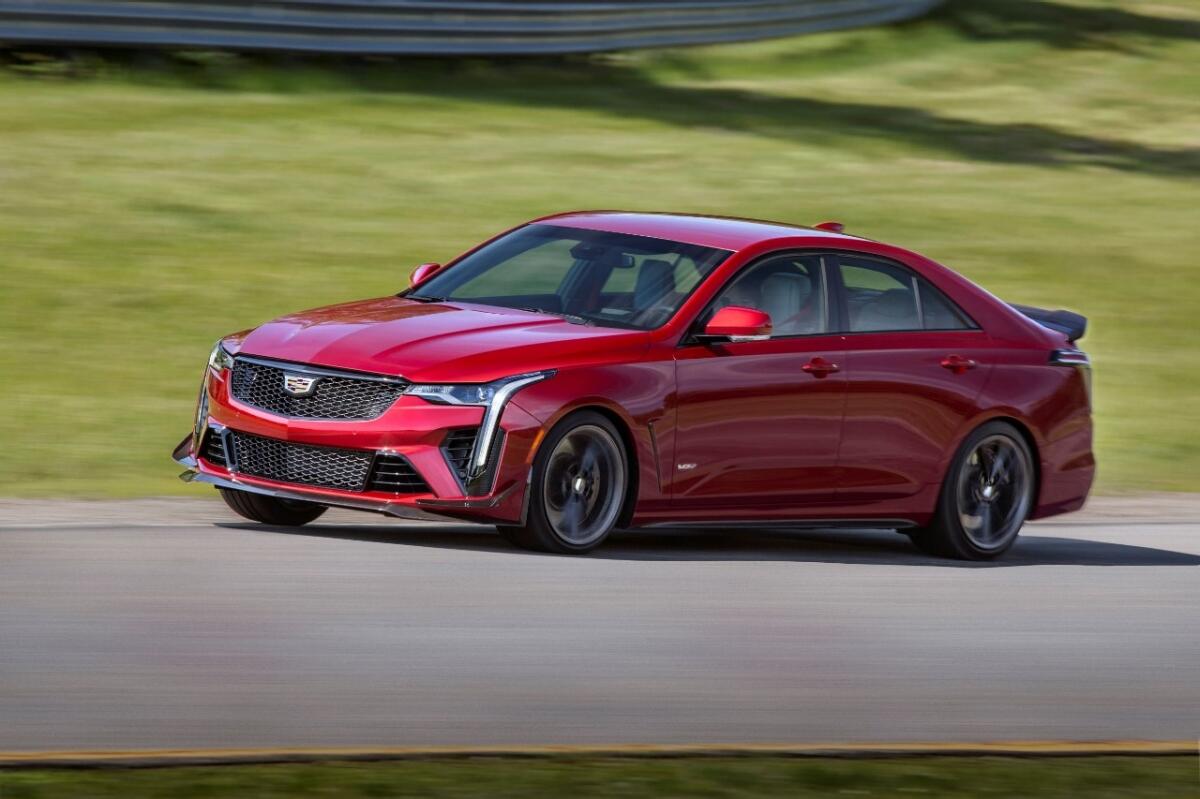
Cadillac CT4
"it was coming back from an older generation models, they brought the CT5, CT4, XT4, XT6, Escalade, and you know, [1705.8s] those new engineers, designers, they really focused on not only the quality, they already had it,"
The Cadillac CT4 is a smaller luxury sedan from Cadillac. The discussion is about how Cadillac refreshed its lineup with newer tech and a more modern feel.
The Cadillac CT4 is a compact luxury sedan positioned below the CT5. Here it’s grouped with other newer Cadillac models as part of a push to modernize the brand’s lineup with updated engineering, design, and software.

Cadillac Escalade
"it was coming back from an older generation models, they brought the CT5, CT4, XT4, XT6, Escalade, and you know, [1705.8s] those new engineers, designers, they really focused on not only the quality, they already had it,"
The Cadillac Escalade is Cadillac’s big, upscale SUV. The hosts are listing it as one of the models that represents Cadillac’s modernized lineup.
The Cadillac Escalade is Cadillac’s flagship full-size luxury SUV, known for its size, comfort, and high-end features. It’s mentioned here as part of the newer GM/Cadillac lineup that was updated with more modern technology and design.
technology into the 21st century standard
"but brought that people like me, a general folk who would use this vehicle every day, [1717.1s] to bring the technology into the 21st century standard, the software behind it, you know,"
They’re basically saying the newer cars have more modern tech than older ones. It’s about updated electronics and computer features.
This phrase is describing the shift to newer-generation vehicle tech—especially digital systems and software-driven features. It’s not a specific named automotive component, but it frames the episode’s point about modernization.
video MPI
"You've built the video MPIs and alignment checks on every vehicle... You have the video MPI, yes, that the capability is there, and the texts are doing it."
An MPI is a checklist-style inspection of multiple areas on the car. A “video MPI” means the shop records quick videos of what they’re checking so the customer can see the condition for themselves.
MPI stands for Multi-Point Inspection, and a video MPI is an inspection where the technician records short clips of key areas of the vehicle. The goal is to show customers what the inspection found (often with visual evidence) so they can understand recommendations more easily.
alignment checks
"You've built the video MPIs and alignment checks on every vehicle."
Alignment checks make sure the wheels are pointed the right way. If they’re off, the car can pull and tires can wear out faster.
Alignment checks are measurements of how the wheels are aimed relative to each other and the vehicle’s specifications. Shops use them to confirm whether the car’s suspension geometry is within tolerance, which affects tire wear and steering feel.
Hunter machine
"So when I notice, you know, we have a beautiful Hunter machine, right? They're the best in the world in my humble opinion, right? Okay, yeah."
Hunter makes the alignment tools shops use to measure how the wheels are set. The machine prints a report showing whether the alignment is in spec.
A Hunter machine refers to Hunter Engineering’s wheel alignment equipment used in service bays. It measures wheel angles precisely and produces reports technicians and customers can review.
report prints
"And you have the report prints, such a sleek system that it prints the report, and you can set it every single time it prints in color."
The alignment tool can print out a report of the measurements. Here, the speaker says it uses colors so customers can quickly see what’s good or needs attention.
“Report prints” refers to the alignment machine generating a physical or on-screen printout of the measured results. In this context, the speaker emphasizes that the report uses color cues to make the findings easy for customers to understand.
customer-facing inspection video
"If I send this to your family member, versus let's do the quick video now... it doesn't have to be a, you know, elaborate video... it just five, 10 seconds, 15 seconds tops."
It’s the strategy of showing customers what the shop found using a short video. The point is to make it easy to understand and not overwhelm people with a long, complicated presentation.
This is the idea of using short, customer-friendly videos to communicate inspection findings. The speaker argues for tailoring the length and detail to what the customer will actually watch and understand, rather than defaulting to an elaborate walkaround.
Dominion
"Who does your MPIs? Right now, we are with Dominion. We're in the process of switching it."
Dominion is the current system the speaker says they’re using for their video MPI program. They’re planning to switch away from it, which implies Dominion is part of their dealership workflow or inspection process tooling.
CDK
"Who are you going to switch to? CDK. Why? I love CDK."
CDK is software that dealerships use to manage parts of their operations. The speaker is saying they’re switching to CDK because of the reporting and how it fits their service process.
CDK is a dealership software platform used to run parts of the business like service workflows and reporting. In the segment, the speaker is discussing switching systems and how CDK’s reporting capabilities compare to another platform.
Techion
"The reporting capacity of CDK is, I think next to the top, like the Techion is there."
Techion is another software system dealerships can use. In this conversation, it’s brought up mainly as a comparison for reporting features.
Techion is another dealership software/reporting platform mentioned as a comparison point. The speaker claims Techion has a longer time to catch up to CDK specifically on reporting capabilities.
E-lead
"well through CDK? Do you have E-leads? No. So what we do is when the E-lead comes, we take a video and send it to customer directly either on a messaging."
An E-lead is a customer who reached out to the dealership online. The dealership then follows up to try to turn that message into a test drive or purchase.
An E-lead is an electronic sales lead—someone who contacted the dealership online (for example after filling out a form or requesting info). Dealership teams then try to convert that lead into a conversation, appointment, or sale using follow-up messaging and calls.
RCS messaging
"Now it's RCS messaging, so it doesn't kill the quality or refer to send it via WhatsApp in an HD."
RCS messaging is a newer type of texting that can handle richer content than basic SMS. Here, it’s being used so the customer gets a clear video instead of a lower-quality message.
RCS messaging (Rich Communication Services) is a modern messaging standard that can support richer media than traditional SMS. In a dealership context, it’s used to send higher-quality content (like videos) to leads without degrading the media quality.
"so it doesn't kill the quality or refer to send it via WhatsApp in an HD. Many people will not do that."
WhatsApp is a phone app for sending messages and videos. They’re mentioning it as another way to send the customer a high-quality video.
WhatsApp is a messaging app used to send messages and media over the internet. The speaker compares it to RCS messaging to emphasize preserving video quality when contacting leads.
utilization
"How did you get better utilization on that Hunter machine that you saw as being underutilized when you first started in the store?"
Utilization here means how much of the shop’s capacity is actually being used. If it’s underutilized, it’s like having empty time that could have been booked with service work.
Utilization in a dealership context usually means how effectively a resource (like a shop workflow, labor, or equipment) is being used to generate work. Low utilization indicates capacity isn’t being fully converted into service jobs.
service advisors
"in the service advisors, like, you know, in a plain polo and khaki, a pant, and they don't know who I am like customers wise, right?"
Service advisors are the people you talk to at a dealership’s service department. They figure out what’s going on with your car and set up the work with the technicians.
Service advisors are the customer-facing staff in a dealership’s service department who write up work orders, gather vehicle symptoms, and coordinate with technicians. They’re central to how well a dealership identifies issues and communicates them to customers.
service manager
"then I had a meeting with my service manager, my service advisors, and explain them, hey, this is what we do."
The service manager runs the dealership’s service department. They help make sure the advisors and technicians are working smoothly and that repairs get done right.
A service manager oversees the dealership’s service department operations, including staffing, workflow, and ensuring jobs are completed correctly and on time. They typically coordinate between advisors and technicians and help implement process improvements.
vehicle may be pulling left or right
"implement it when the customer comes in, ask them simple questions. We don't want to sell things that they don't need. But imagine you have customers here, and we didn't address it, or we didn't bring it to their attention that your vehicle may be pulling left or right."
If a car “pulls” left or right, it means it doesn’t go straight and tends to drift to one side. That can be caused by alignment or other issues, and it’s important to point out so it gets checked.
“Pulling left or right” is a drivability symptom where the car tracks to one side instead of going straight. It’s often associated with wheel alignment, tire wear, or suspension/brake issues, and it’s something service advisors can flag to prevent repeat visits.
RO Count
"automotive from franchise dealers of RO Count. And it's masked, Jay, by an increase in gross driven and fueled by inflation."
An “RO” is a repair order—basically the work ticket for a customer’s car. “RO Count” is just how many of those tickets the service department writes.
“RO Count” means the number of repair orders (ROs) written in the service department. It’s a core service KPI because it tracks how many customer repair jobs were booked, which should correlate with service revenue and technician utilization.
gross
"automotive from franchise dealers of RO Count. And it's masked, Jay, by an increase in gross driven and fueled by inflation."
Dealers track “gross” as the money they make from selling and servicing cars. If “gross” is being masked, it means the dealer’s profit isn’t showing the way it normally would.
In dealership fixed-ops discussions, “gross” usually refers to gross profit dollars from service work (labor and parts margin), not the car’s purchase price. When the host says gross is being masked by other forces, they mean the profit picture is being distorted even if activity is happening.
franchise dealer service departments
"Or what do you think is the source of this departure from franchise dealer service departments into independence, Jay?"
A franchise dealer is a dealership that’s officially tied to a specific automaker. Their service department is run under that franchise structure, which can differ from independent shops.
“Franchise dealer service departments” are dealership service operations tied to a specific automaker’s franchise agreement. The transcript contrasts them with “independence,” implying differences in process control, accountability, and how service data ties to revenue.
independence
"Or what do you think is the source of this departure from franchise dealer service departments into independence, Jay?"
“Independence” means the shop isn’t operating as a franchise tied to a specific automaker. It’s run more like an independent business, which can change how things are measured and managed.
“Independence” here means operating outside the automaker-franchise service model—typically independent service operations not bound by the same franchise processes and reporting expectations. The speaker frames it as a shift that affects accountability and the relationship between RO volume and revenue.
accountability
"It's a very tough question. And in all honesty, it comes down to the accountability, first and foremost, as a dealer owner on you."
“Accountability” here means making sure the right people are responsible for the results. If the information or process is bad, the outcomes will be bad too.
In the service-department context, “accountability” means assigning responsibility for inputs (data, processes) and outputs (ROs, revenue) to specific roles like the service manager and advisors. The speaker emphasizes that poor data quality or broken workflows lead to poor business outcomes.
data goes in, the data comes out
"What do you put in? The data goes in, the data comes out. I'm trying to be a little bit polished, but garbage goes in, garbage comes out."
The idea is simple: if you start with bad information, you’ll end up with bad results. In a dealership, that means the shop’s reporting and inspection data has to be correct.
This phrase is used as a process-control idea: if the inputs (data) are wrong or incomplete, the outputs (reports, decisions, performance metrics) will also be wrong. In service operations, it’s a reminder that inspection and reporting systems must be accurate to drive revenue.
vendor
"And then you hold the vendor accountable, but somewhere down the line, you have to look in the mirror too"
Here, “vendor” means an outside company that provides something the dealership uses—like software or a service. The point is that both the outside provider and the dealer have to do their part.
In this context, “vendor” refers to a third-party provider supplying tools or services that feed the dealership’s service data and reporting. The speaker suggests the vendor can be held accountable, but the dealer also must ensure internal processes and data quality are aligned.

Ford F-150 Lightning
"...let's do this. We're going to go through, do some lightning round questions. We'll start out with you, Ryan. ..."
The F-150 Lightning is a pickup truck that runs on electricity instead of gasoline. It’s built to do the same kind of everyday truck jobs, but with an electric motor. People talk about it because it shows what an electric truck can be like in daily use.
The Ford F-150 Lightning is an all-electric version of the popular F-150 pickup truck. It’s significant because it brings full-size truck capability into an electric powertrain, which is why it often comes up in discussions about EVs and real-world usability. It may be mentioned in a “lightning round” because it’s a well-known, mainstream EV truck buyers can actually compare against gas pickups.
easy money recalls
"The number one that I have seen in my own experience is leaving the money on the table, which is the easy money recalls. Everybody knows it's preloaded, yet we have,"
This means recall repairs that are already set up for the dealership. If you have a good system to find the customers and schedule the work, recalls can be a straightforward way to earn money.
“Easy money recalls” refers to recall work that’s already set up by the manufacturer—so the dealership can capture the labor and parts opportunity with less effort than starting from scratch. The key idea is that recalls are often preloaded into the dealer’s systems, making them a predictable revenue source if the process is tight.
process lack of process
"I'm going back to the process lack of process will, you know, that adds up 74, 80, 90, 100 grand that you can pick up. And by just inventing in something, you don't have to reinvent"
They’re saying that if the dealership doesn’t have a clear system for recalls, it’s easy to miss steps. That can mean customers don’t get contacted, parts aren’t ready, and the repair doesn’t get scheduled.
The speaker is contrasting “process” versus “lack of process” as a driver of lost recall revenue. In fixed operations, weak processes can cause missed calls, parts shortages, and scheduling delays—turning recall opportunities into lost profit.
recall kits
"So we want to make sure the parts are reliable because some of the remedies will send it, say, hey, you recall and customer calls and then we have no parts. So we want to make sure the kits are available."
A recall kit is the set of parts (and instructions) the car maker provides to fix that specific recall. If the kit isn’t available, the dealer can’t complete the repair even if the customer is ready.
Recall kits are the packaged parts and instructions a manufacturer provides for a specific recall remedy. Dealerships need these kits to be available so they can actually perform the repair once a customer is contacted.
AI driven tools
"Small manufacturers supported campaigns. There's some pretty cool AI driven tools out there as well. We've had a busy car is one of them on the show and,"
These are software tools that use AI to help the dealership do recall work faster. Instead of people manually figuring out what to schedule and who to contact, the tool helps automate parts of that process.
“AI driven tools” in fixed operations are software systems that use machine learning or automation to streamline tasks like identifying vehicles, matching the correct parts, and optimizing scheduling. The goal is to reduce manual work and improve recall throughput.
busy car
"There's some pretty cool AI driven tools out there as well. We've had a busy car is one of them on the show and, you know, uses some AI tech to identify the car, the part, the slot on the schedule,"
“Busy car” sounds like a software tool the dealership uses to help manage recall-related service work. It helps figure out what the car needs and where it should go on the schedule.
“Busy car” is referenced as a specific AI-enabled tool used in fixed operations to help identify the vehicle, match the correct part, and place the job into the service schedule. It’s being used as an example of how automation can improve recall execution.
texting rule
"and then uses texting and an exception on the texting rule made by the Supreme Court. Thank you, Supreme Court, to reach out to the customer and bring that customer in,"
The “texting rule” is about the laws that control when a business is allowed to text customers. For recall outreach, the dealership needs to follow those rules so the messages are allowed and compliant.
The “texting rule” refers to legal/consumer-protection requirements that govern when and how businesses can send text messages to customers. In dealership recall outreach, these rules can affect whether the tool can automatically message customers and what exceptions it can apply.
Request an Explanation
Heard something you'd like explained? We'll add it to this episode.
Sign in to request explanations for terms you heard.
Want to learn more?
Browse our glossary for plain-English explanations of automotive terms, jargon, and concepts.
Help improve this episode
See something that's not quite right? Our annotations are AI-generated and can sometimes miss the mark. Click the flag icon on any annotation to suggest a correction.