
Have we hit PEAK Re-imagination?
About this episode
Re-imagined cars, restomods, and continuation builds keep getting better—yet the hosts argue the trend isn’t peaking. They compare Evoluto’s 355 approach with Ford-licensed Boreham continuation cars, then get into replica engineering details like suspension pickup points, steering ratios, and drivetrain feel. Pricing and ownership come up often: laser-scanned replicas, warranty talk, and why investment-driven demand can discourage driving. The episode closes by debating whether “peak” nostalgia is real, or just another reboot cycle.
When will we run out of cars to re-imagine, restomod, or (dare we say), replicate? Is there a market for the 355 by Evoluto, or the Boreham Ford Escort Mk1? Some say yes. We get review both of these incredible cars and it brings us to larger questions: Are they better? Worth the money? What do you get? We drove both and get into it the good/bad and what they mean for "nostalgia builds" in general.
Patreon questions include:
Would BMW M buyers prefer an Alpina?
Track days: what does "advanced" mean?
Why does every hate my black ice air freshener?
Cars we forgot still exist
How to price a driving experience
Should I Lemons race my old Alfa?
The worst car we'd buy each other
And more!
Recorded May 11, 2026
SHOW NOTES
Fitbod
Join Fitbod today to get your personalized workout plan. Get 25% off your subscription or try the app FREE for seven days at https://fitbod.me/TIRE
Bluechew
Right now, when you buy two months of BlueChew Gold, you get the third for FREE with promo code TIRE. Visit https://BlueChew.com for more details and important safety information
DeleteMe
Get 20% off your DeleteMe plan when you go to https://joindeleteme.com/tire/ and use promo code TIRE at checkout.
Enter to WIN a 2025 Porsche 911 Turbo S!
Podcast Link: https://www.dreamgiveaway.com/tickets/porsche?promo=SMOKINGTIRE
Get 4X bonus tickets with any donation of $25 or more. With every donation you are helping benefit some wonderful veterans' and children's charities. Use Podcast Promo Code: SMOKINGTIRE
Promo Code Offer: Get 4X bonus tickets with any donation of $25 or more. With every donation you are helping benefit some wonderful veterans' and children's charities.
Want your question answered? To listen to the episode the day it's recorded? Want to watch the live stream, get ad-free podcasts, or exclusive podcasts? Join our Patreon: https://www.patreon.com/thesmokingtirepodcast
Use Off The Record! and ALWAYS fight your tickets! For a 10% discount on your first case go to https://www.offtherecord.com/TST
#cars #comedy #podcast
Instagram:
https://www.Instagram.com/thesmokingtire
https://www.Instagram.com/therealzackklapman
Click here for the most honest car reviews out there: https://www.youtube.com/thesmokingtire
Want your question answered? Want to watch the live stream, get ad-free podcasts, or exclusive podcasts? Join our Patreon: https://www.patreon.com/thesmokingtirepodcast
Use Off The Record! and ALWAYS fight your tickets! Enter code TST10 for a 10% discount on your first case on the Off The Record app, or go to http://www.offtherecord.com/TST.
Watch our car reviews: https://www.youtube.com/thesmokingtire
Tweet at us!
https://www.Twitter.com/thesmokingtire
https://www.Twitter.com/zackklapman
Instagram:
https://www.Instagram.com/thesmokingtire
https://www.Instagram.com/therealzackklapman

Volkswagen Bora
"...me and I have driven two very cool Resto mods the Bora motor works Alan man escort and Zach and I review..."
The Volkswagen Bora is a Volkswagen sedan model. In the podcast, they’re talking about a restored-and-updated (“resto modded”) one, which usually means it’s been refreshed and improved while keeping the original car. The point is that it can become a more modern-feeling daily driver.
The Volkswagen Bora is a compact-to-mid-size sedan that’s especially known in some markets and enthusiast circles for its driving potential. In the podcast context, it’s being discussed as a “cool resto mod,” meaning it’s been restored and updated with modern touches while keeping the original model’s identity. It comes up because these projects can make older cars feel more current and usable.

Ford Capri
"...tock 355 out Wasn't quite stock. It had a fucking Capri stow on it and frankly that gets you a lot of the..."
The Ford Capri is a sporty Ford model name that’s known from older cars. In the podcast, it’s mentioned as part of a specific car setup or modification. That means it’s being used as a reference point for a certain look or component.
The Ford Capri is a nameplate associated with classic European-style sporty coupes, and it’s often referenced in enthusiast circles for its design and driving character. In the podcast context, it’s mentioned as part of a “Capri stow” on a car, implying a specific build or modification detail. It’s brought up because it connects to recognizable styling and enthusiast history.
Boreham Motor Works
"Which is called the Boreham Motor Works [269.1s] And Boreham Motor Works is going to be doing a run of continuation series [274.5s] Ford's now [276.2s] Unlike the evoluto which starts with a you you provide a 355 and they do their their thing [283.0s] These Boreham cars are scratch-built cars."
Boreham Motor Works is the company being discussed as the builder of scratch-built, Ford-licensed continuation-style cars in the UK. In this segment, they’re described as producing both road-going and track versions, with licensing arrangements that let buyers purchase these cars rather than only viewing them as static displays.
continuation series
"And Boreham Motor Works is going to be doing a run of continuation series [274.5s] Ford's now"
A continuation series is when a company builds new cars that follow an older, classic design. It’s like making “new” versions of a car that originally came from an earlier era.
A continuation series is a limited run of newly built cars made to continue the production of an older model or concept, often using modern fabrication while keeping the original design intent. In this segment, Boreham Motor Works is planning a continuation run of Ford-related cars, meaning they’re not just restoring originals—they’re building new ones to that spec.
scratch-built cars
"These Boreham cars are scratch-built cars. So sort of like Ravology [288.7s] Okay, because we also had the go right in Ravology. They build the unibody or scratch built and under license [295.0s] So these these Boreham cars are actually licensed by Ford in"
Scratch-built means the car is built new, not restored from an old one. The company starts with the main structure and then builds the rest of the car around it.
Scratch-built cars are vehicles constructed from the ground up rather than being restored from an existing original. Here, the host compares Boreham’s approach to “Ravology,” describing how the company builds the unibody/shell and then assembles the licensed car so it can be sold as a complete, usable vehicle.
unibody
"They build the unibody or scratch built and under license [295.0s] So these these Boreham cars are actually licensed by Ford in"
A unibody is how most modern cars are built: the body and frame are basically one strong structure. That’s why it matters for how the car feels and handles stresses.
A unibody is a car body where the frame and body structure are integrated into one unit, so the shell itself provides most of the strength. The host mentions Boreham/Ravology building the unibody as part of the scratch-built process, which is important because it determines how the car is engineered and how it handles loads.
road-going version
"So this is going to be the road going version of [310.5s] No, I didn't realize that was a real. I thought it was a static, but that's gonna be a road going version [315.1s] This is the track version."
A road-going version is the version meant to be driven on regular roads. A track version is set up more for driving on a race circuit.
A road-going version is a variant of a car intended to be street legal and usable on public roads, as opposed to a track-only setup. In this segment, the host contrasts a road-going version with a track version, implying differences in how the car is configured for everyday driving versus circuit use.
exact replica
"This is designed to be an exact replica of this mark one escort that was a British [404.5s] It's not a red. They got so mad at me"
An “exact replica” is a build meant to closely copy a specific older race car. In this case, the host is saying the car was built to match a particular Mark I Escort as faithfully as possible.
An “exact replica” in motorsport usually means a build intended to match a specific historical race car’s look and key mechanical characteristics, not just a general styling homage. Here, the host says the scratch-built car is designed as an exact replica of a specific Mark I Escort, which is why details like dimensions and suspension inspiration matter.
touring car
"I kept calling it a rally car because us Americans only think of these as rally cars. This is a touring car. Yeah, so I can't I"
A touring car race uses cars that are based on regular road cars. The host is saying this car is the kind of race car you’d see in touring-car racing, not rally racing.
A touring car is a race category based on production cars, typically with regulations that keep the cars close to their road-going counterparts. The host contrasts this with “rally car,” emphasizing that the replica is meant to represent a touring car rather than a rally-focused setup.

Ford GT40
"Has it [430.7s] The front suspension [435.1s] Architecture is apparently copied from the Ford GT 40"
The Ford GT40 is a famous race car. Here, they’re saying the replica’s front suspension is based on the GT40’s race-car suspension design.
The Ford GT40 is a legendary mid-engine race car built to win endurance racing, especially at Le Mans. In this segment, the host says the replica’s front suspension architecture is copied from the Ford GT40, meaning the suspension layout/geometry is inspired by that proven race-car design.
Holman Moody
"It's not exactly the same dimensions as the standard escort [445.8s] It's like one of those Holman moody [448.0s] Like remember the Holman moody NASCAR back in the day"
Holman & Moody was a famous old-school racing team. The host is comparing the replica’s strategy—making it look right while still building it to meet racing realities.
Holman & Moody was a historic American racing team and engine builder known for building competitive cars and engines in mid-20th-century motorsport. The host references Holman Moody to compare the replica’s “looks right but is different enough” approach to how teams built cars to match rules and performance targets.
scale model accuracy (7/8 or 77/8)
"they built it to like seven eights or 77 eights scale [456.5s] We're like looked right, but it was like smaller"
They’re talking about building a car that’s slightly smaller than full size but still looks right. In racing, small size changes can affect how the car fits and performs.
The host describes a historical trick where a car was built at a slightly reduced scale (they mention “seven eights” / “77 eights”) to look correct while being smaller in key ways. In racing, this kind of dimensional adjustment can help with packaging, aerodynamics, or compliance with rules while still achieving the intended visual identity.
carbon bucket seats
"The only thing that's doesn't is not period correct is the carbon bucket seats, which I mean the period seats would be like you... But this is very funny because the only padding on this carbon bucket is the headrest itself"
These are race seats made from carbon fiber. They hold you in place really well, but they usually have less soft padding than normal seats, so they can feel harder and less protective in a crash.
Carbon bucket seats are race-style seats made from carbon fiber, shaped to hold you tightly during hard cornering. Because they’re mostly rigid with minimal padding, they can feel very unforgiving in normal driving and offer less impact cushioning than padded seats.
1600 pounds at the curb
"it's 1600 pounds at the curb okay, and has a 208 horsepower"
Curb weight is how much the car weighs when it’s ready to drive, without people or extra stuff. If it’s only around 1,600 pounds, it’s very light, so it can feel lively.
“Curb weight” is the car’s weight with standard equipment and fluids, but without passengers or cargo. At about 1,600 lb, the car is extremely light, which helps it feel quick and agile even with modest horsepower.
208 horsepower
"it's 1600 pounds at the curb okay, and has a 208 horsepower"
Horsepower is how much power the engine makes. Here it matters because the car is also very light, so it can feel fast even without huge numbers.
Horsepower is a measure of engine power output. In this context, the key point is the combination of 208 hp with very low weight, which strongly affects how fast the car feels rather than raw power alone.
8,500 rpm
"They've remade one that's as close as you can get... It revs to like 8,500 rpm."
RPM tells you how fast the engine is spinning. If it can rev to about 8,500 rpm, that usually means it’s built to run at high speeds like a track car.
RPM (revolutions per minute) is how fast the engine spins. Revving to around 8,500 rpm indicates a high-revving race-oriented engine that’s designed to make power at higher engine speeds.
four-speed
"It's four-speed. This one is right-hand drive... Great notchy four-speed the clutch is is grabby like a race cars"
A four-speed means the car has four forward gears. You’ll typically shift more often than in a modern car, but it can be set up to keep the engine in the right rev range.
A four-speed transmission has four forward gears, which is common in older race cars and some re-creations. Fewer gears can mean more frequent shifting, but it can also help keep the engine in its power band during spirited driving.
right-hand drive
"This one is right-hand drive. I think they're all right-hand drive as a matter of fact"
Right-hand drive means the steering wheel is on the right side. It’s common on some older cars and certain countries, and it can feel different from left-hand drive when you’re driving.
Right-hand drive (RHD) means the steering wheel is on the right side of the car. Many classic race cars and certain markets used RHD layouts, and it changes how you position yourself and how the car feels in traffic and on track.
grabby clutch
"the clutch is is grabby like a race cars"
A grabby clutch grabs quickly when you let it out. That can make the car jump forward more than a softer clutch, so it takes a bit more finesse at low speeds.
A “grabby” clutch engages abruptly, biting quickly when you release the pedal. That’s common in race-oriented setups because it helps the car respond sharply, but it can make low-speed driving and smooth starts more challenging.
manual brakes
"manual steering manual brakes"
Manual brakes mean the car doesn’t use power assistance to help you stop. You have to press harder on the pedal, but the braking feel can be more direct.
Manual brakes (no power assist) require the driver to generate braking force directly with the pedal. This typically increases pedal effort but can make braking feel more consistent and “connected,” especially in a performance or race context.
manual steering
"manual steering manual brakes"
Manual steering means there’s no power help from a motor. You feel the road more directly, but it takes more strength to turn the wheel, especially when parking.
Manual steering means the steering effort is provided by the driver rather than power assistance. On lightweight, older, or race-prepped cars, manual steering can provide very direct feedback but requires more physical effort, especially at low speeds.
Replica cars with modern engineering (re-imagination)
"So it's an interesting shift in the market where people seem to prefer it to drive maybe better or something... Ravology and all these other companies that are doing really really high quality work... going all right it's gonna look like the thing you love but it's not going to have any of the issues and it's gonna drive better"
The segment describes a market shift toward “re-imagined” replicas: cars that keep the original’s styling but are engineered to reduce the original’s age-related problems. The idea is to use modern understanding of things like suspension geometry and mounting locations so the replica can drive better while still looking like the classic.

Ford Mustang
"Well, I love the way the GTO looks or the Mustang looks but what I always hate about them is"
The Ford Mustang is a classic American muscle car. People love how it looks, but some want a version that drives more like a modern car instead of dealing with old-car problems.
The Ford Mustang is a long-running American muscle car line that’s become a major target for both restorations and replicas. In this segment, it’s used as an example of a car people love visually, but may want modernized to avoid vintage-car issues.
suspension pickup points
"it’s gonna use you know modern engineering and understanding of Suspension if we can move those pickup points a little bit or whatever"
Suspension pickup points are the spots on the car where the suspension parts bolt on. If you move them, you can change how the car’s wheels move and how it handles.
Suspension pickup points are the locations on the chassis where suspension arms/links attach. Changing these points can alter suspension geometry, which affects ride quality, steering feel, and how the car handles under load.

Shelby GT500
"Yeah, for sure. Yeah from scratch. Yes, but I'm talking about the you know with let's revology a great Museum grade turnkey GT 500 is look by what 250 Regular one is a real 67 probably sure and revologies 380, right?"
The Shelby GT500 is a very powerful version of the Ford Mustang. People talk about it because it’s a performance car with a strong reputation. In the podcast, they’re also discussing how a well-kept, ready-to-go example can be especially valuable.
The Shelby GT500 is a high-performance Mustang variant built by Shelby, known for strong power and a performance-focused identity. The podcast context mentions a “museum grade turnkey GT 500” and compares it to a “regular one,” which highlights how condition and provenance can dramatically affect value. It’s discussed because it’s one of the most sought-after muscle-car collectibles.
AM auctions
"Yeah, this is our am auctions. Oh, this is the actual car and what what was it? What was the hammer price?"
AM Auctions is the auction company where the car was sold. Auction results are often used to figure out what a collector car is really worth.
AM Auctions is an auction company referenced here as the venue for the car sale results. Auction houses like this are where collector-car pricing gets established through “hammer price” outcomes.
laser scanned
"They said they own the real car and they laser scanned it to they took it apart and laser scanned it to build this one so"
Laser scanning is like using a laser to map the car’s shape in great detail. It helps builders copy the original more accurately than eyeballing measurements.
Laser scanning is a digital reverse-engineering method where a real car is measured point-by-point with lasers to capture its exact geometry. In the collector/replica world, it’s used to build highly accurate replicas or “re-imagined” cars that match the original’s shapes and surfaces closely.

Audi Tt
"... just keep making it and maybe someone's doing an Audi TT Wow, I didn't know that no"
The Audi TT RS is a sporty, higher-performance version of the Audi TT. It’s designed to be quick and fun to drive in a smaller package. The podcast mentions it because people are interested in whether it’s still around or being made.
The Audi TT RS is a performance-focused version of the TT, built to deliver more power and sharper driving dynamics than the standard TT. In the podcast context, it’s mentioned as something that might still be “making it” or being produced, which points to how enthusiasts track availability and desirability. It’s discussed because it’s a compact, high-performance option that’s easier to live with than many larger sports cars.

Ford Escort
"They're doing a road car version of this escort, which will be very cool. It'll have a normal clutch"
The Ford Escort is a popular Ford model that also has a big racing history. They’re saying a new version would be made for normal driving, not just the track.
The Ford Escort is a long-running compact car line that became especially famous in motorsport, particularly rallying. The hosts are talking about a “road car version” of an Escort race car, contrasting it with the race-spec setup.

Ford RS 200
"and then the net the next car they're doing is a fucking RS 200"
The Ford RS 200 is a famous rally car from the 1980s. They’re saying their next “re-imagining” project will be based on that kind of hardcore, race-bred car.
The Ford RS 200 is a legendary 1980s rally homologation car built for high-performance competition. In this segment, the hosts say the next car project after the road Escort will be an RS 200, implying another extreme, motorsport-derived platform adapted for modern use.
rear-drive car
"It's also not going to have front drive [1798.6s] It's gonna be a rear-drive car"
Rear-drive means the back wheels get the power. It can make the car feel different when you accelerate, compared with cars where the front wheels do the work.
A rear-drive car sends engine power to the rear wheels. That changes traction and handling feel versus front-wheel drive, especially when accelerating out of corners.
all wheel drive
"So moving the safety of all wheel drive [1840.6s] Interesting. So why they're doing that"
All-wheel drive means power goes to more than just one set of wheels. It helps the car grip better on wet or slippery roads, but it can be more complicated than simpler drivetrains.
All-wheel drive (AWD) powers more than one axle—typically both front and rear wheels. It can improve traction in slippery conditions, but it also adds complexity and weight compared with two-wheel drive.
Group B
"I mean the rally car or excuse me. See I just did it again touring car was ink [1893.4s] Like I realized it's insanely expensive"
Group B was a rally racing class with extremely powerful cars. It’s famous for being wild and fast, and it also had safety problems that changed rally rules.
Group B was a high-profile rally racing category known for very powerful, lightweight cars and relatively permissive rules. It’s remembered for pushing technology and also for safety controversies that eventually led to the category being shut down.
track prepped
"Oh find someone that has a track prepped, you know Yeah, he sold it he's was pretty rad and he didn't get $470,000"
“Track prepped” means the car has been set up for driving on a race track. It’s usually adjusted so it can handle hard driving better than a stock street setup.
“Track prepped” means a car has been modified or set up for track driving rather than everyday street use. That can include changes to cooling, brakes, tires, suspension, and sometimes drivetrain feel so it performs consistently under hard use.
period-correct
"He's also wasn't period-correct engine. I think I think it was a turbo cause worth in it. Yeah Like but if you had someone they just had a normal kind of period-correct one and you drove that next to this one"
“Period-correct” means the car is set up the way it would have been back when it was new. People care that the big parts—especially the engine—match the original style for that time.
“Period-correct” means the car’s parts and configuration match what was originally offered or typical for that specific era. In practice, enthusiasts care whether the engine and other major components are the correct type for the car’s time period.
turbo
"He's also wasn't period-correct engine. I think I think it was a turbo cause worth in it. Yeah Like but if you had someone they just had a normal kind of period-correct one and you drove that next to this one"
A “turbo” is a device that helps the engine make more power by pushing extra air into it. More air usually means more power.
A “turbo” refers to a turbocharger, which uses exhaust gases to spin a turbine and force more air into the engine. That extra airflow can increase power compared with a naturally aspirated setup.
race car feel
"How much of the fizz do you get? You know, is it 80% or is it 92%? Yeah, cuz you know race car Feels like race car. Yeah, they get that shift linkage, right?"
“Race car feel” is how a car feels when it’s set up like a track car—how the shifter and clutch respond, and how direct everything feels. It’s more about the driving experience than just horsepower.
“Race car feel” is an enthusiast phrase for how a car’s controls and drivability mimic track-focused behavior. In this segment, they’re linking that feel to things like shift linkage and clutch behavior, not just raw speed.
shift linkage
"Feels like race car. Yeah, they get that shift linkage, right? And if everything else is period-correct, they might get very close this felt like fucking race car this thing"
Shift linkage is the mechanism that connects your gear lever to the transmission. If it’s set up for racing, it can feel more direct and accurate when you shift.
Shift linkage is the mechanical connection that transfers movement from the shifter to the transmission. Race-oriented linkage setups often feel more direct and precise, which can make the car feel more “race car” than a street-focused setup.
evaludo
"So this is that's all that's the same company that is is is running Is also evaludo. That's very cool. Yeah, and so, you know, they have they supposedly have a license to make 10 products"
“evaludo” sounds like the company behind the car/build they’re talking about. They also mention it has a license to make only a limited number of products.
“evaludo” is referenced as the company behind the car being discussed, specifically as the same company running the project. The hosts also mention it has a license to make a limited number of products, implying a small-run or licensed build program.

Ford Gt
"Ford Motorsport greats So hmm under Ford GT will be there or GT 40 would be like I'm they're ..."
The Ford GT is a very fast, expensive sports car made by Ford. It’s meant to connect to Ford’s racing history. People talk about it because it’s built for performance and has a strong motorsport background.
The Ford GT is a high-performance supercar built by Ford, closely tied to the brand’s racing heritage. The podcast context mentions Ford Motorsport and the GT/GT40 lineage, which is why it comes up—people often discuss how the modern GT connects to historic endurance racing. It’s a frequent subject when talking about engineering, design, and motorsport credibility.

Tesla Cybertruck
"...s like, whoa, did I did we do the Ed's all versus Cybertruck math on this show? Did I was did I bring out have..."
The Cybertruck is an electric pickup truck made by Tesla. It’s designed to look very different from normal trucks, and it runs on electricity instead of gasoline. People talk about it a lot because it’s a big, unusual new take on a pickup.
The Tesla Cybertruck is an all-electric pickup truck known for its unusual, angular stainless-steel body and futuristic design. It often comes up in discussions because it represents a bold shift in how pickups are styled and powered, and it’s a frequent topic when people compare real-world practicality versus hype. The “math” mentioned in the podcast context suggests they’re weighing cost, performance, or ownership tradeoffs.

Ferrari 355
"let's talk about the 355 by Evoluto everybody man, they really ran a press launch with this thing didn't they ... So this is a Resto modded Ferrari 355"
The Ferrari 355 is a famous 1990s Ferrari with a V8 engine in the middle of the car. Here, they’re talking about a modified “restomod” version of it—basically an older Ferrari updated to feel more modern.
The Ferrari 355 is a mid-engine V8 Ferrari from the 1990s, known for its high-revving character and classic 90s supercar styling. In this segment, the hosts are discussing a restomod version of a Ferrari 355 built by Evoluto, positioning it as a modernized take on the original.
Evoluto
"let's talk about the 355 by Evoluto everybody man, they really ran a press launch with this thing didn't they"
Evoluto is the company behind the restomod Ferrari 355 being discussed. The hosts are comparing them to other companies that do similar “modernized classic Porsche/Ferrari” builds.
Evoluto is the company mentioned as building a restomod Ferrari 355. In the context of the episode, they’re being compared to other restomod builders like Singer and Gunther Werks, with Evoluto positioned between their price tiers.
restomod
"So this is a Resto modded Ferrari 355 and sort of Unlike sort of Singer and Gunther works"
A restomod is a classic car that’s restored (kept true to the original) but modernized with updated engineering—often including suspension, brakes, electronics, and sometimes the powertrain. The point is to preserve the old-car look and feel while improving drivability and performance to contemporary standards.
Gunther works
"Unlike sort of Singer and Gunther works ... Gunther works. I don't know why I said it with a German accent. They're from fucking Newport Beach"
Gunther Werks is another company that builds high-end restomods—classic cars upgraded with modern performance. The episode uses it mainly as a comparison for pricing and approach.
Gunther Werks (spoken here as “Gunther works”) is a restomod brand associated with high-end, heavily reworked classic Porsches. The hosts use it as a comparison point for where Evoluto’s Ferrari 355 restomod pricing and positioning fall relative to other builders.
air-cooled
"imagine Porsche had continued development of not just air-cooled, but the 993 specifically until Today right"
Air-cooled means the engine is cooled using air flowing around it, not liquid coolant. For older Porsches, it’s a big part of why enthusiasts care about the classic feel.
Air-cooled refers to an engine cooling design that relies on airflow over the engine rather than liquid coolant. In the Porsche context, “air-cooled” is a major enthusiast identifier because it’s strongly associated with classic 911 character and engineering.
race car livery on a street car
"So it's it's race car shit in a in a veiled, you know thinly veiled sort of street car livery, right? That's what they're doing"
This is about styling: using the same kind of paint graphics you’d see on a race car, but putting them on a regular car you can drive on the street.
A “race car livery” is the visual paint scheme and graphics used on race cars, while “street car livery” is the same idea applied to a road-going model. The host is describing a marketing/identity approach: making a street car look like it belongs on track, even if it’s not a full race machine.
steering rack
"But I have driven for ours that have slow steering and so this thing the steering rack is amazing ... Yeah, you know the handling is great the turn in is really good"
The steering rack is the part that turns your steering wheel movement into the wheels actually turning. If it feels “amazing,” it usually means the steering is quick and accurate.
The steering rack is the core mechanism that converts the steering wheel’s rotation into left/right movement to steer the wheels. When the host says the steering rack is “amazing,” they’re praising how directly and precisely the car responds to steering inputs.
turn in
"Yeah, you know the handling is great the turn in is really good ... The suspension is not too stiff"
Turn-in is how the car feels right when you start turning into a corner. “Really good” usually means it feels responsive and doesn’t hesitate.
Turn-in describes how a car responds when you first start steering into a corner. The host saying “the turn in is really good” means the 355 changes direction promptly and predictably at the moment you commit to the turn.

Ferrari 360
"...car for 12 seconds And I was like I need to buy a Ferrari 360 like I'm shifting and going I should do the Vin a..."
The Ferrari 360 is a Ferrari supercar with the engine in the middle of the car. People talk about it because it’s fast and exciting, and it’s a well-known model in Ferrari’s lineup. In the podcast, it comes up as a car someone wants to own.
The Ferrari 360 is a mid-engine supercar from Ferrari that became a popular entry point into modern Ferrari ownership. The podcast context mentions wanting to “buy a Ferrari 360,” which highlights its appeal as a thrilling, usable-feeling supercar compared with some more extreme models. It’s also commonly discussed because it’s a well-known platform for both stock ownership and enthusiast modifications.

Subaru 360
"...ur 360 just to hear this sound when it works Well 360s do do work by and large pretty good, but yeah, yo..."
The Subaru 360 is a very small car made by Subaru. It’s known for being light and simple, and people enjoy it partly because of how it sounds and feels. The podcast is mentioning it as something that can run well and still be fun.
The Subaru 360 is a small, early Japanese kei car known for its compact size and distinctive character. The podcast context focuses on hearing how it sounds “when it works,” which points to the charm of these lightweight, simple cars. It’s discussed because older kei cars can be surprisingly enjoyable and are often appreciated for their quirks and community support.
re-imagine something and improve on something old
"You know if you want to reimagine something and improve on something old [2424.3s] Well, you can do it this well and charge a million dollars"
They’re describing a modern take on an older car idea. The goal is to keep what people love about the original, but update it so it drives and feels better.
The hosts are talking about a “re-imagination” approach: taking an older, proven car concept and modernizing it with new materials, engineering, and performance tuning. In enthusiast circles, this often means keeping the original vibe while making the car lighter, stiffer, and more capable than the stock version.
reinforce the chassis with strategically applied carbon fiber
"They strip a car down to nothing they reinforce the chassis with strategically applied carbon fiber [2467.8s] It's lighter by 200 pounds. It's 200 pounds"
Carbon fiber is a strong, lightweight material. Putting it in the right places on the car’s frame can make the car feel more solid and more responsive.
“Carbon fiber” is a lightweight composite material used to add stiffness and strength without adding much weight. When applied strategically to the chassis, it can improve structural rigidity, which helps the car respond more precisely to steering and braking inputs.
unsprung mass
"There's a lot of [2480.0s] unsprung mass that's taken out of it the the hubs or titanium"
Unsprung mass is the weight of parts that move with the wheels rather than the car body. Less of it usually means the tires can follow the road better over bumps.
Unsprung mass is the weight of components not supported by the suspension springs (commonly hubs/wheels and some related parts). Reducing unsprung mass helps the suspension react faster over bumps, improving grip and ride control—especially during aggressive driving.
track width
"The track width is wider. It's 77 millimeter wider in the back 66 millimeter in the front wider"
Track width is how wide the car sits from left wheel to right wheel. A wider stance can make the car feel more stable when turning.
Track width is the distance between the left and right wheels on the same axle. A wider track can improve stability and reduce body roll, and it can also affect how the car turns and how the tires load during cornering.
Brembo brakes
"Obviously the wheels are modern sizes with giant brakes Brembo [2502.8s] Brembo brakes. They're not carbon ceramic, but it doesn't need it."
Brembo is a company that makes high-performance brake parts. Their brakes are often used on cars meant to drive hard or on track because they can handle heat and repeated stops better.
Brembo is a performance brake brand known for making calipers and brake systems used in motorsport and high-performance cars. When someone says “Brembo brakes,” they’re usually pointing to stronger, more track-capable stopping hardware than typical OEM brakes.
carbon ceramic
"[2502.8s] Brembo brakes. They're not carbon ceramic, but it doesn't need it. They're motorsport grade brakes and the car is not heavy"
Carbon-ceramic brakes are a premium type of brake rotor made from ceramic material. They can stay consistent when brakes get very hot, but they cost a lot more than normal brakes.
Carbon-ceramic brakes use ceramic composite rotors instead of cast iron. They’re lighter and resist brake fade better under extreme heat, but they’re expensive and not always necessary if the car isn’t heavy or isn’t being pushed to track limits.
lock-to-lock ratio
"[2511.7s] The stock car has a 3.2 turns lock-to-lock ratio. This is 2.0 turns lock-to-lock [2518.5s] So when you talk about the steering mean change that"
Lock-to-lock ratio tells you how many steering-wheel turns it takes to go from turning all the way left to all the way right. Fewer turns usually makes the car steer quicker and feel more responsive.
The lock-to-lock ratio is how many turns the steering wheel makes from full left to full right. A lower number (like 2.0 turns) means quicker steering response, which helps the car feel more modern and easier to place precisely in corners.

Acura Nsx
"[2526.3s] Updated steering rack for my Acura NSX same problem [2530.3s] Fucking you shut your shuffle steering through corners instead of what we really have in modern steering systems"
The Acura NSX is a performance sports car known for its engineering-focused approach to handling and drivability. In this segment, the host references his Acura NSX to discuss steering feel and the need for a more direct steering setup.
single mass flywheel
"Different enough that I give a shit you hear the difference the change in sound is more the chattery [2571.4s] Fuck in single mass flywheel than it is anything in the engine"
The flywheel is part of the engine that helps smooth out power delivery to the transmission. A single-mass flywheel usually makes the car feel more immediate, but it can also make the drivetrain sound or feel a bit more “busy.”
A single-mass flywheel (often contrasted with a dual-mass flywheel) is a flywheel design that typically provides more direct engine-to-transmission connection. That can make the drivetrain feel sharper, but it may also increase perceived vibration or “chatter,” especially at idle or during clutch engagement.
clutch engages
"[2582.2s] But the response is very snappy. It revs up fast [2588.0s] It it's the clutch engages more much more firmly like a like a performance clutch"
The clutch is what lets the engine and transmission connect when you start moving. If the clutch engages more firmly, the car tends to respond faster when you release the pedal.
Clutch engagement is how firmly and quickly the clutch connects the engine to the transmission when you release the pedal. A “more firmly” engaging clutch usually feels more immediate and performance-oriented, while a “mushy” clutch can feel softer and more forgiving.
point a to point a
"This the the evaluto is more focused. It's like a point a to point a kind of car more so than it is a road trip type car"
They mean the car is set up to drive well on a specific route, not just to be comfortable for long trips. Think “spirited drive” more than “road trip couch.”
“Point A to point B” is being used here to describe a car that’s tuned for focused driving between destinations rather than relaxed cruising. In enthusiast terms, that usually means sharper steering/suspension behavior and less emphasis on comfort.
RWB
"What you would do if you were building a really good RWB if you're building a really good RWB [2658.3s] You have all your control arms lengthened. Yeah, you don't just do with wheel spacers and like offset, right, right?"
RWB is a Porsche customization style that makes the car wider and more aggressive. Here they’re saying the best builds don’t just use wheel spacers—they change the suspension geometry so the car still drives well.
RWB refers to Rauh-Welt Begriff, a Japanese Porsche customization shop known for widebody conversions. The host is comparing “good” versus “bad” RWB builds based on how the suspension arms are lengthened and how far the wheels are pushed out, which strongly affects ride quality and shock/suspension control.
control arms lengthened
"You have all your control arms lengthened. Yeah, you don't just do with wheel spacers and like offset, right, right? [2664.1s] That's how you do a bad RWB, right?"
Lengthening control arms changes suspension geometry, which can improve how the wheels move through bumps and cornering. In this context, it’s presented as the “right” way to fit wide wheels on an RWB-style build without ruining ride and handling.
offset
"You have all your control arms lengthened. Yeah, you don't just do with wheel spacers and like offset, right, right? [2664.1s] That's how you do a bad RWB, right?"
Offset is basically how “in” or “out” the wheel sits on the car. It affects clearance and can change how the steering feels, especially if you’re trying to fit wide wheels.
Wheel offset is how far the wheel’s mounting surface sits inboard or outboard relative to the wheel centerline. Changing offset affects tire clearance and scrub radius, and it can also worsen handling if used as a substitute for correct suspension geometry.
wheel spacers
"You have all your control arms lengthened. Yeah, you don't just do with wheel spacers and like offset, right, right? [2664.1s] That's how you do a bad RWB, right?"
Wheel spacers push the wheels farther out. They can change how the car looks and fits, but using only spacers (without proper suspension changes) can make the car drive worse.
Wheel spacers are adapters that move the wheel outward from the hub to change stance and clearance. The host criticizes using only spacers/offset for an RWB build because it can lead to poor suspension geometry and worse driving feel.
shock control
"It's it's pushed out, but it's pushed out from the control arm side [2686.8s] So you have much better shock control. Yeah, and it I mean it uses the same shocks as the T 50 does now"
Shock control is how well the suspension dampers keep the tires planted and control the car over bumps. Better geometry means the shocks can do their job instead of the car feeling unsettled.
“Shock control” refers to how well the suspension dampers manage wheel movement over bumps and during cornering. The host argues that pushing the wheels out from the control-arm side (rather than just spacers) helps the shocks work in a more controlled, predictable way.

Gordon T50
"It's it's pushed out, but it's pushed out from the control arm side So you have much better shock control. Yeah, and it I mean it uses the same shocks as the T 50 does now Same company R 53. Yeah, granted the parts don't you know make the car"
The T.50 is a high-performance supercar made by Gordon Murray Automotive. The podcast is talking about how its suspension and shocks are designed to control the ride and handling. That’s part of why people find it interesting: it’s built to feel very precise when you drive it.
The Gordon Murray Automotive T.50 is a modern supercar engineered by Gordon Murray, built around lightweight design and driver-focused dynamics. The podcast context discusses suspension/shock control and notes it uses the same shocks as the T.50, emphasizing how the car’s setup is part of its performance character. It’s discussed because it’s a technically distinctive, purpose-built machine rather than a traditional “big engine” supercar.
seven-tenths car
"I don't think will ever be more than like a seven-tenths car [2718.9s] Like it just can't be because the brakes are kind of mushy and the steering ratio is slow"
They’re using “seven-tenths” like a scale for how fast or capable the car feels compared to a top benchmark. In this case, they think the stock version is noticeably less sharp than the fully optimized one.
“Seven-tenths” is shorthand for a performance gap: a “7/10ths” car is expected to be about 70% of the way to the pace of a top-tier benchmark in the same driving conditions. Here it’s used to estimate that the stock car can’t match the more extreme setup because of softer brakes, slower steering, and other compromises.
steering ratio
"Like it just can't be because the brakes are kind of mushy and the steering ratio is slow [2725.6s] And the engine revs up a little slower"
Steering ratio is how sensitive the steering is. If it’s “slow,” you have to turn the wheel more to make the car turn the same amount, so it feels less responsive.
Steering ratio is how much the steering wheel turns to produce a given amount of wheel angle. A “slow” steering ratio means more steering-wheel input for the same turn, which can make the car feel less immediate and less agile.
engine revs up a little slower
"And the engine revs up a little slower [2725.6s] And the and the clutch is a little mushier"
They mean the engine doesn’t spin up as quickly when you press the gas. That can make the car feel less punchy when you want it to accelerate out of a turn.
“Revs up” refers to how quickly the engine’s RPM rises when you apply throttle. Slower RPM response can make a car feel less eager, affecting how quickly it responds during corner exits and downshifts.
clutch is a little mushier
"And the and the clutch is a little mushier [2729.4s] And the tires are a little squishier"
A “mushy” clutch feels soft or vague instead of sharp. It can make it harder to know exactly when the car is starting to move when you release the pedal.
A “mushy” clutch feel means the pedal engagement is less crisp, often with more travel or less immediate bite. That can reduce driver feedback and make it harder to time throttle and clutch inputs precisely.
tires are a little squishier
"And the tires are a little squishier [2732.4s] And all of that it's a little heavier"
They mean the tires feel softer and more flexible. That can make the steering feel less precise, even if it rides more smoothly.
“Squishier” tires describe a softer, more compliant sidewall feel, often from tire construction and/or lower effective stiffness. Softer tires can trade off steering precision and immediate grip for comfort and compliance.
re-engineered
"That's what you want when the car is a super car brand that has them been re-engineered. Yeah with modern knowledge"
“Re-engineered” means the car was reworked with newer engineering instead of being built exactly the old way. The idea is that modern updates should make it drive and behave better.
“Re-engineered” means the car has been redesigned and reworked using newer engineering knowledge rather than simply copying the original. In the context of re-imagined supercars, it’s often used to improve drivability, reliability, and integration of modern systems.
rear diffuser
"I don't like the rear grille [2814.2s] I like the rear diffuser"
A rear diffuser is a part under the back of the car that helps air flow more smoothly. That can make the car feel more stable, especially when you’re going fast.
A rear diffuser is an aerodynamic panel under the back of the car that helps manage airflow. By shaping how air expands and exits underneath, it can improve stability and downforce at speed.
fenders
"part of one of the prices for the wider track is that the fenders are a little bit flared on the new one"
Fenders are the panels around the wheel area. If the car is made wider, the fenders may be flared so the tires fit and look right.
Fenders are the body panels over the wheel openings. When a car gets a wider track, fenders are often flared to cover wider tires and to maintain proper coverage and aerodynamics.
magnesium ones
"The ones these gold ones that were on the car for for everybody to drive it are the magnesium ones. So they're the lightest I"
Magnesium wheels are wheels made from a very light metal. Being lighter can help the car feel more responsive, especially when you hit bumps or change direction.
Magnesium wheels are made from magnesium alloy, which is very light compared with steel or most aluminum alloys. That lower unsprung weight can improve ride/handling response, and magnesium is also popular in motorsport-style wheel designs.
coffin-shaped wheel spoke
"Coffin-shaped wheel spoke works well on a curvy Ferrari I think a coffin-shaped wheel spoke works well on a BMW R8 on an R on a Lambo angular Yeah, that's a coffin-shaped wheel spoke is a real Lamborghini Gallardo type wheel"
They’re talking about the shape of the wheel’s spokes. Instead of being simple, these spokes have a boxy, tapering look, and it can make the wheel look right—or wrong—on certain car designs.
A “coffin-shaped” wheel spoke is a stylized spoke profile where the spoke has a boxy, tapering shape rather than a simple round or flat blade. The hosts are discussing how that specific spoke geometry changes the visual character of different cars.

Audi R8
"...k a coffin-shaped wheel spoke works well on a BMW R8 on an R on a Lambo angular Yeah, that's a coffin-..."
The Audi R8 is a supercar made by Audi. It has a powerful layout and is designed to drive like a sports car, not just look like one. The podcast mentions it while talking about design details like wheels and styling.
The Audi R8 is a mid-engine supercar known for its performance and distinctive styling. In the podcast context, it’s being compared in terms of wheel/shape design (“coffin-shaped wheel spoke works well…”), which suggests they’re discussing design details and how different brands execute similar visual themes. It’s a frequent topic because it blends everyday usability with supercar-level driving dynamics.

Lamborghini Gallardo
"Yeah, that's a coffin-shaped wheel spoke is a real Lamborghini Gallardo type wheel It's not a Ferrari type wheel and I told them this and I said look"
The Lamborghini Gallardo is a well-known Lamborghini supercar. They’re saying that particular wheel spoke style is something you’d associate with the Gallardo’s look.
The Lamborghini Gallardo is a V10-era Lamborghini that became known for its sharp, angular styling and supercar presence. The hosts specifically tie the “coffin-shaped” wheel spoke look to the Gallardo’s wheel design language.

Ferrari F40
"Something that's like an updated Ferrari F40 wheel because that's really what everybody just kind of wants totally just the closest you get F40 like the better that's just a 550 wheel looks great rule of Ferrari"
The Ferrari F40 is a famous old-school supercar from Ferrari. Here it’s being used as the style benchmark—people want the new wheel design to feel closest to the F40 look.
The Ferrari F40 is a mid-1980s supercar known for its raw, race-inspired design and aggressive styling. In this segment, the hosts use it as a reference point for what many people want a modern “re-imagined” wheel design to resemble.
high back
"The seats are like real high back like they're the kind of seats you'd find in a modern Ferrari And they go really close to the roof of the car."
“High-back” seats have taller seatbacks that extend higher up around the upper torso and head area. In this segment, the hosts use that seat shape to argue the re-imagined interior is trying to feel like a modern Ferrari cockpit rather than matching the original era.
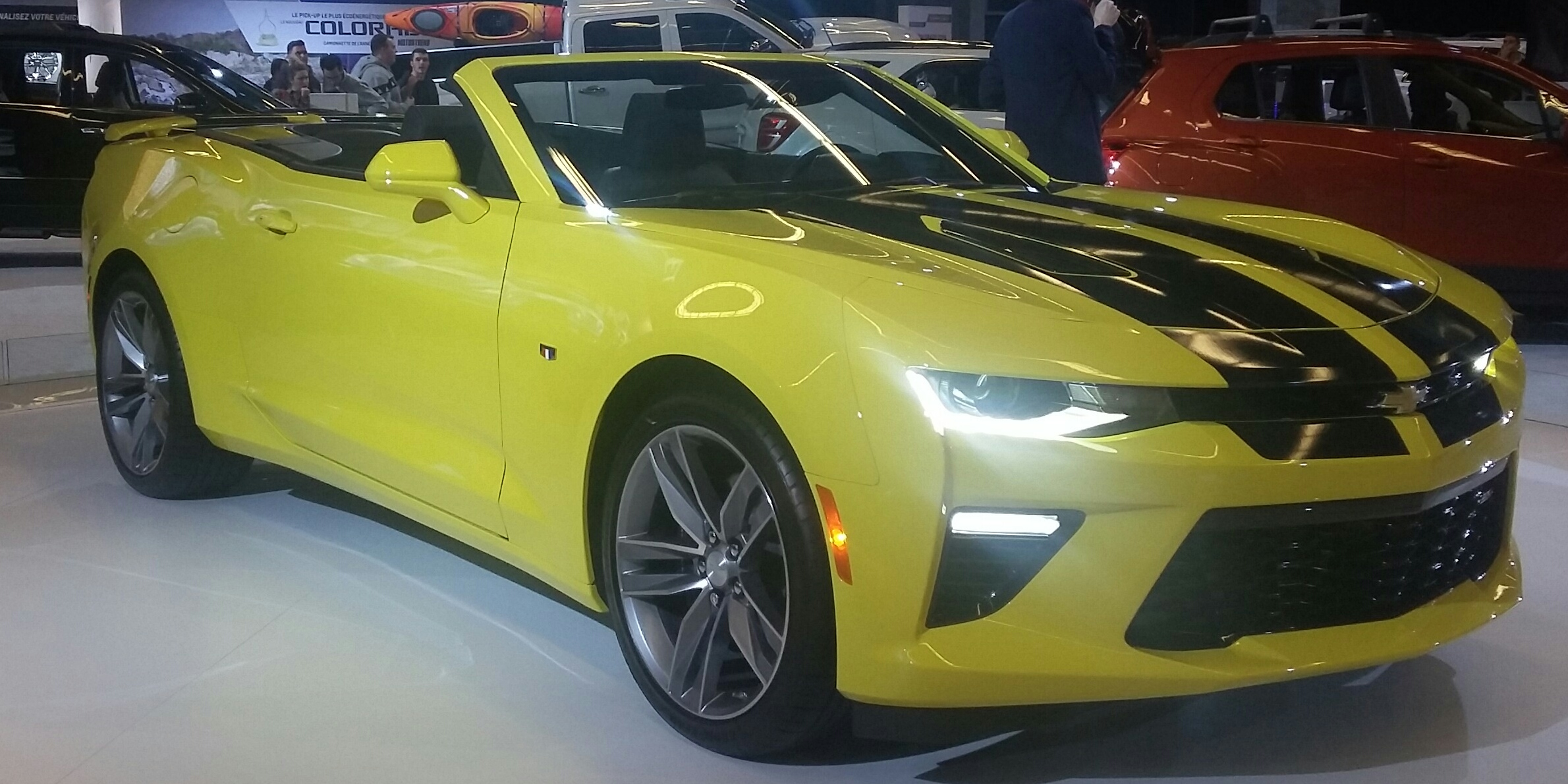
Chevrolet Camaro
"...to me It looks like if the ring brothers did a 69 Camaro. This is the steering wheel. They would put in it..."
The Camaro is a sports car made by Chevrolet. Some versions, especially older ones from the late 1960s, are famous for their classic look. People bring it up because it’s a well-known performance car that many enthusiasts love.
The Chevrolet Camaro is a classic American sports coupe that’s been produced in many generations, with the late-1960s “first-gen” style being especially iconic. In the podcast context, it’s being compared to a “69 Camaro” look, which highlights how design cues and steering-wheel/inside details can evoke that era. It’s discussed because it’s a recognizable performance car with a huge enthusiast following.
carbon rim
"it was this like Angled flattened carbon rim on the inside and your thumb landed there and you went oh"
A carbon rim means the part of the steering wheel you hold is made from carbon fiber. It’s often used because it can be strong and light, and it lets designers shape the wheel more precisely.
A carbon rim refers to the steering-wheel rim (the part you grip) being made from carbon fiber. Carbon fiber is used because it can be very stiff and light, allowing designers to shape the wheel for feel and ergonomics.
Singer Evoluto
"And if you look at a gunter vox, it also looks it looks like Porsche could have made this wheel. I Don't think Ferrari Would have ever made the wheel that's in the evoluto and I think"
Singer Evoluto is a highly customized Porsche-based car. They’re talking about the steering wheel, saying its shape and materials make it feel better and more “right” for the driver’s hand position.
Singer Evoluto is a restomod-style Porsche-based project known for modernized materials and careful interior ergonomics. Here, the hosts focus on its steering wheel design—especially the carbon inner section and the three-spoke layout—arguing it feels like it was engineered for how your thumb naturally rests.
airbag wheel
"Because the 355 airbag wheel sucks. It's a big. Yeah, you know big fat first-gen airbags, but the non-airbag wheel"
Some steering wheels have the safety airbag built into the wheel itself. That can make the wheel look and feel different because the airbag takes up room inside.
An airbag wheel is a steering wheel design that integrates the driver’s frontal airbag into the wheel hub. Because the airbag module takes up space, some designs end up looking bulkier or changing the steering-wheel shape compared with earlier non-airbag wheels.
three spokes
"Perfect three spokes. That's and I think that's what left out to me is you know on the evoluto one"
“Three spokes” just means the steering wheel has three main arms coming out from the center. It’s a common way to describe steering wheel design and styling differences.
“Three spokes” describes a steering wheel layout where the wheel has three structural arms radiating from the center. The hosts are using this as a design cue while comparing different wheel styles (including brushed aluminum accents and spoke shapes) across cars.
low-mile
"This example this if you to replicate Adam's car [3438.7s] Low-mile great service great condition, you know, it's not cheap might be looking at 250"
“Low-mile” just means the car hasn’t been driven much. People often like that because it can mean less wear and tear.
“Low-mile” means the car has relatively few miles on the odometer compared with typical examples. Enthusiasts often pay a premium for low-mile cars because less wear can translate to better condition and easier long-term ownership decisions.
resale red
"I mean there is no better color than red resale red give me a non-red Ferrari, please [3455.1s] But but that's fine, you know, might be a little more"
“Resale red” is shorthand for a paint color that tends to hold value better in the used market. The host is arguing that red is easier to sell (or commands higher demand) than non-red colors for this Ferrari.
maintenance
"Fuck that was how long ago those eight years that would have been 20 [3477.7s] Eight 18 maybe no, I was gonna say imagine how much you spent on maintenance, but you spent a lot on maintenance"
“Maintenance” means the regular work and repairs needed to keep a car healthy. For expensive sports cars, those costs can add up quickly.
In enthusiast car talk, “maintenance” refers to the ongoing service costs needed to keep a car reliable and in good running condition. The host is highlighting that over years of ownership, maintenance expenses can be substantial—especially for expensive, performance-oriented cars.
investment grade
"wanting to maintain the investment grade... keep control the control they wanted to control the secondary market"
They’re describing the car like it’s supposed to keep its value. The idea is that you might get more money back later instead of the car losing value quickly.
“Investment grade” here means the car is positioned as something that should hold value like an investment, not just a depreciating toy. The hosts connect this to controlling resale channels and encouraging low-mileage ownership to support higher prices.
gray market
"Okay, but they also were talking about wanting to maintain the investment grade... keep control the control they wanted to control the secondary market the gray market of these cars"
A gray market is basically “not the official way,” but still real sales. The manufacturer can’t fully control it, so it can affect what the car costs later.
A gray market is when cars or parts are sold through unofficial or unauthorized channels, often bypassing the manufacturer’s intended distribution. In this context, the hosts are talking about controlling how these high-end cars trade after purchase so prices don’t collapse.
secondary market
"keep control the control they wanted to control the secondary market the gray market of these cars"
The secondary market is the market for cars after they’ve already been sold new. It’s what determines what your car might be worth later.
The secondary market is where used cars (or parts) are bought and sold after the original sale. For limited, expensive cars, the secondary market price is a big part of whether owners feel like they’re “investing” rather than just spending.
replicas vs originals
"Just think it was you know to talk we circle back with the replicas being costing more than the originals this thing costing Probably four times what it would cost to get you a great original."
They’re comparing replica cars to the real original ones. The surprising part is that the replica can cost more, depending on how it’s made and marketed.
The hosts discuss replicas—cars built to resemble a classic—being priced higher than the original cars. In enthusiast circles, this can happen when the replica is positioned as a premium, limited, or “investment” product rather than a budget alternative.
limited production number
"They have a production number for the evaluto. I forget 55 coupes."
Limited production means only a certain number of these cars exist. Fewer cars usually makes them more collectible and can help resale prices.
A limited production number means only a fixed count of cars are made, which can affect scarcity and resale pricing. The hosts mention a production figure for the Evuluto (as transcribed), using it to frame how “collectible” the car is.
capitalism intersects with car enthusiasm
"So it like whenever we find that capitalism intersects with car enthusiasm... Capitalism almost always wins at this at this price point and that sort of sucks"
They’re saying that when a car is treated like an investment, people may avoid driving it so it stays valuable. That can clash with the normal enthusiast mindset of actually using the car.
This is the hosts’ idea that when high-end cars are treated like financial products, the market incentives (resale value, scarcity, controlled distribution) can override pure driving/enthusiast culture. They argue that at this price point, the “investment” framing can discourage owners from using the car.
20,000 mile warranty
"And they're doing like a 20,000 mile warranty, but they're also they're also trying to say it'll be worth more on the other end"
This is a warranty that lasts for a certain number of miles. If you drive less than that, you stay covered.
A mileage-based warranty sets coverage based on how many miles the car has been driven, rather than a time period alone. For enthusiasts, this matters because it ties directly into how owners might manage usage to protect resale value.
recreation perfectly
"super successful like they're they're the example of what can happen if you do [3790.2s] The recreation perfectly and the market comes to you and it was there"
They mean making a classic car “right,” not just copying the styling. The idea is to keep the original vibe while updating the engineering so it actually works well.
In this context, “recreation perfectly” refers to rebuilding a classic car’s look and feel with modern engineering while staying faithful to the original. The hosts argue that this balance—faithful recreation plus real development—helps a re-imagination brand succeed with buyers.
NVH
"it really it really does it's it's it's dynamically quite excellent and like other than having less [3847.5s] NVH or I should say worse NVH than the stock car"
NVH is a car’s “feel” in terms of noise and shaking. The host is saying this car is a bit rougher/noisier than the original stock version, even though it drives very well.
NVH stands for Noise, Vibration, and Harshness—how much sound, vibration, and roughness the car transmits to occupants. The host says the car has worse NVH than the stock car, but still feels dynamically excellent for road trips.
V12 engine
"It's older and it's a more complicated engine. Yeah, it's V12 engine So you think of these 50% more cylinders, right? You need 50% more of almost everything."
A V12 engine is an engine with 12 cylinders. More cylinders usually means more components overall, so it can be more complicated and expensive to keep running.
A V12 engine is an engine with 12 cylinders arranged in two banks (usually at a V-shaped angle). In this segment, the hosts use the V12’s cylinder count to explain why it can mean more complexity and more “stuff” to maintain compared with a smaller-cylinder engine.
Request an Explanation
Heard something you'd like explained? We'll add it to this episode.
Sign in to request explanations for terms you heard.
Want to learn more?
Browse our glossary for plain-English explanations of automotive terms, jargon, and concepts.
Help improve this episode
See something that's not quite right? Our annotations are AI-generated and can sometimes miss the mark. Click the flag icon on any annotation to suggest a correction.