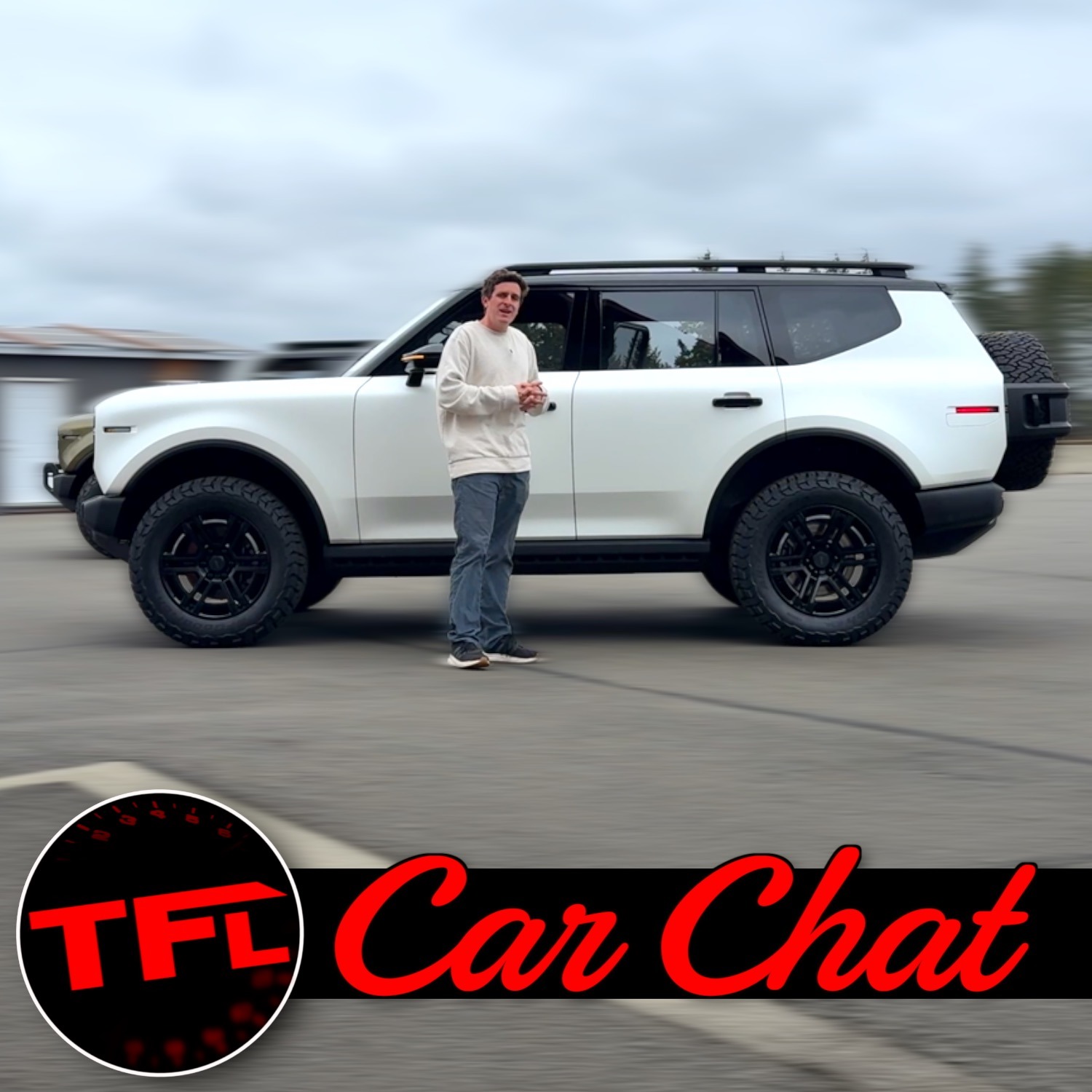
Here's The Latest And Greatest News About The New Scout Range Extender! | Ep. 337
About this episode
Scout’s range-extender plan takes center stage: two models (Traveler and Terra) with a full-electric target of 350 miles and a range-extended option of 500 miles. The hosts explain the “true range extender” setup—an engine that isn’t connected to the wheels and exists to charge the battery—plus the expected 150-mile all-electric portion. They also cover timing (production in 2027, deliveries in 2028), prototype test beds, and how reservations skew toward the SUV and range extender.
( https://www.alltfl.com/ ) Check out our new spot to find ALL our content, from news to videos and our podcasts! In this episode, the team is back from opposite ends of the world with a massive update on the future of Scout Motors and a grueling head-to-head comparison of today's most popular crossovers. Tommy just returned from Seattle, where he got the inside scoop on the new Scout Traveler SUV and Terra pickup, including the truth about production timelines and the controversial "Harvester" range-extended powertrain. Meanwhile, Roman shares his first impressions of the all-new, all-electric Volvo EX60 and the high-performance Nissan Z Nismo.
We also put the industry's most popular compact crossovers through a brutal, mid-hill stop test to see whose AWD system actually works. The results were shocking: while the Toyota RAV4 Woodland and its E-AWD system left Tommy stranded, the Volkswagen Tiguan—on standard street tires—managed to crawl up the incline with ease. We also discuss the unique driving dynamics of the Lucid Gravity, the rowdy farewell of the Jeep Wrangler 392, and the national security concerns surrounding connected car cameras.
( http://www.patreon.com/tflcar ) Visit our Patreon page to support the TFL team!
Advertising Inquiries: https://redcircle.com/brands
Privacy & Opt-Out: https://redcircle.com/privacy
electric
"Barcelona where I did the new EX60, the electric, let's call it kind of Model Y sort of kind of competitor,"
Here, “electric” means the car runs on electricity from a battery, not gasoline. The hosts are using it to talk about an EV model and how it compares to other EVs.
In this context, “electric” refers to a battery-electric vehicle (BEV) that propels itself using electric motors powered by a high-voltage battery. The episode uses it to describe the new EX60 and to compare it against other EVs.

EX60
"Barcelona where I did the new EX60, the electric, let's call it kind of Model Y sort of kind of competitor,"
The EX60 is a new electric car the host drove. They compare it to the Tesla Model Y, meaning it’s aimed at a similar kind of buyer and vehicle size.
The EX60 is referenced as a new electric vehicle the host drove in Barcelona. The episode compares it to the Tesla Model Y, framing it as a similar-sized EV competitor.
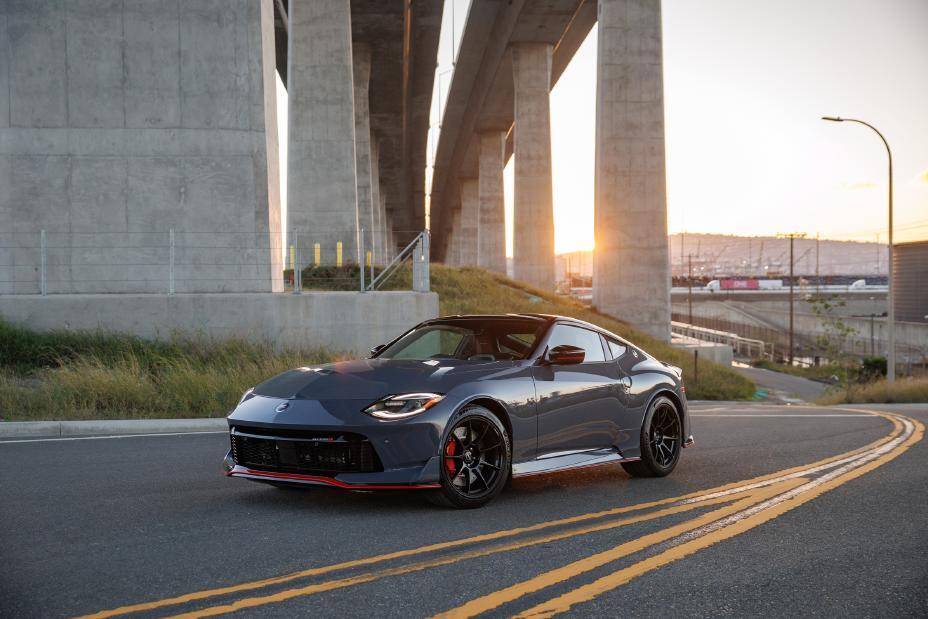
Nissan Z
"plus you got to drive the Nismo Z, plus you got to drive a whole boatload of other cars,"
The Nissan Z is a sports car that enthusiasts recognize. The hosts mention the “Nismo Z,” which is a more performance-focused version of the Z.
The Nissan Z is a sports-car nameplate known for a driver-focused layout and a strong enthusiast following. In this episode, it’s specifically mentioned as “the Nismo Z,” indicating a performance-oriented NISMO variant being driven alongside other cars.
Mudfest
"Yeah, so I was at an event called Mudfest, which is put on by the Northwest Automotive Press Association, and it's a really cool event, basically a bunch of manufacturers bring out a whole ton of SUVs for us to drive,"
Mudfest is an event where people drive lots of SUVs on and off-road. In this episode, it’s where the host checked out Scout’s new vehicles.
Mudfest is described as an off-road driving event where manufacturers bring SUVs for journalists to evaluate on- and off-road. It’s the setting for the Scout announcements and comparisons in this episode.

Traveler Suv
"...er two products for us to check out, so their new Traveler SUV and Terra truck, and I had a chance to sit down w..."
In the podcast, “Traveler” refers to a company that makes a new SUV and a truck. The host says they had a chance to sit down with the vehicles to learn more. It’s being discussed because it’s new and worth checking out.
The podcast mentions “Traveler” as a brand with two products to check out: a new Traveler SUV and a Traveler truck. This kind of mention typically signals an introduction or early impressions of a company’s lineup and what it’s aiming to offer. It’s discussed because new entrants and new models can shift expectations in the vehicle market.
Scout Traveler
"Now let's start with just the basics, there are two models right there, the Traveler and the Terra."
The Scout Traveler is an upcoming Scout SUV. The hosts say it will come with different battery/energy setups, including an all-electric version and a longer-range option.
The Scout Traveler is one of Scout’s two upcoming SUV models. In this episode, it’s discussed as having multiple powertrain options, including a full-electric setup and a range-extended variant.

Scout Terra
"Now let's start with just the basics, there are two models right there, the Traveler and the Terra."
The Scout Terra is Scout’s second upcoming model, positioned as a truck alongside the Traveler SUV. The episode frames it as part of Scout’s broader lineup strategy, including different powertrains and range targets.
range extended option
"Yes, that's right, and there's two powertrains, so there's going to be a full electric with 350 miles of range, and then there's going to be a range extended option with 500 miles of range"
A range-extended option is a way to go farther than a standard all-electric car. Instead of relying only on the battery, it adds another way to keep energy available for longer trips.
A range-extended option is a powertrain strategy that’s meant to increase driving distance beyond what a pure battery-electric setup can do. Typically, it uses an additional energy source (often a generator) to help keep the vehicle moving longer between charging.
range extender
"So they did confirm to me that the range extenders going to be a four-cylinder gasoline engine mounted in the rear of the vehicle for packaging reasons... Now this is going to be a true range extender, there's no connection between the gas engine and the wheels at all, its sole purpose is to charge the battery to keep you cruising down the road"
A range extender is like a backup generator for an electric vehicle. It helps recharge the battery so you can keep going longer without plugging in every time.
A range extender is a system where a secondary power source (often a small engine) generates electricity to recharge the battery. In this setup, the engine doesn’t directly drive the wheels; it runs mainly to keep the battery charged so the vehicle can continue operating in an electric mode.
four-cylinder gasoline engine
"So they did confirm to me that the range extenders going to be a four-cylinder gasoline engine mounted in the rear of the vehicle for packaging reasons"
That means the backup engine has four cylinders and burns regular gasoline. In this design, it’s mainly there to help recharge the battery, not to directly push the vehicle.
A four-cylinder gasoline engine uses four cylinders to burn gasoline and produce mechanical power. In a range-extender layout, that engine’s job is typically to run a generator to recharge the battery rather than to propel the car directly.
extended range
"the gas engine will kick on to start charging it back up so you can get another 350 miles of extended range with the gas engine running."
Extended range is the extra distance you get after the battery runs low. The gas engine helps recharge the battery so you can keep driving longer.
Extended range is the additional distance you can cover after the battery’s all-electric portion is used up, enabled by the range extender charging the battery. It’s essentially the “gas-assisted” part of the total range figure.
no connection between the gas engine and the wheels
"Now this is going to be a true range extender, there's no connection between the gas engine and the wheels at all, its sole purpose is to charge the battery to keep you cruising down the road"
It means the gasoline engine isn’t mechanically linked to the wheels. The wheels still get power electrically, and the engine just helps keep the battery charged.
This describes an electric-drive architecture where the wheels are powered only by electric motors. The gasoline engine is decoupled from wheel drive and instead charges the battery, which is why the vehicle can keep “cruising” electrically even though it has a combustion engine onboard.
bench seat
"I noticed that you did a short where you highlighted that there's going to be a bench seat... In the little showcase it had for us, the SUV had the captain's chairs, the truck had the bench seat"
A bench seat is a single, continuous seat for multiple passengers (often two or three) rather than separate individual seats. In pickup/SUV packaging, offering a bench can improve seating flexibility and usability for families or work crews.
captain's chairs
"In the little showcase it had for us, the SUV had the captain's chairs, the truck had the bench seat"
Captain’s chairs are separate seats, usually with armrests, instead of one long bench. They’re often more comfortable, but they can take away seating flexibility compared with a bench.
Captain’s chairs are individual, separate front seats (and sometimes second-row seats) with their own armrests. Compared with a bench, they typically offer more comfort and a clearer aisle, but usually reduce the number of seats across.
test units
"the first sellable production units, but the first kind of test units coming out of the factory sometime next year or is it this year?"
Test units are early versions of a car that automakers build to make sure the design and factory process work. They’re like practice runs before the real customer cars start rolling out.
In vehicle development, “test units” are early cars built to validate design and manufacturing before full customer production. They’re often used to check fitment, durability, and systems integration, not to represent the final spec exactly.
factory build-out timeline (paint shop/body shop/assembly)
"They're building a factory in the U.S. in the Carolinas... the paint shop is very close to being done, the body shop is close to being done, the assembly areas coming along as well, and they are still on target with what they originally said."
This segment discusses the factory build-out stages—paint shop, body shop, and assembly areas—and how close each is to completion. It’s presented as evidence that production timing is still on track.
prototypes
"So what that means is they'll start building prototypes and early production units in 2027 and then it'll hit customers' hands in 2028."
Prototypes are pre-production vehicles used to prove the engineering and confirm the design before mass production. They may still change as issues are found, so prototype timelines often precede final deliveries by a year or more.
early production units
"they'll start building prototypes and early production units in 2027 and then it'll hit customers' hands in 2028. Did they say one in 2028?"
Early production units are the first run of vehicles produced as the factory ramps up, bridging prototypes and full-scale production. They help the automaker iron out manufacturing issues and confirm quality before broader customer deliveries.
test beds
"So the two cars that we just saw, those are still fundamentally designed test beds. So they're not really running and driving vehicles."
A “test bed” is a vehicle platform used primarily for development testing rather than normal driving. When the hosts say the cars are “still fundamentally designed test beds,” they mean the vehicles shown aren’t fully representative of customer-ready models.
chassis skateboard architecture
"You develop your chassis, your skateboard architecture, and then you just graft on another body so you can test it, right?"
It’s a way to build a car (often an electric one) using a flat platform underneath. Because the base is shared, the company can make different body styles without redesigning everything from scratch.
“Skateboard architecture” is an EV-focused vehicle design where the battery pack and key components sit in a flat “skateboard” under the cabin. That shared platform makes it easier to build multiple body styles by reusing the same underlying structure.
graft on another body
"You develop your chassis, your skateboard architecture, and then you just graft on another body so you can test it, right?"
Car makers sometimes build test cars using the important parts they’re developing, but with different or temporary body panels. It helps them test the car’s fundamentals before the final look is ready.
In development, teams often use “test prototypes” that combine an advanced underlying platform with temporary or different bodywork. This lets engineers validate structure, packaging, and systems before committing to the final exterior design.
winter testing
"They've done substantial winter testing already. So it sounds like things are really coming along, but it's still going to be a little bit of a wait until we get to get our hands on one."
Winter testing means driving and checking the vehicle in cold weather. It helps confirm the car still works well when it’s freezing outside, not just in mild conditions.
Winter testing is validation work done in cold conditions to check how systems behave when temperatures drop. For EVs and range-extender setups, it’s especially important for battery performance, heating strategy, and real-world efficiency.
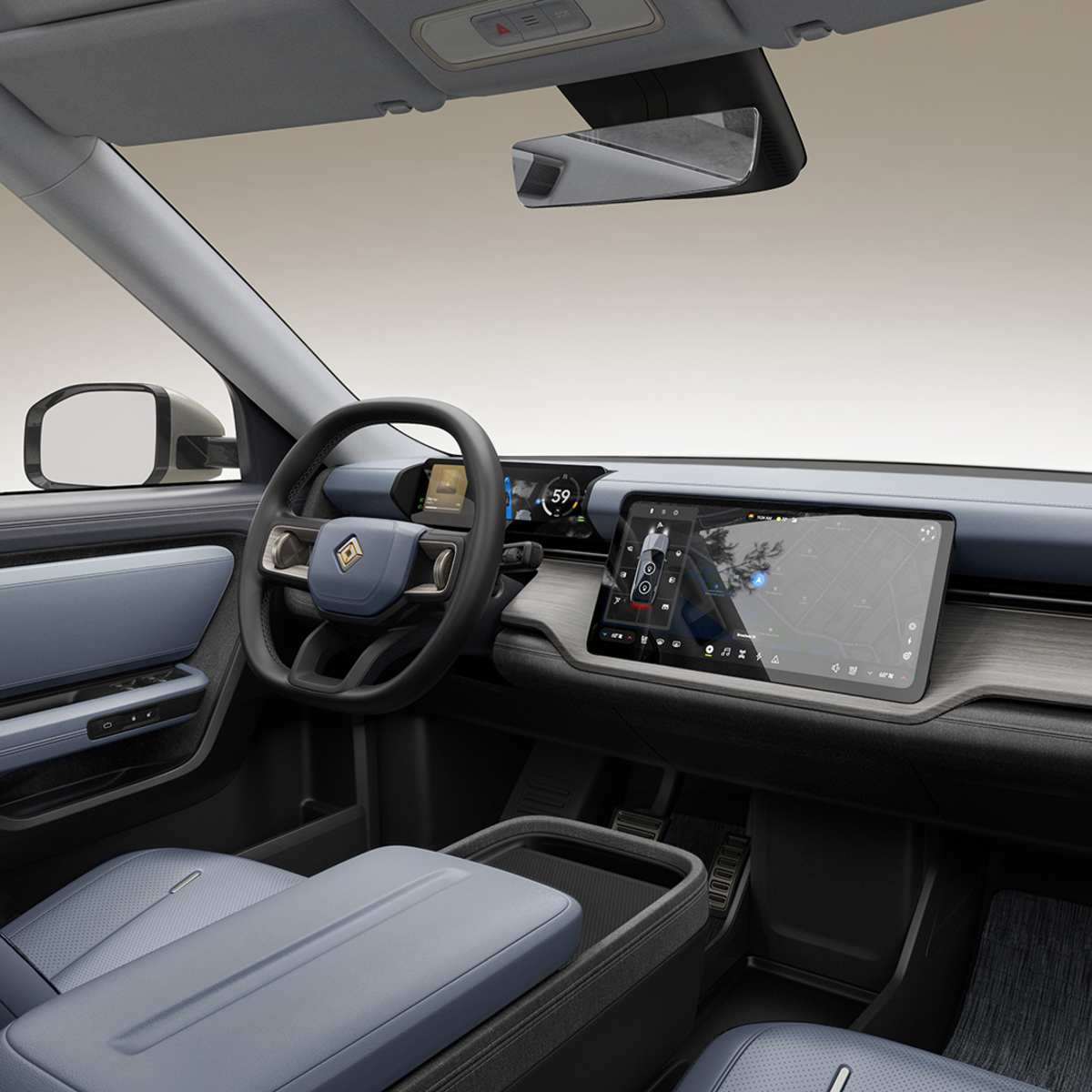
Rivian R2
"...that is? I think that, I mean, look at the Rivian R2, you look at what's happening in general in the i..."
The Rivian R2 is an electric vehicle made by Rivian. The podcast brings it up while talking about what’s going on in the electric vehicle market. It’s mentioned as the next model people are watching for changes and trends.
The Rivian R2 is a newer electric vehicle from Rivian that the podcast discusses in the context of what’s happening in the EV market overall. The mention suggests the conversation is about how Rivian’s direction and product planning fit into broader trends. It’s relevant because it’s part of the next step in Rivian’s lineup beyond the original R1T.

Rivian R1T
"...ad its moment when Rivian first came out with the R1T and then ever since then there's been kind of a s..."
The Rivian R1T is an electric pickup truck, meaning it uses electricity instead of gasoline. The podcast mentions it because it was one of the early electric trucks that got a lot of attention. It’s used as a reference point for how the EV truck space has developed.
The Rivian R1T is an electric pickup truck that helped bring EVs into the mainstream truck conversation when it first launched. The podcast references its early arrival and the ongoing attention it has received since then. It’s discussed because it’s a notable benchmark for how electric trucks have evolved and stayed in the spotlight.
reservation holders
"lot of initial excitement around it was the pickup, but clearly the reservation holders are leaning substantially toward the SUVs."
A reservation is basically a way to say “I want one of these when it’s available.” Companies look at what people reserve to figure out which versions are most popular.
A vehicle reservation is a customer’s paid or refundable place in line for a future vehicle. Reservation-holder behavior is often used by automakers to gauge which body styles (like pickup vs SUV) customers actually want.
V8
"Everybody wants V8s and take the V8 out of my cold, dead hands, but electric cars are coming, electricity, whether you believe it or not, is a smarter way to power your car just because your house is your gas station."
A V8 is a gasoline engine with eight cylinders. People often associate it with strong power and a distinctive sound.
A V8 is an internal-combustion engine with eight cylinders arranged in a “V” shape. The “V8” mention here is shorthand for traditional gasoline performance and engine sound, contrasted with the move toward EVs.
renewables
"And at some point, this moment in time will pass and people will be like, you know what, when gas gets, and gas is a finite resource, at some point we're going to run out. And so, you know, even all those cross currents, it's kind of pretty logical that electric vehicles, especially electric vehicles, renewables are the way that the thing's going to go."
Renewables are energy sources like wind and solar that keep getting replenished. The idea is that EVs can be powered by cleaner electricity over time.
Renewables are energy sources that naturally replenish on human timescales, such as wind and solar. The speaker connects renewables to EV adoption by implying cleaner electricity generation supports the long-term shift away from finite fuels.
EREV
"Scout has only talked about 10,000 pounds towing for the BEV. They've never given a towing number for the EREV."
An EREV is mostly an electric car, but it also has a small engine that can generate electricity to help the battery last longer. It’s meant to reduce range anxiety compared with a pure EV.
EREV stands for Extended-Range Electric Vehicle. It’s an EV that primarily drives on electric power, but uses a gasoline engine (or similar) to run a generator and recharge the battery when needed, extending the driving range.
BEV
"Scout has only talked about 10,000 pounds towing for the BEV. They've never given a towing number for the EREV."
A BEV is a fully electric car that runs on a battery. There’s no gasoline engine driving the wheels—electric motors do the work.
BEV means Battery Electric Vehicle. In a BEV, the vehicle is propelled only by electric motors powered by a battery pack, with no engine-driven generator for propulsion like an EREV.
towing number
"Scout has only talked about 10,000 pounds towing for the BEV. They've never given a towing number for the EREV."
A “towing number” is the maximum trailer weight the manufacturer says the vehicle can safely pull. It depends on things like power, cooling, and how the drivetrain is designed to handle the extra load.
A “towing number” is the manufacturer’s rated maximum trailer weight the vehicle can tow under specified conditions. It’s tied to the vehicle’s cooling capacity, power delivery, drivetrain durability, and how the vehicle manages battery/engine output.
module behind the rear axle
"Sam also said, putting the EREV into a module behind the rear axle is great for packaging the whole module, including engine, generator, fuel tank, cooling and exhaust will be easy to add without reengineering the rest of the vehicle."
This is about where the car puts the big “range-extender” hardware. Putting it behind the rear axle can make the layout easier so they don’t have to redesign the whole vehicle to add that system.
Packaging an EREV “module behind the rear axle” means concentrating major components—like the engine, generator, fuel tank, cooling system, and exhaust—into a dedicated unit located near the rear. This can simplify installation and reduce the amount of redesign needed elsewhere in the vehicle.
generator
"Sam also said, putting the EREV into a module behind the rear axle is great for packaging the whole module, including engine, generator, fuel tank, cooling and exhaust will be easy to add without reengineering the rest of the vehicle."
A generator is the part that turns the engine’s motion into electricity. In an EREV, that electricity helps run the car and recharge the battery so you can go farther.
In an EREV, the generator converts mechanical energy from the engine into electrical energy. That electricity is used to power the drivetrain and/or recharge the battery, allowing the car to extend range without relying solely on battery capacity.
cooling
"Sam also said, putting the EREV into a module behind the rear axle is great for packaging the whole module, including engine, generator, fuel tank, cooling and exhaust will be easy to add without reengineering the rest of the vehicle."
Cooling refers to the systems that manage heat for components like the engine, generator, and power electronics. In range-extender vehicles, adequate cooling is especially important because sustained towing or high-load driving can generate more heat than normal commuting.
max axle weight load rating
"it will shift the weight balance toward the rear and reduce max axle weight load rating."
This is the maximum amount of weight the car’s front or rear axle is allowed to support. If more weight shifts to the back, the rear axle may reach its limit sooner.
A max axle weight load rating is the maximum weight each axle is allowed to carry safely. If the vehicle’s weight balance shifts rearward, the rear axle can approach its limit sooner, which can reduce the maximum allowable axle load even if the vehicle still feels stable.
starting price targeted at under $60,000
"The starting price for the SUV is targeted at under, $60,000 ... with top price, hopefully under a hundred K."
They’re talking about how cheap the company says the SUV will be at launch. The question is whether the real-world price will actually land near that goal.
The hosts are discussing a specific pricing target for the Scout SUV, and whether the final market price can match the promise. In EV and premium-leaning segments, hitting an aggressive entry price often depends on battery cost, manufacturing scale, and feature content.

Ford F-150 Lightning
"like you look, you look all the way back to Ford and the Lightning, you look back to Rivian, you look at the Cybertruck."
They mention the Ford Lightning as a past example of an electric vehicle where the initial price expectations didn’t always match what buyers saw. It’s used to argue that Scout’s $60k goal may be tough.
The Ford Lightning is Ford’s electric pickup, and it’s being used here as an example of how promised pricing can be hard to achieve in practice. The Lightning’s real-world pricing and availability have often been influenced by demand, supply constraints, and optioning.

Tesla Cybertruck
"you look back to Rivian, you look at the Cybertruck."
They mention the Tesla Cybertruck because it’s another electric vehicle where the initial expectations didn’t fully match what happened in the real world. It’s part of their argument that $60k may be hard to deliver.
The Tesla Cybertruck is an electric pickup referenced as a high-profile example of how early claims about pricing and availability can be difficult to hit. The hosts are using it to illustrate why buyers may be skeptical of Scout’s $60k entry-price goal.
switch gear
"That's if they can bring in those, that switch gear and that kind of premium"
Switch gear means the physical buttons and knobs inside the car. They’re saying the interior should feel high-end, with controls that look and feel premium.
Switch gear refers to the physical controls in a vehicle—things like buttons, knobs, and switches used for functions such as lighting, driving modes, and climate. When the hosts say they want the Scout to use “premium” switch gear, they’re talking about tactile quality and perceived fit-and-finish, not just software.
dealer network
"So the other big kind of news surrounding Scout is that VW dealers [783.4s] in the U S are very upset. [786.1s] Yeah, they're suing Scout, right? [787.5s] Because they think that they, they should be the ones to sell scouts through the Volkswagen dealer network"
A dealer network is the established set of retail dealerships that sell and service vehicles in a region. The hosts are saying VW dealers want to sell Scout through the existing Volkswagen dealer network, which is a business and distribution strategy issue rather than a technical one.
vertically integrated
"So like the innovation really is happening at the supplier level, unless you're Tesla, in which case you're very vertically integrated or BYD."
“Vertically integrated” means a company does more steps of the process itself instead of outsourcing everything to other companies. The point here is that some brands (like Tesla) build more in-house, while others rely heavily on suppliers.
Vertically integrated companies control more of the supply chain themselves—like designing key systems and manufacturing more in-house—rather than relying on outside suppliers. The hosts contrast this with the more common approach where innovation happens at the supplier level.
supplier level
"So like the innovation really is happening at the supplier level, unless you're Tesla, in which case you're very vertically integrated or BYD."
This means the “new tech” is often created by companies that make parts for carmakers. So instead of the car brand inventing everything, the suppliers may be where a lot of the innovation happens.
“Supplier level” refers to innovation happening in the companies that provide parts and systems to automakers (like electronics, motors, and other components). The segment argues that many technology advances originate with these suppliers, not only with the car brand.
Bosch
"So like the innovation really is happening at the supplier level, unless you're Tesla, in which case you're very vertically integrated or BYD. But the point is like, if you and I tried to start a car company and we call up Bosch and we're like, we really love to work with you guys on a wiper motor."
Bosch is a big company that makes parts for lots of car brands. The hosts are using it to explain that many “new tech” ideas come from companies that supply parts, not just from the car brand itself.
Bosch is a major automotive supplier that designs and manufactures components for many different car brands. In this segment, it’s used as an example of how innovation often happens at the supplier level rather than inside a brand’s own factory.
wiper motor
"But the point is like, if you and I tried to start a car company and we call up Bosch and we're like, we really love to work with you guys on a wiper motor."
A wiper motor is the motor that moves your windshield wipers. The hosts mention it as an example of the kind of part suppliers can design and improve for car brands.
A wiper motor is the electric motor that powers the windshield wipers. Even though it’s a small component, it’s used here to illustrate how suppliers develop specific technologies that automakers can integrate into their vehicles.
Volkswagen
"If Volkswagen calls them up and say, Hey, we've got this connection already. Can you design us one for our scout brand?"
Volkswagen is a car company. In this discussion, it’s brought up as an example of a big automaker that already has supplier connections and could request new designs for another brand.
Volkswagen is a large automaker that can coordinate with suppliers to develop components for specific brands and models. Here, it’s mentioned as the kind of company that could leverage existing relationships to get a supplier to design something for the Scout brand.
how they're going to sell it
"Let's get back to cars, but let's, let's talk about how they're going to sell this thing, because that's where I was going with this whole thing. How are they going to sell it? Not going to be through Volkswagen dealers."
They’re talking about where and how the new Scout will be sold. The key point is whether it goes through regular car dealerships or not.
This is a discussion about the sales channel for the Scout range extender—specifically whether it will be sold through traditional Volkswagen dealers. It’s a structural segment about distribution strategy rather than a technical automotive concept.
Carvana
"And then like Carvana, you pick it up or do they deliver it to your door? [1051.3s] And this is an interesting thing too, that they kept pushing."
Carvana is a company that sells cars online and either delivers them or lets you pick them up. The host is using it as a comparison for how Scout might handle delivery or pickup.
Carvana is a used-car retailer known for an online purchase flow and delivery/pickup options. The host references Carvana to compare whether the Scout purchase would be picked up or delivered to your door.
dealer model vs online/digital buying
"And this is an interesting thing too, that they kept pushing. [1054.1s] One of the challenges and disadvantages of going with the dealer model too is ..."
They’re talking about how buying a car can work either through dealerships or mostly online. The tradeoff they’re weighing is convenience versus how information is handled.
The hosts compare the traditional dealer model with an online-first sales approach. They discuss how digital ordering can reduce the need to visit a store, while the dealer model can create challenges around data handling and customer information sharing.
Fiat
"like when I go to the Fiat dealer, right? [1061.6s] Which you do a lot because of your E."
Fiat is a car brand. They’re using their experience at a Fiat dealership to explain what happens with your personal information.
Fiat is an automotive brand under the Stellantis umbrella. In the segment, the host uses the Fiat dealer experience as an example of how personal information is collected and where it may be stored or shared.
Stellantis
"Which you do a lot because of your E. [1063.1s] And I give them my, my, my personal information, right? [1067.3s] That of course goes to Stellantis, but it also stays at the dealership."
Stellantis is a big car company that owns multiple brands. The point here is that when you deal with a dealer, your information can be linked to the company behind the brand.
Stellantis is the automaker formed from the merger of Fiat Chrysler Automobiles and PSA Group. In the segment, the hosts mention that personal customer data provided at a Fiat dealer is associated with Stellantis, highlighting how the dealer network ties into the parent company’s data flows.

Dodge Charger
"...re, we were given the option of actually buying a charger as well in our, you know, little condo complex. S..."
The Dodge Charger is a car that’s designed to feel fast and sporty. It’s a gasoline-powered sedan, not an electric vehicle. The podcast mentions it because someone had the chance to consider buying one for their situation.
The Dodge Charger is a performance-oriented sedan that’s been a long-running nameplate in American muscle-car culture. It’s likely discussed because it represents a more traditional gasoline performance option compared with newer EV and crossover trends. In the podcast, it’s mentioned in a real-world “could we buy one” scenario for a small community.
fast charging
"And let me also push back on what he said about fast charging."
Fast charging is when an EV can recharge quicker than normal. It’s especially important for apartment dwellers who may not have easy access to home charging.
Fast charging is charging at a higher power level than standard charging, allowing an EV to add meaningful range in less time. The segment contrasts fast charging with the broader challenge of getting chargers installed where people live, especially in apartments and condos.
super charged
"We just, you know, we have a Tesla Model Y and I've been driving it and I super charged it the other day."
“Supercharging” means using Tesla’s fast public chargers. They’re built to add a lot of battery energy quickly compared with regular charging.
“Supercharging” refers to Tesla’s high-power DC fast-charging network. It’s designed to recharge an EV much faster than typical home or workplace charging, which matters for people without easy access to overnight charging.

Tesla Model Y
"We just, you know, we have a Tesla Model Y and I've been driving it and I super charged it the other day."
The Tesla Model Y is an all-electric SUV. Here, they’re using it to show what it costs to charge an EV in practice.
The Tesla Model Y is an electric SUV that uses a large battery pack to power an electric motor. In this segment, it’s used as a real-world example of charging cost and how EV charging infrastructure is evolving.
kilowatt hour
"It was 33 cents, uh, 33 cents a kilowatt hour."
A kilowatt-hour (kWh) is how they measure the amount of electricity you use. If the price is, say, 33 cents per kWh, that’s what determines your charging bill.
A kilowatt-hour (kWh) is a unit of energy used to measure how much electricity an EV consumes or how much charge it adds. Charging prices are often quoted as dollars per kWh, so it directly affects the cost to “fill up.”
off-road course
"I think there were a total of 19 cars there and they created a really cool little off-road course for us to experience. So we had some good hills. We had some water crossings."
An off-road course is a special track with obstacles meant to test SUVs outside normal roads. It can include hills, slippery ground, and water so you can see how well each vehicle handles it.
An off-road course is a controlled driving route designed to test vehicles over obstacles like hills, loose surfaces, and water crossings. It’s used to compare how different drivetrains and traction systems cope with changing grip and traction.

Hyundai Palisade
"I think that the level of luxury and refinement that you get in, for example, this is the new Taleride, same thing in the new Palisade, is a step above what it was in the previous generation"
The Hyundai Palisade is a big family SUV. They’re saying the newer one feels more luxurious and refined than the older version.
The Hyundai Palisade is a large, family-focused SUV known for its upscale cabin and smooth ride. In this segment, the host highlights that the “new Palisade” raises the level of luxury and refinement compared with the previous generation.
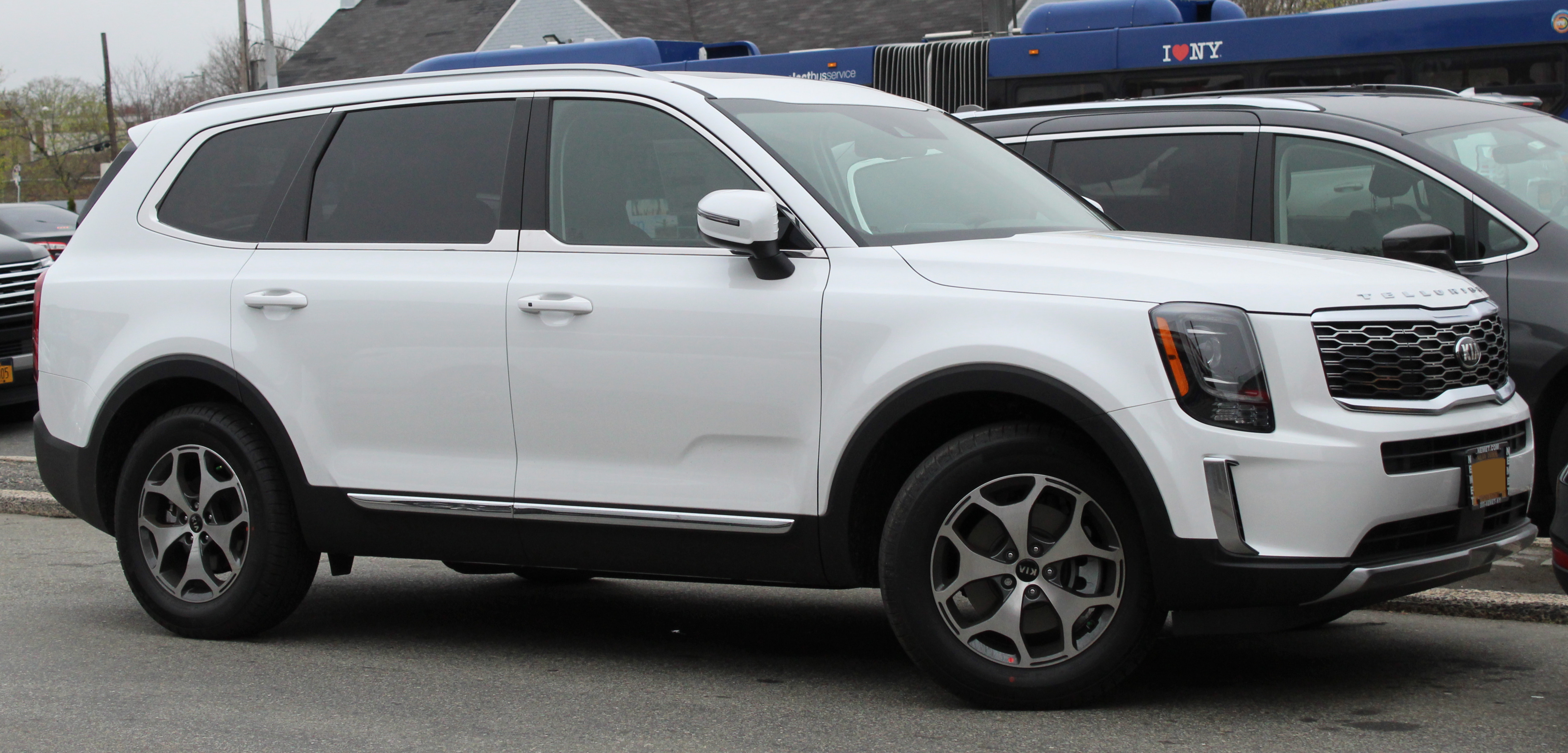
Kia Telluride
"I think that the level of luxury and refinement that you get in, for example, this is the new Taleride, same thing in the new Palisade... But you said every journalist likes the normally aspirated Kia better than the four cylinder turbo in the Taleride."
The Kia Telluride is a popular SUV with a nice, upscale interior. They’re comparing engine types and saying many reviewers like the normally aspirated version better than the turbo four.
The Kia Telluride is a midsize SUV that’s become known for a high-end-feeling interior and strong value. Here, the host contrasts its engine setup—specifically a normally aspirated engine—with a four-cylinder turbo in a related vehicle, and says journalists often prefer the normally aspirated feel.
normally aspirated
"But you said every journalist likes the normally aspirated Kia better than the four cylinder turbo in the Taleride."
A “normally aspirated” engine doesn’t use a turbo. It usually feels more straightforward and predictable when you press the gas, compared with a turbo engine that has to build boost.
“Normally aspirated” describes an engine that draws air in without a turbocharger or supercharger. In practice, it often delivers more immediate throttle response and a more linear power feel compared with a turbo setup, which relies on boost building.
four cylinder turbo
"But you said every journalist likes the normally aspirated Kia better than the four cylinder turbo in the Taleride."
A “four cylinder turbo” is a smaller engine with a turbocharger. The turbo helps it make more power, but it can feel different than a non-turbo engine when you accelerate.
A “four cylinder turbo” is a smaller engine with four cylinders that uses a turbocharger to force more air into the cylinders. That boost can improve power and efficiency, but the driving feel can differ from a normally aspirated engine because boost may ramp in after you request throttle.
Kia Palisade
"Except we have the Palisade and that's kind of an anemic engine to some extent. It doesn't have a lot of power. ... But if you live at sea level, maybe there's an advantage for that Palisade."
The Kia Palisade is a family SUV. In this segment, they’re talking about how much power it feels like it has, and how that changes depending on altitude where you live.
The Kia Palisade is a midsize SUV known for comfort and a V6 option, but in this discussion the host focuses on how its power feels “anemic” compared with alternatives. The key point here is how engine torque delivery changes with altitude and how that affects real-world drivability.
V6
"I could see the potential of the smoothness that comes with the V6 being a big factor. ... there just isn't that torque delivery that you want out of the turbocharged or out of the naturally aspirated V6."
A V6 is an engine with six cylinders. They’re saying it can feel smooth, but where you live (especially at high altitude) can change how much usable power you feel.
A “V6” is an engine with six cylinders arranged in a V shape. In this segment, the host links the V6’s smoothness to drivability at sea level, while arguing that at higher altitude the torque you want may not be as strong.
turbocharged
"there just isn't that torque delivery that you want out of the turbocharged or out of the naturally aspirated V6."
A turbocharged engine uses a device that packs more air into the engine. At high altitude there’s less air available, so the engine may not feel as strong as it does at sea level.
“Turbocharged” refers to an engine that uses a turbocharger to force more air into the cylinders. That can improve torque and responsiveness, but at high altitude the thinner air reduces how much air (and therefore boost/torque) the turbo can effectively deliver.
naturally aspirated
"there just isn't that torque delivery that you want out of the turbocharged or out of the naturally aspirated V6."
A naturally aspirated engine doesn’t use a turbo. When you drive at higher altitude, the air is thinner, so it can make less power than it would at sea level.
“Naturally aspirated” means the engine relies on atmospheric pressure to draw air into the cylinders, rather than using a turbocharger or supercharger. Because altitude lowers air density, naturally aspirated engines typically lose power and torque more noticeably than forced-induction setups.
torque delivery
"there just isn't that torque delivery that you want out of the turbocharged or out of the naturally aspirated V6."
“Torque delivery” is how the car’s pulling power shows up when you press the gas. At higher altitude, that pulling power can feel weaker or less immediate.
“Torque delivery” is how quickly and smoothly an engine produces twisting force to accelerate the vehicle. The host is arguing that at 6,000–7,000 feet, the available torque (especially from a V6) doesn’t arrive the way you want, affecting how the car feels in real driving.
compact crossover hill climb test
"I had a chance to drive a bunch of these compact crossovers back to back to back, which directly compete with each other... And there was this really cool little hill climb. It was a two track about 20 degrees in steepness."
They compare several compact crossovers back-to-back and then test them on a steep hill. It’s a way to see which one feels strongest when climbing.
The hosts describe driving multiple compact crossovers back-to-back and then testing them on a steep hill climb. This is a practical, repeatable way to compare how different engines and drivetrains feel under load.
E all wheel drive system
"But the rear end, because it's got that E all wheel drive system with these separate electric [1603.0s] motor just didn't have the torque required to push me up the hill."
They’re talking about an AWD system that uses electric motors to drive the wheels. In this test, the electric drive didn’t have enough pulling force (torque) to get the car moving up the slope.
An “E all-wheel-drive system” here refers to an AWD setup where drive to the wheels is provided by electric motors. The host emphasizes that the rear electric motors didn’t have enough torque to push the vehicle up the hill, leading to the car getting stuck.
trail mode
"[1613.2s] Yeah, you'll see this hill. [1614.1s] I was in a trail mode and it just would not go up the hill."
Trail mode is a setting meant for rough surfaces. It adjusts how the car applies power so it can grip better, but here it still couldn’t get the car up the slope.
Trail mode is a driver-selected setting that changes how the vehicle manages throttle response and traction control for off-road conditions. The host notes that even in trail mode, the vehicle “just would not go up the hill,” implying the system’s traction strategy wasn’t enough for that terrain.
Dunlop Grand Track
"So that's surprising because that is the Woodland version, [1620.3s] which has those Dunlop Grand Track all three tires."
Dunlop makes the tires they’re talking about, and “Grand Track” is the tire model. Better off-road tires can help grip, but in this case the drivetrain still couldn’t get the car up the hill.
Dunlop is the tire brand, and “Grand Track” refers to a specific tire model the host says is fitted to the Woodland trim. Tire tread design and compound strongly affect how much traction you can get when climbing in mud or loose dirt.
decouple the rear wheels from the front wheels
"I think it's really good for fuel economy because you can decouple the rear wheels from the front wheels so you don't have to necessarily roll off form at the same time."
It means the car can “separate” power going to the front and rear wheels. That can help save energy, but on rough climbs you may want both ends working together for grip.
Decoupling means the drivetrain can disconnect the rear wheels from the front wheels so they don’t always receive torque together. On an off-road EV setup, that can improve efficiency on easy surfaces, but it may reduce traction when you need all-wheel drive working in sync.
traditional transfer case
"But I think from an off-road point of view, it's not as good as some other systems where you actually have, you know, a traditional transfer case that sends power to both."
A transfer case is a device that routes power to both the front and rear wheels. If it’s sending power to both, the car usually has better grip off-road.
A traditional transfer case is a gearbox used in many 4x4 vehicles to split engine power between the front and rear axles. When it’s set up to send power to both, it typically provides more consistent traction for off-road situations than systems that can disconnect axles.
torque availability
"And like, I think it's fine for the normal F4, but for the Woodland, they should have up the torque availability on that rear motor because you'll see here I'm cresting up this hill."
Torque availability is basically how much “pulling power” the car can deliver right when you need it. If it’s too low, the car can’t climb well and the wheels may spin.
Torque availability is how much twisting force the powertrain can deliver to the wheels when you ask for it—especially under load like climbing. If the rear motor can’t provide enough torque, the vehicle may struggle to maintain traction even if the front wheels are spinning.
rear motor
"but for the Woodland, they should have up the torque availability on that rear motor because you'll see here I'm cresting up this hill"
A rear motor is the electric motor that powers the rear wheels. If it’s small or can’t make enough torque, the rear wheels may not help much when climbing.
A rear motor indicates an electric drivetrain where propulsion is provided by an electric machine mounted at or driving the rear axle. In range-extender/EV-style off-road systems, motor size and torque output strongly affect how well the rear axle can contribute traction during climbs.
cresting up this hill
"because you'll see here I'm cresting up this hill and this is when it was still pretty easy. And like, you know, I start applying throttle, look, you can see the front wheels just start going crazy, trying to grip and it just, it had nothing."
When you crest a hill, the car is working hard to keep moving over a changing surface. If the power isn’t going to the wheels that can grip, the car can lose traction.
Cresting a hill is a traction-demanding moment because the vehicle is transitioning over the top while still under acceleration. If the drivetrain strategy isn’t providing enough torque to the wheels with grip, you can see wheelspin and a loss of forward progress.
front wheels just start going crazy
"I start applying throttle, look, you can see the front wheels just start going crazy, trying to grip and it just, it had nothing."
This is wheelspin—when the tires spin but the car doesn’t move forward as much as you’d expect. It usually means the tires aren’t finding enough grip.
“Going crazy” here describes wheelspin: the front wheels rotate faster than the vehicle can move forward because they’re losing traction. In an off-road drivetrain comparison, wheelspin is a key sign that the system isn’t delivering torque effectively to the wheels that have grip.

Toyota Prius (previous generation)
"I mean, in the previous generation Prius, it would only work up to about 25 miles an hour."
The Toyota Prius is a hybrid that’s usually focused on efficiency. The host is saying the older Prius setup only supported that mode up to around 25 mph, so it wasn’t ideal for the kind of slow off-road work they were doing.
The Toyota Prius is a hybrid model known for its fuel efficiency, and the host is comparing its earlier-generation behavior to this off-roading scenario. Here, they mention that the previous generation Prius’s system only worked up to about 25 miles per hour, limiting its usefulness for slower technical driving.

Mitsubishi Outlander
"Yep. So the Outlander, Outlander has a new trail addition... So this one was able to send power to the rear... So the OEL drive system programming in the Mitsubishi is quite good."
The Mitsubishi Outlander is a popular SUV. Here they’re talking about how well it can send power to the rear wheels and climb obstacles, and how the newer setup helps compared to the older one.
The Mitsubishi Outlander is a mainstream crossover SUV that’s being discussed here in the context of off-road-capable trims and drivetrain behavior. In this segment, the hosts focus on how the Outlander’s drivetrain can send power to the rear wheels and how its newer powertrain changes low-speed climbing performance.
Cooper all-terrain
"And this one even had a set of Cooper all-terrain on it that they added for this event."
All-terrain tires are made to work on both pavement and rougher surfaces. They’re saying the Outlander’s trail version was fitted with Cooper all-terrain tires for better traction off the road.
All-terrain tires are designed with tread patterns that balance on-road comfort with improved grip on dirt, gravel, and light off-road surfaces. Cooper is the tire brand mentioned here, and the host says the Outlander trail addition came with a set of Cooper all-terrain tires for the event.
send power to the rear
"So this one was able to send power to the rear. You can see the rear tire spinning, same with the front tire."
This means the car is directing engine power to the back wheels. They’re describing how the tires behaved while climbing the obstacle—showing the car was actively trying to use traction at both ends.
“Send power to the rear” describes how a drivetrain distributes torque to the rear wheels, typically via an all-wheel-drive or electronically controlled system. The host points out that both front and rear tires were spinning, showing how the system was managing traction during the obstacle.
OEL drive system programming
"So the OEL drive system programming in the Mitsubishi is quite good. The problem with the Mitsubishi is it's got a CVT."
This is basically the car’s computer logic for how it controls power and traction. They’re saying the Mitsubishi’s settings/software helped it behave well in the situation they tested.
“Drive system programming” refers to how the vehicle’s control software manages torque delivery, traction behavior, and drivetrain actions. The host credits the Mitsubishi’s OEL drive system programming for being effective, implying the calibration/software plays a big role in how the car performs off-road.
CVT
"The problem with the Mitsubishi is it's got a CVT. So with the CVT, it was unable to give me that low-end torque delivery to get me through that obstacle."
CVT is a type of automatic transmission that changes ratios smoothly. The host is saying it didn’t give the car the strong “grunt” at low speed needed to get through the obstacle.
CVT stands for continuously variable transmission, a gearbox that can smoothly change gear ratio instead of using fixed steps. In this segment, the host argues the CVT limited the Outlander’s ability to deliver strong low-end torque when trying to crawl through an obstacle.
1.5-turbo mild hybrid
"Now it's got a new engine. Outlander's got a new 1.5-turbo mild hybrid."
This means the Outlander uses a small turbo engine plus a mild hybrid system that helps the engine, especially when you need extra effort. They’re saying it makes the car better at getting up the hill and through the obstacle.
A “1.5-turbo mild hybrid” combines a 1.5-liter turbocharged engine with a mild-hybrid system that adds electric assistance, but not enough to drive the wheels purely on electricity. In this segment, the hosts say the Outlander’s new powertrain improves real-world hill/obstacle performance compared to the earlier setup.

Jeep Wrangler 392
"There was a Wrangler 392 on this event. You said that was the most fun. It was the most fun. It sounded the best by a country mile."
The Jeep Wrangler 392 is a special, higher-power version of the Wrangler. The big deal is the V8 engine, and the hosts are saying it sounds really impressive compared to the others they drove.
The Jeep Wrangler 392 is a high-performance Wrangler variant built around a powerful V8 engine, which is why the hosts describe it as sounding especially good. In Wrangler 392 trim, the engine character is a big part of why it stands out versus more common Wrangler powertrains.
slip a tire
"Didn't even slip a tire. Yeah, of course."
“Slip a tire” is when a tire loses traction and starts spinning instead of gripping the ground. Saying it didn’t slip suggests the vehicle had good grip on the surface they were testing.
“Slip a tire” means a tire loses grip and spins or skates instead of moving the vehicle forward effectively. When the hosts say it “didn’t even slip a tire,” they’re emphasizing strong traction during the test.

Kia Sportage
"All right, here's another one. So this is the Kia Sportage. This is the naturally aspirated 2.5 X Pro version."
The Kia Sportage is a compact SUV. In this clip, they’re testing how well it climbs a hill, and you can see the tires lose grip and spin when traction isn’t there.
The Kia Sportage is Kia’s compact SUV, and this segment focuses on how it behaves off-road on a steep climb. The host specifically mentions the naturally aspirated 2.5 X Pro version and demonstrates traction limits when the right-rear tire lifts and spins.
wheel lift and wheelspin on a steep climb
"But even with a more conventional transmission, you can see we lifted up that right rear tire. There it goes. Spinning. Can't accomplish it."
When a tire lifts off the ground (wheel lift) during a climb, that wheel can lose traction and spin freely (wheelspin). This often happens when the vehicle can’t maintain grip due to slope, weight transfer, and limited traction at the contact patch.
momentum
"So you could make it if you used a little bit of momentum. In other words, what you did is you stopped in the middle of the hill"
Momentum is the vehicle’s stored motion energy, which helps it keep moving up a slope when traction is marginal. The host implies the successful car used momentum to avoid stalling or wheelspin long enough to crest the hill.

Volkswagen Tiguan SEL R-Line Turbo
"And it was the one that didn't have the off-road package. [1862.8s] This is the Volkswagen Tiguan SEL R-Line Turbo. [1867.3s] That was someone else doing it."
The Volkswagen Tiguan SEL R-Line Turbo is a compact SUV with a turbo engine. Here, they’re talking about how it can still push forward strongly when you’re trying to get through something difficult, even without certain off-road options.
The Volkswagen Tiguan SEL R-Line Turbo is a compact SUV that uses a turbocharged engine and is tuned for everyday drivability with stronger low-end pull. In this segment, the hosts focus on how its drivetrain provides enough torque to climb/advance through an obstacle while still being controllable at low speeds.

Mazda Cx5
"And I've got 11 of these clips, [1875.4s] Cole has me stopping perfectly in the middle [1877.0s] and it was still able to get through that, [1879.8s] which kind of blew my mind a little bit. [1881.6s] I also had the Mazda CX-5, same problem."
The Mazda CX-5 is another compact SUV they tested. They mention it because it showed a similar behavior to the Tiguan in the same kind of situation.
The Mazda CX-5 is a compact crossover SUV that’s being used here as a comparison point for traction/low-speed ability. The hosts say it had the same issue as the Tiguan in their test, which helps frame that the problem isn’t unique to one model.
eight-speed automatic
"And the reason it was able to do it [1895.4s] is because it has an eight-speed automatic [1898.9s] with a substantially lower first gear"
An eight-speed automatic is the car’s automatic gearbox with eight different gear settings. More gears can help it stay in the right power range, and in this case the lowest gear helps it move through the obstacle more easily.
An eight-speed automatic is a transmission that uses eight gear ratios to keep the engine in a favorable operating range. Here, the hosts connect it to better low-speed control by emphasizing that the first gear is much lower than on many competitors, which helps the SUV crawl and get through the test.
lower first gear
"with a substantially lower first gear [1902.2s] than a lot of the competition."
A lower first gear means the transmission multiplies engine torque more aggressively at the start of motion. That gives stronger “crawl” ability and better control when you need to move slowly and keep traction while climbing or pushing through a difficult section.
turbo engine
"But it also just has a 268 horsepower turbo engine [1908.4s] and all this low-end grunt"
A turbo engine has a device that pumps extra air into the engine. That helps it make more power, especially when you need to accelerate or climb.
A turbo engine uses a turbocharger to force more air into the engine, which allows more power (and often better low-RPM response) than a naturally aspirated engine of the same size. The “turbo” effect is especially noticeable when you need quick acceleration or climbing torque.
low-end grunt
"But it also just has a 268 horsepower turbo engine [1908.4s] and all this low-end grunt [1910.0s] where it can push through the brakes"
“Low-end grunt” means the car feels strong even when you’re not revving it high. It’s the kind of pull you notice when you start moving or drive slowly up a hill.
“Low-end grunt” is enthusiast slang for strong acceleration at low engine speeds (low RPM). It usually comes from good torque delivery early in the rev range, making the car feel eager when you’re starting from a stop or climbing slowly.

Volkswagen Go Volkswagen
"Pretty cool, huh? There you go, Volkswagen. So another win for Volkswagen."
The Volkswagen Gol is a compact car made by Volkswagen. The podcast mentions it as a positive example of a model that did well. It’s being referenced because it’s a notable, practical car in Volkswagen’s lineup.
The Volkswagen Gol is a compact car model that the podcast mentions as a “win” for Volkswagen. It’s likely being brought up as an example of a successful, widely recognized model in the brand’s lineup. In this context, it’s discussed because it represents Volkswagen’s ability to deliver a popular, practical vehicle.

Toyota RAV4
"So on-road, I think that as a whole, [1944.3s] the RAV4 is probably the best option for most people."
The Toyota RAV4 is a very common compact SUV. They’re saying that for most people, it’s probably the best all-around pick for normal driving.
The Toyota RAV4 is a compact SUV known for being a safe, easy-to-live-with choice for most buyers. In this segment, the host frames it as the best overall option for typical on-road use, even while discussing other SUVs’ off-road-ish capability.
German driving dynamic
"And now with the latest version, they've actually kind of infused that German driving dynamic and German engineering into it. So I hope it does so well."
“German driving dynamic” is basically a way of saying the car feels more precise and fun to drive—like the steering and handling are tuned to feel sharper.
“German driving dynamic” is a shorthand enthusiasts use for the feel of steering, throttle response, and chassis tuning associated with many German brands. It usually implies sharper handling and more precise control than you’d expect from a typical mainstream SUV setup.
fuel economy
"...it is really hard to beat the RAV4 because of the fuel economy, right? ... When you're looking at 40 MPG in that RAV4..."
Fuel economy means how far the car can go on a gallon of gas. They’re saying that matters a lot when choosing between SUVs.
Fuel economy is how efficiently a vehicle uses fuel, typically expressed as miles per gallon (MPG) in the U.S. In this segment, it’s treated as a key deciding factor in the compact SUV “all-around vehicle” comparison.
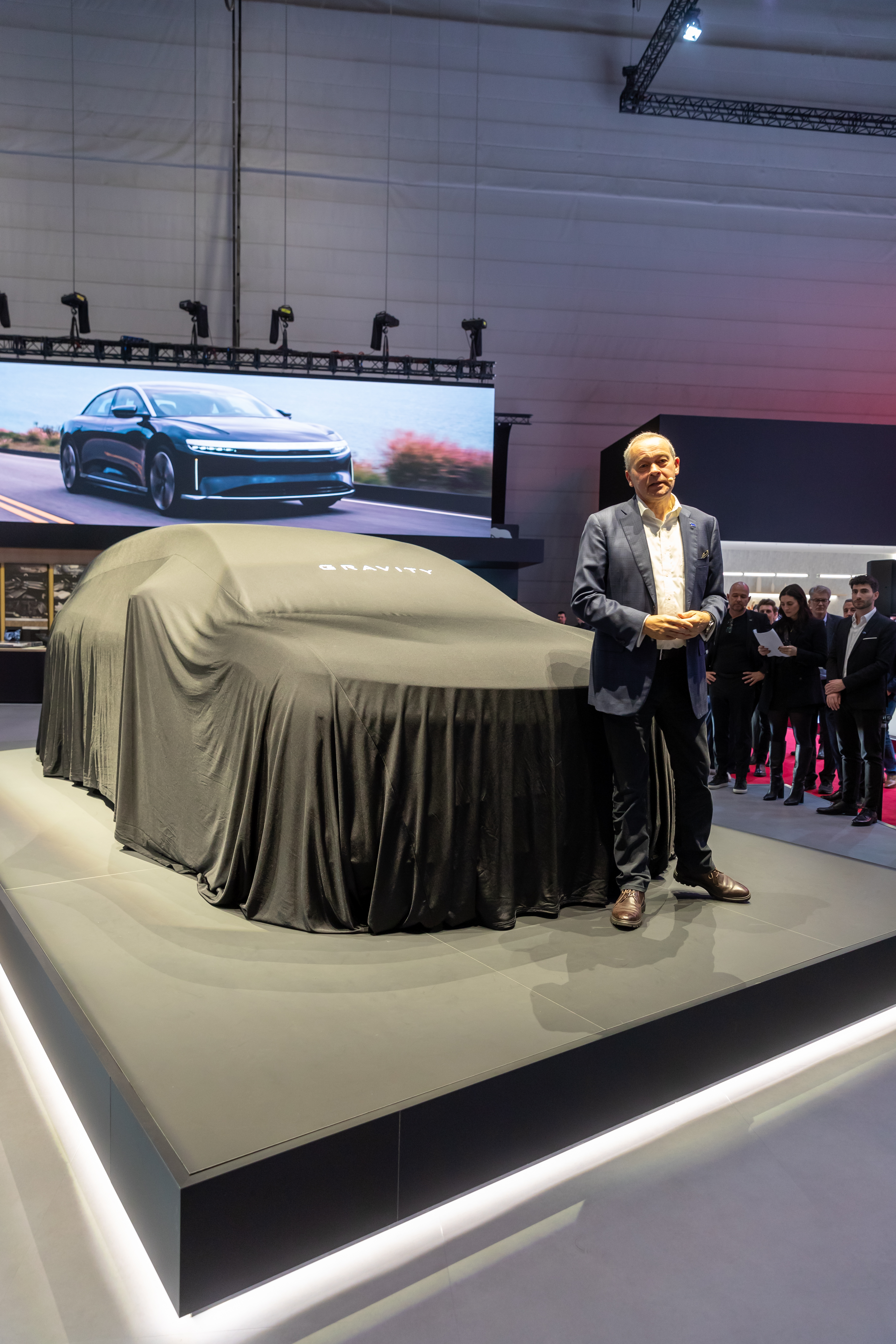
Lucid Gravity
"The Lucid gravity was very interesting on the road. Yeah, so. You would like driving it. You know why? ... It steers like a Cybertruck."
Lucid Gravity is Lucid’s electric family-sized vehicle. The hosts are talking about how it steers—especially that it uses four-wheel steering—which can make it feel quicker and easier to maneuver.
Lucid Gravity is Lucid’s large electric vehicle, and the hosts are focusing on how it drives on-road. They specifically call out its steering feel, including four-wheel steering, which can make an EV feel more agile at low speeds and more stable at higher speeds.
four-wheel steering
"Does it have four-wheel steering? It's got four-wheel steering and a really quick rack."
Four-wheel steering means the back wheels can help steer too. That can make the car easier to turn in tight spaces and feel more stable when you’re driving faster.
Four-wheel steering (4WS) is a system where the rear wheels can steer along with the front wheels. At low speeds, it typically turns the car more sharply for easier maneuvering, while at higher speeds it can improve stability by reducing how much the car “wants” to rotate.
quick rack
"It's got four-wheel steering and a really quick rack. That's a real head scratcher."
A “quick rack” means the steering is geared so the wheel turns faster for a given amount of steering input. The car can feel more responsive when you turn the wheel.
A “quick rack” refers to steering gearing/ratio that makes the steering wheel require less rotation to achieve the same wheel angle. That usually makes the car feel more responsive and can contribute to a sharper, more immediate steering feel.
three-row crossover
"And, you know, I think that it's probably [2072.4s] the best driving three-row crossover maybe ever. [2077.5s] I mean, you're talking gas."
A “three-row crossover” is a bigger family SUV with three rows of seats. It’s meant to carry more people, so it has to balance space with how it drives.
A “three-row crossover” is a family-focused SUV-style vehicle with seating for up to seven or eight people. The challenge is balancing space and comfort with driving feel, since the extra weight and size can make handling and braking harder to get right.
Request an Explanation
Heard something you'd like explained? We'll add it to this episode.
Sign in to request explanations for terms you heard.
Want to learn more?
Browse our glossary for plain-English explanations of automotive terms, jargon, and concepts.
Help improve this episode
See something that's not quite right? Our annotations are AI-generated and can sometimes miss the mark. Click the flag icon on any annotation to suggest a correction.