
Is the new Audi Nuvolari starting the shift back to ICE? | The Car Podcast #91
About this episode
The Car Podcast #91 bounces from “good news” to deep dives on details. The hosts tease an Audi “that looks like a cat,” then talk about a possible shift back toward ICE—“including the Audi… but it’s got a V8.” They also share track-day stories from Thruxton in the rain, with Porsche GT3s and a Bentley GT3. Later, it’s hands-on car talk: audio upgrades, fuel-filler quirks, and even a “biscuits and cars” game.
Get your tickets to Clapham Grand below! From £34.50!
Download Car & Classic’s app today to see our 2CG’s, and our weekly pick of our favourite listings:
https://candc.li/App_Download_
(00:00) Intro
(00:06) What have we done in cars or good news
(19:40) Biscuits and cars quiz by Neil
(27:10) Car magazines - help!
(49:17) Best or worst petrol cap
(59:30) F1
(1:08:06) 2CG
(1:19:35) Music
Model Shop: AviationRetailDirect.com
Hosted on Acast. See acast.com/privacy for more information.
V8
"including the Audi that looks like a cat with a Lamborghini back, but it's got a V8 and we should all celebrate"
A V8 is a type of engine that has eight cylinders arranged in a V shape. People like it because it usually sounds and feels more “classic” than smaller engines or electric-only cars.
A V8 is an engine with eight cylinders arranged in a “V” shape. It’s a traditional internal-combustion layout that many enthusiasts associate with strong smoothness and character compared with smaller or purely electric drivetrains.
Vauxhall
"There's a new Vauxhall. And I thought Vauxhall didn't really exist anymore, because we never talked about Vauxhall, but of course Vauxhall, whether it had been the 1930s"
Vauxhall is a British car brand. The host is saying it used to be more of a big deal in the past, and they’re surprised it isn’t talked about as much today.
Vauxhall is a British car brand with a long history, including periods where it built or closely aligned with major players in the industry. The host references Vauxhall’s past eras to argue it used to be more prominent and “cool,” even if it’s less discussed now.
Aston Martin
"Aston Martin is sort of getting it nine-tenths right, aren't they?"
Aston Martin is a British car brand famous for fancy, sporty cars. Here they’re talking about how good the car looks and feels—like it’s almost perfect.
Aston Martin is a British luxury sports-car brand known for stylish grand tourers and performance models. In this segment, Chris Harris is praising how close Aston Martin is to getting a design “right,” implying the car’s styling and packaging are nearly spot-on.
Audi
"Vauxhall and Audi, particularly. Very good news this week."
Audi is a German car brand that makes premium cars. Here it’s mentioned as part of the “good news,” suggesting something new or exciting is happening with Audi.
Audi is a German premium car brand known for engineering-led performance and technology. In this segment, Audi is grouped with Vauxhall as a source of “very good news,” implying the episode is discussing recent product or motorsport-related developments.
rally car
"Oh. Have they gone rallying? I should know this, but I think they've reintroduced a rally car."
A rally car is a race car built for rally events—roads with dirt, gravel, and lots of bumps. It’s made to stay controllable and tough even when traction changes constantly.
A rally car is a purpose-built (or heavily modified) competition vehicle designed to handle loose surfaces, jumps, and frequent changes in traction. Rallying emphasizes durability and driver control over long stages, so “reintroducing a rally car” usually means a brand is returning to that kind of motorsport engineering.

Land Rover Range Rover
"... they're completely putting in parts. There's one Range Rover, rather beautiful thing. It's black,"
The Range Rover is a large, comfortable SUV made for both everyday driving and rougher roads. People talk about it because it’s meant to feel luxurious while still being capable. A black one is especially noticeable and memorable.
The Range Rover is a luxury SUV from Land Rover, known for combining off-road ability with a high-end, comfortable cabin. It often comes up in podcasts because it represents the brand’s flagship approach to refinement and capability. The mention of a specific black car highlights how iconic and recognizable the model is.
riveted arches
"Did it have riveted arches? [474.6s] It did have riveted arches."
“Riveted arches” means the wheel-arch panels are attached with rivets you can see. It’s a small construction detail that can help tell which version of a car you’re looking at. Here, it’s used as a clue to confirm the Porsche’s generation.
“Riveted arches” refers to wheel-arch panels attached using visible rivets, a detail often associated with certain older Porsche 911 bodywork styles. It’s the kind of visual clue enthusiasts use to help identify a specific generation or variant when a car is being stripped.
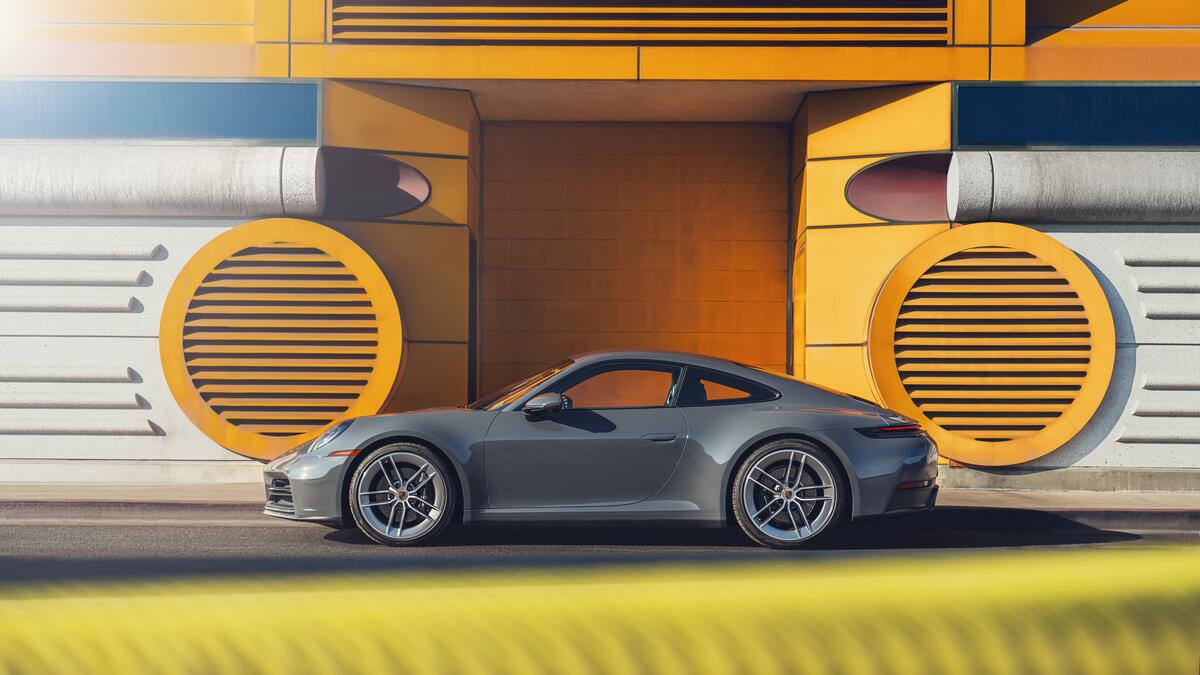
Porsche 911 (993)
"Oh, 993. [477.7s] 993. [478.5s] Okay."
A Porsche 911 (993) is a specific generation of the classic 911 model. It’s the final air-cooled 911 generation, and collectors often care about it. In this moment, they’re confirming the exact 911 generation of the car they saw.
Porsche 911 (993) refers to the last air-cooled generation of the 911, known for its distinctive, more rounded bodywork. Harris is identifying the dismantled car as a 993 after earlier uncertainty, and he also mentions a specific body feature that helps confirm the generation.
Odisson system
"So the good news is apparently they can do a sort of... They can do an update for the Odisson system that I've got. It's a software update, and then they can play with the graphic equalizer, get the base up."
This sounds like the car’s built-in music system. They’re saying they can update the software, and then tweak the sound settings to try to improve the bass.
An “Odisson system” here is the car’s in-dash audio setup (head unit + amplifier/signal processing). The host is talking about updating its software and then adjusting the sound using the system’s equalizer controls.
graphic equalizer
"It's a software update, and then they can play with the graphic equalizer, get the base up."
A graphic equalizer is a sound-tuning tool. It lets you adjust different parts of the audio (especially bass and treble) so the music sounds better in the car.
A graphic equalizer is an audio control that lets you boost or cut specific frequency bands (like bass, midrange, and treble). In a car, it’s often used to compensate for cabin acoustics and speaker limitations.
subwoofer
"The bad news is we think the base will never be quite good enough, so I might have to have a subwoofer installed somewhere, and that means probably removing the becker from the boot."
A subwoofer is the speaker that handles the deep “boom” part of music. If the car’s speakers don’t make enough bass, a subwoofer can make it sound fuller—sometimes with extra installation work.
A subwoofer is a speaker designed specifically for low frequencies (bass). If the factory audio can’t produce enough bass, adding a subwoofer is a common upgrade, but it may require changes to the existing audio hardware.
becker
"so I might have to have a subwoofer installed somewhere, and that means probably removing the becker from the boot. I won't throw it away, but I'll leave that CD player somewhere."
“Becker” sounds like part of the car’s audio equipment. They’re saying they might need to take it out to install a subwoofer properly.
“Becker” here likely refers to a Becker-branded audio unit or amplifier module in the car’s trunk (“boot”). The host is implying that installing a subwoofer may require removing that Becker component to make space or reroute wiring.
CD player
"I won't throw it away, but I'll leave that CD player somewhere."
A CD player is the part of the car that plays music from CDs. They’re saying they might remove it temporarily while doing the audio changes.
A CD player is the in-car unit that reads compact discs for audio playback. The host suggests leaving the CD player aside during the audio upgrade, implying the system may be partially disassembled to fit new components.
GT3
"We had some fantastic cars from Porsche who provided the GT3. Catering provided us a couple of 420 cups, and Bentley, in the inestimable shape of Mike Sayer, came along and drove their Bentley GT3 race car."
GT3 is a race class. Cars from different brands are prepared to the same general racing rules so they can race each other more fairly.
GT3 is a racing category (not a single car model) defined by balance-of-performance rules that standardize how different brands compete. When someone says “GT3” in a track context, they usually mean a customer race car prepared to those GT3 regulations.
Thruxton
"Thruxton were brilliant. So to Ben, Ben and Lorne at Thruxton who helped us organise it, I hope that you had as much fun as we did. Ben Taylor, who runs Thruxton the BRC, was at seven o'clock in the morning in the car park in the rain,"
Thruxton is a real race track in the UK. The episode is describing a track event where people helped organize the day and drove cars on circuit.
Thruxton is a motorsport circuit in the UK known for hosting track days and racing events, including categories that use GT cars. The hosts’ mention of organizing and meeting people there in the rain places the discussion in a real racing/track-day context rather than a studio review.

Mclaren F1
"...got to say Croix Paris. He gave me a model of the McLaren F1 Longertale that I drove for a full year."
The McLaren F1 is a very rare, high-performance supercar. It’s known for being built with serious engineering and a driver-first design. The “Longtail” is a special version made to be even more track-focused.
The McLaren F1 is a legendary supercar famous for its lightweight design and its driver-focused layout, including a distinctive three-seat configuration. It’s a frequent topic in car discussions because it’s considered one of the most significant engineering achievements of its era. The podcast reference to a model of the F1 Longtail ties into its special, track-oriented variant.
Monaco Grand Prix
"Of course we had the Monaco Grand Prix, didn't we? Yeah. So, which I sort of endured really."
The Monaco Grand Prix is a famous Formula 1 race run on city streets in Monaco. It’s hard to pass there, so how the race starts (and restarts) can matter a lot.
The Monaco Grand Prix is a Formula 1 race held on the streets of Monte Carlo, known for tight corners and low speeds compared to many other F1 tracks. Because overtaking is difficult, starts and restarts can heavily influence the outcome.
second standing start
"and Anthony was down the road. He coped with the second standing start extremely well."
A standing start means the cars are stopped on the grid and then launch from a standstill. If it’s the “second” one, the race had to restart again, which often makes things more unpredictable.
A standing start is when the cars are stationary on the grid and then launch at the signal, rather than rolling away. A “second standing start” implies the race was restarted again after an earlier restart, which can create chaotic spacing and strategy changes.
second restart
"when he backed the whole grid up as they exploded away after the second restart was he was incredibly lucky"
A restart is when the race is paused and then starts again. If it’s the second restart, drivers have to reset their timing and positioning twice, which can lead to more mistakes.
A restart is when the race resumes after being stopped or neutralized (for example, due to an incident). The “second restart” suggests there were multiple interruptions, and each restart can reshuffle the field and increase the chance of penalties or contact.
penalty
"because that caused a few problems."
A penalty is a punishment for breaking the race rules. It can cost you time or position, depending on what the officials decide.
In Formula 1, a penalty is a sanction for breaking race rules, such as causing a collision, gaining an advantage unfairly, or ignoring restart procedures. Penalties can be time penalties, drive-throughs, grid penalties, or other race-impacting consequences.

Peugeot 205
"Yeah. That's the Peugeot 205 GTO 1.9. Oh, is it?"
The Peugeot 205 CTI is a small sporty hatchback. It was made to be more exciting than a normal family car. People often talk about it because it’s a classic “driver’s” version of the 205.
The Peugeot 205 CTI is a hot hatch from the 1980s/early 1990s era, known for being fun to drive and relatively compact. It’s discussed because it represents a period when small cars could be genuinely engaging. The podcast’s mention of the 205 GTO and the CTI highlights how enthusiasts connect different performance variants of the same model line.

Ferrari 308
"Fig Roll. Ferrari 308 GTB. Is it?"
The Ferrari 308 GTS is a classic sports car with a V8 engine in the middle of the car. It has a roof setup that lets you drive more open-air than a normal coupe. It’s often mentioned because it’s a well-known Ferrari from that period.
The Ferrari 308 GTS is a classic mid-engine V8 Ferrari with a removable targa-style roof, combining open-air driving with the brand’s iconic design. It’s a popular reference point in enthusiast conversations because it represents a key era of Ferrari’s road cars. The podcast’s mention alongside the 308 GTB highlights how closely related these variants are.

Ferrari 308 GTB
"Fig Roll. Ferrari 308 GTB. Is it?"
The Ferrari 308 GTB is an older Ferrari sports car with a V8 engine placed in the middle. It’s a coupe, meaning it has a fixed roof. People talk about it a lot because it’s a classic and very recognizable Ferrari.
The Ferrari 308 GTB is a classic mid-engine Ferrari coupe powered by a V8, known for its iconic shape and enthusiastic driving dynamics. It’s frequently discussed because it’s one of the most recognizable Ferraris from its era. The podcast’s “Fig Roll” and “Is it?” line points to how closely related and often confused the 308 GTB and GTS variants can be.

Jensen Interceptor
"...e digestive. Dark chocolate digestive is a gentle interceptor. Oh, sophisticated."
The Jensen Interceptor is an older British sports grand tourer—basically a car meant for comfortable fast driving. It’s known for having a strong, powerful feel. The podcast is using it as a fun, memorable classic example.
The Jensen Interceptor is a classic British grand tourer known for its big-engine character and long-distance comfort. It’s mentioned in the podcast as a distinctive, slightly quirky alternative in the world of classic performance cars. The playful “digestive” line underscores how memorable the car’s name and personality are to enthusiasts.

Lancia Fulvia
"Oh, my God. Lancia Fulvia 1.6HF. Yeah, that's good."
The Lancia Fulvia is an older Italian car that came in different versions. The “1.6HF” is a more performance-focused version with a bigger engine. People mention it because it’s a well-known classic Lancia with a sporty reputation.
The Lancia Fulvia is a classic Italian compact car, with performance versions like the 1.6HF becoming well-regarded among enthusiasts. It’s discussed because it represents Lancia’s engineering and rally-era spirit in a road-going form. The podcast’s specific mention of the 1.6HF highlights the model’s performance identity.

Ferrari Ff
"So what would the chocolate hobnob be as a car? Mr Pandey. So we asked you what the chocolate hobnob was, a car? Chocolate hobnob of a car. Ferrari FF. I think it's quite magnificent."
The Ferrari FF is a special Ferrari because it has all-wheel drive, so it can grip the road better than many other Ferraris. It’s meant to be a fast, comfortable “grand touring” car you can use more often, not just on perfect days.
The Ferrari FF is a rare Ferrari that’s built around an all-wheel-drive system, which was unusual for the brand at the time. It’s also known for being a grand tourer that can put power down in a wider range of conditions than a typical rear-wheel-drive Ferrari.

Lamborghini Countach
"...feels bad because one day I will want to read the Countach versus the Boxter versus the Aston V8 test in 199..."
The Lamborghini Countach is a very famous older supercar with an extreme, angular design. It’s known for being fast and for looking unlike most other cars. People compare it to other classic supercars because it’s such a recognizable reference point.
The Lamborghini Countach is a classic, wedge-shaped supercar that became an icon for its dramatic styling and high-performance reputation. It’s often brought up in car history discussions because it helped define how supercars looked and felt in its era. The podcast compares it in the context of other famous cars, showing how it stands out as a benchmark.
Autosport magazines
"Oh God, here we go. [2249.2s] Autosport magazines. [2252.4s] 2001, 2002."
Autosport is a well-known magazine about racing and cars. Here, the host is talking about old issues they keep around.
Autosport is a long-running British motorsport publication that covers racing news, technical stories, and event reporting. In this context, it’s being used as a time capsule of older car/motorsport coverage.

Lancia Delta Integrale
"that I bought with my Lancia Delta Integrale [2993.3s] and I've yet to change."
The Lancia Delta Integrale is a famous turbocharged rally-inspired Lancia. Here, the host is describing a frustrating problem with something he keeps having to deal with on his own Integrale.
The Lancia Delta Integrale is a rally-bred hot hatch known for its turbocharged performance and rally heritage. In this segment, Chris Harris is talking about a specific ownership/fitment annoyance related to his Integrale, which makes it a personal, practical example of living with the car.
GT3 RS
"So you had it on the GT3 RS, the GT3, GT2, they all had this bloody silver... Inside the flap."
The GT3 RS is one of Porsche’s most track-focused 911s. Here it’s mentioned because the same fuel-filler flap design shows up on it too. The host doesn’t like the “fake metal” look/feel even on a serious performance car.
Porsche GT3 RS is a high-performance 911 variant known for track-focused tuning and aerodynamics. In this segment, the host is using it as an example of Porsche applying the same “fake metal” fuel-filler flap design. The point is that even on a hardcore model, the fuel-filler detail can still be a letdown to some enthusiasts.

Porsche 928
"It goes 993 and it goes 928. I loved that high quality German plastic red one."
The Porsche 928 is a Porsche GT coupe with a V8 engine. It’s known for being a more “grand touring” style car than the 911.
The Porsche 928 is a grand touring (GT) coupe that’s remembered for its front-engine layout and V8 power, making it a different kind of Porsche than the 911. It’s often cited as a “serious” alternative for people who wanted long-distance comfort with performance.
filler flap
"it just springs out. Because the springiness of the thing is not matched to where it's going to go. And the quality and the fit of the filler flap"
The fuel filler flap is the little door on the side of the car that you open to access the gas cap. The host is saying the flap and cap should work together smoothly, not fight each other.
The fuel filler flap is the hinged door that covers the fuel-filling opening. In this segment, the host focuses on how the flap’s design and the cap’s retention mechanism affect usability and perceived build quality.
filler cap
"When you try and put the filler cap into the little bracket thing on the flap of the door, it just springs out. Because the springiness of the thing is not matched to where it's going to go."
The fuel filler cap is the part you open to put gas in. The host is judging how well it lines up and how securely it stays attached when you open and close it.
A fuel filler cap is the removable cover that seals the car’s fuel-filling opening. The host is using the way it’s retained by the fuel flap/bracket as a “fit and feel” indicator of overall manufacturing quality.

Alpine A110
"way of thinking about the filler cap is the LP in A110. I know we find every reason to talk about A110."
The Alpine A110 is a small sports car designed to feel light and quick to drive. People talk about it because it has a clear, recognizable style and handling. Even small parts of the car can stand out, like the fuel filler area.
The Alpine A110 is a compact sports car known for its lightweight feel and agile handling. It’s often discussed because it has a distinct identity and a strong motorsport heritage. The podcast’s “filler cap” comment reflects how even small details on the A110 can become part of its character.
jet wash
"and they're trying to do it very carefully and they want to clean on the inside of the filler cap and they press the thing and put the jet wash in there,"
A jet wash is the high-pressure water spray used at car washes. They’re saying some people don’t realize the filler opening is different, so they may spray water where it shouldn’t go.
A jet wash is a high-pressure water spray used at car washes. The hosts are warning that if the filler opening isn’t understood as not having a removable cap, the pressure spray can be directed into the filler area.
data-driven
"And I wonder where the Formula One now is such a data-driven thing. You can sit down, you can evaluate just about everything"
“Data-driven” means using lots of measurements from the car to guide decisions. Teams look at numbers like speed, tire behavior, and engine performance to figure out the best plan.
In Formula One, “data-driven” means teams use telemetry and performance data to make decisions about setup, strategy, and driving technique. Instead of relying only on feel, engineers compare numbers to predict what will work on a given track and in race conditions.
restarts
"And to deal with those restarts, he's 19 years old."
In Formula One, “restarts” are the moments when the race resumes after a safety car or red-flag interruption. Drivers must manage clutch/launch timing, tire temperature, and traction while the field is bunched up, which makes restarts high-risk and strategically important.
engine equivalence rules
"And just my last point, it's not sort of about Monaco, but more about Formula One. The engine equivalence rules have just, they benchmark all the engines and they give people tokens"
These are rule changes that try to make different engine types compete more fairly. The sport measures engines and then applies limits so one design doesn’t automatically dominate.
“Engine equivalence rules” are Formula One regulations designed to balance performance between different engine designs. They use benchmarking to set limits/allowances so teams can’t gain a huge advantage purely from having a better engine architecture.
engines
"because the rules have just said, [3929.9s] ooh, we only look at the engines. [3931.6s] There is some consolation in that"
They’re talking about racing rules that focus on the engine. The point is to separate what the engine contributes from what the driver and the rest of the car contribute.
In motorsport rules, “engines” can be singled out as the only area allowed to vary or be evaluated, depending on the regulation. That means the discussion is about how much performance is tied to the power unit versus other factors like driver skill and chassis setup.
Antonelli
"I mean, Antonelli at one point, [3944.1s] I mean, he lapped George. [3946.2s] That must have smarted."
They’re talking about a racing driver named Antonelli and how he was lapping other cars. The takeaway is that driver skill can make a huge difference in a race.
Antonelli is referenced as a driver who lapped George and then, by around lap 45, had lapped everyone except the first few cars. In this context, it’s an example of how much a driver can influence results on a difficult circuit like Monaco.
Lewis Hamilton
"go, [3969.2s] You have to have balls of steel to turn around and go, [3972.6s] I've got Lewis Hamilton [3974.9s] and he wants a two-year contract"
They’re talking about Lewis Hamilton, the famous Formula 1 driver. The host is discussing contract terms—how long he wants to sign for.
Lewis Hamilton is mentioned in a contract-discussion context, with the speaker describing Hamilton wanting a two-year contract and a one-year option. While not a car-tech detail, it’s a notable motorsport figure driving the conversation.
six hours
"It says very carefully, it's got to be a car that can go for six hours. It can't be some sort of sprinty car or a small car."
That “six hours” is about endurance racing—cars have to keep going for a long time. Instead of racing for a short burst, the goal is to stay fast and reliable for hours.
The “six hours” reference points to endurance racing formats, where cars must run reliably for hours rather than just minutes. It emphasizes sustained performance, driver changes, and heat management over outright sprint speed.

Ferrari 430
"...p for endurance racing. So I think we would get a Ferrari 430 GTC, like sort of a GT2 Ferrari 430 from 2008."
The Ferrari 430 Scuderia is a high-performance Ferrari based on the 430 model. It’s built to be more track-like and more focused on driving feel than a regular version. The “Scuderia” name signals a more performance-oriented setup.
The Ferrari 430 Scuderia is a performance-focused version of the 430, designed to feel sharper and more track-oriented than a standard grand tourer. It’s often discussed because it represents Ferrari’s “lightweight and driver-focused” approach in that generation. The podcast’s endurance-racing reference connects to how these cars can be adapted for competition-style use.
FF rear end
"It's an Aston Rapide with an FF rear end. I have to say, I'd forgotten that existed."
“FF” means the engine is in front and the drive wheels are also at the front. That affects how the car grips and how it feels when you accelerate out of corners.
“FF” means a front-engine, front-wheel-drive layout. Saying “FF rear end” is a shorthand/quirky way to describe how the rear behaves or how the car’s traction is biased, but the key takeaway for listeners is that the drive wheels are on the front rather than the rear.

Aston Martin Rapide
"The GT2 Bertone, it's sort of... It's an Aston Rapide with an FF rear end. I have to say, I'd forgotten..."
The Aston Martin Rapide is a luxury sports car with four doors. It’s meant for comfortable fast driving, not just short trips. The podcast is talking about how its drivetrain setup can relate to performance and racing-style ideas.
The Aston Martin Rapide is a four-door grand tourer designed to deliver Aston Martin style with practical everyday usability. In the podcast context, it’s being compared to a GT2-style racing concept, emphasizing how the Rapide’s platform can be thought of in performance terms. The “FF rear end” comment suggests a discussion about drivetrain layout and how it affects handling and character.
V10
"So it's the MF5. It's the V10 version. Oh, yeah."
V10 means the engine has 10 cylinders arranged in a V shape. Cars with V10 engines are usually built for strong, exciting performance.
V10 is an engine configuration with ten cylinders arranged in a “V” shape. In performance cars, a V10 is often chosen for its high-revving character and strong power potential.

BMW M5
"so well engineered. And I think with that M5 V10, I thought you'd be a nice and fine..."
The BMW M5 is a fast, sporty BMW sedan. It’s made by BMW’s performance division and is designed to drive quickly while still being practical. The “V10” refers to the engine type used in a famous version of the M5.
The BMW M5 is a high-performance version of the 5 Series, built for fast, confident driving with a strong emphasis on engineering. It’s discussed often because it blends everyday usability with serious performance. The mention of the M5 V10 points to a particularly celebrated engine generation.
series
"[4529.4s] I think that little series, [4531.8s] I think is just fantastic. [4534.3s] I know it's not quite in keeping with the rules."
Here, “series” doesn’t mean a TV show—it means a specific version or lineup of a car. They’re saying that particular version looks great to them.
In this context, “series” is being used as a shorthand for a particular production/variant line or configuration rather than the everyday meaning of a sequence. The speaker is praising a specific “little series” as visually and emotionally appealing.

Jaguar Etype
"No one wants them. It's like an E-Type. It's like every other bloody old car."
The Jaguar E-Type is an older sports car known for its distinctive look. People still talk about it because it’s considered a classic. The comment suggests that, despite its fame, some people may not be interested in buying one.
The Jaguar E-Type is a famous British sports car celebrated for its styling and driving character. It’s frequently discussed because it became an icon of its time and remains highly recognizable today. The podcast comment about “no one wants them” contrasts its reputation with how people value it in the market.
W12 engine
"I want to put the W12 engine in this car."
A W12 engine is a type of engine with 12 cylinders arranged in a special compact shape. It’s known for being smooth and powerful, and the speaker wants that engine in the car.
A W12 engine is a 12-cylinder layout where the cylinders are arranged in a “W” shape (three banks of cylinders). It’s compact for its power and smoothness, and it’s strongly associated with certain Bentley models.
ice-cold air conditioning
"I want it full-on ice-cold air conditioning."
That’s just the car’s climate control—how cold it can make the cabin. The speaker is saying they want modern comfort, not just old-school looks.
“Air conditioning” in a car context refers to the climate-control system that cools and dehumidifies the cabin. The “ice-cold” phrasing emphasizes modern comfort expectations even for an older-style car.
modern brakes
"I want modern brakes."
“Modern brakes” means updating the car’s stopping system with newer parts. The idea is to make an older car feel safer and more predictable to drive.
“Modern brakes” means upgrading the braking system with newer hardware and/or better-performing components compared with what older cars used. The goal is typically stronger stopping power, better fade resistance, and more consistent pedal feel.

Bentley Rtype Bentley
"I want modern brakes. I want it to be a singer R-Type Bentley. And it's going to be super reliable, super gorgeous."
The Bentley R-Type Continental is an older luxury car designed for comfortable long drives. It’s known for being powerful and refined. The podcast is talking about making it more practical by improving things like braking and reliability.
The Bentley R-Type Continental is a classic grand tourer known for its elegant styling and strong performance, built for long-distance comfort. It’s brought up in discussions because it represents a “modern-feeling” classic goal—high quality, refined power, and a sense of occasion. The podcast mentions wanting modern brakes and reliability, which reflects how owners often think about updating classic cars for everyday use.

Morgan Aero
"I think it's the right thing. It's the Morgan Aero 8 race car. I saw that in Le Mans."
The Morgan Aero 8 is an older-style-looking sports car made for fun driving. It also has race versions that have competed in endurance events. The podcast is mentioning it because it’s been seen in racing at Le Mans.
The Morgan Aero 8 is a modern-era Morgan sports car known for its distinctive design and lightweight, driver-focused character. It’s discussed in the context of racing because there are Aero 8 race cars that have competed at events like Le Mans. The podcast reference to seeing it at Le Mans highlights its motorsport connection.
Le Mans
"It's the Morgan Aero 8 race car. [4653.4s] I saw that in Le Mans."
Le Mans is a legendary long-distance race in France. It’s a big deal in racing, so mentioning it usually means the car is connected to serious endurance racing.
Le Mans refers to the famous endurance race held in France, where cars must last for hours while maintaining speed. It’s one of the most prestigious events in motorsport, so seeing a specific car “in Le Mans” signals real racing pedigree.
facelift
"2017 car, sadly, is the facelift, but my Lord, [4714.1s] it's absolutely stunning the spec of that car. [4716.9s] It's a speed."
A facelift is when a car gets updated partway through its life. It can mean changes to the looks and sometimes the features, but it’s not a completely new model.
A facelift is a mid-cycle update automakers make to a model—typically changing styling, lights, bumpers, and sometimes tech or powertrain details—without fully redesigning the car. Here, the host says the 2017 car is “sadly” the facelift, but still praises its specification.
Request an Explanation
Heard something you'd like explained? We'll add it to this episode.
Sign in to request explanations for terms you heard.
Want to learn more?
Browse our glossary for plain-English explanations of automotive terms, jargon, and concepts.
Help improve this episode
See something that's not quite right? Our annotations are AI-generated and can sometimes miss the mark. Click the flag icon on any annotation to suggest a correction.
1 community members have helped improve this episode.