
It's Slippery Slope Season with Your Favorite Chopped Uncs - DWA! Podcast Ep. #938
About this episode
“Slippery slope season” kicks off with shop-and-project updates, including cosmetic bumper/side skirt/headlight work and a rattle traced to sagging firewall insulation touching the exhaust. Wheel and paint decisions get debated—keeping originality, creating patina, and even doing “while it’s there” refinishing. The conversation then pivots into maintenance and reliability worries: oil-change “sparklies,” timing-chain/rod-bearing concerns, and using Blackstone oil analysis to sanity-check wear. Later, the hosts shift to event logistics and vintage racing vibes, plus EV trivia and charging reality checks.
Lane and Warren went to Velocity Invitational at Sonoma Raceway, Warren is on a slippery slope with car repairs on his BMW E36 M3, and Lane is joining in on the fun...Art has an oil update.

Chevrolet Corvette
"Egasitle vehiculum. There's no doubt Corvettes are fast, but I'm riding dirty right now. The cro..."
A Chevrolet Corvette is a sports car built for fast driving. People bring it up because it can accelerate quickly and is designed to be fun to drive. The podcast is talking about that performance side.
The Chevrolet Corvette is a performance sports car known for strong acceleration and a long history as a flagship American track-capable model. It often comes up in podcasts because it’s a benchmark for “fast for the money,” and because owners talk about how it feels at speed. In this episode, it’s mentioned in the context of speed and driving experience.
exhaust work
"So shift or rebuilt a little bit of exhaust work. What else did we do? Some other little stuff. So that's, that's where we're at."
“Exhaust work” is a broad term for modifications or repairs to the exhaust system, such as adjusting components, replacing sections, or addressing leaks and fitment issues. In this segment it’s tied to chasing a rattle, suggesting the exhaust area and nearby heat shielding were part of the problem.
firewall insulation
"However, and I mentioned on the podcast, the firewall insulation that goes over the transmission header area, like if you look down on the engine bay like back, it's like a corrugated metal with padding built in."
The firewall is the wall between the engine area and the inside of the car. Insulation there helps keep heat and noise down, but if it sags and touches the hot exhaust, it can rattle and cause problems.
Firewall insulation is sound- and heat-deadening material mounted on the firewall (the bulkhead between the engine bay and cabin). In this case, the insulation over the transmission header area sagged and started contacting the exhaust, which can create rattles and heat damage risk.
transmission header area
"However, and I mentioned on the podcast, the firewall insulation that goes over the transmission header area, like if you look down on the engine bay like back, it's like a corrugated metal with padding built in."
The “header area” is where the exhaust manifold collects exhaust gases before they go down the exhaust system. Because it’s close to other parts near the transmission, anything that moves—like insulation—can end up touching it.
The “header area” refers to the exhaust manifold region where exhaust gases collect and route into the exhaust system. Mentioning it near the transmission area highlights how exhaust components and nearby heat shields/insulation can interact, especially if insulation sags or shifts.
OEM bespoke
"It's like a corrugated metal with padding built in. It's like a OEM bespoke thing. That had sagged off the firewall and was like touching the exhaust."
“OEM” means it’s made by the car’s original manufacturer. “Bespoke” here means it’s custom-shaped for that specific car, so it should fit right—unless it loosens and shifts.
OEM bespoke means the part was designed specifically for the vehicle by the original equipment manufacturer (OEM), rather than being a generic aftermarket fit. That matters because custom-shaped heat shields/insulation are more likely to be correctly positioned—until they sag or detach.
refinish the driver's seat
"I do still need to get the seat, refinish the driver's seat tastefully."
“Refinish the seat” means repairing the seat’s surface so it looks better again. Instead of replacing the whole seat, you restore the color/finish to make it look clean and even.
“Refinish” in this context means restoring the surface of the driver’s seat—typically re-dyeing, re-coloring, or reconditioning leather/vinyl so it looks uniform again. It’s a common approach when a seat has wear, fading, or damage but you want to keep the original seat.
Dakar yellow
"And then although I did see BMW classic account posted a Dakar yellow M3."
“Dakar yellow” is just a named yellow paint color. People who care about BMWs often recognize it because it’s associated with certain special cars and looks distinctive in person.
“Dakar yellow” is a specific paint color name used by BMW for certain M cars and special-edition builds. Color names like this matter to enthusiasts because they’re tied to particular factory palettes and the visual identity of a car.
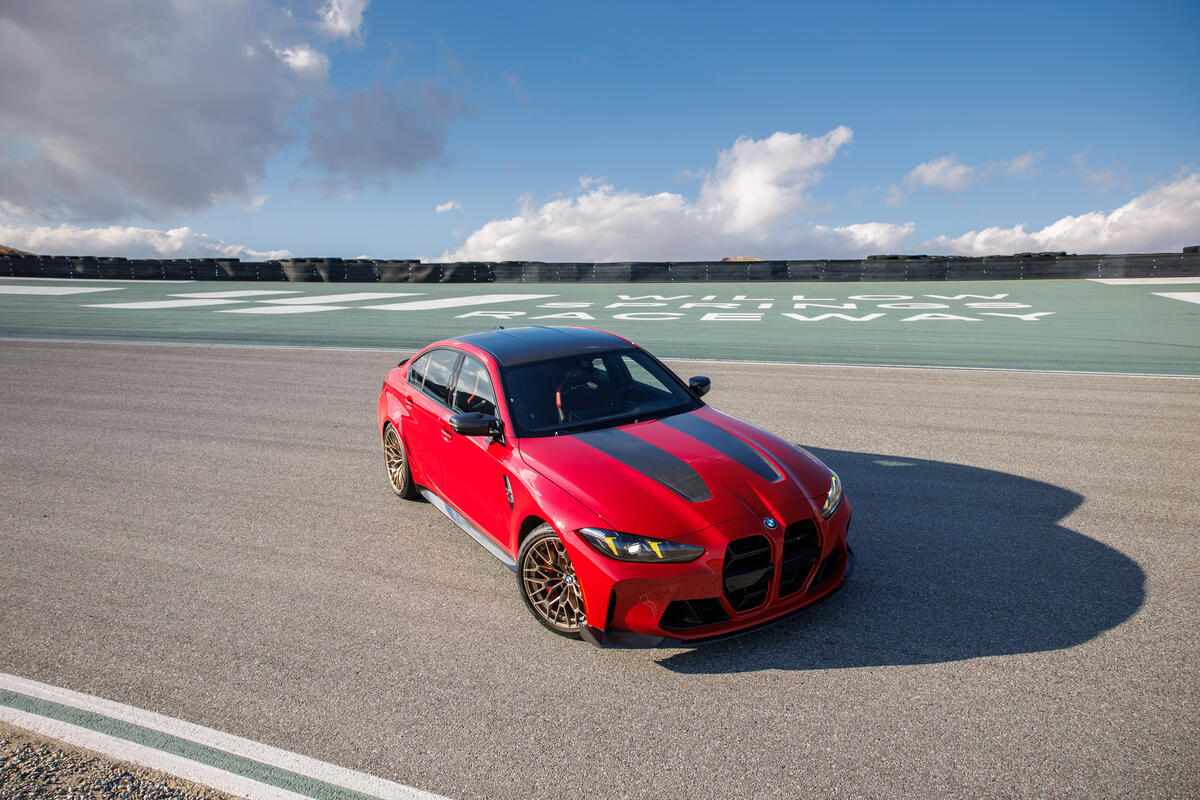
BMW M3
"And then although I did see BMW classic account posted a Dakar yellow M3. Did you see that one?"
The BMW M3 is BMW’s high-performance version of the 3 Series. It’s the kind of car enthusiasts buy for handling and driving feel, and here they’re talking about one finished in a standout color called Dakar yellow.
The BMW M3 is BMW’s performance model from the M division, known for its sporty chassis and driver-focused tuning. In this segment, the host mentions a “Dakar yellow M3,” which is a distinctive exterior color choice that enthusiasts often associate with special editions and curated builds.
M sports interior
"Maybe Slurikane. Slurikane M sports Slurikane interior. So that's like the fabric, which it looks so good."
“M sports interior” means the car’s cabin is trimmed in an M-style, with sport seats and materials meant to match the performance character. Here they’re pointing out that the fabric/finish looks especially good.
“M sports interior” refers to an M-branded cabin trim package—typically sport seats and interior materials/accents designed to match the car’s performance theme. In this segment, the host is describing the interior fabric look and how it differs from similar cars.
post rally inspection
"And then I'm like, okay, I need a post rally inspection. Of course, you know, I want to see if there's anything, you know, going on."
After a rally, people do a quick check to make sure nothing got damaged. The goal is to find leaks or broken parts early—before they turn into a bigger problem.
A post rally inspection is a check performed after a rally stage or event to catch damage or wear that may not be obvious during driving. It typically focuses on safety-critical items (like suspension and brakes), fluid leaks, and any new noises or vibrations that could indicate a problem.
oil change
"And then I need an oil change. It's been a little bit."
An oil change is when you replace the engine oil so the engine stays properly lubricated. It helps keep the engine clean and reduces wear.
An oil change is replacing the engine oil (and usually the oil filter) to remove contaminants and restore lubrication. In harder use like rallying, oil can degrade faster, so staying on schedule helps protect engine wear surfaces.
tires
"By the way, it looks like I need tires again. Dude, you are the most aggressive tire user."
Tires are what actually grip the road. If you drive hard—especially turning and accelerating quickly—you can wear them out faster.
Tires are the only contact patch between the car and the road, so they’re central to grip and handling—especially in slippery conditions. Aggressive driving and high lateral loads can wear tires quickly, which is why the host calls out the speaker as an unusually “aggressive tire user.”
throttle
"Dude, you are the most aggressive tire user. You gotta go to that throttle."
The throttle is the pedal/command that tells the engine how much power to make. More throttle usually means faster acceleration, but it can also make tires wear out quicker.
The throttle controls how much air (and therefore fuel) the engine gets, which directly affects engine torque and acceleration. In performance driving, how you use the throttle—especially on corner exit—can strongly influence traction and tire wear.
bumperettes
"I have these European bumperettes that I bought right after I bought the car ... and it punctured the little, those big pillow bumperettes that I have on the car"
Bumperettes are the smaller pieces on the ends of a car’s bumper. They’re there to help protect the car in small crashes, and they can sometimes be replaced without replacing the whole bumper.
Bumperettes are small bumper sections (often at the corners) that supplement the main bumper. On some cars they’re designed to absorb minor impacts and can be replaced separately from the larger bumper cover.
factory ones
"and those factory ones are like $600 each. So I bought the European knockoff ones, which are like cheap."
“Factory” parts are the original parts the car manufacturer put on the car. Here, they’re talking about expensive original bumper pieces versus cheaper replacements.
“Factory” parts are the original components installed by the automaker when the car was built. In this context, the speaker is contrasting expensive OEM-style bumperettes with cheaper aftermarket “knockoff” replacements.
European knockoff ones
"So I bought the European knockoff ones, which are like cheap. They're like a hundred bucks each or less."
“Knockoff” parts are cheaper replacement parts made to copy the original. They can work fine, but quality and fit can be different, so you want to make sure they mount correctly.
“Knockoff” parts are aftermarket replicas made to look like (or fit like) an original equipment part, but typically at a lower cost. Fitment and material quality can vary, so it’s common to confirm whether they match the original’s mounting points and construction.
fill these two holes or plug them
"But to put those on, you have to fill these two holes or plug them. So I was like, okay, when it's there, hey, let's just add on painting the rear bumper"
If the replacement bumper pieces don’t line up with the original mounting spots, you may have to close the leftover holes. That’s usually done before painting so the bumper looks smooth and finished.
When swapping bumper components, the new parts may not use the exact same mounting locations as the originals. “Filling holes” or “plugging” refers to bodywork steps that close unused openings before repainting so the surface looks seamless.
paint work
"Cause I know they're doing, they're doing all this paint work there at B line"
“Paint work” is the whole process of repairing and repainting a damaged area. It’s not just spraying color—it’s also prepping the surface so the new paint blends in and doesn’t look patchy.
In body repair, “paint work” includes more than just color—typically sanding, priming, and blending so the repaired area matches the surrounding panels. The goal is to avoid visible edges or texture differences after the bumper is reassembled.
molded rubber bumper
"They're rubber. They're like real, they're real molded rubber bumper. So they'll work just like the factory ones."
A molded rubber bumperette is a bumper piece made from rubber that’s shaped in a mold. Rubber parts tend to flex and take impacts better, and they can behave more like the original factory piece.
A molded rubber bumperette is formed from rubber into a specific shape, usually with internal structure for impact absorption and durability. Compared with hollow or fiberglass-like parts, molded rubber typically flexes and conforms more like the original design.
accordion bumper
"And it's still accordion bumper and everything. It's not like lame."
An “accordion bumper” is a type of bumper design with flexible, accordion-shaped sections. It was used to help the bumper take a hit without getting destroyed, and keeping it means the car still looks like it did when it left the factory.
An “accordion bumper” is a bumper design that uses flexible, accordion-like sections (often seen on older cars) to absorb impacts and reduce damage in low-speed crashes. When someone says a car still has its accordion bumper “from the factory,” they mean the original, period-correct exterior hardware is intact rather than replaced with a modern aftermarket look.
sunroof tram
"when it's there, I'm having the sunroof tram is kind of poked up. So I'm having that addressed."
A sunroof has tracks and guides that help it slide smoothly. If something is “poked up,” the sunroof may be sitting wrong, which can lead to rattles, leaks, or it not closing properly.
“Sunroof tram” appears to refer to the sunroof’s track/guide mechanism (the hardware that the glass panel moves along). If it’s “poked up,” the sunroof may be misaligned or not sitting flush, which can cause wind noise, leaks, or binding during operation.
original paint
"my car is pretty original paint for the most part, but the hood has been repainted."
“Original paint” means the car still has the factory paint on most of it. If only the hood was repainted, it may look slightly different or wear differently than the rest of the car.
“Original paint” means the car’s body panels still have their factory-applied paint rather than being repainted. When the speaker says the car is “pretty original paint for the most part” but the hood was repainted, they’re pointing out a common mismatch that can affect appearance and paint-condition consistency.
rock chips
"like little touch ups, little like, you know, from rock chips and stuff. [673.2s] And it's like the hood takes like so much time."
Rock chips are little paint-damage spots caused by small stones hitting the car. They can look minor, but if water gets in, the damage can grow over time.
“Rock chips” are small impacts to a car’s paint, usually from road debris like gravel. They often show up as tiny bare spots or discolored marks and can spread if moisture and corrosion get underneath the paint.
lizard skin
"It's like the towel just sticks to it and stuff because it's got [680.2s] a little lizard, lizard skin up there. [682.2s] Yeah, exactly."
“Lizard Skin” is a coating people put on cars to help protect surfaces and reduce vibration/noise. If it’s on the hood, it can also make painting more annoying because the material can make the surface harder to prep.
“Lizard Skin” is a brand name commonly used for automotive sound-deadening and protective coatings. On a hood, it’s typically applied to reduce noise/vibration and help protect the surface from heat and minor impacts.
front bumper
"Oh boy. [685.9s] But if I'm painting the hood, I might as well paint the front bumper. [688.7s] Cause if you remember, like the, the bumper had like a three inch by"
The “front bumper” is the front impact-protection structure and styling panel at the car’s lowest front area. It’s a common target for damage from road debris and low-speed contact, so it’s often repainted during collision or chip repair work.
primer spot
"Cause if you remember, like the, the bumper had like a three inch by [692.9s] three inch primer spot and I paint it with a toothbrush after"
A primer spot is where the car’s paint was damaged and someone put a base layer (primer) down to protect it. When you repaint, that spot usually needs extra attention so it doesn’t show.
A “primer spot” is an area where bare metal or damaged paint has been covered with primer to promote adhesion and prevent corrosion. When a small spot is primed, it often needs careful blending or repainting so the finish matches the surrounding paint.
toothbrush
"three inch by [692.9s] three inch primer spot and I paint it with a toothbrush after [696.0s] like the rally before last."
Using a “toothbrush” for paint touch-ups is a DIY technique for applying small amounts of paint into chips or primer areas. It can work for tiny spots, but it often leaves visible texture or edges compared to proper spray blending.
front air dam
"But then if you're paying the front bumper, like might as well do the [702.8s] front air dam, right? [703.9s] Cause like the front air dam is a little like bent"
The front air dam is the low piece at the bottom of the front bumper. Because it’s so close to the ground, it gets bent or scraped a lot, so it’s common to repaint it when you’re fixing the front.
The “front air dam” is the lower front body piece designed to manage airflow under and around the car. It can be easily bent or scraped because it sits low, so paint repairs often include it when doing front-end bodywork.
mirrors
"But then I'm like, Hey, the mirrors are a little tattered. [714.6s] So let's pay the mirrors too. [716.0s] Here we go."
They’re talking about the side mirrors. If they’re scuffed or worn, repainting them can help the color match the rest of the car’s refreshed front.
“Mirrors” here refers to the exterior side mirrors, which are frequently scuffed or faded and can be expensive to replace if damaged. When doing a paint refresh, matching the mirror finish to the rest of the front-end work helps avoid noticeable color mismatch.
patina
"The fenders have rad patina like they have like the white showing through on the edges and then also the roof has like the brown showing through..."
Patina is the natural “worn-in” look a car gets over time. It can show up as faded paint, color changes, or worn edges instead of a perfectly new finish.
In car talk, patina is the visible wear and aging on a surface—often paint, trim, or metal—that develops over time. Here, they’re describing how the fenders and roof show age-related color variation and thinning rather than being fully refinished.
door seal
"Well, the one thing I didn't tell my car my door seal on the driver side needs to be replaced and I bought a seal that is just like generic seal..."
The door seal is the rubber strip around the door that helps keep rain and wind from getting inside. If it’s old or not fitted right, water can leak in and you may hear more wind noise. Replacing it is often about getting the rubber seated correctly in the channel.
A door seal is the rubber (or rubber-like) weatherstripping around the edges of a car door. Its job is to keep water, wind noise, and dust out of the cabin. If it’s worn or not seated correctly, you can get leaks—especially in rain or when driving through wet conditions.
generic seal
"...I bought a seal that is just like generic seal the same that people have used for you 36's, but man getting that properly fit in there in that channel..."
A “generic” seal is a replacement rubber strip that’s made to work for many cars, not necessarily the exact factory part. It can still work, but it might not line up perfectly, so installation has to be careful. If it’s not seated right, it won’t seal as well.
A “generic” seal usually means an aftermarket weatherstrip that’s not the exact OEM (original equipment manufacturer) part for that specific car. These can fit well, but they may require more careful installation to get the correct shape and compression. Fitment issues are common when the seal has to sit properly in the door’s channel.
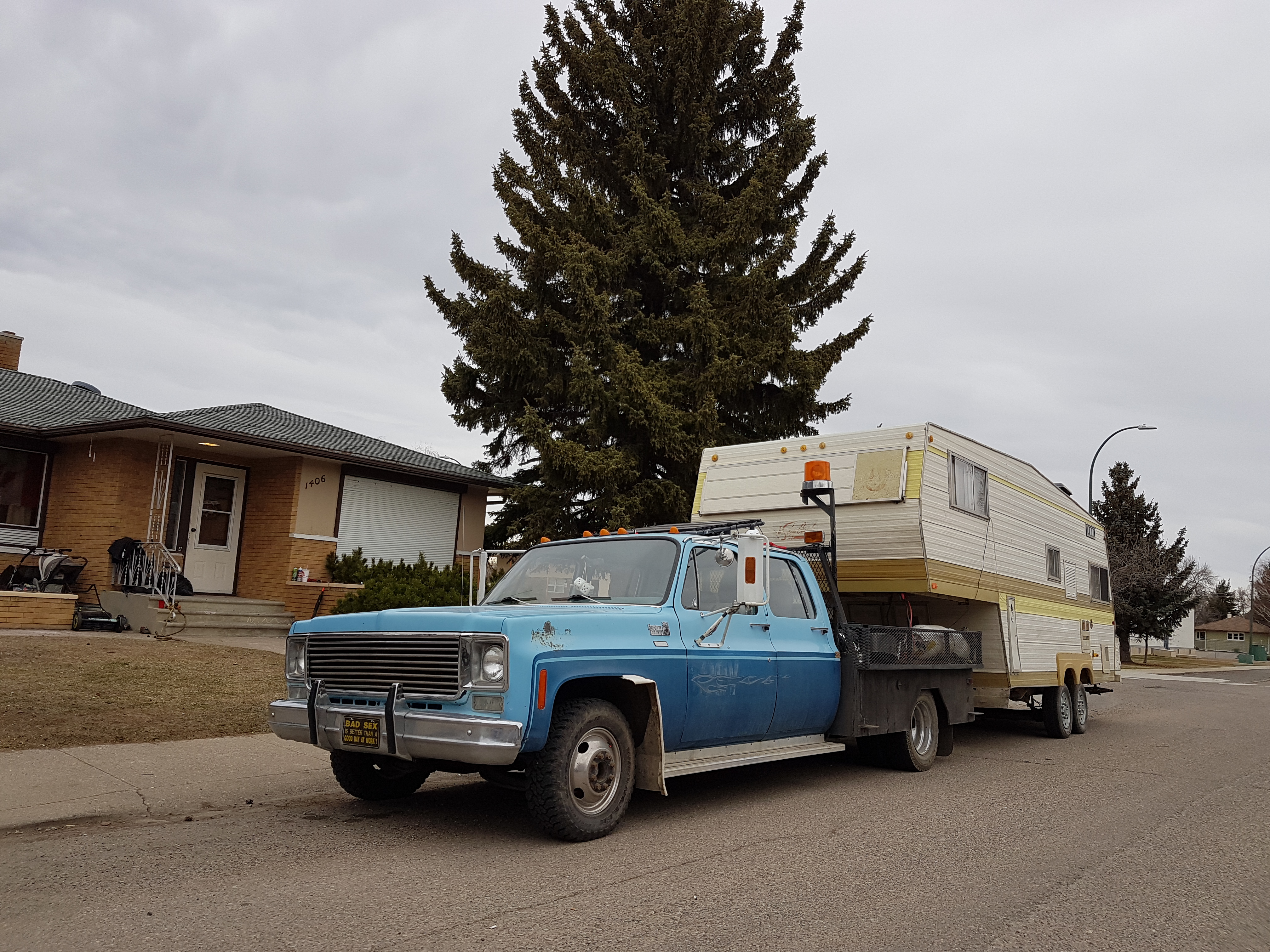
Chevrolet C30
"Yeah, dude. Well, I mean, if I'm getting, if I'm chasing the C 30 and three that I mentioned last week, I'm not going to paint this car."
The Chevrolet C30 is a type of heavy-duty truck. It’s built for tougher jobs like hauling and towing. In the episode, they’re talking about going after one of these trucks.
The Chevrolet C30 is a heavy-duty truck model line, typically associated with work and towing capability. In the podcast, it’s mentioned alongside “C 30 and three,” suggesting they’re talking about a specific truck they’re chasing or comparing. The context implies it’s a target vehicle in their discussion rather than a detailed technical breakdown.
timing chain tensioner
"Other a possibility timing chain tensioner fails. [1014.7s] You got chain slap rub in the chain itself starts to disintegrate"
The timing chain tensioner is a device that keeps the timing chain tight. If it stops working, the chain can get loose and the engine can start making noise or run incorrectly.
A timing chain tensioner is the component that keeps the engine’s timing chain tight. If it fails, the chain can lose proper tension and timing accuracy, which can lead to noise, poor running, or even engine damage.
chain slap
"[1014.7s] You got chain slap rub in the chain itself starts to disintegrate [1018.3s] and I think it's brass, right?"
Chain slap is when the timing chain starts moving around more than it should. That can create rattling noises and can mean the chain isn’t being held tight enough.
Chain slap is the audible and mechanical “slapping” that happens when a timing chain is too loose or not properly controlled. It often shows up as rattle/noise, and in severe cases can contribute to accelerated wear or damage to chain components.
timing chain guide
"[1022.3s] Timing chain guide is perfect. [1023.7s] I mean, there's no rattle on startup, which is like a classic"
The timing chain guide is like a support track for the timing chain. If it wears out, the chain can start vibrating or making noise.
A timing chain guide is a wear surface that positions and supports the timing chain as it runs through the engine. If the guide is damaged or worn, it can increase noise (like rattle) and allow abnormal chain movement.
new cams
"You know, that's fine. [1028.4s] And the other thing that keeps popping up is people when they [1032.9s] break in new cams have experienced this."
Cams (camshafts) are parts that control when engine valves open and close. After you install new ones, the surfaces can need a break-in period, and that can change what you see in the oil at first.
“Cams” are camshafts, which control valve timing by opening and closing valves. After installing new cams, some engines can show early wear patterns or break-in behavior, which can affect how much metal debris shows up in the oil.
Blackstone
"like five [1056.7s] people, they sent it into a to Blackstone and Blackstone said [1060.5s] everything looks good."
Blackstone is a company that analyzes used engine oil. They can tell whether the oil contains unusual metal particles that might suggest engine wear problems.
Blackstone is an oil analysis service that tests used engine oil to look for wear metals and other indicators of engine health. In this context, sending oil to Blackstone is meant to confirm whether the “glitter” in the oil is abnormal or just minor wear.
glitter in your oil
"Yeah. [1062.5s] Just like your motor. [1064.5s] You get a little bit of wear and tear there and you're going to [1067.3s] get some, some, some minor, minor glitter in your oil."
“Glitter” means tiny metal bits floating in the engine oil. Too much can be a warning sign of wear, but a little can sometimes happen during normal break-in.
“Glitter” refers to visible fine metal particles suspended in engine oil. It can indicate abnormal wear from components like timing parts or cam surfaces, but small amounts can also appear during break-in or normal wear depending on the oil analysis results.
oil cooler
" [1093.8s] Yep. [1094.4s] Oil cooler. [1095.8s] So that's, that did happen, right?"
An oil cooler is an extra part that helps your engine oil stay from getting too hot. If something goes wrong with it, the oil can overheat or leak, and that can cause bigger engine problems.
An oil cooler is a heat exchanger that helps keep engine oil at a safer temperature by transferring heat to the outside air or coolant. When an oil cooler has an “incident,” it can lead to oil temperature issues or even oil leaks/contamination, which is why it’s often treated as a serious repair item.
VTIC solenoid
" [1105.7s] Here's, here's another crazy thing. [1107.4s] So the, the, the VTIC solenoid sits on the top of the head, the [1112.9s] front like corner of the head, right? [1115.2s] Like right next to the timing chain."
A VTIC solenoid is an electronic part that helps control engine timing by moving oil where it needs to go. Because it depends on oil, if the oil has metal or plastic debris, it can get trapped and cause problems.
The VTIC solenoid is an electronically controlled valve/actuator component used to manage oil flow to a variable timing system. In this setup, it sits on the top of the engine head near the timing chain area, and it relies on clean oil because internal screens/filters can clog if debris is present.
screen
" [1117.6s] And so there is a screen on there that filters out because it's [1121.2s] a, you know, an oil pressure actuated, you know, solenoid. [1125.4s] It has a filter on there and anytime you have shavings of any, [1131.9s] there, you know, and it's like pristine, like not a single [1135.8s] thing on it."
Here, the “screen” is basically a small filter that catches tiny bits floating in the oil. If it’s clean, it can be a sign that there isn’t much wear debris circulating.
In this context, the “screen” is a filter element associated with the VTIC solenoid that traps debris circulating in the oil. The speaker notes it can catch shavings from plastic guides or metal parts, and they’re emphasizing that the screen looked clean (“pristine”), suggesting limited wear debris at that point.
oil pressure actuated solenoid
" [1117.6s] And so there is a screen on there that filters out because it's [1121.2s] a, you know, an oil pressure actuated, you know, solenoid. [1125.4s] It has a filter on there and anytime you have shavings of any,"
This kind of solenoid works using oil pressure from the engine. Because it’s controlled by oil, dirty oil—or oil with tiny metal/plastic bits—can clog its filter screen and cause issues.
An oil pressure actuated solenoid uses engine oil pressure to help control its operation, typically by directing oil to a mechanism that changes timing or valve behavior. Since it’s oil-driven, debris in the oil can be trapped by an internal screen, and that debris can come from worn plastic guides or metal components.
valve guides
"The last thing that I'll say is that some people mentioned that the, the valve guides are not super strong on these motors."
Valve guides are parts inside the engine head that help the engine valves slide in a straight, controlled way. If they wear out, oil can get where it shouldn’t and the engine may start smoking or using oil. The host is worried that this engine might have weaker valve-guide durability.
Valve guides are the small bearings in the cylinder head that allow each engine valve to move smoothly up and down while keeping it aligned. If valve guides wear, the valve can wobble and oil can leak past, which may show up as smoke or oil consumption. The host is saying some people think these guides aren’t very durable on the specific engine they’re discussing.
blow by
"How much blow by would you have? Exactly."
Blow-by is when hot combustion gases slip past the piston rings and get into the area under the pistons. When that happens, it can cause oil to get dirty and the engine may smoke. The host is basically asking how much blow-by the engine would have if the valve guides were weak.
Blow-by is combustion gases leaking past the piston rings into the crankcase. More blow-by usually means the rings or cylinder sealing aren’t doing their job, which can lead to oil contamination and crankcase pressure. The host is connecting blow-by to symptoms like smoking and cylinder wear.
knocking
"but no performance issues, no noise, no knocking, probably fine."
Knocking is a bad-sounding pinging or tapping noise from the engine. It usually means the fuel is burning in an abnormal way. The host is saying they’re listening for that kind of sound as a sign something is wrong.
Engine knocking is an abnormal, sharp sound caused by uncontrolled combustion events (often associated with detonation or severe timing/mixture issues). It’s a key warning sign because it can indicate conditions that may damage the engine. The host lists “no noise, no knocking” as evidence the engine is likely fine.
oil pump
"You have to remove the oil pump. You have to pour it."
The oil pump is what moves oil through the engine. It keeps metal parts from grinding by supplying lubrication under pressure. Removing it usually means you’re doing deeper engine work.
The oil pump is the engine’s pump that circulates pressurized oil to lubricate critical parts like bearings and cam components. If you’re removing it, it usually means the job is part of an engine teardown or rebuild workflow rather than a quick inspection.
labor
"So I mean, what is that? 10 hours labor easy."
“Labor” means the time a mechanic spends working on the car. If they say it’s 10 hours of labor, that’s 10 hours of shop work you’re paying for.
In shop estimates, “labor” refers to the technician time required to do the work. When someone says “10 hours labor,” they’re talking about billable hours for the job, which often dominates cost on engine rebuilds.
bearings
"Exactly. You're doing new bearings. You're upgrading things and whatever."
Bearings are small parts inside the engine that help moving parts spin smoothly. If they’re worn, the engine can start making noise and wear out faster, so rebuilds often replace them.
Bearings are precision metal components that allow rotating parts to move with low friction. In an engine rebuild context, “new bearings” usually means replacing worn bearing surfaces to restore correct clearances and oil-film lubrication.
boroscope
"there's also still like boroscope into the cylinders to make sure there's, but you'd have like blow by and performance issues"
A boroscope is like a tiny camera that you can insert to look inside the engine. It lets you check cylinder condition without tearing the whole engine apart first.
A boroscope is a small inspection camera used to look inside areas that are hard to access—like the inside of cylinders. It helps confirm internal condition (scoring, deposits, damage) without fully disassembling everything.
Michelin
"We know that Michelin's wear really well and Lane is that much more. They do wear a little better."
Michelin is a tire company. They’re saying Michelin tires tend to last longer than the alternatives they’re comparing.
Michelin is a tire brand known for long tread life and consistent grip characteristics. The host is specifically comparing Michelin’s wear rate against other tires, implying Michelin lasts longer under their driving conditions.

Polestar
"But Continental's wear well because I've done them back to back on my Polestar and the P I've done those back to back like essentially the Continental and Michelin there."
Polestar is a car brand that makes electric cars. Here, they’re talking about how different tire brands wear out when used on their Polestar.
Polestar is an EV brand known for performance-oriented electric cars and a focus on efficiency and software-driven driving feel. In this segment, the host compares tire wear on a Polestar, using it as a real-world baseline for how different tire brands degrade over repeated use.
Continental
"But Continental's wear well because I've done them back to back on my Polestar and the P I've done those back to back like essentially the Continental and Michelin there."
Continental is another tire brand. They’re saying Continental tires held up well for them, and they’re comparing that to Michelin.
Continental is a tire brand that makes both performance and touring tires. In this segment, the host claims Continental tires wear well based on back-to-back use on their Polestar, and they compare that wear to Michelin.

Chevrolet Nova
"...ant flat sapphire has really good super Luma Luma Nova 20 millimeter band. So it's perfect."
The Chevrolet Nova is an older American performance car. People still talk about it because it’s a well-known model from the muscle-car era. In this episode, it’s mentioned as part of a specific detail or reference.
The Chevrolet Nova is a classic American muscle car that’s often discussed for its role in the performance-car era and for its popularity with enthusiasts and restorers. In the podcast, it’s mentioned alongside a “super Luma Luma Nova” reference, which sounds like a specific product or detail tied to the Nova name. That suggests the conversation is using the Nova as a reference point in a broader discussion.
starting grid paddock
"No, we were just as fans and that was when they kind of unveiled that starting grid paddock situation, which we really like."
A “starting grid paddock” is a fan/participant area near where cars line up to start the race. The closer and more connected it is to the start area, the more engaging the event feels.
The “starting grid paddock” refers to an area that combines paddock access with proximity to where cars line up for the start. It matters because it changes how fans and participants move around the event—how close they can get to cars before racing.
Velocity Invitational
"So for those who aren't familiar, Velocity Invitational is a big motorsport festival they do once a year. It's been between Sonoma and Laguna Seca kind of bounce back and forth for different reasons and different times of year."
Velocity Invitational is a yearly motorsport festival. In this segment, they’re talking about where it’s held and why those tracks fit the event well.
Velocity Invitational is described as a motorsport festival held once a year. The discussion focuses on where it’s been scheduled (between Sonoma and Laguna Seca) and how the venue choice affects the event experience.
Sonoma Raceway
"So it was at Sonoma Raceway, which is where the NASCAR, NASCAR races there, a bunch of races and stuff. Very cool, very cool track."
Sonoma Raceway is a big race track in California that hosts NASCAR and other events. The speaker is saying the venue layout—especially the pit area and paddock—works well for this kind of festival.
Sonoma Raceway (in Sonoma, California) is a major North American road course that hosts NASCAR and many other racing series. The host is describing how the track’s paddock and pit-area setup supports a large multi-day motorsport festival.

Porsche 962
"It's like we've seen that 962 Porsche and we've seen that 250 GTO."
The Porsche 962 is a famous Porsche race car from the Group C era. It’s known for being a serious endurance racer and a big deal in vintage racing.
The Porsche 962 is a Group C-era race car built around Porsche’s twin-turbo flat-six, designed for endurance racing. It’s a standout because it’s one of the most successful and recognizable modern-classic prototypes from the 1980s/early 1990s era.

Ferrari 250 GTO
"It's like we've seen that 962 Porsche and we've seen that 250 GTO."
The Ferrari 250 GTO is one of the most famous vintage Ferraris ever made. It’s a rare, highly collectible race-style car that people love to see at classic events.
The Ferrari 250 GTO is a legendary 1960s grand touring race car, best known for its V12 engine and its role in historic racing. It’s a “bucket list” car because it’s both rare and iconic, so seeing one repeatedly at events is notable.
Group B
"We've seen all the Group B cars probably 10 times."
Group B was a rally racing class from the 1980s. The cars were brutally fast and are still remembered as some of the most exciting rally machines ever made.
Group B refers to a short-lived but legendary FIA rally category (1980s) known for extremely powerful cars and high competition. It’s famous because the cars were so fast and the rules allowed such radical engineering that it became both a spectacle and a safety controversy.
AC Schnitzer
"There's a group that comes through the AC Schnitzer Alpina Batmobile thing."
AC Schnitzer is a company that works on BMWs for racing and performance. In this context, it’s being used to describe a particular BMW-related car look or build you’d see at events.
AC Schnitzer is a German motorsport and tuning company closely associated with BMW performance programs. When the speaker mentions an “AC Schnitzer Alpina” style car, they’re pointing to a specific kind of BMW-affiliated livery/build that shows up at vintage events.
Alpina
"There's a group that comes through the AC Schnitzer Alpina Batmobile thing."
Alpina is a performance brand that makes special BMWs. Their cars are known for being tuned to feel more special than a regular BMW.
Alpina is a BMW-based performance brand known for tuning and building higher-output versions of BMW models with a distinct approach to powertrain and chassis calibration. In enthusiast circles, Alpina cars are treated as a recognizable “factory-like” alternative to standard BMWs.
Batmobile
"There's a group that comes through the AC Schnitzer Alpina Batmobile thing."
“Batmobile” is a nickname for a car that looks really wild and dramatic, like something from Batman. Here it’s describing the look of that specific car group’s vehicle.
“Batmobile” is a nickname enthusiasts use for an especially dramatic, dark, or exaggerated-looking car design—often with a low, wide stance and distinctive bodywork. In this segment, it’s used as a visual shorthand for the particular BMW-affiliated car the group brings.
M Sport livery
"That's beautiful and white with the M Sport livery."
A “livery” is the car’s full paint-and-sticker design. “M Sport” usually means it’s styled to look like BMW’s performance branding.
“M Sport livery” refers to a motorsport-style paint and graphics package associated with BMW’s M division (or M Sport styling), typically used to give a car a more track-inspired look. A livery is more than paint—it’s the full visual scheme of colors, stripes, and decals.
M paint scheme
"White car with like the kind of fluorescent M paint scheme. Awesome car."
“M paint scheme” refers to BMW M-style livery cues—distinctive stripes/colors associated with BMW’s M performance brand. In this context, it’s describing the visual theme on the white car, not a mechanical specification.

Porsche 935
"The Japanese 935, the white and pink. I mean, I've been a lot."
The Porsche 935 is a famous Porsche race car based on the 911. It’s known for being very track-oriented, and the “white and pink” part is just the special paint/livery on that particular car.
The Porsche 935 is a legendary 911-based race car built for endurance racing, famous for its wide-body look and track-focused engineering. The speaker specifically calls out a “white and pink” Japanese 935, which points to a particular livery/entry identity rather than a generic 935.
wide-eyed and bushy taste
"because he's, you know, obviously new to it all. Wide-eyed and bushy taste."
That phrase is just a funny way of saying the new guy is still really impressed and excited. It’s about attitude, not a car feature.
“Wide-eyed and bushy taste” is a playful way to describe someone who’s new to cars and still excited by the details. It’s not a technical automotive term, but it signals the contrast between a newcomer’s fresh enthusiasm and the hosts’ familiarity.

Ford GT race car
"He was in a Ford GT race car, a new style. But like Le Mans prototype style, where it's like, you know,"
This is Ford’s purpose-built race version of the GT. It’s made for endurance racing—events where cars run for a long time and have to stay fast and reliable.
The Ford GT race car is Ford’s modern endurance racer, built for long-distance events where reliability and consistent lap times matter. In this segment, the host describes it as a “Le Mans prototype style” car, meaning it’s designed with endurance racing aerodynamics and layout in mind rather than being a street-based GT.
Le Mans prototype style
"But like Le Mans prototype style, where it's like, you know,"
Le Mans prototype cars are special race cars built for the 24 Hours of Le Mans. They’re designed to be fast for a long time, with shapes and construction meant for endurance racing.
“Le Mans prototype” refers to purpose-built race cars designed specifically for endurance racing at Le Mans, typically with lightweight construction and aerodynamic efficiency. When the host says “prototype style,” they’re describing the car’s overall race-car architecture and how it resembles that class, even if they’re not naming the exact prototype category.
tube frame
"I don't even know if it was tube frame or whatever, but he was blasting around"
A tube frame is a car’s skeleton made from metal tubes welded together. It’s common in race cars because it can be strong without being too heavy.
A tube frame is a chassis made from welded metal tubes, used to create a rigid structure while keeping weight down. Race cars often use tube-frame construction because it can be strong and relatively light, and it’s well-suited to custom endurance-racing layouts.
Lewis Hamilton
"But yeah, I think it's Lewis Hamilton's F1 car that still holds the record."
Lewis Hamilton is one of the most successful Formula 1 drivers ever. Here, they mention his F1 car because it’s associated with a lap-time record they’re comparing against.
Lewis Hamilton is a seven-time Formula 1 World Champion whose F1 career includes multiple record-setting achievements. In this segment, the host references “Lewis Hamilton’s F1 car” as the benchmark for a lap-time record, tying the discussion to top-tier single-seater performance.
F1 car
"But yeah, I think it's Lewis Hamilton's F1 car that still holds the record."
An F1 car is a Formula 1 race car—open-wheel, single-seat, and built for the top level of racing. It’s designed differently than endurance race cars, so comparisons need to account for the car type.
An “F1 car” is a Formula 1 single-seater race car built for the highest level of open-wheel racing. Compared with endurance prototypes, F1 cars are optimized for shorter, faster sessions and different rules, which is why lap-time records can be very class-dependent.

550 Maranello
"like that singer that was just off by the food [2366.2s] with a 550 Maranello next to it."
The Ferrari 550 Maranello is a Ferrari with a big V12 engine. People love it because it’s a real grand touring car—fast and exciting—but also comfortable enough to drive longer distances.
The Ferrari 550 Maranello is a V12-powered grand tourer from Ferrari, known for its naturally aspirated 5.5-liter V12 and classic front-engine layout. It’s a popular “modern classic” because it blends everyday usability with real supercar character and sound.
paddocks
"No, not in the normal, paddocks. Oh, yeah, right, right."
A paddock is the team area near the race track. It’s where mechanics and teams set up, park their cars, and do work between races.
In motorsport, the paddock is the secured area next to the track where teams park transporters and set up garages. It’s where mechanics work on cars between sessions and where team operations are based during an event.
pseudo garages
"Yeah. They have tents and like pseudo garages. It's the company, it's like, the velocity puts up these big white tents"
They’re basically temporary work areas that act like garages. Teams use them so they can work on the cars and keep tools handy during the event.
“Pseudo garages” here means temporary, makeshift work areas that function like garages but aren’t permanent buildings. Teams use them to keep cars and tools organized and protected while they’re doing between-run service.

911 cup cars
"So they did fit. Yeah, I was going to say they did have it for the 911 cup cars because we saw, yeah, that is true, which I think those cars require like so much tinkering"
“911 Cup” refers to Porsche 911 race cars used in a one-make racing series. Since they’re competing at a high level, the teams usually have to adjust and fix things between runs.
“911 Cup” cars are Porsche 911 race cars built for one-make cup competition, where many teams run similar-spec 911s. Because they’re raced hard and serviced frequently, they often need lots of between-session tinkering to keep everything performing.

Tesla Semi
"... off. Like you said with our, their RVs and their semi truck and you can't even like see the car."
The Tesla Semi is an electric big rig, meaning it’s a large truck that runs on electricity. It’s designed to move freight like traditional semi trucks, but without diesel power. The podcast is highlighting how huge it is.
The Tesla Semi is an all-electric semi-truck designed for long-haul freight with battery-electric power. It’s often discussed because it represents a major shift from diesel trucking and because people talk about how it fits into real-world logistics. In this episode, it’s mentioned in a “you can’t even see the car” kind of way, emphasizing its size and presence.
Laguna Seca
"Not quite as cool as at Laguna Seca though, where they had the hay bales to sit on either side with the umbrellas."
Laguna Seca is a well-known race track in California. It has tricky corners and big elevation changes, so it’s a favorite place for sports-car racing.
Laguna Seca is a famous road course in California known for its dramatic elevation changes and the iconic Corkscrew corner. It’s a common venue for major sports-car events, so seeing a car there is a big deal for enthusiasts.
road legal
"So I had three McLaren F ones, two road legal cars and then a long tail Le Mans car, which is one of the most iconic cars out there."
“Road legal” means the car can be driven on public streets legally. Track-only cars usually can’t be used the same way without special permissions or modifications.
“Road legal” means the car is approved for public-road use under the relevant regulations (as opposed to being track-only). In practice, that usually implies it has the required lighting, safety equipment, and emissions/inspection compliance for street driving.

Mercedes-Benz Clk Gtr
"out there. And the CLK GTR, which we've seen a few times before at Laguna Se..."
The Mercedes-Benz CLK GTR is a rare supercar made by Mercedes. It’s known for being closely connected to racing and for being uncommon. The podcast mentions it because they’ve seen it at a track event like Laguna Seca.
The Mercedes-Benz CLK GTR is a rare, track-focused supercar that’s known for its motorsport heritage and limited availability. It’s frequently brought up in car-enthusiast settings because it’s uncommon and has a strong racing pedigree. In this episode, it’s mentioned as something they’ve seen before at Laguna Seca, reinforcing its presence at major events.

Nissan Gtr
"out there. And the CLK GTR, which we've seen a few times before at Laguna Se..."
The Nissan GT-R is a sports car built for high performance. People talk about it because it can be very quick and capable on the road or track. The podcast mentions it as part of a lineup of cars they’ve seen at a major track event.
The Nissan GT-R is a high-performance sports car known for fast lap times and strong all-around capability. It’s frequently mentioned in enthusiast conversations because it blends everyday usability with serious performance. In this episode, it’s brought up in the same event-style context as other rare cars they’ve seen at Laguna Seca.
blip shift
"but Andrew was wearing his new blip shift shirt, which is the exact car that was there."
A “blip shift” is when you quickly add a little throttle while downshifting. It helps the engine and transmission speeds match so the car shifts more smoothly.
“Blip shift” refers to the technique of briefly “blipping” the throttle while downshifting to match engine speed to the lower gear. It helps make downshifts smoother and can reduce driveline shock.

Fisker Karma
"What was with that Fisker Karma?"
The Fisker Karma is a fancy car that runs mostly like a hybrid/plug-in electric. It has an electric system, and a gas engine helps generate power so it can go farther than a pure battery-only car.
The Fisker Karma is a plug-in hybrid luxury sedan from Fisker that’s best known for its distinctive design and for being one of the early mainstream attempts at a stylish electric-era halo car. It uses an electric drive system supported by a gasoline engine generator, which was a big part of its “range-extender” concept.

Mclaren F1
"There was no like, I mean, yeah, you had the CLK GTR and the McLaren F1 next to each other."
The McLaren F1 is a famous, ultra-rare supercar. It’s known for being very lightweight and for putting the driver in the middle seat so you get a better view and feel more in control.
The McLaren F1 is a legendary supercar known for its lightweight carbon-fiber construction and its driver-focused layout. It’s especially famous for having a three-seat cockpit with the driver in the center, a design choice that emphasizes visibility and control.
run group
"Like I wasn't like, oh, this run group's going. I want to see who wins or like that doesn't factor in at all."
At track events, a “run group” is like a wave of cars that go out together. It helps keep the track organized and safer by separating cars that are driving at different speeds.
A “run group” is a scheduled batch of cars/drivers at a track event that share the track during a session. Organizers split participants into groups to manage traffic flow, speed differences, and safety, so faster cars aren’t stuck behind much slower ones.
NASCAR
"They get I think it's probably the only time they're full as NASCAR or like top [3050.6s] fuel for sure. [3052.8s] Top fuel gets pretty full, but overall the event was really well attended."
NASCAR is a popular American racing series with stock cars. The hosts are using it as a reference to say that the grandstands were only really packed during big events like NASCAR. It’s more of a crowd-size comparison than a technical discussion.
NASCAR is a major American stock-car racing series, often associated with oval-track racing and large, dedicated fan attendance. In this segment, it’s used as a comparison point for when grandstands are “full.” The mention is contextual rather than a deep dive into rules or cars.
Top fuel
"They get I think it's probably the only time they're full as NASCAR or like top [3050.6s] fuel for sure. [3052.8s] Top fuel gets pretty full, but overall the event was really well attended."
Top fuel is a type of drag racing where the cars are the most extreme in the sport. They’re built for very fast acceleration over a short distance. Here, it’s mentioned because those events also tend to draw big crowds.
“Top fuel” refers to the highest class in drag racing, where cars use extremely powerful engines and specialized fuel systems to make short, explosive runs. The hosts mention it in the context of attendance—saying top fuel events “get pretty full.” It’s a motorsport category rather than a single car model.

Mazda 767B
"I mean, dude, there was the the Mazda 767B, which was as an insane car, [3091.7s] like the most important Mazda ever built. [3095.5s] Well, was it the 787 or 767?"
The Mazda 767B is a special race car Mazda built for endurance racing. It’s famous because it was part of Mazda’s serious push at events like Le Mans. Even though it’s not the exact one that won, it’s still considered a major, important Mazda race machine.
The Mazda 767B is a Group C prototype race car from Mazda’s Le Mans–focused era, known for its lightweight, purpose-built design and high-speed endurance racing pedigree. In this segment, the hosts call it an “insane car” and discuss how it’s significant even if it’s not the exact Mazda that won Le Mans. It’s the kind of car that matters to enthusiasts because it represents Mazda’s top-tier prototype development and racing ambition.

Mazda 787
"Well, was it the 787 or 767? [3098.7s] 787 is the one that won Le Mans. [3100.6s] 767B, which one does that do anything?"
The Mazda 787 is another Mazda race car from the same general era as the 767B. The key point here is that the host says the 787 is the one that actually won Le Mans. That makes it especially famous to racing fans.
The Mazda 787 is the prototype race car associated with Mazda’s Le Mans-winning success in the late 1980s. In the transcript, the host clarifies that “787 is the one that won Le Mans,” contrasting it with the Mazda 767B. The 787 matters because it’s tied to a specific, celebrated racing outcome rather than just being another prototype from the same era.

Ferrari F40
"That led to it. [3108.3s] There was an F40, you know, like I said, the McLaren's. [3110.7s] There was also a display of all the T50 and Gordon Murray cars that are around."
The Ferrari F40 is a famous Ferrari supercar known for being raw and fast. It’s the kind of car that shows up at car events because a lot of enthusiasts consider it a classic. Here, it’s mentioned as part of the impressive cars on display.
The Ferrari F40 is a legendary supercar built around the idea of being brutally fast and mechanically focused. It’s widely remembered as one of the most iconic “driver’s supercars” from the late 1980s/early 1990s, and it’s often shown at enthusiast events because of its historical significance. In this segment, it’s name-dropped as part of a lineup of notable cars at the display.

Gordon T50
"...he McLaren's. There was also a display of all the T50 and Gordon Murray cars that are around. So like v..."
The Gordon Murray Automotive T.50 is a rare supercar made in small numbers. It’s built to feel special to drive and to deliver high performance. The podcast mentions it because they saw it displayed along with other cars from the same maker.
The Gordon Murray Automotive T.50 is a limited-production supercar designed with a strong focus on driver feel and lightweight performance. It’s discussed because it’s a modern, rare machine with a distinct engineering philosophy and a dedicated fan base. In this episode, it’s referenced as part of a display of T50 and other Gordon Murray cars.
Gordon Murray
"There was also a display of all the T50 and Gordon Murray cars that are around. [3116.2s] So like very awesome."
Gordon Murray is a famous car designer/engineer. The hosts are saying there was a display of cars associated with him, so it’s a clue that the event included vehicles with a particular engineering style. Even if you don’t know his work, the name helps you understand why those cars are special.
Gordon Murray is a prominent automotive engineer and designer known for creating performance-focused cars and for his distinctive approach to packaging and efficiency. In this segment, the hosts reference “Gordon Murray cars” as part of a display, implying a curated set of vehicles designed under his influence. For listeners, it’s a useful anchor because it signals the cars are tied to a specific design philosophy and engineering pedigree.
1906 Ford hill climb racer
"They had this like 1906 Ford hill climb racer. And when you say like, like add lightness, like it had no floor. Every single like piece of metal was drilled out."
This is a very old Ford race car built for hill climbs—racing up a hill. The host is saying it was stripped down to the extreme to save weight, with almost no protective parts.
A 1906 Ford hill climb racer is an early-1900s purpose-built competition car designed to go fast up short, steep courses. The host describes extreme weight-saving and minimal bodywork—like drilling out metal and deleting components—because early hill-climb racing rewarded low mass and high power-to-weight.
valve cover
"It looked like the most death trap of all. No valve cover. No valve cover."
A valve cover is a protective cover on top of the engine’s valve area. Saying there’s “no valve cover” means the engine’s top parts are exposed instead of protected.
A valve cover is the protective housing over the engine’s valvetrain (the valves and related components). The host pointing out “no valve cover” highlights how early racers sometimes removed covers to save weight and reduce complexity, even though it leaves moving parts exposed.
no muffler
"The exhaust went right into the driver's face, you know, like no muffler, no exhaust at all."
A muffler is the part that quiets the exhaust. If there’s “no muffler,” the exhaust is basically not silenced, so it’s much louder and can affect engine sound and behavior.
A muffler is the exhaust component that reduces noise and smooths exhaust flow. The host saying “no muffler” implies the car’s exhaust is essentially straight-through, which makes it louder and can change how the engine breathes.
Laguna sake
"…one time I look at Laguna sake, it was the same group, but they like took apart a car…"
This sounds like “Laguna Seca,” a well-known race track in California. Car people mention it a lot because it’s a popular place to drive and race.
This appears to be a mis-transcription of “Laguna Seca,” a famous road course in California. It’s well known among car enthusiasts for hosting track events and for being a popular reference point when people talk about driving, handling, and lap times.
rod bearing failure
"…we had the rod bearing failure concerns right here with open exposed valve cover."
Rod bearing failure is when the small bearings inside the engine that help the crankshaft move smoothly start to wear out or run without enough oil. If it gets bad, it can seriously damage the engine fast.
“Rod bearing failure” refers to the connecting-rod bearings (the thin bearing surfaces that let the crankshaft spin smoothly) wearing out or losing oil film. When it happens, the engine can suffer severe damage quickly because the crankshaft and rods start running metal-to-metal.
Radwood era
"…being into the Radwood era."
“Radwood” is a car scene that celebrates older cars from the 1980s and 1990s. When someone says “Radwood era,” they mean that particular time period and the kinds of cars people show and talk about there.
“Radwood” refers to a car-enthusiast scene and event culture focused on 1980s–1990s-era “cool” cars—often Japanese and American classics from that period. Saying “Radwood era” is shorthand for that specific style of vehicles and the community around them.
DTM
"…the DTM, the BTCCs of the world, like those…"
DTM is a German touring-car racing series. The hosts are using it as an example of the kinds of racing that influenced what enthusiasts want to see.
DTM is a touring-car racing series (Deutsche Tourenwagen Masters) known for high-performance, purpose-built race cars and close competition. In the context of the episode, it’s used as an example of historic racing categories that people associate with certain eras of cars.
BTCCs
"…the DTM, the BTCCs of the world, like those…"
BTCC is the British Touring Car Championship, a major UK race series for touring cars. They’re mentioning it to reference the racing culture around these kinds of cars.
BTCC refers to the British Touring Car Championship, a long-running UK touring-car series. The episode mentions it alongside other racing acronyms to describe the broader motorsport world that fans draw inspiration from.
Request an Explanation
Heard something you'd like explained? We'll add it to this episode.
Sign in to request explanations for terms you heard.
Want to learn more?
Browse our glossary for plain-English explanations of automotive terms, jargon, and concepts.
Help improve this episode
See something that's not quite right? Our annotations are AI-generated and can sometimes miss the mark. Click the flag icon on any annotation to suggest a correction.
1 community members have helped improve this episode.