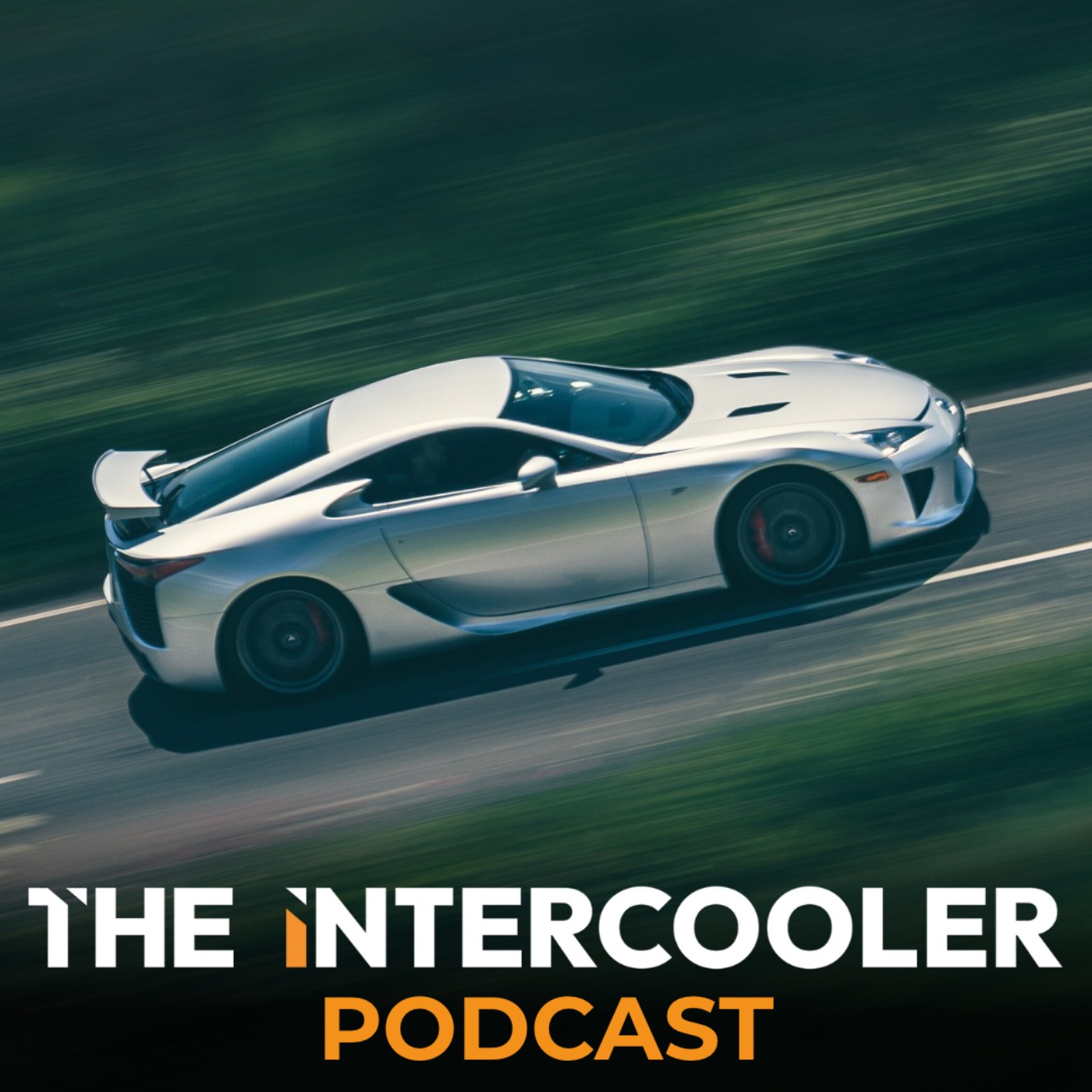
Lewis Hamilton is back to his best #318
About this episode
Lewis Hamilton’s Ferrari win becomes the episode’s anchor, with hosts crediting Ferrari’s three-stop strategy, a late virtual safety car that helped timing, and Hamilton’s pace in the final stint—plus the fact he’s the oldest winner since Jack Brabham. From there, the discussion widens to endurance racing: Toyota’s early fuel stop at Le Mans, the role of BoP opacity, and why standardized LMP2 feels closer to a level playing field. The show also pivots into EV policy and performance-car design debates.
Dan Prosser and Andrew Frankel discuss Lewis Hamilton's remarkable return to the top step of the Formula 1 podium – his first Grand Prix win for Ferrari. Is he now back to his best, and can he even fight for this year's drivers' championship? Dan and Andrew also talk about the 24 Hours of Le Mans, won by Toyota, plus the new electric BMW M3 and the fearsome Nichols N1A.
Use coupon code pod20 at checkout to get 20% off an annual subscription to The Intercooler's online car magazine for the first year! Listen to this podcast ad-free, and enjoy a subscriber-only midweek podcast too. With a 30-day free trial, you can try it risk-free – https://www.the-intercooler.com/subscribe/
Father's Day gifts – https://www.the-intercooler.com/gift-subscriptions/
Find out more about JBR Capital here – https://www.jbrcapital.com
Use coupon code Ti10 to get 10% off your Supernatural Car Care order – https://supernaturalcarcare.com/
Hosted on Acast. See acast.com/privacy for more information.
Le Mans
"Neither of us were at Le Mans this year for various reasons. I was at a wedding, actually, a wedding with zero phone reception and no Wi-Fi."
Le Mans is a famous long-distance race in France where cars race for about 24 hours. Because the race lasts so long, teams have to plan things like pit stops and fuel carefully.
Le Mans refers to the 24 Hours of Le Mans endurance race in France, famous for multi-class racing and long stints where strategy matters as much as outright speed. In endurance racing, decisions like when to pit can swing track position and ultimately the result.
fuel after only half a stint
"Toyota decided to go for fuel after only half a stint, putting them completely out of sync with the rest of the grid."
In endurance races, teams run the car for a while, then stop to refuel. If they refuel after only half as long as usual, they end up stopping at different times than other cars, which changes track position.
In endurance racing, a stint is a continuous period a car runs before it pits again. Pitting for fuel after only half a stint means the team is refueling earlier than planned/typical, which can put them out of sync with the rest of the field and affect who is on track at any given time.
the rest of the grid
"Toyota decided to go for fuel after only half a stint, putting them completely out of sync with the rest of the grid."
“The grid” just means all the race cars competing. If one team’s pit timing is different, it can make it confusing to know which cars are ahead at a given moment.
The grid is the set of cars competing in the race, and in endurance context it also implies their relative timing and pit cycles. When a team is “out of sync with the rest of the grid,” it usually means their pit timing differs from other teams, making it harder to predict who will be where on track.
attrition
"if others form by like, well, there wasn't an awful lot of attrition. There was a fair bit in the hypercars."
Attrition just means how many cars end up not finishing the race. If fewer cars drop out, the race order stays more stable; if more fail, the results can change quickly.
Attrition in racing means cars dropping out due to crashes, mechanical failures, or other issues. Lower attrition usually means more cars finish, while higher attrition can reshuffle results because fewer competitors remain.
hypercars
"But it all sort of worked out very well for them. I mean, ... There wasn't an awful lot of attrition. There was a fair bit in the hypercars."
Hypercars are the fastest top-level race cars in that kind of endurance event. They’re high-tech and can be harder to keep running perfectly for the whole race.
Hypercars are the top class of modern Le Mans–style endurance prototypes, built around high-performance hybrid and aero-focused race machinery. They’re typically faster and more complex than lower classes, so attrition (crashes or mechanical issues) can be especially impactful.
right tyres
"But the BMW is the Toyotas. And the Caddy, in particular, the didn't know who was on the right tyres."
In a race, “tyres” are the tires the car uses. Choosing the right ones—and when to change them—can make the car faster and help it last longer.
“Tyres” here means the tire compound and condition the team chooses for the race. Picking the right tires (and when to switch them) strongly affects grip, lap times, and how long the car can run before performance drops.
strategy
"You didn't know what strategy would be played out. You didn't know what stint makes people do."
Strategy is the team’s plan for when to pit and what to do during the race. It’s not just about going fast—it’s about timing and managing tires.
Race strategy is the plan for pit stops, tire changes, and timing to manage speed and track position. In endurance-style racing, strategy can outweigh raw pace because small timing differences compound over many laps.
qualifying
"they won the more in the kind of way that race tends to get won by teams that don't make mistakes, that show consistent pace. And it just it showed what a complete mockery qualifying was"
Qualifying is the session used to set the starting order for the race. The host’s point is that the race outcome didn’t match qualifying performance—suggesting tire/strategy execution and consistency mattered more than one-lap speed.
balance of performance
"And this is where we always have to talk about the dreaded balance of performance. It was it was hilarious. You listen to the commentary..."
“Balance of performance” is how race organizers try to make different cars compete more evenly. They do it by applying rules that limit or adjust things so one car doesn’t run away with the race. In this segment, the host is saying it’s become a bit of a mystery even to teams about what other teams are allowed to run.
“Balance of performance” (BoP) is a rule used in multi-manufacturer racing to keep different cars competitive by adjusting performance. Officials may change things like engine output limits, aerodynamic restrictions, or weight so no one car dominates. The host is describing how BoP affects what teams can realistically do on track and how it’s communicated (or not) to the public.
FIA
"I was listening both to the official FIA commentary on the telly. And then when I couldn't be watching telly, I'd be listening to Radio LeMol."
The FIA is the organization that governs a lot of auto racing and writes/enforces the rules. When they’re mentioned alongside BoP, it means they’re involved in how cars are regulated so competition stays fair. The host is also using it to point out what the official broadcast says versus other sources.
The FIA (Fédération Internationale de l’Automobile) is the main governing body for many forms of motorsport, including setting and enforcing rules. In endurance and GT racing, the FIA often works with other organizations to administer BoP and technical regulations. The host references “official FIA commentary,” tying it to the sport’s rule-making and oversight.
restrictors
"I guess you have to know what your own BOP is, because you have to know what era level you can run, what restrictors you can run, what ballast you have..."
Restrictors are limits that reduce how much power a race car can make. Race organizers use them to stop one car from being too strong compared to others. Here, the host is saying teams may know what restrictors they themselves are allowed to run.
In racing BoP contexts, “restrictors” are hardware or rule-imposed limits that reduce how much air (and therefore how much power) an engine can make. They’re used to bring different cars closer in performance by capping output. The host lists restrictors alongside other BoP levers like ballast and engine/level adjustments.
ballast
"because you have to know what your own BOP is, because you have to know what era level you can run, what restrictors you can run, what ballast you have..."
Ballast is extra weight added to a race car. It’s used so the car doesn’t end up too fast compared to others. In BoP, teams need to know how much ballast they’re required to run.
“Ballast” in racing is added weight placed in a car to control performance under BoP rules. By increasing minimum weight, organizers can reduce acceleration and overall pace to match competitors. The host groups ballast with restrictors as part of the BoP details teams must know for their own car.
ACO
"And the FIA would, and the ACO would say, well, that's fantastic, because look what happened, we had really close racing..."
The ACO is the group that runs endurance racing—especially the Le Mans events. They help set up the rule framework with the FIA. In this segment, the host is saying the FIA/ACO like BoP because it can create closer racing.
The ACO (Automobile Club de l’Ouest) is the organizer behind major endurance racing, most famously the 24 Hours of Le Mans. It works with the FIA on regulations for endurance classes, including how performance is balanced across cars. The host mentions the FIA and ACO together to explain why BoP is managed in a way that can keep competition close.
LMP two grid
"But what I liked is, I thought it was very instructive, you look at the LMP two grid, which is essentially one make base series now."
LMP2 is a category of race cars used in long-distance endurance racing. The “grid” just means the set of cars that start the race in that class.
LMP2 is a prototype racing class in endurance events, and the “grid” is the lineup of cars competing in that class. When the host says “LMP two grid,” they’re talking about how the LMP2 field is structured and how cars are matched up for competition.
one make base series
"you look at the LMP two grid, which is essentially one make base series now. Everybody has the same chassis, everybody has the same engine gearbox, everybody has the same shape car."
A “one make” series is where most teams run essentially the same type of race car. That makes it easier to compare driver skill and team work because the cars aren’t wildly different.
A “one make” series means most competitors use the same (or very closely regulated) car hardware, so performance differences come less from the car itself and more from setup and driver skill. In this context, the host argues LMP2 has become effectively “one make” in how cars are specified.
chassis
"Everybody has the same chassis, everybody has the same engine gearbox, everybody has the same shape car."
In racing, the chassis is the car’s main structural frame that everything else mounts to. When the host says everyone has the same chassis in LMP2, they mean the core platform is standardized so teams can’t gain an advantage from a different base structure.
engine gearbox
"Everybody has the same chassis, everybody has the same engine gearbox, everybody has the same shape car."
That phrase means the engine and the transmission working together. The host is saying LMP2 cars use the same basic powertrain parts, so teams can’t win just by picking a better one.
“Engine gearbox” here refers to the combination of the engine and the transmission used to put power to the wheels. The host’s point is that in this LMP2 setup, those major powertrain components are standardized, limiting performance differences from hardware choice.
BOP
"All you can do to make a difference, there's no BOP and LMP two. All you can do is change the setup and choose really good drivers."
BOP is a way race organizers try to make different cars perform more similarly. They do this with rules that limit or adjust things so one car doesn’t dominate.
BOP stands for “Balance of Performance,” a set of rules used in racing to equalize different cars’ pace. The host is saying there’s “no BOP” in the way they’re describing LMP2, implying the cars are already closely matched by regulation.
setup
"All you can do to make a difference, there's no BOP and LMP two. All you can do is change the setup and choose really good drivers."
A “setup” is how a team tunes the race car to make it handle and perform the best. If the cars are similar, setup becomes one of the biggest ways teams can differ.
A “setup” is the set of adjustments teams make to how a race car behaves—things like suspension settings, tire pressures, and aerodynamic adjustments. The host argues that with similar cars, setup work is one of the main ways teams can still create an advantage.
peg back your arrow
"And nobody is saying, Oh, well, it's your turn now. Or, you know, it's, you know, we're going to peg back your arrow a bit or give you a bit more weight or cut down your engine."
They’re talking about aerodynamics—how the car’s shape pushes it down onto the track. “Peg back” means taking away some of that advantage so it can’t run away from the others.
“Arrow” is a shorthand for aerodynamic downforce/drag balance, and “peg back your arrow” means reducing a car’s aerodynamic advantage. In the host’s argument, they’re contrasting a level field with rules that would deliberately slow a faster car by limiting aero or power.
give you a bit more weight
"And nobody is saying, Oh, well, it's your turn now. Or, you know, it's, you know, we're going to peg back your arrow a bit or give you a bit more weight or cut down your engine."
Race officials can add extra weight to a car to make it slower. The host is saying that kind of adjustment changes the competition rules instead of letting the cars race on equal terms.
Adding “weight” is a common performance-balancing method in racing, used to slow a faster car relative to others. The host lists it alongside aero and engine limits as examples of how organizers can adjust competitiveness rather than relying purely on driver/team performance.
cut down your engine
"And nobody is saying, Oh, well, it's your turn now. Or, you know, it's, you know, we're going to peg back your arrow a bit or give you a bit more weight or cut down your engine."
This means reducing how much power the engine can make. The host is describing it as a rule that can be used to slow a car down so racing stays closer.
“Cut down your engine” refers to reducing engine output via restrictions or limits, another way to equalize performance between different cars. In this segment, it’s framed as an example of performance-balancing measures that the host prefers to avoid in favor of a more level playing field.
rear wheel drive
"Everything's going rear wheel drive whoopee, which is really [726.7s] good news."
Rear wheel drive means the back wheels get the power. In racing, that can change how the car handles and grips the track. The speaker is saying the new rules moving toward RWD is a positive change.
Rear wheel drive (RWD) means the engine’s power is sent to the rear wheels. In racing rule discussions, mandating RWD can affect traction, handling balance, and how teams design drivetrains. The host frames it as “good news,” implying they prefer RWD for the racing feel.
bodywork
"apart from you'll be able to put [742.3s] your own bodywork on to make a Ferrari look like a Ferrari or a Cadillac look like a Cadillac or [753.4s] whatever."
Bodywork is the car’s outer shape—panels and styling. The host is saying rules might let teams change the look while keeping the important performance parts the same. That way, cars can resemble brands without necessarily being faster.
Bodywork is the outer panels and styling surfaces of a race car, which can be allowed to vary even when core mechanical components are regulated. The host describes a future where teams can put their own bodywork on a standardized platform to create recognizable brand-like appearances. This is about how regulations can separate “look” from “performance.”
Ferrari
"apart from you'll be able to put [742.3s] your own bodywork on to make a Ferrari look like a Ferrari or a Cadillac look like a Cadillac or [753.4s] whatever."
Ferrari is mentioned as an example of a brand whose look could be mimicked with allowed bodywork changes. The host is talking about how rules might control performance but still let cars resemble brands. They don’t name a specific Ferrari model in this part.
Ferrari is used as an example of how future rules might allow teams to change bodywork so cars can look like recognizable brand identities. The host’s point is that appearance customization could be separated from performance. No specific Ferrari model is named here.
Cadillac
"make a Ferrari look like a Ferrari or a Cadillac look like a Cadillac or [753.4s] whatever."
Cadillac is mentioned as another example of a brand whose appearance could be recreated with allowed outer panels. The speaker is arguing that rules could make cars similar in performance while still letting them look different. No specific Cadillac model is named.
Cadillac is referenced alongside Ferrari as an example of brand-like styling that could be achieved through permitted bodywork changes. The host is describing a regulatory direction where cars may be mechanically similar but visually distinct. This is a branding/appearance point rather than a technical one.
Toyota
"But well done Toyota. So do you know what, they've now won Le Mans six times. [797.6s] That's as many as Bentley and one behind Jaguar."
Toyota is the car company the host is talking about winning Le Mans. They’re saying Toyota struggled in the earlier top-prototype years, then became very successful later. The point is how competition levels changed over time.
Toyota is the manufacturer the host credits with multiple Le Mans Prototype wins in the segment. The discussion contrasts Toyota’s earlier difficulty in the LMP1 era with later dominance, tying it to changes in the competitive field. It’s a brand-focused argument about how manufacturer participation affects results.
LMP one
"And during the height of the LMP one era, when [804.6s] there were lots of many of several manufacturers competing, Toyota couldn't win that race for [808.9s] love nor money, could they?"
LMP1 was the highest-level prototype racing class in endurance events like Le Mans. It was where the most advanced, quickest cars competed. The speaker is talking about how Toyota’s success looked different depending on who else was racing.
LMP1 was the top prototype class in the Le Mans endurance structure during its era, featuring the fastest, most technologically advanced cars. The host discusses the “height of the LMP1 era” and how Toyota’s results changed as other manufacturers and private teams entered or withdrew. This is about how class participation affects perceived competitiveness.
Jaguar
"they've now won Le Mans six times. [797.6s] That's as many as Bentley and one behind Jaguar."
Jaguar is another car brand mentioned for comparison. The host says Toyota is one win behind Jaguar at Le Mans. It’s just part of the totals being discussed.
Jaguar is mentioned as another historical Le Mans winner in the host’s comparison of total wins. The point is to contextualize Toyota’s success relative to other major endurance brands. No specific model is discussed in this segment.
Bentley
"So do you know what, they've now won Le Mans six times. [797.6s] That's as many as Bentley and one behind Jaguar."
Bentley is another car brand the host brings up for comparison. They’re saying Toyota’s Le Mans wins are equal to Bentley’s total. It’s a historical comparison, not a deep dive.
Bentley is referenced as a benchmark for Le Mans Prototype success, with the host noting Toyota has matched Bentley’s win count. This is part of a comparison of historical endurance racing achievements. The brand mention is about context, not technical details.
private teams
"It was when LMP one was just all everybody else had gone. And it was them [826.3s] versus a few private teams. And frankly, everybody knew the private teams didn't stand ahead."
Private teams are smaller racing outfits that aren’t big manufacturer factories. They often have fewer resources than the top factory teams. The speaker is suggesting Toyota’s early wins were easier to achieve because fewer strong teams showed up.
Private teams are independent racing entrants that aren’t factory-backed manufacturers. In endurance racing, their resources and development access can differ from major manufacturers, which can influence competitiveness and how wins are perceived. The host argues Toyota’s early LMP1 success was affected by who else was (or wasn’t) competing.
hypercar field
"did this weekend. No, no, you know, the strongest field hypercar field. Well, I guess you could say [852.6s] the Porsches weren't there."
A “hypercar field” is just the group of the very top race cars competing in the same race. When someone says it’s a strong hypercar field, they mean the competition is tough.
In endurance racing, a “hypercar field” means the set of top-tier Hypercar-class cars competing in the same event. It’s a way of talking about how strong the lineup is—both in terms of car performance and factory support.
hybrid system
"because it may be that they are not they are so constrained by for instance, not having a hybrid [950.0s] system on the car. That it's not possible for them to, you know, find those extra tents that will"
A hybrid system means the car uses both a traditional engine and an electric assist. In racing, that can help the car accelerate and manage energy better during the race.
A hybrid system in racing uses an additional energy source—typically an electric motor and battery—to supplement the engine. In Hypercar rules, hybrid capability can affect acceleration, efficiency, and how teams manage power over a stint.
Lewis Hamilton
"Lewis Hamilton's first Grand Prix win for Ferrari. I was so happy and I feel smug, actually. But he also did it on merit."
Lewis Hamilton is a British Formula One driver known for multiple World Championships and for being one of the sport’s most dominant modern racers. In this segment, he’s discussed in the context of a Ferrari win and how his race pace and strategy execution still hold up at an older age.
Grand Prix win
"Lewis Hamilton's first Grand Prix win for Ferrari. I was so happy and I feel smug, actually. But he also did it on merit."
A “Grand Prix win” refers to winning a Formula One race event, not just a single sprint or qualifying session. In F1, each Grand Prix is a points-paying race weekend, so a win is a major championship result.
three-stopping
"Ferrari nailed the strategy ahead of the Mercedes by three-stopping. And a bit of fortune for Lewis with that late virtual safety car that allowed him to pit, take his final pit stop."
In F1, “three-stopping” means stopping for tires three times instead of two or one. It’s a strategy decision that affects how fast you can go and how much time you spend in the pits.
“Three-stopping” is a pit-stop strategy in Formula One where a driver plans to change tires three separate times during the race. It’s a tactical choice that balances tire wear, fuel/pace, and how much time you lose (or gain) relative to rivals’ stop timing.
virtual safety car
"Ferrari nailed the strategy ahead of the Mercedes by three-stopping. And a bit of fortune for Lewis with that late virtual safety car that allowed him to pit, take his final pit stop."
A virtual safety car is like a race slowdown mode that’s controlled by signals, not an actual car on track. Teams often use it to make pit stops at a better moment, because the cars are moving more slowly and the timing works out.
In Formula One, a virtual safety car is an on-track control period where the race is effectively slowed using signals rather than deploying a physical safety car. It changes how teams time pit stops because the field bunches up and the cost of losing time in the pits can be reduced.
Jack Brabham
"So he's the oldest winner in Formula One since Jack Brabham in 1970. Yeah. Yeah, because he was a couple of months old of the Nigel was when he won his last."
Jack Brabham was an Australian Formula One driver and team owner, and the sport’s first (and only, historically) driver to win a World Championship in a car bearing his own team’s name. The segment uses him as a historical benchmark for age-related records in F1 race wins.
compression ratio tests
"Yeah, also the, the FIA introduced the new compression ratio tests for Monaco. And we, we didn't see the outcome of it there, such an outlier track."
The compression ratio is how tightly an engine squeezes the fuel/air before ignition. The FIA tests are rule checks that can affect how teams set up their engines, which can change how fast the cars are.
Compression ratio tests are FIA technical checks tied to how much the engine compresses the air-fuel mixture inside the cylinder. In F1, changes to testing rules can influence engine mapping and performance, and the hosts connect the new tests to why Ferrari looked unusually quick.
title fight
"And so actually, is Lewis now in this title fight? Could he fight for more wins this, this season?"
A “title fight” means the race to win the championship for the whole season. They’re discussing whether Hamilton can realistically challenge for it again.
A “title fight” is the season-long battle for the Formula 1 World Championship. The hosts are asking whether Lewis Hamilton is now in contention for more wins and potentially the championship, based on recent pace and confidence.
ZEV mandate
"to roll back this ZEV mandate. It seems to be happening now. Well, while Kirstama remains our prime minister, we're recording this on the Monday that it goes out."
A ZEV mandate is a government requirement that pushes car companies to sell more cars that produce no tailpipe emissions. In practice, that usually means electric cars.
A ZEV mandate is a government rule that requires automakers to sell a certain share of zero-emission vehicles (ZEVs), typically battery-electric cars. The idea is to force fleet-wide adoption by making it harder to sell only conventional gasoline/diesel vehicles.
EVs
"car manufacturers simply cannot afford to cut prices so much that people are almost forced to buy EVs that they don't really want, or to sell so few cars in the UK that the proportion of the overall number of cars they sell are EV, therefore, to meet the criteria of the test."
EVs are electric cars that run on electricity stored in a battery. When people talk about EVs in policy, they usually mean what percentage of new cars sold are electric.
EVs are electric vehicles, meaning cars that use electric motors powered by batteries rather than burning gasoline or diesel. In these policy discussions, “EV share” refers to what fraction of new car sales are electric.
net zero concept
"Ed Miliband, who is clearly a man who is very waded to the whole net zero concept and is among the current cabinet far and away perceived to be far and away the most sort of ardent supporter and defender of making active steps to reduce climate change."
“Net zero” is the idea that a country (or company) should not add more greenhouse gases to the atmosphere than it removes. It’s a big climate target that can influence laws about cars and energy.
“Net zero” is the climate goal of balancing greenhouse-gas emissions with an equivalent amount removed from the atmosphere. In policy debates, it often drives targets for vehicle electrification and limits on fossil-fuel car sales.
pure petrol and diesel cars
"And yeah, the mandate is currently written. All pure petrol and diesel cars, the sale of all pure petrol and diesel cars with some exemptions, were going to be outlawed from 2030."
This phrase means regular gas and diesel cars that don’t have a plug-in electric battery. They run only on fuel, not electricity.
“Pure petrol and diesel cars” refers to conventional internal-combustion vehicles that rely entirely on gasoline or diesel fuel rather than being able to charge and drive electrically. In the transcript, this is the category targeted for phase-out under the mandate timeline.
plug-in hybrids
"And so the remaining 20% were going to be made up by plug-in hybrids. This report doesn't say anything about that."
Plug-in hybrids are cars that have both a gas engine and an electric motor. You can charge the battery by plugging the car in, but it can also run on gas.
Plug-in hybrids are cars that combine an internal-combustion engine with an electric motor and a battery that can be charged from an external power source. They’re often treated as a transitional technology in regulations because they can run electrically some of the time, but still use fuel.
residual values
"what manufacturers have to do is massively discount EV sales to meet the mandate, therefore killing their residual values, therefore making people even less likely to want to go out and buy one."
Residual value is what a car is expected to be worth later, like when you sell it or after a lease. If EVs are heavily discounted now, people may expect they’ll be worth less later too, so fewer people want to buy them.
“Residual value” is the estimated value a car will have after a period of ownership or a lease term. When EV sales are discounted or incentives change, it can lower expectations for what used EVs will be worth later, which makes buyers more hesitant to purchase new EVs.
BMW
"Over the weekend at Le Mans, BMW launched the M Concept Neue Classe, which is really a concept for the electric M3, which we know is coming."
BMW is a major car brand from Germany. They’re showing a new performance-focused electric concept that’s meant to point toward an electric M3.
BMW is the German automaker behind the “M Concept Neue Klasse” reveal mentioned here. The “M” line is BMW’s performance sub-brand, and the concept is positioned as an electric successor to the M3.

M Concept Neue Classe
"BMW launched the M Concept Neue Classe, which is really a concept for the electric M3, which we know is coming. There's going to be a petrol one as well."
The “M Concept Neue Classe” is a BMW concept car showing what an electric M3 could look like. It’s a performance-style four-door concept meant to preview BMW’s next EV design language.
The “M Concept Neue Classe” is BMW’s concept preview for an electric M3. It’s described as a tough-looking four-door performance car with an “amazing stance,” and it’s meant to showcase BMW’s upcoming electric design direction.
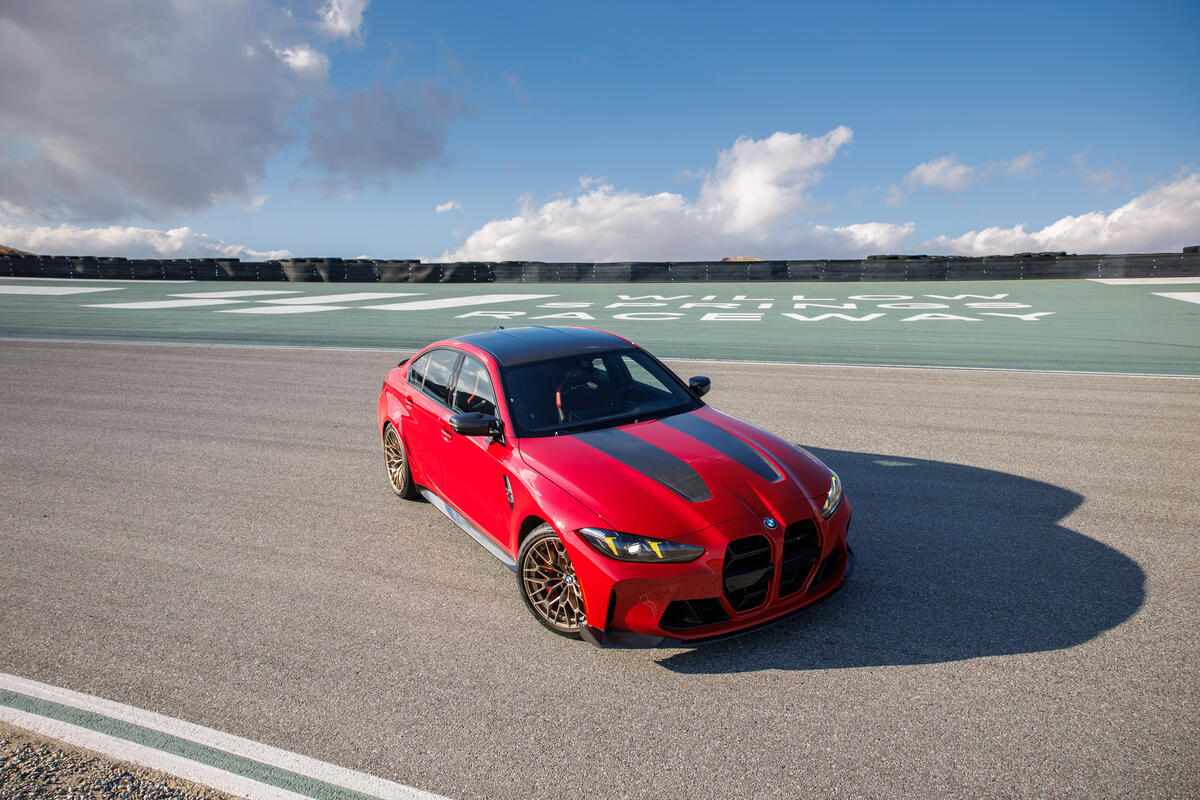
BMW M3
"...lasse, which is really a concept for the electric M3, which we know is coming. There's going to be a p..."
The BMW M3 is a sporty BMW that’s built for fast driving and strong handling. The podcast mentions an electric version concept, meaning BMW is exploring how the M3’s performance style could work with an electric motor instead of a traditional engine.
The BMW M3 is a high-performance version of the 3 Series, known for combining everyday usability with track-capable power and handling. In this podcast context, it’s discussed as an upcoming “electric M3” concept, which is significant because it signals how BMW’s performance identity may translate to an all-electric powertrain. That makes it a natural topic for a show focused on how performance tech is evolving.

Neue Classe
"...he weekend at Le Mans, BMW launched the M Concept Neue Classe, which is really a concept for the electric M3, w..."
Neue Klasse is BMW’s plan for a new kind of car platform. In the podcast, it’s connected to the idea of an electric M3, meaning it’s part of how BMW wants to build future electric performance cars. The focus is on the foundation BMW will use for upcoming models.
Neue Klasse is BMW’s concept for a new vehicle platform strategy, discussed here alongside an “electric M3” concept. In the podcast, it’s significant because it frames how BMW plans to build future electric performance cars, including the idea of an electric M3. That makes Neue Klasse a key topic when talking about where BMW’s next-generation engineering direction is headed.
1000 horsepower
"it's going to the road car, which we know is coming, is going to have up to 1000 horsepower. I did see others saying it's actually 650."
Horsepower is a way to describe how much “work” the car’s power system can do. Higher horsepower usually means stronger acceleration. The hosts are arguing about what the real power number will be for the upcoming car.
“Horsepower” is an engineering measure of how much power an engine or motor can produce. In EV discussions, it’s often used to compare acceleration potential and overall output across different battery/motor configurations. Here it’s part of a debate about whether the upcoming road car is closer to 650 hp or 1000 hp.
650
"I did see others saying it's actually 650. So maybe it's not quite that four-figure number."
The “650” figure is shorthand for an estimated horsepower output (650 hp) for the upcoming road car. It matters because the difference between ~650 hp and ~1000 hp is not just power—it also implies different motor/battery sizing and likely different vehicle mass. That affects acceleration, traction, and how the car feels on track.
one motor per wheel
"the road car will have one motor per wheel, which means you can, I've driven cars like that, one electric motor per wheel, and they do amazing things, particularly on track."
It means the car has a separate electric motor for each wheel. Because of that, the car can decide how much push each tire gets. That can help it grip better and steer more precisely, especially when driving hard.
“One motor per wheel” means each wheel has its own electric motor, so the car can control torque to each tire independently. That enables very fine traction management and can make the car feel especially responsive on track. It’s a key reason some EVs can rotate and accelerate in ways traditional drivetrains can’t match.
torque vectoring
"The torque vectoring that you can do with that configuration, it is extraordinary, you know, whether or not it actually equates to an engaging and rewarding driving experience is another matter."
Torque vectoring is when the car can change how much power goes to each wheel. By doing that, it can help the car rotate into a turn and stay planted. It’s like giving the steering and grip a more “hands-on” feel.
Torque vectoring is the ability to vary the drive force (torque) sent to individual wheels. With “one motor per wheel,” the system can adjust torque side-to-side and wheel-to-wheel to influence yaw (rotation) and stability. The result can be sharper turn-in and more controllable traction, though the driver feel depends on tuning.
nearly 1900 kilos
"But given the current M3 is nearly 1900 kilos, it probably is a thick end of two tons as a touring."
This is the car’s weight. Heavier cars usually feel less agile and can need more energy to move. The host is comparing the current M3’s weight to what an EV version might weigh.
“Kilos” here refers to vehicle curb weight, which strongly influences braking distances, tire grip, and how much energy the powertrain must move. The host uses the current M3’s weight as a baseline, then argues that converting to an EV will likely add mass due to the battery. That added weight can blunt handling even if power increases.
2.4 tonne car
"Turn that into an EV and we know what other Neuer classes work. I mean, this is going to be a 2.4 tonne car, isn't it?"
That’s a guess at how heavy the EV version will be—about 2.4 tons. Extra weight can make a car feel slower to change direction, even if it has more power. The host is weighing power versus weight for driving feel.
“2.4 tonne” is a projected curb weight for the EV version being discussed. Weight is especially important for EVs because batteries add significant mass, which can affect tire loading, steering response, and efficiency. The host is using this estimate to argue that reduced weight might matter more than chasing extreme horsepower.

Bmw M
"... this is somehow going to buck the trend and that BMW M, which has built so much of a reputation on havin..."
The BMW M Coupe (E36) is a two-door BMW made by BMW’s performance team (M). It’s designed to feel sporty and fun to drive, and it’s part of the older generation of BMW M cars that helped build the brand’s performance reputation.
The BMW M Coupe (E36) is a compact, two-door performance car from BMW’s M division, based on the E36-generation 3 Series platform. It’s often discussed because it represents a more focused, driver-oriented approach to performance during that era, and it’s a relatively distinctive body style compared with the more common sedans and convertibles. In the podcast, it’s referenced as part of BMW M’s reputation and how that reputation has been built over time.

new M5
"the new M5, which is immensely heavy because it's based on the same platform they spend their EV off, I think it weighs two and a half tonnes, has not been, I'm sure it is the least well received M5 that there has ever been."
They’re talking about the latest BMW M5 and saying it’s heavier than you’d expect. They also suggest BMW is sharing a lot of design ideas between electric and gas versions, which changes how the car feels.
The speaker is discussing the “new M5” as a modern BMW M5 that’s notably heavy, and they connect that weight to how it’s been received by critics. They also point out that BMW is using the same underlying platform strategy across EV and ICE versions, which affects how the car is engineered and marketed.

BMW F10
"...here has ever been. The possible exception of the F10, but doubt it. Anyway, there's nothing I can see ..."
The BMW 5 Series is a comfortable, mid-size luxury car. People talk about it a lot because it’s meant for daily driving while still offering a sporty feel and modern features. The podcast is referencing how different versions of the 5 Series have been viewed over time.
The BMW 5 Series is BMW’s mid-size luxury sedan line, typically positioned between smaller executive cars and larger flagship models. It’s frequently discussed because it balances comfort, technology, and a range of powertrains, making it a benchmark for everyday luxury performance. In this podcast context, it’s mentioned in relation to which 5 Series generations are (or aren’t) seen as exceptions.
powertrain agnostic
"people want petrol cars, we'll just make petrol cars. And it's what you say, [1983.8s] powertrain agnostic is your phrase, isn't it?"
“Powertrain agnostic” means the car’s design can be used with different kinds of engines. So the same basic car can be made as gas, hybrid, or electric.
“Powertrain agnostic” means the same vehicle platform is designed to work with different types of drivetrains—like internal-combustion engines, hybrids, or fully electric systems. The idea is to reduce development complexity by building one car architecture that can be adapted for multiple energy sources.
mild hybrid
"[1994.2s] Well, I did read that it might be a mild hybrid, but it won't be a fair thing, [1998.3s] won't be a plug-in."
A mild hybrid is a car that has a small electric assist, but it still mainly runs on gas. The electric part helps the engine, but it usually isn’t meant to replace the gas engine for long trips.
A “mild hybrid” uses an electric motor to assist the engine, but it usually can’t drive the car purely on electricity for long distances. It’s often used to improve efficiency and smoothness (like during acceleration or coasting), while keeping the combustion engine as the primary power source.
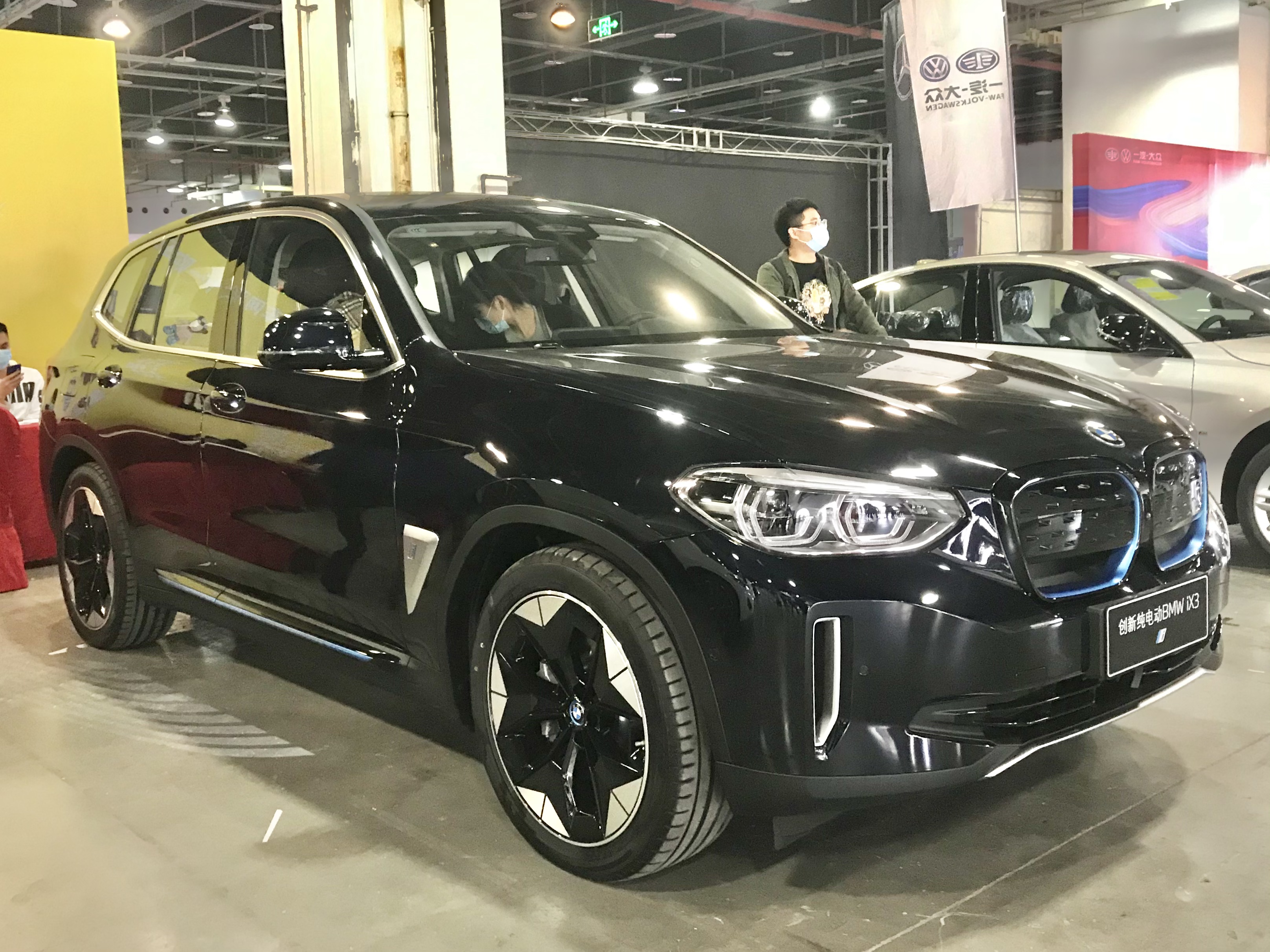
iX3 (G08)
"... the Nair class. I mean, we've already driven the IX3 and we know the three series is coming. And the I..."
The BMW iX3 is an electric SUV, meaning it runs on a battery and electric motor instead of gasoline. It’s built in the same general size category as the X3, so it’s meant to feel like a normal BMW SUV but with electric power. The podcast mentions it because it’s already been driven and helps set expectations for future electric BMWs.
The BMW iX3 (G08) is an all-electric version of the X3-sized SUV, designed to bring electric driving to a familiar BMW SUV format. It’s relevant in this podcast because it’s used as an example of what BMW has already driven while discussing upcoming electric models. That makes it a useful reference point for how BMW’s electric strategy is progressing.
massive tax incentives
"Of course, there will [2033.2s] be massive tax incentives and maybe they'll do a lot of fleet sales on the back of that, [2036.9s] but it's something which people actually desire to go out and spend their own money on."
“Tax incentives” are government discounts or tax breaks that make a car cheaper to buy. The speaker is saying EV sales might be boosted by these incentives, not just because people want the cars.
“Tax incentives” are government financial benefits that reduce the effective cost of buying certain vehicles, commonly used to encourage adoption of lower-emission cars. The speaker suggests these incentives could drive sales of EVs (including performance-flavored versions), even if buyers don’t truly desire the product for its driving experience.
fleet sales
"there will be massive tax incentives and maybe they'll do a lot of fleet sales on the back of that, [2036.9s] but it's something which people actually desire to go out and spend their own money on."
“Fleet sales” means businesses buy lots of cars at once for their employees or operations. The speaker is suggesting this can boost EV numbers even if individuals aren’t as excited.
“Fleet sales” are vehicle purchases made in bulk by organizations—like companies or government agencies—rather than individual retail buyers. The speaker implies fleet buying can inflate EV adoption numbers even if the cars aren’t as compelling to private customers.
hold their value
"people are savvy now and they know that high-end, particularly performance EVs, they don't hold their value."
“Hold their value” means how much money the car is still worth later when you go to sell it. The host is saying performance EVs often lose that value quickly.
“Hold their value” is about resale value—how much of the purchase price a car retains over time. The host argues that many high-end performance EVs (and even some brands’ performance cars) depreciate sharply, making a large investment harder to justify.
Nichols N1A
"That's the Nichols N1A, right? Which is, you look at it, you just think, well, that's a Cannam car for the road."
The Nichols N1A is a special open-top performance car. The host describes driving it in terrible weather and getting drenched because it doesn’t have a normal roof or windshield setup.
The Nichols N1A is an open-top, road-going performance car concept aimed at delivering a supercar-like experience with a big V8. In this segment, the host emphasizes its “pure open top” layout and how it behaves in extreme weather, including being soaked while driving.
aero screen
"It doesn't even have a sort of temporary fabric hood or anything. It's pure open top, only has an aero screen, but not a proper screen at all."
An aero screen is a small wind shield on an open-top car. It helps with wind, but it doesn’t fully protect you like a normal windshield—so you can still get soaked.
An “aero screen” is a wind-deflecting screen used on some open-top cars to reduce airflow toward the driver. It’s not the same as a full windshield, so it may still leave the driver exposed to rain and spray.
700 horsepower
"So it would be chucking it down so hard that you just get drenched in seconds, one moment... so it was a weird day to be driving a 700 horsepower, seven liter small block V8 open top car"
Horsepower is a way to describe how strong the engine is. They’re pointing out that even with 700 horsepower, the car is still an open-top that gets soaked in rain.
“Horsepower” is an engineering measure of engine power output, indicating how much work the engine can do. In this segment, the host uses the figure to highlight the unusual contrast of a very powerful V8 open-top car being driven in brutal weather.
seven liter small block V8
"it was a weird day to be driving a 700 horsepower, seven liter small block V8 open top car on Michelin Cup 2 tires."
This describes the engine: a V8 with a big 7.0-liter size. “Small block” generally means a more compact V8 design compared with larger engine families.
A “small block V8” is a family of compact V8 engines (commonly associated with Chevrolet’s small-block architecture) designed for relatively lighter weight and broad performance tuning. The host’s “seven liter” detail specifies a large displacement version, which helps explain the high power figure mentioned.
Michelin Cup 2 tires
"it was a weird day to be driving a 700 horsepower, seven liter small block V8 open top car on Michelin Cup 2 tires."
Michelin Cup 2 is a type of performance tire made by Michelin. It’s designed to grip well when you drive hard.
Michelin Cup 2 is a performance tire line aimed at high grip for spirited driving, often with track-focused characteristics. The host mentions it to set expectations for traction while driving a powerful open-top car in awful weather.
traction control
"no creature comforts. Power steering? No. So, you know, that is a, but it has traction control [2205.7s] and ABS, fully switchable actually, and with multiple settings."
Traction control helps stop the wheels from spinning when the road is slippery. It uses sensors to detect slip and then reduces power or brakes to regain grip.
Traction control is a driver-assistance system that reduces wheel spin by cutting engine power and/or applying brakes when the tires lose grip. It helps the car stay stable and accelerate effectively on low-traction surfaces.
ABS
"So, you know, that is a, but it has traction control [2205.7s] and ABS, fully switchable actually, and with multiple settings."
ABS is a safety system that keeps your wheels from locking during braking. That way you can still steer while stopping, especially on wet or slippery roads.
ABS (anti-lock braking system) prevents the wheels from locking up during hard braking. By modulating brake pressure, it helps maintain steering control while still maximizing stopping performance.
power to weight ratio
"It weighs 900 kilograms soaking wet at the [2222.2s] curb. It's got 700 horsepower, which is an extraordinary power to weight ratio."
Power-to-weight ratio is how strong the car is compared to how heavy it is. A higher number generally means the car feels quicker because it has less weight to push around.
Power-to-weight ratio compares how much power a car makes to how much it weighs. A higher ratio usually means quicker acceleration and stronger performance because the engine has less mass to move.
John Minut
"But we, we then decamped from that mountain road to Pembury, the racetrack, [2252.7s] the home of Welsh motorsport, that's what they call it. I've never been to Pembury before. [2259.2s] But as we were driving there, the sky's just cleared, the sun came out and it became a beautiful [2265.4s] day. And Pembury was bone dry. It was warm. And it's a proper racetrack that, you know, it's, [2272.7s] it's quite small. It's, it's very flat because it's an airfield track. But it's a, it's got some [2279.8s] quick stuff. It's a good size circuit. You can really hustle a car around there. The, the nickels, [2289.8s] I won't say too much again, but it was a blast. It was a blast around that place. [2295.5s] But I was talking to Nichols, Nichols cars CEO and founder, [2302.1s] John Minut."
John Minut runs Nichols Cars and helps decide what kind of cars they build. Here, he’s saying they’re making the M1A for people who want a more direct, less electronic driving feel.
John Minut is the CEO and founder of Nichols Cars, and he’s explaining the company’s target buyer. In this segment, he argues that some customers want a simpler, analog driving experience rather than the latest electrified and highly assisted supercar formula.

N1A
"it's called the N1A because it is the car, it is, if you like, a recreation and modern interpretation of the original McLaren M1A... So I think the N1A back then would have actually had a small block engine in it..."
The N1A is a modern car built to feel like a classic race car. The host says it’s inspired by the old McLaren M1A, including the lightweight race-car vibe and how it drives.
The N1A is presented here as a modern recreation/interpretation of the original McLaren M1A, aiming to capture the look and driving feel of that era. The host connects it to period-style engineering choices like a space-frame chassis and a naturally aspirated V8, plus a driver-focused layout.

McLaren M1A
"it's called the N1A because it is the car, it is, if you like, a recreation and modern interpretation of the original McLaren M1A, which was a K&M car, which came out, I think it competed in the 66 season."
The McLaren M1A is an old McLaren race car from the 1960s. The hosts are saying a newer car (the N1A) is basically a modern take on that original design.
The McLaren M1A is a historic McLaren Formula 1 car from the mid-1960s, known for its lightweight, race-focused design and its role in McLaren’s early success. In this segment, it’s referenced as the original inspiration for a modern recreation, the N1A.

Gordon Murray's T50
"I think you only have to look at things like Gordon Murray's T50, which had a very very different price point."
The T.50 is a modern race-inspired supercar designed by Gordon Murray. The host brings it up to compare how expensive it is and what kind of driving/engineering focus it has.
The Gordon Murray T.50 is a modern supercar designed by Gordon Murray, notable for its driver-focused philosophy and naturally aspirated engine approach. In this segment, it’s used as a comparison point for pricing and engineering direction versus the N1A.

Gordon T50
"... only have to look at things like Gordon Murray's T50, which had a very very different price point. I p..."
The Gordon Murray Automotive T.50 is a very high-end sports car made for fast driving. It’s known for being lightweight and focused on how it drives rather than just luxury. The podcast brings it up to show that some performance cars cost much more than others.
The Gordon Murray Automotive T.50 is a track-focused supercar built by Gordon Murray’s company, designed around lightweight construction and driver-focused dynamics. It’s notable in the podcast because it’s used as an example of a car with a very different price point, highlighting how performance and engineering can come in different “tiers.” The T.50’s presence in the discussion underscores the contrast between mainstream performance talk and boutique, engineering-led supercars.
naturally aspirated
"You have a light, driver oriented car with a naturally aspirated multi cylinder engine, manual gearbox, rear wheel drive."
Naturally aspirated means the engine doesn’t use a turbo or supercharger to force air in. It relies on normal airflow, and power usually comes in more smoothly as the revs rise.
Naturally aspirated (NA) means the engine draws air in without a turbocharger or supercharger. That typically changes how power is delivered—often with a more direct throttle response and power building as engine speed rises.
manual gearbox
"You have a light, driver oriented car with a naturally aspirated multi cylinder engine, manual gearbox, rear wheel drive."
A manual gearbox requires the driver to change gears using a clutch and gear lever, rather than relying on an automatic system. In performance cars, it’s often chosen for direct driver control and a more engaging connection between throttle and wheel speed.
open gate manual transmission
"It's got this beautiful open gate manual transmission, right hand drive car. But the the gear stick is on the right hand use your right hand."
It’s a manual gearbox where you can see the shift “slots” as you move the lever. Race cars like it because it feels more direct and helps you find the right gear quickly.
An open-gate manual transmission is a type of gearbox where the shift pattern is visible through a gate in the shifter housing. It’s often used in race cars because it makes the correct shift positions feel more mechanical and precise than a typical street shifter.
right hand drive
"It's got this beautiful open gate manual transmission, right hand drive car. But the the gear stick is on the right hand use your right hand."
Right-hand drive means the steering wheel is on the right side of the car. The host is saying it matches how many racing cars were set up historically.
Right-hand drive (RHD) means the steering wheel is on the right side of the car. In racing contexts, the speaker connects it to “authentic” period-style driving habits—especially when circuits and driver positioning make gear changes feel natural with the right hand.
high downforce version
"Of course, they I think there will be probably a high down force version. I think they will do that at some point, because it'd be quite straightforward to bolt on an aero kit."
A high downforce setup makes the car “squish” onto the road more at speed. That usually means better grip in corners and more confidence on track.
A high downforce version is a track-focused configuration that increases aerodynamic downforce. Downforce helps tires maintain traction in corners and at high speed, which can translate into faster lap times—especially on circuits where stability matters.
aero kit
"because it'd be quite straightforward to bolt on an aero kit, went to it and build something really optimized for the racetrack."
An aero kit is a set of add-on parts that change how air flows around the car. The goal is usually to press the car harder onto the road so it sticks better at speed.
An aero kit is an aftermarket or factory set of aerodynamic parts—like wings, splitters, and diffusers—designed to improve airflow and increase downforce. More downforce generally improves grip at speed, which can help lap times on a racetrack.
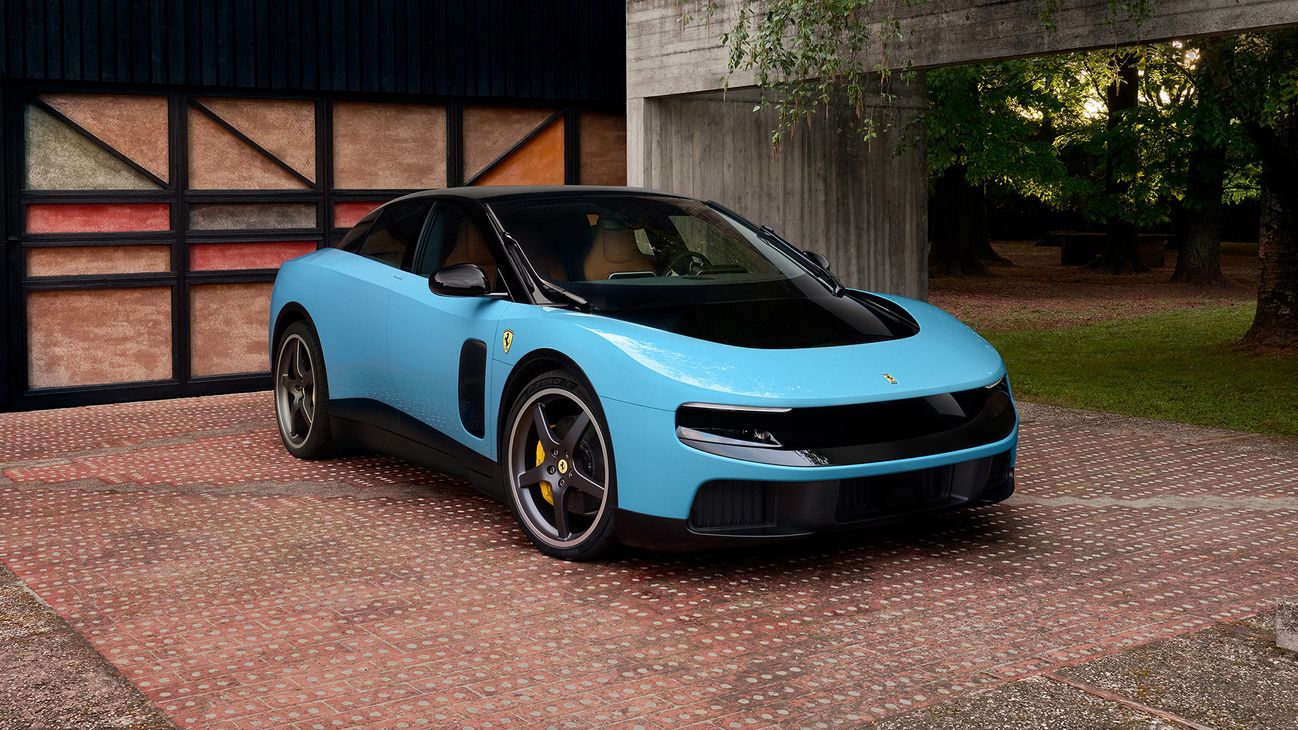
Ferrari Luce
"...any people. And I just want the same as a Ferrari luce. Well, take your pick. Yes, I think I know which ..."
The Ferrari Luce is a specific Ferrari car model. The podcast mentions it as something people might want to choose. The main point is that it’s a named Ferrari option in the discussion.
“Ferrari Luce” is referenced in the podcast as a model people might want, implying it’s a specific Ferrari product being discussed or compared. In a conversation about choosing between options, it’s used as a shorthand for a particular Ferrari direction or offering. Because the transcript treats it as a selectable choice, the key significance here is that it’s part of the lineup being weighed.
paddle shift gearbox
"you could spend a tenth of that on a radical. And okay, you might have a paddle shift gearbox, but essentially, you know, you have a really serious track day weapon there"
Paddle shifters are the little levers behind the steering wheel that let you change gears. You don’t use a normal gear lever like in a manual.
A paddle shift gearbox uses steering-wheel-mounted paddles to command gear changes without a traditional clutch pedal. It’s commonly paired with dual-clutch or automated manual transmissions, and it can deliver quick, consistent shifts for track driving.
evocation
"It's trying to be an evocation. It's trying to recapture a glorious former and now long since a much missed past era, where it was, you know, balls to the wall driving"
The host is saying the car is meant to bring back the vibe of an older kind of racing, not just chase the fastest possible times. It’s more about the experience and character than pure numbers.
In this context, “evocation” means the car is designed to recreate the feeling and spirit of a previous era rather than simply optimize for modern lap times. The speaker links that to a past style of driving and engine character—“big banger engines”—and a more raw, less assisted experience.
Koenigseggs
"And they will and they do instead compare themselves to the Pagani's and the Koenigseggs and so on, which may be a bit of a stretch, but they cost a fraction of what one of those things does."
Koenigsegg is another top-tier supercar brand. The host is using it as a comparison point for how fast and expensive these cars are versus the N1A.
Koenigsegg is a Swedish supercar brand associated with extreme performance and engineering, including cars that are often discussed in the context of top speed and acceleration. Here, the speaker contrasts the N1A against Koenigsegg to discuss whether it’s truly comparable.
Pagani's
"And they will and they do instead compare themselves to the Pagani's and the Koenigseggs and so on, which may be a bit of a stretch, but they cost a fraction of what one of those things does."
Pagani is a famous supercar brand. The host is comparing the N1A to Pagani to talk about how they stack up in desirability and performance.
Pagani is an Italian supercar brand known for high-end, track-capable cars with distinctive styling and advanced engineering. The speaker uses Pagani as a benchmark for desirability and performance, but argues the N1A’s value proposition is different.
straight line
"they cost a fraction of what one of those things does. And certainly in a straight line is probably faster."
“Straight line” means how the car does when you’re not turning—mostly acceleration and top speed. The host is saying it likely beats the others in that kind of comparison.
“Straight line” refers to performance measured without cornering—typically acceleration and top speed. The speaker claims that in a straight-line comparison, the N1A is “probably faster,” even if it may not match the supercar brands on other dimensions.
Request an Explanation
Heard something you'd like explained? We'll add it to this episode.
Sign in to request explanations for terms you heard.
Want to learn more?
Browse our glossary for plain-English explanations of automotive terms, jargon, and concepts.
Help improve this episode
See something that's not quite right? Our annotations are AI-generated and can sometimes miss the mark. Click the flag icon on any annotation to suggest a correction.
1 community members have helped improve this episode.