
Motivating Students & Helping Them Succeed
About this episode
Garrett Jacobson, an automotive technology instructor, shares his journey from a passionate teenage tuner to an educator shaping future technicians. He discusses innovative teaching methods using tools like HP Tuners to engage students, the importance of hands-on learning, and fostering resilience through failure. Garrett emphasizes the need for mentorship, flexibility, and specialization in the evolving automotive industry. He also highlights the value of industry-school partnerships and adapting education to regional needs. The conversation is filled with enthusiasm, practical advice, and insights into motivating students and building successful careers in automotive technology.
Gerrot Jacobson, Automotive Instructor at Hawkeye Community College, joins us to talk about how he challenges and motivates students in the classroom every day—giving them a safe place to fail so they can learn, grow, and keep moving forward! He also shares his path into the automotive industry and why it’s so important for shops to show up and build relationships with their local schools.
Watch the video podcast on YouTube
About the Episode
- Host: Jay Goninen, WrenchWay, [email protected]
- Guest: Gerrot Jacobson, Hawkeye Community College, [email protected]
Links & Resources
- Get notified of new episodes --> Join our email list
Join the ASE Connects Community
ASE Connects brings shops, dealerships, and schools together in one structured network to strengthen the technician pipeline. By making it easier to connect, collaborate, and support students through job shadows, internships, and classroom engagement, ASE Connects helps schools build stronger programs and helps shops develop a more consistent, local source of future technicians. Learn more:
Connect with us on social:
HPTuners
"Yeah, and HPTuners related stuff. How to use what is commonly thought of as a tuning software and breaking the law. How to actually use it for good for students."
HPTuners makes special computer programs that let you change how a car's engine works to make it faster or better. Mechanics and car enthusiasts use it to tune cars.
HPTuners is a company that produces tuning software used to modify and optimize vehicle engine control units (ECUs). It allows users to adjust parameters like fuel delivery, ignition timing, and boost pressure to improve performance or efficiency.
tuning software
"How to use what is commonly thought of as a tuning software and breaking the law. How to actually use it for good for students."
Tuning software is a special computer program that lets you change how a car's engine works to make it run better or faster.
Tuning software refers to computer programs used to modify a vehicle's engine control unit (ECU) settings. This software allows adjustments to parameters such as fuel maps, ignition timing, and boost levels to optimize performance or efficiency.
timing
"So when the vehicle's cold, it looks at this and it says, yeah, add this much timing or if it's got flex fuel, it does this."
Timing is when the spark happens inside the engine to make the car run. Changing it helps the car run better when it's cold or warm.
Timing in an engine refers to the precise control of when the spark plug ignites the air-fuel mixture in the combustion chamber. Adjusting timing can improve engine performance and efficiency, especially under different conditions like a cold start.
flex fuel
"or if it's got flex fuel, it does this. So they can see those things,"
Flex fuel means a car can use different types of gas, like regular gas or a mix with alcohol. The car knows what fuel it's using and changes how it runs to work best.
Flex fuel refers to a type of fuel system or vehicle that can run on more than one type of fuel, typically gasoline blended with ethanol up to 85%. The vehicle's engine control unit adjusts timing and fuel delivery based on the detected fuel mixture.
diagnostic tablet device
"It's 400 bucks for some sort of scanning diagnostic tablet device. You can't beat the cost of something like that."
A diagnostic tablet is like a special computer that helps mechanics find out what's wrong with a car by reading its computer.
A diagnostic tablet device is a portable tool used by mechanics to scan a vehicle's computer systems for fault codes, sensor data, and other information. These devices help identify issues and perform adjustments or resets.
EEPROM
"And back then, we were taking the EEPROM and making an electronically erasable EEPROM and soldering into the board on a P28 module on those."
EEPROM is a special computer chip in a car that controls how the engine works. People can change it to make the car run better or faster.
EEPROM stands for Electrically Erasable Programmable Read-Only Memory, a type of memory chip used in car engine control units (ECUs) to store data like fuel maps and ignition timing, which can be modified for tuning.
General Motors
"I had a lot of people that like general motors products. So I was like, okay, I can figure out what the tuning software is for that."
General Motors is a big car company that makes many different kinds of cars and trucks you might see on the road.
General Motors (GM) is a major American automotive manufacturer known for brands like Chevrolet, GMC, Cadillac, and Buick. It produces a wide range of vehicles from trucks to passenger cars.
chassis dyno
"Because even today, I still have a chassis dyno at my own shop. It's just like my hobby shop, just to be clear."
A chassis dyno is a machine that lets you test how strong and fast a car is by running it while it stays in one place.
A chassis dynamometer (chassis dyno) is a device that measures a vehicle's power output and performance by simulating road conditions while the vehicle remains stationary. It is used for tuning, diagnostics, and performance testing.

Pontiac G8
"It's like a Mustang or it's a Challenger or a Camaro or a G8 something, right?"
The Pontiac G8 is a sporty car that looks like a sedan and has a strong engine. People who like cars often enjoy working on it because it drives well and is fun to fix.
The Pontiac G8 is a performance sedan produced by Pontiac between 2008 and 2009, known for its rear-wheel drive layout and powerful V8 engines. It is often appreciated by enthusiasts for its balance of performance and practicality.

Chevrolet Camaro
"It's like a Mustang or it's a Challenger or a Camaro or a G8 something, right?"
The Chevrolet Camaro is a sporty American car that many people like to fix up and make faster. It's popular with car fans who enjoy working on cars.
The Chevrolet Camaro is a popular American muscle car known for its sporty design and performance. It has a strong following among car enthusiasts and is commonly used for tuning and restoration.

Ford Mustang
"It's like a Mustang or it's a Challenger or a Camaro or a G8 something, right?"
The Ford Mustang is a famous American sports car that many people like to modify and work on. It's often used in schools and by car fans to learn about fixing and improving cars.
The Ford Mustang is an iconic American muscle car known for its performance and cultural significance since its introduction in 1964. It has been a popular platform for modifications and tuning, making it a common subject for automotive study and enthusiast projects.

Dodge Challenger
"It's like a Mustang or it's a Challenger or a Camaro or a G8 something, right?"
The Dodge Challenger is a well-known American muscle car that many people enjoy working on and improving. It's a favorite for car lovers who like powerful cars.
The Dodge Challenger is a classic American muscle car known for its powerful engines and retro styling. It is popular among car enthusiasts and often used for performance tuning and restoration projects.
distributor
""oh yeah, you got to put a bigger ignition coil in this distributor on this Honda.""
The distributor helps send the spark to the right part of the engine so it can start and run properly.
A distributor is a component in older ignition systems that routes high voltage from the ignition coil to the correct spark plug at the right time to ignite the engine's cylinders.
ignition coil
""oh yeah, you got to put a bigger ignition coil in this distributor on this Honda.""
The ignition coil helps make the spark that starts the car's engine. It changes the battery power to a stronger spark that lights the fuel.
An ignition coil is an electrical component in a car's ignition system that transforms the battery's low voltage to the high voltage needed to create a spark in the spark plugs, igniting the fuel-air mixture in the engine.
spark plug wires
""Well, it's just that I didn't put the spark plug wires back on in the correct orientation.""
Spark plug wires are like special cables that carry electricity to the engine parts that make the spark to start the car.
Spark plug wires carry the high voltage from the distributor or ignition coil to the spark plugs, which ignite the fuel-air mixture in the engine cylinders.
brake job
""I can make so much more money doing a break job or struts or an alignment or an engine or a head gasket or a misfire or whatever it is.""
A brake job means fixing or changing parts of the car that help it stop, like the brake pads or discs, so the car can stop safely.
A brake job is a maintenance service that involves inspecting, repairing, or replacing brake components such as pads, rotors, and calipers to ensure the vehicle's braking system functions safely and effectively.
struts
""I can make so much more money doing a break job or struts or an alignment or an engine or a head gasket or a misfire or whatever it is.""
Struts are parts of a car that help make the ride smooth by absorbing bumps and holding up the car's weight.
Struts are a key part of a vehicle's suspension system that combine a shock absorber and a coil spring into a single unit. They help absorb road impacts and support the vehicle's weight, contributing to ride comfort and handling.
alignment
""I can make so much more money doing a break job or struts or an alignment or an engine or a head gasket or a misfire or whatever it is.""
Alignment means adjusting the car's wheels so they point the right way, helping the car drive straight and the tires last longer.
Alignment refers to adjusting the angles of the wheels so they are set to the car manufacturer's specifications. Proper alignment ensures even tire wear, good handling, and safe driving.
head gasket
""I can make so much more money doing a break job or struts or an alignment or an engine or a head gasket or a misfire or whatever it is.""
A head gasket is a part inside the engine that seals important areas so oil and water don’t mix. If it breaks, the engine can get damaged.
The head gasket is a seal between the engine block and cylinder head that prevents coolant and engine oil from mixing and maintains compression in the engine cylinders. A blown head gasket can cause engine overheating and serious damage.
misfire
""I can make so much more money doing a break job or struts or an alignment or an engine or a head gasket or a misfire or whatever it is.""
A misfire is when the engine doesn’t fire correctly in one part, making the car run rough or lose power.
A misfire occurs when one or more engine cylinders fail to combust fuel properly, causing rough running, loss of power, and increased emissions. It can be caused by ignition, fuel, or mechanical issues.
MAP sensor
""Everyone thinks it's speed density because it's got a map sensor, not a mass airflow sensor...""
A MAP sensor is a part that tells the car how much air pressure is inside the engine's air intake. This helps the car know how much fuel to use.
A MAP (Manifold Absolute Pressure) sensor measures the pressure inside the intake manifold of an engine. This data helps the engine control unit calculate the amount of air entering the engine for proper fuel delivery, especially in speed density systems.
mass airflow sensor
""Everyone thinks it's speed density because it's got a map sensor, not a mass airflow sensor...""
A mass airflow sensor is a part that measures how much air is coming into the engine. This helps the car add the right amount of fuel.
A mass airflow sensor measures the actual amount of air entering the engine. This direct measurement helps the engine control unit adjust fuel delivery accurately, commonly used in mass airflow-based fuel systems.
wide open throttle
"why when it goes wide open throttle, when the car goes wide open throttle, it goes back into open loop instead of closed loop. ... It spikes rich when it goes wide open throttle."
Wide open throttle means you press the gas pedal all the way down so the engine gets as much air and fuel as possible to go fast.
Wide open throttle (WOT) refers to the condition when the throttle valve is fully open, allowing maximum air into the engine for maximum power output. During WOT, the engine often runs in open loop mode.

Chevrolet Cavalier
"and they beat the tarnation out of this poor Cavalier. It's old, I should probably get rid of it. It's like a 2005 Cavalier, but it won't die."
The Chevrolet Cavalier is a small car made by Chevrolet. The 2005 version is an older car but still works well for learning and testing.
The Chevrolet Cavalier is a compact car produced by Chevrolet, with the 2005 model being among the last before the model was discontinued. It is often used as an affordable, durable vehicle for educational and testing purposes.

Pontiac Solstice
"And then we put a Pontiac Solstice on that has, it's a turbocharged vehicle, wide band equipped in it."
The Pontiac Solstice is a small sports car made by Pontiac. Some versions have a turbocharger which helps the car go faster.
The Pontiac Solstice is a two-seat sports car produced by Pontiac from 2006 to 2009. It is known for its sporty handling and was available with a turbocharged engine option.
wide band
"that has, it's a turbocharged vehicle, wide band equipped in it."
A wide band sensor helps the car's computer know exactly how much fuel and air are mixed in the engine, which helps it run better, especially in cars with turbochargers.
A wide band oxygen sensor measures the air-fuel ratio over a wide range, providing more precise data than narrow band sensors. This is especially useful for tuning turbocharged engines.
E85
""Even, you know, E85 in a vehicle. I, this poor Cavalier, it's not a flex fuel-based vehicle. And as it's running, we're looking at the fuel trims in the graph... I just straight dump some E85 in it while it's running. And they watch the fuel change, change, change, change, change.""
E85 is a type of gas that has a lot of alcohol mixed in. Some cars can use it to run better, but not all cars are made for it.
E85 is a fuel blend consisting of 85% ethanol and 15% gasoline. It is used in flex-fuel vehicles designed to run on varying ethanol blends, offering higher octane and cleaner burning but requiring specific engine calibrations.
fuel trims
""we're looking at the fuel trims in the graph. And it's, you know, it's running and it's got gas in it. And then it's sitting on the diners idling and they see the fuel trims zero to, you know, one, two, three.""
Fuel trims are the car's way of changing how much gas it uses to keep the engine running smoothly.
Fuel trims are adjustments made by the engine control unit (ECU) to the amount of fuel injected into the engine to maintain the ideal air-fuel ratio for efficient combustion and emissions control.
oxygen sensors
"But they see that oxygen sensors start to like sneak up just images of the pegs lean."
Oxygen sensors are little devices in the car that check how much oxygen is in the exhaust. This helps the car know if it needs more or less fuel to run well.
Oxygen sensors measure the amount of oxygen in the exhaust gases to help the engine control unit adjust the air-fuel mixture for optimal combustion. They play a critical role in emissions control and engine efficiency.
RC cars
"I was just had a conversation with somebody last night with the power of RC cars and we were talking through like, I actually was one of my coworkers here at Wrenchway that he has RC cars at home and he's like, I got the electric ones now, but he said, I missed the nostalgia of trying to get the old engine to start and having it not start and having to figure it out."
RC cars are small cars you can control from a distance with a remote. Some run on batteries, and others have tiny engines that need fixing and tuning, which helps people learn about cars.
RC cars are remote-controlled miniature vehicles often used as toys or hobbyist models. They can be powered by electric motors or small internal combustion engines, the latter requiring tuning and mechanical knowledge.
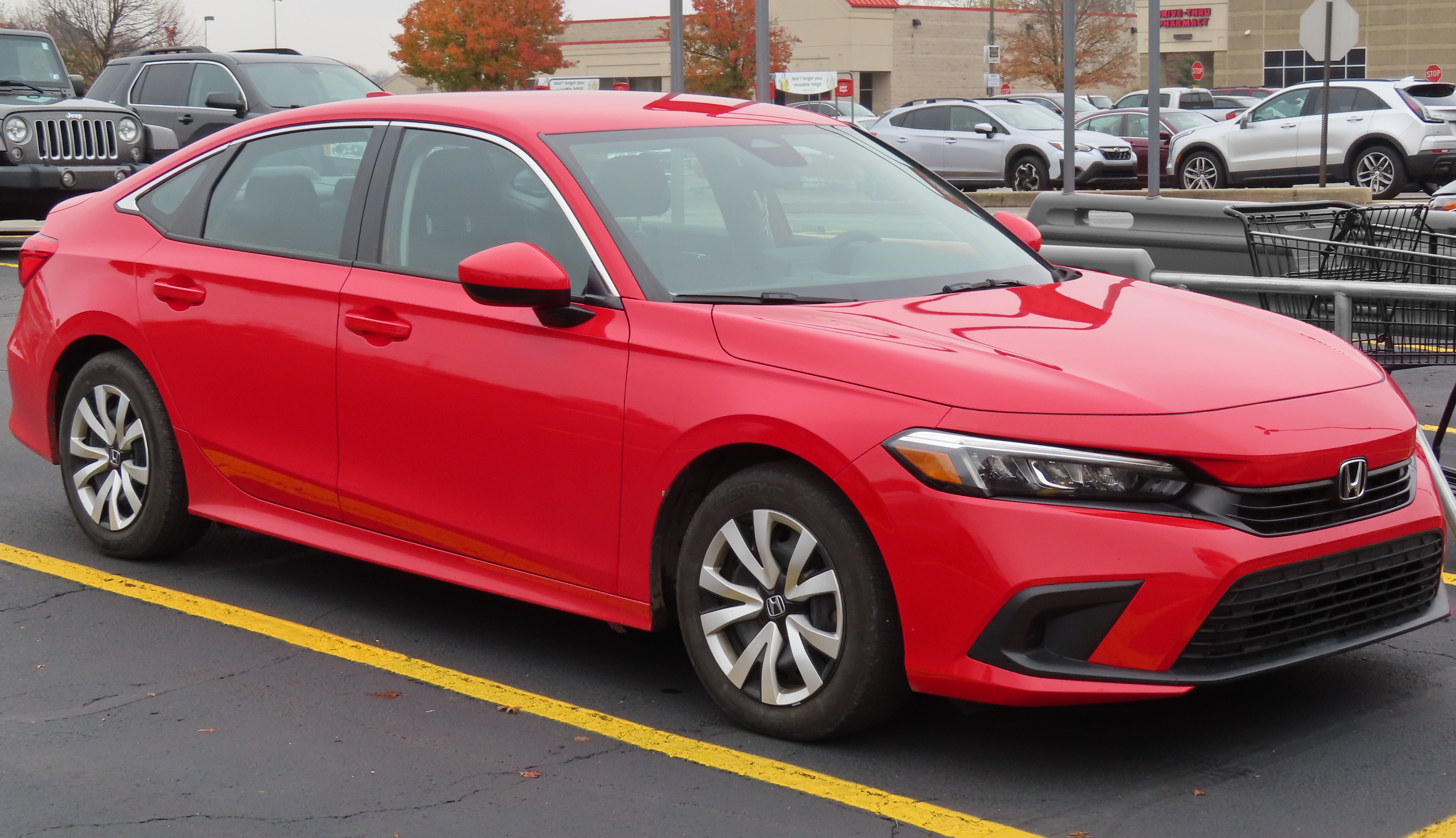
Honda Civic
"... got a Malibu. Like, Oh, you do? Yeah, I got a 96 Civic. What's up? You ain't got one of those. I do. Wa..."
The Honda Civic is a small car made by Honda. It's popular because it uses little gas and is easy to take care of. The 1996 model is an older version that many people still like for everyday driving.
The Honda Civic is a compact car known for its reliability, fuel efficiency, and practicality. By 2026, it has evolved through multiple generations, maintaining popularity among a wide range of drivers. The 1996 Honda Civic, mentioned in the context, is part of the fifth generation, recognized for its solid build and economical performance.
Request an Explanation
Heard something you'd like explained? We'll add it to this episode.
Sign in to request explanations for terms you heard.
Want to learn more?
Browse our glossary for plain-English explanations of automotive terms, jargon, and concepts.
Help improve this episode
See something that's not quite right? Our annotations are AI-generated and can sometimes miss the mark. Click the flag icon on any annotation to suggest a correction.