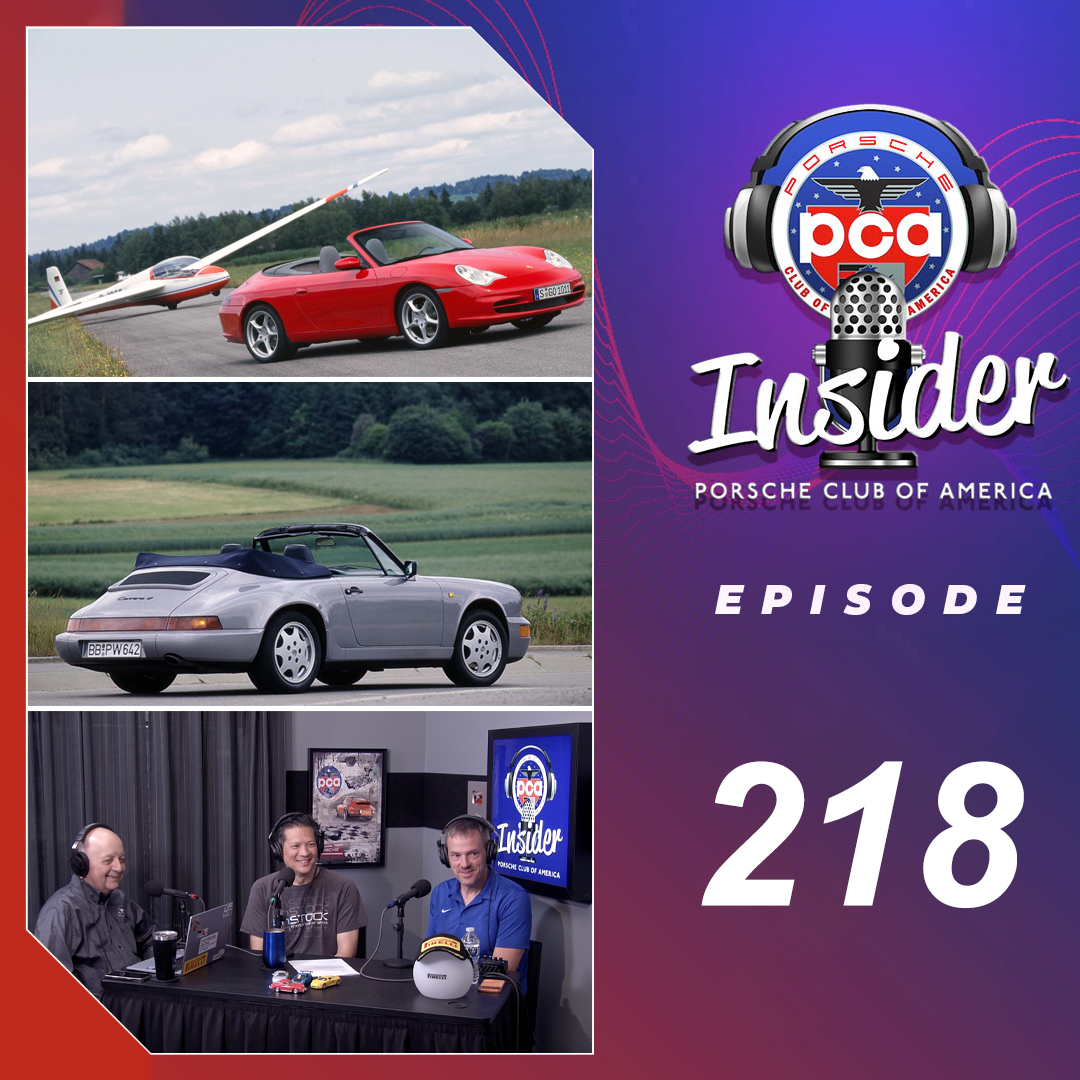
Nathan Merz: Is a 911 Cabriolet the Best Way to Buy Your First Porsche?
About this episode
The conversation starts with PCA logistics and quickly pivots to what makes a great first Porsche—especially an open-top 911. Hosts weigh GT3 vs Turbo perceptions, then get practical about cabriolet ownership: insulation, top durability, and even why hardtops can feel like a “permanently made” coupe. Budget strategy shows how $40,000 steers buyers toward water-cooled 996s, while transmission talk ranges from Tiptronic stigma to PDK service risk. The episode also dives into HVAC fixes and other real-world ownership details.
Nathan Merz hits the studio to talk about the GT3 S/C and debate if a 911 Cabriolet is your best bet for an affordable entry into the brand. We also preview the projects Nathan is filming at PCA National Office, dive into the latest Porsche news, and highlight the must-watch Porsches heading to the Mecum Indy auction. The fun we had recording the podcast will be contagious.
GT product
"And so we tend to think, okay, a GT product is more track focused. It should be as pure as possible to be rigid."
“GT” usually means a more performance-focused, track-friendly version of a car. In this episode, they’re saying that even if GT cars are meant to be more extreme, a lot of buyers choose them for image and what they think is the “top” trim.
In Porsche language, a “GT” product is typically a more track-oriented version of a model, tuned for sharper handling and firmer behavior rather than maximum everyday comfort. Nathan contrasts that expectation with the reality that many buyers choose open-top 911s and that GT trims can be driven by perception and trim hierarchy as much as by track use.
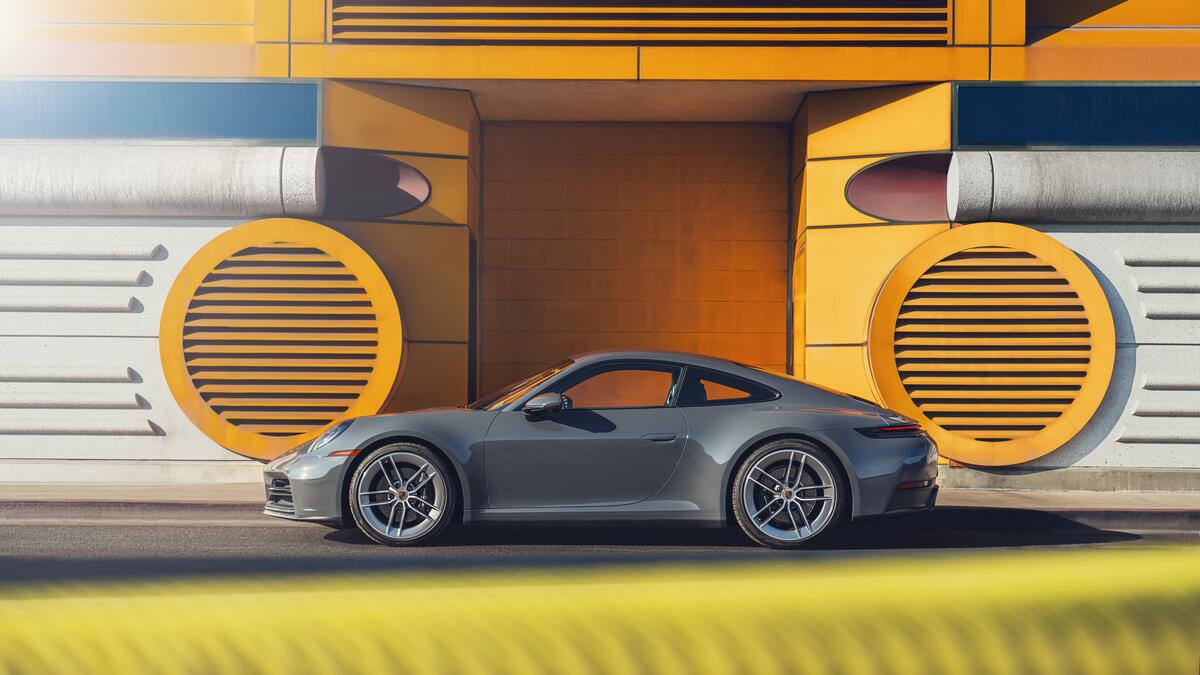
Porsche 911 Turbo
"What you say is interesting because the turbo is actually your top level trim... And I've had members... went from a turbo or turbo turbo S to a GT three... And so the, it's amazing how the shift went for GT threes..."
The Porsche 911 Turbo is Porsche’s top, turbocharged 911. The hosts are debating which one feels like the “real top-of-the-line” car—GT3 versus Turbo—and they mention that the Turbo can feel more comfortable even though it’s very fast.
The Porsche 911 Turbo is the 911’s high-performance, turbocharged flagship trim in Porsche’s lineup. In this segment, Nathan argues that many people assume the GT3 is the “top” 911, but Porsche still considers the Turbo the top-line car—especially in terms of how buyers perceive comfort and power.
suspension
"they went from a turbo or turbo turbo S to a GT three and will come up and say, are they all that rough... but the suspension? So... it's a like anything articulated a track focused car."
Suspension is what connects the wheels to the car and helps control how smooth or firm the ride feels. Here they’re comparing how stiff the suspension can feel when you move from a Turbo to a GT3.
Suspension is the system of components that connects the car to its wheels and controls ride quality and handling. Nathan is specifically talking about how a track-focused GT setup can feel stiffer than a Turbo setup, affecting comfort and how “rough” it feels day to day.
Porsche 911 GT3 RS
"you know, the nomenclature and, you know, I have a GT three or I have a GT three RS, which are fantastic track tools, right? And, and they are drivable on the street for sure"
The Porsche 911 GT3 RS is the 911 made for track driving first. It can still be driven on the street, but the point is that it’s optimized for performance driving, not everyday comfort.
The Porsche 911 GT3 RS is a track-focused 911 variant known for maximizing lap performance rather than comfort. The host contrasts it with the Turbo S by calling the GT3 RS a “very specific tool” that’s drivable on the street but primarily built for track use.
liveries
"the big wings of the GT three, the liveries, the colors, but most turbos are understated."
“Liveries” are the car’s paint and sticker design—its overall look with colors and graphics. The point here is that GT cars often look more dramatic, while many Turbo cars are more subtle.
In motorsports, “liveries” are the visual paint and graphic schemes on a car—colors, decals, stripes, and sponsor-style markings. The host contrasts GT3-style visual flair (including big wings and bold looks) with the more understated look of many Turbo models.
ventilated seats
"big power gets, yeah, that's comfortable, ventilated seats. That's going to be important."
Ventilated seats have built-in fans that blow air through the seat to help keep you cool. The host is saying that matters for long highway driving.
Ventilated seats use fans and airflow channels to move air through the seat cushion and backrest. The host highlights them as important for comfort on long drives, especially in warmer conditions.
Porsche GT3 Cabriolet
"what can we do right now that's going to be a home run and the GT3 Cabriolet. Obviously Porsche doesn't just think about this in a vacuum."
This is a Porsche GT3 turned into a convertible. In this segment, they’re saying Porsche could build it faster by reusing existing GT3 parts instead of designing everything from scratch.
The Porsche GT3 Cabriolet is a topless (convertible) version of the 911 GT3, built around the GT3’s track-focused performance. The key idea here is that Porsche is using existing GT3 components to create a new open-top variant quickly enough to meet a time window.

Porsche Speedster
"hammering that they, we should think about the GT3 Cabriolet or Speedster. So it wasn't, I don't think that radical."
A Speedster is a Porsche open-top style that’s usually more stripped-down and special than a regular convertible. They’re comparing it to the Cabriolet in terms of how long Porsche would be able to sell it.
A Porsche Speedster is a specific open-top body style—typically a lightweight, minimal-roof design—positioned as a more exclusive alternative to a standard convertible. Here, it’s discussed as a hypothetical option that would shorten the sales window compared with the Cabriolet plan.
homologated
"which I didn't realize that, you know, these cars are homogalated for two years left. So he said, if we did like a Speedster, that would cut it down to one year of sales."
Homologation is the legal approval a car has to get before it can be sold. The point here is that Porsche had approval for only a certain length of time, so that limited the sales window for the model.
Homologation is the formal approval process that certifies a vehicle for sale under specific regulations (often emissions, safety, and other legal requirements). In the segment, the host notes the cars were homologated for a limited time window, which affected how long Porsche could sell a given variant.
parts from the shelf
"it's a car that simply pulling parts from the shelf doesn't make a car. They did a lot of research and development."
This phrase means using existing parts instead of designing new ones. The host’s point is that you still need engineering work to make the assembled car actually work well.
“Parts from the shelf” is a shorthand for using off-the-shelf components rather than creating new ones. The segment emphasizes that assembling existing parts still requires research and development to make the final vehicle function as intended.
research and development
"They did a lot of research and development. And it's an idea that's not new, right?"
R&D is the engineering work behind making a new car (or new version) actually work. Even if you reuse parts, you still have to test and refine how everything comes together.
Research and development (R&D) is the engineering effort to design, test, and validate new products or major changes. Even when a company reuses existing parts, R&D is still needed to integrate them, ensure performance targets are met, and confirm the car is safe and durable.
718 capacity
"I would assume it's because with the 718 capacity that is now made available for the 911 line, as Manny said, you have the parts already that are proven."
They’re talking about factory production capacity—basically, how much the plant can build. The idea is that Porsche has more room to build 911-based cars, and that helps them reuse existing parts instead of starting over.
In this context, “718 capacity” means manufacturing capacity being freed up for the 911 line. The host ties that capacity to Porsche having access to proven parts already used in the 718/related systems, which helps make a GT3 Cabriolet feasible without extensive new component development.

Porsche 718
"I would assume it's because with the 718 capacity that is now made available for the 911 line, as Manny said, you have the parts already that are proven."
The Porsche 718 is one of Porsche’s sports cars. In this segment, it’s used as a reference point for factory production and shared parts that make it easier to build other Porsche models.
The Porsche 718 is a mid-engine sports-car family that shares parts and engineering building blocks with other Porsche models. Here, the host mentions “718 capacity” to explain how Porsche’s manufacturing and parts strategy can support a 911-line variant like the GT3 Cabriolet.
parts-bin availability
"That makes sense. I want access to these parts. Bins and the SD parts, GT3 parts. That's not anything to sneeze at. Well, I think when they say the parts bin availability isn't"
This means Porsche can reuse existing parts they already have. But the host is saying that having parts on hand doesn’t automatically make a good car—you still have to engineer how everything fits and works together.
“Parts-bin availability” refers to the idea that a manufacturer can build a new model using existing, already-developed components. The host contrasts this with the reality that even if parts are available, Porsche still needs engineering work to integrate them into a complete, working car.
ICE
"So they can continue to run it. Whereas going back to their number one seller, the Macon, those contracts are expiring or have expired. Those contracts can't be renewed to continue to make ICE Macons."
ICE just means a normal gas or diesel engine. It’s the opposite of an electric powertrain.
ICE stands for internal combustion engine, meaning the car uses a gasoline or diesel engine rather than an electric drivetrain. In this segment, it’s used in a supply/production discussion about what can and can’t be made under existing supplier contracts.
Tiptronic
"And the convertibles, as well as tiptronics comes up quite a bit... ...there was a 95-993 Cabriolet with tiptronic with 70,000 miles."
Tiptronic is an automatic transmission that still lets you choose gears yourself if you want. It’s usually more convenient than a manual, but you can still drive more “hands-on” when you feel like it.
Tiptronic is Porsche’s name for an automatic transmission that also lets the driver manually select gears (typically via shift paddles or the gear lever). In a used-car shopping context, it matters because it changes how the car drives compared with a manual—often making the car easier to live with day to day.
homage
"But if you haven't seen Manny Z3, his top, it's an homage to the original 55 Speedster top. It's about 42% of the original remaining fabric is on and the whole rear window blown out and taped up."
“Homage” means the car is being styled to pay respect to an older classic look. It’s like copying the vibe of a famous design, even if the result isn’t practical.
“Homage” here means intentionally styling or modifying a car to reference a classic Porsche design—in this case, the “original 55 Speedster top.” The host is contrasting that with the idea of a convertible top being genuinely usable versus being cosmetically/visually “inspired” by the past.
Petina
"I went to an event and Boise this past weekend and we got to give out an award for Petina. And there were a couple cars there that were... Fake Petina."
“Petina” is a car-enthusiast term for the natural, lived-in look a vehicle develops over time. The host is complaining about “fake petina,” where someone tries to manufacture that worn look instead of letting it happen naturally.
“Petina” is enthusiast slang for a car’s intentionally preserved patina—natural aging and wear that looks authentic rather than freshly restored. In this segment, the host is upset about “fake Petina,” where people create the look (for example, by polishing or clear-coating over surface rust) to mimic genuine age.

BMW E36
"...some point, I was looking for, I wanted to buy an E36 or something with that engine, but it's the M42. ..."
The BMW 3 Series is a popular BMW model line. The podcast talks about a specific version called the E36 and mentions the M42 engine, which is just a particular engine option. Different engines can mean different driving feel and upkeep needs.
The BMW 3 Series is a compact executive sedan/coupe line known for offering different engine options and enthusiast-focused models. In the podcast, the host mentions looking at an E36 with the M42 engine, which points to a specific generation and powerplant. That kind of detail matters because engine choice can change how a car feels and what maintenance it needs.
M44
"it's the M42. [928.1s] M44. It's the M44. It's not the M42. So the M42 is what? [931.5s] I don't know that much about BMW, but I know it's an M44."
M44 is the name BMW used for a particular 4-cylinder engine. The discussion is about which engine it is and how that affects how the car drives day to day.
M44 refers to BMW’s M44 engine family (a 4-cylinder used in some E36-era applications). The host contrasts it with the M42 and then talks about how the engine’s valvetrain and power delivery feel in real driving.
M42
"it's the M42. [928.1s] M44. It's the M44. It's not the M42. So the M42 is what? [931.5s] I don't know that much about BMW, but I know it's an M44."
M42 is another BMW engine name. The host is clarifying which BMW 4-cylinder engine is actually in the car they drove.
M42 is another BMW 4-cylinder engine family that the host initially thought the car had. They correct themselves to M44, but the comparison matters because these engines can differ in design details and how they deliver power.
dual overhead cams
"Do all overhead cams, 16 valves, [934.6s] if it shares anything with the M42, I'm pretty sure it does. [939.4s] if it does have dual overhead and four valves, you don't really notice it."
Dual overhead cams means the engine has two camshafts up in the head that control the valves. It’s a design detail that can change how the engine runs and responds.
Dual overhead cams (DOHC) means the engine uses two camshafts located in the cylinder head to operate the valves. DOHC designs can improve how precisely the engine controls valve timing, which affects throttle response and how the engine breathes at different RPMs.
16 valves
"Do all overhead cams, 16 valves, [934.6s] if it shares anything with the M42, I'm pretty sure it does. [939.4s] if it does have dual overhead and four valves, you don't really notice it."
“16 valves” is how many valve openings the engine has to let air in and exhaust out. More valves per cylinder can help the engine breathe better, but you usually feel it more as smoother power than as a specific “valve” sensation.
“16 valves” refers to the number of intake and exhaust valves the engine uses. On a typical 4-cylinder, 16 valves usually means four valves per cylinder, which can help the engine flow air more effectively than a fewer-valve design.
throttle pedal is really just an on-off switch
"It's got 138 horsepower. [946.9s] His throttle pedal is really just an on-off switch. [953.6s] He does not do use anything in the middle."
That phrase means the car doesn’t respond smoothly to tiny pedal movements—it feels abrupt. It’s about how the computer turns your gas pedal input into engine power.
This describes throttle mapping: how the engine responds to small vs large pedal inputs. If it feels like an on-off switch, the car likely has a more abrupt response at low pedal angles, making gentle modulation harder.
gearing is so low in fifth gear
"That car lives at over $4,000, [953.6s] because the gearing is so low in fifth gear. You're like dying for sixth gear, [962.7s] but it just refuses to die."
This is about how the transmission is geared in fifth gear. If fifth gear is “low,” the engine spins faster on the highway, so it feels like it’s begging for a higher gear.
“Gearing is so low in fifth gear” means the transmission’s fifth-gear ratio keeps engine RPM relatively high at highway speeds. That can make the car feel like it wants a taller sixth gear, affecting comfort and noise even if the car still drives well.
clutch
"I'm obviously coming in here with miserable traffic, but I guess because the clutch is so easy and the shifting is so easy that it doesn't even bother me."
The clutch is what you press to change gears in a manual transmission. The host is saying that with the automatic (tip-tronic), you don’t have to deal with that kind of effort in traffic.
A clutch is the component that connects and disconnects the engine’s power from the transmission in a manual gearbox. The host brings it up to explain why driving a manual in traffic can be tiring, and why the tip-tronic automatic avoids that issue.
Porsche 911
"Now, when you jump to the 911 product, now the pricing differential gets astronomical... if members are calling... budget of $40,000 and they want to buy a 911. Well, right now in the 911 world, what will that buy you?"
The Porsche 911 is the classic Porsche sports car. In this segment, they’re talking about how expensive it is to get into a 911, and what you can (or can’t) buy with a limited budget.
The Porsche 911 is the brand’s iconic rear-engine sports car, and this episode segment is about how its pricing changes what a first-time buyer can realistically afford. The host contrasts what $40,000 buys in the 911 lineup versus later “water-cooled” cars, showing why the 911 can be a tough first-Porsche budget target.
air-cooled
"That will buy you pretty much a terrible air-cooled manual... Or if you said, I absolutely have to have an air-cooled car... go to a cab and a tip."
“Air-cooled” means the engine is cooled mainly by air flowing around it, not by coolant running through a radiator. In Porsche talk, it usually means the older, classic 911 style.
“Air-cooled” refers to an engine cooling design where heat is removed primarily by airflow over the engine rather than through a liquid cooling system. In Porsche 911 discussions, “air-cooled” usually points to the classic pre–water-cooled era, which many enthusiasts treat as a key part of the car’s character.
water-cooled
"Well, what would it buy in the water-cool world? It's only going to be 996."
“Water-cooled” means the engine uses coolant (liquid) to carry heat away, usually to a radiator. Here, it’s used to explain why later 911s can cost less than the older air-cooled ones.
“Water-cooled” describes an engine cooling system that uses liquid coolant circulated through passages and a radiator to manage temperatures. In Porsche 911 buying conversations, “water-cooled” typically refers to later 911 generations, which can be cheaper on the used market than the earlier air-cooled cars.
D-Mores hardtop
"Spend another $12,000 on that D-Mores hardtop. You've seen that?"
D-Mores is a company name tied to an aftermarket hardtop. They’re saying you can spend extra to add a hardtop to a convertible-style car.
D-Mores is referenced as the maker of an aftermarket hardtop for a cabriolet setup. In this segment, the host treats it as an add-on that costs extra but changes the car’s structure/appearance by fitting a hardtop over the convertible platform.
SEMA
"Spend another $12,000 on that D-Mores hardtop. You've seen that? Oh, I have seen that... I saw one at SEMA."
SEMA is a big event where people show off custom cars and aftermarket parts. The host mentions it because they saw a similar setup there.
SEMA (Specialty Equipment Market Association) is a major U.S. trade show focused on aftermarket parts, custom builds, and performance accessories. The host references seeing a modified Porsche at SEMA to explain how a hardtop/cabriolet setup and a roll-cage-like structure were installed.
cage
"The guy had set up a car. And what got my attention was he had this really complicated cage in it... how in the world did he get this cage in his coupe?"
A “cage” here means a roll cage, which is a metal safety frame inside the car. It can make the car stronger and safer, but it’s also complicated to install.
In performance car builds, a “cage” usually means a roll cage—an internal metal framework designed to add stiffness and protect occupants. The host describes how difficult it seemed to fit this cage into a coupe/cabriolet body, emphasizing the complexity of the installation.
aluminum
"it's aluminum, they're very lightweight. And they look good."
Aluminum is a light metal. The host is pointing out that the hardtop is made from aluminum so it’s lighter than you might expect.
Aluminum is a lightweight metal often used in automotive parts to reduce mass. Here, the host specifically calls out that the Porsche hardtops are aluminum, which helps keep the roof assembly light and easier to handle.
soft top
"But the other day, you still have this ultimate compromise, because in order to put that top on, you have to remove the soft top."
A soft top is the fabric roof on a convertible. The host is saying that if you add a hardtop, you usually have to take the fabric roof off first.
A soft top is the fabric roof used on many convertibles. The host explains that to install a hardtop (like a “D-Morris top”), you typically have to remove the soft top, which effectively turns the car into a more permanent coupe-like setup.
D-Morris top
"back to the, you know, putting a D-Morris top on, I think the notion sounds good."
A “D-Morris top” is an aftermarket hard roof option for a convertible. The key point here is that installing it usually means taking off the fabric roof.
A “D-Morris top” refers to an aftermarket hardtop solution associated with the D-Morris name. The host contrasts this option with the idea of keeping the convertible setup, noting the tradeoff that you must remove the soft top to install it.

Lancia Delta
"...nversation about this, because to your point, the Delta is so large with the 911s versus the Boxsters tha..."
The Lancia Delta is a compact car. The podcast mentions it to make a point about size compared with other cars being discussed. The main idea is that it feels bigger in comparison.
The Lancia Delta is a compact car that comes up in the podcast as part of a comparison involving size and how it relates to the 911/Boxster discussion. The quote suggests the Delta is “large” relative to those Porsche models, which is relevant when talking about packaging, proportions, and how cars feel in everyday use. It’s mentioned to frame perspective rather than as a direct performance deep-dive.
chassis rigidity
"because you are not about looks. You're about, you want a hardtop car for its chassis rigidity, and putting a top like that on a cabriolet wouldn't help you in that matter."
Chassis rigidity is how “stiff” the car’s body feels when you drive. Less rigidity can mean more flex, which can change steering feel and how the car behaves.
Chassis rigidity is how resistant a car’s body and frame are to twisting and flexing under load. In convertibles, the roof’s structural role is reduced, so owners often discuss whether the car needs extra reinforcement to maintain rigidity.
power top
"But actually, I think from, I think that's a power top. Is it still a power top? It is still a power top, but I'm pretty sure from April to October, my top just stays down..."
A power top is a convertible roof that moves automatically with motors. You don’t have to manually lift and latch it.
A power top is a convertible roof that opens and closes using electric motors and hydraulic/electromechanical mechanisms. The discussion contrasts the owner’s experience with a power-operated roof that stays down for months, affecting how often the roof mechanism is used.
tonneau cover
"It is still a power top, but I'm pretty sure from April to October, my top just stays down on the 87 and I have the tonneau cover and I just park it in the garage."
A tonneau cover is the cover that goes over the area where the convertible roof is stored when the top is down. It helps keep things covered and can make the car look cleaner.
A tonneau cover is the cover placed over the convertible’s folded roof area (often behind the seats) when the top is down. It helps reduce visual clutter and can also help with airflow and weather protection.
tiptonic
"they bought a red tiptonic coupe 993... I don't think I ever realized that it was a tiptonic... your auntie prefers driving a tip"
Tiptronic is Porsche’s automatic transmission that still lets you choose gears yourself. So it’s easier than a manual, but you can still drive more “hands-on” when you want.
“Tiptronic” is Porsche’s name for an automatic transmission that lets the driver manually select gears using shift paddles or a gated shifter. The point is to combine easy automatic driving with more driver control when you want it.
PSS-9s
"My uncle did PSS-9s on it, had the turbo choice wheels, perfect guards, red tan interior."
PSS-9s are an adjustable suspension upgrade. They help you fine-tune how the car rides and handles, and they can also change the car’s ride height.
PSS-9s refers to Porsche’s factory-style adjustable coilover suspension setup (often sold as an aftermarket “PSS9” kit) that lets owners tune ride height and damping. It’s a common enthusiast upgrade because it can improve handling response and stance compared with stock.
five speed
"it's really, it's a Mercedes. How many speed is it on? Five speed."
“Five speed” means the transmission has five forward gears. More gears can help the engine stay in its best range, but it depends on the specific setup.
“Five speed” refers to the number of forward gears in the transmission. Gear count matters because it affects how the engine loads in different driving situations and how the car feels during acceleration and cruising.
PDK
"Eight speeds. Yeah. And that's almost, to me, like a PDK. It shifts so fast."
PDK is Porsche’s dual-clutch automatic transmission. It shifts quickly because it’s always ready with the next gear.
PDK stands for Porsche Doppelkupplung, Porsche’s dual-clutch automatic transmission. It’s known for very fast, seamless gear changes because it pre-selects the next gear.

Porsche Cayenne
"And no matter what everybody says, the Cayenne manual is not a great car. I would agree. I've said that before."
The Porsche Cayenne is Porsche’s SUV. Here they’re talking about the manual-transmission version and saying it doesn’t feel as good or as satisfying as you might expect.
The Porsche Cayenne is Porsche’s SUV, and this segment specifically discusses the “manual” version. The hosts argue that, even if you prefer manual transmissions, the Cayenne manual doesn’t deliver the same experience as a true sports-car manual setup.
spools up
"In the turbo, if it's loafing on like 2,200 RPM and you put your foot in it, spools up and it goes."
“Spools up” means the turbo builds boost after you press the gas. Once it’s ready, the car suddenly feels much more responsive.
“Spools up” describes how a turbocharger rapidly increases boost pressure after you demand power. The engine’s response can feel delayed until the turbo reaches the needed speed, then it “spools” and accelerates strongly.
fuel saving mode
"because the thing wants to go into fuel saving mode immediately. And I feel like I'm doing 25"
Fuel saving mode is the car’s efficiency strategy. It tries to use less fuel, which can affect when the transmission shifts and how quickly the car responds.
“Fuel saving mode” is an engine/transmission strategy that prioritizes efficiency by reducing fuel use and often encouraging higher gears or lower RPM. The host suggests the turbo’s logic pushes toward this mode quickly, which can make it feel like it’s not always following the driver’s intent.
autocross
"Hey, Damon, question for you. What if you were autocrossing your car as a tip? [1803.9s] Tiptronic versus PDK for a Cayman, there's probably, there's a difference."
Autocross is a timed driving event on a course marked with cones. You’re constantly turning and accelerating, so how the car shifts matters a lot.
Autocross is a motorsport where drivers navigate a timed course of cones at relatively low speeds compared with track racing, but with lots of quick direction changes. Because it’s stop-and-go with frequent acceleration and braking, transmission behavior and gear spacing can strongly affect lap times.

Porsche Cayman
"Tiptronic versus PDK for a Cayman, there's probably, there's a difference. [1808.0s] Yeah, definitely. But I'm saying tip, but for a tiptronic, because you're,"
The Porsche Cayman is a sports car with the engine mounted near the middle. That layout helps it handle well, and here it’s being used to compare two different Porsche transmissions.
The Porsche Cayman is a mid-engine sports car, which makes it a popular platform for autocross-style driving because weight distribution and balance help with quick corner transitions. In this segment, it’s used as the comparison point for Tiptronic versus PDK behavior.
torque converter
"And so really it's the weight penalty of an automatic torque converter [1826.1s] automatic is going going to be heavier."
A torque converter is the part in an automatic transmission that uses fluid to transfer power from the engine to the gearbox. It can affect how quickly the car responds when you accelerate hard.
A torque converter is the fluid coupling used in many automatics that transfers engine power to the transmission. It can add weight and can also change how quickly the car reaches the engine’s useful RPM range during hard launches or tight autocross maneuvers.
heel toe
"With manual, I've been practicing heel toe since [1847.8s] I was 16. So, you know, I, if I need to go into first gear and I do often like for"
Heel-toe is a manual-driving trick where you brake and “blip” the gas at the same time to make downshifts smoother. It helps the engine speed up to the right level before the lower gear engages.
Heel-toe is a driving technique used in manual cars where the driver blips the throttle while braking to match engine RPM to the lower gear. It helps keep the drivetrain smooth and reduces shock when downshifting—useful for tight corners and frequent gear changes in autocross.
power band
"And then you're going to focus on everything else. And in that car, because it's a fairly low [1879.1s] torque car, having a torque converter gets it into the power band quicker."
The power band is the part of the engine’s RPM range where it feels strongest. If you’re in that range, the car accelerates better when you need it.
The power band is the RPM range where an engine makes its strongest usable power and torque. In autocross, getting into the power band quickly after a shift can matter more than peak numbers because you’re constantly accelerating out of corners.
power curve
"the gap is so big and you're so out of the power curve on the car. [1902.3s] "
The power curve is how strong the engine is at different engine speeds. If a shift drops you out of the good RPM range, the car can feel like it pauses before pulling again.
The power curve is how an engine’s power (and often torque) changes across RPM. If a transmission shift leaves the engine below the effective RPM range, there can be a noticeable “gap” where acceleration feels weaker—exactly what autocross drivers try to minimize.
differential
"and he said the smell, he goes, he was basically saying, I'm afraid to open up the differential because I'm afraid what that's going to be like, that's going to go, that gets more heat"
The differential is the part that sends power to the wheels and lets them turn at different speeds when you corner. Hard driving can make it run hot and wear faster.
The differential is the gearbox that splits engine torque to the left and right wheels while allowing them to rotate at different speeds in turns. In performance driving, it can generate significant heat, and opening it up can reveal wear or contamination from hard use.
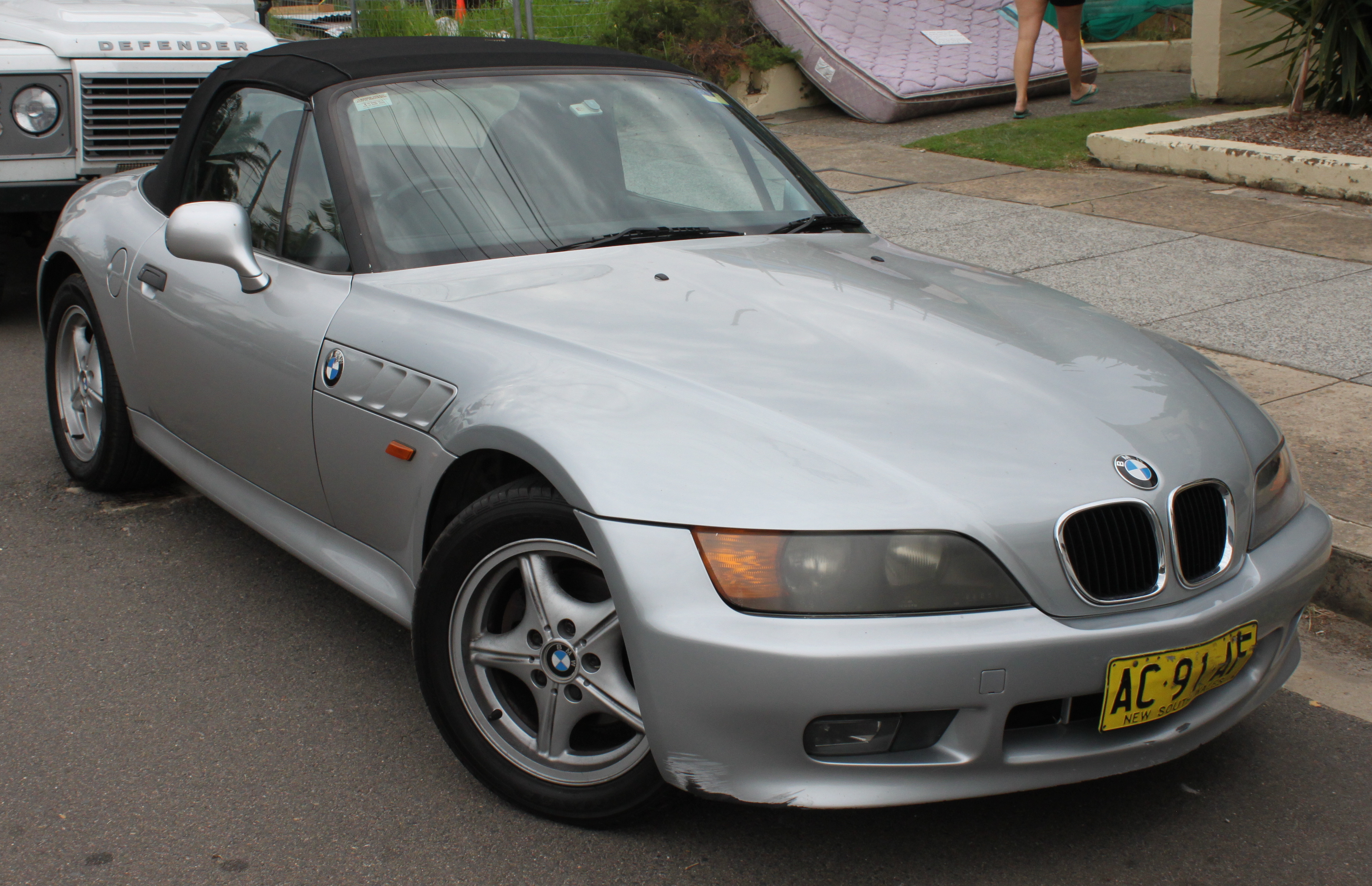
BMW Z3 1.9
"And if you're autocrossing, [2076.3s] perhaps a tiptronic might be an advantage to you. Or if you're really low budget, a Z3 1.9. [2080.9s] There you go."
The BMW Z3 1.9 is a budget-friendly BMW roadster. The hosts bring it up as a cheaper way to get into the kind of driving feel people want before stepping up to a Porsche.
The BMW Z3 1.9 is a small, affordable roadster often used as an entry point into “fun car” ownership. In the episode, it’s mentioned as a lower-budget alternative when someone can’t stretch to a Porsche.
sport chrono
"I'm looking for a 997.2 manual coupe. Now, it has to have sport seats [2137.9s] and sport chrono and full leather and be original owner under 20,000 miles."
Sport Chrono is a Porsche option that adds extra performance features and driving modes. It’s meant to make the car feel more “track-ready.”
Sport Chrono is an option package on many Porsche models that adds performance-oriented driving modes and additional instrumentation. It’s commonly associated with track-style features like quicker throttle/response behavior and a more driver-focused setup.
sport seats
"I'm looking for a 997.2 manual coupe. Now, it has to have sport seats [2137.9s] and sport chrono and full leather and be original owner under 20,000 miles."
Sport seats are seats designed to hold you better during aggressive driving. They usually have more side support than standard seats.
Sport seats are a performance-oriented seat option that typically provides more lateral support to help hold the driver in place during hard cornering. On a 911, they’re often paired with other enthusiast options for a more track-capable feel.
GT car
"And of course, when I mentioned that, [2168.4s] the people say, oh, no, no, no. It's too big. It's too heavy. It's a GT car. And I always joke that [2175.7s] the definition of a GT car for a 911, which we view as an insult, right?"
“GT car” is a label for a type of sports car meant for fast, comfortable driving over longer distances. The host is debating whether calling a 911 a “GT” is fair or insulting.
In Porsche talk, “GT car” usually refers to a grand touring-focused 911 variant or setup—prioritizing long-distance comfort and refined performance over pure track sharpness. The host treats the label as controversial, arguing about what “GT” should mean for a 911.
manual
"And yeah, it's tough. And to find one, he does want a manual and I've already kind of given him a heads up like that is you're going to have to be patient. And then when you find the one, like you got to be ready to strike..."
In this context, “manual” means a traditional manual gearbox (driver-operated clutch and gear selection) rather than an automatic like PDK. The hosts emphasize that finding a 991.1 or 997.2 with a manual is difficult, and that buyers need to act quickly when one appears.
clear crystal tail lights
"I mean, I think some of the 997.2 people don't hate me, but like it has some kind of period things on it that like the clear crystal tail lights and stuff like that are just,"
This is a description of how the rear lights look—more clear/transparent instead of darker. The host is using it to say the older 997.2 has a different, more “old-school” look.
“Clear crystal tail lights” refers to a specific design style of Porsche tail lamp lenses that use a clearer, more transparent look rather than fully darkened housings. The host uses it as an example of the 997.2’s more “period” styling compared with the 991.1.
Dot 2 tail lights
"What are you trying to say about the Dot 2 tail lights? Those are some of my favorite tail lights. ... The 997.1 you can hate me all you want is a better looking car than the Dot 2."
“Dot 2” is a nickname fans use for a particular tail-light design on certain Porsche 911s. In the discussion, they’re basically debating which tail-light look they prefer.
“Dot 2” is enthusiast shorthand for a specific Porsche 911 tail-light design revision. The hosts use it as a visual comparison point—arguing whether the “Dot 2” look is better or worse than earlier “Dot 1” and the 997.1-era styling.
Dot 1 front end
"Way better than the Dot 1 tail lights, but the Dot 1 front end looks better. ... The big bulbous mirrors and the little teardrop shaped tail lights again look like they bought them up eBay."
“Dot 1” is a fan nickname for an earlier look on the Porsche 911. They’re saying they prefer the earlier front-end styling even if they like different tail-light versions.
“Dot 1” is another enthusiast shorthand for an earlier Porsche 911 styling revision, referenced here specifically for the front-end look. The hosts contrast it with later tail-light designs (“Dot 2”) and the 997.1’s overall appearance.
prototype
"I want you to come back to the garage and I want to show you something that's a prototype ... that I've been driving around and no one's seen it."
A prototype is a pre-production version of something that’s still being tested. In this story, it’s a car with new tail-light tech that hadn’t been shown publicly yet.
A prototype is an early, not-yet-final version of a product used to test design and technology before it’s released to customers. Here, the CEO shows the club a prototype featuring LED tail lights that “no one’s seen it” yet.
LED tail lights
"And it was the LED tail lights and I am not good at hiding facial expression."
LED tail lights use small electronic lights (LEDs) instead of older bulb technology. They can look different and often have a distinct “signature” shape.
LED tail lights use light-emitting diodes instead of traditional incandescent bulbs. They’re often discussed because LED designs can change the shape of the light signature (like the “teardrop” look) and can be integrated with different lighting control strategies.
HVAC
"It's cool if you make the HVAC better. [2461.4s] Yes, but it's totally cool if I can make it. [2463.2s] So she does complain that the foam when she hits the HVAC and it comes blowing out of the vents."
HVAC is the car’s heating and air-conditioning system. They’re talking about foam that gets into the system and then comes out through the vents.
HVAC stands for heating, ventilation, and air conditioning—the system that controls cabin temperature and airflow. In this segment, they’re dealing with foam that’s blowing out of the HVAC vents when the system is activated.
vents
"So she does complain that the foam when she hits the HVAC and it comes blowing out of the vents. [2470.2s] I'll probably, I'll need to do this in my 996 as well."
Vents are the openings where air comes out inside the car. If foam is coming out of the vents, something is stuck in the heating/AC airflow system and needs to be cleaned out.
In car HVAC context, vents are the outlets where conditioned air exits into the cabin. The hosts describe foam coming out of the vents, which is a sign that debris is trapped somewhere in the HVAC airflow path and needs cleaning.

Porsche 987
"We were hoping to do my 987, but then I guess Nathan did some research and found out that [2496.4s] it's a little bit more complicated and all those videos that say 986 slash 97 are wrong."
Porsche 987 is the name enthusiasts use for a specific Boxster/Cayman generation. They’re saying the common DIY videos don’t correctly cover how the 987 differs from the earlier version, so the job may not be as straightforward.
The Porsche 987 refers to the Boxster/Cayman generation that came after the 986. Here, the hosts discuss that a DIY video approach for “986/97” doesn’t match reality, and they were hoping to apply the same method to a 987 but found it’s more complicated.
heater core method
"So the 987 is going to be better to go through the heater core method, [2541.4s] but it's going to be a little bit more involved."
A “heater core method” means getting to the part that warms the cabin air. It usually takes more work to reach than easier access options.
The “heater core method” refers to diagnosing and/or repairing the heater system by accessing the heater core area. On many cars, that can require more disassembly (often more dash/trim removal) than simpler access points.
litmus test
"the best litmus test is look at your symptoms of what's happening. [2551.5s] So if your only symptom is that you're getting the occasional bits of foam"
A “litmus test” is a quick way to figure out what’s wrong by looking at the symptoms. Here, it’s about whether the car can reach full heat (and full cold) to point to the likely HVAC problem area.
A “litmus test” here means using a specific symptom pattern to narrow down which HVAC component is failing. The host uses whether the car reaches full heat (and whether it also fails to reach full cold) to decide whether to start with interior access or go deeper to the heater core.
blend door
"then likely your foam on your vent door that actually is the blend door on the heater core is still intact because if that goes away, [2576.4s] then what happens is you're hot and cold are always blending together"
The blend door is a flap that mixes warm and cool air. If it’s not sealing or moving correctly, you can get stuck with only partial heat or partial cooling.
A blend door is the flap that mixes hot and cold air streams to achieve the temperature you select. In this segment, the host ties blend-door failure to losing “full heat” and “full cold,” because the system can’t properly separate or mix air temperatures.
vent door
"then likely your foam on your vent door that actually is the blend door on the heater core is still intact"
A vent door is a flap that helps control where the air goes and how the HVAC mixes temperatures. In this case, it’s acting as the blend door.
A vent door is an air-control flap in the HVAC system that directs where air flows and/or helps regulate mixing. Here, the host specifically describes the vent door as functioning as the blend door for the heater core.
blower motor
"I think it's because they don't have the actuation of the blower motor all the time working against [2595.0s] that foam."
The blower motor is the fan that moves air through the heating and A/C system. The host is saying airflow can wear down certain foam seals over time.
The blower motor is the fan motor that pushes air through the HVAC system. The host suggests that the foam/door seals on one side last longer because they aren’t constantly being worked against by the blower motor’s airflow.
DIY
"God bless Porsche. So rarely do you do a DIY where you're like, well, hot damn, they actually did a good job. This one they did."
DIY just means doing the work yourself instead of paying a mechanic. Some repairs are easy to reach, and others require a lot of taking things apart.
DIY means “do-it-yourself,” referring to repairs or maintenance done by the owner rather than a shop. In enthusiast circles, DIY difficulty often depends on how much disassembly is required to reach the part.
coolant
"Literally, the heater core is physically the highest point in the car. So literally, once you pull it off, you lose maybe a tablespoon of coolant, and you can pull the heater core right out."
Coolant is the fluid that keeps the engine from overheating. If you open up parts of the cooling system, you can lose some coolant and need to top it back up afterward.
Coolant is the liquid that carries heat away from the engine and helps regulate operating temperature. In repairs like a heater core swap, coolant loss matters because you’ll need to refill and ensure the system is properly sealed and bled if required.
boxer
"Let's just say, for whatever reason, she might have drives it to a train station and she parks it in a garage and the boxer came out. And there was no wheels on it."
“Boxer” is a type of engine where the cylinders are laid sideways and move opposite each other. Porsche is known for this kind of engine layout.
“Boxer” refers to a boxer engine layout, where cylinders sit horizontally and move in opposite directions like a boxer’s fists. It’s commonly associated with Porsche’s flat engines, which affects packaging and service access.
building inventory
"Porsche's building inventory gas-powered vehicles. Yeah. As we articulated earlier, they're finishing up production of the Macan. And dealers are also building up their inventory of used Macans as well..."
“Building inventory” just means stores are stocking up on cars. If they have a lot of cars sitting around, it can change what deals you find when you shop.
“Building inventory” refers to manufacturers and dealers stockpiling vehicles—either new units or used trade-ins—so they have cars available for sale. When production is winding down, inventory levels can affect what buyers see on lots and how aggressively dealers discount.
gas-powered vehicles
"Porsche's building inventory gas-powered vehicles. Yeah. As we articulated earlier, they're finishing up production of the Macan."
“Gas-powered vehicles” are cars that use gasoline as fuel. They’re talking about Porsche making more of those cars before a shift to other types of power.
“Gas-powered vehicles” means cars that run on gasoline (internal combustion engines) rather than being fully electric. In the context of Porsche “building inventory,” it implies they’re producing more combustion cars while transitioning to other powertrains.

Porsche Macan
"And I think they sold like four gas Macans while we were there. So yeah, people still obviously want to gas Macan."
The Porsche Macan is Porsche’s smaller SUV. The hosts are saying that a lot of Porsche dealers rely on selling Macans to stay busy and profitable.
The Porsche Macan is Porsche’s compact SUV, and it’s a major volume seller for many Porsche dealers. In this segment, the hosts focus on how demand for the Macan (including gas versions) drives dealer sales and dealer allocation outcomes.
allocation
"And so little known fact, but your allocation of the flagship models is driven based on cell volume and your ratings and all these things."
An allocation is basically how many cars a dealer is allowed to get from the manufacturer. If a dealer doesn’t get enough allocations, it can’t sell as many of the most desirable models.
In car retail, an allocation is the limited number of specific models a dealer is allowed to order or receive from the manufacturer. The segment claims Porsche’s allocation of flagship models is influenced by dealer performance metrics and market factors.
cell volume
"your allocation of the flagship models is driven based on cell volume and your ratings and all these things."
Cell volume here means how many cars the dealer sells. The host is saying Porsche uses that kind of sales volume to decide which dealers get more of the top cars.
Cell volume (as used here) refers to how many vehicles a dealer sells over a period of time. The speaker ties it to how Porsche decides which dealers get allocations of flagship models.
tariff
"they're talking about the 25% tariff. Yeah, it's, man, another blow."
A tariff is a government tax on imported products. If it’s big enough, it can make cars and car parts cost more, which then affects what dealers and buyers deal with.
A tariff is a tax imposed on imported goods, which can raise prices for vehicles and parts that cross borders. The speaker frames the “25% tariff” as a financial shock that affects the car market and dealer economics.
Mark Motors Porsche
"Well, it's interesting. I was in Ottawa at Mark Motors Porsche two weeks ago."
Mark Motors Porsche is a Porsche dealership. The host is saying they visited it recently, likely to observe how sales and demand are going.
Mark Motors Porsche is a Porsche dealership mentioned by the host as a place they visited. Dealer visits like this are often used to discuss real-world inventory, customer demand, and how allocation and sales mix play out locally.
window sticker
"It was a Macan four, but I pulled the window sticker out of the glove box. And granted, this was in Canadian dollars, but it was $120,000."
The window sticker is the paper (or label) on a new car that shows the official price and what options it has. The host is using it to show the real cost of the car he drove.
A window sticker is the official price and option sheet attached to a new car at the dealership. It breaks down the vehicle’s MSRP and add-ons, which is why the host can cite an exact number from it.
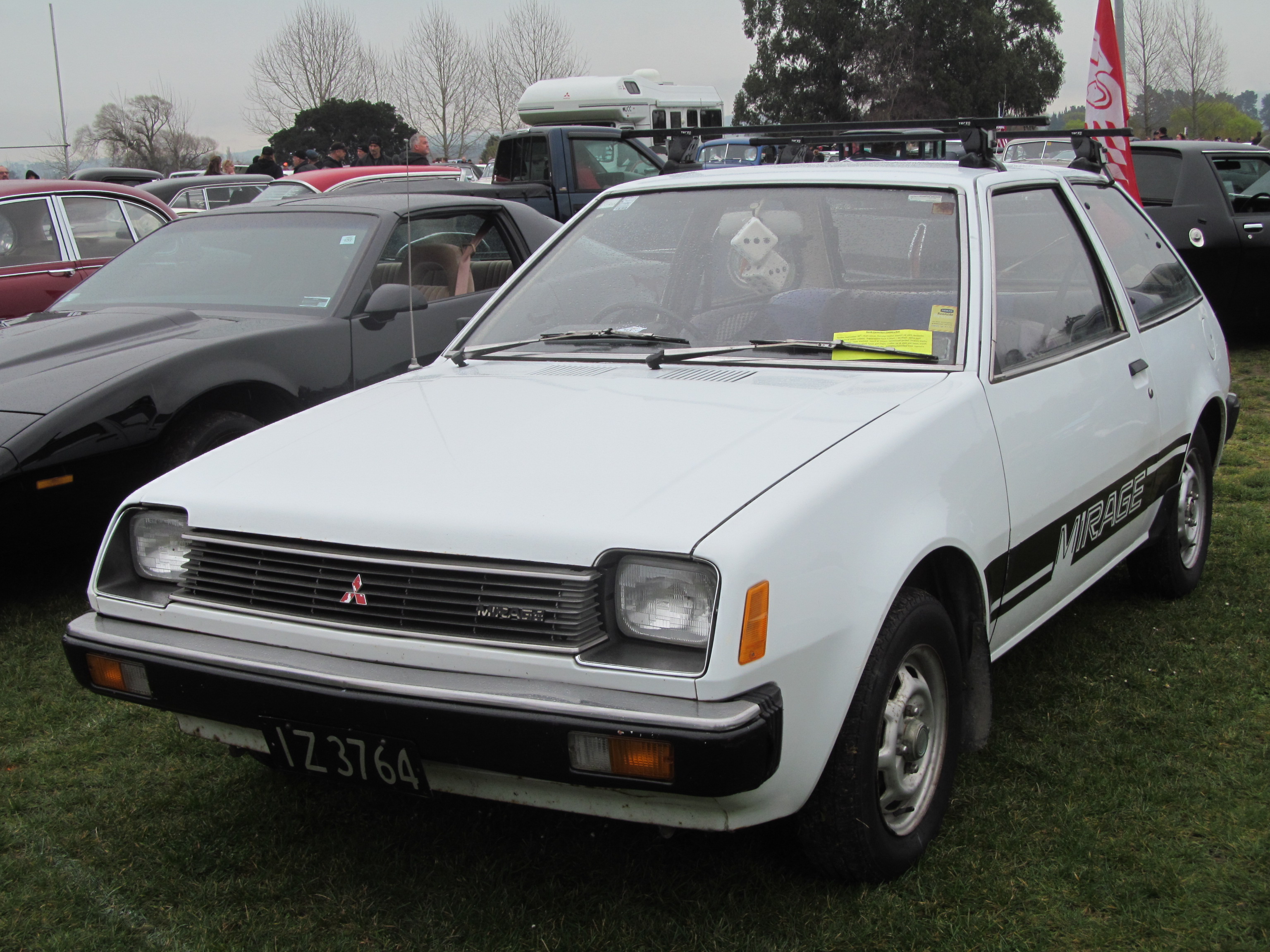
Mitsubishi Mirage
"Do you know what the lowest MSRP new car you can buy in North America is today? It's got to be a Mitsubishi something. No, is it still the Mirage?"
The Mitsubishi Mirage is a low-cost, basic new car model. The hosts are using it as an example of something that might be the cheapest new car you can buy.
The Mitsubishi Mirage is a small, budget-oriented car that’s often mentioned as one of the cheapest new vehicles available in North America. In this segment, it’s brought up as a guess for the lowest MSRP new car available today.

Toyota Corolla
"...the cheapest one you can buy, but is a new Toyota Corolla. Oh, that fantastic car."
The Toyota Corolla is a small, everyday car. In the podcast, it’s mentioned as the cheapest new car option in the comparison. It’s used to show what “low price” looks like in the market.
The Toyota Corolla is a compact car that’s commonly positioned as an affordable, high-volume choice. The podcast calls it the cheapest new option being discussed, emphasizing how it can represent the lower end of new-car pricing. That makes it a useful reference point when comparing overall market costs.
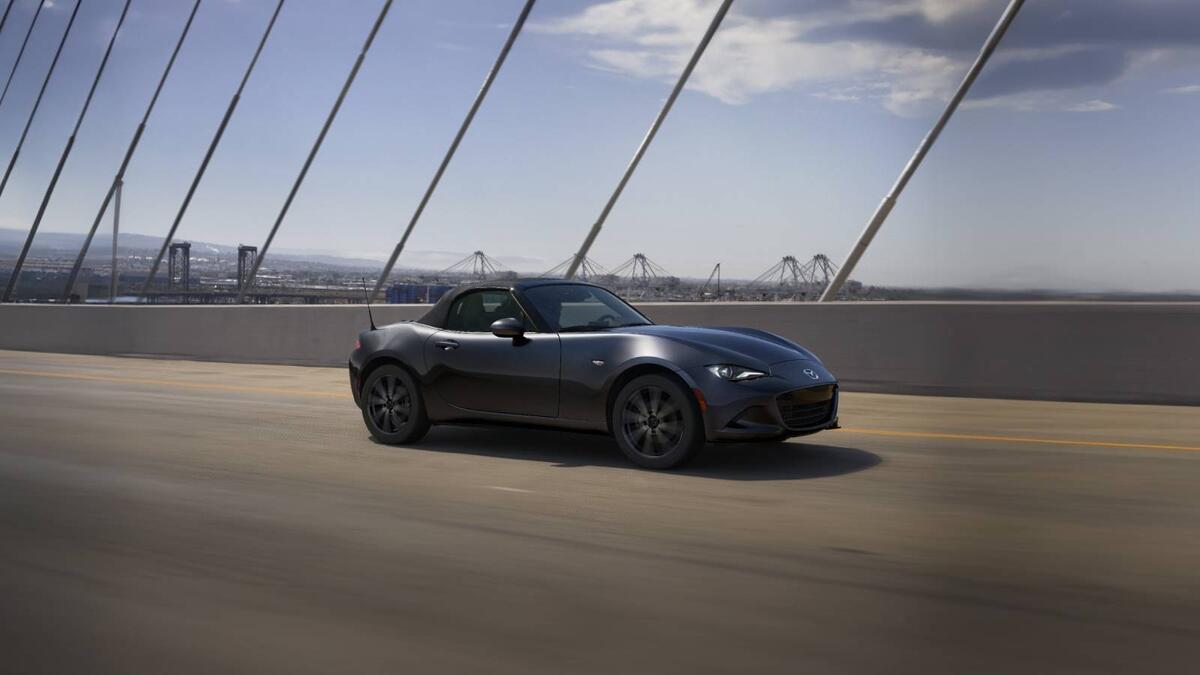
Mazda MX-5 / Miata
"... I got the new version of Manny's car. I bought a Miata NC, which is kind of like a, you know. Oh, that's..."
The Mazda Miata (MX-5) is a small sports car with a convertible top. The podcast talks about a specific Miata generation (the NC) that someone bought. It’s generally chosen because it’s meant to be fun and easy to drive.
The Mazda MX-5 (Miata) is a lightweight, open-top roadster known for being fun to drive and relatively simple to own. The podcast mentions buying a Miata NC, which is a specific generation, and connects it to the idea of choosing a car that’s enjoyable without being overly complicated. That’s why it fits naturally alongside other discussions of enthusiast cars.
hold its value
"Yeah. And that's another car that's going to last forever. And like you said, hold its value. And it's so fun to drive."
“Hold its value” means the car doesn’t lose money as fast when you go to sell it. If a car holds its value well, you usually get more of your purchase price back.
“Hold its value” means the car’s resale price doesn’t drop as quickly as average. That’s often influenced by demand, reputation for reliability, and how desirable the model is to buyers later.
Porsche 911 GT3
"If you look at GT3, they don't go up in power. The performance goes up because of the arrow and whatnot, but the horsepower is very minimal increases every year."
The Porsche 911 GT3 is a more track-oriented 911. The point here is that GT3 updates may make the car faster through things like aero and setup, not necessarily by dramatically increasing peak horsepower every year.
The Porsche 911 GT3 is a track-focused version of the 911 built around aerodynamic efficiency and a high-revving naturally aspirated engine. In this segment, the host contrasts how GT3 power changes over time versus turbocharged approaches, even while performance can improve via aero and tuning.
electric motor turbo
"And if they use the electric motor turbo, then I hate to call it a T hybrid because you hear hybrid and people are freaking out. But it will make the car seem like a normally aspirated."
This is an idea where an electric motor helps the turbo respond quicker. The goal is to make the car feel more immediate—less waiting for boost—so it can seem similar to a naturally aspirated engine in how it delivers power.
An “electric motor turbo” refers to using an electric motor to help spool the turbo faster, reducing turbo lag and improving response. The host also frames it as a hybrid-like system but argues it can feel closer to a normally aspirated car because the electric assist fills in the gaps.
normally aspirated
"But it will make the car seem like a normally aspirated."
A normally aspirated engine doesn’t use a turbo or supercharger. The host is saying the electric assist can make a turbo/hybrid car respond in a way that feels closer to that simpler style of power delivery.
Normally aspirated describes an engine that relies on atmospheric air pressure rather than forced induction like a turbocharger or supercharger. The host uses it as a “feel” comparison—arguing that electric turbo assist can make a boosted/hybrid system respond in a way that resembles naturally aspirated power delivery.
Porsche 911 GT3 Touring
"So I got some time in a GT3 touring and a GT3. What, 505 horsepower?"
The Porsche 911 GT3 Touring is a GT3 meant to be a bit more livable for the street. Here, it’s mentioned as one of the cars the host has driven to compare how the power feels.
The Porsche 911 GT3 Touring is a GT3 variant tuned for road use, typically with a more understated exterior and a focus on everyday drivability. The host mentions having time in a GT3 Touring and a GT3, using them as reference points for how much power feels usable.
Porsche 911 GT2 RS
"I have more fun driving his Spyder than his GT2 RS on the street again."
The Porsche 911 GT2 RS is a very extreme, performance-first version of the 911. People usually buy it for maximum speed and track-style driving, not for relaxed cruising.
The Porsche 911 GT2 RS is a track-focused 911 variant known for its extreme performance and aggressive tuning. It’s typically associated with high power output and a setup that prioritizes speed and stability over everyday comfort.
Porsche 718 Spyder
"I have more fun driving his Spyder than his GT2 RS on the street again."
The Porsche 718 Spyder is a lighter, mid-engine Porsche that’s meant to feel fun and lively on real roads. It’s the kind of car people enjoy even when they’re not driving at race-track speeds.
The Porsche 718 Spyder is a mid-engine Porsche built around a lightweight, open-top driving experience. Compared with more hardcore 911 variants, it’s often talked about as being more engaging at normal street speeds because it feels nimble and responsive.
horsepower
"Horsepower is not an indicator how much you're going to enjoy driving a car. But it's the number one thing people think about."
Horsepower is a number that describes how much power the engine makes. People use it to guess how fast a car will be, but it doesn’t always tell you whether the car is actually fun to drive.
Horsepower is an engineering measure of how much power an engine can produce. In car discussions, it’s often treated like a shorthand for performance, but the hosts are arguing that it doesn’t directly predict how enjoyable a car feels to drive.
BMW Z3 M
"So to me, if you're going to buy a Z3, you buy a 1.9 or you buy an M."
The BMW Z3 M is the more performance-oriented version of the Z3. The idea is that if you’re buying a Z3 and want it to feel more special, the M version is the one to consider.
The BMW Z3 M refers to the higher-performance Z3 variant tuned by BMW’s M division. It’s positioned as the enthusiast choice when you want the Z3 formula but with stronger performance and more driver-focused character than the standard engines.

Porsche 986 Boxster
"I would argue oftentimes the car, you know, like a basic early 986 Boxster, you know, back to our $15,000 car with its whopping 201 horsepower is a lovely car to drive."
The Porsche 986 Boxster is an early Boxster model. Here, they’re saying it’s a simpler, more “honest” driving experience compared with cars that use more electronic safety help.
The Porsche 986 Boxster is the first-generation Boxster (late-1990s/early-2000s) and it’s often considered the entry point into the 911-adjacent Porsche driving feel. In this segment, the host contrasts an early 986 Boxster’s modest output and simpler feel with later, more “assisted” cars.

Porsche RS Spyder
"The 986 doesn't have what the RS Spyder does have is a lot of these safety features that, yes, will make you seem like a better driver than you really are."
The Porsche RS Spyder is a race-focused Porsche. In this discussion, it’s used to illustrate that a very fast car can feel more controllable when the car’s electronics step in.
The Porsche RS Spyder is a purpose-built Porsche race car (prototype class) known for serious downforce and high-performance capability. The host uses it as a benchmark for how modern safety/driver-assist systems can make very powerful cars feel easier to manage, especially in low-grip conditions like rain.
PSM
"You PSM wasn't around until 2000. So the early 96s were just pure ABS and as Nathan says, a prayer book."
PSM is Porsche’s electronic system that helps prevent skids. If the car senses you’re losing control, it can automatically reduce power and use the brakes to help you stay on track.
PSM (Porsche Stability Management) is Porsche’s electronic stability-control system. It monitors traction and steering behavior and can intervene by reducing engine power and applying brakes to help keep the car on its intended path—especially helpful in rain or slippery conditions.
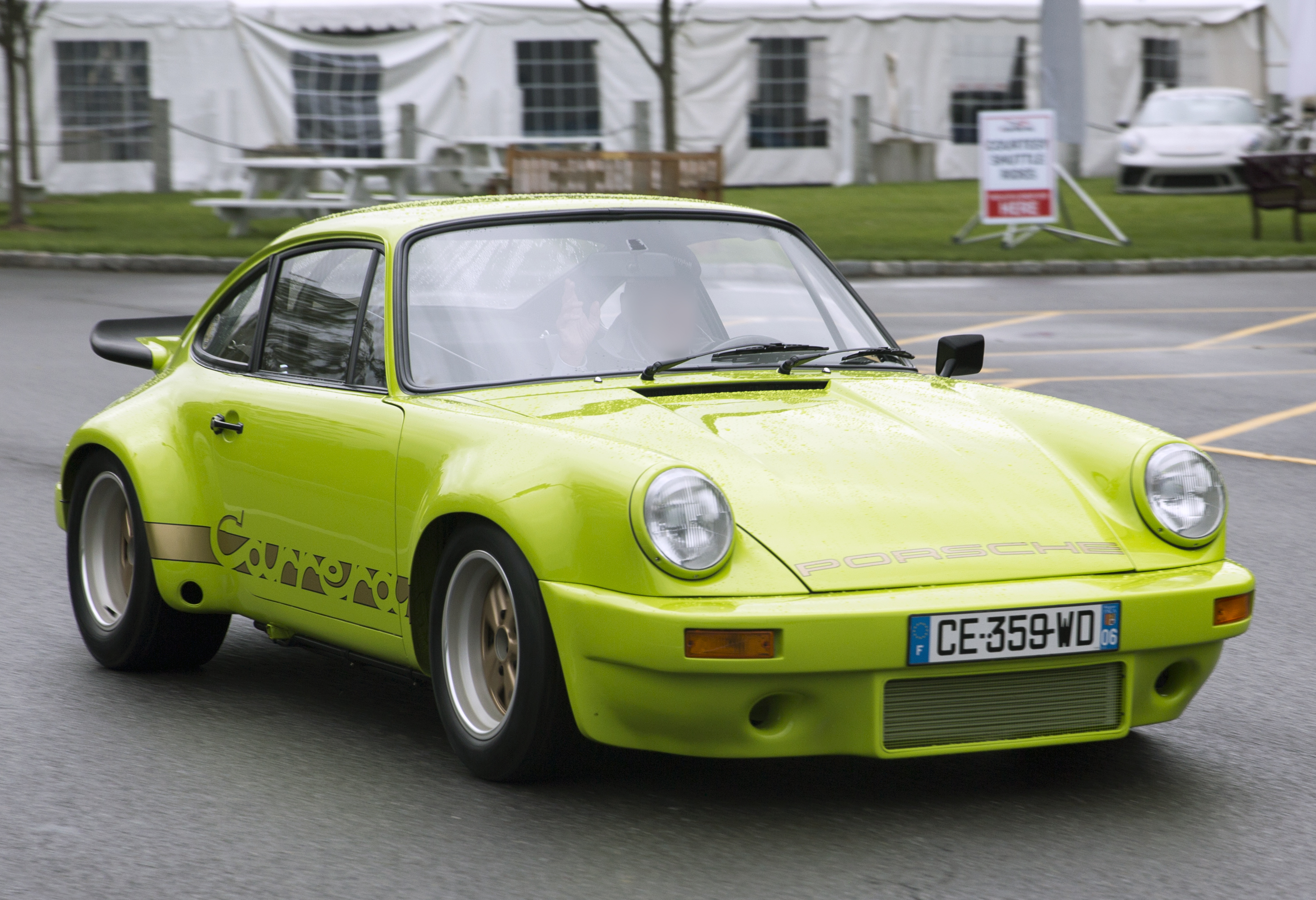
Porsche Carrera RS
"...964 Speedster. There was the N64 Lightweight, the Carrera RS. The flat valve car, X this and we're actually go..."
The Porsche Carrera RS is a special, performance version of the 911. The podcast mentions it while talking about rare Porsche models. The “RS” idea generally means it’s built to be more performance-focused than a regular car.
The Porsche Carrera RS is a performance-focused 911 variant known for being lighter and more track-oriented than standard models. In the podcast, it’s referenced alongside other special 964 Speedster-related mentions, which signals a conversation about rare, enthusiast-oriented Porsche models. That’s why it’s brought up: it represents a specific “RS” package and its place in Porsche history.
F1
"I am so glad that they, I didn't want them to get into F1, but now I look at it and I go, thank God, we don't commit to F1, because that would have made a huge great cash drain."
F1 is the highest level of professional race car competition. The point here is that joining F1 would cost a huge amount of money.
F1 (Formula 1) is the top tier of open-wheel motorsport, run by teams that spend heavily on engineering, personnel, and development. The host is pointing out that committing to F1 would have been a major financial drain for Porsche.
titanium
"It's definitely a driver's car. It is amazing how much titanium. Wherever the thing is. Amazing how much titanium was used on this car because of the light weightness."
Titanium is a very strong but lightweight metal. Using it in a car helps make the car lighter, which can improve how it feels and handles.
Titanium is a lightweight, strong metal that can be used in performance cars to reduce mass without sacrificing strength. Here, the host points out that the build uses a lot of titanium specifically to achieve a very low weight for a 911-based car.
Request an Explanation
Heard something you'd like explained? We'll add it to this episode.
Sign in to request explanations for terms you heard.
Want to learn more?
Browse our glossary for plain-English explanations of automotive terms, jargon, and concepts.
Help improve this episode
See something that's not quite right? Our annotations are AI-generated and can sometimes miss the mark. Click the flag icon on any annotation to suggest a correction.