About this episode
The hosts tackle outdated car advice head-on, from the “3,000-mile oil change” myth to dealership claims about high-altitude maintenance. They lean on manufacturer guidance, used-oil analysis, and real-world heat effects from hard driving. The conversation then pivots to other common myths—stop-leak products, warming up by idling, and even manual-shifter habits—before moving into modern buying and ownership realities like EV charging, depreciation, and repair costs driven by electronics.
( https://www.alltfl.com/ ) Check out our new spot to find ALL our content, from news to videos and our podcasts! In this episode of TFL Car Chat, Roman, Tommy, and Kase sit down to tackle the ocean of outdated car advice, old wives' tales, and automotive myths that drivers just refuse to let go of. From classic garage wisdom passed down for generations to bad buying habits, the guys look at what actually holds up in 2026 and what is complete nonsense.
The crew dives headfirst into the great maintenance debate, questioning whether standard practices like the ancient 3,000-mile routine or the habit of idling your car on a cold morning actually do your modern vehicle any favors. They share stories from engineering experts and fluid analysis labs to reveal what your powertrain actually needs. Then, they pivot to the dealership lot, shattering long-held beliefs about how cash influences a sale, whether a low-mileage odometer is always a good sign, and if buying used is still the ultimate money-saver in today’s volatile market.
( http://www.patreon.com/tflcar ) Visit our Patreon page to support the TFL team!
Advertising Inquiries: https://redcircle.com/brands
Privacy & Opt-Out: https://redcircle.com/privacy
oil every 3,000 miles
"Hey Tommy, did you know you're supposed to change your oil every 3,000 miles? That's what they say. Yep, because today we're going to be talking about outdated car advice."
People used to say you should change your engine oil every 3,000 miles. Modern cars and modern oil can often go longer, so the best schedule is what your car’s maker recommends.
“Change your oil every 3,000 miles” is an old rule of thumb that doesn’t account for modern oil formulations and modern engine designs. Today, the right interval is usually based on the vehicle manufacturer’s recommendations and the oil’s condition, not a fixed mileage number.
brake in oil
"And even on some vehicles with their brake in oil, the manufacturer is recommending changing that brake in oil, which to me sounds kind of crazy, but until 10,000 miles."
“Break-in oil” is oil used right after an engine is new (or rebuilt) while parts are settling in. Some makers want you to change it soon after break-in so you can get rid of early metal particles.
“Brake in oil” refers to the special oil used during an engine’s break-in period, when internal parts are bedding in and early wear particles can be present. Some manufacturers specify an early oil change after break-in to remove contaminants before switching to the normal service interval.
oil to get analyzed
"And we've done that and then sent out that oil to get analyzed by a company that we've used many, many times."
Oil analysis means sending used oil to a lab to see how it’s doing. It can show whether the oil is still protecting the engine or if it’s getting contaminated and should be changed.
Oil analysis is a lab process where used engine oil is tested to judge its condition and contamination level. Instead of relying only on mileage, analysis can help determine whether the oil still has adequate protection or needs to be changed.
flashpoint
"And they look at all kinds of things like flashpoint. They look at the viscosity of the oil."
Flashpoint is a safety/chemistry measure of how easily an oil can vaporize and ignite. When used oil is tested, flashpoint can help reveal problems like fuel mixing into the oil.
Flashpoint is the temperature at which an oil can produce enough vapor to ignite. In used-oil testing, a flashpoint shift can indicate changes in the oil’s composition—often related to fuel dilution or loss of lighter fractions.
viscosity of the oil
"They look at all kinds of things like flashpoint. They look at the viscosity of the oil."
Viscosity is basically how thick the oil is. If used oil gets too thin or too thick, it may not lubricate the engine properly, so labs measure it to judge oil health.
Viscosity is a fluid’s thickness/resistance to flow, and engine oil viscosity strongly affects lubrication. Used-oil analysis checks viscosity to see whether the oil has thinned or thickened beyond what’s expected, which can happen from heat, wear, or fuel dilution.
bearing material or metal shavings or contaminants
"They look at any material, you know, bearing material or metal shavings or contaminants"
When engines wear, tiny metal particles can end up in the oil. Testing for metal and other contaminants helps show whether the engine is wearing normally or something is going wrong.
Used-oil analysis can detect wear metals (like bearing material) and other contaminants suspended in the oil. Finding metal shavings or contaminants helps indicate abnormal wear or internal component issues, which is more informative than just tracking mileage.
oil analyzed
"And whenever we've had 10,000 mile oil analyzed, even though it seems pretty extreme, the oil comes back being pretty effective."
Oil analysis is when you send used engine oil to a lab to see how healthy it still is. It can show whether the oil is still protecting the engine or if it’s time to change it.
Oil analysis is a lab test that checks used engine oil for wear metals, contamination, and oil condition. It helps determine whether the oil is still doing its job or if it’s degrading before the scheduled change interval.
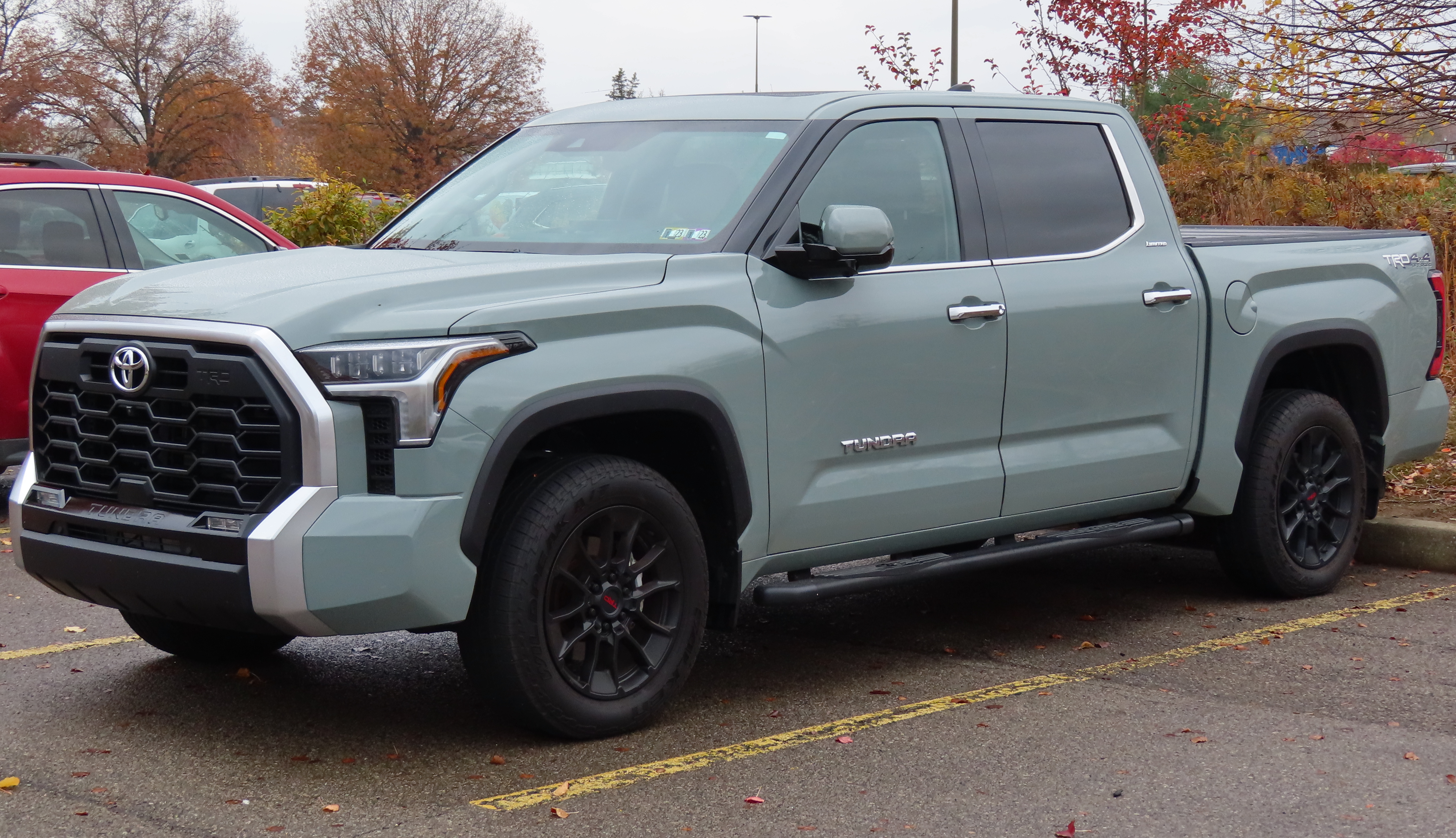
Toyota Tundra
"... hear somebody out there saying, tell that to the tundra buyers. Sure."
A Toyota Tundra is a large pickup truck. People buy it to tow trailers or carry heavy loads, and it’s known for being a practical, long-lasting truck. The discussion is basically about why some buyers stick with it.
The Toyota Tundra is a full-size pickup truck built for towing, hauling, and everyday driving. It often comes up in discussions about truck buyers because it’s a long-running nameplate with a reputation for durability. The podcast mentions it in the context of people defending their purchase choices.
10,000 mile oil changes
"So even if it is, so for example, like many quite famously a bunch of years ago recommended doing 10,000 mile oil changes."
“10,000 mile oil changes” means you wait a long time between oil services. Some newer engines and oils can handle that, but it depends on the car and how you drive.
A 10,000-mile oil change interval is the idea of stretching oil service far beyond older “every 3,000 miles” habits. Whether it’s safe depends on the oil specification, engine design, driving conditions, and whether oil analysis supports the longer interval.
high altitude vehicle
"they said, it's a high altitude vehicle. You have to change your oil more often."
This is advice that changes when you live or drive at high elevation. Because the air is thinner and the engine can behave differently, some people think you need more frequent oil changes.
A “high altitude vehicle” comment is shorthand for advice that changes with thinner air at elevation. The idea is that engine operating conditions (including how hot things run) can differ, which can affect how often you should service fluids like engine oil.
oil temperature
"Whenever we do car Ikes, the oil temperature will get above and beyond, you know, 240 degrees. I mean, I think we've seen up to 250 degrees."
Oil temperature is how hot your engine oil gets. If it gets very hot for long periods, the oil can wear out faster and protect the engine less effectively.
Oil temperature is how hot the engine oil gets while you drive. Higher oil temperatures accelerate oil breakdown, which can reduce lubrication and increase wear risk.
fluid does start to deteriorate more rapidly
"And at that point, that fluid does start to deteriorate more rapidly. So if you're having or if you're track driving your car a lot, for example, and that hard use, that is going to again deteriorate that fluid more quickly."
Oil can break down over time, especially when it runs hot. When it breaks down faster, it doesn’t protect your engine as well.
Engine oil “deteriorates” when heat and time break down its additives and base oil. When oil degrades faster (like during hard use or high temperatures), it loses some of its ability to lubricate and protect the engine.
track driving
"So if you're having or if you're track driving your car a lot, for example, and that hard use, that is going to again deteriorate that fluid more quickly."
Track driving means you’re pushing the car hard on a track. That heavy use makes the oil get hotter and wear out faster than normal driving.
Track driving is repeated, high-load driving where the engine and drivetrain are stressed more than in normal commuting. That kind of hard use raises temperatures and speeds up oil aging compared with gentle street driving.
five
"Not strictly necessary. I think five is what I target. I see what the manufacturer says."
“Five” is the oil-change interval the host says they aim for instead of the older 3,000-mile advice. The idea is to use a reasonable schedule rather than an outdated one.
“Five” is used as a target oil-change interval (implied as 5,000 miles) rather than the older 3,000-mile rule. The host’s point is to follow a sensible interval based on manufacturer guidance and real-world use.
off-roading
"But sometimes, like to case this point, if it says heavy use case, like off-roading, [237.7s] it'll actually be a faster interval, a quicker interval than normal. [240.8s] Yeah, but how many people are actually off-roading?"
Off-roading is a harsher duty cycle than normal street driving, often involving dust, impacts, and sustained low-speed operation. Because of that, some maintenance intervals (like fluid changes) may need to be shorter than “normal” schedules.
stop leak stuff
"But I do know there's like a lot of stuff you can buy, like a lot of stop leak stuff [274.1s] you can buy that will typically end up ruining your cooling system much more effectively than [285.4s] actually fixing leaks a lot of the time."
Stop-leak products are liquids you add to a car to try to seal a leak. They can help briefly, but they can also cause bigger problems by gumming up parts of the system.
“Stop leak” products are sealant additives you pour into a car’s fluid system (like the cooling system) to temporarily slow or seal leaks. They work by thickening or clogging small passages, which can sometimes worsen the problem by damaging hoses, radiators, or other components.
power steering systems
"Yeah. [287.5s] And those products aren't just for cooling systems. [289.4s] I've seen it as well for power steering systems. [291.7s] For example, a stop leak fluid additive that maybe it does more than just this, but I would"
Power steering helps you steer with less effort. It uses fluid, and adding stop-leak type products can sometimes clog or hurt the system instead of fixing the real leak.
Power steering systems use hydraulic fluid (in many cars) to reduce the effort needed to turn the steering wheel. Like the cooling system, adding sealant/stop-leak products to the power steering circuit can cause clogs or damage if the leak isn’t properly repaired.
radiators
"There's all kinds of stuff. [312.0s] There's for radiators right there. [313.2s] If you're burning oil, well, there's a head gasket one."
A radiator is part of the cooling system that helps keep the engine from overheating. If you’re losing coolant, the radiator is one of the places you’d check.
A radiator is the heat exchanger that cools engine coolant before it returns to the engine. If a leak is suspected, the radiator and related cooling-system components are often part of the diagnosis.
head gasket
"If you're burning oil, well, there's a head gasket one. [315.9s] So I'm not convinced that any of that stuff head gasket in a bottle. [320.0s] This real thing."
The head gasket is a thin seal inside the engine that keeps fluids where they belong. If it fails, you can get leaks or mixing of oil and coolant, and fixing it usually costs a lot.
A head gasket is the seal between an engine’s cylinder head and the engine block. If it fails, coolant and/or oil can leak or mix, and the repair is often expensive because the engine typically has to be disassembled to replace it.
engine oil
"There comes a point where it's actually cheaper to pour that stuff into the engine oil than [342.1s] it is to actually change the head gasket."
Engine oil lubricates the moving parts inside the engine. The hosts are saying it’s a bad idea to dump mystery additives into the oil instead of fixing the real problem.
Engine oil is the lubricant that reduces friction and carries heat away from internal engine parts. In the segment, the hosts criticize the idea of adding “stop-leak” type products into engine oil instead of repairing the actual cause.
cooling system
"Yeah. [363.0s] So, so you're saying don't do any of that. [365.2s] I would not crack an egg into my cooling system."
The cooling system keeps the engine from overheating by moving coolant around. The host is basically saying not to use silly or unproven stuff to try to fix a real cooling problem.
The cooling system circulates coolant through the engine and radiator to control operating temperature. The host’s “don’t crack an egg into my cooling system” line is a warning against using random household or unproven additives to mask cooling problems.
manual car
"But one of the ones that everybody loves to say, the first time I think they've ever sat in a manual car, maybe the second or third, because they would have heard this at some point related to manuals is resting your hand on a shifter."
A manual car is one where you choose gears yourself. You typically use a clutch pedal and a gear lever (shifter) to change gears.
A manual car uses a driver-operated clutch and gear selection rather than an automatic transmission. The host is talking about a common habit people develop when they first learn to drive a manual: how they position their hand near the shifter.
shifter
"because they would have heard this at some point related to manuals is resting your hand on a shifter. Yeah. I wouldn't use it as an arm rest."
A shifter is the lever you move to change gears. The host is saying you shouldn’t casually rest your hand on it, because it can move or feel awkward—especially on longer shifters.
A shifter is the gear lever used to select gears in a manual transmission (and sometimes in other drivetrains). The host discusses “resting your hand on a shifter” and explains why it can be awkward or unsafe—especially if the shifter is long and angled so its weight pulls in different directions.
pops out of fourth gear
"Sometimes pops out of fourth gear. [472.1s] And the people in the forum will tell you it's because the brass in the transmission wears [476.0s] out from people resting their hand in fourth."
“Popping out of fourth gear” describes a manual-transmission failure mode where the car unexpectedly disengages from fourth and returns to neutral or another position. The hosts discuss a forum theory that hand/resting pressure could contribute to wear, but they question whether that explanation fits the specific car.
brass in the transmission
"And the people in the forum will tell you it's because the brass in the transmission wears [476.0s] out from people resting their hand in fourth."
Some older manual transmissions use brass parts inside. The hosts mention a forum theory that those brass parts wear out and that could make fourth gear pop out.
The “brass in the transmission” refers to brass components used inside some older manual gearboxes, often as wear surfaces or synchronizer-related parts. The segment cites a forum claim that resting a hand on the shifter could wear these parts, causing fourth gear to disengage.

fiat Spider-124
"This is a fiat Spider-124. [487.7s] That's right."
This is a classic Fiat roadster (the Spider-124). The hosts are talking about a common old-car annoyance where the gear lever can pop out of fourth gear, and they’re debating why it happens.
The Fiat Spider-124 is a classic Fiat based on the 124 platform, known for its manual-transmission driving feel and vintage quirks. In this segment, it’s used as an example of a specific car that can develop a problem where the shifter pops out of fourth gear.

Ford F150S
"I'm talking about even like back to trucks, F-150s, because right now the manufacturers are putting a lot of incentives on their vehicles and there's a lot of push to sell new vehicles, especially with inventories being high."
The Ford F-150 is a popular big pickup truck. Because so many are sold, the company and dealers often use incentives to move inventory. That can change whether a used one is actually a better deal than a new one.
The Ford F-150 is a full-size pickup truck and one of the most common vehicles in the U.S. market, so it’s often a focus of manufacturer incentives and dealer inventory pressure. That’s why advice about “buying slightly used” can vary a lot for trucks like this.
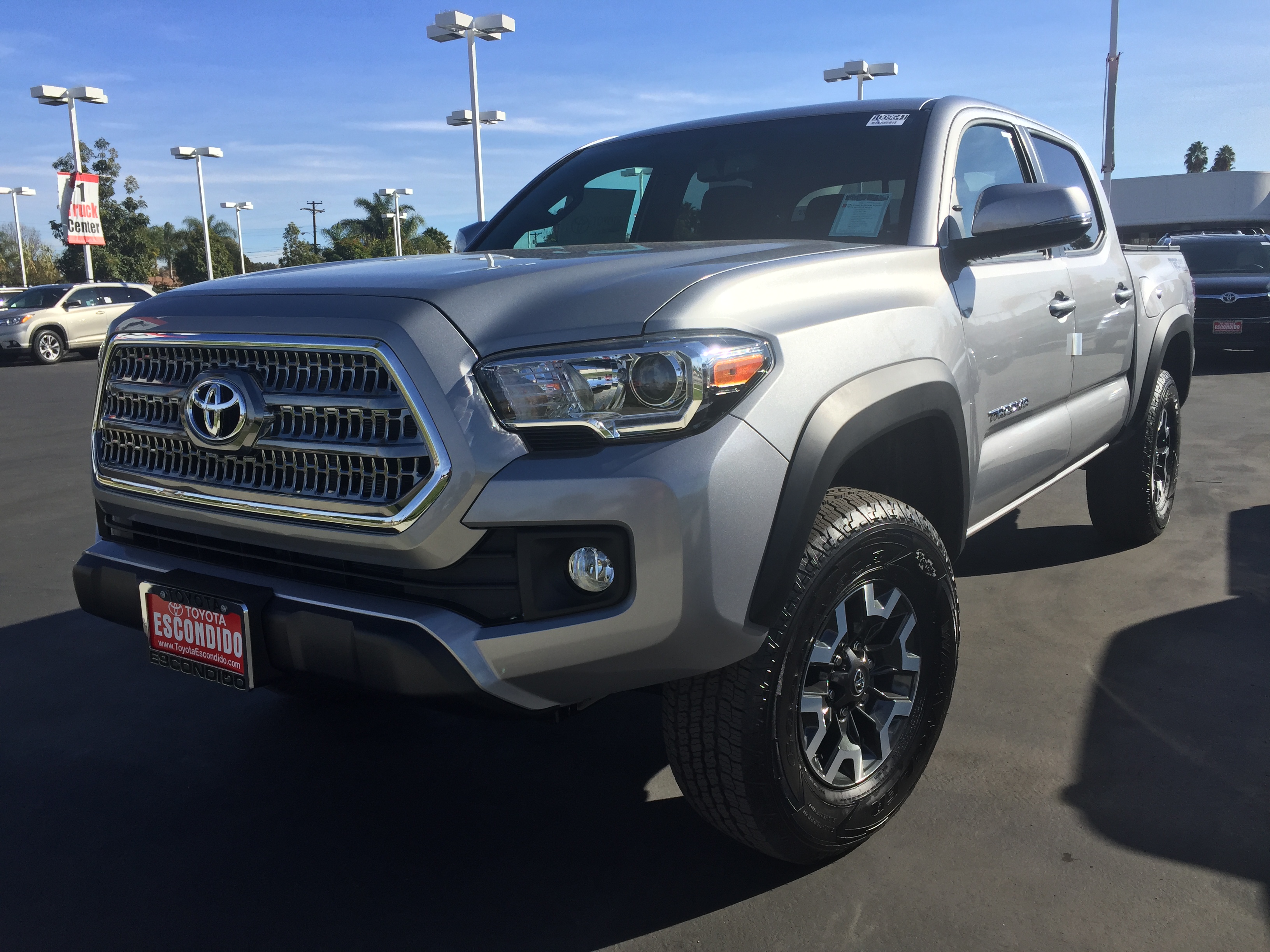
Toyota Tacoma
"And sometimes if those cars haven't come off lease, especially if they're new, like the Land Cruiser or even the Tacoma, you can't get a two or three year old Tacoma. And especially with a Tacoma, a two or three year old Tacoma is going to cost you as much"
The Toyota Tacoma is a popular midsize pickup. The host is saying that used Tacomas that are only a couple years old can be priced close to new ones. So you might not get the discount you were hoping for.
The Toyota Tacoma is a midsize pickup with strong popularity and resale value, especially in the U.S. market. The host’s point is that for a Tacoma, a 2–3 year old truck can cost nearly as much as new, so the “buy one-year-old for a deal” strategy may not save you money. That’s driven by supply, lease timing, and demand.

Toyota Land Cruiser
"And sometimes if those cars haven't come off lease, especially if they're new, like the Land Cruiser or even the Tacoma, you can't get a two or three year old Tacoma."
The Toyota Land Cruiser is a rugged SUV that’s known for lasting a long time. Because people really want them, used prices can stay high. So the usual advice about getting a big discount on a slightly used one may not work well here.
The Toyota Land Cruiser is a body-on-frame, off-road-focused SUV known for durability and strong resale demand. In the used market, that demand can keep prices high, which can make “buying 2–3 years old” less of a bargain than you’d expect. The host is using it as an example of a model where discounts don’t always show up.

Jeep Wrangler
"But specifically the like the Wrangler Tacoma 4Runner, yeah. The cars people want. You're not going to save money by getting one year old one, especially tellurites, palisades,"
The Jeep Wrangler is a popular off-road SUV. The host is saying that because lots of people want Wranglers, used ones may not be much cheaper than newer ones. So the usual “buy slightly used for a deal” advice may not work.
The Jeep Wrangler is a highly recognizable off-road-focused SUV with a loyal enthusiast following. The host groups it with the Toyota Tacoma and 4Runner to argue that these “cars people want” often don’t get the big discounts you might expect on 1–3 year-old examples. Strong demand can keep used prices close to new.

Toyota 4Runner
"So I think that like. Even your mom. Yes. But specifically the like the Wrangler Tacoma 4Runner, yeah. The cars people want."
The Toyota 4Runner is a rugged SUV that many people buy for off-road use. The host is saying that because it’s in demand, a used 4Runner may not be much cheaper than a newer one. So the usual “buy used to save” advice may not apply.
The Toyota 4Runner is a rugged midsize SUV that’s especially popular with buyers who want off-road capability. Like the Tacoma and Land Cruiser, it tends to hold value well, which can reduce the savings you’d expect from buying it “slightly used.” The host groups it with other in-demand Toyotas to argue that used-car deals aren’t guaranteed.
trade it
"And then, you know what, after a year and only putting 5,000 miles, I'm going to go [635.0s] trade it. [635.4s] That never happens."
“Trade it” means getting rid of the car and switching to something else. In this story, they’re saying they don’t usually sell that quickly, but they did in this case.
“Trade it” here refers to replacing a car after a relatively short ownership period—often by selling it or using it as part of a purchase. The point is that the speaker’s plan (buy, then quickly sell) is unusual for them, and it ties into market timing.

Bmw Ix
"But I think it's tough to like my. [642.7s] That's BMW IX. [644.0s] My first car was a Mazda 3."
The BMW iX is an all-electric BMW SUV. It’s the kind of car people talk about when they’re discussing how EVs became more popular over time.
The BMW iX is BMW’s electric SUV, built around an all-electric powertrain rather than a gasoline engine. It’s notable because BMW positioned it as a mainstream-feeling EV with a focus on range and comfort, which is why it comes up in “EV adoption” conversations.

Mazda 3
"[644.0s] My first car was a Mazda 3. [646.3s] Yeah. [647.1s] Got it brand new. [648.3s] It was a little over 30 grand."
The Mazda 3 is a popular compact car from Mazda. Here it’s mentioned as the speaker’s first car—something they bought new and later sold.
The Mazda 3 is a compact car that’s known for being a practical daily driver with a driver-focused feel. In this segment, it’s used as an example of a car the speaker bought new and then sold after several years and moderate mileage.
vehicle shortages
"when people were a little afraid to spend money before vehicle shortages had become [663.4s] a thing. [664.2s] It's good timing."
“Vehicle shortages” means there weren’t enough cars available. When that happens, used cars can become more expensive, which affects what you can sell your car for.
“Vehicle shortages” describes a period when fewer cars are available than buyers want, which can push used-car prices up. That’s why the speaker says they sold their car early in COVID, before shortages became a major factor.
suboptimal viscosity
"It does it quicker, it spends less time with the oil at a suboptimal viscosity and it's [769.1s] the best thing that you could do for your engine."
Viscosity just means how thick the oil is. If the oil gets too thin or too thick for the conditions, it doesn’t protect the engine as well.
Viscosity is how thick a fluid is, and engine oil viscosity changes with temperature. When oil is at a suboptimal viscosity, it can flow and lubricate less effectively, increasing wear risk until the oil is back in its intended range.
stop-start
"another one that's interesting is people think that, well, people [791.9s] hate stop-start, obviously, but they think one of the reasons that it's bad is because [796.7s] it wears out the starter."
Stop-start is the feature that turns the engine off at red lights and turns it back on when you’re ready to go. People worry it will wear out the starter, but newer cars are designed to handle the extra starts.
Stop-start is an engine management system that automatically shuts the engine off when the car is stopped (like at a traffic light) and restarts it when you lift off the brake or press the accelerator. The key concern is starter wear and restart reliability, but modern systems often use upgraded starters and control strategies to handle frequent cycling.
starter
"it wears out the starter. [798.0s] And I've talked to a bunch of engineers and they're like, no, it doesn't. [800.6s] I'm like, how come?"
The starter is the part that cranks the engine to start it. With stop-start, it has to do this more often, so cars use starters designed for that extra work.
The starter is the electric motor that spins the engine to get it running during ignition. In stop-start systems, the starter has to handle many more start cycles, so manufacturers may use stronger or longer-life starter designs to prevent premature failure.
air conditioner
"if it's super hot and the air conditioner [826.8s] goes off, I mean, it's got to be really hot and you start to hear it along, stop light [831.5s] and you all of a sudden start to feel the heat and it's kind of a pain in the ass."
When the engine shuts off at a stop, the car may not run the air conditioning the same way. In hot weather, that can mean you start feeling heat while waiting at a light.
In stop-start-equipped cars, the climate system may behave differently when the engine is off at a stop, depending on how the vehicle manages power. If the air conditioner stops or weakens during engine-off periods, cabin heat can build up—especially in very hot weather.
diesel
"Or if you have like a big engine, like a diesel that just rocks the whole car when it comes"
A diesel is a type of engine that starts differently than a gas engine. The speaker is saying that on some diesel cars, the way it restarts can feel rougher or more noticeable.
A diesel engine uses compression ignition rather than spark ignition, and it often produces strong low-end torque. The speaker’s point is that on some diesel cars, the engine’s restart and vibration characteristics can feel more noticeable to occupants.
modern hybrids
"I mean, with hybrids, modern hybrids, you can't even tell when the engine's not running because [845.4s] the air conditioner stays on."
A modern hybrid is a car that uses both a gas engine and an electric system. It can sometimes keep the gas engine off, but still run things like cooling so you don’t really notice the engine stopped.
“Modern hybrids” are hybrid-electric vehicles that can run on electric power, the gas engine, or both depending on conditions. Because the system can shut the engine off while still providing power (like for cooling), you may not notice the engine isn’t running.
high voltage battery
"It's driven off of the high voltage battery. [849.6s] But if there's like a big diesel, though, all of a sudden the whole thing just shakes."
The high voltage battery is the big battery in a hybrid that stores electricity. It can power the car and some features even when the gas engine isn’t running.
A high voltage battery is the large battery pack in a hybrid or electric vehicle that stores electrical energy for propulsion and for running accessories. In hybrids, it can power systems even when the engine is off, which is why the air conditioning may still run.
lane departure warning
"Versus lane departure warning or something flashing in your instrument cluster to tell [866.9s] you your two miles per hour over the speed limit."
Lane departure warning is a safety feature that watches the lane lines. If you start drifting, it alerts you so you can correct your driving.
Lane departure warning is a driver-assistance feature that monitors lane markings and alerts you if the car detects you drifting out of your lane. It typically uses visual and/or audible warnings rather than taking control of the vehicle.
instrument cluster
"Versus lane departure warning or something flashing in your instrument cluster to tell [866.9s] you your two miles per hour over the speed limit."
The instrument cluster is the screen/gauges behind the steering wheel. It’s where the car shows warnings and important driving info.
The instrument cluster is the driver-facing display behind the steering wheel that shows key vehicle information. In modern cars it often includes alerts from driver-assistance systems, like lane warnings or speed-limit notifications.
emergency braking
"Or when it goes into reverse, when it automatically does emergency braking, when you go into reverse [879.3s] because your door's open because you're not trying to curb your wheel now, that is really..."
Emergency braking is when the car automatically brakes to prevent or reduce a crash. Sometimes it can misread what’s nearby and brake at the wrong time.
Emergency braking is an automatic safety system that detects an imminent collision and applies the brakes to reduce impact or avoid it. In some situations—like confusing objects during low-speed maneuvers—it can trigger unexpectedly.
cash is king
"He'd be like, cash is king, right? ... So cash is no longer king."
It’s an old saying that if you pay with cash, you have more power in the deal. The host is saying that today dealers often make more money when you finance or lease, so cash doesn’t always help as much as it used to.
“Cash is king” is a car-buying idea that suggests paying in cash gives you the most leverage because the dealer makes less money from financing. In modern dealership economics, dealers can earn significant profit from financing or leasing, so cash may not be the best strategy for negotiating.
financing
"And all the dealers thinking today is, I'm not going to make all that money from getting the financing, which is something that dealers get if you finance a car."
Financing means you borrow money to buy the car, and you pay it back over time. The dealer may earn extra profit when the sale is financed, not just when you pay cash.
In car sales, “financing” means taking a loan to pay for the vehicle, usually through a lender arranged by the dealer. Dealers often earn money through financing arrangements, which can affect how they price the car and how they encourage you to finance instead of paying cash.
lease a car
"dealers prefer that you finance a car or that you lease a car because there are incentives for them"
Leasing is like renting the car for a few years with a contract. You usually don’t own it at the end, and the dealer may make more money on leases than on cash purchases.
Leasing is a contract where you pay to use the car for a set period, typically with mileage limits, rather than buying it outright. The host is pointing out that dealers may prefer leases because they can come with incentives and dealer profit tied to the lease deal.
extremely low miles is not always a good thing
"Specifically, extremely low miles is not always a good thing. ... Because if there's a car, especially, this is an extreme example."
People often think a car with very low miles must be better. But if it sat for a long time, it can have problems anyway—like fuel going bad—so low miles alone isn’t a guarantee.
The episode is challenging the common used-car assumption that “lower miles = better.” Extremely low mileage can still be a problem if the car sat unused, because fluids and fuel can degrade over time and cause starting or running issues.

84 Honda Civic
"But we had an 84 Honda Civic that had under 100 original miles on the odometer. So you would think, wow, I mean, this car is brand new."
A Honda Civic is a popular, reliable small car. Here the point is that an “almost new” 1984 Civic with extremely low miles still had trouble starting because it had been sitting with old fuel in the fuel system.
The Honda Civic is a long-running compact car line known for being practical and durable. In this story, the 1984 Honda Civic had under 100 miles on the odometer, but it was very hard to get running because it had sat for a long time with fuel in the system.
odometer
"But we had an 84 Honda Civic that had under 100 original miles on the odometer."
An odometer is the instrument that records how many miles (or kilometers) a vehicle has been driven. The host uses it to make the point that extremely low odometer readings don’t automatically mean the car is in good shape if it sat unused for years.
fuel system
"It was extremely hard to get it running because it had sat with fuel in that fuel system for such a long time."
The fuel system is how the car stores and delivers gas to the engine. If a car sits unused for a long time, the fuel can go bad and cause starting problems.
The fuel system is the set of components that stores, pumps, and delivers fuel to the engine. When a car sits for a long time, fuel can degrade and clog parts of the fuel system, making the car difficult to start or run smoothly.
mechanically totaled
"because you could have 100,000 miles of little to no maintenance that would have basically absolutely mechanically totaled a car and you could have 250,000 miles of incredibly meticulous maintenance that makes for a fantastic driver."
“Mechanically totaled” means the car is so badly damaged (mechanically) that it’s not really worth repairing. It’s basically treated as a total loss because the fix would be too expensive or too hard.
“Mechanically totaled” means the vehicle is effectively beyond practical repair because of severe mechanical damage, even if the body might still look usable. In insurance terms, a car can be declared a total loss when repair costs or damage severity make fixing it not worth it.
front diff
"The start with we bought a Land Cruiser with 250,000 miles and we immediately broke the front diff. [1063.3s] Yes."
The front diff is a gearbox that helps the front wheels turn at different speeds, like when you’re taking a corner. If it breaks, the car can act wrong or stop driving properly until it’s fixed.
The front differential (often shortened to “front diff”) is the gear unit that lets the front wheels rotate at different speeds when turning. If it fails, the car can lose proper drivetrain function and may require major repair work.
climate control module
"And now the whole climate control module has died. That climate control and screen module. So like there's the little touchscreen and there's buttons along the side of the"
The climate control module is the car’s “brains” for heating and air conditioning. If it dies, you can lose control of things like fan speed and temperature.
A climate control module is the electronic control unit that manages the HVAC system—things like temperature selection, fan behavior, and airflow modes. When it fails, the car can lose normal heating/cooling operation and may also affect related infotainment/controls screens.
climate control buttons
"All those died along with all the climate control buttons. So the heat controls, the fan controls, all of those are no longer functional as well."
These are the physical buttons you use to control the car’s heat and fan. Here, they stopped working too, which points to a bigger electronics problem.
Climate control buttons are the physical user controls for HVAC functions (like fan and heat settings). In this case, the hosts say those buttons stopped working along with the screen, suggesting the failure is in the shared control electronics rather than just a single blown switch.
replace the whole thing
"So that's going to be another $1,200 unit to put in. You have to replace the whole thing. Basically, replace the circuit."
Sometimes the repair shop decides the safest fix is replacing the entire unit, not just one part inside it. That’s because the problem might be deeper than the cheaper repair can address.
Replacing the whole module is the “complete unit” repair approach when diagnostics suggest the failure isn’t limited to one component. The hosts contrast this with cheaper partial repairs (like swapping a circuit board), emphasizing that the full replacement is sometimes the only reliable fix.
circuit board
"Basically, replace the circuit. You can replace just the circuit board or the whole thing. You can replace the circuit board for a thousand, but it may not fix it."
A circuit board is the electronic part inside the module that controls how everything communicates. Sometimes shops can replace just that board, but sometimes the whole unit has to be replaced.
A circuit board is the printed electronics assembly inside a module that carries signals and power to the controls and displays. The segment explains a common repair decision: replacing just the circuit board versus replacing the entire module, with the warning that board-only replacement may not fully fix the issue.
shocks
"But God forbid you throw a pair of shocks on a car. That's maybe some car that's deemed unreliable."
Shocks are parts that help smooth out bumps and keep the tires planted on the road. If they’re worn out, the car rides worse and can handle less predictably.
“Shocks” are the suspension dampers that control how quickly the wheels move up and down after hitting bumps. Worn shocks can make the ride bouncy and reduce tire contact, which can lead to worse handling and faster wear.
routine maintenance
"maintenance and is expensive and it's time costly, whereas ignoring routine maintenance is easy."
Routine maintenance is the regular scheduled care your car needs. It’s how you prevent small problems from turning into big, expensive ones.
Routine maintenance is the scheduled upkeep a vehicle needs to stay in good working order, such as fluid service and replacing wear items before they fail. The segment argues that ignoring it is an easy habit to fall into, even for cars perceived as “reliable.”
fluid changes
"But replacing shocks, you know, doing fluid changes, all that stuff that really keeps the car running is something that I think a lot of people don't do."
Fluid changes mean replacing the car’s important liquids on a schedule. If you don’t, parts can wear out faster and the car can break down sooner.
“Fluid changes” refers to periodically replacing key vehicle fluids (like engine oil and other drivetrain/cooling fluids) to keep components lubricated and operating within the right temperature and pressure ranges. Skipping them can accelerate wear and cause failures that are much more expensive than the service itself.
premium
"All right, let's hit the gas premium regular or middle grade. [1240.8s] What should you do?"
Premium is a type of gas with a higher octane rating. Some cars are designed to run best on it, especially to avoid engine knocking.
“Premium” refers to a higher-octane gasoline grade than regular. Higher octane helps prevent knock, which is why some engines specify it for best performance and protection under load.
knock
"Most cars are computerized, so it won't knock, obviously, like they did in the past. [1271.6s] And then there's premium required, in which case you could probably put"
Knock is when the engine’s fuel burns in an abnormal way, sometimes making a pinging sound. Cars can detect it and adjust, but the right fuel helps prevent it.
Engine knock is abnormal combustion where the air-fuel mixture ignites too early or unevenly. Modern cars use knock sensors and engine management to reduce knock, but using the wrong fuel grade can still hurt performance or efficiency.
high compression turbos
"I think the high compression turbos, those little two-liter turbos. Oh, you mean the new Land Cruiser?"
Some turbo engines are tuned to squeeze the air-fuel mixture more tightly. That can make them more picky about gasoline quality, so they may want premium to avoid engine knocking.
“High compression turbos” refers to turbocharged engines designed to run at higher effective compression, which can increase efficiency and power but also makes the engine more sensitive to fuel quality. Higher-octane premium fuel can help prevent knock in these setups.

Land Rover
"Yeah, but my Land Rover also says premium required. And do you put premium in there?"
Land Rover makes luxury SUVs that are built to handle rough roads. They’re saying their Land Rover also recommends premium gas, which is often printed on the fuel door.
Land Rover is a British brand best known for luxury SUVs and off-road-focused drivetrains. The hosts mention that their Land Rover also says “premium required,” using it as an example that fuel recommendations can vary by engine calibration and model year.

Ford Explorer V6
"And do you put premium in there? No, because it has a Ford Explorer V6. Why would I put premium in a Ford X?"
The Ford Explorer is a family SUV. They mention their V6 version doesn’t need premium gas, which shows that fuel requirements depend on the specific engine, not just the car type.
The Ford Explorer is a mainstream three-row SUV, and the “V6” indicates a six-cylinder engine. The hosts use the Explorer V6 as a counterexample: it doesn’t require premium fuel in their case, even though other vehicles they own do.
derate
"No, I think that modern engines will derate themselves and they do have knock sensors, right, for these reasons."
Derate means the car limits power to stay safe. If the engine senses something like knocking or poor fuel quality, it may reduce performance to protect itself.
Engine derate is when the ECU intentionally reduces power output (often by limiting boost, throttle response, or timing) to protect the engine under conditions it considers risky. In this context, the hosts connect derating behavior to fuel quality and knock detection.

2010 Lexus RX
"Like my mother-in-law has a 2010 Lexus RX. ... She's been putting premium in it forever. ... with 150,000 miles and an S-Chanceprator V6, like I think the car will be OK if you put mid-grade in, right?"
This is a 2010 Lexus RX SUV. The discussion is about what gasoline grade it really needs—premium versus cheaper options—especially after the car has lots of miles.
The Lexus RX is a midsize luxury SUV, and the 2010 RX is known for using a V6 engine that typically has specific fuel-octane guidance. In this segment, the hosts debate whether premium fuel is still necessary once the car has high mileage.
mid-grade
"with 150,000 miles and an S-Chanceprator V6, like I think the car will be OK if you put mid-grade in, right?"
“Mid-grade” is gasoline that costs less than premium but is higher octane than regular. Whether it’s okay depends on what your car’s engine is designed to handle.
“Mid-grade” is gasoline with an octane rating between regular and premium (commonly 89–90 in the U.S.). It’s often a compromise when a car recommends premium but you’re trying to reduce cost—though the correct choice depends on the engine’s knock resistance needs.
ethanol-free fuel
"is ethanol-free fuel, especially in older vehicles. Definitely, yeah."
Ethanol-free gas is regular gasoline without alcohol mixed in. Some older engines and carburetors can run better on it because ethanol can cause problems over time.
Ethanol-free fuel is gasoline without ethanol blended into it. It’s often recommended for certain older engines and equipment because ethanol can attract moisture and can be harder on older fuel systems and carburetors.
E-15
"Obviously, you can burn E-15 in an older vehicle, but especially some of our older machines, like bikes of mine that are carbureted."
E-15 is gas that contains 15% ethanol (alcohol). Some older cars and small engines aren’t designed for it, so you have to check what they’re rated to use.
E-15 is gasoline blended with 15% ethanol. It’s commonly used in the U.S., but not every older vehicle or small engine is approved to use it, so compatibility matters.
carbureted
"but especially some of our older machines, like bikes of mine that are carbureted. Oh, God, yeah."
“Carbureted” means the engine uses a carburetor to mix fuel and air. Older carburetors can be more sensitive to ethanol, especially if the fuel sits for a while.
A carbureted engine uses a carburetor to mix air and fuel mechanically, rather than using modern electronic fuel injection. Ethanol in fuel can be more problematic for some carbureted setups, especially with storage and older fuel-system components.
road trip
"Or, and then the second part of that is you can't road trip an EV. [1424.1s] So have we gotten to the point now where EVs can be primary cars [1427.1s] that you can use on an everyday basis like you guys do,"
Here, “road trip” means driving far away from home. For an EV, it also means you have to plan where you’ll stop to charge the battery.
In EV talk, “road trip” usually means planning a long drive that includes charging stops along the route. The key constraint is whether the car’s battery range and charging speed make those stops practical rather than disruptive.
charging at home
"My only caveat there is I'm still gonna come back to [1451.1s] if it's your only car, you better have charging at home. [1454.7s] Because having to rely on the public infrastructure"
“Charging at home” means using a home charger (often installed in a garage or driveway) to replenish the EV’s battery overnight or between trips. It matters because relying on public charging can be slower, more expensive, and less convenient.
public infrastructure
"Because having to rely on the public infrastructure [1456.6s] is not impossible, but it's expensive, [1459.5s] and it takes a lot of patience, right?"
They mean the charging stations you use outside your home. If those aren’t convenient or affordable, it can make daily EV life (and road trips) more annoying.
“Public infrastructure” here refers to the network of chargers available outside your home—like fast chargers at commercial locations. For EV owners, the availability, speed, and pricing of this network strongly affect how easy it is to use an EV as a primary car.
EV
"So all in, I think you're going to waste less time [1527.4s] daily driving an EV, but you know."
EV just means an electric car. Instead of using gas, it runs on electricity stored in a battery, and you have to charge it.
EV stands for electric vehicle, meaning the car is powered primarily by an electric motor and a battery instead of a gasoline engine. Charging the battery replaces refueling with gasoline, which changes how you plan trips and daily routines.
charging network
"I think we're getting to the point now [1533.4s] where the network charging network has been built out enough."
A charging network is the set of public places you can plug an EV in. If there are lots of chargers where you need them, road trips are easier and you waste less time.
A charging network is the collection of public charging stations (often operated by multiple providers) that EV drivers rely on for road trips. The more complete and reliable the network is, the less time drivers spend waiting or detouring to find chargers.
North American charging standard
"Most new EVs are now North American charging standard, [1541.3s] which is Tesla."
This means the typical charging plug system used in the U.S. and Canada. When more cars and chargers use the same standard, it’s easier to charge on the road.
“North American charging standard” refers to the commonly used plug/charging system EVs use in the U.S. and Canada so drivers can find compatible chargers. Standardization reduces the chance you’ll arrive at a station and find your car can’t plug in.
superchargers
"Tesla has the most superchargers. Last time I checked it was in the tens of thousands when you combine them all."
Superchargers are fast charging stations for Tesla electric cars. They’re meant to refill your battery much quicker than slower chargers, so you can drive longer distances.
Superchargers are Tesla’s fast-charging stations for electric vehicles. They’re designed to add a meaningful amount of range quickly compared with slower home or public chargers, which is why they matter for road trips.
fuel injection
"So the basic hybrid technology is now pretty established... kind of like fuel injection."
Fuel injection is how a modern car delivers fuel to the engine. The hosts are saying that even when a technology is proven—like fuel injection—people can still be nervous about it.
Fuel injection is the system that delivers gasoline (or other fuel) into the engine in a controlled, pressurized way, replacing older carburetor designs. The hosts use it as an analogy for how a technology can be well-established yet still be feared by consumers.

Saab 900 turbo
"The Saab 900 turbo was not exactly... And that's a pinnacle of longevity."
The Saab 900 turbo is an older turbocharged Saab. The hosts bring it up to illustrate that early turbo engines could wear out faster because they ran hotter and under more stress than today’s designs.
The Saab 900 turbo is a classic Swedish turbocharged car that became a reference point for early turbo durability stories. In this discussion, it’s used as an example of how older turbo setups could be hard on components due to heat and stress.
computer aided engine management systems
"I mean, I think that with modern tolerance is especially [1648.1s] and also computer aided engine management systems."
This means the car uses computers to control how the engine runs. Sensors feed data to the computer, and it adjusts things so the engine stays in the right operating range.
Engine management systems are the car’s electronic control units (ECUs) that monitor sensors and adjust fuel injection, ignition timing, and boost to keep the engine operating correctly. “Computer-aided” emphasizes that modern cars rely on software and sensors to manage combustion and emissions, which can help maintain reliability even with added technologies like turbocharging.
turbocharging
"I think that turbocharging and specifically hybridization [1656.8s] does not mean that the vehicle is any less reliable."
A turbo is a device that uses exhaust energy to push extra air into the engine. That can make the engine stronger without making it bigger, and the point here is that it doesn’t have to ruin reliability.
Turbocharging uses a turbine driven by exhaust gases to force more air into the engine, improving power and efficiency. The host is arguing that adding a turbo doesn’t automatically make a vehicle less reliable, especially when paired with modern engine management and durability-focused designs.
hybridization
"I think that turbocharging and specifically hybridization [1656.8s] does not mean that the vehicle is any less reliable."
Hybridization means the car has both a gas engine and an electric system. The host is saying that even if the battery eventually needs work, these cars can still rack up very high mileage.
Hybridization means the vehicle uses both an internal-combustion engine and an electric system (battery and electric motor/generator) to improve efficiency and reduce load on the engine. In this segment, the host is specifically addressing whether hybrid components (like the battery) reduce overall reliability.
battery replacements
"And yeah, they may need battery replacements at some point, [1669.3s] but they're very affordable to get those battery replacements done. [1672.7s] And the last, like in some cases,"
Battery replacement refers to replacing the traction battery (in a hybrid) when its capacity degrades enough to affect performance or efficiency. The host claims that taxi fleets can run hundreds of thousands of miles between battery replacements, implying the battery is a manageable wear item rather than an immediate reliability deal-breaker.
4Runner Forerunner
"...coming from is if you were to compare a fifth gen forerunner to a sixth gen forerunner purely in terms of long..."
The Toyota 4Runner is an SUV built for durability and rough-road use. People compare different model years to see which one holds up better over time. The podcast is discussing that kind of long-term comparison.
The Toyota 4Runner is a body-on-frame SUV known for ruggedness and long-distance durability. The podcast references comparing generations, focusing on how one generation stacks up against another in terms of long-term ownership. That kind of comparison matters because buyers often want the best balance of capability and longevity.

Gmc Canyon
"we lost a ton of money on the Bronco. We're going to lose a ton of money on the GMC Canyon."
The host mentions the GMC Canyon and expects to lose money on it. The Canyon is GMC’s mid-size pickup, and depreciation can be especially noticeable when new trucks are priced aggressively or when incentives change after launch.
market correction
"These cars are gotten so expensive that I think the market correction happens the second you drive it off the lot."
They mean the price you pay for a new car can drop quickly once the excitement fades. After you buy it, the market figures out what it’s really worth, and that can be lower than the launch price.
“Market correction” here means the price premium for a newly released car doesn’t last. The host claims the correction happens immediately after you drive the car off the lot, when real supply/demand and used-car pricing catch up to the hype.

Z06
"I hate to say you're going to lose a ton of money on that Z06. But the reason for that is because Chevy just came out with a ZR."
They’re talking about the Chevrolet Corvette Z06. It’s a very performance-focused Corvette, but the point here is that buying it new can still mean you lose money soon after you drive it off the lot.
The host discusses the Chevrolet Corvette Z06, a high-performance Corvette variant known for track-focused performance. They argue that buying a new Z06 can lead to immediate depreciation, even if it’s a desirable model.
ZR1
"But ZR1 are not limited. If you buy ZR1 or Z1X. But they were hard to get. There was a lot of hype around them."
They’re talking about the Corvette ZR1, which is a top-performance Corvette version. The point is that hype and how many are available can affect whether you can sell it later for more than you paid.
The host mentions the Chevrolet Corvette ZR1, positioning it as a higher-end Corvette trim compared with the Z06. They also discuss how ZR1 availability and hype can influence whether buyers can profit on resale.

Bronco
"You know, we lost a lot of money in the Bronco. We lost a lot more than norm."
The Ford Bronco is a rugged SUV. In this conversation, they’re saying they lost money when they sold one.
The Ford Bronco is a compact-to-mid-size SUV built around off-road capability and a strong enthusiast following. The hosts mention it as another example of a vehicle they lost money on, tying into the broader point about how most cars don’t behave like investments.
disposable commodities
"But now, especially now that cars are so expensive, they've become more than just disposable commodities."
They mean cars are usually treated like things you replace, not investments. But they’re saying some cars now hold value better than you’d expect.
“Disposable commodities” describes cars treated like replaceable consumer goods—bought and sold without expecting them to retain or grow in value. The hosts argue that, because cars are expensive now, some models behave more like collectibles than throwaway items.
appreciate
"Some cars actually appreciate. But that's only like the really special ones."
Here, “appreciate” means the car becomes worth more as time goes on. They’re saying only a few special cars do that.
In car-market talk, “appreciate” means the vehicle’s value rises over time instead of falling. The hosts contrast most cars (which usually depreciate) with a small set of special models that can become more valuable due to demand and limited supply.
appreciating asset
"I don't know if it corresponds to the 50. A Yukon is not an appreciating asset."
An “appreciating asset” is something that usually goes up in value. They’re saying a Yukon generally doesn’t.
An “appreciating asset” is something that tends to increase in value over time. In the segment, the speaker uses the GMC Yukon as an example of a vehicle that typically does not behave like an appreciating asset.

Yukon
"I don't know if it corresponds to the 50. A Yukon is not an appreciating asset. Let me ask you this here."
The GMC Yukon is a big SUV. They’re saying it’s not the kind of vehicle that usually goes up in value.
The GMC Yukon is a full-size SUV positioned as a family hauler with upscale features. In this segment, it’s used as a counterexample to “appreciating” cars—meaning a typical mass-market vehicle like a Yukon is unlikely to increase in value over time.
Chevrolet Corvette
"How many Corvettes do you think GM? How many CA Corvettes do you think GM is built over the last?"
The Chevrolet Corvette is a famous American sports car. They’re talking about production numbers and how that affects how “special” a car is.
The Chevrolet Corvette is a performance sports car known for its mid-engine architecture in recent generations and for being a long-running American performance icon. Here, it’s brought up in a discussion about how many units GM builds over a period of time—relevant to how scarce (or not) a model can be.
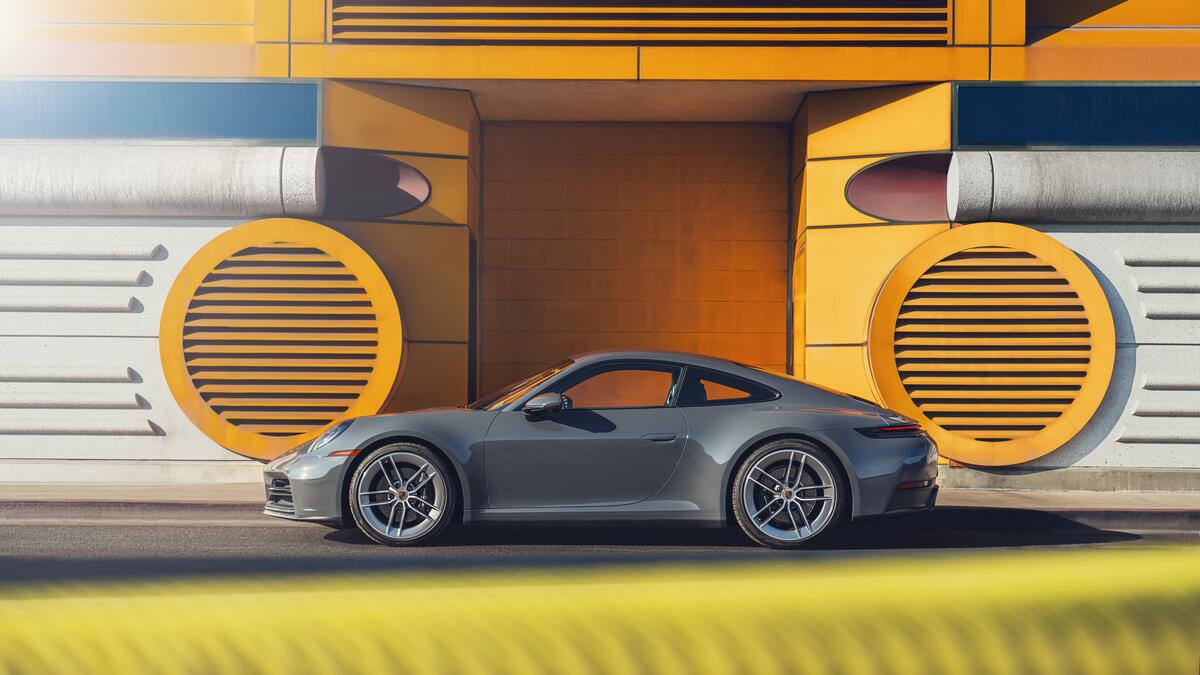
9-11s
"And the same things happen with 9-11s? Sure, but what's it get? 9-11s hold their value?"
The 911 is Porsche’s famous sports car. They’re saying that older 911s used to lose value more than people wanted, but today the market treats some 911s as more collectible and better at holding value.
The Porsche 911 is the iconic rear-engine sports car, and the hosts are discussing how certain 911 variants have historically depreciated differently than other cars. They claim that earlier 911s didn’t “hold their value” the way modern buyers expect, but that the market has shifted so later examples can appreciate.
hold their value
"9-11s hold their value? That name a normal passenger car with four doors. But the 4s and 9-11s didn't hold their value."
“Hold their value” means the car doesn’t lose much resale price as the years go by. Some cars become more desirable, so their resale prices stay higher (or even go up).
“Hold their value” refers to how well a vehicle retains its resale price over time instead of depreciating. In enthusiast markets, hype, scarcity, and collectible status can change whether a model depreciates normally or instead appreciates.
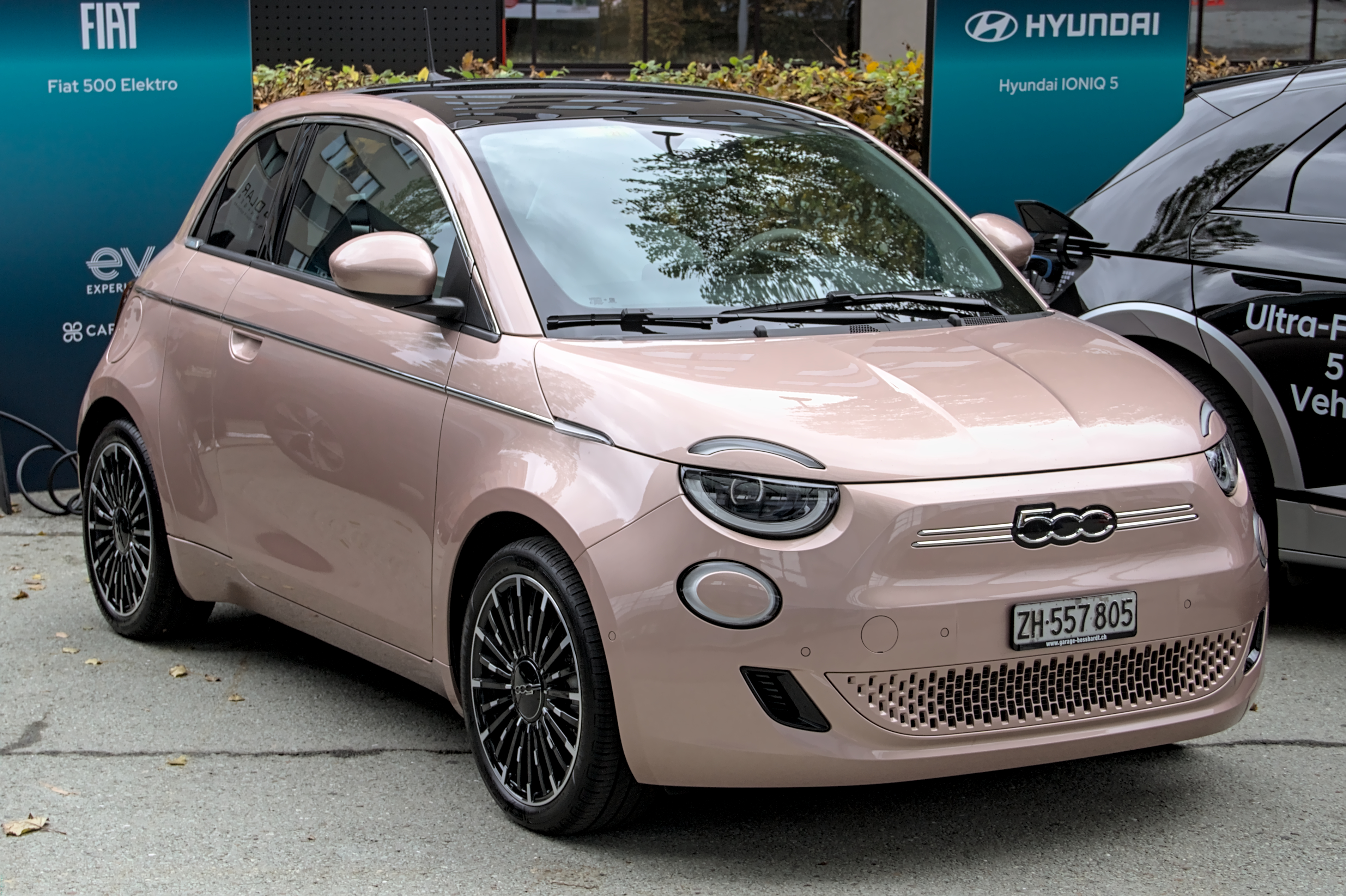
Fiat 500e
"But a Fiat 500e is not going up in value. No, a Fiat 500e, no."
The Fiat 500e is an electric small car. They’re saying it likely won’t become more valuable over time the way some rare, highly desired cars do.
The Fiat 500e is an electric version of the Fiat 500, and the hosts are using it as a counterexample to today’s “one of one” collectible mindset. They claim it’s not going to go up in value the way certain limited, hype-driven cars can.
Koenigseggs
"I think like if you're in that upper .01% and you're shopping for Koenigseggs, maybe the, maybe the market hire."
Koenigsegg is a company that makes very rare, very expensive supercars. The point here is that for cars like that, the buying process and pricing can be different from normal cars.
Koenigsegg is a Swedish hypercar maker known for extreme performance and limited production. When the hosts mention “Koenigseggs,” they’re talking about a very small, high-demand market where pricing and availability can behave differently than for mainstream cars.
pricing is fixed by the factory
"You can't get a deal on Lucid, Tesla, or Rivian because the pricing is fixed by the factory. What do you say to that?"
This means the carmaker sets the price, and the dealer can’t really change it. So there’s less room to haggle for a discount.
“Fixed by the factory” refers to a pricing model where the automaker sets the price and dealers have limited freedom to discount. In practice, that can reduce negotiation and make it harder to get deals like “cash today for a lower price” that you might see with more traditional dealership pricing.
Tesla
"You can't get a deal on Lucid, Tesla, or Rivian because the pricing is fixed by the factory. What do you say to that? Is that true or not?"
Tesla makes electric cars. Here, the discussion is about how Tesla’s pricing is handled in a way that makes it harder to negotiate a big discount.
Tesla is an electric-vehicle brand that sells many cars with a more direct, factory-controlled pricing model. The hosts argue that this “fixed pricing” approach limits dealer negotiation compared with traditional car retail.
Rivian
"You can't get a deal on Lucid, Tesla, or Rivian because the pricing is fixed by the factory. What do you say to that?"
Rivian makes electric trucks and SUVs. The hosts are saying Rivian’s new-car pricing is set by the factory, so you can’t negotiate discounts the same way as with many other brands.
Rivian is an electric-vehicle brand best known for its electric trucks and SUVs. The hosts mention Rivian alongside Lucid and Tesla to make the point that factory-fixed pricing can reduce or eliminate typical dealer bargaining on new cars.
Lucid
"You can't get a deal on Lucid, Tesla, or Rivian because the pricing is fixed by the factory. What do you say to that? Is that true or not? There's some cheap Lucids."
Lucid makes electric cars. In this segment, they’re saying Lucid’s pricing is set up so you can’t haggle as much as you might at a typical dealership.
Lucid is an electric-vehicle brand known for its luxury EVs and high-end pricing. The hosts are discussing how factory-set pricing and limited dealer involvement can reduce the ability to negotiate discounts on new Lucid cars.
supercharging
"Like they'll give you a year of supercharging. Actually, what Tesla does is worse than that because they constantly change the pricing on their cars."
Supercharging is Tesla’s fast way to charge its cars at Tesla charging stations. Here, they’re talking about Tesla sometimes throwing in free charging time as part of the deal.
Supercharging refers to Tesla’s fast-charging network and the high-power charging capability it provides. In this segment, “a year of supercharging” is mentioned as a promotional “freebie” that can be bundled with a purchase.

Tesla Cybertruck
"...sk wakes up and he thinks we need to sell more in Cybertruck. So all of a sudden the Cybertruck becomes a $60,..."
The Tesla Cybertruck is a pickup truck that runs on electricity instead of gas. It’s known for its unusual design and for being a newer kind of electric truck. The discussion is about how its price and sales strategy can change.
The Tesla Cybertruck is an all-electric pickup truck designed to be distinctive in shape and modern in powertrain. It’s discussed because pricing and demand can shift quickly, affecting what buyers pay and what the market expects. The podcast references it in the context of sales and pricing changes.

Tesla Model Y
"... is today. I think there's a belief that like the Model Y, which is the world's most popular electric car, ..."
The Tesla Model Y is an electric SUV. It’s popular because it’s practical for daily driving while still being powered by electricity. The podcast is referencing it as a top-selling example of EVs.
The Tesla Model Y is an all-electric compact SUV that has become one of the most popular electric vehicles. It’s often discussed because it combines everyday practicality with an electric powertrain. The podcast mentions it as a widely recognized benchmark for EV popularity.
incentives
"But that new price does change and there are incentives and you just need to be clever about when you buy it and how you buy it."
Incentives are deals that can lower the price you pay for a car. The hosts are saying the available incentives can change, so you shouldn’t assume the price will be the same forever.
Incentives are discounts or benefits that reduce the effective cost of buying a car, often tied to timing, eligibility, or promotions. The hosts argue that Tesla’s pricing changes alongside incentives, so shoppers need to pay attention to what’s available when they buy.
rust proofing
"The rust proofing was non-existent. The best example of that is like how people have owned that six cylinder in the Tacoma,"
Rust proofing is a protective coating or treatment that helps stop the car from rusting. If it wasn’t done, the vehicle is more likely to develop rust—especially in winter conditions.
Rust proofing refers to protective treatments applied to a vehicle’s body and underbody to slow corrosion. When the host says it was non-existent, they’re pointing to why older trucks could develop visible rust after just a couple winters.
extended warranties
"Here's another one. Extended warranties are a scam. Now this was something that I think was very popular because people, and this can still be the case depending on the extended warranty company"
An extended warranty is extra coverage you buy to help pay for repairs after the original warranty expires. The catch is that many plans have exclusions, so you have to read the fine print to know what’s actually covered.
An extended warranty is an optional service contract that covers certain repairs after the factory warranty ends. The host argues that coverage can be limited by exclusions and fine print, so whether it’s “worth it” depends heavily on the specific contract terms and the warranty provider.
Granger
"but we work with Granger as you guys know. We have, we're not just, you know, sponsored by them, but we're also customers. So I paid full amount for an extended warranty on that first C8"
Granger is the company the host mentions for extended warranty coverage. The host says they’ve had a good experience with it when an expensive repair came up.
Granger is referenced as the extended-warranty provider the hosts work with and buy from. The host’s point is that a reputable provider can make the claims process smoother and more likely to pay for expensive failures.
check engine light
"And I was driving it to Estes Park and all of a sudden I get the little, you know, check engine light and one of the little butterfly valves in the exhaust"
The check engine light means the car’s computer noticed something wrong. Usually you need a scan tool to figure out what part is causing the problem.
The check engine light is the dashboard warning that the car’s engine control system has detected a fault. It’s triggered by diagnostic trouble codes stored in the car, which is why a scan tool is typically needed to pinpoint the exact problem.
butterfly valves in the exhaust
"And I was driving it to Estes Park and all of a sudden I get the little, you know, check engine light and one of the little butterfly valves in the exhaust would not function anymore."
Butterfly valves in the exhaust are small flaps that help control how exhaust gases flow. If one fails, the car may warn you with the check engine light.
Exhaust butterfly valves are valves in the exhaust system used to change exhaust flow and sound characteristics. When they stick or fail, they can set emissions- or performance-related fault codes, which may illuminate the check engine light.
fine print
"So that's dependent on the extended warranty company because a lot of them have a lot of fine print. Sure."
“Fine print” is the detailed wording in a warranty that lists what’s covered and what isn’t. Two warranties can sound similar, but the fine print is often where the real differences are.
“Fine print” refers to the detailed exclusions, limits, and conditions inside a warranty or service contract. In practice, it determines what repairs are covered, what requires pre-approval, and what gets denied even if the failure seems related.
complexity
"Oh, it's complexity. Yeah."
“Complexity” here means modern cars have lots of electronics and systems working together. When something breaks, it can be harder and more expensive to fix than on older vehicles.
In automotive talk, “complexity” means modern vehicles use more interconnected systems and electronics than older designs. That increases repair costs because a single failure can involve multiple expensive modules and sensors.
tailgate
"Or like a 30 year old truck, you, you damage your tailgate, which happens to a lot of people the time. Tailgates now have speakers and lights built into them and they open multiple different directions."
A tailgate is the back door on a pickup truck. Newer trucks may put lights and speakers in the tailgate, so if it gets damaged, the repair can cost more.
A tailgate is the rear door on a pickup truck that swings down/up to load and unload cargo. The segment notes modern tailgates can integrate features like speakers, lights, multiple opening directions, and extra hinges—making them more expensive to repair.

Duramax
"They've got several hinges and even the, the mirror on our Duramax got damaged at one point. Mirrors at one point in time were pretty simple devices, things, parts that didn't cost that much to replace."
Duramax is a diesel engine used in some GM trucks. Here, they’re using it as an example of how even something like a side mirror can be costly today because it has electronics inside.
“Duramax” refers to General Motors’ diesel engine family used in certain Chevrolet and GMC trucks. In this segment, the host mentions a Duramax mirror being expensive to replace, highlighting how modern truck components can be packed with electronics.
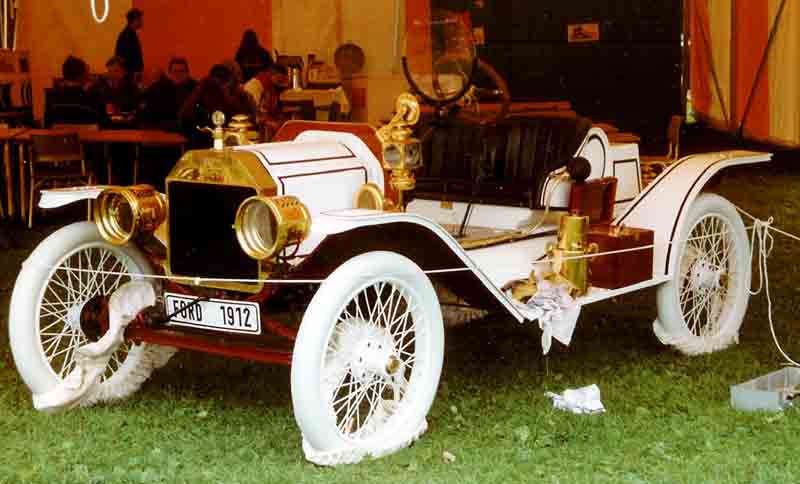
Model T
"Should have bought a Model T. Yeah. Exactly."
The Model T is an old Ford car from the early 1900s. They mention it to make a point: older cars were simpler, so there were fewer electronic parts that could get expensive to replace.
The Ford Model T is an early mass-produced car known for being mechanically simple compared with today’s vehicles. The host uses it as a contrast to modern trucks, implying that older cars had fewer electronics to break and therefore fewer expensive parts.

Mercedes E-Class
"You're like, I had a Mercedes E-Class, Formatic. It was the worst car in the snow. But then I had a BMW 5-Series X-Drive, best car I've ever driven in the snow."
The Mercedes E-Class is a luxury car model line. In this discussion, it’s being used as an example of a car that didn’t do well in snow for the speaker.
The Mercedes-Benz E-Class is a mainstream luxury sedan/wagon line. Here it’s mentioned alongside “Formatic,” as the host is contrasting how different all-wheel-drive systems behave in snow.

BMW 5-Series X-Drive
"It was the worst car in the snow. But then I had a BMW 5-Series X-Drive, best car I've ever driven in the snow. I'm like, no, you're driving the tires."
The BMW 5-Series is a luxury car. “X-Drive” is BMW’s all-wheel-drive system, and the speaker says it handled better in snow.
The BMW 5-Series is a mid-size luxury sedan line. “X-Drive” refers to BMW’s all-wheel-drive system, and the host is using it as an example of a setup that felt better in snow than the earlier Mercedes example.
symmetric
"There are certainly. But tell me Subaru's is symmetric. Well, yeah. There are certainly."
Here “symmetric” is about how Subaru’s all-wheel-drive system is set up so power is distributed in a balanced way. The host thinks that makes it behave more consistently on slippery roads.
In Subaru’s context, “symmetric” refers to its AWD layout where the drivetrain is balanced left-to-right. The host is implying that this design contributes to predictable traction and handling, especially in snow.
all-wheel drive
"There are certainly. But tell me Subaru's is symmetric. Well, yeah. The symmetry is outstanding. All-wheel drive, double X mode now."
All-wheel drive means power goes to more than just the two wheels on one axle. It can help with traction in slippery conditions like snow, but different systems work differently.
All-wheel drive (AWD) sends power to more than one axle—typically both the front and rear wheels. The host is arguing that different AWD systems can behave differently in snow, depending on how they manage traction.
double X mode
"All-wheel drive, double X mode now. They have X and XX mode. And Audi is Quattro."
“Double X mode” is a named setting on Subaru AWD that changes how the car manages traction. It’s basically Subaru’s way of adapting to different driving conditions.
“Double X mode” is Subaru’s AWD drive-mode naming (often tied to its traction-control and drivetrain behavior). The host is using it to highlight that Subaru’s system has specific modes for different conditions.
Quattro
"And Audi is Quattro. Try to not go to triple X. No, triple X mode."
“Quattro” is Audi’s all-wheel-drive system. The host is comparing how different AWD systems are set up and named.
“Quattro” is Audi’s brand name for its all-wheel-drive system. The host is contrasting Audi’s AWD naming and modes with Subaru’s “X/XX” mode approach.

Audi Quattro
"They have X and XX mode. And Audi is Quattro. Try to not go to triple X."
Audi Quattro is Audi’s system for sending power to more than one wheel. The goal is to help the car grip the road better, especially when it’s slippery. The podcast is mainly referencing the name and how it’s described.
Audi Quattro refers to Audi’s all-wheel-drive system, designed to improve traction by sending power to multiple wheels. The podcast mentions it as a recognizable name and jokes about the “X” modes, emphasizing how the system is marketed and discussed. It’s relevant because traction systems can strongly affect confidence in slippery conditions.
four-motion
"But the four-motion system in a Mercedes, Tommy, come on. That's Volkswagen. That's Volkswagen."
Four-motion is Volkswagen’s name for its all-wheel-drive system. It means the car can drive all four wheels to help with traction.
“Four-motion” is Volkswagen’s branding for its all-wheel-drive system. It indicates the car is designed to send power to all four wheels for improved grip.
Formatic
"What's Mercedes? Formatic. Formatic. Very different."
This is the Mercedes name for its all-wheel-drive system. The idea is the car can send power to all four wheels for better grip.
“Formatic” appears to be the speaker’s reference to Mercedes-Benz all-wheel-drive branding (commonly “4MATIC”). The key point is that Mercedes uses its own named system for distributing power to all four wheels.
slip test
"When you get to like the fringe stuff, like the really off-roading trims, and you really start to see the differences, that's why we do the slip test. And then certain all-wheel drive systems like some of the Toyota hybrid systems of the past"
A slip test checks how well a car can keep traction when the wheels start to spin. It helps show whether the AWD system actually works well on slippery surfaces.
A “slip test” is a traction evaluation where a vehicle is tested under low-grip conditions to see how well its all-wheel-drive system can manage wheel slip. It’s used to compare real-world behavior between different AWD setups.
snow tires
"You will burn your snow tires off in the summer. That one is true."
Snow tires are made to grip well in cold weather and on snow or ice. When it gets hot in summer, they wear out faster because the rubber is softer for winter traction.
Snow tires are tires designed specifically for cold weather and snow/ice grip, using a softer rubber compound and tread patterns that stay effective in winter conditions. In warm summer temperatures, that softer compound wears out quickly, which is why the hosts say you’ll burn them off in summer.
all-weather tires
"But the all-weather tires? Sure. Yeah, I think that was done because of Canada..."
All-weather tires are designed to handle more than just dry summer roads. They’re built to be usable in winter too, so you can often leave them on all year instead of swapping tires.
All-weather tires are a compromise tire meant to work across a wider range of conditions than all-season tires, including light snow. The hosts describe them as being effective “in between” dedicated winter tires and typical highway “fuel saver” tires, and they note the practical benefit: you can keep them on year-round.
all-seasonal weather
"We've done testing between all-seasonal weather, pure winters, and then just kind of a regular highway fuel saver tire."
This just means the kind of weather most people deal with most of the year—some cold, some warm, and mixed conditions. It’s the “in-between” scenario compared to true winter or true summer.
All-seasonal weather refers to the typical mix of temperatures and road conditions most drivers see across the year—neither consistently freezing like winter nor consistently hot like summer. The hosts use it to frame their testing comparison between all-season conditions, pure winter conditions, and other tire types.
pure winters
"We've done testing between all-seasonal weather, pure winters, and then just kind of a regular highway fuel saver tire."
“Pure winters” means the real winter conditions—very cold and often snowy or icy. Dedicated winter tires are made for that, while all-weather tires are more of a middle ground.
Pure winters means consistently winter-like conditions—cold temperatures plus snow/ice—where dedicated winter tires are designed to perform best. The hosts contrast this with all-weather tires, implying that all-weather is strong in mixed conditions but not as specialized as a dedicated winter setup.
fuel saver tire
"We've done testing between all-seasonal weather, pure winters, and then just kind of a regular highway fuel saver tire."
A “fuel saver” tire is designed to make the car easier to roll along, which can help you use less fuel. It’s usually not optimized for snow or ice grip like winter tires are.
A fuel saver tire is a tire tuned for lower rolling resistance, which can improve fuel economy compared with more performance-oriented tires. The hosts mention it as a baseline category in their testing comparisons against all-season and winter-focused tires.
keep them on all year round
"Yeah, you can keep them on all year round. Yeah, I think that was done because of Canada..."
They’re talking about not switching tires with the seasons. The idea is to use a tire that works well enough in both summer and winter so you don’t have to change them as often.
This refers to the practical strategy of using a tire type that can handle both warm and cold seasons without seasonal swapping. The hosts connect it to all-weather tires, which are marketed as a year-round solution compared with dedicated snow tires that are typically swapped out in summer.
all-season tire
"and much, much better than an all-season tire. The downside is on the all-weather tires is they ride kind of rough."
All-season tires are meant to be a “good enough” tire for most weather, like dry days and rainy days. They’re not the best choice if you’re doing real off-roading or deep snow.
An all-season tire is designed to work reasonably well in a range of temperatures and conditions, typically balancing dry-road grip with wet traction and some winter capability. It’s usually not optimized for heavy snow or for serious off-road use.
MT
"I'm team MT on everything. Yeah, Mount, yeah."
MT means mud-terrain tires. They have a chunky tread meant to bite into mud and rough ground, but they can be louder and less smooth on regular roads.
MT stands for “mud-terrain” tires, which use an aggressive tread pattern for digging through mud, loose dirt, and rocks. They typically prioritize traction off-road over quietness and smooth highway ride.
AT
"I'm team AT on everything. AT's are the best of all worlds."
AT means all-terrain tires. They’re designed to work on both paved roads and rougher surfaces like dirt and gravel, without being as extreme as mud-terrain tires.
AT stands for “all-terrain” tires, which are a compromise between highway comfort and off-road grip. They’re generally less aggressive than mud-terrain tires but still handle dirt, gravel, and mild mud better than street-focused tires.
approach, departure, and break over angles
"So number one is it's tires, and number two, it's the approach, departure, and break over angles that really determine how good a vehicle is."
These angles describe how well a car can handle bumps and steep hills without hitting the ground. Bigger numbers usually mean less chance of scraping the front, rear, or belly when you go over obstacles.
Approach, departure, and break-over angles describe how well a vehicle can climb over obstacles without the front bumper, rear bumper, or underside scraping. Larger angles generally mean more off-road clearance over steep inclines, descents, and crests.
low-range
"I think with anything off-road, a low-range is your first step into something that's genuinely capable. If you don't have a low-range, you're not in the game."
Low-range is a special low gear used for off-roading. It makes the vehicle move slowly but with more pulling power, which helps when you’re climbing or crawling over tough ground.
Low-range refers to a low gear ratio in a vehicle’s transfer case (common on 4x4s) that multiplies torque for slow-speed control on difficult terrain. It helps with crawling over rocks, steep grades, and slippery surfaces where you need maximum traction at low speed.

Ford Bronco Sport
"...ou're not in the game. Yeah, but now like the new Bronco Sport, it does a pretty good job for simulating that lo..."
The Ford Bronco Sport is a smaller SUV made for light off-road use. It’s meant to feel like a Bronco, but in a size that’s easier to drive day to day. The podcast is saying it can handle rougher conditions better than you might expect.
The Ford Bronco Sport is a smaller SUV in the Bronco lineup, designed to offer off-road capability in a more compact, everyday-friendly package. The podcast mentions it as doing a pretty good job at simulating the off-road experience. That makes it relevant for people who want some trail ability without stepping up to a larger vehicle.
heat limit
"But if you use that off-road regularly, you're going to hit the heat limit pretty quickly. Yeah, they do good hot."
A heat limit means the vehicle has a built-in protection when parts get too hot. If you keep using the off-road mode a lot, it can overheat and then limit how it works.
A “heat limit” here refers to thermal protection in the drivetrain or transfer-case system that reduces performance when components get too hot. Off-road modes that mimic low-range can generate heat quickly if used continuously.
overheat
"But if you use that off-road regularly, you're going to hit the heat limit pretty quickly. Yeah, they do good hot. You're going to overheat low-range."
Overheat means the vehicle’s parts get too hot. The speaker is saying that using low-range-style off-road behavior often can make the system heat up quickly.
Overheat means the system temperature rises beyond what it can safely handle, which can trigger reduced performance or protective shutdowns. In this context, the speaker is warning that low-range-like operation can heat up drivetrain components quickly.
CVT
"[2849.4s] All CVTs are bad. [2852.3s] No, yeah, ECVTs are good."
CVT means “continuously variable transmission.” It’s a type of automatic gearbox that can change ratios smoothly instead of shifting between set gears.
CVT stands for continuously variable transmission, a gearbox that can smoothly change gear ratio instead of using fixed “gears.” In practice, many CVTs use a belt (or chain) running between two variable-diameter pulleys to keep the engine in its most efficient range.
Planetary gear sets
"[2860.7s] Planetary gear sets, as much as I don't know how they work, [2863.7s] but they do work."
A planetary gear set is a gearbox design that uses several gears working together around a center gear. It helps the transmission create different “gear ratios” efficiently.
A planetary gear set is a compact gear arrangement with a central “sun” gear, surrounding “planet” gears, and an outer “ring” gear. It’s used in many transmissions because it can create multiple effective gear ratios within a small space and can be combined with electric motors in hybrid drivetrains.

Toyota Prius
"[2875.6s] Pre-i, really high mileage Toyota Prius, is running that style of CVT essentially. [2883.8s] Yeah, a Model T has a planetary gear set."
The Toyota Prius is a hybrid car. Its drivetrain uses a transmission strategy that people often describe as an ECVT, helping it blend the gas engine and electric motor efficiently.
The Toyota Prius is a hybrid that’s often cited in discussions of ECVTs because its hybrid system uses a mechanism that behaves like a CVT. In the Prius, the engine and electric motor work together, and the transmission strategy helps keep the engine in a more efficient operating zone.

Ford Maverick
"[2896.2s] That's technically a CVT. [2898.1s] Ford Maverick's technically a CVT."
The Ford Maverick is mentioned as another example of a drivetrain that people might call a CVT in practice. The host’s point is that the label can be confusing compared with older CVT designs.
The Ford Maverick is brought up as another vehicle that uses a CVT-like hybrid/gear-control approach. The point in the discussion is that some modern drivetrains are functionally CVT-ish, even if the naming doesn’t match what people expect from a traditional belt CVT.

2012 Versa
"which is fair because even a planetary gear set, Nissan really did, you know. Jacko, yeah. 2012 Versa really did it. And they should have called them like the Zoom-O-Matic or something."
The Nissan Versa is a small, budget-friendly car. In this segment, the hosts mention the 2012 Versa to make the point that its transmission setup can be misunderstood because people react to the “CVT” label.
The Nissan Versa is a compact car, and the 2012 Versa is being referenced here in the context of how its transmission branding and design can confuse shoppers. The hosts are pointing out that even if the system uses a planetary gear set, the “CVT” label can make people immediately dismiss it.
used CV
"That's actually another good one, though, that it's very dangerous to buy a used CV because the battery is 100% going to fail."
They’re talking about buying a used electric car and worrying about the battery. The point is that EV batteries can wear out, and that can be expensive to fix.
In this context, “CV” is shorthand for a used car’s battery system—specifically the high-voltage battery in an electric vehicle. The host is warning that buying used EVs can be risky because the battery is likely to degrade or fail over time.

Chevrolet Volt
"So one of the cases, actually, favorite cars is the Chevrolet Volt. He loves the Volts because... I'm more of an ELR guy."
The Chevrolet Volt is a plug-in hybrid: you can drive it on electricity, and it also has a gasoline backup. The host likes it because they believe the battery situation is less scary than some other used electrics.
The Chevrolet Volt is a plug-in hybrid, meaning it runs on an electric motor for daily driving and uses a gasoline engine to extend range. The host brings it up as a “favorite” because they think the Volt’s battery setup is a better used-buy than other EV battery stories.
Kia Soul
"...d stuff that Nissan used, that Kia used, and like Soul EV, those are pretty bad, and those get hot and t..."
The Kia Soul is a small crossover-style car with a distinctive shape. Some versions are electric. The podcast is talking about problems people can run into, like how the car behaves when it gets hot or is pushed hard.
The Kia Soul is a compact, boxy-styled crossover that’s offered in multiple versions, including electric variants. The podcast groups it with other models and mentions concerns about heat and performance in certain conditions, implying reliability or operating issues. That’s why it comes up—owners may notice differences in how these cars behave under stress.
climate control battery
"But for the most part, the fast majority of EVs with climate control battery is like a BMW i3. [3006.5s] Andre has had his..."
A climate control battery refers to EV battery thermal management—keeping the battery at an appropriate temperature using heating/cooling systems. Battery temperature strongly affects how long the pack lasts and how consistently it delivers range over time.

BMW i3
"But for the most part, the fast majority of EVs with climate control battery is like a BMW i3. Andre has had his..."
The BMW i3 is an electric car. The hosts are saying that, unlike some older EVs, the i3’s battery can last a long time and still work well even after lots of driving.
The BMW i3 is a compact EV known for its early adoption of EV tech and, in many owner reports, long-lived battery packs. In this segment, it’s used as an example of EVs with climate control that still perform well after many years and miles.
autonomy
"And I know the reason for it is that autonomy doesn't work. It's too dangerous."
Here, “autonomy” means the car driving itself. The host is saying it’s not safe enough yet for normal roads and everyday people.
In automotive tech, autonomy means the vehicle’s ability to drive itself using sensors, software, and control systems rather than relying on a human driver for every action. The host argues that current autonomy is unsafe and not ready for everyday use.
self-driving latest software
"And yet, the problem is that most of those people haven't actually never sat foot [3044.9s] or have tried Tesla's latest, both self-driving latest software. [3048.7s] What's happened in the last two years, and I've talked to engineers about this,"
This means the newest version of the car’s self-driving/assist software. The host says some people criticize it without having tested the newest update themselves.
“Self-driving latest software” refers to the most recent version of a Tesla-style driver-assistance/self-driving system delivered via over-the-air updates. The host’s point is that many critics haven’t actually tried the newest system in real conditions.
ballard
"A ballard is a short, vertical, sturdy post. I thought it was ballard. The term originated as a maritime word, as you, in the early 19th century, but has since expanded to refer to several different types of posts used for traffic control."
A ballard is a short, strong post placed on the ground to stop cars from driving into an area. It’s like a fixed barrier that you’ll see near sidewalks or entrances.
A ballard is a short, vertical, sturdy post—often made of concrete or metal—used to block vehicles from entering certain areas. The term originally comes from maritime usage, but it’s now commonly used for traffic-control posts in streets and parking areas.
road ragey setting
"You can set the car to a somewhat road ragey setting. You can with the high setting, Mad Max. It also works in conditions that people don't think it will work, like on snow."
They’re talking about a mode that changes how aggressively the car drives. A “road ragey” setting means it behaves more assertively, like it’s less cautious and more pushy in traffic.
This refers to a configurable driving-behavior mode in the car’s driver-assistance system that changes how aggressively it drives. A “road ragey” setting typically means it will follow and merge with less patience, which can feel more assertive to the driver.
Mad Max
"You can set the car to a somewhat road ragey setting. You can with the high setting, Mad Max. It also works in conditions that people don't think it will work, like on snow."
“Mad Max” is just a playful name for the most aggressive driving setting. It means the car drives in a more intense, less-cautious way.
“Mad Max” here is a nickname for the highest-aggression driving mode being discussed. It’s not a car model; it’s describing how intense the behavior feels when the system is set to its most assertive level.
mallard
"And it knows the difference between a ballard and a mallard. Yes, it does. Yes, it's a huge deal."
They’re using “mallard” (a duck) as an example of the car recognizing animals. The idea is that it can identify ducks as ducks, not just treat them as random shapes.
“Mallard” is a type of duck, used here to illustrate that the system can detect and classify animals—not just cars and road furniture. The episode uses this as an example of improved object recognition.
full self-driving
"So the only way that you could actually get behind the wheel of a full self-driving Tesla is to either buy it or get it on Touro, because you're not going to get it handed to you on a silver platter, like they do with the rest of the cars when they bring them to our office."
“Full self-driving” is Tesla’s software that tries to drive the car for you. Even when it’s working well, you’re still expected to watch the road and be ready to take over.
“Full self-driving” refers to Tesla’s driver-assistance software package that aims to handle more of the driving task than basic autopilot features. In practice, it still expects driver supervision and can require human intervention depending on conditions and system limitations.
ready for prime time
"We've put, like I said, 6,000 miles on it, full self-driving. And for the most part, it's very, very, very good. Yeah, it's ready for prime time with a responsible user."
“Ready for prime time” means it’s good enough to use in normal life. They’re also saying it only works well if the driver is paying attention and using it responsibly.
“Ready for prime time” is a phrase meaning the technology is mature enough for everyday, real-world use. Here it’s qualified by “with a responsible user,” implying the system works best when the driver understands its limits and supervises it.
stop-and-go traffic
"It's like, it's a bummer you're letting the car drive itself because it's. [3363.0s] But in stopping, it's in stopping go traffic. [3365.6s] Sure. [3366.0s] There's situations where I don't much get it."
Stop-and-go traffic is when traffic moves a little, then you have to stop again and again. It’s the kind of driving where self-driving help can feel more useful—or more annoying—depending on how it behaves.
Stop-and-go traffic is driving conditions where you repeatedly brake and accelerate at low speeds, often with frequent short stops. Driver-assist systems can be especially noticeable here because they spend a lot of time controlling speed and following distance.

Volkswagen Jetta
"...t even a Land Rover automatic. If you owned a new Jetta GLI with the manual and a Jetta DSG with the auto..."
The Volkswagen Jetta is a compact car, usually a sedan. Some Jettas can be ordered with a manual transmission or an automatic transmission. The podcast is talking about how those different versions can feel and behave differently.
The Volkswagen Jetta is a compact sedan that comes in different trims and powertrain options, including manual and automatic transmissions. The podcast references it in a discussion about how transmission choice and vehicle behavior can differ between versions. That’s relevant because buyers often weigh driving feel and everyday usability when choosing a specific Jetta.
Volkswagen Jetta Gli
"...t even a Land Rover automatic. If you owned a new Jetta GLI with the manual and a Jetta DSG with the automati..."
The Volkswagen Golf is a compact car that’s made for everyday driving. Like many cars, it can come with different transmission options depending on the version. The podcast is talking about how those choices can change how the car feels to drive.
The Volkswagen Golf is a compact car known for its practicality and availability in different trims and transmissions. The podcast mentions it alongside other compact models in the context of transmission and driving feel. That makes it relevant to buyers comparing how different versions behave day to day.
DSG
"If you owned a new Jetta GLI with the manual and a Jetta DSG with the automatic, I'm not sure that that automatic is going to be the first thing to fail on that car."
DSG is a type of automatic transmission used by Volkswagen and Audi. It shifts faster than some older automatics because it’s ready with the next gear ahead of time.
DSG stands for “Direct-Shift Gearbox,” a Volkswagen/Audi dual-clutch automatic transmission. It uses two clutches to pre-select gears, which can make shifts feel quicker than a traditional torque-converter automatic.
anti-manual EV
"We firmly established ourselves as, by this point, it sounds like anti-manual EV. We love self-driving."
“Anti-manual EV” is basically a joke about preferring electric cars over manual-transmission cars. Because EVs drive differently, the manual-vs-automatic debate doesn’t really apply the same way.
“Anti-manual EV” is a joking framing that suggests the hosts’ argument favors electric vehicles (EVs) over manual transmissions. Since EVs don’t use a traditional clutch-and-gearbox setup like a manual, the debate becomes less about shifting and more about how EV drivetrains change the driving experience.

BMW E60 M5
"That's the German argument. That's why they didn't sell the E-60M5 in Germany with the radial."
The BMW E60 M5 is a performance version of the 5 Series from the E60 generation. The host is using it as an example of how BMW’s choices and options differed by market.
The BMW E60 M5 is a high-performance 5 Series generation that’s especially known among enthusiasts for its V10-powered era and its reputation as a fast, serious sedan. Here, it’s referenced in the context of a “German argument” about how certain configurations (like a specific drivetrain setup) were handled differently for the German market.
automatic
"with the manual for the turbo, which is an automatic, I like the turbo a lot better. And I like the automatic a lot better."
An automatic transmission changes gears for you. The speaker is saying they personally enjoy the automatic more than the manual in this case.
An automatic transmission shifts gears for the driver, so you don’t operate a clutch or manually select gears. The host is arguing that, for their preferences, the automatic setup makes the car more enjoyable to drive than the manual.
Request an Explanation
Heard something you'd like explained? We'll add it to this episode.
Sign in to request explanations for terms you heard.
Want to learn more?
Browse our glossary for plain-English explanations of automotive terms, jargon, and concepts.
Help improve this episode
See something that's not quite right? Our annotations are AI-generated and can sometimes miss the mark. Click the flag icon on any annotation to suggest a correction.