Pickup Trucks, EV Lease Headaches & the Montana Loophole
About this episode
Pickup trucks, EV lease buyouts, and the “Montana loophole” collide in a wide-ranging discussion. A listener asks if they can avoid an EV lease buyout by negotiating a dealer “drop-off” then repurchasing for market value—hosts explain it’s possible but uncertain, with fees, paperwork, and auction-based valuation. Another debate weighs keeping a 10-year Tesla Model S with free Supercharging versus switching to a newer EV. The truck segment turns into a deep dive on why trucks got bigger, more luxurious, and more profitable, plus who actually uses them. Finally, the Montana LLC tax/registration workaround is outlined as states crack down, followed by a quick history of why horsepower ratings fell in the 70s/80s.
In this episode: 🚛 Pickup Trucks: How Did We Get Here? — Why trucks went from work vehicles to $80,000 lifestyle statements, how the F-150 grew by nearly 3 feet since 1964, and why CAFE regulations accidentally made trucks bigger.
🔋 EV Lease Buyout Strategy — AJ from San Diego is staring down a $5,000 gap between his lease payoff and market value. We break down his real options, what dealers can (and can't) do, and why the leasing company may send the car to auction anyway.
🚘 Should Mark Ditch His 2016 Tesla Model S? — With 82K miles, $5K already spent on repairs, and the free Supercharging perk on the line, is it time to move on? We crunch the numbers and recommend some underrated alternatives — including Cadillac's surprisingly strong EV lineup.
📋 The Montana LLC Loophole — Explained — How wealthy buyers have been using Montana shell companies to dodge state sales tax and registration fees, why California alone estimates $2 billion in lost revenue since 2022, and why states like Utah, Tennessee, and Texas are now cracking down.
⚡ Why Did Horsepower Plummet in the '70s and '80s? — The real story behind the muscle car era's sudden power collapse: SAE net vs. gross ratings, catalytic converters, early emissions regulations, and why a 426 Hemi went from 425hp to basically dead in a few short years.
Pickup trucks: why they've become so expensive
"How they've changed over the years and why they've become so very expensive... Least end questions and we might dive into a few other topics."
They’re going to talk about how pickup trucks have changed and why they cost a lot more now than before.
This episode segment frames pickup trucks as having changed over time and focuses on the reasons for their rising prices. That sets up a discussion likely tied to market demand, manufacturing costs, and pricing power.
EV lease buyout
"And I'm wondering if the value of my vehicle is a lot less than the payoff amount for the leases... I actually want to buy out the lease because I really like the EV... But say the pay off amount is 30,000 and the value at the time of the lease end is 25,000..."
When you lease an EV, you usually have an option to buy it at the end for a fixed price. If the car is worth less than that fixed price, buying it can feel like you’re overpaying.
An EV lease buyout is when you pay the pre-set “payoff” (often called the purchase option price) at the end of the lease to keep the car instead of returning it. The key issue is that the buyout price can be higher than the car’s market value at lease end, which creates a potential “lease headache.”
payoff amount
"And I'm wondering if the value of my vehicle is a lot less than the payoff amount for the leases... Basically? I want to keep it... the pay off amount is 30,000 and the value at the time of the lease end is 25,000..."
The payoff amount is the price you’d have to pay to end the lease and keep the car. If that number is too high compared to what the car is worth, it can cost more than you expect.
The payoff amount is the dollar figure you must pay to settle the lease at the end—typically the lease’s stated purchase option price. If the payoff amount is greater than the vehicle’s current value, the math may not work out unless the dealer offers a workaround.
lease-end market value vs purchase option price
"But say the pay off amount is 30,000 and the value at the time of the lease end is 25,000 I don't want to pay $30,000 right for a car that's worth 25..."
At the end of a lease, the car has a real-world value. But the lease also sets a buy price—so if the buy price is higher than the car’s value, you may be overpaying unless you negotiate.
This is the comparison between what the EV is worth at lease end (market value) and what it costs to buy under the lease contract (purchase option price). When market value drops below the option price, lessees can end up paying more than the car is worth unless they negotiate or use an alternative disposition path.
dealer buyback / turn-in alternative
"Have you ever seen or heard of situations where? At the lease end instead of me giving the vehicle back... would I be able to go to the dealer... and say hey listen... instead of me turning it in they'd sell it back to me..."
They’re asking if the dealer can offer a deal so they can keep the car without paying the full buyout price. Sometimes dealers can make an arrangement, but it’s not guaranteed and depends on the car’s value and the dealer’s needs.
The speaker is describing a scenario where, instead of returning the leased EV, the dealer might buy it back or “resell” it to the lessee for a lower effective price. This kind of workaround depends on dealer incentives, the vehicle’s condition, and how the lease-end disposition is handled.
turn in the vehicle and immediately buy it from the dealer (lease-end strategy)
"So I would effectively be sort of quote-unquote turning in the vehicle and then immediately buying it from the dealer at a price that was... Better for everybody... I'm not sure if that's a thing or not..."
The idea here is: instead of paying the lease buyout price, you return the car and then buy it back from the dealer for a lower price. The big question is whether dealers will actually do that and how the numbers work out. It’s a strategy to avoid paying more than the car is worth.
The segment discusses a strategy where someone effectively “turns in” the leased vehicle and then buys it right away from the dealer at a better price than the lease payoff. This hinges on whether the dealer can structure the transaction to reflect market value rather than the contract buyout. The host notes uncertainty and mentions hearing it discussed online (e.g., Reddit), implying it may be possible but not common or well-documented.
KBB
"...It's 25,000 is what it's worth KBB probably trade-in value something like that. Maybe that's retail..."
KBB is a website that estimates what a car is worth. People use it to guess whether the price to buy out a lease is fair. Dealers may offer different numbers, but KBB helps you sanity-check the deal.
KBB (Kelley Blue Book) is a pricing guide used to estimate a vehicle’s trade-in and retail values. In lease-end discussions, people compare the contract buyout/payoff to KBB’s estimated value to judge whether buying out is a good deal. It’s a reference point, not a guarantee of what a dealer will offer.
end-of-lease options (return vs buyout)
"...at the end of your lease your options are drop it off or buy it out. Those are the two options available and all of that is facilitated through your dealership... in this case your best bet is to go in and say I would like to drop off this vehicle..."
Near the end of a lease, you can either turn the car back in or keep it by paying the buyout price. If you turn it in, the dealer checks for damage and may charge you for problems. If you buy it, you skip that return process but you pay whatever the contract says.
At lease maturity, you typically choose between returning the vehicle (often called “drop it off”) or buying it out. Returning triggers inspection and potential charges for excess wear, mileage, or damage. Buying out avoids return inspection charges but locks you into the contract’s buyout price.
damage charges at lease return
"...I would like to drop off this vehicle. That means you're gonna have to pay any damage charges that may be associated that you drop off"
If you turn the leased car back in, the dealer inspects it and may charge you if there’s damage or wear that goes beyond normal. So even if you don’t buy the car, you might still owe money to cover those issues. It’s smart to understand what they’ll charge for before you return it.
When you return a leased vehicle, the dealer typically charges for damage or excess wear beyond what’s considered normal. These charges can include body damage, interior issues, and sometimes tire or wheel damage. The transcript highlights that choosing “drop it off” can create additional costs if the car isn’t in acceptable condition.
disposition fee
"You're gonna have to pay the basically the drop-off fee because it's the processing of the paperwork and the disposition fee"
At the end of a lease, there’s often a fee for the company to take the car back and get it ready to sell again. That’s the disposition fee.
A disposition fee is a lease-end charge the leasing company/dealer assesses for taking the vehicle back and preparing it for remarketing. It’s separate from damage charges and is often non-negotiable.
drop-off fee
"You're gonna have to pay the basically the drop-off fee because it's the processing of the paperwork and the disposition fee"
When you return a leased car, the dealer or leasing company often charges an admin fee for handling the return. It’s basically paperwork and processing costs.
A drop-off fee is a charge tied to returning a leased vehicle, usually covering administrative work when the lease is turned in. Dealers may bundle it with other lease-end processing charges.
retail number
"It's worth again. Let's hope that might be the retail number... And if it says retails worth 25,000 you say I would like to buy it for 25,000 before you put it up on the on the website"
They’re talking about using an estimated market value (a retail price) as your bargaining number. The idea is to buy it for that value instead of letting the dealer mark it up.
“Retail number” here refers to the car’s estimated market value used to justify a purchase price before the dealer lists it for sale. The speaker suggests using the value shown on the paperwork/quote to negotiate a buy price.
buying a leased vehicle through the leasing company vs dealer
"You actually can buy your lease out without going to the dealer... So if you just want to buy it from the leasing company, you just contact the leasing company no dealer required"
Sometimes you can buy your leased car straight from the leasing company. That can help you avoid extra dealer steps or charges.
The speaker highlights that you can often buy a lease directly from the leasing company without involving a dealer. That can matter because dealers may add their own fees or markup when they’re the intermediary for the transaction.
residual
"But in your situation where you're trying to buy it for what it's worth rather than what the lease buyout is the residual says it should be worth"
The residual is the “expected value” of the car at the end of your lease. It helps set your monthly payment and also often becomes the price you pay if you buy the car.
In leasing, the residual is the estimated value of the car at the end of the lease term. It directly affects your lease payment and the buyout price—if the residual is set too high, the buyout can be more expensive than market value.
Chevrolet Blazer
"Actually in a similar situation with our Chevy Blazer because it is not worth the residual on that lease"
The speaker uses a Chevy Blazer lease as an example of what happens when the vehicle’s real-world value doesn’t match the lease residual. If the Blazer isn’t worth the residual, buying it out can cost more than it’s actually worth.
capitalized cost
"was not by discounting the the capitalized cost of the vehicle, but like ramming the residual through the roof"
Think of the capitalized cost as the starting price number the lease math uses. If you negotiate that number down, your lease payment usually goes down too.
The capitalized cost is the negotiated “price” of the vehicle used to calculate lease payments (similar to the amount financed). Lowering the capitalized cost reduces monthly payments, while residual value changes can also affect the payment.
GM EVs
"As I have seen unfortunately as I have seen with some Especially GM EVs. It does seem like often"
GM EVs are electric cars made by General Motors. The point here is that, for some of these leased EVs, the leasing company may figure out the car’s value using an auction. That can affect how much the car is worth when you’re trying to buy it back or plan your next steps.
“GM EVs” refers to electric vehicles made by General Motors. In this segment, the host uses GM EVs as an example of how leasing companies may use auction-based valuation to set return/resale value. That implies EV lease returns can be handled differently than some buyers expect.
lease buyback value determined via auction
"Especially GM EVs. It does seem like often the leasing company is going to make it go through an auction in order to determine that value because they don't want to just put a Number on the car they want they want it to be a market value kind of thing"
When you return a leased car, the leasing company has to decide what it’s worth. Instead of guessing, they may sell it at an auction so the final price reflects real market demand. That means the value (and what happens next) can be uncertain for you.
The speaker describes how some leasing companies—especially with certain GM EVs—don’t just assign a fixed resale value. Instead, they may repossess the leased vehicle and run it through an auction to establish a market-based price. That auction result then drives what the dealer/next buyer pays or how the vehicle is handled afterward.
uncertainty of timing for when a returned leased car appears for sale
"Without you calling and trying to do this in advance if you just went to the dealer dropped it off It might be several weeks before that exact same car is suddenly up for sale on the lot"
If you don’t handle the buyback steps early, the car might not show up for sale right away. It could take weeks before it’s listed on a dealer’s lot. So you can’t always count on immediate availability.
The speaker notes that if you don’t initiate the process in advance, it may take weeks before the exact returned vehicle shows up on a dealer’s lot. That timing uncertainty can affect your ability to plan a purchase or negotiate. It also reinforces that lease return handling is often controlled by the leasing/finance company’s workflow.
dealer not obligated to sell after agreeing to buy your car
"And so you'd say hey I just want to pay that for my car and and you would hope that the dealer honors their word But they don't they don't have to sell it to you. Yeah, even after they say yes, we'll take it in"
Even if a dealer tells you they’ll do a deal, they might still be able to back out later. The final decision can depend on their costs and how the car’s value plays out. So it’s important to get everything clearly agreed to in writing.
The host explains that even if a dealer says “yes” to taking your car (or to a deal), they may not be required to complete the sale to you. Lease/auction valuation and internal dealer decisions can change the outcome after the initial agreement. This is a practical reminder that verbal/early commitments aren’t always binding in the way buyers assume.
buy it out
"[509.3s] But if that car is super sentimental to you just buy it out because [512.1s] Things are gonna be out of your hands and you don't want to pay more than it's worth"
Buying it out means you’re choosing to keep the car instead of turning it back in. You pay a set price (the buyout), so it’s smart to check whether that price is a good deal compared to what similar cars cost now.
“Buy it out” usually means purchasing the vehicle at the end of a lease term (or exercising an option to keep it). It matters because the buyout price can be lower than what the car would cost to replace, but you want to compare it to the car’s current market value.
Dodge Charger
"...s The worst thing they can do is charge add a DC charger all the time all the way up to a hundred percent ..."
The Dodge Charger is a large American car, and some versions are built to go fast. The podcast mentions it in the context of charging habits, like how you charge a battery and how often you keep it at full.
The Dodge Charger is a full-size American sedan that’s known for strong performance versions and a long-running history in the muscle-car segment. It may come up in a discussion about driving or charging habits because some Charger trims can be discussed alongside broader powertrain and EV-charging topics. In the podcast context, it’s mentioned as part of a “worst thing” charging behavior conversation.
DC charger
"[540.5s] The worst thing they can do is charge add a DC charger all the time all the way up to a hundred percent [547.1s] And that that just doesn't that's not gonna happen that way"
A DC charger is a fast charger for an electric car. Using fast charging a lot—especially charging to the very top—can be harder on the battery over the long run.
A DC charger is a fast-charging setup that can deliver high power directly to the battery (as opposed to slower AC charging). Frequent fast charging to very high states of charge can increase battery stress over time, so it’s a key consideration when evaluating how an EV was used.
market research
"[562.7s] That's your that's your market research and you can go find you know [565.8s] Just about the exact same thing you had with maybe one or two changes."
Market research means checking what similar cars cost and what options they have. It helps you make sure you’re not overpaying and that you can find a close replacement if you decide not to keep your current one.
“Market research” here refers to comparing your current vehicle/trim to what’s available in the market so you can estimate pricing and options. In a lease-buyout or replacement decision, this helps you avoid paying more than the car is worth and identify close matches with the features you want.
nostalgia tax
"[579.3s] The nostalgia tax, right? This is mine or or you hopefully find a dealer who will work with you and shop your dealers"
Sometimes people pay more for a car because they really like it, not because it’s the best deal. Dealers may also charge more because lots of people want that exact car for emotional reasons.
The “nostalgia tax” is the idea that certain buyers pay extra for a vehicle because it feels special, familiar, or emotionally appealing—even if the same money could buy something more rational on paper. In buying discussions, it often shows up as higher prices or less flexibility from dealers because demand is driven by sentiment as much as value.
buying out a lease (finance the used-car rates)
"[598.1s] You're you're gonna have to finance that it used car rates if you're not gonna pay cash to buy out your lease"
If you want to keep the car after a lease ends, you usually have to pay the buyout amount. If you don’t pay cash, you may get a loan with rates that are closer to used-car financing, which can be more expensive than you expect.
When you buy out a lease, you’re typically financing the remaining balance, and the lender may price it like a used-car loan rather than a new-car deal. That can change your interest rate, monthly payment, and total cost versus simply trading or replacing the vehicle.
re-register the vehicle
"[604.5s] You are also going to have to re-register the vehicle [607.3s] So it's not like a simple title transfer, etc"
When you take over ownership, the car’s registration has to be updated to the new owner. That usually means more paperwork and fees, not just signing one form.
Re-registering is the administrative step of updating the vehicle’s registration when ownership changes—especially when you’re converting a leased vehicle into a purchased vehicle. It can involve fees and paperwork beyond a simple title transfer, depending on state rules and how the dealer handles the transaction.
AC unit
"[660.7s] But over the last two years they've upgraded the melting screens and weak suspension parts other junction boxes. Wow and [668.4s] $5,000 on an AC unit apparently"
The AC unit in an EV is responsible for cabin heating/cooling and often integrates with the vehicle’s thermal management system. Repairs can be expensive, and repeated issues can be a sign of broader thermal system problems rather than a simple one-off component failure.
Supercharging
"[676.2s] And she's hesitant to give up the car with the free lifetime [679.4s] Supercharging and they do use Tesla superchargers 90% of the time."
Supercharging is Tesla’s fast charging system. It can recharge the car much quicker than most regular chargers, which is why some owners use it most of the time.
Supercharging is Tesla’s fast-charging network designed for high power output, typically reducing charging time compared with standard public chargers. Regular Supercharging can influence charging habits and battery wear considerations, though battery health depends on many factors beyond just charger type.
charging at a supercharger
"Well, it's still running and get some trade in value for it Alex, there's one number that's immediately jumping off. You're you're seeing the same thing, right? 90% of your charging is at a supercharger I know people do it, especially when they said you have free charging"
They’re talking about how often you use fast public chargers instead of charging at home. If you rely on Superchargers, you may pay more and also spend time waiting, so it’s worth checking if it’s actually cheaper or just convenient.
The hosts are discussing how much of an EV’s charging happens specifically at Tesla’s Supercharger network. That matters because Superchargers can be priced differently than home charging, and the time spent waiting can offset any savings.
EA stations
"You and I have mostly people lined up a lot of Volkswagen's lined up at EA stations Waiting for their free charging and that to me is sort of a is it worth your time?"
EA refers to Electrify America, a major U.S. fast-charging network. The hosts mention people lining up at EA stations for free charging, which highlights how incentives can drive charger congestion and affect the real-world value of “free” electricity.
time cost of charging
"Waiting for their free charging and that to me is sort of a is it worth your time? And it seems like 82,000 miles worth, you know, that'd be 78 You know 77,000 miles worth of time sitting at a supercharger."
They’re basically asking: is saving money on charging worth the time you spend waiting at chargers? If you’re stuck at a fast charger for a long time, the savings may not feel like a win.
This segment weighs the dollar savings of charging incentives against the time cost of waiting at fast chargers. The hosts quantify “miles worth” of time spent at a Supercharger and compare it to the value of keeping the car or trading it in.
Tesla Model Y
"And the model s and model y are not the same car not not at all Nothing against the model y but the s is nicer, but as you say here, this is this is an older s"
They bring up the Model Y as the alternative to the Model S. Even if you like the Model Y, the choice can come down to comfort and how the car fits your daily driving and charging habits.
The hosts mention the Tesla Model Y as the comparison point to the Model S. While they say the Model Y isn’t “bad,” they argue the Model S is nicer, which can influence which car makes more sense for a given charging routine and budget.
Tesla Model S
"And the model s and model y are not the same car not not at all Nothing against the model y but the s is nicer, but as you say here, this is this is an older s"
They’re comparing two Tesla cars: the Model S and the Model Y. The Model S is generally the more upscale, comfortable one, and because it’s older in this case, the ownership math (including charging) can look different.
The hosts compare Tesla’s Model S to the Model Y, emphasizing that the Model S is a more premium, higher-comfort car. They also note it’s an older Model S, which affects how you should think about charging costs and overall ownership value.
miles per kilowatt hour
"About three and a half miles per kilowatt hour 14 cents per kilowatt hour depending on where you are on the country That's high or low for me and be wicked low because we pay a lot more than than that here for business"
This is a way to measure how efficiently the EV uses electricity. If you get more miles per unit of electricity, it usually costs less to drive.
“Miles per kilowatt hour” (mi/kWh) is an efficiency metric for EVs, showing how far the car travels per unit of electricity. Higher mi/kWh means you use less energy for each mile, which directly affects charging cost calculations.
range degradation / reduced range
"This is a ten-year-old car that does less that does 8,000 miles a year And so it's it's everything around town a 75 had 250 odd, you know miles of range something like that. It's probably down to 230"
They’re saying that after years of use, an EV’s battery may not hold as much charge as it used to. That means the car can go fewer miles before needing a charge.
The hosts describe a 10-year-old EV with reduced real-world range, estimating it may have dropped from around 250 miles to about 230 miles. This is a practical way to think about battery aging and how it changes daily charging needs and convenience.
high voltage battery
"I'm not as worried about the high voltage battery. Okay, I'll start there. That's not my biggest concern"
In an EV, the high-voltage battery is the big battery that powers the car. People worry about it because if it ever has problems, it can be costly to fix and it can affect how far the car can go.
A high-voltage battery is the main energy storage pack in an EV, typically powering the electric motor(s) through high-voltage electronics. Battery health and failure risk are major ownership considerations because repairs can be expensive and may affect range and performance.
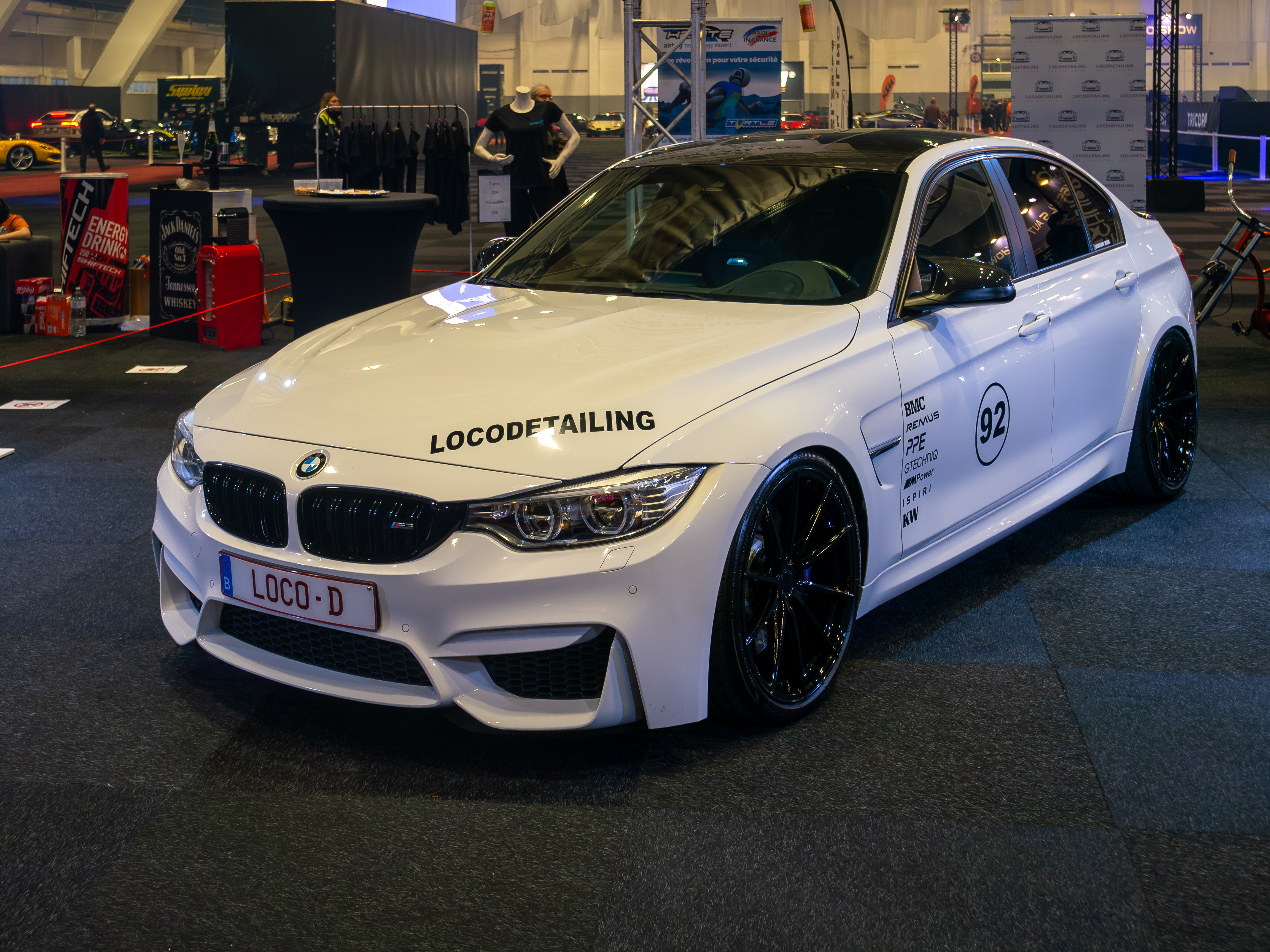
Genesis G80
"try and locate a One of the few Genesis G80 Electrics that are still around because it's about the same size as your model S ... the G80 electric They sold I think it was less than a hundred something like that in 20.5 which is why it is gone."
The Genesis G80 Electric is a luxury electric sedan from Genesis. They’re saying it’s uncommon and hard to find now, but it could feel similar in size and driving experience to a Tesla Model S.
The Genesis G80 Electric is an all-electric version of the G80 luxury sedan. The hosts describe it as a rare, limited-availability EV option that’s roughly similar in size to the Tesla Model S, and they connect its low sales to why it’s no longer around.
Genesis G80
"...ld be to try and locate a One of the few Genesis G80 Electrics that are still around because it's abo..."
known-to-fail parts (recurring failures)
"especially as you've noted you've spent, you know money over the last few years here replacing some of the parts that are known to fail on the model S and Logic would send tend to indicate here that some of these failures may recur"
“Known-to-fail” parts are components that have a documented history of failing or wearing out prematurely on a specific model. The hosts argue that if you’ve already replaced those items on a Tesla Model S, similar issues could come back, which affects the cost-benefit of keeping versus switching cars.
supercharger network
"And a lot of them would be able to use the supercharger network now, too ... their their data says that you're not supercharging that much"
The Supercharger network is Tesla’s system of fast charging stations. The hosts are saying that more EVs than just Teslas may be able to use these chargers now. That matters because it makes long-distance charging easier and can influence what deals Tesla offers.
The Supercharger network is Tesla’s fast-charging infrastructure for electric vehicles. The hosts note that some non-Tesla EVs can use it now, which reduces one of the biggest “Tesla-only” advantages. They also discuss how charging usage affects whether incentives might be offered to certain owners.
end-of-quarter incentives
"I just know that Tesla at the end of quarter has been doing some interesting incentives ... You're not panicking maybe wait till the end of this current quarter"
End-of-quarter incentives are special deals that companies run near the end of a three-month period to boost sales. The hosts think Tesla sometimes offers trade-in or other perks around that time for certain owners. If you’re not in a rush, waiting could help you get a better deal.
End-of-quarter incentives are sales promotions that automakers use to hit quarterly targets. In this segment, the hosts suggest Tesla may offer trade-in deals or other benefits to Model S owners near quarter end. They recommend waiting if you don’t need the car immediately, because the offer may appear later.
Tesla Model X
"Model X owners specifically right because those are some of the older legacy vehicles ... And so they might try to do something to do that and their their data says that you're not supercharging that much"
The Tesla Model X is a bigger electric SUV from Tesla. The hosts say Tesla may offer incentives to Model X owners near the end of a quarter to encourage trade-ins. They also mention Tesla’s idea that these owners aren’t using charging as much as expected.
The Tesla Model X is Tesla’s larger electric SUV, positioned above the Model Y. In this segment, it’s specifically called out as an “older legacy” vehicle that Tesla may target with end-of-quarter incentives to get owners to trade in again. The hosts connect this to Tesla’s data about charging behavior.
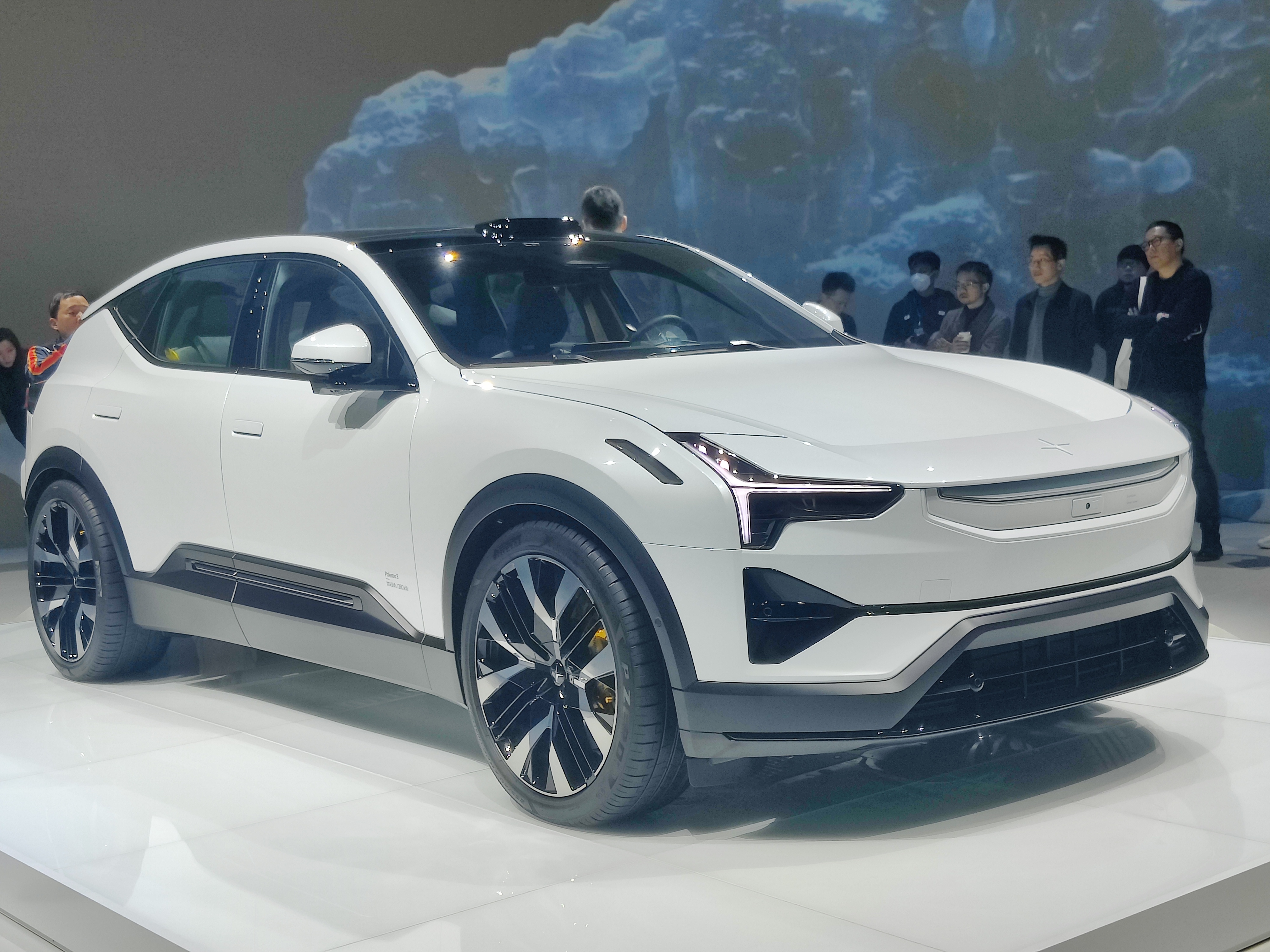
Polestar 3
"But nothing against the why I would lean towards checking out something like the updated Polestar 3 or the new Volvo"
The Polestar 3 is an electric SUV from the Polestar brand. The hosts are recommending it as a non-Tesla option and saying it can charge quickly. It’s brought up to show that you’re not limited to Tesla anymore.
The Polestar 3 is an electric SUV from Polestar, positioned as a premium alternative to Tesla. The hosts mention it as an option worth checking out and highlight its fast-charging capability. This is part of the broader point that there are strong non-Tesla EVs now.
EX60
"But nothing against the why I would lean towards checking out something like the updated Polestar 3 or the new Volvo EX-60 both of those are gonna have extremely quick charging The EX-60 is gonna have 400 miles of range here real soon"
The EX60 mentioned here is an electric vehicle that the podcast says can charge very quickly. The main point is how fast you can add energy to the battery. It’s being compared based on charging speed.
The EX60 in the podcast context refers to the Volvo EX60, which is discussed as having extremely quick charging. It’s brought up as an alternative to other fast-charging EV options, with the emphasis on how quickly you can replenish the battery. The podcast is using it to highlight charging speed as a major buying factor.
Cadillac Lyric
"...so check out honestly any of the Cadillac EVs the lyric has seats that I find uncomfortable But other th..."
The Cadillac Lyriq is an electric SUV. The podcast mentions it because the speaker doesn’t like the seats for comfort. It’s an example of an EV where comfort is part of the decision.
The Cadillac Lyriq is an electric SUV from Cadillac, and it’s discussed as part of a broader look at Cadillac EVs. In the podcast, it’s specifically mentioned because the speaker finds the seats uncomfortable, even though other aspects may be worth considering. It’s brought up as an example of how comfort can matter alongside EV performance and features.
supercharger access
"They're gonna charge about as fast as your model S. They have supercharger access and coming "
This means you can use Tesla’s fast-charging stations. If you have access, it can make long trips less stressful because you know where you can charge quickly.
“Supercharger access” refers to being able to use Tesla’s fast-charging network. For non-Tesla EV owners, it can significantly improve road-trip convenience because chargers are more predictable and often faster than many alternatives.
plug-in charge
"Coming very soon. It's gonna offer plug-in charge So the experience will be identical to your Tesla where you just plug it in and away it goes and it charges you whatever right now"
Plug-in charge means you plug the car in and it starts charging with less hassle. Instead of fiddling with apps or menus, the system handles the setup for you.
“Plug-in charge” is a charging workflow where the car and charger communicate so you can start charging automatically after plugging in. The goal is to reduce app steps and button presses, making charging feel more like “plug and go.”
software update
"That's coming in a Software update real soon. It's starting on the bolts and it's moving across the entire ultium lineup where it'll tell you Hey, pull into start Charles stall to be you pull in there"
A software update is like upgrading the car’s computer. In this case, it’s adding charging features so the car can guide you to the right charger and start charging more easily.
A software update is a remote change to the EV’s operating system that can add features like charging workflows and station/availability information. This matters because it can improve usability over time without needing new hardware.
Ultium lineup
"Software update real soon. It's starting on the bolts and it's moving across the entire ultium lineup where it'll tell you Hey, pull into start Charles stall to be you pull in there"
Ultium is GM’s shared “EV platform” that many different electric models are built on. If an update rolls out across the Ultium lineup, it should reach multiple GM EVs that share that platform.
Ultium is GM’s EV battery and vehicle platform strategy, used across multiple electric models. When the host says the update is moving across the Ultium lineup, they mean the same underlying EV tech family will receive the charging feature.
full self-driving
"It's an interesting question and I had the conversation the other day with a friend who had that full self-driving Switchover and I said in that case I would hold on to your full self-driving"
They’re talking about Tesla’s advanced driver-assist features. The key point is whether it makes financial sense to buy a new car loan if you already have that software on your current Tesla.
“Full self-driving” refers to Tesla’s driver-assistance software package marketed as enabling more automated driving features. The host is discussing whether it’s worth paying for or keeping the subscription/option when you’re considering a new loan or new vehicle.
new loan on a vehicle
"It doesn't make sense to get a new loan on a vehicle. You that's gonna be very similar It was new model three or my model three and also full self-driving the hundred dollars a month"
This is a financial decision concept: whether upgrading to a similar vehicle is worth taking on new debt. The host’s argument is that if the new car would be very similar and you already have valuable features, the cost of a new loan may not be justified.
Model 3
"It was new model three or my model three and also full self-driving the hundred dollars a month Not I mean your free supercharger is gonna save you some money, but but it's it's not quite as much money"
They mention the Tesla Model 3 as the example. The point is that if you already have a Model 3 with the features you care about, switching to another similar one may not be worth the extra cost.
The host references a Tesla Model 3 as the example vehicle in the “new loan vs keeping your current car” discussion. It’s used to illustrate how feature value (like full self-driving) and charging perks affect the upgrade decision.
toughest truck tests
"Roman believes that people use their trucks or truck things more than I think they do... it’s essential for TFL truck in their business to have tests that prove which truck is toughest and which truck does this and which truck does that the best"
Truck makers and reviewers run tests to see which pickups can really handle hard work. The goal is to help you buy a truck that won’t feel weak when you need it to do the job.
The hosts are talking about “toughness” testing—structured evaluations meant to show which pickup trucks can handle real-world abuse and heavy-duty use. These tests are designed to quantify durability and capability so buyers can trust marketing claims.
my hitch don't lie
"my challenge to Roman has always been let's do a video... We'll call it my hitch don't lie and we'll go... We'll go to Walmart... And then we will walk down the row of pickup up trucks... If they have paint on their hitch receiver chrome on their ball... they probably have never towed"
They’re joking about a simple way to guess who actually tows. The idea is that trucks used for towing tend to have hitch setups that look worn or used, not shiny “show” parts.
“My hitch don’t lie” is a proposed field test concept: the hosts would inspect pickup trucks at big-box stores and use visible hitch/receiver details as a proxy for whether owners actually tow. It’s a playful way to connect appearance to real usage patterns.
hitch receiver
"...walk down the row of pickup up trucks... If they have paint on their hitch receiver chrome on their ball or some other kind of plug in there that is not a hitch"
The hitch receiver is the metal “socket” on the back of the truck where you attach towing gear. If it’s still painted up or looks untouched, it may suggest the truck hasn’t been used much for towing.
A hitch receiver is the standardized mounting point on a pickup’s rear that accepts towing accessories like ball mounts and cargo carriers. Its condition can indicate whether a truck is actively used for towing.
ball
"...If they have paint on their hitch receiver chrome on their ball or some other kind of plug in there that is not a hitch"
The ball is the part on the hitch that the trailer connects to. If it looks brand-new and untouched, it might mean the truck hasn’t been towing much.
The trailer hitch ball is the rounded coupling point that the trailer’s coupler sits on. Shiny, un-used-looking balls versus worn ones can be a clue about whether the truck has actually been towing.
towed
"...If they have paint on their hitch receiver chrome on their ball... they probably have never towed"
To tow means pulling a trailer or something heavy behind the truck. Towing is the kind of use that can show whether a truck is actually set up and used for work.
“Towed” refers to using the truck to pull a trailer or other load, which stresses the hitch, suspension, brakes, and cooling systems. The hosts use towing as the real-world benchmark for whether a truck is truly being used for truck “things.”
Honda Ridgeline
"So I have owned two trucks in my entire life and my favorite of them was my Honda Ridgeline Because that is the perfect people mover truck and not the truckiest truck out there and I used it to truck I had towed with it. I loaded it with stuff. It's right now living its best life on a farm as a farm truck"
The Honda Ridgeline is a pickup truck known for being more car-like and comfortable than many traditional “work truck” models. In the segment, it’s framed as a practical “people mover” that can still tow and haul for real-world farm or lifestyle use, even if it’s not the most extreme in towing specs.
baby trucks
"Because this is the ultimate problem with the baby trucks in America Ridgeline oh, it's definitely it's definitely the Ridgeline and this is where I will say my culture is not your costume, buddy So, yeah, I don't I don't that truck up"
“Baby trucks” means smaller pickups that are easier to live with than big full-size trucks. They’re often chosen for everyday driving and parking convenience.
“Baby trucks” is a casual way to describe smaller, more city-friendly pickups compared with full-size trucks. The segment uses this idea to frame why shoppers might cross-shop models like the Ridgeline, Santa Cruz, and Maverick based on daily usability rather than maximum towing or cargo.
wheelbase
"So f-series in 1964 The most popular wheelbase apparently was the 114 inch wheelbase interestingly the longest one was 128 inches but Most pickup trucks for decades and decades Had this sort of range between about a hundred hundred ten and a hundred twenty two hundred twenty five inch wheelbases"
Wheelbase is basically how long the truck is from the front wheels to the back wheels. A longer wheelbase usually makes the ride feel smoother and can help with stability.
Wheelbase is the distance between the front and rear axles. It strongly affects ride comfort, stability, and how much interior space you can package, and it’s one reason pickup sizes can feel different even when they’re in the same general class.
bed length
"In essence at the time it was eight foot bed was the hundred twenty eight inch wheelbase the six and a half foot bed was the hundred fourteen inch wheelbase We still have a one hundred twenty two inch wheelbase in an f-series truck now"
Bed length is how long the truck’s cargo box is. The host is saying that when you choose a longer or shorter bed, the truck’s overall layout (including wheelbase) usually changes too.
Bed length is the usable cargo area length behind the cab, and it often correlates with wheelbase in pickup design. In this segment, the host links an “eight foot bed” to a longer wheelbase and a “six and a half foot bed” to a shorter wheelbase to explain how manufacturers fit different configurations.
regular cab pickup trucks
"regular cab pickup trucks are not the most popular... Manufacturers are creating mid-sized trucks like Tacoma or the Colorado or even the Maverick"
A regular cab pickup usually has only two doors and no real back-seat for passengers. The segment is saying fewer people wanted that layout, so four-door trucks became more popular.
“Regular cab” typically means a pickup with two doors and no rear passenger seating. The hosts are arguing that this configuration became less common over time as buyers shifted toward four-door trucks for rear-seat usability.
four-door truck
"America said that's too big... We don't need a truck with four doors... it took quite some time for the four-door truck to come back"
A four-door truck has doors for both front and back seats. The hosts are saying that once people started wanting rear-seat access, manufacturers had to redesign trucks to fit it.
A “four-door truck” refers to a pickup cab with two front doors and two rear doors, enabling real rear-seat access. The segment frames this as a major shift in buyer preferences, which then drove longer wheelbases and bigger overall dimensions across the market.
Chevrolet Colorado
"Manufacturers are creating mid-sized trucks like Tacoma or the Colorado or even the Maverick"
They bring up the Chevrolet Colorado to show that mid-size trucks also have back doors now. The idea is that manufacturers changed designs because buyers wanted rear seating.
The Chevrolet Colorado is used as another mid-sized pickup example that has evolved to include rear doors and seating. This supports the episode’s broader argument that the market moved away from two-door “regular cab” layouts.
overall length growth
"in 1964 the longest f-150 was about 206 inches long... Now the longest f-150 is about 245 inches long... that's your garage space. That's your parking space"
They’re comparing how much longer modern trucks are compared to older ones. More length means you need more room to park and maneuver, even if the truck is still the same general type.
The segment quantifies how much longer the F-150 has become—from roughly the low-200-inch range to the mid-200-inch range—then ties that to real-world consequences. Longer trucks increase “garage space” and “parking space” needs and can make daily driving feel larger in traffic and tight areas.
Toyota Tacoma
"218 inches long and the best-selling mid-sized pickup truck is a Toyota Tacoma and that That got rid of it's what I'm gonna call it jump doors right those those accessory doors"
The Toyota Tacoma is a popular midsize pickup truck. The hosts are using it to talk about how today’s trucks are bigger in some ways than older trucks, even if they’re still “midsize.”
The Toyota Tacoma is a midsize pickup that’s been a long-running best-seller in the U.S. market. In this segment, it’s used as a reference point for how modern midsize trucks have grown in overall length and packaging compared with older full-size trucks.
jump doors
"That got rid of it's what I'm gonna call it jump doors right those those accessory doors It's it swings out coach style and it's not a full-size. They got rid of that by the way"
“Jump doors” here refers to a style of side-access doors on certain pickup cabs (often called coach-style or auxiliary doors) that swing outward. The point is that some older cab configurations are no longer common on modern trucks, affecting cab length and interior layout.
four by eight sheet
"They're up about four percent versus 1964 and that's logical because the bed was designed to accommodate a four by eight sheet of something or four by sheets of something or American size and pallets etc."
The “four by eight” dimension refers to standard building-material sizes (like plywood sheets) that pickup beds were designed to carry. This helps explain why truck bed width and certain dimensions haven’t changed dramatically over time—manufacturers optimize for common cargo.
side impact regulations (80 inches wide threshold)
"There was no necessity to get much wider side impact regulations The needs for extra beams and the doors and side impact airbags etc did increase with slightly but not by any enormous amount and Legislatively in the US if you go over 80 inches wide, there's some different rules here and there"
The segment ties truck width and safety engineering to U.S. regulations, noting that crossing an 80-inch width threshold can trigger different rules. That affects how much structure, beams, and safety equipment (like side impact airbags) are needed, which in turn influences vehicle dimensions and design.
curb weight
"Reasonable amount though. That's up about 12 percent. So about nine inches or so average for the body height That seems to be ground clearance tire size tires have definitely gotten much much bigger but diameter wise so more ground clearance bigger tires and taller frames have definitely happened because payloads have gone up as well Curb weights though that actually has not gone up as much as some of these other dimensions"
Curb weight is the weight of a vehicle as it sits ready to drive, without passengers or cargo. The hosts contrast curb weight with other changing dimensions (length, height, tire size), arguing that curb weight hasn’t risen as much as you might expect.
gross vehicle weight rating (GVWR)
"Mean so your gross vehicle weights can go up even though you're and you're well if you lose weight the gross vehicle weight... But for me it could stay the same could stay the same but you'd have higher payloads. Yeah"
GVWR is the maximum weight the truck is allowed to be, including the truck plus everything you put in it. If that number is higher, the truck can usually carry more stuff safely and legally.
GVWR (gross vehicle weight rating) is the maximum total weight a truck is engineered to carry, including the vehicle itself plus cargo, passengers, and tongue weight (if towing). When GVWR rises, it generally allows higher legal payload and towing capability, even if the truck’s curb weight changes.
payload
"[1835.5s] WR is sort of a yeah. Yeah, that's what I mean is your payload, right? ... [1869.4s] Depending on the year and the configuration etc"
Payload is the amount of weight you can put in the truck—cargo, tools, passengers, and other load—after accounting for the truck’s own weight. It’s closely tied to GVWR: higher GVWR (or lower curb weight) typically means more payload capacity.
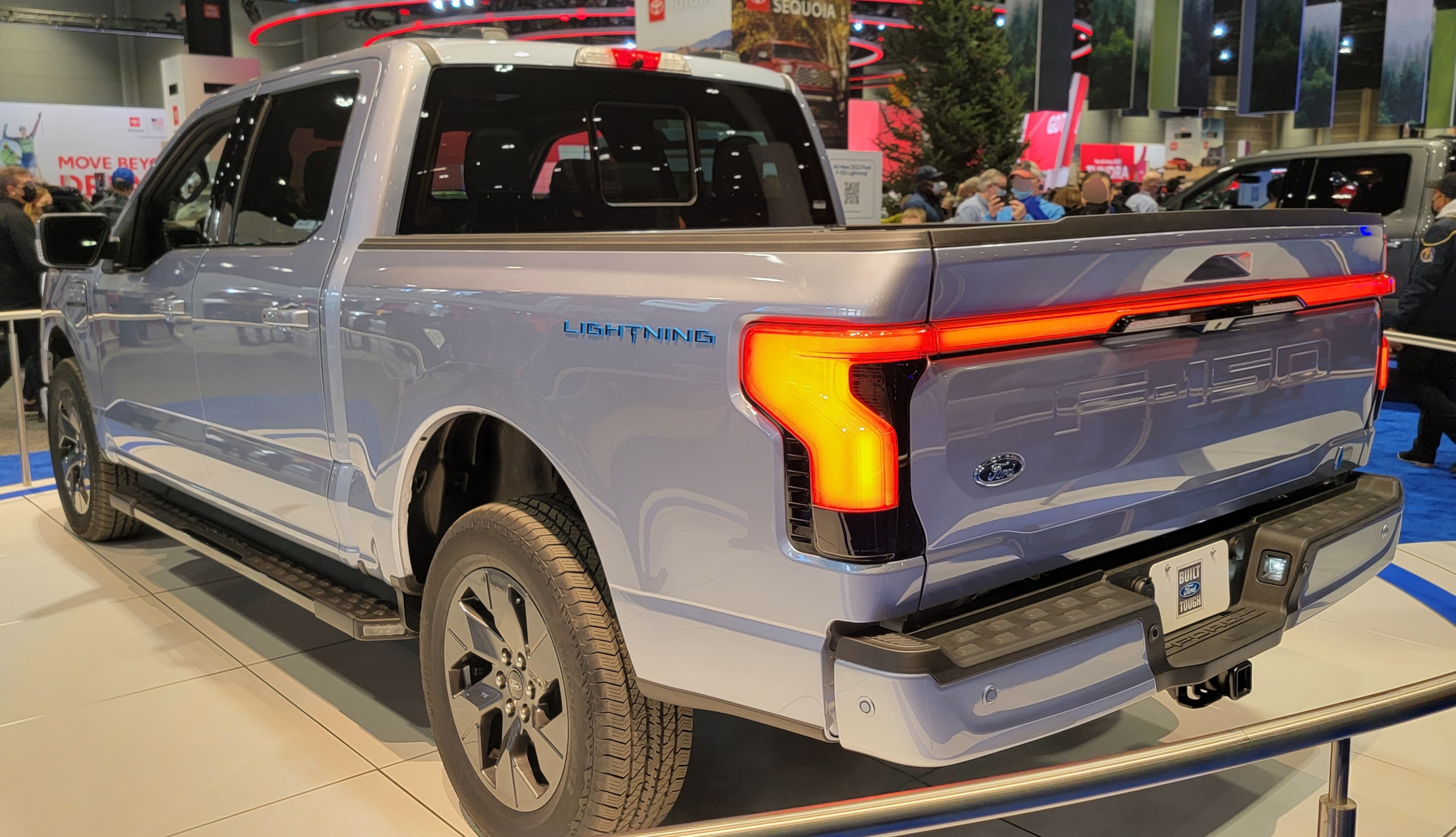
Ford F-150
"[1843.6s] Depending on the model year. We've been talking about over the last decade or so [1847.6s] Ford has created f-150s [1851.4s] With payload capacities over 3,000 pounds, which is over a ton."
The Ford F-150 is one of the most popular full-size trucks. The important part here is that some F-150 configurations can be rated to carry over 3,000 pounds in the bed, which is why people buy them for hauling.
The Ford F-150 is a full-size pickup known for frequent updates to payload and towing capability through engineering changes and configuration options. In this segment, the hosts highlight that certain F-150 models can be rated for payloads over 3,000 pounds, which is a major selling point for work-focused buyers.
half-ton truck vs quarter-ton truck
"[1858.8s] the quarter-time truck [1861.4s] Yeah, it should be a should be a half ton truck here not a quarter ton"
“Half-ton” and “quarter-ton” are old categories people use for pickups. They’re not exact today, but the idea is: newer trucks can carry way more than the label implies.
“Half-ton” and “quarter-ton” are traditional U.S. pickup marketing terms that loosely refer to payload class, not a precise modern measurement. The hosts are pointing out that today’s payload ratings can be far higher than what the old “quarter-ton” label would suggest.
Toyota Camry
"[1887.7s] It's not like [1888.9s] 97 was the year where it turned into [1891.6s] Camry with the bed [1893.5s] But the first time we've ever seen it, but it's really where it took off the transition to"
“Camry with the bed” is a nickname for a pickup that’s more comfortable and car-like, not just a rough work truck. The point is that people started wanting pickups that feel easier to live with.
“Camry with the bed” is a common way to describe a pickup that feels more like a comfortable car—smooth ride, quieter cabin, and more family-oriented features—rather than a bare-bones work truck. In this segment, it’s used as a shorthand for the moment pickups shifted toward mainstream, passenger-car-like appeal.
pickup truck beds as an open trunk
"If you look out and about most people use their pickup truck beds as an open trunk [1925.0s] Or a closed but not quite watertight trunk where they've got some sort of lid on it"
A lot of people don’t use the truck bed for real hauling. They treat it like a bigger trunk for groceries, tools, or random stuff, instead of carrying heavy equipment.
The speaker is describing how many people use a pickup truck bed like a cargo area—similar to how you’d use a trunk in a sedan. In practice, that means the bed is often left empty or lightly loaded, and it becomes a convenient place for everyday items rather than heavy work gear.
minivan replaced by SUVs and crossovers
"So now we needed a minivan and the minivan had its had its high [1982.6s] But then we had these suvs and the suv was way too truck-like at the beginning for [1988.6s] Families to want to jump on board but as they got closer to cars to crossovers"
They’re talking about how families changed what they bought. Minivans were popular for years, then SUVs became the go-to, and later crossovers replaced them because they were easier to drive and felt more like cars.
This segment outlines a market shift: minivans lost ground as SUVs became more popular, and later crossovers took over because they felt more car-like. The idea is that families wanted more space than sedans offered, but preferred the driving feel and styling of newer vehicle types.
truck livability
"People said oh I can have a truck and a truck in most of these cases was [2001.6s] Um a lot more livable right and I think that's the livability is where things started to increase"
“Livability” is basically how nice the truck is to live with day to day. It’s about comfort and convenience, not just towing or hauling.
“Livability” here means how comfortable and convenient a pickup feels for everyday life—ride quality, cabin space, and usability beyond just hauling. The speaker ties rising pickup sales to improvements that made trucks work better as family and commuter vehicles.
pickup trucks as commuter cars
"but people use their truck as their commuter car and maybe they have [2010.6s] Maybe they have someone in the passenger seat every once in a while. Maybe they've got the dogs in the back"
They’re saying many people drive their pickup to work like a normal car. So the truck has to be comfortable and practical for everyday trips, not just for hauling.
The speaker notes that many owners use pickups as their primary commuter vehicle, not just for weekend work. That changes how trucks are marketed and equipped, since buyers care about daily comfort, passenger space, and practicality.
options available in a pickup truck
"To some extent the technology has has worked its way that direction as well because there are so so so many more [2028.7s] Options available in a pickup truck than there ever used to be it used to be about"
They’re pointing out that modern trucks come with way more choices—different trims and feature packages. That helps more people find a truck that fits what they actually want.
This refers to the growth of trim levels, packages, and features in modern pickups. More available options make trucks appeal to a wider range of buyers, from work-focused users to people who want a car-like daily driver.
Corporate Average Fuel Economy (CAFE) scheme
"So the way that the corporate average fuel economy scheme works which has been around for decades and decades now..."
CAFE is a set of rules in the U.S. that pushes car companies to make their overall lineup get better gas mileage. If a company sells more fuel-efficient vehicles, it helps them meet the requirement without paying penalties.
CAFE is a U.S. regulatory program that sets average fuel-economy targets for automakers across their fleets. Because targets are calculated using vehicle characteristics, it can indirectly influence what sizes and powertrains automakers choose to sell.
fuel-economy requirements and fines
"So you don't pay fines on it. So that's kind of incentivized..."
If a company doesn’t hit the required average gas mileage, it can cost them money. The rules are designed so it’s easier to meet targets with certain vehicle sizes.
The speaker explains that if automakers can’t meet the required average fuel economy, they can face financial penalties (“fines”). This penalty structure is part of why manufacturers may be incentivized to sell larger trucks that are easier to certify under the rules.
Ford Maverick
"...this explains why for instance a maverick is not as small as I think people might want it to be"
The Ford Maverick is a small pickup, but the host says it still isn’t as tiny as people might hope. The reason given is that regulations and fuel-economy targets affect how small a truck can realistically be.
The Ford Maverick is discussed as an example of a compact truck that isn’t as small as some shoppers might want. The speaker ties that to CAFE-style footprint rules that push automakers to balance truck size with the need to hit fuel-economy targets.
hybrid as a low-cost way to raise fuel economy
"...why it has a hybrid as a really low cost option because they needed to get the fuel economy numbers up"
The host says hybrids help because they can boost gas mileage without making the truck dramatically smaller. That makes it easier for the manufacturer to meet fuel-economy rules.
The transcript links the Maverick’s hybrid option to the need to raise fleet fuel economy numbers. A hybrid can improve real-world efficiency without requiring the vehicle to be redesigned into a much smaller footprint.
body-on-frame
"...the weird twist with this has been A focus by car companies on body on frame trucks rather than the unibody trucks like lobo... Like the like the maverick and the maverick lobo and Santa Feet Center..."
Body-on-frame means the car has a sturdy “skeleton” (a frame) and the rest of the body bolts to it. Many trucks use this because it’s strong and can be easier for manufacturers to reuse parts across different vehicles. It’s often chosen for towing and heavy-duty use.
Body-on-frame is a vehicle construction method where the body is mounted on a separate ladder frame. Pickup trucks and many body-on-frame SUVs use this approach, which can make it easier to share hardpoints (like mounting points and some suspension components) across multiple models. It also tends to support towing and durability-focused designs.
unibody
"...A focus by car companies on body on frame trucks rather than the unibody trucks like lobo..."
Unibody means the body and frame are basically one combined structure. It can make the truck feel more car-like and efficient. The hosts are saying manufacturers are leaning toward body-on-frame designs instead.
Unibody construction integrates the body and frame into a single structure. Compared with body-on-frame, unibody designs are often lighter and can improve ride and handling, but they may be less optimized for the most extreme towing and durability use cases. The hosts contrast unibody trucks with body-on-frame trucks in the context of manufacturer strategy.
Ford Lobo
"... frame trucks rather than the unibody trucks like lobo Like the like the maverick and the maverick lobo..."
The “Lobo” is being discussed as a type of truck that uses a frame. A frame truck is built differently than some other trucks, and that can change how it rides and handles rough roads. The podcast is using it to compare construction styles.
“Lobo” is mentioned in the podcast as a model name tied to a discussion about truck construction style—specifically frame trucks versus unibody trucks. The point is that the Lobo is being grouped with frame-style trucks, which can affect durability and how the truck feels over rough roads. In context, it’s contrasted with unibody trucks like the Maverick.
commonality (shared components)
"...The frames can share significant design traits with other vehicles in the manufacturer's lineup... So there's a lot of commonality... You can swap different boxes on top pretty easily..."
Commonality means automakers reuse the same basic parts or design across different models. The hosts say that with frame-based trucks, it’s easier to share the underlying structure and then change the body style. That helps manufacturers build vehicles cheaper and update them faster.
“Commonality” refers to using shared design traits and components across multiple vehicles in a manufacturer’s lineup. The hosts argue that body-on-frame trucks can share more frame-related design elements with body-on-frame SUVs, and that manufacturers can swap different “boxes” (body styles) on top more easily. This reduces costs and can make upgrades easier to roll out across models.
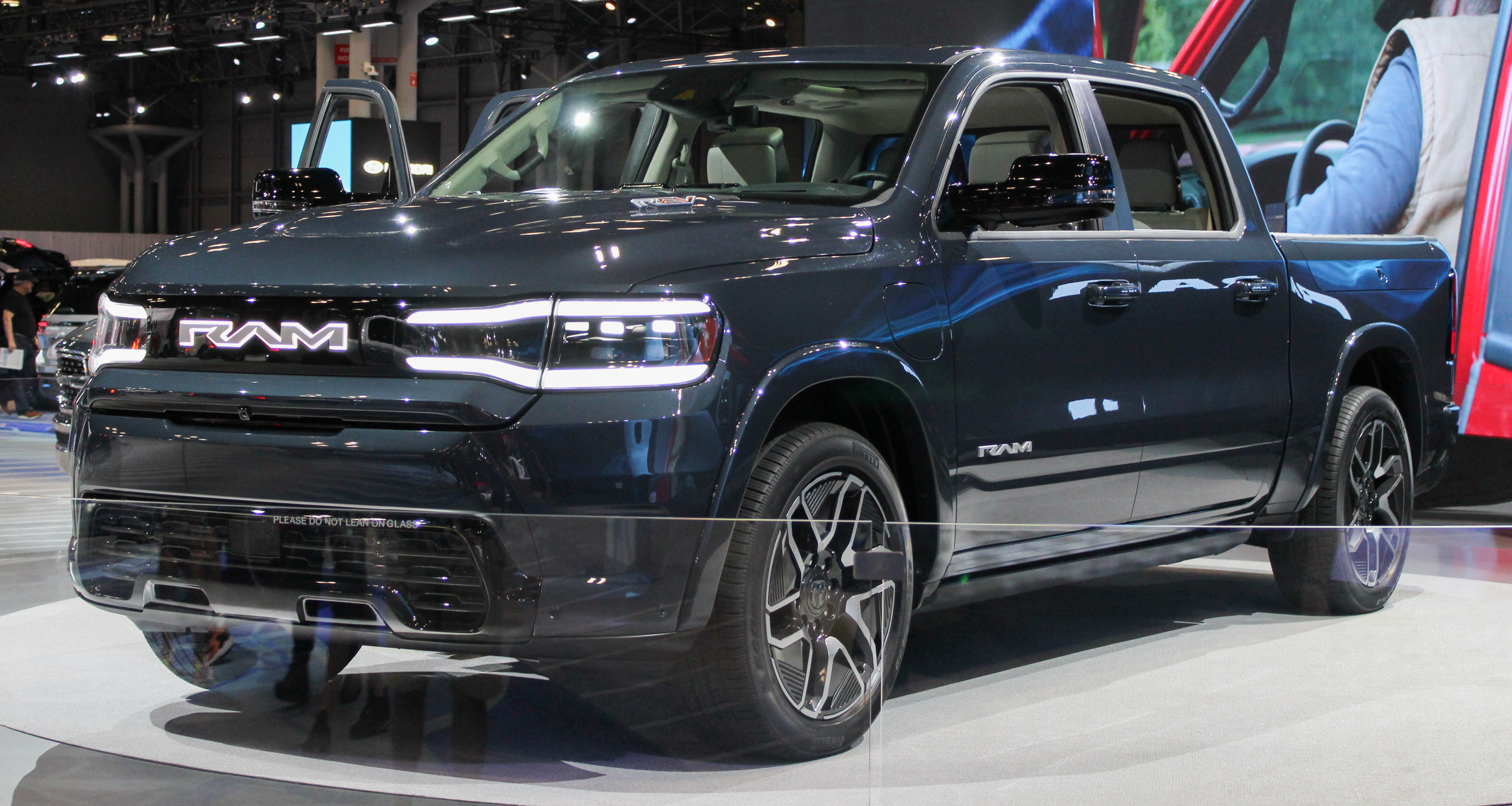
Ram 1500
"...Gladiator uses a front suspension design based on the ram 1500 etc So there's lots of commonality there..."
The Ram 1500 is mentioned as the “source” design for suspension parts used on another truck. The point is that automakers reuse suspension engineering across models. That can make vehicles cheaper to build and easier to upgrade.
The Ram 1500 is referenced as the engineering baseline for the Jeep Gladiator’s front suspension design. This highlights a common industry practice: using shared suspension architecture across multiple trucks to cut costs and speed up development. In this segment, it supports the argument that body-on-frame trucks can share more across a manufacturer’s lineup.
fleet sales
"...And then we also see them focusing on these these high dollar value trucks the luxury trucks the luxury add-ons etc largely supported by the volume of fleet sales and"
Fleet sales are when companies or organizations buy vehicles in bulk. The hosts are saying that lots of fleet buyers can help support the sales of more expensive, option-heavy trucks. That can affect what kinds of trucks manufacturers focus on.
Fleet sales are vehicle purchases made by businesses or government entities for use by employees or operations, rather than by individual retail customers. The hosts connect fleet volume to the ability of manufacturers to sell “high dollar value” trucks with luxury add-ons. In practice, fleet demand can stabilize production and influence which trims and options get emphasized.
Platform and parts sharing to reduce development cost
"They can they can roll out very slowly like glacial changes on the frame design of a truck over time [2277.1s] And then they could replace the body on top and call it an all-new generation truck etc [2281.0s] And that part is quote-unquote easier than redesigning a utah body truck"
The hosts describe a strategy where automakers can roll out changes slowly and even replace the body “on top” to create a new generation without fully redesigning everything. This is essentially platform/parts sharing: reusing underlying structures and components to lower engineering cost and speed up product cycles.
Ford Escape
"Shares a lot with with the bronco sport more bronco sport really than escape in a way [2301.2s] but [2302.2s] but the vehicle"
The Ford Escape is another Ford SUV. The hosts are comparing which SUV the Maverick is most similar to in terms of shared parts and design.
The Ford Escape is a compact SUV used here as a comparison point for how much the Maverick shares with other Ford models. The hosts suggest the Maverick’s overlap is more with the Bronco Sport than with the Escape, which affects how “direct” the parts sharing is.
Ford Bronco Sport
"Where profits tend to be a little bit lower on those vehicles because the the maverick [2294.6s] Shares a lot with with the bronco sport more bronco sport really than escape in a way [2301.2s] but"
The Ford Bronco Sport is a smaller SUV. The hosts are saying the Maverick borrows a lot from it, which helps keep the pickup’s development and parts costs down.
The Ford Bronco Sport is a compact SUV that shares platform and components with the Ford Maverick, which the hosts use to explain why the Maverick can be built more cost-effectively. They also contrast this with other vehicles where the relationship is more direct versus more “inspired by” rather than copied outright.
Torque vectoring
"The suspension is firm. It has a torque vectoring or axle which is novel [2354.5s] And then the hybrid model is fantastic because it's the efficient truck in america"
Torque vectoring is a way for the car to send power to the wheels differently depending on what you’re doing. That can help the truck grip better and feel more responsive in turns.
Torque vectoring is a drivetrain technology that can vary how much torque each axle—or even each wheel—receives to improve traction and handling. In this segment, the hosts call it “novel” and tie it to why the Maverick feels fun despite being a small, lower-cost truck.
Hybrid powertrain efficiency
"And then the hybrid model is fantastic because it's the efficient truck in america [2360.5s] And I think they could just kick the base drivetrain to the curb"
The hosts praise the Maverick hybrid as an “efficient truck,” highlighting how hybrid systems can reduce fuel consumption compared with conventional gasoline-only pickups. This is a key buying consideration for shoppers who want truck capability without the typical fuel-cost penalty.
Santa Cruz
"...the maverick is going to be more functional as a truck than the Santa Cruz... Not only is that bed shape a little bit easier to work with but the interior is designed to be used a little bit more"
The Hyundai Santa Cruz is a small pickup that’s built to feel more like a crossover. The hosts say it’s less “truck-like” for everyday hauling and getting used without worrying as much about the interior.
The Hyundai Santa Cruz is a compact crossover-style pickup, positioned more like a car with a truck bed than a traditional truck. The hosts contrast it with the Ford Maverick, arguing the Santa Cruz’s design feels more like a crossover and less like a work-focused truck.
smaller format big truck
"...the small truck segment in america is I think by the sales numbers We have proved that what people want is a smaller format big truck"
People want the usefulness of a big truck, but they don’t want the big size. So the market is shifting toward smaller pickups that are easier to drive and park.
This refers to the market trend where buyers want the utility and vibe of a “big truck,” but in a smaller, easier-to-live-with package. The hosts argue sales data shows demand for compact pickups that still deliver truck practicality without the size and cost of full-size trucks.
Chevrolet El Camino
"They don't want an El Camino revival revival, right?"
The El Camino was a Chevy that looked like a car but had a pickup bed. The hosts are saying people don’t really want a modern version of that idea—they want today’s compact trucks instead.
The El Camino is a classic Chevrolet model that blended a car body with a pickup bed. The hosts use it as a reference point to say buyers don’t want a revival of that “car-to-truck” concept; instead they’re gravitating to more straightforward compact truck designs.
Subaru Brat
"And maybe some Subaru owners do with a brat"
The Subaru Brat was a small, unusual pickup-style vehicle from Subaru’s past. The hosts mention it as a niche example—something some people might be into, but not what most buyers are asking for.
The Subaru Brat is a quirky older Subaru model known for its small pickup-like body style. Here, it’s mentioned as an example of a niche “car-with-a-bed” concept that some enthusiasts might like, but the hosts suggest it’s not the mainstream demand.
Australian ute
"Look that really does it scream australian ute el modern el Camino"
“Australian ute” refers to the Australian-style utility vehicle (ute) tradition—typically a car-based body with an integrated pickup bed. The hosts use it as a cultural comparison to describe how the Maverick’s boxy shape and proportions feel more like a ute than a crossover.
crossover versus truck
"Very crossover right versus truck to a large extent also the ridgeline does in the same way"
A “crossover” usually feels more like a car and focuses on comfort, while a “truck” is built more for utility and hauling. The hosts are saying some small pickups feel more like crossovers than real trucks.
This is the distinction between vehicles marketed and designed like crossovers (car-like structure, comfort-first tuning) versus traditional trucks (utility-first design cues and proportions). The hosts argue the Santa Cruz and Ridgeline lean more crossover-like, while the Maverick feels more like a true truck for everyday use.
drop it and put some big tires on it
"...but more of a you know a 454 Let's let's be able to drop it and put some big tires on it and big exhaust"
This describes a common enthusiast customization approach: lowering the suspension (“dropping it”) and fitting larger tires for appearance and stance. The hosts mention it to illustrate how some buyers want a smaller truck that can be modified for a more aggressive look rather than being purely “sporty” from the factory.
GMC Cyclone
"...a like a sports car, right? I'm thinking like the cyclone of old that that didn't have body"
The GMC Cyclone is mentioned as an older, more unusual performance vehicle. The podcast is using it as an example of a “sports-car-like” concept. It’s mainly brought up for the idea and styling, not as a current shopping recommendation.
The GMC Cyclone is referenced as a throwback to an older, more extreme performance concept—specifically a sports-car-like idea without a full body style. In the podcast, it’s used as a comparison point to describe what someone imagines a certain kind of vehicle could be like. The mention is about the “Cyclone of old” image rather than current production details.
Chevrolet Camaro
"Like a Camaro right it was it was here's a truck here's a little body kit and off you go"
A Camaro is a sporty American car. They’re using it as an example of what “sports-car” style feels like compared with trucks.
The Chevrolet Camaro is a classic American muscle/sports car used here as a comparison for “sports-car” styling. The hosts are contrasting a truck’s look and culture with traditional sports-car vibes.
slam (slammed trucks)
"I don't mean I mean a two-wheel drive that's just lower to the ground. I mean slammed. Yeah, that is that is another interesting twist"
“Slammed” refers to lowering a truck so the stance sits very close to the ground, usually for aesthetics rather than ride comfort. The hosts connect it to truck culture and the idea that some buyers are optimizing for appearance instead of hauling capability.
three-quarter ton and one ton truck sales
"We have definitely seen a huge rise in the three quarter ton and one ton truck sales To people that do not haul and do not tow like the ultimate style statement"
In the U.S., “three-quarter ton” and “one ton” are categories for bigger, heavier-duty pickups. The hosts are saying more people are buying them mainly for looks or image, not because they need to tow or carry heavy loads.
“Three-quarter ton” and “one ton” are common U.S. pickup classes that generally correspond to heavier-duty trucks intended for towing and payload. The hosts point out a growing segment of buyers who don’t actually haul or tow, using these trucks as status/style purchases.
Chrysler
"I don't know if Ford and GM and Chrysler at the time intended To to do what they did"
Chrysler is included with Ford and GM as a historical automaker that participated in the truck lineup and marketing approach being discussed. The hosts use the trio to suggest that branding decisions weren’t necessarily intended to create today’s fashion-driven truck culture.
GM
"I don't know if Ford and GM and Chrysler at the time intended To to do what they did"
GM is short for General Motors, another major U.S. automaker. Here it’s mentioned as part of the group that helped create the way trucks are marketed and named.
GM (General Motors) is mentioned alongside Ford and Chrysler as part of the “at the time” automaker group that shaped truck marketing and lineup structure. In this segment, GM is used to frame how branding influenced buyer perception.
F-series trucks
"Before they separated them and they were just the f-series trucks or Ford Ford definitely labeled things for a long time"
Ford’s F-Series is their main pickup truck line. They’re saying that earlier it was more straightforward, and later the naming got more specific.
The Ford F-Series is the long-running pickup truck lineup referenced here as the foundation for how trucks were originally sold and labeled. The hosts contrast earlier, simpler “F-series” labeling with later, more clearly branded variants.
F1 50 250 350 450 550 550 650 650
"As in you know the last I don't know x number of decades since we've clearly had F1 50 250 350 450 550 550 650 650 etc"
The hosts are listing Ford F-Series model numbers (like F-150, F-250, etc.), which historically indicated different capability tiers. In this context, the point is that Ford’s numbering made it easier for buyers to understand what class of truck they were getting.
GMC TopKick
"there is someone with a gmc top kick and a pickup truck bed grafted onto the back. I assume it was a dump truck probably at one point in its life"
A GMC TopKick is a big, heavy-duty truck that’s usually built for work. Some people repurpose them by adding a pickup bed so it looks and functions more like a regular truck.
The GMC TopKick is a heavy-duty truck line (often used for dump, service, or other vocational work). In the transcript, it’s mentioned as a base vehicle that someone has modified with a pickup-style bed, which is common when repurposing commercial trucks.
off-road performance truck
"what has I think increased more than anything else has been this off-road performance truck... So that's why they get these huge lifts so they can have break over angles"
An off-road performance truck is meant to go over rough ground, not just drive on streets. People often lift the truck and change the setup so it can clear rocks and ruts more easily.
An “off-road performance truck” is a pickup that’s been engineered or modified to handle rough terrain, not just paved-road commuting. The transcript connects this trend to features like higher ground clearance and suspension lift kits that improve how the truck approaches obstacles.
break over angles
"So that's why they get these huge lifts so they can have break over angles of much smaller vehicles"
Break-over angle is about how well a truck can go over a hump without hitting the bottom. A bigger break-over angle means fewer scrapes when you drive over obstacles.
Break-over angle is the maximum “peak” shape a vehicle can drive over without the underside contacting the ground. Increasing it (often via lift/geometry changes) helps prevent scraping the chassis when cresting hills, ramps, or uneven trails.
huge lifts
"So that's why they get these huge lifts so they can have break over angles of much smaller vehicles"
A lift kit raises the truck higher off the ground. That can help it clear bumps and rocks, but it can also make the truck harder to drive and park.
“Huge lifts” refers to suspension lift kits that raise a truck’s ride height. More height can increase ground clearance and change the truck’s geometry, which affects how easily it can climb over obstacles without scraping.
Z71 package
"This is my fun little rail. Like this is a 1994 brochure the order packet for the truck that I have in my driveway and the z71 package Basically just says oh, yeah, there's a skid plate"
The Z71 package is an off-road trim/package designation commonly associated with Chevrolet pickups. It typically groups together off-road-oriented hardware (like underbody protection and suspension tuning) so buyers can get a more capable truck without building it from individual parts.
skid plate
"Basically just says oh, yeah, there's a skid plate I mean, that's the gist of it tightly to different tune suspension, but like there's a skid plate"
A skid plate is a protective plate under the truck. It helps prevent damage if you hit something on the ground while driving off-road or over rough terrain.
A skid plate is an underbody shield designed to protect vulnerable components (like the oil pan, transfer case, or fuel tank) from impacts when driving over rocks or uneven terrain. It’s a common “entry-level” off-road feature because it improves durability without major changes to the drivetrain.
off-road trucks for people who will never go off-road
"That has been a huge boon for that market and it's not like it's down to sales But I think it's I think it's why do we need off-road trucks for people who will never go off-road?"
They’re questioning why some people buy off-road trucks if they never drive off-road. The point is that the truck can become more about style and image than real off-road use.
The hosts are critiquing the idea that many buyers purchase off-road-focused trucks primarily for the look and identity, not because they actually use them off-road. This matters because it changes what “value” means—buyers may pay for hardware they won’t benefit from, while still getting some everyday benefits like underbody protection.
style statement
"Well, I mean, hey, it's still the same same style Question as the truck in the first place So if you're buying the truck is a style statement, why not buy the designer berkin bag truck that you want?"
They’re saying some people buy trucks mainly because of how they look and what they signal, not because they need the off-road features. It’s about image as much as function.
The speaker frames truck buying as a “style statement,” meaning the purchase is driven by identity and aesthetics as much as capability. This is a useful lens for listeners because it explains why certain trims/packages sell even when their advertised off-road features aren’t used.
car loans were relatively short
"in in 1964 The average new car in america cost I believe it was somewhere around the equivalent of three months salary for the average person car loans were relatively short the the ability for a married family with kids to afford"
They’re saying that in the past, car loans were usually for a shorter time. That can make monthly payments different and affects how easily families can afford cars.
The speaker contrasts older affordability with modern buying by noting that car loans used to be shorter, which affected monthly payment pressure and how families planned purchases. Loan length is a key driver of affordability because it changes total interest paid and the risk of “payment shock” when budgets tighten.
one car that does it all
"So in this world when you have to have one car that does it all in a weird sort of way the truck has taken over from that family vehicle that family that might have had two cars in a truck"
Instead of having two different cars (one for commuting and one for family trips), some families are trying to get by with just one vehicle. The truck becomes that all-in-one option because it can carry people and do practical jobs too.
The idea here is that many families have shifted from owning multiple specialized cars to relying on a single “do-it-all” vehicle. Pickup trucks increasingly fill that role because they can handle hauling and also cover passenger needs like seating and comfort features.
big panoramic sunroofs
"And then I think the the rise of big panoramic sunroofs and just that that whole genre of vehicle with the glass on the top that's kind of taken over from the convertible because"
A panoramic sunroof is a big glass roof that makes the cabin feel brighter and more open. The point being made is that people want the “open sky” vibe, but they’re choosing sunroofs instead of convertibles.
Panoramic sunroofs are large glass roof panels that let more light and open-air feeling into the cabin. The discussion frames them as a replacement for the “convertible experience,” because they deliver some of the same enjoyment (seeing the sky) without the cost and practicality tradeoffs of a convertible.
convertible vs sunroof
"That's kind of taken over from the convertible because Can you really afford this weekend fun thing anymore? You go well, I still want to see the sun I'll buy The one thing with the sunroof now instead"
They’re basically saying convertibles used to be the fun choice, but now many people pick sunroofs instead. You still get a view of the sky, but the car is usually more practical and easier to live with.
This segment compares convertibles to sunroofs as “weekend fun” options. The host argues that affordability and practicality pressures make sunroofs the easier compromise: you get visibility and a similar vibe, but with a more usable, year-round vehicle.
massaging seats
"Right and I think that also speaks to the these comfort features, right? I think I think it's a tungsten trim that has like"
Massaging seats are seats that have a built-in feature to gently vibrate or press to help you relax. It’s like having a small massage function in the car.
Massaging seats use built-in motors and air bladders or rollers to provide vibration or kneading sensations. They’re part of the comfort-and-luxury feature set that increasingly appears on mainstream vehicles, including family-focused trims.
heated seats
"Right and I think that also speaks to the these comfort features, right? All the massaging seats and the heated seats in every row"
Heated seats are seats with built-in heat so your back and legs feel warmer. You usually turn them on with a button and pick a heat level.
Heated seats warm the seat surface using electric heating elements, typically controlled by a multi-level switch. They’re common in cold climates and are often bundled into higher trims, reflecting how comfort features are becoming standard expectations.
horsepower
"They say it's it's loud and they're way faster than they used to be. You know the the horsepower numbers are astonishing these days even just for base engines"
Horsepower is basically how strong the engine is. More horsepower often helps the truck feel quicker when you accelerate.
Horsepower is a measure of how much power an engine can produce. Higher horsepower usually means the vehicle can accelerate more strongly, especially when paired with good torque and gearing.
order sheet
"Again my order sheet. You could have purchased a 4.3 liter v6 a 5 liter v8 a 5 7 a 6 and a half liter v8 or a 6 5 turbo diesel"
An order sheet is the paperwork that shows exactly what you ordered for your vehicle. It helps confirm the engine and options you’re paying for are the ones you actually get.
An order sheet is the document that lists the exact configuration you’re buying—engine choice, trim, options, and sometimes pricing. It’s important because it ties the vehicle’s final build to what you agreed to pay for.
turbo diesel
"You could have purchased a 4.3 liter v6 a 5 liter v8 a 5 7 a 6 and a half liter v8 or a 6 5 turbo diesel. And so my fall is basically right in the middle"
A turbo diesel is a diesel engine with a turbo that helps it feel stronger. Trucks like diesels because they can pull well and often get good fuel economy.
A turbo diesel is a diesel engine equipped with a turbocharger, which helps it make more power and torque than a naturally aspirated diesel. Diesels are often chosen in trucks for strong pulling power and efficiency, though they can have different maintenance considerations than gas engines.
turbocharged four-cylinder
"In a modern Chevy full-size pickup. It's the turbo it's the turbocharged four cylinder and it has 310 horsepower 430 pound feet of torque"
A turbocharged four-cylinder is a smaller engine that uses a turbo to make more power. The turbo helps it feel strong without needing a big engine.
A turbocharged four-cylinder uses a turbocharger to force more air into the engine, allowing a smaller engine to produce power closer to larger V8s. This is a common modern strategy to improve performance while meeting fuel-economy and emissions targets.
mercedes
"When mercedes can create a new quarter million dollar car every year a new special edition... they can do a two month two year lease a 20 month lease"
Mercedes-Benz is a luxury car brand. The hosts are using it as an example of how luxury companies can sell lots of new cars by offering frequent updates and lease deals. The goal is to keep customers coming back for newer vehicles.
Mercedes-Benz is used here as an example of a luxury automaker that can profit by refreshing high-end models frequently. The point is that premium brands can leverage leasing and special editions to keep customers upgrading on a predictable schedule. This ties into the broader discussion of how marketing and product cadence target different income groups.
truck design has somewhat gone stale
"...which is why I think truck design has somewhat gone stale But the add-ons have absolutely exploded, right?"
The host means pickup trucks don’t feel like they’re changing much anymore. If the truck itself isn’t getting dramatically new, companies may focus on selling upgrades and extras instead. It’s about how the product changes over time.
“Gone stale” suggests that pickup truck design and engineering changes have slowed, at least from the buyer’s perspective. When major redesigns become less frequent, automakers may rely more on marketing, trims, and monetizable options (like add-ons) to drive revenue. This is a product-cycle and business-strategy observation rather than a specific mechanical issue.
add-ons have absolutely exploded
"Which is why I think truck design has somewhat gone stale... But the add-ons have absolutely exploded, right?"
Add-ons are extra items or packages dealers try to sell on top of the car itself. They can make the total cost go up a lot. The host’s point is that instead of changing the truck much, companies may make more money by selling more extras.
“Add-ons” refers to dealer-installed or optional products added to a vehicle purchase or lease, such as protection packages, accessories, and other upsells. When add-ons grow, they can increase the effective price even if the base vehicle price doesn’t change much. The segment connects this trend to why truck design may feel “stale” while sales revenue shifts toward aftermarket-style extras.
Crew cab short bed
"So we we we have locked in that four door short bed You know, let's say let's say crew cab short bed is the answer for all trucks moving forward..."
A crew cab short bed is a pickup with four doors and a shorter truck bed. It’s popular because it gives you room for passengers but is easier to park and drive than a longer-bed setup.
“Crew cab short bed” describes a pickup configuration with four full-size doors (crew cab) and a shorter cargo bed. The hosts argue that this layout is becoming the default “answer” for many buyers because it balances passenger space with easier maneuvering and everyday usability.
Hybrid powertrains in pickups
"...unless it's an electric truck. We're not doing... Toyota brought in the hybrid max system Chevy like I said is using that turbo charge... F-150 has a hybrid... you won't find it at ram... you won't find it at Chevy..."
Hybrid powertrains use both a gas engine and an electric system to improve efficiency. The hosts are basically saying some truck brands are offering hybrids more than others, so buyers don’t always get the same choices.
The segment discusses how hybrid options are spreading unevenly across truck brands and trims. The hosts contrast Toyota’s hybrid approach and Ford’s F-150 hybrid availability with the lack of similar hybrid offerings at other brands, highlighting how powertrain strategy affects buyer choice.
Diesels are going away
"...The diesels are going away. I digress there But but you're seeing all of these of these packages..."
They’re saying fewer people are buying diesel trucks, and manufacturers are moving away from them. That’s partly because diesel is harder/expensive to meet emissions rules, and newer gas or hybrid setups can cover many of the same needs.
The hosts claim that diesel engines in pickups are being phased out. This reflects broader industry trends driven by emissions regulations, shifting consumer demand, and the rise of hybrids and turbocharged gas engines as alternatives.
Full-sized truck towing capability in a mid-sized truck
"...if right if a mid-sized truck came back That had full-sized truck towing capability like they used to once upon a time"
This is the idea of getting “big truck” towing performance from a mid-size pickup. It matters because towing capacity depends on more than size—frame strength, cooling, drivetrain gearing, and brake capacity all play roles—so buyers often have to choose between compact dimensions and maximum towing.
towing capacity vs real-world towing
"That truck owners don't tow as much as they think they tow and they don't tow as frequently as they think they tow so No, no uh, no mid-sized truck in america will tow as much ... Which is why you can get away with a 2.7 liter turbo in a silverado 1500 When that thing is not going to be able to help you slow a trailer down at all"
Towing numbers can look impressive on a spec sheet, but real towing is more than just whether the truck can pull the trailer. If you tow regularly, you need enough power and engine braking to safely slow down and handle hills.
The segment challenges the idea that most owners tow as much as they think they do, and it highlights a common mismatch between advertised towing capacity and real-world needs. Even if a truck can “tow” on paper, smaller turbo engines may struggle to control and slow a loaded trailer consistently.
Chevrolet Silverado
"Which is why you can get away with a 2.7 liter turbo in a silverado 1500 When that thing is not going to be able to help you slow a trailer down at all"
The Silverado 1500 is a common full-size pickup. If you don’t tow very much, you might not need the biggest engine. But if you do tow, you want enough power to safely control the trailer, especially when slowing down on hills.
The Chevrolet Silverado 1500 is a popular half-ton pickup, and the discussion is about how some buyers can get by with a smaller engine when they don’t tow often. The key point is that towing performance depends heavily on engine output and gearing, especially when you need to control a trailer on grades.
2.7 liter turbo
"Which is why you can get away with a 2.7 liter turbo in a silverado 1500 When that thing is not going to be able to help you slow a trailer down at all"
That’s a smaller engine (2.7 liters) with a turbo to make extra power. It can feel strong for normal driving, but towing puts more load on the engine, so it may not slow a trailer as well as a bigger V8.
A “2.7 liter turbo” refers to a smaller-displacement engine boosted by a turbocharger. Turbo engines can make good power for everyday driving, but towing requires sustained torque and adequate engine braking to help slow a trailer.
Hummer H2
"ironically some like the uh And I don't know it's exact dimensions. I guess I'll look it up for my fun, but the uh, hummer h2 truck, right?"
The Hummer H2 is a big, older-style SUV/pickup-like vehicle. The host is mentioning it to make a point about how some vehicles don’t fit the usual “towing truck” stereotype.
The Hummer H2 is brought up as an example of a “truck” that doesn’t match typical expectations for towing or bed practicality. It’s used to set up a comparison about what buyers actually want in a pickup versus what they end up with.
Ford Explorer
"Explorer sport track remember that ... but it wasn't a real truck the maverick is just the reinventing of that ... The sport tracks bed was too small ... it was narrow ... it was 41 inches wide"
The Ford Explorer Sport Trac is a mid-size “lifestyle” pickup built on the Explorer platform, known for combining SUV comfort with a truck bed. Here, the hosts discuss why it appealed to some buyers but struggled due to practical limitations like bed size and width, and how that relates to later compact alternatives.
lifestyle truck
"It was a lifestyle truck ... It was a version of a lifestyle truck that did things ... It's leaned harder into the lifestyle and not pretended to be something."
A “lifestyle truck” is a pickup that’s meant to fit normal life—commuting, errands, and looking good—more than heavy-duty work. The hosts are basically saying some trucks try to be “truck enough” without fully committing, and that can hurt sales.
A “lifestyle truck” is a pickup marketed more for everyday comfort, style, and convenience than for maximum hauling or off-road work. This segment contrasts the Maverick’s efficiency-focused approach with the Explorer Sport Trac’s attempt to be sporty and truck-like, arguing that leaning into the lifestyle angle can improve buyer fit.
Ford Ranger
"Aside from that was ford just also had the ranger. So like but actually"
The Ford Ranger is a mid-size pickup truck. The hosts bring it up to explain that Ford already offered another truck choice, which affects how well the Sport Trac concept might have sold.
The Ford Ranger is Ford’s midsize pickup, positioned between compact and full-size trucks. In this segment, it’s mentioned as part of Ford’s lineup context—implying that Ford already had a more traditional truck option while the Sport Trac/Maverick concepts targeted different buyer needs.
tow 7,000 pounds
"...I think it would do very well because it would have the numbers that I think most people would look for it and can it tow 7,000 pounds like just somewhere in that range, right?"
Towing capacity tells you how much weight a vehicle can safely pull behind it. The hosts are saying that if a vehicle could tow around 7,000 pounds, it would match what many buyers want.
Towing capacity is a key spec buyers use to judge whether a vehicle can handle trailers, boats, or equipment. The hosts mention “7,000 pounds” as a rough threshold that many shoppers look for when deciding on a truck-like SUV.
sheet goods
"and and and most people I don't think are going to look at that bed And say I need to put sheet goods in it because most people aren't really putting sheet goods in it"
“Sheet goods” are big flat building materials like plywood or drywall. The point here is that most truck buyers aren’t hauling that kind of stuff all the time.
“Sheet goods” refers to large flat materials like plywood, drywall, or similar building products. The hosts argue that most people don’t buy trucks specifically to haul sheet goods, which affects how they think about bed size and vehicle design.
muscle truck vibe
"...it's gonna be, you know, more interesting more comfortable, you know, Lean towards a performance or a luxury like a muscle truck vibe"
“Muscle truck vibe” is a marketing/positioning idea: making a truck feel more performance-oriented and stylish rather than purely utilitarian. In this segment, it’s used to describe how a modern version of the Explorer Sport Trac could appeal to buyers who want comfort and personality, not just cargo utility.
multi-tier tailgate
"[3630.3s] The tailgate more than four feet wide so that you can still use it for four by sheet goods just not below [3638.0s] The wheel wells like in a in a full-size truck and I think that's designed to have that like multi-tier tailgate"
A multi-tier tailgate is a tailgate that has steps or levels. That helps you load big, flat items more easily by making a flatter surface.
A multi-tier tailgate can “step” or level down to create a larger flat loading surface. The idea is to improve how wide and how low you can load bulky items—like 4x8 panels—especially when wheel wells would otherwise prevent a full-width flat bed.
Honda Civic
"[3672.7s] Um, I don't I don't need the extra space. I want I want a miata. I want an old school Honda Civic [3678.5s] Right. I I like the sporty feel"
They’re saying they’d rather have a smaller car that feels more fun and easier to drive than a big truck. The Honda Civic is a common compact car people choose for everyday practicality.
The hosts contrast truck driving with the appeal of an “old school” Honda Civic, implying they prefer a smaller, more agile car. The Civic nameplate is known for compact dimensions and practical, everyday driving dynamics compared with pickups.
Mazda MX-5 / Miata
"...n't I don't need the extra space. I want I want a miata. I want an old school Honda Civic Right. I I lik..."
The Mazda Miata is a small two-seat sports car. It’s designed to be easy to drive and fun, rather than big or practical for lots of passengers. The podcast brings it up as the kind of car someone wants.
The Mazda MX-5, commonly called the Miata, is a lightweight two-seat roadster focused on fun driving and simple, engaging handling. It’s often discussed as a “small car with big driving feel,” especially when someone wants performance without extra space. In the podcast, it’s mentioned as a desired option in a conversation about what kind of car someone wants.
cylinder deactivation
"Because the full size get the tech right they get the cylinder deactivation or they get the aero increases"
Cylinder deactivation is when an engine turns off some cylinders when you don’t need full power, to save fuel. The host is saying full-size trucks can use tricks like this to improve mileage.
Cylinder deactivation is a fuel-saving strategy where the engine temporarily shuts off some cylinders under light load. The speaker contrasts it with the idea that full-size trucks can get better efficiency via engine tech, while midsize trucks often don’t match that improvement.
aero increases
"...they get the cylinder deactivation or they get the aero increases and"
Aerodynamic improvements mean shaping the vehicle to cut through air more efficiently. Less air drag usually helps mileage, especially at highway speeds.
“Aero increases” refers to aerodynamic improvements that reduce drag, helping fuel economy and efficiency. In the segment, it’s grouped with other efficiency technologies like cylinder deactivation as reasons full-size trucks can outperform midsize trucks on fuel economy.
Dodge Dakota
"...if I could somehow magically wish something for a future Dodge Dakota ... they could basically take a Durango unibody re-skin it so it looked modern"
The Dodge Dakota is a pickup model name people associate with the midsize truck segment. Here it’s used as an example of a dream version: smaller than a full-size, but still fun and able to tow.
The Dodge Dakota is a midsize pickup nameplate that the speaker uses as a “wish list” example of what they’d want: a smaller truck with big performance and decent towing. The discussion frames it as a hypothetical future Dakota built with modern styling and high-output powertrain tech.
Dodge Durango
"...they could basically take a Durango unibody re-skin it so it looked modern ... That said though, I think that ... they could still do it with the Dakota"
The Dodge Durango is a Dodge SUV. The host is imagining using its basic body structure and styling it like a Dakota pickup, because that platform already supports strong towing.
The speaker references the Dodge Durango as a donor platform for a hypothetical Dakota. They specifically talk about using the Durango’s unibody structure and “re-skinning” it, implying the Durango’s packaging and structural design help it achieve very high towing without a traditional frame.
Hellcat engine
"...it still had the Hellcat engine and the 6.4 liter hemi and the 5.7"
The Hellcat engine is Dodge’s high-power V8. In this conversation it’s basically the “make it fast” ingredient the speaker wants in a truck concept.
“Hellcat engine” is shorthand for Dodge’s supercharged high-performance V8 used in multiple models. It’s mentioned here as the kind of powertrain that could make a smaller “sport truck” concept truly exciting, but it also increases the engineering challenge for heat, packaging, and drivetrain control.
Challenger Hellcat
"...f after the second row seats and it still had the Hellcat engine and the 6.4 liter hemi And the 5.7 and th..."
The Dodge Challenger is a muscle car built for strong acceleration. The podcast mentions it with high-performance engine options like the Hellcat and other V8s. It’s being used as an example of a powerful car lineup.
The Dodge Challenger is a performance muscle car known for powerful engine options, including the Hellcat and HEMI V8s mentioned in the podcast. It’s significant because it’s a long-standing nameplate associated with high horsepower and drag-racing heritage. In the context provided, it’s referenced with specific engine sizes and trims as part of a performance discussion.
structural role of the SUV box
"...they're definitely heavy on the back because of The the box part of the suv is actually really a very critical structural component"
The “box” part of an SUV isn’t just for looks or cargo—it’s part of the vehicle’s strength. The host is saying that structure helps the vehicle tow a lot even without a traditional frame.
The speaker argues that the “box part” of an SUV—its rear body structure—acts as a critical structural component for towing capability. This highlights how unibody designs rely on body sections to carry loads that a separate frame would otherwise handle.
independent rear suspension
"they could design a Dakota to say have an independent rear suspension"
Independent rear suspension lets each rear wheel react to the road separately. That typically makes the truck ride smoother and can help tires stay planted for better grip.
Independent rear suspension (IRS) means each rear wheel can move somewhat independently. That usually improves ride comfort and traction because bumps on one side don’t affect the other wheel as much as with a solid axle setup.
Jeep Grand Wagoneer
"They could borrow a suspension design from Grand Wagoneer Wagoneer and have this independent suspension"
The Grand Wagoneer is a big Jeep SUV. The hosts are basically saying you could borrow the SUV’s modern suspension design for a truck to make it drive better.
The Grand Wagoneer is a large Jeep SUV that uses modern suspension and driveline tech. Here it’s referenced as a parts-sourcing example—borrowing suspension architecture to give a truck independent suspension and better all-wheel-drive behavior.
torque splitting center differential
"grab the the torque splitting center differential unit from the trailhawk"
In full-time all-wheel drive, a torque-splitting center differential decides how much power goes to the front wheels versus the rear wheels. That helps the truck stay stable and keep traction in different road conditions.
A torque-splitting center differential is used in full-time all-wheel drive to divide engine torque between the front and rear axles. It helps the vehicle manage traction and stability by continuously distributing power rather than only engaging AWD when slip is detected.
variable torque split device
"that that variable torque split device So you can have a strong rear power bias still and full-time all-wheel drive"
A variable torque split system can adjust how power is sent to different wheels. That means the car can stay in full-time AWD but still feel like it’s sending more power to the rear when you want it.
A variable torque split device can change how torque is divided between axles (or wheels) based on conditions like traction and driver input. That allows a vehicle to maintain full-time AWD while still delivering a preferred feel—such as a stronger rear power bias for handling and acceleration.
Jeep Gladiator
"was the Jeep Gladiator And that was hey, it's the Jeep at the bed. It's got the tops that come off"
The Jeep Gladiator is a pickup that’s basically a Jeep with a truck bed. It’s popular because you can remove the roof and doors, and it still has room for passengers and a practical bed.
The Jeep Gladiator is a midsize pickup built on Jeep’s Wrangler platform, known for removable roof panels and doors. In this segment, it’s held up as one of the last mainstream truck models that felt genuinely different—offering a Jeep-like open-air experience plus a usable bed and passenger space.
manual transmission
"It comes out. It's got a manual transmission"
A manual transmission means you shift gears yourself using a clutch pedal and a gear stick. The hosts are pointing out that the Jeep Gladiator can be had with this more hands-on driving style.
A manual transmission uses a clutch and gear lever so the driver selects gears directly. In the context of modern trucks, mentioning a manual highlights that some buyers still want more driver control rather than relying only on automatic gearboxes.
Ram Dakota
"I think I think you're dead on if ram comes out with a ram dakota first... So are we waiting on the dakota to change the the mid-sized truck market?"
The Dakota is a mid-size truck name that could come back under Ram. The idea is that a new Dakota could compete in the mid-size truck market and bring more power or performance than what’s currently available.
The Ram Dakota refers to a potential revival of the Dakota nameplate under the Ram brand. The hosts are discussing whether Ram would reintroduce a mid-size truck and how that could reshape the segment, especially if it’s engineered for higher-performance powertrains.
Dodge Ram Dodge
"um What if they call the ram dodge dakota that'd be even more interesting But it do..."
The Dodge Ram is a pickup truck. The podcast is talking about how the name “Ram” fits into the lineup and how it could be confusing or interesting depending on the model. It’s basically a truck model family from Dodge.
The Dodge Ram is a full-size pickup truck line known for work-focused capability and a wide range of trims. It’s mentioned in the podcast as part of a naming or model discussion, including the idea of how certain Ram-related model names could be interpreted. The key point in context is that “Ram” refers to the pickup lineup within the brand’s naming structure.
SRT
"Honestly, it makes the most sense to me, but uh, especially because how much they're using srt"
SRT is a label for the more performance-focused versions of some Dodge/Ram vehicles. It usually means the truck or car is tuned to feel quicker and more aggressive than the standard model.
SRT is a performance sub-brand used by Stellantis for higher-output, sport-oriented versions of certain models. The hosts mention “how much they’re using SRT” to argue that a Dakota revival could be designed around stronger, more performance-focused powertrains.
Hemi
"...bring the hemi back bring back power... Especially under current regs if it's designed to have the big engine"
“Hemi” is a nickname for a type of V8 engine design that’s known for making strong power. The hosts are saying a new Dakota could be built to use a modern version of that kind of engine.
“Hemi” refers to Chrysler’s hemispherical combustion-chamber engine design, historically associated with high-output V8s. The hosts are discussing bringing the Hemi back as a way to restore power under modern regulations.
mid-sized truck segment
"...that would push the market because nobody is building Either of those in that mid-sized truck segment... So are we waiting on the dakota to change the the mid-sized truck market?"
This is the truck category most people think of as “in-between” sizes. The hosts are saying a new Dakota could change what buyers expect from trucks in that size range.
The “mid-sized truck segment” is the category of trucks typically smaller than full-size pickups but larger than compact trucks, competing on capability, towing, and price. The hosts argue that if Ram/Dodge built a Dakota with the right powertrain strategy, it could influence what other manufacturers offer in that class.
MSRP
"If it was at least $10,000 less expensive. It's just too expensive then sales price or msrp... if actual actual transaction price And msrp were both at least $10,000 less"
MSRP is the price on the window sticker before any deals. The hosts are saying the truck would need a much lower sticker price and also a lower real-world deal price to sell better.
MSRP (Manufacturer’s Suggested Retail Price) is the sticker price a manufacturer sets before discounts, incentives, and dealer pricing. The hosts emphasize that both MSRP and the actual transaction price would need to be about $10,000 lower to drive sales.
transaction price
"...sales price or msrp Both both like if actual actual transaction price And msrp were both at least $10,000 less"
Transaction price is what you actually pay at the end of the deal. The hosts are saying it’s not enough to have discounts—buyers need the final price to be low enough.
Transaction price is the amount a buyer actually pays after discounts, incentives, and dealer pricing—often different from MSRP. The hosts argue that even if discounts exist, the overall transaction price still needs to be meaningfully lower to make the product a hit.
Jeep Wrangler
"How do they in all conscience maintain wrangler pricing? If gladiator, which is wrangler with the bed is less than wrangler."
The Jeep Wrangler is a popular off-road Jeep that’s famous for being able to remove the doors and roof. The hosts compare it to the Gladiator because the Gladiator is built to feel similar, just with a truck bed.
The Jeep Wrangler is Jeep’s iconic off-road SUV known for its removable doors and roof, plus strong aftermarket support. Here, it’s used as the pricing and feature benchmark for the Gladiator—since the Gladiator is essentially a Wrangler with a truck bed.
removable doors and the roof
"You know if you want a truck with the removable doors and the roof and the glass and everything... That's the only game in town."
Some Jeeps let you take the doors and roof off. That makes the ride feel more open and fun, especially in good weather, and it’s a big reason people buy these models.
Removable doors and roof panels are a signature Wrangler/Gladiator feature that turns the cabin into an open-air experience. It’s not just styling—this design is part of why these models have a dedicated enthusiast following and strong aftermarket customization.
lockers
"And you want and you want you know lockers everywhere... And you want all all the the the jeep top and rubicon fittings."
Lockers help the truck get traction off-road. If one wheel starts slipping, lockers help force both wheels to work together so you’re less likely to get stuck.
Lockers are off-road traction devices that lock the differential so both wheels on an axle can turn together. They’re used to improve grip when one wheel loses traction, which is why they’re commonly associated with serious off-road trims and builds.
Jeep Rubicon
"...And you want all all the the the jeep top and rubicon fittings."
Rubicon is a Jeep trim level built for off-roading. When people say “Rubicon fittings,” they mean the extra off-road gear that comes with that version.
The Jeep Rubicon is a Wrangler/Gladiator trim known for stronger off-road hardware and factory capability. In this segment, “Rubicon fittings” is shorthand for the specific off-road-oriented features people want when choosing between Gladiator and other trucks.
Wrangler Rubicon
"...re And you want all all the the the jeep top and rubicon fittings That's the only game in town. You won't..."
The Jeep Wrangler is a rugged SUV made for off-road driving. The podcast says it’s the only option if you want the Wrangler’s special top setup and Rubicon-type off-road equipment. It’s being mentioned because those features are a big part of what people buy a Wrangler for.
The Jeep Wrangler is an off-road-focused SUV known for its removable roof and doors and its wide range of off-road packages. In the podcast, it’s described as the only game in town if you want the “Jeep top” and Rubicon-style fittings, meaning the Wrangler is the go-to choice for that specific setup. The mention highlights how Wrangler ownership is often about the specific off-road and open-air features.
4 by e
"I was holding my breath for a gladiator 4 by e Because I went oh my god"
This sounds like they meant “4x4,” which means power goes to all four wheels. For off-road use, that’s a big deal because it helps the truck grip better on rough or slippery ground.
“4 by e” appears to be a mis-transcription of “4x4” (four-wheel drive), which is a key requirement for off-road trucks like the Gladiator. The speaker is describing waiting for a Gladiator variant that would cover their needs with the right drivetrain.
rent heavy-duty truck
"And then if you needed a big truck for some reason Go rent one because I don't know if you know this you can rent lots of trucks And then you're not worried about damaging that nearly as much as your own"
This segment argues for renting a heavy-duty truck only when you truly need it, instead of owning one year-round. The underlying idea is that ownership costs (especially fuel and depreciation) can be avoided when your “truck days” are infrequent.
Montana loophole
"With that out of the way our next topic has to be the Montana loophole I've received a number of questions and emails about this interestingly So let's talk about first what it is And why it appears to be closing at least some places here"
The “Montana loophole” is a way some people try to register a vehicle using Montana rules to get around requirements in their home state. The hosts are saying it looks like this workaround may be getting harder as states and agencies respond.
The “Montana loophole” refers to a legal strategy some people use to register certain vehicles in Montana to potentially avoid rules or fees that apply elsewhere. In the context of this episode, it’s being discussed as a policy that may be tightening in some places.
registration fees
"...Where we have sales tax and where the registration fees can be high... And then I'm going to register my car in Montana and get Montana plates on it"
Registration fees are the costs a state charges to title and register a vehicle, which can include annual fees and other charges. The segment frames these fees as part of why some buyers try to register in Montana instead of California.
LLC (anonymous LLC / beneficial owner)
"...Montana is a popular place because they don't require any beneficial owner Registration so you can have an anonymous LLC"
An LLC is a legal business entity that can be used as the vehicle’s registered owner. The segment claims Montana is popular because it doesn’t require disclosure of the beneficial owner for vehicle registration, which can make the arrangement harder for states to trace.
beneficial owner disclosure
"...Montana is a popular place because they don't require any beneficial owner Registration..."
A beneficial owner is the real person behind a company or LLC. Some states require that information, and others don’t, which affects how easily authorities can connect the car to the person using it.
Beneficial owner disclosure rules require identifying the real person(s) who control or benefit from an entity like an LLC. The segment suggests Montana’s approach (at least historically) made it easier to register vehicles without revealing the actual owner, which other states are now trying to counter.
big data to find out where these people are
"...states are starting to try and close this loophole Tennessee and Utah Are seeming to use big data to try and find out where these people are"
The hosts reference states using “big data” to detect patterns—like where vehicles are actually being used—despite being registered through LLCs in another state. This implies enforcement is becoming more data-driven rather than relying only on complaints or manual investigations.
impound the car
"...trying to close this loophole... Tennessee and Utah... impound the car for this"
If a state thinks you’re using the registration rules the wrong way, they can take the car away (impound it). That’s one of the consequences people may face if they try to avoid taxes.
The segment describes enforcement actions where states use data to identify suspected misuse of out-of-state registrations and may impound the vehicle. This is a practical risk of attempting to avoid taxes/fees through entity-based registration strategies.
tax evasion / gaming the system loopholes
"It also just gives other people a bad taste in their mouth to be honest that someone else is gaming the system You're like, oh my next door neighbor... I'm paying my taxes and registration..."
They’re talking about people trying to avoid paying the full amount of taxes or fees by using loopholes. Even if it’s not always illegal, it can still feel unfair to everyone else.
The hosts are discussing the idea of using legal or semi-legal loopholes to reduce taxes and registration costs. Even when something is technically possible, it can create public backlash because it feels like others are paying their fair share while someone else “skates” through.
smog checked
"Do you need to get smog checked if it's not registered for a place that doesn't have the same standards and"
A smog check is an emissions test to make sure a car isn’t polluting too much. The concern here is that someone might avoid those rules if they register the car somewhere else.
“Smog checked” refers to emissions testing required in many states to ensure a vehicle meets local air-quality standards. The hosts raise a compliance concern: if a vehicle isn’t registered where it’s being used, it may avoid the emissions testing rules that apply in that area.
P.O. Box
"...You get your p.o. Box and that's about it. It's kind of Maybe not even a p.o. Box. You know your could be a montana registered corporation with the california address or utah address"
A P.O. Box is just a mailbox address, not a real place you live. Some people have used that kind of address to register a car in a different state than where they actually live. States then try to stop that because it can be used to avoid taxes.
A P.O. Box is a mail-receiving address that can be used in some residency/registration setups. The transcript suggests that some people used a P.O. Box (or similar address arrangement) to qualify for Montana registration without actually living there. That’s part of why states consider these strategies abusive and move to tighten rules.
tax arbitrage / "shopping by the border" for cars
"...there's sales tax in oregon there isn't and i know that there are a lot of people who will go to oregon for big purchases... Or you know if they're right on the border, they'll just go across the bridge to go shopping"
Some people try to save money by buying things in a neighboring state with lower taxes. For groceries, it can be straightforward, but for cars the rules are stricter because the car has to be registered where you’re really using it. That’s why the “deal” may disappear once registration taxes are calculated.
The hosts discuss how buyers may exploit differences in state taxes by shopping across state lines—something that can be easier for items like groceries than for vehicles. For cars, the transcript notes that traceability and registration rules make it harder to avoid paying the destination state’s tax. This is a practical example of how tax policy differences affect consumer behavior.
sales tax
"...there's sales tax in oregon there isn't and i know that there are a lot of people who will go to oregon for big purchases... but if you're buying a vehicle can't get away with it in oregon... it's got to get registered in washington and you got to pay the sales tax"
Sales tax is a state tax added to the purchase price of goods, including vehicles, and it can be collected at the time of purchase or when the vehicle is registered. The transcript highlights how different states’ sales tax rules affect where people shop and how they register a vehicle after buying it. For buyers, the key is understanding when and where the tax is due based on the vehicle’s registration and use location.
vehicle registration vs. where you live (tax compliance)
"...if you're right on the border, they'll just go across the bridge to go shopping... but if you're buying a vehicle can't get away with it in oregon... it's got to get registered in washington and you got to pay the sales tax"
The segment describes how vehicle registration requirements are tied to the vehicle’s actual use/residency, not just where the buyer initially purchases or temporarily registers it. When people try to register in a lower-tax state but then drive the car elsewhere, states may require registration in the destination state and collect the difference. This is essentially a compliance issue: states want the tax to follow the vehicle’s real home.
residency/border enforcement differences
"And the problem is trickier in big states like texas and california... But by the time you get to the middle of california or the middle of texas... There's not a lot of other license plates around"
Where you live matters because enforcement is often based on what’s typical in that area. Near borders, you see more out-of-state cars, but in the middle of a state you might see fewer, so unusual plates stand out more.
The segment highlights how enforcement and “visibility” can differ by geography: border areas have more mixed plates, while interior regions have fewer. That changes how likely someone is to be noticed if they’re trying to avoid rules tied to where you live.
out-of-state license plate
"...You could you could drive with your oregon or washington license plate on there and probably not get noticed because there's a... more out-of-state license plates around"
An out-of-state license plate can affect how easily a vehicle is identified by local enforcement. The hosts suggest that when you’re near state borders, it may be harder to notice unusual plates because there are more vehicles from neighboring states.
Ford Mustang
"...t was a moment where you know a performance car a Mustang a corvette Again, we're talking a modern america..."
The Ford Mustang is a performance car made by Ford. It’s known for being quick and for having a sporty style. The podcast mentions it when talking about modern American performance cars.
The Ford Mustang is a modern American performance car with a long history, known for offering multiple performance levels. It’s significant because it’s one of the most recognizable “performance car” names in the U.S., and it often becomes a reference point when discussing what counts as a modern performance vehicle. In the podcast, it’s mentioned alongside other performance icons as part of that framing.
Chevrolet Corvette
"...ment where you know a performance car a Mustang a corvette Again, we're talking a modern american performan..."
The Chevrolet Corvette is a sports car made for speed and handling. It’s designed to be a performance-focused vehicle rather than a family car. The podcast mentions it as an example of a modern American performance car.
The Chevrolet Corvette is a sports car built for high performance and driver-focused dynamics. It’s frequently discussed as a benchmark for American performance because it’s designed from the ground up as a performance vehicle. In the podcast, it’s grouped with other performance cars to describe what people mean by “modern American performance.”
Catalytic converters reducing performance
"So by 1976 the 426 hemi was dead because of emissions rules and catalytic converter requirements. So catalytic converters could could at the time reduce performance by somewhere around 20 horsepower maybe 30 horsepower depending on the design"
Catalytic converters were introduced to reduce exhaust emissions, but they can also add backpressure and require changes to ignition timing and fuel calibration. The speaker estimates catalytic converters reduced performance by roughly 20–30 horsepower depending on the design.
emissions compliance questions the smog requirement problems
"The last thing I would say especially with like the 1980s engines. There were the emissions compliance questions the smog requirement problems to to deal with which caused reductions in california compliant vehicles and states that followed along"
Smog requirements are government rules about how much pollution a vehicle is allowed to produce. If an engine isn’t set up to meet those rules, the car may need changes—or it may not be sold in certain states that enforce stricter standards.
“Smog” requirements refer to state and federal rules that force vehicles to meet specific emissions limits. When engines and exhaust systems weren’t designed with those targets in mind, manufacturers could end up with reduced availability of “California-compliant” vehicles or changes needed to pass testing.
carburetors
"But then also we just had poor engineering technology. I mean we still had carburetors and and"
A carburetor is an older way of mixing fuel and air for the engine. It’s generally less accurate than modern fuel injection, which can make it harder to get good mileage and low emissions.
Carburetors mix air and fuel before it enters the engine. Compared with modern fuel-injection systems, carburetors can be less precise, which can hurt efficiency and emissions control—especially under varying conditions.
single point injection systems
"You know single point injection systems not multi-point injection systems let alone direct injection"
Single-point injection is a fuel-injection setup where fuel is sprayed from one location instead of one per cylinder. Multi-point injection can measure and deliver fuel more accurately, which helps both power and efficiency.
Single-point injection (often called throttle-body injection) uses one injector to supply fuel to the intake manifold. It’s typically less precise than multi-point injection, which can improve fuel metering and emissions control.
direct injection
"single point injection systems not multi-point injection systems let alone direct injection"
Direct injection puts fuel straight into the engine’s combustion chamber. That usually lets the engine manage fuel more precisely, which can mean better mileage and cleaner burning.
Direct injection sprays fuel directly into the combustion chamber rather than into the intake port. This can improve efficiency and performance because the engine can better control fuel delivery and combustion timing.
low compression engine designs
"We had relatively low compression engine designs. And all that just breeds lots of inefficiency not only lower horsepower per liter, but also, you know, lots of gas consumed per mile"
Compression ratio is how tightly the engine squeezes the mixture before it lights it. Lower compression often means less efficient combustion, so you may get less power and worse fuel economy.
Compression ratio is how much the air-fuel mixture is squeezed before ignition. Lower compression can reduce efficiency and power potential, and it can also limit how effectively an engine can extract energy from the fuel.
active aero flap
"it has nothing anywhere near a cylinder deactivation or an active aero flap or any of these things"
Active aero flaps are adjustable pieces on the car that change airflow. They help reduce wind drag for better mileage, while still allowing enough airflow for cooling.
Active aero flaps are movable aerodynamic elements (often in the grille or underbody) that adjust airflow to reduce drag. They can improve fuel economy by closing when you’re at speed or opening when the engine needs cooling.
low-end torque
"So they were focusing more on low-end torque because they assumed that you were towing. Was back in that era where people were like, hey, they're buying a truck. They must tow or haul some stuff"
Low-end torque is how strong the engine feels at low speeds. Older truck setups were often tuned to pull from a stop or at slow towing speeds, rather than spinning very high RPMs.
Low-end torque is the twisting force an engine makes at lower RPMs. Older truck engine tuning often prioritized low-end torque because the typical use case was towing or hauling, where pulling power at low speeds matters more than high-RPM horsepower.
redline
"Um, you know back in the era that's like Honda s2000 and it's astronomical red line. That was that was"
Redline is the top RPM the engine is designed to safely reach. If you push past it, you can risk engine damage, so it’s a key limit for how the car feels.
Redline is the maximum recommended engine RPM, beyond which you risk damage. High-redline engines like the Honda S2000 can keep making power at higher RPM, but the driver experience and torque curve can differ compared to lower-revving engines.
Honda S2000
"Um, you know back in the era that's like Honda s2000 and it's astronomical red line. That was that was"
The Honda S2000 is famous for revving really high. Spinning the engine faster can help make more power, but it can also change how torque feels lower down.
The Honda S2000 is known for its very high-revving engine and an “astronomical” redline, which lets it make power at high RPM. In this segment, it’s used as an example of how horsepower can be pursued by spinning the engine faster.
materials and manufacturing improvements
"But materials technologies also just significantly improved not just the the actual Steel because I mean so we still build engines out of cast iron and steel liners, etc"
They’re saying today’s engines benefit from better materials and better manufacturing. That means parts are more consistent and can handle more stress, which helps performance.
The segment argues that modern engine performance is enabled not just by design, but by better materials processing and manufacturing consistency. Improvements like more repeatable steel properties, better heat treating, and tighter tolerances help engines run more efficiently and reliably at higher performance targets.
steel crystalline structure
"So a lot of people don't realize steel is a crystalline structure. So if you etch steel for instance, you can you can actually see the crystals"
Steel isn’t just one uniform material—it has a microscopic crystal pattern. That pattern affects strength and durability, and better control of it helps make engine parts more reliable.
Steel’s properties come from its microstructure—how its crystals are arranged at the microscopic level. The hosts describe how etching steel can reveal those crystal structures, connecting metallurgy to real-world durability and consistency in engine components.
higher compression ratios
"And that's how we have engines with higher compression rates and lower tolerances and lighter weight oils"
Compression ratio is how tightly the engine squeezes the fuel-air mix before it ignites. Squeezing it more can make the engine more efficient and powerful, but it needs the engine to be built carefully.
Compression ratio is how much the air-fuel mixture is squeezed before ignition. Higher compression ratios can improve efficiency and power, but they require stronger components and better control of tolerances and heat treatment to avoid issues like knocking.
push rotted cast iron
"...still still talking about a push rotted cast iron... But I mean it's the design is not that old really and it does have a lot of fuel saving tech on it"
Pushrods are a basic way the engine opens and closes the valves. Cast iron is a sturdy metal used in engine parts, and the host is saying newer engines can still be efficient even if the design is traditional.
This phrase is describing a traditional engine architecture: pushrods operate the valve train, and cast iron is used for durability and heat retention. The point in the discussion is that even with a more traditional layout, modern versions can still add fuel-saving and emissions-reducing technologies.
two spark plugs per cylinder
"...it does have a lot of fuel saving tech on it... two spark plugs per cylinder"
Instead of one spark plug lighting each cylinder, there are two. That helps the fuel ignite more evenly, which can improve efficiency and reduce pollution.
“Two spark plugs per cylinder” means each cylinder has a pair of spark plugs, which can improve ignition coverage and combustion efficiency. That can help both power and fuel economy, and it can reduce unburned fuel that contributes to smog-forming emissions.
fuel injection technology
"...More advanced fuel injection technology, etc... Tire tolerance and all of that right not only does it make more power and get better fuel economy"
Fuel injection is how the engine delivers fuel. Newer systems can measure and spray fuel more accurately, which helps the engine burn cleaner and use less gas.
Fuel injection technology refers to how an engine meters and delivers fuel to the cylinders, which has evolved from simpler systems to more precise, computer-controlled setups. More advanced injection strategies can improve combustion, which boosts efficiency and lowers emissions.
tire tolerance
"...Tire tolerance and all of that right not only does it make more power and get better fuel economy"
Tires can affect how hard it is for the truck to roll down the road. Tires designed to roll more easily can help you get better gas mileage.
“Tire tolerance” here is likely shorthand for how tire design and specs affect rolling resistance and overall efficiency. Tires that are engineered for lower rolling resistance can improve fuel economy and reduce emissions indirectly by using less fuel.
standard cab
"standard cab There is still a lot available now But we just tend to want more"
A standard cab is a truck with front seats only (no back-seat doors). It’s a simpler, more basic cab layout.
“Standard cab” refers to a pickup body style with a single row of seats and no rear passenger doors. In the segment, it’s part of the discussion about which truck configurations are available and why buyers still want more features.
bottom 50th percentile American family income
"For any new vehicle for that that bottom 50th percentile American family income just is not it's not as profitable as building something for that that top 5% top 1% shopper"
They’re basically saying car companies make more money selling to wealthier buyers. So the cheapest “basic” trucks don’t always get built in big numbers.
The hosts are discussing how automakers prioritize which buyers they can profit from. They’re arguing that building trucks aimed at the lower half of household income is less profitable than targeting high-income shoppers.
analog speedometer
"Yeah, they could give it an analog speedometer and no radio and a manual transmission and two-wheel drive"
Instead of a digital screen showing your speed, it’s the classic gauge with a needle. It’s usually cheaper than modern digital displays.
An analog speedometer uses a traditional needle-and-gauge display instead of a digital screen. It’s often used as an example of “cost-cutting” features that reduce electronics and manufacturing complexity.
two-wheel drive
"...a manual transmission and two-wheel drive and Some leaf springs all the way around"
Two-wheel drive powers only two wheels, not all four. It’s usually simpler and can cost less than four-wheel drive.
Two-wheel drive (2WD) sends power to only one axle, typically the rear in many trucks. The hosts mention it as a simpler, lower-cost drivetrain option compared with four-wheel drive.
leaf springs
"...two-wheel drive and Some leaf springs all the way around and no power windows no power door locks"
Leaf springs are an older-style suspension made of stacked metal. They’re often found on basic work trucks and can be cheaper than newer suspension designs.
Leaf springs are a traditional suspension setup using stacked metal strips. They’re commonly associated with heavy-duty, work-focused trucks because they can handle load well, and they’re being used here as an example of a cheaper, simpler suspension.
no power door locks
"...no power windows no power door locks, etc It wouldn't be as much cheaper as you think"
“No power door locks” means the locks are operated manually rather than by electric actuators. It’s another example in the segment of stripping out convenience features to lower manufacturing cost.
no power windows
"...and no power windows no power door locks, etc It wouldn't be as much cheaper as you think"
Instead of pressing a button to move the window, you crank it by hand. It’s a way to cut cost by removing power equipment.
“No power windows” means the windows are manually operated instead of using electric motors. The hosts are using it as an example of removing convenience electronics to reduce upfront cost.
Request an Explanation
Heard something you'd like explained? We'll add it to this episode.
Sign in to request explanations for terms you heard.
Want to learn more?
Browse our glossary for plain-English explanations of automotive terms, jargon, and concepts.
Help improve this episode
See something that's not quite right? Our annotations are AI-generated and can sometimes miss the mark. Click the flag icon on any annotation to suggest a correction.