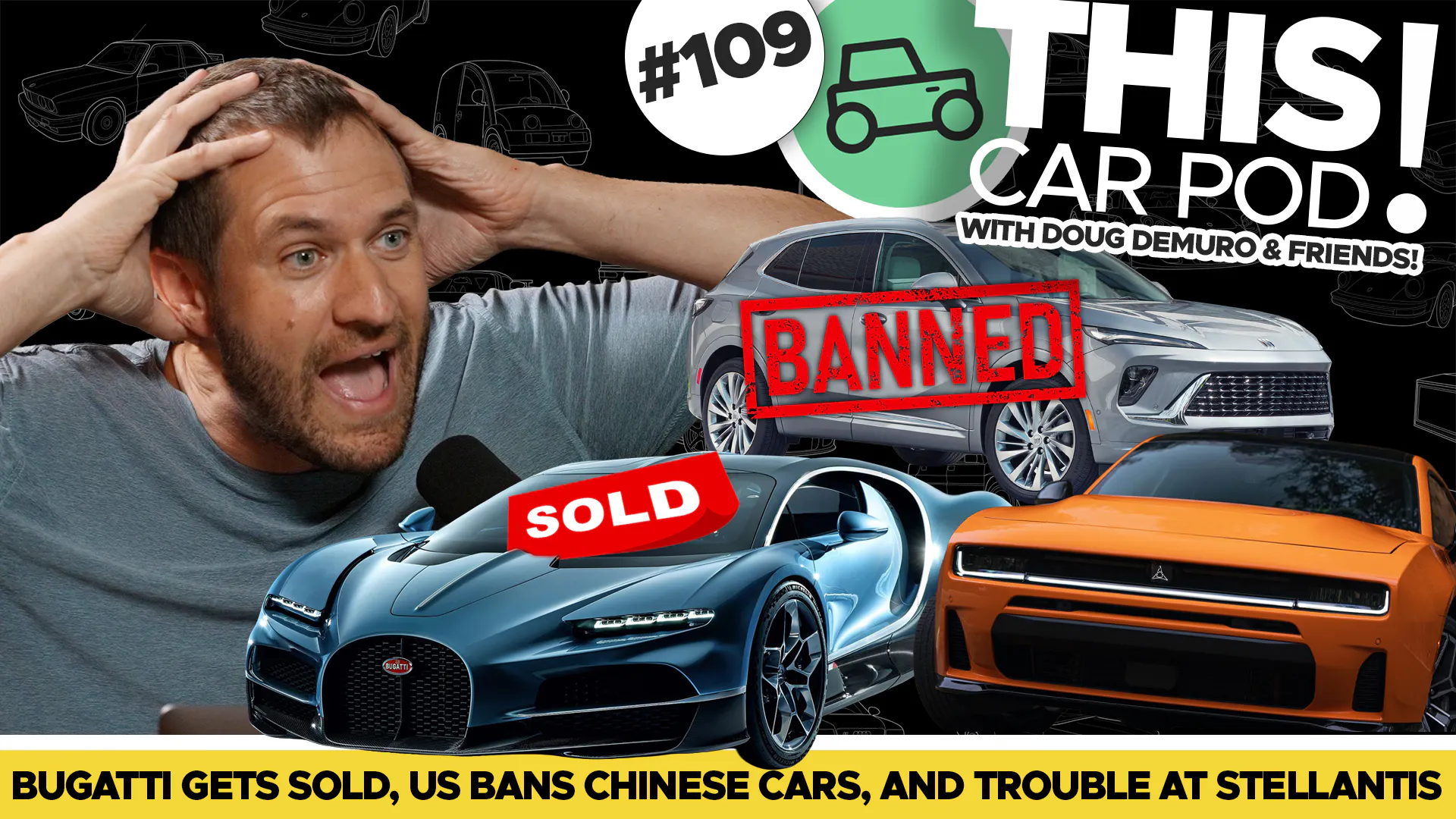
Porsche Sells Bugatti, US Bans Chinese Cars, Trouble At Stellantis And More! THIS CAR POD EP109!
About this episode
Porsche’s Bugatti stake sale and a proposed U.S. ban on Chinese cars kick off a wide-ranging conversation about auto industry pressure, policy, and global competition. The hosts also dig into Stellantis’s brand priorities, Ford’s Shelby licensing decision, and a Ram transmission lawsuit. Later, the tone turns more personal with car wish lists, concours impressions, replica builds, and reflections on what makes older performance cars feel special.
Porsche Sells Bugatti, US Bans Chinese Cars, Trouble At Stellantis And More! THIS CAR POD EP109!
"[325.2s] We don't know. [325.7s] Volkswagen had the money..."
This is the episode’s headline list of what they’re talking about. Think of it like a roadmap for the main news segments.
This episode title indicates the show’s discussion topics, including the Bugatti ownership story and other automotive news items. It’s useful as a chapter-style marker for listeners tracking what the hosts cover.
divesting
"[32.6s] Porsche is divesting. You heard about this? [36.1s] This is a big story. Porsche has had some financial troubles."
Divesting means selling something you own—like a business or brand. Porsche is doing this to bring in money.
Divesting means selling off an asset or business unit to reduce risk or raise funds. Here, the hosts use it to describe Porsche selling part of its Bugatti-related holdings.
private equity
"[43.3s] They decided to sell their steak in Bugatti to private equity. [47.8s] You don't have any thoughts on this?"
Private equity is a type of investor group that puts money into companies. They may buy a business and try to make it more profitable before selling later.
Private equity refers to investment firms that buy companies or major stakes, often with the goal of improving performance and later selling for a profit. In this segment, Porsche is described as selling Bugatti to private equity to raise cash.
Q1
"[49.7s] They're just for context on them as a whole. Operating profits in Q1 were down 22% a year. [54.9s] They do maybe need some cash."
Q1 is just the first three months of the year. The hosts are talking about how Porsche did financially in that early part of the year.
Q1 means the first quarter of the year (January through March). The hosts use it to describe Porsche’s operating profit performance during that specific time window.
operating profits
"[49.7s] They're just for context on them as a whole. Operating profits in Q1 were down 22% a year. [54.9s] They do maybe need some cash."
Operating profit is basically how much money a company makes from running its main business, after paying the usual day-to-day costs. The hosts say Porsche’s operating profit has been falling.
Operating profit is the money a company makes from its core business operations after operating costs, but before interest and taxes. The hosts cite operating profits dropping year-over-year as evidence of Porsche’s financial strain.
expenses
"[68.7s] To be fair, their expenses must be unbelievable. [72.4s] Revenue was like this, and expenses were like this."
Expenses are the costs of running the business—what the company has to pay out. The hosts are saying Porsche’s costs are likely very high.
Expenses are the costs a company pays to run its business, such as manufacturing, labor, and overhead. The hosts suggest Porsche’s expenses are extremely high, contributing to financial trouble.
revenue
"[68.7s] To be fair, their expenses must be unbelievable. [72.4s] Revenue was like this, and expenses were like this."
Revenue is the money a company earns from sales. The hosts are comparing revenue to expenses to show whether the business is making or losing money.
Revenue is the total amount of money a company brings in from selling goods or services. The hosts contrast revenue and expenses to explain why Porsche’s financial picture worsened.
Rimac
"They sold their steak in Bugatti and Rimac, which is like the same. ... there was a joint venture of Bugatti and Rimac. ... The Rimac screw bones, a 55% stake."
Rimac is a company that builds electric-performance technology and cars. In this segment, they’re talking about Rimac’s partnership with Bugatti and how much of the venture Rimac owns.
Rimac is an automotive technology company known for electric performance and high-end EV platforms. The hosts mention it in the context of a joint venture with Bugatti and discuss the ownership split between the partners.
joint venture
"A few years ago, there was a joint venture of Bugatti and Rimac. ... But you still have to understand the joint venture. ... JV, come on."
A joint venture is basically a partnership where two companies work together on the same project. They share ownership and decisions, so the “who owns what” part can be important.
A joint venture (JV) is when two or more companies team up to create a new business or project together, sharing control, risk, and profits. In this segment, the hosts are trying to explain the Bugatti–Rimac JV structure and why the ownership details matter.
HOF capital
"I don't know, but HOF capital, Hoff capital, very proud of Bugatti. It's up there in their list of portfolio companies now. ... They own a 45% stake."
HOF Capital is mentioned as an investor/owner involved with Bugatti’s current ownership. They say it owns 45%, meaning it has a significant share in the business.
HOF Capital is referenced as a portfolio-company owner in the discussion of Bugatti’s current ownership structure. The hosts also mention it holds a 45% stake, indicating it’s one of the equity holders in the venture’s ownership breakdown.
Volkswagen lineup
"So the Volkswagen lineup went, this is sad, because the Volkswagen lineup went from the very lowest tier company, Skoda, all the way up."
They’re talking about Volkswagen Group’s set of car brands and how they range from cheaper models to the most expensive, fancy ones. Think of it like a company that owns many different “levels” of cars.
The speaker is talking about the Volkswagen Group’s brand ladder—how different brands sit at different price and prestige levels within the same corporate family. It’s a way of describing how the group covers everything from budget-focused cars to ultra-luxury exotics.
Skoda
"because the Volkswagen lineup went from the very lowest tier company, Skoda, all the way up."
Skoda is one of the car brands owned by the Volkswagen Group. Here it’s mentioned as the more budget-friendly end of the group’s brand lineup.
Skoda is a Volkswagen Group brand positioned toward the lower end of the group’s lineup. In this segment, it’s used as the “bottom tier” example in the speaker’s brand hierarchy from mainstream to luxury.
Lamborghini
"They had Lamborghini. You could go Lamborghini, Bentley, the whole, there was this whole gamut."
Lamborghini makes high-end supercars. The hosts are using it as an example of the most prestigious brands in the Volkswagen Group’s lineup.
Lamborghini is an Italian supercar brand that the speaker lists as part of the Volkswagen Group’s higher-end lineup. They also call it the “pinnacle brand” at the end of the segment, emphasizing its top-tier status in their view.
Bentley
"You could go Lamborghini, Bentley, the whole, there was this whole gamut."
Bentley is a luxury car brand. They mention it as one of the upscale brands in the same group of companies.
Bentley is a luxury car brand often associated with high-end grand touring and upscale interiors. In this segment it’s mentioned as part of the “gamut” of brands spanning from supercars to luxury cars within the same corporate umbrella.
Opel
"And wait, they have Opel, right? No. So I said that's Opel."
Opel is a car brand from Europe. Here it’s brought up because the speaker is trying to remember whether it’s part of the lineup they’re talking about.
Opel is a European mass-market brand that the speaker brings up while discussing which brands were (or weren’t) part of the lineup. The back-and-forth suggests they’re correcting themselves about whether Opel still exists in the context they’re describing.
Volkswagen Passat
"Plus, they can't share. I mean, remember, the Veyron had a Passat key fob."
The Volkswagen Passat is a regular, everyday kind of car. They mention it because the Veyron’s key fob was reportedly shared with the Passat, which is a surprising cost-saving detail.
The Volkswagen Passat is a mainstream family sedan. In this segment, it’s mentioned because the Bugatti Veyron reportedly used a Passat key fob, highlighting how some components can be shared across very different vehicle tiers.
key fob
"Plus, they can't share. I mean, remember, the Veyron had a Passat key fob."
A key fob is the little remote you use to lock and unlock your car, and sometimes to start it. Here it’s mentioned to show that even a supercar can use shared, off-the-shelf components.
A key fob is the small remote used to lock/unlock a car and often to start it with a button. The hosts use the key fob as an example of parts sharing between a supercar (Veyron) and a mainstream Volkswagen model (Passat).
Koenigsegg
"[255.1s] And the cool thing about Bugatti, [256.7s] the cool thing about Koenigsegg was that you can meet the guy. [259.0s] The cool thing about Bugatti was that it was developed"
Koenigsegg is a company that makes very extreme, high-performance supercars. The hosts are talking about how accessible the people behind the brand can be.
Koenigsegg is a Swedish hypercar brand known for engineering-focused cars and high-performance powertrains. The hosts mention it in the context of being able to meet the founder, which is part of the brand’s public persona.
Rehmats
"[262.4s] But if we're honest... [263.8s] I feel like in 2021, when the joint venture with Rehmats [267.2s] was created and like ownership went to Porsche [269.5s] for a portion of it."
Rehmats is mentioned as a business partner in a deal that affected who owns part of Bugatti. The hosts are saying that ownership changes can shift how the brand operates.
Rehmats (as referenced in the segment) is described as a partner in a joint venture involving Bugatti’s ownership structure. The discussion is about how ownership split between Porsche and Rehmats changed the brand’s “fundamental” situation.
Porsche brand
"...with the like expertise that we as the Porsche brand that Volkswagen have in building cars."
Porsche is a well-known sports-car brand. In this discussion, they’re saying Porsche would bring experience in building cars as part of a larger partnership.
Porsche is the sports-car brand referenced here as bringing its “expertise” in building cars. The hosts are describing a joint-venture idea where one side contributes EV-era technology while Porsche contributes manufacturing know-how.
Veyron
"Any desire I had to have a Veyron, which was actually some desire... definitely have kicked it around. I have less desire today."
The Bugatti Veyron is a very expensive, ultra-fast supercar. They’re saying that if there’s less support for cars like this, it makes the idea of owning one less appealing.
The Bugatti Veyron is a flagship hypercar known for extreme performance and high-end engineering. The hosts are reacting to how changes in ownership/support can affect the appeal of owning or maintaining a car like the Veyron.
keep stuff around
"Volkswagen had the money to spend to keep stuff around [330.1s] for the Veyron."
They mean keeping the resources needed to support the car for years. That usually includes having replacement parts and the ability to service the car properly.
In this context, “keep stuff around” means maintaining long-term support for a specific car program—typically parts availability, service tooling, and technical documentation. For rare halo cars like Bugatti models, that kind of ongoing support can be expensive and depends on the brand’s backing.
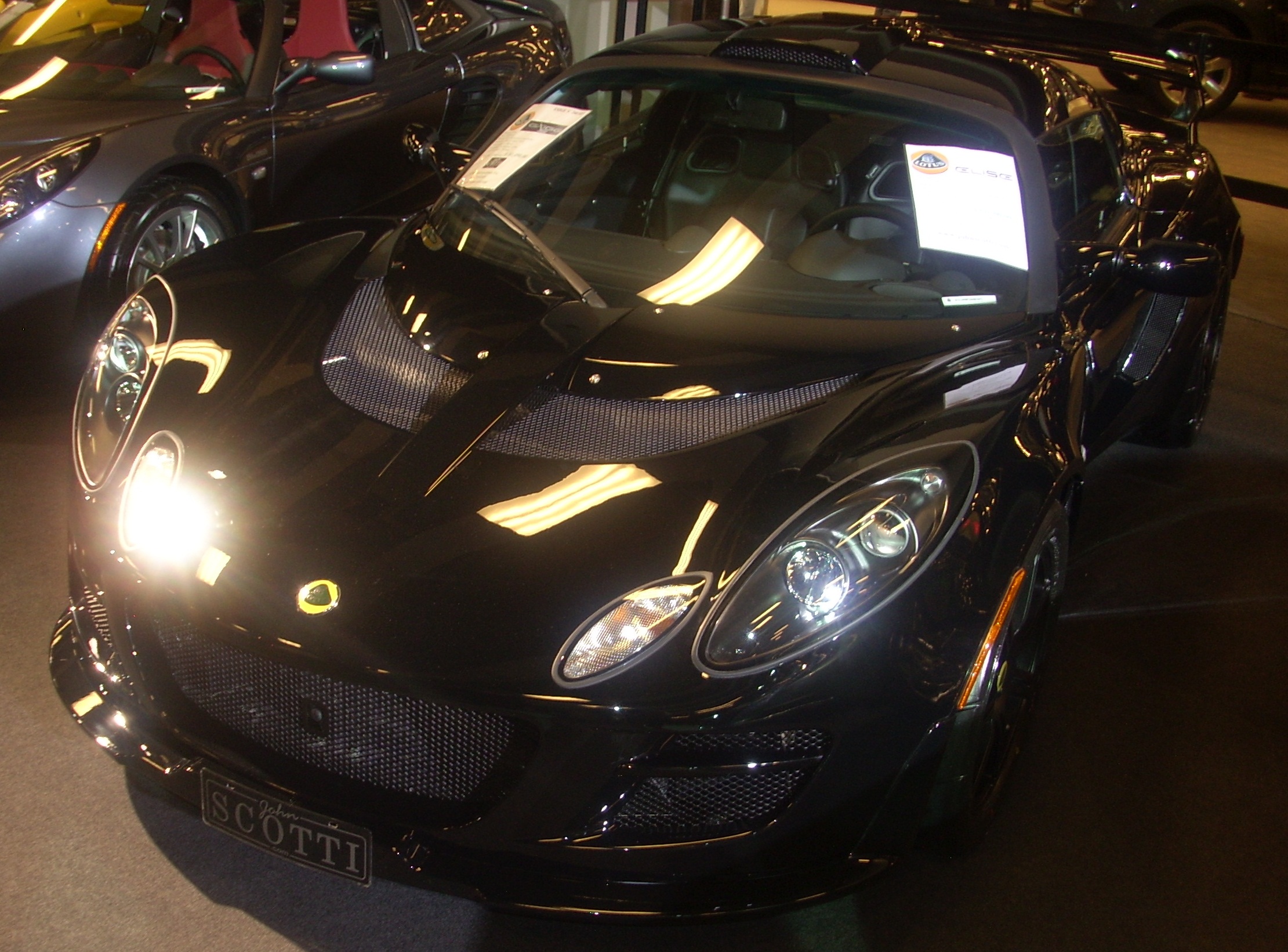
Lotus Elise
"What is Romano Artioli's legacy? The Lotus Elise. The name for the Lotus Elise. His granddaughter. He owned Lotus and named the Lotus Elise after his granddaughter."
The Lotus Elise is a small, sporty car made by Lotus. The hosts say Artioli owned Lotus and chose the name “Elise” for it.
The Lotus Elise is a lightweight, performance-focused sports car from Lotus. In the segment, Romano Artioli is credited with owning Lotus and naming the Elise after his granddaughter.
Wall Street Journal
"I go to the front page of the Wall Street Journal and there's an article about Chinese cars."
They mention the Wall Street Journal, which is a well-known business newspaper. The point here is that the car topic was covered in a mainstream news story.
The Wall Street Journal is a major U.S. business news publication. In the segment, it’s referenced as the outlet that ran an article about Chinese cars and where the speaker was interviewed.
ban Chinese cars
"Some of the Democrats, those are the people in the Congress have introduced the most ridiculous bill where they want to ban Chinese cars, not only from the U.S., where they're essentially already banned..."
They’re talking about a proposed law that would stop Chinese cars from coming into the U.S. That would limit what car brands you can buy, because the cars wouldn’t be allowed to enter the country.
The hosts are discussing proposed legislation that would restrict or prohibit Chinese-made vehicles from entering the United States. This is a trade-and-supply-chain policy move, not a technical car issue, and it would affect which brands and models can be imported and sold.
Kia Rio
"Okay, you're in a Kia Rio. You're good. You can go over."
The Kia Rio is a small, everyday car made by Kia. Here it’s just an example of the kind of car a tourist might be driving at the border.
The Kia Rio is a compact subcompact car sold globally by Kia. In this segment it’s used as an example of a car someone might be driving when crossing into the U.S.
tariffs
"So right now, Chinese cars, if they are broadly not allowed in the U.S. and face very steep tariffs, if they do come."
Tariffs are extra taxes added when something is brought into a country. If the U.S. adds big tariffs to imported Chinese cars, the cars usually cost more for buyers.
Tariffs are taxes the government charges on imported goods. In the context of Chinese cars, steep tariffs would make those vehicles more expensive to bring into the U.S., affecting pricing and availability.
G-Class Gwagon
"[601.1s] Sean's G-Wagon, actually. [602.6s] And I told the, at the end of the interview, I told Ryan Feltner and wrote the story."
The Mercedes-Benz G-Wagon is a luxury SUV that’s famous for being tough and off-road capable. Here, they’re just saying Sean was driving one during the interview.
The Mercedes-Benz G-Wagon (often called the G-Class) is a boxy, off-road-capable luxury SUV known for its rugged ladder-frame design and distinctive styling. In this segment, it’s used as an example of a specific car being driven during the interview.
Volvo S90
"[614.5s] By the way, I do feel for the people that drive Buick Invisions or the Long Wheelbase S90. [619.2s] Yeah, what about that?"
The “Long Wheelbase S90” is a Volvo S90 sedan with extra space between the front and rear seats. They’re bringing it up as an example of a car people might not be able to bring across the border anymore.
The “Long Wheelbase S90” refers to the extended-wheelbase version of the Volvo S90 luxury sedan. A longer wheelbase generally means more rear-seat space, and it’s mentioned here as a specific example of a car potentially affected by the border/ban situation.
Tesla
"[632.6s] And presumably some number of Teslas that were built in China and sold in Canada, [636.3s] which was allowed, they've come over the border."
Tesla is the electric-car brand they’re talking about. They’re saying some Teslas made in China were sold in Canada and may have crossed the border.
Tesla is the electric-vehicle brand being referenced in the context of cars built in China and sold in Canada, then crossing the border. The discussion is about supply chains and how vehicles move between countries under the policy.
Polestar 2
"Jamie Raskin, we gotta ban the Polestar 2. Don't worry, though."
The Polestar 2 is an electric car (an EV) made by Polestar. In this segment, it’s mentioned as a specific example of a car the hosts are talking about in relation to a proposed ban.
The Polestar 2 is an electric sedan from the Polestar brand. It’s often discussed in the context of EV competition and import/export policy because it’s sold in multiple markets.
Bob Lutz
"Can I read a quote from Bob Lutz? Because I sent this to you earlier, but I find it to be one of the best quotes I've got out here."
Bob Lutz is a famous person in the car industry—an executive who’s often quoted about cars and business. Here, the hosts bring him up to support a point with a quote.
Bob Lutz is a well-known automotive executive who has held leadership roles at major car companies and is frequently quoted in car-industry commentary. In this segment, he’s used as an authority for a story about buying a Chinese-made vehicle.
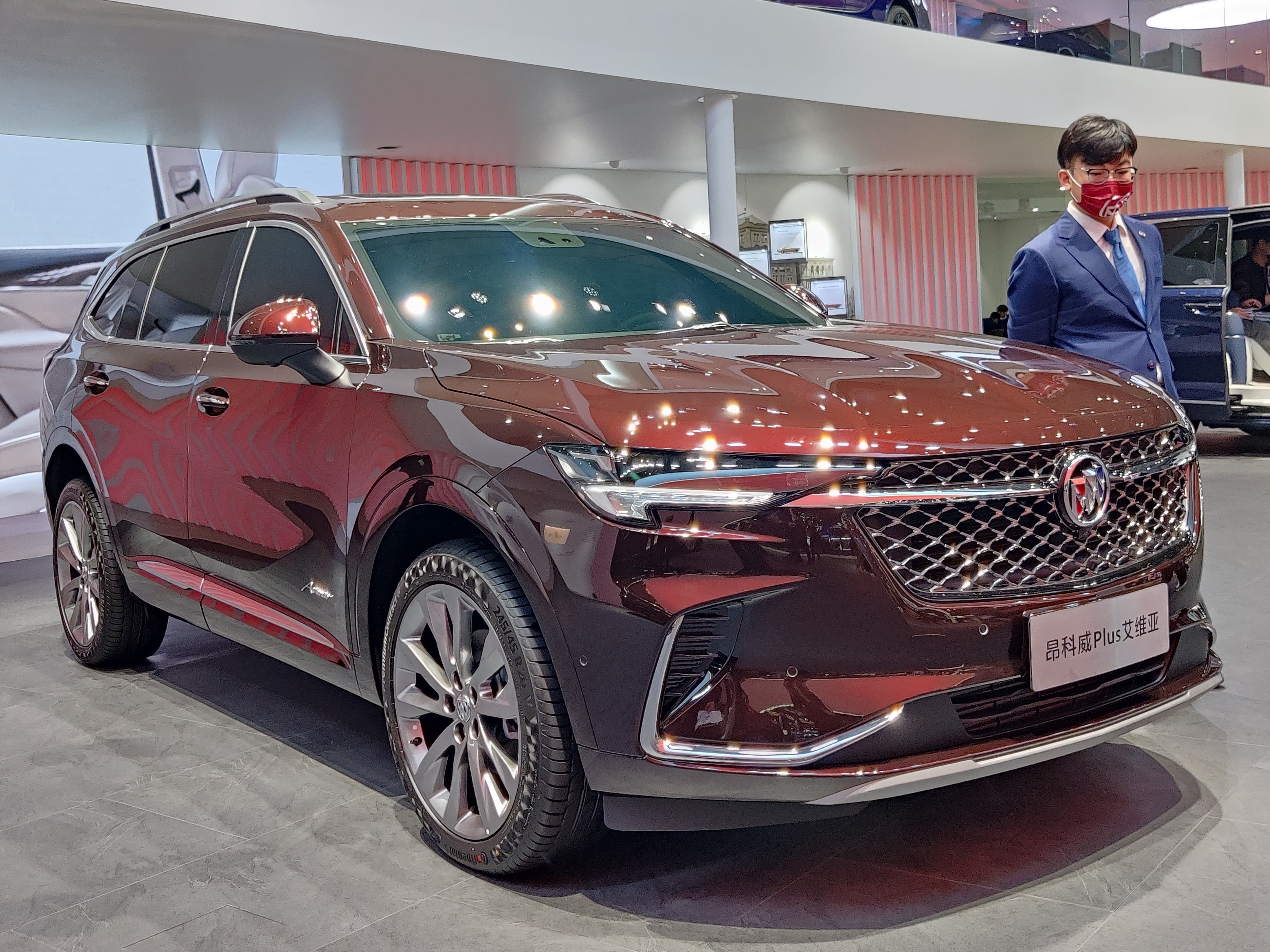
Buick Envision
"Bob Lutz purchased a Buick Envision. Because of the total silkiness and sweet refinement, he said, I thought, boy, if they know how to make Buicks like this in China..."
The Buick Envision is a Buick SUV—basically a crossover that’s meant to feel a bit more upscale than a regular family car. Here, they’re talking about it as a standout Buick compared with how people usually felt about Buicks.
The Buick Envision is a compact luxury crossover SUV made by Buick. In this segment, it’s used as an example of a “better” Buick that Bob Lutz bought, contrasted with how the Envision was perceived in the U.S. market.
2.4-liter four-cylinder
"It really stirs the soul. 180 horsepower, 2.4-liter four-cylinder, and the cloth seats were pre-stained."
That phrase tells you what kind of engine the car has. It’s a 2.4-liter engine, and it uses four cylinders to make power.
“2.4-liter four-cylinder” describes an engine with a total displacement of 2.4 liters and four cylinders. It’s a common way to summarize engine size and layout, which affects how the engine makes power and how it feels in everyday driving.
180 horsepower
"It really stirs the soul. 180 horsepower, 2.4-liter four-cylinder, and the cloth seats were pre-stained."
Horsepower is a number that describes how much power the engine can make. It’s one of the main stats people look at when comparing cars.
Horsepower is a measure of an engine’s power output—how strongly it can produce work over time. Higher horsepower generally helps with acceleration, though the car’s weight and gearing also matter a lot.
Chinese cars banned from America in theory
"Couldn't buy one. You couldn't find one. High demand. Anyway, Chinese cars banned from America in theory."
They’re talking about a possible U.S. rule that could stop Chinese-made cars from being sold here. The phrase “in theory” implies it’s more of a proposal or discussion than something already fully in effect.
This refers to a proposed or discussed policy that would restrict or ban Chinese-made vehicles from being sold in the U.S. The “in theory” wording suggests it’s not necessarily a fully implemented rule yet, but a political or regulatory idea being debated.
Great Wall Motors
"That's some Chinese company, Great Wall, Filippo's hero company. ... At the Beijing Auto Show, they revealed additional information about a platform ... about launching Great Wall Motors, GWM, named after, indeed, the Great Wall."
Great Wall Motors is a big car company from China. The hosts are talking about it possibly selling more cars in the U.S.
Great Wall Motors (GWM) is a major Chinese automaker best known for SUVs and trucks. In this segment, the hosts discuss the company’s potential plans to launch or expand in the United States.
MG
"My favorite is MG, because it's a heritage. Just like my Graham Pappies."
MG is a car brand with roots in the UK. The host likes it because it has a long history behind the name.
MG is a British automotive brand with a long history, and it’s also used by a modern Chinese-owned company for certain vehicles. Here, the host says MG is his favorite Chinese brand because of its heritage.
Beijing Auto Show
"All right. At the Beijing Auto Show, they revealed additional information about a platform that they actually talked about at CES."
The Beijing Auto Show is a big car event in China. Companies use it to announce new cars and new technology.
The Beijing Auto Show is a major international auto event in China where automakers reveal new models, platforms, and technology. The segment uses it as the context for new information about a platform.
CES
"At the Beijing Auto Show, they revealed additional information about a platform that they actually talked about at CES."
CES is a big technology conference where companies show off new tech. Car companies sometimes preview car-related technology there too.
CES (Consumer Electronics Show) is a large tech show in the U.S. where companies often preview automotive technology, especially electronics and software. The host says the platform was previously discussed at CES.
Byd Seal
"But don't forget about the BYD Seal and the Dolphin. [911.7s] That's true. [912.4s] They had a car called the Dolphin."
The BYD Seal is an electric car made by BYD. They’re bringing it up here as an example of the kinds of cars Chinese brands are selling.
BYD Seal is an electric sedan from BYD. In this segment, it’s mentioned alongside other Chinese EV models as part of the broader discussion about Chinese automakers expanding their lineup.
BYD Dolphin
"But don't forget about the BYD Seal and the Dolphin. [911.7s] That's true. [912.4s] They had a car called the Dolphin."
The BYD Dolphin is a small electric car made by BYD. They mention it as one of BYD’s EV models.
BYD Dolphin is a compact electric hatchback from BYD. The hosts mention it as another BYD model in the context of Chinese brands building out their EV offerings.
V8
"Regardless, they've announced that they're working on a V8, [917.6s] a four-liter turbocharged mid-engine V8, [920.2s] and a carbon-fiber monocoque chassis."
A V8 is a type of engine with eight cylinders. More cylinders usually means more potential power, and it’s often used in bigger or performance-oriented cars.
A V8 is an engine with eight cylinders arranged in a “V” shape. The segment specifically frames it as a new direction for a Chinese automaker’s vehicles, including a turbocharged version.
turbocharged
"[917.6s] a four-liter turbocharged mid-engine V8, [920.2s] and a carbon-fiber monocoque chassis. [922.7s] To take on Ferrari."
Turbocharged means the engine uses a device that compresses air before it goes into the cylinders. That helps the engine produce more power without needing a bigger engine.
Turbocharged means the engine uses a turbocharger to force more air into the cylinders. That allows the engine to make more power from a smaller displacement, which is why the segment pairs “four-liter” with “turbocharged.”
carbon-fiber monocoque chassis
"[920.2s] and a carbon-fiber monocoque chassis. [922.7s] To take on Ferrari. [924.2s] Yeah."
This means the car’s main structure is built from carbon fiber in one integrated shell. It’s designed to be strong but lighter than many traditional body structures.
A carbon-fiber monocoque chassis is a body structure where carbon-fiber panels form the main load-bearing “shell.” It’s used to reduce weight while maintaining stiffness, which can help performance and efficiency.
plug-in hybrids
"No. [933.2s] Ferrari's moved on to six-cylinder powertrains, plug-in hybrids. [936.1s] And the V12 SUV that they currently build."
Plug-in hybrids are cars that use both a gas engine and an electric motor. You can charge the battery by plugging the car in, so some driving can be done on electricity.
Plug-in hybrids (PHEVs) use both an internal-combustion engine and an electric motor/battery. They can be charged from an external power source, typically allowing short trips to run on electricity alone.
V12 SUV
"[936.1s] And the V12 SUV that they currently build. [939.2s] Speaking of SUVs, [940.4s] Great Wall also said that this V8 is going to find its way into the tank,"
A V12 SUV is an SUV that uses a V12 engine. It’s a rare, high-end setup compared with most SUVs that use smaller engines.
A V12 SUV refers to an SUV model powered by a V12 engine, meaning twelve cylinders arranged in a V configuration. The segment uses it as an example of Ferrari’s current lineup direction.
Formula One
"and they're losing Formula One, [957.7s] unlike Cadillac, who wins."
Formula One is the highest level of major international race car competition. Saying someone is “losing Formula One” means they’re not doing as well in that top racing series.
Formula One (F1) is the top tier of international open-wheel motorsport, run by the FIA. When the hosts say Ferrari is “losing Formula One,” they’re referring to competitive results in that racing series.
Cadillac
"and they're losing Formula One, [957.7s] unlike Cadillac, who wins."
Cadillac is a luxury car brand from the United States. The hosts mention it as the opposite of Ferrari in terms of who’s doing better.
Cadillac is a US luxury brand within General Motors. In this segment, it’s mentioned in contrast to Ferrari regarding who is “winning,” implying brand performance or success in motorsport and/or market perception.
gasoline powertrain
"Now, why is a Chinese company developing a gasoline powertrain of any kind [969.0s] let alone a V8?"
A gasoline powertrain means the car is designed to run on regular gasoline. It includes the engine and the related systems that make the engine work.
A gasoline powertrain is the vehicle’s complete setup for using gasoline as the fuel—typically the engine plus the systems that deliver and manage that power. In the context of China, it contrasts with the shift toward electrification or other alternative powertrains.
dealer base
"we do expect that we'll be trying to establish a dealer base or production in the US in the coming years. There's certainly an outlook towards that."
A dealer base is the set of local car dealerships that sell the brand. Building one helps customers find the cars easily and get service afterward.
A dealer base is the network of dealerships a manufacturer uses to sell and service vehicles in a specific country. Establishing one is a common step for new entrants because it reduces friction for customers and supports after-sales support.
production in the US
"we do expect that we'll be trying to establish a dealer base or production in the US in the coming years. There's certainly an outlook towards that."
Producing cars in the US means building them locally instead of shipping them in. That can help with cost and pricing, and it can also help companies meet local rules.
“Production in the US” means manufacturing vehicles domestically rather than importing them. Automakers pursue local production to reduce costs, avoid tariffs or trade barriers, and qualify for incentives, which can make pricing more competitive.
price war
"Profits are massively declining because of a huge price war that is happening, driving prices down. BYD is one of the largest, has had quite horrible earnings in Q1."
A price war is when car companies keep lowering prices to attract buyers. When everyone does it at once, it can hurt profits and make it harder for companies to stay healthy.
A price war is when competing automakers aggressively cut prices to win market share. In China’s EV market, this can compress profit margins and force companies to expand internationally to offset losses at home.
McLaren
"They have an engineer that was a chief engineer from McLaren for a while. Right. Known for the reliability. This is not a reliability play."
McLaren is a well-known performance company, especially in racing. The point of the mention is that the engineer coming over has experience from a very high-level performance environment.
McLaren is a British performance brand best known for Formula 1 and high-end supercars. Mentioning a former McLaren chief engineer is meant to suggest that the incoming engineering leadership is experienced with top-tier performance development.
reliability play
"Right. Known for the reliability. This is not a reliability play."
A “reliability play” means trying to make cars more dependable so they break less. The hosts are saying this situation isn’t mainly about that.
A “reliability play” is a strategy where a company focuses on improving dependability—so fewer cars break and warranty/service costs drop. The hosts clarify this isn’t the motivation here, implying the engineering move is about something else (like competitiveness or performance).
VINs
"[1096.6s] We get a Great Wall. [1097.6s] Yeah, it's the Border Patrol at the thing looking at VINs [1100.6s] trying to figure out if their car was built in China."
A VIN is a vehicle’s unique ID number. Officials can look up that number to figure out where the car was made.
VINs (Vehicle Identification Numbers) are unique 17-character codes assigned to each vehicle. They can be decoded to determine details like the manufacturer and where the car was built, which is why they’re referenced in the context of checking whether a car was built in China.
Tesla Model 3
"[1097.6s] Yeah, it's the Border Patrol at the thing looking at VINs [1100.6s] trying to figure out if their car was built in China. [1103.1s] Oh, I'm sorry. [1103.9s] Your Model 3 was built in China. [1105.4s] You can't come."
The Tesla Model 3 is an electric car made by Tesla. They’re talking about it because it can be built in China, and that matters to the policy being discussed.
The Tesla Model 3 is an electric sedan from Tesla. In this segment, it’s used as an example of a car that can be built in China, which then becomes part of the discussion about whether it’s allowed into the U.S.
MG Cyberster
"I haven't seen one of those since I drove the Cyberster. How did he react? I didn't actually say that, but I should have."
The Cyberster is an MG electric sports car. They’re saying they haven’t seen that kind of MG in a while since they drove the Cyberster.
The MG Cyberster is an MG-branded electric sports car concept/early production vehicle that’s been used to generate buzz about the brand’s EV direction. The speaker references having driven it, implying it’s a notable recent MG product they’ve experienced.
Shelby GT350
"...n open question of why they got rid of the Shelby GT350 and Shelby GT500 nomenclature."
The Shelby GT350 is a high-performance version of a Ford Mustang made with Shelby branding. People talk about it because it’s known for being sporty and performance-oriented. The episode also mentions the naming history, which matters to fans.
The Shelby GT350 is a performance-focused variant associated with Shelby branding, known for its track-oriented character. The podcast mentions an “open question” about why the GT350/GT500 naming was changed, which highlights how important model names are to enthusiasts. It’s discussed because the GT350 is part of a well-known lineup with a strong fan base.
nomenclature
"There's been an open question of why they got rid of the Shelby GT350 and Shelby GT500 nomenclature."
Nomenclature just means the naming system—what a company calls its models. They’re saying Ford changed the labels (like GT350/GT500) instead of keeping the old names.
Nomenclature is the system of names and labels a company uses for products—like model names and trims. In this context, it means Ford stopping the use of the Shelby GT350 and GT500 naming.
Shelby GT500
"... why they got rid of the Shelby GT350 and Shelby GT500 nomenclature. We have learned this week that She..."
The Shelby GT500 is a very high-performance version of a Shelby Mustang. It’s designed to be stronger and more aggressive than the lower-performance versions. The episode mentions the naming history because fans care about how these trims are labeled.
The Shelby GT500 is a top-tier, high-performance Shelby Mustang variant known for strong power and a more aggressive performance focus. The podcast’s mention of changing “GT350 and GT500 nomenclature” points to how the lineup’s naming and positioning evolved over time. It’s discussed because the GT500 is one of the most recognizable performance trims in the Shelby Mustang lineup.
Ford
"and that was enough for Ford to decide we're done with that. We're keeping our $800 and Shelby name, the Shelby name is meaningless to us."
Ford is the car company involved in this decision. They’re choosing to stop paying for the Shelby name/branding arrangement and cut costs instead.
Ford is the automaker making the business decision described in the segment. The hosts say Ford would no longer pay the licensing/cut tied to the Shelby-branded model names and instead keep the money while dropping the heritage naming.
Shelby brand
"[1241.6s] I mean, the Shelby brand has been so inextricably linked [1245.8s] to the Mustang since its inception in essence."
“Shelby” is the name tied to performance cars, especially Mustangs. They’re saying Shelby has long been closely connected to the Mustang.
The “Shelby brand” refers to the Shelby performance identity associated with high-performance Mustangs. In this segment, they’re explaining how Shelby has historically been tied to the Mustang (and also mentions Dodge) since the brand’s early days.
Dodge
"[1248.6s] Well, and to Dodge. [1249.8s] Well, he did work for Christ for a time."
Dodge is a car brand. They’re mentioning it because Shelby has worked with more than just Ford Mustangs.
Dodge is mentioned as another brand Shelby has been associated with historically. The hosts are making a quick point about Shelby’s broader relationship beyond just Ford.
Ford Shelbys
"I agree with that. There's all these Ford Shelby's, there's all these Chrysler Shelby's."
“Ford” here is being mentioned because some high-performance Shelby versions are based on Ford models. Shelby is known for making special performance cars. The conversation is about how those cars are identified by name.
In the podcast context, “Ford” is being referenced through the idea of “Ford Shelby’s,” meaning Ford-based vehicles that were modified or branded with Shelby. This comes up because Shelby names are often associated with performance packages and special editions. The discussion is about how those naming and branding choices show up across different manufacturers.
Shelby badge
"When I see the Shelby badge as a Midwestern, I know what that means. Probably worth the 800 bucks."
The “Shelby badge” refers to the Shelby branding used on certain performance cars. The badge carries marketing and heritage value, and the hosts connect it to brand following and pricing.
Shelby Cobra
"...e. I wonder if it also prevented them from using Cobra because they did Shelby,"
The Shelby Cobra is a classic sports car associated with performance and racing. “Shelby” refers to the company/person behind the car’s famous version, and “Cobra” is the model name. People talk about it because it’s one of the most iconic old-school sports cars.
The Shelby Cobra is a legendary American sports car known for its raw performance and racing heritage. The podcast mentions “Cobra” and “Shelby” together, which points to how the name and branding became part of the car’s identity. It’s discussed because it’s historically important and instantly recognizable to enthusiasts.
Dodge Daytona Shelby
"[1338.4s] 2000. [1338.9s] Dodge Daytona Shelby. [1340.5s] Oh, yeah. [1340.9s] I'm not talking about the real Shelby Daytona."
This is a Dodge Daytona that’s associated with Shelby branding. The hosts are clarifying which Daytona they mean, because there’s a more famous Shelby Daytona people often think of first.
The Dodge Daytona Shelby refers to a Shelby-branded version of the Dodge Daytona (a late-1990s/early-2000s performance coupe). In this segment, the hosts are talking about a specific model year and comparing it to the more famous “real” Shelby Daytona.
Autobsture Garage
"[1356.0s] I don't think it even. [1356.9s] Sold by Autobsture Garage. [1359.2s] 174 horsepower. [1360.0s] 174 horsepower."
They mention “Autobsture Garage” as the place that sold the car they’re talking about. That helps explain where the car came from and what kind of listing it was.
Autobsture Garage is mentioned as the seller of the Shelby Z being discussed. In car-enthusiast terms, this kind of detail matters because it can indicate whether a car is a dealer listing, a specialty reseller, or part of a particular sourcing story.
Dodge Dart
"Speaking of the Dodge Dart. There is a report that was exclusive to Reuters this week."
The Dodge Dart is a type of Dodge car. Here, they’re talking about it like a model they’d like to see come back or get reviewed, connected to what Dodge’s parent company might do next.
The Dodge Dart is a compact car line from Dodge. In this segment, it’s mentioned as a specific model the hosts want to see again or review, tying into the broader discussion about which brands and models may get attention under new corporate priorities.
platform sharing
"Those brands will have some like platform sharing and like. That's not even really what they said."
Platform sharing means different car models are built on the same basic “skeleton.” That helps the company spend less money and build cars faster, even if the final cars still look and drive a bit differently.
Platform sharing is when multiple car brands use the same underlying vehicle “platform” (major structural components and engineering base) to reduce development cost. Even if the cars look different, they can share things like chassis hardpoints and powertrain mounting points.
Stalantis
"God, I just click on Stalantis and hit news to pull this story up... Stalantis HQ investigated by Michigan after employee illnesses."
Stellantis is a big car company that owns multiple brands. Here, the hosts are talking about a news story involving employee health complaints at the company’s headquarters.
Stellantis is the multinational automaker formed from the merger of Fiat Chrysler Automobiles (FCA) and PSA Group. In this segment, the hosts discuss reports about employee health complaints at Stellantis headquarters in Michigan.
badge engineering
"They will obviously still do some like badge engineering platform sharing with other brands..."
Badge engineering is when the same basic car is sold under different brand names. The differences are usually small, like badges and styling, rather than a totally new design.
Badge engineering is when a company sells closely related vehicles under different brand names, often with only minor styling or trim changes. The hosts mention it in the context of Stellantis sharing platforms and continuing to sell multiple brands.
Alfa Romeo
"It's Jeep, Alfa Romeo... No."
Alfa Romeo is an Italian car brand. The hosts mention it here as part of the set of brands connected to Stellantis.
Alfa Romeo is an Italian car brand owned by Stellantis. The hosts bring it up while listing brands associated with Stellantis’s future plans.
Jeep
"Can you name the four brands... It's Jeep, Alfa Romeo."
Jeep is a car brand known for rugged, off-road vehicles. In this segment, it’s named as one of the brands tied to Stellantis.
Jeep is an off-road-focused brand owned by Stellantis. The hosts mention it as one of the brands in Stellantis’s lineup that “survived” in their discussion.
Ram
"I guess Ram. I don't remember the other two. That's really unfortunate. What are they? There's four. You can only remember two. Well, those are the only ones. What are they? Jeep, Ram, Peugeot and Fiat."
Ram is a car brand that mainly makes pickup trucks. In this chat, it’s mentioned as one of several brands in the same discussion.
Ram is a brand within Stellantis, best known for pickup trucks. The hosts mention it as one of the brands in a group being discussed, implying it’s part of the same corporate/portfolio conversation.
Chrysler
"The reason I don't think this is a big news story, they already are only focusing on the primary brand. Jeep has gotten the brand like Chrysler that has a minor facelift. Did you see that Chrysler is reportedly legitimately considering making an off-road Pacifica?"
Chrysler is a car brand. They’re talking about Chrysler’s lineup and a rumor that it might build an off-road version of a minivan.
Chrysler is an American automaker brand. The hosts compare Jeep’s brand situation to Chrysler’s, and then discuss a rumor about Chrysler considering an off-road version of a minivan.
Chrysler Pacifica
"Did you see that Chrysler is reportedly legitimately considering making an off-road Pacifica? I did and I decided not to include it. You know what makes me sad about that? I wouldn't buy it. Even though last week I said I want an off-road minivan, I don't want an off-road Pacifica. I want an off-road Sienna. I don't trust the Pacifica. Listen, I think this is great and I'm thrilled that you're doing this, Chrysler. I don't trust your vehicles to go off-road."
The Chrysler Pacifica is a minivan. An “off-road Pacifica” would be a version meant to handle dirt roads and rough terrain, but the speaker doesn’t trust Chrysler to do it well.
The Chrysler Pacifica is a minivan, and “off-road Pacifica” refers to a hypothetical or rumored off-road-oriented version. The hosts’ main point is skepticism about Chrysler’s ability to make it truly capable off pavement.
off-road Sienna
"Even though last week I said I want an off-road minivan, I don't want an off-road Pacifica. I want an off-road Sienna. Give me a lifted Sienna."
The Toyota Sienna is a family minivan. Here, they’re saying they want a version that’s lifted and better suited for dirt roads—basically an “off-road” Sienna.
The Toyota Sienna is a minivan, and “off-road Sienna” means a lifted, more rugged version intended for rougher roads. The speaker contrasts it with the rumored off-road Chrysler Pacifica, saying they’d rather have a Sienna with off-road capability.
lifted Sienna
"I want an off-road Sienna. Give me a lifted Sienna."
A “lifted” vehicle has increased ride height, usually via suspension changes, to provide more ground clearance. That helps with obstacles like ruts, rocks, and uneven dirt roads, which is why the hosts connect “lifted” to their idea of an off-road minivan.
new platforms
"[1533.6s] Jeep, Ram, Peugeot and Fiat are going to receive the largest investments in new platforms, new engine, new powertrains, whatever. [1539.4s] And the other brands will also share those, will benefit from that technology development, [1543.4s] but will have kind of smaller budgets."
A “platform” is the car’s main design foundation. If a company builds a new platform, it can use that same base for several different models and make future cars cheaper and easier to develop.
A “platform” is the shared engineering base a car company uses to build multiple models—things like the chassis layout, mounting points, and major structural design. Investing in new platforms usually means more flexibility for different body styles and powertrains, and it can reduce development costs across brands.
powertrains
"[1533.6s] Jeep, Ram, Peugeot and Fiat are going to receive the largest investments in new platforms, new engine, new powertrains, whatever. [1539.4s] And the other brands will also share those, will benefit from that technology development, [1543.4s] but will have kind of smaller budgets."
A powertrain is what makes the car move. It includes the engine/motor and the parts that send power to the wheels.
A powertrain is the complete set of components that generate and deliver motion—typically the engine (or motors), transmission, and related drivetrain parts. When the hosts say “new powertrains,” they’re referring to updated ways of moving the vehicle, which can include hybrid or electric setups depending on the strategy.
Dodge Ram
"So don't really get... Ram will certainly be truck chassis development, et c..."
The Dodge Ram is a large pickup truck made for hauling and everyday truck use. It’s the “Ram” brand within Dodge’s truck lineup. People mention it because it’s a well-known, capable truck model.
The Dodge Ram is a full-size pickup truck line focused on truck chassis development and capability. In the podcast context, it’s being used to explain how “Ram” fits into the broader truck world and what the name implies. It’s discussed because Ram trucks are a major part of the modern pickup market.
Peugeot
"I imagine Peugeot will be slightly... Fiat will probably be their low-cost brand because they're the largest market in the South American markets. Peugeot will be the European brand."
Peugeot is a car company from France. The hosts are saying it’s important for Europe/France, so it’s unlikely to be dropped.
Peugeot is a French automaker best known for passenger cars sold across Europe and beyond. In this segment, it’s discussed as the “European” brand tied to France’s market and politics.
Fiat
"Fiat will probably be their low-cost brand because they're the largest market in the South American markets. Peugeot will be the European brand... I imagine Fiat will have to be their cheap tertiary market development for cheaper cars."
Fiat is an Italian car brand. In this discussion, it’s being treated as the cheaper option compared with the more premium brands.
Fiat is an Italian automaker that’s often positioned as a lower-cost brand in many markets. Here, it’s described as the company’s “low-cost” option for South America and as a cheaper “tertiary” development focus.
Jeep Avenger
"For example, not the Dodge Avenger, the Jeep Avenger. You go to Italy and there's Jeeps and I'm looking at them."
The Jeep Avenger is a small SUV that Jeep sells in Europe. The point here is that Jeep’s lineup overseas can be different from what you might think of as “Jeep” elsewhere.
The Jeep Avenger is a compact SUV sold in Europe, positioned as a smaller, more city-friendly Jeep. The hosts use it as an example of how the Jeep brand’s products overseas don’t necessarily match what people expect from “Jeep” in other markets.
Dodge Avenger
"...are not even related. For example, not the Dodge Avenger, the Jeep Avenger. You go to Italy and there's J..."
The Dodge Avenger is a car model name. The podcast is pointing out that there’s also a “Jeep Avenger,” and the names can sound similar even though they’re different cars. It’s mentioned to avoid confusion.
The Dodge Avenger is a passenger car that the podcast brings up mainly to clarify confusion with similarly named models. The context contrasts “Dodge Avenger” with “Jeep Avenger,” emphasizing that names can overlap even when the cars are different. It’s discussed as an example of how model naming can cause mix-ups.
Maserati Alpha
"No performance component is somewhat interesting, though. There's no Maserati Alpha in that."
This sounds like a Maserati model name, but the exact car being referenced isn’t clear from the snippet. If you can share more of the surrounding audio, it may be possible to pin down the exact model.
“Maserati Alpha” appears to be a reference to a Maserati model or concept name, but it’s not clearly identified in the transcript. Without more context, it’s unclear whether this is an actual announced vehicle name or a mishearing.
Charger
"With no Dodge, you're not focusing on Charger Challenger. ... There's no Charger sold with a V8."
The Dodge Charger is a popular American muscle car. The discussion here is about whether it’s still sold with a V8 engine, which is a big part of what people expect from Chargers.
The Dodge Charger is a performance-focused American sedan/coupe that’s best known for its V8 muscle-car heritage. In this segment, the hosts are talking about whether the Charger is being offered with V8 engines and how that affects brand strategy.
Challenger
"With no Dodge, you're not focusing on Charger Challenger. ... when Dodge was still selling the Charger and the Challenger, those numbers wouldn't be the case."
The Dodge Challenger is a muscle car from Dodge. The hosts are using it as an example of what happens to the lineup when Dodge isn’t selling those cars anymore.
The Dodge Challenger is another classic American muscle car, closely related to the Charger in lineup and audience. Here, it’s mentioned alongside the Charger to discuss how Dodge’s presence (or absence) changes what powertrains and models are prioritized.
V8s
"We want our V8s. ... There's no Charger sold with a V8."
A “V8” is an engine with eight cylinders. In this conversation, they’re talking about which vehicles are still sold with that kind of engine.
“V8” refers to an engine with eight cylinders arranged in a V shape. It’s often associated with traditional muscle-car performance and sound, and the hosts are discussing which brands/models are still being offered with V8 power.
electric
"It's electric. We want our V8s."
“Electric” means the car uses an electric motor instead of (or in addition to) a gas engine. They’re debating whether the lineup is moving away from V8s toward electric options.
“Electric” here refers to electric vehicles (EVs) or electric powertrains. The hosts are contrasting EV direction with the desire for V8 engines, implying a shift in what the lineup is prioritizing.
Ram Pro Master
"All right. This is a Ram Pro Master. It is advertised as having a nine-speed transmi..."
The Ram ProMaster is a van made for work, like carrying cargo or tools. The podcast mentions it has a nine-speed transmission, which is how the car changes gears. It’s brought up because it’s a practical vehicle for business use.
The Ram ProMaster (often spelled ProMaster) is a commercial van built for cargo and business use. The podcast notes it’s advertised as having a nine-speed transmission, which matters because transmission choice affects drivability and efficiency. It’s discussed because it’s a practical alternative to passenger vehicles when you need van capacity.
nine-speed transmission
"This is a Ram Pro Master. It is advertised as having a nine-speed transmission. And indeed, the transmission has nine speeds."
A nine-speed transmission is an automatic gearbox with nine different gear settings. It helps the vehicle choose the right “gear” for the speed and driving conditions.
A nine-speed transmission is an automatic gearbox with nine forward gear ratios. More gears can help the engine stay closer to its most efficient RPM range and can improve drivability and fuel economy.
class action lawsuit
"But there's a class action lawsuit right now that it is intentionally programmed to never go into gears eight or nine. This is what the lawsuit alleges."
A class action lawsuit is when many affected customers team up in one legal case. In this story, the claim is that the van’s computer is set up so it won’t use the top gears, even though it’s supposed to.
A class action lawsuit is a legal case where multiple people with similar claims join together as a group. Here, the allegation is that the transmission control software prevents the vehicle from using the highest gears (8th and 9th), even though it’s designed to have them.
Fuel economy
"[1759.8s] Are they just saying it's cute? [1760.4s] Fuel economy? [1761.2s] Right."
Fuel economy means how far the car can go on a given amount of gas. Higher fuel economy usually means you spend less money on fuel and emit less pollution.
Fuel economy is how efficiently a vehicle uses fuel, usually expressed as miles per gallon (MPG) or liters per 100 km. In automotive news, it often comes up when discussing regulations, incentives, or why certain cars are designed to sip fuel.
TPA
"[1761.5s] That's the only thing I can think of. [1762.9s] But the TPA... [1763.9s] The TPA, so I wouldn't have gone into eighth or ninth for testing either."
TPA is an acronym the hosts mention while talking about testing, but they don’t explain it here. It likely refers to a specific testing or approval step, and you’d need the full episode context to know exactly what it means.
TPA is mentioned as part of a testing context, but the transcript doesn’t define what it stands for. In car media, similar acronyms often relate to a testing program, approval process, or specific test procedure, so listeners may need clarification from the host or show notes.
Mothers
"[1771.3s] Folks, this is a massive deal. [1774.9s] We are partnering with Mothers. [1777.4s] Yeah. [1777.9s] Mothers makes the finest detailing products in the world on the planet."
Mothers is a company that makes car cleaning and detailing products. The hosts are saying they’re partnering with them and will use their products as part of the show.
Mothers is a brand known for car detailing products like cleaners, polishes, and protectants. The hosts are partnering with Mothers and integrating its products into the podcast set, which is why it’s discussed in this segment.
detail spray
"At one point I tried to make my own detail spray. How did that go? Let me tell you something."
A detail spray is a quick cleaner/shine product you spray on the car and wipe off. People use it to keep the paint looking good without doing a full wash.
A “detail spray” is a quick-application car-care product used to clean, lubricate, or add shine to paint and trim. It’s typically sprayed on and then wiped off, often as part of routine detailing between full washes.
concoctions
"He sits in the lab all day long and he makes the things. The concoctions. Yeah."
“Concoctions” is used to describe custom-mixed chemical blends—essentially the formulated recipes for detailing products. It’s not a standard automotive term, but it signals that they’re making experimental mixtures in a lab.
parking lot
"And he said that if anybody who enters the parking lot and parks their car, it's considered to be fair game that you might have a product test car."
In this context, “parking lot” is being used as the informal test area for product trials—cars that arrive and park there may be treated as potential test vehicles. It’s not a technical term, but it’s central to how their product testing is described.
product test car
"He said that if anybody who enters the parking lot and parks their car, it's considered to be fair game that you might have a product test car."
A “product test car” is a vehicle used to evaluate how a car-care product performs in real conditions. Here, the speaker implies that cars parked at the facility could be used for informal testing of sprays and wipes.
water spots
"then it rained and now there's water spots. Now you understand."
Water spots happen when water dries on the car and leaves behind marks, often from minerals in the water. They can be annoying to clean off and may need special detailing products.
Water spots are mineral deposits left behind when water evaporates on a car’s paint or glass. They can be harder to remove than normal dirt because the minerals can etch into the surface if left too long.
car auction ready
"loaded with the gold ceramic line, a bunch of towels, a hundred dollar gift card to the cars and beds merch store, everything you need to get your car auction ready."
“Auction ready” means getting the car looking its best for an auction. That usually involves cleaning and prepping so it shows well to bidders.
“Car auction ready” is about preparing a vehicle for sale at auction, typically by cleaning, decontaminating, and presenting it in the best possible condition. Detail products and tools are often used to improve appearance and reduce buyer concerns.
talk cars segment
"[1993.1s] All right. [1994.8s] Let's move on to the talk cars segment. [1997.9s] The toilet car segment this week is brought to you by Filippo's water spots."
They’re just switching to the part of the podcast where they talk about cars. It’s basically a “next segment” label.
This is the podcast’s transition into the main “cars” portion of the show. It’s a structural marker so listeners know the hosts are switching from general chatter to automotive content.
toilet car segment
"[1994.8s] Let's move on to the talk cars segment. [1997.9s] The toilet car segment this week is brought to you by Filippo's water spots. [2002.6s] I want to talk about, I'm a little annoyed by them."
This sounds like a recurring joke segment name. It’s their way of labeling a specific kind of car story or complaint.
This appears to be a recurring, humorous segment name for a particular kind of car-related story or rant. It’s not a technical automotive term, but it helps listeners follow the show’s format.
E55 AMG wagon from 2001
"First off, that E55 AMG wagon from 2001, the S210 with the third row. Me and Rami are still looking for one."
That’s a Mercedes-Benz E-Class wagon that was upgraded by AMG. AMG is Mercedes’ performance division, so it’s a much faster, sportier version than a normal E-Class wagon.
This refers to a 2001 Mercedes-Benz E55 AMG wagon, a high-performance version of the E-Class. The “E55 AMG” badge indicates it was tuned by AMG and typically came with a powerful V8 and sport-focused suspension/brakes.
S14
"One of the problems with that car was that it was... The S14 is a little anemic, but they added lots of stuff to it. The Aero is obviously one of the bigger things they messed up."
The S14 is the engine that powered the E30 M3. It revs high, but the speaker is saying it doesn’t feel super strong on its own, so other upgrades were used to improve the overall car.
The S14 is the engine family used in the E30 M3. It’s a high-revving inline-four, and in this segment the host says it can feel “anemic,” then notes that the car received other changes to compensate.
Aero
"The S14 is a little anemic, but they added lots of stuff to it. The Aero is obviously one of the bigger things they messed up. They even put rubber filler in hood gaps to make sure that it was perfectly smooth for Aero, which is crazy."
“Aero” means the car’s shape and surfaces that affect how air flows around it. The speaker is saying they tried to improve airflow, but it was done in a strange way—like filling gaps to make the hood area extra smooth.
“Aero” here means aerodynamic changes—body shapes and surfaces designed to manage airflow. The host criticizes how the car’s aero was “messed up,” including an unusual detail: using rubber filler in hood gaps to make the surface smoother.
Ferrari 612
"I'm certainly not trying to earn more money to get to a better car. Ferrari 612. I'm ready."
The Ferrari 612 is a Ferrari grand tourer—meant for comfortable, fast long drives. The host is saying they’re ready for that kind of car.
The Ferrari 612 is a grand tourer (GT) from Ferrari, known for combining V12 power with a more usable, long-distance layout than many of the brand’s more track-oriented cars. The speaker is signaling interest and readiness to move to this kind of car.
Stick swapter
"I want a 612. Stick swapter. Yeah."
This sounds like a “manual swap,” meaning converting a car to use a stick shift instead of an automatic. People do it to make the car more fun to drive.
“Stick swapter” appears to refer to a manual-transmission swap—changing a car from an automatic to a manual (or swapping in a manual drivetrain). Enthusiasts do this to get more driver involvement or to match a specific build they want.
late OTO
"Yeah. I'd rather have a late OTO. You know the OTO."
They mention “late OTO,” but it’s not clear what that stands for from this snippet. It could be a nickname for a car-buying or build situation.
“Late OTO” and “one to one” are unclear in this excerpt. It may be shorthand for a specific buying/ownership situation or a build preference, but the meaning isn’t explicit enough here to define reliably.
Mitsubishi Evo Mitsubishi
"Hell yeah. Evo Mitsubishi Lancer Evo 6. Left hand drive."
The Mitsubishi Lancer Evolution is a sporty car made for strong performance. The “Evo 6” is a specific older version of that model. People talk about it because it’s designed to grip the road well and drive enthusiastically.
The Mitsubishi Lancer Evolution (Evo) is a rally-inspired performance sedan known for all-wheel-drive traction and sharp handling. The podcast mentions “Evo Mitsubishi Lancer Evo 6,” pointing to the sixth-generation model, which is often considered a favorite among enthusiasts. It’s discussed because the Evo line is strongly associated with driving dynamics and motorsport heritage.
Mitsubishi Lancer Evo 6
"Delta Integraula Evo 2. Hell yeah. Evo Mitsubishi Lancer Evo 6. Left hand drive."
This is the sixth-generation Mitsubishi Lancer Evolution. It’s a turbocharged, all-wheel-drive performance car, and in this conversation they’re talking about manual versions.
“Mitsubishi Lancer Evo 6” refers to the sixth-generation Evolution, a turbocharged rally-bred sedan known for all-wheel drive and strong performance. In this segment it’s mentioned alongside other Evo variants and discussed as a manual.
Left hand drive
"Evo Mitsubishi Lancer Evo 6. Left hand drive. Wow."
Left-hand drive means the steering wheel is on the left side of the car. That’s the layout most people are used to in the US.
“Left hand drive” means the steering wheel is on the left side of the car, which is typical for the US and many other markets. The speaker is likely pointing out that this particular car is configured for a left-hand-drive market, which can affect availability and importability.
Jaguar Xe
"This one's a tip. The Jaguar XE Project 8. I want something that Harry Metcalfe has breathed on."
The Jaguar XE Project 8 is a special, more performance-oriented version of the Jaguar XE. They’re saying they want something that a well-known car reviewer (Harry Metcalfe) has highlighted.
The “Jaguar XE Project 8” is a high-performance, track-focused variant of the Jaguar XE, built to be a more extreme take on the compact sedan. In this segment, the hosts connect it to Harry Metcalfe’s interest, implying it’s a notable enthusiast car.
Harry Metcalfe
"The Jaguar XE Project 8. I want something that Harry Metcalfe has breathed on. He is my idol."
Harry Metcalfe is a well-known car reviewer. When someone says they want a car “Harry has breathed on,” they mean they want something he’s talked about and endorsed.
Harry Metcalfe is an enthusiast car media personality known for evaluating and promoting interesting cars through his “Harry’s Garage” channel. Mentioning him signals that the speaker trusts his taste and wants a car he’s featured.
cat delete
"Anyway. [2287.7s] His car is cat delete. [2290.3s] Which does not mean what you think it means. [2292.4s] It doesn't mean catalytic converter."
“Cat delete” in this conversation doesn’t mean removing emissions equipment. They’re saying it’s a custom look/graphic change—something that makes it look like there’s a “cat” on the side of the car.
“Cat delete” here is slang for removing or replacing the factory catalytic-converter setup with a visual/trim “cat” graphic or panel. The hosts clarify it does not mean deleting the catalytic converter; instead, it’s about the “cat” graphic on the car’s side.
catalytic converter
"Which does not mean what you think it means. [2292.4s] It doesn't mean catalytic converter. [2293.6s] Absolutely."
A catalytic converter is a part of the exhaust system that helps reduce pollution from the car’s fumes. They’re clarifying that the “cat delete” term they’re using isn’t about removing that part.
A catalytic converter is an emissions-control device that helps convert harmful exhaust gases into less harmful ones. The hosts explicitly say “cat delete” is not about removing the catalytic converter.
600 horsepower
"[2339.9s] This car has 600 horsepower and it's... [2346.9s] I also like the XC, generally. [2348.6s] Okay. [2348.8s] That's a weird take that is supported by anybody else."
“600 horsepower” is a number that tells you how strong the engine is. Higher horsepower usually means the car can accelerate harder, especially compared with more normal cars.
“Horsepower” is a measure of engine power—how much work the engine can do over time. “600 horsepower” indicates a very high-output setup, typically requiring performance-focused tuning and/or forced induction.
four cylinders
"[2360.1s] There's like 100 of them, right? [2361.6s] More than that, I'm sure. [2363.9s] 99 of the 100 are four cylinders for six grand. [2368.5s] And then there's one Project 8."
“Four cylinders” means the engine has four working sections. It’s a common engine layout—typically smaller and more efficient than bigger multi-cylinder engines.
“Four cylinders” describes an engine with four combustion chambers. In practice, it usually means a smaller, lighter engine than six- or eight-cylinder setups, and it’s often associated with better fuel economy but less smoothness or outright power.
Toyota Supra
"I drove the 612 and the Supra. I loved them both."
The Toyota Supra is a sports car from Toyota that enthusiasts love. It’s known for being quick and fun to drive, and it’s a popular choice if you want a real performance car without going full supercar.
The Toyota Supra is a performance sports car that has become a modern icon, especially in enthusiast circles. Depending on the generation, it’s typically known for strong straight-line performance and a driver-focused feel.
four-seater cars
"We're just going to start accumulating a four cylinder. Four-seater cars. We have peaked with two-seaters."
“Four-seater” just means the car can seat four people. That usually makes it more practical for everyday life or bringing friends along compared with a two-seat sports car.
“Four-seater” describes cars with seating for four people, which changes the target audience and design priorities versus two-seaters. It usually implies more practicality (rear-seat access and space) while still aiming to keep a sporty driving experience.
four-seaters
"And so then it hit me like, maybe I should add some four-seaters. And that's how we got the Delta intergralle the length."
“Four-seaters” just means the car can seat four people. They’re thinking about getting something with a more practical back seat.
“Four-seaters” means a car configured to seat four people (typically two in front and two in the rear). The speaker is using it to describe adding more usable passenger capacity compared with a tighter sports-car layout.
Porsche 993
"[2500.4s] I love the 993. [2501.9s] It's been great."
“993” is a specific generation of the Porsche 911. People like it because it’s the last 911 era before Porsche moved away from the air-cooled design.
“Porsche 993” refers to the 911 generation with the internal code 993. It’s the last air-cooled 911 generation and is widely considered one of the most desirable classic 911 eras.
power trunk
"[2515.3s] You want to know why? [2516.3s] Yeah. [2517.0s] Because you know that nothing you do can possibly break the power trunk."
A “power trunk” is a trunk you can open and close with a button or switch instead of lifting it by hand. They’re making a joke that the trunk is the only thing you can’t really mess up while driving.
A “power trunk” is a trunk lid operated by an electric motor (power opening/closing). In this context, they’re joking that nothing they do can “break” the trunk mechanism.
TT RS
"[2521.9s] You can money shift it like Nick of the TT RS on an on-ramp and it will still continue to ride. [2527.8s] Yep."
“TT RS” is Audi’s high-performance TT. They mention it because the story is about a driver making a serious gear mistake.
“TT RS” is Audi’s performance version of the TT, known for a turbocharged engine and quick acceleration. Here it’s referenced as the person who “money shifted,” as a comparison point for how tough the Super Turbo is.
money shift
"[2521.9s] You can money shift it like Nick of the TT RS on an on-ramp and it will still continue to ride. [2527.8s] Yep."
A “money shift” is a bad gear mistake where the engine spins too fast. It can cause serious damage, so it’s one of the most feared driving errors.
A “money shift” is when a driver upshifts or downshifts incorrectly in a way that causes the engine to overspeed (often by selecting the wrong gear). It’s called that because it can be very expensive—potentially damaging the engine.
gentleman's agreement
"The gentleman's agreement."
This phrase means an informal, agreed-upon rule between companies. In this context, it’s about how horsepower numbers were reported differently, especially between Japan and the U.S.
A “gentleman’s agreement” here refers to an informal industry practice where Japanese automakers limited or standardized reported horsepower figures. The goal was to keep ratings from escalating too aggressively in marketing and competition.
torque number
"...the Super got like different things in the engine to make it faster and it boosts up the torque number."
Torque is the engine’s twisting force that helps the car pull strongly. They’re saying the car’s updates increased torque, even if the horsepower rating didn’t change.
Torque is the twisting force an engine produces, and it’s often shown as a “torque number” in specs. The segment suggests that over time, changes to the engine made the car produce more torque, even while the published horsepower stayed the same.
Carrera GT
"[2763.3s] And you know what? [2764.2s] The Carrera GT was a big hit. [2765.7s] It was. [2766.2s] I realized something."
The Porsche Carrera GT is a very special Porsche supercar. It’s rare and has a big V10 engine, and in this segment people treat it like a “holy grail” car at car shows.
The Porsche Carrera GT is a rare, track-focused supercar known for its lightweight construction and naturally aspirated V10 engine. In the episode, it’s described as a major draw at concours events and among air-cooled Porsche fans.
air-cooled
"[2766.2s] I realized something. [2767.5s] All those people who have air-cooled, [2770.2s] who go to concours events, [2772.5s] the Carrera GT is like their god."
“Air-cooled” means the engine is cooled mainly by air flowing over it, not by circulating liquid coolant. Some car fans really love air-cooled engines because they’re part of certain classic Porsche designs.
Air-cooled refers to an engine cooling system that relies on airflow over the engine rather than a liquid coolant loop. Porsche’s classic engines are famous for this design, and it’s often a point of identity for enthusiasts at concours events.
concours events
"[2767.5s] All those people who have air-cooled, [2770.2s] who go to concours events, [2772.5s] the Carrera GT is like their god. [2774.2s] They're like, oh, I got a."
Concours events are high-end car shows where cars are judged in detail. People who go to them usually care a lot about having a car that’s in excellent, original condition.
Concours events are judged car shows focused on originality, condition, and presentation—often with strict rules about how a car should look and be maintained. The segment suggests that Carrera GT hype is especially strong among people who participate in this kind of show.
Porsche 959
"What is that? The 959? I got a long hood."
The Porsche 959 is an older Porsche supercar that’s known for being very advanced for its time. It has a distinctive shape with a long hood. People talk about it because it’s rare and technologically notable.
The Porsche 959 is a highly advanced 1980s supercar known for technology that was ahead of its time. The podcast mention of “a long hood” is about its distinctive proportions and classic Porsche silhouette. It’s discussed because it’s both historically important and technically impressive.
hyper car classes
"[2783.8s] Yeah. [2784.0s] So we were in the hyper car classes with the Carrera GT. [2786.7s] There was some heavy metal."
“Hyper car classes” means the event grouped the super-rare, very fast cars into a top category. The Carrera GT was placed in that top group.
“Hyper car classes” refers to race or track-day groupings that separate the fastest, most exotic cars into their own category. The speaker is saying the Carrera GT was competing in that kind of top-tier grouping.
concours car
"Like Carrera GT was like the, the concours car of that class. You know, manual brown interior."
A “concours car” is a car that’s entered into a fancy car show where judges score it. It’s usually very clean, original, and well presented.
A “concours car” refers to a vehicle judged in a concours d’elegance-style event, where cars are evaluated for originality, condition, and presentation. The term implies the car is show-worthy rather than just driven.
athletic
"It is just so sporty. Acceleration and steering and handling, it is incredibly athletic, despite the fact that it's as long as a Toyota Highlander, which is not an exaggeration."
“Athletic” is a compliment for how the car feels to drive. It usually means it steers crisply and feels agile and controlled.
In car talk, “athletic” is a subjective way to describe a chassis and steering feel that communicates grip and responds quickly. It often implies strong steering response, composed handling, and good balance rather than just raw power.
acceleration
"Acceleration and steering and handling, it is incredibly athletic, despite the fact that it's as long as a Toyota Highlander, which is not an exaggeration."
Acceleration means how fast the car gets up to speed. It’s basically how “quick” it feels when you step on the gas.
Acceleration is how quickly a car speeds up. In driving discussions, it usually refers to real-world punch—how responsive the car feels when you press the pedal.
Toyota Highlander
"despite the fact that it's as long as a Toyota Highlander, which is not an exaggeration."
The Toyota Highlander is a family SUV. They’re using it as a comparison to say the Ferrari 612 is long, but still drives in a sporty way.
The Toyota Highlander is a midsize three-row SUV used here as a length reference. The speaker is saying the Ferrari 612 feels sporty even though it’s about as long as an SUV.
Ferrari 599
"and the new engine is that with the 599... You still have to do a belt service on it, which you don't with the 599's engine."
The Ferrari 599 is another V12 Ferrari, newer than the 575. The hosts are saying its engine avoids a particular maintenance step (the belt service) that the 575 needs.
The Ferrari 599 is a later-generation V12 Ferrari discussed here as having an engine that doesn’t require the same belt-service item mentioned for the 575. The comparison is used to frame differences in maintenance and reliability between models.
drivetrain
"The 575 drivetrain, which it has is very stout."
The “drivetrain” is everything that helps power get from the engine to the wheels. They’re saying the Ferrari 575’s setup is built tough.
“Drivetrain” is the system that transfers power from the engine to the wheels, typically including the transmission, driveshafts, differential, and related components. The hosts use it to describe how robust the Ferrari 575’s power-transfer setup is.
Ferrari 575
"The 575 drivetrain, which it has is very stout. You still have to do a belt service on it, which you don't with the 599's engine."
The Ferrari 575 is a V12 Ferrari meant for cruising. They’re pointing out that it’s generally strong mechanically, but you still have to do scheduled maintenance like a belt service.
The Ferrari 575 is a V12-powered grand tourer that uses a “drivetrain” (engine-to-wheels layout) described here as very robust. The hosts also mention a belt service requirement, which is a key maintenance item on many V12 engines.
belt service
"You still have to do a belt service on it, which you don't with the 599's engine."
A belt service means replacing or checking a belt inside the engine at the recommended time. If it’s not done and the belt fails, it can cause serious engine damage.
A “belt service” is scheduled replacement/inspection of an engine timing belt (or related belts) to prevent belt failure. On interference-type engines, a broken belt can cause major internal damage, so sticking to the service interval matters.
conversions
"the fact you can do the conversions, because again, the 575 came with a six-speed, as did the 612."
“Conversions” here means changing one car so it uses parts or setup from another car. They’re saying the similar transmission helps make that kind of swap work.
In car talk, “conversions” usually means modifying one car to match parts or configuration from another (often via swaps). Here, it’s tied to the shared six-speed transmission between the Ferrari 575 and 612, making the swap more feasible.
six-speed
"because again, the 575 came with a six-speed, as did the 612."
“Six-speed” means the car’s transmission has six forward gears. They’re mentioning it because having a similar gearbox makes certain swaps/conversions easier.
A “six-speed” refers to a transmission with six forward gear ratios. In this context, the hosts are using the shared six-speed layout to explain why certain conversions are possible between cars.
challenge wheels
"I think in a dark color with the challenge wheels."
“Challenge wheels” are a particular style of wheel used on some Ferraris. The hosts are saying the car looks especially good with that wheel design.
“Challenge wheels” refers to a specific wheel design/option associated with certain Ferrari models, typically a sporty multi-spoke style. In this segment, it’s mentioned as part of an appealing visual package (especially in a dark color).
OTOs
"Yep. Which is all the OTO's. All the OTO's."
“OTOs” sounds like the hosts’ shorthand for a particular set of options on the car. The clip doesn’t explain what it stands for, so it’s hard to pin down exactly.
“OTOs” appears to be a shorthand the hosts use for a specific set of options/appearance choices (likely tied to the car’s wheel/trim package). The transcript doesn’t provide enough context to define it precisely.
E30 M3
"I would like for you to get the E30 M3, because I'm alone as a BMW guy in our friend group."
The E30 M3 is a classic BMW M3 from the E30 generation. People love it because it’s a driver-focused sports sedan/coupe that feels very “old-school” and fun to drive.
The BMW E30 M3 is the first-generation M3, built in the 1980s and early 1990s. It’s famous for its lightweight feel, sharp steering, and strong enthusiast following, especially in manual form.
five-speed
"An E36 M3 sedan, white with a five-speed."
“Five-speed” means the car has a manual gearbox with five gears. You shift gears yourself, which many drivers find more engaging.
A “five-speed” refers to a manual transmission with five forward gears. It’s a common enthusiast setup because it lets the driver choose gears more directly than an automatic.
six-cylinder power
"I like the E36 BMW, I like six-cylinder power. The 90s cars."
“Six-cylinder power” means the car has an engine with six cylinders. People often like this layout because it can feel smooth and responsive.
“Six-cylinder power” refers to an engine with six cylinders, typically an inline-six in BMWs. In enthusiast talk, it often implies a particular character—smoothness and strong midrange response—compared with four- or eight-cylinder setups.
core competency engine
"I like six-cylinder power. The 90s cars. It's the core competency engine. I really think, looking back on it,"
This phrase means the engine is the car’s biggest strength. The speaker is saying BMW’s engine is what makes these cars stand out.
“Core competency engine” is a phrase meaning the engine is the brand’s or model’s main strength. Here it suggests the speaker believes BMW’s six-cylinder setup is the defining advantage of these cars.
BMW M5
"looking back on it, I prefer the E28 M5 to the E34 M5, and I prefer the E30 M3 to the E36 M3."
The E28 M5 is an older BMW M5. The host prefers it compared to a newer M5 generation (the E34) based on how it feels.
The BMW E28 M5 is the M5 generation from the late 1970s to mid-1980s. The speaker is making a generation comparison, saying they prefer the E28 M5 over the E34 M5 for how it delivers the M-car experience.
BMW E28
"looking back on it, I prefer the E28 M5 to the E34 M5, and I prefer the E30 M3 to the..."
The BMW 5 Series is a comfortable, mid-size luxury car. The podcast is talking about older performance versions from different years, like the E28 M5 and E34 M5. People discuss these because each older version drives a little differently.
The BMW 5 Series is a mid-size luxury sedan line, and the podcast compares different performance M5 generations. It mentions preferring the E28 M5 over the E34 M5, and the E30 M3 over the other option, which highlights how enthusiasts value specific eras and driving feel. It’s discussed because older BMW performance models have distinct characteristics that collectors and fans chase.
90s plastic cars
"The next generation, the 90s plastic cars, I don't think they drove as well. I don't think they were as athletic."
This is a nickname for cars from the 1990s that used a lot of plastic in their construction or interior. The host thinks that kind of feel went along with the cars not driving as well.
“90s plastic cars” is an enthusiast critique of how some 1990s vehicles used more plastic in interior and exterior materials. The speaker connects that material feel to their opinion that the cars didn’t drive as well or feel as “athletic.”
E46
"which of course is your M5 and the E46. The best air,"
E46 is the name enthusiasts use for a specific generation of the BMW 3 Series. It’s from the late 1990s/early 2000s and is popular with car fans. In this chat it’s being compared to other BMW models.
“E46” refers to the BMW 3 Series generation from the late 1990s to early 2000s. It’s a common enthusiast reference point because many versions are well-regarded for driving feel and mod potential.
basic stripped down
"E30 M3, which is really one of the more like just basic stripped down. It's just like"
“Stripped down” means the car is more basic and less loaded with extra features. The idea is that it’s lighter and more focused on driving feel. In this comparison, they’re saying the E30 M3 is especially simple.
“Stripped down” in car talk usually means the car is relatively minimal—fewer comfort/convenience features and less extra weight—so it feels more focused and responsive. In the context of comparing BMW M3 generations, it’s a shorthand for the E30 M3’s simpler, more driver-oriented character.
Mustang Mach 1
"very soon. One was a 1969 Mustang Mach 1, red,"
The podcast is talking about a 1969 Ford Mustang Mach 1. It’s a classic Mustang model that was made as a more performance-focused version. People mention it because it’s a well-known older muscle car.
The podcast reference to “one was a 1969 Mustang Mach 1” is about a specific classic Mustang variant. The Mach 1 is known as a performance trim within the Mustang lineup, and the 1969 year is a particularly recognizable era. It’s discussed because classic Mustangs are a major part of American car history and enthusiast culture.
428 Cobra Jet
"For those of you into those cars, [3072.3s] it was a 428 Cobra Jet car [3073.6s] with the intake on the hood."
The 428 Cobra Jet is a big V8 engine option Ford offered in that era. It’s the kind of engine muscle-car fans look for because it was designed to make serious power.
“428 Cobra Jet” refers to a specific Ford big-block V8 engine option (the 428 cubic-inch displacement) used in late-1960s Mustangs. It’s a performance package built for strong acceleration, and it commonly pairs with functional hood hardware like a hood scoop/shaker.
shaker hood
"So it had the shaker hood [3076.1s] and all that. [3076.6s] And at four speed,"
A shaker hood is a hood scoop that moves with the engine. It’s mostly a performance-and-style feature that also helps bring air to the engine.
A shaker hood is a hood scoop setup where a portion of the engine intake protrudes upward through the hood. The scoop “shakes” with engine vibration, and it also helps feed air to the intake.
four speed
"So it had the shaker hood [3076.1s] and all that. [3076.6s] And at four speed,"
“Four speed” means the car has a manual gearbox with four forward gears. Shifting yourself can make the car feel more connected and fun to drive.
“Four speed” here refers to a four-speed manual transmission, meaning the car has four forward gears. In muscle-car context, manual four-speeds are often preferred because they give the driver more direct control over acceleration and engine speed.
burnout
"Easiest car I've ever done a burnout in. It was like, I just breathe on the throttle."
A burnout is when you press the gas while holding the car so the tires spin and smoke. People do it to heat the tires or just for fun.
A burnout is when a driver intentionally spins the driven wheels while the car is held in place or moving very slowly. It’s usually done to heat the tires or to show off, and it can also be used to improve traction for a launch.
throttle
"It was like, I just breathe on the throttle. It's like everything you aren't."
The throttle is the pedal you press to tell the engine to make more power. Pressing it more usually makes the car accelerate faster.
The throttle is the driver’s control that regulates how much air (and fuel, in most engines) the engine gets. More throttle typically means higher engine power, which is why it’s central to how the car accelerates.
seven liter V eight
"No, it is not efficient. Cause it's a seven liter V eight. In essence, the four 28."
A “7-liter V8” is a big engine with eight cylinders arranged in a V shape. It usually feels powerful, but it can be thirsty at the gas pump.
“Seven liter V8” describes an engine with eight cylinders arranged in a V shape, with a total displacement of about 7.0 liters. Larger displacement V8s generally make strong power and torque, but they often consume more fuel.
replica
"it is the, [3267.1s] it is the, [3268.0s] there's a spectrum to that word. [3269.8s] Right. [3270.4s] And I say this at the beginning of the video."
A replica is a car made to look like a famous older car. Some replicas are done really well, and others are put together cheaply—so quality can vary a lot.
In car culture, a replica is a car built to imitate a specific historic vehicle’s look (and sometimes driving feel), often using modern parts and manufacturing. The host notes there’s a “spectrum” because some replicas are high-quality recreations while others are poorly assembled cars that only resemble the original.
Ford Gt
"Everybody's seen Ford versus Ferrari. [3250.9s] Everybody likes to focus on the Ford GT."
Ford has a famous sports-car name called the GT. Here, the speaker says most people talk about the Ford GT when they think about Ford’s racing success, instead of the Daytona Coupe.
The Ford GT is a performance sports car name used by Ford for race-focused and road-legal models. In the context of this segment, the host is contrasting the Daytona Coupe replica with the more widely discussed Ford GT story.
constructors championship
"And it won the 1965 constructors championship. [3259.5s] Like huge deal."
A constructors championship is a season title for the car maker, not just the driver. It’s based on how well the manufacturer’s cars do across the races.
A constructors championship is a season-long points title awarded to the car manufacturer (the “constructor”), based on the results of its cars in races. The speaker is highlighting that the 1965 Ford program won this championship, which was a big competitive milestone.
billet lower
"It has billet lower, billet control arms, a hand welded tubular chassis,"
“Billet” means the part is cut from a solid chunk of metal. It’s often used for suspension pieces because it can be stronger and fit more precisely than cheaper manufacturing methods.
“Billet” refers to parts machined from a solid block of metal, rather than cast or stamped. A “billet lower” usually means a billet-fabricated lower suspension component, often chosen for strength and precise fitment.
billet control arms
"It has billet lower, billet control arms, a hand welded tubular chassis,"
Control arms are parts that help hold the wheel in the right position and let it move over bumps. “Billet” control arms are made from solid metal, which can make them sturdier and more accurately made.
Control arms are suspension links that locate the wheels and control how they move. “Billet control arms” are machined from solid metal, which can improve stiffness and consistency compared with cast versions.
hand welded tubular chassis
"billet control arms, a hand welded tubular chassis, a built 331 V8 with electronic ITBs."
A tubular chassis is basically the car’s frame made from welded metal tubes. Hand welding means people build it by hand, not just by a fully automated factory process.
A tubular chassis is built from welded steel tubes, forming a rigid frame for the car. “Hand welded” emphasizes that the frame is assembled manually, which can matter for craftsmanship and structural consistency in specialty builds.
built 331 V8
"a hand welded tubular chassis, a built 331 V8 with electronic ITBs. I mean, it is a serious car."
A “331 V8” is a V8 engine with a specific size (331 cubic inches). “Built” means it’s been modified inside for more power or durability, not left as a standard factory engine.
“331 V8” refers to an engine displacement of 331 cubic inches (a common small-block Ford-based size). “Built” indicates internal engine work—like stronger components and performance tuning—rather than a stock factory engine.
electronic ITBs
"a built 331 V8 with electronic ITBs. I mean, it is a serious car."
ITBs are throttle valves—one per cylinder group—so the engine can breathe more precisely. “Electronic” means the throttle is controlled by a computer instead of a purely mechanical cable.
ITBs are individual throttle bodies—separate throttle valves for each cylinder or cylinder bank. “Electronic” means the throttle is controlled by an electronic actuator (drive-by-wire style), which can improve response and tuning precision.
roll cage
"You got to climb over a roll cage. The seats are very narrow. You're in, it's really tight."
A roll cage is a strong metal frame inside the car meant to protect you if the car flips or crashes hard. It also takes up space, so it can make entry and exit tight.
A roll cage is a reinforced safety structure inside the cabin designed to protect occupants during rollovers or severe impacts. In race cars, it also adds rigidity to the body, but it can make getting in and out much harder.
Lamborghini Espada
"You know. Should I add the Espada to my list of four-seater cars? Yes, you should."
The Lamborghini Espada is a Lamborghini that can seat four people. Many Lamborghinis are only two seats, so this one is different. People talk about it because it’s a more practical Lamborghini option.
The Lamborghini Espada is a grand touring Lamborghini that’s designed to be a four-seater compared to many of the brand’s more strictly two-seat sports cars. The podcast question about adding it to a list of four-seaters highlights its unusual practicality for a Lamborghini. It’s discussed because it’s a distinctive model that broadens what people associate with the brand.
Lamborghini Espada
"[3371.0s] Should I add the Espada to my list of four-seater cars? [3373.2s] Yes, you should. [3373.6s] The Espada, well no, the Espada's on my list."
Dodge Viper
"[3376.6s] Are you going to get a Viper [3377.7s] or are you going to go get something from the 60s? [3379.0s] No, no, I still think I need to do a Viper"
The Dodge Viper is a loud, aggressive sports car. The hosts are basically saying it gives you that old-school, no-nonsense driving feeling.
The Dodge Viper is a hardcore American sports car famous for its raw, loud character and big performance focus. In the segment, they’re treating it as a “from the 60s” kind of experience—meaning it feels more old-school and visceral than modern cars.
Lamborghini Countach
"[3395.0s] The Viper, yeah. [3395.6s] Cause I light, I mean this thing, [3397.6s] I got out of this car [3398.4s] much like you do with the Countach"
The Lamborghini Countach is a famous, very extreme supercar. They’re comparing the Viper to it to say the experience is so intense it can leave you feeling worn out.
The Lamborghini Countach is an iconic 1970s–1990s supercar that’s remembered for its extreme styling and dramatic driving experience. Here, the speaker compares getting out of the Viper to getting out of a Countach—suggesting the Viper is similarly intense and fatiguing.
visceral
"I just couldn't get over the experience how cool it was. Yeah. And it just opened my eyes. These visceral cars. I know I'm getting more into old cars myself."
“Visceral” just means it feels really real and intense. The car makes you feel what’s happening through sound, vibration, and how it responds.
“Visceral” describes a driving experience that feels immediate and physical—things like sound, vibration, steering feel, and throttle response. In car talk, it usually means the car communicates strongly with the driver rather than feeling isolated or overly computerized.
brake horsepower at the wheels
"This car had 444 brake horsepower at the wheels. And it doesn't weigh much yet. You went and drove a Ferrari Daytona as well."
That’s a way of measuring how much power actually reaches the tires. It accounts for losses inside the drivetrain, so it can be lower than the number you see in brochures.
“Brake horsepower at the wheels” is an engine power figure measured after drivetrain losses, using a dyno at the wheels. It’s often lower than the manufacturer’s advertised horsepower because some power is lost through the transmission, differential, and other components.
Ferrari Daytona
"And it doesn't weigh much yet. You went and drove a Ferrari Daytona as well. Yeah. Like these are the experiences."
The Ferrari Daytona is a legendary Ferrari sports car. People talk about it as a special driving experience, not just a fast car on paper.
The Ferrari Daytona is a famous grand-touring sports car line from Ferrari. It’s known for its dramatic styling and high-performance character, and it’s often discussed as an “experience” car—something you feel more than just measure.
Cars and Bids YouTube channel
"By the way, both videos coming out of the Cars and Bids YouTube channel. Cars and the Bids YouTube channel. The cars we saw."
They’re talking about a YouTube channel called Cars and Bids. It posts videos about interesting cars, often connected to auctions.
The hosts reference the Cars and Bids YouTube channel, which is a media outlet focused on enthusiast cars and auctions. It’s relevant here because they’re talking about upcoming videos tied to specific cars they’ve seen.
Mach 1
"But the video will be live on the Cars and Bids there. And the Mach 1 will be up there. Next up, I want to move on to the market report."
They mention the “Mach 1,” which is a performance version of the Ford Mustang. They don’t say which exact year in this clip.
“Mach 1” refers to the Ford Mustang Mach 1 performance trim. The excerpt doesn’t specify the model year or generation, but it’s clearly being called out as one of the cars featured in an upcoming Cars and Bids video.
Fiesta ST
"[3516.8s] Let's talk about Fiesta. [3517.5s] $23,000. [3519.7s] Here, I'll stay on theme. [3521.4s] Let's talk about other cars for $23,000. [3523.2s] Go to the Fiesta ST that we just sold."
They’re talking about the Ford Fiesta ST, which is the sporty version of the Fiesta. They’re using what it sold for to show what cars like this cost right now.
“Fiesta ST” refers to the Ford Fiesta ST hot hatch. It’s a performance-focused version of the Fiesta, and the discussion uses its recent sale price to illustrate current pricing in the used-car market.
Ford Fiesta St
"...t's talk about other cars for $23,000. Go to the Fiesta ST that we just sold. This is a really nice Fiesta ..."
The Ford Fiesta is a small car. The “Fiesta ST” is the sportier version, meant to feel more fun to drive. The podcast is talking about one that was sold and how good it is.
The Ford Fiesta is a compact car, and the podcast specifically mentions the Fiesta ST as a sportier version. The context suggests it was recently sold and described as “really nice,” which points to its appeal as an affordable, fun-to-drive option. It’s discussed because the Fiesta ST is often chosen for driving feel rather than big size.
window stickers
"[3523.2s] Go to the Fiesta ST that we just sold. [3525.7s] This is a really nice Fiesta ST for $25,000. [3529.5s] The sticker on this car, the window stickers that it's in here, [3532.7s] was $23,000."
They mean the original price/spec sheet that used to be displayed in the car’s window. It’s used to compare the car’s original “new” price to today’s sale price.
“Window stickers” refers to the Monroney label (the official manufacturer pricing/spec sheet) that’s typically displayed in the car’s window. In used-car discussions, referencing the original window sticker helps compare what the car cost new versus what it sells for now.
hot hatch
"The fact that Ford, and no other manufacturer, is selling a small hot hatch in the US, is what is driving the price of these to stay incredibly stable"
A hot hatch is a small hatchback that’s been upgraded to feel faster and more fun to drive. Think of it as a practical car that’s also sporty.
A “hot hatch” is a compact hatchback tuned for performance—typically with a stronger engine, sport suspension, and quicker steering/braking than a regular economy hatch. The segment uses it to describe why certain small performance cars hold value in the US.
MSRP
"is what is driving the price of these to stay incredibly stable and above MSRP, despite having 14,000 miles."
MSRP is the official price the manufacturer lists on the car. In this case, the cars are selling for about that price or higher.
MSRP (Manufacturer’s Suggested Retail Price) is the sticker price a carmaker sets for a vehicle. The hosts say these cars are trading at or above MSRP, meaning the market price hasn’t fallen even with mileage.
Volkswagen Gti
"What does it have? The GTI? You can get a GTI still,"
GTI is short for a sport version of the Volkswagen Golf. It’s one of the most famous “hot hatch” cars, and the hosts are comparing it to other small performance hatchbacks.
“GTI” refers to the Volkswagen Golf GTI, a classic hot hatch that’s often used as a benchmark for the category. In this segment, it’s brought up as an alternative you can still buy, contrasting with the scarcity of other small hot hatches.
charity auctions
"The other auction that I want to talk about really quickly, if you type in Dirtfish, we are doing a bunch of charity auctions... 100% of the proceeds go to the Dirtfish Women and Motorsports program."
They’re talking about auctions where people bid on special car-related experiences, and the money goes to a good cause. In this case, it supports a women’s motorsports program.
The hosts are discussing charity auctions where proceeds support a motorsports-related nonprofit program. They describe the types of items/experiences being auctioned and emphasize that the money goes to the Dirtfish Women and Motorsports program.
Dirtfish
"if you type in Dirtfish, we are doing a bunch of charity auctions alongside the folks at Dirtfish."
Dirtfish is a company that teaches people how to drive better and runs automotive experiences. Here, they’re also partnering on charity auctions.
Dirtfish is a motorsports training and experience brand known for driving instruction and curated automotive events. In this segment, it’s mentioned as the organizer/partner for charity auctions and track-related experiences.
Singer headquarters
"Private group tour of the Singer headquarters. That's pretty cool. If you're at the Singer."
Singer is a car brand famous for special, highly detailed Porsche 911 builds. The hosts are saying you can tour where they work, as part of a charity auction.
Singer is an automotive brand best known for highly customized Porsche 911 restorations and restomods. A “private group tour of the Singer headquarters” is a behind-the-scenes experience tied to the charity auctions mentioned in the segment.
Mazda MX-5 / Miata
"... doink. Do you think, do you guys think that the Miata should go the way of the C8 Corvette"
The Mazda Miata is a small two-seat roadster made to be easy and fun to drive. It’s known for being light and responsive rather than for being extremely powerful. That’s why people often debate what should happen to it in the future.
The Mazda MX-5 (Miata) is a lightweight, affordable roadster designed for simple, fun driving. The podcast reference to whether it “should go the way of” another model suggests discussion about how the Miata’s role in the market might change over time. It’s a common topic because it’s one of the most influential modern small sports cars.
Chevrolet C8
"Do you think, do you guys think that the Miata should go the way of the C8 Corvette and go mid-engine?"
The C8 Corvette is a newer Corvette generation from Chevrolet. It’s known for putting the engine in the middle of the car, which helps the car feel more balanced and agile.
The C8 Corvette is the eighth-generation Chevrolet Corvette, and it’s famous for moving the engine to a mid-engine layout. That change is a big reason it feels more balanced and “supercar-like” compared with earlier front-engine Corvettes.
mid-engine
"...and go mid-engine? ... The idea of the Miata, a cheap car being mid-engine. ... it would be cool to have a mid-engine cheap car again."
A mid-engine car puts the engine more in the middle of the vehicle, not all the way in front. That usually makes the car handle more smoothly because the weight is better balanced.
A mid-engine layout places the engine behind the front seats but ahead of the rear axle. This typically improves weight distribution and steering feel because the car’s mass is closer to the center.
Toyota MR2
"But there was a time ... that there were actually a lot of cheap mid-engine cars. Toyota made the MR2."
The Toyota MR2 is a sports car where the engine sits closer to the middle of the car. The hosts mention it because it was one of the earlier affordable mid-engine options.
The Toyota MR2 is a mid-engine sports car line that became a classic example of affordable, compact performance. In this segment, it’s cited as proof that “cheap mid-engine” cars used to be more common.
Pontiac Fiero
"Toyota made the MR2. Pontiac had the Fiero. It wasn't like out of the realm for this to happen."
The Pontiac Fiero was a sports car with the engine placed more toward the middle. It’s mentioned as an example of a cheaper mid-engine car that existed before.
The Pontiac Fiero was a mid-engine sports car from Pontiac, known for being relatively affordable when it debuted. The hosts bring it up as another example that mid-engine layouts weren’t limited to expensive cars in the past.
Lotus Elan
"Because the Miata's focus was being like, their design brief was the Lotus Elan, the original one, not the one we just sold, which was a classic British roadster."
The Lotus Elan is an old-school British sports car famous for being light and agile. The hosts are saying the Miata’s early design idea was inspired by that kind of car.
The Lotus Elan is a classic British sports car known for being light and fun to drive. In this segment, it’s referenced as the design inspiration for the original Miata concept—especially the “lightweight, roadster” vibe.
GT86
"I actually think the GT86 program, it should have been a mid-engine two-seater sports car. They're going to be like, it is a mid-engine."
The GT86 is a small, affordable sports car meant to be fun to drive. The hosts are saying they think it would have been even cooler if the engine were in the middle instead of the front.
The Toyota GT86 (often discussed alongside the Subaru BRZ) is a lightweight two-door sports coupe designed for affordable, balanced driving. In this segment, the hosts argue it “should have been” mid-engine, which would fundamentally change its packaging and driving feel.
bring the trailer
"[3867.8s] I'm going to tell you something, [3868.7s] and I'm not going to get too far under this. [3871.8s] Cars and bids, people have bought cars on bring the trailer,"
Bring a Trailer is a website where car enthusiasts bid on cars. The speaker is saying people buy cars there.
“Bring a Trailer” (often shortened to BaT) is an online auction site focused on enthusiast cars. The speaker is referencing how people can buy cars through its auction format.
historic sale
"[3892.8s] Okay. [3893.3s] And it was like, yeah, I have 50 for 10 million. [3895.4s] Yeah, Monaco for the historic sale. [3897.0s] You know what else they sold?"
A historic sale is basically a special auction for old, important items. Here it sounds like it’s for car-racing history stuff, not regular cars.
A historic sale is an auction focused on items tied to automotive history—often rare memorabilia, documents, or parts with provenance. In this context, the hosts are talking about an auction in Monaco connected to classic racing and famous figures.
Monaco
"[3893.3s] And it was like, yeah, I have 50 for 10 million. [3895.4s] Yeah, Monaco for the historic sale. [3897.0s] You know what else they sold?"
Monaco is a small, famous place in Europe. The hosts mention it because it’s a common location for high-end car and racing events.
Monaco is being referenced as the location for a historic auction. It’s well known in the car world because of the Monaco Grand Prix and the broader luxury/collector culture around motorsport.
Fangio
"[3904.4s] It wasn't exactly that, but it was like, [3906.5s] it was like Fangio's like, like mechanics notes or something. [3911.5s] And they sold like a bunch of stuff like that."
Fangio was a super famous race driver. If someone owns notes or documents connected to him, collectors often pay a lot for that kind of history.
Juan Manuel Fangio is referenced as the source of memorabilia—specifically “mechanics notes” or similar documents. Fangio is a legendary Formula 1 driver, so items connected to him can carry significant collector value.
Ferrari 360
"Dude, Doug, if you were to purchase a vehicle today to recreate what you did for your channel with the Ferrari 360, what would you choose? So the question, that car like blew up the YouTube channel, got a lot of attention and started things off."
The Ferrari 360 is a famous Ferrari sports car. It’s the kind of car that looks and drives like a supercar, and it was popular enough to really put a spotlight on people who talked about it online.
The Ferrari 360 is a mid-engine sports car from Ferrari that became especially famous in the early 2000s. It’s often discussed as a “gateway” supercar because it’s exotic-looking and fast, but still more approachable than some rarer Ferraris.
notoriously unreliable
"I think if you buy something that is notoriously unreliable and you live with it."
“Notoriously unreliable” means the car is known for breaking down or needing repairs more often than most. The point here is that some people will still keep driving one even if it’s a headache.
“Notoriously unreliable” means a car model has a reputation for frequent problems or failures. The speaker is suggesting that even if a car is known to be troublesome, people may still keep living with it if they’re committed to the experience.
Mercedes-Benz SL65
"Like an SL65 is a little bit too obscure to like, I think the reason the Ferrari resonated"
The Mercedes-Benz SL65 is a fancy, fast roadster from Mercedes. It’s not as famous as some other supercars, so the hosts are saying it might be harder for most people to get excited about it.
The Mercedes-Benz SL65 is a high-performance version of the SL roadster. It’s known for strong power and a luxury grand-touring feel, which is why it can be a “too obscure” pick compared with more famous supercars.
P1
"I think Tavares has taught us that you can do that rebuilding a P1 or mad Armstrong with a, with a Shiro."
“P1” is a name people use for a very rare, very expensive supercar. The hosts are saying that even cars like that can be turned into something people want to watch.
“P1” is likely referring to the McLaren P1 hypercar, which is often used as shorthand for a top-tier, rare supercar. The hosts are making a point about how you can rebuild or reframe even very high-end cars to create audience interest.
Pint My Ride
"He also taught us you can do that with Pint My Ride vehicles. Yeah."
“Pint My Ride” sounds like a car makeover-style show. The hosts are using it to say that some kinds of car-content get people interested, even if the specific car isn’t the most famous one.
“Pint My Ride” appears to be a reference to a show or series format where cars are transformed—typically with attention-grabbing visual changes. In the conversation, it’s used as an example of how certain content formats can make a car “resonate” with people.
trajectory
"Like that Ferrari, I rode that thing's. trajectory. Non-challenge grill for a whole year."
They’re using “trajectory” to mean the path of how something becomes popular. In this case, it’s about how a car’s fame or video success builds over time.
“Trajectory” here is used in a content/attention sense—how a car’s popularity or viewer interest grows over time. The hosts are connecting that idea to how certain videos or cars become breakout hits.
non-challenge grill
"trajectory. Non-challenge grill for a whole year. Yeah, bulbous non-challenge."
“Non-challenge grill” appears to be a mis-transcription or a specific in-joke term for a grille design that doesn’t match a “challenge” look. In context, the hosts are describing a bulbous grille style and how it stood out visually.
Tesla Model
"[4142.9s] Dear Doug, from Drake. [4144.6s] Dear Doug, just watch the question about, [4146.2s] just watch the video about the Tesla Model Y. [4148.4s] Why did you choose the base?"
The Tesla Model Y is an electric SUV made by Tesla. Doug is being told to watch a video about it—especially why someone picked the entry-level (base) version.
The Tesla Model Y is a compact electric SUV from Tesla. In the context of this segment, it’s being referenced as a specific video topic Doug should watch, likely comparing trim choices and what you get at the base level.
value prop
"I think a big story of the Model Y is the value prop... the value proposition is the thing that it does the best."
“Value prop” means the main reason a car feels worth the price. In this case, they’re saying the Model Y’s best selling point is that it’s relatively cheap for what you get.
“Value prop” is short for “value proposition,” a marketing term for the main reason a product is worth buying. Here, they’re using it to mean the Model Y’s strongest selling point is how affordable it is relative to what it offers.
lease it for 99 bucks
"We can lease it for 99 bucks. And then you show up and there's like one car on the lot."
They’re talking about leasing, which means you pay a monthly fee to drive the car for a while instead of owning it.
This is a discussion of a lease offer—paying a monthly amount to use a car for a set term rather than buying it outright. The specific price is mentioned as part of how the car is being marketed.
Turo
"We borrowed it. We got it on Turo. We reviewed it."
Turo is a website/app where people rent out their personal cars to you, kind of like Airbnb but for cars.
Turo is a peer-to-peer car rental marketplace where owners rent out their vehicles to others. Mentioning it here signals how the hosts obtain cars to review.
EV
"When I started reviewing electric cars, you reviewed an EV. You were a lib."
EV means “electric vehicle.” It’s a car that runs on electricity stored in a battery, not gasoline.
EV stands for electric vehicle. It’s a car that’s powered primarily by an electric motor and a battery pack instead of a gasoline engine.
Jalopnik
"Ray Wirt founded Jalopnik. There we go. And was the original editor of Jalopnik along with what's his name..."
Jalopnik is a car-focused website that covers automotive news. The hosts are mentioning it because one of the people in the story helped start it.
Jalopnik is an automotive news and media website. In the segment, the hosts mention Ray Wirt as the founder and early editor, connecting the brand to the people involved in the story.
Maserati Gran Turismo
"This was during the Trump years. It was a Maserati Gran Turismo and I was thinking, okay. Okay."
The Maserati GranTurismo is a luxury sports car meant for comfortable driving over longer trips. It’s designed to feel sporty, not like a basic commuter car. The podcast brings it up as a car someone was considering or thinking about.
The Maserati GranTurismo is a luxury grand tourer designed for comfortable long-distance driving with a sporty personality. The podcast mentions it during the “Trump years,” which is likely just placing the conversation in a time period. It’s discussed because it’s a distinctive, performance-oriented Maserati that many enthusiasts remember.
Request an Explanation
Heard something you'd like explained? We'll add it to this episode.
Sign in to request explanations for terms you heard.
Want to learn more?
Browse our glossary for plain-English explanations of automotive terms, jargon, and concepts.
Help improve this episode
See something that's not quite right? Our annotations are AI-generated and can sometimes miss the mark. Click the flag icon on any annotation to suggest a correction.