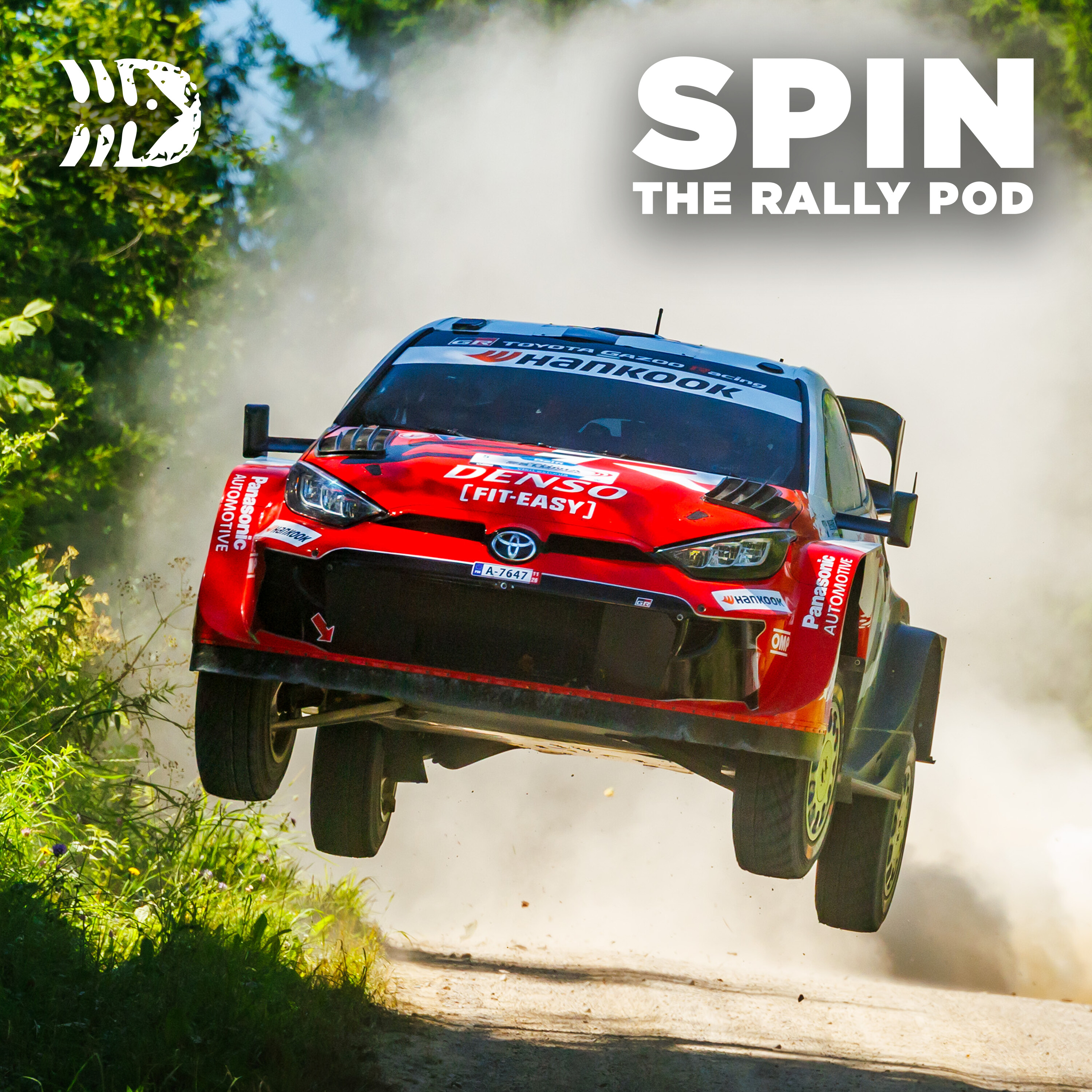
Review: WRC Rally Estonia 2026
About this episode
Luke Barry is joined by Rally2 driver Tom Williams to review last weekend's WRC Rally Estonia, and talk Tom's rallying plans after a major setback at Olympus Rally in April.
See Privacy Policy at https://art19.com/privacy and California Privacy Notice at https://art19.com/privacy#do-not-sell-my-info.
Richard Burns
"The chosen topic is Richard Burns, of course, somebody very special to you, as he was your godfather... start with question one here, which is Richard Burns won 10 rounds of the World Rally Championship..."
Richard Burns was a famous rally driver from the UK. He won the World Rally Championship in 2001 and was especially successful on Rally GB.
Richard Burns was a top British rally driver best known for winning the World Rally Championship (WRC) in 2001. He’s also remembered for repeated success on Rally GB, including multiple wins that make him a standout figure in UK rally history.
World Rally Challenge
"this year is 25 years since he won the World Rally Challenge, we'll get a little bit onto that later on..."
The World Rally Challenge is another rally series mentioned in the episode. They’re bringing it up to talk about Richard Burns’ earlier career and a 25-year anniversary.
The World Rally Challenge is a rally competition/series name referenced in the episode as part of Richard Burns’ career timeline. It’s distinct from the World Rally Championship and is being used here to mark a milestone anniversary.
Rally GB
"I hope there's not going to be a trick question, but it's got to be Rally GB. That is correct. Yeah, three or four times."
Rally GB is the WRC rally event held in Great Britain. It’s a major rally that many fans see as a classic part of the World Rally Championship.
Rally GB is the British round of the World Rally Championship, traditionally run on a mix of tarmac and gravel stages depending on the year. It’s one of the most iconic events in the WRC calendar, and it’s especially associated with British rally fans and historic photos.
Safari Rally
"That is correct... you could say Safari Rally, and he had a lot of great results there, or podiums wins, which is super rare in Safari, because it can be a bit hit and miss over there..."
The Safari Rally is a legendary rally known for being tough and unpredictable. It’s the kind of event where cars can struggle and finishing can be a big deal.
The Safari Rally is a historically famous rally event known for rough, unpredictable conditions and high attrition. In rally talk, “Safari” often implies a race where reliability and endurance matter as much as outright speed.

Escorts
"[351.5s] he got loaned a sunbeam, he of course drove the Escorts at the Forest Experience Rally [357.0s] School, so it was bits and bobs, and that's how, I don't know, how he got started really,"
The “Escorts” are rally versions of the Ford Escort. They’re mentioning that Richard drove Ford Escorts at a rally school, which shows what cars people used to learn rally driving.
“Escorts” refers to Ford Escort rally cars, a model family that became a staple in rallying—especially in the UK and Europe. The host says Richard drove the Escorts at the Forest Experience Rally School, which is a concrete example of the kind of cars used to teach and develop rally drivers.
rally school
"[363.0s] so let's just try this, try that, he was working for, that's why he kind of got a number of [368.0s] those rally cars to drive to begin with, because he was working for the rally school, doing [371.3s] a lot of the grading jobs, and then he got, in exchange for getting paid, he got to drive"
A rally school is where people learn how to drive rally cars. They teach rally skills, and in this story it’s where Richard worked and eventually got opportunities to drive.
A rally school is a training program where drivers learn rally-specific skills like car control on loose surfaces, pace discipline, and how to work with a co-driver. In this segment, it’s also described as a place where Richard did work and then got chances to drive rally cars.
championship points
"more championship points with Mitsubishi than he did with Peugeot, true or false? ... it was 54 points with Mitsubishi, 92 with Peugeot ... there was a point where the point system changed as well for 2003"
Championship points are the scores drivers collect at each rally. Those points are added up over the season to decide who wins the championship, and rules can change between years.
Championship points are the scores drivers and teams earn at each rally, which add up over the season to determine the overall standings. The transcript also notes that the points system changed in 2003, which can affect how totals compare across eras.
Mitsubishi
"more championship points with Mitsubishi than he did with Peugeot, true or false? ... it was 54 points with Mitsubishi, 92 with Peugeot"
Mitsubishi is a car brand that also raced in rallying at the highest level. Here they’re talking about how a driver did while driving for Mitsubishi.
Mitsubishi is a rally manufacturer that competed in the WRC with works teams and cars built for the championship’s gravel/tarmac stages. In this segment, the hosts discuss a driver’s points and success during a Mitsubishi era.
Peugeot
"more championship points with Mitsubishi than he did with Peugeot, true or false? ... it was 54 points with Mitsubishi, 92 with Peugeot"
Peugeot is a car brand that also competed in top-level rally racing. In this part, they’re comparing how the driver performed in the Peugeot years versus the Mitsubishi years.
Peugeot is a rally manufacturer that competed in the WRC, including periods where it was highly competitive. The segment contrasts a driver’s championship points and dominance during a Peugeot era versus Mitsubishi.
point system
"but obviously later in his career with the 2006, and there [437.9s] was a point where the point system changed as well for 2003, so that will be a big help"
The point system is the set of rules for how points are awarded based on where you finish in a rally. If it changes, then point totals from different years aren’t always apples-to-apples.
The point system is the rules that determine how many championship points a driver earns for finishing positions at each rally. Changes to the point system (like the one mentioned for 2003) can make earlier and later seasons harder to compare directly.
WRC victories
"I'll take one here then, what were the first and last WRC victories of his career, so [474.1s] am I looking for the event and the year..."
They’re asking about the first and last times a driver won a WRC rally. It’s basically a trivia question about career wins.
The hosts are quizzing about the first and last WRC victories of a driver’s career. This is a historical-statistics topic within the rally context rather than a technical automotive concept.

Dodge Challenger
"...ll double check this, I'm pretty sure the British challenger was 93, so I think you're basically in your head ..."
The Dodge Challenger is a car made in the U.S. that’s designed to be fast, with a strong engine and a sporty look. In the podcast, they’re talking about which specific version or year they mean, so they’re trying to confirm the details.
The Dodge Challenger is a classic American muscle car known for its powerful engines and long hood/short deck styling. It often comes up in motorsport and rally-history conversations because people compare specific model years and how they performed or were discussed in different eras. In your podcast context, it sounds like the hosts are debating the correct year/model reference for a “British challenger,” which is why the Challenger name is being double-checked.
Group A
"because of course there was Asia Pacific with Subaru, and that's when he spent a number of years in the Group A cars, and also did a number of years in the Group A Mitsubishis"
Group A was a set of racing rules for rally cars that were based on regular production cars. Teams could modify them, but not completely freely—so it helped keep the cars tied to what people could buy.
Group A was a historic FIA rally/production-car class where teams built cars based on production models, with rules limiting modifications. It’s a key era because many rally legends and manufacturers developed their cars and drivers within Group A before later regulations changed.
WRC event
"and then the opportunity to do a WRC event with Mitsubishi, which was winning it then."
WRC means World Rally Championship. A WRC event is one race weekend in that global series, where drivers compete across several timed sections of road.
WRC stands for World Rally Championship, the top-level international rally series run under FIA rules. A “WRC event” is one round of that season, typically featuring multiple timed stages on loose surfaces like gravel, snow, or tarmac.
hatchback cars
"and it was dominant, but very different style of driving, and it was one of the first hatchback cars, which is now the normal."
A hatchback is a car where the back opens like a door, and the trunk is part of that same door. The speaker is saying hatchbacks became a common rally shape over time.
A hatchback is a car body style where the rear door opens upward and the trunk is integrated into that door. In rally history, hatchbacks became common because their packaging and weight distribution suited the regulations and the way rally cars were developed.
ECUs
"“...the technology, it's just, it's like a whole different world. It's like computers, ECUs, everywhere, there's like buttons everywhere...”"
ECUs are the car’s computers. They constantly read sensors (like speed and throttle) and control things like the engine and drivetrain so the car can respond precisely.
ECUs (electronic control units) are the onboard computers that manage how a rally car runs. They coordinate engine, transmission, and drivetrain behavior by reading sensors and commanding actuators in real time.
active diffs front and rear
"“...and it's all hydraulic, hydraulics and active diffs front and rear. I think it's in the center, active just everywhere...”"
An active differential helps the car decide how much power goes to each wheel. With active diffs at the front and rear, the car can better keep grip and help it turn in the way the driver wants.
“Active diffs” are electronically controlled differentials that can vary how torque is sent to the left and right wheels. Having them front and rear lets the car adjust traction and rotation more aggressively as conditions change.
hydraulics
"“...and it's all hydraulic, hydraulics and active diffs front and rear. I think it's in the center...”"
Hydraulics use pressurized fluid to move and control mechanical systems. In rally cars, hydraulic actuation is often used for fast, precise responses in components like differentials and suspension/handling systems.
Rally 2 car
"But I think it's really depressing to think that that car will never not be as fast as the Rally 2 cars you drive now. [854.1s] And Rally 2 is not even, I know it's changing a bit, but it's not the top of the top anymore."
“Rally 2” is a category of rally race cars. It’s a set of rules that keeps the cars comparable, and they’re usually a step down from the very top WRC cars, but they’re still serious competition machines.
“Rally 2” refers to the FIA’s Rally2 class of cars used in many top-level national and international rally championships. They’re purpose-built rally cars with a standardized rule set, positioned below the very top WRC-spec cars but still highly capable and fast.
suspension
"But that's how suspension, everything moves on really, but [862.6s] they had so much good technology on there that of course got banned."
Suspension is what helps the car handle bumps and rough roads. It helps keep the tires planted so the car can grip better, especially on gravel and uneven stages.
Suspension is the system of springs, dampers, and linkages that controls how a rally car absorbs bumps and keeps the tires in contact with the road. In rallying, suspension setup strongly affects grip, ride compliance, and how the car behaves over jumps and rough surfaces.
technology got banned
"they had so much good technology on there that of course got banned. [866.3s] And the focus in 2010, there's all these like things they tried and then you're banned and bad."
Sometimes rally rules change and certain car technologies are no longer allowed. That can be to keep costs down or to make sure no single trick gives one team an unfair advantage.
In rallying, “technology got banned” refers to rule changes where certain technical solutions are prohibited by the governing body. This is often done to control costs, maintain competitive balance, or prevent one approach from dominating performance.
Chelsea Wolves
"Maybe we should talk about Chelsea Wolves first, because it was obviously the same weekend as Rally Estonia, so you would have had a slight split attention. [914.0s] I don't know how much you watched the WRC with that going on, but I guess tell us what you were"
“Chelsea Wolves” sounds like a place or group the speaker visited, mentioned in the same timeframe as Rally Estonia. The transcript doesn’t explain what it is, so it’s hard to pin down exactly from this excerpt alone.
“Chelsea Wolves” appears to be a venue or team name connected to the speaker’s first visit, discussed alongside Rally Estonia. Because the transcript doesn’t provide context (and the name is unusual), it may refer to a specific local rally-related location or event.
World Rally Car
"we're not going to nail them, but to run a World Rally car, you know how they are, the amount of teams and mechanics and engineers you need."
A “World Rally car” is a rally race car built for the top-level WRC series. It’s not something you can just bring out casually—teams need lots of mechanics and engineers to keep it running and set up for the stages.
A “World Rally car” is a rally car built to compete in the World Rally Championship (WRC), typically with purpose-built suspension, drivetrain, and safety equipment to handle rough stages. The speaker also highlights that running one requires a large, specialized team because the car is complex and needs constant setup and support.
Goodwood Festival Speed
"I've never been, and Chelsea Wolves is like a completely different spectrum from going from Goodwood Festival speed to Chelsea Wolves,"
Goodwood Festival of Speed is a famous UK event where you see lots of cars and often watch them do hill runs. They’re saying the other place feels smaller and different compared to Goodwood.
Goodwood Festival of Speed is a major UK motorsport and car culture event known for hill-climb runs and large displays of famous cars. The speaker contrasts it with another venue, emphasizing that the vibe and scale are different even though both are car-focused events.
hill climb
"it's essentially, and I'll be honest, I don't know where an angle that is, my English geography is pretty bad, but Tom can correct me in a second, but it is essentially a small little hill climb, and it really is just a tiny bit of road, but it's so renowned and historic isn't it..."
A hill climb is a race where cars go up a steep road section as fast as they can. It’s usually shorter than a full circuit race, but the climb and tight road feel make it challenging.
A hill climb is a motorsport event where cars race against the clock on an uphill course, usually over a short distance with a lot of elevation change. The speaker describes it as a small, steep road event that’s historically renowned, which is typical of hill-climb venues.
tin shelters
"but with the sense that you still have some of the biggest and best cars displayed under these tin shelters, and you'll have like some really famous or top drivers just wandering around in the crowd,"
“Tin shelters” describes the temporary, lightweight structures used at some historic motorsport venues for car display and service areas. In this context, it emphasizes the grassroots, old-school feel—cars and teams are close to spectators, even if the facilities are simple.
pits
"the car into the pits, so that's that nice, there's not barriers everywhere, and then there's, I don't [1049.8s] know, it's just a really good event, and it wasn't, you know, I have to walk two miles or"
The pits are where the racing team brings the car in to do quick work—like tires and repairs—while the event is going on. It’s basically the team’s garage area next to the track.
In motorsport, the pits are the service area where teams stop the car to refuel, change tires, and make mechanical adjustments during a race or event. Rally events may use a similar service park concept, but “pits” usually means the team’s working zone.
Group B
"some people might prefer a group B, some people might prefer a group A, for me that was a sweet [1143.5s] spot, but I definitely think a lot of that is because that was what I grew up falling in love [1147.7s] with, but they were just special, like ordinary cars that just looked ridiculous, essentially,"
Group B was a high-performance rally car class (popular in the early-to-mid 1980s) known for extremely powerful, lightweight cars and relatively liberal rules. It became famous—and controversial—because the cars were so fast and dangerous that the class was eventually discontinued.
wider track
"it still looks like a road car, but they're just starting to get quite beefed up and wider tracks, and [1171.2s] starting to get wider arches, and there's just so much technology on those cars that they're"
“Track” in car setup refers to the distance between the left and right wheels on an axle. Wider tracks can improve stability and cornering grip by reducing body roll and increasing the car’s effective stance.
wider arches
"and wider tracks, and [1171.2s] starting to get wider arches, and there's just so much technology on those cars that they're"
Wider wheel arches are bodywork extensions that allow rally cars to run wider wheel/tire setups and wider tracks. They also help manage tire clearance and protect against debris thrown up by the tires.
World Rally Championship
"…while you spent your weekend driving gingerly at Chelsea Walsh, [1202.5s] the World Rally Championship Finest, you're spending the weekend driving as aggressively as possible…"
This sounds like a garbled reference to the World Rally Championship. The point is that they’re talking about driving at the top rally level, not a local event.
This appears to be a mis-transcription or stylized phrase referring to the World Rally Championship. The key idea is that the discussion is framed around WRC-level competition and the mindset required to drive at that standard.
hybrid car
"…this was his first event doing Estonia in a hybrid car, so [1229.1s] was Estonia first from five years ago?"
A hybrid rally car uses both a gas engine and an electric system. The electric part can help the car accelerate or store energy, so the driver has to think about how and when to use it during the race.
In rallying, a hybrid car uses an electric system alongside the combustion engine to add power and/or recover energy. In modern WRC, “hybrid” typically refers to a setup where the car can deploy extra electric assistance during stages, changing how drivers manage throttle and energy.
efficiency
"…what's it like as a driver to be driving on roads like that, where it's all about efficiency, [1276.3s] isn't it, but also just bravery…"
In rally context, “efficiency” refers to managing energy and consumption to keep performance consistent across stages. With hybrid systems and strict regulations, efficiency can influence how the driver uses power and how the team sets up the car for repeatable speed.
pace gap
"Well, I think it's a very specific type of rallying, you can see the pace gaps, they're either really close with the number of drivers, [1291.7s] or jumping off a cliff…"
“Pace gaps” are how much faster or slower one car is compared to another. In rallying, those time differences can change quickly depending on how confident the driver feels and how well the car is working.
“Pace gaps” are the time differences between cars on the road, stage by stage. In rallying, small pace gaps mean the cars are very evenly matched, while larger gaps can indicate a driver is losing confidence, grip, or rhythm.
Marcos Salmon
"I'd also like at this point to make an apology to Sammy Pyre in Marcos Salmon, and if you are listening to Spin the Rallyport, I hope you are. I'm sorry it's taken us 21 minutes to mention your names, because that performance at the weekend was sensational."
Marcos Salmon is another person on the rally team being discussed. The hosts are talking about their weekend performance as something that really earned recognition.
Marcos Salmon is mentioned alongside Sammy Pyre as part of the credited winning/strong performance. In rallying, the driver and co-driver are typically paired, so this mention is likely referring to the team behind the result.
Sammy Pyre
"I'd also like at this point to make an apology to Sammy Pyre in Marcos Salmon, and if you are listening to Spin the Rallyport, I hope you are. I'm sorry it's taken us 21 minutes to mention your names, because that performance at the weekend was sensational."
Sammy Pyre is a rally driver. The hosts are saying his performance this weekend was really impressive and deserved the result.
Sammy Pyre is one of the rally drivers being discussed in this segment. The hosts praise his weekend performance as “sensational” and credit it with a strong competitive result.
Tom
"I'm sorry it's taken us 21 minutes to mention your names, because that performance at the weekend was sensational. We've seen it coming, well, haven't we, Tom? These guys have been properly on the pace at a number of rallies."
Tom is the co-host the speaker is talking to. It’s part of the back-and-forth discussion about the rally results.
“Tom” is the other host being addressed directly (“well, haven't we, Tom?”). This is a conversational reference rather than a technical rally term, but it indicates the co-host who is part of the analysis.
podiums
"They had, I think it was equal most podiums this year before the event, there is the most podiums of the season."
“Podiums” means finishing in the top three. The hosts are saying these teams had been doing that a lot before this rally.
In rallying, “podiums” means finishing in the top three positions in an event. The hosts use it to say these crews were consistently among the best before this Estonia round.
stages
"but to do it in the way they did, to be so dominant, winning, I think it was two-thirds of the stages leading from start to finish, they were just peerless."
In rallying, “stages” are the timed parts of the event. Winning “two-thirds of the stages” means they did best on most of those timed sections.
Rally “stages” are the timed sections of a rally route where crews compete for speed and consistency. The hosts say the winners took “two-thirds of the stages,” meaning they were fastest/most successful across most timed segments.
Ollie Solberg
"they've just taken it up a gear, and to be on the pace to begin with, and then hold it throughout with Ollie Solberg literally just sitting there right behind you, that's the pressure that most people can't deal with, even for Ollie, it was nice for him just to get a result, put it to bed, and just go, I'm happy with that, and then there's more work to be, so for both of them, I think that was a great performance."
Ollie Solberg is another rally driver in this story. The hosts say he was right behind the leader, creating a lot of pressure, and that he was pleased to get a solid result.
Ollie Solberg is discussed as being “literally just sitting there right behind you,” describing how close he was to the leader. The hosts frame it as pressure that many people can’t handle, and they also note he got a result he was happy with.
confidence
"but we know he just wasn't quite there with the confidence"
“Confidence” here means how sure the driver feels about pushing hard and trusting the car. The hosts are suggesting Solberg was close, but not fully comfortable enough to match the very top level.
In rally driving, “confidence” refers to how comfortable and assured a driver/co-driver feels with the car’s grip, braking points, and pace notes. The hosts contrast Solberg’s best effort with the idea that he “just wasn't quite there with the confidence,” implying it limited how close he could get.
Finland
"[2129.9s] but places like Finland and Mastoni, yeah, you do need to go flat out. [2135.0s] He's just the right fit, that's it. Yeah, backing off in Finland is, yeah, you lose a lot of time,"
Finland is a famous place for rally racing. The host is saying that the stages there can be rough and narrow, so you can’t just drive flat-out all the time—you have to manage the risk.
Finland is a well-known WRC rally setting where drivers often face very rough, narrow, and fast stages. The host specifically ties it to the idea that “backing off” can cost time, and that road surface can be unpredictable even when the rally is marketed as smooth.
Mastoni
"[2129.9s] but places like Finland and Mastoni, yeah, you do need to go flat out. [2135.0s] He's just the right fit, that's it."
The host mentions “Mastoni” as a place where you generally need to push hard. I can’t be fully sure what exact rally location or stage name this refers to based on the transcript alone.
Mastoni appears to be a stage/location name the host associates with needing to go flat-out. However, it’s unclear from the transcript whether this is a correctly transcribed rally venue (or a specific stage name) versus a mishearing.
road degrades
"[2204.1s] because a lot of the stages are getting used quite a lot, and you can just compare how that person [2208.8s] took that corner into this gear, and he just, and you can see how the road degrades and how it [2214.6s] changes,"
“Road degrades” means the road gets worse as more cars drive over it. In a rally, that can change traction and make the same corner feel totally different later.
“Road degrades” refers to how the rally surface changes as more cars run over it—grip can drop, loose material can build up, and the line that worked earlier may become slower or more dangerous. The host notes that you can watch this happen by comparing how different drivers take the same corner.
regrade the road
"[2208.8s] ...you can see how the road degrades and how it [2214.6s] changes, because they regrade the road differently a lot of the time,"
“Regrade the road” means the rally crew reshapes the stage surface. That can make the same route feel different from one run to the next.
“Regrade the road” means rally organizers reshape or rework the stage surface between runs (or between visits) to alter how it drives. The host connects it to why the road can change “a lot of the time,” affecting braking points, corner entry, and tire grip.
Sebastian Loeb
"that's when you have, you have a lot, you have, wait, I've heard stories of Sebastian Loeb with ways pulling out a folder with this, this setup sheet from 15 years ago on this rally, that's literally pulls it out and recreates that setup 15 years later, and straight on the pace"
Sebastian Loeb is one of the most successful rally drivers ever. The story here is about how he’s so prepared that he can reuse old rally notes or setups to help him drive fast again.
Sebastian Loeb is a legendary rally driver known for an unusually methodical approach to preparation and stage execution. The host’s story highlights how deeply he can reference prior rally information to recreate a setup and stay on pace.
setup sheet
"I've heard stories of Sebastian Loeb with ways pulling out a folder with this, this setup sheet from 15 years ago on this rally, that's literally pulls it out and recreates that setup 15 years later, and straight on the pace"
A setup sheet is a team’s documented configuration for the rally car—what settings to use for that event and conditions (for example, suspension and other adjustments). The point in the transcript is that teams can reuse or adapt prior setup information when stages and conditions are similar.
onboard
"Yeah, well, of course, there's some, everyone does it their own way, and I used to watch a lot more onboard than I do now, and some people will have a memory, a photographic memory where they'll watch so many hours of onboard to the point where they can memorize the whole rally, and it's, it's an intense amount of video work"
Onboard is video shot from inside the rally car. People watch it to learn how the car behaves through turns so they can plan better for the next rally.
Onboard refers to video footage recorded from inside the car during a rally stage, typically showing the driver’s view and inputs. Rally teams use it to study how different crews handle specific corners and surfaces, and to refine pace notes and driving approach.
pace notes
"Yeah, well, of course, there's some, everyone does it their own way, and I used to watch a lot more onboard than I do now, and some people will have a memory, a photographic memory where they'll watch so many hours of onboard to the point where they can memorize the whole rally, and it's, it's an intense amount of video work, and I, I preferably do everything from pace notes, and, and I'll be making sure, sure I can get my pace notes up to scratch, and if the video work just helps me feel comfortable, I'll get it"
Pace notes are like a detailed “road map” for the rally stage. They tell the driver what the next turns and bumps are and how hard to push, so they can drive fast even though they’re going through the course at speed.
Pace notes are the rally co-driver’s written instructions for the driver, describing upcoming road sections (turns, braking points, hazards) and how fast to go. They’re built from reconnaissance and video review, then used during the stage so the driver can attack confidently without seeing the road clearly in time.
super special
"but you are doing a five kilometer super special, and then, and it's getting used year in, year out, of course, you can treat it a bit like a racetrack,"
A super special is a short rally stage made for spectators, usually in a stadium or a tight course. It’s different from the long, remote stages because it’s more controlled and easier to repeat.
A “super special” is a short, spectator-friendly rally stage—often run in a stadium or on a purpose-built layout—designed to be easy to watch and to create head-to-head excitement. The speaker contrasts it with longer stages where learning and pace-note preparation work differently.
one to six system
"I tried it, I tried a couple of different systems, I'm quite on a traditional one to six system, but with quite a lot of description in it as well, and then Richard had all descriptive, which is massively complex,"
This is a numbering method used in rally notes to rate how hard or fast a corner is. Instead of describing everything from scratch, the co-driver uses a scale so the driver can react quickly.
A “one to six system” is a structured way of rating pace-note difficulty or speed for corners, where higher numbers typically indicate faster or more demanding sections. It’s one of several rally note formats co-drivers use to communicate urgency and corner character consistently.
multiple apex
"but there's more complexity to that as well, because it was a multiple apex kind of system where you could have a couple of corners, like descriptions per corner to have the entry and centre of the corner and exit,"
A multiple-apex corner means the best line doesn’t just pass one “turning point.” Instead, you aim for more than one point through the corner, so the notes may need extra detail.
A “multiple apex” corner is one where the optimal racing line hits more than one apex point, often because the corner shape changes or tightens/opens mid-way. Rally pace notes may break such corners into separate entry/center/exit descriptions to capture that changing geometry.
Esa Pekka Lappi
"We saw Esa Pekka lap obviously back in the car for the first time in four months, and I think he was quite open about how disappointed he was"
Esa Pekka Lappi is a rally driver from Finland. The hosts are talking about how he recently got back in the car and how fast he was compared with the other drivers in Estonia.
Esa Pekka Lappi is a Finnish rally driver who competes in the World Rally Championship (WRC). In this segment, the hosts discuss his recent return to the car after time away and how his pace compared to expectations in Estonia.
WRC two car
"and he's been driving a rally two car, of course, in the middle, so yes, that seat type, but it's not that relevant, is it? It's a completely different car to drive"
“WRC2” is a lower tier within the World Rally Championship. The cars are different from the top WRC cars, so driving them well doesn’t always translate perfectly when you move up.
A “WRC two car” refers to the WRC2 category, which is a support class within the World Rally Championship. Cars in WRC2 are typically less powerful and have different setup/behavior than the top-tier WRC cars, so drivers often need time to adapt.
M Sport
"It's better than an accident, when Highend I probably need the shells and cars just as much as anyone to get to deliver the championship battle. [2897.2s] M Sport 4 now as well, and I think probably no surprise, see that Martin Sesk was the quickest"
M Sport is a rally team/constructor that prepares cars for competition. The hosts are linking a driver’s speed to the M Sport team effort.
M Sport is a motorsport company that builds and runs rally cars and teams for major rally championships. Here, the hosts mention “M Sport 4” as part of their discussion of who was quickest, tying the driver’s performance to the team’s program.
Martin Sesks
"M Sport 4 now as well, and I think probably no surprise, see that Martin Sesk was the quickest"
Martin Sesk is a rally driver. The hosts say he was the quickest in the situation they’re talking about, in connection with the M Sport team.
Martin Sesk is a rally driver mentioned as being the quickest in this segment’s discussion of results. The hosts connect his pace to the M Sport program and the ongoing championship battle context.
mechanical
"obviously with Josh we didn't quite get to see the full picture, given he had a mechanical on Saturday morning, John was the opposite, and he had a problem on the first stage"
“Mechanical” here means something went wrong with the car itself. It could be a part failing or not working right, and it can slow the driver down or force them to stop.
In rally talk, “mechanical” usually means a car issue that isn’t driver error—like a failure or malfunction that affects performance. It can cost time, force repairs, or limit how hard the driver can push.
stage times
"they know if you look at the data, you look at the information in the stage times, they'll be collecting that and looking at the seconds per kilometer"
A rally is split into timed sections called stages. “Stage times” are how long the car takes to complete each section, and teams use that to see where they’re fast or slow.
“Stage times” are the elapsed times each crew records on a single timed special stage. Rally teams use them to compare performance across drivers and to spot where they’re gaining or losing time.
seconds per kilometer
"they'll be collecting that and looking at the seconds per kilometer, and where they're going well, and where they're not going well"
Because stages can be different lengths, teams often use “seconds per kilometer” to compare pace fairly. It tells you how many seconds it takes to go one kilometer, on average.
“Seconds per kilometer” is a normalized pace metric used in rallying to compare speed across stages of different lengths. It helps teams evaluate performance trends without being misled by stage distance.
shake damage
"He had that weird incident with shake damage, he's obviously hit an anti-cut device, but it did more damage you'd expect, didn't it"
“Shake damage” refers to damage caused by repeated high-frequency impacts or vibrations, often from hitting a hard object or running over something that upsets the suspension. In rally cars, it can affect components like suspension arms, steering, or underbody parts.
anti-cut devices
"He had that weird incident with shake damage, he's obviously hit an anti-cut device, but it did more damage you'd expect, didn't it"
An “anti-cut device” is something placed on the course to stop drivers from taking a shortcut. If you hit it, it can damage the car badly because it’s meant to be hit only by mistake.
An “anti-cut device” is a trackside barrier or obstacle designed to discourage drivers from cutting across the course. In rally stages, hitting one can be extremely costly because it’s positioned where the road edge or chicane would otherwise tempt shortcuts.
shake down
"it wouldn't have been as a pressure situation, but because of the astonian itinerary, with the shakedown in the morning and then the rally in the afternoon, there was not a lot of time for the team to repair the car"
A shakedown is a quick practice run before the real rally starts. The team uses it to make sure the car feels right and to catch problems early.
In rallying, a shakedown is a short practice session held right before the main event. Teams use it to test the car setup, check notes, and iron out any issues before the competitive stages begin.
service
"he did unfortunately leave service two minutes late, [3056.5s] that was a 20 second penalty, it just puts you on the back foot doesn't it"
Service is the planned break where the crew can fix and adjust the car between race sections. If you miss the timing, you can get penalized with extra time.
In WRC-style rallies, service refers to the scheduled time window where the team can work on the car between stages. Running late to service can trigger time penalties that hurt overall position.
written-off shell
"because they're all going to go straight from Astonia to Finland, so normally it's a written-off shell, so as long as they can have everything clean enough, learn something, set the cars up"
A written-off shell is basically a car body that was considered too damaged to be worth repairing for normal use. Rally teams can rebuild and use it for competition to save money.
A “written-off shell” is a rally car body/chassis that’s been declared a total loss by insurers but is still used in motorsport. Teams may rebuild and run these shells to reduce costs while still meeting the event’s technical requirements.
WRC 2
"it's probably not a surprise to see him winning in Astonia's home rally, one of course last year, but consider the context, it's three starts in WRC2 and three wins."
WRC2 is a lower tier within the World Rally Championship. It’s where many drivers build their careers and try to earn a shot at the top class.
WRC2 is the FIA World Rally Championship’s support category, typically for cars that are less powerful than the top WRC class. It’s also a key proving ground for drivers aiming to move up to the main WRC category.
WRC Rally Estonia 2026
"To talk to us then, Tom, about your season so far... now I'm looking forward to seeing him in Finland... The prize money in Estonia."
WRC means the World Rally Championship, which is the biggest rally series in the world. Estonia is the country where this particular rally event takes place in 2026.
WRC stands for World Rally Championship, the top tier of international rally racing run under FIA rules. Estonia is one of the rally countries on the WRC calendar, and the 2026 event is the specific season round being reviewed here.
FIA championships
"the ARA really is quite different to the world championship, a lot of the FIA championships, it's got some great opportunities..."
The FIA is the main organization that governs a lot of major racing series around the world. Different FIA championships can have different rules and car classes.
The FIA is the Fédération Internationale de l’Automobile, the governing body that sanctions major motorsport series worldwide. When the host contrasts “FIA championships” with the ARA, they’re pointing out that the rules, car categories, and event structure differ between sanctioning bodies.
ARA
"we, of course, I competed in the States from 2020 for two and a half years... the ARA really is quite different to the world championship..."
ARA is the organization that runs rally racing in the United States. The speaker is saying it feels different from the global WRC-style rally scene.
ARA refers to the American Rally Association, which organizes rally competition in the United States. In this segment, the speaker says the ARA is “quite different” from the world championship, implying differences in event style and competitive landscape.
Olympus Rally
"it's got some great opportunities and some incredible events, like the Olympus Rally, which used to be part of the WRC..."
The Olympus Rally is a rally race that the host says used to be part of the WRC. It’s being used here to show that the American rally scene has some big, well-known-style events.
The Olympus Rally is a rally event referenced as having previously been part of the WRC. The speaker uses it as an example of the ARA’s event lineup and highlights how some rallies share characteristics with other famous UK events.
Travis Pastrana
"it's a big country, lots of roads, and a lot of drivers, characters, you've got Travis Pastrana..."
Travis Pastrana is a famous American motorsports athlete. The host is mentioning him as one of the big names that helps make rally in the U.S. feel exciting.
Travis Pastrana is a well-known American motorsport star who has competed across rallying, motocross, and other disciplines. The speaker lists him among the drivers who make the American rally scene feel lively and varied.
Ken Block
"you had the late Ken Block, you had Ken's daughter Leah Block, now you've got this year..."
Ken Block was a famous American driver who competed in rally events and became widely known through viral driving videos. The host is using him as an example of the big names in U.S. rally.
Ken Block was an American rally and motorsport personality known for high-profile rally appearances and Gymkhana-style videos. The host mentions him as part of the driver mix that has helped keep U.S. rally culture in the spotlight.
Leah Block
"you had the late Ken Block, you had Ken's daughter Leah Block, now you've got this year..."
Leah Block is a rally driver in her own right. The host mentions her to show that the U.S. rally scene includes both established and newer big-name competitors.
Leah Block is an American rally driver and motorsport figure, mentioned here as Ken Block’s daughter and as part of the current U.S. rally driver lineup. The speaker uses her presence to show how the sport’s roster has expanded over time.
Toyota factory team
"now you've got this year, you've got a Toyota factory team with seven heroes, so I don't know..."
A “factory team” is a works-backed entry where the automaker provides direct support—engineering, parts, and funding—rather than relying on independent privateer efforts. The speaker’s point is that Toyota’s factory presence adds variety and top-level competition to the American rally scene.
Subaru
"there was a lot of, there was the world cars, there was the factory Subaru team, and in the Rally 2 car..."
Subaru is a car brand that has competed in rally racing at a high level for years. A “factory team” means the brand is directly supporting the cars and drivers.
Subaru is a major rally manufacturer, best known in the WRC era for its all-wheel-drive rally cars and strong factory support. Here it’s mentioned as a “factory Subaru team,” meaning a works-backed effort with top-level engineering and budgets.
four wheel drive
"we had a great time, I got some great miles, we were there to learn four-wheel drive cars, [3299.7s] because I came out of Covid, we had some great connections in the States, and it was a great"
Four-wheel drive is when the car can send power to all four wheels. That usually helps it grip the road better on slippery rally surfaces.
Four-wheel drive (4WD) means power is sent to both the front and rear axles. On rally stages, that helps the car maintain traction on loose surfaces like gravel, snow, and mud.
Rally 3 events
"so we took it back a step, and I went and [3321.7s] did a few select Rally 3 events across Finland, Iberian Carp, just to get back out, but I was"
Rally 3 events are races for a lower level of rally cars than Rally 2. Drivers often use them to keep racing while they work toward a higher-category season.
Rally 3 refers to a lower-tier rally category compared with Rally 2, aimed at developing drivers and teams. Competing in Rally 3 events is often a way to stay active while planning a move back up the ladder.

Toyota Corolla
"...nd then we heard that Toyota were coming with the Corolla for the ARA the following year, and they were bri..."
The Toyota Corolla is a small, everyday car made by Toyota. It’s also used in racing, and the podcast is saying Toyota planned to bring the Corolla to the ARA the next year, meaning it would be a competition car to watch.
The Toyota Corolla is a compact car that’s widely used as a rally and motorsport platform because it’s practical, easy to support, and has a strong racing history. In the podcast context, it’s mentioned as Toyota bringing the Corolla to the ARA the following year, which highlights how teams choose cars that can be developed for competition. That’s why it’s discussed: it signals a shift in what vehicles were expected to show up and compete.
Hyundai
"and then of course, Lea Block was with the Hyundai, so you had [3358.7s] an, I think on the first round, there must have been a 10-15 RC2 class,"
Hyundai is a car brand that competes in rally racing too. Here, it’s mentioned as the brand Lea Block was driving for.
Hyundai is a major rally manufacturer, and the speaker mentions Lea Block being with Hyundai. Manufacturer teams can influence results through car development, engineering support, and the overall competitiveness of the entry list.
RC2 class
"so you had [3358.7s] an, I think on the first round, there must have been a 10-15 RC2 class, and when we caught wind [3366.1s] of this, we started to work out, this could be a really good year to compete in the States,"
RC2 is a category/ruleset for certain rally cars. It’s basically how rally organizers group cars so the competition is more even.
RC2 is a rally car classification used in rallying to group cars to a defined technical spec. It’s commonly associated with two-wheel-drive rally cars at a particular performance level, and it helps teams compare like-for-like competition.
Snowdrift
"it wasn't really meant to be, to be honest, it was all very last minute, [3385.7s] that's why we went to the Snowdrift, it would have really helped if I was on the first round, [3389.8s] and of course, we suddenly gathered everything together, and I was speaking with Standard"
Snowdrift is a rally event held in winter conditions. Because it’s slippery, things like tires and traction matter a lot, especially for four-wheel-drive cars.
Snowdrift is a rally event known for winter conditions, which makes traction and tire choice especially critical. The speaker says they went there last minute, implying it was a strategic fit for their situation and the car’s four-wheel-drive strengths.
100-acre wood
"and yeah, hadn't been in the [3409.9s] car for 44 I think, no, it was five or six months after the first round, and that was one [3409.9s] of the fastest rounds of the calendar. Yeah, and if anyone doesn't know 100-acre wood, we've been [3414.7s] talking about Estonian Finland being narrow, I think we're not quite as narrow, but the trees are [3418.6s] right by the side of the road, so you make any kind of mistake, it's, you can know about it,"
“100-acre wood” is a nickname for a rally section with lots of trees right next to the road. It’s basically describing how tight and unforgiving the route feels if you make a mistake.
“100-acre wood” is a nickname for a rally stage area characterized by dense trees lining the road. The speaker is using it to describe how narrow the Estonian/Finland-style roads can feel, where mistakes can be costly.
puncture
"and then we got caught with a puncture late in the afternoon, [3465.2s] I think a couple stages from the finish, we got a late puncture, and then because we had a 40-second buffer lead"
A puncture is when a tire gets damaged and goes flat or loses pressure. In a rally, that usually makes the car slower and harder to control, so it can cost a lot of time.
In rallying, a puncture means the tire gets damaged and loses pressure, often suddenly. It can force a driver to slow down or stop, and even if they keep going, it usually costs significant time and grip.
40-second buffer lead
"and then because we had a 40-second buffer lead, and then I think that dropped. It must be the worst feeling, because you can't do anything about it"
A “buffer lead” is how much time you’re ahead of the cars behind you. If something goes wrong—like a puncture—that gap can disappear fast, and you can lose places even if you’re still trying your best.
A “buffer lead” is the time gap a rally car has over its rivals. In rally, that cushion can shrink quickly due to incidents like punctures, and once it drops, the driver may lose positions even if they keep driving well.
power stage points
"and we lost a couple seconds right at the end of this puncture, [3518.3s] and then we settled for the third, and we got a number of power stage points as well"
The Power Stage is a rally stage that gives extra points for the fastest times. So even if you can’t win the whole event, doing well there can still help your championship score.
A “Power Stage” is a special final stage (or designated stage) in a rally where drivers can earn extra championship points based on their fastest times. Even if you’re not winning the rally overall, strong performance on the Power Stage can boost your points tally.
Fiesta
"and then you had Brandon Seminik, the four-time American champion, dropping in in a fiesta, of course, got Travis, Lea, all the hinders, so massive, massive amount"
A Fiesta is a Ford model that can be turned into a rally car. Here, it just means someone showed up driving a Fiesta for the event.
The Ford Fiesta is a rally car platform commonly used in lower WRC support categories and national rallying. In this context, the speaker is saying a driver arrived in a Fiesta to add competition.
Dirtfish
"and it was my first time at dirtfish, and we had a really good shake down there, and it was pouring rain, pouring rain, fog, proper Washington State weather, and then going,"
DirtFish is a rally training and motorsport facility known for driver coaching and rally-focused practice. The speaker says it was their first time there and that the shakedown/practice happened under wet, foggy conditions.
Washington state
"and it was pouring rain, pouring rain, fog, proper Washington State weather, and then going,"
Washington State is a U.S. state. Here it’s mentioned to describe the kind of rainy, foggy weather they had during practice.
Washington State is a U.S. region the speaker uses to describe the weather conditions during the rally weekend. It’s not a track reference here—more of a shorthand for the kind of rain, fog, and damp grip they experienced.
seat time
"But yeah, as you see, it's typical is that you do a test in the wet, and you get a dry rally, it's not ideal, but you got the seat time, everything was there, wasn't it, and actually everything was going well,"
“Seat time” just means how much time you spend actually driving. More driving helps you learn the car and the road so you can improve your pace.
“Seat time” means time spent driving the car, especially on the relevant roads or conditions. In rally, more seat time helps drivers and teams learn grip levels, braking behavior, and how the car reacts.
Harry Matty
"trying to chase Harry Matty, which is ridiculous, because he was on a brutal form,"
Harry Matty is another driver in the rally. The speaker is saying they were trying to keep up with him.
Harry Matty is referenced as a rally driver the speaker was trying to chase. The mention is about competitive pressure and pace during the event.
no man's land
"I was probably about a minute and a half of Harry Matty, I had a minute and a half behind me, so we were in No Man's Land, but it's that really frustrating just getting to the finish"
“No Man’s Land” is a rally term for being stuck in the middle—too far to catch the leaders, but not far enough behind to be out of contention. It can feel frustrating because you’re not really able to change your position.
“No Man’s Land” is rally slang for a gap where you’re neither close enough to fight for the lead nor far enough behind to be able to attack safely. It often feels frustrating because you can’t influence the top battle directly.
penultimate stage
"right on the penultimate stage or third stage from last, we were just basically cruising to the finish"
The “penultimate stage” is the second-to-last timed part of the rally. It matters because teams often have to decide how aggressively to drive before the last stage.
The “penultimate stage” is the second-to-last timed stage of the rally. It’s strategically important because the championship situation can force teams to balance risk versus points before the final stage.
backing off
"we would be leading the championship by a really long margin, and it was that backing off, that typical backed off, still going fast, but backed off and made a mistake in a really fast section"
“Backing off” means easing up a bit instead of pushing flat-out. Teams do it to avoid crashing, but it can still go wrong if the car hits a tricky spot or the driver misjudges the pace.
“Backing off” in rally context means deliberately reducing speed or aggression to manage risk—often when the team believes they can secure a points result. The tradeoff is that small mistakes can still happen, especially in high-speed sections.
chicane
"it was that backing off, that typical backed off, still going fast, but backed off and made a mistake in a really fast section, and it was a chicane there last year, so it was very fast"
A “chicane” is a tight, zig-zag section of road that forces the car to slow and change direction quickly. It can be dangerous if you’re going too fast or the grip is worse than expected.
A “chicane” is a sequence of alternating turns designed to slow cars down and break up speed. In rallying, a chicane can be especially risky if it’s fast and the surface is unpredictable.
write off
"[3839.3s] financially it was difficult, the car was a write-off, so your season plans are affected,"
A “write-off” means the car is so badly damaged that it’s not worth fixing. In rallying, that usually means you can’t use that car again and have to find another one fast.
In motorsport insurance and logistics, a “write-off” means the car is considered too damaged to repair economically. That typically removes the car from competition and forces the team to source a replacement quickly.
barrel rolled
"[3883.3s] because me and Ross didn't have a scratch, but the size of this accident, we barrel rolled six, [3889.7s] 78 times, knocked over 67 trees in the process of this,"
“Barrel rolled” means the car flipped over and over during the crash. It’s a sign of a very serious accident where the car lost control at speed.
“Barrel rolled” describes a rollover where the car rotates repeatedly end-over-end like a barrel. In rally terms, it usually indicates a severe impact and loss of control, often from striking something on the road or going off-line at high speed.
Ohio
"[3939.2s] we were working at everything to get a car for the next round, so we were like inches away from getting back on [3944.8s] Ohio, and of course Travis could make it,"
Ohio is where the next rally round was. The team was trying to get a car there quickly after the crash.
Ohio is referenced as the next rally location the team was trying to reach after the crash. For listeners, it signals the logistical challenge of getting a replacement car to the next event on a tight schedule.
budget was extremely lean
"[3956.8s] because it's hard to rally anywhere in the States, but finding another car really quickly was really tricky, and our budget was extremely lean, [3968.9s] trying to get to Olympus,"
A “lean budget” means the team doesn’t have much extra money. So if you crash and need a replacement car quickly, it’s harder to make it happen.
A “lean budget” means the team has very limited spare money for emergency repairs, replacement cars, and logistics. In rallying, that can directly affect how quickly you can return for the next round after a major crash.
R5
"but with the competitive element of Goodwood, a new car to you is the Polo R5, you won, so it clearly hadn't lost any of the skill or talent"
R5 is a set of rules for rally cars. It’s basically a category that tells you what kind of rally car it is and what it’s allowed to be built like.
R5 is an FIA rally car class/regulation set (often called “R5 rules”) used for four-wheel-drive rally cars that are meant to be competitive but more affordable than the top-tier WRC machinery. When someone says a “Polo R5,” they’re pointing to that specific rally specification and eligibility category.

Volkswagen Polo
"and it was my first time in the Volkswagen Polo, amazing bit of kit, even it's a 10-year-old car now. Not far off, yeah, still good."
The Volkswagen Polo is a small car that people also race in rally events. Here, they’re saying the Polo still feels really good to drive and compete in, even though it’s about 10 years old.
The Volkswagen Polo is a compact rally car platform that’s been used in various rally categories, including modern one-make and WRC-adjacent programs. In this segment, the host/driver calls out the Polo as an “amazing bit of kit,” emphasizing how it still feels competitive even as a roughly decade-old car.
World Championship
"and that was mainly to be there to celebrate 25 years of Richard with a number of others, and that was the start of our kind of celebrating Richard and Robert as champion, winning the World Championship."
They’re talking about winning the top world title in rallying. In this context, it’s the big championship win they’re celebrating for Richard and Robert.
“World Championship” here refers to winning the top rally title in the WRC context. The speaker links it to celebrating Richard and Robert as champions after they won the World Championship.
Request an Explanation
Heard something you'd like explained? We'll add it to this episode.
Sign in to request explanations for terms you heard.
Want to learn more?
Browse our glossary for plain-English explanations of automotive terms, jargon, and concepts.
Help improve this episode
See something that's not quite right? Our annotations are AI-generated and can sometimes miss the mark. Click the flag icon on any annotation to suggest a correction.