
Reviewed: Lucid Gravity; SP40 Restomod
About this episode
Zach and Matt kick off with two very different targets: the “800 plus horsepower electric minivan” Lucid Gravity and the SP40 Speedster—“a not Resto mod, but totally new, old, cool thing from Argentina.” Lucid’s comfort tech gets credit for easing back pain, but the hosts nitpick heat settings, camera behavior, and an instrument-cluster layout that wastes screen space. They also dive into steering feel, air-suspension expectations, and EV/enthusiast-car buying logic—plus a deep detour into restomod identity and how to keep classics street-legal.
Matt Farah and Zack Klapman review the 2026 Lucid Gravity. Is it a minivan or an SUV? Pros and cons abound. Matt tells the tale of driving the SP40 Restomod, a carbon fiber Mustang-powered creation from Argentina. Patreon questions include:
Will Cadillac build a supercar?
Has Matt softened on BMW 2002s?
Any "Why haven't they solved this?" features?
Am I a snob for preferring the Audi E-Tron GT?
Will t-tops come back or are they too dangerous?
Our favorite batmobiles
Could Lincoln make a fancy Bronco to compete with the G-Wagen?
Ferrari's future manual
Why special EV technology won't the prices more attractive
North American brands that will disappear
How to buy wheels
And more!
Recorded Friday, June 4, 2026
Show Notes
Vinbidders
Smoking Tire fans get $100 off the listing price with promo code TIRE and by visiting https://vinbidders.com/tire
Go from submitting your car to a confirmed sale in under 1 week with VinBidders. And you only pay $149 if the car sells.
TrueWerk
Get 15% off your first order at https://TRUEWERK.com with code tire. TRUEWERK, built like it matters, because it does.
Mac tools
Go to https://mactools.org/tire to learn more and see if there’s an open route near you
Hims
For simple, online access to personalized and affordable care for Hair Loss, ED, Weight Loss, and more, visit https://hims.com/tire
Enter to WIN our AMAZING 2025 Porsche 911 Turbo S!! https://www.dreamgiveaway.com/tickets/porsche?promo=SMOKINGTIRE
Promo Code Offer: Get 4X bonus tickets with any donation of $25 or more. With every donation you are helping benefit some wonderful veterans' and children's charities.
Podcast Promo Code: SMOKINGTIRE
Want your question answered? Want to watch the live stream, get ad-free podcasts, or exclusive podcasts? Join our Patreon: https://www.patreon.com/thesmokingtirepodcast
Use Off The Record! and ALWAYS fight your tickets! Enter code TST10 for a 10% discount on your first case on the Off The Record app, or go to http://www.offtherecord.com/TST.
Watch our car reviews: https://www.youtube.com/thesmokingtire
Tweet at us!
https://www.Twitter.com/thesmokingtire
https://www.Twitter.com/zackklapman
Instagram:
https://www.Instagram.com/thesmokingtire
https://www.Instagram.com/therealzackklapman
electric minivan
"All right, on today's episode, Zach and I drive the Lucid Gravity [51.3s] 800 plus horsepower electric minivan."
An electric minivan is a minivan that runs on electricity instead of gas. Because it’s electric, it drives differently and uses a battery and electric motors rather than an engine.
An “electric minivan” is a minivan powered by electric motors instead of a gasoline engine. The key point is that it’s an EV platform in a family-focused body style, which changes how power delivery and packaging work compared with traditional minivans.
SP40 Speedster
"And I spend the morning with the unbelievable SP40 Speedster, [63.0s] a not Resto mod, but totally new, old, cool thing from Argentina."
The SP40 Speedster is a custom/updated car project. They’re presenting it as a fresh take on an older style, with the “Speedster” idea meaning a more open, roadster-like driving experience.
The SP40 Speedster is a restomod-style project described here as a new, old, cool thing from Argentina. The “Speedster” label generally points to an open-top, lightweight roadster vibe, and the episode frames it as a modern take on classic styling.
heated seats
"They massage and heat like, yeah, it's way better. They are pretty good massage seats in our car... the heated seats in the GMC Acadia... GM heated seats in general are almost unbearably hot."
Heated seats are car seats with built-in heat. They warm you up, but the host says some systems can get dangerously hot.
Heated seats are seats with built-in electric heating elements that warm the occupant’s body. In this segment, the host emphasizes that some GM heated-seat systems can get extremely hot, which is central to the later anecdote about burns.

GMC Acadia
"When Han and I got the GMC Acadia that we drove on that road trip... the heated seats in the GMC Acadia, and I found GM heated seats in general are almost unbearably hot."
The GMC Acadia is an SUV. The host says its heated seats get extremely hot—so hot it leads into a story about someone getting burned.
The GMC Acadia is a midsize SUV, and the host is using it as an example of how aggressively some heated seats can run. They claim the heated seats in the Acadia (and GM heated seats in general) get almost unbearably hot, which becomes important to the later story about burns.
hand controls
"But he had a Chevy Blazer fitted with hand controls. Okay. And that was like his car. Cool."
Hand controls are modifications that let someone drive using their hands. The host mentions them because the driver couldn’t feel heat normally, so the heated seats caused injuries.
Hand controls are vehicle controls adapted so a driver can operate the car using their hands instead of their legs. In this story, the host says the driver’s Chevy Blazer was fitted with hand controls, and that context matters because the heated seats caused burns before the driver could react.

Chevrolet Blazer
"There's a car guy... Christopher Lloyd... He was in Back to the Future. So hot. Christopher Lloyd is a paraplegic... But he had a Chevy Blazer fitted with hand controls. Okay. And that was like his car."
The Chevy Blazer is an SUV. The host tells a story where a driver with hand controls had the heated seats turn on, and because he couldn’t feel his lower body, the seats caused serious burns.
The Chevrolet Blazer is a SUV, and this story uses a specific example: a Blazer fitted with hand controls for a paraplegic driver. The key point is that the heated seats activated unintentionally, and because the driver couldn’t feel heat normally, it led to serious burns and a lawsuit involving General Motors.
General Motors
"He got second degree burns on his lower part of his body from the heated seats and had a proper lawsuit goinging against General Motors that he won. And this was in 2008 and GM went bankrupt and didn't have to pay him."
General Motors is a major car company. The host says a person sued GM after getting burned by heated seats, and then GM’s bankruptcy later affected whether they had to pay.
General Motors (GM) is the automaker behind many brands, including Chevrolet and GMC. The host claims a lawsuit against GM over heated-seat burns was won, and then says GM’s bankruptcy in 2008 meant the company didn’t end up paying that settlement.

Subaru Outback
"...seats are crazy hot, dude. Well, my cousin has an outback, I think. They had him and his wife, whatever. Th..."
The Subaru Outback is a practical crossover that’s shaped like a wagon. People often buy it for everyday comfort and usefulness. In the podcast, it’s mentioned because someone liked the heated seats and knows an owner.
The Subaru Outback is a wagon-style crossover known for practicality and comfort, often chosen by drivers who want a versatile daily vehicle. The podcast mentions “crazy hot seats” and that a cousin has one, which highlights real-world ownership impressions rather than specs. That kind of comment fits the Outback’s reputation as a comfortable, usable family car.
dial
"And I was like, you could have sued. There's like a dial? There's always a dial. There's always something."
Here, “dial” means a knob you turn to change settings—like the car’s heat level. They’re saying the heat was set too high, and turning the dial down fixed it.
In this context, “dial” refers to a physical climate-control knob or temperature setting used to adjust cabin heating. The hosts are using it to explain how the heating level was set too high and then corrected.

R-Class R63 Amg
"...ower minivans are objectively good. It's like the R63 AMG, which is a rad thing every time I see it. And I ..."
The R-Class is a luxury vehicle meant to carry people comfortably. The podcast is specifically mentioning the R63 AMG, which is a more powerful version. It’s brought up because it combines family-car space with a performance-focused trim.
The R-Class is a luxury multi-purpose vehicle (MPV) from Mercedes-Benz, known for being a people-mover with a more upscale feel. The podcast references the “R63 AMG,” emphasizing a high-performance variant. It’s discussed because it’s a rare blend of minivan practicality with performance branding.

Porsche Carrera GT
"channels, but with a fraction of the effort. Their dealer networks buys everything from Shelby's to Carrera GT's. And here's how they do it. You can submit your car in just five minutes. All they need is the Vin, Miles, the condition, eight recent photos, and your desired reserve price."
The Porsche Carrera GT is a very rare, very high-performance supercar. It’s the kind of car that collectors and enthusiasts pay attention to. The podcast is mentioning it in the context of high-value cars and how they’re handled.
The Porsche Carrera GT (often referred to as the Carrera GT) is a rare, high-performance supercar from Porsche. The podcast context focuses on dealer networks and how people can submit cars for a service, which suggests the Carrera GT is being discussed as a valuable, collectible platform. That makes it relevant as an example of an expensive, enthusiast-grade car with strong demand.

Cyber truck
"I was next to a cyber truck in this thing today and I just thought about that poor driver in there who has no center console, who has no like curved dash in front of them, which we should talk about because it's not perfect, but like that is such a Spartan interior in that vehicle..."
They’re talking about the Tesla Cybertruck and how its interior feels very bare-bones. The host points out there’s no center console and the dashboard design is very simple, which makes it feel different from most trucks.
The Tesla Cybertruck is known for its angular, stainless-steel exterior and a very minimalist, “spartan” cabin. In this segment, the host contrasts its interior layout—like the lack of a center console and a more severe dashboard shape—with other vehicles that cost similar money and make similar power.
center console
"I was next to a cyber truck in this thing today and I just thought about that poor driver in there who has no center console, who has no like curved dash in front of them..."
The center console is the area between the two front seats. It often has cupholders, storage, and buttons—so if a car doesn’t have one, the cabin feels more stripped down.
A center console is the built-in area between the front seats that typically houses controls and storage. In the segment, the host uses its absence to emphasize how minimal the Cybertruck’s interior layout feels.

Oldsmobile Curved Dash
"... there who has no center console, who has no like curved dash in front of them, which we should talk about beca..."
The Oldsmobile Curved Dash is an early classic car model. The key thing people notice is the curved dashboard shape and a simpler interior layout. The podcast is mentioning it because the cabin design is very different from modern cars.
The Oldsmobile Curved Dash refers to an early Oldsmobile model known for its distinctive curved dashboard design. The podcast mentions it in connection with a car that has “no center console” and a “curved dash,” which highlights how early interiors were laid out differently from modern cars. It’s discussed because it’s a historically significant design that stands out even in basic cabin layout.
Spartan interior
"...which we should talk about because it's not perfect, but like that is such a Spartan interior in that vehicle and they cost similar money and similar power and all that stuff."
A “spartan interior” means the cabin is very plain and minimal, with fewer features and a no-frills layout. The host is saying the Cybertruck feels especially bare-bones inside.
“Spartan interior” is an enthusiast way to describe a cabin that’s extremely minimal—few features, little visual clutter, and a stripped-down layout. Here it’s used to characterize the Cybertruck’s dashboard and overall cabin design.
steer by wire
"But the fact is, it drives like basically every other EV. Like it doesn't like steer by wire. I admit is interesting, but I don't like it."
Steer-by-wire means the steering wheel doesn’t connect mechanically to the wheels. Instead, it sends electronic signals to control the wheels, and the host is saying this car doesn’t do that.
Steer-by-wire is a steering system where the driver’s input is transmitted electronically to actuators at the wheels, rather than through a mechanical linkage. The host says the vehicle doesn’t use steer-by-wire, implying it uses a more conventional steering setup that they find acceptable.

Lucid Air
"So the Lucid Air was a product that is, was flawed in execution, but like pretty A plus an intent, you know, like the software was, was funky and, and they couldn't quite get there with stuff, but there was a lot that's like really right about the air."
The Lucid Air is Lucid’s main electric car. The host is saying it had a lot of good ideas, but the execution wasn’t perfect—especially with software and some details.
The Lucid Air is Lucid’s flagship electric sedan, known for its strong efficiency and tech-forward approach. In this segment, the host contrasts the Air’s “intent” and software ambition with execution issues, setting up why the newer interior changes matter.
quick steering ratio
"and because this car has a very quick steering ratio, it makes it like dart around. I'm going to [1090.7s] push back on you."
Steering ratio is how much you turn the steering wheel to make the front wheels turn. A “quick” ratio means small steering-wheel movements create bigger front-wheel turning, so the car feels more responsive. It can also make steering feel harder depending on your hand position.
A quick steering ratio means the steering wheel turns fewer degrees to produce the same amount of wheel angle at the tires. That makes the car respond faster to steering inputs, so it can feel like it “dart[s] around.” It also changes how much steering effort you feel depending on where your hands are on the wheel.
adjustable steering ratio steering wheel
"This is actually an adjustable [1094.5s] steering ratio steering wheel, Matt Farah. So when your hands are at the nine and three position, [1098.8s] you have a lot of leverage, right?"
Some cars can change how “responsive” the steering feels by altering the steering ratio. That means the same steering-wheel movement can turn the front wheels more or less. In practice, it can make turning feel easier or harder depending on how you hold the wheel.
An adjustable steering ratio system changes how much steering-wheel rotation is needed for a given amount of front-wheel angle. In this segment, they describe how hand position (nine-and-three vs twelve-and-six) changes leverage, which interacts with the steering ratio to affect effort and feel. This is a driver-assist/vehicle-dynamics feature, not just a different wheel shape.
circle wheels
"when we went from circle wheels to the flat bottom [1184.1s] wheel for the first time, it was in a sports car."
“Circle wheels” just means the normal, fully round steering wheel shape. They’re comparing it to a flat-bottom wheel. The point is how the shape affects getting in/out and the racing look.
“Circle wheels” here refers to a traditional fully round steering-wheel rim. The speaker contrasts this with a flat-bottom wheel, arguing that the flat-bottom shape has practical entry/exit benefits and a motorsport aesthetic. It’s essentially a steering-wheel design comparison rather than a performance spec.
flat bottom
"when we went from circle wheels to the flat bottom [1184.1s] wheel for the first time, it was in a sports car."
A flat-bottom steering wheel is shaped like a normal wheel, but the bottom is cut flat. People like it because it can make it easier to get in and out of a low, sporty seat. It also looks more “racing” than a round wheel.
A flat-bottom steering wheel has a cut-off lower section instead of a fully round rim. The host connects it to motorsport-style ergonomics: it can make it easier to slide your legs in and out of the cockpit, especially in race-car seating positions. It also became popular because it visually signals a sportier, track-focused setup.
import tuner wheels
"Yeah. There's flat bottom like sparkle wheels and stuff, like those import tuner wheels from back [1216.8s]"
“Import tuner wheels” are aftermarket wheels that are popular with car enthusiasts who modify cars for a sporty look. They’re often tied to the tuner community and can be flashy or performance-oriented in style. Here it’s used as an example of that kind of wheel trend.
Import tuner wheels are aftermarket wheel designs commonly associated with the “tuner” scene—cars modified for styling and driving feel. In this segment, they’re mentioned alongside flat-bottom steering wheels and “sparkle wheels,” as part of the broader motorsport/enthusiast aesthetic that spread into mainstream modifications. The term is about the wheel style and community, not a single engineering spec.
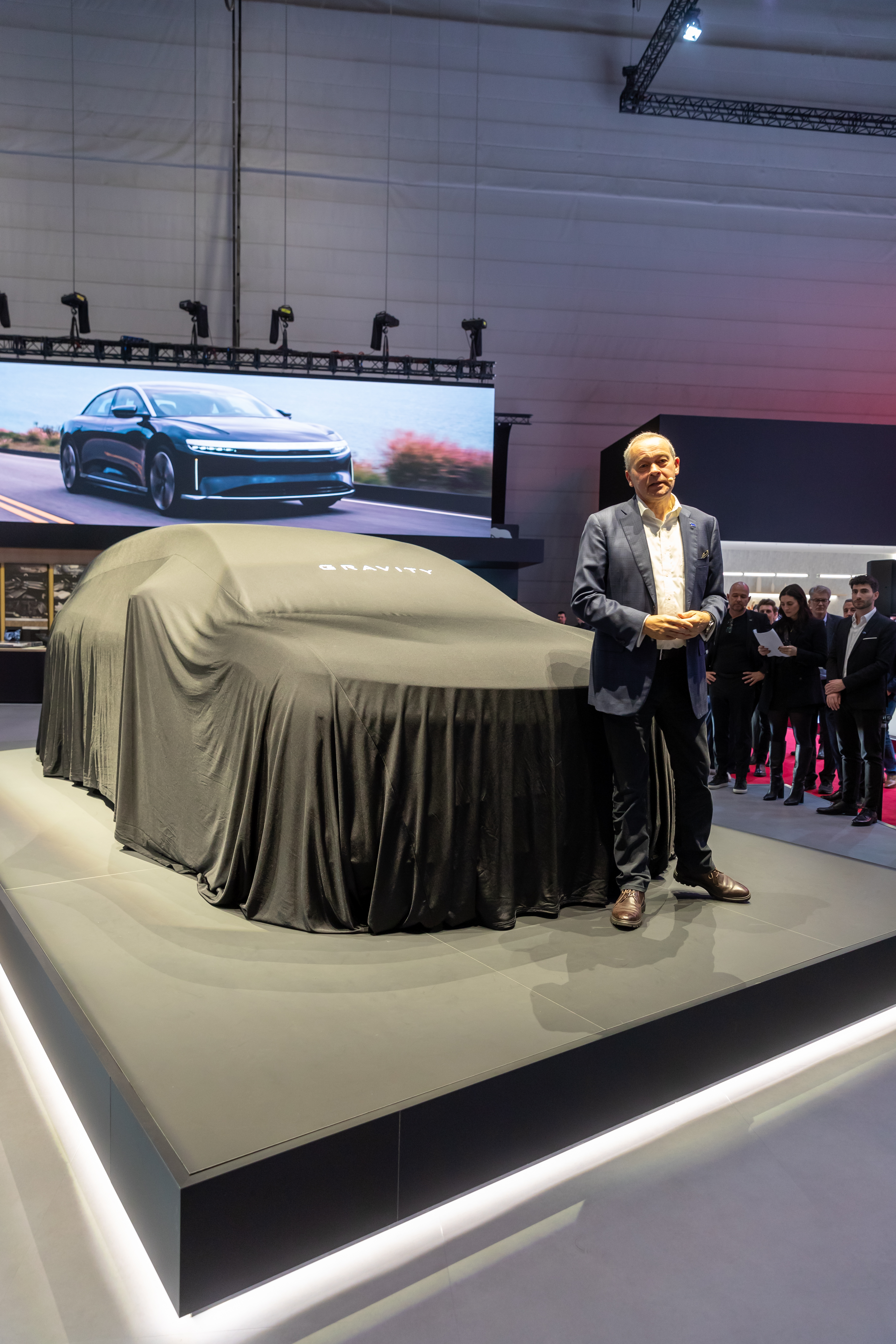
Lucid Gravity
"But like, if you look at this photo of the Lucid, the Gravity's interior, ... if you look at the digital gauge cluster, this angle is an artificially low angle. In real life, the entire wheel will be below the gauge."
The Lucid Gravity is an electric SUV. Here, the host is talking about how the digital dashboard screen is laid out next to the steering wheel, and how the wheel could cover part of the display. They’re basically saying the design choice looks bad because the covered area doesn’t show useful information anyway.
The Lucid Gravity is Lucid’s large electric SUV, and this segment focuses on its interior design—specifically the digital gauge cluster layout relative to the steering wheel. The host argues the screen is positioned so that the wheel visually interferes with the lower portion of the display, even though that lower area appears to be intentionally blank during driving.
digital gauge cluster
"if you look at the digital gauge cluster, this angle is an artificially low angle. In real life, the entire wheel will be below the gauge. ... The bottom half of the gauge pod, the gauge screen. Yeah. You know, when you're when you're driving is empty."
A digital gauge cluster is the screen behind the steering wheel that shows things like speed and warnings. The host is pointing out that, in this car, part of that screen seems poorly positioned relative to the steering wheel.
A digital gauge cluster is the driver’s instrument panel shown on screens instead of traditional analog dials. In this segment, the host is evaluating how the cluster’s screen placement interacts with the steering wheel and what information is (or isn’t) visible while driving.
yoke
"I mean, I would say that more people, I'd hope, would not hire that babysitter. But obviously there's a lot of car companies that have some sort of yoke thing. People in the comments said that the Ford Expedition and Navigator has the same steering wheel..."
A yoke is a steering wheel shape that doesn’t have a full round wheel—more like a split frame. The idea is to give the driver a clearer view of the dashboard, but the host thinks some implementations can create new problems.
A steering yoke is a steering-wheel design where the rim is split or absent, forming a “U” or “Y” shape that leaves more space for the driver’s view of the instrument cluster. The host connects this to other automakers’ “yoke” steering choices and suggests suppliers may have compromised packaging or ergonomics.

Ford Expedition
"I mean, I would say that more people, I'd hope, would not hire that babysitter. But obviously there's a lot of car companies that have some sort of yoke thing. People in the comments said that the Ford Expedition and Navigator has the same steering wheel..."
The Ford Expedition is a large Ford SUV. Here it’s brought up because people in the comments think it uses a similar steering-wheel design to the one being criticized.
The Ford Expedition is a full-size SUV, and in this segment it’s mentioned as an example of another vehicle that allegedly uses a similar steering-wheel “yoke” design. The host says they haven’t driven it, but claims viewers think it shares the same steering-wheel supplier or layout.

Audi S4
"I tell it all the time. I impulse sold a fabulous car. My Audi S4 at the first sight of a Hummer H1."
The Audi S4 is a sportier Audi A4. Here, the host is saying they sold their S4 because they got distracted by another car they saw.
The Audi S4 is a performance-oriented version of the Audi A4, known for its stronger engine tune and sportier driving feel. In this segment, it’s used as an example of how a specific design detail influenced the host’s buying decision.

Hummer H1
"I impulse sold a fabulous car. My Audi S4 at the first sight of a Hummer H1. I love the car, but it had the stupid four spoke steering wheel."
The Hummer H1 is a big, tough SUV with a military look. The host says seeing one made them change what they drove.
The Hummer H1 is a large, military-inspired off-road SUV famous for its rugged design and distinctive, utilitarian styling. In this segment, it’s mentioned as the car the host wanted after seeing it, which led to selling the Audi S4.
four spoke steering wheel
"I love the car, but it had the stupid four spoke steering wheel. Steering wheels are important."
That just means the steering wheel has four spokes instead of three. The host is saying the wheel design bothered them enough that it affected whether they wanted to keep the car.
A four-spoke steering wheel refers to the wheel’s spoke layout, which can affect how the driver’s hands and sightlines interact with the dashboard and controls. Here it’s treated as a personal preference that influenced whether the host kept the Hummer H1.
three spoke steering wheel
"I love the car, but it had the stupid four spoke steering wheel. Steering wheels are important. I need, if I had the three spoke steering wheel, I'd probably still be driving that car today."
That’s a steering wheel design with three spokes. The host is saying they like that look/feel more than the four-spoke version.
A three-spoke steering wheel is a common steering wheel design where the wheel has three main spokes. In this segment it’s mentioned as the layout the host prefers, implying it would have made them more likely to keep driving the car.
Mac tools
"Guys, support is coming in today from Mac tools. You've seen that Mac tools truck at shops before or rolling around your town."
Mac Tools makes tools that mechanics use. This part is a sponsor message about a business that sells those tools directly to shops.
Mac Tools is an automotive tool brand known for hand tools and shop equipment sold to technicians and mechanics. The host uses it to introduce a sponsorship about a Mac Tools franchisee running a mobile tool route.
touch screens
"the computer the response from the [1684.8s] touch screens is good yep I only had okay I had I had a couple of hiccups"
They’re talking about the main screens in the car you tap to control things. The host says the screens respond quickly, which makes the car easier to use. They also mention some small software glitches, but not with the keyless system.
Touch screens here refer to the vehicle’s primary infotainment/control interface. The host says the “computer” and “response from the touch screens is good,” but they had minor software hiccups. This matters because modern EVs and tech-heavy cars often route many functions through the UI, so software responsiveness affects day-to-day usability.
proximity key
"the proximity key I had no [1704.7s] issues at all yeah proximity key issue seems to be fixed"
A proximity key is the key fob that talks to the car when it’s close by. If it works right, you can unlock and start the car without pressing buttons or using a physical key. They’re saying their keyless system worked fine, unlike some camera behavior.
A proximity key is a keyless-entry system where the car detects the key fob nearby and unlocks/starts without you inserting the key. The host says they had “no issues at all” with the proximity key, contrasting it with camera-related glitches. It’s a common modern convenience feature, but it can be a failure point if sensors or software behave oddly.
360 camera
"and the cameras come on the 360 camera whatnot or the rear cameras at what speed does it turn off"
A 360 camera shows a stitched view around the car, usually to help you park and maneuver. The host is talking about when it turns on and off while driving. They’re saying the behavior can be adjusted, and some cars may have timing quirks.
A 360 camera system uses multiple cameras around the car to generate a top-down or wide-angle view, helping with low-speed maneuvering. The host discusses how the cameras should come on in reverse and how they turn off above a certain speed, and notes they can adjust the threshold. This is a software-and-sensor feature where timing glitches can be noticeable.
blind spot cameras
"I didn't have the camera problem and I the side the blind spot cameras were really helpful for me right now [1766.7s] because I can't turn very quickly"
Blind-spot cameras help you see cars in your blind spots. Instead of relying only on mirrors, the car can show what’s next to you on a screen. The host likes them because they make lane changes easier when turning your head is difficult.
Blind-spot cameras are driver-assist displays that use cameras (instead of or alongside mirrors) to show areas alongside the vehicle that are hard to see. The host says they were “really helpful” because they “can't turn very quickly,” implying the cameras reduce the need for frequent head turns. It’s a practical accessibility benefit, not just a convenience feature.
greenhouse
"but the glass roof gets hot like real real hot and I don't think wherever they have the [1784.3s] sensor in the cabin that determines what your automatic climate control is does not accurately [1792.0s] reflect the temperature that the driver feels"
They mean the glass roof acts like a greenhouse, trapping heat from the sun. So the air near your head can get hotter than the car’s temperature sensor expects. That can make the climate control feel like it’s not quite keeping up.
In this context, “greenhouse” describes solar heat buildup through glass—especially with a glass roof—raising cabin temperatures near the headliner. The host explains that the top of the cabin gets much hotter than the sensor location (they mention a sensor near the knee), so the climate system can under-correct. It’s a real-world effect that can make automatic temperature regulation feel inconsistent.
automatic climate control
"and I don't think wherever they have the [1784.3s] sensor in the cabin that determines what your automatic climate control is does not accurately [1792.0s] reflect the temperature that the driver feels"
Automatic climate control is the system that tries to keep the cabin at the temperature you set. It uses sensors to decide how much heating or cooling to run. The host thinks the sensor is in the wrong spot, so it doesn’t account for how hot the roof area gets.
Automatic climate control uses sensors and software to maintain a set cabin temperature by adjusting heating, cooling, and airflow. The host argues the temperature sensor location doesn’t match what the driver feels—so the system may think the cabin is cooler/warmer than it actually is near the head. This is why the glass roof can create a “greenhouse” effect that makes the top of the cabin hotter.

Tesla Model X
"...ore yeah basically I mean I like the you know the Model X did it first where the windshield goes up and it'..."
The Tesla Model X is an electric SUV. The podcast is talking about a unique design feature where the doors open in a special way. It’s being mentioned because it’s one of the Model X’s most recognizable traits.
The Tesla Model X is an all-electric SUV known for its distinctive design features and premium interior. The podcast mentions the Model X as being the first to do a “windshield goes up” style feature, which refers to its signature door design. It’s discussed because those unique design elements make it stand out among electric SUVs.
air suspension
"it what it's not as refined as my Tycon with [1929.0s] air suspension in the city yeah it kind of not porpoises like it's a heavy car"
Air suspension is a suspension system that uses air bags instead of metal springs. It can help the car stay smoother over bumps and can adjust how high or low the car sits.
Air suspension uses air-filled springs (instead of steel coils) to adjust ride height and damping characteristics. It can make a heavy vehicle feel more composed over small bumps by keeping the suspension geometry and ride height more consistent.
porpoises
"it kind of not porpoises like it's a heavy car yeah so it needs [1937.4s] a lot of spring and whatnot"
Porpoising is when a car bounces up and down like a wave, especially over rough road. The host is using it to describe how the suspension behaves over bumps.
“Porpoising” is a ride-motion where the car repeatedly pitches up and down, usually over uneven pavement or at certain speeds. The host is saying the reviewed car doesn’t do that as much as the comparison vehicle, which is a clue about how well the suspension controls pitch and rebound.
expansion joints
"I think it doesn't do the 405 great the the expansion joints and concrete and it doesn't do the hard edges in"
Expansion joints are the seams you see in concrete roads and bridges. When you drive over them, they can feel like a bump, and the suspension has to handle that impact smoothly.
Expansion joints are gaps in concrete or bridge surfaces designed to allow the pavement to expand and contract with temperature. They can create sharp, repeated impacts that reveal how well a suspension and tire setup absorb harsh edges.
magnetic shock
"the precision control of a magnetic shock right ... it just wasn't as good as bad but but but it lacks either the ultra luxury of an air suspension yeah or the you know the precision control of a magnetic shock"
A “magnetic shock” is a shock absorber that can change how stiff it feels using magnets. That helps the car feel smoother over bumps but still controlled when driving hard.
“Magnetic shock” refers to a magnetorheological (or magnetically controlled) shock absorber system where the damping can change quickly. The idea is to keep the ride composed over bumps while still allowing firmer control when you want it.
adjustable height
"especially when you hit that you know change the height like it has to have adjustable height somehow so air suspensions the cheapest way to do that"
“Adjustable height” means the suspension can raise or lower the car. Raising helps with rough roads, and lowering can make it easier to get in and can improve driving feel.
“Adjustable height” in this context means the air suspension can raise or lower the vehicle. That can improve ground clearance for rough roads and improve aerodynamics or entry/exit comfort when lowered.
torque vectoring
"I was expecting something just like a little cushier but it yeah I think it's got this the really cool torque vectoring in order to do that"
Torque vectoring is when the car can send different amounts of power to different wheels. That can help the car turn more accurately and feel more “on rails” in corners.
Torque vectoring is a drivetrain control strategy that varies how much torque each wheel receives to help the car rotate and follow the driver’s intended path. In practice, it can make cornering feel more precise and reduce understeer or oversteer depending on the setup.
radar cruise controls
"it's yeah the radar cruise controls awesome sorry that's you know like I thought the tech worked great"
Radar cruise control uses sensors to help the car keep a safe distance from the vehicle in front. It can automatically adjust speed instead of you doing it manually.
“Radar cruise controls” use radar sensors to maintain a set speed and distance from the car ahead. Compared with basic cruise control, it can automatically slow down and speed back up to keep spacing.

Porsche Taycan
"oh the only other complaint was that the dash the wraparound dash which is very much like the Porsche Taycans it had this like rainbow shimmer"
The Porsche Taycan is an electric Porsche. The hosts mention it because the dashboard design they’re seeing in this SUV looks similar, and it creates a noticeable colorful glare as you move your head.
The Porsche Taycan is Porsche’s electric performance sedan, and the hosts reference it to describe a design/trim detail on the Lucid’s dash. They’re specifically pointing out a wraparound dashboard surface that can show a shifting “rainbow” shimmer depending on head position and lighting.

R1S
"I think it rides much better than r1 s than an s yeah not than a t probably not than a t the t is [2172.7s] really good yeah huh all right well um it's it it's a really nice thing"
R1S is Rivian’s electric SUV. They’re saying the Porsche feels better over bumps than the R1S they drove.
R1S is Rivian’s three-row electric SUV, and it’s referenced here as the baseline for ride comfort. The host says the Porsche rides much better than the R1S, implying differences in suspension tuning and how the vehicle absorbs bumps.
battery
"like it's it is really it was really efficient [2219.1s] like it I drove it a good amount um and it did not uh significantly uh go through the battery it was [2228.6s] really nice"
They’re talking about the car’s electric battery—the big one that powers the motor. They’re saying the car seemed to use it efficiently, and the range estimate made it feel like you could drive comfortably without running out.
Here, “battery” refers to the high-voltage traction battery in an electric vehicle. The host talks about how efficiently the car uses it—specifically noting that driving didn’t noticeably drain the battery and that the displayed range estimate (“390 to empty”) felt reassuring.
390 to empty
"you know when you drive something that says you know [2240.7s] 390 to empty you're like wow that's that's that does feel nice it feels nice to be able to sure"
“390 to empty” is a range estimate shown by the vehicle’s battery management system, telling you how far you can drive before the battery is depleted (under current conditions). The host uses it as a real-world emotional/decision cue—feeling good because the number stays high while driving.
lemon laing
"um I think they've just had a lot of headaches and a lot of they have a [2264.3s] lot of uphill battles you know with their various lemonings and yeah very public lemon laing but [2269.5s] this one did work properly for the most part which was which was good"
A “lemon” is a car that has serious problems and keeps needing fixes. The host is saying Lucid has had a lot of public reports about cars that didn’t work right.
“Lemon” (as in “lemoning”) is a consumer term for a vehicle that repeatedly has defects and doesn’t get fixed. The host implies Lucid has had a lot of publicly reported quality issues, even though this particular car largely worked as expected.
super sedan
"again like they've got [2288.8s] when we drove the early ones it was like I think I was paying more attention to dynamic [2293.3s] performance because that's what they were kind of selling us like super sedan and they did that"
“Super sedan” is a marketing term for a luxury car that tries to feel sporty and fast, not just comfortable. The host says the car was sold as a performance-focused sedan, and that influenced what they noticed while driving.
“Super sedan” is a marketing-style label for a high-performance luxury sedan that aims to combine comfort with sports-car-like dynamics. The host contrasts that pitch with what they personally felt during the drive, saying they were paying more attention to “dynamic performance” than the ride comfort they expected from air suspension.
express lane
"um oh lucid though you're gonna get a bill for the express lane because it put me on to like hov express stuff"
An express lane is a special highway lane that’s usually meant to move faster than the regular lanes. It often has rules about who can use it, and the host says the car’s guidance sent them into it.
An express lane is a dedicated lane on a highway that typically has special rules (often for carpools or certain vehicle types) and is meant to keep traffic moving faster than general lanes. The host jokes that Lucid’s navigation/route guidance pushed them into that lane.
HOV
"because it put me on to like hov express stuff and I didn't have oh the native gps did and I didn't have it selected"
HOV means “high-occupancy vehicle.” It’s a lane that usually requires more than one person in the car to use it, and the host says the navigation assumed they qualified.
HOV stands for “High-Occupancy Vehicle.” It refers to lanes where you typically need multiple people in the car (or sometimes specific vehicle types) to use the faster lane. The host implies the navigation routed them based on HOV/express-lane rules.
native gps
"oh the native gps did and I didn't have it selected I didn't say select for this um and so I just followed what it was saying"
“Native GPS” means the navigation that’s built into the car. The host is saying they didn’t choose that option, but the car still seemed to use it for routing.
“Native GPS” here means the car’s built-in navigation system rather than a phone-based or aftermarket navigation app. The host says they didn’t have it selected, and that the guidance still behaved as if certain routing assumptions were enabled.
Vespa Nuevo
"did you see in the asset drop I gave you my Vespa Nuevo has landed did you see it there it is"
Vespa Nuevo is a Vespa-branded scooter model, and the host is treating it like a “color reveal” moment rather than a car review. The discussion centers on the scooter’s paint/color options and how the finish looks in person.
matte
"they have the matte green and the and the matte blue yeah well I go up there they go the green and the blue are at"
Matte means the paint looks more flat and non-glossy, with less shine. The host is comparing matte colors to a shiny blue one.
Matte refers to a paint/finish that doesn’t reflect light like glossy paint, giving a flatter, non-shiny look. The host contrasts matte green and matte blue with the shiny electric-blue option they end up seeing.
electric blue
"it's like this is a shiny blue electric code yeah blue sky blue yeah great yeah it's awesome electric blue with black accents"
“Electric blue” is just a vivid, bright blue color. The host is saying the scooter they saw is painted that bright blue with darker black details.
“Electric blue” is a color description used for a high-saturation, vivid blue finish. In this segment it’s tied to the Vespa Nuevo’s specific paint look, including the contrast with black accents.
fake carbon fiber
"with black accents and the the center thing in the front of the fender is uh fake carbon fiber"
“Fake carbon fiber” is a look-alike trim that’s meant to resemble real carbon fiber. It gives the same style, but it’s usually cheaper and not the real lightweight material.
“Fake carbon fiber” means a decorative trim or panel made to look like carbon fiber, usually using a printed film or molded composite that mimics the carbon weave pattern. It’s often used to achieve the visual style without the cost and weight of real carbon fiber parts.
odometer
"that's it I send the wire I own it it's uh it's mine fantastic brand new three miles on the odometer [2515.4s] you've been scooter free now for a few months and I miss I must we must have scooter right"
The odometer is the number of miles (or kilometers) the car has driven. “Three miles” means it’s basically brand new.
An odometer measures how far a vehicle has been driven, typically shown as total miles or kilometers. The host says the car is “brand new” with “three miles on the odometer,” meaning it has barely been used.
keyless start
"[2600.2s] it's fully keyless all like all the goodies I'm very excited they don't really have [2618.7s] other than the colors they don't really do uh have options though they have aftermarket exhaust"
Keyless start means you can start the car without putting a key in the ignition. You typically just have the key fob with you and press a button.
Keyless start is a convenience feature where you can start the vehicle without inserting a traditional key into the ignition. The host emphasizes that the car is “fully keyless” and includes the usual convenience features that come with that system.
aftermarket exhaust
"[2618.7s] other than the colors they don't really do uh have options though they have aftermarket exhaust"
Aftermarket exhaust means the exhaust system isn’t the factory one. People usually change it for a different sound (and sometimes for small performance gains).
Aftermarket exhaust refers to an exhaust system made by a company other than the vehicle’s original manufacturer. In this segment, the host notes that while the car doesn’t offer many options beyond color, it does have an aftermarket exhaust, which can change sound and sometimes performance.
paint to sample
"and he told me they will fully do paint to sample wow so it's it's like 2000 to 4000 depending on how crazy you want to go"
Paint to sample means you can choose a custom color and the painter matches it. It can cost more if you want a special, complex finish.
Paint to sample is a custom paint process where the customer provides a color reference and the shop matches it. The host uses it to explain why the car’s color can vary widely and cost more depending on how complex the finish is.
SP40 Restomod Roadster
"so uh should we talk about this thing yeah I spent the morning in the sp 40 uh Resto Mod Roadster and calling they call it a Resto Mod honestly because... this is neither restored nor modified this is a whole new thing yeah yeah no this is an entirely new car"
They’re talking about the SP40 Restomod Roadster, which is a brand-new car designed to look and feel like a classic-style hot rod. Instead of just fixing an old car or tweaking one, it uses modern parts and a lightweight structure to make it drive like a newer machine.
The Lucid Gravity is a different car, but this segment focuses on the SP40 Restomod Roadster, which the hosts describe as an entirely new build rather than a traditional restoration or modification. It’s built around a tube space frame with a carbon body and modern drivetrain components, aiming to feel like a classic-inspired roadster while using contemporary tech.
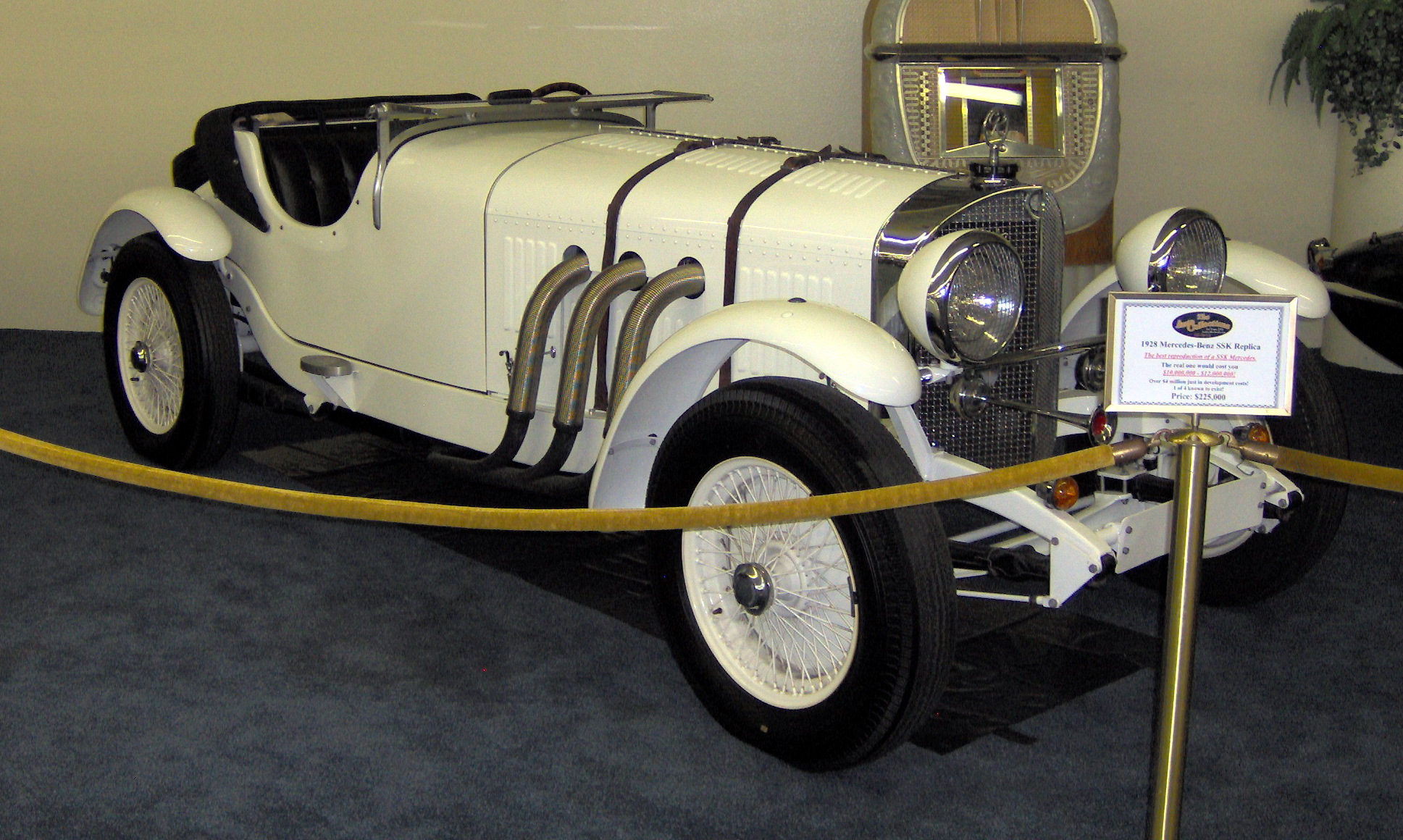
Mercedes-Benz SSK
"...stuff like alpha eight C's and they do a Mercedes SSK and they did one of the original they're a replic..."
The Mercedes-Benz SSK is an old, high-performance Mercedes from the early days of racing. The podcast is talking about it as an important original model that collectors care about. It’s mentioned because it’s historically significant and rare.
The Mercedes-Benz SSK is a vintage performance car associated with Mercedes-Benz’s racing-era history. The podcast references “original” examples and mentions it alongside other classic performance names, suggesting it’s being discussed as a collectible, historically important machine. It’s relevant because the SSK is part of the brand’s legacy of high-performance engineering.
tube space frame
"yeah yeah no this is an entirely new car so it's a it's a tube space frame it's a carbon body"
A tube space frame is the car’s skeleton, made from metal tubes welded into a rigid structure. It’s used to make the car strong and light without needing a heavy body.
A tube space frame is a lightweight chassis made from welded tubes arranged in a rigid 3D structure. It’s commonly used in custom and track-focused cars because it can be strong while keeping weight down.
carbon body
"so it's a it's a tube space frame it's a carbon body it's an independent rear suspension"
A carbon body means the outer panels are made from carbon fiber, which is very light and stiff. That can help the car feel more responsive and keep overall weight down.
A carbon body refers to body panels made from carbon fiber composites, chosen for high stiffness and low weight. In cars like this, it helps reduce mass and can improve how the car responds to steering and bumps.
independent rear suspension
"it's a carbon body it's an independent rear suspension it's a it's a coyote engine a Ford coyote engine"
Independent rear suspension means the two rear wheels don’t move as one unit. Each wheel can react to the road on its side, which helps grip and smoothness.
Independent rear suspension means each rear wheel can move up and down without directly forcing the other wheel to move. That usually improves ride comfort and traction because the tires can better follow the road surface.
Ford coyote engine
"it's a coyote engine a Ford coyote engine it's a a Tremac T5 gearbox"
The Ford Coyote engine is a modern Ford V8. People like it for custom cars because it’s powerful and there are lots of parts and tuning options available.
The Ford Coyote engine is Ford’s modern V8 family known for strong performance and a relatively compact, lightweight design. It’s a popular swap choice in custom builds because it makes good power and has an extensive aftermarket.
Tremac T5 gearbox
"a Ford coyote engine it's a a Tremac T5 gearbox and an independent rear suspension"
A Tremec T5 gearbox is the car’s manual transmission. It’s a performance-oriented gearbox that’s commonly used in custom builds where the driver wants a more engaging feel.
The Tremec T5 gearbox is a manual transmission used in some performance and custom applications. It’s notable because it’s designed to handle higher torque than many older-era gearboxes and is often chosen for driver-focused builds.
open wheel
"it is an open wheel I mean not technically open wheel it's because it's got wheel covers of sorts but it's a exposed wheel"
“Open wheel” usually means the tires and wheels are more visible and not fully hidden by the body. They’re saying this car is close to that look, even if it uses some wheel covers.
“Open wheel” describes cars where the wheels are exposed rather than fully covered by bodywork. The host debates the label because this car has wheel covers/fenders, but the wheels still sit outside the main body shape.

Plymouth Prowler
"...'s not technically open wheel but like a Plymouth prowler or a hot rod the wheels are outside the body of t..."
The Plymouth Prowler is a unique hot-rod style car. The podcast is pointing out that its wheels are positioned outside the body, which gives it a special look. It’s mentioned because it’s visually different from normal cars.
The Plymouth Prowler is a distinctive American hot rod-style car known for its retro, low-slung look and unusual proportions. The podcast compares it to “open wheel” style cars and mentions the wheels sitting outside the body, which is a defining visual trait. It’s discussed because it’s a one-of-a-kind design that stands out in a crowd.
monoposto
"like an early Grand Prix um and saw these sort of monoposto type uh pre-war European sports racing [2817.2s] cars and they didn't have anything like that back in America he came back to America and had"
“Monoposto” means a race car built for one driver. The host is using it to describe those early European cars that were more stripped-down and driver-focused.
Monoposto is an Italian term meaning a single-seat race car layout. The host uses it to describe pre-war European sports racing cars that were more like focused, driver-only machines than typical multi-seat road cars.
five-speed
"let's go through those first like so like I think dopeness a plus [2902.9s] um wait let's back up we'll back we'll back up does it work uh for the most part yes uh you [2910.4s] know it's a pretty straightforward powertrain it's a five-speed uh Tremac it has pretty nice long gears"
A five-speed means the car has five forward gears. The host is saying this particular car doesn’t really need a sixth gear because the engine already has plenty of pull, and the layout is tighter inside.
A five-speed gearbox is a manual transmission with five forward gears, and it changes how the engine’s power is matched to road speed. The host argues the car’s narrow cockpit packaging makes a five-speed practical, and that the power/torque is strong enough that a sixth gear isn’t necessary.
power and torque
"but it has so much power and torque you genuinely would not need a sixth gear the reason it has [2922.3s] five gears is because the the whole car is rather narrow as is the cockpit a five-speed"
Torque is the engine’s “twisting grunt,” and power is how strongly it can keep pulling as speeds rise. The host is saying this car has enough of both that you don’t need as many gears.
Torque is the twisting force the engine produces, while power is how quickly that work is delivered at higher engine speeds. The host uses both to justify why the car can get by with fewer gears—because the engine’s torque/power delivery is strong enough that you don’t need extra ratios.

3 Morgan Threewheeler
"and it wasn't really necessary and actually I having now driven it I completely agree with their decision five is more than enough um you know and uh so it you know how morgan three-wheeler like the one with the motorcycle engine not the super three like the older one"
A three-wheeler is a vehicle that has only three wheels instead of four. The podcast is talking about a Morgan-style one and saying it works because you don’t always need extra wheels for the experience. It’s mentioned because it’s an unusual design that changes how the vehicle feels to drive.
The podcast references a “Morgan three-wheeler,” which is a small, open-air style vehicle built with three wheels instead of four. The discussion says it wasn’t necessary to have more wheels and that “five is more than enough,” which frames the three-wheeler as a deliberate design choice for simplicity and feel. It’s discussed because three-wheel vehicles are unusual and create a different driving experience.

Morgan three-wheeler
"um you know and uh so it you know how morgan three-wheeler [2952.0s] like the one with the motorcycle engine not the super three like the older one"
The Morgan three-wheeler is a quirky Morgan car with three wheels instead of four. The host is using it as a reference for how the car’s layout and driving feel compare.
The Morgan three-wheeler is a distinctive Morgan brand vehicle known for its single front wheel layout and motorcycle-derived packaging. The host brings it up as a comparison point for how the driving experience and layout relate to the engine/transmission setup.

Ford Mustang
"...u know you turn it on it starts up it's a fucking Mustang engine no problem you drive it around it's it's u..."
The Ford Mustang is a sporty car made by Ford. People like it because it’s fun to drive and it has a recognizable engine sound and feel. In the podcast, it’s being used as an example of a car that just works when you start and drive it.
The Ford Mustang is a long-running American sports coupe/pony car known for its performance and iconic styling. The podcast mentions starting it up and driving it like a “Mustang engine,” which highlights the car’s straightforward, enthusiast-friendly nature. It’s frequently discussed because it’s both a cultural icon and a practical way to get into performance driving.
floor hinged pedal
"because I can't you can't straighten them out the pedals are floor hinged all right like race car style pedals in my opinion if they had a top hinged pedal like a normal car"
This is a pedal setup where the pedal pivots from the floor. It’s common in race cars, and it can make your legs feel cramped because your feet can’t tuck and stretch the same way as in a normal car.
A floor-hinged pedal pivots at the floor, so the pedal swings in an arc that’s common on race cars. Because the pivot point is low, it can limit how far you can stretch your legs and where your feet can sit while cruising.
top hinged pedal
"style pedals in my opinion if they had a top hinged pedal like a normal car not like a race car it would a be probably more period correct and period looking"
A top-hinged pedal pivots from above (near the firewall or pedal box), which is typical of most production cars. Compared with floor-hinged pedals, it often gives more room for foot placement and leg stretching.
electric power steering
"they're like race car pedals basically you know powers electric power steering it's not the most communicative as you can imagine the steering shaft is quite long"
Electric power steering uses a motor to help you steer, instead of fluid pressure. Some people feel it doesn’t “talk back” as much as older hydraulic steering, depending on how it’s set up.
Electric power steering (EPS) uses an electric motor to help turn the wheels instead of relying on hydraulic pressure from the engine. It can feel less “communicative” than hydraulic systems, depending on the tuning, but it’s efficient and can be packaged easily.
steering shaft is quite long
"powers electric power steering it's not the most communicative as you can imagine the steering shaft is quite long but it's it's direct"
The steering shaft is the rod that connects the steering wheel to the steering mechanism. If it’s long, the steering can feel a bit less immediate or less “connected” when you turn the wheel.
A long steering shaft increases the mechanical distance between the steering input and the steering rack, which can affect how direct the steering feels. In some cars, it can also contribute to a less immediate, less “connected” sensation.
replica cobra
"they're like race car pedals basically you know powers electric power steering it's not the most communicative as you can imagine the steering shaft is quite long but it's it's direct and and this is a car that is what I would call a it's like a cruiser plus like I pretty much would put it in the same category of driving as I put in a in a replica cobra"
A replica Cobra is a car made to look like the famous old Shelby Cobra. People usually drive them for fun on roads, not as hard-core track cars.
A replica Cobra is a car built to resemble the classic Shelby Cobra, typically using modern components or a mix of parts to make it drivable. The key idea is that it’s often enjoyed like a “spirited road” car rather than something pushed to the limit on a track.
ride over handling
"they made it handle as good as something that's shaped like this will handle pretty much I mean maybe if McLaren tried it or something but but they they did put ride over handling but the handling is still good enough you can hustle it through a canyon"
This phrase means the car was tuned to feel smoother and more comfortable first. It can still handle well, but it may not be as sharp or as grippy as a car tuned purely for track-style driving.
“Ride over handling” means the suspension and chassis tuning prioritizes comfort and compliance over maximum grip and sharp steering response. You can still hustle it through twisty roads, but the car may not feel as precise or confidence-inspiring at the limit.
Canaan
"but if we were taking it in the angeles forest with the open sweepers it would be the absolute greatest like I drove it up Canaan and across Ensignal and then back across Mulholland"
This is a specific road/area the host drove on to show how the car feels in real conditions. They’re using it as an example of the kind of smooth, curvy roads where the car works well.
Canaan (as referenced here) is a local road/area the host drove through, used as a real-world example of the kind of open, sweeping roads where the car’s ride and handling balance matters. It’s part of the “Malibu” road network the host is describing.
Mulholland
"like I drove it up Canaan and across Ensignal and then back across Mulholland and so those roads it's a little inside baseball folks sorry but those are the more open sweeper roads of Malibu"
Mulholland is a famous curvy road route in the Malibu area. The host is using it to explain how the car feels on long, flowing turns—where both comfort and handling matter.
Mulholland is referenced as part of the host’s Malibu-area route, known for long, sweeping curves. It’s a common “real-world test” road for how a car balances ride comfort with the ability to stay composed through bends.
Ensignal
"like I drove it up Canaan and across Ensignal and then back across Mulholland and so those roads it's a little inside baseball folks sorry but those are the more open sweeper roads of Malibu"
This is another road the host mentions from their drive route. They’re using these names to describe the kind of curvy roads where the car’s driving feel shows up.
Ensignal is named as one of the roads the host drove on, illustrating a route with open sweepers (long, flowing turns). The point is to show how the car behaves on real twisty-road geometry, not just in theory.
feed throttle in
"and sort of you know setting it you know you break it set it and then sort of feed throttle in as you sort of bobsled through these corners it's a fucking good time you know you're leaning"
“Feed throttle in” means you add gas smoothly while you’re turning, not all at once. That helps the tires keep grip and keeps the car from getting unsettled.
“Feed throttle in” describes gradually increasing accelerator input as you transition through a corner, rather than snapping to full throttle. The goal is to keep the car balanced and traction-friendly while it loads up the tires mid-corner.
SEMA special ring
"they make the steering wheel they make all the they only use the only button behind the shifter they have one of the SEMA special ring it's a ring it's the light you hate and I said I had to explain to them listen you want 500 for this car you need to get"
SEMA is a big auto show focused on aftermarket and custom parts. The host is talking about a custom ring-shaped light/trim feature around the controls that they don’t like.
SEMA is the Specialty Equipment Market Association, known for aftermarket and specialty automotive products. A “SEMA special ring” here refers to a custom, show-car-style lighting/trim feature around the controls (the host says it’s a ring light they “hate”).

Ford Gt
"...u need to get rid of that and I said the Ford the Ford GT red start button the Ferrari you know big red sta..."
The Ford GT is a very high-performance supercar from Ford. It’s built to be fast and special, not like a normal daily driver. The podcast is mentioning it because it has standout features inside and out.
The Ford GT is a high-performance supercar built by Ford, designed for extreme speed and track-focused engineering. The podcast references it directly alongside other supercars and even mentions a “red start button,” which points to its distinctive cockpit details. It’s discussed because it’s a rare, enthusiast-grade machine rather than a mass-market car.
start button
"and I said the Ford the Ford GT red start button the Ferrari you know big red start button that's you know not that one but outside of that is the wood dash actual wood or is it"
A “start button” is the push-button you press to start the car instead of using a key. The host is comparing how different cars do that button and what it looks like.
A “start button” is the push-button ignition control used on many modern cars instead of a traditional key. The host compares different cars’ start-button designs (e.g., “big red start button”) to illustrate how the Lucid’s controls feel and look.
wood dash
"but outside of that is the wood dash actual wood or is it it is but it's not like structural no it's real wood okay it's real and I'm just looking at the picture so no it is it's real wood and you can choose your wood"
The “dash” is the dashboard. A “wood dash” means the dashboard trim is real wood, and the host says you can even choose the wood and leather/finish options.
A “dash” is the dashboard area in front of the driver, and “wood dash” means the dashboard uses real wood trim rather than plastic or synthetic materials. The host emphasizes it’s “real wood” and even customizable by the buyer.
bucket
"these seats I think are very cool they're these they're buckets that look like the kind of buckets you'd find in sort of an old Ferrari or an old Cobra but the backs hinge forward to like almost flat"
“Bucket” seats are the snug, supportive seats that wrap around you more than a normal seat. They help you stay in place when the car is turning hard.
“Bucket” seats are deep, contoured seats that hold the driver more firmly than a flat, wide seat. They’re common in performance cars because the shape improves lateral support during hard cornering.
full boat tail
"but the backs hinge forward to like almost flat and then the space behind them is the full boat tail is open so they make a set of luggage that Tetris is in there real nice"
A “boat tail” is a rear shape that tapers like the back of a boat to help the car cut through air. The host is saying that rear area is open and can be used for storage.
A “boat tail” is an aerodynamic rear body shape that tapers smoothly toward the back, reducing drag compared with a flat or abrupt rear end. The host says the space behind the bucket seats is open and that the “full boat tail” area can be used for luggage.
louvers
"so you know a couple things the side pipes not not such a bother but those um louvers the I guess they're not punched because it's carbon but they look like punched louvers on the side of the engine oh those vent heat from the engine that just goes directly into your face they are aimed"
Louvers are slatted vents that let air move through. The host is saying these vents near the engine blow hot air toward you, which can be annoying.
Louvers are slatted openings used for airflow management, often to vent heat from components. Here, the host says the side louvers near the engine are aimed so that vented heat goes directly toward the driver’s face.
rev past like three
"they said they were having an issue where it was uh [3374.0s] that like it doesn't have a lot of bad behaviors um they said they were having an issue where it was uh [3380.3s] it was uh it was not missing but like it was it was it didn't want to rev past like three [3386.0s] and they had to like look into what was happening I mean but it's it's a coyote engine like whatever's"
“Rev past” means the engine RPM—how fast the engine is spinning. They’re saying the engine wouldn’t go above a certain RPM, which usually means something in the engine control or fueling isn’t behaving right.
“Rev past” refers to engine RPM (revolutions per minute). The host is describing a drivability issue where the engine wouldn’t accelerate beyond a certain RPM threshold, which can point to fuel/ignition, throttle, or electronic control problems.
loaf
"you know at start at first I was like all right well I just keep the revs down and like you can loaf [3418.5s] this motherfucker around and it's still like pretty quick sure doesn't weigh anything and you know big [3423.8s] torque long gears like no problem whatever but after a while they're like okay just kick up the [3429.1s] revs and like it was fine"
Here “loaf” means you can drive gently without pushing the engine. The car can stay quick and smooth even if you keep the RPMs low.
In this context, “loaf” means the engine can run at low RPM without being stressed—essentially relaxed cruising. It’s a way of saying the car has enough torque and gearing to stay smooth and quick even when you’re not revving it hard.
long gears
"sure doesn't weigh anything and you know big [3423.8s] torque long gears like no problem whatever but after a while they're like okay just kick up the [3429.1s] revs and like it was fine"
“Long gears” means the transmission ratios are set so the engine spins slower at speed. That can feel smoother, but the engine needs enough pulling power to still accelerate without constantly downshifting.
“Long gears” means taller (less aggressive) gear ratios that keep engine RPM lower for a given speed. This can make cruising quieter and more relaxed, but it relies on sufficient torque to maintain acceleration without downshifting.
second prototype
"so um is this the first prototype or the first public this is the second [3435.8s] prototype okay the first one they said this is the first the first one had a bunch of different"
A prototype is an early version of a car used for testing. If it’s the second prototype, it usually means they’ve already tried the first one and are improving things.
A “prototype” is an early build used to test design and engineering before a final production version. Saying it’s the “second prototype” suggests the team has already learned from the first one and is iterating on issues like drivability and fit/finish.
clutch catch point
"and i didn't love the catch point of the clutch it was pretty high like the top two inches of a 10 inch throw is where it caught oh yeah it almost felt like there's a clutch slipping"
The clutch catch point is where the clutch starts to grab and move the car. If it happens near the top of the pedal, it can feel touchy and may seem like the clutch is slipping.
The clutch catch point is the specific pedal position where the clutch begins to fully engage and transfer torque to the transmission. If it’s high, the car can feel abrupt or like it’s slipping near the top of the pedal travel.
clutch slipping
"oh yeah it almost felt like there's a clutch slipping but the car only had a thousand miles on it so i doubt it was that"
Clutch slipping is when the clutch doesn’t fully engage, so the engine revs but the car doesn’t pull smoothly. It can feel like the car is struggling to grab and can also wear the clutch faster.
Clutch slipping is when the clutch doesn’t fully lock up, so engine torque isn’t transferred efficiently to the drivetrain. It can cause a rev flare, heat buildup, and a “not quite grabbing” feel, especially under load.

Morgan Plus Four
"as a as a five to seven and a half tenths cruise this was the fucking titties this thing i mean the morgan that we drove around was the plus four i think yeah that was so fun"
The Morgan Plus Four is a British sports car with a retro look. The hosts are talking about how fun it felt to drive and how the engine/character compares to the other car in the review.
The Morgan Plus Four is a classic-style British sports car known for its distinctive 1930s-inspired styling and modernized chassis. In this segment, the host discusses driving the Plus Four and notes it uses an inline-six layout in their earlier description, then corrects to the correct engine configuration for the newer car.
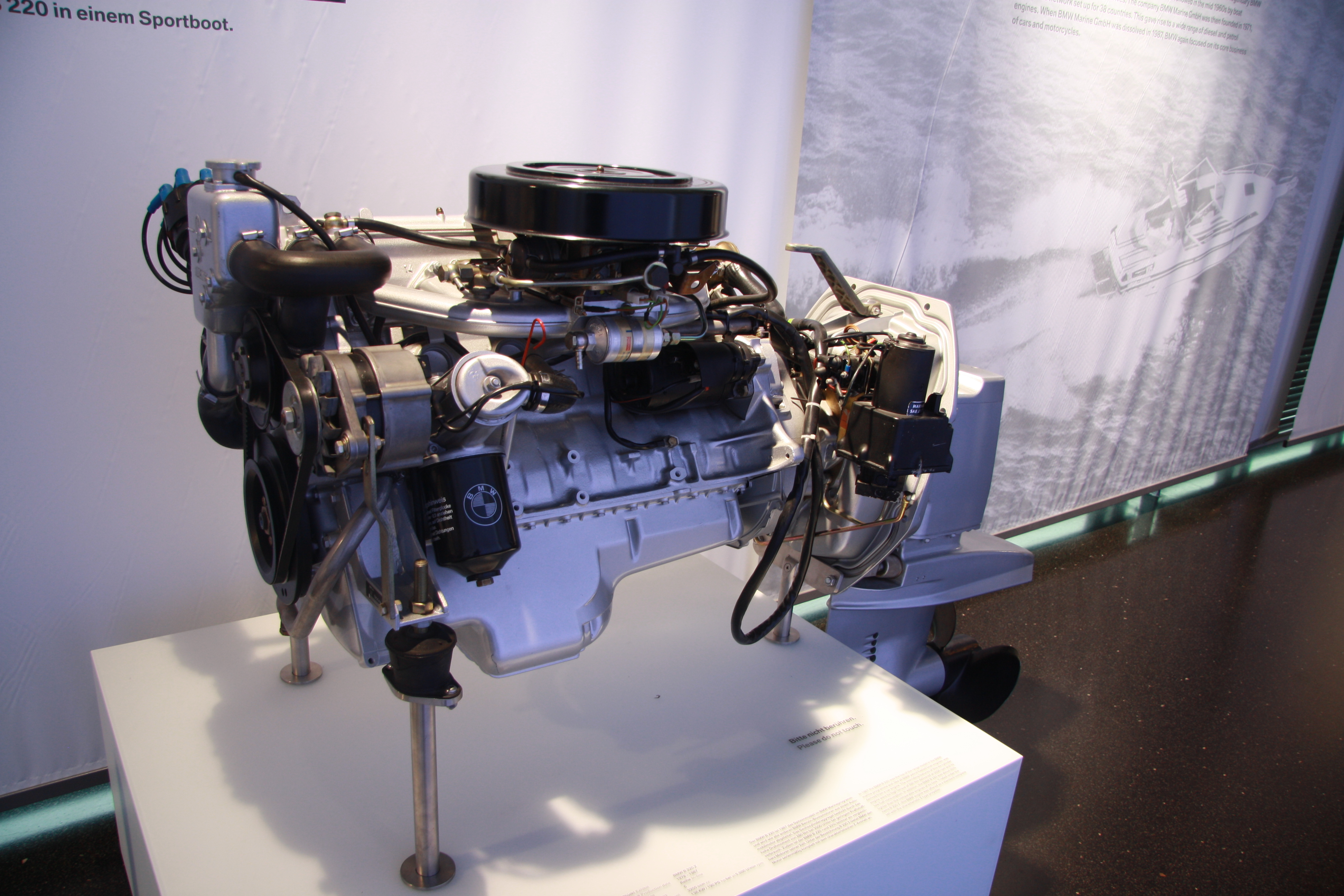
BMW engine
"and the engine was fine it was like an inline six i think bmw engine right um no the plus four was a four cylinder forward engine oh that's because of the four the new one is the bmw engine"
They’re saying the newer car uses an engine from BMW. They’re comparing it to the older Morgan they drove, mainly in terms of how the engine feels and how memorable it is.
The host attributes the newer Morgan’s engine to BMW, describing it as a BMW-sourced powerplant. They also contrast it with the earlier Plus Four they drove, emphasizing how the engine character differs between the two cars.
mid-engine
"we've evolved now to have mid-engine or you know the engines are closer to the middle like that's that's all changed and improved"
Mid-engine means the engine sits closer to the middle of the car, not all the way at the front. That usually helps the car feel more balanced and easier to steer.
A mid-engine layout places the engine near the center of the car, typically behind the driver and ahead of the rear axle. This helps balance weight distribution and can improve handling response. The host contrasts this with older layouts where the engine wasn’t as centrally placed.
self-centering
"for and for the record the steering isn't bad it's not like that totem thing where there was no self-centering it has an okay weight"
Self-centering is the steering wheel’s tendency to straighten itself after you turn. If it doesn’t self-center well, the car can feel a little “wandery” and you have to steer more to stay on line.
Self-centering is how a car’s steering naturally returns toward straight-ahead after you turn the wheel. It’s influenced by geometry (like caster) and tire behavior. When a car lacks self-centering, steering can feel vague or require constant correction.
steering axle
"given the shape of this thing where you're sitting just in front of the rear axle yeah the steering axle is in front of the radiator"
The steering axle is basically the front axle where the wheels turn left and right. Where it sits in the car changes how the steering feels from the driver’s seat.
The steering axle is the axle line where the front wheels are mounted and steered. Its position relative to the driver affects how far the steering linkage and wheel travel feel, and it influences steering geometry. In the segment, the host uses it to explain why the steering feels less “direct” given the seating and layout.
recreation
"you sure can't be right recreation you're right yeah got it um this company um among the other things they recreate did do an accurate recreation of the original one"
A recreation is a new build that tries to match an older car as closely as possible. The key idea is how faithful it is to the original, not just the looks.
Recreation refers to rebuilding or recreating a historical car as closely as possible to the original. In enthusiast circles, “accurate recreation” usually implies careful attention to dimensions, appearance, and sometimes engineering details. The host says a company did an accurate recreation of the original and then built an all-new version inspired by it.
blower Bentley
"and then 20 years later you go all right I want [3786.0s] something that still turns heads but it's a little like I've calmed down and matured and it's a [3790.7s] little classier and a little bit more subtle but then there's already sorry but there's also you [3795.9s] know them guys that take like you know their blower Bentley's and drive across you know a continent"
A “blower Bentley” is a Bentley that has a supercharger, which helps it make a lot of power. The host is using it as an example of the hardcore, old-school enthusiast style of driving.
“Blower Bentley” refers to a Bentley equipped with a supercharger (often a “blower” type), a setup associated with high-output, pre-war performance cars. The host uses it as a shorthand for an enthusiast’s hardcore, exposed, no-roof driving vibe—while contrasting it with the SP40 Restomod’s easier ownership.
ride height
"oh yeah it is similar but they've also [3862.1s] made it lower it's the top of the body is lower and the ride height is also lower it looks the [3868.4s] profile is awesome yeah it's bitchin it's super cool"
Ride height is how high the car sits off the ground. A lower ride height usually makes the car look sportier and can change how it handles.
Ride height is the distance between a car’s body and the ground, and it strongly affects stance, aerodynamics, and how the suspension behaves. The host notes the SP40-inspired car has a lower ride height, which is part of why its profile looks more aggressive and modern.
Radwood
"hypercar competitor or instead of grabbing more stuff from Radwood dude are in the fucking 964 back date right another one of those things they go"
Radwood is a car-collector vibe/event where people show off and trade interest in older, iconic cars. Here it’s used to contrast “new build inspired by the past” versus just grabbing from the classic-car world.
Radwood is a collector-focused event and culture centered on older “cool” cars, especially from the 1980s and 1990s. In this context, it’s being contrasted with building a new car based on older styling rather than just harvesting parts or attention from the classic scene.
canyons
"I go out and drive it like you know fairly aggressively on in the canyons and it's like not shitty like it's actually pretty nice"
“Canyons” means twisty mountain roads. People drive them to see how well a car handles in real conditions, not just on a straight test track.
“Canyons” refers to winding mountain roads that enthusiasts drive for spirited handling and scenery. It’s not a specific part or car system—here it’s shorthand for real-world road testing where traction, braking, and steering feel matter.
Woodward Dream Cruise
"august 13th in detroit woodward dream cruise smoking tire christian james hand [4121.7s] i finally we got the artwork back for the fucking poster and the event bright page"
Woodward Dream Cruise is a major car event in Detroit centered on classic and enthusiast vehicles. The hosts mention it while planning a live show tour date, tying the podcast to a specific automotive gathering.
car week
"so we'll have the tickets [4137.3s] dude come hang in detroit fuck car week this year [4137.3s] let's go to detroit yeah let's fucking party burnouts"
“Car week” just means a busy stretch of days packed with car events. The speaker is basically saying to come out for the Detroit events.
“Car week” is a shorthand for a multi-day automotive event season, where multiple shows and gatherings happen around the same time. Here it’s used in the context of Detroit’s event calendar.
burnouts
"let's go to detroit yeah let's fucking party burnouts [4142.6s] and we're working on a show that'll be in la area uh august 18th so pencil it in"
A burnout is when a driver spins the tires on purpose, usually to make them smoke and heat up. People do it at car meets as a showy performance move.
A burnout is a driving maneuver where the tires are made to spin rapidly while the vehicle is stationary or moving slowly, usually to heat the tires or show off. In car-culture contexts like this, it’s often shorthand for aggressive, performance-car behavior at events.

BMW 2002
"uh i know it's been many moons since your bmw 2002 review [4168.2s] has your opinion of the little classic changed um no i don't really like bmw 2002s i think a 325 is"
The BMW 2002 is an older BMW from the 1970s that’s famous for being a fun, sporty small car. People still talk about it because it’s rear-wheel drive and responds well to modifications.
The BMW 2002 is a classic compact “Neue Klasse”-era BMW known for its sporty, rear-wheel-drive handling and enthusiastic tuning culture. It’s especially associated with the early-1970s BMW 02-series, which became a gateway for enthusiasts into BMW’s driving feel.

e 30 to the 46
"it's not modern but i think can connect the dna very easily from the e 30 to the 46"
They’re comparing two BMW generations—E30 and E46—and saying the driving character feels related. It’s basically “same spirit,” just updated over time.
The BMW E30 and E46 are two generations of the 3 Series, and the speaker is arguing that you can “connect the DNA” between them. That means the driving feel and character carry over even though the cars are from different eras.

356
"you know it went it went up hills worse than like a 356 i've never driven a 356 a good 356 will fucking rip up a hill"
They’re comparing another car’s uphill performance to a Porsche 356. The idea is that a well-sorted 356 feels light and eager, so it climbs better.
The Porsche 356 is being used as a benchmark for hill-climbing ability, with the speaker saying a “good 356” will “rip up a hill.” That’s an enthusiast shorthand for the 356’s lightweight, nimble feel and strong real-world drivability.
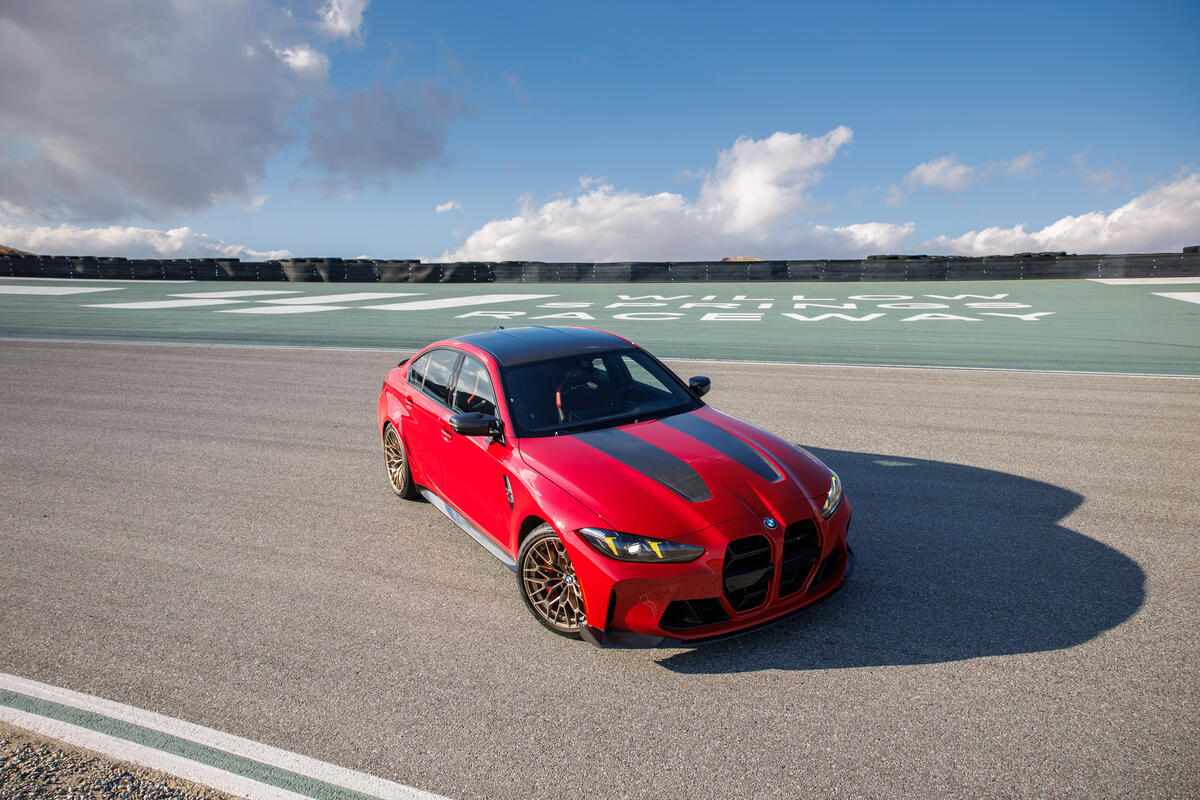
BMW M3
"and then i've driven alize like built i know that's a that's a e 30 m3 with a 2002 body on top so i'm just saying i've had the"
They mention an E30 M3 as a reference point, and they’re saying they’ve driven a car that combines an E30 M3 setup with a 2002 body. The point is that the driving character can be “connected” even with mixed parts.
The BMW E30 M3 is referenced as a known baseline, with the speaker saying they’ve driven something built with an E30 M3 underneath but using a 2002 body. That kind of swap is a restomod-style approach: mixing parts/character from different cars to get a specific feel.
wind buffeting
"are there features that you can't believe are not solved problems yet for me it's either wind buffeting or air suspension durability those are both pet peeves wind buffeting typically is related to a car being super aerodynamic which is usually done with the windows closed"
Wind buffeting is when air hits the car in a way that makes the cabin feel shaky or noisy, especially with the windows open. It’s basically an airflow problem, not a mechanical failure.
Wind buffeting is the annoying vibration or turbulence you feel when airflow interacts with a car’s body and mirrors—often most noticeable with windows open. The speaker links it to aerodynamics and points out that it’s usually “solved” only for the common case of windows up, not for open-window driving.
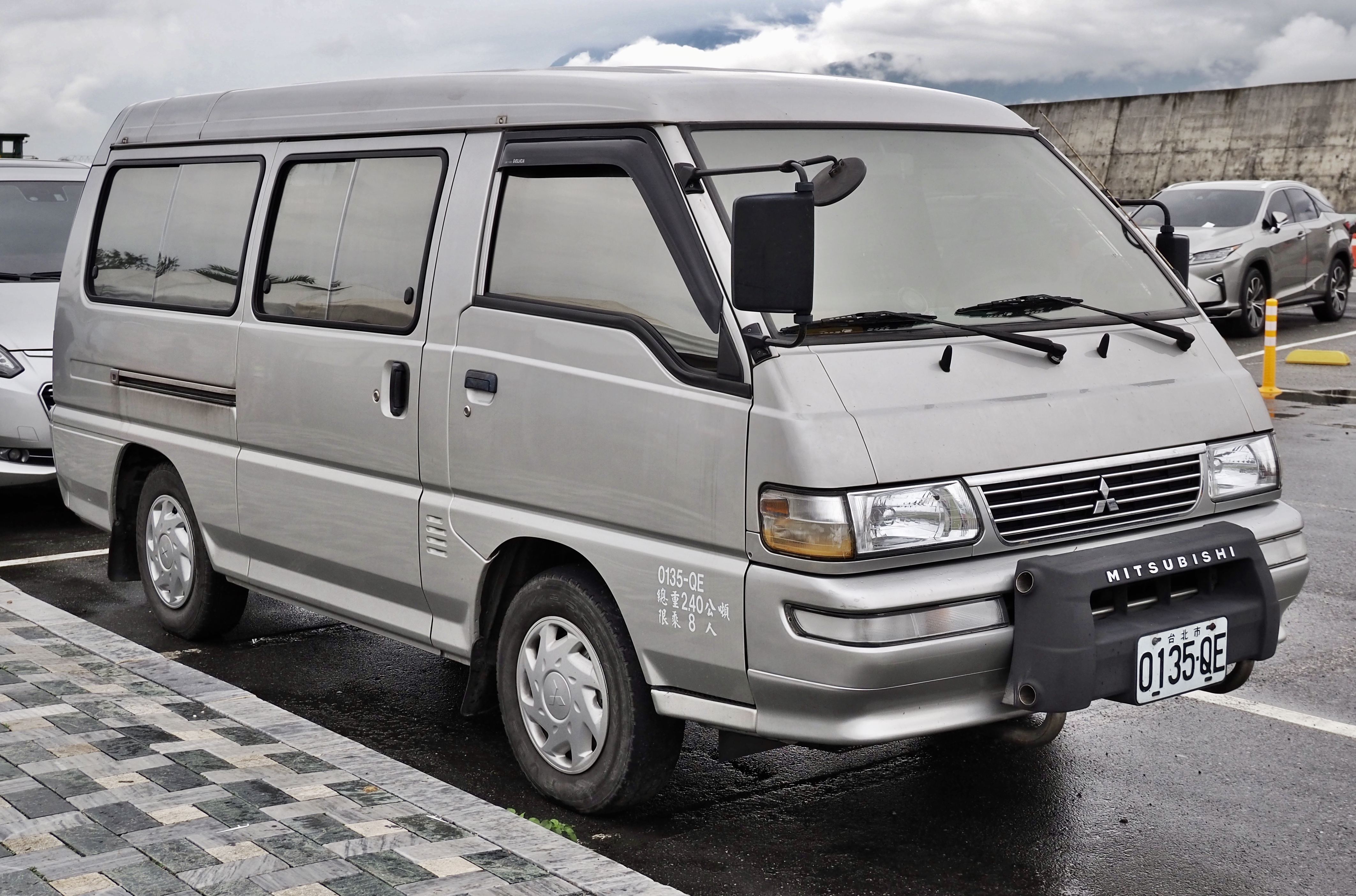
Mitsubishi Delica
"... bad too the best is like my my old shit dude the delica it's a brick no buffeting well because the wind i..."
The Mitsubishi Delica is a practical vehicle with a boxy shape. The podcast is saying that because it’s shaped like a “brick,” it doesn’t create as much wind noise while driving. That makes it feel calmer and more comfortable on the road.
The Mitsubishi Delica is a versatile Japanese vehicle often associated with people who want a practical, boxy platform for travel and everyday use. The podcast calls it “a brick” and mentions “no buffeting,” which points to how its shape can affect wind noise and comfort. It’s being discussed as a vehicle that feels stable and quiet compared to more aerodynamic designs.
o-rings
" [4382.4s] suspension that lasts forever i'm pretty sure pretty sure that there is preventative maintenance [4389.7s] you can do to an air suspension lotion it puts the lotion on it yeah put the lotion on its grommets [4398.6s] on its o-rings is that a triple chamber system"
O-rings are small rubber seals that help keep air or fluid from leaking. If they wear out in an air suspension system, the car can lose air and drop.
O-rings are rubber sealing rings used to prevent air (or fluid) from leaking out of joints and fittings. In an air suspension context, degraded or leaking O-rings can contribute to slow leaks that eventually cause the car to sit low or “slam.”
grommets
" [4389.7s] you can do to an air suspension lotion it puts the lotion on it yeah put the lotion on its grommets [4398.6s] on its o-rings is that a triple chamber system get in the room"
Grommets are little protective sleeves that help protect cables or hoses where they pass through parts of the car. In air suspension, they can help prevent damage that leads to leaks.
Grommets are protective rubber or plastic sleeves used where wires/lines pass through holes or brackets. In air suspension systems, grommets help protect lines and reduce wear that can lead to leaks.

Land Rover
" [4424.9s] is land rovers and mursadies on blown out air suspensions like that's this that is the full [4431.5s] on all over the place early 2003 to 2008 land rovers and mursadies on blown out air suspension"
They’re talking about Land Rover SUVs and how some of them can develop air suspension problems. When that happens, the car can end up sitting extremely low.
Land Rover vehicles are mentioned here in the context of air suspension failures that can leave cars “slammed” (sitting very low). The speaker specifically calls out early-2000s examples as being common in their area.

Mercedes-Benz
" [4424.9s] is land rovers and mursadies on blown out air suspensions like that's this that is the full [4431.5s] on all over the place early 2003 to 2008 land rovers and mursadies on blown out air suspension"
They mention Mercedes-Benz cars as another brand they see with air suspension problems. When the system fails, the car can drop and look like it’s sitting too low.
Mercedes-Benz is referenced alongside Land Rover as having a notable number of “blown out” air suspension cars in the speaker’s neighborhood. The segment suggests that air suspension failures are common enough in certain years to be a recognizable pattern.
airbag suspension
" [4445.7s] with them that's after markets years ago yeah but they have a blog that's like how do you maintain [4449.5s] airbag suspension and their thing is to clear out a tank that the condensation tank uh make sure [4455.9s] the lines are secure there's like a bunch of little things"
Airbag suspension is the same idea as air suspension: it uses air bags to support the car. The maintenance they mention is about keeping moisture and leaks from ruining the system.
Airbag suspension is another name for air suspension, where flexible air springs (often called air bags) carry the vehicle’s weight. The speaker references maintenance steps aimed at keeping the system dry and preventing failures.
condensation tank
" [4445.7s] with them that's after markets years ago yeah but they have a blog that's like how do you maintain [4449.5s] airbag suspension and their thing is to clear out a tank that the condensation tank uh make sure [4455.9s] the lines are secure there's like a bunch of little things"
The condensation tank is where moisture collects in an air suspension system. Keeping it cleared helps prevent water-related problems that can lead to leaks or failures.
An air-suspension condensation tank collects moisture from the air supply. Removing that water helps prevent corrosion and freezing, and it reduces the chance of air-system components failing early.

Audi e-tron GTS
" [4469.9s] are just slammed yeah uh my leaky valve gasket says uh i see tycons all over where i live and in a [4477.1s] desire to be different i'm looking at Audi e-tron gts which are much rarer for a reason [4483.7s] no kidding is the difference in uh overall experience that much better in the Porsche"
They’re looking at an Audi e-tron GTS. They’re choosing it because they think it’s rarer and they want something different from the cars they keep seeing with suspension issues.
The speaker is considering an Audi e-tron GTS as an alternative to other cars they see with problematic air suspension. The mention is tied to their desire to avoid the common failure pattern they’ve observed.

Audi e-tron GT
"they they just feel different ... when i bought the tycon ... if i really want to save money i'll get a fucking e-tron and ... go right past the Porsche dealer to the Audi dealer and get yourself a two-year-old e-tron GT with 20,000 miles on it for like 50 grand ... e-tron GTs are SEO death ... average e-tron GT price for 2023 is 37 to 56 thousand dollars ... if you can get a cpo ... four-year unlimited mile ... they're reading the list of recalls right now ... there are many there's 14 for that year"
The Audi e-tron GT is an all-electric Audi. The host is saying you can sometimes find one used with a warranty, and they’re also checking recalls before buying.
The Audi e-tron GT is a fully electric grand tourer, and the host discusses it as a value buy on the used market. They also mention CPO (certified pre-owned) and warranty coverage, plus recall volume, which are key ownership considerations for an EV.
recalls
"im reading their list i'm reading the list of recalls right now just to see if there's any there are many there's 14 for that year um that's okay"
Recalls are when a car maker has to fix a problem on cars that are already out there. The host is checking how many recalls a given model year has before deciding it’s a good buy.
Recalls are manufacturer actions to fix safety or compliance issues on vehicles already sold. The host is scanning the recall list for the e-tron GT model year and notes a relatively high count for that year, which affects buying confidence.
software
"i've probably had seven or eight for my car but they've all been software"
They’re saying a lot of the problems they’ve dealt with were software-related. That often means fixes can be done with updates rather than big mechanical repairs.
Here, “software” is being used to describe the nature of the issues behind the host’s recall experience—implying the fixes may be updates rather than major mechanical repairs. That distinction matters because software fixes can be faster and less expensive than hardware work.
retaining ring
"they just update a loose retaining ring may allow air to escape compromising vehicle handling and [4660.4s] increasing the risk of a crash so that's like an expensive problem your air suspension nice"
A retaining ring is a small mechanical fastener that holds a component in place. In suspension/air-spring contexts, a loose retaining ring can let air leak out, which changes suspension behavior and can affect handling.
quartz watches
"[4708.1s] of quartz watches or do you need to just wear them do you leave them with the crown pulled out [4713.6s] i don't i just leave them i don't have one quartz watch battery last three years"
Quartz watches are watches that use a battery and a tiny crystal to keep time. The question is whether you can stop the watch to help the battery last longer.
Quartz watches use a quartz crystal oscillator powered by a battery to keep time. The discussion is about how stopping the watch (e.g., pulling the crown) might extend the battery life.

Chevrolet C8
"...o uh nefarious shaboying boing will catalac use a c8 chassis to make a new super car prime time to bri..."
The Chevrolet Corvette is a high-performance sports car. The podcast is talking about a newer Corvette design where the engine sits more toward the middle of the car. That layout is important because it affects how the car handles.
The Chevrolet Corvette is a performance sports car from Chevrolet, built to deliver supercar-level speed and handling. The podcast references a “C8 chassis,” which is the generation that moved the Corvette’s layout to a mid-engine design. That’s significant because it changes how the car drives and is a major reason the Corvette gets so much attention.

Aston Martin Valhalla
"...treet but like it'll be a fucking it'll be like a valhalla it won't be this a c8 catalac it'll be it'll be a..."
The Aston Martin Valhalla is a supercar, meaning it’s built for very high performance. The podcast is using it as an example of a special, exotic car rather than a normal vehicle. It’s mentioned because it’s meant to feel and perform like a top-tier supercar.
The Aston Martin Valhalla is a modern supercar from Aston Martin, designed for high performance and advanced engineering. The podcast compares it to other supercars and mentions it as something that “won’t be this a c8 catalac,” implying it’s being used as a reference point for what a supercar should be like. It’s discussed because it’s an exotic, performance-focused car that stands out in the supercar category.
t tops
"the dope shit that catalac absolutely refuses to build [4896.6s] v6 ways till sunday are t tops not possible because of regulations or are they just out of style [4903.4s] i think that yeah cars are structurally better now and you don't need the t bar anymore"
T-tops are roof panels you can remove to make the car feel more open. They’re not a full convertible, because there’s still some roof structure left in the middle.
T-tops are removable roof panels (usually two) that let you open up the cabin while keeping a center roof structure. They’re a compromise between a full convertible and a fixed-roof car, and the host is debating whether regulations or design choices made them necessary or unnecessary.
t bar
"i think that yeah cars are structurally better now and you don't need the t bar anymore [4911.5s] oh i didn't think of that oh yeah i always thought it was just like a fun half measure"
On some T-top cars, the “T-bar” is the part of the roof that stays in place to help the car stay solid. The host is saying newer cars are strong enough that you might not need that extra support.
The “T-bar” refers to the center roof support structure used on some T-top designs to maintain body stiffness. The host’s point is that modern cars are structurally stronger, so you may not need that extra support to achieve acceptable rigidity.
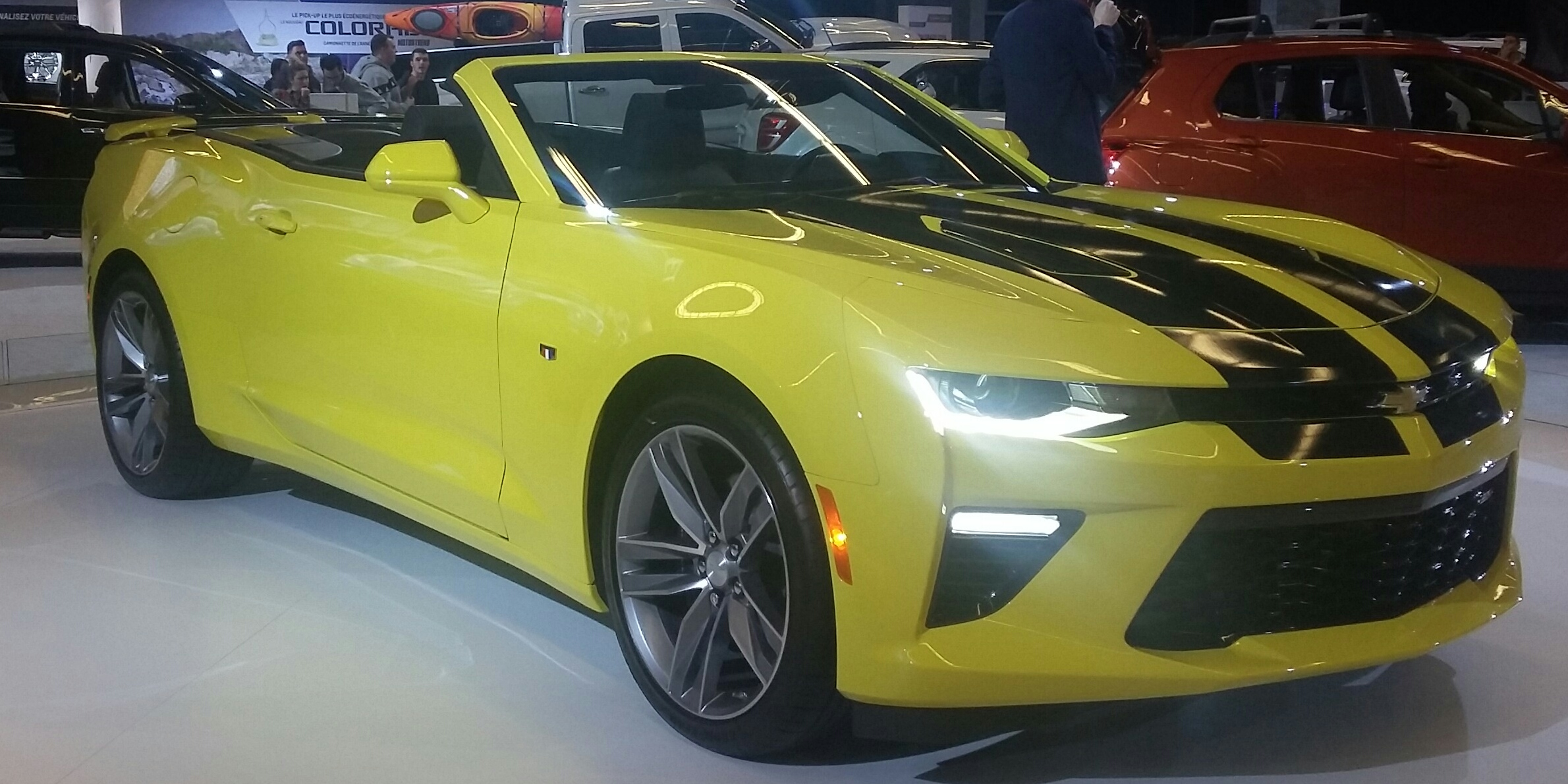
Chevrolet Camaro
"no them shits was mad flimsy so if they had made a camaro convertible back then [4923.3s] oh you wouldn't want to see that huh yeah i guess that was that was their way of getting as close"
The host is discussing the idea of a Camaro convertible in the context of older T-top/roof-structure compromises. The Camaro is a Chevrolet model line, and the point here is how different roof designs affect structural rigidity and engineering constraints.

Pontiac Firebird
"...ining the structure perhaps like you could take a firebird coop and just cut the t top and it's like a littl..."
The Pontiac Firebird is a classic American performance car. The podcast is talking about a version with T-tops, which are roof sections you can remove for open-air driving. It’s being mentioned because that style is a recognizable part of the car’s appeal.
The Pontiac Firebird is a classic American muscle car, known for its styling and performance heritage. The podcast references a “Firebird” with a T-top setup, describing a body style where the roof panels can be removed. That kind of detail matters because it’s part of what makes certain Firebird configurations desirable to collectors.

Dodge Charger
"...ed new batman right the one that spills on like a charger and i mean i got to do an article about it but it..."
The Dodge Charger is a performance-focused sedan. It’s known for a bold, aggressive look and strong engines. The podcast is mentioning it because it’s a recognizable car people talk about in other contexts too.
The Dodge Charger is a full-size performance sedan that’s known for its muscular styling and V8-era heritage. In the podcast, it’s referenced in a pop-culture way (“Batman” context) and as a car people might want to write about or discuss. That combination—recognizable looks plus performance—keeps it a frequent topic.

Buick Skylark
"...agining is there anything preventing a 1987 buick skylark from being turned into a v12 hypercar are we test..."
The Buick Skylark is an older American car model. In the podcast, they’re talking about a specific year (1987) and imagining turning it into a much more extreme, high-performance custom build. It’s being mentioned because classic cars can be modified in big ways.
The Buick Skylark is a classic American car line, and the podcast specifically mentions a 1987 Skylark. The conversation frames it as a potential base for an extreme project (“turned into a v12 hypercar”), which highlights how classic cars can be repurposed for custom builds. It’s discussed because the Skylark’s platform and age make it a common candidate for ambitious modifications.
restow modding
"when it comes to restow modding old shit is the wild ass west out there dude [5144.3s] yeah i don't that's a good question though because you know people can get"
Restomodding means taking an old car and updating it with modern parts or improvements. The host is saying it can get complicated because laws and paperwork rules aren’t consistent everywhere.
Restomodding (restomodding) is the practice of restoring an older car while modifying it with newer technology, parts, or performance upgrades. The host frames it as a “wild west” because rules, documentation, and emissions compliance can vary widely, especially for low-volume builds.

1971 volkswagen beetle
"so right now i own a 1971 volkswagen beetle do i good point yeah that's the better example"
A 1971 Volkswagen Beetle is a classic old VW that people often modify. The point here is that if the original car is basically gone, you can theoretically reuse parts of the body and build something totally different on it.
The Volkswagen Beetle is a classic air-cooled, rear-engine car with a simple, modular layout that makes it a popular base for restomods. In this segment, the host uses a 1971 Beetle as an example of how much of a car can be replaced or repurposed during a rebuild.

hennessey venom gt
"so right now i own a 1971 volkswagen beetle do i good point yeah that's the better example [5177.5s] what's left of that like fucking nothing nothing left of it so like what's preventing me from [5184.2s] integrating that floor pan into a v12 you know glue it to the bottom of a carbon tub right you know [5189.7s] funny um uh the the hennessey venom gt that's a 2005 lotus elise on paper right"
The Hennessey Venom GT is a very rare, extreme-performance supercar. The host brings it up to explain that some states are easier to register special cars in than others.
The Hennessey Venom GT is a high-end, low-volume hypercar known for extreme performance and limited production. Here it’s used to illustrate how some specialty cars can be registered even when they’re hard to certify in places with strict VIN verification and emissions rules.
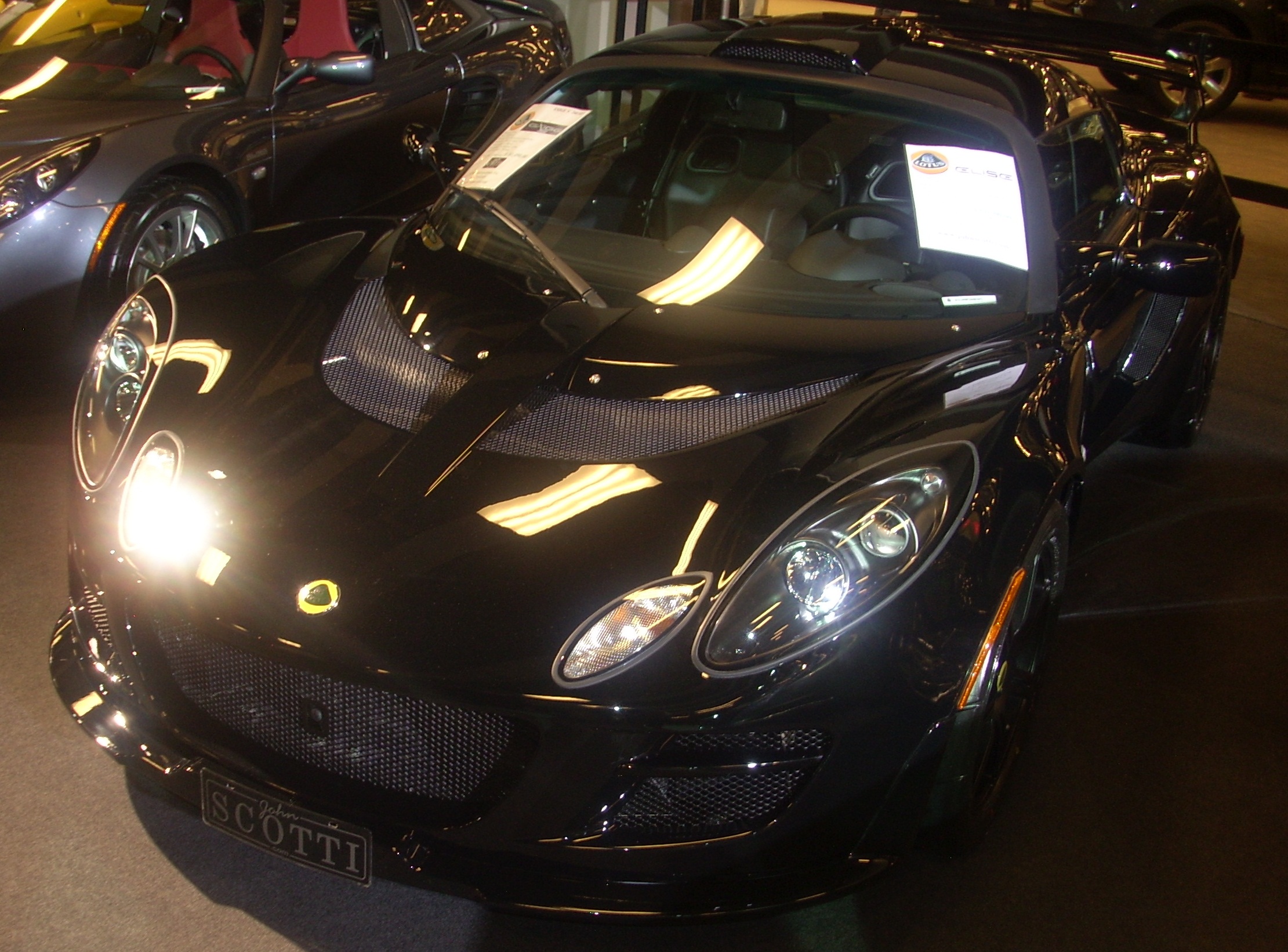
2005 lotus elise
"funny um uh the the hennessey venom gt that's a 2005 lotus elise on paper right you know like [5197.9s] you so it's it's if they're in look you can't let that you can't register in california"
The Lotus Elise is a small, lightweight sports car. The host is saying that some supercars can be built using an Elise as the starting point, at least in the way they’re documented for registration.
The Lotus Elise is a lightweight, mid-engine sports car that’s often used as a donor platform for kit cars and restomods. In this segment, the host claims the Hennessey Venom GT is “on paper” based on a 2005 Elise, highlighting how paperwork and donor-car identity can affect registration.
vin verification requirements
"you can't register in california [5204.5s] you know you can't register in a number of states that have vin verification requirements but like"
VIN verification is an official process to confirm a car’s identification number matches the documents. Some states are stricter than others, which affects whether a heavily modified or custom car can be registered.
VIN verification requirements are government checks that confirm a vehicle’s VIN (vehicle identification number) matches its paperwork and physical identity. The host contrasts strict states (like California) with others that may be easier to register specialty builds in, especially when the car’s origin is based on a donor title.
emissions
"like whatever [5239.3s] the fuck you want to build 20 psycho death mobiles that don't pass emissions like [5244.5s] i don't fucking care man"
Emissions refers to the pollutants a vehicle produces from its engine and exhaust, which are regulated by law. The host’s point is that some extreme, low-volume “hyper cars” may not pass emissions requirements, and he argues that shouldn’t be the main blocker compared with bigger societal issues.

Ford Bronco
"um 50 rare shades of gray [5251.9s] very good um ford recently released a luxury trim for the bronco inching ever closer to [5259.8s] putting a lincoln badge on it"
The Ford Bronco is an SUV known for off-road capability. The host is talking about Ford making it feel more upscale, like a luxury brand would.
The Ford Bronco is a modern off-road SUV that has expanded into more luxury-oriented trims over time. In this segment, the host jokes about Ford adding a luxury badge strategy (moving toward a Lincoln-like positioning) and compares it to Mercedes’ G-Wagon approach.

G-Class Gwagon
"putting a lincoln badge on it and giving the g-wagon a run for its money not if they put an oval [5265.2s] steering wheel in there"
The G-Wagon is a Mercedes-Benz luxury SUV that’s also built for serious off-road use. The host is saying other SUVs can try to compete, but it’s hard to match the G-Wagon’s overall package.
The Mercedes-Benz G-Wagon (G-Class) is a luxury off-road SUV famous for its boxy design and rugged, go-anywhere reputation. The host uses it as the benchmark that the Bronco would struggle to match, partly due to parts sharing and brand positioning.

Lincoln Navigator
"...ws what the fuck i'd like to try one of the i see navigators around and i think they're pretty good looking c..."
The Lincoln Navigator is a big luxury SUV. It’s made to be comfortable and spacious, especially for families or long trips. The podcast is mentioning it because someone thinks it looks good and wants to try one.
The Lincoln Navigator is a large luxury SUV designed to prioritize comfort, space, and a premium driving experience. The podcast mentions seeing Navigators around and finding them “pretty good looking,” which reflects the vehicle’s role as a style-forward, upscale family hauler. It’s discussed because it’s a recognizable flagship-type SUV in the luxury market.

Lincoln Corsair
"...stinct yeah the mid-sized suv looks good like the corsair or whatever that is that looks pretty good uh tap..."
The Lincoln Corsair is a mid-sized luxury SUV. It’s designed to be comfortable and stylish for everyday driving. The podcast is mentioning it because it looks good and fits the mid-size category.
The Lincoln Corsair is a mid-sized luxury SUV aimed at buyers who want a premium look and comfort without going full-size. The podcast describes it as a “mid-sized suv” that “looks good,” which aligns with how it’s often positioned—style and everyday usability. It’s mentioned as part of a quick comparison of attractive SUV options.
ADAS
"uh tap that european adas twice good very good uh you talk about not fitting well in certain cars if you were three inches shorter and had size 10 medium feet"
ADAS means driver-assist features that help you drive more safely, like keeping you in your lane or helping avoid crashes. They’re saying the way it’s implemented in some cars feels especially good.
ADAS stands for Advanced Driver-Assistance Systems—technology that helps with tasks like lane keeping, adaptive cruise control, and collision avoidance. In this segment, the hosts are praising how “European ADAS” fits well in certain cars, implying the integration and calibration feel better than alternatives.
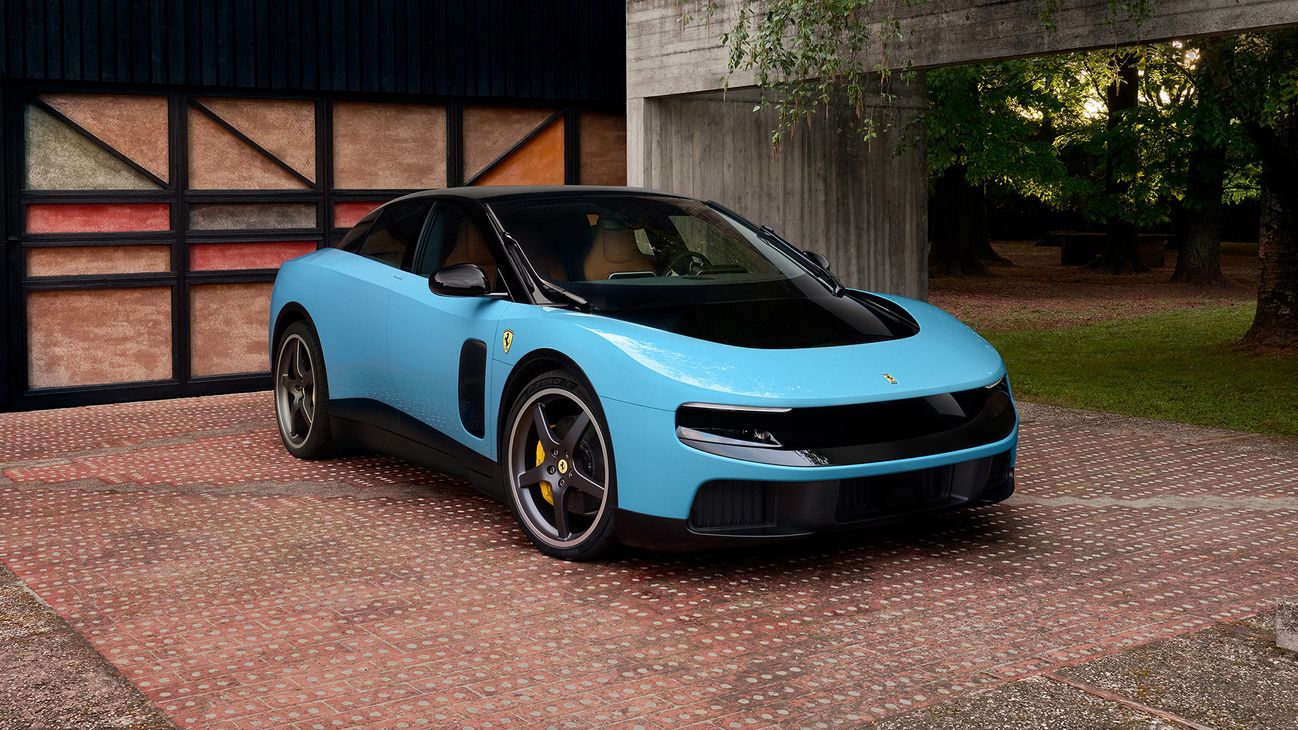
Ferrari Luce
"...errari models have been disappointing and now the luce takes it to the next level rumors of a manual ret..."
The Ferrari Luce is being talked about as a new or upcoming Ferrari model. The podcast mentions rumors about it possibly having a manual transmission. It’s brought up because people are hoping it will be more exciting to drive.
The Ferrari Luce is mentioned in the podcast as a rumored or upcoming Ferrari model, with talk of a manual transmission possibility. The context says Ferrari’s recent models have been “disappointing,” and that the Luce “takes it to the next level,” which frames it as a potential shift in what buyers want. It’s discussed because it’s tied to expectations about driving feel and transmission options.
gated manual
"rumors of a manual returning for a special model will it be a gated manual or some kind of digital model i heard they"
A gated manual is the classic kind of manual transmission where you move the shifter into specific gear slots. They’re wondering if the rumored car will use that traditional feel or something more digital/automated.
A gated manual is a traditional manual transmission where the shift lever moves through a mechanical “gate” pattern, giving a distinct, physical feel to each gear position. The hosts are discussing whether a rumored special model would use a true gated manual versus a different kind of automated or digital setup.
fake manual
"patron is asking is it going to be a real manual or is it going to be a fake manual like an econic seg that controls a different box that then shifts it's like this this transmission that's in the 12c right now it'll be a real man probably yeah probably real"
A “fake manual” is a car that sounds like it has a real stick shift, but the car actually does the shifting for you. People who like driving a manual feel cheated because you don’t really control the gears the same way.
A “fake manual” is when a car is marketed or described as having a manual transmission, but the shifting is actually automated (often via an automated manual or electronically controlled gearbox). Enthusiasts usually want a true driver-operated clutch-and-gearbox experience, so “fake manual” can be a credibility issue.

IS Lexs Is300
"um i'll tell you what uh lex's is 300 sport cross yeah wagon those are a treat"
This is a Lexus IS wagon version called the IS 300 SportCross. Wagons like this are uncommon in many places, so it’s the kind of car people get excited to spot on the road.
The Lexus IS 300 SportCross wagon is a rare, enthusiast-leaning variant of Lexus’s IS line, notable for combining a wagon body with a performance-oriented setup. The host mentions it as a “treat” to see in the wild, highlighting how uncommon it is compared with mainstream sedans and SUVs.

Acura RSX Type-S
"a clean rsx type s is a lovely thing to see i saw a clean tsx today on gold"
The Acura RSX Type-S is a sportier version of the RSX. When someone finds one that’s clean and well-kept, it’s a fun car to see because it’s popular with car fans.
The Acura RSX Type-S is a performance-focused version of the RSX, known for its driver-focused feel and strong enthusiast following. The host calls a clean example “lovely,” emphasizing how condition and originality matter for cars like this.

Dodge Omni
"...r clean you know fox body or or i rock or a dodge omni or like low riders in the wild low ride when you ..."
The Dodge Omni is an older compact car. The podcast is mentioning it as something you might see in the wild with a customized, low stance. It’s being brought up because it’s a recognizable car that people can modify.
The Dodge Omni is a compact car that’s often remembered for being a practical, affordable platform with a distinct look. In the podcast, it’s grouped with other “low ride” and “in the wild” examples, suggesting the Omni is being referenced as a car that can be customized or styled. That makes it relevant as part of a conversation about unique builds and recognizable older cars.
Mustang Fox Body
"...as cool uh i mean really any super clean you know fox body or or i rock or a dodge omni or like low riders i..."
The Mustang is a sporty Ford car. The podcast is talking about older Mustang versions that are kept in great condition and sometimes modified. It’s mentioned because many car enthusiasts love them and they’re easy to recognize.
The podcast mentions “Mustang” in the context of cool, clean older cars like “fox body” and other modified styles. That suggests the conversation is about the Mustang’s long-running popularity and how certain generations are especially common in enthusiast circles. It’s discussed because the Mustang has a huge aftermarket and a strong identity among car fans.

Acura TSX
"i saw a clean rsx type s is a lovely thing to see i saw a clean tsx today on gold which i thought was cool"
The Acura TSX is a regular Acura sedan model. The host is just saying it was in great condition, which makes it more exciting to spot.
The Acura TSX is a compact executive sedan from Acura, and the host specifically notes seeing a clean one. In enthusiast circles, a well-kept TSX is a sign the car has been maintained and is still presentable years later.
axial flux motors
"you've talked about how nobody wants to spend more than 150k for an e v with special advanced technology making more interested like axial flux motors solid state or lithium batteries 48 volt architecture etc"
Axial flux motors are an electric motor design where the magnetic flux travels parallel to the motor’s axis, rather than radially like many conventional designs. In EVs, they’re often discussed as a way to potentially improve packaging and efficiency, but the host argues shoppers care more about how the car drives than the motor type.
solid state
"making more interested like axial flux motors solid state or lithium batteries 48 volt architecture etc no these cars drive the same"
“Solid state” here means a battery design that uses a solid material inside instead of a liquid. It’s supposed to be safer and maybe store more energy, but it doesn’t automatically mean the car will drive differently.
“Solid state” in this context refers to solid-state batteries, which use a solid electrolyte instead of the liquid electrolyte found in most current lithium-ion batteries. They’re often marketed as potentially offering better energy density and safety, but the host’s point is that these tech claims don’t necessarily translate into a noticeably different driving feel.
e v
"you've talked about how nobody wants to spend more than 150k for an e v with special advanced technology making more interested"
An EV is an electric car that runs mainly on electricity from a battery you charge. The discussion here is about whether advanced battery/motor tech changes how the car feels to drive.
“EV” (electric vehicle) is a car powered primarily by an electric motor and charged from an external power source. In this segment, the host is discussing what technology shoppers pay attention to versus what actually changes the driving experience.
48 volt architecture
"nobody wants to spend more than 150k for an e v with special advanced technology making more interested like axial flux motors solid state or lithium batteries 48 volt architecture etc no these cars drive the same"
“48 volt architecture” just means the car uses a stronger electrical system than the usual 12-volt setup. It can help run more electrical features, but it doesn’t guarantee the car will feel dramatically different while you’re driving.
“48 volt architecture” refers to using a 48V electrical system in the vehicle instead of (or alongside) the traditional 12V system. Automakers use it to power higher-demand components more efficiently, which can enable features like stronger electric assist and more capable hybridization—but it doesn’t automatically make the car feel meaningfully different to drivers.

Chevrolet Volt
"...e that most shoppers don't care about yeah did 48 volt architecture help the cyber truck not in a way mo..."
The Chevrolet Volt is a plug-in hybrid car. You can drive it on electricity, and when the battery runs low it uses gasoline too. The podcast is referencing it while talking about how electric systems are designed.
The Chevrolet Volt is a plug-in hybrid that can run on electricity for a period and then switches to a gasoline engine as needed. The podcast mentions “48 volt architecture” in the context of whether it helped another vehicle, which suggests the Volt is part of a broader discussion about electrical system design. It’s relevant because the Volt is known for bridging electric driving with traditional fuel use.

Tesla Model S
"... led to tesla announcing the development of a new model s or x or three or y featuring 48 volt architecture..."
The Tesla Model S is an electric car with a battery instead of a gasoline engine. The podcast is talking about Tesla planning updates to the car’s electrical system using a 48-volt setup. That’s the kind of change that can help the car run more efficiently and handle power better.
The Tesla Model S is an all-electric luxury sedan that’s been a key platform for Tesla’s technology and engineering. The podcast mentions Tesla announcing development of a new Model S (or related lineup) featuring “48 volt architecture,” which points to changes in the car’s electrical system design. That kind of detail matters because it can affect efficiency, power delivery, and how the vehicle is built.
alpina
"christian says i know you don't like car themed watches but would you buy alpina wine yes i would alpina is the largest importer of wine in germany and i would"
Alpina is a German company best known for making special versions of BMW cars. Here it’s mentioned in a joke about wine, but it’s the same Alpina name people associate with cars.
Alpina is a German tuner/automaker known for modifying BMWs into higher-performance, more refined versions. In this segment, the host jokes about buying “Alpina wine,” but the name is still a recognizable brand identity tied to cars.

Toyota Corolla
"...ead of an entry price of 24 you know for a toyota corolla then people would go over there i think what peop..."
The Toyota Corolla is a small, everyday car. People often choose it because it’s usually affordable to buy and it’s meant to be dependable. The podcast is discussing it in terms of price and reliability for a new car.
The Toyota Corolla is a compact car known for being practical and widely available, often positioned as an entry-level choice. The podcast context mentions pricing and “reliable brand new” options, which is exactly how the Corolla is commonly discussed. It’s frequently brought up because it’s a mainstream benchmark for everyday ownership.

Honda Civic
"...know the the the 5000 dollar indestructible honda civic really doesn't like exist so much anymore you kno..."
The Honda Civic is a compact car that many people consider dependable. The podcast is saying that the older, very cheap “hard to break” Civics aren’t as common anymore. It’s a comment about how buying a reliable used car has changed.
The Honda Civic is a compact car that’s long been associated with strong reliability and low running costs. The podcast calls out an “indestructible” Civic idea and then notes that the specific $5,000 version “doesn’t really exist” anymore, which points to how the market has changed. That makes it a topic about what used to be easy to buy versus what’s available now.
brand disappear from north america in three to five years
"they are very funky yeah uh uli kunkles autobahn uh what car brands will [5858.9s] disappear from north america in three to five years predict deaths um"
The host is talking about which car brands might stop selling in North America soon. It’s basically a prediction about which brands could fade out over the next few years.
This is a market-forecast concept: predicting which automaker brands may exit or shrink significantly in a region over a short time window. The host frames it as “predict deaths,” tying it to sales momentum and product lineup limitations.

Chrysler Pacifica
"is alpha mayo still a brand in north america um good question let me look alpha [5876.9s] and is is christler i mean they have the the pacifica but i feel like the pacifica is going [5884.5s] to become either a dodged caravan or a ram of some kind"
The Chrysler Pacifica is a minivan. It’s the kind of family vehicle Chrysler sells most often, and the host mentions it as the main reason the brand still shows up in the market.
The Chrysler Pacifica is a minivan from Chrysler, known for being one of the brand’s main family-hauler products in North America. In this segment, it’s used as an example of the only meaningful model line keeping Chrysler “alive.”

Dodge Caravan
"to become either a dodged caravan or a ram of some kind because that's the only product they have [5892.8s] so like why keep christler going so according to good car bad car dot net Alfa Romeo usa sales"
The Dodge Caravan is a long-running minivan model associated with Dodge in North America. The host uses it as a comparison point for what might replace the Chrysler Pacifica if Chrysler’s minivan presence shrinks.

Dodge Ram
"...a is going to become either a dodged caravan or a ram of some kind because that's the only product they..."
The Dodge Ram is a pickup truck. It’s the kind of vehicle people use for hauling or for practical everyday driving with a truck bed. The podcast is mentioning it as a possible direction for a product lineup.
The Dodge Ram is a pickup truck line known for work-focused capability and a wide range of configurations. In the podcast, it’s mentioned as part of a product lineup that could become a “Ram of some kind,” indicating how the brand’s offerings are being discussed. Pickup trucks like the Ram often come up when talking about what’s available and how manufacturers evolve their model names.
franchise agreements
"what if it's because they have franchise agreements with christler stores and they have to [5956.7s] continue you know maybe those agreements run out in five years and they just they just drag this"
A franchise agreement is a contract between a brand and its dealerships. The host is saying those contracts might make it hard to close down a brand’s stores quickly, even if the brand isn’t selling much.
Franchise agreements are contracts that govern how dealerships operate under a brand’s name, including requirements to sell and service that brand’s vehicles. The host suggests these agreements could delay shutting down a brand’s retail presence even if the brand is losing market relevance.
SEMA buttons
"the very best ones make all their own switchgear ... cheesy ones use um what we talk about the SEMA buttons and and just off the shelf parts"
SEMA buttons are aftermarket switches you often see on modified cars. They can look a bit generic, so the host is saying premium builds usually use custom-looking, higher-quality controls.
“SEMA buttons” refers to the common aftermarket switchgear used in many modified cars shown at the SEMA show. They’re often recognizable as generic, which the host argues can make a high-end restomod feel less premium.
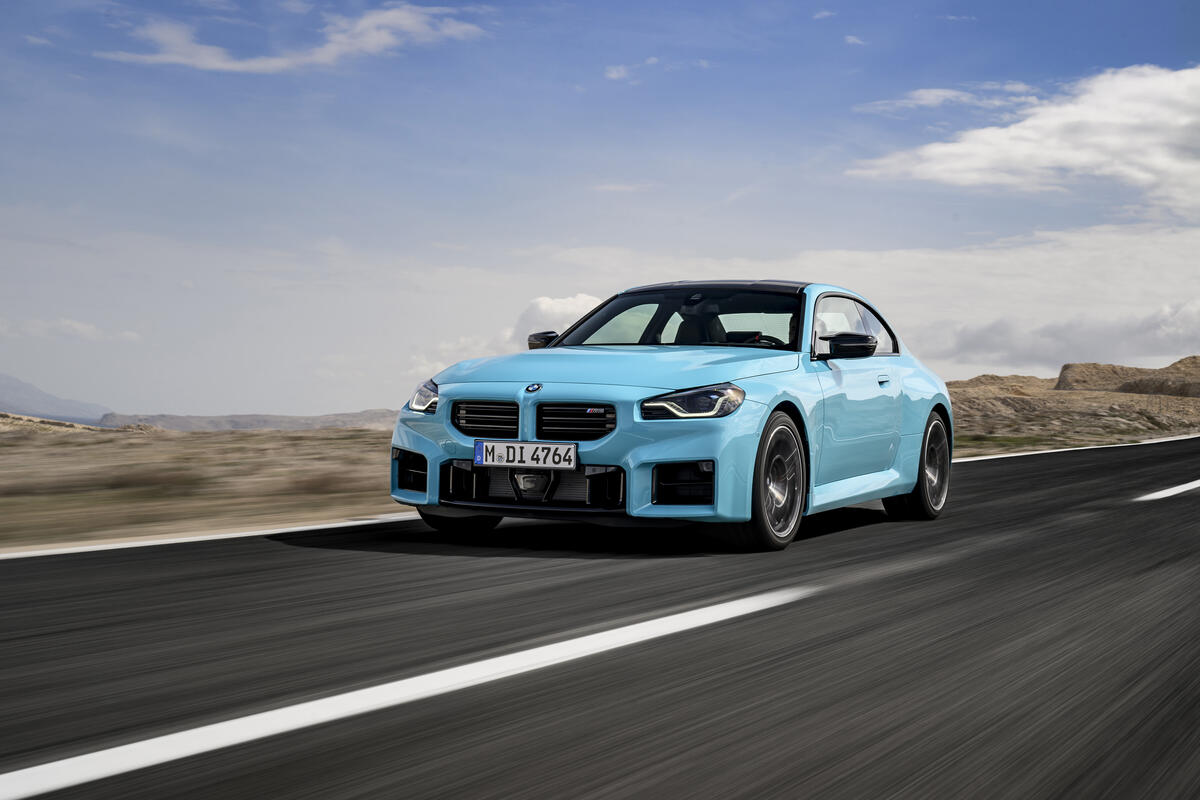
BMW M2
"have you driven anything quicker to rotate than the last generation m2 competition ... the current generation m2 is the most tail happy car i've ever driven"
The BMW M2 Competition is a small, sporty BMW built for fast driving. The host is saying the newer version is especially easy to get the car to rotate and feel playful at the limit.
The BMW M2 Competition is a compact performance coupe known for its quick steering response and track-ready balance. The host compares generations, saying the current M2 (not the CS) is the most “tail-happy” car he’s driven, highlighting how easily it can rotate and feel playful when pushed.
wheelbase
"basically anything the shorter the wheelbase usually the quicker to rotate with the right tire setup"
Wheelbase is how long the car is between the front and rear wheels. Shorter wheelbase usually helps the car turn in and rotate more quickly when you’re driving hard.
Wheelbase is the distance between the front and rear axles, and it strongly affects how quickly a car can rotate in a turn. The host’s point is that a shorter wheelbase generally makes the car feel quicker to rotate, especially when paired with the right tires.
rotating rolling diameter
"first thing is your your overall rotating rolling diameter has to be the same that otherwise your car's gonna be all fucked up"
Rolling diameter is basically the tire’s effective size when it’s rolling. If you put on wheels/tires with the wrong overall size, the car can act weird because it’s expecting a certain tire circumference.
Rolling diameter is the effective diameter of the tire/wheel as it rolls, and it needs to match closely when changing wheel and tire sizes. The host warns that if the overall rolling diameter is off, the car can behave “all fucked up,” because systems like speed calculation and drivetrain behavior depend on correct tire circumference.
offset
"…look at things like you said like rotating size important offset because you might think a wheel is cool but if the offset's wrong suddenly you're having rub when you you know hit a bump or it's gonna hit an inside suspension component…"
Offset is how “in” or “out” a wheel sits on the car. If it’s wrong, the tire can rub on suspension parts or the body when the suspension moves.
Wheel offset is how far the wheel’s mounting surface sits inboard or outboard relative to the wheel’s centerline. The wrong offset can cause clearance problems, like the tire rubbing the inside suspension parts or hitting the body when you hit bumps.
rotating size
"…look at things like you said like rotating size important offset because you might think a wheel is cool but if the offset's wrong suddenly you're having rub…"
They’re talking about wheel and tire size. If you go too big or the wrong width, the tire may not fit correctly and can rub when the suspension moves.
“Rotating size” here refers to wheel/tire sizing—diameter and width—so the tire’s contact patch and overall rolling diameter match what the car can safely clear. Changing size affects fitment and can also alter how the car behaves (and how the speedometer reads), but the key point in this segment is clearance and rubbing.
replicas
"…make sure it's from a company that is reputable like there are more stories of people buying replicas from like alibaba or timu the wheels break a lot…"
They mean copycat aftermarket wheels. The concern is that cheaper replicas may be weaker and you might not get good warranty help if something goes wrong.
In this context, “replicas” means aftermarket wheels made to look like popular OEM designs but not necessarily built to the same quality and safety standards. The host warns that replica wheels can fail more often and may not come with reliable warranty support.
HRE 521M
"…just make sure they're from a good company pull up at hre 521m it says like they're looking for let's see what those look like…"
HRE is a company that makes aftermarket wheels. The 521M is one specific wheel design they’re looking at to see if it fits and looks right.
HRE is a wheel brand known for premium aftermarket wheels, and the 521M is a specific wheel model/design. The host is evaluating whether the HRE 521M’s fitment and look make sense for different cars, emphasizing proper sizing/offset.
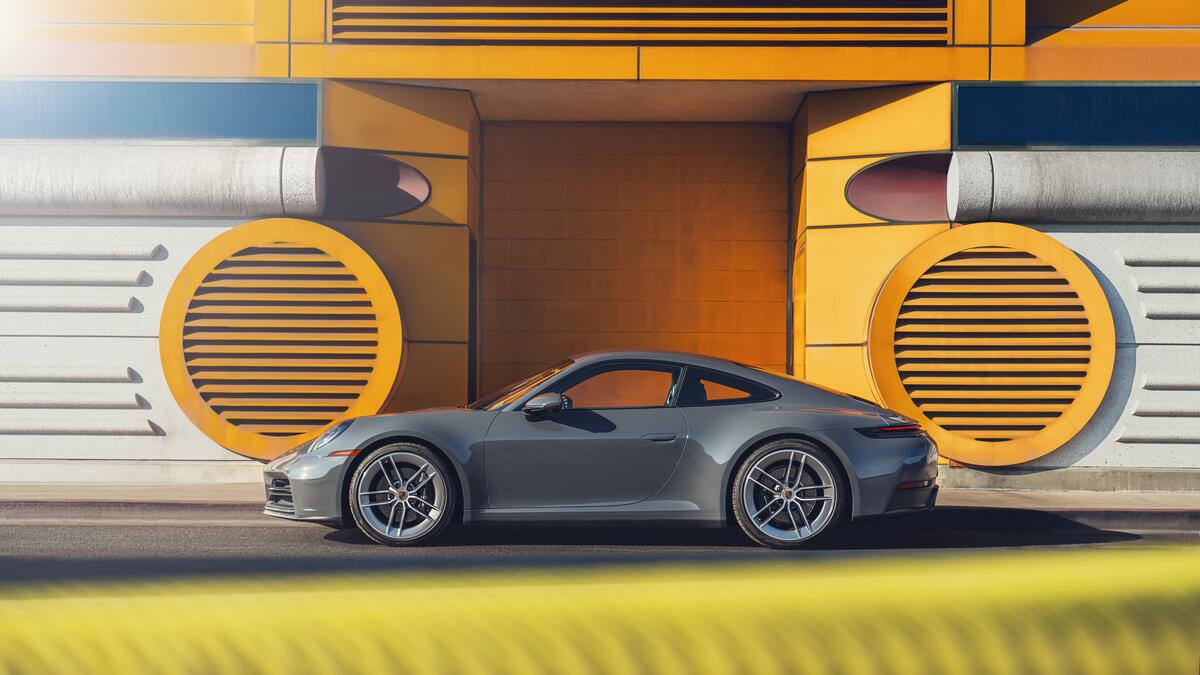
Porsche 911
"…hre 521m it says like they're looking for let's see what those look like and we'll give them a go no go on the 521m since you're since you're serious i think those look vaguely like uh an oem Porsche 911 wheel…"
The Porsche 911 is Porsche’s classic sports car. They’re using it as a style reference to say what a wheel looks like when it’s meant for a 911.
The Porsche 911 is the iconic rear-engine sports car line, famous for its distinctive silhouette and long-running engineering evolution. The host uses a “Porsche 911 wheel” as a visual reference point while judging whether a specific aftermarket wheel design looks right on other cars.

Porsche Cayenne
"…is there anything looks like a panamera there what kind of what we have a cayenne okay there it is on a cayenne i think that looks pretty good…"
The Porsche Cayenne is Porsche’s SUV. They’re showing that a wheel can look good on one Porsche model (like the Cayenne) but may not be the best match for another (like the Panamera).
The Porsche Cayenne is Porsche’s performance SUV, built on the same kind of German engineering focus on handling and power delivery. Here it’s used as an example of how the same wheel design can look different depending on the vehicle’s body shape and stance.

Porsche Panamera
"…but on a panamera wagon it could look cool let's see here what's that on a panamera but it's a great no gti…"
The Porsche Panamera is Porsche’s big, four-door performance car. Here they’re talking about which wheels fit properly so the tires don’t rub and the stance looks right.
The Porsche Panamera is Porsche’s four-door performance sedan/wagon platform, known for using sports-car-style handling and power in a more practical body. In this segment, the host is discussing wheel fitment for the Panamera—how wheel choice and offset affect clearance and appearance.

Audi RS6
"…but it's not bad i'd put a more oh there it is on rs6 these these look more like what i'd put on a"
The Audi RS6 is Audi’s fast, performance-focused version of the RS6. They’re using it as an example of how those wheels look on a different car.
The Audi RS6 is a high-performance wagon/sedan from Audi’s RS performance lineup, known for strong power and a sporty, aggressive stance. The host compares wheel styling on an RS6 to what they’d choose for a Panamera, using it as another fitment/visual reference.
2019 civic si
"rick says i have a 2019 civic si and a 2013 lexus gs 350 considering call consolidating both into one um i drive 30 to 40 000 miles a year reliability is important"
The 2019 Honda Civic Si is a sporty version of the regular Civic. People like it because it’s still practical for commuting, and in this discussion it’s used as a reliable, cost-conscious choice for high-mileage driving.
The 2019 Honda Civic Si is a compact, front-wheel-drive performance trim that’s known for being a practical “daily driver” with a sporty feel. In this segment, it’s brought up as a benchmark for reliability and value for someone doing 30,000–40,000 miles per year.

2013 lexus gs 350
"rick says i have a 2019 civic si and a 2013 lexus gs 350 considering call consolidating both into one um i drive 30 to 40 000 miles a year reliability is important"
The 2013 Lexus GS 350 is a comfortable, reliable luxury sedan. In this conversation it’s being weighed against the Civic Si for someone who drives a lot of miles and wants something dependable.
The 2013 Lexus GS 350 is a mid-size luxury sedan with a focus on smooth, comfortable highway driving and long-term ownership. Here it’s compared directly against the Civic Si for a buyer who drives 30,000–40,000 miles per year and wants reliability on a budget.
Lexus GS 350 F Sport
"like i was going to say you go gs 350 f sport but it's going to be almost the same car um can you if you can you get an es 350 f sport i mean it's it handles okay"
The Lexus GS 350 F Sport is a sportier version of the GS 350. The idea here is to keep the car dependable, but make it feel more fun to drive.
The Lexus GS 350 F Sport is a performance-oriented trim of the GS 350 that typically adds sport-tuned handling components and styling cues. In this segment, it’s suggested as a way to get a more engaging drive while still staying in the “reliable daily” lane for high annual mileage.

Es350
"can you if you can you get an es 350 f sport i mean it's it handles okay it handles nice i shit that's a tough one because when you talk so many fucking miles that's hard"
The Lexus ES 350 F Sport is a sportier trim of the ES 350. It’s suggested as a compromise: still a comfortable Lexus, but with a bit more driving feel.
The Lexus ES 350 F Sport is the F Sport trim of the ES 350, which is a more comfort-focused luxury sedan than the GS. The host mentions it as an alternative because it “handles okay,” but also notes that the buyer’s high mileage makes the decision harder.

Toyota Prius
"...d an suv um what's the coolest reliable brand new prius no you'd hate you'd hate us for that the new wasn..."
The Toyota Prius is a hybrid car, meaning it uses both an electric system and a gasoline engine. It’s known for saving fuel compared to many regular cars. The podcast is talking about it as a reliable option, but also that some people don’t find it very exciting.
The Toyota Prius is a hybrid electric car that helped popularize mainstream fuel-saving technology. The podcast mentions it in the context of “coolest reliable” new options and then says people would “hate” the new Prius, implying it’s not always seen as exciting. That makes it a common topic when discussing the tradeoff between efficiency and appeal.

Acura Integra
"you could do new integra yeah two year old integra type s if that is that price yes if it's"
The Acura Integra Type S is a sportier version of the Integra. The host is saying that buying a used-but-recent one could be a good match for someone who wants something fun but still dependable.
The Acura Integra Type S is a performance-focused trim of the Integra, positioned as a more enthusiast-oriented alternative to typical commuter cars. The host suggests a two-year-old Integra Type S as a fit for the stated budget and reliability needs.

Hyundai Elantra
"...r like 34 000 bucks shit you could probably get a elantra n either manual or a dc t that's true yeah it's a..."
The Hyundai Elantra is a compact car. The podcast is talking about a sportier Elantra version called the Elantra N. They’re also mentioning that it can come with different transmission types.
The Hyundai Elantra is a compact car that’s often discussed in terms of value and availability in different performance trims. The podcast mentions “Elantra N” with either manual or “DCT,” pointing to a sportier version people can buy. It’s brought up because it offers a performance option at a relatively accessible price point.
Request an Explanation
Heard something you'd like explained? We'll add it to this episode.
Sign in to request explanations for terms you heard.
Want to learn more?
Browse our glossary for plain-English explanations of automotive terms, jargon, and concepts.
Help improve this episode
See something that's not quite right? Our annotations are AI-generated and can sometimes miss the mark. Click the flag icon on any annotation to suggest a correction.