
S3, E93 - Return of the Sport Truck
About this episode
Ram’s sport-truck comeback takes center stage, starting with the announced 2027 Ram Rumblebee and a broader performance street-truck lineup. The hosts revisit the late-90s era of street performance trucks, then argue the “muscle” look is back—supported by market signals like SEMA and a TRX-like stance. They break down Rumblebee proportions, chassis, suspension, drivetrain modes, and performance specs, then zoom out to how Ram’s off-road and halo strategies are reshaping truck differentiation.
Ram just dropped the mic, or maybe it's the hammer, on a full line of sport trucks. Meet the V-8-only '27 Ram Rumble Bee family. With a 5.7L Hemi, a 392, or a Hellcat, you can have as much fun as your budget allows. The Truck Show Podcast is produced in partnership with AMSOIL, Kershaw Knives, and OVR Mag. Don't forget to check out truckshowpodcast.com for special offers from our friends and sponsors.
AMSOIL
Kershaw Knives
OVR Magazine
Use promo code @truckshowpodcast for a free annual digital subscription or a discount on a print subscription on ovrmag.com.
Hennessy
"Ford's been dabbling. Ram's been teasing and companies like Roush and Hennessy have been building them."
Hennessy is mentioned as another performance-focused company that’s been building sport trucks. The hosts are basically saying this trend isn’t new—multiple builders have been doing it.
Hennessy is cited alongside Roush as a company that has been building sport trucks. The mention frames Hennessy as part of the performance ecosystem—known for turning production vehicles into higher-output, enthusiast-focused builds.
Roush
"Ford's been dabbling. Ram's been teasing and companies like Roush and Hennessy have been building them."
Roush is brought up as a company that helps build performance versions of trucks. The point is that more than one company has been working on sport-truck ideas.
Roush is mentioned as one of the companies building sport trucks, which signals the episode’s focus on aftermarket or specialty performance builders. In truck culture, brands like this are often associated with performance packages and tuned builds.

Dodge Ram
"dabbling. Ram's been teasing and companies like Roush and Henne..."
Ram is a brand of pickup trucks. People buy them for towing, hauling, and different levels of comfort and power. The podcast mentions Ram teasing new things, which usually means new truck versions or packages are coming.
Dodge Ram refers to Ram-brand pickup trucks, which are known for strong engine options and a wide range of trims. The podcast context suggests Ram has been teasing upcoming products and that other companies are also involved in performance or customization ideas. That’s why it’s discussed: it’s part of the ongoing competition to offer more exciting truck packages.
2027 Ram Rumblebee
"So today we're going to be talking about performance street trucks and Ram's all-new muscle truck, the 2027 Ram Rumblebee."
This episode is talking about the 2027 Ram Rumblebee as a new “muscle truck.” The hosts say Ram isn’t just making one special truck—they’re bringing back a whole lineup aimed at performance on regular roads.
The 2027 Ram Rumblebee is being positioned as Ram’s “muscle truck” and part of a broader return of the sport-truck category. In this episode, the key point is that Ram is launching an entire lineup of performance street trucks, not just a single model.
performance street trucks
"So today we're going to be talking about performance street trucks and Ram's all-new muscle truck, the 2027 Ram Rumblebee."
“Performance street trucks” means trucks that are built to drive more excitingly on normal roads. They’re meant to feel sporty without being track-only or impractical for daily use.
“Performance street trucks” refers to pickup trucks tuned for strong acceleration, handling, and overall driving feel while still being usable on public roads. The term usually implies a balance between everyday practicality and enthusiast-focused upgrades.
Ram Srt 10
"...rea. From there I graduated to the 500 horsepower Ram SRT 10. And if you remember that was a massive, I think ..."
Ram is a brand of pickup trucks. The podcast is talking about a very powerful Ram model, the SRT 10, which is known for high horsepower. It’s mentioned to show how far Ram’s performance versions have gone.
Ram is the pickup truck brand that includes performance and high-horsepower models, such as the Ram SRT 10 mentioned in the podcast. The conversation references moving up to a 500-horsepower Ram SRT 10, which highlights the brand’s ability to build extreme-performance trucks. It’s discussed because it represents a high-performance chapter in Ram’s lineup history.
V10
"And if you remember that was a massive, I think that was a 8.3 liter V 10, at least the later ones were with a manual or you could get it with an automatic in the quad cabs."
A V10 is an engine with 10 cylinders, shaped like a V. More cylinders like this usually mean smoother power delivery and a lot of “big engine” character—exactly what the host is pointing out about the Ram SRT 10.
A V10 is an engine with 10 cylinders arranged in a “V” shape (two banks of cylinders). In this segment, the host uses the V10 to explain why the Ram SRT 10 felt so massive and why it was known for big, punchy power.

Ford F-150 Lightning
"...m were busy in the space in the late 90s with the Lightning, the Rumblebee, the Ram SRT 10, Ford walked away ..."
The Ford F-150 Lightning is an electric pickup truck. It’s built on the same general idea as the F-150 but uses an electric powertrain. The podcast mentions it when talking about Ford’s involvement in special truck concepts over time.
The Ford F-150 Lightning is the electric version of the F-150 pickup, bringing EV power to a full-size truck platform. The podcast context references the Lightning’s place in the late-1990s conversation and compares it to other high-performance truck ideas, emphasizing how Ford has been involved in electrified or special-truck discussions. It’s discussed because it’s a notable EV entry in the pickup world.
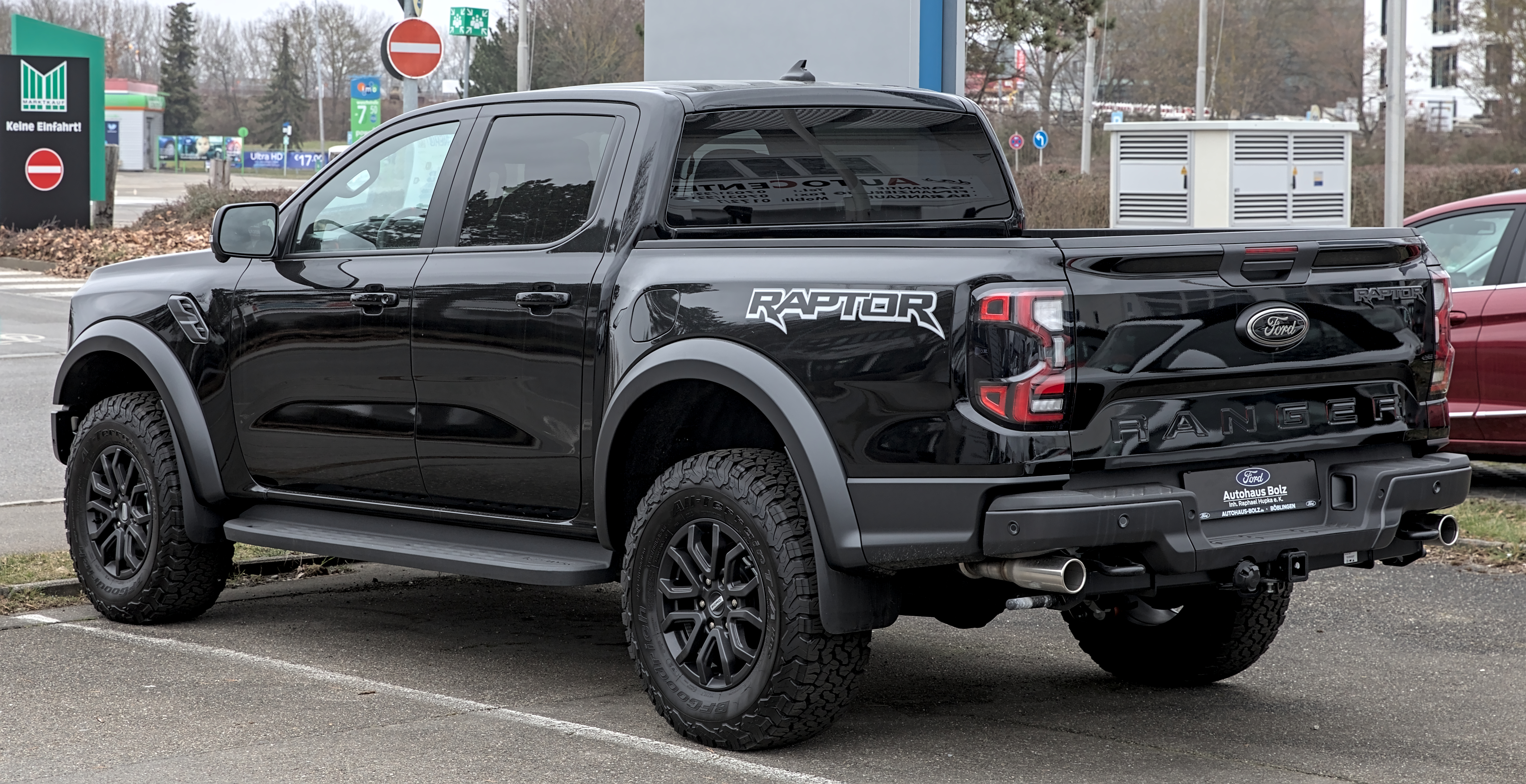
Ford Raptor
"So while Ford and Ram were busy in the space in the late 90s with the Lightning, the Rumblebee, the Ram SRT 10, Ford walked away from the street trucks with the Raptor lineup."
The Ford Raptor is a pickup designed to be great off-road, not just quick on the street. The host is saying Ford moved away from sport-truck street performance and leaned into the Raptor instead.
The Ford Raptor is a high-performance off-road pickup built around rugged suspension and off-road capability. In this segment, the host contrasts it with street-focused sport trucks, arguing Ford shifted attention from street performance to the Raptor lineup.

Ford Maverick Lobo
"More recently, Ford has dabbled a bit with the extremely fun to drive Maverick Lobo."
The Ford Maverick Lobo is a special version of the Maverick pickup meant to be more fun and engaging. The host is using it as evidence that Ford is trying to bring back some of that sport-truck spirit.
The Ford Maverick Lobo is a performance-oriented variant of the Maverick pickup, positioned as fun to drive. The host calls it “extremely fun to drive,” using it as a more recent example of Ford “dabbling” back into the sport-truck idea.

Ford Lobo
"...ed a bit with the extremely fun to drive Maverick Lobo. And I gotta tell you, I love that thing. It is a..."
The Ford Lobo mentioned in the podcast sounds like a special version of the Maverick. The main point is that it’s meant to be fun to drive. The host is saying they really enjoy it.
The Ford Lobo (as mentioned in the podcast) is described as an extremely fun-to-drive Maverick Lobo, suggesting a special edition or package built around the Maverick platform. The key point in the conversation is that the host personally likes how it drives, which is why it’s brought up. It’s discussed as an example of a small truck/vehicle variant that’s more exciting than you might expect.

Ford F150
"I mean, it's way better than it has any right to be, to be honest. And then more recently, they overlaid the Lobo Street Truck package over the F-150. But with today's announcement, Ram is going all in headfirst, leaving nothing on the table. And what the consumer gets, well,"
The Ford F-150 is a large pickup truck. People buy it for hauling, towing, and also for regular driving. The podcast mentions special packages that can make it more performance- and style-focused.
The Ford F-150 is a full-size pickup truck built for everyday driving and heavy-duty work, and it’s one of the most common trucks on the road. It often comes up in discussions because Ford keeps adding performance and appearance packages that can make it feel more “special” than a typical work truck. In the podcast context, it’s mentioned alongside a street-truck package overlay, which highlights how the F-150 can be configured for a more aggressive look and feel.
Mustang
"Power used to be reserved for the highest performance vehicles. Now a family crossover will walk a Mustang from a decade ago."
The Mustang is a famous performance car. They’re using it as an example to say that today’s regular vehicles can be surprisingly quick compared to older sports cars.
The Ford Mustang is used here as a benchmark for “power” and performance. The hosts’ point is that modern mainstream vehicles—like a family crossover—can now outperform older performance cars in real-world acceleration.

Ford Mustang
"...ance vehicles. Now a family crossover will walk a Mustang from a decade ago. And of course, he gave us a re..."
The Ford Mustang is a sports car made by Ford. It’s designed to be fun to drive and comes in different performance versions. The podcast is basically saying newer vehicles can be quicker than older Mustangs.
The Ford Mustang is a performance-focused sports car known for its long-running lineup and wide range of trims. It’s discussed in the podcast because the conversation compares how modern vehicles can outperform older Mustangs in everyday acceleration or performance. That kind of comparison is common when talking about how quickly vehicle performance has advanced over time.
off road market
"And of course, he gave us a reminder of where Ram currently sits with the very lucrative off road market. Remember when off road capability was a Jeep thing?"
“Off road market” means the people who buy trucks to drive on dirt, rocks, and trails. These buyers usually want the truck to be set up for that kind of terrain, not just look rugged.
The “off road market” refers to the customer segment that buys trucks and SUVs specifically for unpaved terrain—things like mud, sand, rocks, and trails. In that market, manufacturers differentiate with off-road hardware and tuning (not just styling).
Jeep
"Remember when off road capability was a Jeep thing? Now everybody's trying to be Jeep."
Jeep is known for making vehicles that can handle rough terrain. The hosts are saying other brands are now trying to compete with that off-road reputation.
Jeep is a brand strongly associated with off-road capability, and the hosts use it as a reference point for how off-road used to be “their thing.” The point is that other brands (including truck makers) have since copied that off-road positioning.
off road lineup
"I think and I'm biased, of course, we have the strongest, most complete off road lineup in the industry. Warlock, Rebel, RHO, gas and diesel power wagons and the Apex Predator that we just announced the TRX."
An “off road lineup” means a brand offers several truck versions meant for dirt and trails. Instead of one off-road model, they cover different tastes and needs with multiple trims.
An “off road lineup” is a set of model variants (trims) engineered and marketed for off-road use. The idea is that a brand doesn’t just sell one off-road truck—it offers multiple versions with different powertrains and capability packages to cover more buyers.

Dodge Power Wagon
"...the industry. Warlock, Rebel, RHO, gas and diesel power wagons and the Apex Predator that we just announced the ..."
The Dodge Power Wagon is a tougher, off-road version of a pickup truck. It’s designed to handle rough terrain and demanding driving. The podcast mentions different special editions, including one that was just announced.
The Dodge Power Wagon is a heavy-duty, off-road-focused version of a Ram pickup, built for serious traction and durability. The podcast context lists multiple special editions and mentions a newly announced “Apex Predator” power wagon, showing how the model is used as a platform for different off-road and style packages. It’s discussed because it’s one of the more rugged, enthusiast-oriented truck variants.
Ram TRX
"Warlock, Rebel, RHO, gas and diesel power wagons and the Apex Predator that we just announced the TRX."
The Ram TRX is Ram’s top off-road performance truck. It’s the kind of truck designed to go hard off pavement, not just be a normal pickup.
The Ram TRX is Ram’s high-performance off-road truck, built to deliver extreme capability rather than just “looks.” In the segment, it’s mentioned as part of Ram’s lineup strategy for dominating the off-road niche.
Apex Predator
"Warlock, Rebel, RHO, gas and diesel power wagons and the Apex Predator that we just announced the TRX."
“Apex Predator” is a hype nickname for the truck Ram just announced. It’s basically saying it’s the most extreme off-road version in the lineup.
“Apex Predator” is used as a marketing nickname for the truck that Ram just announced as the TRX. It’s meant to communicate top-of-the-line dominance in off-road performance rather than a technical specification.
Rebel
"Warlock, Rebel, RHO, gas and diesel power wagons and the Apex Predator that we just announced the TRX."
Rebel is a truck trim name. Here it’s listed as one of Ram’s off-road options, showing they offer more than one off-road style.
Rebel is mentioned as another Ram off-road variant within the lineup. The hosts are using these names to illustrate how Ram differentiates off-road trucks with different trim identities.
RHO
"Warlock, Rebel, RHO, gas and diesel power wagons and the Apex Predator that we just announced the TRX."
RHO is a name used for one of Ram’s off-road truck versions. The episode is listing these to show Ram has multiple off-road trims.
RHO is referenced as part of Ram’s off-road lineup naming. In this segment, it functions as a “trim persona” label—used to market different off-road-focused versions under the Ram umbrella.
Warlock
"I think and I'm biased, of course, we have the strongest, most complete off road lineup in the industry. Warlock, Rebel, RHO, gas and diesel power wagons and the Apex Predator that we just announced the TRX."
Warlock is a truck variant name mentioned as part of Ram’s off-road lineup. The episode uses it to show Ram has several different off-road options.
Warlock is referenced as one of Ram’s off-road-oriented truck variants. In this context, it’s part of the brand’s strategy of offering multiple distinct off-road “personas” rather than a single model.
on road space
"What's the next thing that that became a decade and a half ago? Now as an industry and us as well, we've played around in the on road space with trucks."
“On road space” means regular street driving. They’re contrasting that with off-road, where they say Ram went all-in compared to other brands.
“On road space” means the mainstream market where trucks are primarily used for everyday driving—commuting, highway travel, and general utility. The hosts contrast that with off-road, where they claim no one fully committed the way Ram did.
Little Red Express
"You remember the Little Red Express truck, the Viper truck, the Daytona truck. They were so cool."
The “Little Red Express” is a past special truck concept they mention as being popular but not lasting. They’re using it as an example of why some cool truck ideas fade out.
The “Little Red Express” is referenced as a past truck concept/edition that the hosts describe as cool but short-lived. It’s brought up to explain why some performance-themed truck ideas didn’t last even if they were memorable.

Chevrolet Express
"...we did with off road. You remember the Little Red Express truck, the Viper truck, the Daytona truck. They w..."
The Chevrolet Express is a large van. It can be used to carry people or cargo. The podcast mentions it in the context of older themed vehicles and concepts.
The Chevrolet Express is a full-size van used for passenger transport or cargo work, depending on configuration. In the podcast context, it’s brought up alongside other “Little Red Express / Viper truck / Daytona truck” style references, which points to themed or enthusiast builds rather than just its normal job as a van. That’s why it’s mentioned: it’s part of a history of unusual, memorable vehicle concepts.
Viper truck
"You remember the Little Red Express truck, the Viper truck, the Daytona truck. They were so cool. Why didn't they last?"
They mention a “Viper truck” as an earlier performance-style truck idea. The point is that it was exciting, but it didn’t stick around long-term.
“Viper truck” is mentioned as one of Ram’s earlier performance-themed truck concepts. The hosts use it alongside other named projects to argue that these ideas were exciting but didn’t achieve lasting off-road success.
Daytona truck
"You remember the Little Red Express truck, the Viper truck, the Daytona truck. They were so cool. Why didn't they last?"
They also mention a “Daytona truck” as another earlier special truck idea. The hosts are saying some of these experiments don’t last, even if people like them.
“Daytona truck” is referenced as another earlier performance-themed truck concept. In this segment, it’s used to illustrate that some brand experiments don’t last, even when they’re culturally “cool.”

Dodge Viper
"...d. You remember the Little Red Express truck, the Viper truck, the Daytona truck. They were so cool. Why ..."
The Dodge Viper is a very powerful sports car. In the podcast, it’s mentioned because people remember it as a standout performance vehicle. The conversation ties it to other “wild” themed builds and concepts.
The Dodge Viper is a high-performance sports car known for its extreme power and aggressive driving character. It comes up in the podcast as part of a “cool truck” nostalgia theme, referencing past vehicles like the Viper truck concept. That’s why it’s mentioned: it represents a memorable, enthusiast-focused performance nameplate.
muscle car formula
"Fast trucks are really cool. But I think we can do way more because you got to think about that muscle car formula. There was something that was always consistent in that formula. Low, long hood, short deck and ideally wide."
People use “muscle car formula” to describe the classic look of muscle cars. It’s mostly about the shape—low front, long hood, short rear—so the car looks powerful even before you mention the engine.
The “muscle car formula” is an enthusiast shorthand for the classic visual proportions that make a car look aggressive: a low stance, long hood, short deck, and often a wider body. In this segment, the host argues that those proportions help communicate “power” even before you talk about the engine.
street performance trucks
"In my opinion, and I hope to God I'm right, this is what held back street performance trucks. That's why they were kept as high performance, super cool, no offense, super cool, but very niche models compared to a full lineup like the Off-Roads."
“Street performance trucks” are trucks meant to be fun and quick to drive on regular roads. The host argues that earlier versions were kind of niche because the truck shape didn’t give the same “muscle” look as classic cars.
“Street performance trucks” refers to trucks marketed and tuned to feel fast and exciting on public roads, rather than being purely off-road or utility-focused. The host’s point is that earlier “street performance truck” offerings were held back by how hard it was to communicate the classic muscle-car proportions in a tall, long-bed truck body.
OE sport trucks
"So Ram has acknowledged that there may be this pendulum swinging, that there may have been some deficiencies in OE sport trucks in the past."
“OE” here means “original equipment,” i.e., the factory-produced version of a sport truck rather than an aftermarket build. The host is claiming that some factory “sport truck” offerings had deficiencies, which is part of why they think the market is ready for a better approach.
Fox 650
"So we're hiding in plain sight. SEMA, the dude, the Fox 650, the response has been huge on that."
“Fox 650” sounds like a specific show or media outlet the host is referencing. They’re saying the reaction there has been really strong, supporting their idea that the timing is right.
“Fox 650” appears to refer to a specific media/creator or show segment (likely tied to Fox Sports or a branded program) rather than a car part. In this context, it’s grouped with SEMA as a place where the host says the response has been huge, implying strong audience interest.
SEMA
"So we're hiding in plain sight. SEMA, the dude, the Fox 650, the response has been huge on that."
SEMA is a big car show in the U.S. focused on aftermarket parts and performance ideas. The host is using it as proof that people are excited about these truck concepts.
SEMA (Specialty Equipment Market Association) is a major U.S. trade show where aftermarket and performance builders showcase new products and concepts. The host references the “response” at SEMA as evidence that interest in these “sport truck” ideas is strong.
muscle trucks
"We call these muscle trucks. All right. So welcome to Ram's world of muscle trucks."
“Muscle trucks” are trucks built to feel like muscle cars—meaner styling and a more aggressive vibe. The hosts are using the term to explain what kind of truck the Rumblebee is trying to be.
“Muscle trucks” are pickups marketed with the attitude and styling cues of muscle cars—lowered stance, aggressive bodywork, and performance-oriented identity—rather than focusing purely on utility. In this segment, the hosts frame the Ram 1500 Rumblebee as part of that trend, tying the look and proportions to the “muscle” concept.
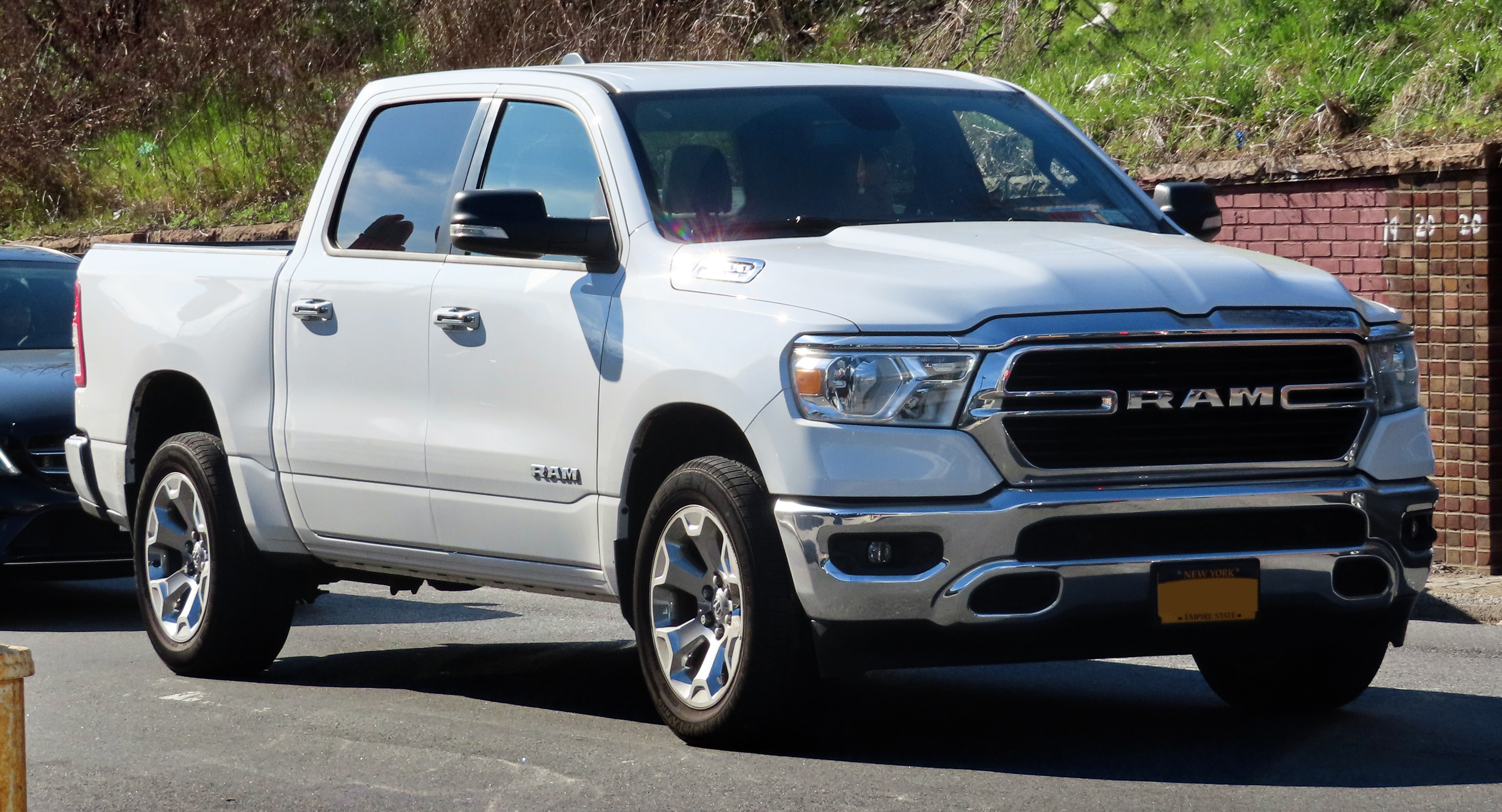
Ram 1500 Rumblebee
"All right. So welcome to Ram's world of muscle trucks. This is the all new Ram 1500 Rumblebee. All right. So since you can't see it, let me describe it for you."
The Ram 1500 Rumblebee is a Ram pickup made to feel like a muscle car—more aggressive styling and attitude. They’re also talking about how the truck is set up with a different cab/bed layout to improve the overall shape and usability.
The Ram 1500 Rumblebee is a special-edition “muscle truck” built on the Ram 1500 platform, aiming for a street-focused, aggressive look and stance. In this segment, the hosts emphasize its lowered, monochromatic TRX-style vibe while also highlighting a key packaging choice: a quad cab short bed instead of the more typical crew cab short bed.
quad cab short bed
"But here's the kicker. Instead of a crew cab short bed, it's a quad cab short bed. And it looks tough."
“Quad cab short bed” means the truck has rear seats for extra people, but the cargo area is shorter than a long-bed. They’re saying this layout helps the truck look right and work better day-to-day.
“Quad cab short bed” describes a truck body configuration: four-door access (with rear seats) paired with a shorter cargo bed. In this segment, it’s central to the Rumblebee’s packaging choice, because the hosts argue it improves proportions and broadens market appeal versus a regular cab layout.
regular cab
"Some of you are going to be disappointed that there's not a regular cab. I'm not buying it. You want to know the facts? Here's the facts."
A “regular cab” is the simpler, more basic cab style on many trucks—usually fewer doors and less rear-seat space. The hosts are saying it would save weight, but they chose a different cab to appeal to more buyers.
A “regular cab” is a truck configuration with fewer doors and typically no rear-seat area (or rear seats that are much less usable) compared with extended-cab or crew-cab styles. The hosts discuss it in terms of weight and market demand, arguing that choosing a regular cab would have been lighter but would narrow the audience.
spousal alibi
"We insured the spousal alibi. All right. I love Tim. Who doesn't love a CEO who has your back and uses the term spousal alibi to prove that they have fought about the end user and what person needs also to give you an excuse to buy something really rad from their company."
“Spousal alibi” is a joke about what you tell your partner so they’ll understand why you bought something. It’s basically a friendly excuse for the purchase.
“Spousal alibi” is a humorous, non-technical phrase used to describe the excuse someone gives their partner to justify buying a car. In this segment, the host credits the CEO with using the term as a way to help the end user feel better about the purchase.
crew cab
"you sort of got the idea of why they didn't go all in on the regular cab... Plus, selfishly, it's way harder for anybody to try and copy these proportions because nobody, you can't do it with crew cab and nobody has anything that's a non-crew cab with a short bed."
A crew cab is a pickup with four full-size doors. They’re saying it’s harder to keep the same short-bed, muscular look when you go with a crew cab.
A crew cab is a pickup cab with four full-size doors, designed for easier rear-seat access. The hosts contrast it with quad cab layouts, saying the “muscle truck” proportions are harder to replicate when you use a crew cab with a short bed.
DT platform
"other than the DT platform, which is the current Ram 1500 doesn't have a regular cab and they would have had to develop it special."
A platform is the basic “bones” of a vehicle that many versions share. They’re saying Ram’s current pickup setup (the DT platform) doesn’t naturally include a regular cab, so adding one would have meant extra engineering.
A platform is the shared underlying architecture a manufacturer uses across multiple models. Here, the hosts mention the “DT platform” as the basis for the current Ram 1500, and they say a regular cab would have required special development outside that platform.
short box
"We could have done it way cheaper and way faster had we not gone with the quad cab in the short box. But we needed those proportions."
The “short box” is just the pickup’s shorter bed. They’re saying pairing a short bed with the right cab shape is part of what makes the truck look more muscular.
“Short box” refers to a pickup’s shorter bed length. In this segment, Ram’s choice of a quad cab paired with a short box is presented as a key part of the “muscle truck” visual formula—shorter overall length with a wider, lower stance.
0 to 60 in 6.1 seconds
"So what makes a rumblebee? 395 horsepower... 0 to 60 in 6.1 seconds."
“0 to 60” means how fast the truck accelerates from a stop to 60 mph. They’re using that number to show the truck isn’t just for looks—it’s quick.
“0 to 60” is a common acceleration benchmark measuring how long it takes a vehicle to reach 60 mph from a standstill. The hosts use it to quantify how quick the “Rumblebee” is, tying the muscle-truck theme to real-world performance.
GT exhaust
"So what makes a rumblebee? 395 horsepower, 392 gears, the GT exhaust, standard four-wheel drive..."
“GT exhaust” means the truck has a sportier exhaust system. The idea is that it sounds more aggressive (and may flow better) than the basic exhaust.
“GT exhaust” refers to a performance-oriented exhaust setup associated with a GT trim or package. In this context, it’s part of what defines the “Rumblebee” build, implying a more aggressive exhaust note and potentially different flow characteristics than a standard system.
four-wheel drive
"standard four-wheel drive, and rear-wheel drive mode for when you want to have some fun."
Four-wheel drive means power goes to all four wheels, which helps with traction. They’re saying this truck normally has 4WD, but it can switch to rear-wheel drive for a more playful feel.
Four-wheel drive (4WD) sends power to both the front and rear axles for better traction. The hosts call it “standard” on the “Rumblebee,” and also mention a rear-wheel-drive mode for when you want more fun driving dynamics.
rear-wheel drive mode
"standard four-wheel drive, and rear-wheel drive mode for when you want to have some fun."
Rear-wheel drive mode sends most of the power to the back wheels. They’re saying it can make the truck feel more fun to drive than full-time four-wheel drive.
Rear-wheel drive mode is a drivetrain setting that limits power delivery primarily to the rear axle. The segment frames it as a way to make the truck feel more engaging—useful for “having some fun” compared with always-on four-wheel drive.
start-stop
"it's got one battery. I love the one battery because he knows we all hate start-stop."
Start-stop is a feature that turns the engine off when you’re stopped and turns it back on when you go. The host says people often hate it because it can feel intrusive.
Start-stop is an engine management feature that shuts the engine off when the vehicle is stopped (like at traffic lights) and restarts it when you press the accelerator. The host mentions it as something many people dislike, and ties the “one battery” approach to avoiding that annoyance.
wide body kit
"It looks just like a TRX, but like squished, right? Like, it looks like you took the nose and the tail and pushed them together. And because it's shorter, even though it's the same Coke bottle wide body kit and hood, it kind of looks like everything kind of got pushed out."
A wide body kit is a set of body parts that makes the car look wider around the wheels. It’s often used so the truck can run wider tires and look more aggressive.
A wide body kit is an aftermarket (or factory) set of body panels that widens the car’s fenders and wheel arches. The goal is usually to fit wider tires and give the vehicle a more aggressive stance, which is why the host compares the proportions to the TRX.
lowered steel suspension with passive damping
"On the Rumblebee, lowered steel suspension with passive damping, which are Bilsteins."
Lowered suspension means the truck sits closer to the ground. Passive damping means the shocks control bumps in a fixed way, not with computer-controlled settings.
Lowered steel suspension means the truck’s ride height is reduced using steel suspension components, which typically improves stance and handling response. Passive damping refers to shock absorbers that control motion without electronically changing settings.
Bilsteins
"On the Rumblebee, lowered steel suspension with passive damping, which are Bilsteins."
Bilstein makes performance shocks and struts. Mentioning Bilsteins is basically saying the truck’s suspension shocks are from that well-known brand.
Bilstein is a suspension brand best known for shock absorbers and struts. When the host says the Rumblebee uses Bilsteins, they’re pointing to the specific shock hardware used for ride and control.
14.9 inch brake rotors
"Get the same performance hood, 14.9 inch brake rotors, which are larger than anything else in the 1500 world."
Brake rotors are the metal discs that your brakes squeeze to slow the truck down. Bigger rotors can handle more heat and braking effort better.
Brake rotors are the discs the brake pads clamp onto to slow the vehicle. Larger rotors (like the 14.9-inch ones mentioned here) increase braking leverage and heat capacity, which can help with repeated hard stops compared with smaller rotors.
torque
"So you get the iconic 5.7 Hemi, which is 395 horsepower, 410 pound feet of torque, 0 to 60 in 6.1 seconds, quarter mile, 14.6, top speed of 130, performance exhaust..."
Torque is the engine’s twisting force. More torque usually means the truck feels stronger when you accelerate, especially from slower speeds.
Torque is the twisting force an engine produces, and it strongly influences how quickly a vehicle accelerates from low speeds. The host quotes the Rumblebee’s torque figure to describe its real-world “pull,” not just peak power.
transfer case
"...performance exhaust, single speed on demand transfer case. Again, no low range, but there is a rear wheel drive mode."
A transfer case is what sends power to the wheels when a truck has four-wheel drive. “On demand” means it can switch into that mode when traction is needed.
A transfer case is the component that routes power to the front and/or rear axles in a four-wheel-drive system. The host mentions a “single speed on demand transfer case,” meaning it can engage the front axle when needed rather than constantly running in 4WD.

Jeep Wrangler
"...t there is a rear wheel drive mode. If you have a Wrangler with a taser, think of it as that, essentially, o..."
The Jeep Wrangler is an off-road SUV. It’s made to handle rough terrain better than many regular cars. The podcast mentions that it can switch modes, including a rear-wheel-drive style mode, depending on what you’re doing.
The Jeep Wrangler is a rugged off-road SUV built around a body-on-frame design and strong four-wheel-drive capability. In the podcast context, it’s referenced with a rear-wheel-drive mode, which matters because it changes how the vehicle behaves on different surfaces. Wranglers are often discussed for their off-road features and the way they can be set up for specific driving conditions.
limited slip
"Dana, 250 millimeter, just under 10 inches rear axle with either open or limited slip, 392 axle ratio."
Limited slip helps when one rear wheel loses traction. It tries to send more power to the wheel that still has grip.
Limited-slip (often abbreviated as an LSD) is a differential type that reduces wheel spin when traction is uneven. Instead of sending all torque to the wheel with less grip, it biases torque toward the wheel with more traction.
axle ratio
"Dana, 250 millimeter, just under 10 inches rear axle with either open or limited slip, 392 axle ratio."
Axle ratio is the gearing that changes how the truck feels when you accelerate versus how it runs at steady highway speed. It’s a big part of why different trucks feel different even with similar engines.
Axle ratio is the gearing between the differential and the driveshaft, and it affects how the truck balances acceleration versus cruising RPM. A numerically higher ratio typically improves off-the-line pull but can raise engine speed at highway speeds.
U connect
"And this one comes with an 8.4 inch U connect, which is kind of the square one, 12 inch digital cluster for the driver information center..."
Uconnect is the truck’s built-in screen system for things like music, navigation, and phone features. Here they’re talking about the size and design of that screen.
Uconnect is Stellantis’ infotainment system used in many of its vehicles, combining the touchscreen, navigation, and phone integration. The host mentions the screen size and layout to describe the cabin tech.
quarter mile
"And the quarter mile in 13.2 seconds. [1301.5s] The original gangster over there."
The “quarter mile” is a common drag-racing test: how long it takes to cover 1/4 mile. It’s another way to measure how fast the truck accelerates.
The “quarter mile” is a drag-racing distance of 1/4 mile (about 402 meters), usually reported as elapsed time. It’s used to compare straight-line acceleration and overall power delivery under race conditions.
Viper engine
"Turns out that the Viper engine and truck duty does pretty well. End them up next to each other."
The “Viper engine” means the V10 engine family from the Dodge Viper. The host is saying that the truck’s engine heritage is why it still does well.
“Viper engine” refers to the V10 powerplant associated with the Dodge Viper. In this context, the host is saying the Ram SRT 10 uses that Viper-derived engine, which helps explain why it performs well even two decades later.
track pack option
"We're also going to do a track pack option of the 6-4 as well that you'll get more information on later today."
A “track pack option” is a bundle of upgrades meant for harder driving, like on a track. The host is saying there’s a special package for the 6.4-liter version.
A “track pack option” is a factory package of performance-oriented hardware and/or tuning aimed at track use. In this segment, it’s tied to the 6.4-liter setup, implying additional track-focused components beyond the base configuration.
6-4
"20 years later, four car lengths ahead with a 6-4. We're also going to do a track pack option of the 6-4 as well that you'll get more information on later today."
“6-4” is shorthand for a 6.4-liter engine. They’re using it to describe which engine size is pulling ahead in the comparison.
“6-4” is being used as shorthand for the 6.4-liter class of engine displacement (matching the earlier “392” naming). The host is implying a performance comparison where the 6.4-liter setup ends up ahead.
halo truck
"And he shows a picture here of the record 154.587... I was there. ... Now, luckily... And we're already calling this the new king... It's not often that a brand delivers a halo truck worthy of the SRT badge."
A “halo truck” is the brand’s showpiece. It’s the one meant to make people think, “Wow—this brand can really build something special,” even if most buyers don’t get that exact model.
A “halo truck” is a flagship, attention-grabbing model used to set the brand’s performance image. It’s not necessarily the highest-volume product; instead, it’s meant to create excitement and credibility—like the SRT badge trucks being discussed here.
production truck speed record
"That truck blew the doors off everything and it set the world's record for the fastest production truck ever... The record that it still holds today and was set right here at the Chelsea Proving Grounds."
This is about the fastest speed a truck can achieve when it’s based on a real, sellable production model. The hosts are talking about brand-to-brand record attempts on the same track.
A production truck speed record refers to the fastest speed achieved by a truck that’s based on a production model (not a one-off prototype). This segment uses that idea to frame the competition between brands at Chelsea Proving Grounds.
Chelsea Proving Grounds
"I was there that day and I covered it for Trucking Magazine... snowy day at Chelsea Proving Grounds... set right here at the Chelsea Proving Grounds... on the skid pan at Chelsea Proving Grounds"
Chelsea Proving Grounds is a place where automakers test cars and trucks. Here, it’s the same location tied to the speed record and the on-site driving demonstrations.
Chelsea Proving Grounds is a test facility used for vehicle evaluation, including high-speed runs and handling surfaces. In this segment, it’s specifically where the production-truck speed record was set and where the media is watching demonstrations.
skid pan
"And by the way, what you're hearing is just off to the side of the presentation... and this is on the skid pan at Chelsea Proving Grounds"
A skid pan is a special test area made to safely create sliding conditions. It helps show how a vehicle handles when tires start to lose traction.
A skid pan is a controlled surface designed to let drivers demonstrate traction limits and vehicle stability behavior under sliding conditions. The host mentions it as part of the Chelsea Proving Grounds media setup, implying a demonstration of how the truck behaves when grip is reduced.
donuts and burnouts
"They're basically doing donuts and burnouts and turning perfectly good tires into smoke."
A burnout is when you spin the tires to heat them up. Donuts are when you drive in circles so the tires slide and the car rotates.
A burnout is when the driver spins the tires while the car is stationary or moving very slowly, usually to heat up the rubber. Donuts are circular slides where the rear tires lose traction and the car rotates around its own axis.
drifting
"And I absolutely love this. And drifting it. Yeah, that's what's next for trucks right there."
Drifting is when the driver intentionally makes the car slide sideways while still steering and controlling it.
Drifting is a driving technique where the driver intentionally oversteers so the car’s tires lose traction while maintaining control through a slide. It’s often done in performance vehicles because they can sustain that controlled loss of grip.

Challenger Hellcat
"...t's next for trucks right there. Supercharged 6.2 Hellcat, 777 horsepower, 0 to 60 in 3.4 seconds and the q..."
The Challenger is a muscle car built for strong acceleration. The podcast is talking about a very high-power version with a supercharged engine and quick 0-to-60 performance. It’s included because it’s an extreme performance example.
The Dodge Challenger is a muscle car known for powerful engine options and straight-line performance. In the podcast context, it’s described with a supercharged 6.2-liter Hellcat setup producing 777 horsepower and very quick acceleration figures. It’s mentioned because it represents a high-performance, headline-grabbing version of the Challenger lineup.

Supercharged 6.2 Hellcat
"Supercharged 6.2 Hellcat, 777 horsepower, 0 to 60 in 3.4 seconds and the quarter in 11 6 is the fastest, most powerful and most capable V8 production truck ever."
Hellcat refers to a high-performance V8 engine. Here, the host is talking about the supercharged version used in a truck and why it’s so powerful.
The “Hellcat” is a Chrysler/Dodge performance engine family known for high-output supercharged V8 power. In this segment, the host is describing the supercharged 6.2L Hellcat setup and its truck application.
MDS
"the 5.7 box. So I kind of just to break it down, 5.7 is base 395 horsepower, 410 pound feet of torque. It's got MDS, but no e-torque and no auto start, stop"
MDS lets the engine shut off some cylinders when you don’t need full power. That can save fuel, but it can turn the cylinders back on when you accelerate.
MDS (Multi-Displacement System) is a cylinder-deactivation technology that shuts down some cylinders under light load. The goal is to improve fuel economy while keeping full power available when you demand it.
compression ratio
"no auto start, stop 9.5 to 1 compression ratio 8 HP 75 and it does all that off 89 octane."
Compression ratio is how much the engine squeezes the air-fuel mixture before it ignites. More squeeze can mean more power, but it usually requires higher-octane fuel to avoid knocking.
Compression ratio is the ratio of the cylinder’s volume when the piston is at the bottom versus at the top. Higher compression generally improves efficiency and can increase power, but it also makes the engine more sensitive to fuel octane.
octane
"does all that off 89 octane. Moving up to the 392... It also has the 8 HP 75 modified and it requires 91 octane."
Octane tells you how resistant the fuel is to engine knocking. If an engine needs higher octane, using lower octane can cause rough running or damage.
Octane is a measure of a fuel’s resistance to knocking (uncontrolled combustion) in an engine. Higher-performance engines with higher compression or forced induction often require higher-octane fuel to run safely and make the intended power.
forged steel crankshaft
"Within the 392 iron block, you get an upgraded forged steel crankshaft and hyper eutectic cast aluminum pistons with floating pins"
A forged steel crankshaft is made by shaping steel under high pressure, which typically improves strength and durability versus some cast alternatives. It’s commonly used in higher-output engines to better handle increased loads.
hyper eutectic cast aluminum pistons
"Within the 392 iron block, you get an upgraded forged steel crankshaft and hyper eutectic cast aluminum pistons with floating pins"
These are performance-grade pistons made from a special aluminum alloy. They’re designed to handle heat and pressure better than cheaper piston types.
Hyper-eutectic pistons are cast aluminum pistons with a specific alloy composition that makes them relatively wear-resistant and stable under heat. They’re often used in performance engines because they can handle higher cylinder pressures than many basic cast pistons.
floating pins
"hyper eutectic cast aluminum pistons with floating pins and those delivery 10.9 to 1 compression ratio, as I said."
Floating pins are a piston-pin setup that helps the parts move slightly as they heat up. That can reduce stress and help the engine last longer under hard use.
Floating pins (piston pin design) allow the piston and connecting rod to accommodate thermal expansion and reduce stress. This can help maintain durability under higher heat and load conditions.
twin screw blower
"This one has 9.5 to 1 compression with 13 PSI coming from a 145 cubic inch blower. That's a 2.4 liter twin screw blower"
A twin-screw blower is a type of supercharger. It uses two spinning rotors to squeeze more air into the engine so it can make more power.
A twin-screw supercharger uses two intermeshing rotors to compress intake air. Compared with some other supercharger types, it can deliver strong boost with relatively smooth power delivery.
PSI
"This one has 9.5 to 1 compression with 13 PSI coming from a 145 cubic inch blower."
PSI is a pressure measurement. In this context, it tells you how much extra pressure the supercharger is pushing into the engine.
PSI here refers to boost pressure measured in pounds per square inch. It indicates how much the supercharger increases intake pressure above atmospheric pressure.
no low range
"and no low range since it's a street vehicle, but you can do a four high where you can lock the front and rear together."
Low range is a gear setting in many 4x4 transfer cases that provides much lower gearing for crawling over obstacles. The host says these trucks have no low range, meaning they’re set up for street use rather than slow off-road “rock crawling.”
four high
"but you can do a four high where you can lock the front and rear together."
Four high is a mode for four-wheel drive that’s meant for everyday driving on slick roads. It’s not the slow, crawling low-gear mode.
Four high is a four-wheel-drive mode where the transfer case keeps the gearing in a “normal” range (not low range). It’s typically used for slippery conditions while still allowing normal driving speeds.
Dana rear axle
"Going back to the Ram Rumble B392 it employs the same 250 millimeter Dana rear axle with a 392 ring and painting ratio while adding the track pack"
The rear axle is the big drivetrain component that sends power to the back wheels. Dana is a well-known parts maker, and axle specs matter for strength.
A Dana rear axle refers to the axle assembly made by Dana, a major supplier of driveline components. Axle size and design affect how well the truck can handle torque and how durable it is under towing or hard driving.
electronic spool differential
"It gains an electronic spool differential that can electronically lock the axle to command an [1736.1s] even torque split between both rear tires. Get that turned on by a button on the dash to the right [1741.4s] of the steering wheel just like a TRX there's like a little button command center for all the fun"
It’s a rear-axle setup that can “lock” the wheels together electronically. When it’s locked, both rear tires work together more, which helps the truck hook up and accelerate harder.
An electronic spool differential is a locking-style differential that can be commanded to reduce or eliminate wheel-speed differences between the axle’s left and right wheels. That helps the truck put power down more evenly, improving traction and launch consistency.
drag race starts
"and of course the electronic spool diff is intended they're calling it spools basically [1749.6s] locker is intended for drag race starts and burn and rubber"
A drag race start is when you launch as hard as possible from a stop. The differential helps keep the tires from spinning uselessly so you get moving faster.
Drag race starts are hard-launch situations where the goal is maximum traction and minimal wheelspin off the line. Differential locking behavior is often tuned specifically to help the tires bite during these launches.
thermal management
"The Rumble B SRT gets a unique front fascia for increased thermal management [1767.3s] and I think that might be the same for the track pack but I'm not a hundred percent sure a little [1770.7s] bit unclear on that but it was probably the most demanding challenge for this level of performance"
Thermal management is how the vehicle keeps important parts from getting too hot. Better cooling helps the truck keep working consistently when you drive it hard.
Thermal management is the engineering effort to keep key components within safe temperature ranges. On high-performance trucks, that often means adding cooling capacity and airflow paths so the engine, transmission, oil, and brakes don’t overheat during repeated hard driving.
racetrack duty cycles
"because basically what they did is they added 50 percent more cooling capacity in the Rumble B SRT [1784.0s] so it's designed to be able to sustain racetrack duty cycles in 100 degree heat which is gnarly"
A duty cycle is how hard and how often you’re stressing the car. Racetrack duty cycles mean lots of repeated hard driving, which can overheat brakes and fluids if the cooling isn’t up to it.
A duty cycle describes how a system is used over time, including how often it’s loaded and how long it runs hot. “Racetrack duty cycles” implies repeated high-load driving that stresses cooling and brakes more than normal street use.
oil temps
"it manages obviously cooling and oil temps and the fascia also has big massive channels which [1803.9s] flow more air to the front brakes to assist with cooling of the brake package as well."
Oil temps are how hot the engine oil gets. If it runs too hot, the oil can stop protecting the engine as well.
Oil temps are the operating temperatures of the engine’s lubricating oil. Keeping oil within the right range matters because oil provides lubrication and cooling; too hot can accelerate wear and degrade performance.
brake package
"the fascia also has big massive channels which [1803.9s] flow more air to the front brakes to assist with cooling of the brake package as well."
A brake package is the whole braking setup working together. Upgraded brake packages help the brakes keep working well even after repeated hard use.
A brake package is the full set of braking components—typically including rotors, calipers, pads, and sometimes cooling features—working together. Performance brake packages are designed to resist fade during repeated hard stops.
ring and pinion
"On the SRT ring and pinion is a 355 to match the supercharged torque curve and that's what's [1814.6s] going to get it up above 170 miles per hour"
Ring and pinion are the gears in the rear axle that determine how the driveshaft’s rotation turns into wheel rotation. They affect how quickly the truck accelerates and how it reaches higher speeds.
The ring and pinion are the gears inside the differential that multiply torque and set the axle’s final drive ratio. Changing the ring-and-pinion ratio can strongly affect acceleration feel and top-speed gearing.

BMW 335
"SRT or or Chrysler product I guess it's a 325 millimeter rear tire so the only thing bigger was the Viper were 335's those are not going to be cheap to replace especially if you get really happy with the throttle. Alright so let's break it down Rumble B which is the base"
The BMW 335 is a BMW 3 Series model that’s meant to drive more like a performance car. The podcast talks about rear tire size, because bigger tires can cost more to replace. It’s a practical detail that affects ownership.
The BMW 335 is a performance-oriented model from BMW’s 3 Series lineup, typically associated with stronger engines and sportier driving setups than base trims. In the podcast context, it’s mentioned in relation to tire sizing, specifically comparing rear tire sizes and replacement cost concerns. That’s why it comes up: tire size and cost can be a practical ownership factor on performance cars.
towing
"Alright so let's break it down Rumble B base trucks max out at 8,890 pounds of towing and 1160 pounds of payload [1882.7s] the frame's been modified by removing 13 inches from behind the B pillar which reduced frame flex"
Towing is how much weight the truck is rated to pull. It depends on the truck’s strength and cooling.
Towing capacity is the maximum weight a vehicle is rated to pull safely. It’s limited by factors like cooling, drivetrain strength, and chassis structure.
frame flex
"the frame's been modified by removing 13 inches from behind the B pillar which reduced frame flex"
Frame flex is how much the truck’s body/frame twists when you drive it hard or carry weight. Less flex usually means the truck feels more stable and predictable.
Frame flex is the amount a vehicle’s frame twists or bends under load. Reducing frame flex can improve stability, steering feel, and traction consistency—especially under hard acceleration or uneven surfaces.
Rumble B 392
"shortened and they have their own unique part numbers for the Rumble B application the Rumble B and Rumble B 392 use steel spring suspension ... it's got Bilstein monitor performance shocks ... and then the Rumble B 392 track pack and Rumble B SRT"
The Ram Rumble B 392 is a performance version of a Ram truck with a bigger 392 HEMI V8. It’s set up to handle better than a normal Ram—wider stance, performance shocks, and different driving modes for street and track-style driving.
The Ram Rumble B 392 is a sport-focused Ram pickup built around the 392 HEMI V8 and a track-oriented suspension/brake package. In this segment, the hosts describe wider stance, Bilstein shocks, and multiple drive modes that tailor throttle, braking, steering, and suspension behavior for spirited driving.
IFS short long arm
"the Rumble B and Rumble B 392 use steel spring suspension the IFS short long arm uses longer arms when compared to a standard ram 1500"
IFS means the front wheels move more independently, which usually helps the truck stay stable over bumps and during cornering. “Short long arm” describes the shape and mounting of the front suspension arms that control how the wheels move.
IFS (independent front suspension) uses separate suspension components for each front wheel, improving ride and handling. The “short long arm” layout refers to a specific geometry that uses longer control arms to help control wheel motion compared with a standard setup.
Bilstein monitor performance shocks
"it's got Bilstein monitor performance shocks to control compression and rebound it's got unique internals when compared to a standard ram 1500"
Bilstein performance shocks are the parts that control how the truck bounces up and down. They help keep the tires planted and make the ride more controlled when you drive hard.
Bilstein “monitor performance shocks” are performance dampers designed to control how quickly the suspension compresses and rebounds. The goal is to reduce unwanted body movement and keep tires in better contact with the road during aggressive driving.
compression and rebound
"Bilstein monitor performance shocks to control compression and rebound it's got unique internals"
Compression is when the suspension squats as you hit something. Rebound is when it springs back up—shocks control both so the truck doesn’t bounce or lose grip.
Compression is how the suspension moves when the truck hits a bump and the springs/dampers shorten. Rebound is the opposite motion as the suspension extends back out; shock valving controls both to manage stability and traction.
two piston pin slider calibers
"14.9 inch by 1.2 inch vented discs with 2.2 inch two piston pin slider calibers"
This is the brake caliper design. “Pin slider” means the caliper moves on pins to squeeze the brake pads, and “two piston” means it uses two pistons to press the pads against the rotor.
A pin-slider caliper uses a floating caliper that slides on pins to apply the brake pads. “Two-piston” indicates the caliper has two pistons on the same side, which helps generate clamping force for the vented disc brakes described in the segment.
drive modes
"Rumble B and Rumble B 392 have five different drive modes so auto sport snow toe and custom ... gets a dedicated track driving mode and power limiting valet mode"
Drive modes are settings you choose that change how the truck responds. In this case, they can change things like throttle feel, braking behavior, steering response, and suspension firmness.
Driver-selectable drive modes change how the truck behaves by altering control-system targets. Here, the hosts say the modes adjust throttle mapping, braking, steering, and—when equipped—suspension behavior, including dedicated track and valet modes.
air suspension
"the air suspension option becomes standard but it's not just regular air suspension there's also a little bit of a trick in there so damping is firmer but the air suspension allows more compliance"
Air suspension uses air-filled springs to support the truck. It can make the ride feel more controlled and can also help the truck stay composed on different road conditions.
Air suspension uses air springs (instead of only steel coils) to vary ride height and adjust damping characteristics. In this segment, the hosts emphasize that it can be firmer for performance while still allowing more compliance during normal driving.
valet mode
"Rumble B 392 track pack and Rumble B SRT gets a dedicated track driving mode and power limiting valet mode"
Valet mode is a setting that reduces how much power the vehicle can use. It’s meant to keep things safer when someone else is driving.
Valet mode is a driver-assistance/vehicle-control setting that limits performance so someone else can drive the car or truck without full power. The hosts specifically describe it as “power limiting,” and they include it alongside track and other drive modes.
throttle mapping
"the drive modes on these two trucks also adjustability control throttle mapping braking steering all that kind of stuff"
Throttle mapping is how the truck decides how much power to give based on how far you press the gas pedal. Change the mode, and the same pedal movement can feel more or less aggressive.
Throttle mapping is how the engine control system translates your accelerator pedal input into throttle opening and torque delivery. Different drive modes can change this calibration to make the truck feel more responsive or more controlled.
SRT track mode
"the four pillars of SRT track mode also relaxes stability control allowing for more fun driving"
Track mode is a special driving setting meant for harder driving. Here, it reduces how much the truck tries to correct you, so you can drive more aggressively.
“Track mode” is a driver-selectable setting that changes how a vehicle behaves for circuit-style driving. In this case, SRT track mode also relaxes stability control so the truck can be more playful while still using the rest of the performance systems.
Request an Explanation
Heard something you'd like explained? We'll add it to this episode.
Sign in to request explanations for terms you heard.
Want to learn more?
Browse our glossary for plain-English explanations of automotive terms, jargon, and concepts.
Help improve this episode
See something that's not quite right? Our annotations are AI-generated and can sometimes miss the mark. Click the flag icon on any annotation to suggest a correction.