
The Legendary Honda RC51 Beat Ducati at its own V-Twin Superbike Game
About this episode
Honda’s RC51 arrived around 2000 as a major handling-and-strategy shift in the V-twin superbike era, with Monza serving as a vivid firsthand reference point. The hosts connect RC51’s lateral stiffness, pivotless chassis ideas, and quick gearbox ratio changes to why it could stay composed where Ducati’s bikes paused or wobbled through chicanes. They also trace the deeper rivalry: RC30’s acceleration advantage, Ducati’s valve-timing and durability limits, and how both brands chased traction, torque delivery, and rule-driven engineering.
At its core, Honda tries things. Honda superbikes were established as V-4s in the early 1980s, but when Honda Motor Co. saw Ducati winning with a V-twin in World Superbike, it build a new V-twin engine for the 2000 season. And won. Technical Editor Kevin Cameron and Editor-in-Chief Mark Hoyer talk about the origins of the RC51, also known as the VTR1000 SP1/SP2, and its World Superbike championships in 2000 and 2002.
Honda's RC51
"Today we're going to talk about Honda's RC51, the V-Twin Superbike. Introduced circa 2000, hitting the track."
The Honda RC51 is a race-focused motorcycle with a V-twin engine. Honda built it to win in Superbike racing, where the rules and engine sizes were a big part of the competition.
The Honda RC51 is a late-1990s/around-2000 V-twin superbike built specifically for racing, not just a street bike with a kit. It was Honda’s answer to the era’s Superbike rulebook, using a 750cc-class V-twin platform to compete against larger-displacement V-twins like Ducati.
V-Twin Superbike
"Today we're going to talk about Honda's RC51, the V-Twin Superbike."
A V-twin superbike is a race bike with two cylinders arranged in a V shape. The way that engine makes power matters a lot for how the bike feels and competes in Superbike races.
A V-twin superbike is a high-performance racing motorcycle powered by a V-twin engine, where two cylinders are arranged in a “V” shape. In Superbike racing, the engine layout and displacement rules heavily influence how teams develop power delivery and handling.
Monza
"I happened to be at Monza when it launched at, well, it launched for me. That's where I got to see it firsthand with Colin Edwards, and he said in the pits..."
Monza is a well-known race track in Italy. It’s especially demanding because you have to brake hard and then turn quickly through tight sections.
Monza is a famous Italian circuit known for high speed and heavy braking zones, which makes it a tough test for superbikes. The segment uses Monza to describe firsthand impressions of the RC51 launch and rider behavior through fast corners and chicanes.
Chicanes
"Mike didn't even put on a show there. He was incredible on the brakes at Monza going into Chicanes, and he was so good..."
Chicanes are a set of quick turns that force you to slow down. They’re a good test of how steady and controllable the bike is when you’re braking and changing direction.
Chicanes are alternating, closely spaced turns designed to slow cars or motorcycles down in a section that would otherwise be too fast. They test braking stability, turn-in precision, and how well the bike transitions between left and right.
1000 CC
"because we had 750 CC4s and 1000 CC, roughly V-Twins. Suzuki was experimenting with the T1000R, and Honda, of course, decided to mess with the rules and come out with the RC51."
“1000cc” means the engine is about one liter in size. In this era’s Superbike racing, that larger displacement class was often associated with V-twin motorcycles.
“1000cc” is a displacement class (one liter) used in the Superbike rule set discussed here. The hosts note that it roughly corresponded to V-twin engines, setting up why Honda’s RC51 approach was strategically important.
750 CC4s
"It was an interesting time for Superbike racing because we had 750 CC4s and 1000 CC, roughly V-Twins."
“750cc” is how big the engine is, measured by displacement. “4s” means four-cylinder engines, and the hosts are comparing different engine types racing under Superbike rules.
“750 CC” refers to engine displacement measured in cubic centimeters, and “4s” indicates four-cylinder engines. The segment contrasts these with the V-twin classes to explain why the RC51 mattered in a Superbike era where engine size and cylinder count were central to competition.
CBR929RR
"It was different than the 929, the CBR929RR, and that was Tadal Baba's bigger circle bike. That's what he said."
The Honda CBR929RR is a sport motorcycle that the hosts describe as having a softer, more street-friendly ride. They use it to contrast how the RC51’s suspension and steering feel more race-focused.
The Honda CBR929RR is a 929cc-class sportbike referenced here as a “softer” street-oriented alternative to the RC51’s race-focused feel. The segment contrasts suspension compliance and steering effort to explain why the RC51 felt harder and more race-like.
compliance of the suspension
"The softness of the 929, the compliance of the suspension, was really different from the RC51. The RC51 was hard."
Suspension compliance is how soft or flexible the suspension feels when the bike hits bumps or loads up in a turn. Softer suspension can feel more comfortable, while stiffer suspension can feel more precise for racing.
Suspension compliance is how much the suspension “gives” under load—basically how soft or flexible it feels. More compliance can make a bike feel smoother on the street, while a stiffer setup can improve race feedback and control.
Shuhei Nakamoto
"because in 97, a little known person at that time, Shuhei Nakamoto, was trying to decide what should be done about Max Biagi's NSR 250 two-stroke V-twin, and he decided, let's try flexible."
Shuhei Nakamoto is a Honda engineer/leader mentioned as the person who made a big call about how to change the bike. In this story, his idea was to let the chassis flex more to help the rider control the bike.
Shuhei Nakamoto is described here as the key Honda decision-maker in 1997 who helped steer the approach for dealing with Max Biagi’s NSR 250 two-stroke V-twin. The segment frames him as the person who pushed the idea of making the chassis more flexible to improve the bike’s behavior.
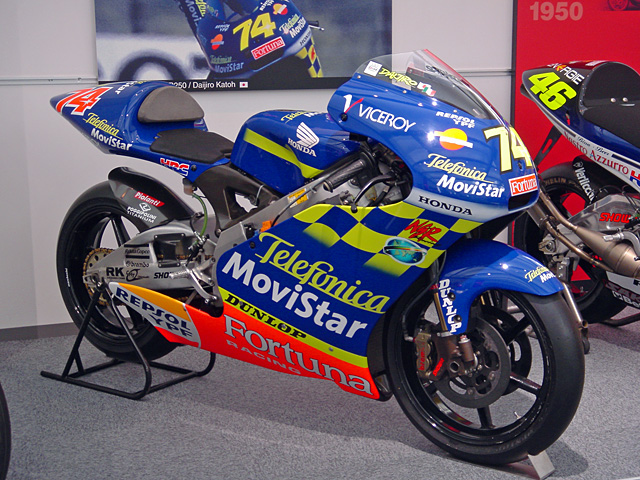
NSR 250
"Shuhei Nakamoto, was trying to decide what should be done about Max Biagi's NSR 250 two-stroke V-twin, and he decided, let's try flexible."
The Honda NSR 250 is a racing bike used in Grand Prix competition. Here it’s the bike Max Biagi was riding, and the discussion is about changing the chassis so it handles better at speed.
The Honda NSR 250 is a two-stroke V-twin Grand Prix racing motorcycle referenced as the platform Max Biagi rode. The segment focuses on chassis tuning—making it flexible enough to change how the bike behaves at speed, and then dealing with the side effects of that flexibility.
Max Biagi
"what should be done about Max Biagi's NSR 250 two-stroke V-twin, and he decided, let's try flexible. Let's make the chassis flexible..."
Max Biagi is the race rider in this story. The hosts are saying the bike changes were made to help him ride faster and win, and they describe how the chassis stiffness affected his results.
Max Biagi is the rider used as the reference point for the NSR 250 chassis development story. The segment explains how changes to chassis stiffness affected his ability to reach top speed and ultimately how he won the title after the chassis was made stiffer outside Japan.
three cycle per second weave
"and he decided, let's try flexible. Let's make the chassis flexible, and it was so flexible that Max could not reach top speed on it without having it start that three cycle per second weave that threatens to send you to the moon."
A “weave” is when a bike starts to wobble left and right quickly at speed. In this story, the chassis was made too flexible, and that wobble showed up so strongly it limited top speed.
A “weave” is a high-speed oscillation where the motorcycle starts to rapidly sway side-to-side. The segment says the chassis became so flexible that Max Biagi couldn’t reach top speed because the bike entered a repeating oscillation pattern—described as “three cycle per second.”
flexible chassis
"But the concept of a more flexible chassis is important in this narrative because also at the very end of the RC45 period, this motorcycle, which was notable for poor performance on rough surfaces, began to show some grip..."
A “flexible chassis” means the bike’s frame is designed to flex more when you ride. The idea is that it can help the tires grip, but if it flexes too much, the bike can start wobbling and become hard to control.
A “flexible chassis” means the frame is tuned to allow more movement under load rather than staying rigid. In motorcycle racing, that can help the tires maintain contact and improve control, but too much flexibility can trigger instability like weaving—so the segment describes a shift toward making the chassis stiffer outside Japan.
John Kosinski
"such that John Kosinski was finally able to win Honda a Superbike World Championship."
John Kosinski is the rider credited here with helping Honda win a major world championship. The hosts connect his success to the bike handling improvements they were describing.
John Kosinski is mentioned as the rider who ultimately helped Honda win a Superbike World Championship. In this segment, he represents the payoff of the chassis/handling evolution that started with the earlier “flexibility vs stiffness” experiments.

RC30
"Well, then how did RC30 win two Superbike World Championships in 88 and 89? It won them because it could accelerate, and there are a lot more turns than there are straightaways."
The Honda RC30 is a Honda race bike that won the Superbike World Championship twice. The big reason it worked is that it accelerated well, and superbike races have lots of turns, not just straight lines.
The Honda RC30 is a race-focused superbike that won two Superbike World Championships in 1988 and 1989. The key idea the hosts emphasize is that it could accelerate strongly and that its strengths matched how superbike races are mostly made up of corners rather than long straights.
Cosworth
"It just happens that Massimo Bordi, when he went to Cosworth to complete some of the work that would result in the 851 and the 750 before it, a four-valve..."
Cosworth is a motorsports engineering company that helps design and develop race engines. Here, it’s mentioned because Bordi’s work there influenced Ducati’s later engine direction.
Cosworth is an engineering company known for high-performance racing engines and development work. In the segment, Massimo Bordi goes to Cosworth to do work that leads to Ducati’s later 851/750-era engine changes, including the shift toward four-valve design.
four-valve
"complete some of the work that would result in the 851 and the 750 before it, a four-valve, a new thing for Honda, for Ducati, and a departure so great..."
“Four-valve” means each cylinder has four valves total—usually two for letting air in and two for pushing exhaust out. More valve area and better breathing can help the bike accelerate, especially when you’re coming out of turns.
A four-valve engine uses two intake valves and two exhaust valves per cylinder. The hosts connect this to Honda’s and Ducati’s evolution because four-valve layouts can improve how quickly the engine breathes, which helps acceleration and corner exit.
two-valve
"there were two factions within Ducati, namely Bordi faction and the two-valve forever faction led by the old man. Tambourine."
“Two-valve” means each cylinder has just two valves total—one to bring air in and one to let exhaust out. The hosts are saying Ducati had a faction that wanted to stick with that simpler setup instead of moving to four valves.
A two-valve engine typically uses one intake valve and one exhaust valve per cylinder. The segment frames Ducati’s internal debate as “two-valve forever,” contrasting it with the newer four-valve direction—because valve arrangement affects how quickly the engine can fill the cylinder and respond for acceleration.
valve timings
"What happened is that Ducati started out with the four-valve engine that had wildly excessive valve timings that came to it from Formula One..."
Valve timing is about exactly when the engine’s valves open and close. If the timing is set for the wrong engine speed range, the bike may feel strong only at the top end but weak in the middle, which makes acceleration out of corners worse.
Valve timing is when the intake and exhaust valves open and close relative to the piston’s position. The hosts say Ducati’s early four-valve approach used “wildly excessive valve timings,” which hurt mid-range response—so the bike couldn’t accelerate the way the RC30 could.
mid-range
"And the Ducati's had no mid-range at the time that the RC30 was winning those championships, and so it could not accelerate."
Mid-range is the middle part of the rev range—where you’re usually accelerating out of corners. If a bike has no mid-range, it feels flat unless you rev it very high.
Mid-range refers to the engine speed band between low-end and peak power where riders often spend most of their time in real riding and racing. The hosts say Ducati’s early setup had “no mid-range,” meaning it lacked the usable acceleration when the engine wasn’t spinning at its very highest RPM.
valve lift
"What began at this point is a slow march towards shorter valve timings, a little bit more valve lift. These are steps toward the modern ideal of the four-valve..."
Valve lift is how much the valves open. More lift can let more air in (and help exhaust out), but it has to be paired with the right timing so the engine accelerates where you actually ride it.
Valve lift is how far the valves open off their seats. The segment describes a “march” toward shorter valve timings and “a little bit more valve lift” as steps toward a modern four-valve ideal that improves breathing without needing long opening durations.
intake
"And long timing is what kills acceleration because while it fills the cylinder very well at peak revolutions or at peak torque revolutions, at lower revolutions, there isn't enough intake"
Here, “intake” means how well the engine can pull air in through the intake valves. The point is that valve timing that works at the top end may not pull enough air at lower revs, so acceleration suffers.
In this context, “intake” means the flow of air (and fuel) into the cylinder through the intake valves. The hosts argue that long valve timing can fill the cylinder well at peak RPM, but at lower RPM there isn’t enough intake flow to support strong acceleration.
piston's rising on compression
"velocity to keep flowing into the cylinder as the piston's rising on compression. So what happens is [663.2s] you filled the cylinder and now it pumps it back out."
As the piston moves up, it squeezes the fuel/air mixture inside the cylinder. How that squeezing and airflow behave can change how much power the engine makes.
This describes the compression stroke behavior in an internal-combustion engine: as the piston moves upward, the trapped air-fuel mixture is compressed. In performance engines, how well the cylinder fills and how pressure/flow changes during compression affects power and efficiency.
valve accelerations
"They began to shorten their timing and when they did so, valve accelerations went up and so did the [679.1s] stress on valve train parts."
Valves don’t just open—they speed up and slow down fast. If they accelerate harder, the engine can breathe better at high revs, but it can also beat up the valve parts faster.
Valve acceleration is how quickly a valve’s speed changes as it opens and closes. Higher valve accelerations can improve breathing at high RPM, but they also increase stress and wear on the valve train (cam, followers, springs, and related parts).
valve train parts
"They began to shorten their timing and when they did so, valve accelerations went up and so did the [679.1s] stress on valve train parts. So that is the story here."
The valve train is the mechanism that moves the engine’s intake/exhaust valves. If the engine is tuned aggressively, these parts take more force and can wear out sooner.
The valve train is the set of components that operate the intake and exhaust valves, typically including cams, followers/rockers, springs, and the hardware that transmits motion. When engineers push RPM and valve motion, these parts see higher loads and can become a limiting factor.

Honda RC45
"And meanwhile, here's Honda with RC45, which had a lot of power, [701.5s] which did not go well on rough surfaces. And they tried things."
The Honda RC45 is a Honda racing motorcycle designed to beat Ducati. The hosts say it had a lot of power, but it didn’t handle rough terrain as well as riders wanted, so Honda kept trying fixes.
The Honda RC45 is a race-focused V-twin superbike built around Honda’s effort to challenge Ducati’s dominance. In this segment, it’s discussed as having strong power but struggling on rough surfaces, leading to multiple engine and chassis-related experiments.
Carl Fogarty
"Meanwhile, here's Carl Fogarty winning races. Now I see in my notes that Fogarty showed up at Ducati as a [777.5s] disheveled, bummish looking person asking for an engine."
Carl Fogarty is a famous motorcycle racer. In this story, he shows up at Ducati and gets an engine to ride, and his results help prove Ducati’s approach can win.
Carl Fogarty is described as a top rider who went to Ducati asking for an engine. The segment frames his early success with Ducati as a turning point that helped persuade Honda that a twin-cylinder strategy could work at the highest level.
piston acceleration is proportional to n squared
"because our 45 is now turning close to 16,000. And piston acceleration is proportional to n [821.9s] squared where n is RPM."
When an engine spins faster, the piston has to speed up and slow down more aggressively. The segment says those forces grow very fast with RPM, which is why high-rev engines need careful engineering to avoid breaking parts.
This is an engineering relationship: as engine speed (RPM, “n”) increases, the acceleration demands on the piston rise roughly with the square of RPM. That’s why pushing revs higher quickly increases mechanical stress and limits how far designers can go without changing geometry, materials, or valvetrain strategy.
100 by 63.5
"So they designed this thing 100 by 63.5. It's quite over square, but not radically so. [842.1s] It's four valves."
“100 by 63.5” is the engine’s basic size measurements: the cylinder diameter (bore) and how far the piston travels (stroke). This geometry affects how the engine behaves, especially at high RPM.
“100 by 63.5” describes engine bore and stroke dimensions (in millimeters in typical motorcycle/engine specs). A “more over-square” design (larger bore than stroke) generally helps high-RPM breathing and reduces piston speed for a given RPM, but it changes combustion and torque characteristics.
over square
"So they designed this thing 100 by 63.5. It's quite over square, but not radically so. [842.1s] It's four valves."
“Over-square” means the engine’s cylinder is wider than the piston’s travel distance. That often helps the engine rev higher, which is great for racing.
An “over-square” engine has a larger bore than stroke. This typically allows higher engine RPM because the piston doesn’t travel as far each cycle, and it can support larger valves for better airflow—useful for racing power.
90 degree v angle
"It's four valves. It has 90 degree v angle, which makes it possible to balance primary [849.7s] shaking force 100%."
In a V-twin, the cylinders are set in a V shape. A 90-degree angle can help the engine feel smoother because the internal forces can cancel each other out better.
The “V angle” is the angle between the two cylinder banks in a V-twin. A 90-degree V can help with engine balance (reducing vibration) because the firing and moving-mass forces can be arranged to cancel more effectively.
primary shaking force
"It has 90 degree v angle, which makes it possible to balance primary [849.7s] shaking force 100%."
“Primary shaking force” is the main engine vibration caused by pistons moving. Engineers try to design the engine so those vibrations cancel out as much as possible.
Primary shaking force refers to the main vibration forces created by the reciprocating (moving up-and-down) parts like pistons. Engine designers use crankshaft and cylinder-bank geometry to reduce these forces so the bike feels less harsh and can sustain high RPM.

Ducati 851
"One of the problems is that as Ducati kept increasing their displacement, 851, 888, [881.1s] 926, 955. It just went on and on."
Ducati 851 is one of the earlier bigger-displacement versions in Ducati’s V-twin racing line. The hosts say that as Ducati kept increasing engine size, it started running into strength/durability limits.
The Ducati 851 is mentioned as part of Ducati’s progression of increasing displacement in its V-twin superbikes. The segment uses these model numbers to explain how pushing displacement upward eventually created durability problems like thin cylinder liners.
Ducati 926
"One of the problems is that as Ducati kept increasing their displacement, 851, 888, [881.1s] 926, 955. It just went on and on."
Ducati 926 is another bigger-displacement version mentioned in the Ducati V-twin story. The segment uses it to show that pushing displacement higher can stress parts until they start cracking.
The Ducati 926 appears in the segment as another step in Ducati’s displacement escalation for its V-twin superbikes. The hosts connect this escalation to increasing stress on internal components and eventual durability failures.

Ducati 888
"One of the problems is that as Ducati kept increasing their displacement, 851, 888, [881.1s] 926, 955. It just went on and on."
Ducati 888 is one of the later, larger-displacement steps in Ducati’s racing V-twin evolution. The point here is that bigger engines eventually hit durability limits.
The Ducati 888 is referenced in a list of Ducati V-twin superbike displacements. In this segment, it’s used to illustrate the trend of increasing displacement until component durability (like cylinder liners) became a recurring issue.

Ducati 955
"One of the problems is that as Ducati kept increasing their displacement, 851, 888, [881.1s] 926, 955. It just went on and on. And finally, the cylinder liner is so thin that it's [891.0s] cracking all the time."
Ducati 955 is the biggest displacement mentioned in the Ducati progression. The hosts say that at this point, the engine’s internal parts—especially the cylinder liner—were getting too stressed and could crack.
The Ducati 955 is the last displacement in the segment’s list of Ducati V-twin superbike sizes. It’s used to set up the durability conclusion: as displacement kept rising, the cylinder liner thickness became a limiting factor.
cylinder liner is so thin that it's cracking all the time
"And finally, the cylinder liner is so thin that it's [891.0s] cracking all the time. The cases have been bored out until there's nothing to hold the studs in"
The cylinder liner is the inner surface the piston seals against. If it’s too thin, the heat and pressure can cause it to crack, which can ruin the engine’s ability to seal properly.
A cylinder liner is the replaceable sleeve inside the engine block that the piston rings run against. If it’s too thin for the stresses of racing use, it can crack, leading to loss of compression and oil control—an important durability failure mode.
oil ring
"they started out with one piece oil ring and it ended up with three pieces. And that's a classic for scraping oil off of a distorted bore."
Inside the engine, the piston has rings. One of them (the oil ring) helps keep oil from getting into the combustion area. If the cylinder wall isn’t perfectly shaped, that ring can’t do its job well.
An oil ring is a piston ring designed to scrape excess oil off the cylinder wall so it doesn’t get burned. If the cylinder bore is distorted, the oil ring can’t seal or scrape correctly, which is why the speaker calls it a concern.
distorted bore
"And that's a classic for scraping oil off of a distorted bore. So they needed a new engine."
The bore is the inside wall of the cylinder. If it gets warped or out of shape, the piston rings don’t seal as well, and the engine can start using oil or running with more friction.
The bore is the inside diameter of the cylinder where the piston moves. A distorted bore means the cylinder shape isn’t true, which can prevent piston rings from sealing and can increase oil consumption and friction.
Ducati Testa Strata engine
"So Ducati are preparing the Testa Strata engine, the narrowhead. They've hired Angiolino Marchetti, who has just retired from 30 years at Ferrari to design the head."
This is a particular Ducati racing engine head design. The “Testa Strata” approach was meant to help the engine breathe and run efficiently at high RPM. Here, it’s part of Ducati’s attempt to fix friction losses when the engine spins fast.
The Ducati Testa Strata ("narrowhead") is a specific Ducati racing engine head design aimed at improving airflow and combustion efficiency. In this segment, it’s tied to Ducati’s effort to solve high-RPM friction problems and to build an engine that can run at very high revs.
desmodromic system
"it is a fundamental belief that the desmodromic system essentially contains no friction and that the savings in friction is passed to the rear tire."
This is a special way of controlling the engine’s valves. Instead of using springs to close the valves, the system uses cams to open and close them mechanically. The idea is more precise control and less loss.
A desmodromic system is a valve-actuation design where the cam actively opens and actively closes the valves, rather than relying on valve springs. Ducati is known for this approach, and the speaker claims it reduces friction losses in the valve train.
friction horsepower
"It gives us four extra horsepower, but we find five more friction horsepower in the cylinder head. So the program is a net loss."
Even when an engine makes power, some of that power is wasted as “drag” inside the engine. Friction horsepower is a way of measuring how much power gets lost to that internal drag.
Friction horsepower is power lost to internal resistance—things like rubbing, pumping losses, and valve-train/cylinder-head losses. The speaker’s point is that Ducati gained power from the cam changes, but the cylinder head friction increased even more, making the net result worse.
cam profile
"Meanwhile, Ducati engineers are telling me we come up with a new cam profile. It gives us four extra horsepower, but we find five more friction horsepower in the cylinder head."
The camshaft controls the valves. The cam profile is the cam’s shape, which decides when and how far the valves move. Tweaking it can change power, but it can also change how much the engine “fights itself.”
A cam profile is the shape of the camshaft lobe that determines how the valves open and close over the engine’s RPM range. Changing the cam profile can improve breathing and power, but it can also affect friction and heat if it increases losses elsewhere.
cassette gearbox
"Also, the Honda has a cassette gearbox so that if there's a certain turn on the racetrack where they need to change the RPM in a certain gear by two or 300 revs, no problem."
A cassette gearbox is a race-focused transmission design that’s built in modules. That makes gear changes and gearbox work faster and more controlled, which helps the rider hit the right engine speed at the right moment.
A cassette gearbox is a racing gearbox layout where gear clusters are packaged into a cassette-like module for faster, more consistent service and setup. The speaker uses it to explain how the Honda could make quick, precise RPM changes between gears during a specific cornering situation.
shift drum
"There's a plate on one side that has both gear shafts and the shift drum and it just pulls out and plugs back in."
The shift drum is the internal part that helps move the transmission into the next gear. It’s basically the “gear selector” mechanism inside the gearbox.
The shift drum is the rotating component in a motorcycle transmission that moves shift forks to select different gears. It’s part of the mechanism that translates the rider’s shift action into actual gear engagement.
ratios
"The cassette gearbox, you just pull it right out and you can change your ratios and it's a boon. There's a plate on one side that has both gear shafts and the shift drum and it just pulls out and plugs back in."
Gear ratios are how the gearbox multiplies the engine’s speed. Different ratios can make the bike accelerate harder or reach higher speed depending on the track.
In a gearbox, “ratios” are the gear ratio values that determine how engine speed relates to wheel speed in each gear. Changing ratios can shift the bike’s acceleration and top-end behavior to match track layout and gearing targets.
vertically split crankcase
"In order to have the benefit of the other ratios that they've made, they have to build up engines with those ratios because it's a vertically split crankcase. And Boardy wishes that he hadn't done vertically split, but that was what they began with."
A vertically split crankcase means the engine’s lower and upper halves are separated along a vertical plane. That layout can complicate gearbox service because the transmission may be integrated with the engine cases, so swapping gearbox internals can require major engine disassembly.
Euro five syndrome
"What it's turning into is what I like to call the Euro five syndrome, which is the emissions people want short valve timings because that means the overlap that top dead center has to practically disappear."
The speaker is describing an emissions rule–driven engine change. To meet stricter pollution limits, engineers often adjust valve timing in ways that can reduce overlap and change how the engine feels.
“Euro five syndrome” is the speaker’s shorthand for the emissions-driven trend (associated with Euro 5 regulations) toward valve timing strategies that reduce overlap. Less overlap can help emissions control, but it can also change how the engine makes torque and how it scavenges exhaust gases.
overlap
"the emissions people want short valve timings because that means the overlap that top dead center has to practically disappear."
Overlap is when the intake and exhaust valves are open around the same moment. It helps the engine “clean out” exhaust, but changing it can be part of emissions tuning.
Valve overlap is the period near top dead center when both intake and exhaust valves are open at the same time. That overlap can improve cylinder scavenging and tuning, but reducing it (as described here) can be used to meet emissions targets.
back pumping charge
"And short valve timings give you broad torque because there isn't the opportunity for back pumping charge that you've already pulled into the cylinder."
“Back pumping charge” refers to intake charge being pushed back or not effectively retained in the cylinder during certain valve timing conditions. The speaker argues that shorter valve timing reduces that effect, which changes the engine’s torque characteristics.
10 millimeters
"They've moved the engine forward 10 millimeters. You know how thick a 10 millimeter bolt is? It's not very much."
Even a small engine position change can alter how the bike balances. That can change how it steers and how well it grips when you accelerate.
In motorcycle racing, shifting the engine forward by a small amount like 10 millimeters can meaningfully change weight distribution and the bike’s moment of inertia. That can affect traction, steering response, and how the chassis loads under acceleration.
hook up better
"they've jacked the back end up and they've done all these different things to try to get it to hook up better."
“Hook up better” means the bike grips the ground better so it can put power down without slipping. It’s usually about traction and suspension/chassis setup.
“Hook up better” is racing slang for improving traction—how effectively the tire grips and transfers engine power to the road. It’s often influenced by chassis geometry, weight distribution, suspension setup, and engine placement.
V four
"Honda has given up the V four, which is their favorite all time"
“V four” means a motorcycle engine with four cylinders arranged in a V shape. The host is saying Honda gave up that engine layout and switched to a different one (a V-twin) to chase better results.
A V four is an engine with four cylinders arranged in a V shape. In superbike racing discussions, switching away from a V-four toward a V-twin changes how power delivery, vibration, and packaging affect handling and traction—especially when you’re trying to accelerate hard out of corners.
500 two-stroke Grand Prix
"coming from MotoGP, coming from 500 two-stroke Grand Prix really, that the more rigid the chassis"
This refers to the old 500cc two-stroke era of Grand Prix motorcycle racing. The host is saying that earlier racing ideas from that time shaped how some bikes were built.
The 500cc two-stroke Grand Prix class was the historical top category of Grand Prix motorcycle racing that used 500cc two-stroke engines. The host credits that era’s design philosophy—especially around chassis stiffness and handling under acceleration—for influencing later superbike development.
rubber tooth belt
"And they don't have a durability problems with their valve train because there's no rubber tooth belt."
A rubber timing belt is a belt with teeth that keeps the engine’s valve timing in sync. The host is saying Ducati had trouble with belt durability when they tried to make the engine’s timing changes more aggressive for racing.
A rubber-toothed belt is a timing belt used to synchronize the camshafts with the crankshaft. The host contrasts Ducati’s belt-driven valve train problems with Honda’s approach, saying Ducati’s belt wear and durability issues became severe as they pushed valve timing shorter and faster.
peak forces
"the peak forces on the levers opening and closing and on the drive have to increase."
Peak forces are the biggest “pushes” or stresses the parts see. The host is saying Ducati’s aggressive valve timing caused those stresses to spike, which is why the belt system wore out quickly.
Peak forces are the maximum loads experienced by engine and valvetrain components during the most demanding moments of operation. Here, the host ties higher peak forces to the stresses of faster valve opening/closing and to the mechanical limits that led Ducati to frequent belt changes before switching to a chain.
silent chain
"they got to a point where they threw the belts away and went to a silent chain."
A silent chain is a quieter timing chain used to control valve timing. The host is saying Ducati switched from belts to a chain because the belt system couldn’t handle the stresses of their racing valve timing.
A silent chain is a timing chain designed to reduce noise compared with older chain designs, while still driving cam timing. The host says Ducati eventually “threw the belts away” and moved to a silent chain to solve the durability problem created by increasingly aggressive valve timing.

Ducati engine
"Ducati's new engine comes home, comes into battle and it manages to defeat Honda in 2001."
They’re talking about a new Ducati engine that showed up around 2001. The point isn’t just “more power”—the host suggests the bike’s stability and how it behaves under braking/turn-in mattered just as much.
This segment discusses a Ducati engine introduced for the 2001 season, framed as a key part of Ducati’s push to beat Honda. The host argues it may not have been the only deciding factor, because rider feedback and chassis stability (wobble/weave) also played a major role.
wobble or every weave
"Colin's remark about losing five feet with every wobble or every weave is very much to the point."
Wobble and weave are terms for when a motorcycle starts to feel unstable—moving around instead of tracking straight. The host is saying that instability can cost you distance and time in a race, even if the engine is strong.
Wobble and weave describe unstable motorcycle motion—side-to-side oscillation and a more complex front-end “hunting” behavior. The host uses Colin’s remark about losing “five feet” with each wobble/weave to argue that stability and chassis behavior can decide race outcomes as much as engine performance.
roll rate
"the Kawasaki 750. It was shocking how fast his roll rate was. He could just roll no pause."
Roll rate is how fast the bike leans over when you start turning. If it’s “fast,” the bike gets into the corner attitude quickly; if it’s too slow or too abrupt, it can feel awkward.
Roll rate is how quickly a vehicle (or motorcycle) leans from side to side when cornering. A faster roll rate can help you get the bike into its turn-in attitude quickly, but it also depends on suspension setup and chassis stiffness to avoid feeling unstable.
quarter speed special
"Ducati, because they had such a featureless power band at this point, this is not the [1606.0s] quarter speed special with all the power up high. This has now been broadened out very considerably."
This sounds like a nickname for an engine that mainly feels strong at high revs. They’re saying the Ducati they’re talking about isn’t that kind of “high-rev-only” setup—it’s more spread out.
“Quarter speed special” here appears to be a rider/engineer nickname for a setup or engine character that concentrates power at higher RPM (the “power up high” description). The point is that this Ducati is not in that high-RPM-only character; instead, its power delivery has been broadened.
aluminum twin spar frames
"So what happens is they start to play with it. They're making little changes here and there. [1690.4s] And finally, they decide that they want to make a modification kit that would [1697.9s] allow the flexibility to be introduced step by step... [1713.3s] Who would? Well, during the era of aluminum twin spar frames, when that stuff was coming in,"
An aluminum twin spar frame is a motorcycle frame made from two main metal beams. It’s designed to be strong and stiff so the bike handles predictably when you’re turning hard.
Aluminum twin spar frames are motorcycle chassis designs that use two main aluminum beams (spars) running along the sides to support the engine and rider. This layout is often chosen for stiffness and predictable handling, and the segment references this era as the time when that kind of frame construction was becoming common.
trellis frame
"And then here comes Ducati with the trellis frame, possibly not knowing what they had."
A trellis frame is a motorcycle frame built like a metal lattice. It’s designed to be strong but not completely rigid, so the bike can feel more controlled when you’re turning and hitting rough pavement. The hosts are using it to explain how Ducati tried to solve handling.
A trellis frame is a motorcycle chassis made from a lattice of triangulated tubes (often steel or aluminum) rather than a single rigid backbone. The goal is to manage stiffness and flex in a controlled way so the bike can feel stable while still allowing compliance over bumps and during cornering. In this segment, it’s tied to Ducati’s handling approach.
Preziosi
"Yes, we know that they didn't know what they had because when Preziosi decided to build something stiffer, he went all the way in the opposite direction with carbon fiber and built the black pyramid, which rested on the cylinder heads and held the steering head out where it belongs."
Preziosi is a Ducati engineer. The hosts are saying he made a big design decision to make the bike much stiffer, using carbon fiber. That choice shaped how the motorcycle handled.
Preziosi refers to Ducati engineer Massimo Preziosi, a key figure in Ducati’s race-bike development. Here, the hosts say he pursued a major stiffness strategy using carbon fiber, which they describe as an extreme opposite direction from what came before. It’s used to explain why Ducati’s design choices led to a distinctive “stiffer” behavior.
carbon fiber
"Yes, we know that they didn't know what they had because when Preziosi decided to build something stiffer, he went all the way in the opposite direction with carbon fiber and built the black pyramid, which rested on the cylinder heads and held the steering head out where it belongs."
Carbon fiber is a very strong, lightweight material made from woven fibers. Race teams use it because it can make parts stiff without adding much weight. Here it’s mentioned as part of a design meant to make the bike feel more rigid.
Carbon fiber is a lightweight composite material used in high-performance motorcycles and cars to achieve high stiffness with less mass. In this segment, carbon fiber is described as part of Ducati’s “stiffer” direction, supporting a structure that holds the steering head position. The implication is that material choice changes how the chassis resists twisting and bending.
black pyramid
"Yes, we know that they didn't know what they had because when Preziosi decided to build something stiffer, he went all the way in the opposite direction with carbon fiber and built the black pyramid, which rested on the cylinder heads and held the steering head out where it belongs."
The “black pyramid” is a special structural piece on the bike. The hosts say it sits on the engine area (the cylinder heads) and helps keep the front steering mount in the right position. That matters because it affects how stable and predictable the bike feels when you turn.
“Black pyramid” is a nickname for a Ducati race-bike carbon-fiber structure that the hosts say sat on the cylinder heads and supported the steering head position. The steering head is the front mounting area that sets the bike’s steering geometry, so holding it “where it belongs” helps maintain predictable handling. The story frames it as an extreme stiffness solution.
steering head
"Yes, we know that they didn't know what they had because when Preziosi decided to build something stiffer, he went all the way in the opposite direction with carbon fiber and built the black pyramid, which rested on the cylinder heads and held the steering head out where it belongs."
The steering head is the front part of the frame where the handlebars/forks pivot. If it moves or flexes too much, the bike can feel vague or unstable. The hosts are saying Ducati used a structure to keep that front mounting point fixed.
The steering head is the frame area that the front fork assembly pivots around, effectively setting the bike’s front-end geometry. Its position and stiffness influence how the bike turns and how stable it feels under braking and cornering loads. In this segment, the “black pyramid” is said to hold the steering head in the correct location.
Tamborini
"And this was not a modification to Tamborini's creation. Tamborini was not an engineer."
Tamborini is a person the hosts bring up as part of the background to the design story. They’re basically saying he wasn’t doing engineering in the strict sense—more like he watched bikes and took inspiration. That contrast helps explain why Honda’s later solution was more technical.
Tamborini refers to a designer/engineer associated with earlier motorcycle development mentioned in the story. The hosts contrast him with Preziosi by saying Tamborini wasn’t an engineer and mainly observed motorcycles rather than designing the system from a technical engineering standpoint. This sets up why Honda’s later engineering-led approach differed.
Laguna
"Al Luddington told me the story of being at Laguna and he said,"
Laguna is a well-known race track in California. It’s the kind of place where you can really feel how a motorcycle handles. The hosts mention it because that’s where they observed the bikes behaving a certain way.
Laguna refers to Laguna Seca, a famous road racing circuit in California known for its technical layout and elevation changes. It’s a common venue for motorcycle racing and testing because chassis and tire behavior show up clearly there. The hosts use it as the setting for the Honda instability story.
Al Luddington
"So, Honda decided they're going to try this and [1789.4s] Al Luddington told me the story of being at Laguna and he said,"
Al Luddington is the person the host quotes about a Laguna event, describing what he saw with Honda’s bikes. In this segment, his firsthand account is used to support the idea that the Hondas were unstable (“skating” and poorly connected to pavement) before they made a setup change. It’s a narrative anchor for the technical story.
lateral stiffness
"And Honda did that. They created this system by which the lateral stiffness could be adjusted"
Lateral stiffness means how much the bike’s frame resists bending sideways when you’re turning. Too soft can make it feel wobbly; too stiff can make it feel twitchy or uncomfortable over uneven pavement. The hosts say Honda could adjust this to improve handling.
Lateral stiffness is how resistant the motorcycle’s chassis is to sideways deflection under cornering forces. If lateral stiffness is too low, the bike can feel vague; if it’s too high, it can feel harsh or unstable over bumps and transitions. The segment says Honda created a system to adjust lateral stiffness, implying they could tune handling behavior.
RPM
"Well, it was a sensible choice to go to a v-twin because you got the displacement [1913.9s] and you could build the acceleration without the RPM."
RPM tells you how fast the engine is spinning. Spinning higher can help make power, but it also brings more stress and heat. The hosts are saying the V-twin can accelerate strongly without needing to run at very high RPM.
RPM (revolutions per minute) is how fast an engine spins. Higher RPM can make more power in many engines, but it also increases stress, heat, and noise. The hosts’ point is that with a V-twin’s displacement, you can produce strong acceleration without relying on very high RPM.
throttle
"riders were saying you have to, on this bike, you have to take up all the slack in the throttle so that when you start to feed power, there won't be any sort of overdoing it."
Throttle is the rider’s control of how much power the engine gets. The speaker is saying riders needed to open it smoothly so the bike didn’t jump into power too aggressively.
In motorcycle racing, throttle control is how smoothly and precisely the rider opens the throttle to feed power. The speaker says riders had to “take up all the slack” so the bike wouldn’t deliver too abrupt a surge when power starts coming in.
engine mounts
"Well, they were leaving the bolts, the RC 45, they were leaving the bolts out of one of the engine mounts, were they not?"
Engine mounts are the parts that hold the engine to the bike’s frame. If the mounting bolts or locations change, the engine can feel different and the bike’s behavior can change.
Engine mounts are the structural pieces that attach the engine to the frame, controlling how the engine is positioned and how forces are transmitted. The segment notes that the RC 45/RC 51 had a specific mounting-bolt setup, implying it affected rigidity and how the engine sat in the chassis.
cylinder-based gasket
"And they're essentially trying to break the lid off of a can of cat food by wiggling it back and forth. And what suffered was the cylinder-based gasket"
A gasket is a sealing part that prevents leaks. The speaker is saying the cylinder-area gasket was the part that took the hit when the engine design was stressed or moved.
A cylinder-based gasket is the sealing layer between the cylinder assembly and the engine’s mating surfaces. The speaker says what suffered was this gasket, which implies the design or stresses from the crankcase/cylinder casting approach could lead to sealing problems.
cylinder block
"They cast the upper crankcase and the cylinder block in one, just as they had done in the 60s."
The cylinder block is the main engine casting that has the cylinder bores inside it. The host is saying Honda combined the cylinder block with the crankcase casting to reduce gasket-related issues.
The cylinder block is the engine’s main casting that contains the cylinder bores where the pistons move. The host highlights a design where the cylinder block is cast together with the upper crankcase, aiming to eliminate certain gasket interfaces that can cause leaks over time.
head gasket
"They cast the upper crankcase and the cylinder block in one, just as they had done in the 60s. Because that meant they would never have base gasket or head gasket trouble."
A head gasket is a seal between the cylinder head and the engine block. If it fails, you can get leaks or overheating. The host is saying Honda’s design reduced the chance of head-gasket trouble.
A head gasket seals the cylinder head to the engine block, preventing coolant and combustion gases from mixing or leaking. The segment claims that Honda’s one-piece casting of the upper crankcase and cylinder block reduced the likelihood of head-gasket issues by changing how many critical sealing surfaces the engine had to rely on.
base gasket
"They cast the upper crankcase and the cylinder block in one, just as they had done in the 60s. Because that meant they would never have base gasket or head gasket trouble."
A base gasket is a thin sealing part inside an engine that helps keep oil and combustion gases from leaking where engine parts bolt together. The host is saying Honda’s casting approach reduced the need for that gasketed joint, which lowered the chance of leaks.
A base gasket is a sealing layer between the engine’s lower mating surfaces (often between the cylinder and crankcase area). The host argues that casting the upper crankcase and cylinder block as one piece helps avoid “base gasket trouble,” because there’s less need for that gasketed joint to seal under heat and pressure.
pivotless construction
"Honda made a big change by adding flexibility to their chassis. The chassis was a completely, it was a novelty as well. This was, they called it the pivotless construction because there was a big lug on the back of the gearbox of the RC51 V-Twin."
“Pivotless construction” describes a chassis approach where the swingarm’s movement is controlled without a traditional swingarm pivot location. In the RC51 explanation, the swingarm is linked to a lug on the back of the gearbox, and the frame geometry allows the swingarm pivot to pass through holes—aimed at adding chassis flexibility and improving how the bike responds under load.
swing arm
"to which the swing arm attached. So that's not a new idea, but Honda adopted it."
The swingarm is the arm that holds the rear wheel and lets it move when you hit bumps. It’s part of how the rear suspension works.
The swingarm is the rear suspension arm that pivots to allow the rear wheel to move up and down. The speaker notes that using the swingarm area as part of the bike’s overall compliance isn’t a new idea, but Honda adopted it in a particular way.
chassis flexibility
"And in the process they learned, they really started the business of chassis flexibility being intentionally used to provide suspension when the motorcycle is leaned over at 63 degrees."
Chassis flexibility means the bike’s frame is designed to flex a little. That flex can help the bike soak up road bumps while you’re cornering, instead of relying only on the shocks.
Chassis flexibility is the intentional use of frame and mounting compliance so the motorcycle can absorb bumps through structural flex, not just through the suspension springs and shock. In this segment, it’s described as being used to provide suspension when the bike is leaned over at extreme angles.
lateral flexibility
"So they had to have lateral flexibility to function as a suspension when the motorcycle was leaned over. The lack of this is why RC 30 and RC 45 had their reputations for being impossible to ride on rough surfaces."
Lateral flexibility is how much the bike can move sideways. When you’re leaning in a turn, that sideways movement is important so bumps don’t upset the bike.
Lateral flexibility is side-to-side compliance in the motorcycle’s structure. The speaker argues that when the bike is leaned over, the suspension needs to work in the lateral direction so bumps can be absorbed effectively during cornering, rather than only in a straight-up direction.

Ducati MotoGP bike
"And if you look at what's happening in MotoGP now, somebody got a picture of the steering head and a cover that's normally over the steering head area of the front of a Ducati MotoGP bike."
This is talking about Ducati’s top-level MotoGP race bikes. They’re comparing how the front frame area and engine mounting are built so the bike can deal with bumps while turning.
A Ducati MotoGP bike refers to Ducati’s factory racing motorcycles in MotoGP, where the frame and front-end geometry are heavily optimized for cornering forces. Here it’s used as the comparison point: the speaker describes how Ducati’s steering head area and engine mount plates create space and flexibility for the bike’s front-end behavior when leaned over.
triple clamps
"And then the engine mount plates are these sheet metal things that are thin... And there were these blades, the upper triple clamps on a lot of these bikes now are blades, little thin blades."
Triple clamps are the parts that hold the front fork tubes in place. They’re part of the steering setup, and in this discussion they’re described as being shaped to help the bike flex in a useful way.
Triple clamps (also called yokes) are the upper and lower clamp plates that hold the front fork tubes and connect them to the steering head. The segment notes that on modern bikes these can be made as thin “blades,” which helps create the lateral compliance needed for the bike’s front-end behavior when leaned over.
torque
"And they're designing this stuff to be, you know, sort of parallelogram-ish so that you don't get torque. You don't want to get torque."
Torque here means a twisting force. The speaker is saying the bike’s setup is meant to avoid twisting in a way that would make the tire lose grip or feel unpredictable.
In this context, torque is the twisting force that can cause unwanted rotation of the suspension/steering linkages as the bike moves sideways over bumps. The speaker is saying the geometry is designed to avoid generating that twist so the wheel path stays more predictable.
powerband
"If you can hook your motorcycle up, then all the wonderful ingenuity that you've displayed in smoothing the powerband means that you can give the tire an environment in which to work"
A motorcycle’s powerband is the range of engine RPM where it makes strong, usable power. The host is connecting powerband shaping (how the engine delivers torque through the rev range) to traction: smoother delivery helps the tire maintain nearly constant force instead of surging.
gripping
"And it responds by gripping because it isn't getting airtime."
Gripping means the tire is able to stick to the road. Better grip usually comes from keeping the tire planted and not letting the suspension unload it over bumps.
Here, gripping refers to the tire’s ability to generate traction at the contact patch. The host ties it to suspension control and traction stability—less airtime and less force “spiking” helps the tire maintain grip through the turn.
Airtime
"Airtime means that whatever forces are acting on the motorcycle, mostly its own inertia, are going to tend to make it go straight rather than turn."
Airtime is when the tires momentarily leave the road. If that happens, the bike can’t steer as effectively because it’s basically coasting through the turn instead of gripping the pavement.
Airtime means the motorcycle briefly loses contact with the ground due to bumps or suspension movement. The host explains that when the bike is in the air, inertia tends to make it go straight rather than turn, so the difficult part of riding happens in the turns.
spinning
"Because once the tire starts to spin, it's hard to get it to hook up again."
Spinning means the rear tire is spinning faster than it can grip. When that happens, it’s harder to get the bike back to stable traction for turning.
Spinning refers to wheelspin—when the rear tire rotates faster than the available traction allows. The host notes that once the tire starts spinning on the straight, it becomes harder to regain traction and “hook up” again before the next turn.
compression damping
"Stiff in spring and damping because Japanese test tracks tend to be glassy smooth... Every Kawasaki street bike had really stiff compression damming... Because once we got them over here on the street, you felt everything on compression damping on those bikes."
Compression damping is how the suspension resists being squished when you hit bumps or load the front/rear. If it’s set up for very smooth test tracks, rough roads can make the bike feel twitchy or uncomfortable and can affect grip. That’s why the same bike can feel great on a track but worse on the street.
Compression damping is the suspension’s resistance to the bike’s suspension compressing (moving closer to the wheels). If the road surface isn’t smooth, too much stiffness or damping can make the bike feel harsh and can upset traction and control. The hosts connect this to why Kawasaki bikes felt very sensitive on real streets after being tuned for smoother test tracks.
pump back
"It lowers the midrange because that's where pump back is now taking place."
“Pump back” is a shorthand for how the engine can end up moving air around in a less efficient way at certain engine speeds. Instead of making strong torque in the middle of the rev range, the engine’s breathing gets worse there. That’s why they say it lowers the midrange.
“Pump back” refers to the engine’s intake/exhaust pumping effects where the cylinder’s airflow dynamics and pressure changes can cause some of the charge to be pushed back rather than effectively contributing to combustion. In practice, it can reduce midrange torque by changing how efficiently the engine fills and breathes at certain RPM. The hosts say closing the intake valves later shifts where pump back happens, lowering midrange.
traction
"And that harder hit is going to break traction in certain places on the racetrack. That's just what happened."
Traction is how much grip the tires have. If the engine tries to push too hard for that grip—especially when you accelerate out of a corner—the tire can spin or slide. That’s what the hosts mean by breaking traction.
Traction is the tire grip available to transmit engine torque to the road or track surface without slipping. When torque delivery is too abrupt (like a harder hit near the torque peak), the tire can exceed grip and break traction. The segment specifically ties Ducati’s power and the engine’s torque characteristics to losing traction in certain track sections.
fuel injectors
"Well, very injection. How many bar are you pumping? How many injectors do you have? Where are the fuel injectors?"
Fuel injectors are the parts that spray gas into the engine. They help the bike deliver the right amount of fuel at the right time, which matters a lot for smooth acceleration.
Fuel injectors are electronically controlled valves that spray gasoline into the engine’s intake so the ECU can meter fuel precisely. In racing setups, injector placement and how many injectors are used can change throttle response and how smoothly the bike transitions between engine loads.
shower head
"Ducati had the period where they had three injectors, a shower head above the intake bell mouth... And then the shower head would take over at a certain RPM..."
“Shower head” is a way of placing injectors so they spray fuel in a more spread-out pattern near the intake. That can help the engine get fuel more smoothly at certain speeds.
“Shower head” describes an injector arrangement that sprays fuel from a distributed, multi-hole head near the intake. Spreading the spray can improve atomization and help the ECU deliver smoother fueling during specific RPM/load conditions.
off idle
"a vernier, which was to handle off idle and the first part of acceleration."
Off-idle is the moment right after you start to open the throttle from a stop or idle. That’s when the bike is most likely to hesitate if the fuel delivery isn’t matched well.
Off-idle is the small throttle opening region right after you crack the throttle from idle. It’s a critical drivability zone because airflow and fuel demand change quickly, so racing fuel systems often use dedicated injector strategies to avoid hesitation.
vernier
"a shower head above the intake bell mouth, a vernier, which was to handle off idle and the first part of acceleration."
Here, “vernier” means a small, precise fueling step used right after you crack the throttle. It helps the bike transition smoothly instead of hesitating.
A vernier (in this context) is a fine-control injector strategy used for small throttle openings and early acceleration. It’s meant to smooth the transition from idle to higher airflow so the engine doesn’t feel lean or stumble when you first roll on.
butterfly
"And then the main fuel injector, both of those are under the butterfly for most of the running."
The butterfly is the throttle valve that controls how much air gets into the engine. Since air changes with throttle position, the fuel system has to coordinate with it for smooth response.
The butterfly refers to the throttle valve (often called a throttle body butterfly) that controls how much air enters the engine. Because airflow changes with throttle position, injector strategy is coordinated with the butterfly opening so the bike can deliver fuel smoothly through off-idle and acceleration.
flat slides
"So what can you do? Roughly tuned flat slides kind of reminds me of that."
Flat slides are a type of carburetor throttle design. The way they meter fuel can feel smooth or abrupt depending on how well they’re tuned.
“Flat slides” refers to a carburetor design where a flat, sliding throttle element meters airflow and fuel. The speaker compares the transition behavior of multi-injector systems to how flat-slide carbs can deliver fuel smoothly—or feel abrupt—depending on tuning.
CO
"I used to roll in if you didn't have your CO set up just right, you know, you were looking for a 4% CO. And then you'd have enough fuel that your roll on would be clean, there'd be no coughing."
CO refers to adjusting the fuel-air mixture. If it’s not set right, the engine can run too rich or too lean and feel rough when you roll on the throttle.
CO here means carbon monoxide mixture adjustment, typically used to fine-tune how rich or lean the air-fuel mixture is at idle/low throttle. If CO is set incorrectly, the bike can hesitate or “cough” during throttle roll-on because the mixture doesn’t match the engine’s immediate fuel needs.
fuel pressure
"But yeah, 72, five bars about 72 psi of fuel pressure, which is a lot for I think most of us normal citizens who are looking at, oh, you know, 30 to 50 these days seems to be the rule."
Fuel pressure is how hard the fuel system pushes gas toward the injectors. If it’s too low or too high for the setup, the engine can feel rough or hesitate.
Fuel pressure is the amount of pressure the fuel system uses to push gasoline through the injectors. Higher pressure can help atomize fuel and support consistent delivery, but it also needs to match injector design and ECU calibration to avoid drivability issues.
Request an Explanation
Heard something you'd like explained? We'll add it to this episode.
Sign in to request explanations for terms you heard.
Want to learn more?
Browse our glossary for plain-English explanations of automotive terms, jargon, and concepts.
Help improve this episode
See something that's not quite right? Our annotations are AI-generated and can sometimes miss the mark. Click the flag icon on any annotation to suggest a correction.