
Toyota Seriously HAS NO MORE CARS | How Did This Happen? | Episode 1059
About this episode
Toyota dealer Tyler Baker from Ackerman Toyota joins Ray and Zach to explain why Toyota inventory is so tight, how customers effectively “order” cars without a true factory-order system, and why the brand’s reliability keeps demand high. The conversation digs into Tacoma and RAV4 supply, hybrid shortages, used-car turnover, and how Ackerman avoids add-ons and high fees. They also debate dealership transparency, faster sales processes, and the long-term risks of short-term pricing tactics in a supply-constrained market.
Dealer Transparency Index
"And dad, today, as you know, we have spent a lot of time working on the Dealer Transparency Index. We actually have a real life... Toyota dealer joining the show today."
A “Dealer Transparency Index” is a way to judge how honest and clear a car dealership is. It helps you spot dealers that explain the full price and terms upfront, instead of hiding extra costs.
A “Dealer Transparency Index” is a scoring or benchmarking approach that evaluates how openly and clearly dealers communicate pricing, fees, and buying terms. For listeners, it’s a way to compare dealers beyond just the sticker price and reduce surprise costs.
Acriman Toyota
"let me pull him in here, Tyler Baker... from Acriman Toyota... I've been with Acriman Toyota for 18 years now."
Acriman Toyota is a specific Toyota dealership. The guest is a salesperson there, and the hosts are using his dealership to talk about how Toyota sales work.
Acriman Toyota is the dealership Tyler Baker represents in this segment. The hosts use it as the example Toyota store to discuss transparency and sales practices.
days supply of inventory
"“Every single month puts out the day's supply of inventory for the car market… And me and my dad have been talking about this… Toyota has a 36 days supply of inventory. Can you talk to us about what does day's supply mean?”"
It’s a way to measure how many days of car stock a dealership market has left. If the number is low, it usually means cars are selling fast and dealers don’t have much sitting around.
“Days supply of inventory” is an industry metric that estimates how long current inventory would last at the current sales pace. In this segment, Cox Automotive is using it to show that Toyota’s supply is very low—meaning cars are selling quickly, often before they even reach dealer lots.
Cox Automotive
"“But here's where I want to start, Tyler, which is Cox Automotive. Every single month puts out the day's supply of inventory…”"
Cox Automotive is a company that collects and publishes data about the car market. Here, they’re the ones providing the inventory numbers the hosts are discussing.
Cox Automotive is a major automotive data and services company that tracks market conditions like inventory levels and sales trends. In this episode, they’re cited as the source for the “days supply of inventory” chart.
inventory by brand
"“we're going to scroll all the way down here to the chart that shows day's supply of inventory by brand. Toyota has a 36 days supply of inventory.”"
This is a comparison of how many cars different brands have available. If one brand has less inventory, it often means shoppers are buying them faster than they’re arriving.
“Inventory by brand” compares how much stock each automaker has relative to sales demand. When Toyota’s number is much lower than others, it suggests stronger demand, tighter supply, or both for that brand.
conquest customers
"We've had a lot of conquest customers since COVID, and we're selling more cars before they're built than we are actually cars here on the lot."
Conquest customers are people who normally buy another brand, but decide to switch and buy Toyota instead. Dealers often try to win them when they have cars available when other brands don’t.
“Conquest customers” are buyers who switch brands—often from a competitor—to purchase a different automaker’s vehicle. In a tight supply market, dealers may attract these customers by having inventory available sooner than competitors.
allocated inventory
"We've had a lot of conquest customers since COVID, and we're selling more cars before they're built than we are actually cars here on the lot. How has Toyota managed to have such an understanding of what they need to produce for demand while not overproducing so that, if I hate to say this, you guys can hold gross profit more so than most dealers?"
Allocation inventory means dealers get a limited number of cars from the factory, and those cars are assigned ahead of time. That’s why you might be able to buy a car before it even arrives at the dealership.
The discussion implies vehicles are sold before they’re physically on the lot, which is typical of allocation systems where manufacturers distribute limited production to dealers. This affects what’s available to customers and can shorten lead times compared with true factory ordering.
overproducing
"How has Toyota managed to have such an understanding of what they need to produce for demand while not overproducing so that, if I hate to say this, you guys can hold gross profit more so than most dealers?"
Overproducing means making too many cars for what people are actually buying. If there are too many cars sitting around, prices usually drop and dealers make less money.
“Overproducing” means building more vehicles than the market can absorb at profitable prices. The hosts connect Toyota’s production planning to avoiding excess inventory, which helps prevent price cuts that would squeeze dealer margins.
gross profit
"How has Toyota managed to have such an understanding of what they need to produce for demand while not overproducing so that, if I hate to say this, you guys can hold gross profit more so than most dealers?"
Gross profit is basically how much money a dealer makes on the sale of a car before their other costs. If cars are scarce and priced well, dealers can sometimes keep more of that profit.
Gross profit is the money a dealer earns from selling a vehicle before operating expenses—commonly influenced by pricing, incentives, and supply constraints. The hosts suggest Toyota’s supply strategy may help dealers hold gross profit better than average.
factory order a vehicle
"Yeah. I mean, Tyler, talk to us a little bit about what it actually means to buy a Toyota in today's market because last time I checked, you can't order a new Toyota. You're one of the manufacturers where you can't factory order a vehicle."
Normally you might think you can pick exactly what you want and the factory builds it. In this market, that’s often not how it works—you usually buy what’s already coming, and you can’t always customize it.
The hosts are discussing how, in today’s market, you may not be able to place a true factory order where the automaker builds exactly what you specify. Instead, buyers often choose from vehicles already allocated or in the pipeline, with limited ability to change options—especially for Japan-built cars.
Japan-built car
"If it's a Japan-built car, it's a little more complicated because you can't change factory options and things of that nature. But if it's a domestic or a Canadian-built car,"
They’re saying where the car is built can affect how customizable it is. Some cars built in Japan may have fewer option changes available compared with cars built locally.
The segment distinguishes between Japan-built and domestic/Canadian-built Toyotas, implying different levels of flexibility for option changes. Japan-built allocations may be more constrained, limiting how much a dealer or customer can alter factory options.
factory options
"If it's a Japan-built car, it's a little more complicated because you can't change factory options and things of that nature."
Factory options are the features and packages the car is built with from the factory. If you can’t order directly, you often have to pick from cars that already have those features.
“Factory options” are the pre-set equipment choices installed during vehicle production (like packages, trims, and certain feature configurations). When factory ordering isn’t available, buyers may have to accept the specific factory option combinations already allocated to dealers.
allocated cars
"We can also trade for cars that are allocated. So really, from the customer's side, it is just ordering a car... when they get cars allocated, they'll offer those to you when your name is up."
Sometimes the factory can’t make enough cars for everyone, so it “allocates” them to dealerships. The dealer then offers those limited cars to customers when they come in.
“Allocated” cars are vehicles a manufacturer limits and distributes to dealers in set quantities. Dealers then decide who gets them based on timing, demand, and customer priority rather than true open ordering.
ordering a car vs going directly to Toyota
"And we can get that exact car. That's what separated us... it is just ordering a car... your order is not like going directly to Toyota. But yeah, from their perspective, it's the same thing."
The speaker contrasts dealer-facilitated ordering with ordering directly from the automaker. In practice, many “orders” still depend on factory production slots, allocations, and dealer processing rather than a guaranteed build date.

Toyota Camry
"...Toyota built more Tacomas than they did RAV4s and Camrys combined, which is insane, considering the RAV4s are best-selling car in America and the Camrys best-selling sedan in America."
They’re comparing how many Toyota Camrys were being built versus other models. If the factory makes fewer of a popular car, dealers may have less inventory and longer waits.
The speaker compares Tacoma production to Toyota Camry production, calling out that Camry is a top-selling sedan. When production is shifted toward one model, it can change dealer inventory and customer wait times for the others.
tariffs
"But I don't know if they had to do with tariffs and things of that nature, and if Toyota was trying to get ahead of things."
Tariffs are extra taxes on imports. If key car parts come from other countries, tariffs can make them more expensive and harder to get on time.
Tariffs are taxes on imported goods, which can raise costs for parts and vehicles. In automotive supply chains, tariffs can contribute to shortages, pricing pressure, or shifts in production planning.
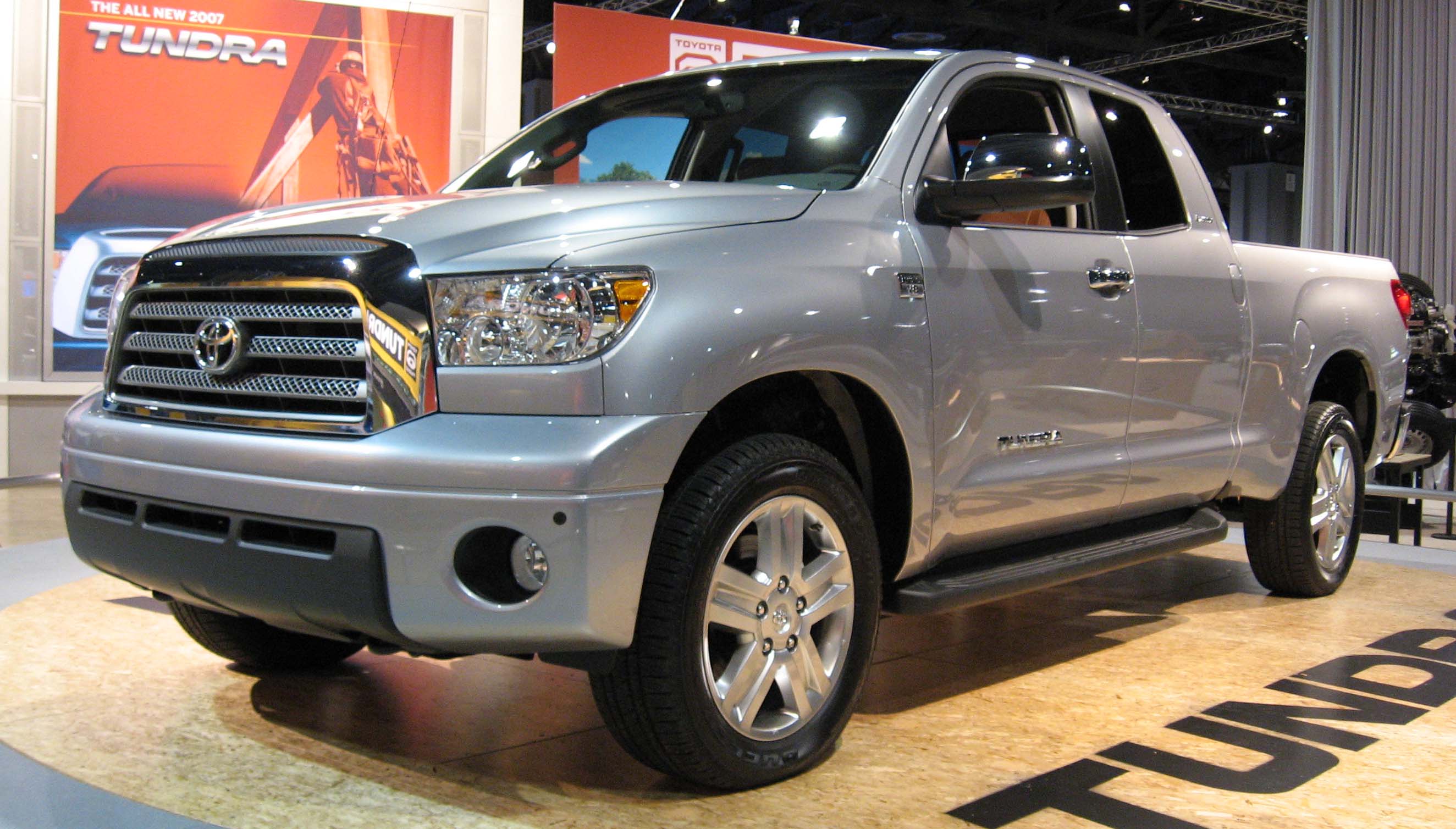
Toyota Tundra
"We have a lot of tundras, but we're also in the city. So we don't do as well with the big trucks."
They’re saying they get some Toyota Tundras, but their local area doesn’t buy big trucks as much. So inventory can build up depending on what people in that city want.
The speaker notes they have a lot of Toyota Tundras but do not sell as well on “big trucks” in their city. This is an example of how local demand affects dealer inventory even when a model is available.
redesign causing a backlog
"But RAV4s especially, because they just redesigned the RAV4 for the first time in six years, those are a pretty big backlog."
A major redesign can create a temporary supply backlog because production lines and parts sourcing switch to the new model. Even if demand stays high, inventory can lag until the new configuration ramps up.

Toyota Grand Highlander
"And Highlander hybrids, Grand Highlander hybrids, most of the hybrids really are not sitting on the lot."
This is Toyota’s hybrid version of the Highlander SUV. Hybrid models can sell quickly, so dealers may not have many cars sitting on the lot at any given time.
“Highlander hybrids” refers to Toyota’s Highlander Hybrid lineup. It’s a popular family SUV hybrid that can be harder to keep in stock when demand is high, especially if production or allocations are constrained.
counseling a customer as to what's available
"It's more counseling a customer as to what's available, when it might be available, what can you live without, or what do you absolutely have to have."
This describes a sales approach that focuses on managing expectations when inventory is constrained—explaining what’s actually available, when it might arrive, and what trade-offs the buyer can make. In a shortage, the “sales process” shifts from selling a specific car on the lot to guiding the customer through availability and timing.
inventory stats
"And if I may, Tyler, just want to take a second, because I want to dig into more the inventory stats, but I also want to demonstrate something really quick here."
“Inventory stats” are the dealer-level numbers that show how many vehicles are available, how quickly they sell, and how often certain models are in stock. In a low-inventory environment, these stats strongly influence how dealers set expectations and manage customer demand.
OTD
"29 verified OTDs from Ackerman Toyota. Look at this pops."
OTD means the total price you’ll actually pay to drive the car home. It includes the extra charges beyond the advertised price.
OTD usually means “out-the-door” price—the total amount a buyer pays including taxes, registration, and dealer fees. When dealers quote OTDs, it helps compare offers apples-to-apples instead of focusing only on the sticker price.
Ackerman Toyota
"29 verified OTDs from Ackerman Toyota. Look at this pops."
Ackerman Toyota is the dealership being referenced as the source of the “verified OTDs.” The segment uses it as an example of transparent pricing and low extra fees compared with other Toyota dealers.
dock fee
"Look at this pops. $299 dock fee is $230 below the Missouri average of 529."
A dock fee is an extra charge some dealers add on top of the car price. In this segment, they’re saying their dock fee is lower than what’s typical in the area.
A “dock fee” is a dealer-added charge that’s often meant to cover administrative or vehicle handling costs. The hosts are comparing the dock fee at Ackerman Toyota ($299) versus the Missouri average ($529), implying it affects the final out-the-door price.
dealer add-on
"At Ackerman, we have never detected a dealer add-on. The price you see online is the price you're going to get."
Dealer add-ons are extra add-on items or fees the dealer tries to include in the deal. The point here is that this dealer says they don’t tack on surprise add-ons.
A “dealer add-on” is an extra product or service added to the deal—often without much choice—such as protection packages, accessories, or warranties. The segment emphasizes that Ackerman Toyota claims “never detected a dealer add-on,” meaning the online price should match the final deal price.
negotiate
"And Tyler and his team, they're willing to negotiate. You can literally come down here and see there are multiple negotiations where you can save some money,"
“Negotiate” refers to bargaining over the final purchase price and deal terms rather than accepting the first quote. The hosts highlight that the dealership is willing to negotiate, which can reduce the out-the-door cost even when advertised pricing is already competitive.
limited
"Are there Toyota dealers out there who are taking advantage of the fact that there's limited"
The word “limited” is pointing to low inventory. When there aren’t many cars to choose from, some dealers may try to make extra money with extra charges or pressure.
“Limited” here is part of the idea that some Toyota dealers may be taking advantage of constrained supply. When inventory is tight, buyers have fewer alternatives, which can increase the temptation to add fees or push less-transparent pricing.
add-ons
"inventory right now, adding markups, add-ons, things like that? Is that happening in today's car market still? Yes. And this dealer will remain nameless, but there was a dealer that came in and bought."
Add-ons are extra stuff the dealer tries to sell along with the car. They can make the final price jump, even if you didn’t plan on buying them.
Dealer add-ons are optional products or packages added to a sale, such as warranties, protection plans, or accessories. In some cases they’re pushed aggressively, which can raise the out-the-door cost even if the vehicle price looks reasonable.
markups
"inventory right now, adding markups, add-ons, things like that? Is that happening in today's car market still?"
A markup is extra money a dealer adds to the car’s price. When demand is high, dealers can charge more than the “normal” price.
In a tight car market, dealers may add a markup on top of the vehicle’s base price. This is often separate from taxes and fees and can be justified as “market adjustment,” even when the car is already priced above MSRP.
administrative fee
"But the administrative fee is a really good thing to point out. Missouri changed their law a few years ago and allowed dealerships to raise their administrative fee to $600."
An administrative fee is a dealer charge for handling the sale paperwork. It can be increased by state rules, so it can change from year to year.
An administrative fee is a dealer charge for paperwork and processing, often shown on the buyer’s order. The episode discusses how Missouri law changed the allowed level, which directly affects the final price buyers pay.
supply and demand
"I think it's a great example here that when the car market gets tight, I mean, Dad, you and I talk about it like it's a high school economics class pretty much every week. It's supply and demand."
If there are fewer cars available and lots of people want them, prices tend to go up. That’s the basic idea behind supply and demand.
Supply and demand describes how pricing pressure changes when fewer cars are available and buyers want them more. When supply drops and demand stays high, dealers can often charge higher prices because buyers have fewer alternatives.
pricing power
"But when supply goes down and demands high, there's pricing power, but there's also a short game and a long game."
Pricing power means sellers can charge more because customers still have to buy. When cars are hard to find, dealers often have more leverage on price.
Pricing power is the ability of sellers to raise prices because buyers still have to pay. In car sales, it shows up when inventory is low and demand is strong, letting dealers increase fees, markups, and add-ons.
short game and long game
"But there's also a short game and a long game. The short game is I can jack up my dock fee, I can jack up the add-ons, I can make more money today. But what's going to happen when that customer gets educated?"
The short game is making extra money right now. The long game is keeping customers happy so they come back for their next car.
The “short game” refers to maximizing profit immediately by increasing fees and add-ons. The “long game” is thinking about customer trust and repeat business—whether buyers will return or recommend the dealer after feeling overcharged.
repeat customers
"what would you say is the percentage of repeat customers that Ackerman gets? ... it's over 60% what our repeat customers are as far as new car sales are concerned"
Repeat customers are people who buy from the same dealer more than once. If the dealer treats them well (or not), it can change whether they come back.
Repeat customers are buyers who return to the same dealer for future purchases. The episode uses repeat-customer share to argue that dealer pricing strategies can affect loyalty and new-car sales over time.
long-term vs short-term sales strategy
"...you can definitely try to maximize every single person that walks on the door... But that's a completely short-sighted way of doing things... ultimately, if they're happy with their experience, that's way more important than actually maximizing every dollar you're going to make from that person in that instance."
They’re talking about two ways a dealership can think. One is to make the most money from every customer right now. The other is to keep customers happy so they come back later and recommend the dealership.
The hosts contrast a short-sighted approach—pushing to maximize every customer visit—with a long-term strategy focused on repeat business and customer satisfaction. In dealerships, this often means prioritizing the overall experience and retention rather than squeezing maximum profit from a single transaction.
day supply of vehicles (heat map)
"We have a little bit of like a heat map here that shows the day supply of vehicles... you can actually see quite a bit of red on this screen..."
They’re looking at a chart that estimates how long the current cars on lots will last. If the number is high, it usually means cars are selling more slowly than expected.
“Day supply” is an inventory metric that estimates how long current vehicle stock would last at the current sales pace. A heat map visualization highlights where supply is tight versus where vehicles are piling up, which can signal demand weakness or overproduction in a specific model.

Toyota Tacomas
"For example, in North Carolina where there's actually a significantly high day supply of Toyota Tacomas in the Winston-Salem area, for example, there's one dealer that has 31 Toyota Tacomas on the lot right now, some of them sitting for 268 days."
A Toyota Tacoma is a popular midsize truck. In this segment, they’re talking about how many Tacomas dealers have sitting around for a long time, which usually means buyers aren’t snapping them up as fast as expected.
The Toyota Tacoma is a midsize pickup truck, and the hosts are using it as an example of local inventory sitting on dealer lots. They mention long “days on lot,” which signals weak sales or supply/demand imbalance in that specific area.
days on the lot
"there's one dealer that has 31 Toyota Tacomas on the lot right now, some of them sitting for 268 days. That's great."
“Days on the lot” measures how long a specific vehicle has been sitting unsold at a dealership. Extended days on lot often correlate with discounts, incentives, or weaker demand in that market.
hybrid powertrains
"we've got some markets where there's some RAV4 supply, but I'm doubtful that's going to be the supply of those hybrid powertrains, for example."
A hybrid powertrain is the system that lets a car use both a gas engine and an electric motor. They’re saying that hybrid versions might be harder to find even when some other versions are available.
“Hybrid powertrains” refers to the full drivetrain system in a hybrid vehicle—typically combining an internal combustion engine with an electric motor and battery. The hosts are suggesting that even if some RAV4 supply exists, hybrid versions may still be constrained.
brand risk
"Is this not a little bit of the risk where you were just describing short-term thinking versus long-term thinking that Toyota is running into right now?"
“Brand risk” here means the possibility that customers lose trust or switch brands when a manufacturer can’t supply enough vehicles to meet demand. In practice, persistent shortages can lead to frustration, lost sales, and reputational damage.
franchises
"I guess it is. But I don't know how they specifically are going to address those with the franchises that are taking advantage of people."
In dealership terms, “franchises” refers to the authorized dealer network that sells a manufacturer’s vehicles in a territory. The hosts are implying that franchise dealers may be taking advantage of shortages, affecting how the brand manages customer experience.
general manager
"I want to ask you a follow-up question to what we were just discussing before. And having just a general manager and a used car manager, I take from that that you as salespeople are given a little more leeway to just go ahead and make deals without having to run to a manager to get it approved through."
A general manager (GM) at a dealership is typically responsible for overall store performance, including sales strategy and approvals. The discussion suggests salespeople may need GM approval for certain deal terms, depending on the store’s policies.
used car manager
"And having just a general manager and a used car manager, I take from that that you as salespeople are given a little more leeway to just go ahead and make deals without having to run to a manager to get it approved through."
A used car manager oversees the pre-owned inventory strategy, pricing, and sales process for a dealership’s used vehicles. In this segment, they’re used to frame how deal approvals and internal authority can differ between roles.
customer satisfaction scores
"Yes, yes, we excel in all of those areas. I think that's changed over the last probably 10 years too, as far as people really liking that."
“Customer satisfaction scores” are metrics used to quantify how happy customers are with the buying process and dealership experience. The speaker implies their process reduces friction and improves these scores over time.
back and forth (negotiation)
"there are still people around that want the back and forth. They live for the back and forth... I mean, I don't want it to take two hours, two and a half hours to buy a car."
They’re talking about the traditional negotiation style where you keep negotiating for a long time. The point is that it wastes everyone’s time and can make the deal feel worse afterward.
The segment criticizes a drawn-out negotiation process where buyers and sellers repeatedly “go back and forth” over terms. The speaker argues that it wastes time and often leads to dissatisfaction, so they prefer a faster, more straightforward process.
Admiral Nissan
"And I remember one day he's in my office at Admiral Nissan in Pleasantville, New Jersey. And Harry's going off on me and the owner walked down the steps..."
Admiral Nissan is the name of a car dealership mentioned in the story. It’s used to illustrate how long negotiations used to be.
“Admiral Nissan” is mentioned as the dealership where the speaker’s story took place. It’s a specific dealership context for how negotiations and offers played out in real sales.
rail delays
"Now, there are things that happen. Okay. There's rail delays. There's rail strikes. There's campaigns that come on cars."
Sometimes cars are shipped by train, and the trains can be delayed. That can make your delivery later even if the car was already built.
Rail delays refer to shipping slowdowns when vehicles are transported by train. For buyers, this can push delivery timelines even when production is already complete.
rail strikes
"There's rail delays. There's rail strikes. There's campaigns that come on cars."
A rail strike means train workers stop working. If cars are being shipped by train, that can delay deliveries.
Rail strikes are work stoppages that can halt or slow train service used for vehicle transport. That directly impacts how quickly cars move from ports/rail yards to dealers.
campaigns on a car
"For people that don't know, campaigns on a car is like a recall on a car, right? So if there's a recall on a car and that car is in transit, they stop that car and it's one of the rail yards. They fix that recall before you ever get the car."
A “campaign” is Toyota (or another maker) telling dealers to fix a known issue on certain cars. If the car is still on the way, they may hold it to do the fix before you get it.
A “campaign” is essentially a manufacturer-directed service action, similar to a recall, that addresses a specific issue. When a car is in transit, the shipment can be held at a rail yard so the fix can be performed before the vehicle reaches the dealer.
recall
"So if there's a recall on a car and that car is in transit, they stop that car and it's one of the rail yards. They fix that recall before you ever get the car."
A recall is when the manufacturer says some cars need a fix. If your car is still shipping, it might get held until the fix is done.
A recall is a safety- or compliance-related action where a manufacturer requires repairs for affected vehicles. In this context, recalls can delay delivery because cars may be held in rail yards until the fix is completed.
rail yard
"they stop that car and it's one of the rail yards. They fix that recall before you ever get the car. And if there's no fix for the recall, it sits in that rail yard."
A rail yard is a place where trains and rail cars are parked and organized. Cars can sit there temporarily, especially if they need a required fix before delivery.
A rail yard is a rail facility where trains are assembled and cars are staged. Vehicle shipments can be held there for processing—like completing recall/campaign repairs—before continuing to the dealer.
test drive availability in today's market
"Are there actually vehicles on the ground for customers to test drive? If I want to test drive when you rap for, how do I do that in today's market? And this is like a great picture Toyota"
They’re asking whether cars are actually sitting at dealerships so customers can drive them. It’s about what the current market makes it like to get a test drive.
This is a discussion about whether dealers have vehicles physically available for customers to test drive. It ties back to shipping delays, inventory constraints, and how those affect customer experience.
redesign cycle
"the RAV4 is it's a redesign... But when it's a redesign like the RAV4, that is a tough spot."
When a car gets redesigned, it often takes time for dealers to get enough new cars in stock. That can make it harder to test drive the newest version right away.
A vehicle redesign cycle is when a model is updated with new styling, packaging, and often new powertrain/tech changes. During a redesign, dealer stock and test-drive availability can lag behind customer demand, especially if supply is constrained.
order backlog
"And we still have a three month backlog of orders. So I guess to answer your question..."
An order backlog means lots of people have placed orders, but the cars aren’t arriving quickly enough. So you may have to wait months before you can drive or receive the new one.
An order backlog is when customer orders accumulate faster than the manufacturer can deliver vehicles. The hosts mention a multi-month backlog for the RAV4, which helps explain why test drives and inventory can be limited.

Toyota Crown
"Crown Signia. Does that sell at all?... It's the Avalon SUV now... the Crown Signia is the Avalon SUV... They're great cars."
The Toyota Crown Signia is a Toyota crossover that isn’t as common as the brand’s biggest sellers. Because fewer are made or sold, it can be harder to find one to test drive.
The Toyota Crown Signia is a crossover/SUV model in Toyota’s Crown lineup. The hosts note it doesn’t sell in huge numbers, which affects how many are available for demos and inventory.

Toyota Venza
"I've driven nothing but Venza's for demos for the last four or five years... I miled out of the very last Venza we ever got."
The Toyota Venza is a Toyota crossover. In the episode, the host says they drove Venzas as demo cars for years and then moved into a Crown Signia.
The Toyota Venza is a midsize crossover that the host used as a demo vehicle for several years. They describe switching out of the last Venza they received, then getting into a Crown Signia.

Corolla
"They're not like a Corolla or a Camry or a RAV4."
The Toyota Corolla is a very common Toyota. Because it sells in large numbers, dealers usually have more of them available than rarer models.
The Toyota Corolla is one of Toyota’s highest-volume models, so it’s easier for dealers to keep inventory and offer test drives. The hosts contrast it with lower-volume models like the Crown Signia.
used car inventory shortage
"used car prices are through the roof and hard to keep inventory."
A used car inventory shortage happens when there aren’t enough trade-ins or used vehicles available on dealer lots. The hosts say used car prices are very high and inventory is hard to keep, which can make shopping harder and reduce negotiating power.
used car prices are higher
"We turn our used inventory quickly and used car prices are higher... because used cars are more expensive."
They’re saying used cars cost more than they used to, and that affects the whole market. If used cars are pricey, people may delay buying or look harder for new ones, which can make new-car shortages worse.
The hosts connect higher used-car pricing to the same forces affecting new cars, but with used cars reacting more strongly. When used cars become relatively more expensive, it can reduce affordability and increase pressure on new-car order backlogs.
backlogs on orders
"And that's been the biggest driver of these new cars having backlogs on orders, having short day supply..."
A backlog means people have placed orders, but the cars aren’t arriving fast enough. So customers wait longer, and it feels like there are fewer cars available.
“Backlogs on orders” refers to the gap between customer orders and what manufacturers can deliver. When supply is constrained, dealers and buyers wait longer, and that can worsen perceived shortages even if demand is stable.
short day supply
"...having backlogs on orders, having short day supply is because the used car market is inflated..."
It means the dealership doesn’t have enough cars to last very long at the current pace of sales. When that happens, cars sell faster and prices can go up.
“Short day supply” is a supply-demand metric dealers use to estimate how many days of inventory they have at the current sales rate. Short supply typically leads to faster sell-through and higher prices.
Stellantis
"...not all brands are created equal... Tyler Stellantis, for example, over the last decade have increased their prices by almost 60%... where Toyotas' sales are up so much."
They’re using Stellantis as an example of a company that raised prices a lot and is losing sales. The point is that not all brands react the same way when the market gets expensive.
Stellantis is cited as an example of a brand that increased prices significantly over the last decade and is seeing sales declines. The hosts use it to argue that brand-by-brand pricing strategy affects demand during inflation and inventory shortages.
CPI
"And to be clear, Toyotas nowhere near that. And that's significantly higher than the CPI, than inflation rates."
CPI is a common way to measure how much prices in general are rising. They’re saying some brands raised prices more than the overall inflation rate.
CPI (Consumer Price Index) is a widely used measure of inflation. The hosts compare brand price increases to CPI to argue that some brands’ pricing rose faster than general inflation.
inventory turns
"70 cars on a lot and 650 in the month. That is insane turns. No wonder they use car managers in there for 40 years."
Inventory turns is a way to measure how fast a dealership sells its cars. If they sell a lot of cars quickly, that’s “high turns,” and it usually means buyers are competing for limited supply.
“Inventory turns” measures how quickly a dealer sells through its stock—often expressed as sales over a period relative to the number of cars on the lot. High turns usually indicate strong demand and can contribute to shortages and higher used-car prices.
cell 65 out of the 70
"Not that quickly, but yeah, you'll love to hear it, to have the cell 65 out of the 70. I mean, you know, that just indicates to me that there's still just this huge shortage of used cars."
This sounds like a quick sales rate: selling most of the cars the dealer had (65 out of 70). They’re using it to show cars are selling fast because there aren’t many available.
“Cell 65 out of the 70” appears to describe a sales/turn rate metric—selling 65 units out of 70 in inventory—indicating how fast vehicles are moving. The hosts use it to argue that used cars are in short supply and demand is strong.
tariff related
"...that must be tariff related in some way, or maybe it was last year that he was referring to..."
They’re wondering if tariffs—taxes on imported goods—are messing with how easily cars and parts can be made or shipped. That could lead to shortages and longer waits.
“Tariff related” suggests trade tariffs may be affecting vehicle production costs, parts availability, or supply chains. The hosts speculate that tariffs could be influencing Toyota’s production mix and the resulting inventory imbalance.
oversupply inventory
"...Tacomas and Tundras are the two areas, the trucks, where Toyota actually has an oversupply inventory everywhere else, dramatic under supply..."
Oversupply inventory means there are more cars available than people are buying right now. If a model has oversupply, it’s usually easier to find; if it’s under supply, people wait longer.
“Oversupply inventory” means a dealer/manufacturer has more vehicles available than buyers are demanding at that moment. In the transcript, Toyota is described as having oversupply in Tacoma/Tundra trucks while other models face under-supply, which drives wait times and pricing pressure.
three month wait list
"...dramatic under supply, three month wait list for the newly redesigned RAV4's."
A three-month wait list means you can’t just walk in and get the car—people have to wait. That usually happens when lots of people want the same model but there aren’t enough available.
A “three month wait list” reflects constrained supply relative to demand, often caused by production bottlenecks, high consumer interest, or model refresh timing. The hosts tie it to the newly redesigned RAV4, implying demand spikes can outpace manufacturing.
speed up the process
"...I don't want each sale to have to take two and a half to three hours because that cuts into what I have to do and how many cars I can sell. The whole concept is, if you speed up the process,"
They’re talking about making the buying process faster. If each sale takes too long, the dealer can’t sell as many cars in a day or week.
“Speed up the process” refers to reducing the time required to complete a sale, likely including paperwork, negotiations, and delivery steps. The hosts frame it as a key sales/manager priority because longer sales cycles reduce how many cars a dealer can sell.
proposed rules that would gain, you can't actually advertise cars that aren't for sale
"coming off the FTC pushing all these proposed rules that would gain, you can't actually advertise cars that aren't for sale... their sales model is no longer, hey, land on a car, come test drive."
This refers to consumer-protection advertising guidance that limits marketing claims to what’s truly available for purchase. For car dealers, it can force changes to how they list incoming models, “in transit” inventory, and future model-year vehicles on websites and ads.
FTC
"coming off the FTC pushing all these proposed rules that would gain, you can't actually advertise cars that aren't for sale."
The FTC is a U.S. government agency that helps enforce fair advertising rules. The point in this segment is that dealers may not be allowed to advertise cars that customers can’t actually buy yet.
The FTC (Federal Trade Commission) is a U.S. agency that regulates consumer protection and advertising practices. Here, the hosts reference proposed FTC rules aimed at preventing dealers from advertising cars that aren’t actually available for sale, which affects how inventory and marketing are handled.

Toyota RAV4
"Dad, if I'm a Toyota dealer trying to advertise and merchandise my 2026 RAV4s that don't exist because they won't exist for three months... there's five RAV4s here that are being advertised for sale and it just doesn't really make sense because we know they're not actually available."
The Toyota RAV4 is a popular Toyota SUV. The hosts are talking about the 2026 RAV4 and how dealers might advertise it even though it won’t be available for a few months.
The Toyota RAV4 is Toyota’s compact crossover SUV, and the 2026 model year is being discussed as a redesigned vehicle that dealers may advertise before customer availability. In this segment, the hosts connect that timing gap to FTC rules about advertising cars that aren’t actually for sale yet.
CarEdge.com
"Check out the website. A few things to call out here. Shop cars. You can shop for newer used cars... Under research, we have so much stuff. You want to know how cars depreciate."
CarEdge.com is a website they use to help people research cars. It can estimate things like how a car’s value changes over time and what it might cost to own and insure.
CarEdge.com is the podcast’s platform for researching vehicles and ownership costs. They mention tools for depreciation, cost to own, insurance estimates, and checking a vehicle’s worth.
how cars depreciate
"Under research, we have so much stuff. You want to know how cars depreciate. You want to know what it's going to cost to own a vehicle."
Depreciation is how much a car’s value drops as it gets older. If you know that, you can better guess what you’ll pay overall and what you might get when you sell.
Depreciation is how quickly a car loses value after you buy it. Understanding depreciation helps you estimate resale value and the real cost of ownership over time.
cost to own a vehicle
"You want to know what it's going to cost to own a vehicle. You want to see what it's going to cost to insure it. Check that out under research."
“Cost to own” means what a car will cost you over time, not just what you pay at the dealership. It usually includes things like insurance and routine upkeep.
“Cost to own” typically includes more than the purchase price, such as insurance, maintenance, fuel/energy, and expected repairs. It’s a useful way to compare cars that might have similar sticker prices but very different long-term expenses.
cost to insure it
"You want to know what it's going to cost to own a vehicle. You want to see what it's going to cost to insure it. Check that out under research."
Insurance cost is what you pay to have the car covered. Different cars can cost more or less to insure, so it’s smart to estimate it before buying.
Insurance cost depends on factors like the vehicle’s repair costs, safety features, theft risk, and your driving history. Estimating insurance early helps prevent surprises in the monthly budget.
dealer reviews
"Dealer reviews. Dad, we spent some time looking at dealer reviews today because, again, Tyler, who joined us today, is from Ackerman Toyota."
Dealer reviews are ratings and written feedback from customers about their experience with a dealership. They can highlight patterns in sales transparency, service quality, and how issues are handled after purchase.
warranty
"If you want to save money, we've got CarEdge, Concierge, CarEdge Pro. We can help with insurance and warranty as well. If you want to check what your vehicle is worth..."
A warranty is a contract that covers certain repairs for a set time or mileage. The hosts mention warranty support as part of what they can help with, which typically means guidance on coverage options.
insurance
"We can help with insurance and warranty as well. If you want to check what your vehicle is worth, you can do that back at CarEdge.com too."
Insurance is what protects you financially if something happens to your car. It’s usually required by law and can vary a lot by car and driver.
Insurance is the policy that covers financial loss from accidents, theft, and other covered events. The segment ties insurance cost estimates to their research tools and budgeting.
check what your vehicle is worth
"If you want to check what your vehicle is worth, you can do that back at CarEdge.com too. All right, folks, that's the show."
Checking what your car is worth means estimating how much you could sell it for (or get in a trade). It helps you avoid overpaying or accepting a low offer.
Checking a vehicle’s worth usually means estimating its market value based on factors like mileage, condition, trim, and local demand. This helps with pricing a trade-in, selling privately, or evaluating a deal.
Request an Explanation
Heard something you'd like explained? We'll add it to this episode.
Sign in to request explanations for terms you heard.
Want to learn more?
Browse our glossary for plain-English explanations of automotive terms, jargon, and concepts.
Help improve this episode
See something that's not quite right? Our annotations are AI-generated and can sometimes miss the mark. Click the flag icon on any annotation to suggest a correction.