
Under The Hood The Automotive Experts for Free Car Repair Advice
About this episode
Calls and shop-style guidance cover several electrical and drivability problems. The hosts start with a multi-battery warning diagnosis—checking voltage, BCM logic, and using an amperage draw test to find drain—then move into power seat and speaker troubleshooting (often switch-related, with meter-based polarity checks). Later segments tackle a stuck-in-Park issue using live BCM data and voltage checks, plus key fob/TPMS communication and carburetor fuel delivery/vapor-lock prevention. Along the way, they also discuss air suspension leaks and why some repairs get expensive.
We are the Motor Medics working in our shop every day for decades now and broadcasting on over 250 radio stations and podcast helping people fix their cars and trucks since 1990. The call cost nothing but could save you thousands. Call us any day and leave us a message to get back to you or call live during the show. Thursdays from 9-11am Central. Here are today's callers.
21 Sprinter voltage drain
11 F150 power seat problems
81 F150 Ford surges and bucks
13 Ram 1500 air ride wont work
20 Exploreer won't come out of gear
16 Lacross Key Fob issues
41 Plymouth fuel system problems

Honda Stream
"...Mercedes Ben 2500 spinner van and it's got an air stream camper. And it has the two batteries, the chastit..."
The Honda Stream is a minivan, meaning it’s built to carry passengers comfortably with lots of usable space. In the podcast, it’s discussed as part of a travel setup with an air-stream camper and two batteries. The key idea is that the van’s electrical system is being used to support camping power needs.
The Honda Stream is a compact, people-focused minivan designed to be practical and easy to live with, especially for families and groups. It’s mentioned in the context of an air-stream camper setup and having two batteries, which points to the vehicle being used for travel and power needs beyond just starting the engine. That’s why it may come up on a show about under-the-hood systems and electrical setups.
camper side
"And it has the two batteries, the chastity battery and then the other one for the camper side. He keeps getting messages that the start battery is low..."
“Camper side” means the extra power system for RV/camping equipment. Many campers use a separate battery, so the car’s charging system has to manage both batteries correctly.
“Camper side” refers to an auxiliary electrical system used for RV/camper loads (like interior power) that’s often powered by a separate battery. Multi-battery setups require the vehicle’s charging system and control electronics to manage charging between batteries without overloading or confusing the monitoring system.
start battery
"He keeps getting messages that the start battery is low and he's even forgetting these messages even when it was left on his trickle charger. ... He ends up getting this battery voltage message."
The start battery is the battery the car uses to start the engine and run the main electronics. With two batteries, the car can warn you that the start battery is low even if the other one is okay.
A start battery is the battery dedicated to starting the engine and powering core vehicle electronics. In setups with multiple batteries (like a camper/auxiliary system), the vehicle can warn that the start battery is low even if the auxiliary/camper battery is fine, because the car’s charging and monitoring logic treats them separately.
trickle charger
"And the trickle charger appears to be working. See that the amperage going to the battery cycles. And the one time how I got involved, he was away and he had me go over and I put on a regular charger and that cleared his message."
A trickle charger is a slow, gentle charger that keeps a car battery from going dead. It’s meant for long-term use when you’re not driving the car much.
A trickle charger is a battery charger that applies a very small amount of current to keep a battery topped up over long periods. It’s commonly used when a vehicle sits or when you want to maintain charge while camping or traveling without frequent driving.
amperage
"See that the amperage going to the battery cycles. And the one time how I got involved, he was away and he had me go over and I put on a regular charger and that cleared his message."
Amperage is how much electricity is flowing into the battery. If the charger is working, you’ll usually see the current change as the battery fills up.
Amperage (current) is the rate of electrical flow into or out of the battery. When the host says they can “see that the amperage going to the battery cycles,” they’re checking whether the charger is actively delivering current and then tapering/adjusting as the battery state changes.
battery voltage
"He ends up getting this battery voltage message. And the battery is, it's low, it's 11.5, 11.75. He had the electrical system checked out by a Mercedes and he said everything's fine, but this keeps occurring."
Battery voltage is a measurement of how much electrical power is left in the battery. Lower voltage usually means the battery is weak or not charging correctly.
Battery voltage is the electrical “pressure” measured at the battery terminals, and it’s used to estimate state of charge and health. In this segment, the host treats readings around 11.5–11.75 volts as low enough to trigger warnings and charging logic.
under 12 volts
"it is acting up while it is in the dealership and it's showing under 12 volts in the dealership... it should be 13 something with it running."
If a car battery reads under 12 volts, it usually means the battery is weak or not holding charge. When the engine is running, the voltage should be higher because the alternator is charging it.
Battery voltage below about 12.0 volts is a common sign the battery is significantly discharged or failing. The speaker contrasts this with the expected higher voltage when the engine is running (when the alternator is charging).
voltmeter
"And if you've got a voltmeter and you can start the vehicle and you could put the voltmeter on the battery and it shows under 12 volts..."
A voltmeter is a simple meter that measures electrical voltage. Here, it’s used to see if the battery is strong when the car runs and if it drops too low after sitting.
A voltmeter is a tool used to measure electrical voltage. In this context, it’s used to check battery health by comparing battery voltage while the car is running versus when it’s been sitting.
current drain
"If you're leaving idle, then it's got a, then you've got a current drain or a failed battery."
Current drain means something in the car is using electricity even when it’s off. That can slowly drain the battery while the car sits.
Current drain (often called parasitic draw) is unwanted electrical power being used while the car is parked. If the drain is high, the battery can slowly discharge over time even if the car runs fine.
failed battery
"If you're leaving idle, then it's got a, then you've got a current drain or a failed battery."
A failed battery is one that can’t store or provide enough power. It might work for a short time, but after the car sits, it can drop too low to start or to run normally.
A “failed battery” means the battery can’t hold charge or can’t deliver the voltage needed to start and run the car’s electronics reliably. Even if a battery reads okay briefly, it may drop quickly after the car sits, especially under load or with parasitic draw.
disconnect one of the terminals
"The first thing you can do at home as a quick test, when it is fully charged, disconnect one of the terminals and leave it disconnected."
Unplugging one battery cable is a way to stop the car from using power. If the battery doesn’t lose much voltage while disconnected, the battery may be fine and the problem is likely something in the car that’s draining it.
Disconnecting a battery terminal is a diagnostic step to see whether the battery is being discharged by a circuit in the car. If the battery voltage stays stable after disconnecting, it suggests the battery itself is likely okay and the issue is elsewhere.
circuit
"That's when you need to do an amperage draw test and find out what circuit in the vehicle is drawing the battery down."
Think of a circuit like a specific electrical “loop” in the car. The goal is to figure out which loop is accidentally using power and draining the battery.
In this context, a circuit is a specific electrical path in the vehicle—wires, connectors, and components working together. Identifying which circuit is drawing current is the key step in diagnosing a battery drain.
battery maintainer
"you want, we want a modern battery maintainer on it. Modern battery maintainer, like a Optima battery maintainer, something that can look at the battery, monitor the battery and operate properly to keep it charged..."
A battery maintainer is a device that keeps your battery charged while the car sits. It’s smarter than a basic charger because it checks the battery and avoids overcharging.
A battery maintainer (also called a battery charger/maintainer) is designed to keep a battery at the right state of charge over time. Unlike basic chargers, many maintainers monitor battery voltage and adjust output to avoid overcharging.
flooded lead acid battery
"...switch between AGM, a standard flooded lead acid battery."
A flooded lead-acid battery is the older, common battery type with liquid inside. Since it’s different from AGM, the charger settings should match the battery type.
A flooded lead-acid battery is the traditional “wet cell” design where liquid electrolyte is free inside the battery. Because it’s different from AGM construction, it needs different charging behavior, which is why some maintainers can switch between battery types.
automatic shutoff
"Most of them have changed over to a, at least a automatic shutoff type maintain charge, but there are still some out there."
Automatic shutoff means the charger stops charging when the battery is full enough. That reduces the risk of overcharging if you leave it plugged in.
Automatic shutoff is a charger/maintainer feature that stops or reduces charging when the battery reaches a safe level. This helps prevent overcharging—especially important if someone uses an older charger or leaves it connected for long periods.
battery tender
"but you're going to need and want a modern battery tender, battery maintainer."
A battery tender is a charger that keeps your battery topped off safely. It’s meant for cars that don’t get driven every day, so the battery doesn’t go dead.
A battery tender (or trickle charger/maintainer) is a device that keeps a battery at the right charge level without overcharging. It’s commonly used for vehicles that sit for days or weeks so the battery stays ready to start.

Kia Optima
"...attery maintainer. Our partner at Clarios through Optima has some really good battery chargers that, you k..."
The Kia Optima is a regular passenger car (a sedan) meant for everyday driving. The podcast mentions it in connection with a battery charger/maintainer, which is used to keep the battery from going flat when the car isn’t driven much. The focus is on battery care so the car starts reliably.
The Kia Optima is a mid-size sedan that’s commonly discussed in ownership contexts because it’s used as a daily driver and can be left parked between trips. In the podcast excerpt, it’s tied to battery maintenance and mentions a battery maintainer/charger, which is relevant because keeping the battery charged helps prevent starting issues. That’s a typical “under the hood” topic since the battery and charging system are central to reliability.
AGM
"the maintainers that charge, charge maintained, they switch between AGM and standard power sports batteries, everything."
AGM is a type of car battery that’s sealed and uses special material inside to hold the battery fluid. Chargers that support AGM are designed to charge it correctly without damaging it.
AGM stands for Absorbent Glass Mat, a sealed lead-acid battery design that uses fiberglass mats to hold the electrolyte. AGM batteries are common in modern vehicles and can be more sensitive to incorrect charging than older flooded batteries.
power sports batteries
"they switch between AGM and standard power sports batteries, everything."
Power sports batteries are the batteries used in things like motorcycles and ATVs. They can be different from car batteries, so not every charger works the same way.
Power sports batteries are batteries used in motorcycles, ATVs, and similar vehicles, often in smaller form factors than typical car batteries. They may have different charging requirements, so a maintainer that supports them can be useful for multi-vehicle owners.
diagnose your battery
"I mean, that can diagnose your battery. As soon as you plug it in, it's, it's important to have a well maintained battery system in a vehicle."
Diagnose your battery means the charger checks whether the battery is healthy or not. Instead of guessing, it looks at the battery’s electrical condition.
To diagnose a battery means the charger/maintainer checks its condition—typically by measuring voltage and sometimes internal resistance—so it can determine whether the battery is healthy, undercharged, or failing. This helps avoid guessing and can prevent improper charging.

Ford F150
"Let's go to Oregon and talk to Bill. [475.0s] Bill, what can we do for you? [478.0s] Yeah, I've got a 2011 F-150. [481.5s] Got a power seat for the driver."
The Ford F-150 is a popular full-size truck. Here, the problem is the power driver seat on a 2011 model—everything works except it won’t move back.
The Ford F-150 is a full-size pickup known for widespread parts availability and common DIY repair scenarios. In this call, the owner is troubleshooting a power driver seat on a 2011 model—an issue that often involves the seat motor, switch, or wiring rather than engine-related systems.
power seat
"[478.0s] Yeah, I've got a 2011 F-150. [481.5s] Got a power seat for the driver. [485.5s] Got a switch down on the left-hand side that moves it back and forth, up and down, tilt."
A power seat is a seat that moves using electricity instead of a manual lever. If it only won’t move one way, the problem is often the motor or switch for that direction.
A power seat is a driver seat with electric motors that move it for comfort and reach. When a power seat only fails in one direction (like not moving back), it can point to a specific motor, a failed switch contact, or a wiring issue for that movement.
tilt
"Got a switch down on the left-hand side that moves it back and forth, up and down, tilt."
Here, tilt means the seat can change angle. If tilt still works but other movements don’t, it can help figure out which part is failing.
In the context of a power seat, tilt refers to adjusting the seat cushion angle (the front of the seat up/down relative to the back). Seat tilt uses its own motor or actuator path, so a tilt that still works while another direction fails can help narrow the fault.
seat switch
"The switches for those seats fail often. Sometimes the motors do, but more often the seat switch fails."
The seat switch is the button/control that tells the power seat motor what to do. If it breaks, the seat might move in only one direction or not move correctly. The host is saying you can test it before replacing the motor.
A seat switch is the electrical control that tells the power seat motor which direction to move (forward/back). When it fails, the motor may still run in one direction or not respond correctly at all. In this segment, the host suggests diagnosing the switch rather than assuming the motor is bad.
Norman Products
"And the switches are available from her partner, Norman Products."
Norman Products is a company that sells the replacement part they’re talking about. The host is saying you can buy the seat switch from them if yours fails. That makes the repair more straightforward.
Norman Products is a parts supplier mentioned as a source for the replacement seat switches. The host’s point is that the switch is a commonly available component, not a special-order part. This can help listeners find the correct part for a DIY repair.
Advance Auto Parts
"And the switches are available from her partner, Norman Products. Advance Auto Parts carries those."
Advance Auto Parts is a store where you can buy car parts. The host is saying the seat switch is something they can get there. That can save time compared to hunting for a rare part.
Advance Auto Parts is a retail auto-parts chain the host mentions as carrying the seat switches. This is useful for listeners because it indicates the part may be available locally rather than only through a dealership. It also frames the repair as a typical parts-and-labor DIY scenario.
broken wire
"You can check wiring if you've got a broken connection or something like that... If you had a broken wire, the motor wouldn't move at all..."
A broken wire means the electrical path is interrupted. If the wire is open, the seat can’t get power, so it won’t move.
A “broken wire” is an open circuit in the seat’s wiring harness—power can’t reach the switch or motor properly. The host explains that if a wire is broken, the motor won’t move at all because the circuit can’t complete.
motor
"If the seat didn't move at all forward or reverse, it'd be more apt to think you have a broken wire or a really bad switch or a stuck motor."
The motor is the part that actually moves the seat. If it doesn’t move when you command it, the issue could be the motor itself or the wiring/switch that controls it.
The “motor” is the electric actuator that physically moves the seat forward and backward. The host is using symptoms (no movement vs partial movement) and electrical checks (voltage present/loss) to decide whether the motor or the control circuit is failing.
rubber mallet
"And sometimes you can give them a little tap with a rubber mallet, and they'll take off. But don't ever do that unless you have exhausted all other options."
They’re talking about lightly tapping as a temporary test. If something is stuck or contacts are flaky, a tap might make it work—but it’s not a real repair.
A “rubber mallet” is being used as a last-resort diagnostic/temporary fix to free a sticking mechanism or worn electrical contacts. The host emphasizes not doing it until other checks are exhausted because it can mask the real fault.
ground
"If you had a broken wire, the motor wouldn't move at all, because it requires both wires all the way to the switch to ground one side."
Ground is the electrical “return path” that completes the circuit. Without a proper ground, the motor may never get the full circuit it needs to move.
“Ground” in a car is the electrical reference point (often the vehicle chassis) that completes a circuit. The seat motor needs both the power feed and the return path through the switch/wiring to run in a given direction.
protection
"[753.0s] We just keep... [753.7s] It's a protection. [754.6s] It's protecting you. [755.9s] Ford speakers, F-150, is one of the vehicles that we see a number of factory speakers fail in."
In car stereos, “protection” means the system may limit or shut off sound to avoid damage. The host is suggesting the audio isn’t just broken—it may be protecting itself.
In car audio, “protection” usually refers to a built-in safety behavior that prevents damage when the system detects a fault (like overheating or an electrical issue). The host implies the audio system may be muting or limiting output to protect itself.
aftermarket speakers
"[765.1s] You could pick an aftermarket car stereo replacement store to have them put in a good [770.1s] set of aftermarket speakers, or I think you'd be just as well served to find a U-Pullet yard [776.1s] for yourself to pull one out yourself or go to car-part.com and pull out a speaker. [783.2s] I think those would be just as good, and they're going to save you a ton of money. [786.2s] The aftermarket ones are nice."
Aftermarket speakers are replacement speakers made by other brands, not the one that made your truck or car. People use them to fix bad factory speakers and sometimes get better sound for less money.
Aftermarket speakers are audio components made by companies other than the vehicle’s original manufacturer. They’re often chosen as replacements because they can be cheaper, easier to source, and sometimes sound better than worn factory units.
U-Pullet yard
"[770.1s] set of aftermarket speakers, or I think you'd be just as well served to find a U-Pullet yard [776.1s] for yourself to pull one out yourself or go to car-part.com and pull out a speaker. [783.2s] I think those would be just as good, and they're going to save you a ton of money."
A U-pull-it yard is a place where you can go and pull parts out of junk cars yourself. The host is saying you can often find used speakers there for much less than new ones.
A U-pull-it yard (often called a self-serve salvage yard) is where you remove parts yourself from older vehicles. The hosts suggest pulling a used speaker from one of these yards as a low-cost alternative to buying new.
car-part.com
"[770.1s] set of aftermarket speakers, or I think you'd be just as well served to find a U-Pullet yard [776.1s] for yourself to pull one out yourself or go to car-part.com and pull out a speaker. [783.2s] I think those would be just as good, and they're going to save you a ton of money."
Car-part.com is a website that helps you find used car parts at salvage yards. The host is suggesting it as a way to source a used speaker cheaply.
Car-part.com is an online marketplace/search tool for locating used parts from salvage yards. In this segment, it’s presented as a way to find a replacement speaker without paying for new aftermarket units.
three and a half inch to six by nine
"[812.5s] and you can get acceptable speakers for really cheap, depending on what you're listening to [819.5s] and what your plans are for it. [820.7s] I mean, you can do all right for very little money nowadays. [824.4s] When I was doing car stereo professionally, we had a bin of just, I need a speaker, [832.5s] speakers, and they were three and a half inch to six by nine and five and a quarter,"
Speaker size (like 3.5-inch or 6x9) matters because the new speaker has to physically fit in the spot in your car. The host is talking about common sizes they used when replacing speakers.
Speaker sizes like “3.5-inch” and “6x9” describe the physical dimensions of the speaker cone and mounting. These measurements matter because the replacement speaker must fit the factory mounting location and wiring.
four-speed transmission
"Ford will drive, got a 300 with a four-speed transmission. And when I get to about 35 miles an hour in third gear and I go to shift into fourth gear,"
A four-speed transmission is the set of gears that lets the engine spin at the right speed for driving. When you shift gears, the truck can feel different—especially if something about the shift or driveline isn’t quite right.
A four-speed transmission is a gearbox with four forward gears that changes engine speed (RPM) as you accelerate or shift. In older trucks like the 1981 Ford F-150 mentioned here, the shift timing and how the driveline loads/unloads can strongly affect how the truck feels during gear changes.
third gear
"And when I get to about 35 miles an hour in third gear and I go to shift into fourth gear, it feels like it's surging or bucking, but once I get up over 35, start giving it more gas,"
Third gear is one of the gears in the truck’s gearbox. The caller says the problem shows up around 35 mph when they’re in third gear and then shifting into fourth, which is useful for diagnosing what’s going on.
“Third gear” refers to the third forward gear ratio in a multi-gear transmission. The caller specifically notices the bucking/surging sensation around 35 mph while in third gear and during the shift into fourth, which helps narrow the problem to a particular operating range.
fourth gear
"And when I get to about 35 miles an hour in third gear and I go to shift into fourth gear, it feels like it's surging or bucking, but once I get up over 35, start giving it more gas,"
Fourth gear is the higher gear the truck goes into after third. The caller says the bucking/surging happens when shifting into fourth around 35 mph, but it smooths out after they give it more gas.
“Fourth gear” is the next higher forward gear ratio after third in a four-speed transmission. The caller’s symptoms are tied to the moment they shift into fourth around 35 mph, then improve once they accelerate more and continue cruising.
carburetor
"And I've changed and it's got a new carburetor. I run a new fuel filter on it every month, finally getting some of that gunk out of the gas tank,"
A carburetor is an older-style part that mixes fuel and air for the engine. If it gets dirty or worn out, the engine can run poorly because the mixture isn’t right.
A carburetor is the fuel-mixing device used on many older engines. It blends fuel and air before it enters the engine, so issues with fuel delivery or clogged passages can cause rough running or starting problems.
fuel filter
"I run a new fuel filter on it every month, finally getting some of that gunk out of the gas tank, and that's coming up and that's what's causing it when it's right there."
A fuel filter is like a screen for your gas. It keeps dirt from getting to the engine, and if it clogs up the car may run rough or not start well.
A fuel filter traps debris and contaminants before fuel reaches the engine. If it’s clogged, the engine can starve for fuel or run inconsistently, especially on older fuel systems.
electronic engine control module
"So have you replaced the pickup coil inside of the distributor and the electronic engine control module box? I have not done the engine control module. I have done."
The engine control module is the car’s control box that decides how the engine should run. If it fails, the engine can misfire or run badly because it’s not getting the right control signals.
The electronic engine control module (ECM/EC module) is the control box that manages ignition and/or engine functions based on sensor inputs. In this context, the speaker is discussing a specific square module that can fail and cause drivability problems.
pickup coil
"So have you replaced the pickup coil inside of the distributor and the electronic engine control module box? I have not done the engine control module. I have done."
The pickup coil is part of the ignition system that tells the engine when to spark. If it goes bad, the engine may misfire or not start because the spark timing is off.
A pickup coil is a sensor inside the distributor that helps the ignition system determine engine timing. If the pickup coil fails, you can get misfires, no-spark conditions, or hard starting because the ignition timing signal is wrong or missing.
Durif mark
"Now, the box you're talking about is the big square box. Is that a square box called a Durif mark? Yep. Yeah, the EC module and it's square."
This sounds like the name of the specific control-box unit they’re referring to. The important part is that it’s a particular kind of ignition/engine control module that can fail.
“Durif mark” appears to be a mishearing/transcription of a specific module brand or model name for the square electronic control unit. The key point is that the speaker is identifying the exact type of EC module they’re talking about.
spark plugs
"I would start with that as a tune-up item and then make sure your spark plugs are good, of course, and see what it does."
Spark plugs make the spark that lights the fuel in the engine. If they’re dirty or worn out, the engine can misfire and feel like it’s running rough.
Spark plugs ignite the air-fuel mixture in the cylinders. If they’re worn, fouled, or incorrectly gapped, the engine can misfire or run poorly even if the ignition timing components are otherwise good.
sludge
"you're still going to get some of that sludge by and into the carburetor. [1060.9s] And you could use some carburetor cleaner in there, but you're kind of on the fence"
Sludge is thick, dirty buildup formed from degraded fuel and contaminants. In a fuel system, sludge can break loose and travel downstream, contributing to deposits in a carburetor and causing drivability issues.
dilute
"If you go and put cleaner in it, it's going to clean it real fast [1082.8s] and you're going to move a lot of it, but you're also going to dilute some of it."
Dilute means making something weaker by mixing it with more fuel. The idea here is that cleaner can work fast, but the strength and timing matter.
To dilute means to reduce the concentration of a chemical by mixing it with more fuel. The segment suggests that adding cleaner can clean quickly, but it may also dilute or alter the mixture of deposits and fuel in a way that affects how fast things clear out.
fuel injected
"but I don't want to clean it all off real fast because it's meant really for fuel [1111.3s] injected vehicles, but people will use it in a little less concentration to clean [1117.8s] an older vehicle like that."
Fuel injection is a newer fuel system that sprays fuel in electronically instead of using a carburetor. Some cleaners are made for that system, so using them on older cars can be a little different.
Fuel injection is a system where fuel is delivered by injectors instead of a carburetor. The segment notes that some cleaners are marketed for fuel-injected vehicles, so using them on older carbureted setups may require a gentler approach.
fuel tank
"My next step is changing out the fuel tank. [1141.0s] If it's a fuel problem, you could and you might want to just pull it down and look and see if [1146.5s] it's got rust in it because if it's got rust in it, it's going to kill your carburetor."
The fuel tank holds the gas. If the inside rusts, that rust can break loose and end up in the fuel system, causing problems like a dirty or failing carburetor.
The fuel tank stores fuel and can become a source of contamination if it rusts internally. The segment connects tank rust to downstream damage: rust can introduce debris that clogs or ruins a carburetor.
rust
"it's got rust in it because if it's got rust in it, it's going to kill your carburetor. [1149.7s] So you'd want to change that anyways. [1152.0s] And if not, you can take it out and clean it, have it cleaned."
Rust inside the fuel tank can break loose and travel through the fuel lines. That debris can clog or foul the carburetor, making the problem come back even after cleaning.
Rust in the fuel tank is a common cause of recurring fuel-system problems because it can flake off and travel with the fuel. The segment specifically warns that tank rust can damage a carburetor by introducing abrasive debris and deposits.
granny low
"It's a four speed, but it's really a three speed with a granny low. So you take off in second all the time and so third is like second."
“Granny low” is an extra-low gear that helps a truck move very slowly without struggling. It’s used when you need lots of pulling power at low speed, like towing or rough terrain.
“Granny low” is a very low gear ratio (often in a multi-range or auxiliary gearbox) meant for crawling at low speeds. It makes it easier to take off and move slowly with lots of torque, typically for towing, off-road, or heavy loads.
distributor
"But I remember we had this issue and we put a distributor in it, in that truck. This was like 1985."
A distributor is part of the ignition system that sends the spark to the right spark plug at the right time. If it goes bad, the engine can run poorly or not start, and replacing it can fix the problem.
A distributor is an ignition component used on many older engines to route high voltage from the ignition coil to the correct spark plug. When it fails or wears out, you can get misfires, hard starting, or rough running—so replacing it can restore proper ignition timing and spark delivery.
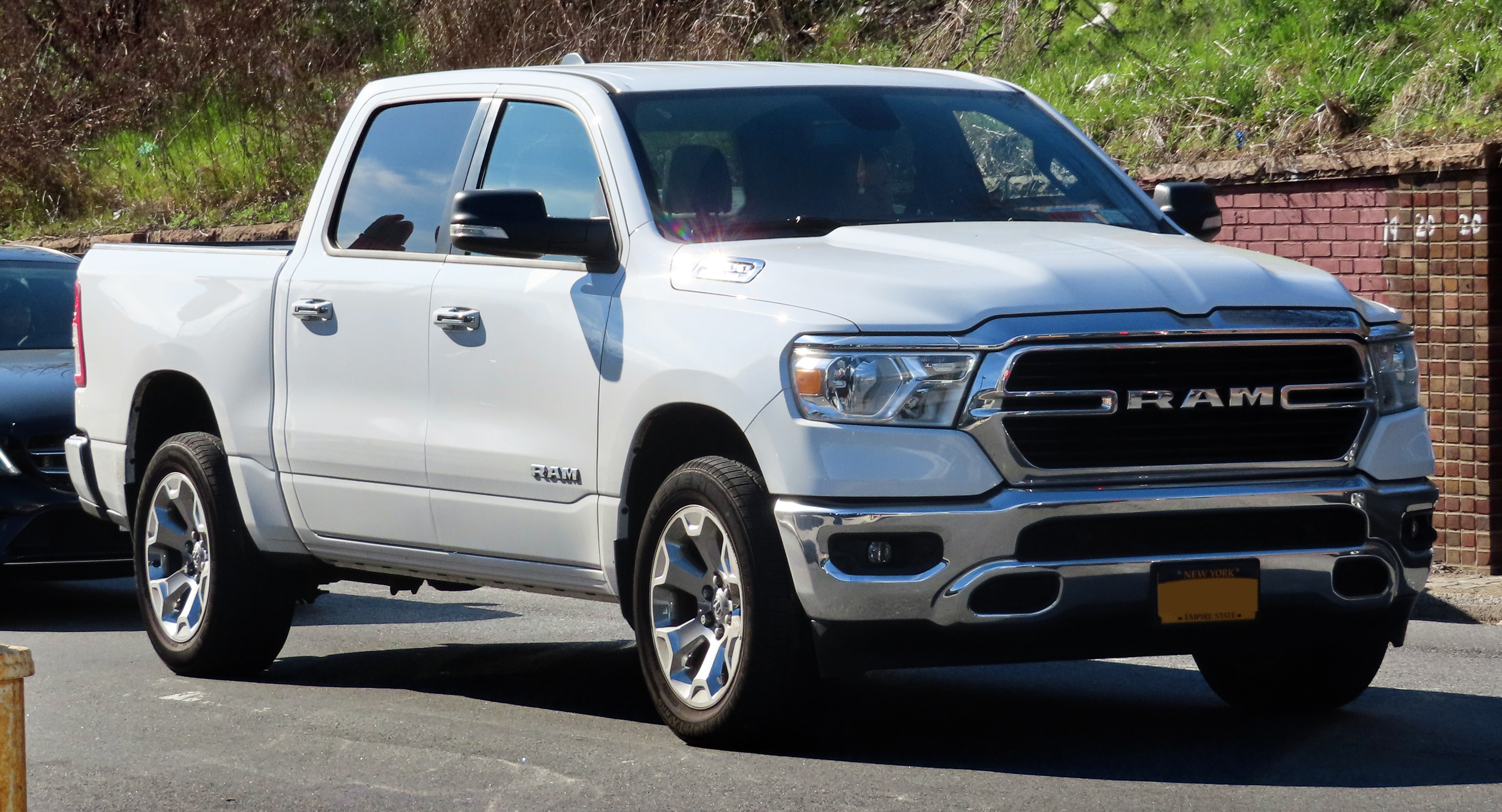
Ram 1500
"Ram 1500 it's got the hemi in it and it's the Laramie Longhorn and it's on air ride"
This is a Ram 1500 pickup truck. The important part here is that it has air suspension, which uses air pressure to control the ride height—so if the system leaks or fails, the truck can ride very low and feel harsh.
The Ram 1500 is a full-size pickup from Ram that’s offered with a V8 “Hemi” engine and various luxury trims. In this segment, the key detail is that this specific Ram 1500 is equipped with an air suspension system, which affects ride height and how the truck “sits.”
air ride
"Ram 1500 it's got the hemi in it and it's the Laramie Longhorn and it's on air ride and so the recently I had basically like an air ride problem"
“Air ride” means the suspension uses pressurized air instead of just metal springs. If it leaks or breaks, the truck can sag and ride hard because it can’t hold the right air pressure.
“Air ride” refers to an air suspension system that uses pressurized air to support the vehicle and adjust ride height. When it leaks or fails, the truck can drop (“ride really flat”) and feel very stiff because the suspension can’t maintain the correct pressure.
purge valve
"and so the recently I had basically like an air ride problem where we were trying to kind of diagnose that we think it might be a purge valve but it's a leak somewhere"
A purge valve is a small valve that opens and closes to control flow. If one fails, it can let pressure escape or prevent the system from working properly, which can make the suspension sag or ride wrong.
A purge valve is a valve that controls the flow of a fluid or gas in a system (here, mentioned as a possible cause of an air-ride issue). In air suspension diagnostics, a failed valve can contribute to pressure loss, leading to a slow leak and abnormal ride height behavior.
Diagnosing air suspension leaks and expensive repairs
"and so the recently I had basically like an air ride problem where we were trying to kind of diagnose... ...they usually replace a lot of stuff and it gets expensive because you never really know exactly what parts failed"
They talk about how to figure out what’s wrong with a truck’s air suspension when it starts leaking. They also explain why repairs can be expensive and why not every shop wants to work on these systems.
This segment focuses on troubleshooting an air suspension problem on a Ram 1500, including how fault codes may not pinpoint the exact failed part. It also covers why nitrogen-based systems can be costly and why some shops avoid them.
nitrogen system
"they don't you can't it's it's a nitrogen system it's not it's not air it's not gonna so it's not like sucking air in from outside and airing it up like the old ones"
Instead of using outside air, this suspension system uses nitrogen gas. Nitrogen is drier, so it can help reduce rust/corrosion inside the system, but the system can still fail and get expensive to repair.
A nitrogen system is an air-suspension setup that uses nitrogen gas instead of drawing in outside air. Nitrogen is drier and less reactive than ambient air, which helps reduce moisture-related corrosion and internal failure modes.
internally failed
"it's broken they they don't you can't it's it's a nitrogen system it's not it's not air it's not gonna so it's not like sucking air in from outside and airing it up like the old ones it's internally failed"
“Internally failed” means the problem is inside the suspension system itself. That usually points to internal leaks or broken parts, not something like a hose that’s just leaking from the outside.
“Internally failed” means the air suspension problem is coming from inside the system rather than from outside air being sucked in. That distinction matters because it points diagnosis toward internal leaks or component failures (like valves or seals) instead of simple external air leaks.
hard feather
"it's internally failed these things it's hard feather it's hard all right all right Kobe you can come back now"
They’re describing how the truck rides when the air suspension isn’t working: it feels stiff and harsh instead of smooth. It’s like the suspension can’t “float” correctly anymore.
“Hard feather” here describes the suspension behavior when the air system can’t maintain pressure—so the ride becomes very stiff and sits improperly. It’s essentially describing the truck’s ride feeling “hard” rather than smoothly supported by the air springs.
internally charged
"they got this brilliant idea well let's just make it internal we'll have a tank that's charged we'll pull nitrogen out the air up we'll suck it back out and put it in the tank"
This means the suspension has its own stored nitrogen pressure inside the system. If something goes wrong, you can’t just “refill it” like older designs—so repairs can be more complex and costly.
“Internally charged” describes the design where the system has its own stored gas charge (nitrogen) rather than continuously pulling in outside air. That architecture can reduce corrosion from moisture in ambient air, but it also means failures can be harder and more expensive to diagnose and repair.
standard shocks
"do some conversion kits and convert them over just a regular standard standard shocks on them you know springs and cars with struts"
Standard shocks are the regular, non-electronic shock absorbers. They’re usually easier to replace and diagnose than fancy adjustable suspension parts.
“Standard shocks” refers to conventional non-adjustable dampers compared with electronically controlled or air/pressure-based suspension components. The host is contrasting a more complex system that needs diagnostics with a simpler setup that can often be serviced with off-the-shelf parts.
conversion kits
"do some conversion kits and convert them over just a regular standard standard shocks on them"
A conversion kit is a set of parts that changes your suspension from one type to another. For example, it might swap an air/adjustable setup to regular spring-and-shock parts.
A conversion kit is an aftermarket (or sometimes OEM-approved) parts package used to change one suspension setup to another—such as converting an electronically controlled or air-based system to conventional springs/struts. The host implies these conversions can simplify diagnosis and parts sourcing, but they’re still a job that needs the right components and fitment.
struts
"you know springs and cars with struts that have that type type of thing but yeah it's it's hard to diagnose"
Struts are a combined shock-and-spring part used in many cars. They’re usually simpler than adjustable or air-based suspension systems.
Struts are a common suspension design where the shock absorber and spring are packaged together as one unit. The host mentions “springs and cars with struts” as the simpler alternative to more complex adjustable/air systems that require special equipment.
diagnosing complex suspension systems
"it's hard to diagnose and you have to have special equipment to diagnose it you know do you to check those pressures you need to have a scanner"
Some suspension problems are hard to figure out without the right diagnostic tools. The host is describing how techs use scanners to check what the suspension is doing.
The host explains why some suspension setups are difficult to diagnose and why you may need specialized tools to read suspension data and test the system’s valves/pressure behavior.
valving
"see what's going on with the valving in there and then you'll activate the valves and see if the pressure transfers"
Valving is the part inside the shock that controls how easily fluid can move. That control is what changes how stiff or soft the suspension feels.
Valving is the internal flow-control mechanism inside an adjustable shock/strut that meters how fluid moves through the damper. When the host says the scanner can see what’s going on with the valving and then activate valves, they’re describing how the suspension changes damping behavior.
compressor
"they had a compressor that also didn't work and it broke right they have the compressor that would compress air and yeah it into the shock"
The compressor is the pump that makes and maintains the air pressure for the air suspension. If it breaks, the suspension can’t work the way it’s supposed to.
A compressor in an air-suspension system pressurizes air for the shocks/struts. If the compressor fails (or can’t build/maintain pressure), the suspension can’t regulate ride height or damping properly.
dealer vs independent shop decision
"it's going to be one of those things where if I would say you've got two choices you can go to the dealer and prepare to spend some money or you can ask independent shops"
When suspension repairs are expensive, you often choose between a dealership and an independent shop. The host suggests picking the shop that’s willing to look at it and give a straightforward next step.
The host frames a practical choice for owners: go to the dealer and expect higher costs, or use an independent shop that can still diagnose and repair the system. They also suggest how to judge shop competence by whether the shop gives a reasonable plan versus vague over-explanations.

2020 Ford Explorer ST
"two years ago in the middle of January my wife and I purchased the 2020 Ford Explorer ST okay car weren't everything worked great on the car till summer came and I got above 80 degrees"
This is a 2020 Ford Explorer ST, which is a sportier version of the Explorer SUV. The caller says it starts acting up in hot weather—specifically related to getting the car out of park and shifting.
The Ford Explorer ST is a performance-oriented trim of the Ford Explorer SUV, aimed at buyers who want more power and sportier driving than the base models. In this episode, it’s the specific vehicle that’s having a recurring transmission/shift-control issue in hot weather.
gear selector
"we couldn't get the thing out of park got the little round gear selector down in between the seats oh yeah uh we called the dealership"
The gear selector is what you use to choose the car’s gear (like Park or Drive). If it’s not working right, the car may refuse to shift properly—like getting stuck in Park.
A gear selector is the shift-control mechanism that lets you move the transmission between Park, Reverse, Neutral, Drive, etc. If the selector or its linkage/electronics act up, the car can fail to come out of Park or can behave inconsistently when shifting.
brake light switch
"they replaced the gear selector and then they also when we took it back because it kept doing it uh the brake light switch but uh again through the winter no problems whatsoever"
The brake light switch tells the car when your foot is on the brake. If it’s faulty, the car may not think you’re braking, and that can prevent shifting out of Park or cause other weird behavior.
The brake light switch is the sensor that confirms when the brake pedal is pressed. Many cars use it as part of the safety logic that allows shifting out of Park—so a failing switch can cause “won’t shift” symptoms and related electrical/shift issues.
aftermarket extended warranty
"or is this a aftermarket extended warranty that you bought from somebody besides the factory [2037.7s] no we bought the car used so it'd be from the dealership when we well no it's a factory one"
It’s extra coverage you buy from a company other than the car brand to help pay for repairs after the original warranty ends. The big difference is the fine print—coverage and approvals can work differently than the factory warranty.
An aftermarket extended warranty is a service contract you buy from a company other than the vehicle manufacturer to cover repairs beyond the factory warranty. It can have different rules, claim processes, and coverage limits than a factory-backed warranty, which can affect whether a repair is approved and how disputes are handled.
factory one
"[2037.7s] no we bought the car used so it'd be from the dealership when we well no it's a factory one I [2043.3s] think they sold this does it say Ford Motor Company on the cake so there's because there's"
A factory warranty is coverage tied to the car brand itself, not a separate company. Because it’s manufacturer-backed, the rules for repairs and payment can be different.
A “factory” extended warranty is backed by the vehicle manufacturer (or its authorized warranty administrator) rather than an independent aftermarket provider. The segment suggests that factory coverage can come with different procedures and expectations for repairs and approvals.
escalate
"[2058.3s] for that same problem it won't come out of gear yeah they there's there's some things you need to [2063.8s] escalate that to to get some resolution but if it's an aftermarket company it's that they have"
In warranty repair disputes, “escalate” means moving the case up to higher levels within the warranty provider’s process when a shop can’t resolve the issue. The segment implies that escalation is sometimes needed to get approvals, additional diagnostics, or alternative remedies.
aftermarket company
"[2063.8s] escalate that to to get some resolution but if it's an aftermarket company it's that they have [2071.4s] different rules and there's different things and and you might be getting it covered"
An aftermarket company is a third-party warranty provider. Their coverage rules and how they pay repair shops can be different from the car brand’s warranty.
An “aftermarket company” here refers to an independent warranty provider that isn’t the vehicle manufacturer. The segment highlights that these companies can have different rules about which shops can work on the claim and how repairs are approved.
deductible
"[2094.1s] and if they get a call back from their customer that says I've been in four times [2099.0s] for this same repair and they haven't been able to fix it uh you know and I paid my deductible"
A deductible is the part you pay yourself first. After you’ve paid it, the warranty is supposed to cover the rest—so if the problem keeps coming back, people get frustrated.
A deductible is the amount the customer must pay out of pocket before the warranty or insurance coverage kicks in. The segment notes that customers may become more aggressive in contacting the shop and warranty provider when they’ve already paid the deductible and the same repair keeps failing.
anti-theft
"but here's what I want it's got an anti-theft what I want to know is when you take it in and [2159.7s] they can't fix it is it working fine"
Anti-theft is the car’s security system. It can stop the car from starting or operating if it thinks someone is trying to steal it.
An anti-theft system is an immobilizer or security feature designed to prevent unauthorized starting or operation. The segment suggests the vehicle has an anti-theft feature that may be related to why the car can’t be fixed or why it behaves oddly when brought in for service.
body control module
"I'm looking at the body control module and it tells me I'm in park I step on the brake it tells me my foot is on the brake and the cruise switch is off..."
A body control module is a computer in the car that manages lots of electrical features. Here, it’s also part of the safety logic that decides whether the car will let you move out of Park.
The body control module (BCM) is the car’s electronics hub for many “body” functions like lights, locks, and various interlocks. In this situation, the BCM is also involved in whether the car is allowed to shift out of Park based on brake/shift signals.
scanner
"...I've got my scanner plugged in and I'm looking at the body control module and it tells me I'm in park..."
A diagnostic scanner (OBD scanner) reads fault codes and live data from the car’s control modules. Here, the scanner is used to monitor what the BCM thinks is happening (Park status, brake input, and cruise switch state).
brake switch
"...the cruise switch is off for disengage that tells me the brake switch is working properly... if it still won't unlock then I need to take my voltmeter and I check the actual switch..."
The brake switch is what tells the car you’re pressing the brake pedal. If it’s not reading correctly, the car may think you’re not braking and won’t let you shift out of Park.
The brake switch is an electrical sensor that tells the car when the brake pedal is pressed. Because shift interlock relies on brake input, a faulty or miswired brake switch can cause the car to refuse to shift out of Park.
shift interlock open
"...it says shift interlock open and I should be able to put it into neutral or drive or reverse or low whatever I want..."
Shift interlock is the safety feature that stops you from moving the car out of Park unless you’re doing it correctly. When it says “open,” it means the car is currently allowing shifting, assuming the other requirements are satisfied.
Shift interlock is the safety system that prevents shifting out of Park unless conditions are met (like brake pedal pressed and correct gear logic). “Shift interlock open” means the car is currently allowing the shift, but only if other conditions—like engine RPM—are within limits.
program it
"the next step probably for them is going to be to replace that body control module and program it..."
If you replace a car computer, it usually has to be set up for that specific car. Otherwise it may not work correctly with the rest of the vehicle.
When a control module like the BCM is replaced, it often must be programmed (configured) so it matches the vehicle and communicates correctly with other modules. Without programming, the new module may not enable the correct shift interlock behavior.
park switch
"...they've put a park switch at the parental switch in it that dial the only other component left is the body control module..."
The park switch tells the car what gear the transmission is in. If it reports the wrong gear position, the car can refuse to shift out of Park.
A park switch (part of the gear-position sensing system) tells the car which gear the transmission is in. If the park switch or its signals are wrong, the car may think it’s not in the right state to allow shifting out of Park.
read codes
"so if all they know to do is read codes say well it won't come out of gear I'm reading codes let's just throw a switch in it..."
“Read codes” means checking the car’s computer for error messages. The point here is that just following the code without checking live signals can lead to replacing the wrong part.
“Read codes” means using diagnostics to pull stored trouble codes from the car’s computers. The host is warning that codes alone can lead to guesswork—because the real issue may be an input/signal logic problem rather than the part you assume.
scan the codes
"if it works right away you're like I will do a minimum I'll scan the codes to see if there's something that I see that all the time"
“Scan the codes” means plugging in a scanner to read error messages stored in the car. Those messages can help a mechanic figure out what part is causing the problem.
“Scan the codes” refers to using an OBD-II diagnostic tool to read stored trouble codes from the car’s computer. These codes help pinpoint what system is malfunctioning, especially when a problem is intermittent.

2016 Buick LaCrosse
"excellent go ahead Rick 2016 Buick LaCrosse inherited mother-in-law car we've known the car's whole life since a dealer for her and we now drive it a daily driver for my wife"
This is a 2016 Buick LaCrosse that the caller uses every day. The issue is that the key fob sometimes won’t work, so the car won’t unlock or start the way it should.
The Buick LaCrosse is a mid-size sedan, and this 2016 model is being discussed as a daily driver with recurring key-fob problems. The host is using it as a real-world example of intermittent remote/keyless entry behavior that affects starting and unlocking.
remote starting
"we've had intermittent uh unresponsive key fob remote starting initiatives latest expression was uh you know this goes right we're at a recent school event for some grandkids start training them to concert go outside start the car remotely from a good distance away"
Remote starting means you can start the car without being in it, usually using the key fob. If it works sometimes and not others, it can be caused by the fob not sending a strong signal or the car not reading it correctly.
Remote starting lets you start the engine from outside the car using the key fob (or a related remote function). If remote starting is intermittent, it often points to a weak fob battery, poor fob signal, or a vehicle receiver/antenna issue.
unresponsive key fobs
"so we've had a couple of different expressions of that so I'm looking for some counsel on unresponsive key fobs we've also had the expression of it where get in the car and you're holding the key fob"
“Unresponsive key fobs” describes a keyless-entry remote that intermittently fails to communicate with the car. Common causes include a failing key fob battery, damaged fob circuitry, or issues with the car’s keyless receiver/antenna.
reprogram
"they sell them for like I think it's like 25 bucks for two of them on ebay and amazon they're really cheap and you can just reprogram it"
Reprogramming is when the car is set to recognize a new key fob. Even if the fob is new, the car may need to “learn” it before it will work.
Reprogramming a key fob means teaching the car to recognize that specific fob’s code. Many cars require this after replacing the fob, even if the new fob is otherwise identical.
receiver
"well most of them it's not a battery it's the it's the receiver itself they just fail I had one I had to replace in a 21 model vehicle here a couple months ago"
In this context, the receiver is the car module that picks up the key fob’s signal. It can fail independently of the fob battery, which is why a dash message like “low battery” may persist even after replacing the fob battery.
OEM
"so what we're getting toward 10 years old and so I wanted about if I swapped out the fobs so I want to go with OEM"
OEM parts are the same type of parts the car manufacturer uses from the factory. For key fobs, OEM can be easier to get working correctly with your specific car.
OEM means Original Equipment Manufacturer—parts made to match what the car came with from the factory. Using OEM key fobs can reduce compatibility or programming headaches compared with cheaper aftermarket options.
instrument cluster
"you can do them both a lot I think that one you can do through instrument cluster yeah I was going to check with you guys first two thoughts I think there's a spot on the instrument cluster"
The instrument cluster is the dashboard screen/menu. On some cars, you can program a key fob right from that dashboard menu instead of going to a dealer.
The instrument cluster is the dashboard display area (speedometer/tachometer screens and menus) that can include settings for vehicle functions. Some newer cars let you program a key fob through the cluster’s menu system.
GMs
"a lot of these newer ones on the gms have a spot you just navigate to the menu and program key fob"
“GMs” means General Motors cars. The point is that some GM models have a dashboard menu that helps you program a key fob.
“GMs” here refers to General Motors vehicles. The host is saying that on some GM models, there’s a menu path on the instrument cluster to program key fobs.
transmitter
"they check the transmitter in the car they're receiving they couldn't repeat the issues so is there is a possibility I guess there's a transmitter or receiver in that car"
Here, “transmitter” means the part in the key fob that sends the signal to the car. If the dealer can’t find a problem with the fob, the issue might be the car’s ability to receive that signal.
In this context, a transmitter is the electronic device inside the key fob that sends a radio signal to the car. The dealer checked the transmitter/communication but couldn’t reproduce the issue, leading to the possibility that the car’s receiver/antenna or interior module could be the real problem.
tire pressure monitor system
"that also does the tire pressure monitors so if you don't ever have a tire pressure monitor system that system is probably working just fine if you got a tpm s light that keeps coming on"
TPMS is the system that watches your tire pressure and warns you if a tire is low. If the warning light keeps coming on, it can sometimes be related to the car’s sensor communication, not just the tires.
A tire pressure monitor system (TPMS) uses sensors to measure tire pressure and alerts the driver when pressure is low or a sensor isn’t communicating. The caller notes that the same interior antenna/module that communicates with key fobs can also be involved with TPMS, so a persistent TPMS light can hint at a communication or antenna-related issue.
1941 Plymouth B12 special deluxe
"my wife and I bought a 1941 Plymouth B12 special deluxe two years ago and we had to get it running it needed a complete fuel system and we did that new tank new line new pump rebuilt carburetor"
This is a 1941 Plymouth model that runs on a carburetor, not modern fuel injection. The caller is dealing with a fuel delivery issue where the carburetor isn’t getting enough gas, so the car repeatedly runs out of fuel.
The 1941 Plymouth B12 special deluxe is a vintage Plymouth that uses a carburetor-based fuel system rather than modern fuel injection. In this episode, the host and caller focus on fuel delivery problems—specifically the carburetor running out of fuel—after prior work like a new tank, lines, pump, and a rebuilt carburetor.
fuel pump
"needed a complete fuel system and we did that new tank new line new pump rebuilt carburetor and it ran fine for a year"
The fuel pump moves gas from the gas tank to the engine. If it’s weak or not feeding fuel reliably, the carburetor won’t get enough gas and the car can quit.
The fuel pump is responsible for moving gasoline from the tank to the carburetor. If the pump can’t deliver enough fuel (or delivers it inconsistently), the carburetor bowl can run low and the engine will stall or “run out of gas” even if the tank has fuel.
vapor lock
"it's it's pushing the fluid the the fuel forward instead sucking it up it's pushing it forward that little bit of pressure prevents vapor lock"
Vapor lock is when fuel gets so hot that it turns into gas in the fuel line. If that happens, the engine may not get the fuel it needs to run. A little extra fuel pressure helps keep the fuel in liquid form.
Vapor lock is when fuel turns into vapor inside the fuel lines or pump area, so the engine can’t get liquid fuel. It’s more likely when the engine bay is very hot, because heat lowers fuel’s ability to stay liquid. Keeping a small amount of fuel pressure helps prevent that vapor formation.
fuel regulator
"and then the regulator protects the carburetor from too much pressure at the bowl and it sends that back to the tank"
A fuel regulator is a device that controls fuel pressure before it reaches the carburetor. It helps make sure the carb doesn’t get too much fuel pressure. That can prevent problems like flooding.
A fuel regulator controls how much fuel pressure reaches the carburetor. In carbureted setups, it helps keep the fuel pressure at the bowl from getting too high, which can cause flooding or other drivability issues. The regulator can also route excess fuel back toward the tank depending on the system design.
return line
"so you will need a return line you'd have to add a return line but for parades and things like that"
A return line is a second fuel line that sends extra fuel back to the gas tank. It helps keep the carburetor from getting too much fuel. Some fuel pump setups need this extra line to work right.
A return line is an extra fuel line that sends excess fuel back to the tank. It’s commonly used in systems where a regulator maintains pressure by routing overflow away from the carburetor. If you add an electric pump to an older carbureted vehicle, you may need a return-style setup to match the regulator and pressure requirements.
inertia crash switch
"and that'll just come on when you turn the key on and go off when it shuts off and you could put an inertia crash switch on it if you want"
An inertia crash switch is a safety switch that can shut off the fuel pump after a crash. It’s triggered by the sudden stop of an impact. That helps prevent fuel from continuing to pump if something goes wrong.
An inertia crash switch is a safety cutoff that stops fuel pump operation after a collision or sudden impact. It uses an inertia mechanism to detect rapid deceleration and then interrupts power to the pump. Adding one can reduce the risk of fuel continuing to flow if the vehicle is involved in an accident.
Request an Explanation
Heard something you'd like explained? We'll add it to this episode.
Sign in to request explanations for terms you heard.
Want to learn more?
Browse our glossary for plain-English explanations of automotive terms, jargon, and concepts.
Help improve this episode
See something that's not quite right? Our annotations are AI-generated and can sometimes miss the mark. Click the flag icon on any annotation to suggest a correction.