
What is a Beautiful Motorcycle?
About this episode
Mark Hoyer and Kevin Cameron dig into what makes a motorcycle beautiful, arguing that aesthetics often come from engineering choices, proportions, and the way a bike reveals its mechanical parts. They move through a long list of examples, from Triumph Speed Twins and Norton Commandos to the Ducati 916, Harley XR750, and Suzuki RK67, mixing design history with personal memories, riding impressions, and strong opinions about what looks right and why.
What is a beautiful motorcycle? You know it when you see it? Kevin and Mark talk about beauty of motorcycles both inside and out. We have a lot of the hits--Vincent Black Shadow, Harley-Davidson XR-750, Norton Manx, and more--but they sneak in some unusual stuff, too, all the way to the 1967 Suzuki RK67 50cc roadracer with 17-speed transmission!
What is beauty? Beautiful motorcycles.
"Today we're going to talk about beauty, aesthetics. What is beauty? Beautiful motorcycles. So we're going to have a list..."
They’re starting the discussion about what makes a motorcycle look beautiful. The conversation is basically about taste and how people decide what looks good.
This is the episode’s framing topic: discussing what “beauty” means when applied to motorcycles. The hosts set up a list-based conversation that blends aesthetics, personal experience, and examples.
lighting changes perception
"Extremely bright light on one of those motorcycles... And the intense light made every detail apparent. It brought my eye to every point."
The segment describes how intense, bright lighting at an exhibit can make a motorcycle’s design details “pop,” altering the viewer’s impression of its aesthetics. This is an example of how environmental factors can affect visual perception of form, lines, and surface details.
subjectivity
"So maybe something's more beautiful in daylight. The other day I was at the tax man and everyone in the room was smiling... There's a big subjectivity here."
The hosts emphasize that “beauty” in motorcycles is subjective—what one person finds attractive can depend on personal experience and context. That’s why the same bike can look different under different lighting or settings, and why there’s no single universal definition of beauty.

Mclaren 650S
"... bike that you put, which you said 1960s Triumph 650s. Yeah. I would go back to the core document, the ..."
The McLaren 650S is a very fast, high-end sports car made for performance driving. It uses a powerful engine and is designed to handle well at speed. It often gets mentioned because it’s a modern example of a “supercar” built for both excitement and control.
The McLaren 650S is a high-performance supercar from McLaren, built to deliver track-capable performance with a lightweight, driver-focused design. It’s significant because it represents McLaren’s approach to modern supercar engineering—strong power, advanced aerodynamics, and a performance-oriented chassis. It may be discussed in a podcast when comparing different classic and modern performance vehicles or when talking about what makes certain cars special.

Triumph Speed Twin
"3940 Triumph Speed Twin. Massively elegant. It certainly extended its beauty into the 650 as the bikes evolved, but it is a fabulous looking machine."
The Triumph Speed Twin is a classic British motorcycle. The hosts are praising how it looks—especially the way the engine and parts are exposed in a clean, uncluttered way. They’re also saying that the same design vibe carried into later 650cc models.
The Triumph Speed Twin is a classic British twin-cylinder motorcycle model from Triumph. In this segment, the hosts use it as an example of “beautiful” design—especially the airy, open look of the engine and intake area. They also connect its styling to later 650cc twins.
pre-unit and unit twins
"It certainly extended its beauty into the 650 as the bikes evolved, but it is a fabulous looking machine. It has that live airiness that you're talking about that they did expand on it in the 60s through the pre-unit and then to the unit twins."
“Pre-unit” and “unit twins” refer to how Triumph twin-cylinder engines were constructed and packaged. Pre-unit designs separate the engine and gearbox into different casings, while unit twins combine them into a single assembly. That packaging affects how the motorcycle looks and how the engine/primary area is shaped.
carburetors
"Because the carburetors are just sticking out there with their carburetors. That's a carburetor. And there may be an air filter box. You can see it, but the carburetors, they are connecting to the air filter box and it's all light and airy."
Carburetors are what older bikes used to mix fuel with air before it goes into the engine. On many classic motorcycles, you can see them clearly, and that visibility is part of what people find visually appealing. The carburetors also connect into the air intake system.
Carburetors are fuel-mixing devices that meter air and fuel before it enters the engine. In the segment, the hosts point out that on older motorcycles the carburetors are highly visible, which contributes to the “light and airy” aesthetic. They also mention carburetors connecting to an air filter box, tying the look to the intake system.
air filter box
"And there may be an air filter box. You can see it, but the carburetors, they are connecting to the air filter box and it's all light and airy."
An air filter box (airbox) is the housing that contains the air filter and routes intake air to the carburetors or fuel injection system. The hosts highlight that the airbox is visible and visually “light,” which reinforces the classic, uncluttered look. Functionally, the airbox also helps smooth airflow and protect the intake from dirt.
drum brake
"Spoked wheels, that is wire spokes, wire wheels, and the traditional drum brake of the past, which sort of was a transition that sort of hinged on 1970."
A drum brake uses brake shoes inside a rotating drum to slow the wheel. The hosts call it “the traditional drum brake of the past” and mention a transition around 1970, implying the shift toward more modern braking hardware. Visually, drum brakes also contribute to the older, simpler look of classic motorcycles.
wire spokes
"Spoked wheels, that is wire spokes, wire wheels, and the traditional drum brake of the past, which sort of was a transition that sort of hinged on 1970."
Wire spokes are the thin metal spokes used on traditional motorcycle wheels, typically laced to a rim. The segment treats them as part of the classic “British” visual language—contrasting with later wheel designs that look more modern or bulky. Spoked wheels also visually emphasize the bike’s lightness and mechanical character.
engine moved toward the front wheel
"And as time passed, the engine moved toward the front wheel. And what works in racing soon becomes a style in production, as we've seen this time and again."
They’re talking about how motorcycle designers changed where the engine sits relative to the wheels. Moving the engine changes both how the bike rides and how it looks. The hosts also say racing ideas often end up influencing regular bikes.
The segment describes a design evolution where the engine’s position shifted closer to the front wheel. That kind of packaging change affects handling characteristics and also the motorcycle’s silhouette—how the engine, frame, and front end visually relate. The hosts connect this to how racing solutions often become production styling.
hinge of fate bikes
"Many of the bikes on Mark's list are hinge of fate bikes. They were big changes that occurred."
The hosts use “hinge of fate bikes” to mean motorcycles that were big turning points—where a lot changed in how bikes were designed or built. It’s basically a way of saying “this model mattered a lot.”
“Hinge of fate bikes” is a phrase used to describe motorcycles that mark major turning points in design or technology. In this segment, the hosts use it to frame certain models as watershed moments that “changed everything.” It’s more of a discussion theme than a specific mechanical component.
bagger
"In the past, there had been bikes that weighed as much as a bagger is required to in the bagger's championship. Over 600 pounds, and they were calling them sport bikes."
A “bagger” is a motorcycle style associated with touring bikes that typically have large saddlebags and a more cruiser-like riding posture. The hosts use it as a weight reference point, comparing how heavy some earlier sportbikes were to what baggers weigh. They also discuss why some people complain about baggers, framing it as a debate about what counts as a “race bike.”
fork tubes
"And it's little 125 size fork tubes on it. Well, that's me sneering in retrospect, isn't it?"
Fork tubes are part of the front suspension system. They help the front wheel move up and down smoothly over bumps. The hosts are pointing out that a bike can be very heavy even if the front suspension components look relatively small.
Fork tubes are the structural tubes of the front suspension that slide relative to the fork legs to absorb bumps. The hosts mention “125 size fork tubes” as a visual/engineering detail on the CBX, implying a mismatch between the bike’s weight and its suspension components. This is the kind of detail enthusiasts notice when judging design and performance.
power valves
"We got TZ750s. No power valves, just all power, no valves."
Power valves are parts on some two-stroke engines that help the engine make strong power across different speeds. They adjust timing so the bike doesn’t feel weak at certain RPMs. The hosts are saying the TZ750 doesn’t use them, so it’s more of a straightforward “all power” setup.
Power valves are adjustable intake/exhaust timing components used on some two-stroke engines to change how the engine breathes at different RPM ranges. The hosts highlight “no power valves” on the TZ750, implying a more fixed power delivery strategy. This is a meaningful technical detail because it affects throttle response and the shape of the power curve.
Jay Leno quote about motorcycles
"...it's a famous Jay Leno quote, never trust a motorcycle, you can't see through. He's good for the Ryquip, that Jay Leno."
They bring up a Jay Leno quote as a way to talk about motorcycle design. The idea is that some bikes are visually “open” and you can see through them, which they think looks elegant.
The hosts reference a “Jay Leno quote” about motorcycles being hard to see through, using it as a lens for discussing motorcycle design and visibility. This functions more as a discussion hook than a technical explanation, but it frames why they’re talking about the bike’s visual layout.

Triumph Bonneville
"...taking that speed twin to the 1960s triumphs, I mean, in Bonneville, the Tigers, they just, the shape of the tank... when the first Bonneville came out in 2001, when they first went retro at Triumph..."
The Triumph Bonneville is a famous British motorcycle. Around 2001, Triumph brought back a retro style, but kept it modern enough to ride and enjoy today. The hosts are talking about how that new retro look still feels connected to the older bikes.
The Triumph Bonneville is a classic British motorcycle line that became famous for its retro styling and modernized performance. In this segment, the hosts discuss the 2001 era when Triumph leaned into the “retro” direction and how the bike’s look and sound relate to earlier Bonneville motorcycles.

Triumph Speed Twin 1200
"...we can see through these bikes, the speed twin, the new speed twin 1200, for example, I took a picture of it out here in the parking lot... it’s got fuel injection, but it has very Amel monoblock carburetor looking fixtures."
The Triumph Speed Twin 1200 is a newer motorcycle from Triumph that’s styled like classic British bikes. The speakers are pointing out how its design lets you see through the bike and how some parts visually resemble older carburetor setups.
The Triumph Speed Twin 1200 is a modern retro-styled Triumph twin designed to capture the look and feel of classic British motorcycles while using contemporary engineering. Here it’s discussed as a bike you can “see through,” with design elements that visually echo older carburetor-era aesthetics.
fuel injection
"...it is got a hole in it. And it's got fuel injection, but it has very Amel monoblock carburetor looking fixtures."
Fuel injection is how a motorcycle feeds fuel to the engine using electronics. It’s different from a carburetor, but the bike can still be styled to look like the older carb era.
Fuel injection is a modern method of delivering fuel to the engine using electronically controlled injectors rather than a carburetor. In this segment, it’s contrasted with the bike’s visually “carb-like” hardware, highlighting how modern bikes can keep classic styling cues while using newer technology.
Amel monoblock carburetor
"...it's got fuel injection, but it has very Amel monoblock carburetor looking fixtures. And it's right there. And you can see through it."
The speaker is talking about a classic carburetor style (“Amel monoblock”) that people associate with older performance bikes. Even though this motorcycle uses fuel injection, it’s designed to look like it has that old-school carb hardware.
“Amel monoblock” refers to a carburetor style associated with Amel (often discussed in the context of classic racing and performance carburetors). The speaker is saying the Speed Twin 1200 uses fuel injection, but includes hardware that visually resembles an Amel monoblock carb setup to evoke the classic look.
going retro
"...when the first Bonneville came out in 2001, when they first went retro at Triumph, they were trying to be a modern motorcycle manufacturer..."
“Going retro” means making a new motorcycle look and feel like an older classic. Triumph was trying to bring back that classic vibe, but still make it a modern bike you can ride.
“Going retro” refers to designing modern motorcycles to intentionally resemble classic bikes—often in styling, proportions, and visual cues—while still using contemporary engines and electronics. The hosts connect Triumph’s 2001 shift to retro design with a goal of balancing modern performance expectations and classic motorcycle identity.
kick in the pipes
"...there was an uneasy truce between that Bonneville and what had come before. It was there. It looked very, it was very close, but they put the kick in the pipes."
“Kick in the pipes” is a phrase riders use to describe when the bike suddenly sounds and feels more alive. It’s basically about that satisfying moment when the engine really starts to pull.
“Kick in the pipes” is a motorcycle-slang way to describe a noticeable change in sound and/or power delivery as the engine comes on song—often tied to exhaust note and throttle response. Here it’s used to describe how the 2001 Triumph Bonneville still feels connected to earlier bikes, even as it modernized.
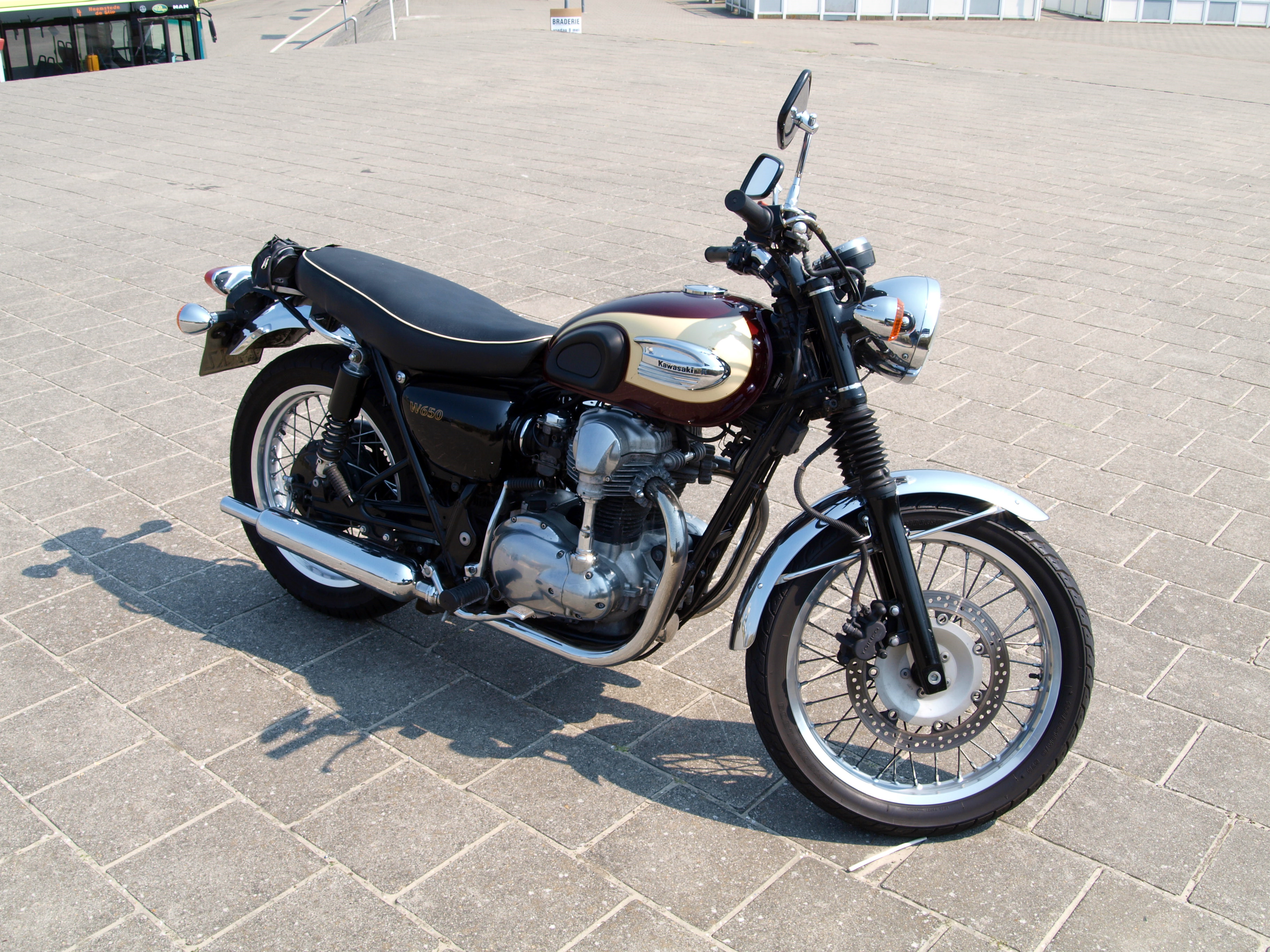
Kawasaki W650
"It was too modern in a sense. The Kawasaki W650 actually rode more like a vintage Triumph and it sounded more like a vintage Triumph with the way the pipes work."
The Kawasaki W650 is a retro Kawasaki motorcycle. The point here is that it feels and sounds old-school—more like classic Triumphs—rather than like a modern bike.
The Kawasaki W650 is a retro-styled twin that’s often praised for riding and sounding “vintage,” closer to classic British twins than to modern bikes. The hosts specifically connect its feel and exhaust note (“pipes work”) to the Triumph-like character they’re discussing.
17s
"They've updated it and kept the essence of the bike, but in a new form with 17s and like neat tires. It's a, and it's working for them."
“17s” means the motorcycle has 17-inch wheels. Wheel size can affect how the bike rides and what tires you can run.
“17s” refers to 17-inch wheels, a common modern sizing choice that can change ride feel, tire availability, and handling. The hosts mention it as part of how the bike was updated into a newer form while keeping the classic vibe.
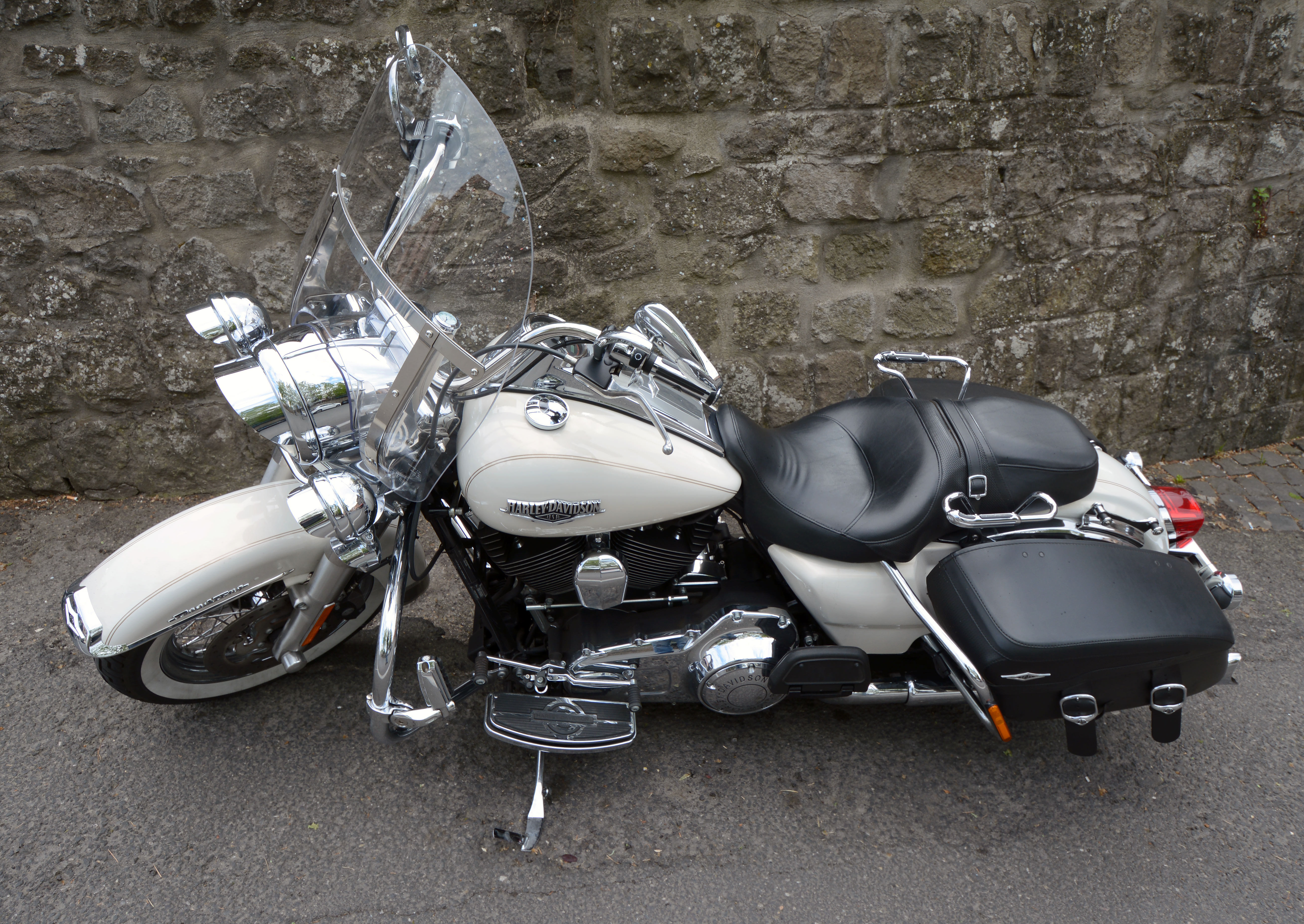
Harley Davidson Road King
"That's why I put the 09 Harley Davidson Road King on there because it was the new chassis that they're still using. That's a great chassis. That's the foundation of the bag or race bike."
The Harley-Davidson Road King is a touring cruiser. They’re saying the 2009 version got a newer chassis, which made it handle better than older Road Kings.
The Harley-Davidson Road King is a touring cruiser model known for its classic silhouette and comfort-focused layout. The hosts highlight the 2009 Road King as a turning point because it used a newer chassis that improved handling compared with earlier versions.
new chassis
"That's why I put the 09 Harley Davidson Road King on there because it was the new chassis that they're still using. That's a great chassis. That's the foundation of the bag or race bike."
A chassis is the motorcycle’s main frame and structure. If it’s new, it can make the bike feel more stable and easier to handle.
A “new chassis” means the motorcycle’s frame and underlying structure were redesigned or significantly updated. That can improve handling geometry, rigidity, and ride quality, which is why the hosts connect it to better handling on the 2009 Road King.
straight cut fifth gear
"The depth of the Burgundy paint on Peter Egan's 09, they might have been a 10. I know it was an 09 because it had the straight cut fifth gear that they changed later."
Straight-cut gears are a type of gear tooth shape. They often make more noise, and in this case Harley changed it because customers thought it was too loud.
A straight-cut gear uses teeth that cut straight across, which typically produces a louder, more “mechanical” sound than helical gears. The hosts say Peter Egan’s 2009 Road King had straight-cut fifth gear, and that it was too noisy for customers—prompting a change.
helical fifth
"...it had the straight cut fifth gear that they changed later. It was too noisy for customers that they changed to a helical fifth the next year in 2010."
Helical gears have angled teeth that tend to run quieter than straight-cut gears. Here, Harley changed the fifth gear to reduce noise people didn’t like.
A helical gear uses angled teeth, which usually makes it quieter and smoother than straight-cut gears. The hosts note Harley-Davidson switched to a helical fifth gear for the next year (2010) to address customer complaints about noise.
blacked out things
"We've transitioned in style to blacked out things like Harley's stuff is blacked out. So even when you do the Road King, which was a very traditional, like what you would call the jukebox look"
“Blacked out” means parts that used to be shiny chrome are finished in black. It’s a style trend that changes the bike’s look without changing the core design.
“Blacked out” refers to styling elements finished in black (or dark coatings) instead of chrome or bright metal. The hosts connect this trend to how modern Harley-Davidson bikes can look more subdued while still keeping the Road King’s traditional shape.
jukebox look
"So even when you do the Road King, which was a very traditional, like what you would call the jukebox look, right? A lot of chrome and some reds"
“Jukebox look” is a way of saying the bike looks flashy and shiny, like the decor you’d see on an old jukebox. They’re contrasting that classic chrome style with darker modern styling.
The “jukebox look” is a descriptive style comparison—typically meaning lots of chrome, bright colors, and a flashy, showy aesthetic. The hosts use it to contrast older Road King styling with newer “blacked out” trends.
heritage
"...whether that's a heritage, there is that segment of customers still would like to have that. But we went blacked out..."
In motorcycle and car marketing, “heritage” refers to using classic styling cues, brand history, and traditional design language to appeal to buyers. The speaker contrasts heritage-focused customers with those who still want modern or different finishes, showing how identity and design choices can be part of the product strategy.
chrome
"...the deepness of those finishes, the deepness of the chrome and the deepness of that Burgundy..."
Chrome is the shiny metal coating you often see on classic bikes and cars. In this discussion, it’s part of what makes the bike look rich and memorable.
Chrome is a highly reflective metal finish commonly used on classic motorcycles and cars to emphasize shape and visual depth. The speaker ties chrome to “deepness” and emotional impact, highlighting how surface finishes affect perceived quality.
Burgundy
"...the deepness of the chrome and the deepness of that Burgundy that you just, you get lost in a reverie."
Burgundy is a dark red color. The speaker is saying that certain colors can feel powerful and memorable to people.
Burgundy is a deep red/maroon paint color often associated with classic, premium finishes. The speaker uses it as an example of how specific colors can trigger strong memories and emotional reactions.
twin loop frame
"...The Max Norton, for example, the change to the twin loop frame and all hydraulic suspension with weight forward."
A twin-loop frame is the motorcycle’s main metal structure. The shape helps the bike feel more stable and can make the engine and suspension work together better.
A twin-loop frame uses two main loops of tubing around the engine area, creating a rigid, compact structure. It’s often associated with improved packaging and handling characteristics compared with older single-loop or less rigid designs.
hydraulic suspension
"...the change to the twin loop frame and all hydraulic suspension with weight forward."
Hydraulic suspension uses fluid-controlled damping to manage how the wheels move over bumps. Compared with simpler setups, it can smooth ride quality and improve traction by controlling how quickly the suspension compresses and rebounds.
weight forward
"...twin loop frame and all hydraulic suspension with weight forward. The 1940 speed twin was they designed..."
“Weight forward” means the bike feels like it has more of its mass toward the front. That can change how it steers and how stable it feels when you slow down or turn.
“Weight forward” describes a motorcycle’s mass distribution and setup that places more weight toward the front. This can influence steering feel, braking stability, and how quickly the bike turns in, often making it feel more immediate or planted depending on the geometry.
1920-ish Indian scout
"...1920-ish Indian scout. In the beginning, the big Indians and the big Harleys were for athletic young men... That is what Scout was designed to be."
The Indian Scout is a classic Indian motorcycle. The speaker’s point is that it was designed to be easier for more kinds of riders to enjoy, not just the most athletic or experienced people.
The Indian Scout is an early Indian motorcycle designed to be more accessible than the brand’s larger, more specialized bikes. In the transcript, the speaker frames it as an intentional shift in product strategy: changing the engine and overall package to create a new reason to buy.
high camshaft
"And the Grand Sport had a high camshaft and you can see it way up there with little pushrod, little pushrod, little stubby guys going out to the valves."
The camshaft controls when the valves open and close. Putting it higher in the engine can make the valve linkage shorter and more direct, which can improve packaging and how the engine looks and works.
A “high camshaft” means the cam sits higher in the engine, which changes the geometry of the valve-actuation parts. In this segment, it’s tied to the Grand Sport’s visible, compact pushrod/valve layout and to the idea of moving toward overhead-cam-like behavior.
pushrod
"And the Grand Sport had a high camshaft and you can see it way up there with little pushrod... it is, it is a push rod, but they were moving toward saying we should get rid of these push rods eventually."
In a pushrod engine, the camshaft doesn’t directly move the valves. Instead, it uses rods (pushrods) and other parts to transfer motion to the valves.
A pushrod engine uses a camshaft to drive the valves indirectly through pushrods and rocker arms. The hosts discuss how some designs kept pushrods but improved the layout by raising the camshaft, effectively shortening the pushrods as a step toward overhead-cam designs.
step toward overhead cam
"So it was a step toward overhead cam, which typically uses half the valve spring pressure of a push rod and rocker engine, because there's got to be some spring there to heave the push rod back and forth and to rock the rockers."
Overhead-cam engines put the camshaft closer to the valves, so the valve actuation can be simpler. The hosts are saying some older designs improved the pushrod setup first, as a stepping stone toward that overhead-cam arrangement.
The segment describes a design evolution: raising the camshaft to shorten pushrods, which is a transitional approach toward overhead-cam (OHC) valve actuation. The hosts also contrast valve-spring demands, noting OHC layouts can use less spring pressure because there’s less reciprocating linkage to “rock” back and forth.
74 Commando Roadster
"So that's a point. Commando, 74 Commando Roadster you've listed. Here was England's, the parallel twins last stand."
The “74 Commando Roadster” is a specific BSA Commando variant referenced as “England’s parallel twins last stand.” The hosts are using it to frame the end of an era for parallel-twin motorcycle design in England, tying the discussion back to engine architecture and character.
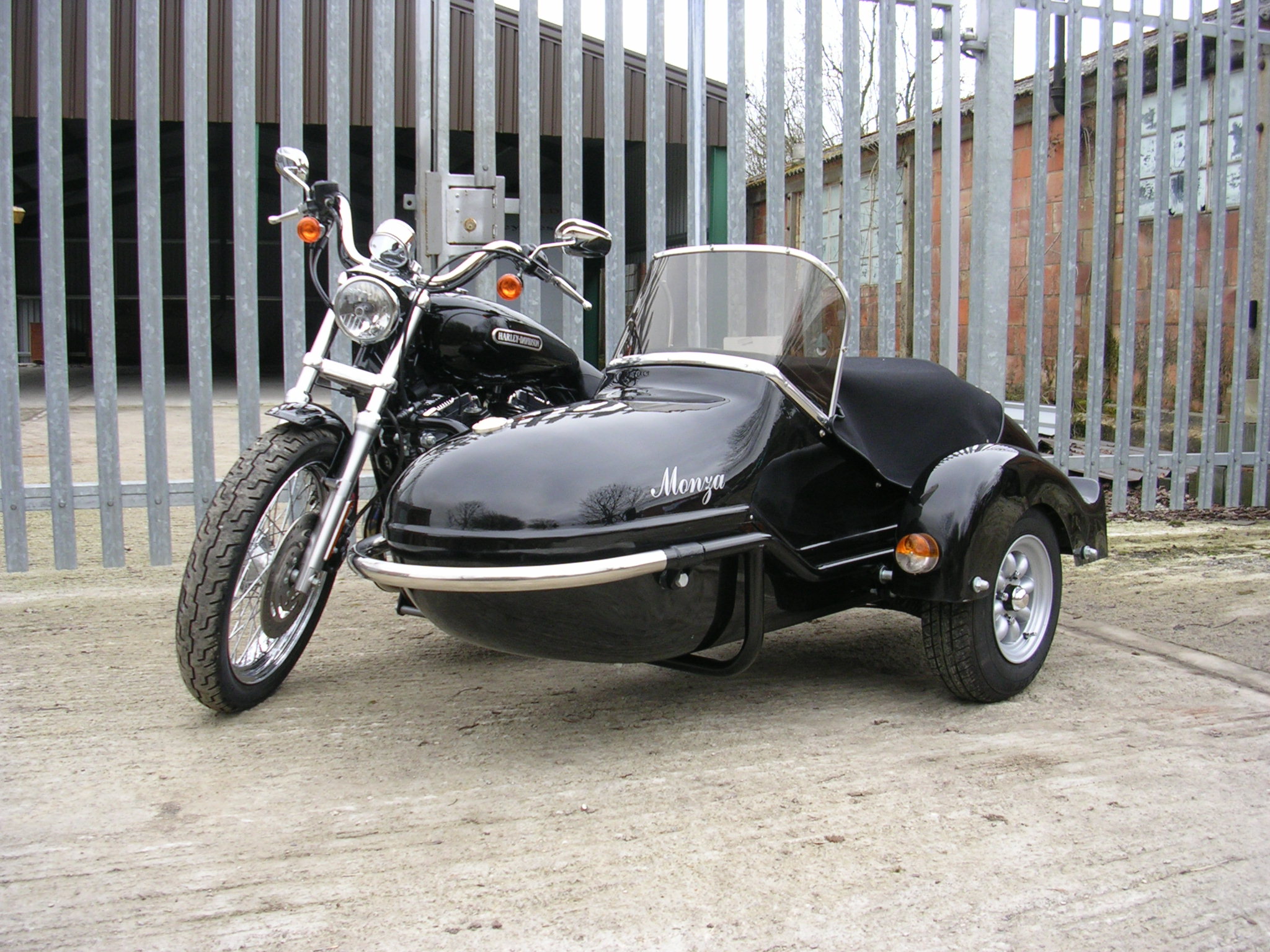
Harley Sportster
"...for the same reason, the Harley Sportster, the front wheel whipping back and forth rapidly at idle..."
The Harley-Davidson Sportster is a popular Harley motorcycle with a V-twin engine. Because of how the engine turns, it can make the bike feel like it’s “alive” and moving even when you’re stopped.
The Harley-Davidson Sportster is a classic V-twin motorcycle line known for its distinctive engine feel and vibration. In this segment, the host connects that vibration to how the front wheel moves at idle.
counterweights on the crankshaft
"...the shaking force of the pistons and the counterweights on the crankshaft just sang the same song as the flexibility of the fork tubes."
Counterweights are weights on the crankshaft that help cancel out the engine’s shaking. Changing them changes what kind of vibration you feel—more up-and-down or more side-to-side.
Counterweights on the crankshaft are used to balance rotating and reciprocating masses. By adding or changing counterweight, engineers can shift vibration characteristics—reducing vertical shake while increasing lateral “back and forth” motion, as described here.

Royal Enfield 500 bullet
"...neck and neck with the 1999 Royal Enfield 500 bullet that was put together rather roughly at the factory at that time. It was vibrated so much it made me itchy."
The Royal Enfield Bullet 500 is a classic single-cylinder motorcycle. Single-cylinder engines often shake more than multi-cylinder bikes, and the host is saying this one was especially noticeable.
The Royal Enfield Bullet 500 is a single-cylinder “thumper” that’s famous for its strong vibration character. The host describes it as extremely vibratory, even compared with other motorcycles they’ve ridden.
featherbed
"I rode a 650 Cafe racer Norton in a featherbed, so a solid mount."
Featherbed is a well-known Norton motorcycle frame design. Here, it’s mentioned to set up how the bike was mounted—solid mounting tends to make vibrations feel more direct.
“Featherbed” refers to Norton’s famous featherbed frame design, known for its handling and rigidity. In this context, the host pairs it with “solid mount,” implying less vibration isolation compared with rubber-mounted setups.

Norton Commando
"Somebody thought maybe they had used a commando crank by accident because the balance factor of the commando crank is tuned to work with the rubber mounts... which is one of the reasons I picked the commando."
The Norton Commando is a classic British motorcycle. In this segment, the host explains that its engine balance works well with rubber mounting, which helps control vibration, and they also describe it as beautifully designed.
The Norton Commando is a British twin-cylinder motorcycle celebrated for its engineering and distinctive look. The host attributes its smoother behavior (relative to other setups) to the commando crank’s balance factor being tuned for rubber mounts, and then praises the bike’s design details like the timing cover and primary cover.
balance factor
"...maybe they had used a commando crank by accident because the balance factor of the commando crank is tuned to work with the rubber mounts..."
Balance factor is a way of describing how well the engine’s moving parts cancel out shaking. If it’s tuned for rubber mounts, the vibration feels different (usually smoother) than if the mounts don’t match.
Balance factor refers to how an engine’s rotating assembly is balanced to reduce vibration. The host says the Commando crank’s balance factor is tuned to work with rubber mounts, meaning the whole system (crank + mounts) is designed to manage vibration.
rubber mounts
"...the balance factor of the commando crank is tuned to work with the rubber mounts, which is one of the reasons I picked the commando."
Rubber mounts are rubber pieces that hold the engine in a way that absorbs shaking. They help keep engine vibration from traveling straight into the frame and rider.
Rubber mounts isolate the engine from the frame using compliant rubber bushings. That isolation changes how vibration is transmitted and can improve ride comfort by reducing harshness.
primary cover
"...the gorgeous glistening polished primary cover on the left containing a triple chain that virtually never wears out if you take care of it."
The primary cover is the housing that protects the chain/gears that move power from the engine to the gearbox. A nice-looking primary cover also usually means the bike’s mechanicals are well cared for.
The primary cover encloses the primary drive components that transfer power between the crankshaft and the transmission. The host praises the Commando’s polished primary cover and specifically mentions a triple chain layout that “virtually never wears out” if maintained.
triple chain
"...polished primary cover on the left containing a triple chain that virtually never wears out if you take care of it."
A triple chain primary drive uses multiple chain runs to transmit engine power to the gearbox. More chain runs can help distribute load and reduce wear when properly lubricated and maintained.
torque
"...It brought the most, the 850, the shape of the tank, the rubber mounting, the way that it ran and made torque. We've talked about the combustion chamber"
Torque is the engine’s pulling power—the force that helps you accelerate. More torque usually means the bike feels strong even without high revs.
Torque is the twisting force an engine produces, and it strongly influences how quickly a motorcycle accelerates from low speeds. The host credits the Commando with making torque and ties that to how it “ran” and felt.
intake ports
"of this engine and the shape of the intake ports and the filling. It is a great running engine."
Intake ports are the engine’s air pathways. If they’re shaped well, the engine breathes better and runs smoother and stronger.
Intake ports are the passages in the engine head that guide the air-fuel mixture into the cylinders. Their shape affects how smoothly the engine fills its cylinders, which strongly influences power and how “clean” the engine feels when running.

Harley touring bike
"it's the same experience you get on a Harley touring bike with rubber mount or the Dynas that were rubber mount before they changed it. There's the motion at idle, but someone throws a switch."
Harley’s Touring bikes are the long-distance models. They’re designed to be comfortable and smooth, and the speaker is describing how the engine feels at different speeds.
“Harley touring bike” refers to Harley-Davidson’s Touring line, built for long-distance comfort and smoothness. In the segment, the speaker connects the Touring bikes’ rubber-mounted feel to how the engine transitions from a chuggy low-speed character to a smoother higher-RPM pull.

Harley-Davidson XR750
"XR750, dirt tracker. This is the closest to two wheels, an engine and a place to sit that you can come. And when I first looked at one... Of course it was more complicated than that and the limited circulation book on the development of the XR talks about so many little changes..."
The Harley-Davidson XR750 is a famous racing Harley built for dirt-track style riding. The speaker is saying that engineers changed things like compression and materials to stop the engine from knocking and to make it run reliably.
The Harley-Davidson XR750 is a legendary dirt-track/flat-track race motorcycle known for its purpose-built engine and strong performance. The speaker discusses how, for the 1970s-era XR750 development, Harley adjusted compression to manage detonation and also mentions material choices (iron vs aluminum) affecting heat retention and combustion behavior.
detonating
"at Daytona they kept lowering the compression more and more until they got under six to stop it from detonating because iron keeps heat in."
Detonating is when the fuel burns in an uncontrolled, “knocking” way inside the cylinder. Engineers try to prevent it because it can hurt the engine.
Detonation is an abnormal combustion event where the air-fuel mixture ignites too aggressively, often due to high cylinder pressure or temperature. It can cause knocking and, if severe or persistent, can damage the engine—so builders manage it with compression ratio and fuel/ignition strategy.
compression ratio
"at Daytona they kept lowering the compression more and more until they got under six to stop it from detonating..."
Compression ratio is how tightly the engine squeezes the fuel-air mixture before it ignites. Squeezing more can make more power, but too much can cause knocking.
Compression ratio is how much the fuel-air mixture is compressed in the cylinder before ignition. Higher compression can improve efficiency and power, but it also increases the risk of detonation, so racers often tune compression to the fuel and operating conditions.
Daytona
"They built 200 iron XRs for 1970 and it was a lot of iron and at Daytona they kept lowering the compression more and more..."
Daytona is a famous racing venue. The speaker is using it to explain where the bike’s engine settings were tested and refined.
Daytona is referenced as the racing context where the XR750’s development was tuned. In motorsports, track testing helps engineers dial in settings like compression and combustion behavior for real-world heat and load.
iron vs aluminum (cylinder/head material)
"because iron keeps heat in. That's why they make stoves out of it... Scratch out where it says cast iron and right aluminum."
The speaker contrasts iron and aluminum materials in the context of engine heat management. Iron tends to retain heat longer, which can increase detonation risk, while aluminum generally sheds heat more quickly—so material choice affects combustion stability.
silicone
"They just got one thing wrong. Silicone and head material. Scratch out where it says cast iron and right aluminum."
“Silicone” here likely means a sealant used to help parts fit tightly together. In an engine, good sealing helps prevent leaks and keeps things working reliably.
The transcript mentions “Silicone and head material,” which likely refers to a silicone-based sealant or gasket material used during engine development/assembly. Such materials can affect sealing, heat transfer, and reliability, especially in high-stress racing builds.
valve train
"such as the valve train becoming twice as stiff over the life of the vehicle."
Your engine has valves that open and close to let air and fuel in and exhaust out. The valve train is the mechanism that controls that timing. Over time, wear or changes in clearances can make it behave differently.
The valve train is the set of parts that opens and closes the engine’s valves (typically including camshaft, lifters/rockers, and related hardware). When it “gets stiffer” over time, it can change how the engine breathes and may affect performance and smoothness.
front sprockets with holes drilled in them
"I like front sprockets with holes drilled in them, not because I particularly want it lighter, although I do, but you could make it lighter by making it thinner, except at the sprocket teeth,"
A sprocket is the toothed wheel that the chain rides on. Drilling holes is one way to make it lighter, but you can’t remove too much material where the chain teeth do the work.
Drilled sprockets remove material to reduce weight and can also change how the sprocket behaves under load. The speaker notes the tradeoff: you can lighten them, but you still need strength at the tooth area.
wire wheels
"But where's beauty? I like wire wheels. I like front sprockets with holes drilled in them,"
Wire wheels are the classic kind of motorcycle wheels with thin metal spokes. They look great and give a traditional style, even if they’re not always the most modern choice.
Wire wheels use a wheel rim laced to a hub with metal spokes. They’re often associated with classic motorcycles and can help with visual “lightness,” though modern wheels may prioritize stiffness and durability.
XR 750
"Going back to the dirt tracker, you said elegance. The thing that's most elegant about an XR 750 is it is so essential, what you were saying."
The Honda XR 750 is a famous racing motorcycle from the dirt-track world. The hosts are talking about how its design is “beautiful” because it’s built around what the race needs, not extra stuff.
The Honda XR 750 is a legendary dirt-track motorcycle known for its dominance in flat-track racing. In the segment, it’s used as an example of “essential” design—minimal complexity that still performs extremely well.
flat tracker
"It's hard to reduce the motorcycle any more than a flat tracker. For road racing, we have to put some fairings on it"
A flat tracker is a bike set up for flat-track racing. It’s usually simpler and more “bare” than a road-race bike because the track and speeds demand different things.
A flat tracker is a motorcycle configured for flat-track racing, typically with minimal fairing and geometry optimized for sliding and traction management on oval dirt or similar surfaces. The speaker contrasts it with road racing, where higher speeds and airflow needs change the design.
fairings
"For road racing, we have to put some fairings on it because we're just going to be going that fast."
Fairings are the shaped panels on a motorcycle that help it cut through the air. On faster road-race tracks, they can make the bike more stable and efficient.
Fairings are aerodynamic body panels that reduce drag and manage airflow around the motorcycle. On road-racing bikes, they’re often necessary to stabilize the bike at high speed and improve cooling and rider control.
braking power
"For road racing, we have to put some fairings on it because we're just going to be going that fast. We need all kinds of braking power."
Braking power is how well the bike can slow down quickly and controllably. In racing, you need strong brakes because you’re often entering corners fast.
Braking power refers to how strongly and consistently a motorcycle can slow down, which depends on brake calipers, rotor size, pad compound, tire grip, and heat management. The speaker links it to road racing where corner entry speeds are high and braking must be precise.
trail braking
"throwing a front brake, hard corner entry, hard trail braking on a mile, I doubt it."
Trail braking means you start braking before the corner and keep braking a little after you turn in. The goal is to slow down while still keeping the bike stable and pointed where you want.
Trail braking is braking while the bike is already turning into a corner, gradually releasing brake pressure as you approach the apex. It’s a technique that blends deceleration with cornering grip, and it’s especially sensitive to tire traction and chassis setup.
snap wheelies
"Then snap wheelies that you could get where you would be pulling it up on the tire and you were getting an extra drive, essentially from changing the rear gearing as you're accelerating."
A snap wheelie is when you quickly give the throttle and the front wheel pops up. It happens because the rear wheel suddenly gets a lot of pulling force.
Snap wheelies are sudden, aggressive front-wheel lifts caused by rapid throttle application and rear-wheel torque. The speaker connects it to how rear gearing changes during acceleration, effectively increasing drive at the rear wheel and pitching the bike upward.
rear gearing
"you were getting an extra drive, essentially from changing the rear gearing as you're accelerating."
Rear gearing is how the bike’s engine speed is matched to the wheel speed. If you change it, the bike can feel more “snappy” when accelerating.
Rear gearing on a chain-driven motorcycle is set by the sprocket sizes (front and rear) and determines how engine RPM relates to wheel speed. Changing gearing alters acceleration feel and can contribute to behaviors like wheelies by changing how quickly torque reaches the contact patch.
lean angle
"There have been riders, road race riders who've talked about continuing to hold the motorcycle at angle of lean, because it doesn't wheelie as easily."
Lean angle is how much you tilt the bike into a turn. Keeping a steady lean can help the bike behave more predictably when you accelerate out of the corner.
Lean angle is how far the motorcycle is tilted from upright while cornering. The speaker mentions riders trying to maintain a consistent lean angle because it can reduce how easily the bike will wheelie, which relates to how weight and forces shift during acceleration.
center of mass
"The center of masses has been lowered. Now, that's why I said talked about."
Center of mass is the “balance point” of the bike. If that balance point is lower, the bike tends to feel more stable and less likely to tip up when you accelerate hard.
Center of mass is the point where the motorcycle’s weight effectively acts. Lowering it generally improves stability and reduces how easily the bike pitches up during hard acceleration, which the speaker ties to reduced wheelie tendency.
four stroke
"and it is basically the bike that sent the four stroke Honda's four stroke home from that class. They pulled their entries."
A four-stroke engine is a type of engine cycle that works in four steps. It’s a common design in motorcycles and cars, and it helps determine how the engine makes power.
A four-stroke engine completes its cycle in four piston strokes: intake, compression, power, and exhaust. The segment contrasts Honda’s four-stroke racing efforts with other approaches, emphasizing how engine architecture affects competition.
bread loaf tanks
"They called the bread loaf tanks, but this is at least three loaves end to end. The engine is quite a massive thing."
“Bread loaf tanks” is just a descriptive nickname for a motorcycle fuel tank shape. It helps explain the bike’s unusual layout and how everything is packed tightly around the rider.
“Bread loaf” is a nickname for a tank shape that looks rounded and elongated, like a loaf of bread. The segment uses it to describe the motorcycle’s packaging and how the rider is positioned relative to the tank and engine.
gearbox
"The gearbox is bigger than the power section, but there are the things that are so familiar... 14 speed gearbox, all old tech."
The gearbox is what lets a motorcycle use different gear ratios. That’s how it can pull strongly at low speeds and still go fast when needed.
The gearbox is the transmission section that provides multiple gear ratios to match engine speed to road or track conditions. The hosts note that the gearbox is physically large on this design, and later discuss rule limits affecting gearbox speeds.
tack cable
"the tack cable coming out of the tack and disappearing down to some little gearbox on the engine"
“Tack cable” appears to refer to a tachometer cable, which mechanically drives the gauge that shows engine RPM. The hosts describe it running from the gauge area down to the engine/gearbox area, highlighting the mechanical nature of the instrumentation.
kinesthesia
"Most people ride a motorcycle because they like that kinesthesia. They like to ride just as people who first learned to ride horses in Central Asia"
Kinesthesia is the sense of body movement and spatial awareness—how you “feel” motion through your muscles and inner ear. The hosts argue that many riders love motorcycles because the experience is physical and immediate, not just about speed or specs.
circular flywheel
"...especially the crank weight, circular flywheel in the middle of the bike. A lot of people really credit the bike's ability to hook up and turn by having its masses where they are functioning in"
A flywheel is a heavy rotating part that helps the engine run smoothly. The idea here is that where the heavy rotating mass sits affects how the bike feels when you accelerate and turn.
A flywheel is a rotating mass that helps smooth engine operation and influences how quickly the engine speed changes. The segment specifically calls out crank weight and a circular flywheel “in the middle of the bike,” linking rotating mass placement to how the bike “hooks up and turn[s].”
Suzuki
"the way they are. It's a very essential motorcycle, the way that you say the Suzuki is, even though probably had a fairing, you're looking at it with the body off and marveling at what might be"
They’re talking about a Suzuki motorcycle and how the outer parts can hide what’s really going on. When you look “under the fairing,” you can appreciate the engineering details more.
The hosts mention Suzuki in the context of a motorcycle being “essential,” and they’re talking about what you can see when the bodywork (like a fairing) is removed. It’s a reminder that motorcycle styling can hide mechanical details underneath.
streamline steam locomotives
"They tried to streamline steam locomotives at the end of their period of usefulness, and it didn't work. It just made them look like"
They’re making an analogy: sometimes people change the outside look to seem faster or more advanced, but it doesn’t actually work as well as hoped. Real improvement usually needs changes to the underlying design, not just the shape.
The hosts compare motorcycle styling to the historical attempt to streamline steam locomotives. The point is that changing the outer shape for “aerodynamic” styling doesn’t always deliver real performance benefits if the underlying design isn’t improved too.
headlights
"I've done an experiment over the years with the cars and trucks I drive, and it's the use of headlights. So on my commute, there are two intersections where"
The segment discusses how headlights affect other drivers’ behavior at intersections. The host argues that having headlights on makes you appear larger and more noticeable, influencing how people judge your closing speed and whether they pull out.
outboard motors
"they bought stock, and they played the market with cash on hand, and they tried to sell people outboard motors and"
Outboard motors are engines for boats. The point here is that the company tried to sell other kinds of motors, not just motorcycles.
Outboard motors are marine engines mounted on the back of a boat. The host uses them to illustrate Indian’s diversification beyond motorcycles—selling non-motorcycle products through motorcycle stores.
shock absorbers
"and they played the market with cash on hand, and they tried to sell people outboard motors and shock absorbers in their motorcycle stores."
Shock absorbers are the parts that help smooth out bumps. They control how the wheels move up and down so the ride doesn’t feel too bouncy.
Shock absorbers (dampers) control how a vehicle’s suspension moves by resisting spring motion. The host mentions them as another product Indian tried to sell through motorcycle stores, as part of a diversification strategy.
saddle tanks
"...that bulbous tank traces back to Howard Davies and George Brough, both of whom adopted saddle tanks at about the same time..."
Saddle tanks are fuel tanks that sit on the sides of the bike rather than as one big tank on top. They help create a particular classic motorcycle look.
Saddle tanks are fuel tanks mounted on either side of the motorcycle’s frame, often giving a distinctive “low” silhouette. The hosts connect the bulbous tank shape on later bikes back to saddle-tank-era design choices from figures like Howard Davies and George Brough.
overhead valves (OHV)
"And what had happened was flathead engines had sprouted overhead valves. So the engine became taller. That put an end to the long low look..."
Overhead valves are a way of arranging the engine’s valves so they sit higher in the engine. That can make the engine taller, which changes the bike’s overall shape.
Overhead valves (OHV) place the valve mechanism above the cylinder, which typically makes the engine taller than an older flathead design. The hosts use this packaging change to explain why the motorcycle’s “long low look” ended.
swing arm
"...the Vincent with no frame, no steel tubing visible anywhere except in the swing arm, was a step away from the traditional motorcycle."
The swingarm is the part that holds the back wheel and lets it move when you hit bumps. It’s also a key part of how the bike’s rear suspension works.
The swingarm is the pivoting rear suspension arm that holds the rear wheel and allows it to move up and down. In the segment, the Vincent is described as having no visible frame tubing except in the swingarm area, emphasizing its unusual visual architecture.
frameless construction
"Because not only because steel tube frames have taken a smaller part in the present day, but because the idea of the frameless construction, the new super ledger Ducati..."
“Frameless” doesn’t mean there’s no structure—it means the bike doesn’t use a big, obvious frame. Instead, parts like the engine and frame-like components help hold the bike together.
“Frameless construction” means the motorcycle’s structure relies less on a separate traditional frame and more on the engine and other components to carry loads. The hosts connect this to modern design trends like carbon frames that reduce material while keeping strength.
carbon frame
"...the new super ledger Ducati has a carbon frame that is perched on the cylinder cylinder heads at the rear and at the top of the crankcase at the front."
A carbon frame is made from carbon-fiber material. It’s used because it can be very strong while staying light, which can make the bike handle better.
A carbon frame uses carbon-fiber composite material to create a lightweight, stiff structure. The hosts argue that because carbon can be very strong, designers can use less material to achieve the needed strength—part of the “beauty” of modern engineering.
twin beam aluminum chassis
"...a previous 250 GP bike had a sensuously curved curved twin beam aluminum chassis. And I thought that was just a lovely"
A twin-beam chassis is a frame design that uses two main side beams to hold the bike together. Using aluminum can keep it light, and the shape can also look really elegant.
A twin-beam chassis uses two main structural beams (often aluminum) running along the sides to support the bike’s components. The hosts call out a curved version as visually appealing, linking chassis layout to perceived “rightness” and beauty.

Vincent Comet
"because the comet is what they built. And then they were like, Well, you know, what if we put another one of these cylinders on here and on something and doubled it to 1000."
The Vincent Comet is a famous old-school motorcycle. The host is saying that when you change the engine from a single to a twin (and how it’s packaged), the whole look of the bike changes a lot.
The Vincent Comet is a classic Vincent motorcycle, and here it’s discussed as the basis for a later 1000cc twin. The speaker focuses on how the engine layout—two cylinders, their angles, exhaust routing, and the timing case shape—drastically changes the bike’s visual character.
1000 cc
"Well, you know, what if we put another one of these cylinders on here and on something and doubled it to 1000."
“1000 cc” is how big the engine is, based on the total volume of the cylinders. Bigger displacement often helps an engine make more power, and it also affects how the bike has to be shaped.
“1000 cc” refers to engine displacement, measured in cubic centimeters. In this context, doubling from a smaller single-cylinder setup to a 1000cc twin is discussed as a major step for both power potential and visual packaging.
single silencer at the rear
"...with the two pipes with the sweep going into the single silencer at the rear..."
The “silencer” is the muffler that quiets the exhaust. Where it sits and how the exhaust pipes route into it can strongly affect the bike’s look.
A “silencer” is the muffler/exhaust noise-reduction component. The speaker describes exhaust routing—pipes sweeping into a single rear silencer—as a key part of how the motorcycle’s proportions and silhouette change with the twin-cylinder design.
timing case
"...the shape of the timing case and that extension of the engine to a twin."
The timing case is the cover that protects the parts that control when the engine opens and closes. In this discussion, it’s also part of what makes the motorcycle look distinctive.
The “timing case” is the housing that protects the engine’s timing components (like the cam/gear area). Here it’s mentioned as part of the overall visual design language of the twin-cylinder engine layout.
500 Triumph engine
"During the during World War Two, a generator unit powered by a 500 triumph engine was created."
This means a Triumph engine with about 500cc of displacement. The host is explaining that engines like this were used for wartime power and later found their way into bikes.
The “500 Triumph engine” is a specific displacement reference used to describe a wartime generator unit. The speaker uses it to connect motorcycle engine technology to aircraft cooling and post-war street use.
air shroud around the cylinders
"...little bosses that can be drilled and threaded to hold the air shroud around the cylinders that was necessary to cool the generator engine in an airplane."
An air shroud is like a cover/duct that guides cooling air over the engine. The host is saying you can spot these engines because they have mounting points for that cooling setup.
An “air shroud” is ducting that directs airflow over engine cylinders to improve cooling. The host explains that the generator-engine cooling used an air shroud originally necessary for aircraft cooling, and that the street bikes could be identified by bosses for mounting it.
fine pitch finning
"But fine pitch finning, die cast, very elegant, very nice, Antique as all get out because why did it have a 100 millimeter stroke?"
“Fins” are the metal parts that help an engine give off heat. “Fine pitch finning” just means the fins are packed closely together for better cooling.
“Fine pitch finning” describes closely spaced cooling fins on an engine. The speaker calls it elegant and ties it to how the engine was designed to shed heat efficiently, especially in applications derived from aircraft cooling needs.
100 millimeter stroke
"Antique as all get out because why did it have a 100 millimeter stroke? However, went a long way."
The “stroke” is how far the piston moves up and down inside the engine. A 100mm stroke is a specific design choice that can affect how the engine makes power and how it feels.
“Stroke” is the distance the piston travels inside the cylinder, and 100 millimeters is a specific engine geometry detail. The host uses it as a clue to why the engine design was unusual, likely tied to its generator/aircraft-derived purpose.

GSXR 750
"However, went a long way. GSXR 750, air oil cooled, fine pitch finning, still alive in 1986."
That’s the Suzuki GSX-R 750, a popular sport motorcycle. The speaker is comparing its cooling design details to older engines.
“GSXR 750” is a Suzuki GSX-R 750, a well-known sportbike. Here it’s used as a comparison point for cooling and finning style—specifically noting “air oil cooled” and “fine pitch finning” as design details that still existed in 1986.
air-cooled vs air-oil cooled vs liquid cooling (weight tradeoff)
"Part of the lightness factor was not having liquid systems, sure. Eight pounds per gallon of water, big aluminum radiator, yeah, seven pounds per gallon for oil."
Different motorcycles cool themselves in different ways. The host is saying that liquid cooling adds weight because you have to carry coolant and a radiator, while air/oil cooling can be lighter.
The segment compares cooling approaches by weight: liquid cooling uses a radiator and coolant, while air-oil cooling relies on oil and airflow. The host quantifies the “pounds per gallon” idea to argue that avoiding liquid systems can reduce mass, which affects handling and performance.

Ducati 916
"Well, we haven't spoken about the Ducati 916. We haven't. And one of the things that's"
The Ducati 916 is a landmark sport motorcycle known for its iconic design and racing heritage. The host says they haven’t discussed it yet, setting up that it will be part of the “beautiful motorcycle” argument.
crankshaft vibration
"There aren't too many people that correct the vibration periods of a crankshaft by feel."
A crankshaft vibration is basically the engine shaking in a way you don’t want. Engineers try to reduce it so the bike runs smoother and parts last longer.
Crankshaft vibration is an unwanted oscillation caused by the rotating and reciprocating forces inside an engine. Tuning or correcting it can improve smoothness and durability, and it’s the kind of problem engineers may analyze mathematically rather than by trial-and-error.
Request an Explanation
Heard something you'd like explained? We'll add it to this episode.
Sign in to request explanations for terms you heard.
Want to learn more?
Browse our glossary for plain-English explanations of automotive terms, jargon, and concepts.
Help improve this episode
See something that's not quite right? Our annotations are AI-generated and can sometimes miss the mark. Click the flag icon on any annotation to suggest a correction.