What’s happened to AMG? | The Car Podcast #92
About this episode
“What the fuck happened to AMG?” is the episode’s blunt hook, as the hosts trace the brand’s shift from V8 magic to a world of software-defined feel, hybrid four-cylinders, and “almost invisible” presence. They compare AMG’s rise and later fade against BMW M and Audi RS, revisit standout cars like the SLS and C63 variants, and debate what the badge should mean. The conversation also detours into why live recordings stay private and how used-car paperwork can mislead.
Get your tickets to Clapham Grand below! From £34.50!
Download Car & Classic’s app today to see our 2CG’s, and our weekly pick of our favourite listings:
https://candc.li/App_Download_
(00:00) Intro
(00:06) What’s happened to AMG?
(28:52) The feeling of relief when you don’t buy the car
(54:45) When friends ask for advice about cars…
(1:03:36) Nigel Mansell
(1:10:30) F1
(1:18:08) 2CG
(1:28:06) Music
Hosted on Acast. See acast.com/privacy for more information.
AMG
"“What the fuck happened to AMG?” ... “So, Chris Cooper, what happened to AMG?”"
AMG is Mercedes-Benz’s performance brand. When people say “AMG,” they mean the faster, sport-tuned versions of Mercedes cars and their special engineering.
AMG is Mercedes-AMG, the performance division of Mercedes-Benz. In enthusiast circles, “AMG” usually refers to high-performance engines and chassis tuning that AMG developed and then scaled after Mercedes acquired the company.
pre-merger and post-merger
"“Well, they're called pre-merger and post-merger is the environment they talk about.”"
This is a way of talking about AMG before and after Mercedes took over. The host is implying the cars felt different once the company was fully integrated.
“Pre-merger” and “post-merger” are a shorthand for how AMG’s character changed after Mercedes’ acquisition and integration. The idea is that the cars and engineering philosophy before the deal felt different from what came after.
merger with Chrysler
"So, post the extraordinarily successful haha merger with Chrysler. [313.9s] Some of the early ones weren't great."
This is talking about a business deal where Mercedes-Benz and Chrysler were connected under the same corporate umbrella. The host is using it to explain why AMG’s cars seemed to change over time.
The “merger with Chrysler” refers to the corporate tie-up that brought Mercedes-Benz and Chrysler under a shared ownership structure. In this context, the host uses it as a timeline marker for how AMG products changed—starting with early models that “weren’t great” and later improving.

CLK 55
"I had a CLK in 1999, CLK 55. [320.8s] It just didn't work really. [322.3s] It looked nice, made a nice noise, but it wasn't really very good."
This is a Mercedes-Benz CLK model that was tuned for more power and performance. The host is saying his CLK 55 looked and sounded good, but it didn’t end up being a great car for him.
The Mercedes-Benz CLK 55 is a performance-oriented version of the CLK coupe/convertible line, known for its V8 power and AMG-style tuning. In this segment, Chris Harris describes owning one in 1999 and says it “looked nice” but wasn’t very good, setting up a contrast with later AMG models.

C43
"And that, I mean, the C43 was a 98 car. [330.7s] That wasn't bad. [331.4s] The V8 one. [332.5s] That was quite good."
The C43 is a Mercedes C-Class that’s been tuned by AMG for stronger performance. In the conversation, it’s presented as a step up from earlier AMG models.
The Mercedes-Benz C43 is an AMG-tuned C-Class variant that uses a V8 (the host explicitly calls it “The V8 one”). Here it’s used as an early example of AMG getting better over time, described as “that wasn’t bad” and “quite good.”

SLS
"But by mid, I mean, for me, the peak is the SLS, which was, we can do anything. [342.1s] Not only we can do anything, we will do anything. [345.6s] And that car, that shape, the madness of the gullwing doors, the shape, [352.1s] that everything about it was just ever so very perfect."
The SLS is an AMG supercar from Mercedes-Benz, and it’s known for its V8 sound and the iconic gullwing doors. The host is saying it’s the best AMG era/car they’ve experienced and that it’s great to drive.
The Mercedes-Benz SLS is a flagship AMG supercar built around a naturally aspirated V8 and famous for its dramatic gullwing doors. The host calls it the “peak,” praising both its shape and the way it drives, including the “madness of the gullwing doors.”
gullwing doors
"And that car, that shape, the madness of the gullwing doors, the shape, [352.1s] that everything about it was just ever so very perfect."
Gullwing doors are doors that open upward, like a bird’s wings, instead of swinging out normally. The host is using them to describe why the SLS looks so dramatic.
Gullwing doors are a door design that hinges at the roof so they swing upward like wings rather than opening outward. The host specifically links this feature to the Mercedes-Benz SLS’s “madness” and overall visual impact.

E63 wagon 2011
"And then, and I had a E63 wagon 2011. [369.0s] That was brilliant."
This is an AMG-tuned Mercedes E-Class wagon (estate) from 2011. The host is praising it as a great car—more than just a family wagon.
The Mercedes-Benz E63 wagon is an AMG version of the E-Class estate, typically paired with a high-output V8 and aimed at combining practicality with serious performance. The host says “I had a E63 wagon 2011” and calls it “brilliant,” making it a personal highlight in the AMG timeline.

BMW E63
"It was just wonderful. And then, and I had a E63 wagon 2011. That was brilliant."
The BMW 6 Series is a bigger, more comfortable BMW than the smaller 3 Series. Depending on the year, it can come as a coupe, convertible, or wagon. The podcast is referencing a specific wagon version and saying it was enjoyable to own.
The BMW 6 Series is a larger, more upscale BMW designed for comfort and style, typically as a coupe or convertible (and in some years other body styles). The podcast mentions an E63 wagon from 2011, highlighting how BMW’s larger models can be both enjoyable and practical. It’s discussed here as part of a personal ownership experience.

SL63 2010
"And I had a E63 wagon 2011. [369.0s] That was brilliant. [370.4s] My SL63 2010 car, 49,000 miles on it now, bought it for 20 something K under 25 K."
The SL63 is a high-performance Mercedes-Benz SL roadster made by AMG. The host is talking about his 2010 car, including the mileage and price, and he’s especially impressed with the engine.
The Mercedes-Benz SL63 is an AMG performance variant of the SL roadster, known for its powerful V8 and grand-touring character. The host mentions his SL63 2010 with “49,000 miles” and says he bought it for “20 something K under 25 K,” then calls the engine “mega.”

BMW E46
"...M thing is interesting because if you think about E46 M3 in that, was it Bahama gold?"
The BMW 3 Series is a popular BMW model that’s meant to be comfortable for daily driving but still fun to drive. People talk about it a lot because some versions are very sporty and have become famous. The podcast is bringing up a specific 3 Series generation and its M3 variant.
The BMW 3 Series is a compact executive sedan (and wagon/other body styles in some years) known for balancing everyday usability with sporty driving. It’s often discussed because specific performance variants and generations became benchmarks for enthusiasts. In the podcast context, it’s mentioned alongside the E46 M3, highlighting how certain 3 Series eras became collectible and iconic.

Bmw M
"...ally couldn't tell you if it exists anymore. That BMW M thing is interesting because if you think about E..."
The BMW M Coupe (E36) is a sporty BMW with a two-door design. It’s based on an older 3 Series generation, but it’s made as a special performance version. The podcast is mentioning it because it’s not as commonly seen as other BMW M models.
The BMW M Coupe (E36) is a rare, two-door performance model built on the E36-generation 3 Series platform. It’s notable because it’s a distinct M model with a specific body style and limited availability, which makes it a talking point among enthusiasts. The podcast’s “couldn’t tell you if it exists anymore” comment reflects how uncommon it can feel compared with more mainstream BMW M cars.
launch color
"What was that goldy color, the goldy yellowy color, the launch color?"
A launch color is the special paint color a car is introduced with. People remember it because it’s tied to the car’s first release and can be a recognizable detail.
A launch color is a specific paint shade chosen for a model’s debut, often used on early cars or marketing examples. Enthusiasts track these because the “launch” shade can become part of the car’s identity and collectability.
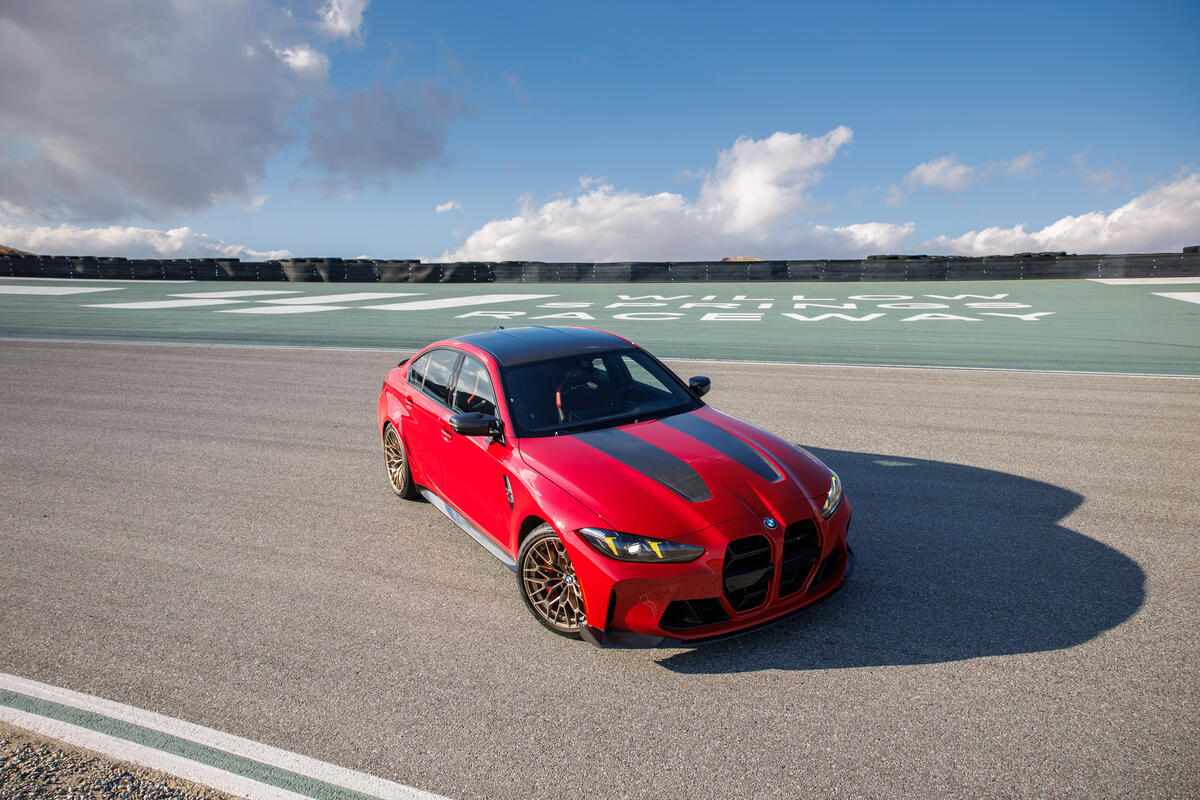
The E46 M3 BMW
"The E46 M3 BMW. That 2002."
This is a BMW M3 from the E46 generation. It’s famous for being fun to drive—good steering and handling. The hosts are comparing it to how AMG cars later became the “nice to drive” choice.
The BMW E46 M3 is a performance version of the 3 Series (E46 generation) known for its sharp steering feel and engaging chassis balance. In this segment, it’s used as a benchmark for what “nice to drive” used to mean before AMG’s rise.
E63 wagon
"You could drive to Germany in an E63 wagon with five people and. They used to do all the tests, didn't it?"
This is an AMG version of the Mercedes E-Class wagon. The point is that it can be driven like a normal family car, but still has serious performance. They’re using it to show AMG became “nice to live with,” not just a track toy.
The Mercedes-Benz E63 wagon refers to the AMG-tuned E-Class estate (wagon) that blends family practicality with high-performance AMG engineering. Here it’s mentioned as something you could comfortably use for long trips with multiple passengers, highlighting AMG’s shift toward everyday usability.
V8
"But to me, AMG is V8. So if V8 doesn't exist, AMG is gone, in a way."
A V8 is an engine with eight cylinders arranged in a V shape. The hosts are using it as a symbol for the traditional AMG character—if AMG stops making V8s, they feel the brand’s identity changes.
A V8 is an engine with eight cylinders arranged in a “V” shape, typically known for smooth power delivery and strong sound. Here, the hosts use V8 as a shorthand for the classic AMG identity, arguing that if V8s disappear, “AMG is gone” in a cultural sense.
SLS
"SLS would be my favourite, I suppose, because that wasn't the first AMG product, really, as a model. Spoke."
The SLS is a famous AMG supercar from Mercedes-AMG. The host brings it up to talk about when AMG’s “first” products happened and how the brand’s lineup evolved.
The SLS is the Mercedes-AMG SLS, a halo supercar built around a classic AMG performance formula. The host mentions it because it wasn’t the very first AMG product “as a model,” using it as an example in the brand’s history discussion.
Goldwing doors
"The Goldwing doors, how you had to get in, it was so quick. They copied the British writer, really."
“Goldwing doors” means doors that open upward like a gullwing. They’re a distinctive feature on some sports cars and change how you get in and out.
“Goldwing doors” is a reference to gullwing-style doors, which pivot upward instead of swinging out normally. On cars like the Mercedes-Benz SLS, this design is both a styling signature and a practical detail that affects how you enter and exit the car.
Lewis Hamilton
"So it brings me back to why AMG Mercedes hired Lewis Hamilton. I always felt that that was in 2013 and maybe they didn't have the same traction. BMW was always the driver's car and in the end, a Mercedes was always sort of a doctor or a taxi driver."
Lewis Hamilton is a famous Formula 1 racing driver. In this conversation, he’s mentioned as part of AMG Mercedes’s marketing and racing connection.
Lewis Hamilton is a Formula 1 driver whose association with AMG Mercedes is used here as an example of how the brand leaned into high-profile motorsport credibility. The host frames Hamilton’s presence as part of AMG’s marketing push during the period they’re discussing.
traction
"So it brings me back to why AMG Mercedes hired Lewis Hamilton. I always felt that that was in 2013 and maybe they didn't have the same traction. BMW was always the driver's car and in the end, a Mercedes was always sort of a doctor or a taxi driver."
Traction is tire grip. If traction is good, the car can accelerate without the wheels spinning.
Traction is how much grip the tires have on the road before they start to slip. In performance-car discussions, it often comes up when comparing how different brands’ cars put power down—especially under acceleration or in lower-grip conditions.
four-door electric coupe
"I mean, always there and it does feel, I mean, we're electrifying. It is going to happen and it feels like this four-door electric coupe is kind of the last misfire of a large organisation. I think, you know, suddenly that kind of group think, but we've got to make these, we've got to make these."
A “four-door electric coupe” is an electric car that looks sporty like a coupe, but it has four doors for easier access. The speaker is using it as an example of a questionable design direction.
A “four-door electric coupe” describes a body style that blends coupe-like styling with a four-door layout, powered by an electric drivetrain. The host uses it as a critique of how a major automaker’s lineup is evolving—suggesting it’s a late-stage misstep before the company fully commits to electrification.
group think
"It is going to happen and it feels like this four-door electric coupe is kind of the last misfire of a large organisation. I think, you know, suddenly that kind of group think, but we've got to make these, we've got to make these. We've got to show that we can make these and they're powerful."
“Group think” means people in a group start agreeing with each other too easily. Instead of challenging ideas, they go along with the majority.
“Group think” is a decision-making failure mode where a team prioritizes consensus over critical evaluation. Here, it’s used to explain why a large organization might push certain products or strategies even if they’re not the best idea.
technobor
"It was technobor, something that eats technology. And they said, it's very difficult to know how to feel about a car when the sound of the car, the look of the car,"
It sounds like a made-up word the reviewer used to say the car is so tech-heavy that it changes how you experience everything about it. The idea is that the car’s “personality” is mostly controlled by software, not by classic engine sound and feel.
“Technobor” is a coined/used word in the Top Gear review context to describe how an electric AMG can feel like it’s “eating” or overwhelming technology with its own tech-first approach. The point is that the car’s behavior and identity are dominated by software and electronics rather than traditional mechanical feel.
programmed
"And they said, it's very difficult to know how to feel about a car when the sound of the car, the look of the car, the driving characteristics of the car are basically programmed rather than exist in some naturally aspirated world."
In this context, “programmed” refers to how an electric AMG’s driving feel (response, throttle mapping, stability behavior, and even sound/feedback) is controlled by software calibration. That means the sensation isn’t coming from a naturally aspirated engine’s inherent character, but from what the engineers choose to simulate and deliver.
naturally aspirated
"the driving characteristics of the car are basically programmed rather than exist in some naturally aspirated world. And that just brings you back kind of to what Neil was saying,"
Naturally aspirated means the engine pulls air in on its own, without a turbo or supercharger pushing extra air. The speaker is contrasting that with a car where the feel is mostly created by software.
“Naturally aspirated” describes an engine that draws air in without forced induction (no turbocharger or supercharger). The phrase is used here to contrast traditional engine character—where response and sound come more directly from the engine—with an electric car’s software-defined behavior.
E63
"Chris, when was the last AMG you had? Was it an E63, four-litre twin-by-tower?"
E63 is an AMG-tuned Mercedes E-Class with a powerful V8. In this conversation, they’re talking about the older AMG formula—big engine feel—before newer electric/tech-heavy approaches.
The “E63” is the Mercedes-AMG E63, a high-performance version of the Mercedes-Benz E-Class built around AMG’s V8 performance focus. The speaker specifically mentions “four-litre” and “twin-by-tower,” pointing to the E63’s twin-turbo V8 era and how it used to define AMG’s character.
Mercedes
"So you you find out the Mercedes press office a bit like booking a lamb to the slaughter, really. You're booking a car you knew was going to get absolutely annihilated in a group test."
Mercedes is a car brand. Here, the hosts are talking about how Mercedes performance cars did in comparison tests and why they might not be winning those tests.
Mercedes is the automaker being discussed, specifically its performance-car strategy and how its cars fare in group tests. In this segment, the hosts are contrasting Mercedes’ results against rivals like Audi, and questioning why Mercedes keeps showing up if the cars get “hammered.”
group test
"You're booking a car you knew was going to get absolutely annihilated in a group test. So the point where I think to myself sometimes, why do Mercedes now even bother turning up to these tests?"
A group test is when reviewers compare several cars at the same time. The hosts are talking about how Mercedes cars kept losing those comparisons.
A group test is a structured comparison where multiple cars are evaluated side-by-side under the same conditions. The hosts use it to describe how Mercedes cars were repeatedly “annihilated,” and how that affected the brand’s perceived competitiveness.
Audi
"Because all they do is get absolutely hammered. The Audi, we say, understeers and the Merc, we say, is too expensive and isn't fast enough."
Audi is another car brand. In this discussion, they’re comparing Audi’s driving feel to Mercedes’ in the same kind of comparison tests.
Audi is the rival brand being referenced in the comparison. The hosts use Audi as a baseline for handling criticism (“understeers”) versus Mercedes’ perceived shortcomings (“too expensive and isn't fast enough”).
locking differential
"And why can't they put a differential to it? Sorry, locking differential. And this went on for ages."
A locking differential is a part that helps both wheels on an axle work together instead of letting one wheel spin faster than the other. It’s often used to improve grip when traction is limited.
A locking differential is a drivetrain setup where the differential is forced to behave more like a solid connection, so both wheels on the same axle rotate together. That can improve traction and reduce the tendency for one wheel to spin, which is why the hosts bring it up as a fix for the car’s behavior in tests.
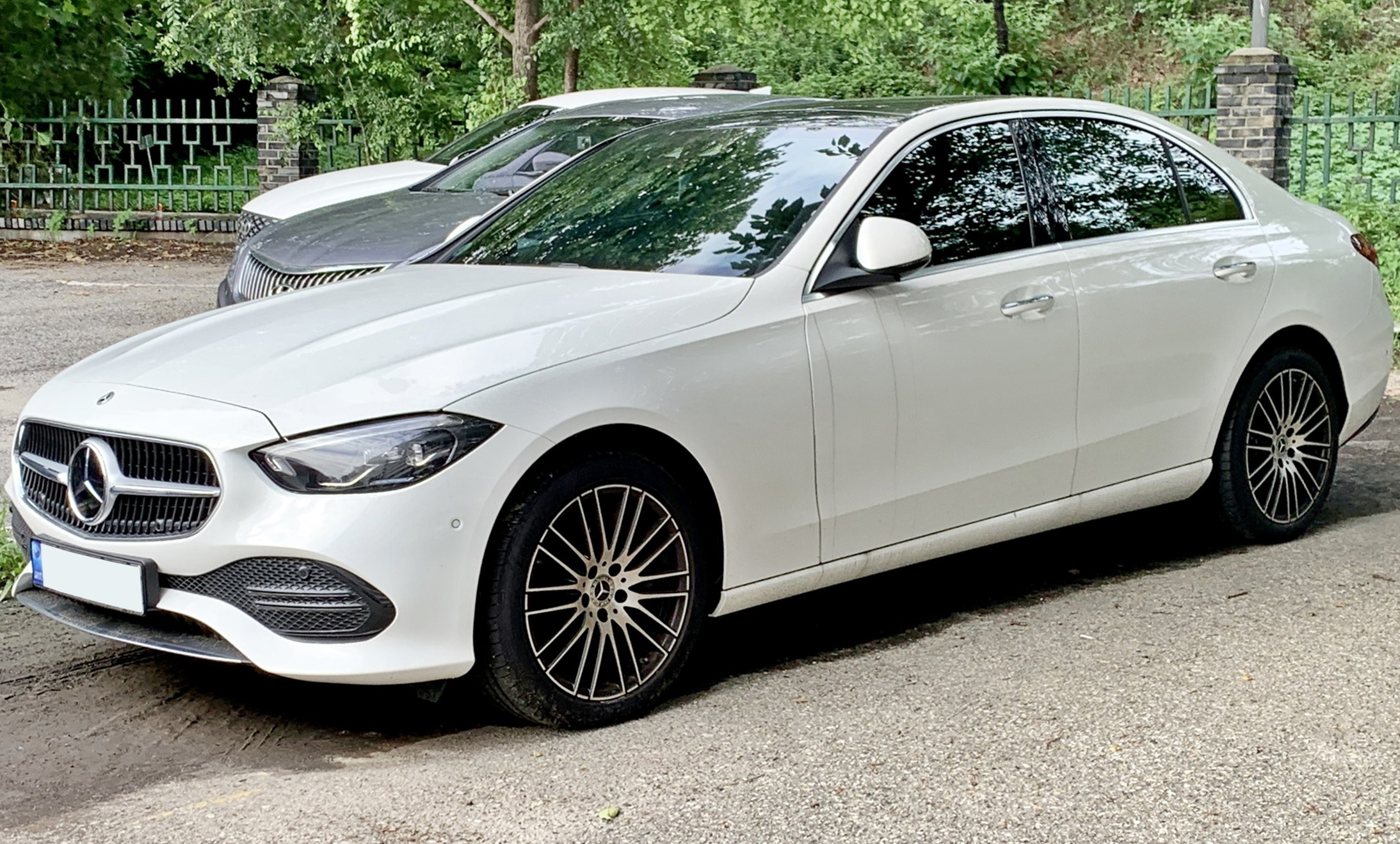
C class C 63
"And then suddenly things turned and became significantly better. The turning point was that C class in about 06, 07 C 63. I haven't got my W or C numbers."
This is a Mercedes C-Class C 63, a performance version of the C-Class. The hosts say it was a big improvement for Mercedes’ reputation because it came with a strong naturally aspirated V8.
The Mercedes C-Class C 63 is being cited as a turning point for the brand’s performance reputation in the mid-2000s. The hosts specifically tie it to the introduction of the normally aspirated M 156 V8, which helped change the “hierarchy” of what felt best in that era.
M 156 engine
"But it was a normally aspirated M 156 engine UK's got a couple of them. So it's the M 156 engine, normally aspirated car with about, I think,"
The M 156 is the name Mercedes gave to a specific V8 engine used in its performance cars. The hosts are saying this engine’s output is what made the car feel like a real improvement.
The M 156 engine is Mercedes-Benz’s naturally aspirated V8 used in performance models like the C 63 (mid-2000s). The hosts discuss its power output range (roughly in the 440–450 hp neighborhood) to explain why it was such a noticeable step up versus earlier perceptions.
normally aspirated
"But it was a normally aspirated M 156 engine UK's got a couple of them. So it's the M 156 engine, normally aspirated car with about, I think,"
Normally aspirated means the engine doesn’t use a turbo or supercharger. It makes power by breathing air in naturally, and the hosts are pointing out that this Mercedes V8 was in that category.
Normally aspirated means the engine makes power without a turbocharger or supercharger, relying on atmospheric pressure and engine design to draw in air. In this segment, the hosts emphasize that the M 156 engine in the referenced Mercedes was normally aspirated, which is part of why it felt so strong and changed expectations.
Automatic gearbox
"It's lovely. Automatic gearbox works."
This just means the car changes gears by itself. You don’t have to use a clutch like in a manual.
An “automatic gearbox” is a transmission that shifts without the driver using a clutch pedal. In modern performance cars, how the automatic behaves—shift timing, responsiveness, and control modes—can make a big difference to feel.
MCT paddle shift
"It had the MCT paddle shift, which works pretty well. So the whole thing worked."
MCT is a type of automatic gearbox that uses multiple clutches to shift quickly. Paddle shifters let you tell the car when to change gears using buttons on the steering wheel.
“MCT” stands for Mercedes-Benz Multi-Clutch Transmission, a dual-clutch-style gearbox used in some AMG models. A “paddle shift” lets the driver command gear changes using steering-wheel paddles, while the transmission still handles the actual clutching and shifting.
dovetail in this perfect piece of energy
"And what happened then was everything seems to just dovetail in this perfect piece of energy from, say, these bands."
He’s describing how the car’s power delivery feels smooth and coordinated. Instead of jerky transitions, everything seems to work together at the same time.
“Dovetail” here is describing how multiple parts of the drivetrain and engine management blend together—throttle response, shift behavior, and torque delivery—so the car feels seamless. It’s a subjective way of saying the powertrain transitions are well synchronized.
Formula One
"we're going to go to Formula One and we're going to make sure that not only do we win in Formula One, but we're going to there's going to be a range of cars"
Formula One is the highest level of racing in the world. The discussion here is about how racing success can influence what car brands sell to customers.
Formula One (F1) is the top tier of open-wheel motorsport, where teams develop technologies and strategies under extreme performance constraints. The host is tying AMG/Mercedes’ motorsport involvement to a broader plan for road cars.

G-Class G Wagon
"...but it was the F one pace car. Yeah. And then the G wagon took over. The G wagon became better selling car ..."
The G-Class is a luxury SUV with a very recognizable boxy shape. It’s built to handle rough roads and off-road conditions, but still focuses on comfort. The podcast is talking about how it became more popular over time.
The Mercedes-Benz G-Class (often called the G-Wagen) is a rugged luxury SUV known for its boxy design and off-road capability. In the podcast context, it’s mentioned alongside the idea of a pace car and how the G-Class became a better-selling model over time. That makes it a relevant example of how a distinctive vehicle can grow into a mainstream luxury icon.
higher margin
"[1107.7s] The G wagon became better selling car than the SL, [1110.5s] which took them by surprise. It was a higher margin cast. [1112.9s] They made even more money and it was just endless, endless good news."
“Higher margin” means the car makes more profit for the company per vehicle. So even if two models sell, the one with higher margin can be the bigger win financially.
“Higher margin” means the company keeps more profit per car sold after covering costs. In automotive terms, a higher-margin model can fund development and marketing while making the overall business look “endlessly good,” even if sales volumes aren’t the only factor.
Ola Kalenius
"Now, I find it interesting because if you study these car companies, [1123.5s] the boss of Mercedes now is called Ola Kalenius. [1131.4s] When I first started reporting on those things, Ola Kalenius was the boss of Volvo AMG."
Ola Kalenius is a top executive at Mercedes. The host is saying he used to be involved with an AMG-related leadership role elsewhere, and they hoped he’d help AMG stay on track.
Ola Kalenius is a Mercedes executive mentioned here as the current boss of Mercedes. The host connects him to AMG’s past by saying Kalenius previously led Volvo’s AMG-related role, framing him as someone who might have protected AMG’s identity.
four cylinder hybrid
"I have to say at the moment it was developed, a four cylinder hybrid with 700 or 600 horsepower wasn't such a stupid idea, actually, at the time"
It’s a car that uses a small engine (four cylinders) plus an electric motor. The electric part can help the engine and sometimes move the car on its own, depending on how you drive.
A four-cylinder hybrid is a powertrain that combines a four-cylinder engine with an electric motor. The “hybrid” part means it can use electricity for propulsion and/or assist the engine, which changes how the car delivers power and efficiency compared with a pure gasoline setup.

Mercedes-Benz Eclass
"Yeah. And the moment it wasn't a V8, they just switched off. Yeah. I thought that was the E-class. 63 AMG, I forgot about that."
The Mercedes-Benz E-Class is a luxury car that’s built to be comfortable and easy to live with. Some versions are much more powerful, and people often talk about which engine it has. The podcast is specifically referring to the high-performance E-Class variant.
The Mercedes-Benz E-Class is a mid-size luxury sedan (and wagon in some markets) designed to mix comfort, refinement, and performance. In the podcast context, it’s mentioned in relation to the E 63 AMG, emphasizing how engine choices and performance versions shaped what people expected from the model. The discussion highlights how the lineup’s “V8 vs not” perception mattered to buyers.

G63 AMG
"It's a magnificent thing, G63 AMG. I know you can you can argue it's, you know, four by four and it's brick"
The G 63 AMG is a Mercedes-AMG version of the G-Class—an ultra-recognizable, rugged-looking SUV. The speaker likes it for its bold presence and the way it sounds/looks, including the exhaust placement.
The Mercedes-Benz G 63 AMG is AMG’s high-performance take on the iconic G-Class, known for its boxy, off-road-capable design and big-engine character. In this segment, it’s singled out as a “magnificent thing,” with the host praising its distinctive styling details like the side exhaust.
side exhaust
"That car. And I love the side exhaust. How ballsy is that? It's fantastic."
Side exhaust means the exhaust pipes come out near the side of the car. It’s mostly a visual and sound-character choice, not just a mechanical one.
Side exhaust means the exhaust outlets are positioned along the side of the vehicle rather than exiting at the rear. It’s a styling and packaging choice that can also affect how the car’s sound projects around the body.

BMW M cars
"And the BMW still makes its line of M cars. [1275.4s] Do you think just listening to you talking there"
BMW’s “M” cars are the high-performance versions of BMW models. They’re saying BMW is still making those performance cars, while Mercedes has changed its lineup.
BMW’s “M” cars are the brand’s performance models, developed by BMW M GmbH with more aggressive tuning and hardware than standard BMWs. The host contrasts Mercedes changing its model range with BMW still producing its M-car lineup.

AMG GT
"When AMG, when Mercedes launched the AMG GT, [1285.0s] the two door sports car and cabrio thing."
The AMG GT is a Mercedes performance sports car. It’s a two-door car that AMG made to compete with other famous sports cars, especially the Porsche 911.
The Mercedes-AMG GT is a two-door sports car built by AMG (Mercedes' performance division). It’s known for its distinct styling and for being positioned as a direct competitor to Porsche’s 911 in the “premium sports coupe” space.
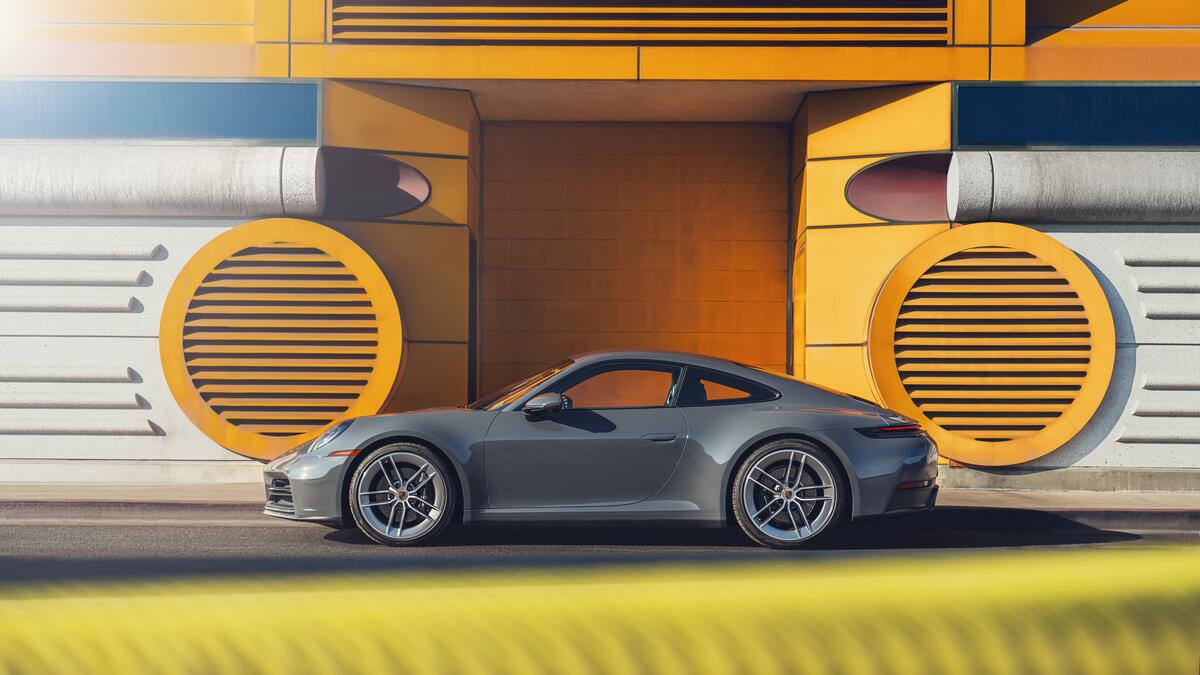
Porsche 911
"They became obsessed with beating the 911. And the reason they were GTR versions that went along to try and beat lap times"
The Porsche 911 is a famous sports car that a lot of other fast cars are compared against. When people say someone was trying to “beat the 911,” they mean they wanted to be faster and more impressive on track. It’s basically the yardstick for this kind of performance.
The Porsche 911 is the benchmark sports car that many other performance brands try to beat in lap times and prestige. In this discussion, the host is referencing how Mercedes-AMG and Nissan’s GTR-era cars chased the 911’s performance and reputation. That “beating the 911” mindset is a big part of why these rivalries shaped modern performance-car development.
lap times
"And the reason they were GTR versions that went along to try and beat lap times that battle still goes on, actually."
Lap time is how long it takes to drive around a race track one time. Faster lap times usually mean the car is better at accelerating, braking, and turning. That’s why racing and track testing use lap times to compare cars.
Lap times are the measured time it takes a car to complete one circuit around a track. They’re a key metric for comparing performance because they reflect acceleration, braking, cornering, and overall efficiency together. In this segment, “beat lap times” is shorthand for chasing real-world track pace, not just marketing numbers.

Mercedes AMG
"because all the time that Mercedes AMG has been almost invisible, the RS6 has plodded along. The RS6 is a bit like Audi's M3, isn't it?"
Mercedes-AMG is Mercedes-Benz’s performance brand—think faster engines and sportier versions of their cars. In this part of the episode, the speaker is saying AMG hasn’t been as noticeable or dominant lately. They’re comparing AMG’s recent impact to Audi’s.
Mercedes-AMG is the performance division of Mercedes-Benz, known for turning regular Mercedes models into high-output sports cars and hot estates. Here, the host argues that Mercedes-AMG has become “almost invisible” in the performance conversation, especially compared with Audi’s continuing success. That’s why the segment focuses on AMG’s shifting relevance rather than just any single model.

Audi RS6
"because all the time that Mercedes AMG has been almost invisible, the RS6 has plodded along. The RS6 is a bit like Audi's M3, isn't it?"
The Audi RS6 is a very fast version of Audi’s big wagon/estate. The speaker is saying it’s stayed popular and relevant while other performance brands haven’t. They even describe it as the kind of car many people end up owning in London.
The Audi RS6 is a high-performance wagon (estate) built around a powerful, fast, everyday-friendly package. In this segment, the host contrasts it with Mercedes-AMG’s perceived decline, saying the RS6 has kept going while AMG felt “almost invisible.” They also frame it as the default choice for a certain kind of buyer, especially in London.
brand equity
"from a brand perspective, you've created in a short time incredible brand equity in AMG."
Brand equity is how much extra “goodwill” and reputation a brand has. If a brand has strong brand equity, people are more likely to want its cars and believe they’re worth it.
Brand equity is the added value a brand name creates beyond the product itself—think of how strongly people recognize and trust it. In automotive terms, it affects sales, pricing power, and how quickly new models are accepted.

AMG GT
"They launched this a new AMG GT and they've got a fourth, four door one."
The AMG GT is a sports car from Mercedes-AMG. It’s one of their main “serious performance” models, and the host is saying they recently refreshed or launched a new one.
The Mercedes-AMG GT is a sports car line built around AMG’s performance engineering and styling. In this segment, the host mentions a newly launched AMG GT and then expands on the idea of adding more body styles.
V12
"V12, V8, big engines, seven litre. But they, but to be fair, Neil, this the four litre"
A V12 is an engine with 12 cylinders arranged in two rows. People like it because it can feel smooth and powerful, especially in big performance cars.
A V12 is an engine with 12 cylinders arranged in a “V” shape (two banks of six). It’s often associated with smoothness and high power in performance cars, which is why the speaker frames it as part of AMG’s older, bigger-engine identity.

Nissan Gtr
"That is a proper mill, that is. Yeah, I like that GTR thing. So that four litres was big enough."
The Nissan GT-R is a fast sports car made for performance. It’s known for quick acceleration and strong driving ability. The podcast is mentioning it because of its big-engine performance.
The Nissan GT-R is a high-performance sports car known for strong acceleration and a reputation for being a serious track-capable machine. The podcast’s “four litres was big enough” comment points to the engine size and performance focus that made the GT-R stand out. It’s discussed as an example of a “proper” performance car in the conversation.

BMW M5
"So that four litres was big enough. An M5 still got a four litre V8 in it. I think, you kno..."
The BMW M5 is a fast BMW sedan made for performance. It’s designed to be powerful enough for spirited driving while still being a real daily car. In the podcast, it’s mentioned because it uses a large V8 engine in the generation they’re talking about.
The BMW M5 is BMW’s performance sedan, combining a powerful engine with a chassis tuned for high-speed driving and everyday practicality. The podcast mentions it in the context of engine size and power, noting that an M5 still used a four-liter V8 in the era being discussed. That’s why it comes up when comparing how performance cars evolved.
hybridise
"I think, you know, BMW have proved that you can hybridise things and make it work. I don't know, maybe that maybe AMG is sitting back going,"
Hybridising means combining a regular engine with an electric motor. The goal is usually to use less fuel and meet emissions rules while still keeping performance.
To hybridise means adding an electric motor and battery system alongside a combustion engine to improve efficiency and emissions. The speaker credits BMW with making hybrid performance work, and suggests AMG may be constrained by cost or complexity.
hybrids
"And I just wonder whether that mentality of we've got to sell hybrids. There's zero emissions of vehicle mandates in the UK and the EU."
A hybrid is a car that uses two power sources—an engine and an electric motor. The host is saying some automakers push hybrids mainly to meet emissions rules.
A hybrid vehicle uses both an internal-combustion engine and an electric motor/battery system. In this segment, the host criticizes a “numbers game” approach to selling hybrids, tying it to emissions rules rather than enthusiast demand.
zero emissions of vehicle mandates
"There's zero emissions of vehicle mandates in the UK and the EU. It's just a numbers game and it's a hybrid and it's emissions game, blah, blah, blah."
“Zero emissions” mandates are rules from governments that pressure carmakers to sell cars that don’t emit exhaust fumes. The host is saying this policy pressure drives the strategy more than what buyers want.
“Zero emissions” mandates are government requirements pushing automakers toward vehicles that produce no tailpipe emissions, typically accelerating the shift to battery-electric cars. The host frames this as a policy-driven “emissions game” that influences what brands prioritize selling.
M
"And I know that there is definitely a straight line argument, the AMG and the M and the RS, even though there was a post factor and a lot of kudos attached to them,"
BMW M is BMW’s performance line—cars tuned to be quicker and more driver-focused than regular models. The discussion is about how these performance brands used to dominate in straight-line speed.
BMW’s M is its performance sub-brand, used for higher-output engines and track-focused tuning. Here it’s mentioned alongside AMG and Audi’s RS to frame a “straight-line performance” reputation that’s being challenged by new technology.
RS
"And I know that there is definitely a straight line argument, the AMG and the M and the RS, even though there was a post factor and a lot of kudos attached to them,"
RS is Audi’s performance badge. It usually means the car is the high-power, sportier version of an Audi model, and the hosts are comparing that reputation to what’s happening with electric cars.
Audi’s RS is its performance sub-brand, typically reserved for the most powerful and aggressively tuned versions of Audi models. In this segment, RS is grouped with AMG and BMW M as part of the traditional “fast in a straight line” argument.
straight line argument
"And I know that there is definitely a straight line argument, the AMG and the M and the RS, even though there was a post factor and a lot of kudos attached to them,"
The “straight line argument” is basically the claim that a performance car’s main bragging right is how fast it is from a standstill. The host is saying electric cars made that kind of advantage harder to keep.
“Straight line argument” refers to the idea that performance brands earn their reputation by being quickest in a line—typically measured by acceleration and drag-race-style results. The host contrasts that traditional strength with how electric cars can suddenly make it easier to beat those cars from a stop.

Tesla Model 3
"But the obviously with the advent of the electric car, the Tesla Model 3 rather exploded them. [1600.4s] Because suddenly you had something that looked like a mini cab that could smoke them all in a straight line."
The Tesla Model 3 is an electric car. Because it’s electric, it can accelerate very quickly, and the host is saying that this changed the “who’s fastest in a straight line” game.
The Tesla Model 3 is an electric sedan that became a benchmark for everyday EV acceleration, largely because electric motors deliver instant torque. The host uses it as an example of how electric cars can outperform traditional performance brands in straight-line races.

Tesla Model
"...bviously with the advent of the electric car, the Tesla Model 3 rather exploded them. Because suddenly you had ..."
The Tesla Model Y is an all-electric SUV, meaning it runs on electricity instead of gasoline. It’s designed to be practical for everyday driving. The podcast brings it up as part of how electric cars became a big deal.
The Tesla Model Y is a compact electric SUV built by Tesla, positioned as a practical family-oriented EV. The podcast references how electric cars changed the market, with Tesla models becoming widely discussed as alternatives to traditional performance and efficiency choices. Model Y is part of that broader shift toward mainstream electric vehicles.
traffic lights
"is enough for people to go, I don't care, actually, if I'm at the traffic lights [1618.8s] and I'm going to be a little bit cautious if I have an EV roll up next to me,"
They’re talking about everyday driving moments—like when you’re stopped at red lights and then accelerate briefly. The point is that the fun of a car isn’t only about top speed.
“Traffic lights” here is shorthand for stop-and-go, short acceleration events where EVs often feel especially strong. The discussion uses that real-world scenario to argue that looks, handling, and driver feel can matter more than peak straight-line speed.
EV
"and I'm going to be a little bit cautious if I have an EV roll up next to me, [1622.4s] you still own an M3 built by BMW."
EV just means an electric car. It’s being mentioned because EVs can be quick off the line, but the hosts are talking about why some people still prefer a traditional performance car’s driving feel.
EV means “electric vehicle,” a car powered by one or more electric motors instead of a gasoline engine. The hosts are contrasting EV straight-line acceleration with the feel and confidence people get from traditional performance cars like the BMW M3.
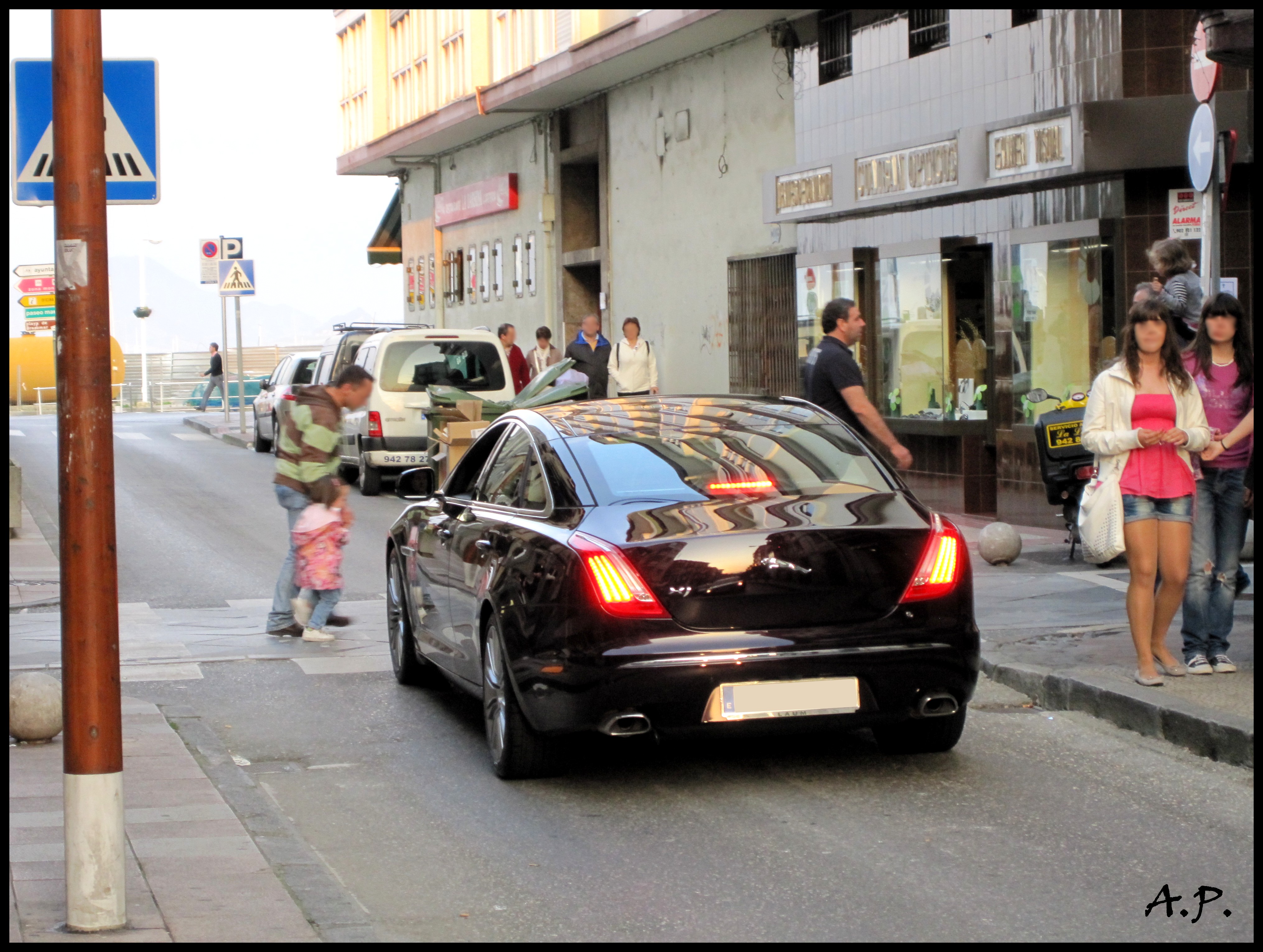
Jaguar X350
"And this all stems from the Great British Jaguar Day, and Chris banging on about his bloody X350, V8 Super Duper, long wheelbase, blah, blah, blah, all aluminium, it's fucking mint,"
The Jaguar X350 is a Jaguar XJ-era car (a big luxury sedan), and the host is talking about the version with a V8 and a longer wheelbase. He’s basically saying it’s a special, desirable Jaguar.
The Jaguar X350 is the long-wheelbase XJ generation from Jaguar’s mid-2000s era, built around a V8-powered luxury/performance blend. The host specifically calls out its V8 and “long wheelbase” character, and also mentions it being “all aluminium,” which points to Jaguar’s lightweight construction approach for that era.
MOT in a box
"and you know, you're going to turn up and the service history is basically an MOT in a box, and you're not going to know, and it's got the Jaguar thing on the front,"
“MOT in a box” means the seller has the paperwork that says the car passed its inspection, but it doesn’t necessarily mean the car is in good shape. It’s a warning not to trust the paperwork alone.
“MOT in a box” is an enthusiast slang phrase for a used car listing where the paperwork looks fine (it has an MOT pass) but the underlying condition isn’t actually verified. The implication is that you’re buying based on a document rather than a thorough inspection of the car’s real mechanical and body condition.
service history
"and you know, you're going to turn up and the service history is basically an MOT in a box, and you're not going to know, and it's got the Jaguar thing on the front,"
Service history is the record of scheduled maintenance and repairs a car has had over its life. Enthusiasts use it to judge whether a car was cared for consistently, because gaps or vague entries can be a red flag even if the car looks good.
heated seat
"oh, the wife gets it, but you know why heated seat doesn't work on the passenger side"
A heated seat is a seat with built-in warming. If the passenger side doesn’t work, it’s often a problem with that side’s switch, wiring, or heating pad.
A heated seat uses electric heating elements in the seat cushion and backrest to warm the occupant. If it fails on one side (like the passenger side), it usually points to a switch, wiring, or heating element issue rather than the whole system.

Peugeot 106XSI
"I remember buying a Peugeot 106XSI back in the day, [2770.4s] and it's a bit of a pain to get down there, [2772.9s] and it was quite a new, it was the newest car I'd ever thought about buying."
The Peugeot 106 XSI is a small sporty Peugeot from the 1990s. The host is saying he bought one used and later realized something was wrong with the car and the seller wasn’t being honest.
The Peugeot 106 XSI is a small, early-1990s hot-hatch style Peugeot known for being light and fun to drive. In this story, it’s used as an example of a buyer getting misled on a used car purchase.
anti-roll bar
"as I drove it, [2781.7s] I remember going over a bump, and it was a massive clunk [2783.5s] from an anti-roll bar."
The anti-roll bar helps keep the car from leaning too much when you turn. If you hear a clunk over bumps, it can mean the parts that hold the bar in place are worn or broken.
An anti-roll bar (also called a sway bar) connects the left and right suspension so the car resists rolling when you corner. A clunk over a bump can point to a worn or failed link or bushing that allows the bar to move or knock.
drop link
"Clearly, a drop link had failed, or the roll bar was bent,"
A drop link is a small connector that ties the anti-roll bar to the suspension. If it breaks or wears out, the bar can move too freely and make knocking/clunking sounds.
A drop link is the short connecting rod between the anti-roll bar and the suspension. If a drop link fails, the anti-roll bar can knock or clunk because it’s no longer properly controlling roll stiffness.

Ferrari 25
"I think it's 25 grand. I think it's V12 Ferrari, 25 grand. What a story we could do so much with this."
The Ferrari 275 GTB is an older Ferrari sports car that’s considered very special. It has a V12 engine, which is part of why it’s so famous. The podcast is talking about it as a potentially interesting buy and highlighting its story.
The Ferrari 275 GTB is a classic Ferrari sports car known for its desirability and historical significance. The podcast mentions a low purchase price figure and calls out its V12, emphasizing how special it is and how compelling a story it represents. It’s discussed because it’s a legendary model that many enthusiasts dream about owning.

Ferrari 456
"So many people were asked by me, should I buy a Ferrari 456? And never have I seen such unanimity."
The Ferrari 456 M GT is a Ferrari designed for comfortable fast driving over longer trips. It’s a specific model from Ferrari’s lineup, not the most basic or common one. The podcast is talking about how many people agree it’s a good buy.
The Ferrari 456 M GT is a grand touring Ferrari from the 2000s, aimed at combining performance with long-distance comfort. The podcast notes strong agreement about whether to buy a Ferrari 456, suggesting it’s viewed as a compelling choice among certain enthusiasts. It comes up because it’s a specific, less “obvious” Ferrari model that still carries real desirability.
Ferrari 456
"should I buy a 456? [3151.4s] I entertained that question. [3153.0s] But actually, I think I was a bit naughty."
The Ferrari 456 is an older Ferrari with a big V12 engine and a focus on cruising in comfort. People sometimes consider it because it can cost less than newer Ferraris, but keeping one running can still be pricey.
The Ferrari 456 is a front-engine, V12 grand tourer from Ferrari, known for its elegant styling and long-distance comfort. In enthusiast circles it’s often discussed as a more affordable entry point to older Ferrari ownership, but it can be expensive to maintain depending on condition.

Ferrari 599
"I was steered towards, [3163.9s] I was told, save a bit more money and buy a 599. [3169.4s] You'll be much happier."
The Ferrari 599 is an older Ferrari with a V12 engine built for fast, comfortable driving. The idea here is that it may cost more at the start, but it can end up being the better deal overall.
The Ferrari 599 is a front-engine V12 grand tourer that’s widely regarded as a more modern-feeling alternative to older Ferraris like the 456. The host’s point is that while the 599 costs more upfront, the total ownership experience can be better over time.

Porsche Boxster
"recently we were asked, [3182.7s] I was asked for advice about a Boxster. [3185.8s] And I tried to steer this person towards a different."
The Porsche Boxster is a Porsche roadster with the engine placed behind you for better balance. Here, the host is basically saying that if you’re buying one, you should talk to people who really know Porsches and Boxsters.
The Porsche Boxster is a mid-engine roadster built around balance and handling, with the engine mounted behind the seats. The host is talking about advising someone who asked for Boxster advice, and steering them toward a group of people who “do understand Porsches” and Boxster owners.
buy a car like that in an auction
"But in the end, if you're going to buy a car like that in an auction, [3203.5s] you know, to some extent, you're buying it blind, aren't you?"
An auction can be risky because you might not be able to check the car thoroughly beforehand. The host is saying you’re often committing without fully knowing what you’re getting.
Buying a car at auction often means you can’t inspect it the same way you would with a private sale, so you may be taking on unknown condition risks. The host’s “buying it blind” comment highlights that auctions can limit how much you can verify before bidding.
buying it blind
"if you're going to buy a car like that in an auction, [3203.5s] you know, to some extent, you're buying it blind, aren't you?"
“Buying it blind” means you’re buying without really knowing the full truth about the car. You might not discover problems until after you’ve already bought it.
“Buying it blind” means purchasing without having full, reliable information about the car’s true condition—like hidden damage, wear, or mechanical issues. In enthusiast terms, it’s especially relevant for used performance cars where prior maintenance and accident history can be hard to confirm.

Audi S3
"...ssages a day saying, should I get the 240i or the S3? And you'll go, and the first time you receive it..."
The Audi S3 is a more powerful version of a smaller Audi model. It’s meant to feel sporty and quick, but still work as a normal everyday car. The podcast is talking about how people often compare it to another similar performance option.
The Audi S3 is a performance-focused compact car, typically based on the A3 platform but tuned for stronger acceleration and sportier driving. The podcast mentions it in the context of shoppers comparing it to another performance option, reflecting how it fits into the “dailyable hot hatch/sport compact” category. It’s discussed because it’s a common choice for people wanting performance without moving up to a much larger car.

Gen 1 Focus RS
"Oh, God, I had a bloke come up to me about Focus RS, [3732.0s] Gen 1 Focus RS, and he was ready for a fight."
The Focus RS is a high-performance version of the Ford Focus. “Gen 1” means the first version of that model, and it’s famous for being quick and grippy, not just fast in a straight line.
The Ford Focus RS (Gen 1) is the first-generation Focus RS hot hatch, known for its turbocharged performance and all-wheel-drive traction. It became a cult favorite because it combined everyday usability with serious grip and power.

NSX Gen 2
"But I did go, you know, if it's, if I thought about, [3795.6s] oh, I'd really lower that NSX Gen 2. [3798.2s] First thing I do, check it's, if it's got five stars in Evo."
The NSX Gen 2 is the second version of Honda’s NSX supercar. It’s a mid-engine car, and people often talk about it as something you can modify—like lowering it for a different stance.
The Honda NSX (Gen 2) is the second-generation Acura/Honda supercar known for its mid-engine layout and hybrid-electric assist system. In enthusiast circles, it’s often discussed in terms of how it drives and how it can be tuned or visually modified, like lowering it.
Evo
"First thing I do, check it's, if it's got five stars in Evo. [3801.9s] Yeah. [3802.8s] Honestly."
“Evo” is a car magazine that reviews cars and gives them star ratings. When someone says “five stars in Evo,” they mean the magazine really liked that car based on its tests.
“Evo” here refers to Evo magazine’s review rating system, where cars are scored with star ratings. When the speaker says “five stars in Evo,” they mean the car was judged highly by that publication’s testing and evaluation process.
Nigel Mansel
"Right. [3821.2s] Let's go for our reference point for episode number 92, which is Nigel. [3832.2s] So what happened in 1992, Manish? [3843.9s] Nigel Mansel finally won the world championship."
Nigel Mansel is a famous Formula 1 driver. The speaker is saying he won the World Championship in 1992, and that he still managed to get onto the podium in Hungary even though he had trouble during the race.
Nigel Mansel (spelled “Mansel” in the transcript) is a Formula 1 driver who won the World Championship in 1992. The host mentions his win in Hungary and describes how he fought through the race to reach the podium despite issues.
Hungary
"Nigel Mansel finally won the world championship. [3848.5s] He finally did it in Hungary. [3851.5s] I remember it was about half the season yet to go,"
Hungary is the country where the key 1992 race happened. In Formula 1, that means the Hungarian Grand Prix—an event that can strongly affect the championship standings.
Hungary is referenced here as the location where Nigel Mansel won the 1992 World Championship race that the speaker remembers. In Formula 1 context, this points to the Hungarian Grand Prix, a circuit event used to decide or swing championship outcomes.

Williams FW14B
"[3873.0s] What car was he in then? [3874.7s] Was he in a... [3875.6s] Williams. [3877.6s] FW14B. [3878.2s] Yeah, 14B."
This is a Formula 1 race car from the early 1990s made by Williams. It’s the kind of car a top driver would use to fight for championships, and it was raced in the same period as Nigel Mansell’s big success.
The Williams FW14B is a Formula 1 car from the early 1990s, built by Williams and driven by Nigel Mansell in 1992. It’s notable for its competitive engineering package during the era when F1 cars were evolving rapidly in aerodynamics and electronics.
Silverstone
"I was at Silverstone. In those days, qualifying was on a Friday and a Saturday."
Silverstone is a major Formula 1 race track in the UK. People use it as a reference point because small changes in the car or driving can show up clearly in lap times.
Silverstone is the famous Formula 1 circuit in the UK, known for fast corners and heavy braking zones. It’s a common benchmark venue for comparing driver pace and car performance because lap times are so sensitive to setup and track conditions.
qualifying
"In those days, qualifying was on a Friday and a Saturday. And I went, I stood at Luffield on the Friday."
Qualifying is when drivers try to set the fastest lap before the race. Your qualifying result usually decides where you start on the grid.
Qualifying is the session where drivers set their fastest lap to determine the starting order for the race. In Formula 1, qualifying pace is a big indicator of how well the car is working over one lap, not just in race trim.
Luffield
"I had a seat, I think it was a seat in the Luffield, on the exit of Luffield there, when it was like a double apex Luffield, much nicer is now."
Luffield is a specific corner at Silverstone. It’s tricky, so how fast someone goes through it can tell you a lot about their car and driving.
Luffield is a well-known corner at Silverstone, famous for being a technical section where braking, turn-in, and traction all matter. Because it’s hard to get right, it’s a good spot for spectators to judge how quickly a car is through a specific part of the lap.
double apex
"on the exit of Luffield there, when it was like a double apex Luffield, much nicer is now. I know it's technically more demanding and interesting, but we love the double apex Luffield."
A double apex is when a driver turns into a corner, then turns in again to hit a second “closest point” to the inside. It’s a more complex way to take the corner than one single turn-in.
A double apex is a cornering line where you hit two apex points—turning in, briefly straightening, then turning in again. It changes the balance and traction demands compared with a single-apex line, which is why drivers often talk about it in terms of how “demanding” the corner feels.
1.8 seconds faster
"So I knew on that lap how much fucking quicker he was. He was at 1.8 seconds faster than Patrese in the same car."
“1.8 seconds faster” means one driver was noticeably quicker than another over a lap. In racing, even small time gaps can be huge because the track is made of many fast sections.
A gap like “1.8 seconds faster” is a large margin in racing and usually indicates a meaningful advantage in either car performance, driver pace, or both. In lap-time comparisons, seconds matter because they reflect cumulative differences across many braking and cornering phases.
Barcelona
"at any circuit, certainly this year and quite possibly in a while, Barcelona was incredibly hot."
Barcelona here means the F1 track in Spain. Hot weather makes tires wear out faster, so teams have to plan strategy more carefully.
Barcelona refers to the Circuit de Barcelona-Catalunya, a common F1 venue used to test how cars and tires behave under hot conditions. The host notes it was “incredibly hot,” which increases tire wear and makes strategy and degradation even more important.
tire deck
"And they said that probably more critically ... Barcelona was incredibly hot. And they said that the tire deck was massive, it was 0.15 seconds per lap."
In F1, tires don’t last forever—they get worse as you drive. “Tire deck” is a way of talking about how long the tires stay fast before they start slowing the car down.
In Formula 1, “tire deck” is shorthand for the tire’s performance window over a stint—how quickly it loses grip as the laps go on. When the host says it’s “massive,” they mean the tires stay effective for longer, which changes how teams can plan stints and pit stops.
degradation
"So if you've got two people who are on the same tires, after 10 laps, their degradation is 1.5 seconds per lap slower."
Tire degradation just means the tires get worse as you drive. In racing, that usually shows up as slower lap times, so teams have to plan when to pit.
Tire degradation is the rate at which a tire loses performance during a stint, usually measured as lap-time loss over time. The host uses it to explain why two cars on the same tires can separate as the tires wear, making strategy and timing crucial.
three-stop strategy
"Normally you can't accuse Ferrari of doing that, but they went in with a three-stop strategy, and he was a little bit lucky maybe with the virtual safety car."
A “three-stop strategy” means the race car pits three times to change tires. Whether that’s good depends on how quickly the tires wear out and how well the team times the stops.
A three-stop strategy in Formula 1 means the car makes three pit stops during the race, typically to change tires and manage fuel/track position. More stops can be faster if tire performance drops quickly, but it’s also higher risk because timing and traffic matter.
virtual safety car
"and he was a little bit lucky maybe with the virtual safety car. But Lewis's stints were spot on"
A virtual safety car is when the race is slowed down by rules, but there isn’t a real safety car driving around. It affects pit timing and can help some drivers more than others.
The virtual safety car (VSC) is an F1 race control mode where cars must slow down without a physical safety car on track. It changes the timing advantage of pit stops and can “bunch up” the field, which is why the host says it may have helped Lewis’s strategy.
stints
"But Lewis's stints were spot on, actually apparently if you account for this deck and the number of laps that he did"
A stint is just the time you drive on one set of tires before you pit again. Doing the stints “spot on” means you’re using the tires at the right pace for the whole race.
A stint is the period between pit stops on a specific set of tires. The host praises Lewis’s stints as “spot on,” meaning his tire use and lap timing were well matched to the car’s grip and the race conditions.
grip
"this really was about a very virtuoso drive, right to the edge of the grip that he had and the power that was available."
Grip is how well the tires can hold the road. “Right to the edge of the grip” means the driver is pushing hard, close to the point where the car would start to slide.
Grip is the tire’s ability to provide traction so the car can accelerate, brake, and corner without sliding. The host describes Lewis driving “right to the edge of the grip,” meaning he was extracting maximum cornering performance without losing control.
Lando Norris
"And the last thing I'd say is that Lando Norris pointed out that the Ferrari in fast corners was absolutely untouchable"
Lando Norris is a Formula 1 driver. He’s commenting that the Ferrari was extremely hard to beat in fast corners, meaning it cornered very strongly at higher speeds.
Lando Norris is an F1 driver who competes for McLaren and is known for detailed feedback about car behavior. In this segment, he’s quoted saying the Ferrari was “untouchable” in fast corners, highlighting how strong its high-speed cornering performance was.

Ferrari
"And he's terrified that if Ferrari get a token upgrade for their engine, Ferrari could be gone."
Ferrari is a famous racing team that builds and races Formula 1 cars. Here they’re being talked about as a team that could get a big advantage if they improve their engine.
Ferrari is the Italian Formula 1 team whose cars are known for their V6 turbo era engines and long history of racing success. In this segment, “Ferrari” is being discussed in the context of engine upgrades and competitiveness.
Request an Explanation
Heard something you'd like explained? We'll add it to this episode.
Sign in to request explanations for terms you heard.
Want to learn more?
Browse our glossary for plain-English explanations of automotive terms, jargon, and concepts.
Help improve this episode
See something that's not quite right? Our annotations are AI-generated and can sometimes miss the mark. Click the flag icon on any annotation to suggest a correction.
4 community members have helped improve this episode.