
Best Budget Manuals, EV Subscription Costs & Reliability Myths Explained
About this episode
Volvo EX30 production and tariff uncertainty kicks off the show, then the hosts tackle three big buyer questions. A parent hunting a <$13k first manual discusses why manuals are scarce, recommending options like a used Mazda 3 (and possibly VW), while debating how much power is too much for daily manual driving. The team then breaks down GM’s Silverado EV subscription/OnStar costs and the long-term risk of paying for connectivity features. Finally, they question Consumer Reports’ reliability rankings for the 2026 Buick Enclave/Traverse/Acadia, arguing sample sizes are too small to be definitive, and close with new IIHS crash-testing rules for heavier vehicles.
This week, we’re recording from the back seat of Volvo’s smallest EV while diving into your latest car-buying questions. We break down the reality of buying a budget manual car in today’s market, unpack the growing frustration around subscription-based features in EVs like the Silverado, and take a hard look at whether reliability ratings (especially from sources like Consumer Reports) actually tell the full story. Along the way, we discuss the future of manuals, hybrids vs. turbos, and what’s really going on behind the scenes with automakers navigating EV strategy.

Volvo EX30
"Today, we're in the backseat of the smallest and least expensive Volvo in America, the EX30, which is also the deadest Volvo in America now."
The Volvo EX30 is a small electric Volvo. It’s being talked about because where it’s built and how it’s imported can change the cost and whether buyers qualify for incentives.
The Volvo EX30 is Volvo’s small electric crossover, positioned as one of the brand’s most affordable EVs. In this segment, the hosts discuss it as the “smallest and least expensive” Volvo in America and focus on how its availability and pricing are affected by trade policy.

Chevy Bolt
"I have to admit, actually, I would rather be in the backseat of this thing than the Chevy Bolt."
The Chevy Bolt is an affordable electric car. The hosts are comparing it to the Volvo EX30 to talk about which one feels like the better deal or fit.
The Chevrolet Bolt is a compact electric car from Chevrolet that has been a popular budget EV option. Here, it’s used as a comparison point for the Volvo EX30’s value and practicality.
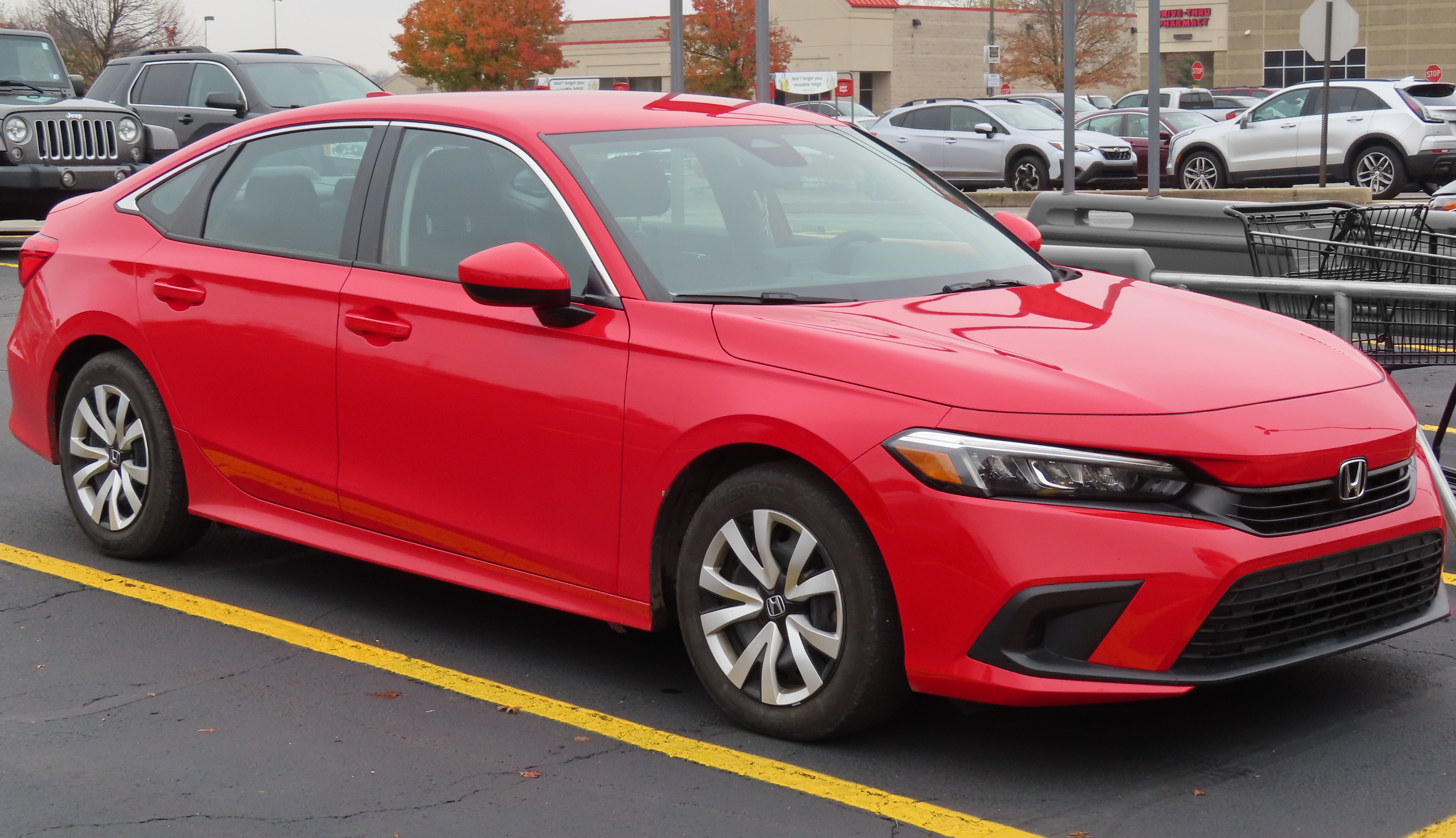
Honda Civic
"He immediately thought Honda Civic, but he then realized that Honda's manuals really hold their value."
The Honda Civic is a common, affordable compact car. People like it because it’s easy to find and fix, and some versions are available with a manual transmission.
The Honda Civic is a long-running compact car that’s especially popular as a budget option. In the used market, it’s often chosen because parts are widely available and many trims are offered with manual transmissions.
manual transmissions
"So manual transmissions. This is funny, because especially in the enthusiast community, everybody loves the manual, right?"
A manual transmission is the “stick shift” where you use a clutch pedal and choose the gears yourself. Some drivers like it because it feels more connected to how the car drives.
A manual transmission (stick shift) uses a clutch pedal and gear lever so the driver selects gears. It’s often associated with more driver involvement and can be a key reason enthusiasts shop for specific models.

2016 Mazda 3 hatchback
"I can tell you, the last manual I bought was a brand new 2016 Mazda 3 hatchback. And I have to say, this is a perfect example of the problem here with enthusiasts and new car buyers"
They’re talking about a 2016 Mazda 3 hatchback they bought new, and it had a manual gearbox. They’re using it to explain why newer manuals can be easier to live with day to day.
The speaker is referencing a 2016 Mazda 3 hatchback with a manual transmission. This is used as an example of how newer manuals can be more livable for everyday driving than older ones.
clutch
"So you don't necessarily have to do the handbrake, clutch, all fit, which I'm cheating, but much nicer. And if you want to save the manual, make them a little bit easier for daily driving."
The clutch is what you press to shift gears in a manual car. They’re saying hill start assist helps you avoid having to juggle the clutch and parking brake on hills.
The clutch is the pedal and mechanism that connects and disconnects engine power to the transmission in a manual car. The speaker mentions clutch coordination as part of why hill start assist makes modern manuals easier to drive.
handbrake
"So you don't necessarily have to do the handbrake, clutch, all fit, which I'm cheating, but much nicer. And if you want to save the manual, make them a little bit easier for daily driving."
The handbrake is the parking brake you pull to keep the car from rolling. They’re saying you used to rely on it more with older manuals, but newer tech can reduce that need.
The handbrake (parking brake) is used to hold the car stationary, especially on hills. The speaker contrasts older manual driving techniques—using the handbrake plus clutch control—with newer cars that have hill start assist.
Civic Type R
"Even a Civic Type R, right? I drove one in slightly damp conditions, and that traction control is trying so hard."
The Civic Type R is Honda’s high-performance version of the Civic. When roads are wet, the tires and traction system decide how much grip it has, so it can spin wheels more easily.
The Honda Civic Type R is a hot hatch built for performance, and it’s known for strong acceleration and front-wheel-drive handling. In wet or damp conditions, its traction and tire grip determine whether it can put power down without excessive wheel spin.
summer tires
"Summer tires, which should be fine, but it was a cool day on summer tires. At the launch event, it was like 38 degrees on summer tires in the rain."
Summer tires are made to work best when it’s warm. In cooler weather, they can grip less, which makes wet driving more slippery.
Summer tires are designed for warm weather and typically provide better grip than all-seasons in dry and warm conditions. In cooler temperatures, their rubber compounds can get less sticky, reducing traction—especially noticeable in rain.
subscription
"So I think the $19.99 a month for Protect... I will say immediately my response, $40 a month theme, seems like a lot of money..."
Some car features aren’t just “bought once.” Instead, you pay a monthly fee to keep using things like remote start or safety services.
A vehicle subscription is an ongoing monthly fee to keep access to certain features—often remote functions, safety services, or driver-assistance software. The episode is weighing whether those recurring costs are worth it versus paying nothing and using only built-in functions.
cell modem in the car
"because there's a cell modem in the car [731.9s] and your cell phone isn't free. [733.8s] So your car's cell modem"
Many modern cars have their own built-in “cellular” connection. That’s how the car can send data and use online features, even when you’re not using your phone.
A built-in cellular modem lets the vehicle connect to the internet over a mobile network, similar to how a phone works. That connectivity is what enables remote services, live traffic, and over-the-air features—often tied to an active subscription.
software update
"So if you have a several years old Volvo, you could install that on a software update and hey presto, it looks just like a brand new one."
A software update is like updating your phone, but for your car. It can add new features or fix problems in the car’s computer.
A software update is a digital change delivered to the car’s computers (often over the internet or via a dealer). It can add features, improve performance, or fix bugs, and sometimes can enable functions that weren’t active at purchase.
warranty data
"...there is only one company that would know, and that would be the company that built it based on warranty data, and they will never tell us."
Warranty data comes from repairs that were covered by the carmaker’s warranty. It’s often the best clue to how frequently problems happen, but companies may not share all of it publicly.
“Warranty data” is information collected from warranty claims—repairs covered under a manufacturer’s warranty. The speaker’s claim is that warranty records are the most direct way to understand reliability, but automakers may not disclose them fully.
Acura
"but Acura emailed us and said it is their 40th birthday. So happy 40th birthday to Acura."
Acura is Honda’s luxury car brand. It makes nicer versions of some Honda designs, and in this segment they’re just celebrating a company anniversary.
Acura is Honda’s luxury brand, known for models like the TLX, RDX, and MDX. In the context of this episode, Acura is being discussed as a company milestone and as part of a broader Honda/Acura ecosystem.
Sony
"Like, I did not understand the Sony tie-up. Is it Sony trying to build their brand recognition somewhere by entering a segment that they haven't been in? ... Sony brings the cash and brought the PlayStation license, right?"
Sony is known for electronics and PlayStation. The point here is that even if Sony helps with money and branding, that doesn’t mean they already have the car-specific know-how—especially for EV batteries.
Sony is a consumer electronics company, and the discussion is about Sony partnering to enter the automotive space. The key idea is that brand recognition and licensing (like PlayStation) don’t automatically translate into automotive engineering advantages.
PlayStation
"Sony brings the cash and brought the PlayStation license, right?"
PlayStation is Sony’s gaming brand. The host is saying Sony’s advantage might be branding and software licensing, not necessarily EV know-how.
PlayStation is Sony’s gaming platform, referenced as part of the value Sony brings via licensing. In auto partnerships, this kind of IP can influence in-car software/UX and marketing, but it doesn’t replace EV engineering expertise.
Hyundai
"It does look like Hyundai's EV sales have actually been decent. GM has definitely been still selling a decent number of Altium things."
They bring up Hyundai because it’s one of the brands selling a reasonable number of EVs. It’s part of the discussion about whether EV sales will keep growing.
Hyundai is mentioned as an example of an automaker whose EV sales have been “decent.” This is used to frame whether EV momentum can continue into 2026–2027.
EV sales
"[1945.2s] And then there'd be chance of selling some of those [1948.2s] in the European market, which is really still interested [1951.3s] in EVs and other markets around the world, [1954.5s] still very focused on EV sales with EV sales increases."
EV sales just means how many electric cars are being sold. The point here is that buyers in Europe and elsewhere still want EVs, and sales are growing.
“EV sales” refers to the number of electric vehicles sold over a period of time, and it’s often used as a key metric for how quickly automakers are transitioning away from gasoline. The speaker notes that Europe and other markets are still interested in EVs and that EV sales are increasing.
Stellantis
"would have been someone like Stellantis. I think not competing directly in the same categories or head to head is a big part of that. And what's- And the European, it's the European market ability Stellantis has"
Stellantis is a big car company that makes lots of different brands. The point here is that they’re strong in Europe, so they understand what European buyers want.
Stellantis is a major global automaker formed from a merger of Fiat Chrysler and PSA Group. In the episode, it’s being discussed in terms of its European footprint and ability to tailor vehicles for European markets.
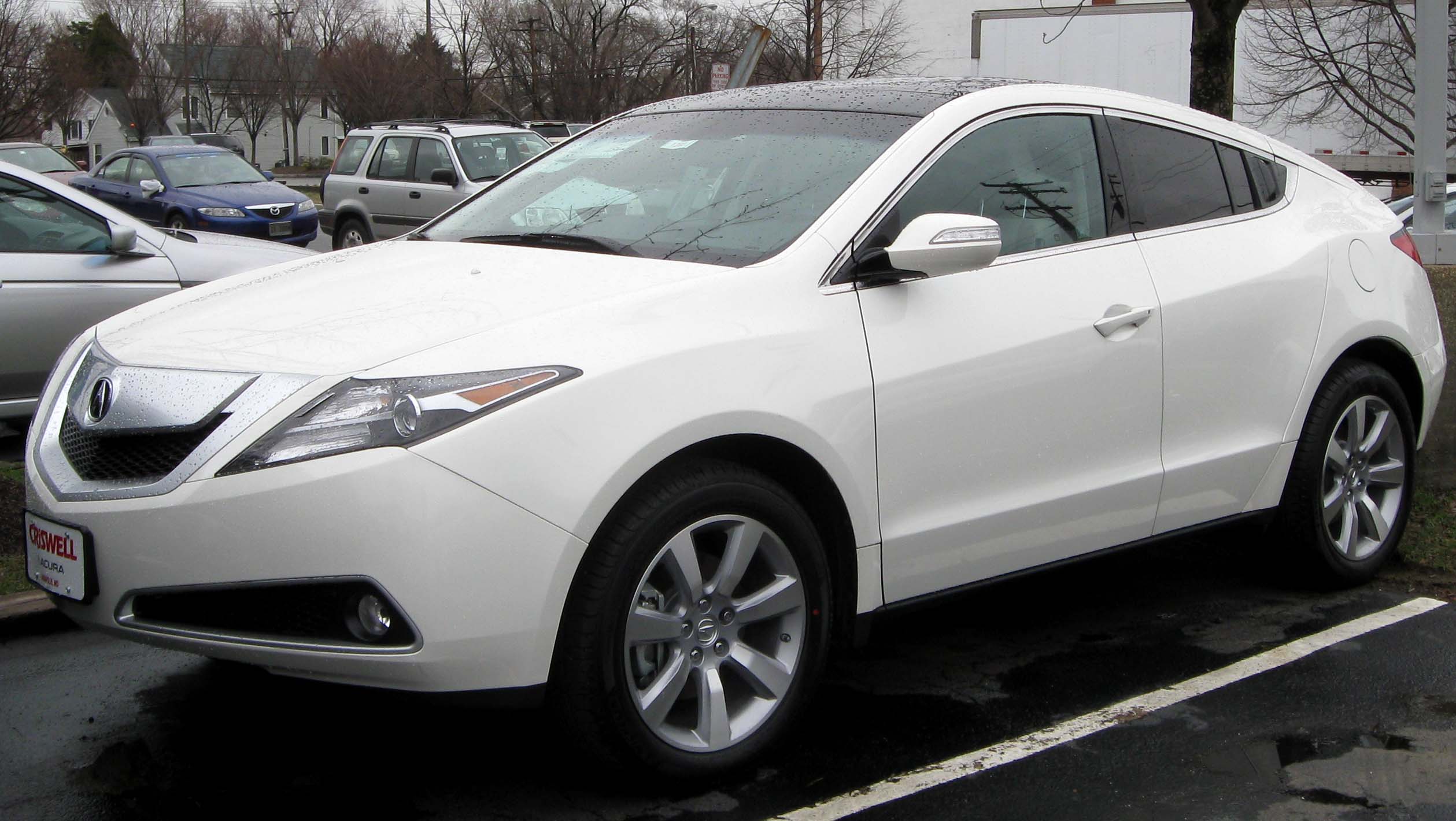
ZDX
"But then the ZDX got an air suspension that you don't find in the competitive, like, Cadillac Lyric."
The Acura ZDX is Acura’s electric SUV. The speaker likes it because it includes air suspension, which some competitors don’t offer.
The Acura ZDX is an electric SUV/crossover from Acura. The speaker specifically calls out that it offers air suspension, which is positioned as a differentiator versus competing models.
air suspension
"But then the ZDX got an air suspension that you don't find in the competitive, like, Cadillac Lyric."
Air suspension uses air bags instead of traditional springs. It can make the ride smoother and can adjust the car’s height depending on conditions.
Air suspension uses air-filled springs (instead of steel coils) to automatically adjust ride height and damping characteristics. It can improve comfort and handling consistency, and it often enables features like easier entry/exit and better load leveling.
Toyota
"and Toyota's like, we weren't going to let you anyway. [2155.5s] Well, I don't think they would have asked or worked together, [2157.7s] but Toyota's definitely the 800 pound gorilla there, [2161.9s] and it's not getting any smaller."
Toyota is one of the biggest car companies. The host is saying Toyota has so much size and leverage that it dominates the industry, so other brands can’t easily move around it.
Toyota is another major Japanese automaker, and the speaker calls it the “800 pound gorilla,” meaning it has outsized influence. The point is that Toyota’s scale and market position make it harder for other automakers to negotiate partnerships or compete on equal footing.
800 pound gorilla
"but Toyota's definitely the 800 pound gorilla there, [2161.9s] and it's not getting any smaller."
“800 pound gorilla” just means one company is so big it basically calls the shots. The host is using it to say Toyota has a huge advantage over other automakers.
“800 pound gorilla” is an idiom for a dominant player with overwhelming influence. In automotive terms, it suggests Toyota’s scale and bargaining power affect how other automakers can partner, compete, or enter markets.
body on frame SUVs
"[2215.5s] They have products designed for the Middle East [2217.8s] and for Australia that Honda does not have [2220.5s] have good answers for. [2221.7s] They've gotten trucks, most notably, [2224.0s] body on frame SUVs and truck platforms"
“Body on frame” means the car’s body sits on a separate heavy frame underneath. It’s common on trucks and tougher SUVs because it’s built for hauling and rough roads.
Body-on-frame construction separates the vehicle’s body from its frame, typically using a ladder-style chassis. This layout is common on trucks and many rugged SUVs because it can handle towing and rough-road use well, though it often feels less “car-like” than unibody designs.
five-cylinder engine
"And sadly, there's no interesting five cylinders anymore, you know? We're just sticking with the even numbers... I'm sad about the loss of the five cylinder."
A five-cylinder engine has five cylinders working together. People like it because it can feel smoother than a four-cylinder while still fitting in smaller cars.
A five-cylinder engine is an inline engine with five combustion chambers. It’s often discussed as a “middle ground” between four- and six-cylinder engines, balancing smoothness and packaging with reasonable efficiency.
plug-in hybrids
"[2823.8s] So I have a list of vehicles that I've owned [2826.6s] in a different variety. [2827.8s] So eight-cylinders, six-cylinders, four-cylinders, [2830.3s] and plug-in hybrids and full electrics,"
A plug-in hybrid is a car that uses both gas and electricity. You can charge it at home like an EV, but it also has a gas engine for when you need it.
Plug-in hybrids (PHEVs) combine a gasoline engine with an electric motor and a battery that can be charged from an outlet. They can often drive short distances on electricity alone, but still have a conventional engine for longer trips.
front wheel drive
"And actually, question for the viewers... since I had a front wheel drive. Like what are the things that you go, oh, I miss or I wish I had."
Front-wheel drive means the front wheels do the work of moving the car. The host is saying they haven’t had one in a while and is wondering what they miss about that kind of driving.
Front-wheel drive (FWD) means the engine’s power is sent to the front wheels. It often packages well for space and can be efficient in everyday driving, but it can feel different than rear-wheel drive in terms of traction and handling balance.
Tesla
"You could wrap your Tesla green. I could have a green car."
Tesla makes electric cars. Here they’re just talking about how a Tesla could look with a colored wrap.
Tesla is an American electric-vehicle (EV) manufacturer known for models like the Model 3, Model Y, Model S, and Model X. In this segment, it’s mentioned in the context of customizing a car’s appearance with a wrap.
wrap
"I did a little pricing on what a really nice purple wrap would look like. White interior, purple and white."
A wrap is like a big vinyl sticker that covers your car’s paint. People use it to change the color or add designs without repainting.
A car wrap is a vinyl film applied over your vehicle’s paint to change its color or add graphics. It’s often used for temporary styling, branding, or protecting the original paint from minor wear.
real third party unbiased testing
"That's how you get real third party unbiased testing."
“Third-party” testing means an independent organization evaluates vehicles rather than the automaker doing it themselves. This is often viewed as more credible because the testing standards and scoring aren’t controlled by the manufacturer.
collision avoidance
"an update in software that provides better traffic collision avoidance, or whatever that may be. The delay here is part of why we don't always talk about safety in our videos."
Collision avoidance is when the car tries to help you avoid a crash. It can use sensors to detect danger and then warn you or automatically slow the car.
Collision avoidance refers to driver-assistance functions that detect potential crashes and help reduce impact severity—often through warnings, automatic braking, or steering assist. The host’s point is that these systems can be affected by software changes, which may not show up as “structural” changes.
Request an Explanation
Heard something you'd like explained? We'll add it to this episode.
Sign in to request explanations for terms you heard.
Want to learn more?
Browse our glossary for plain-English explanations of automotive terms, jargon, and concepts.
Help improve this episode
See something that's not quite right? Our annotations are AI-generated and can sometimes miss the mark. Click the flag icon on any annotation to suggest a correction.