
Car Repair Advice Live Over The Air You Can Call Us and Ask Questions
About this episode
Callers and hosts trade practical used-car and repair advice during a live call-in. They walk through how to price a used car by matching condition to mileage, then pivot to electrical gremlins—starting with a “Christmas tree” dash and troubleshooting that can point to a body control module. The discussion also covers security/anti-theft programming considerations, plus safety cautions around counterfeit airbags. Later segments shift to parts sourcing, collector-plate rules, and buying guidance for engines and CVTs.
We are the Motor Medics working in our shop every day for decades now and broadcasting on over 250 radio stations and podcast helping people fix their cars and trucks since 1990. The call cost nothing but could save you thousands. Call us Thursdays from 9-11am Central. Here are today's callers. 1. How much can I get for my mint condition 04 Bonneville. 2. Is my 98 Park Avenue Body Module bad? 3. Shannons automotive trip to dc and Counterfeit cheap China Air Bags 4.Collector car plates 5.62 Ford F100 engine replacement 6. 05 Sebring put e85 in it
low mileage
"First of all that is an extremely low mileage car when he got it ... It got the daughter through college and now it's got 80,000 miles on it, 87,000 ... Is it mint? Is it nice or is it just low mileage?"
“Low mileage” means the car has been driven fewer miles than most similar cars. People often pay more for that, but the car’s overall condition still matters a lot.
“Low mileage” refers to a vehicle having relatively few miles on the odometer compared with typical examples of the same age. In used-car pricing, mileage matters because it’s often treated as a proxy for wear—though condition (like rust and accident history) can matter just as much or more.
condition match the miles
"What we don't know and you know this is something only you know because you're looking at it but is the car, does the car's condition match the miles? I mean is the car look nice?"
“Condition match the miles” is the idea that a car’s physical state should make sense relative to its odometer reading. A low-mileage car that’s beat up (or a high-mileage car that looks new) can signal issues like poor maintenance, body damage, or odometer discrepancies.
rust
"It is mint condition. There's no rust. There's no scratches. It's never been in a wreck and I know that's a car that you can ask a premium for."
Rust is when metal starts corroding. If a car has no rust, it usually means it’s been protected from moisture/salt and is worth more when you sell it.
Rust is corrosion of metal, and on cars it can indicate long-term exposure to moisture/salt and can spread under paint or body panels. The hosts treat “no rust” as a major condition marker because it strongly affects both safety and resale value.
in a wreck
"It is mint condition. There's no rust. There's no scratches. It's never been in a wreck and I know that's a car that you can ask a premium for."
“In a wreck” means the car was in an accident. Even if it’s been fixed, a wreck history can reduce value and can sometimes hint at hidden damage.
Being “in a wreck” means the car has been in an accident serious enough to cause damage that typically requires repair. Accident history matters because it can affect structural integrity, future reliability, and resale value even if repairs look good.
premium
"It's never been in a wreck and I know that's a car that you can ask a premium for. Yeah, you find out what other models just like it are selling for and you ask more."
A “premium” here means you pay more than average because the car is especially nice. Rust-free and accident-free cars often get priced higher.
A “premium” in car buying means paying above the typical market price for a specific vehicle because it has desirable attributes (like being rust-free, clean, and accident-free). The segment ties premium pricing to matching condition with mileage and verifying the car’s overall state.

04 Bonneville
"You know in 04 Bonneville is not the dream car that a college kid says, hey can you get me an 04 Bonneville for college now today? ... Most people are going to say what's an 04 Bonneville, I want $25 or bucks. No, this is a different 04 Bonneville. This 04 Bonneville would command probably $5,000, $7,000, $10,000."
A “Bonneville” is a Pontiac sedan. The point here is that a clean, rust-free 2004 example can sell for much more than a typical one because buyers pay extra for condition.
The Pontiac Bonneville (here referenced as an “04 Bonneville”) is a full-size American sedan known for comfort and being a common, affordable used-car choice. In this segment, the hosts focus on how a specific 2004 Bonneville’s condition and rust-free history can dramatically change what it’s worth in the used market.
AutoTempest.com
"That one of the places we've looked is AutoTempest.com because of all the different filters. You can just go by price, search by highest price first, lowest miles first..."
AutoTempest.com is a website that helps you search for used cars. It lets you filter listings so you can find the right one faster.
AutoTempest.com is an online used-car search site that aggregates listings and lets you filter results (like price and mileage). In the segment, it’s used as a tool to find specific cars efficiently.
Christmas tree of lights
"I had started it up and I had gotten the Christmas tree of lights on my dash and I just kind of felt that I either had a bad battery or maybe an alternator had it checked out."
That phrase means the dashboard lights all come on at the same time. It usually points to an electrical problem, not just one broken sensor.
“Christmas tree of lights” is a common enthusiast phrase for when many warning indicators illuminate at once on the dashboard. It often suggests a system-wide electrical issue (like low voltage or a module fault) rather than one isolated warning.
airbag lights
"but I ended up also having my airbag lights stay on. A lot of the lights went out, but my dome light doesn't work, my trunk release doesn't work."
The airbag light tells you the car’s airbag system has a problem. If it’s on with other warning lights, the issue could be electrical or related to sensors.
Airbag lights are dashboard indicators tied to the airbag/supplemental restraint system. If they stay on alongside other electrical issues, it can indicate a voltage problem or a fault in the restraint system’s sensors/modules.
fuses
"I had... You know, I checked all my fuses, of course, first under the hood. There's some tough ones to get at under the dash..."
Fuses are safety devices that protect the car’s wiring. If something electrical isn’t working, checking the fuses can help find whether a circuit is blown.
Fuses are protective devices that break the circuit when current is too high, preventing wiring and modules from overheating or failing. Checking fuses is a standard first step when multiple electrical accessories stop working.
battery cables
"He said try pulling the battery cables off again, but this time leave them off a little bit like I did before, but touch the two cables together and see if that clears it. It did not."
Battery cables are the thick wires that connect the battery to the car. Disconnecting and reconnecting them can sometimes “reset” the car’s electronics so warning lights go away.
Battery cables are the heavy-gauge leads that connect the battery to the vehicle’s electrical system. Disconnecting and reconnecting them can reset certain electronic modules and clear stored faults, which is why the mechanic suggested trying it again with a specific procedure.
body control module
"I'm thinking it's the body control module and let's say I'm just missing something. I just don't see that kind of thing go bad on a car like that."
The body control module is like the car’s main computer for the convenience/electrical stuff. If the dome light, trunk release, and warning lights act up together, the BCM is often the part to check.
The body control module (BCM) is an electronic control unit that manages many “body” functions—things like interior lights, trunk release, and various warning indicators. When multiple seemingly unrelated electrical features fail together, a BCM fault becomes a strong suspect.
scanner
"It doesn't reboot when it's time to restart, but it can be checked. You can get a scanner plugged into it, read it, open the body control module page and push the trunk button."
A scanner is a tool that connects to the car’s computer so you can see error codes and what the car is doing. It’s how you figure out which module or circuit is acting up.
A scanner is a diagnostic tool that plugs into the car to read stored fault codes and live data from modules like the BCM. It helps pinpoint whether a module is receiving an input signal but failing to produce the expected output.
grounds
"The body control module grounds that there's power through the orange wire that powers them all the time, and if it's powered but that body control module is not grounding it, then that's your failure right there."
In automotive wiring, “ground” is the electrical return path to the chassis/body. The host is describing a failure mode where the BCM provides power to a circuit but fails to “ground” it, so the lights/outputs never activate.
programmed
"So it's got to be programmed when it's installed. I think if you put a used one, cannot be programmed in that car, only a brand new one, but if you plug a used one into it,"
Programming means the module has to be set up to work with that exact car. If you install a used one that can’t be reconfigured, it may not control things correctly.
Many modern modules must be programmed (configured) to match the specific car—its options, wiring, and security setup. A used BCM may not be compatible or may not be reprogrammable, which is why the host suggests brand-new modules for proper installation.
U-Pullet yard
"I think if you put a used one, cannot be programmed in that car, only a brand new one, but if you plug a used one into it, you could pick one up in a U-Pullet yard and then you're going to own it because it's going to be a test part."
A salvage yard is where you can buy used parts from cars that were wrecked. The host is saying you might grab a used module to test, but it may not work permanently if it can’t be set up for your car.
This refers to a salvage yard where you can buy used parts from wrecked cars. The host’s point is that a used BCM might be used as a test part, but it may not be properly programmable for the customer’s car.
chip type VAT security system
"That one's got a chip type VAT security system on it, so it may it may run, so it does and all your stuff works. You could be fine."
A chip-type security system uses an immobilizer key/chip to allow the car to start and enable certain functions. The host suggests that even if the BCM is wrong, the car may still run (and “all your stuff works”) because the security system can permit operation.
VAT system
"but I know you're talking about the chip and the [620.6s] VAT system and whatever. I'm going to plug it in and see what it does."
VAT is an anti-theft security system. It checks whether your key is allowed before the car will start.
VAT is an automotive anti-theft system used on some GM-era vehicles. It works with the key/chip and the car’s electronics so the engine won’t start unless the system recognizes an authorized key.
modules
"And that's what we'll [658.5s] run into sometimes. There's a lot of modules that are programmable in those early cars, [665.9s] but it's changed."
A module is a computer in the car that controls a specific feature. Some of these computers can be set up (programmed) after replacement, but not all of them work the same way.
In automotive terms, modules are electronic control units that manage specific functions (like security, body electronics, or convenience features). The host notes that some modules in early cars were programmable, but what’s available for programming can change over time.
programmable
"There's a lot of modules that are programmable in those early cars, [665.9s] but it's changed. What Russ has been finding is doors have been getting closed here, there, [671.9s] over there, as far as what's available for programming on certain things."
Programmable means a shop can use a computer tool to set up the car’s electronics correctly. What can be changed depends on the car and the module.
“Programmable” means the car’s electronics can be updated or configured using a diagnostic/programming tool. The host is emphasizing that access to programming certain features can vary depending on the tool, the vehicle, and the specific module/part.
part number
"But if you have that correct part number and it's out of a [690.5s] another Park Avenue, I'd plug it in and give it a try"
A part number is the manufacturer’s specific identifier for a component. In electronics-heavy cars, matching the correct part number matters because modules can be similar-looking but differ internally, affecting whether they can be programmed and whether the car will recognize them.
Automotive Recycle Association annual hill days
"we were in Washington, D.C. for our, it was always an annual [750.7s] event for the Automotive Recycle Association, but with COVID, it got stopped. And so we respawned the event here a couple of years ago for our annual hill days."
They’re talking about a yearly event they attend called hill days. It’s more of a community event than a car repair how-to.
This segment shifts from car repair advice to an event the hosts attend, describing the Automotive Recycle Association’s annual hill days. It’s a community/industry gathering rather than a technical automotive discussion.
airbags
"And so they're just wanting to make sure that with our recall certification process that we have within our industry for people that are part of that, it gives us an opportunity to be able to sell our airbags like on eBay and places like that."
Airbags are safety cushions that pop out during a crash. They inflate very fast to help reduce injury. If the airbag part is faulty, it can deploy in a dangerous way.
Airbags are supplemental restraint devices that rapidly inflate during a crash to help protect occupants. They rely on an inflator and stored energy to deploy in milliseconds. If an airbag module or inflator is defective, it can deploy improperly and create additional hazards.
recall certification
"And so they're just wanting to make sure that with our recall certification process that we have within our industry for people that are part of that, it gives us an opportunity to be able to sell our airbags like on eBay and places like that."
Recall certification is a process that checks and documents safety-recall parts properly. The goal is to make sure the parts being sold or reused are handled safely and legally. It helps prevent bad parts from being passed along.
Recall certification refers to an industry process for verifying that parts involved in safety recalls are handled, processed, and documented correctly. In this context, it’s used to ensure airbag-related parts are managed in a way that meets safety and compliance expectations. It’s meant to reduce the chance of unsafe or counterfeit components entering the market.
child seats
"And they're also in charge of child seats and some of that stuff too."
Child seats are special car seats for kids that help protect them in a crash. They’re designed for different child sizes and are regulated for safety. The host is saying the same group also deals with child-seat topics.
Child seats are child restraint systems designed to protect children in crashes. They’re regulated and engineered to work with vehicle safety systems and occupant size/positioning. The host mentions that the same organization handling airbag-related topics also covers child-seat-related responsibilities.
Takata
"And so you hear about the Takata recalls and that is very, very low percentages of problems, but real stuff."
Takata is a company that made airbag parts. Some of their airbags had a known problem that could make the airbag deploy incorrectly. That’s why many cars had to be recalled to replace the risky parts.
Takata is the airbag supplier at the center of a major global recall. The issue involved airbag inflators that could malfunction and deploy incorrectly, creating a serious safety risk. This is why “Takata recalls” became shorthand for airbag inflator failures.
inflators
"I mean, it's happened where they've had those inflators not correctly deploy and cause pressures that cause, you know, shrapnel to come as they blow."
An inflator is the part inside the airbag system that makes the airbag inflate. If the inflator fails, the airbag can deploy the wrong way. In serious cases, it can rupture and send dangerous pieces outward.
An airbag inflator is the component that generates the gas pressure to inflate the airbag. In the Takata-related failures, inflators could malfunction and deploy incorrectly, producing excessive pressure. That’s what can lead to dangerous fragments (“shrapnel”) when the inflator ruptures.
shrapnel
"cause pressures that cause, you know, shrapnel to come as they blow."
Shrapnel means tiny pieces that can fly around at high speed. In some airbag failures, parts can break apart and send fragments toward people. That’s why inflator problems are so dangerous.
Shrapnel refers to small fragments propelled at high speed. In airbag inflator failures, rupturing components can generate fragments that can injure occupants. The host uses it to describe the injury mechanism in malfunctioning inflators.
Chinese replicas
"But this is a different situation with these Chinese replicas."
This is about fake or copycat airbag parts. Even if they look similar, they may be built with cheaper materials or weaker construction. The host is warning that these replicas can fail dangerously when the airbag deploys.
“Chinese replicas” here refers to counterfeit or imitation airbag components that look similar to legitimate parts but may not be manufactured to the same safety-critical specifications. The host describes a failure mode where the airbag canister is not properly welded and instead uses screws, causing it to blow apart when deployed. This is a safety concern because airbag deployment depends on precise mechanical integrity.
OEM airbag
"you know, the recycled airbag that we take out of a car that is non deployed, the non deployed OEM airbag is the best alternative for people that are trying to fix something on a budget."
OEM means the part is made by the company that originally supplied it for the car. An OEM airbag is the factory-designed one, not an aftermarket substitute. The host is saying that using an OEM airbag is safer than cheaper alternatives.
OEM means “original equipment manufacturer,” so an OEM airbag is the factory-designed airbag module made for a specific vehicle. The host argues that a non-deployed OEM airbag is the best alternative when repairing on a budget. The key point is that OEM parts are designed to match the vehicle’s safety system requirements.
collector plates
"I was at a place of, I know I'm not going to get too specific, but I was at a place [1555.1s] and I saw a car in employee the month parking spot and it had collector plates on it. [1562.7s] And I was like, I don't think you can drive a collector to work every day."
Collector plates are special license plates for older cars. They usually come with limits so the car isn’t used as a daily driver.
“Collector plates” are special license plates issued for certain older or hobbyist vehicles, typically with rules that limit how often and where the car can be driven. They’re meant to keep collector cars from being used like normal daily transportation.
Minnesota
"they're meant for cruising. It's not supposed to be a daily driver. I know Minnesota just recently [1597.4s] was trying to change the law to a certain extent. [1604.2s] was trying to change the law to a certain extent."
They mention Minnesota because it’s the state that was working on a rule change for how collector cars can be driven. Collector owners were worried the change would make things harder.
Minnesota is referenced as the state that was trying to change the law around collector-plate usage. The hosts connect the legal change to collector-car owners being concerned about stricter driving limits.
loophole
"Well, just they wouldn't have had to [1622.7s] bring that even up if people weren't abusing it. That's the thing. Yeah. It's one of those where [1628.0s] it's like, Hey, we can, we can fix this loophole."
A loophole is a part of the rules that people can use to get around the spirit of the law. Here, it sounds like some people were using collector cars more often than they were supposed to.
In this context, a “loophole” means a gap or ambiguity in the rules that lets people use collector-plate vehicles more like daily drivers than the intent of the law. The hosts are describing how lawmakers try to close that gap when abuse becomes noticeable.
special interest plates
"[1669.9s] those. It's like here in South Dakota, we have what they call special interest plates. It allows [1674.6s] you to have just a rear plate on your vehicle and you pay a little more for it."
“Special interest plates” are special license plates for certain collector/special vehicles. They usually come with rules about how you can use the car, and sometimes they let you run only one plate instead of two.
“Special interest plates” are a state-issued license plate category intended for certain collector or specialty vehicles. The key idea is that they come with rules (like limited use) and sometimes allow a simplified plate setup. In this segment, the host connects them to single-plate use and mileage limits.
single rear plate
"[1674.6s] you to have just a rear plate on your vehicle and you pay a little more for it. [1678.4s] Well, they might as well just say pay a little more and you don't have to put the front plate on any vehicle"
“Single rear plate” means the car only has a plate on the back, not the front. The host says some people use this setup even when their car isn’t supposed to qualify.
“Single rear plate” refers to running only one license plate at the back of the vehicle instead of both front and rear. The segment explains that South Dakota’s special-interest plate program allows this setup, and that some people use it on cars that aren’t actually eligible. The discussion also ties this to enforcement and mileage limits.
mileage limit
"[1706.4s] obviously my dad helped special interest made the mileage limit, right? But to put the [1711.9s] the bill together. He's he got pulled over and only had one plate on and got pulled over for it"
A “mileage limit” is a yearly cap on how much you’re allowed to drive the car under the special plate program. The host says there’s a number (they mention 7,500 miles) and that going over it breaks the rules.
A “mileage limit” is a rule that caps how many miles a vehicle can be driven under a special plate program. In this segment, the host says the special-interest arrangement includes an annual mileage cap (they mention 7,500 miles). The point is to keep the plates tied to collector/special use rather than everyday driving.
vanity plate
"[1723.6s] and then later they were able to get single with vanity plate. [1730.3s] But the SI plate is the single plate. The vanity special interest plates."
A “vanity plate” is a personalized license plate where you pick the characters. In this conversation, they’re saying you can get a vanity-style version of the special-interest plate rules.
A “vanity plate” is a personalized license plate where the owner chooses a specific letter/number combination (subject to availability and rules). Here, it’s discussed as a variant of the special-interest plate program in South Dakota. The host also contrasts it with the standard special-interest plate designation.

F-150 Raptor
"...can get a vanity single plate. We have one on our Raptor. You can. Yes. Nice. Yep. And that's does that is..."
The F-150 is a pickup truck from Ford. The episode talks about different ways to mount a front license plate, including using a single plate setup. Choosing the right bracket helps the plate fit correctly and stay secure.
The Ford F-150 is a full-size pickup truck, and in the podcast it’s discussed in the context of license plate mounting options such as a vanity single plate. The mention of having one on a Raptor points to how owners sometimes want specific plate setups that may differ from standard mounting. This matters because fitment and bracket choice can affect how securely the plate sits and how the front end looks.
electronic system
"[1743.0s] that's does that is that unlimited mileage? No, we have to every year we register we have to put [1748.8s] the mileage in now is the electronic system. Same as a special they're going to start they're"
The “electronic system” is the state’s computer-based way of tracking the car’s mileage. The host says you report mileage each year, and they’re also working on ways to verify it more automatically.
The “electronic system” refers to the state’s digital method for tracking or verifying the vehicle’s mileage for compliance with the special plate rules. The host says they enter mileage each year and that the state is moving toward being able to check it automatically. This is about enforcement rather than vehicle mechanics.

Chevrolet Camaro
"a special a true specialty car, most of them did not have a spot for a front plate. Some of the Camaro's mid 80s Camaro's the Solstice Corvette. So to put one on, even though the factory offered it on some of those cars required drilling some holes in a poly bumper. And,"
The Chevrolet Camaro is a sporty car made by Chevrolet, usually as a coupe or convertible. The episode mentions older Camaros and how they were set up for things like a front license plate, which can change what brackets or mounting parts you need. It’s the kind of detail that helps when restoring or keeping the car original.
The Chevrolet Camaro is a performance-focused American coupe/convertible that’s been produced in many generations since the late 1960s. In the podcast context, it’s discussed around mid-1980s examples and how certain accessories (like a front license plate bracket) were handled compared to factory options. That kind of detail matters for owners because it affects originality, fitment, and what parts were actually offered for that model year.

Chevrolet Corvette
"...ome of the Camaro's mid 80s Camaro's the Solstice Corvette. So to put one on, even though the factory offere..."
The Chevrolet Corvette is a sports car from Chevrolet that’s built for performance. In the episode, it’s mentioned in the context of how some cars were set up for a front license plate. That matters if you’re trying to keep the car looking and equipped the way it left the factory.
The Chevrolet Corvette is a long-running American sports car known for its performance and distinctive design. The podcast ties it to the mid-80s Camaro discussion, specifically noting how factory offerings could differ—like whether a front plate setup was provided. That’s relevant because owners often want to match period-correct accessories and mounting hardware.

Pontiac Solstice
"... plate. Some of the Camaro's mid 80s Camaro's the Solstice Corvette. So to put one on, even though the facto..."
The Pontiac Solstice is a smaller sports car made by Pontiac. The episode brings it up in the context of how some cars were set up for a front license plate. If you’re maintaining or restoring one, the mounting parts and original setup can matter.
The Pontiac Solstice is a compact sports car that was produced in the mid-2000s, designed to deliver a sporty driving feel in a relatively affordable package. In the podcast context, it’s mentioned alongside the Camaro and Corvette discussion about factory accessory options like front license plate mounting. That kind of detail is often relevant to restorations and to keeping the car’s appearance period-correct.
poly bumper
"So to put one on, even though the factory [1828.9s] offered it on some of those cars required drilling some holes in a poly bumper. And, [1835.0s] you know, in my opinion, if you've got that car rolling across at Barrett Jackson or a collector,"
A poly bumper is a plastic bumper. If you drill holes in it to mount a front license plate, you’re cutting into the bumper permanently, which can look worse and be harder to fix later.
A “poly bumper” refers to a bumper made from polymer/plastic materials rather than metal. Drilling holes into a plastic bumper to mount a front plate can be undesirable because it permanently alters the fascia and can affect fitment and appearance.
sticker vinyl
"They do in so in Texas, you don't have [1868.1s] a registration on your plate. You have a plate that's just permanent until they get different [1873.4s] plates, but your registration's on your windshield. And they can scan it as they drive by."
They’re describing a front “license plate” that’s actually a vinyl sticker/decal. It’s meant to look like a real plate, but it’s not the same as mounting a metal plate.
“Sticker vinyl” here means a vinyl decal used to replicate a license plate on the front of the car. The key point is that the front plate appearance can be a removable/adhesive graphic rather than a physical plate.
barcode
"Yeah, it doesn't take much if they've got it. You know, if a laser can hit something, [1892.0s] it can scan a barcode pretty easy. But that tells them if the car is registered because people [1899.2s] down there would have the habit of they'd scrape a sticker off of somebody's car"
A barcode is a scannable pattern. They’re saying the system can read the registration info from the sticker/label using a scanner, similar to how a barcode is read in stores.
A barcode is an encoded pattern that can be read by a scanner. The host is saying that if a laser can hit the sticker/label, it can also read the barcode-like information to determine registration status.
inspection stickers
"Then they've [1917.4s] eliminated the inspection stickers, which I got a lot of friends that are in that business down [1924.3s] there, and they're like, yeah, it's great for the frivolous stuff that we had to inspect that [1928.4s] doesn't get used."
Inspection stickers are the little decals on your windshield that show your car’s inspection is up to date. They’re talking about how some places removed those stickers and changed the system for proving compliance.
Inspection stickers are decals placed on a windshield to show the vehicle has passed required inspections. The host argues that eliminating them reduces “frivolous” administrative checks, while also changing how enforcement and compliance are verified.

Toyota RAV4
"... I saw one yesterday in the way home, a Toyota, a RAV4, the control arm, the back end where the bushing ..."
The Toyota RAV4 is a compact SUV for daily driving. The episode mentions problems around the control arm and rear bushing, which are parts that help the wheels move smoothly. When those wear out, the ride can feel different and the car may handle less predictably.
The Toyota RAV4 is a compact SUV known for practical everyday use and broad availability of parts and service. In the podcast, it’s mentioned due to a control arm and rear bushing area issue, which is a common type of suspension wear that can affect ride quality and handling. That’s why it comes up—suspension components often need inspection and replacement as they age.
control arm
"the control arm, the back end where the bushing is was literally hanging almost touching the ground."
A control arm is part of the suspension that helps hold the wheel in the right position. If the bushing is failing badly, the wheel can move more than it should, which is dangerous.
A control arm is a suspension component that locates and controls wheel movement. When the transcript says the “back end where the bushing is was…touching the ground,” it suggests a failed bushing or separation that can severely affect handling and safety.
bushing
"the control arm, the back end where the bushing is was literally hanging almost touching the ground."
A bushing is a soft insert that cushions suspension movement. If it fails, the suspension can sag or shift, making the car handle unpredictably.
A bushing is a rubber or elastomer insert that isolates vibration and allows controlled movement between suspension parts. In this case, the bushing area being “hanging” implies the bushing likely tore or the mount failed, which can lead to poor alignment, clunks, and unsafe suspension geometry.

62 F100
"Hi, guys. I acquired a 62 F100 from a friend who's been sitting in a garage for 25 years."
That’s a Ford pickup truck from 1962. People restore these and often swap engines when the original one is too far gone to rebuild.
The “F100” is a Ford pickup truck, and a “62 F100” refers to a 1962 Ford F-100. These early F-series trucks are popular restoration projects, especially when parts availability and engine swaps are discussed.

300 6-cylinder
"I'd like to put a 300 in it, but I'm really struggling to find a motor that I'm confident in putting in or tearing apart and rebuilding... So you're looking for a 300 6-cylinder for something that was pre-1982, probably something like that?"
He wants to put a Ford straight-six engine (the “300” inline-six) into his truck. The main concern is finding one that’s reliable enough to install without having to rebuild it first.
A “300 6-cylinder” is a straight-six engine swap target—commonly referring to Ford’s 300 inline-six. The key idea is that the host wants an engine that’s known-good enough to install without gambling on unknown internal condition.
pre-1982
"So you're looking for a 300 6-cylinder for something that was pre-1982, probably something like that?"
“Pre-1982” is used to describe an older vehicle era where engine and parts sourcing can be harder and more variable. The host is implying that certain inventory systems are optimized for newer cars, so older vehicles may require extra searching and verification.
Kardash Part
"Well, I know that one of our partners is Kardash Part, and there are a number of facilities around the country that's still inventory a lot of older vehicles that are on that system."
They’re talking about a company/partner that helps locate older car parts by listing what’s available. It’s basically a way to find inventory from yards and facilities.
“Kardash Part” is mentioned as a partner that provides access to inventory for older vehicles. The context suggests it’s part of a network of facilities that track and list parts/vehicles for purchase.
salvage yard
"Because some people go out and they'll buy an old salvage yard, and they'll just go out there and inventory everything. And then they'll just sell pieces because there's stuff people need."
A salvage yard is where old or wrecked cars are taken apart and parts are sold. The risk is you might not know how long parts have been sitting or what condition they’re really in.
A salvage yard is a facility that buys wrecked or retired vehicles and then sells usable parts. The host’s point is that some sellers “inventory everything” and part out cars without much history, so buyers may get components with unknown condition.
Ford F150
"you get a lot of years since they've made a 300 6-cylinder. And I know we've ran across a couple of them that came through our U-Pollet yard where you get an F-150 or an F-100, and it goes up, goes through. We don't know the history. It's something that somebody has rolled out from"
The Ford F-150 is a large pickup truck used for work and everyday driving. The episode talks about how there are many versions over the years, including ones with a 6-cylinder engine. If you own one, knowing the exact year and engine helps you get the right parts and maintenance done.
The Ford F-150 is a full-size pickup truck that’s been produced for decades, with many engine and configuration options over the years. The podcast mentions the availability of many years and specifically references F-150s with a 300 six-cylinder engine, which can be a common topic for parts, maintenance, and sourcing. It’s discussed because older F-150s can be straightforward to work on, but they still require correct parts and attention to age-related wear.
U-Pollet yard
"And I know we've ran across a couple of them that came through our U-Pollet yard where you get an F-150 or an F-100, and it goes up, goes through."
They’re referencing a junkyard where cars/engines show up. The concern is that the engine’s past may be unknown because it may have been sitting for a long time.
The “U-Pollet yard” is described as a yard where engines came through, including F-150/F-100 trucks. The point is that the shop sometimes encounters engines with unknown history—vehicles rolled out from storage—so buyers can’t assume mileage or maintenance details are available.
not worth rebuilding
"But he said it wasn't worth rebuilding. It's all in parts in the back. I thought about taking it to machine shop and having it check it."
“Not worth rebuilding” means someone thinks fixing the old engine won’t be cost-effective. The better approach is to inspect key parts first, then decide whether a rebuild is actually practical.
“Not worth rebuilding” is the decision to replace an engine rather than restore it, usually driven by cost, parts availability, and how likely the engine is to be salvageable. The host argues that the right choice depends on what the engine checks out as—if major components are still good, rebuilding can make sense.
machine shop
"I thought about taking it to machine shop and having it check it. I wonder why it wasn't."
A machine shop is a workshop that does precision measurements and machining. For an engine rebuild, they can check parts for damage and make them fit correctly again.
A machine shop is a specialized repair facility that measures and re-machines engine parts. In an engine rebuild context, they can check components like the crankshaft and cylinder head for wear and straightness, and then machine them back into spec.
LS
"I'm going to put an LS in there. It's not worth rebuilding."
“LS” is a common name for a modern GM V8 engine family. People like it for engine swaps because parts and support are easy to find.
“LS” refers to GM’s LS-series V8 engines, which are popular swap candidates because they’re modern, widely supported, and have lots of aftermarket parts. In the transcript, the point is that some people decide an older engine isn’t worth rebuilding and instead swap in an LS.
fuel inject
"I'm going to put a whatever in there, fuel inject. Well, sure, to them, it's not worth rebuilding."
Fuel injection is a system that delivers fuel to the engine using electronic controls. It’s often contrasted with older carburetor setups.
“Fuel inject” refers to fuel injection, where an engine meters fuel electronically rather than using a carburetor. The transcript contrasts rebuilding an older engine versus swapping to a more modern fuel-injected setup.
power steering and alternator
"So maybe you take it down... If you've got power steering and alternator, all the brackets are going to bolt right up."
Power steering and the alternator are systems that help the car drive easily and keep the battery charged. If you’re swapping an engine, you want the mounting points and brackets to line up so these systems can be reused.
Power steering and the alternator are accessory systems that often use brackets and mounting points on the engine. When swapping or rebuilding an engine, keeping these compatible matters because the brackets and wiring/charging connections may need to match the donor setup.
rebuild kit
"And if they're all good, you get a rebuild kit and you rebuild it. I definitely would expect it."
A rebuild kit is a box of the main internal parts you replace when rebuilding an engine. It helps you do the job without hunting down every single part separately.
An engine rebuild kit is a packaged set of internal parts used to restore an engine during a rebuild. It typically includes items like bearings and piston rings, so the builder can replace worn components without sourcing everything individually.
crank checked
"So maybe you take it down, have that block checked, the crank checked, and the head checked."
The crankshaft is a major rotating part inside the engine. Checking it means making sure it isn’t worn or bent so the rebuilt engine can run correctly.
Checking the crankshaft means measuring it for wear, straightness, and damage before deciding on a rebuild. If the crank is out of spec, you may need machining or replacement; if it’s within tolerance, a rebuild kit and reassembly are more likely to succeed.
head checked
"So maybe you take it down, have that block checked, the crank checked, and the head checked. And if they're all good, you get a rebuild kit and you rebuild it."
The cylinder head sits on top of the engine and helps control combustion. Checking it means making sure it’s not damaged so the engine can seal and run properly after rebuilding.
Checking the cylinder head involves inspecting it for issues like warping or cracks and confirming it can be machined or reused. In a rebuild decision, a “good” head can be the difference between a straightforward rebuild and a much more expensive repair.
Facebook Marketplace
"Yeah. And then you've made a comment. And when you look at Facebook Marketplace, it is the Wild West."
Facebook Marketplace is a place to buy and sell used items online. The host is warning that listings can be misleading, so you may need to verify with real photos or video.
Facebook Marketplace is an online classifieds platform where people list used parts and vehicles. The host notes it can be difficult to verify authenticity because sellers can create misleading ads, so buyers may need to ask for direct proof like video.
FaceTime video
"hopefully it's somewhere fairly close by where they can ask for a FaceTime video if you've got an iPhone."
Asking for a live video call helps confirm the item is real and in the condition the seller claims. It’s a simple way to reduce the risk of getting the wrong thing.
A FaceTime video request is a practical way to verify a listing in real time, especially for engines or parts that can’t be fully inspected remotely. The host suggests asking for a live video if you’re buying from far away.

Ford Orange
"...an orange because it's faded so bad. It's the old Ford orange. Just going with that red. Red class. What color ..."

Toyota Corolla
"It's a Toyota Corolla or a Honda Civic or Accord. It's a Camry or Corolla, a Civic or an Accord."
The Toyota Corolla is a popular, affordable compact car. The host mentions it as a go-to option when you want something safe and not too expensive for a student.
The Toyota Corolla is a compact car that’s often recommended for budget-minded buyers because it’s generally easy to live with and widely supported by parts and service networks. In this segment, the host uses it as part of a short list of “safe, not too expensive” vehicles for a college kid.

Honda Civic
"It's a Toyota Corolla or a Honda Civic or Accord. It's a Camry or Corolla, a Civic or an Accord."
The Honda Civic is a common, practical compact car. The host lists it as a reliable, not-too-expensive choice for a student.
The Honda Civic is a compact car known for being practical and widely maintained, which helps keep ownership costs reasonable. Here, the host includes it in the same “always that answer” shortlist for a safe, budget-friendly college vehicle.
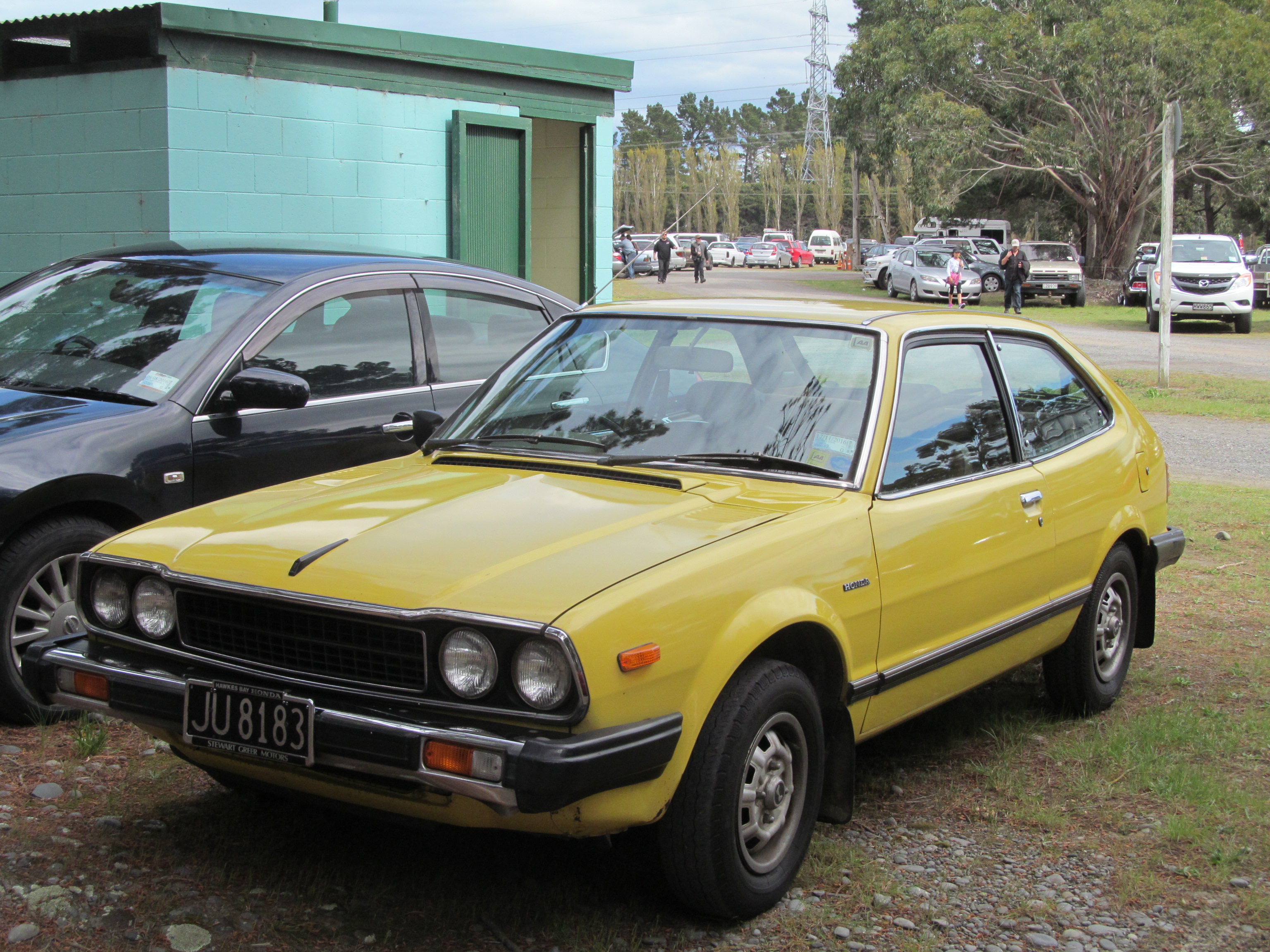
Honda Accord
"It's a Toyota Corolla or a Honda Civic or Accord. It's a Camry or Corolla, a Civic or an Accord."
The Honda Accord is a mid-size sedan that many people choose as a dependable daily driver. The host mentions it as one of the usual safe, affordable options for a student.
The Honda Accord is a midsize sedan that’s frequently recommended for buyers who want a comfortable daily driver without going too expensive. In this segment, it’s part of the host’s standard recommendation list for a safe, budget-conscious college car.
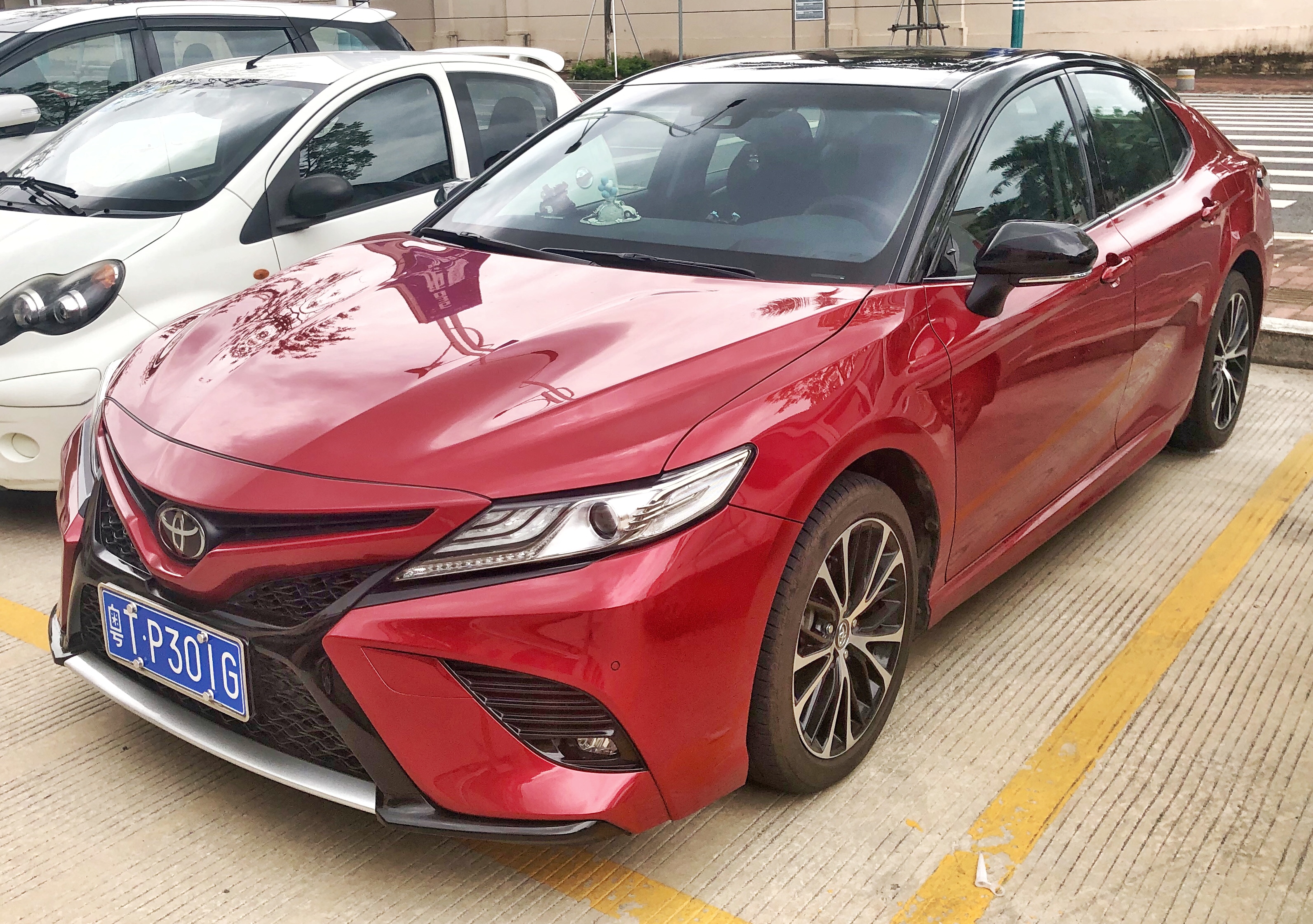
Toyota Camry
"It's a Toyota Corolla or a Honda Civic or Accord. It's a Camry or Corolla, a Civic or an Accord."
The Toyota Camry is a mid-size car that’s often picked for everyday driving. The host lists it as another reliable, budget-friendly option for a student.
The Toyota Camry is a midsize sedan that’s commonly chosen for commuting because it balances comfort and long-term ownership practicality. The host includes it in the same “safe and not too expensive” shortlist for a college vehicle.

Chevrolet Malibu
"My son is looking at a 23 or 24 Chevy Malibu for taking to college. This is a little bit different."
The Chevrolet Malibu is a regular, everyday car. In this call, someone is thinking about buying one for college, and they’re asking whether the car’s CVT transmission might cause problems.
The Chevrolet Malibu is a mainstream midsize sedan, and in this segment it’s the specific car a caller is considering for a college student. The host then pivots to a question about whether the Malibu’s CVT (continuously variable transmission) is a worry at certain model years and mileage ranges.
CVT transmission
"Question. Mileage ranging from 25 to 70,000. Is the CV, CVT transmission a worry for those years or miles?"
A CVT transmission is a type of automatic gearbox that can smoothly change “gears” without distinct steps. The caller is worried about whether that transmission type tends to fail on newer cars as they rack up miles.
A CVT transmission (continuously variable transmission) uses a belt-and-pulley system to keep the engine near its most efficient operating range instead of using fixed gear ratios. In this segment, the host is addressing whether CVTs are a reliability worry for certain model years and mileage on a Chevy Malibu.

Nissan Rogue
"Okay. It's just really a rogue, right? I mean, it looks like a rogue to me, but it's a kicks, it's a kicks, whatever."
The Nissan Rogue is a common crossover SUV. The host mentions one as an example where the CVT transmission went bad even with low miles.
The Nissan Rogue is a popular compact crossover, and the host uses it as a real-world example of a CVT failure case. They say it “looks like a rogue to me,” implying the car is likely a Rogue, and that it has a bad CVT at relatively low mileage.
CVTs
"the 15,000 miles of the bad trends, but I've also had them 78 years old with the CVTs [2526.1s] with 250 and they were fine."
CVT means “continuously variable transmission.” Instead of having fixed gears like a normal automatic, it can smoothly change the ratio to keep the engine in a good range. Some CVTs have known wear or failure patterns, so mechanics watch them closely.
CVT stands for continuously variable transmission, a type of automatic gearbox that uses pulleys/belts (or similar mechanisms) to provide a smooth range of gear ratios instead of fixed steps. That design can change how the car feels and how wear shows up over time, which is why shops often track CVT failure patterns by model.
factory
"Now, both of those, this is [2636.0s] where a used part, it's a factory, everything. You've always got to ask these questions."
Here, “factory” means the part is made to the original manufacturer specs, like what the car came with. It matters because the price and quality can be different depending on whether you’re buying OEM-style parts or aftermarket/reman options.
In this context, “factory” is shorthand for an OEM (original equipment manufacturer) replacement part—i.e., the same type of part the car was built with. The speaker contrasts that with other sourcing options and emphasizes that used-part pricing depends on condition and what you’re actually getting.
remanufactured
"Sometimes those transmissions, [2653.3s] if we're not selling them, they might be a thousand bucks, but you go to a rebuilder and they're [2653.3s] 3,800. They're what they are. So you've, it's always good. Check all your options. Check new, [2658.8s] check certified used, check remanufactured, check all of it."
“Remanufactured” means the part is rebuilt from a used one—worn pieces are replaced and it’s put back together to work like it should. It’s often cheaper than brand-new, but you still want to confirm what was replaced and what warranty you get.
A remanufactured transmission is rebuilt by taking a used unit, disassembling it, replacing worn components, and reassembling it to meet specified performance/quality targets. The host is using it as one of several “options” (new, certified used, reman) to compare cost versus risk.
certified used
"Check all your options. Check new, [2658.8s] check certified used, check remanufactured, check all of it. Let's talk to Linda. You're on the"
“Certified used” usually means the seller inspects the car (or part) and backs it with extra coverage compared to a random used item. The idea is to lower the risk that you get something worn out or missing key checks.
Certified used (often “CPO” in dealer language) is a used-car program where the vehicle and/or major components are inspected and meet specific criteria, typically with added warranty coverage. The speaker lists it as an alternative to buying new or remanufactured parts, implying it can reduce uncertainty compared with a generic used unit.

Chrysler Sebring convertible
"I have a Chrysler Sebring convertible. It's a 2005 and with all the different grades of gas, I had an empty tank and I grabbed the wrong hose and I put two gallon of flex fuel in it..."
This is a Chrysler Sebring convertible from 2005. The caller accidentally put flex fuel (E85) in it, then switched back to the correct gas, and now the car is acting weird while driving. The discussion is about whether fuel additives can help and what to do next.
The Chrysler Sebring convertible (a 2005 in this call) is a mid-2000s American V6-era car where fuel quality and fuel-system behavior can noticeably affect drivability. In this segment, the host connects the owner’s flex-fuel mistake to symptoms like the car “wants to race” on the highway and acting up in town.

Ford Flex
"... I grabbed the wrong hose and I put two gallon of flex fuel in it and then realized it was the wrong gas..."
The Ford Flex is a people-hauling vehicle with a lot of interior space. The episode talks about a situation where the wrong type of fuel was put in, which can cause problems. If that happens, it’s important to address it promptly and make sure the car is fueled correctly.
The Ford Flex is a family-oriented crossover wagon with a distinctive boxy shape and room for passengers and cargo. The podcast specifically mentions accidentally putting flex-fuel (E85) into the wrong fuel type scenario, which highlights how fuel compatibility can become an issue for owners. That’s significant because using the wrong fuel can affect drivability and may require corrective steps quickly.
flex fuel
"I grabbed the wrong hose and I put two gallon of flex fuel in it and then realized it was the wrong gas. And so then I filled it up with the right gas..."
Flex fuel is a type of fuel blend that contains a lot more alcohol than normal gas. If you put it in a car that isn’t meant for it, the engine can run rough or behave strangely until you switch back to the right fuel.
“Flex fuel” usually refers to E85, a gasoline-ethanol blend with much higher alcohol content than regular unleaded. Higher ethanol content changes how the engine’s fuel system and sensors behave, so using it in a car not calibrated for E85 can cause drivability issues until the fuel is corrected.
check engine light
"And the car, you probably got check engine light on? No, actually not because it, you know, I have put, as soon as I filled it up and then I like to travel..."
The check engine light is a warning that the car’s computer noticed a problem. If it’s on, it usually means there’s a stored code you can read to figure out what’s wrong.
The check engine light is the dashboard indicator that the car’s engine control unit (ECU) has stored a fault code related to emissions or engine operation. In this segment, the host notes that the light may or may not be on, which helps distinguish fuel-related issues from other drivability or emission-system problems.
fuel system cleaning
"but you need to do a professional fuel system cleaning. A shop can use a unrelated to this problem."
A fuel system cleaning is a service that helps clear out gunk that can build up in the fuel system. If the car is running weird, a shop cleaning can sometimes fix issues that normal additives can’t.
A professional fuel system cleaning is a service intended to remove deposits from parts like injectors and the fuel delivery system. The host suggests it may be needed because simply adding a small amount of additive to the tank may not fully address contamination or deposits after a fuel mistake.
emission system cleaning
"I think you've got an unrelated issue going on like the, the CRC, um, emission system cleaning like a, a complete cleaning with the CRC products that your mechanic would be able to."
Emission system cleaning means treating parts that help control exhaust pollution. The host is suggesting the problem might be coming from those systems instead of the fuel mix itself.
Emission system cleaning refers to cleaning or treating components tied to exhaust emissions control (often via specific products or service procedures). The host frames it as a possible unrelated issue—meaning the fuel mistake might not be the real cause if the car’s symptoms persist without a clear fuel-related fault.
CRC
"I think you've got an unrelated issue going on like the, the CRC, um, emission system cleaning like a, a complete cleaning with the CRC products that your mechanic would be able to."
CRC is a brand that makes cleaning products for cars. In this call, it’s mentioned as an example of cleaner a mechanic might use for emission-related cleaning.
CRC is a consumer and shop chemical brand known for products like fuel and emission-system cleaners. Here, the host mentions CRC products as an example of what a mechanic might use for a more complete cleaning service.
E 85
"Yeah. When you're asking about putting cleaners in it though. Yeah. And just as quick as I can say it, if you have put in the E 85, you might have knocked some"
E85 is a fuel blend with a lot of alcohol (ethanol). If your car isn’t designed for it, it can cause running problems, and the fix is usually to use the correct fuel and let the system recover.
E85 is a specific flex-fuel blend—about 85% ethanol and 15% gasoline. Because ethanol has different combustion characteristics than regular gasoline, putting E85 into a non-flex-fuel vehicle can trigger symptoms and may require time or a proper fuel-system cleaning to fully resolve.
Request an Explanation
Heard something you'd like explained? We'll add it to this episode.
Sign in to request explanations for terms you heard.
Want to learn more?
Browse our glossary for plain-English explanations of automotive terms, jargon, and concepts.
Help improve this episode
See something that's not quite right? Our annotations are AI-generated and can sometimes miss the mark. Click the flag icon on any annotation to suggest a correction.