
Ferrari Luce; My Indy500 Trip; '27 Aston DB12S Review
About this episode
Kicking off with their first Indy 500 weekend, the hosts connect the race’s stadium-like energy and tailgate culture to tight on-track drama—down to “Two thousandths of a second”—plus IndyCar’s close-quarters strategy, hybrid timing, and rain-control chaos. They also pivot to a health PSA about heart valve checks. Later, the show turns to car reviews: an Aston Martin DB12S loaner and a detailed, sometimes critical look at the DB12S “S” upgrade, then the futuristic Ferrari Luce, including styling debates and EV design speculation.
Matt Farah recaps his first-ever trip to the INDY500; he and Zack Klapman review the Aston Martin DB12S; and Ferrari has unveiled its first EV, the Luce.
Patreon Questions include:
- A watch named after a sunken boat?
- What WEIRD vehicular record do you want?
- Best production car to go WOT at Indy
- Did we use car forums?
- Grand Seiko Spring Drive diver
- Best Road & Track route
- Cars for sex: the followup
- Boat / car motor crossover royalty
Recorded May 26, 2026
Vinbidders
Smoking Tire fans get $100 off the listing price with promo code TIRE and by visiting https://vinbidders.com/tire
Go from submitting your car to a confirmed sale in under 1 week with VinBidders. And you only pay $149 if the car sells.
Mac tools
Go to https://mactools.org/tireto learn more and see if there’s an open route near you
Bluechew
Right now, when you buy two months of BlueChew Gold, you get the third for FREE with promo code TIRE. Visit https://BlueChew.com for more details and important safety information
DeleteMe
Get 20% off your DeleteMe plan when you go to www.joindeleteme.com/TIRE and use promo code TIRE at checkout.
Use Off The Record! and ALWAYS fight your tickets! For a 10% discount on your first case go to https://www.offtherecord.com/TST
Want your question answered? Want to watch the live stream, get ad-free podcasts, or exclusive podcasts? Join our Patreon: https://www.patreon.com/thesmokingtirepodcast
Instagram:
https://www.Instagram.com/thesmokingtire
https://www.Instagram.com/therealzackklapman
Enter to WIN our AMAZING 2025 Porsche 911 Turbo S!! https://www.dreamgiveaway.com/tickets/porsche?promo=SMOKINGTIRE
Promo Code Offer: Get 4X bonus tickets with any donation of $25 or more. With every donation you are helping benefit some wonderful veterans' and children's charities.
Podcast Promo Code: SMOKINGTIRE
Want your question answered? Want to watch the live stream, get ad-free podcasts, or exclusive podcasts? Join our Patreon: https://www.patreon.com/thesmokingtirepodcast
Use Off The Record! and ALWAYS fight your tickets! Enter code TST10 for a 10% discount on your first case on the Off The Record app, or go to http://www.offtherecord.com/TST.
Watch our car reviews: https://www.youtube.com/thesmokingtire
Tweet at us!
https://www.Twitter.com/thesmokingtire
https://www.Twitter.com/zackklapman
Instagram:
https://www.Instagram.com/thesmokingtire
https://www.Instagram.com/therealzackklapman

DB2 Aston Martin Db12S
"... you here plus Zach and I give our reviews of the Aston Martin DB12S and of course our thoughts on the all-new Electri..."
“DB2” is a model name from Aston Martin that the podcast mentions while talking about cars. The episode seems to be grouping it with other Aston Martin models for discussion. There aren’t details in the snippet about what makes it special, just that it’s part of the conversation.
The DB2 is referenced in the podcast as part of a segment that includes reviews of Aston Martin models, with “DB2” appearing alongside “DB12S.” In this context, it’s likely being used as a model name the hosts are discussing or comparing within Aston Martin’s lineup history. The transcript doesn’t provide technical details, so it’s mainly a topic identifier.
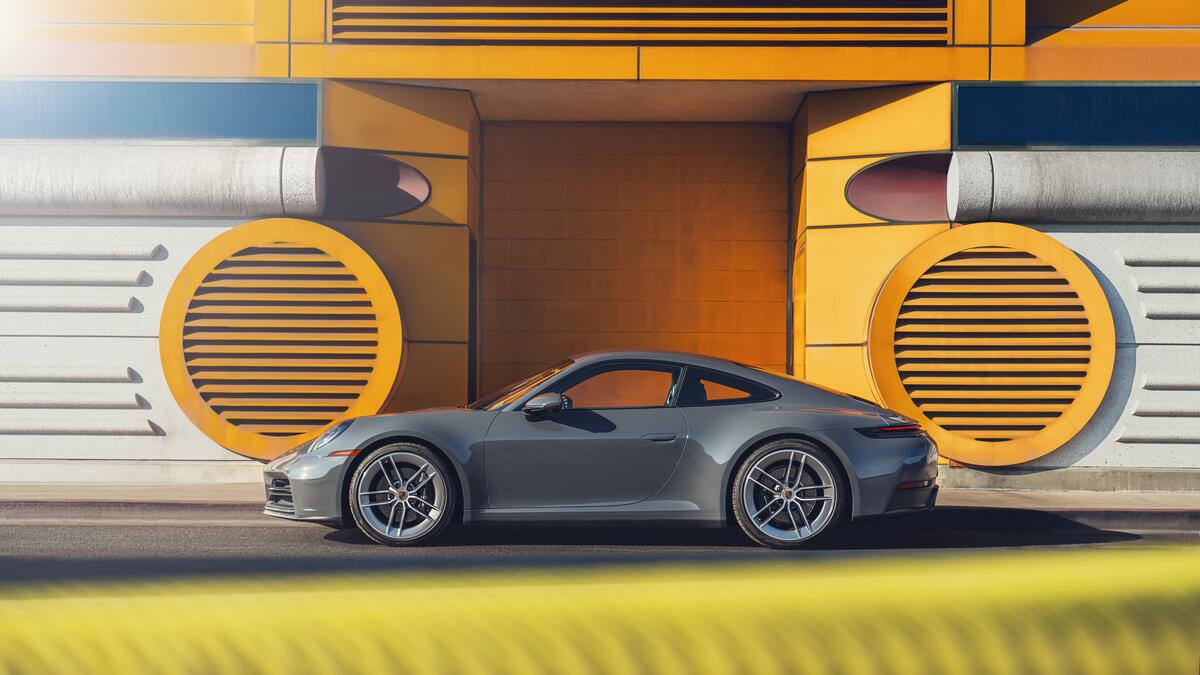
992.1 Turbo S
"[80.5s] Guys, the Smoking Tire is giving away a 992.1 Turbo S in partnership with Dream Giveaways. [89.2s] We are giving away a $275,000 car with some slick choice mods."
This is a specific Porsche 911 Turbo S, and “992.1” is Porsche’s updated version of that generation. The hosts mention it because it’s the big prize in their giveaway.
“992.1 Turbo S” refers to the Porsche 911 Turbo S in the 992 generation, with “.1” indicating the mid-cycle update (often called the 992.1). This matters because the Turbo S is a flagship performance variant, and the episode mentions it as the giveaway prize, so listeners will want to know what specific 911 generation/variant is being referenced.
oil pressure
"of spec. You suddenly have no oil pressure and the engine grenades. Do they use that? That's why"
Oil pressure is how strongly the engine’s oil is being pumped around. If it’s too low, the engine parts don’t get enough lubrication and can get damaged fast.
Oil pressure is the force that circulates engine oil through the engine’s lubrication system. If oil pressure drops too low, parts can lose lubrication and the engine can suffer severe damage quickly.
engine grenades
"of spec. You suddenly have no oil pressure and the engine grenades. Do they use that? That's why"
“Engine grenades” is a dramatic way of saying the engine fails in a big, sudden way. It usually means something went very wrong internally and the engine can’t recover.
“Engine grenades” is enthusiast slang for catastrophic engine failure, where the engine is suddenly destroyed. It’s typically associated with severe lubrication loss, overheating, or major internal mechanical failure.
Indy 500
"So it's my first Indy 500 spikes to and actually on our Patreon, probably tomorrow... But the the race is, it's different than I expected."
The Indy 500 is one of the biggest car races in the U.S. It’s run on a big oval track, and the cars race so close that the winner can be decided by tiny timing differences.
The Indy 500 (Indianapolis 500) is a premier American open-wheel race run at Indianapolis Motor Speedway. It’s known for high-speed oval racing, tight competition, and finishes that can come down to thousandths of a second.
third and fifth
"But as anyone who looked at car news over the over the weekend, closest finish in Indy 500 history... The gap between third and fifth place was even smaller."
When they talk about the gap between places like third and fifth, they mean how close those cars were at the end. It shows the race was competitive even beyond just the winner.
In racing, discussing the gap between specific finishing positions highlights how tightly packed the field was. Even if the winner is the headline, small gaps between multiple cars can indicate a very competitive race overall.
photo finish
"I don't know if it's been published. I must have been published, but they have the camera to get the photo finish that's like right on the line."
A photo finish is when the race is so close that a camera is used to see who crossed the line first. It’s how they decide the winner when it’s basically a tie.
A photo finish is when officials use high-speed cameras to determine the exact order at the finish line. It’s used when timing differences are too small to be reliably judged by the naked eye.
Talladega
"Yeah, I mean, I saw a clip from Dega and like the infield at night, there was an actual like strip club happening. It's just people just go Oh, yeah, it's an excuse to party."
Talladega is a famous high-speed oval race track in the U.S. The host is saying that even at night, the infield can feel more like an excuse to party than a place focused on racing.
Talladega refers to Talladega Superspeedway, another major U.S. oval track known for high-speed racing and huge crowds. The hosts reference it to describe how the infield atmosphere at night can be surprisingly “party-like.”
Daytona
"Daytona or Talladega or even the outfield or infield at Sebring, which is insane. There's this like snake pit area where there's like a somewhere between a concert and a rave happening like it's huge."
Daytona is a very famous U.S. race track. The point being made is that the crowd vibe can be more like a party than a traditional race-day atmosphere.
Daytona is Daytona International Speedway, one of the most famous NASCAR-style superspeedways in the U.S. Here it’s mentioned as another example of how the crowd can be so disconnected from the actual racing that it feels like a different event entirely.
Sebring
"Daytona or Talladega or even the outfield or infield at Sebring, which is insane. There's this like snake pit area where there's like a somewhere between a concert and a rave happening like it's huge."
Sebring is a famous race track in Florida. The hosts are saying the crowd scene there can be almost like a party, not just people watching cars.
Sebring refers to Sebring International Raceway in Florida, a classic road-racing venue known for endurance-style events. In this segment, it’s used as a reference point for how wild the spectator atmosphere can be even away from the racing action.
Indy Museum
"The Indy Museum, which is inside the track is really cool, worth a visit. Shout out to the volunteer who was wearing the white dial Daytona."
The Indy Museum is a museum at Indianapolis Motor Speedway. The host says it’s worth visiting because it has lots of Indy cars from different time periods.
The Indy Museum is a museum located inside the Indianapolis Motor Speedway complex. In this segment, it’s highlighted for its collection of Indy cars spanning many eras, including multiple winning cars and at least one representative from each era.
externally mounted giant turbochargers
"The prevalence of externally mounted giant turbochargers from about 1972 to 1980, they would just like the car would look like a car from the 60s, essentially, but it would just have like a turbo this big, just sitting here outside the body work by itself."
A turbocharger is a device that helps an engine make more power by forcing extra air in. In this era, the turbochargers were mounted outside the body, so you could clearly see huge turbo hardware on the car.
Externally mounted giant turbochargers are turbochargers placed outside the car’s bodywork rather than fully packaged under the hood. The host is describing an IndyCar-era look (about 1972–1980) where the turbo hardware was highly visible, making the cars resemble earlier 1960s-style shapes but with massive turbo units sitting outside the body.
external turbos
"I took a lot of pictures of those. I'll do a post on Instagram later that just all the external turbos of Indy car history. And it was quieter, much quieter than I expected it to be."
“External turbos” just means the turbochargers are mounted where you can see them, not hidden under the car’s body. The host also says they didn’t sound as loud as they expected.
External turbos means turbochargers that are mounted outside the main bodywork, making them visually prominent. The host notes they were quieter than expected and plans a post focused specifically on the external turbo setups across Indy car history.
noise insulating glass
"We also got invited very graciously into Tag Heuer's hospitality suite. The suites at Indy have the best noise insulating glass I've ever seen it. If you stand there and look through from if you stand like 20 feet back from the window at that suite and look at the front straight and the cars going by, it looks like you're watching an iMac screen on mute."
Noise insulating glass is glass designed to block sound. That’s why the host says they could see the cars on the front straight but hear almost nothing.
Noise insulating glass is specially built glazing designed to reduce how much sound passes through it. The host uses it to explain why the Indy suite feels almost silent—watching the front straight like it’s on a muted screen.
Tag Heuer
"We also got invited very graciously into Tag Heuer's hospitality suite. The suites at Indy have the best noise insulating glass I've ever seen it."
Tag Heuer is a watch brand. The host is saying they were invited into a Tag Heuer hospitality suite at the Indy event.
Tag Heuer is a watch brand that sponsors or hosts hospitality experiences at major motorsport events. Here, it’s specifically tied to an IndyCar suite the hosts were invited into.
Indy car
"But the cars, I think, sound pleasant. An Indy car is a very nice sounding engine. They sound much better than F1 cars."
An Indy car is a race car used in IndyCar, a major American open-wheel racing series. People often say the engines sound nicer and less harsh than Formula 1.
An “Indy car” refers to the IndyCar series, which uses purpose-built open-wheel race cars. Their engines are known for a distinctive sound that many people find more pleasant than the high-pitched, aggressive note associated with Formula 1 cars.
F1 cars
"An Indy car is a very nice sounding engine. They sound much better than F1 cars."
F1 cars are the race cars from Formula 1, the top global open-wheel series. When people compare sounds, they often describe F1 as more intense or “edgy” than IndyCar.
“F1 cars” means Formula 1 race cars, which are engineered for maximum downforce and high-revving performance. In sound discussions, F1 is often contrasted with IndyCar because the engine note and exhaust character feel sharper and more intense.
NASCAR
"I mean, compared to like, you go to a NASCAR race. Yeah. Compared to a NASCAR race, an Indy car race ain't nothing."
NASCAR is a U.S. stock-car racing series. In this conversation, it’s used as the benchmark for how loud and intense the racing experience can be.
NASCAR is stock-car racing in the U.S., typically with heavier cars and a different engine/exhaust character than open-wheel series. The hosts use it as a comparison point for how loud and chaotic a race atmosphere can feel.
McLaren
"everyone you see this guy's wearing a McLaren jacket and Honda jackets and, you know, these different teams."
McLaren is a well-known racing team and brand. The speaker mentions seeing McLaren gear on people during the Indy event.
McLaren is a Formula 1 and IndyCar team/brand known for racing technology and distinctive team identity. Here it’s referenced via fan apparel and team presence during the Indianapolis event.
Honda
"everyone you see this guy's wearing a McLaren jacket and Honda jackets and, you know, these different teams."
Honda is a major car company and also a racing brand. In this segment, it’s mentioned because people were wearing Honda team gear at the event.
Honda is an engine and racing brand strongly associated with IndyCar through its participation in the series’ engine programs. The speaker mentions Honda jackets alongside McLaren, highlighting the mix of teams and manufacturers at the event.
Ford Gt350S
"...effort, their dealer network buys everything from GT350s to Carrera GTs. Here's how they do it. All you do..."
Here, “Ford” is mentioned as a car brand in a discussion about how a dealer network buys and sells cars. The conversation focuses on the steps involved in getting cars through that system. It’s not about one specific Ford model in particular.
In this podcast context, “Ford” is being discussed in relation to a dealer network and how it sources high-value cars, including models like GT350s and Carrera GTs. The point is about the process of submitting and acquiring cars through that network. It’s not a specific single model here, but rather Ford as a brand within that sourcing conversation.

Porsche Carrera GT
"...eir dealer network buys everything from GT350s to Carrera GTs. Here's how they do it. All you do is submit your..."
The Porsche Carrera GT is a very rare, very high-performance Porsche. It’s the kind of car people associate with supercar-level speed and expensive ownership. In the episode, it’s brought up as an example of the rare cars that dealers handle.
The Porsche Carrera GT refers to the Porsche Carrera GT supercar, a rare, high-performance model known for its extreme driving character. It’s mentioned in the podcast in the context of a dealer network that buys and sells high-end cars. The conversation uses it as an example of the kind of exotic inventory involved.
setup
"It's really all about the setup and the driving, right?"
“Setup” is how a race team tunes the car for a specific track. Small changes can make the car handle better and help the driver go faster.
“Setup” in racing means adjusting the car’s configuration—like suspension settings, tire pressures, and aerodynamic balance—to match the track and driving style. In tightly matched cars, setup differences can strongly influence lap times and tire behavior.
deltas
"The deltas between cars was like 25 seconds, 25 seconds is procession. So this, it's, it's a tight pack for almost the whole race."
In racing, “deltas” are the time differences between cars. If the deltas are small, the cars are close together, so it’s easier for them to trade positions.
In racing, “deltas” are the time gaps between cars—how many seconds one car is ahead of another. Small deltas mean the field is tightly packed, which increases the odds of frequent passing and position swapping.
yellow flag
"And anytime there's a yellow flag, 95% of the field will instantly dive into the pits together. So like the whole fucking fields doing a, in whole fields going back out together."
A yellow flag means there’s danger on the track, so drivers have to slow down. Because everyone slows at the same time, it can change pit strategy and make the cars bunch up together.
A yellow flag is a race-control signal that warns drivers to slow down because of a hazard on track (like debris or an incident). In many series, it also bunches cars up because everyone reduces speed, which can trigger synchronized pit stops and strategy swings.
lead changes
"And, you know, the, the number of passes, like there were 70 lead changes, 70. Whoa."
Lead changes are how many times the first-place spot switches to a different car. More lead changes usually means the race is very competitive and cars are passing a lot.
Lead changes count how many times the race leader switches from one car to another. A high number of lead changes usually indicates close competition and lots of overtaking or strategy-driven position swaps.
spec series
"Especially, I mean, the spec series helps with that, but it's cool that there's so much shuffling even though it's a spec series."
A spec series is a racing class where most of the car is the same for everyone. That makes the racing depend more on how well teams set up the car and how well drivers perform.
A spec series is a racing category where cars are tightly regulated so teams have limited freedom to change performance parts. With less variation in hardware, races often become more about setup, driving skill, and strategy rather than raw engineering advantages.
wings
"This year in F1, they've got more hybrid boost. They've got different wings. Like these things have kind of gamed the racing."
Wings on race cars are there to push the car down onto the track. More downforce usually means better cornering and more predictable handling.
In open-wheel racing, wings are aerodynamic devices that generate downforce to keep the car stable and allow higher cornering speeds. Changing wing design can significantly affect grip, tire wear, and how easily cars can follow and pass.
onboard
"did you just happen to watch the onboard of the finish? I watched the exterior shot of the finish. ... This is the onboard."
Onboard means the camera is inside or mounted on the race car, showing what the driver sees. It helps you understand exactly when the driver makes moves, like the timing of a pass.
An onboard camera is mounted on the car, showing the driver’s perspective in real time. The hosts contrast it with exterior footage and use it to discuss precise timing—like when the driver deploys hybrid boost and initiates a pass.
Felix Rosenquist
"The onboard of the, like this dude, Felix Rosenquist has, Felix Rosenquist has the best motorsport moment that a fucking person can have."
Felix Rosenqvist is a race car driver. The hosts are talking about one of his best moments during the Indy 500—how he sets up and makes a pass at the last second.
Felix Rosenqvist is a racing driver known for open-wheel series like IndyCar. In this segment, the hosts focus on his onboard moment at the Indy 500, where timing and execution of a pass are the highlight.
hybrid boost
"using that saving and then deploying that last bit of fucking hybrid boost, ... they have hybrid, they have a hybrid boost that charges over however long it takes to charge. And then you can deploy it for however long you've got."
Hybrid boost is extra power from a hybrid system. It’s like a battery-powered “push” that the driver can save up and then use for a short burst when it matters most.
Hybrid boost refers to extra power delivered from a hybrid system, typically stored and then released to help the car accelerate. The host describes it as charging over time and then being deployable for a limited duration, which directly affects how and when a driver can attack on the final laps.
banking
"On the outside. Oh God. They're going so fast. And the banking is, look how shallow the banking is too."
Banking is how much a race track corner is tilted. That tilt affects how fast cars can go through the turn and how easy it is to make a pass.
Banking is the angled shape of a track corner, where the road surface tilts upward toward the outside. More or less banking changes how fast cars can carry speed through turns and how difficult it is to pass, especially when comparing tracks like Indy and Daytona.
defend
"the guy in front is not allowed to defend this pass as per rules. ... I think in F1, they're allowed one defensive maneuver. Correct. You're not allowed any in Indy car."
To defend means to try to block the other driver from getting past. The rules differ by series—this host says IndyCar doesn’t allow defensive moves the way F1 does.
In racing, “defend” refers to a driver’s legal actions to prevent the car behind from completing a pass. The host contrasts IndyCar rules (no defensive maneuver) with Formula 1 rules (one defensive maneuver), which changes how overtakes are set up and executed.
deploy
"he goes over the line before he says deployed deploy. I think there's a delay in there somewhere, but like. So he pulled out, hit the button and then juice passed."
To deploy (in this context) means to activate the hybrid boost system at the moment the driver chooses. The host points out a timing delay between pressing the button and the actual effect, which is crucial for making a pass right at the finish.
defensive
"you can make the car wide, but you can't respond to a pass by defensive."
In racing, “defensive” means the driver is trying to stop someone from passing. They do it by choosing where to drive so the other car can’t get around.
In racing, “defensive” refers to a driver’s on-track actions to prevent a pass—typically by controlling their line, braking points, and positioning so the other car can’t complete an overtake. It’s especially relevant when cars are close enough for side-by-side moves.
red flag
"we're sitting there and it's like, do, do red flag. Like the fifth rain drop I felt on me, red flag, race stopped,"
A red flag means the race is stopped right away because something unsafe is happening on the track. Cars slow down and wait for officials to clear the situation before racing resumes.
A red flag is the race-control signal that immediately stops the race due to a serious hazard (often heavy rain, debris, or an accident). Drivers must slow down and follow instructions until the track is declared safe again.
jet dryer trucks
"during the red flag, they've got like six jet dryer trucks doing laps at like 120 miles an hour."
Jet dryer trucks are special vehicles that blow hot air onto the track to dry it quickly after rain. The goal is to get the track safe and ready so racing can restart.
Jet dryer trucks are specialized track vehicles that blast hot air (and sometimes high-velocity airflow) to rapidly dry the racing surface after rain. In motorsport, they’re used to shorten delays so the race can restart sooner.
green flag
"three yellows and green flag again."
A green flag means the race is back on and cars can drive normally again. It’s the signal that the track is clear enough to race.
A green flag signals that racing can resume at full speed after a caution period or a stoppage. It indicates the track is clear enough for normal competition to restart.
cleanup crew
"I've never seen a better, like more responsive, rapid response rescue crew and cleanup crew."
The cleanup crew is the team that clears wreckage and debris from the track. The faster they work, the sooner racing can continue.
The cleanup crew is the track team responsible for removing debris and restoring the racing surface after incidents. Their speed and coordination directly affect how quickly cautions end and whether the race can resume without extended delays.
tailgate
"tens, if not hundreds of thousands of people, just like set up a tailgate somewhere in the vicinity of the track, you know, with like a flat screen in the back of the F 150 and a fucking barbecue going"
A tailgate is when people gather in the parking lot before an event—usually with food and drinks. It’s a common way to enjoy the event vibe even if you’re not inside the stadium.
A tailgate is a pre-race social setup done near a venue—often with food, drinks, and a group gathering in parking areas. At big events like Indy, it’s a way to be part of the atmosphere even if you’re not in the stands.

Ford F150
"set up a tailgate somewhere in the vicinity of the track, you know, with like a flat screen in the back of the F 150 and a fucking barbecue going"
The Ford F-150 is a common full-size pickup truck. Here, the speaker is saying people use the truck area to set up their tailgate party near the race venue.
The Ford F-150 is a full-size pickup truck known for being a popular choice for hauling and everyday utility. In this story, it’s used as the base for a tailgate setup (like a TV and food) near the track.
Indianapolis Motor Speedway
"There's also a shitload of people because I guess they have the bulk of the motor sports that happen at the Indianapolis Motor Speedway happened during the month of May."
This is a famous race track in Indiana. It hosts the Indianapolis 500, and a lot of racing happens there in May, so fans plan their visits around that time.
Indianapolis Motor Speedway is a major racing venue in Indiana best known for hosting the Indianapolis 500. The track’s big May schedule is why many fans plan their trips around that month.
pits
"That was, because like, we, you know, A, the pits are much more accessible [2358.7s] than in F one or in an endurance race or in F one, they have these massive"
The pits are the area next to the track where race teams work on the car during the race. It’s where they do things like refueling and tire changes.
In IndyCar, the pits are the service area where teams stop the car during a race for things like fueling and tire changes. The host is emphasizing how physically accessible the pit lane is compared with other racing formats.
risers
"hot pit setups with these really big risers and the race strategists and, you know, whatever. [2374.1s] And it's, there's a whole, there's so many fucking people in IndyCar."
“Risers” here are raised platforms in the pit area. They help people see the track better while the race is going on.
In pit lane context, “risers” are elevated platforms or structures that put strategists and crew members higher up for better visibility of the track and pit activity. The host notes IndyCar has no big risers, with the tallest structure being the fueling stack.
fueling stack
"The tallest thing is the fueling stack. There are, and, or a single level pop 10. [2388.1s] There's only about 78 people in the pits."
The fueling stack is the main fuel-delivery setup in the pits. It’s the tall equipment the team uses to refuel the car during a stop.
A fueling stack is the tall fueling equipment structure in the pit lane that supplies fuel to the car during a pit stop. The host uses it as a reference point for how IndyCar’s pit lane is relatively uncluttered compared with other series.
entry to turn one
"we were at the end of the last pit and realized that like, there's just an open view ground level of the [2423.3s] entry to turn one right here. It's, it's like the, the fucking paramedics view of the corner."
They’re describing a spot near the start of turn one where they could see the action really clearly. It’s basically a great spectator viewpoint because nothing blocks it.
The host talks about sitting at ground level near the entry to turn one, describing it as having an unusually clear, unobstructed view. This highlights how trackside geometry and pit-lane placement can create spectator “corner views.”
turbos were mounted outside of the car
"Ross Belly has a couple of those he talks about on, it's not the car pod and like the stories of Indie racing from the 80s and 90s are terrifying. The turbos were mounted outside of the car."
They’re talking about where the turbo parts were placed on the car. Instead of being tucked neatly inside, the turbo hardware sat outside, which affects how the car handles heat and space.
In some older IndyCar-era turbo setups, the turbochargers were placed outside the main body of the car rather than packaged tightly inside the engine bay. That layout can change heat management and packaging, and it’s part of why those cars could be so visually and mechanically intense.
pure methanol
"The fuel, I mean, a lot of them run just pure methanol. And I think that's when they learned that you can't see it because it's just a person to flame. Invisible fire."
Methanol is a special racing fuel. They’re saying the cars were running it straight (not mixed), which changes how the engine burns fuel and how the car needs to be designed for safety.
Methanol is a fuel used in some high-level racing because it can support very high power and has different combustion characteristics than gasoline. In IndyCar contexts, running “pure methanol” also implies a fuel system and safety approach tailored to that fuel’s behavior.
invisible fire
"The fuel, I mean, a lot of them run just pure methanol. And I think that's when they learned that you can't see it because it's just a person to flame. Invisible fire."
They mean a fire that’s hard to see. With some racing fuels, a leak can burn without looking like the usual dramatic flames, so it can be more dangerous because you might not notice it quickly.
“Invisible fire” is a safety-relevant description of how certain fuels (like methanol) can burn in ways that don’t look like typical bright flames. The key point is that a leak or fire can be harder to visually detect, making driver and crew response more difficult.

Nissan Juke
".... It takes like 16 minutes, but they were fucking juke it out a bit, dude. And then New York won one and..."
The Nissan Juke is a small crossover-like car from Nissan. It’s designed to be compact and easy to drive, with a unique look. The episode mentions it as part of a quick joke and a story beat.
The Nissan Juke is a small crossover/SUV-style vehicle known for its distinctive styling and compact size. It’s often discussed because it stands out visually compared with more traditional-looking crossovers. In the podcast, the name is used in a playful “juke it out” moment and tied to a New York-related reference.
grandstands
"And a, a lot of people went up to the grandstands to watch it. Yeah. The grandstands [3129.2s] were the busiest all of that they were all day on Friday during the hot dog race."
Grandstands are the big, raised seating sections where spectators watch from. The host is saying the stands were packed during the hot dog race.
Grandstands are the tiered spectator seating areas at a race venue. The host notes they were especially busy during the hot dog race, emphasizing how much of the event’s atmosphere is about crowd energy and viewing from fixed stands.
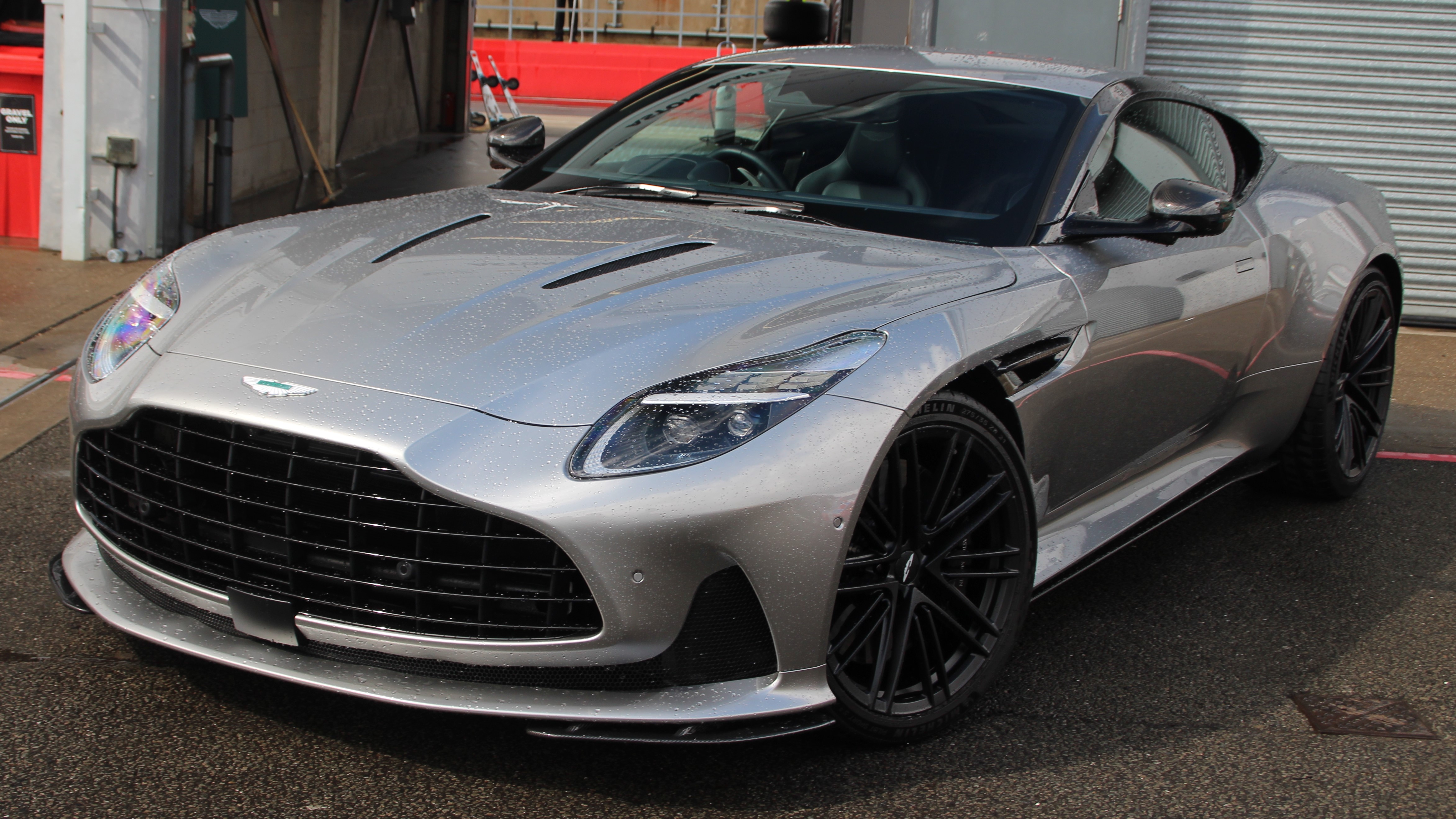
Aston Martin DB 12 Volante
"Yep. And, uh, what did you [3177.0s] think? Clatman, did you drive, you drove the DB 12 Volante convertible? Yes. But just kind of briefly. [3184.1s] Well, I drove it with you on launch day. So that was a day in the canyons and then I did not drive [3188.7s] the regular coupe."
The DB 12 Volante is the open-top version of Aston Martin’s DB 12. The host mentions driving it briefly on launch day and compares that experience to other DB 12 body styles.
The Aston Martin DB 12 Volante is the convertible (open-top) version of Aston Martin’s DB 12 line. In this segment, it’s brought up because the host drove the Volante briefly on launch day, then distinguishes it from driving the regular coupe and the DB 12 S.

Ford Mustang
"...ey called it, whatever. We all went down with our Mustangs, Larry's parents at a house there. They're fuckin..."
The Ford Mustang is a sporty car made by Ford. People talk about it a lot because it’s a popular performance model and there are lots of versions over the years. In the episode, it’s brought up as a car people were driving or associated with.
The Ford Mustang is a classic American sports coupe/convertible known for its long-running performance heritage and wide popularity. It often shows up in car conversations because it’s a recognizable “everyday” muscle car that’s easy to spot and easy to modify. In the podcast context, it’s mentioned as part of a shared experience involving Mustangs.
burnout
"They're fucking surrounds you with the intersections and they pour bleach and shin your tires and make a wall as you leave. So you do a burnout. Okay. Do a burnout. I get a fucking ticket for reckless."
A burnout is when you rev the engine while the tires spin, usually to heat them up or make smoke. In the story, the host does one and then gets a ticket for reckless driving. It’s basically a dramatic tire-spinning stunt.
A burnout is when a driver spins the driven wheels while holding the car in place (or moving very slowly) to heat up the tires and sometimes generate smoke. In this segment, it’s mentioned as the response to being “surrounded” by intersections and tire-damaging behavior before leaving. It’s also tied to the host getting a reckless-driving ticket afterward.
damped
"but the ride in this car, I think is much better than the Vantage S. This is a little bit softer, but damped really well. So the ride around town on the highway, I mean, I think I did like 500 miles in this."
“Damped” here means the suspension smooths out bumps. The host is saying the car feels softer, but it doesn’t bounce around—it stays composed. That’s what makes it more comfortable on the road.
In suspension terms, “damped” refers to how the shocks/struts control the car’s motion after bumps—reducing bounce and keeping the ride settled. The host says the DB12S is “softer” but “damped really well,” meaning it absorbs impacts without feeling floaty or out of control. That’s why they describe it as a better ride for town and highway driving.
GT
"It's just the back seat. That's what you're talking about here. It is a much bigger car, but the ride is very GT, you know, appropriate."
“GT” means grand touring—cars tuned for comfortable long drives. When the host says the ride is “very GT,” they mean it feels smooth and relaxed, especially on highways. It’s less about being super harsh and more about being easy to live with.
“GT” stands for grand touring, a style of car tuned for comfortable long-distance driving rather than only track-style sharpness. The host describes the DB12S ride as “very GT,” meaning it’s tuned to feel smooth and relaxed over highways and everyday roads. This connects to their comments about damping and overall ride comfort.
greenhouse
"It all works really well. The greenhouse, you get the side windows led in a lot of light, really easy to drive to see what's around you."
The “greenhouse” is the glass part of the car that surrounds you—windows and windshield. The host is saying the window layout makes the cabin feel brighter and easier to see out of.
In car design, the “greenhouse” is the glass area—windshield, side windows, and rear glass—framing the cabin. The host is praising the DB12S’s greenhouse shape because the side windows let in more light and improve visibility around the car.

Aston DBX S
"I mean, I think it's, so I love the S variant of all Aston Martins, right? The DBX S, the Vantage S, like when you put an S on it, like they've figured it out."
The DBX S is the sportier version of Aston Martin’s DBX SUV. The host is using it to explain what “S” usually means: more performance tuning and a more developed setup.
The Aston DBX S is Aston Martin’s performance-tuned version of the DBX SUV, where the “S” typically indicates extra development for power and chassis/handling calibration. In the segment, it’s used as an example of how Aston’s S variants are refined with more aggressive tuning and better-equipped options.
gear changes
"It's 690 horsepower, which is 19 more than the regular one. I mean, do you notice that? It's a 10 faster to 60. And that's from the gear changes..."
Gear changes are the moments when the car shifts to a different gear. The host is saying the quicker acceleration comes partly from how the car shifts, not just from having more power.
“Gear changes” refers to how quickly and smoothly the transmission shifts between ratios. The host claims the DB12S’s faster 0–60 time is attributed to improved shift behavior rather than only more engine power, highlighting how drivetrain calibration affects acceleration.
retuned dampers
"It's got the updated dampers. It's got a better rear sway bar. It's got a retuned electronic differential..."
Dampers are the shocks that control how the suspension moves. Retuning them means the car’s suspension response is adjusted so it feels better when you drive hard, especially in corners.
Dampers (shock absorbers) control how quickly the suspension compresses and rebounds. “Retuned dampers” means the valving/calibration was adjusted to change ride and handling response—often to improve grip and control during spirited driving, not just comfort.
rear sway bar
"It's got the updated dampers. It's got a better rear sway bar. It's got a retuned electronic differential..."
A rear sway bar helps keep the car from leaning too much when you turn. A “better” rear sway bar usually means the car feels more stable and less wobbly in corners.
A rear sway bar (anti-roll bar) connects the left and right suspension components to reduce body roll during cornering. The host says the DB12S has a better rear sway bar, which typically helps the car feel flatter and more controlled when you drive it dynamically in corners.
electronic differential
"It's got the updated dampers. It's got a better rear sway bar. It's got a retuned electronic differential that's supposed to reduce understeer at low speeds."
A differential is what allows the left and right wheels to turn at different speeds. An electronic differential uses computer control to help the car put power where it needs it, which can make the car feel less “pushy” when turning at low speeds.
An electronic differential uses sensors and control logic to manage how torque is split between the driven wheels. In this context, the host says the DB12S’s retuned electronic differential is designed to reduce understeer at low speeds, improving turn-in and stability when you’re not at full grip.
understeer
"It's got a retuned electronic differential that's supposed to reduce understeer at low speeds."
Understeer is when you turn the wheel but the car doesn’t rotate enough and keeps going straight. The host is saying the DB12S is tuned to feel more predictable when you’re turning slowly.
Understeer is when a car turns less than the driver expects—typically the front tires lose grip first, so the car “pushes” toward the outside of the corner. The host links the DB12S’s retuned differential to reducing understeer at low speeds, which is where many cars feel most awkward during gentle cornering.
Ceramic brakes
"Ceramic brakes are standard. It's 4,000 pounds, which sounds like a lot..."
Ceramic brakes use a different material for the brake discs than most cars. They can help the brakes stay consistent during repeated hard stops, and they usually make less brake dust.
Ceramic brakes use ceramic brake rotors instead of traditional cast-iron rotors. They’re often chosen for reduced brake dust and good fade resistance, and the host notes they’re standard on this S variant.
as tested, delivered price to our door
"And if you think about it in terms of as tested, delivered price to our door,"
“As tested” means the exact car they drove, with all the add-ons and fees included. “Delivered price to our door” is the all-in number you’d actually pay to get the car to you.
“As tested” is the price of a specific car after adding the exact options, destination/delivery charges, and any other fees the tester’s car had. “Delivered price to our door” emphasizes the all-in cost you’d pay to receive the car, not the base MSRP.

Vantage S
"you go, well, why, why would I get this instead of a Vantage S, which performs largely the same? I think the, the ride between the Vantage S and this isn't as different as you think."
The Aston Martin Vantage S is Aston Martin’s more compact performance car. In this discussion, they’re comparing how similar the ride feels to the DB 12 S, even though the DB 12 S costs far more.
The Aston Martin Vantage S is Aston Martin’s smaller, sportier model compared here to the DB 12 S. The hosts argue that the ride difference between the Vantage S and the DB 12 S isn’t as dramatic as you might expect, which matters because the DB 12 S’s “as tested” price is much higher.
options
"It had 70 K in options. It then had 23 K in tariffs put on it, which is how you get to 401."
“Options” are the extra upgrades you pick when you order the car. They can cost a lot, and that’s why the final price can jump far above the starting price.
In car pricing, “options” are factory-installed upgrades you choose when ordering the vehicle, such as performance brakes, interior packages, or exterior styling. This segment shows how options can add tens of thousands of dollars on top of the base price.
tariffs
"It then had 23 K in tariffs put on it, which is how you get to 401. You'd probably have a bunch of tariffs put on the Vantage S."
Tariffs are extra taxes governments charge on imported goods. Here, they’re saying tariffs are part of why the final price of the car gets so high.
Tariffs are government import taxes applied to vehicles (or parts) coming from outside the country. In this segment, tariffs are cited as a major reason the DB 12 S’s “as tested” price rises from the base price to the final delivered number.
rear seat delete
"I don't know if you can option one without with a full rear seat delete. I haven't seen one before with a rear seat delete."
A rear seat delete means the car’s back seats are removed. The idea is you get more usable space instead of having seats you rarely use.
A rear seat delete is an option that removes the rear seating area to free up space for storage or a flat panel/shelf. The hosts suggest that if you’re not actually using the back seats, deleting them could be a better use of the extra length and cost.
hip flexors
"after a week of driving it around, I ended up with the same tight hip flexors that I ended up with my 32 inch inseam"
Hip flexors are muscles that help you bend your hip and move your leg. They’re talking about how the seat position makes those muscles feel tight after driving.
Hip flexors are muscles in the front of the hip that help lift the thigh and control leg position. The hosts use them as a practical comfort metric, saying the seating position forces a tight leg angle that leads to the same discomfort they had in the Vantage S.
inseam
"I ended up with the same tight hip flexors that I ended up with my 32 inch inseam that I had in the Vantage S."
Inseam is how long your leg is from your crotch to your ankle. They’re using it to explain why the seat position can feel tight for taller drivers.
Inseam is the measurement from the crotch to the bottom of the leg, commonly used to estimate how a person’s legs will fit in a car. The hosts use inseam to explain why the seat-to-pedal distance can feel cramped even when the car is physically longer.
bulkhead
"because there's not a bulkhead there. So you can, if you have a long torso and long arms, [3656.5s] yes, you can, one might say, gangster lean... As opposed [3662.1s] with the Vantage, you're stuck, you know, on the bulkhead pretty much."
A bulkhead is a wall-like divider inside the car. In this case, it affects how much leg room you have, especially if you have a long torso and long arms.
A bulkhead is a structural partition inside the cabin that can limit space between seating areas and the front/rear compartments. The host uses it to explain why the Vantage feels tight on leg room compared with the other car they’re reviewing.
Vantage
"As opposed [3662.1s] with the Vantage, you're stuck, you know, on the bulkhead pretty much. So I would love a little bit more leg room from this car... [3704.5s] I just would have a very hard time justifying it over a Vantage, which performs fucking largely the same if not actually is faster."
The Aston Martin Vantage is a sporty Aston Martin coupe built for driving feel. Here, the host is basically saying it’s so close to the DB 12 S that it’s hard to justify paying extra for the DB 12 S.
Aston Martin Vantage is a performance-focused grand tourer/ sports coupe known for its sharp handling and strong engine character. In this segment, the host compares it directly against the DB 12 S, arguing they feel similar in real-world driving and that the Vantage may even be faster.
Canyon speeds
"It doesn't get upset by [3689.8s] bumps at the mid corner. I mean, if you're not, if you're like super pushing it might, [3694.8s] but we're talking about, you know, Canyon speeds here, not racetrack speeds."
“Canyon speeds” means driving fast on twisty mountain roads, but not like a race track. The host is saying the car feels great in that real-world spirited driving range.
“Canyon speeds” refers to spirited driving on winding mountain roads at speeds that are typically below track limits but still aggressive. The host contrasts this with racetrack speeds to argue the car’s behavior (like bump compliance and balance) is strong where most drivers actually use it.
steering feel
"You know, this, this steering feel is good. Like everything about it is really, really nice."
Steering feel is how the steering wheel and front wheels “talk back” to you—how quickly it responds and how much feedback you get. The host likes that this car feels precise and communicative.
Steering feel is how the steering system communicates grip, alignment changes, and road texture to the driver through weight, response rate, and feedback. The host praises the steering feel as part of why the car feels “really, really nice” in canyon driving.
DB 12 S
"And my Vantage is probably faster than this. And [3721.0s] yeah, either the ride is dialed down like 10%. But it's like, it's, it's not like a DB 12 and [3727.4s] a Vantage occupy more or less exotic space in people's minds... [3762.1s] but except they have the same engine. These two, right?"
The Aston Martin DB 12 S is a higher-end Aston Martin coupe meant to feel more luxurious and special. In this discussion, the host says it doesn’t feel dramatically faster than the Vantage, so it’s hard to justify the extra money.
Aston Martin DB 12 S is a modern grand touring coupe built around a V8 and positioned as a more premium, more expensive alternative to the Vantage. The host argues it’s not meaningfully better in driving performance, and that the main differences are packaging (like length/space) and styling rather than a big leap in capability.
touch screen
"But the touch, that touch screen, [3789.4s] the first hard button that pulls up the menu, that's fine. The touchscreen one doesn't always [3795.6s] respond so fast. No, there's a delay to it."
The touch screen is the car’s main display you tap to control things like menus and settings. The host says it sometimes lags, so your inputs don’t register instantly.
In-car touchscreens are the main control interface for infotainment and vehicle settings. Here, the host notes a response delay/lag, describing it as not always responding fast, which can make the system feel less polished.
key fob not detected
"I get in the car, I hit unlock, I'm in the car now, and the car would like kind of power on. I press the start button, it says key fob not detected. Put key in mark spot. I put key on the column..."
That message means the car can’t “see” your key fob. When that happens, many cars want you to put the key in a specific spot so it can start normally.
“Key fob not detected” is the car’s message when its proximity/keyless system can’t confirm the key fob is present. In this situation, the car may require the fob to be placed in a marked spot (often near the steering column) to let the system read it and enable starting.
remote start
"It's like, it's like remote start, but instead of a key fob from inside the car, it's interior remote start. Did that, once it didn't recognize my phone..."
Remote start is when you can start the car without pressing the start button directly. They’re saying the car’s behavior feels similar, even though it’s being triggered from inside.
Remote start is a feature that lets you start the engine (or power up the car) without being physically at the start button, typically using a key fob or app. Here, the host compares the behavior to remote start, but triggered from inside the car via the unlock action and the keyless system’s “sentry”/security logic.
carplay ultra
"It saw my phone in the list, but didn't power up carplay, which is funny in the car that offers carplay ultra. Mine never got to carplay ultra. I just never, I told it not to the first time."
CarPlay is how your iPhone shows apps and navigation on the car’s screen. They’re talking about a “CarPlay Ultra” mode that didn’t fully activate for them, and they noticed the screen felt a bit sluggish.
CarPlay is Apple’s in-car interface that mirrors compatible iPhone functions onto the vehicle’s infotainment screen. “CarPlay Ultra” (as referenced by the host) is a higher-tier/feature mode that the car can enable, and this segment notes that the screen may respond slowly despite the extra capability.
Aston DB 12
"It's the I got, I hope that this software thing, I mean, they've been making a DB the DB 12 for a long time. I haven't driven another Aston that had software this bad in a while."
The Aston DB 12 is a luxury sports grand tourer from Aston Martin. Here they’re talking about how the car’s screen/software felt glitchy, and how the steering and handling compared to another Aston they’ve driven.
The Aston DB 12 is Aston Martin’s modern grand tourer, known for its GT-style comfort plus a more driver-focused setup. In this segment, the hosts discuss how the DB 12’s infotainment/software behavior felt unusually bad, and they compare the car’s design and driving feel to other Aston models like the Vantage.
alignment
"I want to ask you about the steering because I know that they've changed some of the alignment which affected like from center."
Alignment is the way the wheels are adjusted so the car tracks straight. If it’s off or changed, the steering can feel heavier or less precise, especially when you’re driving normally or turning around center.
Alignment refers to how the wheels are set relative to each other and the road—things like camber and toe. In this segment, the hosts say Aston changed alignment settings, and that affected steering feel (especially around center) and how heavy the steering feels.
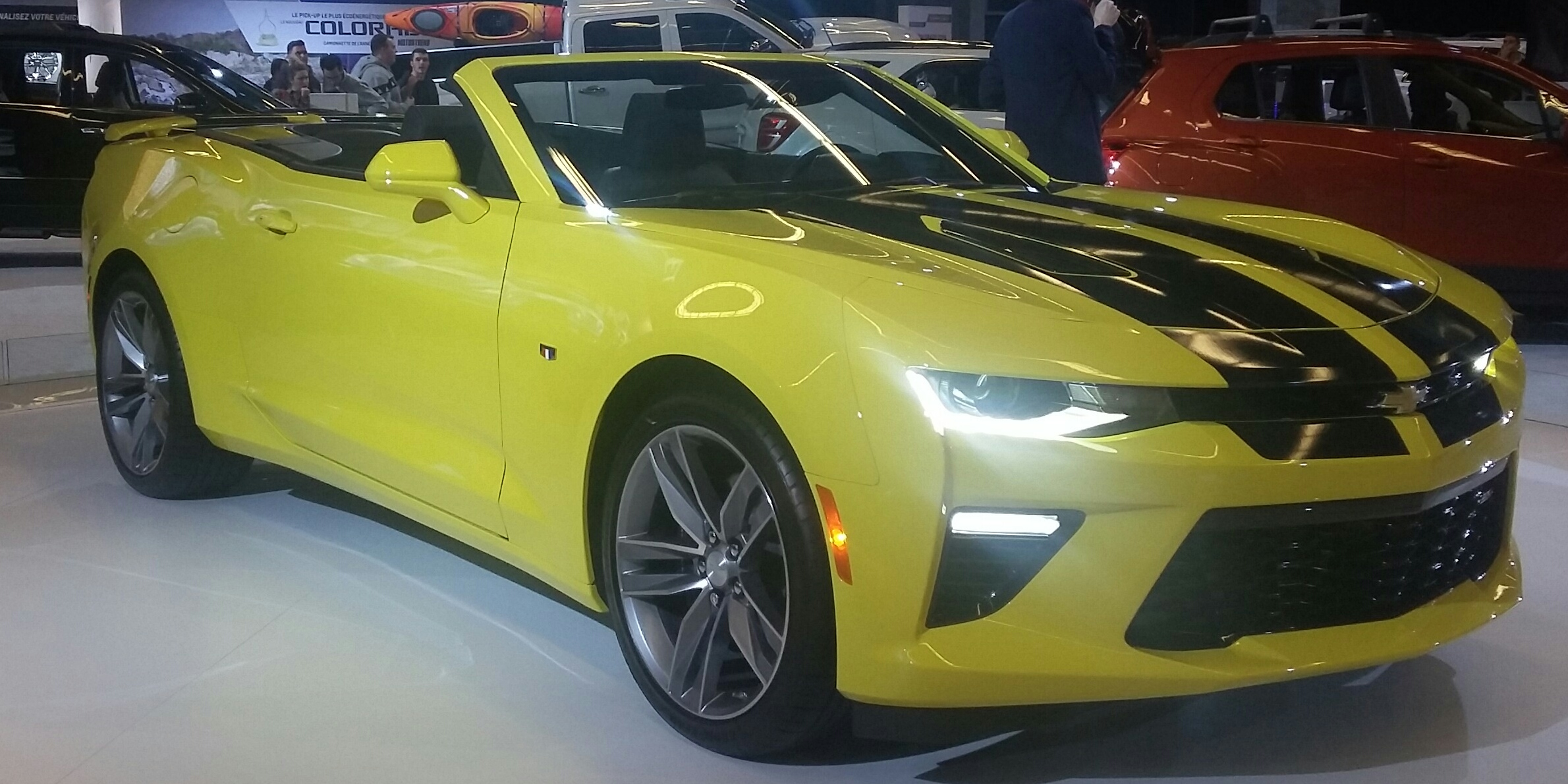
Chevrolet Camaro
"which affected like from center. Yeah. It's kind of heavy, almost to the point where I go, it feels like Camaro's set to sport mode and manufactured weight. But I think it's actually coming from the alignment. When you got, when you were driving faster in the canyons, did that go away?"
The Chevrolet Camaro is a sporty car from Chevrolet. It’s designed to feel quick and fun to drive, and different versions can feel heavier or more planted depending on setup. The episode is talking about how it feels in motion and whether it seems “set up” like a sport car.
The Chevrolet Camaro is a performance-focused American coupe (and in some generations, convertible) that’s known for its sporty feel and strong engine options. It comes up in discussions about weight, balance, and how “sporty” it feels in real driving. The podcast reference compares the sensation of weight and sport calibration to the Camaro’s setup.
start, stop
"I drove an individual most of the time, mainly because it was just one click and it got rid of like start, stop and stuff like that."
Start-stop is the feature that turns the engine off when you’re stopped and turns it back on when you go again. They’re saying their chosen driving mode disabled it because they didn’t like how it behaved.
Start-stop is an engine management feature that shuts the engine off when the car is stopped (like at traffic lights) and restarts it when you press the accelerator. The host says their “Individual” mode removed start-stop behavior, which they preferred for smoother driving.
GT suspension sport
"Because GT suspension was like a little wallowy, but the sport was like nice and tight without being harsh."
This is a driving mode that changes how stiff or soft the suspension feels. They’re saying the softer GT setting felt a bit loose, while the sport suspension felt more controlled but still not uncomfortable.
“GT suspension sport” refers to a selectable suspension tuning mode that changes damping/firmness for steering response and body control. The host says GT suspension felt “wallowy,” while the sport setting was tighter without being harsh.
ADAS
"It was a little heavy steering on center in town, but half the time that was just the ADAS. I forgot to turn off."
ADAS are the car’s driver-assist features—things that can help steer or control the car in certain situations. They’re saying some of that tech might have been active and affecting how the steering felt.
ADAS (Advanced Driver-Assistance Systems) are electronic features that help with driving tasks like lane keeping, adaptive cruise, and collision warnings. The host suggests the heavy steering on center in town may have been influenced by ADAS being left on.
tram liney
"It was better in the canyons, although it does get a little tram liney when you get on the brakes hard and it loads up the nose on a canyon road."
“Tram liney” means the car feels like it’s being pulled along by road grooves. They’re saying that when they brake hard in the canyons, the car can feel like it wants to track those lines instead of staying freely controllable.
“Tram liney” describes a steering feel where the car seems to follow grooves or seams in the road, like it’s guided by “tram lines.” Here, it’s used to describe how the car behaves when braking hard on a canyon road, suggesting reduced freedom in straight-line tracking.
loads up the nose
"It was better in the canyons, although it does get a little tram liney when you get on the brakes hard and it loads up the nose on a canyon road."
When they say the car “loads up the nose,” they mean the front end dips down when you brake. That weight shift can change how the car feels and makes it harder to keep it perfectly straight.
“Loads up the nose” is a colloquial way to describe front-end dive during braking—weight shifts forward, increasing front suspension compression and changing steering balance. The host links this to hard braking on canyon roads, saying it affects how the car stays straight.
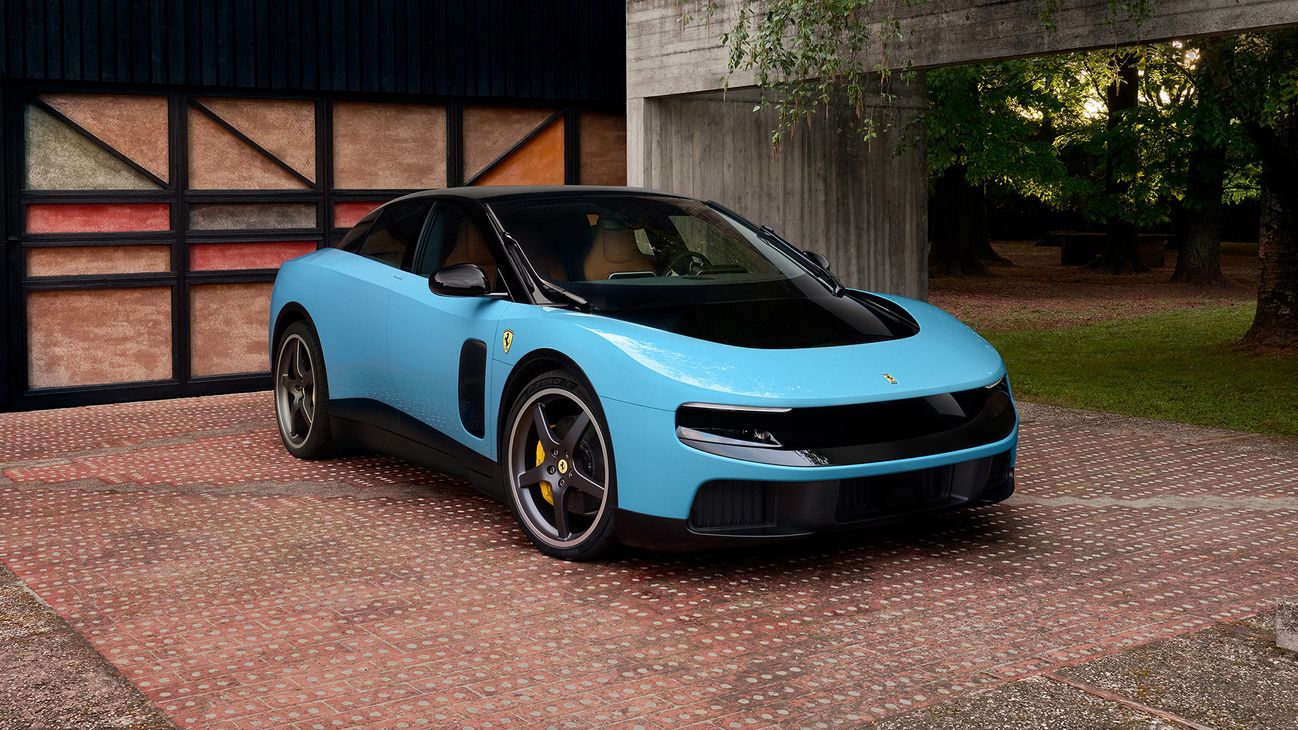
Ferrari Luce
"Would you buy this or the Ferrari Luce? Do you want to do that? ... There are a lot of questions about the Luce... Right, the Ferrari motherfucking Luce."
Ferrari Luce is the Ferrari model the hosts are talking about in this segment. They’re reacting to how futuristic and unusual it looks, like something you’d see in a sci-fi movie rather than a traditional Ferrari.
Ferrari Luce is the name the hosts use for a new Ferrari model they’re discussing in this episode. They frame it as a “sci-fi era” design—more like a movie “demolition man” style—then immediately connect its look to modern tech-product aesthetics.

Jaguar Ipace
"Do they not take Waymo's where they design this? Because that is a Waymo. ... That's a Jaguar I-Pace. I'm sorry, it is."
The Jaguar I-Pace is an electric SUV. The hosts are using it as a comparison to say the Ferrari Luce looks like it belongs in the same futuristic design world as modern EVs.
The Jaguar I-Pace is Jaguar’s electric SUV, and the hosts use it as a visual reference point for how the Ferrari Luce’s design resembles other modern EVs. The point here is less about performance and more about the shared “techy” styling cues.
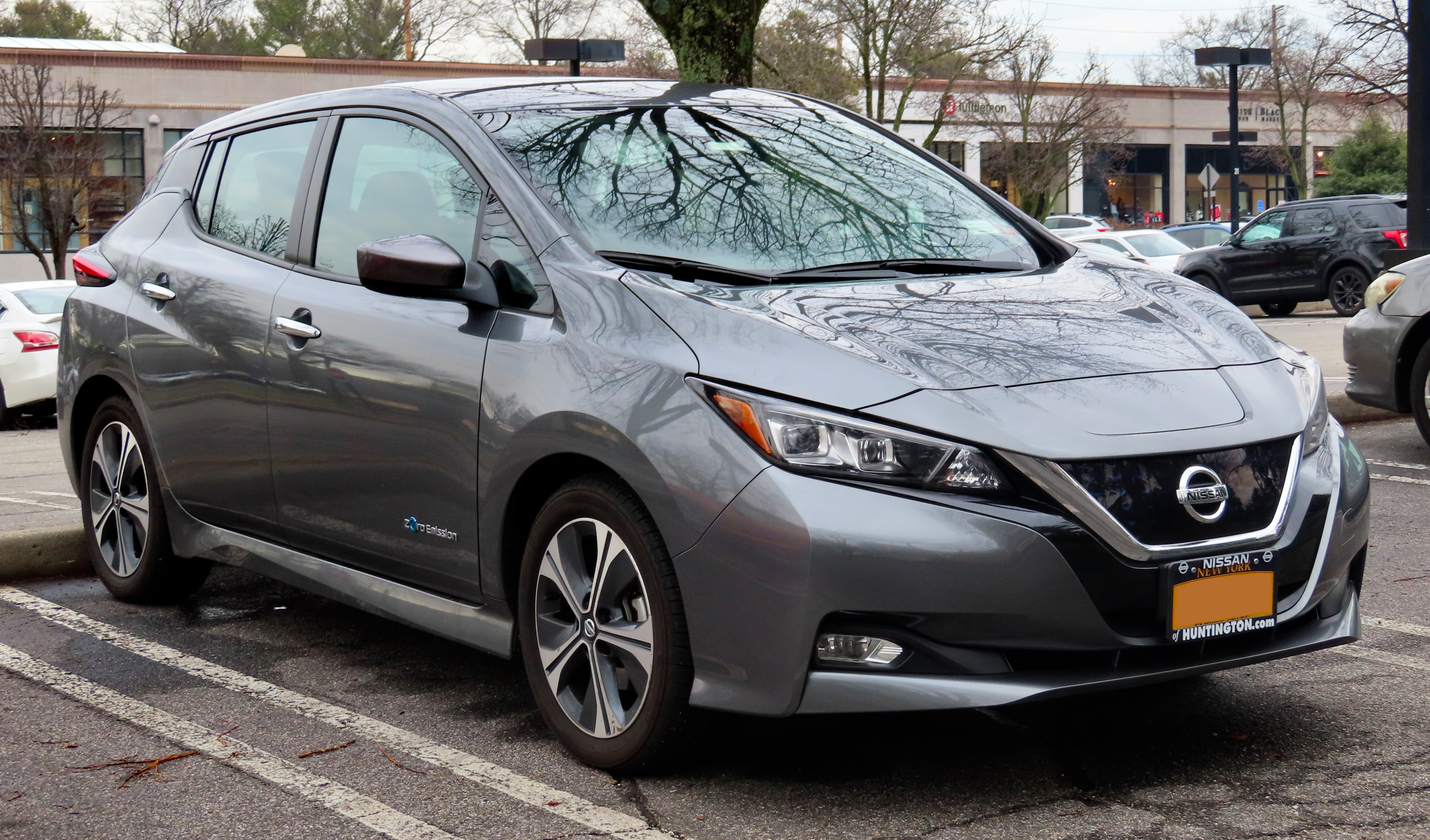
Nissan Leaf
"There's some great memes going around about, like, you know, it looks like a lot of different things. It looks like the Versa... No, sorry, it looks like the Leaf."
The Nissan Leaf is a popular electric car. The hosts are saying the Ferrari Luce’s design looks similar to the kind of styling you’d see on EVs like the Leaf.
The Nissan Leaf is a mainstream electric car, and the hosts compare the Ferrari Luce’s shape and design details to it. This is a styling/visual comparison, suggesting the Luce looks like it could be mistaken for a modern EV.
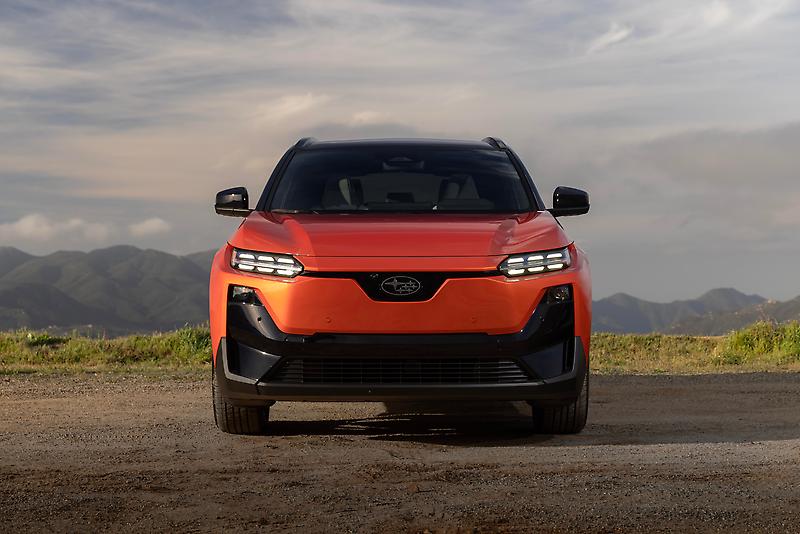
Subaru Uncharted
"...t, it looks like the... What's the new Subaru not Uncharted? The Subaru Uncharted... Pull up a Subaru Unchart..."
“Subaru Uncharted” sounds like a Subaru model name the speakers are trying to remember or confirm. The episode doesn’t explain what it is in detail, just that they’re looking up the correct Subaru name. It’s mentioned as part of a quick back-and-forth.
The “Subaru Uncharted” is mentioned as a new Subaru model name in the podcast, with the speakers trying to confirm what it’s called. It’s brought up in a context of looking up or recalling the correct name for a Subaru vehicle. The discussion is more about identification than detailed vehicle specs.
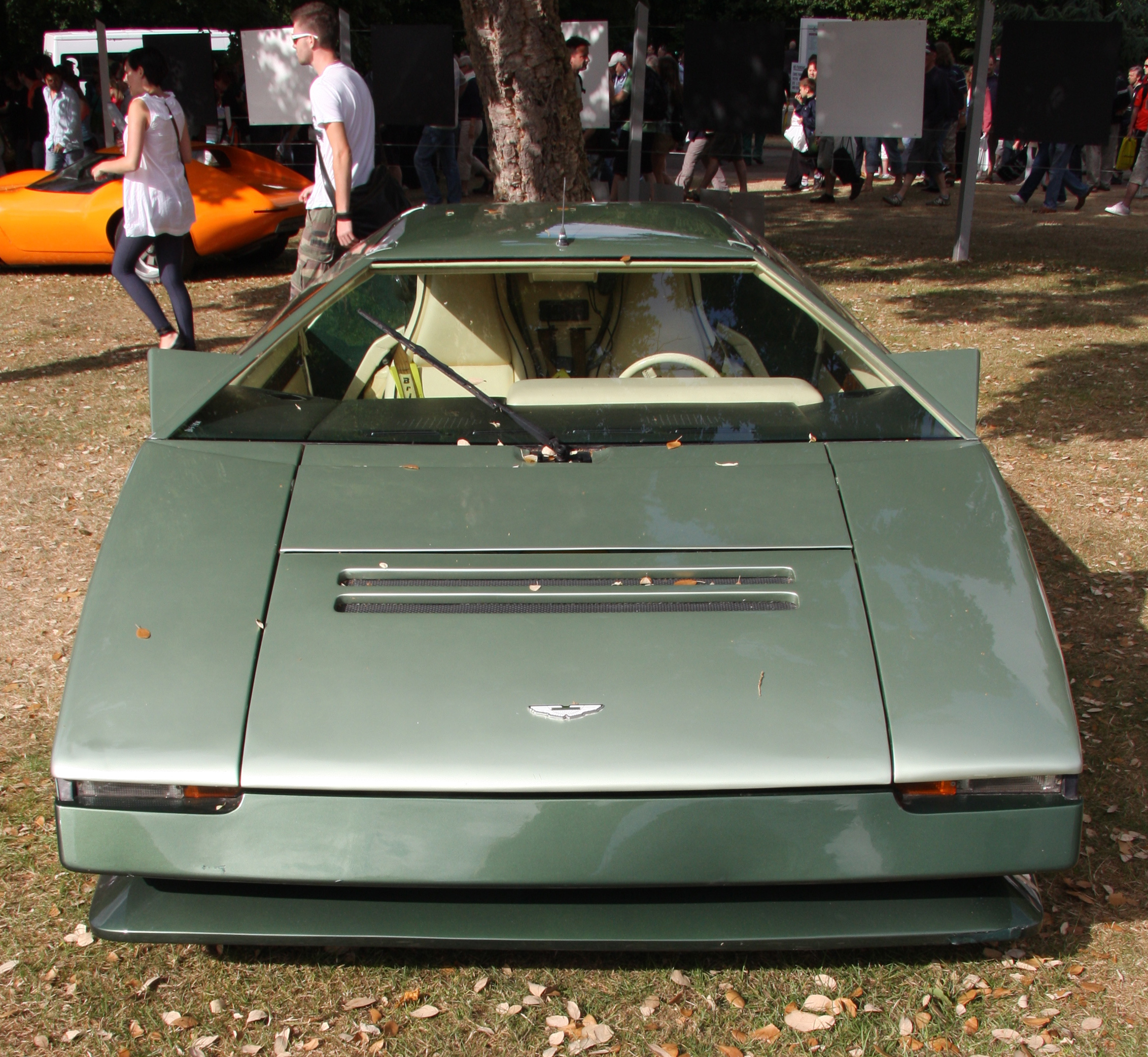
Aston Martin Bulldog
"Do you think it looks a little bit like the Aston Martin Bulldog? Philip Bones it? Yeah, the 70s thing. The clear wedge thing. The clear wedge thing. I think it has elements of the Aston Martin Bulldog."
The Aston Martin Bulldog is a famous 1970s concept car with a very sharp, wedge-shaped front. The host is saying the car being discussed reminds them of that old-school wedge style.
The Aston Martin Bulldog is a 1970s concept car known for its extreme wedge shape and very pointy front end. The speaker uses it as a reference point for how the discussed car’s front styling resembles (or borrows elements from) that classic “wedge era” look.

Ford Edge
"...g that leaps out is this massive chin, this cliff edge where the headlights are set back from the edge o..."
The Ford Edge is a crossover SUV, meaning it’s built for everyday driving with a higher seating position. The podcast is talking about how the front of the car looks, especially the shape around the headlights. It’s a style-focused comment about the vehicle’s design.
The Ford Edge is a mid-size crossover SUV designed for comfortable daily driving with practical space. It’s discussed in the podcast based on its front-end styling, specifically the “massive chin” and how the headlights sit relative to the edge of the body. That kind of design talk is common when reviewing or comparing how a vehicle looks and presents itself on the road.

Honda E
"The little EV hatchback they made with the round lights, but it had the recessed black where the headlights were. Oh, I liked that. The Honda E or whatever it was called. I think it looks great looking car, but this jutting front bumper is so strange."
The Honda E is a compact electric car with a cute, rounded look. The host is comparing its headlight area/design details to the car they’re critiquing.
The Honda E is a small, retro-styled electric hatchback that’s known for its rounded “bubble” proportions and distinctive headlight placement. The speaker compares its recessed headlight area to the design language they’re discussing, specifically the idea of recessed black around the lights.
wedge era
"but I think they're making an attempt to re-usher in some kind of wedge era, but to do it with a... Round... Yeah, yes, but like a... That's 70s wedge. I think they're going for 90s wedge."
A “wedge era” is a style of car design where the car looks like a sharp wedge—low and pointy, meant to look aerodynamic. The host is saying this car is trying to bring back that kind of styling.
“Wedge era” refers to a period in automotive design—especially the 1970s—when sports cars were shaped like wedges: low, sharp, and aerodynamic-looking from the side profile. The speaker is arguing that the car they’re discussing is trying to revive that look, but aiming for a different decade’s interpretation.
floating body thing
"They're like, we think this floating body thing is cool, but this is a massive departure from all of their other designs, even some of the controversial ones, the Testeros,"
A “floating body” look is when the car’s body seems like it’s hovering or not sitting normally on the wheels. It’s basically a visual design trick to make the car look more dramatic and futuristic.
“Floating body” is a styling approach where the vehicle’s bodywork visually appears to be separated from the wheels or chassis, creating a lighter, suspended look. In this discussion, it’s referenced as a design idea mentioned in a press release and contrasted with other EV designs the brand has done.
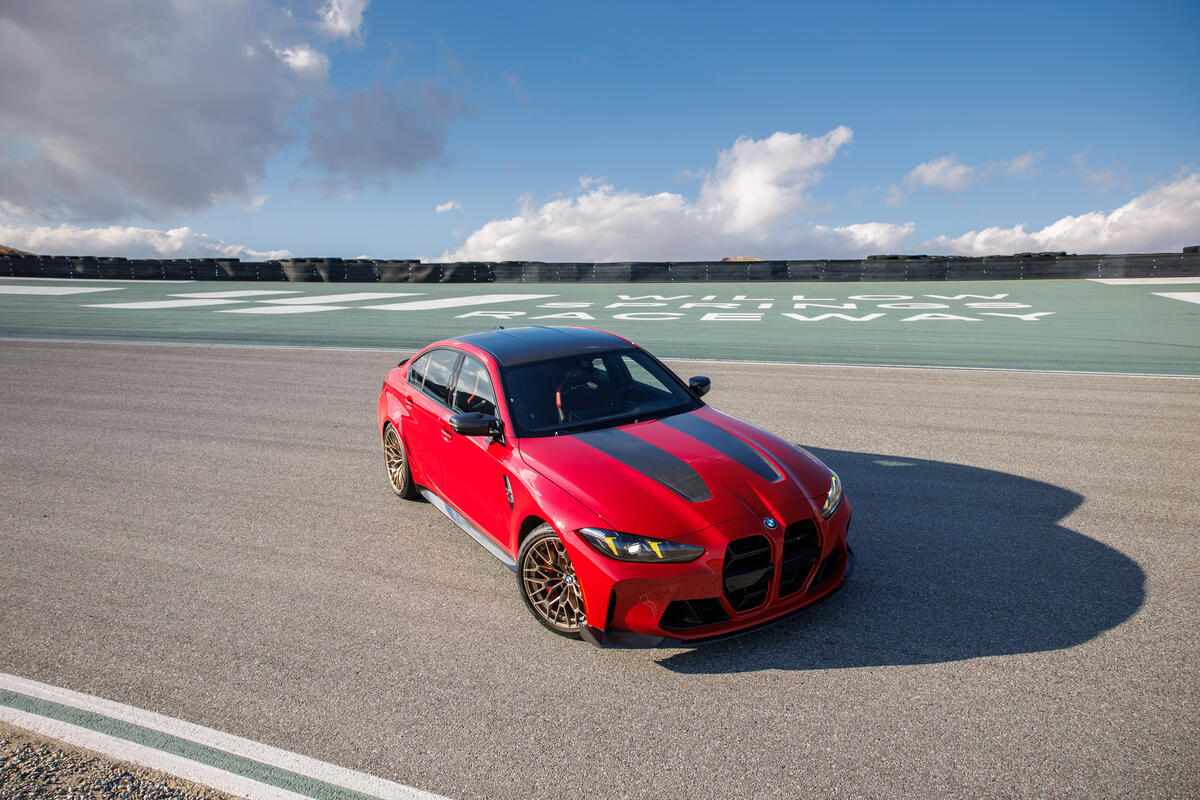
BMW M3
"...some of the controversial ones, the Testeros, the F80. This is like... You see it in the same dealershi..."
The BMW M3 is a performance version of a BMW 3 Series. It’s made to be faster and more driver-focused than a regular 3 Series. The podcast mentions the F80 as a specific M3 generation people argue about.
The BMW M3 is BMW’s high-performance version of the 3 Series, built for track-capable driving and strong everyday performance. It’s frequently discussed because certain generations are considered especially controversial or polarizing among enthusiasts. In the podcast, the “F80” is referenced as one of those debated M3 variants.
coach builder
"It looks like you took a Faraday to a coach builder. To Zagato. To Zagato."
A coachbuilder is a company that makes custom car bodies or special designs. In this segment, they’re talking about an EV getting a more boutique, one-off style treatment.
A coachbuilder is a specialized company that creates or modifies car bodies and styling, often for custom or limited-run vehicles. Here, the hosts use it to describe the idea of taking an EV platform and giving it a bespoke, boutique design treatment (e.g., via Zagato).
Zagato
"It looks like you took a Faraday to a coach builder. To Zagato. To Zagato."
Zagato is an Italian company famous for making special, designer car bodies. The hosts are saying this EV look feels like it was styled by Zagato, not just mass-produced.
Zagato is an Italian coachbuilder and design house known for distinctive, limited-production car bodies. In this segment, the hosts connect Zagato’s involvement to the “Faraday Future Zagato” idea, implying a custom styling direction rather than a mainstream EV look.
Request an Explanation
Heard something you'd like explained? We'll add it to this episode.
Sign in to request explanations for terms you heard.
Want to learn more?
Browse our glossary for plain-English explanations of automotive terms, jargon, and concepts.
Help improve this episode
See something that's not quite right? Our annotations are AI-generated and can sometimes miss the mark. Click the flag icon on any annotation to suggest a correction.
1 community members have helped improve this episode.