
May 4th, 2026 | UAW strike vote at Stellantis Ram plant; Honda extends model life cycles
About this episode
Honda is stretching the life of several core models after backing away from EV plans, with the Odyssey now likely to stay on sale well into the next decade and the Accord possibly moving toward a hybrid-only future. The conversation also digs into why legacy automakers struggle with software-defined vehicles: mainstream brands are making progress with updatable platforms, but EV pure plays still have the edge thanks to tighter vertical integration and simpler architectures.
The UAW plans a strike authorization vote at Stellantis’ Ram truck plant over contractor disputes. Honda is stretching vehicle life cycles after taking a $15.8 billion hit backing away from its electric vehicle plans. Plus, Alex Oyler of SBD Automotive discusses whether traditional automakers can keep up with EV makers on software-defined vehicles.
Protective Asset Protection
"Protective Asset Protection works with dealers to unlock new revenue streams through reliable protection products across most vehicle types."
This is a company that helps car dealers sell extra “protection” add-ons. The idea is that dealers can make more money by offering these products to customers.
Protective Asset Protection is a company that works with car dealers to sell protection products. In this context, it’s being pitched as a way for dealers to add profit beyond vehicle sales.
strike authorization vote
"Today on the show, the UAW plans a strike authorization vote at Stellantis' Ram Truck Plant... The vote on May 7th and 8th is the first step in a multi-stage process"
This is a union vote where workers decide whether they’re allowed to go on strike. If the vote passes, the union can move toward a strike if talks don’t improve.
A strike authorization vote is a union process where members vote to approve the union’s ability to call a strike if negotiations fail. It’s often an early step before any actual work stoppage.
UAW
"Today on the show, the UAW plans a strike authorization vote at Stellantis' Ram Truck Plant... The UAW is planning a strike authorization vote this week at Stellantis' Ram Truck Plant near Detroit."
UAW is a union for many auto workers in the U.S. They’re voting on whether to authorize a strike at a specific factory.
UAW (United Auto Workers) is the major labor union representing workers in the U.S. auto industry. Here, it’s planning a strike authorization vote tied to Stellantis operations.
Stellantis
"the UAW plans a strike authorization vote at Stellantis' Ram Truck Plant... the Union has been pushing the automaker for more than a year"
Stellantis is a big car company that makes vehicles in the U.S. The union is targeting one of its truck factories for labor negotiations.
Stellantis is an automaker formed from the merger of Fiat Chrysler Automobiles and PSA Group. In this segment, it’s the company facing union action at its Ram Truck Plant.
tariffs
"President Trump threads to hike tariffs on European cars to 25%."
Tariffs are extra taxes on imported products. If they’re raised on cars, imported vehicles and parts can get more expensive.
Tariffs are taxes a government places on imported goods. In auto news, tariff changes can raise the cost of vehicles and parts coming from other countries, affecting pricing and supply chains.
life cycles
"Honda stretches life cycles of several core models after its costly EV pullback."
A model life cycle is how long a particular version of a car stays on sale. “Stretching” it means Honda plans to keep selling that version longer.
A vehicle model life cycle is the period a specific generation of a car is sold before it’s redesigned or replaced. Extending life cycles usually means delaying major updates to manage costs or respond to market shifts.
Honda
"And Honda stretches life cycles of several core models after its costly EV pullback."
Honda is a car company. They’re saying they’ll keep some of their main models around longer instead of changing them as quickly.
Honda is a major Japanese automaker. Here, it’s extending the “model life cycles” of several core models, which typically means keeping certain vehicles in production longer rather than replacing them soon.
EV pullback
"Honda stretches life cycles of several core models after its costly EV pullback."
An EV pullback means a company is backing off from its electric-car plans. That can include slowing down launches or spending less for a while.
An EV pullback refers to a company scaling back or slowing its electric-vehicle plans—such as reducing investment, delaying launches, or adjusting production targets. In this segment, it’s described as costly and tied to Honda extending other models’ life cycles.
Tesla
"can legacy automakers catch up with Tesla and other EV startups when it comes to software-defined vehicles?"
Tesla is a company that makes electric cars. In this discussion, it’s used as an example of how EVs can be designed around software.
Tesla is an EV-focused automaker known for software-heavy vehicles and frequent updates. The segment uses Tesla as a benchmark for how “software-defined vehicles” can be built and evolved.
software-defined vehicles
"Plus, can legacy automakers catch up with Tesla and other EV startups when it comes to software-defined vehicles?"
A software-defined vehicle is one where key functions are controlled primarily by software rather than fixed hardware. This enables faster feature updates, easier improvements over time, and tighter integration of vehicle systems.
SBD Automotive
"We'll hear from SBD Automotive's Alex Hoyler."
SBD Automotive is a company involved in automotive engineering and product development services. In this segment, it’s the employer of the guest being quoted about how automakers should approach EV-era design and integration.
marry the old school and new school
"They're saying we're not going to try to marry the old school and new school. We're taking a step back."
The speaker is saying it’s hard to mix the traditional way of building cars with the newer EV/tech approach. They think companies should switch to the newer approach instead of trying to blend both.
This phrase describes the challenge of blending traditional automaker approaches with modern EV/tech methods. The speaker argues against trying to combine them directly and instead suggests adopting a more EV-native strategy.
disrupting ourselves
"We're disrupting ourselves and putting ourselves in the footsteps of a Tesla or a Rivian."
It means the company is trying to change its own way of doing things before someone else forces it to. Here, it’s about adapting to the EV market.
“Disrupting ourselves” is a business strategy idea: a company changes its own processes and product plans rather than waiting for competitors to force the change. In the transcript, it’s tied to adopting an EV-era approach.
Rivian
"putting ourselves in the footsteps of a Tesla or a Rivian."
Rivian is a newer electric-vehicle company. The speaker is comparing their approach to how traditional automakers should adapt.
Rivian is an EV startup automaker known for electric trucks and SUVs. The speaker references Rivian as an example of the “new school” approach to building EVs.
multi-stage process
"The vote on May 7th and 8th is the first step in a multi-stage process"
This means the union’s plan unfolds in steps. The vote is just the first part before anything bigger could happen.
A multi-stage process means the decision-making or escalation happens in steps rather than all at once. Here, the strike authorization vote is described as the first step toward potential further actions.
trade agreement
"He says the EU hasn't fully complied with the September trade agreement. Here's the thing, though. That agreement hasn't even been ratified yet."
A trade agreement is a formal set of rules between countries about buying and selling. If it hasn’t been ratified, it may not be officially active yet.
A trade agreement is a formal deal between countries that sets rules for commerce, such as tariffs and import/export terms. The segment notes the September agreement hasn’t been ratified yet, meaning it may not be fully in force.
Bernstein
"Analysts firm Bernstein estimates European automakers could lose 3.5 billion euros in profits this year and 5.7 billion euros in 2027."
Bernstein is a company that does financial research. Analysts there are estimating how much money European car companies could lose if tariffs change.
Bernstein is a financial research and investment firm whose analysts estimate how policy changes could affect automakers’ profits. Here, it’s used as a source for projected profit losses for European automakers.

Volkswagen Group
"And staying on that side of the Atlantic, Volkswagen Group says it won't make as much money on electric vehicles as it does on gas-powered cars until at least the end of the decade, even with its updated MEB plus platform."
Volkswagen Group is the big company that owns multiple car brands. They’re saying their electric cars won’t make as much profit as their gas cars for several more years.
Volkswagen Group is the parent company behind brands like Volkswagen and Audi. The segment says it expects lower profit on electric vehicles than on gas cars for at least the end of the decade, even with its updated MEB plus platform.
MEB plus platform
"Volkswagen Group says it won't make as much money on electric vehicles as it does on gas-powered cars until at least the end of the decade, even with its updated MEB plus platform. CFO Arno Antlitz says those EVs will only deliver 70-80% of the margins from comparable combustion vehicles."
MEB plus is Volkswagen’s shared design for electric cars. Using the same basic “platform” helps the company build EVs faster and with less cost.
The MEB plus platform is Volkswagen’s vehicle architecture designed for electric cars. A “platform” is the shared engineering foundation (like chassis and mounting points) that helps manufacturers build many EV models more efficiently.
combustion vehicles
"CFO Arno Antlitz says those EVs will only deliver 70-80% of the margins from comparable combustion vehicles. High production costs are forcing VW to choose between selling more EVs or making more profit on each one."
Combustion vehicles are regular gas or diesel cars that burn fuel in an engine. The speaker is comparing how much money EVs make versus those traditional cars.
“Combustion vehicles” are cars powered by engines that burn fuel, like gasoline or diesel. The comparison is used to show how EV profitability stacks up against traditional internal-combustion models.
margins
"CFO Arno Antlitz says those EVs will only deliver 70-80% of the margins from comparable combustion vehicles. High production costs are forcing VW to choose between selling more EVs or making more profit on each one."
Margins are the profit left over after paying the costs to make and sell something. Here, they’re saying EVs are expected to make less profit than gas cars.
In business terms, margins are how much profit a company keeps after covering costs. The segment compares EV margins to margins from “comparable combustion vehicles,” implying EVs are expected to be less profitable per vehicle.
EU CO2 fines
"Meanwhile, the company expects to pay 400-500 million euros in EU CO2 fines every year through 2027. And those are today's headlines."
These are money penalties in the EU for emitting too much CO2. If a car company’s cars don’t meet emissions rules, they can have to pay fines.
EU CO2 fines are penalties tied to how much carbon dioxide a manufacturer’s fleet emits. If a company doesn’t meet emissions targets, it can be charged money—here projected at 400–500 million euros per year through 2027.
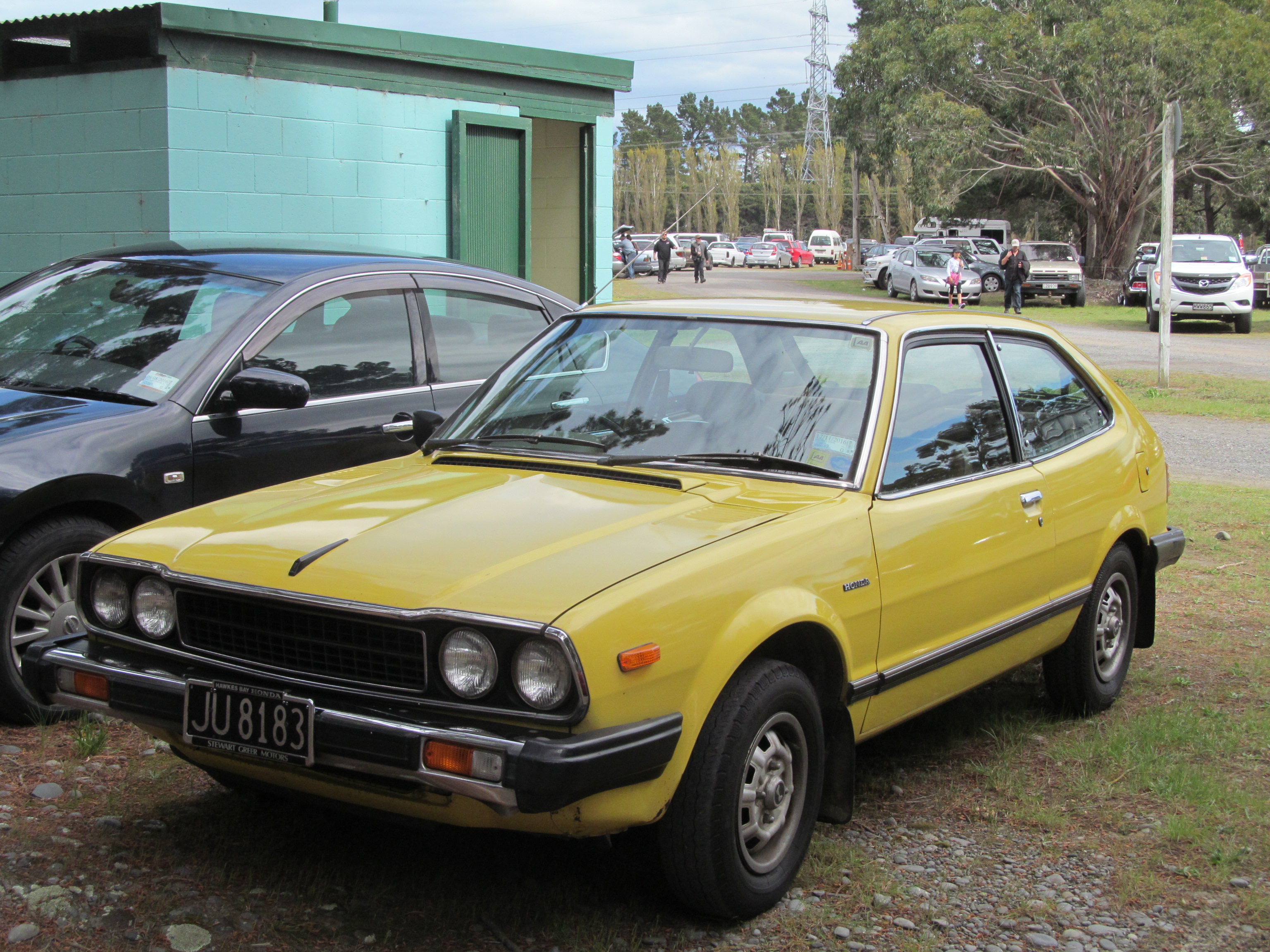
Honda Accord
"Honda is extending life cycles for several key models after taking a $15.8 billion hit backing away from its EV plans. They include the Accord, Odyssey, and HRV."
The Honda Accord is a popular Honda sedan. Honda is saying it will keep some versions on sale longer instead of doing a full redesign right away.
The Honda Accord is a long-running midsize sedan. The segment says Honda is extending its model life cycles, meaning it plans to delay full redesigns for some models after scaling back its EV plans.

Honda HRV
"They include the Accord, Odyssey, and HRV. Some won't see redesigns until the early 2030s."
The Honda HR-V is a small crossover SUV. Honda is saying it won’t redesign some models until the early 2030s, so the current generation will last longer.
The Honda HR-V is a compact crossover/SUV. The segment says Honda will extend its model life cycle, with some models not getting redesigns until the early 2030s.

Honda Odyssey
"Honda is extending life cycles for several key models after taking a $15.8 billion hit backing away from its EV plans. They include the Accord, Odyssey, and HRV."
The Honda Odyssey is Honda’s minivan. Honda is planning to keep it in its current generation longer rather than redesigning it immediately.
The Honda Odyssey is a minivan. The episode notes Honda is extending life cycles for models like the Odyssey, which typically means fewer major redesigns and more incremental updates for a longer period.
electric vehicles
"They've canceled three of their electric vehicles models, which has kind of arguably created a hole in their near-term lineup."
Electric vehicles are cars that run on electricity from a battery. In this segment, Honda canceled some of its EV plans, which is part of why it’s changing other car timelines.
“Electric vehicles” (EVs) are cars powered primarily by electricity stored in a battery, rather than by a gasoline engine. The segment says Honda canceled multiple EV models, which helps explain why it needs to adjust its near-term product lineup.
hybrids
"They are developing a number of hybrids, including a large vehicle hybrid platform, but that's not a ways away."
A hybrid uses two power sources—an engine and an electric motor. The idea here is Honda is working on more hybrid options to cover the time before newer platforms arrive.
Hybrids use both an internal-combustion engine and an electric motor/battery system. The host notes Honda is developing multiple hybrids, including a “large vehicle hybrid platform,” to fill the gap while EV timing changes.
hybrid platform
"They are developing a number of hybrids, including a large vehicle hybrid platform, but that's not a ways away."
A hybrid platform is the underlying design that lets a company build hybrid cars more efficiently. Here, Honda says its bigger hybrid plan is coming, but not right away.
A hybrid platform is the shared engineering “base” (architecture, components, and design approach) used to build multiple hybrid vehicles. The segment’s key point is that Honda’s large-vehicle hybrid platform is planned, but it won’t be available immediately.

Acura Integra
"So basically the Odyssey, the Accord, the HRV, the Integra, which is the Acura, a performance sedan, they're all getting extended several years."
The Acura Integra is a sportier Acura model. The point here is that Acura/Honda is keeping it around longer by delaying the next redesign.
The Acura Integra is a compact performance-oriented sedan/hatchback line under the Acura brand. In the segment, it’s included among models getting extended life cycles, meaning its redesign is being delayed.

Toyota Sienna
"And it's got a number of new competitors, the Toyota Sienna. You've got the Pacifica is still aging, but you have the Kia Caravan."
The Toyota Sienna is another minivan that shoppers compare against the Honda Odyssey. The segment is saying Honda’s Odyssey will face more competition than before.
The Toyota Sienna is a competing minivan in the same segment as the Honda Odyssey. The host mentions it as a “new competitor,” highlighting how Honda’s longer Odyssey timeline is happening amid increased rivalry.

Chrysler Pacifica
"You've got the Pacifica is still aging, but you have the Kia Caravan."
The Chrysler Pacifica is another minivan option. The host is basically saying it’s not brand-new compared with newer competitors.
The Chrysler Pacifica is a minivan that the host describes as “still aging,” implying it’s not as fresh as newer rivals. It’s mentioned in the context of the competitive landscape facing the Honda Odyssey.
all wheel drive
"Interestingly, they're also considering all wheel drive for the Odyssey. Right now it's been a front wheel drive."
All-wheel drive means power goes to all four wheels. It can help the car grip better on wet or snowy roads.
All-wheel drive (AWD) sends power to all four wheels, improving traction when roads are slippery or uneven. Switching a model from front-wheel drive to AWD can also change how it feels in corners and how it’s marketed.
front wheel drive
"Interestingly, they're also considering all wheel drive for the Odyssey. Right now it's been a front wheel drive."
Front-wheel drive means the front wheels do the work of moving the car. It’s usually efficient and common in family vehicles.
Front-wheel drive (FWD) sends engine power to the front wheels. It’s common in minivans and crossovers because it’s efficient and packages well in the vehicle’s layout.
supplier memo
"Another interesting possibility here. And again, we don't know sort of we've got the supplier memo. The supplier memo just provides sort of timelines that could just could change."
A supplier memo is a message about production timing that companies share with their parts suppliers. The point here is that the schedule might not be final and could change.
A supplier memo is internal or semi-internal communication from a manufacturer to its parts suppliers (or vice versa) that outlines production plans and timing. In this segment, the hosts caution that timelines in such memos can change.
hybrid only
"But based on this supplier memo, it looks like the Accord could go hybrid only. They've extended the Accord gas version, and then the Accord hybrid gets a redesign in a couple of years."
“Hybrid only” means the car would be sold only as a hybrid, not as a regular gas-only version. It’s usually done to cut emissions and improve fuel economy.
“Hybrid only” means the model lineup would no longer offer a gasoline-only powertrain, relying on hybrid versions instead. Automakers often do this to meet emissions rules and reduce fuel consumption.
mid-cycle updates
"Now what they're going to likely do is have more, not mid-cycle updates, because there's only one mid-cycle update, but basically update the product along the way while keeping the current generation and saving money until they develop their hybrids."
A mid-cycle update is like a “refresh” halfway through a car’s life. The car stays the same overall, but it gets some improvements so it doesn’t feel outdated.
A mid-cycle update is a refresh that happens partway through a model’s generation—typically changes to styling, tech, and sometimes powertrains—without redesigning the whole car. Automakers use it to keep demand up while they wait for the next full generation.
digital retailing
"At the same time, consolidation and digital retailing are changing how products are sold and supported. That's why many dealers are reexamining how asset protection"
It’s when buying a car starts and happens online—like browsing inventory, getting offers, and completing paperwork—rather than only going to a dealership. Dealers have to adapt their process because customers expect it to be faster and easier.
Digital retailing refers to selling vehicles and arranging financing, trade details, and paperwork through online tools rather than primarily in-person. It changes the dealer’s role in the sales process and can affect pricing transparency, lead handling, and customer experience.
vehicle protection plans
"protective asset protection has worked alongside dealerships across the country, delivering trusted FNI solutions like vehicle protection plans, maintenance programs, limited warranties, guaranteed asset protection,"
These are add-on plans sold with a car that can help cover the cost of certain repairs later. Think of them as a way to reduce the chance you’ll have to pay full price for unexpected problems.
Vehicle protection plans are dealership-offered coverage products that help pay for certain repairs or service costs after purchase. They’re typically sold alongside the vehicle and are meant to give customers predictable protection against specific mechanical or wear-and-tear issues.
FNI solutions
"delivering trusted FNI solutions like vehicle protection plans, maintenance programs, limited warranties, guaranteed asset protection, and more."
FNI is shorthand for the finance-and-insurance stuff that gets sold with a car. It often includes add-on plans that help cover repairs or other financial risks.
FNI typically refers to “finance and insurance” solutions—products and services dealers arrange or sell alongside the vehicle purchase. In this context, it includes protection and coverage offerings that generate dealer revenue and provide customer risk management.
guaranteed asset protection
"maintenance programs, limited warranties, guaranteed asset protection, and more. Helping dealerships generate revenue while helping customers protect what matters most."
GAP coverage helps if your car is totaled or stolen and you still owe more on the loan than the car is worth. It can cover that “gap” so you’re not stuck paying the difference.
Guaranteed Asset Protection (GAP) is coverage that can pay the difference between what you owe on a financed/leased vehicle and what the vehicle is worth if it’s totaled or stolen. It’s especially relevant when the vehicle’s value drops faster than the loan balance early in ownership.
limited warranties
"maintenance programs, limited warranties, guaranteed asset protection, and more. Helping dealerships generate revenue while helping customers protect what matters most."
A limited warranty is a promise to fix or pay for certain problems, but only for specific parts and time periods. It usually doesn’t cover everything, so you have to check the details.
Limited warranties are coverage agreements that specify what is covered, for how long, and under what conditions—often excluding certain parts, uses, or damage types. In the automotive context, they’re distinct from broader “bumper-to-bumper” coverage and can vary widely by manufacturer and contract.
advanced driver assistance systems
"...companies racing to control everything from infotainment to advanced driver assistance systems through code."
Advanced driver assistance systems are safety and convenience features that help you drive. They can use cameras and sensors to warn you or even assist with things like staying in your lane or braking when needed.
Advanced driver assistance systems (ADAS) are technologies that help the driver by using sensors and software to automate or assist tasks like steering, braking, and maintaining lane position. They’re often the foundation for higher levels of automated driving.
retrofit decades-old development processes
"...traditional car makers are trying to retrofit decades-old development processes."
This means older car companies have to change how they build cars. If your process was designed for hardware and long development cycles, it’s hard to switch to a world where software updates and coding drive the features.
“Retrofit decades-old development processes” describes the challenge traditional automakers face when trying to adapt old engineering workflows to a software-centric model. Software-defined vehicles often require different teams, tooling, and release practices than traditional hardware-first development.
SDV maturity index
"There is an SDV maturity index that kind of resembles the SAE levels for autonomy."
An SDV maturity index is a way to measure how “software-first” a car company is. It looks at how ready they are to build and update cars using software, not just traditional hardware design.
An SDV maturity index is a framework used to score how far a vehicle maker has progressed in becoming “software-defined.” It breaks adoption into stages so companies can compare their development processes, software architecture, and ability to deliver software features over time.
SAE levels for autonomy
"There is an SDV maturity index that kind of resembles the SAE levels for autonomy."
SAE levels for autonomy are a common “grading scale” for how automated a car’s driving is. Higher levels mean the car can handle more of the driving work, while lower levels mean the human driver still does most of it.
SAE levels for autonomy refer to a standardized scale (from lower to higher) describing how much driving task automation a vehicle can perform. It helps compare different driver-assistance and self-driving capabilities in a consistent way.
infotainment
"So this is probably most of the cars built and sold in the last, you know, five to eight years have some level of connectivity enabled between the infotainment and the vehicle and like a mobile app, for example."
Infotainment is the screen and software in the car that handles things like music, maps, and settings. When it’s “connected,” it can also talk to online services and the car’s systems.
Infotainment is the car’s in-cabin entertainment and information system—think touchscreen apps, navigation, media, and vehicle settings. In connected cars, infotainment can communicate with the vehicle and also access online services through a data connection.
software over the air
"We call this the updatable vehicle. And that's where the car can be updated with software over the air."
OTA updates are wireless software updates sent to your car. Instead of going to a shop, the car can download and install updates on its own.
Software over the air (OTA) updates let a car receive new software wirelessly—without visiting a dealer. Automakers use OTA to improve features, fix bugs, and sometimes change vehicle behavior after purchase.
updatable vehicle
"We call this the updatable vehicle. And that's where the car can be updated with software over the air."
An “updatable vehicle” is a car that can get new software updates without a dealer visit. It’s part of the transition toward cars that are more flexible and software-driven.
The “updatable vehicle” refers to an intermediate stage of connected-car capability where the car can receive software updates wirelessly (OTA). It’s positioned as a step between older architectures and the fully software-defined vehicle approach.
ECUs
"...talk about zonal architecture and all the different ways that ECUs are being consolidated in the car."
ECUs are the car’s electronic “computers” that run different systems. Some cars use many separate computers, and newer designs try to combine them to make software updates and control easier.
ECUs (electronic control units) are the car’s computer modules that control specific functions like engine management, braking, infotainment, and more. As vehicles evolve toward SDVs, ECUs may be consolidated to reduce complexity and improve how software is managed.
zonal architecture
"...talk about zonal architecture and all the different ways that ECUs are being consolidated in the car."
Zonal architecture is how the car’s electronics are organized by different areas of the vehicle. Instead of every feature having its own complicated setup, the car groups systems so the wiring and control can be simpler.
Zonal architecture is a vehicle electrical design approach where wiring and control are organized by zones (regions of the car) rather than by function. This can reduce wiring complexity and support more flexible software control across the vehicle.
cloud
"...the computing workloads... can be both done on the car and in the cloud because there's such an integrated level of connectivity between off-board and on-board systems."
Here, “cloud” means computers on the internet that the car can use. Some tasks can be done inside the car, and others can be done by online servers when the car is connected.
In this context, “cloud” refers to remote servers on the internet that can run computing tasks for the car. The speaker is describing an SDV setup where some workloads can be handled either on the car’s computers or off-board in the cloud, depending on connectivity and performance needs.
open developer ecosystem
"...another quality required for that final level of SDV maturity, which would be this open developer ecosystem where the vehicle is able to kind of pull different applications from different professional developers..."
An open developer ecosystem is a platform approach where third-party developers can create and distribute applications for the vehicle, not just the automaker’s own team. The goal is to expand software features over time and allow more variety in apps and services.
EV PurePlay OEMs
"If you look at a lot of the disruptors and especially the EV PurePlay OEMs, they've taken a distinct stance of saying, we're going to vertically integrate our IP from the electronics all the way up to the last line of code."
This term means companies that mostly make electric vehicles, not a mix of gas and electric. Because they’re focused, they can design the car’s computer systems more cleanly from the start.
“EV PurePlay OEMs” refers to automakers that focus primarily on electric vehicles rather than being diversified across many powertrain types. In the SDV context, these companies often build their vehicle software and electronics architecture from the ground up for EVs, which can make integration easier.
vertically integrate
"they've taken a distinct stance of saying, we're going to vertically integrate our IP from the electronics all the way up to the last line of code."
Vertical integration in this context means controlling multiple stages of the technology stack—here, owning development and intellectual property from electronics through software. The goal is to reduce dependency on outside suppliers and to move faster when updating or expanding vehicle capabilities.
IP stack
"they want to vertically integrate their ownership of that IP stack."
An IP stack is basically the company’s “technology toolbox” made up of its own inventions and know-how. If they own more of it, they can control how the car works and how updates get rolled out.
An “IP stack” is the layered set of intellectual property used to build a product—here, the combined software and electronics know-how that powers vehicle features. Owning more of the IP stack can make it easier to standardize platforms and roll out updates across vehicle lines.
ADAS
"Tesla, of course, was the they kicked this all off really by consolidating their infotainment and ADAS systems."
ADAS are the driver-assist features that help you drive, like keeping in your lane or braking if you’re about to hit something. They depend on sensors and software, so they’re important for “software-first” cars.
ADAS stands for Advanced Driver Assistance Systems—features like adaptive cruise control, lane keeping, and automatic emergency braking. These systems rely on sensors and software, so they’re central to SDV strategies and software consolidation.
ECU architecture
"Rivian continued that trend with their essentially five to seven ECU architecture that was so valuable"
An ECU is a computer in the car that controls functions. ECU architecture is how those computers are arranged—fewer, more consolidated computers can make the car’s software easier to manage.
ECU architecture refers to how many electronic control units (ECUs) a vehicle uses and how they’re organized to control functions. A “five to seven ECU” approach suggests consolidating control into fewer computers, which can simplify software integration and improve update scalability.
lucid
"Volkswagen said, we're willing to invest $6 billion into you to get access to this lucid is up there as well."
“Lucid” likely refers to the EV company Lucid Motors. They’re mentioned as part of the group pushing software-heavy vehicle designs.
“Lucid” appears to refer to Lucid Motors as another player in the SDV/EV architecture discussion. In this segment, it’s grouped with other companies pursuing software-centric vehicle strategies.
program key performance indicators
"But your contention is that program key performance indicators disincentivize SDV adoption. Why do you say that?"
Program KPIs are the goals and numbers a company uses to judge a project. Here, the argument is that those targets can make companies less willing to adopt new software-first approaches.
Program key performance indicators (KPIs) are measurable targets used to judge whether a project is on track. In this discussion, KPIs can discourage SDV adoption because legacy automakers may be rewarded for minimizing delivery risk rather than taking software-platform bets.
risk management profile
"Yeah, Molly, it's two factors. I mean, one is the risk management profile of the legacy volume manufacturers."
This means how a company tends to think about and manage risk when building something new. The claim is that traditional automakers are pushed to avoid uncertainty, which can make them slower to adopt SDV.
A risk management profile describes how an organization evaluates and tries to control risk during delivery—especially for complex programs. The speaker argues legacy volume manufacturers are incentivized to remove as much risk as possible, which can slow down SDV adoption.
SDV platforms
"And the profit margin on that, when these SDV platforms are brought to them, especially the updatable platforms, you're not really getting the best economy of scale because you've still got all of this legacy built in there with all those ECUs."
SDV means “software-defined vehicle.” It’s a car where software does more of the work—like features and controls—using computers inside the car, instead of many separate electronics boxes.
SDV stands for software-defined vehicle. It means the car’s functions are controlled by software running on centralized computing hardware, rather than being split across many separate electronic control units (ECUs).
central compute unit
"...you've still got all of this legacy built in there with all those ECUs. And you've got this central compute unit, but you haven't fully integrated your IP stack there."
This is the car’s main computer. Instead of many separate computers doing small jobs, the car uses one central “brain” to run lots of features and controls.
A central compute unit is a main high-performance computer that runs software for multiple vehicle functions. In SDV designs, consolidating computing can enable faster updates and more consistent feature behavior across the car.
level two
"So in some ways, the most successful volume OEMs are kind of staying around that level two or only doing level three and a few targeted programs, but really moonshotting..."
This is a scale for how automated a car is. Level two means the car can help with steering and speed, but you still have to pay attention and take over when needed.
“Level two” refers to SAE driving automation levels, where the car can assist with both steering and speed under certain conditions, but the driver must remain actively responsible. It’s a more limited form of automation than higher levels.
level three
"...staying around that level two or only doing level three and a few targeted programs, but really moonshotting to carry forward the space race analogy to the level four."
Level three is more automated than level two. The car can do more of the driving for certain situations, but it will still require you to take over when it reaches its limits.
“Level three” is an SAE automation level where the car can handle driving tasks in specific conditions and may ask the driver to take over when needed. The key difference from level two is that the system can manage more of the driving without constant driver intervention—though only within defined limits.
level four
"...but really moonshotting to carry forward the space race analogy to the level four. [992.4s] When you say moonshotting, what do you mean?"
Level four is near-autonomous driving. In certain areas or conditions, the car can handle driving on its own without you constantly monitoring—though it may still have boundaries.
“Level four” refers to SAE automation where the vehicle can perform the full driving task in defined conditions without expecting continuous human supervision. It’s a major step toward fully autonomous behavior, but only within the system’s operational design domain.
moonshotting
"...staying around that level two or only doing level three and a few targeted programs, but really moonshotting to carry forward the space race analogy to the level four."
“Moonshotting” here means going for a big, ambitious goal rather than a cautious step-by-step approach. The idea is to redesign the whole strategy so it can support much higher automation.
In this context, “moonshotting” means aiming for a much more ambitious, higher-risk automation and platform strategy—here, pushing from incremental steps (like level two/three) toward level four autonomy. The speaker frames it as building from the ground up to reduce integration compromises.
Ford
"Ford is a really interesting example here with what they're doing with the universal electric vehicle program and the Skunk Works team there."
They’re talking about Ford and how the company is organizing its electric-vehicle work. The point is that Ford is trying to build a strategy that can grow into more vehicle types later.
The speaker is using Ford as an example of how an automaker can structure an electric-vehicle effort. They mention Ford’s internal team setup and how it feeds into future vehicle programs.
Skunk Works
"Ford is a really interesting example here with what they're doing with the universal electric vehicle program and the Skunk Works team there."
“Skunk Works” is a nickname for a company’s special innovation team. The idea is that a smaller group can experiment and build new ideas faster than the normal process.
“Skunk Works” refers to a small, highly focused engineering group inside a company that’s designed to move fast and take on high-risk innovation. In automotive, it often implies a separate team culture and process to develop new technology quickly.
greenfield
"They're very much taking that greenfield approach where they're saying, we're targeting a more affordable vehicle to start."
“Greenfield” means building something new instead of modifying an older design. In EV terms, it’s like designing the car and its systems for electricity from the start.
A “greenfield” approach means starting from scratch rather than adapting an existing platform or factory setup. For EVs, it usually implies designing the vehicle architecture and manufacturing plan specifically for electric from the beginning.
platform capability
"We're building our platform capability around that. And then we hope that that is the best possible foundation for us to continue to extend"
A “platform” is the underlying design and production setup that multiple cars can share. “Platform capability” means the company’s ability to build and improve that shared foundation for different models.
“Platform capability” refers to the shared engineering and manufacturing foundation an automaker builds for multiple vehicles—like shared electrical architecture, packaging, and production know-how. The goal is to reuse that base across future models to reduce cost and speed development.
move that platform up market
"...we hope that that is the best possible foundation for us to continue to extend and then move that platform up market across other programs."
It means the company starts with a cheaper car using a new platform, then later uses the same basic design to make more expensive versions. That helps them reuse engineering work instead of starting over each time.
“Move that platform up market” means using the same underlying vehicle platform to create higher-priced, higher-spec versions later. Automakers do this to spread development costs while gradually expanding the platform’s role across their lineup.
multi-stream
"There are other examples in the market where they may be trying to marry that old school and new school a little bit, multi-stream."
“Multi-stream” means working on more than one path at the same time. In car development, that can happen when a company tries to blend older methods with newer EV technology.
“Multi-stream” describes running multiple development or technology tracks in parallel—often combining legacy (existing) systems with newer approaches. The speaker says this can increase complexity across budgeting, organization, and intellectual property.
capital management
"...those are definitely more complicated from both a capital management point of view as well as a organizational, political, and an IP point of view."
It means how the company budgets and controls the money it spends on big projects. If you run multiple development tracks, it can be harder to manage that spending.
“Capital management” is how a company plans and controls the money it invests—especially for large, long-term projects like new vehicle programs. The speaker notes that multi-track strategies can be more complicated from this standpoint.
IP
"...as well as a organizational, political, and an IP point of view."
“IP” means the company’s protected ideas and technology—things they can legally own. When projects get more complicated, figuring out who owns what can be a big issue.
“IP” stands for intellectual property—legal rights over inventions, designs, and technology. In auto programs, IP matters when multiple teams or partners contribute technology, because ownership and licensing can get complicated.
risk tolerance
"And I'm not saying that the Ford approach is the correct approach. It really depends on the risk tolerance and how decisions are made within the OEM"
It means how comfortable the company is with taking chances. Some strategies are safer but slower, while others are riskier but could pay off more.
“Risk tolerance” is how much uncertainty or downside an organization is willing to accept in pursuit of a strategy. The speaker says the “correct” approach depends on how willing the automaker is to bet on a particular development path.
KPIs
"...the OEM and the incentives or the KPIs that those program leads manage toward."
KPIs are the numbers a company uses to track progress. They help decide if a project is on track or needs changes.
“KPIs” are Key Performance Indicators—measurable targets used to judge whether a program is succeeding. In automotive development, KPIs can include cost, timing, quality, and sometimes EV-specific metrics.
Request an Explanation
Heard something you'd like explained? We'll add it to this episode.
Sign in to request explanations for terms you heard.
Want to learn more?
Browse our glossary for plain-English explanations of automotive terms, jargon, and concepts.
Help improve this episode
See something that's not quite right? Our annotations are AI-generated and can sometimes miss the mark. Click the flag icon on any annotation to suggest a correction.