
Ram, Dodge & GMC Can't Sell ANYTHING | Big TROUBLE | Episode 1037
About this episode
Gas prices near $4/gal are squeezing buyers, and CarEdge Live argues the biggest hit is landing on Ram, Dodge, and GMC—brands already struggling with demand. The hosts connect higher fuel costs to slower sales, longer inventory days (hundreds), and aggressive end-of-quarter discounting, including examples showing ~20–30% off MSRP on long-sitting trucks. They also compare Kia’s “move upmarket” strategy for the 2027 Telluride, finding leftover 2025 inventory still sitting and discounts not matching the hype. Overall message: shoppers may find a buyer’s market now, but only if deals get “price stupid.”
online car buying
"They got thousands of options, found a great car at a great price, and it got delivered the next day. It sounds like Carvana just makes it easy to buy your car, Hank."
Online car buying refers to purchasing a vehicle through a digital marketplace rather than visiting a dealership in person. The transcript highlights the appeal—lots of inventory, pricing transparency, and fast delivery—which is central to why the purchase feels “too easy.”
Carvana
"I just bought my car at Carvana, and it was so easy. Too easy. Think something's up?"
Carvana is a company that sells used cars online. You pick a car, buy it through their website, and they deliver it to you—so it can feel very simple.
Carvana is an online used-car retailer that sells vehicles through a digital shopping experience and delivers cars to customers. In the context of this episode, it’s being used as an example of a “too easy” buying process that may hide issues behind the scenes.
CarEdge.com
"Today's show is brought to you by CarEdge.com. For those of you that are unfamiliar, back at CarEdge.com, me and my dad and our incredible team for the past six years have been providing a car buying service that takes care of the research,"
CarEdge.com is the website sponsoring the show. It’s also where they say you can use their help to find and negotiate a car deal.
CarEdge.com is presented as the sponsor and the platform behind the hosts’ car buying service. It’s positioned as a way to compare offers and negotiate with dealers to reduce stress for buyers.
dealer outreach
"for the past six years have been providing a car buying service that takes care of the research, dealer outreach, and even negotiation. We learn what matters to you, contact dealers, compare real offers,"
It means the service contacts car dealers for quotes. The goal is to get real prices from multiple places so you can compare and negotiate.
Dealer outreach refers to contacting multiple dealerships to request pricing and availability. In a buying service context, this helps gather comparable offers so buyers can negotiate from real numbers rather than guesswork.
negotiation
"dealer outreach, and even negotiation. We learn what matters to you, contact dealers, compare real offers, and help you get the best deal without the stress."
Negotiation is the process of working with dealers to adjust price, add-ons, and terms to reach a better deal. The hosts frame their service as helping buyers negotiate with less stress by using research and competing offers.
GMC
"These are the brands where drivers are going to face the biggest fuel cost increase. And that would be Ram GMC Dodge. And then it falls off a little bit with Chevy, Ford, Lincoln, Jeep, et cetera."
GMC is a brand that sells a lot of trucks and SUVs. If gas prices rise, those vehicles can cost more to drive every month.
GMC is General Motors’ brand that sells trucks and SUVs. The hosts are using GMC as one of the brands most exposed to higher fuel costs because many of its mainstream vehicles are not as fuel-efficient as smaller cars.
Ram
"And that would be drum roll please, right here. These are the brands where drivers are going to face the biggest fuel cost increase. And that would be Ram GMC Dodge."
Ram is a truck brand. The point here is that if gas gets more expensive, people who drive gas-hungry trucks feel it more in their monthly budget.
Ram is a Chrysler/Dodge-era truck brand focused heavily on pickups. In this segment, the hosts connect Ram’s customer base to rising fuel costs because many Ram models are trucks/SUVs that can be expensive to run when gas prices jump.
fuel economy
"because obviously they're fuel economy. So let's just start here, dad. Ram GMC Dodge already struggling to sell."
Fuel economy tells you how far a car can go on a gallon of gas. If a vehicle gets worse MPG, you have to buy more gas, so costs rise faster when prices go up.
Fuel economy is how efficiently a vehicle uses fuel, usually expressed as miles per gallon (MPG). The hosts use it to explain why higher gas prices translate into “hundreds of dollars more” per month for less fuel-efficient vehicles.

Dodge Ram
"...e. And then, for instance, when you're Dodge and Ram and you say to yourselves, well, you know, we we..."
A Ram is a full-size pickup truck made for tasks like hauling and towing. People talk about it a lot because it’s built to handle heavy use. In the podcast context, it’s likely being mentioned as part of the truck lineup.
“Dodge Ram” refers to the Ram pickup lineup, which is known for full-size truck capability and a wide range of configurations. It’s commonly discussed in automotive podcasts because trucks are bought for work and towing, so buyers care about durability, power, and how the truck holds up over time. The mention in the episode sounds like the hosts are talking about the brand lineup and how these vehicles are positioned.
miles of the gallon
"12 miles of the gallon in the city at 19 on the highway. Well, that's not real good gas mileage. And it's great when gas is like two fifty to three dollars a gallon."
MPG is how many miles you can drive with one gallon of gas. Higher MPG means you spend less on fuel; lower MPG means you spend more.
Miles per gallon (MPG) is a common measure of fuel economy, split into city and highway ratings. The hosts cite city MPG and highway MPG to argue that the discussed Hemi V8 setup isn’t especially efficient.
governmental actions
"[357.2s] And so it's what it shows is that governmental actions can have a huge [363.8s] impact on what happens. [366.8s] And there's no way for a major corporation to plan on any of that."
The discussion frames policy changes as a major external variable that can quickly affect consumer behavior and automaker planning. In automotive, government actions can include fuel regulations, emissions rules, tariffs, or incentives that shift demand and production priorities.
dealers that are sitting on inventory
"[392.8s] I'm thinking, Dad, those dealers that are sitting on inventory, which again, [397.0s] we can go to caredge.com and let's actually do this."
This means dealers have too many cars sitting on their lots. If people aren’t buying, dealers may have to lower prices or offer deals to move the cars.
“Sitting on inventory” means dealers have more vehicles on their lots than they can sell quickly. When demand drops or financing terms change, excess inventory can lead to discounting, incentives, and pressure on dealer profitability—especially near quarter-end.
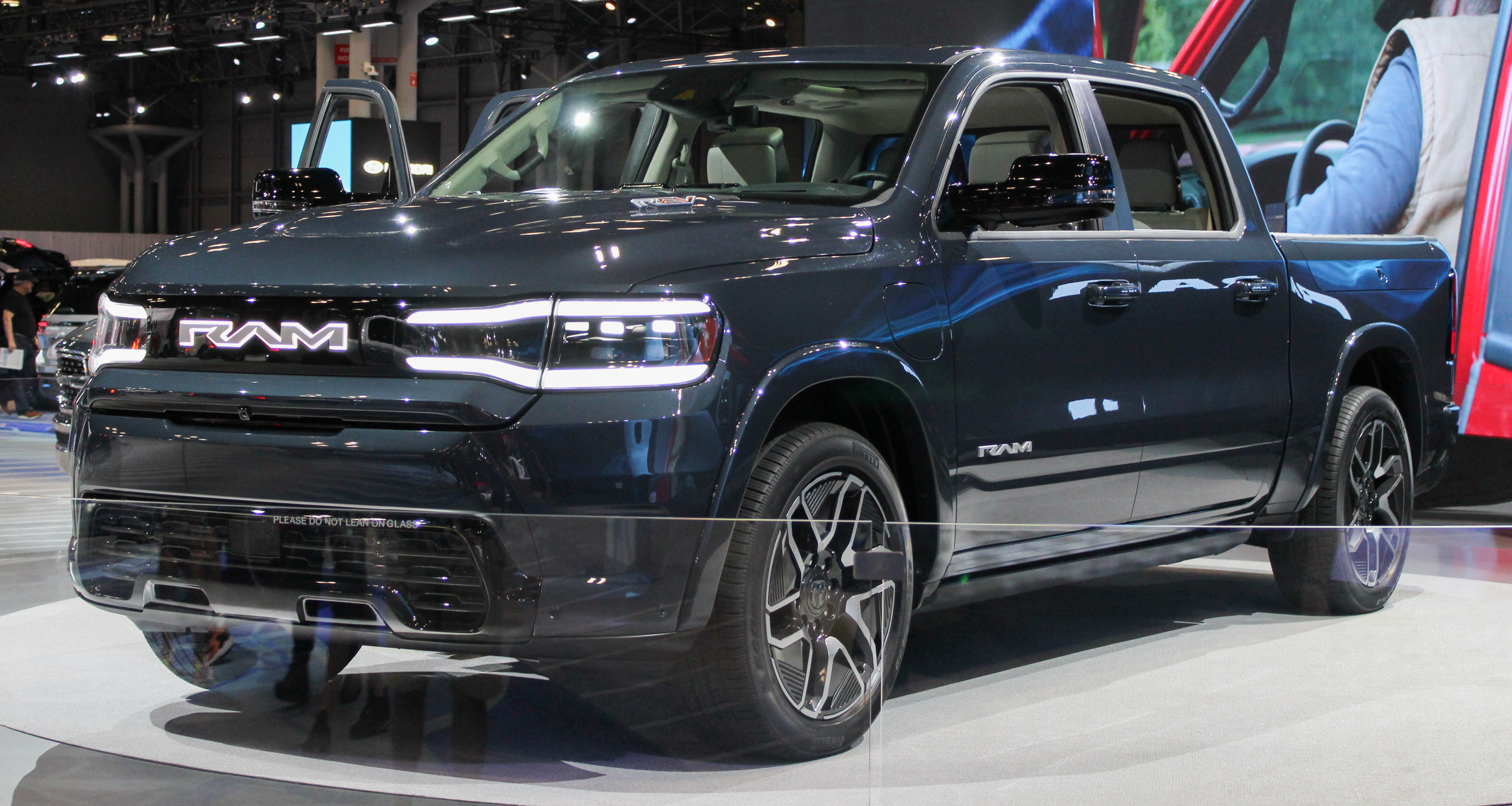
Ram 1500
"[406.0s] Let's go to the car search. [407.0s] What do you want to do? [408.5s] A Ram 1500? [410.7s] Sure."
The Ram 1500 is a popular full-size pickup truck. If fuel gets more expensive, people may delay buying trucks like this because the monthly cost goes up.
The Ram 1500 is Ram’s full-size pickup truck and one of the brand’s main volume sellers. When gas prices rise or demand shifts, trucks like the 1500 are often hit because they’re expensive to fuel and commonly bought based on monthly affordability.
MSRP
"[442.6s] This dealer is already advertising it with a $16,652 discount. [449.6s] The MSRP is $85,000."
MSRP (Manufacturer Suggested Retail Price) is the sticker price set by the automaker before discounts. It’s commonly used as the baseline to calculate how much a dealer is discounting a vehicle.
gas prices
"They could be super desperate at the end of this quarter and the end of the next quarter if gas prices go up to five hours a gallon. My suspicion, this is strictly a suspicion and this has nothing to do with the gas mileage, but it has everything to do with we have no idea as to what will happen next."
If gas prices rise, people worry about how much it will cost to drive. That can make them delay buying a truck.
Gas prices influence consumer budgeting and perceived operating costs, which can shift demand away from trucks. In sales discussions, rising gas prices are often used to explain slower showroom traffic and more aggressive discounting.
discount
"The fact that it's 70 grand after its discount is more than what most people would want to spend when things are so topsy-turvy."
A discount is when the price gets lowered to help the dealer sell the vehicle. Bigger discounts usually show up when sales are slow.
A discount is the price reduction a dealer or manufacturer offers to move inventory. In a slow market, discounts can become the main lever to attract buyers, especially when inventory is aging.
OTD quote
"Here's an example, Dad. Their initial OTD quote to me, $68,285."
“OTD” stands for “out-the-door,” meaning the total price you’d pay to take the car home, including taxes, registration, and dealer fees. When comparing quotes, OTD is more meaningful than just the sticker price because it reflects the real cash number.
EVs
"We are tracking more people searching for EVs today than RAM 2500. [767.2s] Again, think about it and think about this comment here from T. Howe, a buyer's market."
EVs are cars that run on electricity instead of gasoline. The idea here is that higher gas prices can push people to look at EVs more.
EVs (electric vehicles) are being used as a comparison point for consumer search behavior. The speaker suggests that when gas prices rise, more people consider EVs instead of traditional gas trucks.
buyer's market
"Again, think about it and think about this comment here from T. Howe, a buyer's market. [772.0s] For the three brands mentioned in the title of today's show, it's a crazy thing to say,"
A buyer’s market is when cars are easier to find and buyers have more leverage. Dealers often have to offer deals because not as many people are shopping.
A buyer’s market means there are more vehicles available than shoppers who want to buy them, so sellers may need to offer better pricing or incentives. It’s the opposite of a seller’s market, where low supply and high demand push prices up.
depreciation
"They don't think about the depreciation aspect of it because that's not something that comes [812.6s] out of their bank account."
Depreciation is how much your car loses value as time goes on. Some buyers focus on the monthly payment and forget that the car can be worth less later.
Depreciation is how much a vehicle’s value drops over time. The speaker notes that many buyers don’t account for depreciation in their monthly budget, even though it affects long-term cost of ownership.
72 months
"payment of $803 for 72 months because that's the average new car payment today and you've [834.2s] set aside say $200 a month for your automobile insurance."
“72 months” means the loan is paid off over about six years. A longer loan can make the monthly payment smaller, but you may pay more overall.
“72 months” is a common auto-loan term length (about six years). Longer terms can lower the monthly payment, but they can also increase total interest paid over the life of the loan.
automobile insurance
"and you've [834.2s] set aside say $200 a month for your automobile insurance. [838.2s] So you're up to $1,003"
Car insurance is what you pay to protect yourself financially if something happens. In this discussion, it’s part of the monthly total cost people plan for.
Automobile insurance is a recurring monthly cost that varies by driver, vehicle, location, and coverage level. The segment uses it to illustrate how buyers bundle multiple fixed costs into a monthly budget.
15,000 miles a year
"you've set aside, I don't know, $100 a week for fuel because [845.3s] you're driving 15,000 miles a year and then suddenly that fuel cost, so you have a total [852.4s] of say $1,400"
This is about how much someone drives in a year. If you drive more miles, you burn more fuel, so gas price changes affect your budget more.
“15,000 miles a year” is an annual usage assumption used to estimate fuel spending. It matters because higher mileage increases variable costs, making fuel-price changes hit harder for frequent drivers.
days on the market
"So let's take a quick peek, 267 days on the market, folks, 267 days on the market."
This is how many days a car has been sitting unsold after it was listed. If it takes a long time to sell, dealers usually have to lower the price or offer incentives to get it moving.
“Days on the market” measures how long a vehicle sits unsold after it’s listed. Longer time on the lot often signals weak demand and can lead to price cuts or incentives to move inventory.
leftover, so prior model year
"[1249.3s] If we were shopping, if I was shopping for one of these vehicles, I'd be looking for [1252.4s] leftover, so prior model year, and I'd be looking for the ones that have sat for a couple [1256.7s] hundred days at a minimum..."
A leftover is an older model year sitting on the lot. Dealers usually discount these more because they want to make room for the newer cars.
“Leftover” vehicles are unsold inventory from a previous model year. Dealers often discount these cars more aggressively because they need to clear space and meet sales targets before the new model year arrives.
Great Recession
"during the Great Recession, when my Acura factory rep came in and he said, well, what do you suggest?"
The Great Recession was a time when the economy was bad and people were scared to spend money. Car buyers became more hesitant, so dealers had to offer stronger deals to get them to buy.
The Great Recession was a major economic downturn that made consumers more cautious about big purchases like cars. The episode uses it to explain why dealers had to make incentives and pricing more aggressive to overcome buyer fear.
Kia
"We're going to talk about Kia. Dad, Kia has recently been in automotive news talking about how they're going to move further up market."
Kia is a major car brand. In this discussion, they’re trying to make their cars feel more premium and cost more, but the question is whether that hurts sales.
Kia is a mass-market automaker that’s been trying to reposition itself higher in the market with more premium designs, features, and pricing. The segment ties Kia’s strategy to the idea that moving up-market can work only up to a point before sales suffer.
dealer lots
"The 27s are already on dealer lots, okay?"
A dealer lot is where a dealership keeps cars waiting to be sold. The point is that new cars are showing up even though there are already cars sitting around.
“Dealer lots” are the physical inventory areas where dealerships display and store vehicles for sale. When the speaker says the “27s are already on dealer lots,” they’re emphasizing that new model-year inventory is arriving while older inventory may still be unsold.
days on lot
"It's been there 46 days, but they've got the 2027 or. The new and improved 2027..."
Days on lot means how long the car has been sitting at the dealership. If it’s been there a while, it often means the dealer may need to discount it more than they are.
“Days on lot” is how long a vehicle sits unsold at the dealership. The speaker notes it’s been there 46 days, which supports the argument that the car is effectively being sold like a used unit even though it’s labeled “new.”
trim breakdown
"[1852.8s] You know what I'm curious about, dad? [1853.8s] I'm curious what the trim breakdown is of that. [1856.7s] So you can start to see it here."
A trim breakdown shows how many listings are for each equipment level (base, mid, top trims). This matters because inventory skewed toward higher trims can affect pricing, incentives, and what buyers can actually get quickly.
regionalized pricing
"Do you want to show that prices can really be regionalized and you have to look at your local market? [2025.5s] Yeah, without a doubt."
Car prices can change depending on your area. Even if a deal looks great online, your local dealers might price things differently based on local demand and costs.
The idea of regionalized pricing is that the same vehicle can have different prices depending on where you live. Local supply, demand, taxes, dealer competition, and incentives can all vary by region, so a “good deal” online may not match what you’ll pay locally.
Request an Explanation
Heard something you'd like explained? We'll add it to this episode.
Sign in to request explanations for terms you heard.
Want to learn more?
Browse our glossary for plain-English explanations of automotive terms, jargon, and concepts.
Help improve this episode
See something that's not quite right? Our annotations are AI-generated and can sometimes miss the mark. Click the flag icon on any annotation to suggest a correction.