
Slow Car Fast vs. Fast Car Slow: GT3s, Miatas, Manuals & Overrated Icons
About this episode
The conversation moves from a GT3 road trip and a Miata canyon run into a bigger argument about what makes a car entertaining on public roads versus track. The hosts keep circling back to refinement, NVH, and how modern performance cars can feel too isolated at legal speeds. Manual-transmission take rates become a clue to buyer intent, while the discussion widens into overrated icons like turbo 911s, early Targas, and modern M cars.
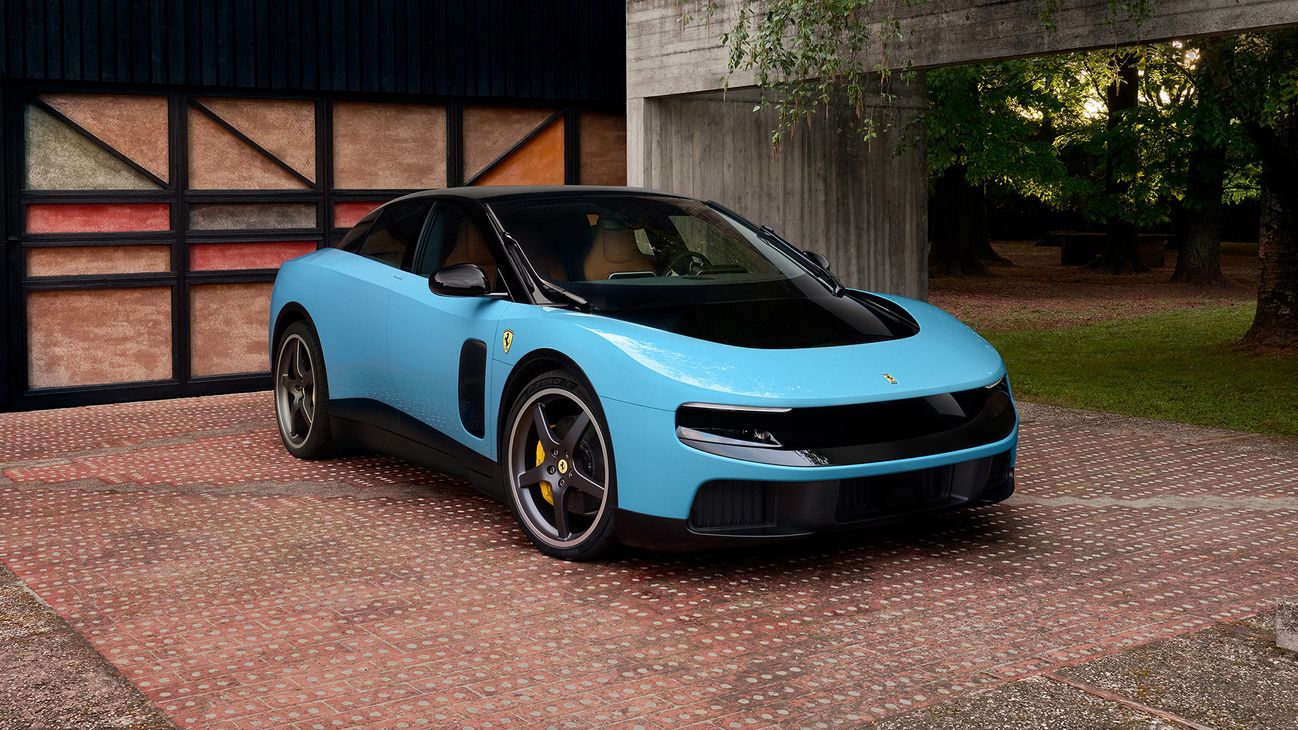
Ferrari Luce
"... house in Puerto Rico to raise cash for a Ferrari luce. My advisor Claude suggested that if we want to ..."
The podcast mentions a Ferrari called the Luce in a story about trying to raise money. It’s brought up because the speaker’s advisor suggested a plan related to that car. The conversation doesn’t focus on how it works—more on the situation around it.
The Ferrari Luce is referenced in the podcast in a story about raising cash for a Ferrari. The key point in this context is that the speaker’s advisor suggested a plan involving that specific Ferrari model. Beyond that, the podcast uses it as a narrative anchor rather than a technical discussion.
EVs
"My advisor Claude suggested that if we want to stay on Ferrari's VIP list, we need to get one of these EVs. As Denise McCluggage used to say, you can live in your Ferrari, but you can't drive a house."
“EVs” stands for electric vehicles—cars powered primarily by electricity stored in a battery rather than by gasoline combustion. In the transcript, the speaker frames EVs as part of staying on Ferrari’s VIP list, suggesting a shift toward electrification.
Lotus
"...a little picture of a t-shirt we have had made for an upcoming event in June where we partnered up with Lotus"
They say they partnered with Lotus for an upcoming event. Lotus is a car brand that’s especially known for making lightweight, fun-to-drive sports cars.
Lotus is referenced as a partner for an upcoming June event. Lotus is known for lightweight sports cars and a strong motorsport heritage, so a partnership often signals a performance-car focus.
engine refresh
"We, we, we've got this 964 C2 engine refresh that's going to get back in, put back into the car."
An engine refresh means the shop is taking the engine apart enough to replace worn parts and fix issues like leaks. The goal is to make the engine run smoothly again without necessarily replacing the whole engine.
An “engine refresh” is a planned rebuild/overhaul short of a full replacement—typically replacing worn wear items, resealing components, and restoring clearances so the engine runs like new. It’s often done when age, mileage, or oil leaks suggest internal wear or degraded seals.
drive line issues of noise
"Our 996, you know, the drive, you know, drive line issues of noise that we've been getting, you know, that, that's, we're still, you know, had to order a couple of parts."
The “drive line” is the set of parts that send power from the engine to the wheels. If it’s making noise, something may be worn, loose, or not aligned correctly.
“Drive line” refers to the components that transmit power from the engine to the wheels (commonly including the transmission, driveshaft, differential, and related mounts). Noise in the drive line is often caused by worn bearings, misalignment, loose hardware, or contact between components.
making contact
"those made in Germany, it's not an OEM part was making contact and making some noise."
“Making contact” means a part is rubbing or hitting something else. That can cause annoying noises, and fixing it usually means finding what’s touching and why.
“Making contact” implies two components are physically touching when they shouldn’t—often due to incorrect fitment, worn mounts, or movement under load. That kind of contact can create persistent rattles, squeaks, or metallic noises and usually requires locating the interference point.
OEM part
"those made in Germany, it's not an OEM part was making contact and making some noise."
An OEM part is the same kind of part the car maker would install at the factory. They’re comparing it to a non-OEM component that was causing contact and noise.
An OEM part is an Original Equipment Manufacturer component—made to the same specifications as what the car’s manufacturer installed at the factory. In contrast, aftermarket parts may fit and function similarly, but they can differ in materials, tolerances, or noise/vibration behavior.
throw out bearing
"So anyhow, we're, we're, I think we're back to some OEM parts on this, you know, [255.5s] the, the throw out bearing as well, you know, already, you know, started making noise."
A throw-out bearing helps your clutch work. When you push the clutch pedal, it helps “release” the clutch so you can change gears without grinding.
The throw-out bearing (also called the clutch release bearing) is part of a manual transmission’s clutch system. When you press the clutch pedal, it moves to disengage the clutch so you can shift gears smoothly.
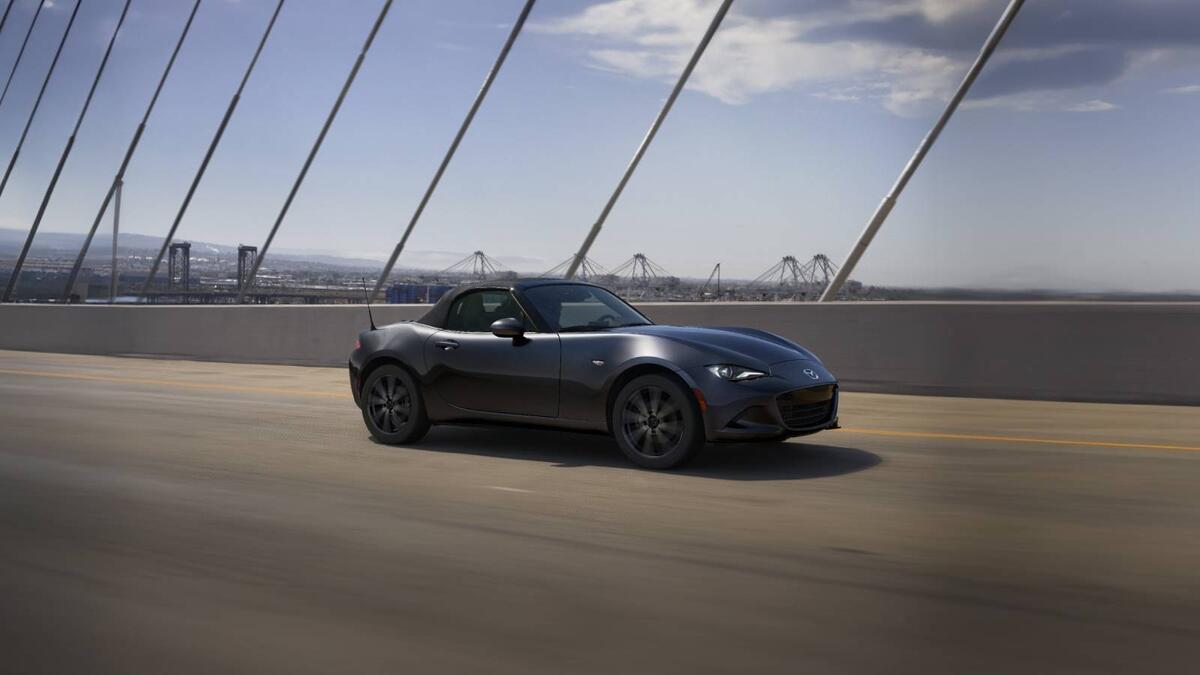
Mazda MX-5 / Miata
"...I had to take my backup, you know, which was the Miata. And then on the same thing on Sunday, there was..."
The Miata is a small two-seat car made for driving on twisty roads. It’s popular because it’s light and feels responsive. The speaker mentions it as a backup option.
The Mazda MX-5, commonly called the Miata, is a lightweight two-seat roadster known for being fun and easy to drive. It often comes up in conversations about “driver’s cars” because it emphasizes balance and feel rather than raw power. In the podcast context, it’s mentioned as a backup car for a trip or event.
garage 79
"[336.7s] We ended up at this, this cool little kind of meeting place, restaurant, watering hole [343.5s] called garage 79. [345.0s] They're celebrating their fifth anniversary."
“Garage 79” is the name of a local restaurant/meeting spot the group went to. It’s not a car part—just where the drive ended.
Garage 79 is the name of the restaurant/meeting place where the group ended up. It’s mentioned as a social destination for the Porsche club and other enthusiasts.
cars and coffee
"But they had a great cars and coffee outside, a good mix of exotics, some old cars per usual, being a singer event especially or with that theme in mind, a lot of Porsches there."
“Cars and coffee” is a car meetup where people bring their cars and hang out, usually with coffee nearby. It’s more about meeting other enthusiasts than racing or buying cars.
“Cars and coffee” is a casual, recurring car meet format where enthusiasts gather—often early in the morning—to show their cars, talk to owners, and sometimes take photos or do light socializing. It’s not a specific car model or brand; it’s an event style.
slow car fast versus fast car slow
"So we wanted to talk a little bit, I did with you, about the age-old debate. And maybe with a new twist that some thoughts that I have of slow car fast versus fast car slow. And that's what I kept thinking about."
It’s a comparison about driving feel: sometimes a “slower” car is more fun because you can really use it. But a “faster” car can feel stressful if you have to constantly watch your speed.
“Slow car fast versus fast car slow” is the idea that a car that isn’t objectively the quickest can feel more exciting when driven skillfully and within its limits, while a very fast car can feel less fun if it demands constant attention or makes it too easy to exceed safe/legal speeds. In this segment, the speaker argues that the GT3’s speed makes him feel like he has to watch the speedometer instead of enjoying the drive.
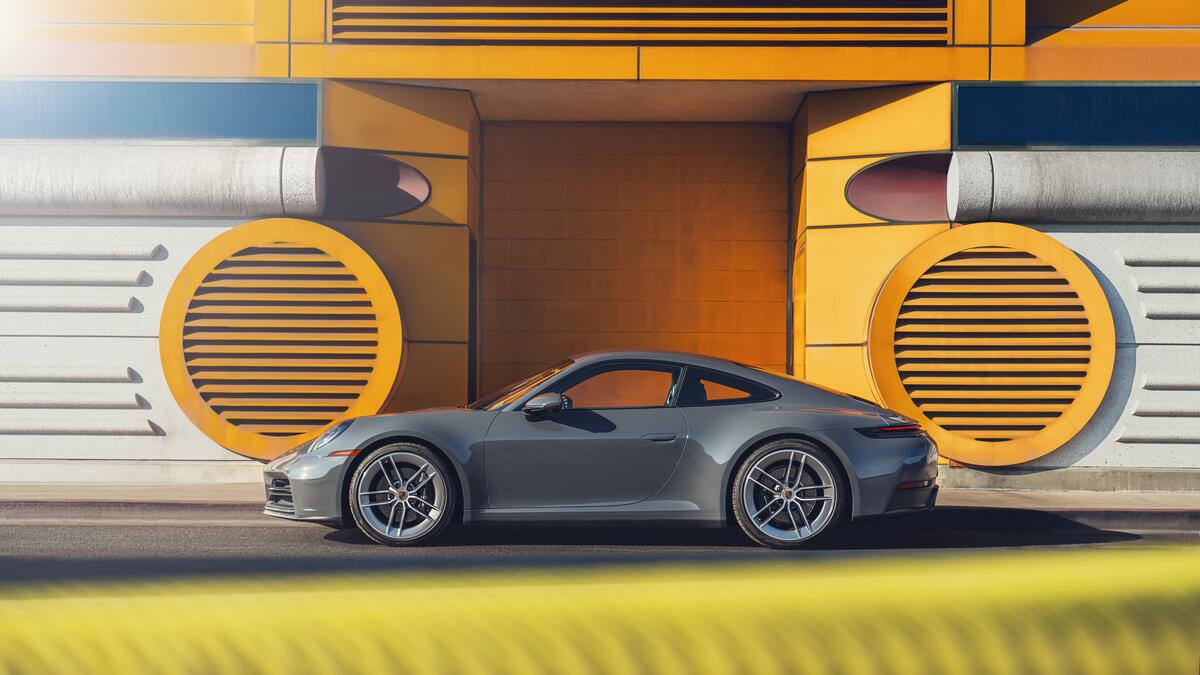
992.2 GT3
"And just to tee this up, the 992.2 GT3 is so good. I mean, I've made my feelings pretty known at this point."
This is a newer version of the Porsche 911 GT3 (the 992.2 update). The point is that this specific GT3 generation feels especially impressive to drive.
The “992.2 GT3” is the Porsche 911 GT3 in the 992.2 generation update. This generation is known for refining the GT3’s track-focused dynamics and usability, which is why the speaker says it’s “so good” and that people who drive it love it.
speedometer
"every time that I kept looking down at the speedometer, I'm like, oh, man, I got to watch it."
The speedometer shows how fast the car is going. The speaker is saying the GT3 makes it easy to accidentally go faster than it feels like.
The speedometer is the instrument that displays vehicle speed, and here it’s used as a proxy for how “attention-demanding” the GT3 feels. The speaker keeps checking it because the car’s performance makes it easy to be going much faster than it feels.
NVH
"I did. I did. I did. And it's interesting, your article, by the way, was, I think, spot on. NVH is a real, real thing that the OEMs have worked so hard to eliminate. Noise, vibration, and harshness. NVH is the acronym."
NVH means how much noise, shaking, and roughness you feel inside the car. Lower NVH usually makes the car feel smoother and more comfortable.
NVH stands for Noise, Vibration, and Harshness. It describes how much sound and vibration reach the cabin and how “harsh” the ride feels, and automakers work to reduce NVH to make cars feel more refined and quiet.
isolation
"That's another form of isolation, if you will, insulation that isolates. [683.0s] And so I think all those things play a big role in how a car feels."
Here, “isolation” means the car does a better job of keeping the roughness and noise of the road from reaching you. The goal is a smoother, more comfortable drive.
In this context, “isolation” refers to how well the car separates occupants from road noise, vibration, and harshness. Better isolation typically comes from improved mounts, bushings, insulation, and chassis/suspension tuning.
sense of speed
"And that sense of speed and that exhilaration [691.8s] that you ultimately are looking for, you're more detached."
“Sense of speed” is how fast the car feels like it’s going to you. Two cars at the same speed can feel different because of noise, vibration, and how the steering and acceleration feel.
“Sense of speed” is the perceived how fast you feel you’re going, which doesn’t always match the actual vehicle speed. Cars can create a stronger sense of speed through wind noise, acceleration feel, steering feedback, and how the cabin is insulated.
technical roads
"I went and joined a bunch of guys in San Diego [758.9s] but they were wonderful roads, really good roads, really technical."
“Technical roads” are twisty, challenging roads with lots of turns and changes in the driving situation. They make it easier to feel how well the car handles.
“Technical roads” generally means routes with frequent changes in direction—tight corners, elevation changes, and complex turns—where driver inputs and grip matter more. On these roads, chassis balance and tire behavior become more noticeable.
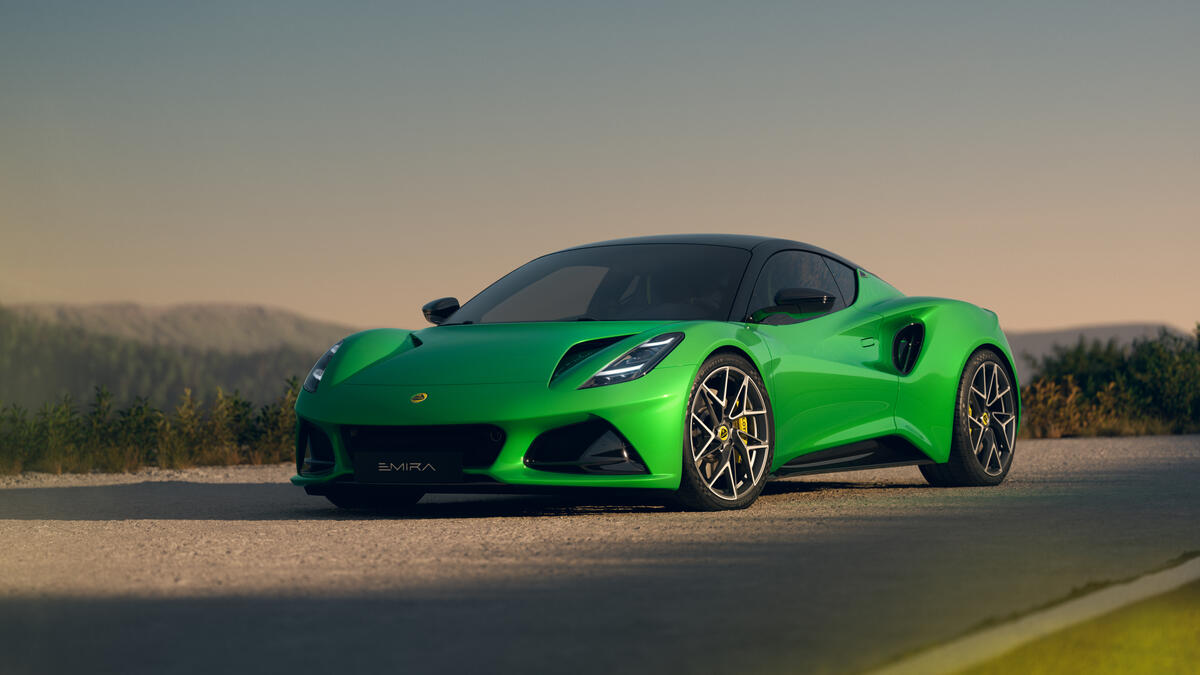
Lotus Amira
"Okay. There's the Lotus Amira. There's the E30M3."
The Emira is a sports car made by Lotus. It’s designed to be fun and agile to drive. The podcast brings it up while listing other cars in the same general conversation.
The Lotus Emira is a modern Lotus sports car intended to continue the brand’s lightweight, performance-focused identity. It’s mentioned in the podcast alongside other enthusiast cars as part of a broader discussion of what people consider when comparing models. The context suggests it’s being grouped with other notable performance options.
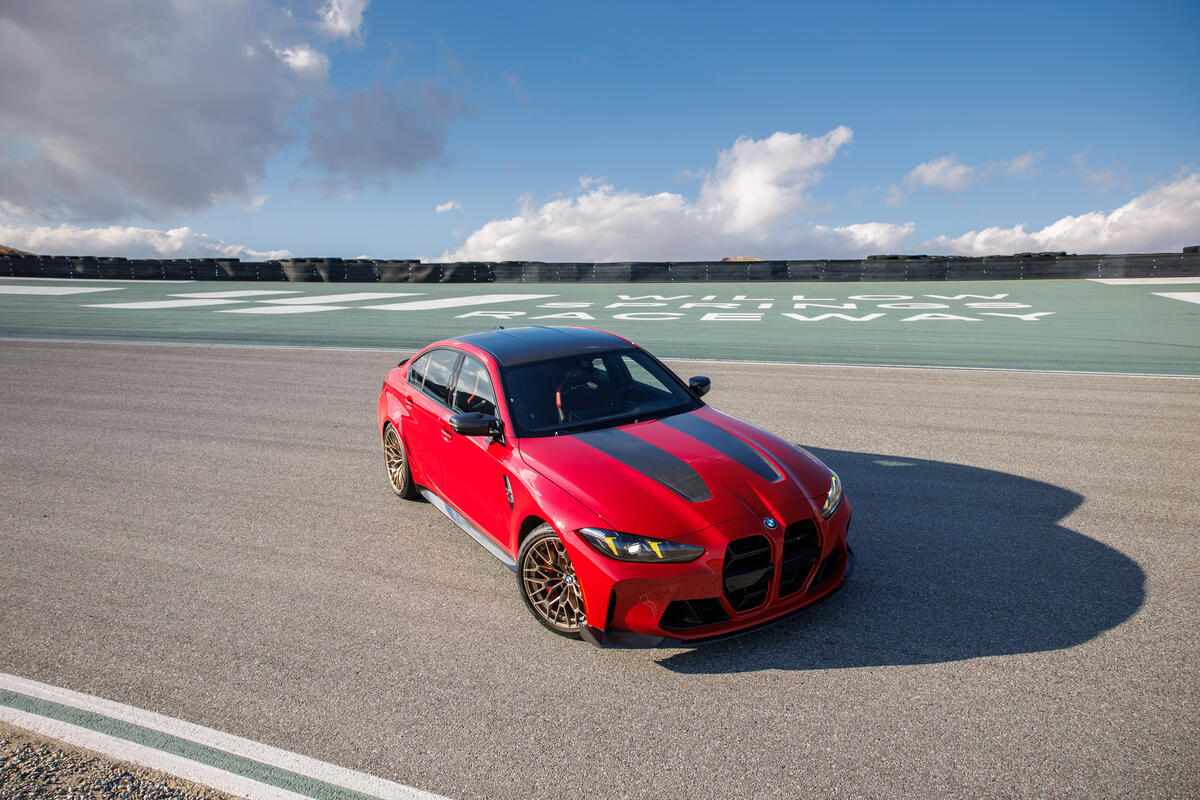
BMW E30M3
"There's the Lotus Amira. There's the E30M3. There were a couple of zero sixes that we ended up, you know, those guys started in the fast group, but we ended up catching them."
The BMW E30 M3 is the original M3 generation. People like it because it’s fun to drive and handles well, not just because it’s fast in a straight line.
The BMW E30 M3 is the classic first-generation M3, known for its balance and driver-focused feel. It’s often discussed as a “real enthusiast” car—light, rev-happy, and capable on twisty roads.
500 tread wear tires
"But the truth of the matter is, you know, like my Miata is pretty bone stock. I mean, the tires are just frankly 500 tread wear tires. Okay."
Treadwear is a number that gives a rough idea of how long a tire will last. Tires with a lower-ish number like “500” can wear faster and may not grip as well as track-focused tires.
“Treadwear” is a tire rating (often from the UTQG system) that’s meant to correlate with how long a tire should last. A “500” treadwear tire is typically softer than very high-number tires, but still not as grippy as dedicated track tires—so it can limit grip in a spirited group run.
brakes locked up
"Okay. And I mean, I had the brakes locked up on a couple of occasions. The guy with the E28M5, you'd love this guy."
“Brakes locked up” means the wheels stopped turning and started sliding. It can happen when you brake too hard for the available grip, and it makes the car harder to control.
“Brakes locked up” means the wheels stop rotating and skid instead of rolling. This usually happens under hard braking when traction is exceeded, and it can reduce stopping control and increase stopping distance.

E28M5
"And I mean, I had the brakes locked up on a couple of occasions. The guy with the E28M5, you'd love this guy."
The BMW E28 M5 is an older BMW M5 generation. It’s a classic enthusiast car—powerful for its era and known for being fun to drive.
The BMW E28 M5 is the first-generation M5, built in the late 1970s and 1980s. It’s a notable “fast sedan” icon, and the host is teasing it as a car enthusiasts would enjoy in a group comparison.
locked up my brakes
"Oh man, he was some smoke coming from your car. [819.7s] I'm like, yeah, I locked up my brakes. [823.2s] But here's the thing."
It means you braked so hard that the wheels stopped turning and started sliding. Sliding tires don’t grip as well, so braking can become less effective.
“Locked up my brakes” means the wheels stopped rotating and skidded instead of rolling. This usually happens during hard braking when traction is lost, and it can reduce stopping efficiency and increase stopping distance on some surfaces.
snow tires
"[823.2s] But here's the thing. [824.6s] I brought a nice snow tires at 500 tread wear. [827.9s] She knew, I think that sounds about as well be, they might as well be, you know,"
Snow tires are made to grip better in cold, snowy, or icy weather. They’re different from regular tires because the rubber stays flexible in winter.
Snow tires are specialized tires designed for cold weather and snow/ice. They use a softer rubber compound and tread patterns that help maintain grip when temperatures drop.
16 inch rims
"[832.3s] and, and the car came with 16 inch rims too. [834.8s] And there's a better selection of tires, you know, with that rim size. [838.4s] But I want it, I like the look of the 15s."
That’s the wheel size. The tire has to be matched to the wheel, and wheel size can change how the car feels and how the tire behaves.
“16 inch rims” means the wheel diameter is 16 inches, which affects what tire sizes can fit. Different rim sizes change tire sidewall height and can influence ride feel and grip.
15s
"[838.4s] But I want it, I like the look of the 15s. [841.0s] And so that's the, as I was limited in my options there."
“15s” means smaller wheels (15 inches). Smaller wheels usually go with thicker tire sidewalls, which can make the ride feel different.
“15s” refers to using 15-inch wheels instead of larger diameters like 16-inch rims. Smaller wheels often pair with taller sidewall tires, which can change comfort and how the tire absorbs bumps.
reserve
"[868.0s] Okay. [868.3s] You got to leave a little bit in reserve. [870.2s] I never crossed the double yellow."
It means you don’t push the car to the absolute limit. You keep some extra safety margin in case conditions change.
In driving context, “leave a little bit in reserve” means not using the full available traction or performance. It implies keeping extra margin for safety, especially when tires are near their grip limits.
double yellow
"[868.3s] and, and the car came with 16 inch rims too. [870.2s] I never crossed the double yellow. [872.4s] You know, I try to, to be reasonably responsible."
“Double yellow” means the road markings where passing is usually not allowed. The speaker is saying they didn’t cross into an area where passing would be illegal.
A “double yellow” refers to double solid yellow lines on the road, which typically indicate no passing in that area. It’s a traffic-rule cue the speaker uses to describe staying within legal/safer driving boundaries.
throttle
"giving it, you're, you're flat in the, on the throttle and, and it just doesn't go, you know."
The throttle is the gas pedal. “Flat on the throttle” means you’re pressing it all the way down to ask for the most power the car can make.
In driving, the throttle is the pedal-controlled input that regulates how much engine power is delivered. When someone says they’re “flat on the throttle,” they mean they’re requesting maximum power from the engine.
Namiata
"[989.1s] And I was a little jealous because I've had an Namiata and I can, I could only picture [996.3s] that you were just hanging that thing out at like 6,500 RPM seven, you know, getting up near"
They’re talking about a Mazda Miata. It’s a small, light sports car that feels fun when you rev it and drive it enthusiastically.
The speaker mentions having an “Namiata,” which is almost certainly the Mazda Miata (a lightweight, rear-wheel-drive roadster). They’re talking about how the car feels when revved high, which is a big part of why Miatas are loved for “slow car, fast car” driving.
6,500 RPM
"[996.3s] that you were just hanging that thing out at like 6,500 RPM seven, you know, getting up near [1002.1s] red line and you had to pin it up there the whole time."
RPM tells you how fast the engine is spinning. When you’re up around 6,500 RPM, you’re typically driving it hard and the engine is working near where it feels strongest.
RPM (revolutions per minute) is how fast the engine’s crankshaft is spinning. Higher RPM usually means the engine is working harder and often closer to its power band, which can make the car feel more responsive.
red line
"[1002.1s] red line and you had to pin it up there the whole time. [1005.8s] Whereas I'm like, if I go, if I drive this thing any harder and I was not driving hard,"
The “red line” is the top safe engine speed. Going past it can risk damage, so most drivers try not to stay there for long.
The “red line” is the engine’s maximum recommended RPM range. Past it, the engine can be damaged, so drivers typically avoid holding the engine above that limit for long periods.
pin it
"[1002.1s] red line and you had to pin it up there the whole time. [1005.8s] Whereas I'm like, if I go, if I drive this thing any harder and I was not driving hard, [1012.6s] I'm going to like be in trouble with the cops."
“Pin it” means to accelerate aggressively, usually by flooring the throttle. In enthusiast talk, it implies pushing the car to get maximum response and speed quickly.
lighting up the tires
"[1017.2s] And so I'm sitting there thinking, man, I wish I could have just pinned that thing [1022.0s] near 7,000 and really started lighting up the tires, as you said. [1026.4s] And you got out of it thinking this car was too slow."
It means the tires start spinning because they can’t grip the road. That usually happens when you accelerate really hard.
“Lighting up the tires” describes wheelspin—when the tires lose grip and spin faster than the car is moving. It’s often used to describe aggressive launches or hard acceleration that overwhelms traction.
power to weight ratio
"[1111.4s] you know, when you're going 84 miles an hour in that Elise, now keep in mind, [1115.9s] power to weight ratio is similar to a GT4. [1119.4s] But when you're going 84 in that car, I just drove it today and got up to 84 miles an hour."
Power-to-weight ratio compares how much power the car has to how heavy it is. A higher ratio usually makes the car feel quicker and more eager to move.
Power-to-weight ratio is the amount of engine power relative to the car’s weight. Higher numbers generally mean quicker acceleration and a more “eager” feel, especially when you’re driving hard on winding roads.
hairpin
"[1154.0s] And when you're climbing hills, going up a canyon road towards a pass, [1158.7s] we got into some, there's some roads with steep grade. [1161.5s] And I recall coming out of like a hairpin going up a hill."
A hairpin is a super tight turn, like a U-turn shape. Exiting it is important because it determines how fast you can accelerate up the road next.
A hairpin is a very tight, near-180-degree corner that forces heavy braking and low-speed cornering. On climbs, coming out of a hairpin can strongly affect how quickly you can build speed toward the next section of road.
gearing
"I was pretty impressed with the gearing. You know, my heel and toes downshifts, it just felt perfect."
“Gearing” is how the car’s gears are set up. It affects how quickly the engine revs when you shift, which changes how smooth and responsive the car feels.
In this context, “gearing” means the gear ratios in the transmission and final drive that determine how the engine speed (RPM) changes in each gear. Proper gearing helps a car stay in the right RPM range for acceleration and makes downshifts feel natural.
heel and toes downshifts
"You know, my heel and toes downshifts, it just felt perfect. You know, like the way they've got the gearing set up on the car, really, really good."
Heel-and-toe is a driving trick for downshifting. While you’re braking, you “blip” the gas so the engine speed matches the lower gear, making the car feel smoother instead of jerky.
Heel-and-toe downshifting is a technique used in manual cars (and some performance automatics) where the driver blips the throttle while braking and downshifting. The goal is to match engine speed to the lower gear so the car doesn’t jerk and the transition feels smooth.
air cooled Porsches
"he's had a lot of cool air cooled Porsches, you know, getting out of this GT3 made me think in the world of Porsche, I'm an air cooled guy."
“Air-cooled” means the engine is cooled using airflow instead of mostly using liquid coolant. The speaker is saying they like that air-cooled Porsche character.
“Air-cooled” describes an engine cooling design where heat is removed primarily by airflow over the engine rather than relying on liquid coolant. The speaker is saying they prefer air-cooled Porsches, implying a distinct character and driving feel compared with other Porsche generations.
happy medium
"So, you know, that might be the happy medium for me, less NVH, but still enough go that you can, you can keep up with a lot of stuff."
Here, “happy medium” means finding a balance. The speaker wants something that feels smooth enough to live with, but still has enough power to keep up.
“Happy medium” is being used here as a concept: balancing trade-offs between different car characteristics (like comfort/smoothness vs. performance). The speaker is framing their ideal as a compromise that still feels quick without being too harsh.
manual transmissions
"They came out with this article entitled, we asked every automaker how many customers went for manual transmissions in 2025. So, you have some great thoughts on this."
A manual transmission is the kind of car where you shift gears yourself. You use a clutch pedal and a gear stick, instead of the car shifting automatically.
A manual transmission is a gearbox controlled by the driver using a clutch pedal and gear lever. Choosing one usually means more driver involvement and different driving feel compared with an automatic.

Porsche Cayman
"...y published. When it came to Porsche, before the Cayman Boxster 718 was discontinued, they had about a 4..."
The Cayman is a Porsche sports car with the engine placed in the middle of the car. It’s a coupe, meaning it has a fixed roof. The podcast mentions it when talking about what people chose for transmissions during the 718 generation.
The Porsche Cayman is a mid-engine sports coupe that’s closely related to the Boxster platform. It’s often discussed as a more “closed-roof” alternative while keeping the same core driving layout. In the podcast, it’s mentioned in relation to the Cayman/Boxster 718 era and transmission options.

Porsche Boxster
"...shed. When it came to Porsche, before the Cayman Boxster 718 was discontinued, they had about a 46% manua..."
The Boxster is a Porsche sports car with the engine in the middle and a convertible-style body. It’s designed for driving enjoyment, especially on good roads. The podcast mentions it while discussing how many buyers chose manual transmissions.
The Porsche Boxster is a mid-engine roadster that shares much of its engineering with the Cayman. It’s a key model in Porsche’s lineup because it delivers the brand’s driving feel in an open-top format. The podcast references it alongside the Cayman 718 discontinuation and discusses manual versus other transmission take rates.

Porsche Carrera T
"... 911s, just in general, which is comprised of the Carrera T and the GT3. These were only the cars that a man..."
The Carrera GT is a very high-performance Porsche supercar. It’s the kind of car people talk about when discussing rare, top-tier performance models. In the podcast, it’s mentioned as part of a list of Porsche cars.
The Porsche Carrera GT refers to the Carrera GT model, which is a supercar known for extreme performance and limited availability. It’s mentioned in the podcast as part of a broader discussion about Porsche model choices and how certain cars fit into a buyer’s lineup. The context suggests it’s being grouped with other Porsche performance models.
GT3
"The regular GT3 with a wing about half, 53%. ... If you, if you're getting a GT3, you know, only half the people are going for manual, but if you go for a GT3 Touring, 83% are going for a manual."
The Porsche 911 GT3 is a performance Porsche built with track driving in mind. Here, they’re talking about how many buyers pick a manual gearbox versus an automatic on the GT3.
The Porsche 911 GT3 is a track-focused version of the 911, known for its aerodynamic package (including a rear wing) and strong performance. In this segment, the hosts compare how often buyers choose a manual versus an automatic on different GT3 variants.
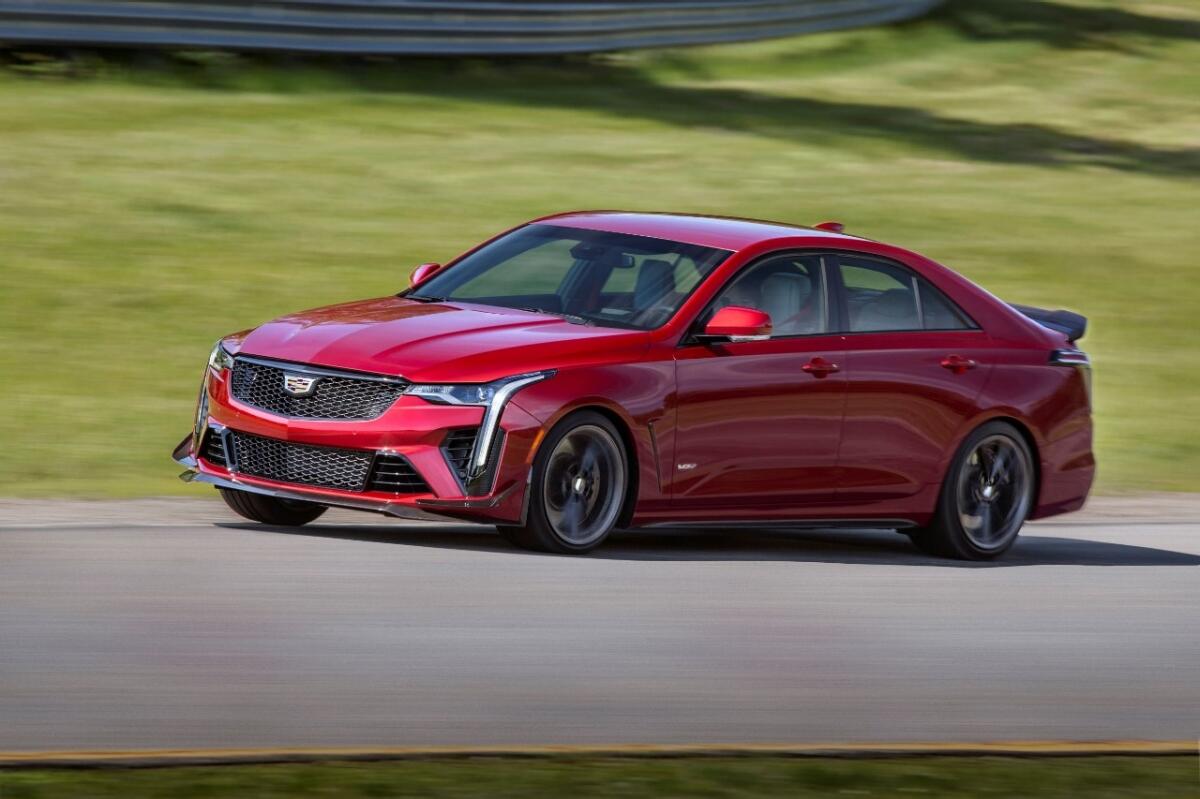
Cadillac Ct4V
"Cadillac, CT4V Blackwing, the little brother, 61% took a manual."
Cadillac’s CT4-V Blackwing is a sporty compact sedan. They mention it here because a notable portion of buyers chose the manual transmission.
The Cadillac CT4-V Blackwing is a compact performance sedan from Cadillac’s V-Series, positioned as the smaller “little brother” to the CT5-V Blackwing. The segment highlights manual-transmission take rates, using it as an example of how buyer preferences vary by model.
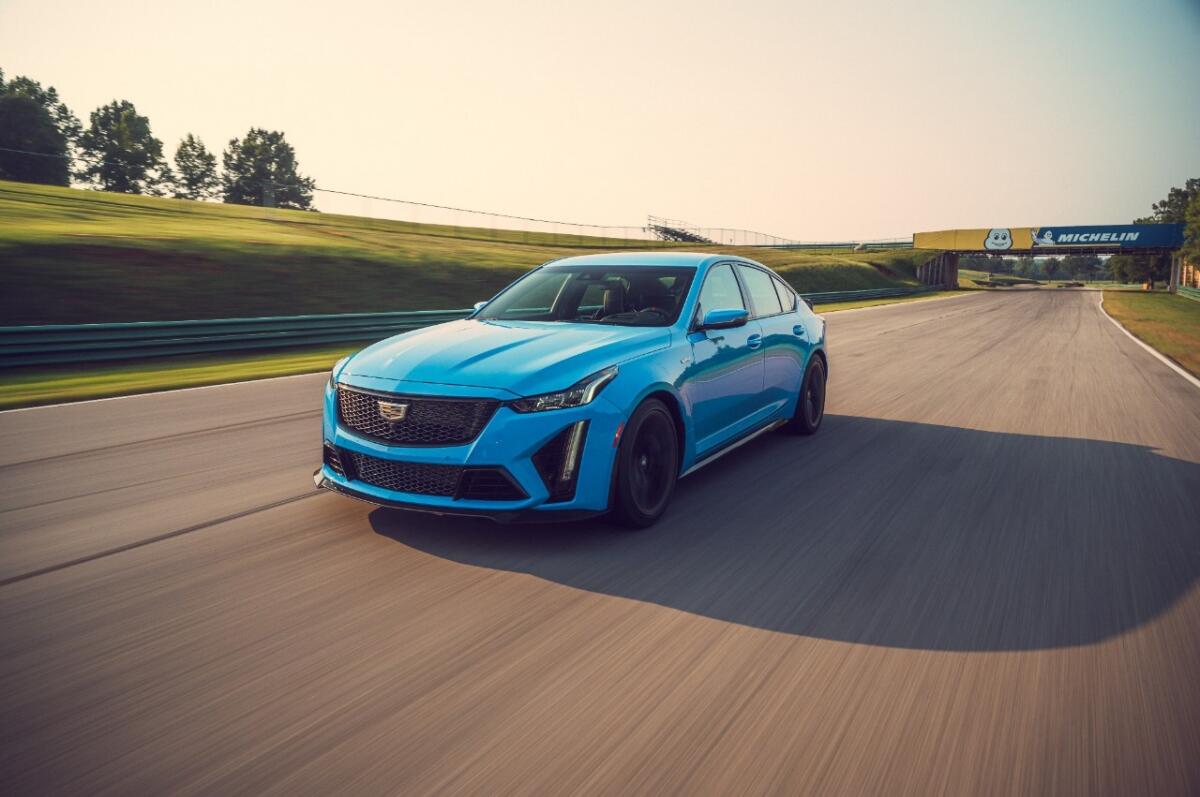
Cadillac CT5
"And the CT5, the big boy, about half, 48%."
The Cadillac CT5-V Blackwing is the bigger, stronger version of Cadillac’s performance sedan lineup. They’re comparing how many buyers choose manual versus automatic.
The Cadillac CT5-V Blackwing is the larger, more powerful counterpart to the CT4-V Blackwing. Here, the hosts use it to compare manual take rates across Cadillac’s performance sedans.
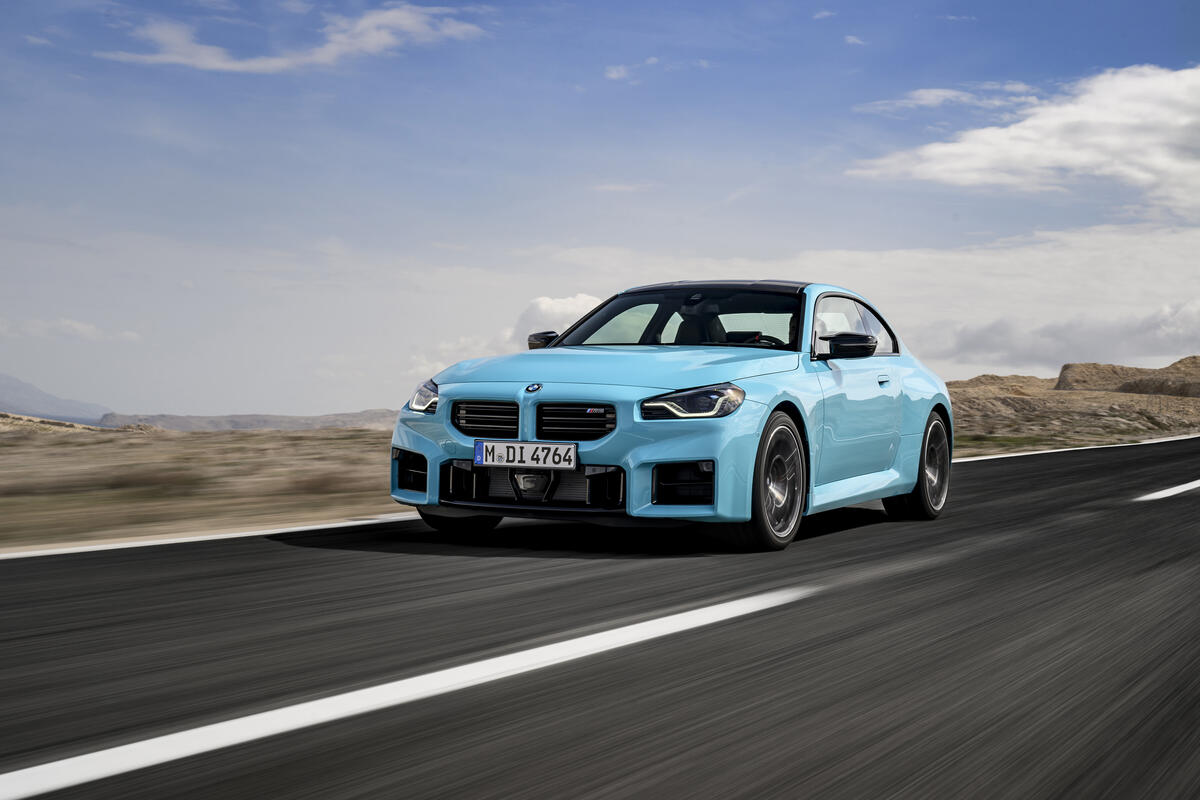
BMW M2
"most seem to be whether it's the M2, M3, M4, the Z4 offered in a manual, the GR Supra, GR86."
The BMW M2 is a sporty BMW built by BMW’s performance division. They mention it because buyers sometimes choose the manual version, depending on the car.
BMW M2 is a compact sports coupe from BMW’s M division, often offered with a manual or automatic depending on the model year and market. In this segment, it’s grouped with other BMW M models to discuss how manual availability and buyer choice vary.
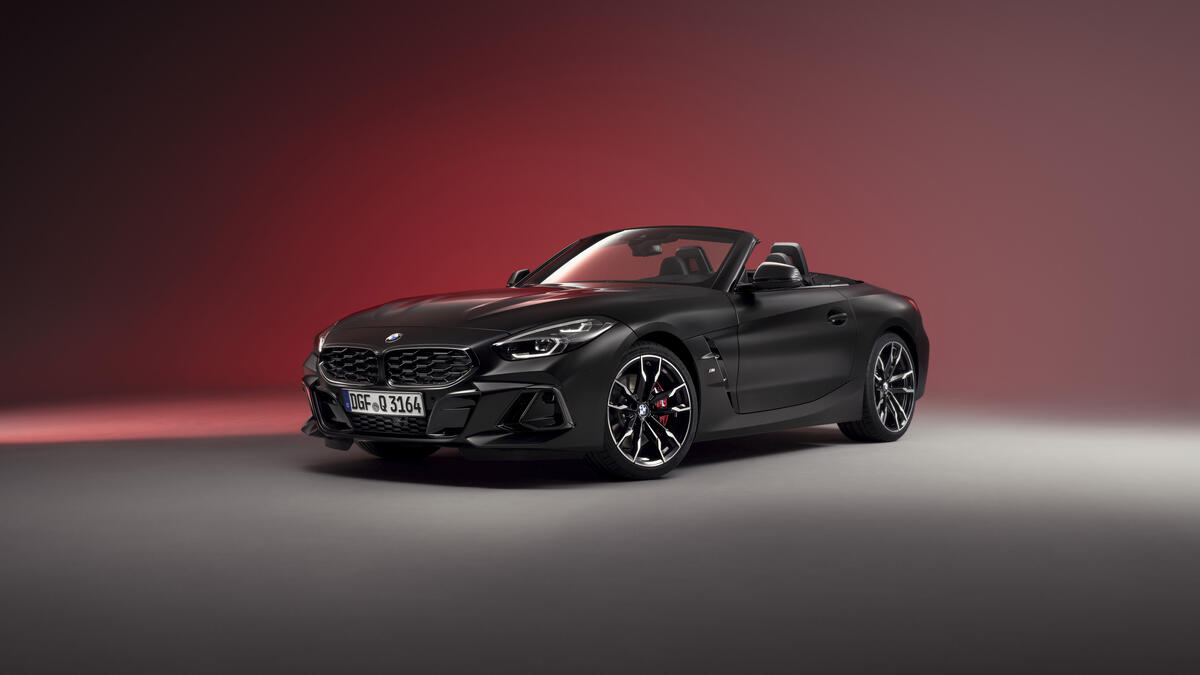
BMW Z4
"most seem to be whether it's the M2, M3, M4, the Z4 offered in a manual, the GR Supra, GR86."
The BMW Z4 is a two-seat roadster. They mention it because some versions are available with a manual, and buyers’ choices vary.
BMW Z4 is a roadster that has been offered in performance “M” variants and also in non-M trims, with manual availability varying by year. Here it’s grouped with other sports cars to discuss manual take rates.

GR Supra
"most seem to be whether it's the M2, M3, M4, the Z4 offered in a manual, the GR Supra, GR86."
The Toyota GR Supra is a modern performance version of the Supra. They mention it because it’s one of the sports cars where some buyers can choose a manual.
Toyota GR Supra is the modern Supra built under Toyota’s Gazoo Racing (GR) performance brand. The hosts include it in a list of sports cars where manual availability influences buyer choices.
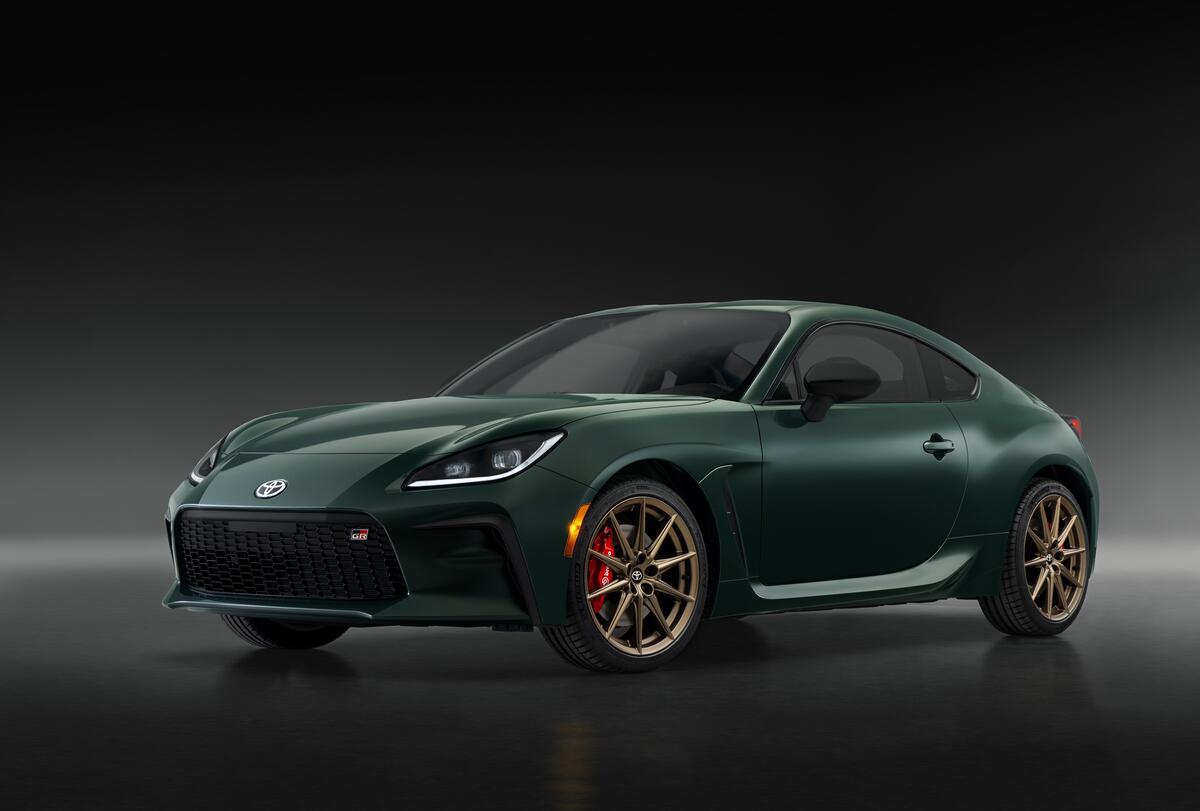
GR86
"most seem to be whether it's the M2, M3, M4, the Z4 offered in a manual, the GR Supra, GR86."
The Toyota GR86 is a sporty, driver-focused Toyota coupe. They bring it up because it’s another car where buyers can choose a manual.
Toyota GR86 is a lightweight sports coupe from Toyota’s Gazoo Racing (GR) line, designed for driver engagement. In this segment, it’s mentioned as part of the set of sports cars where manual take rates are part of the broader “use case” discussion.
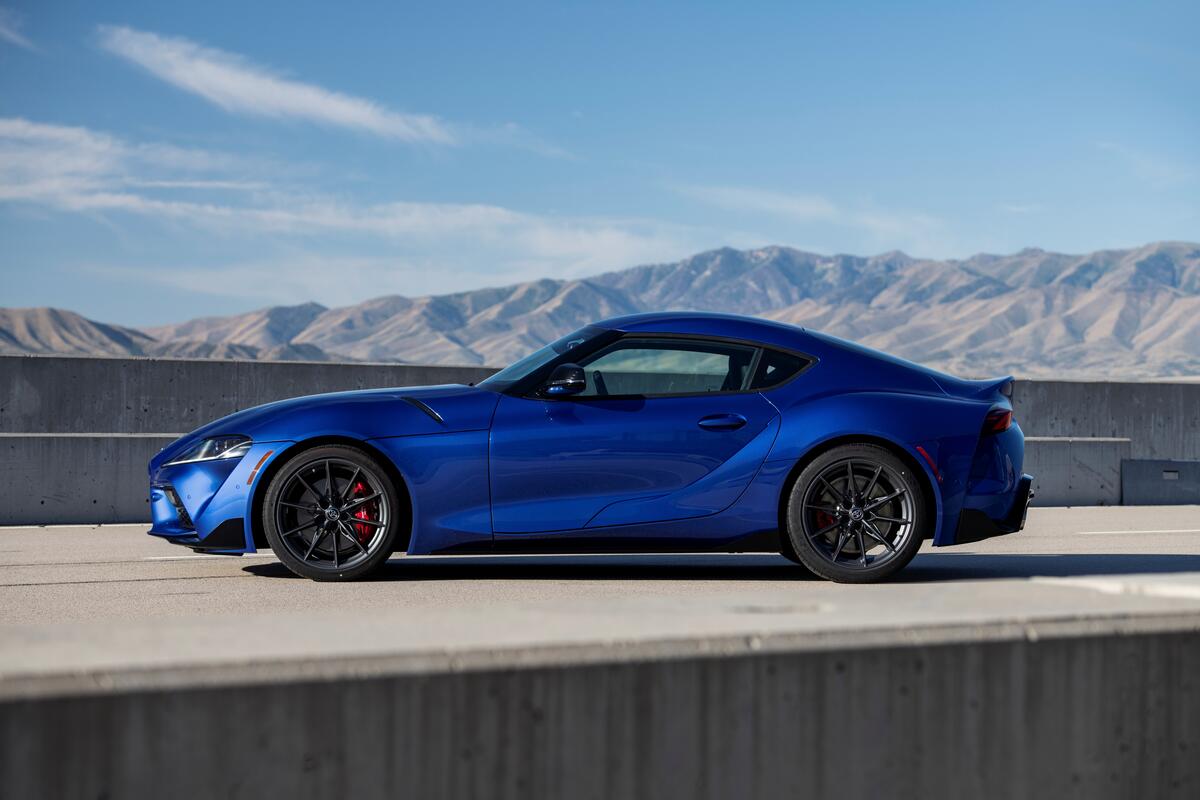
Toyota Supra
"...e M2, M3, M4, the Z4 offered in a manual, the GR Supra, GR86. 50% seems to be kind of a standard number..."
The GR Supra is a Toyota sports car designed to be quick and fun to drive. The podcast mentions it while comparing how many people choose certain options, like manual transmissions, across different models.
The Toyota GR Supra is a modern sports coupe built for performance, with a focus on driver engagement. It’s often discussed alongside other enthusiast-focused BMW and Toyota models because it represents a “standard” percentage of manual or performance-oriented buyer preferences in the conversation. In the podcast, it’s included in a list used to compare take rates.
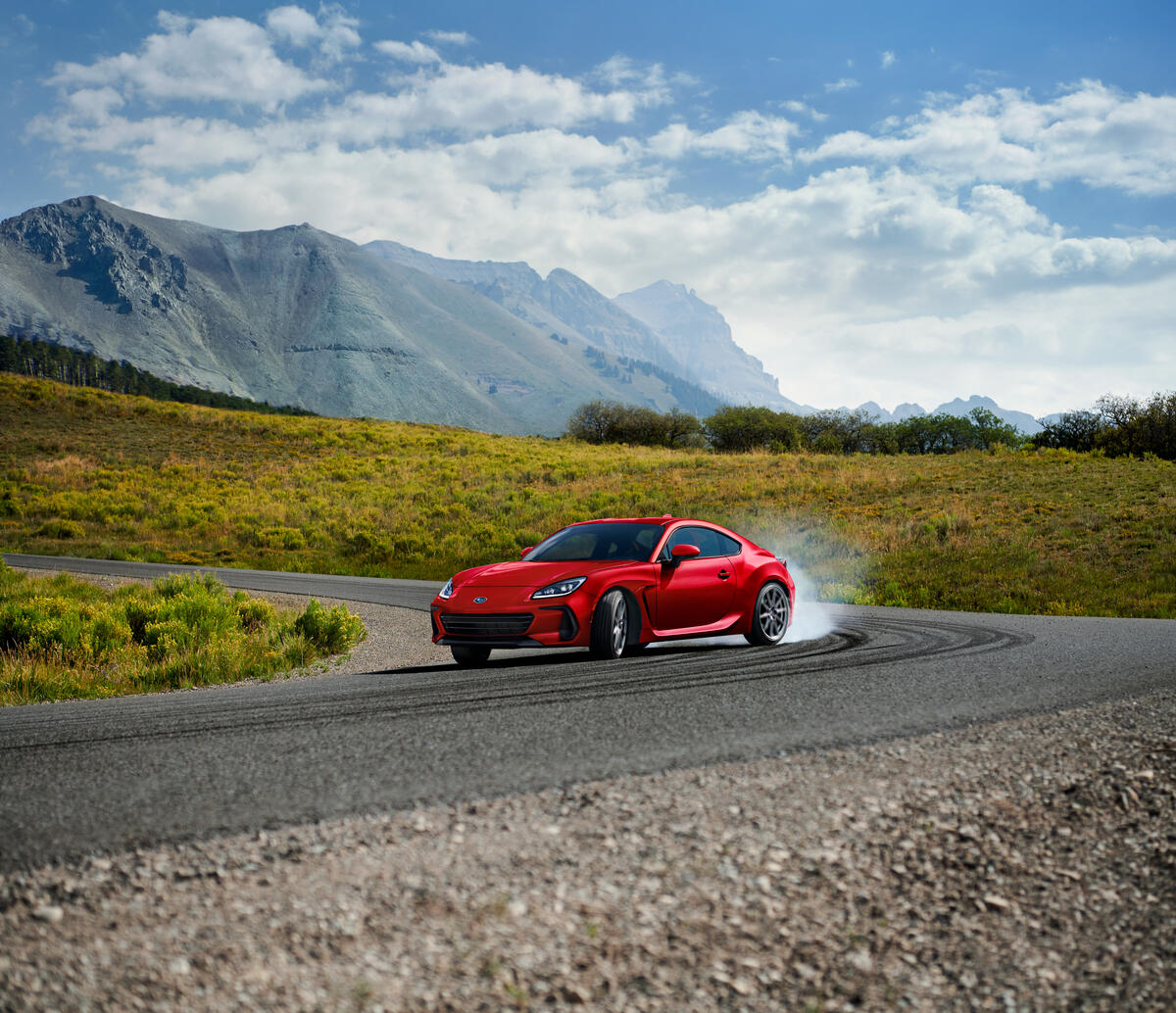
Subaru BRZ
"You know, M2 was 40%, M3 was 50. BRZ, you go over to Subaru with 90% take rate with a ..."
The BRZ is a small sports car made to handle well and feel fun to drive. The podcast mentions it because a large percentage of buyers choose a certain option, like manual. It’s part of a comparison across several sports models.
The Subaru BRZ is a compact sports coupe built for lightweight, balanced handling. It’s often discussed alongside other manual-friendly sports cars because it’s designed to be approachable for enthusiasts. In the podcast, it’s mentioned with a high take rate figure, indicating many buyers choose a particular option.
gearbox
"So that kind of tells me the use case of the car, right? ... what we were talking about earlier, and the use case oftentimes I think will really dictate what gearbox a person chooses."
A gearbox is the part of the car that changes gears to control how the engine delivers power. Here they’re saying your driving style—street cruising versus track driving—often affects whether you want a manual or automatic.
Gearbox is the transmission system that selects gear ratios to match engine speed and driving conditions. In this segment, the hosts argue that a car’s intended use (street vs track) often influences whether buyers choose a manual or an automatic gearbox.
PDK
"But when you're on the track, if you're really serious about track use, you, you, you've pretty much reconciled with the fact that you got to get a PDK or a paddle shift car because it's faster, right?"
PDK is Porsche’s automatic transmission with two clutches. It shifts gears very quickly, which can help on a race track.
PDK is Porsche’s dual-clutch automatic transmission. It can shift extremely quickly because it pre-selects the next gear, which is why the hosts say it’s faster for serious track use than a manual.
black wings
"So, and I kind of feel like that may explain partially the black wings as well, which I mean, how many people are buying black wings as a track day car?"
A “wing” here is the rear spoiler on the car that helps with aerodynamics. They’re talking about why a black version of that spoiler is common on street cars rather than cars built mainly for track days.
In this context, “wings” means an aerodynamic rear spoiler/wing, and “black wings” refers to the visual choice of a black wing on the car. The hosts connect the popularity of black wings with buyers who want a street-friendly look rather than a dedicated track setup.
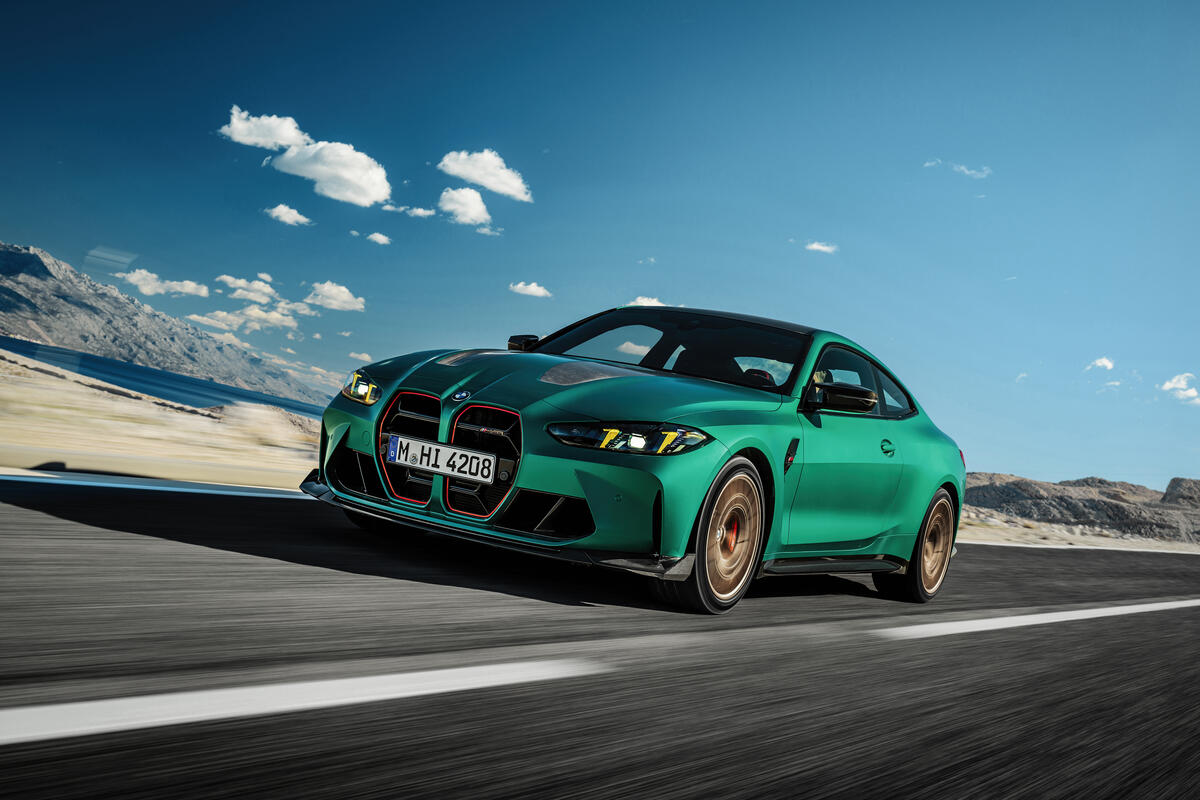
M four
"And he loves to just shift because, you know, he's not sweating his lap times. So, and I, and I kind of feel like that may explain partially the black wings as well, ... Yeah. Well, with a four door, 50% are going for manual..."
The BMW M4 is BMW’s performance car that’s typically the two-door version compared with the M3. The hosts are saying it’s often lighter and that track-day buyers may prefer it, especially with easier shifting options.
The BMW M4 is the performance coupe/gran coupe counterpart discussed alongside the M3. In this segment, they claim the M4 is lighter than the M3 and suggest that track-focused buyers may be more likely to choose the M4 and a paddle-shift setup to maximize usability on track.
paddle shift
"you're going to go for the lighter version, which I believe the M four is a bit lighter than, than, than the M three, right? And you're going to choose the, the, um, the paddle shift option, right?"
“Paddle shift” means you change gears using buttons/paddles on the steering wheel instead of a stick shift. The idea is that it can be faster and less tiring during track driving.
“Paddle shift” refers to gear changes made via shift paddles behind the steering wheel, usually paired with an automated manual or dual-clutch transmission. The hosts associate paddle shifting with track use because it can be quicker and easier to operate consistently during repeated laps.
sweepers
"they're fast as hell. You know, it's just, you know, the, the, the, you see these guys and you're going through fast sweepers and the confidence that they have with the arrow on the car, you know,"
“Sweepers” are the long, sweeping turns on a track. They’re talking about how skilled drivers can stay fast through those corners.
“Sweepers” are long, curving sections of a racetrack where the steering input is sustained and the car is kept in motion through the bend. The hosts mention “fast sweepers” to describe the confidence and grip needed to carry speed in those flowing corners.
arrow on the car
"fast sweepers and the confidence that they have with the arrow on the car, you know,"
They’re basically talking about the car’s rear spoiler/wing that helps the car stick to the road. They’re saying that when the aero is working, drivers feel more confident going fast.
“Arrow on the car” is a colloquial way to refer to the car’s aerodynamic elements—especially the rear wing/spoiler—used to generate downforce. The hosts connect the presence of that aero “arrow” with the driver’s confidence at speed.
Porsche club
"you know, the, I burn with the Porsche club and with NASA and you're at a private club and you, I'm sure you've done lots of different, you know, track days with different organizations."
“Porsche club” refers to a Porsche enthusiast club that organizes track activities and group events. The speaker uses it as an example of the kinds of communities that bring drivers to circuits.
NASA
"you know, the, I burn with the Porsche club and with NASA and you're at a private club and you, I'm sure you've done lots of different, you know, track days with different organizations."
NASA is referenced as an organization that runs track events (commonly the National Auto Sport Association). In the segment, it’s used to illustrate that many drivers come from different groups but still mostly do recreational track activity.
track days
"you, I'm sure you've done lots of different, you know, track days with different organizations. Like these aren't, most of these guys are just recreational HP DE stuff or like drivers."
A track day is when normal car owners get to drive on a racetrack. It’s usually for practice and fun, not for winning a race.
Track days are organized events where drivers bring their own cars to a circuit for practice, coaching, and timed or non-timed sessions. They’re different from professional racing because most participants aren’t competing for championships.
HP DE
"Like these aren't, most of these guys are just recreational HP DE stuff or like drivers."
“HPDE” stands for High Performance Driver Education. It’s a common track-day format focused on driver training and learning car control, often with instructors and rules that prioritize safety over racing.
lap time
"They do still look at their lap time and want to keep improving on that, right? I mean, that, that's just fundamental for, for a lot of people."
Lap time is the measured time it takes to complete one circuit around the track. Even in non-racing track days, many drivers use lap times as a personal benchmark to improve driving technique.
data acquisition
"...there's plenty of people that are using data acquisition, you know, tools to improve their driving and, and to go quicker."
Data acquisition is recording what the car is doing while you drive—things like speed and pedal inputs. People use it to learn what to change to go faster.
Data acquisition in motorsport means collecting driving and vehicle data (like speed, throttle/brake inputs, and sometimes suspension or tire info) during runs. Drivers use it to spot patterns and make targeted improvements rather than relying only on feel.
heel toe downshifting
"...we spent at least half the time working on our heel toe downshifting. So, and he said, listen, it's hard."
Heel-toe downshifting is a driving technique used when slowing down and shifting to a lower gear. It helps the engine and transmission work together smoothly so the car doesn’t jerk.
Heel-toe downshifting is a technique where the driver uses the left foot to brake while the right foot blips the throttle during a downshift. It helps match engine speed to the lower gear, reducing driveline shock and keeping the car stable under braking.
Cayman Gts
"...nowadays in spoiler alert, he bought a, I think Cayman GTS four liter, you know, with a manual and he did get the manual, but it a lot of rev match for you."
The Porsche Cayman GTS is a sporty Porsche with the engine mounted behind the front seats. In this story, it’s the example of someone who chose the manual version for track driving.
The Porsche Cayman GTS (with a four-liter engine) is a mid-engine sports car aimed at drivers who want a balance of everyday usability and track-capable performance. In this segment, it’s used as an example of buying a manual-equipped track car and still dealing with the technique demands.
rev match
"...but it a lot of rev match for you. So it's still a little more cumbersome than driving just a PDK, but it's not nearly as"
Rev matching means making the engine speed line up with the lower gear when you downshift. It helps the shift feel smooth instead of jerky.
Rev matching is the process of adjusting engine speed to match the transmission’s target gear during a downshift. In a manual car, the driver typically does this by blipping the throttle; in some automatics, the gearbox can handle it for you, making downshifts easier.
blipping
"much when you actually have to heel and toe, you're breaking hard and you're blipping at the same time. That is a real skill."
“Blipping” means a quick rev of the engine right before you shift down. It helps the car shift smoothly instead of feeling like it lurches.
In this context, “blipping” means briefly increasing engine RPM (usually by quickly pressing the throttle) right before or during a downshift. It’s used for rev-matching so the drivetrain doesn’t feel abrupt when the lower gear engages.
spec Miata racing
"you are going to miss out on all the incredible cars that are available to drive like a Miata, you know, like spec Miata racing. There's no auto."
“Spec Miata” racing means the cars are kept fairly similar by rules. That way, racing success depends more on driving skill and tuning within the allowed limits.
“Spec Miata” refers to a racing format where cars are prepared to a standardized rule set, limiting how much teams can change. That makes driver skill and setup within the rules more important than buying the biggest performance upgrades.
gross margins
"when you look at their financial results of Ferrari, that it's clear, you know, the gross margins that Ferrari are pulling off are three or four X what every other automotive company is getting."
Gross margin is a way to measure how profitable a product is. It tells you how much money is left after the basic cost to make the car, before other business costs.
Gross margin is a profitability metric that measures how much money a company keeps after accounting for the direct costs of producing goods, before operating expenses. The speaker uses Ferrari’s gross margins to argue Ferrari is earning far more profit per sale than other automakers.
restricting ICE vehicles
"the people that are living in city centers, particularly in Europe, you know, where they're restricting ICE vehicles now, like London as an example."
ICE vehicles are regular gas or diesel cars. The speaker is saying some cities are limiting them, which changes what kinds of cars people can drive there.
ICE vehicles are cars powered by an internal combustion engine (gasoline or diesel). The speaker is discussing city policies that limit or restrict these vehicles, which can push buyers toward specific types of vehicles that still fit the rules.

Lamborghini Urus
"Apparently, it's the same case with Lamborghini, you know, Lamborghini Urus is more than 60% of their sales."
They’re talking about the Lamborghini Urus, which is Lamborghini’s SUV. The host’s point is that this SUV sells so well it makes up most of Lamborghini’s sales.
The Lamborghini Urus is Lamborghini’s high-performance SUV, and the speaker claims it accounts for more than 60% of Lamborghini’s sales. They use this to illustrate how the brand’s volume is driven by SUVs rather than only traditional supercars.

Ferrari 296
"recently I saw one of the, I think it was cars and bids or something, it was a Ferrari 296. Great car, some guy in Puerto Rico named Tim seems to be a huge fan of these things."
They’re talking about a Ferrari called the 296. It’s a modern Ferrari that’s known for being fast and desirable, and the host is saying it’s a great car.
Ferrari 296 refers to the Ferrari 296 GTB/GTS family, a modern mid-engine Ferrari known for its hybrid powertrain. In this segment, it’s mentioned as a “great car,” implying it’s a current, desirable model.
cars and bids
"recently I saw one of the, I think it was cars and bids or something, it was a Ferrari 296."
They’re referencing an auction website for cars. The host is saying they saw the Ferrari there.
“Cars and bids” is an online platform where people buy and sell cars via auctions. The speaker is using it as the source where they saw the Ferrari 296 listing.
MSRP
"The MSRP was like 450K or 480 or whatever it was, but the car had like less than a thousand miles on"
MSRP is basically the “list price” the manufacturer puts on the car. The point here is that the real market price can be lower than that list price.
MSRP (Manufacturer’s Suggested Retail Price) is the sticker price a manufacturer recommends. In the segment, they compare MSRP to what the car actually sells for, highlighting how auction outcomes can differ from the original pricing.
depreciation
"Can you fathom the depreciation hit these things you're going to take? I think it's going to be dramatic, right? I think all EVs lose pretty aggressively."
Depreciation means the car becomes worth less money over time. They’re wondering how fast a super-expensive EV might drop in price after people have had it for a while.
Depreciation is how much a vehicle’s value drops over time after it’s purchased. The hosts are specifically talking about how quickly EVs (and potentially the Ferrari Luce) could lose value once they’re no longer brand-new and once more supply reaches the market.
secondary market
"...what is this $750,000 EV Ferrari Luce going to be worth on the secondary market after six months or a year with a couple thousand miles on it?"
The secondary market is where you’d buy the car after someone else already owned it. They’re asking what the Luce might sell for after it’s been out for a bit.
The secondary market is where used cars (or cars resold after initial purchase) trade, rather than the original retail sale. The segment uses it to predict what the Ferrari Luce might be worth after months of ownership and low mileage.
gas prices
"I think this latest Iran war is certainly helping boost a bit of EV sales right now because the gas prices have gone crazy."
Gas prices are what you pay at the pump. If gas gets expensive, some people are more willing to switch to an electric car.
Gas prices are the retail cost of gasoline, which can strongly influence consumer demand for EVs versus gas cars. In this segment, the hosts suggest higher gas prices can temporarily boost EV sales.
Pura Sangue
"What I'm really curious is how, based on feedback I've gotten about people who have driven the Pura Sangue, they made that car perform like a sports car."
Pura Sangue is a Ferrari they’re using as an example. The point is that even though it’s not a tiny lightweight sports car, it can still feel sporty to drive, especially in how it handles.
Pura Sangue is a Ferrari model name referenced as a benchmark for how the car “performs like a sports car,” especially in handling. The hosts focus on the driving feel—how it can be nimble despite being a heavier, more practical design.
handling
"...they made that car perform like a sports car. Yeah. But it's from a handling perspective is really what I'm speaking of."
Handling is how the car feels when you turn and slow down. They’re saying the Luce might feel lighter and easier to steer than its weight would normally suggest.
In automotive context, handling describes how a car responds to steering and braking inputs—how stable it feels and how predictably it corners. The segment specifically contrasts “handling” with other performance aspects, implying the EV’s weight could affect feel unless engineers offset it.
weight will suggest
"...it's going to be quite interesting what they're going to be able to do in making that car feel lighter and more nimble than the weight will suggest."
Heavier cars usually feel harder to steer quickly and can feel less “quick” in corners. They’re saying Ferrari might engineer the Luce to feel more agile than you’d expect.
This phrase points to the general engineering expectation that heavier cars tend to feel less agile—slower to change direction and harder to brake. The hosts are wondering how Ferrari might tune the Luce so it feels “lighter and more nimble” than its mass implies.
Johnny Ive
"...this is not a real consideration for them to have something so exclusive, something so special. So I think the whole Johnny Ive interior, which whatever, it's okay."
They’re mentioning Jony Ive, a famous designer known for tech products. Here, they’re talking about whether a techy, gadget-like interior design will appeal to buyers.
Jony Ive is referenced as a design figure associated with Apple’s product design approach, and the hosts are discussing a “Johnny Ive interior” as a style of gadget-heavy cabin design. The implication is that some buyers value that tech-forward aesthetic, while others don’t.
Pura Songway
"[2325.1s] then, you know, I think it was a smart strategy on Ferrari's part. Yeah, anyhow, I think there's [2333.2s] let's move on because that's too much EV and too much SUV talk, right? Well, I take the Pura [2339.7s] Songway for 250 grand less with a V12. So speaking of NVH, tell us about Morgan real quick."
I can’t confidently identify which car this refers to because the name looks garbled in the transcript. If you can share the surrounding lines or the correct spelling, I can annotate it properly.
This appears to be a mis-transcription of a specific car model/brand name. The speaker is comparing pricing and engine type, but the exact identity isn’t clear from the audio text provided.
Morgan
"[2339.7s] Songway for 250 grand less with a V12. So speaking of NVH, tell us about Morgan real quick. [2347.4s] Yeah. So they just announced, you know, some news this past week, they've introduced their [2355.7s] SuperSport 400, which is supposedly the most powerful Morgan to date."
Morgan is a British car brand famous for classic, retro-looking sports cars. The hosts mention that Morgan has traditionally used a wooden chassis, and now they’re updating the cars while keeping the old-school vibe.
Morgan is an “old English” brand known for retro-styled sports cars and, historically, for using a wooden chassis structure. In this segment, they discuss Morgan’s newer direction with a modernized design and updated powertrain.

SuperSport 400
"[2347.4s] Yeah. So they just announced, you know, some news this past week, they've introduced their [2355.7s] SuperSport 400, which is supposedly the most powerful Morgan to date. [2363.2s] 112,000 British pounds is the price point on that thing."
The Morgan SuperSport 400 is a new Morgan model the hosts are talking about. They’re especially interested in how its modern engine and power will change the car—especially how it sounds.
Morgan’s SuperSport 400 is described as the most powerful Morgan to date, with a stated price point and a modernized approach. The segment focuses on its powertrain details and what that might mean for driving feel and sound.
wooden chassis
"[2368.8s] You know, Morgan is this old English brand that builds these cars with wooden chassis, right? [2376.2s] And very, very retro, very old school looking cars. And so they've modernized it, you know,"
A wooden chassis means the car’s structure uses wood as part of the frame. The hosts mention Morgan’s traditional approach, which helps explain the brand’s classic, old-school identity.
A wooden chassis refers to a traditional body/frame structure using wood as a structural element. Morgan is described as building cars this way historically, and the segment contrasts that heritage with modernized updates.
BMW B58 turbocharged engine
"[2392.9s] a younger audience with this car. Interestingly enough, it comes with, [2399.5s] I think it's coming with a BMW engine, which most of them have for quite a while now. [2408.2s] And it's got an eight speed gearbox with a three liter inline six cylinder, the BMW [2415.2s] B58 turbocharged engine."
The BMW B58 is a BMW engine design (an inline-six) that’s boosted with a turbocharger. Turbocharging helps it make strong power, and the hosts are also debating whether it will sound as good as a naturally aspirated setup.
The BMW B58 is a modern inline-six engine family known for strong power output and efficiency, and it uses turbocharging to make more power from less displacement. In this segment, it’s the engine Morgan is using in the SuperSport 400, which affects both performance and how the car will sound.
inline six cylinder
"[2408.2s] And it's got an eight speed gearbox with a three liter inline six cylinder, the BMW [2415.2s] B58 turbocharged engine. And so, you know, they're saying top speed of 180 miles an hour,"
An inline-six cylinder engine has six cylinders lined up in a row. People often like it because it tends to run smoothly and feel refined.
An inline-six cylinder engine has all six cylinders arranged in a single straight line. This layout is often praised for smoothness and balanced operation, and the hosts specifically call out the inline-six character.
top speed
"[2415.2s] B58 turbocharged engine. And so, you know, they're saying top speed of 180 miles an hour, [2423.2s] you know, decent emissions, blah, blah, blah, blah. So anyways, I found that to be kind of"
Top speed is the highest speed the car can reach. It’s often used in marketing to show what the car is capable of.
Top speed is the maximum speed a vehicle can reach under ideal conditions. The hosts mention a claimed top speed figure as part of the SuperSport 400’s performance marketing.
turbo fours
"[2444.1s] But, you know, turbocharged [2449.8s] six cylinders, eight cylinders in my mind always sound a bit better than the turbo fours, [2456.6s] which generally I'm not a big fan of."
“Turbo fours” are turbocharged engines with four cylinders. The hosts are saying that, in their opinion, these engines don’t always sound as good as engines with more cylinders.
“Turbo fours” refers to turbocharged four-cylinder engines. The hosts are contrasting their typical sound with turbocharged six- or eight-cylinder setups, arguing that the four-cylinder note can feel less satisfying.
turbochargers
"For our last segment, before we take a listener question, and this one's going to be fun, speaking of turbochargers, maybe a common theme, you know, with the cars, we wanted to list a couple of cars or point out a couple cars that we think are overrated."
A turbocharger is a device that uses the car’s exhaust to spin a fan that pushes extra air into the engine. That extra air helps the engine make more power.
A turbocharger is a forced-induction device that uses exhaust gases to spin a turbine, compressing incoming air. More compressed air lets the engine burn more fuel for more power, often improving efficiency too.
V8
"You know, to me, E90 was about the pinnacle that V8, that high-revving V8, I felt like, was the coolest M car in a while."
A V8 is an engine with eight cylinders arranged in a V shape. Here they’re talking about a V8 that can rev higher, which usually feels more exciting when you drive.
“V8” refers to an engine with eight cylinders arranged in a V shape. In this discussion, the V8 is described as “high-revving,” which is about how the engine can spin to higher RPMs for a more energetic driving feel.

BMW 3 series
"So I've started to have these thoughts new about, and then I have a daily, which is a 2021 BMW 3 series that you just called overrated, which is heartbreaking."
They’re talking about a 2021 BMW 3 Series they use every day. It’s brought up as the real-world example that makes the “overrated” comment hit closer to home.
The speaker mentions a 2021 BMW 3 Series as their daily driver. This is relevant because it’s the “modern” BMW they’re reacting to after discussing why they think newer M cars (post-E90) are overrated.

R35 Nissan GTR
"So the first car that I've got on my overrated list was a car that a buddy of mine drove, which is an R35 Nissan GTR."
The R35 Nissan GT-R is a famous fast Nissan from the late-2000s onward. It’s known for being very quick and capable, and the host is talking about whether it lives up to the hype.
The R35 Nissan GT-R is the modern GT-R generation introduced in the mid-2000s and known for all-wheel drive, rapid acceleration, and a reputation for being brutally fast even when it doesn’t feel “exotic” in the usual way. The speaker also uses it as a case study for why a car can be popular and still feel overrated to a particular driver.

Tesla Model
"...o use the car that they just it reminded me of a Tesla Model S that I had recently driven before that where it..."
The Model Y is an electric SUV made by Tesla. The podcast mentions it because the speaker is comparing it to another Tesla they drove. The point is about how the cars feel and compare to each other.
The Tesla Model Y is an electric compact SUV known for its practicality and strong adoption in the EV market. It comes up in the podcast as a reference point because the speaker compares it to a Tesla Model S they recently drove. In this context, it’s used to illustrate how different Tesla models can feel similar or different.

Tesla Model S
"So I really got to use the car that they just it reminded me of a Tesla Model S that I had recently driven before that where it's just big, heavy, you just want to keep,"
The Tesla Model S is an electric luxury sedan. The hosts are comparing it to another car’s feel—especially how it behaves when you press the accelerator.
The Tesla Model S is an all-electric luxury sedan known for strong acceleration and a heavy, planted feel. In the episode, it’s used as a comparison for how weight and throttle response can change the driving experience.

Chevrolet C8
"one of the reasons why like, you know, I was keen to get I'm keen to get a C8, you know, as a road trip car, because it's got it's got a nice long wheelbase. It's got the comfort that you want in in that type of use."
“C8” means the newer generation of the Chevrolet Corvette. The host is saying it works well for road trips because it’s comfortable and stable over distance.
“C8” is the internal designation for the Chevrolet Corvette’s eighth generation. In this segment, it’s discussed as a road-trip car, with emphasis on its long wheelbase and comfort for cruising.
Request an Explanation
Heard something you'd like explained? We'll add it to this episode.
Sign in to request explanations for terms you heard.
Want to learn more?
Browse our glossary for plain-English explanations of automotive terms, jargon, and concepts.
Help improve this episode
See something that's not quite right? Our annotations are AI-generated and can sometimes miss the mark. Click the flag icon on any annotation to suggest a correction.
1 community members have helped improve this episode.