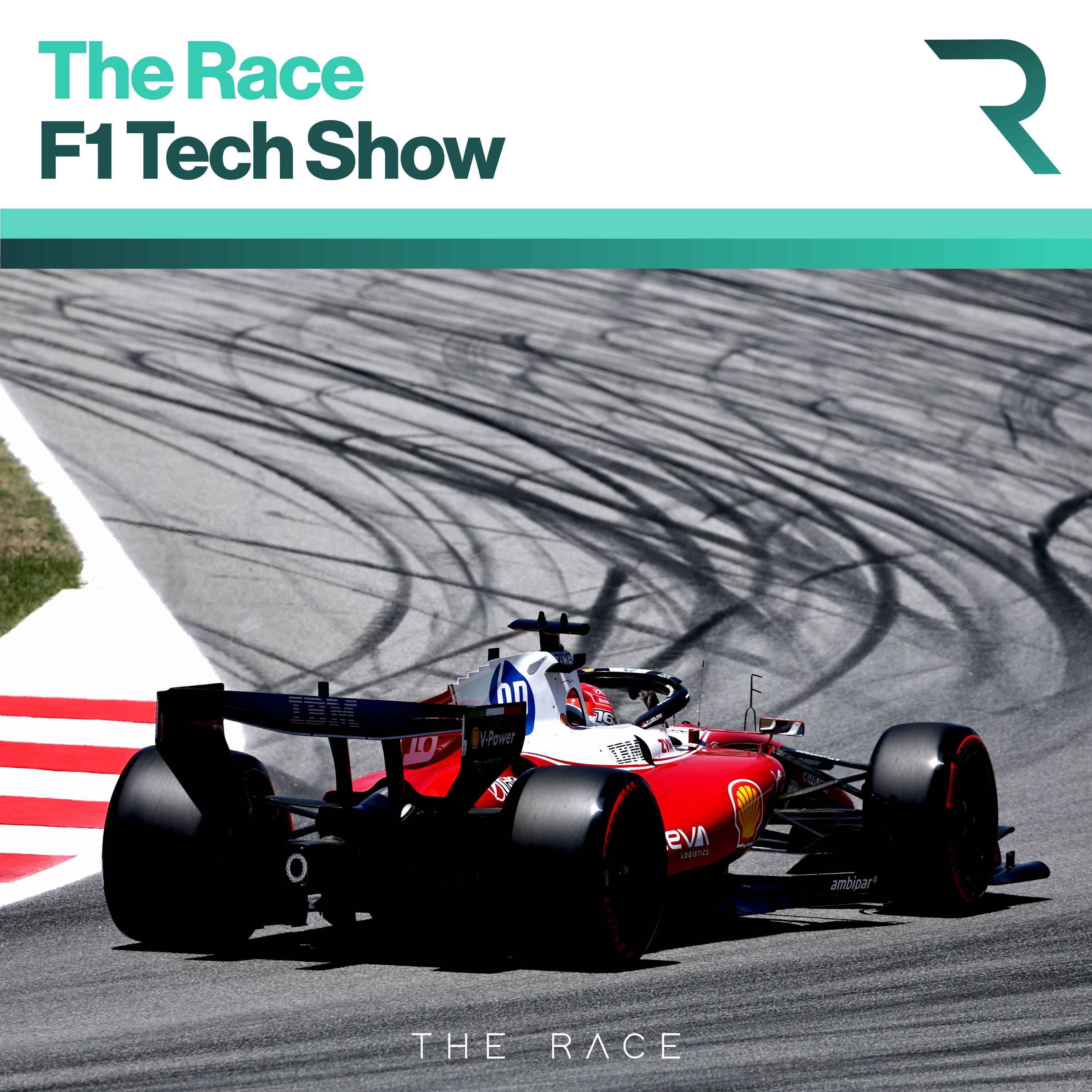
Tech Show: Is Norris right about Ferrari?
About this episode
Barcelona becomes the episode’s technical anchor: it’s framed as “an important track for aerodynamics, low speed corners, braking stability,” and its heat can “maximize” underfloor effects. From there, the hosts debate Lando Norris’s claim that Ferrari would dominate with a stronger engine, weighing turbo tradeoffs, average vs peak power, and how small aero/ride-height changes swing balance. They also cover why teams sequence drivability fixes before aero, how downforce loss is sensed, and why reliability issues trigger layered penalties.
After the Barcelona Grand Prix, McLaren's Lando Norris claimed that if Ferrari had the potential to "embarrass" the competition if it had a stronger engine, adding that the red car is "the class of the field in terms of cornering performance". But is the world champion right?
That's one of the topics tackled by Edd Straw and former F1 technical director Gary Anderson in the latest episode of The Race F1 Tech Show.
Gary also shares his thoughts on how F1 strugglers Aston Martin are approaching this season and gives his opinion on the recent ADUO (Additional Development and Upgrade Opportunities) decision.
He also tackles listener questions on how downforce loss is assessed during a race, engine penalties, F1's future bodywork regulations, and Mercedes' reliability concerns.
If you'd like to ask Gary a question, send it to [email protected]
Get bonus F1 podcasts, extra content and ad-free listening, sign-up to The Race Members' Club on Patreon today.
Hosted on Acast. See acast.com/privacy for more information.
Barcelona Grand Prix
"Obviously we have the Barcelona Grand Prix, the Barcelona Catalina Grand Prix or the Catalina Barcelona Grand Prix, whatever the official name is meant to be at the weekend."
This is the Formula 1 race weekend in Barcelona, Spain. It’s a track engineers like because it tests lots of different things on the car—handling in slow corners, braking, and how well the car’s shape works for downforce.
The “Barcelona Grand Prix” refers to the Formula 1 event held at the Circuit de Barcelona-Catalunya in Spain. In F1 tech discussions, Barcelona is often used as a benchmark because it has a mix of low-speed corners, heavy braking zones, and conditions that stress aerodynamics and the underfloor.
aerodynamics
"So yeah, it's an important track for aerodynamics, low speed corners, braking stability, everything you could ever want."
Aerodynamics is how the car’s shape interacts with the air. In racing, it matters because it can help the car stick to the road (downforce) and also affects how much it slows down (drag).
Aerodynamics is how air flows around the car and how that affects downforce and drag. In F1, small aero changes can strongly influence lap time, especially in corners and at speed where the car needs stable grip.
braking stability
"So yeah, it's an important track for aerodynamics, low speed corners, braking stability, everything you could ever want."
Braking stability is how well the car stays under control when you slow down. A stable braking car helps the driver turn in confidently for the next corner.
Braking stability is how consistently the car stays balanced and predictable while slowing down. In F1 setup terms, it’s about maintaining traction and steering control under braking forces, which is crucial for confidence entering corners.
underfloor
"It gets reasonably hot, so any sort of aerodynamic influences you have from the underfloor is always maximized or the problems are maximized to be honest."
The underfloor is the bottom part of the F1 car. Its shape helps pull the car down onto the track by controlling airflow under the car.
The underfloor is the floor area beneath an F1 car that’s shaped to manage airflow and generate downforce. Because it relies on clean, well-controlled airflow, track temperature and ride conditions can make its effects stronger or weaker.
Lewis
"and obviously to see Lewis won his 106th Grand Prix, that's a major step for him in the red overalls. That's a big race for him to be honest, to win his first Grand Prix with Ferrari."
Lewis is the driver being discussed. He’s hit a huge milestone—his 106th Grand Prix win—and this one is especially notable because it’s his first full Grand Prix win with Ferrari.
Lewis is referenced as winning his 106th Grand Prix and achieving his first Grand Prix win with Ferrari. This is a major career milestone because it marks success with a new team in the full race format.
battery vibration
"There's lots of things going on there, obviously the engine problems and the battery vibration and all that stuff."
“Battery vibration” means the hybrid battery system is causing the car to shake or feel unstable. That kind of vibration can make the car harder to drive and can also stress parts over time.
“Battery vibration” points to a hybrid-system issue where the high-voltage battery pack (used for energy storage in modern F1) is contributing to unwanted oscillations. That can affect ride quality, component stress, and ultimately how consistently the car performs lap to lap.
gearbox
"Lance Stroll you know has complained a lot about the gearbox and the engine pushing on, the gearbox not changing gear etc etc, not being smooth,"
The gearbox is what controls which gear the car is in and how smoothly it shifts. If it doesn’t change gears when it should—or shifts roughly—it can make the car feel inconsistent and slow.
In F1, the gearbox is the transmission system that manages gear ratios and shifting under extreme loads. When the hosts mention complaints about the gearbox not changing gear and not being smooth, they’re describing a drivability and performance consistency problem.
engine pushing on
"Lance Stroll you know has complained a lot about the gearbox and the engine pushing on, the gearbox not changing gear etc etc, not being smooth,"
“Engine pushing on” means the engine’s power delivery doesn’t feel smooth or controllable. Instead of helping the car behave predictably, it can make the car feel like it’s forcing you in the wrong direction.
“Engine pushing on” describes a drivability problem where the engine’s torque delivery feels intrusive or unmanageable. In racing terms, it often shows up as poor balance when you’re accelerating or transitioning between throttle positions, making the car harder to control.
new set of regulations
"there is going to be developments because it's a new set of regulations and you can also see how others"
A “new set of regulations” means the rules for building and running the cars have changed. When that happens in F1, teams often have to redesign parts of the car, so performance can shift a lot.
A “new set of regulations” means the sport has changed the technical rules that teams must design around. In F1, rule changes typically force major redesigns and can explain why teams’ performance and development progress look different from one season to the next.
aerodynamic works
"Obviously their argument is that the aerodynamic works going on in the background, but they're really putting the drivability problems, the gearshift problems..."
This is about how the car’s shape and wings push air around. If the aerodynamics aren’t working well, the car can feel unstable or slow, even if other systems are improved.
In Formula 1, “aerodynamic works” refers to how the car’s body and wings generate downforce and control airflow. The goal is to make the car stable and fast at speed, but it can be limited by other issues like drivability or energy management.
drivability problems
"but they're really putting the drivability problems, the gearshift problems, the way the drive chain is working, all the energy management..."
This means the car doesn’t feel smooth and predictable to drive. Even if it’s fast on paper, the driver may struggle to control it consistently.
“Drivability problems” are issues that make the car hard to drive in normal race conditions—things like unpredictable throttle response, traction changes, or instability when you change inputs. In F1, teams often treat drivability as a prerequisite because it affects lap-to-lap consistency and driver confidence.
gearshift problems
"but they're really putting the drivability problems, the gearshift problems, the way the drive chain is working..."
This is about the car not changing gears smoothly or at the right time. In an F1 car, that can make acceleration feel uneven or unpredictable.
“Gearshift problems” refers to issues with how the gearbox and shift system execute upshifts and downshifts. In modern F1, shifting is tightly coordinated with engine and traction control strategies, so problems can show up as jerky behavior, loss of traction, or inconsistent acceleration.
energy management
"the way the drive chain is working, all the energy management, all of these things that they feel are kind of major things..."
This is how the hybrid system decides when to use stored energy and when to recharge it. If it’s not managed well, the car can feel inconsistent or not respond the way the driver expects.
“Energy management” in F1 is how the car controls and allocates electrical and thermal energy across the power unit—especially how it harvests, stores, and deploys energy. Because it affects throttle response and power delivery, poor energy management can directly harm drivability and consistency.
drive chain
"the gearshift problems, the way the drive chain is working, all the energy management..."
This is the system that carries power from the engine to the wheels. If it’s not behaving correctly, the car can feel like it’s not putting power down cleanly.
“Drive chain” is the drivetrain path that turns engine power into wheel motion, including components like the gearbox output and final drive. In F1 discussions, it often implies how power delivery and mechanical behavior affect traction and acceleration.
half a season
"so that's the argument I presume the thinking is if you can troubleshoot all that in say half a season or more then you'll have a load of aero stuff..."
They’re talking about how long it takes to figure out what’s wrong and then improve it. In racing, you don’t have unlimited time to fix problems before the next upgrades.
“Half a season” is used here as a planning horizon for development and troubleshooting—teams try to identify root causes early enough to benefit from later upgrades. In F1, that timing matters because cars are updated in cycles and track testing is limited.
massive leap forwards
"but of course massive leap forwards are pretty rare aren't they, so can you sort of see why that would be the mindset..."
They mean the rare case where upgrades suddenly make the car much better all at once. Usually improvements are smaller and take time to fully work.
“Massive leap forwards” describes the rare situation where a team’s upgrades produce a dramatic performance jump quickly. F1 development is usually incremental, so big breakthroughs are uncommon because multiple systems (aero, power unit, drivability) must all work together.
Honda
"it took Honda a while to to come up with a better engine which you know the engine was down in par..."
Honda is mentioned as the company working on the engine side of the F1 car. If the engine isn’t right, the whole car can feel inconsistent to drive.
Honda is referenced as the engine supplier/partner that needed time to develop a better power unit. In F1, engine development can take multiple seasons because it affects not just speed, but also drivability and how the hybrid system behaves.
British Grand Prix
"which you know the engine was down in par and both of those two things came together at the British Grand Prix we got the new side pods and new front wing end plates..."
The British Grand Prix is one of the major Formula 1 races in the UK. In this story, it’s where the team brought upgrades to the car.
The British Grand Prix is a Formula 1 race event held in the UK, traditionally at circuits like Silverstone. It’s referenced here as the point in the season when new aerodynamic parts were introduced.
side pods
"we got the new side pods and new front wing end plates and bars boards etc to try"
Side pods are the shaped body panels on the sides of the F1 car. They help manage airflow and cooling, so new ones can make the car faster and more stable.
Side pods are the bodywork housings on either side of an F1 car that shape airflow around the cockpit and toward the rear. They’re also closely tied to cooling and packaging, so changing them can affect both aerodynamic performance and drivability.
bars boards
"we got the new side pods and new front wing end plates and bars boards etc to try"
This likely means bargeboards: small fin-like parts near the front sides of the car. They help direct air so the car grips better and runs more efficiently.
“Bars boards” appears to refer to bargeboards—thin aerodynamic fins mounted near the side of the car. They guide airflow around the front wheels and toward the car’s underbody, improving overall aerodynamic efficiency.
steering aerodynamic instability
"cure this steering aerodynamic instability which it it did I mean from from that was like a light switch both drivers immediately felt oh yeah now the car makes sense"
It means the car’s shape and airflow are making the steering feel a bit unpredictable. Instead of turning in smoothly, the front end can feel like it’s fighting you or changing behavior at speed.
“Steering aerodynamic instability” means the car’s airflow changes in a way that makes the steering feel unpredictable—often the front end wants to “wander” or react inconsistently. In F1, small aero changes can strongly affect how stable the car is at speed, especially through corners.
weight distribution
"we had recognised other things that we needed to do which was you know change the weight distribution we we moved the front wheels forward"
Weight distribution is where the car’s weight sits—more on the front or more on the back. That affects how the car turns and grips, so teams adjust it to make the handling feel balanced.
Weight distribution is how much of the car’s mass sits on the front versus the rear (and sometimes left versus right). In F1, changing it can improve balance—how the car behaves when you turn in, mid-corner, and when you accelerate out.
barge boards
"it's not just one turning vein here or one change on the barge boards or you know the underfloor it's a whole package of stuff"
Barge boards are shaped parts on the sides of an F1 car. They guide the air so the car sticks better to the track and behaves more predictably.
Barge boards are aerodynamic bodywork pieces mounted alongside the car’s cockpit area. They help manage airflow around the side of the car to improve overall downforce and reduce drag, and they can influence stability and balance.
turning vein
"it's not just one turning vein here or one change on the barge boards or you know the underfloor it's a whole package of stuff"
This is describing a small aero detail that affects how air flows around the car. The speaker is saying you can’t fix handling problems with just one tiny tweak—you usually need a set of changes that work together.
“Turning vein” appears to refer to a specific aerodynamic feature or flow element that helps direct airflow to influence how the car turns and behaves. The speaker’s point is that fixing instability usually requires multiple related aero changes, not just one small part.
Barcelona proper race track
"so here we go Barcelona proper race track it's not Monaco it's you know it's not it's not a flyaway it's a you know European race that they've tested thousands and thousands of times"
They’re talking about the Barcelona track used in F1. The point is that it’s a normal European circuit with lots of data and familiarity, unlike Monaco.
This refers to the Circuit de Barcelona-Catalunya, used for F1 testing and races. The speaker contrasts it with Monaco, emphasizing that Barcelona is a high-repetition, well-known circuit where teams can validate changes more reliably.
Alonso
"we you got to stay away from this knee jerk reaction but you know we're seven races into the season now so nothing would be a knee jerk reaction you know the problems are there all the time you know Alonso's fairly jovial about it he's seen a lot of this stuff before"
Alonso is a famous Formula 1 driver who’s won world championships. The point here is that he’s not panicking because he’s seen tough seasons like this before.
This refers to Fernando Alonso, a two-time Formula 1 World Champion known for long stints across multiple teams. When the host says Alonso is “fairly jovial” about the situation, it’s highlighting that he’s experienced similar periods of team trouble before.
Lance Stroll
"Lance Stroll I mean I'm not saying he's potentially a risk winner or a world champion but he's not a bad driver I've never seen him so down in my life"
Lance Stroll is an F1 driver. The host is saying he’s not a weak link—he can still deliver solid results even when the team is struggling.
Lance Stroll is a Formula 1 driver who has competed for teams like Racing Point/Aston Martin. The host is using him as an example of a driver who can “bring it home,” implying the car/team’s results depend not just on strategy but also on driver execution under pressure.
dead time
"the fact that it's just you know every dead time you get in the car it's just a waste of time and that's bad really to be honest"
“Dead time” in Formula 1 is the unproductive time where the car isn’t gaining track position—often tied to pit stops, waiting, or periods where you can’t effectively run at speed. The host’s point is that every moment like that adds up across a race weekend.
Minardi
"whether they're called Visa, Toro Rosso you know the name changes so many times I can't keep up. Just call them Minardi. Minardi that's the one"
Minardi was a Formula 1 team that usually wasn’t fighting for wins. The host is using it as an example of a team that aims for achievable results like scoring points.
Minardi was an F1 team known for operating at the back of the grid for much of its history, often fighting to score points rather than win races. The host uses “Minardi” as an example of a team that sets realistic goals and stays competitive within its limits.
Toro Rosso
"whether they're called Visa, Toro Rosso you know the name changes so many times I can't keep up. Just call them Minardi."
Toro Rosso was an F1 team name that later changed. The host is pointing out that the team’s branding can shift, even if the underlying operation is related.
Toro Rosso was the Formula 1 team name used by what later became AlphaTauri. The host mentions it to illustrate how team names and branding can change over time, making it harder to track who is who.
Visa
"whether they're called Visa, Toro Rosso you know the name changes so many times I can't keep up. Just call them Minardi."
“Visa” is mentioned as a sponsor-style name attached to an F1 team. The point is that team names can change a lot because of sponsorship.
“Visa” here is part of a team’s sponsorship/branding reference rather than a car or technical component. The host is using it to emphasize how F1 team names can include sponsor names that change frequently.
technical director
"Formula 1 is a lot of pressure for the top and people you know the technical director etc etc that's setting the path"
In F1, the technical director is the top engineering manager. They help decide how the car should be developed and make sure the different engineering groups work toward the same performance goals.
In Formula 1, the technical director is a senior engineering leader who sets and oversees the car’s technical direction. They coordinate areas like mechanical design, aerodynamics, electronics, and how the team turns performance targets into real development work.
aerodynamic design
"Adrian's got 200 people working theoretically underneath them all with missions to make things better in various areas from mechanical design to aerodynamic design"
Aerodynamic design is the process of shaping the car to manage airflow for downforce and drag. In F1, it’s crucial because it affects grip in corners and how fast the car can go on straights.
control systems
"to electronics you know control systems etc etc even down to simulation tools all that stuff"
Control systems are the car’s electronics and software that help it respond correctly while you drive. They read sensors and adjust behavior so the car performs the way the engineers designed it to.
Control systems in an F1 car are the software and electronics that manage how the car behaves—such as engine and driveline behavior, traction-related functions, and how the car responds to driver inputs. They’re tightly integrated with the car’s sensors and calibration work.
simulation tools
"to electronics you know control systems etc etc even down to simulation tools all that stuff"
Simulation tools are computer programs that help engineers predict how the car will act. Instead of testing everything on track, they can try ideas virtually first and learn faster.
Simulation tools are computer models used to predict how an F1 car will behave without waiting for track testing. Teams use them to evaluate changes in aerodynamics, vehicle dynamics, and control strategies, speeding up development decisions.
podium finisher
"somebody somewhere has to take responsibility for it going from being the objective of being a podium finisher or a solid point scorer every grand prix"
A podium finisher means finishing in the top three of an F1 race. It’s a big deal because it usually brings lots of points and shows the team is performing at the highest level.
A podium finisher is a driver who finishes a race in the top three positions. In F1, that’s a major performance benchmark because it directly translates to points, prestige, and momentum for the team’s development direction.
solid point scorer
"going from being the objective of being a podium finisher or a solid point scorer every grand prix to a new hopper which is where they are now"
A point scorer is someone who finishes high enough to earn points in the race. “Solid point scorer” means doing it regularly, not just once in a while.
In F1, a point scorer is a driver who finishes high enough to earn championship points, and “solid” implies consistently finishing in those positions. For teams outside the top tier, regular points are often the realistic target that keeps them competitive in the constructors’ standings.
team principal
"being a partner in the company and taking on the role as team principal"
The team principal is basically the top boss of an F1 team. They make the big decisions and keep the whole organization focused on performance goals.
The team principal is the top leadership role in an F1 team, responsible for overall direction and decision-making. They coordinate across engineering, operations, and strategy, and they’re accountable for results and how the team allocates resources.
engine supply
"could you argue to play devil's advocate that basically Aston Martin the team has been let down by Honda the engine supply yeah I'm sure you can"
In F1, some teams don’t build their own engines—they get them from an engine supplier. “Engine supply” here means Honda providing the engines to the team, and the host is saying that supply isn’t meeting expectations.
“Engine supply” refers to how one team’s engine manufacturer provides the power unit to another team under an F1 customer-engine arrangement. In this context, it’s being used to argue that Aston Martin’s team results are being held back by Honda’s engine performance.
98 engine
"and they were you know the where where they were for the 98 engine you know they reacted incredibly well"
“98 engine” is shorthand for the Honda power unit used in the 1998 era (often referenced by year in F1 technical discussions). The host is saying Honda responded well to feedback on that earlier engine, implying the current situation could improve with the right technical direction.
partnership
"so yes they're they're learning as well but as you say it's you know it's a partnership you've got to bring that partnership together to to make sure that it works"
F1 teams and engine suppliers have to work together closely. The host is saying the results only improve when both sides communicate and cooperate well.
In F1, “partnership” describes the working relationship between the car team and the engine supplier, including engineering communication and integration of the power unit into the chassis. The host’s point is that both sides must collaborate effectively for performance gains to show up on track.
Is Norris right about Ferrari?
"well let's talk Ferrari now Gary back to winning ways in Spain the first win since Mexico 24 of course Lewis Hamilton's victory now you've been looking very closely at the Ferrari SF26 do you agree with the Lando Norris assessment"
This part is basically a debate: are they right that Ferrari would be unbeatable if its engine were better? They also talk about whether the evidence is just from one race/track and whether there’s more going on. It’s about interpreting performance fairly.
This segment is a debate about whether Lando Norris’s assessment of Ferrari’s performance is correct. The discussion centers on the idea that Ferrari’s cornering class could translate to dominance if the engine were stronger. It also touches on track-specific context and team politics.
Ferrari SF26
"well let's talk Ferrari now Gary back to winning ways in Spain the first win since Mexico 24 of course Lewis Hamilton's victory now you've been looking very closely at the Ferrari SF26 do you agree with the Lando Norris assessment that if it had a stronger engine then Ferrari would dominate"
Ferrari SF26 is Ferrari’s latest Formula 1 race car. The discussion is basically about whether it’s fast because of the car’s handling, or whether it’s being held back by the engine. They’re debating what would happen if the engine were stronger.
The Ferrari SF26 is Ferrari’s current Formula 1 car being discussed in the context of whether its performance is limited by the engine. The hosts compare its pace—especially cornering—against the idea that a stronger power unit could make it dominate. This is an example of how F1 performance is often a balance between chassis/drag/downforce and engine output.
Lando Norris
"now you've been looking very closely at the Ferrari SF26 do you agree with the Lando Norris assessment that if it had a stronger engine then Ferrari would dominate"
Lando Norris is a Formula 1 driver. In this episode, they’re talking about what he thinks about Ferrari—basically whether Ferrari would be better overall if its engine was stronger. It’s his opinion being debated on the show.
Lando Norris is a Formula 1 driver for McLaren, and in this segment he’s quoted as making an assessment about Ferrari’s performance. The hosts discuss his claim that Ferrari’s chassis/cornering potential would lead to dominance if the engine were stronger. This is a driver-to-driver performance interpretation rather than a technical teardown.
McLaren
"I mean I think Lando might just be trying to put a little bit of political pressure on on McLaren because obviously they got the Mercedes engine in their car"
McLaren is one of the Formula 1 teams. The speaker is saying Norris might be trying to put pressure on McLaren, partly because McLaren’s car uses a Mercedes engine. That matters because engine strength is a big part of the debate.
McLaren is a Formula 1 team discussed here in the context of “political pressure.” The speaker suggests Norris might be applying pressure on McLaren because McLaren uses a Mercedes engine, which affects how teams compare power-unit performance. It’s an example of how engine partnerships shape competitive narratives in F1.
Mercedes
"because obviously they got the Mercedes engine in their car so that is"
Mercedes is mentioned here as the company supplying the engine used in McLaren’s Formula 1 car. The idea is that engine choice can change how fast a team is, so it influences the argument about who should be dominating. It’s part of the “why” behind the debate.
Mercedes is referenced as the engine supplier for McLaren in this segment. In modern F1, engine partnerships are a major competitive variable because power output and drivability can strongly influence race performance. The transcript uses this to explain why Norris’s comments might be aimed at McLaren’s situation.
pit lane
"you know arguably the best engine in the pit lane we'll find out later because I think we're going to see some other repercussions"
“Pit lane” is the lane where teams work on the cars during stops. Here it’s being used as a way to talk about which engine seems strongest during race action.
“Pit lane” is the area beside the track where teams service cars and where cars enter/exit for pit stops. In this context, “best engine in the pit lane” is a shorthand for which engine/engine package performs best over race-relevant conditions.
small turbo
"Ferrari made compromises like everybody else they went for the small turbo and that will affect you know they will have better turbo speed coming off slower corners"
A “small turbo” is a smaller turbocharger on the engine. It usually helps the car feel punchier sooner (faster boost), but it can run out of breath at the very top end.
A “small turbo” means the turbocharger is physically smaller than others. Smaller turbos typically spool up faster, so they can make boost earlier and improve acceleration out of slower corners, but they may limit maximum boost and top-end power at high engine speeds.
turbo speed
"they went for the small turbo and that will affect you know they will have better turbo speed coming off slower corners"
“Turbo speed” is how fast the turbo spins. When it spins faster, it can build boost pressure sooner, which helps the engine make power earlier.
“Turbo speed” refers to how fast the turbocharger’s turbine spins. Higher turbo speed generally means more boost pressure can be produced, which affects how quickly the engine makes power after you accelerate.
lower rpm corners
"they will have better turbo speed coming off slower corners um coming off lower rpm corners"
“Lower rpm corners” are corners where you’re not spinning the engine very fast. A turbo can still help you get power out of those corners, especially with a setup designed to spool up quickly.
“Lower rpm corners” means braking/turn-in and corner exit where the engine speed is relatively low. Turbo cars often benefit from smaller turbos here because they can build boost and power even when you’re not at high RPM yet.
turbo boost pressure
"they will have better turbo speed because for the volume of exhaust gas pumping with engine rpm the turbo will be turned faster so they'll get more power at the turbo boost pressure earlier"
“Boost pressure” is the extra pressure the turbo pushes into the engine. More boost usually means more power, as long as the engine can handle it and burn the air properly.
“Turbo boost pressure” is the extra air pressure the turbo forces into the engine. More boost pressure (within limits) usually increases power, but it also depends on engine RPM, turbo size, and how efficiently the engine can burn that extra air.
ultimate power
"but the top end might suffer a little bit because of it but that's their compromise they decided to go that route um so it might look like their engine itself um is is not as powerful as the others and you know if you're talking about ultimate power"
“Ultimate power” is the car’s absolute maximum power—usually when the engine is revving the highest. The idea here is that some turbo setups trade peak power for better punch earlier in the rev range.
“Ultimate power” means the maximum power the engine can produce at the top of its operating range. The speaker is contrasting this with mid-range power, arguing that a smaller turbo compromise may reduce peak/top-end output even if it improves earlier boost.
mid-range power
"if you're talking about ultimate power I think you're probably true it isn't as powerful but if you're talking about um about mid-range power then I think the Ferrari is very strong"
“Mid-range power” is how strong the car feels in the middle of its engine revs. It matters a lot when you’re coming out of slower corners and need acceleration without waiting to reach the very highest RPM.
“Mid-range power” is the engine’s strongest usable output in the middle of the RPM band, rather than at the very top end. For turbo cars, mid-range power is especially important for accelerating out of slower corners where you may not reach peak RPM immediately.
four wheel drifts
"the McLaren McLaren was slipping and sliding everywhere I mean it looked like you know four wheel drifts most of the time for both drivers"
“Four wheel drifts” means the car is sliding with all four wheels, not just the back. That usually suggests the car isn’t gripping well, so the driver has to steer and control the slide to stay on line.
“Four wheel drifts” describes a situation where all four tires are sliding, not just the rear. In racing terms, it often indicates the car is struggling for grip or balance—commonly due to tire temperature, setup, or traction limits—so the driver has to manage a more unstable slide.
1-2
"if Charles Leclerc could tidy his act up a little bit if he hadn't gone on the barrier in qualifying and qualified in the top four or something in Barcelona you know you could have had a Ferrari 1-2 very easily"
A “1-2” finish means the same team gets the top two spots in a race. It’s important because it can dramatically change the points race for the championship.
In Formula 1, a “1-2” finish means one team’s cars finish first and second in the same race. It’s a big deal because it maximizes points and can swing the championship standings quickly.
Ferrari 12
"hadn't gone on the barrier in qualifying and qualified in the top four or something in the in Barcelona you know you could have had a Ferrari 1-2 very easily and suddenly that would switch the point situation around quite well so I think what I'm saying really is the the"
The Ferrari 812 Superfast is a very high-end performance car made by Ferrari. It’s built to be extremely quick and is meant for both fast driving and longer trips. In a race weekend discussion, it can be brought up when talking about how a car’s speed in qualifying can change the outcome.
The Ferrari 812 Superfast is a high-performance grand tourer from Ferrari, designed to deliver very strong acceleration and top-end speed with a focus on long-distance usability. It’s significant in racing and track discussions because it’s capable of dominating pace when conditions and setup line up. In the podcast context, it’s referenced around qualifying performance and how quickly results can swing in a session.

Dodge Challenger
"...ercedes Ferrari McLaren and Red Bull that are the challengers what order they're in I'm not quite sure and I th..."
The Dodge Challenger is a performance car made by Dodge. It’s known for having a powerful engine and a sporty, aggressive look. People talk about it because it’s designed to be fast, especially in straight-line driving.
The Dodge Challenger is a classic American muscle car built for strong straight-line performance and a big, distinctive presence on the road. It often comes up in motorsport and car culture discussions because it represents a long-running style of high-power, rear-wheel-drive performance. In a podcast context, it may be mentioned as part of a broader conversation about which cars are “challengers” in a lineup or race scenario.
power unit
"and of course as well as car improvements the door is open for some engine improvements as well and when we talk about the the power unit performance"
In F1, the “power unit” is the car’s main engine system that provides the power to move the car. When teams talk about power unit upgrades, they mean improvements to that whole propulsion setup.
In modern F1, the “power unit” is the complete engine-and-energy system used to generate propulsion. It includes the internal combustion engine plus the related energy-recovery components, so upgrades can affect both outright speed and drivability.
benchmark
"debate comes up the the Red Bull engine and it's based on the v6 engine has been declared the the benchmark and"
A “benchmark” is the standard everyone compares against. The host is saying Red Bull’s engine has been the top reference point for performance.
A “benchmark” is the reference standard that other teams try to match or beat. Here, the host is saying Red Bull’s V6-based power unit has been treated as the performance yardstick.
peak power
"it's not just a peak power situation which is what the FIA seem to be based"
Peak power is the highest power number the engine hits at one particular engine speed. The point is that two engines can have similar peak power but feel very different across the rev range.
“Peak power” is the maximum power the engine reaches at a specific rpm. The host argues that judging engines only by peak power can be misleading because turbo sizing and engine mapping can make power arrive earlier or later, changing performance across the rev range.
throttle opening
"you set the turbo size the whiskey opening etc etc because all of that works together"
“Throttle opening” is how far the driver (or the engine control system) opens the throttle valve, which controls how much air enters the engine. In turbo engines, throttle position affects boost response and the air-fuel mixture, so it’s part of what determines the power curve.
exhaust pipe
"from the turbo outlet to the exhaust pipe the v6 engine is what they should be assessing it on"
The “exhaust pipe” is part of the exhaust path that carries hot gases from the engine to the turbo and beyond. In turbocharged setups, exhaust flow characteristics influence how the turbo spools and how efficiently the engine produces power.
average power
"you know what we want to do is get the engines to be equivalent to each other so your average power from you know let's say 7000 rpm to something like we see them rev to 12000 rpm if you took your average power between those two parameters"
Peak power is the highest number an engine can make at one moment. Average power looks at how strong the engine is over a whole range of engine speeds, which can be a fairer comparison—especially for turbo engines.
“Average power” is the mean engine output over a chosen engine-speed (rpm) band, not just a single peak number. The host argues that because turbocharged F1 engines behave differently across the rev range, comparing average power over a relevant rpm window is more meaningful than comparing peak power.
turbo size
"and took that as being the best engine because then the turbo size would sort of diminish itself as the revs got higher or lower you could make a decision"
A turbo is a device that forces more air into the engine. “Turbo size” is basically how big/strong that turbo is, and it affects how the engine makes power across different rpm levels.
In turbocharged engines, “turbo size” refers to the physical sizing of the turbocharger (and its compressor/turbine characteristics). The host’s point is that if you judge engines by average power across a rev range, the role of turbo sizing in shaping the power curve becomes clearer than when you only look at peak power.
rev range
"because that's the rev range they use it's very easy to find that rev range on all the circuits that each car or each driver uses and just formulate something to look at the average power during that that rev range"
“Rev range” just means the range of engine speeds the car spends time at. The host is saying you should compare engines based on the rpm band they actually use during a race, not just the single best rpm.
A “rev range” is the span of engine speeds (rpm) where the engine is operating during real driving or racing. The host argues that F1 comparisons should be tied to the rev range used on track, because that’s where the engine’s power delivery and turbo behavior matter most.
exhaust gas pumping
"because because you have a turbo the exhaust gas pumping is only relative to to rpm so you know you need to come up with something much more complicated than what they've done"
As the engine spins faster, the exhaust flow changes. That exhaust flow helps drive the turbo, so the turbo’s effect depends on rpm—not just on one peak power moment.
“Exhaust gas pumping” refers to how the engine’s exhaust flow and pressure relate to engine speed, which in turn affects turbocharger work. The host claims it’s “only relative to rpm,” meaning the exhaust-driven part of the system changes predictably with revs, so comparisons need to account for behavior across the rpm band.
V6
"consider ways that you can maybe have an V6 that performs well in certain characteristics but not in the ones they're measuring"
A V6 is an engine with six cylinders arranged in a V shape. The point here is that you can tune an engine to feel strong in certain ways, even if it doesn’t win every metric.
A “V6” is an engine with six cylinders arranged in a V shape. The host uses it as an example of how an engine can be tuned to perform strongly in some characteristics while not matching in others—depending on what’s being measured and how the power is delivered across the rev range.
MGUK
"with the MGUK MGU8 sorry what what you how you use the MGU8 to to work the turbo [1732.5s] and how that helped you to to make sure the boost pressure was right and how you had to [1739.2s] how you could use the the MGUH to to charge the battery"
MGUK is the part of an F1 hybrid system that recovers energy when the car slows down. Instead of wasting that energy, it turns it into electricity and stores it. Later, the stored energy can be used to help the car accelerate.
MGUK is the Formula 1 kinetic energy recovery system component that harvests energy from braking (kinetic energy) and turns it into electrical power. In the hybrid era, it can also deliver that electrical power back to the drivetrain to help with acceleration. The host is discussing how teams manage MGUK usage to influence boost and overall energy strategy.
MGUH
"and how you had to [1739.2s] how you could use the the MGUH to to charge the battery how much power you're getting out of that [1745.0s] because that was a big tool in the earlier regulations before this set and that that was [1751.1s] disappearing"
MGUH is the part of the hybrid system that works with the turbo. When the turbo is spinning, it can generate electricity. That electricity is used to charge the battery so the car can use it later.
MGUH is the Formula 1 hybrid system component that recovers energy from the turbocharger (typically from exhaust flow driving the turbo). It can convert that energy into electricity to charge the battery. The host connects MGUH usage to turbo operation and energy management across different regulation eras.
turbo sizing
"that that was the thing that would tell you where you wanted to go with the [1755.3s] turbo sizing and I think Ferrari were quite clever at that because they they went to the small turbo"
Turbo sizing means picking the right turbocharger design for the job. A smaller turbo can respond faster, while a larger one can make more power at the top end. In F1, the hybrid system changes how that choice plays out.
Turbo sizing refers to choosing the physical size/characteristics of the turbocharger to balance responsiveness and peak performance. In hybrid F1, the choice interacts with how the MGU systems can help spool the turbo and how quickly the car can deliver power. The host argues that this affects where teams want to go in terms of performance strategy.
monoco
"probably have more in in monocle than anywhere is the you know the battery the battery doesn't like being force fed [1786.0s] to charge and then drained and then force fed again and drained all that adds up to to heat [1800.2s] so you've got to dissipate that heat somehow the battery cooling and I think maybe there's a little [1805.4s] bit of lack of battery cooling in in monoco"
The host is talking about Monaco, a very tight F1 track. They think the track’s demands can make the hybrid battery run hotter because you’re constantly using and recharging it. That heat can then affect how the car performs.
The host appears to be referring to Monaco, a circuit known for tight corners and frequent braking/traction events that can stress hybrid components. They suggest the battery cooling situation may be worse there, then carry over to other circuits. (The transcript says “monoco,” likely a transcription error for “Monaco.”)
compression ratio
"of the year of Mercedes having that extra compression ratio potentially and that seems to have gone away"
Compression ratio is how tightly the engine squeezes the fuel-air mix before it’s ignited. Squeezing it more can help the engine make more efficient power, but it also makes the engine work harder and needs careful control.
The compression ratio is how much the air-fuel mixture is squeezed inside the engine cylinder before ignition. A higher compression ratio can improve efficiency and power, but it also increases stress and knock risk, so teams must manage it carefully.
V6 engine
"from the outlet of the turbo to the outlet and to the exhaust system itself you know the the V6 engine is just an engine design a mechanical engine design"
A V6 engine is an engine with six cylinders arranged in a V shape. In F1, it’s usually combined with a turbo and hybrid systems, so it provides the core engine power while other parts help add extra energy and boost.
A V6 engine is an internal-combustion engine with six cylinders arranged in a V shape. In modern F1, it’s typically paired with turbocharging and hybrid energy recovery, so the V6’s job is to provide the base mechanical power while the rest of the system manages additional energy and boost.
boost pressures
"to give you higher boost pressures so obviously the engine's got to cope with that"
Boost pressure is how much extra “push” the turbo gives the air going into the engine. More boost can mean more power, but it also increases the forces inside the engine, so it has to be managed safely.
Boost pressure is the amount of extra pressure a turbocharger adds to the intake air compared to normal atmospheric pressure. Higher boost can increase power, but it also increases cylinder pressures and stresses, so teams must ensure the engine can handle it reliably.
charging system
"you know the charging system that all that outside of the car and the harvesting and the and the generation region is all done by the same the same MG UK"
The charging system is how the hybrid part of the car makes electricity and stores it. That stored energy can then be used later for extra acceleration, so it strongly affects how the car performs over time.
In an F1 hybrid power unit, the charging system refers to how electrical energy is generated and stored for later use. It’s part of the ERS (energy recovery system) flow, affecting overall efficiency and how much power the car can deploy over a stint.
rear view mirrors
"so yeah keep an eye on the rear view mirrors because there's a red thing coming and how fast it's coming is going to be important"
Rear-view mirrors help the driver see cars behind them. Here, it’s about noticing when a rival is getting close and could affect the points fight.
Rear-view mirrors are used in racing to monitor what’s happening behind you, especially when rivals are closing quickly. In this context, the host is emphasizing situational awareness for championship battles and pace changes.
strain gauges
"currently what we have really is the the car will have strain gauges fitted on various componentry strain gauges on the post roads front and rear are a typical example of measuring the load in the front axle and load"
Strain gauges are sensors that detect tiny bends in a part when forces act on it. By reading them, engineers can figure out how hard different parts of the car are being loaded.
Strain gauges are sensors that measure how much a material flexes under load. In F1, fitting strain gauges to components lets engineers infer forces on parts of the car (like the front axle) to understand what’s happening when the car is damaged or behaving oddly.
push rods
"it changes the loads in the push rods etc so you have to try to get to a point where the car is at zero longitudinal and lateral forces ... mainly at this point in time it would be the load cells and the in the push rods"
Push rods are parts of the suspension that connect the wheels to the spring and shock setup. They can also be used to measure how much force the car is experiencing from the aero.
Push rods are suspension links that transmit wheel movement into the car’s spring/damper units. Because they carry forces from both suspension motion and aerodynamic loading, teams use them (via sensors) to infer overall downforce.
center of pressure
"you're trying to see whether the center of pressure is in the same position let's say the center of pressure starts off ... 40 front 60 rear that's what you're sort of aiming to look at"
The center of pressure is the spot where the air’s “down-pulling” force feels like it’s acting. If that spot moves forward or backward, the car can feel more stable or more twitchy in turns.
The center of pressure is the effective point where the aerodynamic downforce acts. Teams track whether it stays in the same fore-aft position (e.g., 40% front / 60% rear) because shifting it changes the car’s handling balance.
turner front wing
"they'll be saying you know we've lost half a percent one percent of our front end the driver's complaining about a bit of understeer so let's put a turner front wing on to bring that back again or let's take a turner front wing off if it's the other way around"
The front wing is the part on the front of the car that uses air to push the tires down for grip. Changing it can make the car turn in better or feel less loose, depending on what the driver reports.
A “front wing” is the aerodynamic device at the front of an F1 car that generates downforce and helps set front-end balance. The speaker is describing swapping a specific wing configuration to correct handling (understeer vs oversteer), which changes the downforce distribution.
load cells
"mainly at this point in time it would be the load cells and the in the push rods"
Load cells are force sensors. They help the team measure how hard the car is being pushed down by aerodynamics and other forces.
Load cells are sensors that measure force. In this context, teams place them in/with the push-rod system to quantify the aerodynamic loads and calculate total downforce.
downforce
"yeah I mean you know if we go through time you know so one turn of front wing is is is downforce [2274.5s] the big problem is how your front wing affects the rest of the car"
Downforce is the “suction” effect from the car’s shape and wings that presses the tires harder onto the road. More downforce usually means the car can turn and stop more confidently.
Downforce is the downward aerodynamic force that pushes a car toward the track. In Formula 1, it’s generated mainly by wings and other aero surfaces, and it increases grip so the car can brake later and corner harder.
front end
"the big problem is how your front wing affects the rest of the car you could you could very easily [2279.7s] have cars that a turn of front wing put on to get more front end will lose you more rear than you"
“Front end” means how well the front tires grip and how the car feels in turns. You can’t just add grip at the front without considering what happens to the rear too.
“Front end” here refers to the car’s front-axle grip and handling balance. If you add front downforce, you can increase front grip, but the overall balance can still worsen if the rear loses more than the front gains.
ride height
"you know half a millifront ride height [2290.9s] is is a lot you know it's equivalent probably to a millimeter rear right out that's a lot"
Ride height is how high the car sits off the ground. In race cars, even tiny changes can change how the aero “works,” which affects grip and handling.
Ride height is the vertical distance between the car’s body and the ground. In F1, small ride-height changes can significantly affect aerodynamic performance because they alter airflow under the car and the effectiveness of the floor and wings.
understeer
"you got you satisfied no matter what it is if he's saying the car's got understeer and you're [2343.2s] saying the data shows that it's got oversteer something's wrong somewhere"
Understeer is when the car doesn’t turn in as much as you want. It feels like the front tires lose grip first, so the car pushes toward the outside of the turn.
Understeer is when the car turns less than the driver expects—typically because the front tires lose grip before the rear. Drivers often describe it as the car “pushing” wide in corners.
oversteer
"and you're [2343.2s] saying the data shows that it's got oversteer something's wrong somewhere"
Oversteer is when the rear of the car loses grip first. The car can rotate more than you intended, which can feel unstable in a corner.
Oversteer is when the car turns more than expected or rotates too easily—usually because the rear tires lose grip before the front. It can feel like the car “wants to spin” or rotate more than the driver is commanding.
engine reliability
"is not as opposed to the data question now from Rory from Belfast I have a question about engine [2358.8s] reliability penalties and where the formula one is effectively punishing teams multiple times for the same failure"
Engine reliability means how consistently the engine/power system can run without breaking. In F1, if it fails, it can cost you race points and also lead to penalties later.
Engine reliability in F1 refers to how often power-unit components fail or need replacement. Reliability matters because failures cost points and can trigger additional penalties under the sport’s rules for power-unit usage.
cost cap
"two they must spend money [2372.3s] under the cost cap to investigate and rectify the issue three they often receive future grid [2376.9s] penalties when additional power unit components are required"
The cost cap is a rule that limits how much F1 teams are allowed to spend. If something breaks, fixing it can eat into the budget the team is allowed to use.
The cost cap is F1’s spending limit that teams must follow. If an engine reliability issue happens, teams may have to spend money to investigate and fix it, which counts against that capped budget.
grid penalties
"three they often receive future grid [2376.9s] penalties when additional power unit components are required"
Grid penalties mean you start the race further back than you otherwise would. In F1, they often happen when a team has to replace engine/power components too many times.
Grid penalties are penalties that move a driver back on the starting grid. In F1, they commonly apply when teams use additional power-unit components beyond the allowed number, as a way to discourage frequent replacements.
turbo v8
"active arrow etc but what would or should F1 do if and when they move to turbo v8 should they keep [2546.5s] the basic bodywork regulations create a new style philosophy or go somewhere in the middle of 2022"
A “turbo V8” is a V8 engine (eight cylinders in a V shape) that has a turbocharger. The turbo helps the engine make more power by pushing extra air into the cylinders.
“Turbo V8” refers to a V8 engine that uses a turbocharger to force more air into the cylinders. In F1 discussions, it usually implies a shift from the current hybrid power unit concept toward a different engine configuration where turbocharging plays a bigger role.
power split 5050
"and 26 well yeah Julian I think that um do one thing at a time I think you know the the thinner [2561.1s] tires is not really too much to do with the with the power split 5050 it does we just drag a little [2568.5s] bit but I think it was to also make the cars aesthetically a bit more pleasing"
F1 cars use both an engine and an electric motor. “Power split 50/50” means they’re aiming to share the work evenly between the engine and the electric system.
In F1 hybrid power units, “power split” describes how much of the total propulsion comes from the internal combustion engine versus the electric motor. A “50/50” split is a specific target balance that affects performance, energy management, and how the car behaves under acceleration.
recharge system
"I think you still want to keep a bit of a challenge that's there with the electrics and a recharge system [2613.5s] of some sort the MG UK looks like it's adequate to be honest so it's there's a lot [2620.2s] to talk about if you're going to change the regulations dramatically"
The “recharge system” is how the car refills the battery/energy used for electric power. In practice, it’s mainly done by recovering energy when slowing down.
A “recharge system” in F1 hybrid terms refers to the mechanisms that replenish the energy stored for the electric motor. Typically this involves energy recovery during braking and/or generator operation, which then constrains how often the team can deploy electric boost.
FIA
"cars look bad nowadays there's a few little areas I would address I suppose one of them is the Bards [2629.2s] board areas where you know we're looking at the teams have found solutions to go against what the [2635.7s] FIA was intending in certain areas the front wing end plates I'd make a bit probably a bit different"
The FIA is the organization that writes the rules for F1 and makes sure teams follow them. Here, it’s mentioned because it had a specific intention for how parts of the car should be designed.
The FIA (Fédération Internationale de l’Automobile) is the governing body that sets and enforces Formula 1 technical and sporting regulations. In this segment, it’s referenced as the authority intending certain aerodynamic/technical outcomes that teams may try to work around.
front wing end plates
"the FIA was intending in certain areas the front wing end plates I'd make a bit probably a bit different [2641.5s] aesthetically because they look a bit stupid with that you know the big the big foot plate etc etc [2646.3s] so there's room for a few areas where you could dot the i's and cross the t's in the regulations"
The front wing end plates are parts on the ends of the front wing that help guide air around the front of the car. Changing their shape can change how much grip the car gets from the front.
Front wing end plates are the vertical/angled surfaces at the outer ends of the front wing. They help shape airflow around the front tires and can influence downforce and aerodynamic efficiency, so small design changes can have meaningful handling effects.
silencer
"say I mean simple rule like saying you have to change gear above a certain level try to force [2678.5s] the noise level up because once you got turbo on it on an engine it will always act like a bit of [2684.0s] silencer it's a silencer on the exhaust system so I think you want to get the the engine power up"
A “silencer” is something that makes exhaust noise quieter. The point here is that turbo engines can sound less loud, so the rules might need to push the engine to run in a way that keeps the noise up.
Here, “silencer” refers to how turbocharged engines can reduce exhaust noise compared with naturally aspirated setups. The speaker argues that adding turbocharging changes the acoustic character, so rules may need to encourage higher engine load/speed to keep noise levels up.
battery pack
"the mguk so you know there's a good compromise there somewhere I think the battery pack size"
The battery pack is where the car stores the energy it recovers. If it’s too small or runs too hot, the car may not be able to use that energy reliably during hard racing.
In F1 hybrid systems, the battery pack is the storage unit for recovered energy. Its size and thermal management affect how much energy can be harvested and how reliably it can be deployed under race loads.
deployment
"there is more harvesting and deployment being used on one of the cars at one point in time"
Deployment is when the car uses the stored hybrid energy to give you a power boost. If the team deploys it a lot, the battery and electronics have to handle more heat and stress.
Deployment is when the stored hybrid energy is released to provide extra power. In F1, the deployment strategy is tightly controlled, and heavy use can increase demands on battery cooling and the MGUK system.
harvesting
"i'll go back to what i was saying a bit monaco about the the heat input and output on the battery package you know when they're when they're racing hard against each other there is more harvesting and deployment"
Harvesting means the car is collecting energy while you slow down. In F1, using it more can make the battery work harder, which can cause problems if cooling isn’t up to the job.
Harvesting is the process of capturing energy from the car’s motion—typically during braking—into the battery. In F1, how aggressively harvesting is used can raise thermal and electrical stress on the battery and related cooling systems.
Monaco
"i'll go back to what i was saying a bit monaco about the the heat input and output on the battery package"
Monaco is a famous F1 race where the track is slow and stop-start. The host mentions it because the conditions can make the hybrid system run hotter and stress the battery more.
Monaco is the Monaco Grand Prix circuit, known for tight, slow corners and heavy energy-management demands. The speaker references Monaco to explain how heat input/output during hard racing can affect battery and MGUK behavior.
battery cooling
"it'd be very easy if you're if you're but if your battery cooling wasn't adequate or even your your mguk cooling wasn't adequate to cope"
Battery cooling is how the car keeps the battery from overheating. If it can’t remove enough heat during intense hybrid use, the battery can fail or trigger protection modes.
Battery cooling is the thermal system that keeps the F1 battery pack within safe operating temperatures. If cooling can’t cope with the heat generated by harvesting and deployment, failures become more likely.
Request an Explanation
Heard something you'd like explained? We'll add it to this episode.
Sign in to request explanations for terms you heard.
Want to learn more?
Browse our glossary for plain-English explanations of automotive terms, jargon, and concepts.
Help improve this episode
See something that's not quite right? Our annotations are AI-generated and can sometimes miss the mark. Click the flag icon on any annotation to suggest a correction.