
About this episode
The hosts trace Jeep parts buying from old JC Whitney catalogs and slow mail-order waits to today’s instant-gratification expectations shaped by Amazon and modern logistics. They contrast small-batch manufacturing, limited inventory, and distribution choices with the pressure to ship fast, then weigh price against quality in aftermarket parts. The conversation also includes right-hand-drive Jeep expertise, a few cautionary tales about parts that don’t fit or exist, and a personal weekend at the Canfield swap meet with bargain hunting and weather complaints.
We want to hear from you, Send us a Text
"Cultivate your waiting experience". In this episode Neil, Scott, and Jeff tackle the uncomfortable topic of logistics. Why is waiting worth it? or should you just go with the cheap amazon equivalent? Tune in to find out their thoughts.
Thanks for listening, give us a review and check us out on YouTube -SFJ4x4 and visit our website to grab some great gear or products for your Jeep, SFJ4x4.com. Don't forget, you can email [email protected] for special content requests, blind react videos, suggestions, special guests, or general questions. Check out our Patreon patreon.com/ISpeakJeep
four-wheel drive
"In my oversized four-wheel drive Jeep A Jeep podcast starring industry experts"
Four-wheel drive means power can go to all four wheels. That helps the vehicle grip better when the road is slippery or uneven.
Four-wheel drive (4WD) is a drivetrain setup that can send power to both the front and rear axles. It’s commonly used to improve traction on loose surfaces like dirt, snow, and rocks.
waiting game
"We are going to be talking about the waiting game hence why Jeffrey said we're gonna make you continue to wait and this was just like all the parts logistics in the world right now"
They’re calling the situation a “waiting game,” meaning you’re stuck waiting—likely for parts or help. The episode is about that delay and how it affects people.
“Waiting game” is the episode’s central theme in this segment, referring to delays and back-and-forth around getting parts or service. It frames the discussion as a logistics/customer-service problem rather than a technical build topic.
35s
"Which is obviously why [131.8s] 25 years ago I bought 35s and wheels for my Jeep [136.2s] Despite it not actually being lifted"
“35s” means tires that are about 35 inches tall. Bigger tires can help off-road, but they can also rub or require changes to fit properly.
“35s” is shorthand in the off-road community for 35-inch tires. Tire size like this is often chosen for more ground clearance and better ability to handle rough terrain, but it can require suspension lift and/or trimming for fitment.
lift
"[136.2s] Despite it not actually being lifted [139.2s] I did that"
A “lift” means raising the Jeep’s suspension so it sits higher. People do it so bigger tires fit and the Jeep can handle rough ground more easily.
A “lift” refers to raising a vehicle’s suspension to increase ride height and clearance. On Jeeps, lifting is commonly done to make room for larger tires and improve off-road approach/departure angles.
Trail Hero X
"No Nate today because he's out having fun at Trail Hero X. Nate was on here, he was trying to be on here"
“Trail Hero X” is probably the name of an off-road event or trail activity. It doesn’t sound like a specific Jeep model—more like something people go do.
“Trail Hero X” sounds like a specific Jeep off-road event or activity name. It likely refers to a branded trail run or gathering rather than a vehicle model.
JC Whitney
"A jog of Jeepers Pointed out JC Whitney took four to six Weeks delivery back in the day. And that was fast"
JC Whitney was a company that sold car parts and accessories, often by mail order. The hosts are mentioning it to explain how shipping times used to be.
JC Whitney was a long-running aftermarket parts retailer known for mail-order car parts and accessories. In the segment, it’s used as a reference point for how long deliveries used to take.
Jeepers
"Yeah, right. A jog of Jeepers Pointed out JC Whitney took four to six Weeks delivery back in the day"
“Jeepers” appears to be a Jeep community nickname or in-group reference used by the hosts. It’s not a car model, but it signals the Jeep-focused audience and culture around the discussion.
Quadratech
"...With your larger e-commerce Retailers like Quadratech And what I recognize With Amazon is that they still hold You at stringent Requirements of Immediate availability..."
Quadratec is an online store that sells Jeep parts and accessories. The host is using it as an example of a big retailer that sells parts online.
Quadratec is a well-known aftermarket parts retailer focused heavily on Jeep and other off-road vehicles. In the episode, it’s mentioned as an example of a larger e-commerce retailer selling Jeep parts.
immediate availability
"...With Amazon is that they still hold You at stringent Requirements of Immediate availability, so Unlike yesteryear Where you would put that Check in the mail..."
“Immediate availability” means the part is already in stock, so it can ship quickly. The host is saying online sellers have to be ready to send parts fast.
“Immediate availability” is a retail requirement meaning the seller has the item in stock and can ship it right away. The host uses it to explain why Amazon-style sales push suppliers to keep parts ready rather than waiting for orders to be fulfilled later.
roll bar
"Because Daddy Jeep said he had bought a roll bar [841.8s] From JC Whitney back in the day [843.4s] A plastic one even, it must have been for that pedal car"
A roll bar is a metal safety frame inside the car. It’s there to protect you if the vehicle flips over, and it can also make the vehicle’s body stronger.
A roll bar is a structural safety frame—usually installed inside the cabin—that helps protect occupants if the vehicle rolls over. In off-road and Jeep circles it’s often discussed alongside other cage components because it changes how the body is reinforced and how safely the vehicle can be used.
JP magazine
"In the JP magazine / I remember them showing up in the mail"
They mention a magazine called “JP” that they read along with parts catalogs. It sounds like it helped them figure out what to buy and when.
The speaker references “JP magazine” as another publication they used alongside catalogs to track parts and buying timing. The transcript doesn’t provide enough detail to confirm the magazine’s full name or automotive focus.

Chevrolet Suburban
"Four by four, pick them up truck Plus a suburban, plus a Jeep And so I was, you know, daydream"
The Chevrolet Suburban is a large SUV that can carry a lot of people and gear. Some versions have four-wheel drive, which helps the tires grip better on snow, dirt, or rough roads. It’s the kind of vehicle people mention when they want something big and capable.
The Chevrolet Suburban is a full-size SUV known for seating capacity and long-distance comfort, often used as a family hauler or work vehicle. It’s commonly discussed in the context of “four by four” capability because many versions are offered with four-wheel drive for traction in tougher conditions. It also comes up alongside trucks and other SUVs when people talk about practical, versatile vehicles.
power steering systems
"And if they're going to take A good jillion years, like notch Customs and then sort of fold AG R, power steering systems"
Power steering helps you steer with less effort. Instead of your arms doing all the work, the car uses a system to assist turning.
Power steering systems use a pump and control components to reduce the effort needed to turn the steering wheel. The segment mentions “power steering systems” in the context of aftermarket customization and longevity (“a good jillion years”).
AG R
"like notch Customs and then sort of fold AGR, power steering systems I'm here for it"
The speaker mentions a company (or brand) called “AGR” in the context of aftermarket work. The exact name is a bit unclear in the transcript, but it’s being discussed like a vendor.
“AGR” appears to be referenced as a business involved with aftermarket work or parts, paired with “notch Customs” and “power steering systems.” The transcript is unclear on the exact company name, but it’s treated as a vendor the speaker wants to criticize or promote.
Iron Rock Off-Road
"Like Iron Rock Off-Road [1166.5s] I'll talk about Dana Spicer"
Iron Rock Off-Road is a company that sells aftermarket parts for off-road builds. The hosts bring it up as an example of a U.S.-based supplier.
Iron Rock Off-Road is an aftermarket supplier that supports off-road Jeep builds with parts and accessories. In the episode, it’s mentioned as an example of a “good USA” company involved in the parts supply chain.
Dana Spicer
"I'll talk about Dana Spicer [1167.9s] In their aftermarket program [1169.4s] But likewise Curry as an example"
Dana Spicer is a big parts company that makes drivetrain and axle components. The host mentions their aftermarket program to explain how axle parts get produced and supplied.
Dana Spicer is a major driveline and axle supplier, known for components used in many vehicles and in the aftermarket. The episode references its aftermarket program and ties it to axle-related production.
aftermarket program
"I'll talk about Dana Spicer [1167.9s] In their aftermarket program [1169.4s] But likewise Curry as an example"
An aftermarket program means the company makes replacement or upgrade parts for cars, not just the original factory parts. The host is talking about how axle companies sell those parts to enthusiasts.
An aftermarket program is a manufacturer’s effort to produce parts for customers who want to upgrade or repair vehicles outside the original factory supply chain. In this segment, it’s used to describe how axle/driveline companies supply non-OEM parts.
Curry
"But likewise Curry as an example [1172.7s] And [1174.1s] Curry and Dana"
The host mentions “Curry” as another company that makes axle-related parts. It’s brought up alongside other axle suppliers to illustrate how these parts are made and sourced.
“Curry” is referenced as another manufacturer making axle and axle-related products for the aftermarket. The context groups it with Dana Spicer, suggesting it’s part of the same supply chain for Jeep/off-road driveline components.
axles
"Are making [1176.9s] You know, specifically [1178.7s] Axles and Axle-related products"
Axles are the parts that help deliver power to the wheels so the vehicle can move. The episode focuses on axle parts and related components.
Axles are the shafts and assemblies that transmit power from the drivetrain to the wheels, and they’re central to how a vehicle moves and handles. The host specifically mentions axle-related products as the category that these manufacturers produce.
Mickey Thompson
"And I'll throw Mickey Thompson in on the conversation as well [1190.7s] Because I can [1191.4s] Those aren't small manufacturers"
Mickey Thompson is a well-known off-road motorsports and aftermarket brand, especially associated with tires and off-road performance products. The host uses it as an example of a larger manufacturer to contrast with smaller suppliers and explain production capacity.
Northridge
"Northridge says That this product should exist And so therefore when I swipe my card It should the product should show up What they don't know is that like for Dana example"
They’re a company that sells Jeep parts. The host is saying the website may show parts as available even if the company doesn’t have them sitting in their warehouse right then.
Northridge is mentioned as a parts seller that lists inventory for customers to buy. In the context of the episode, they may not physically stock every item in their warehouse, even if it shows as available online.
gear ratio
"They make 10 Of this Axle and this gear ratio And then they move on to the next Gear ratio and make another 10"
Gear ratio is the gearing inside the axle that affects how the Jeep pulls and how it feels at highway speed. If you need the wrong ratio, the part may not fit or won’t work as intended.
Gear ratio is the relationship between the number of teeth on the gears in a differential/axle. Different gear ratios change how the vehicle accelerates and how it cruises at speed, so parts are often specific to the ratio you need.
inventory on pledged inventory
"Companies like Northridge Will put the inventory on there For pledged inventory They don't necessarily have that in their warehouse They just know that they have an order in"
It means the seller is saying they have the part set aside for you. But the host is warning that they might not actually have it ready in their warehouse, so it can take longer to arrive.
“Pledged inventory” refers to stock that a seller claims is reserved or allocated for an order, even if it isn’t physically on hand in their warehouse. This can lead to delays when the item must be sourced after the purchase.
Extreme Terrain
"And I've certainly seen this Argument happen at the Quadratec level or at the extreme terrain level [1277.9s] Where they are not putting inventory"
Extreme Terrain is a company that sells Jeep and off-road parts. The discussion is about whether they take customers’ money before the parts are ready to ship.
Extreme Terrain is an aftermarket retailer known for Jeep and off-road parts. The host brings it up in the context of inventory and order timing—selling before parts are physically available.
taking people's money before inventory
"Where they are not putting inventory [1279.8s] And [1281.6s] They're just taking people's money [1284.0s] And then they're [1285.9s] Sitting on it, they're playing customer service"
The host is talking about a situation where a store charges you for an item before it has it in stock. That usually means you may have to wait longer for the product to be made or delivered.
The host is describing a fulfillment practice where a retailer accepts payment for products before they actually have inventory on hand. This can lead to delays, because the order depends on later production or restocking rather than immediate shipping.
Rusty's off-road
"And Rusty's off-road was one of [1291.0s] I know [1292.5s] That one's really chapter [1294.7s] Rusty's off-road and I'm not [1296.2s] Exactly certain what Rusty is doing these days"
Rusty’s Off-Road is an off-road parts and accessories retailer. The host references it as an example of how a business owner approached product availability and customer expectations, especially around the time before COVID.
pre-COVID
"But back in the day [1301.2s] Pre-COVID, a year or two pre-COVID"
“Pre-COVID” just means before the pandemic. The host is using it to say this story happened before supply and shipping problems changed how parts businesses operate.
“Pre-COVID” refers to the period before the COVID-19 pandemic, which is often used in car and parts retail to explain supply-chain disruptions and changes in ordering/shipping behavior. Here it frames Rusty’s comments as coming from a time when inventory and fulfillment expectations were different.
DV8
"But you could have a bumper manufacturer, DV8 [1417.3s] That [1418.8s] Is in the Asian markets"
DV8 is a company that makes aftermarket off-road parts. The hosts are talking about how brands like DV8 can keep prices lower depending on where and how the materials are made.
DV8 is an aftermarket off-road parts brand, and the hosts are discussing how its products are sourced and priced. They’re implying that DV8’s metal sourcing and manufacturing supply chain may be influenced by global sourcing and cost pressures.
Red Rock
"But factually [1438.9s] The Red Rock [1441.5s] Or the Barricade, or the DV8"
Red Rock is a brand that makes aftermarket off-road gear. The hosts are saying brands like this can be cheaper and still widely available.
Red Rock is referenced as an aftermarket off-road product brand, grouped with other bumper/gear manufacturers. The discussion frames these brands as being sold at lower prices with relatively consistent pricing.
Barricade
"The Red Rock [1441.5s] Or the Barricade, or the DV8 [1443.5s] We've certainly seen those products"
Barricade is a brand that makes aftermarket off-road parts. The hosts are using it as an example of brands that can keep prices down.
Barricade is mentioned as an aftermarket off-road parts brand, again grouped with Red Rock and DV8. The hosts use it to illustrate how certain off-road product lines can stay affordable and available in the market.
tariffs
"Without much [1451.7s] Deviation in product [1453.8s] Price point [1454.7s] Via the tariffs"
Tariffs are taxes on imported products. The hosts are saying those taxes can raise prices, but some off-road parts brands still manage to keep prices relatively steady.
Tariffs are taxes the government charges on imported goods. Here, the hosts are saying tariffs (and other trade-related costs) can affect how much aftermarket products cost, but that some brands’ pricing still “flows” through the market.
Rust Belt
"If you are [1471.1s] In the Rust Belt areas [1473.1s] I'm certain that if you are consuming that product"
“Rust Belt” is a nickname for parts of the U.S. where cars rust faster. Road salt and wet/cold weather help corrosion spread, especially on the underside and wheel areas.
“Rust Belt” refers to regions of the U.S. where cars are more likely to rust due to a combination of road salt, moisture, and colder winters. It’s a shorthand for areas that are harsh on underbodies, wheel wells, and other exposed metal parts.
fender flares
"He was looking at some fender flares For his wife's Jeep And I think I turned him on to Road Armor"
Fender flares are add-on pieces around the wheel area. They help protect the car from dirt and debris kicked up by the tires, and they can make room for bigger tires.
Fender flares are aftermarket panels that extend outward over the wheel openings. They help keep mud, rocks, and water from being thrown into the body and can also provide clearance for wider tires.
Road Armor
"I turned him on to Road Armor Road Armor out of Texas Kind of Fabfors-ish Fabfors is far more known In the Jeep community"
Road Armor is a company that sells aftermarket off-road parts for Jeeps. The host is mainly talking about how long their parts can take to arrive.
Road Armor is an aftermarket parts brand/company that makes Jeep-focused off-road accessories. The host discusses its typical manufacturing lead times and how supply chain delays affected orders.
Fab Fours
"Road Armor out of Texas Kind of Fabfors-ish Fabfors is far more known In the Jeep community"
Fab Fours is another company that makes off-road parts for Jeeps. The host brings it up to compare brand reputation in the Jeep world.
Fab Fours is another aftermarket off-road parts brand that’s well known in the Jeep community. In this segment it’s mentioned as a comparison point to Road Armor.
lead times
"They have Ten to have a month, month and a half Two month lead times At one point in time We sold a bumper of theirs"
Lead time just means how long you have to wait after ordering something. The host is saying some parts take weeks or even months to arrive.
Lead time is the delay between placing an order and receiving the product. The host uses it to explain why some Road Armor items can take one to two months (and longer during COVID) to show up.

Morgan Six Plus
"Again, COVID times Took six plus months And that was no delay on our part"
The Morgan Plus Six is a sports car made by Morgan. It’s designed for driving enjoyment rather than everyday hauling. In the podcast context, it’s mentioned because getting one can take a while due to production timing.
The Morgan Plus Six is a modern sports car from Morgan, built to deliver a classic driving feel with contemporary performance. It’s the kind of car that may come up in conversation about production timing and delays, especially when manufacturing schedules are affected by external factors. The “Plus Six” name is often mentioned because it’s a specific model within Morgan’s lineup.
JCR
"One of the companies that was In my opinion, infamous Infamous means that you're kind of negatively known For something Would be JCR So even prior to The COVID times JCR had Exorbit lead times"
JCR is a company the hosts are talking about in the context of ordering Jeep-related parts. They say it’s known for taking a long time to deliver, but also for being very active online and in the community.
JCR is referenced as a company known for long lead times, especially even before the COVID era. The hosts also describe JCR’s marketing and community outreach, suggesting the brand is active on social media and in public-facing efforts.
small batch manufacturer
"[1663.6s] A small batch manufacturer [1666.0s] They're not making their bumpers"
It means the company makes parts in small quantities instead of millions of units. With smaller production runs, you often have to wait longer and the parts may be harder to locate.
A small batch manufacturer is a company that produces limited quantities of parts, often with less automation and more hand-built processes. In the Jeep aftermarket world, that usually means longer lead times and parts that can be harder to find than mass-produced items.
import markets
"[1668.6s] Via crappy press machines [1671.3s] Over in import markets [1673.4s] And then stuffing them into a container"
Import markets are places where products are sold after they’re shipped from another country. Shipping internationally can slow down when you can actually buy the parts.
Import markets are countries where products are sold after being brought in from another region. When parts are shipped internationally, it can add delays, customs steps, and variability in how quickly inventory shows up.
distribution
"[1677.9s] So they changed [1679.6s] Their distribution to make [1681.3s] Their product harder to find"
Distribution is basically the supply chain for getting parts to stores and customers. If a company changes how it ships or sells, the parts can suddenly become harder to find.
Distribution is how a company moves products from where they’re made to where customers can buy them. Changing distribution channels can make parts harder or easier to find even if the product itself hasn’t changed.
Victory
"[1694.3s] They've actually shifted their approach [1696.1s] They created Victory [1697.8s] Which Victory was intended"
“Victory” sounds like a named product line or plan the company created. Here, they’re saying it was designed to compete and to change how their products show up in the market.
“Victory” appears to be the name of a product line or distribution strategy intended to compete in the aftermarket. In this context, it’s being positioned as a deliberate response to market demand and availability.
modular market
"[1697.8s] Which Victory was intended [1699.6s] To compete with [1701.8s] The modular market"
A modular market refers to an aftermarket ecosystem where parts are designed to work together in interchangeable configurations. When the host says Victory was intended to compete with the modular market, they’re pointing to a demand for flexible, mix-and-match setups rather than one-off designs.
JK
"[1703.8s] That was really popular at the end of the JK [1706.8s] Again, talking about [1707.9s] That immediate consumption"
JK is a Jeep Wrangler generation code. Lots of aftermarket parts are made to fit a specific Wrangler generation, so “end of the JK” means the parts ecosystem for that Wrangler era.
JK refers to the Jeep Wrangler generation (the 2007–2018 Wrangler platform). Aftermarket parts are often designed around specific Wrangler generations, so “end of the JK” usually means the parts and fitment ecosystem tied to that generation.
Rugged Ridge
"I credit Rugged Ridge. Which is an import Manufacturer... And then all of a sudden... seeing a Jeep... had the stickers and said Rugged Ridge on it... Like they have rebranded themselves."
Rugged Ridge is a company that makes aftermarket parts and accessories for Jeep owners. The host is saying their products and image changed, and that affected how Jeep people viewed the brand.
Rugged Ridge is an aftermarket Jeep parts brand known for accessories like bumpers, wheels, and suspension-related upgrades. In this episode, the host is talking about Rugged Ridge’s reputation changing over time and how its branding/market presence shifted among Jeep owners.
bumpers
"And you could buy bumpers [1773.0s] And you would buy just a stubby [1774.5s] And then you could buy wings"
Bumpers are the protective parts at the front and back of a vehicle. The host is talking about buying them as separate add-on pieces.
Bumpers are the front and rear impact-protection structures on a vehicle, often designed to accept different aftermarket styles. In the segment, the host mentions buying bumpers as individual components through a mail-order process.
wings
"And you would buy just a stubby [1774.5s] And then you could buy wings [1775.7s] That had little lock boxes on them"
In this context, “wings” means the side body panels (like fenders). The host is saying you could buy those panels separately, and some had storage/locking features.
“Wings” is enthusiast shorthand for fender/side body panels on a Jeep. The host describes buying them with built-in lock boxes, implying removable/replaceable exterior components.
lock boxes
"[1775.7s] That had little lock boxes on them [1778.9s] And of course [1780.3s] We had a customer who did that"
Lock boxes are small, lockable storage compartments. The host is saying that the locks and hinges on these parts ended up rusting and getting stuck.
Lock boxes are secured storage compartments integrated into certain aftermarket exterior panels. The speaker’s point is that these hardware features (locks/hinges) were prone to seizing and rusting when exposed to the elements.
hinges
"Immediately those locks, the hinges [1792.4s] Everything seized, rusted, shut [1794.5s] Within, you know, 18 months"
Hinges are the parts that let a door or panel swing open and closed. The host is saying the hinges rusted and got stuck pretty quickly.
Hinges are the moving joints that allow doors/panels to open and close. The host reports that the locks and hinges seized and rusted shut within about 18 months, highlighting a durability issue with that setup.
bull bar
"Acquire their product [1831.8s] Accessorize, you want a bull bar [1835.1s] You can bolt it on, right?"
A bull bar is a protective bar on the front of a Jeep. It helps protect the front lights and grille when you hit brush or obstacles.
A bull bar is an off-road front protection bar, typically mounted to the bumper or frame, designed to shield the grille and lights from impacts. It’s commonly used for trail driving and for reducing damage from brush or low-speed collisions.
speed to market
"Was an attempt to [1844.1s] Create greater speed to market [1845.8s] Which then limited the waiting game"
It means how fast a company can launch a product after deciding to make it. Faster launches can reduce how long customers have to wait for new Jeep parts.
“Speed to market” is how quickly a company can get new products from planning into customer hands. The speaker is connecting faster accessory/product rollout to reducing the “waiting game” customers experience.
race to the bottom
"We've seen a number of companies [1853.2s] I think [1855.1s] That actually created the race to the bottom [1857.1s] For a lot of companies"
It means companies compete by cutting things to be cheaper than everyone else. Over time, that can lead to worse quality or less value for customers.
A “race to the bottom” describes a competitive cycle where companies lower standards—often price, quality, or margins—to undercut rivals. In automotive accessory discussions, it can imply cheaper parts or more aggressive pricing strategies that hurt overall value.
quality control
"[1902.8s] Back because the race to the bottom [1904.6s] That's how they cut themselves off [1905.9s] From racing to the bottom of their quality control [1908.4s] Whereas [1909.8s] Highline off-road, they ended up going"
Quality control is how a company checks that what they make is good and works correctly. It’s meant to stop broken or poorly made parts from getting to customers.
Quality control is the process of checking products during and after production to catch defects before they reach customers. In car-related manufacturing, stronger quality control helps prevent issues that come from inconsistent parts or sloppy assembly.
Rockhard
"You're going to get a Rockhard bumper And it's going to show up on a freight pallet And you're going to wait Three to five weeks to get it"
Rockhard makes aftermarket off-road parts for Jeeps, like bumpers. The discussion is about how long it can take to get one because of finishing steps like powder coating.
Rockhard is an aftermarket automotive brand associated with Jeep off-road hardware, including bumpers. The episode describes how a Rockhard bumper is shipped on a freight pallet and may require redoing the powder coat before it’s delivered, which affects lead times.
Artec
"With that said, manufacturers like Artec and Rockhard I think those are the ones I want to exemplify"
Artec is a company that makes Jeep aftermarket parts. The hosts bring it up as an example of a parts maker that kept pushing forward even when things got slow or uncertain.
Artec is an aftermarket automotive brand known for Jeep-focused off-road parts. In this episode, it’s mentioned as an example of a manufacturer that “doubled down” during supply-chain uncertainty.
freight pallet
"You're going to get a Rockhard bumper And it's going to show up on a freight pallet And you're going to wait Three to five weeks to get it"
A freight pallet is how big or heavy items get shipped—on a pallet using freight shipping. That kind of shipping often takes longer than normal package delivery.
A freight pallet refers to shipping goods on a pallet via freight logistics rather than small parcel delivery. The episode uses it to illustrate how aftermarket parts are handled and why delivery can take several weeks.
powder coat
"And that's if they don't realize That they have to redo the powder coat Well, that is an unfortunate part of their conversation"
Powder coating is a durable paint-like finish that’s baked onto metal parts. If it has to be redone, it can add weeks to how long you wait for the part.
Powder coat is a protective finishing process where a dry powder is applied to a part and then cured (baked) to form a tough coating. The host notes that the manufacturer might have to redo the powder coat, which can delay delivery.
Amazon
"As a consumer, we're then faced with this conversation of Do I turn To Amazon Or some just Random internet page"
They’re talking about ordering parts online from Amazon instead of getting them from a local shop or dealership.
The speaker references buying automotive parts through Amazon. For car owners, this often means ordering aftermarket or replacement components online rather than through a Jeep dealer or local parts counter.
Prime
"Or I buy a bumper Via Prime that tells me I'm going to have it Immediately in three days"
Prime is Amazon’s service that can deliver items faster—here, they’re using it as a way to get a car part quickly.
Prime is Amazon’s membership program that offers faster shipping. In the context of car parts, it’s being used to promise quick delivery so you can get a part installed sooner.
built fenders
"[2069.8s] I got OP and Quigley saying [2072.0s] Got a set of snotty built fenders [2073.5s] That are rusted out in less than a year"
“Built fenders” refers to aftermarket fender panels made for off-road use, often with added strength and coverage compared with stock. The speaker says these fenders rusted out quickly, which is a key quality concern for Jeep owners in salty or wet climates.
go rhino sliders
"[2073.5s] That are rusted out in less than a year [2075.2s] And a set of go rhino sliders [2077.1s] That are all dented in because they aren't really sliders"
Rock sliders are metal bars under the doors that help protect the Jeep when you hit rocks or uneven ground. The host says these “sliders” got dented, so they didn’t seem to do the job.
“Go Rhino sliders” are aftermarket side steps/rock sliders designed to protect the Jeep’s lower body when driving off-road. The speaker criticizes them as not actually functioning like true sliders because they were dented, suggesting insufficient protection or construction quality.
Buy once cry once
"[2081.1s] I didn't buy once cry once [2083.2s] My mistake [2083.8s] And that fits perfectly with what you were just saying [2087.2s] You're going to pay more [2088.6s] You're going to wait longer [2090.0s] But you'll have a better quality product [2092.1s] Buy once cry once"
It’s a saying that means: spend a bit more one time to get something that lasts, instead of buying a cheaper version that fails quickly. The “cry once” part is the idea that the pain is upfront (cost/wait), not later (replacement).
“Buy once, cry once” is an enthusiast saying meaning you should pay more upfront for a higher-quality product that lasts, rather than buying cheaper items repeatedly. In this segment, it’s used to justify paying more and waiting longer for better-built Jeep accessories.
Instant gratification
"[2097.5s] Concept because that then [2099.7s] Because we live in a world of [2100.9s] Instagradification [2101.7s] Correct and I think that that's human nature though"
It means wanting results right away instead of being patient. The episode is basically asking how to handle that mindset when better parts take time.
“Instant gratification” refers to the desire to get rewards immediately rather than waiting for better outcomes later. The hosts contrast it with the “waiting game” idea—paying more or waiting longer for higher-quality Jeep parts.
Cedar Point
"I think that's a great example... Specifically a near and dear place... For certainly Greg and I... Cedar Point... And Cedar Point is known for having some of the most Adrenaline Pumping Extreme Ride attraction... Wait in line for 3 hours for a 30 second ride"
Cedar Point is a theme park famous for intense rides. The hosts are using it as an example of how waiting in line can still feel like part of the experience.
Cedar Point is an amusement park known for high-thrill rides, which the hosts use as an analogy for how people “wait” for something exciting. In this segment, the long line experience is framed as part of the fun and anticipation rather than just a hassle.
corkscrew
"The corkscrew You know, the corkscrew or the iron dragon Which if you're not familiar"
A “corkscrew” is a roller-coaster track section that twists you upside down in a spiral shape. In this conversation, it’s being used as a comparison for how intense the ride feels.
A “corkscrew” is a roller-coaster element where the track twists through a corkscrew-shaped inversion. It’s used here as a metaphor for a shorter, less intense ride compared with bigger coaster elements.
iron dragon
"You know, the corkscrew or the iron dragon Which if you're not familiar Those were more of like entry level roller coasters ... So it's kind of like to me It's pulling the trigger on the iron dragon ... Versus a 4 hour wait for the dragster"
“Iron Dragon” is the name of a particular roller coaster. They’re comparing it to another coaster to explain why someone might choose a shorter wait and a less intense ride.
“Iron Dragon” is the name of a specific roller-coaster ride, referenced as a shorter, more manageable option than a “dragster.” The hosts use it to illustrate how ride intensity and wait time affect the decision to go.
dragster
"Do the 10 minute wait for the iron dragon Versus a 4 hour wait for the dragster Correct And you get a longer ride out of it"
“Dragster” is another roller-coaster name they’re using for comparison. They’re saying it takes much longer to wait for, but the ride lasts longer.
“Dragster” here refers to a roller-coaster ride name, used as a contrast to “iron dragon.” The key point is the tradeoff between a much longer wait time and a longer ride experience.
FedEx
"It was a FedEx hub [2614.5s] That [2617.7s] Used to employ [2620.2s] 13 [2622.2s] Drivers"
FedEx is a shipping company that moves packages around the country. Here, they’re talking about a FedEx facility where deliveries were delayed, so items sat longer.
FedEx is a parcel and logistics company known for shipping packages via a network of hubs and drivers. In this episode, the hosts mention a FedEx hub as the place where product was getting stuck longer than expected.
UPS
"It's UPS is old You know what, let me take it back FedEx picnic tables Um, no This was actually UPS and their Freight division because"
UPS is a delivery and shipping company. Here, they’re talking about which parts of the company handle freight and delivery.
UPS is a logistics company known for package delivery and freight services. In this segment, the hosts mention UPS in the context of shipping operations and how their freight division is organized.
tracking number
"And you're going to have a tracking number Basically from the time that it leaves China Across the connex container Landing in Los Angeles and to your house"
A tracking number is like a shipment ID. It lets you check where your package is while it’s traveling.
A tracking number is a unique code carriers use to show where a shipment is in transit. In this segment, it’s used to describe how a bumper order can be monitored from when it leaves China until it arrives at your house.
connex container
"Basically from the time that it leaves China Across the connex container Landing in Los Angeles and to your house"
A connex container is a big metal shipping box used to move cargo overseas. It’s how lots of imported parts get transported in bulk.
A connex container is a shipping container used for moving goods by truck, rail, and especially by ship. The host is describing the logistics chain for imported parts, like bumpers, moving from China to the U.S. via container shipping.
Temu
"It might as well be the Temu of bumpers Which of course you can buy bumpers And axles on Temu"
Temu is a shopping website that sells a lot of inexpensive items. The host is using it as an example of how you can buy car parts online and have them shipped to your house.
Temu is an online marketplace known for selling low-cost goods, often sourced from overseas. Here, the host compares it to the experience of buying aftermarket Jeep-related parts like bumpers and axles, emphasizing shipping time and availability.
rust out
"[3193.3s] And it's going to rust out [3195.4s] Don't quote me but I think [3197.6s] It's steps, quite literally"
“Rust out” means the metal has corroded so badly that parts can weaken or fail. It’s a common concern on vehicles that see weather and off-road use.
“Rust out” means corrosion has progressed far enough that metal parts fail or separate. For off-road Jeeps, this often matters most on areas like rocker panels and mounting points for aftermarket hardware.
rock slide engineering
"[3197.6s] It's steps, quite literally [3200.3s] Rock slide engineering [3201.7s] And their [3203.1s] Their drop down steps"
They’re talking about rock sliders made by Rock Slide Engineering. These are side bars that protect the Jeep’s lower body when you’re off-roading over rocks.
“Rock slide engineering” here refers to a specific aftermarket brand/product line for Jeep rock sliders. Rock sliders are protective side rails that help shield the rocker panels and underbody when driving over rocks or in off-road situations.
drop down steps
"[3201.7s] And their [3203.1s] Their drop down steps [3205.7s] Versus a fixed [3207.6s] Kind of [3208.3s] Step that you can buy from Rough Country"
These are side steps that can swing down for easier getting in and out. They’re often built into off-road protection bars so you get both convenience and protection.
“Drop down steps” are retractable or hinged side steps integrated into off-road slider systems. Compared with fixed steps, they can improve entry/exit while still providing side protection when deployed.
fixed step
"[3205.7s] Versus a fixed [3207.6s] Kind of [3208.3s] Step that you can buy from Rough Country [3210.4s] Or one of the [3212.3s] E-commerce pieces"
A fixed step is a side step that stays in place all the time. It’s usually simpler than a step that drops down, but it doesn’t change position.
A “fixed step” is a non-moving side step/slider setup mounted permanently to the vehicle. It’s typically simpler and cheaper than drop-down designs, but it doesn’t offer the same convenience when not in use.
Rough Country
"[3207.6s] Kind of [3208.3s] Step that you can buy from Rough Country [3210.4s] Or one of the [3212.3s] E-commerce pieces"
Rough Country is an aftermarket company that makes off-road parts for trucks and Jeeps. Here, they’re mentioned as a place to buy a fixed side step.
Rough Country is an aftermarket off-road brand known for Jeep lift kits, suspension components, and accessories like side steps/rock slider systems. In this segment, it’s being used as a source for a fixed step option.
power steps
"[3251.7s] Now depending on your expectations [3253.6s] I was going to say but then you lose the convenience [3255.8s] Of the power steps [3256.7s] You lose the durability of it"
Power steps are motorized side steps that pop out when you want to get in or out of the vehicle. They’re convenient, but because they have moving parts and electronics, they can be more prone to wear over time than simpler steps.
“Power steps” are motorized running boards/side steps that deploy and retract automatically, usually via a switch or sensor. They’re designed for convenience, but the added motors, linkages, and wiring can affect durability and long-term reliability compared with simpler manual steps.
slider function
"[3255.8s] Of the power steps [3256.7s] You lose the durability of it [3258.3s] The actual slider function out [3260.0s] So there's a lot of"
The “slider function” is the part that moves the step in and out. If it loses durability, it means the moving parts that slide can wear out or start sticking.
The “slider function” refers to the mechanical travel of a step mechanism—how it slides out and back in. When the speaker says you lose the durability of the slider function, they’re pointing to wear or failure in the moving rails/linkages that power steps rely on.

Jeep Wrangler TJ
"What they don't know but yet TJ Wranglers and XJ's And now JK's we have More than a plethora of experience and I've helped people Build out lift kits for TJ Wrangler"
A Jeep Wrangler TJ is a particular generation of the Wrangler. People often modify this version with off-road upgrades like lift kits.
The Jeep Wrangler TJ is a specific generation of the Wrangler (the “TJ” refers to the model code). It’s a popular platform for off-road builds, which is why lift kits and aftermarket parts are commonly discussed for it.

Jeep Cherokee XJ
"What they don't know but yet TJ Wranglers and XJ's And now JK's we have More than a plethora of experience"
The Jeep Cherokee XJ is a specific older Cherokee model. It’s popular with off-road modifiers because there are lots of upgrade parts available.
The Jeep Cherokee XJ refers to the XJ-generation Cherokee. It’s well known in the Jeep/off-road world as a common base for suspension and lift-kit builds because it has a big aftermarket.
right-hand drive
"Build out lift kits for TJ Wrangler Right hand drives for years Now using a number of different manufacturers"
Right-hand drive means the steering wheel is on the right side of the car. Some countries drive this way, so parts and setup can be different.
Right-hand drive (RHD) means the steering wheel is on the right side of the vehicle. It’s common in countries like the UK and Australia, so Jeep parts and build guidance often need to account for RHD-specific fitment and controls.
track bar
"The folks who sold me the track bar they said it doesn't exist... And track bar pockets sitting around... They might have three"
A track bar is a suspension part that helps keep the axle from shifting side-to-side. If it’s hard to find or not the right one, the Jeep can feel unstable or “off” when driving.
A track bar (also called a panhard bar in many Jeep setups) is a suspension link that helps control the axle’s side-to-side movement. When it’s worn or missing, the Jeep can feel loose or wander because the axle isn’t being located consistently under load.
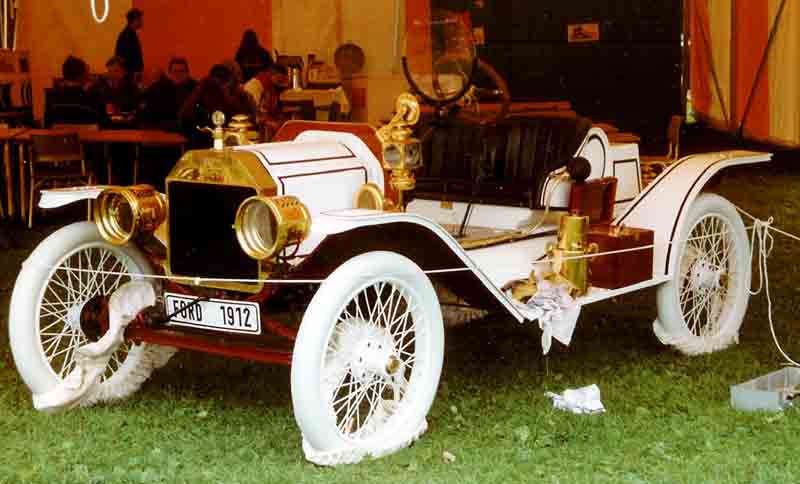
Ford Model T
"To get a gas tank For the Model T project And I did get a gas tank"
The Ford Model T is a very old car from the early days of automobiles. People still work on it today, often restoring it or building projects, which is why parts like a gas tank come up. It’s basically a classic car that needs the right components to run properly.
The Ford Model T is an early mass-produced car that became a landmark in automotive history by making car ownership more accessible. In a “project” context, it’s often referenced because parts and components—like a gas tank—are key to restoring or building a functional vehicle. It’s discussed because it represents a foundational era of simple, mechanical cars.
replacement grill
"And I was able to get a replacement grill For my wounded JT grill"
A “replacement grill” is the front grille you replace when it gets damaged. You need the right one for your Jeep so it fits correctly.
A “replacement grill” means swapping the front grille panel, usually because it’s damaged or missing. Grilles are often sold as OEM parts or aftermarket pieces and must match the vehicle’s generation and trim.
Marketplace
"I have to guess On Marketplace right now For a JL JT grill"
They mean Facebook Marketplace, where people sell used car parts. It’s often cheaper than buying new, but the price depends on what’s available.
“Marketplace” refers to Facebook Marketplace, a common place to buy used parts like grilles. Prices there can vary a lot depending on local demand and whether the part is OEM or aftermarket.
OE grill
"[3753.1s] But the base thing, what's wounded on my truck [3755.5s] Will work [3756.5s] And I had gotten one before [3759.3s] That I thought was an OE grill [3761.1s] Was actually a reproduction grill"
“OE” means the original factory part. The host is saying they bought a grille thinking it was the real factory version, but it was actually a copy.
“OE” (original equipment) means parts made to match what the vehicle came with from the factory. The host says they previously thought a grille was OE, but it turned out to be a reproduction, and they prefer the true factory-style part.
reproduction grill
"[3759.3s] That I thought was an OE grill [3761.1s] Was actually a reproduction grill [3764.0s] And I'm weird [3765.6s] And I want the OE stuff"
A reproduction grill is a non-factory grille made to resemble the original. It might look similar, but it may not be the exact same quality or fit as the real factory part.
A reproduction grill is an aftermarket part made to look like the original equipment grille, but it may not match the factory fit, finish, or details. The host notes they wanted OE parts, implying reproduction pieces can be a compromise.
swap meet
"The art of the negotiation Of the swap meet Same thing with the gas tank"
A swap meet is like a parts market. People bring items for sale, and you can often negotiate the price.
A swap meet is an informal event where people buy, sell, and trade used parts and accessories, often from vendors’ booths or tables. In this context, the hosts are talking about pricing and bargaining for Jeep-related items like body parts and fuel components.
negotiation
"And kind of like Fine, I don't want to take it home That's right The art of the negotiation Of the swap meet"
Negotiation just means talking the price up or down until both sides agree.
Negotiation is the back-and-forth process of agreeing on a price. At swap meets, negotiation is common because items are often sold by individuals and prices can vary widely based on condition and demand.
gas tank
"Same thing with the gas tank It's a name brand gas tank It was literally brand new in the box"
The gas tank is where the car stores gasoline. If it’s damaged or missing, it can be a costly part to replace.
A gas tank is the fuel storage container on a vehicle, typically made of steel or plastic and sealed to prevent leaks and fumes. Fuel tanks can be expensive and are often sold as complete assemblies at parts events.
Serpentine belt
"[4005.0s] Yes, folks [4002.4s] Yes [4003.0s] I like my backup plan [4005.0s] What was that word? [4008.9s] Serpentine belt [4011.6s] So I was"
The serpentine belt is a single belt that runs around the engine to spin several important accessories. If it breaks, you can lose power steering and charging (and sometimes the A/C) pretty fast.
A serpentine belt is the long, single drive belt that routes around multiple pulleys to power several engine accessories at once. It typically drives things like the alternator, power steering pump, and air-conditioning compressor, so if it fails you can lose multiple systems quickly.
Request an Explanation
Heard something you'd like explained? We'll add it to this episode.
Sign in to request explanations for terms you heard.
Want to learn more?
Browse our glossary for plain-English explanations of automotive terms, jargon, and concepts.
Help improve this episode
See something that's not quite right? Our annotations are AI-generated and can sometimes miss the mark. Click the flag icon on any annotation to suggest a correction.