
Under The Hood - LIVE Show Automotive Experts Giving You Advice
About this episode
The live “Under The Hood” show bounces between listener questions, shop stories, and industry talk. CarMax ads kick things off, then the hosts discuss NHTSA and auto-recycler “hill days,” plus recall logistics and parts shortages. The technical heart covers transmission fluid that turns black, why drain-and-fill can’t fully flush, and how scanners and sensors (including 5V reference circuits) help diagnose limp mode, stalling, and electrical gremlins. It also gets into TPMS, connector cleaning, and battery corrosion prevention.
We are Americas' Favorite Car Talk Show. On podcast and over 250 radio stations YouTube and TV we have been doing this for a long time. We also work full time in an automotive repair shop, have built hot rods and performance engine packages and own a large auto recycling facility. You might call them Junk Yards, but we don't. Who wants junk... Call us to get on the show for some free car repair advice.Here are todays callers. How often should I change my Escape Transmission Fluid? My 04 Jeep Wrangler cuts out 17 F750 goes into limp mode, it's deleted 00 Ram recall on brakes 19 Ram TPMS issue 17 Colorado which trans is best?

2019 Ford Escape
"I have a 2019 Ford Escape. It has the 1.5-eagle boost on it, and it has 82,000 miles."
A 2019 Ford Escape is a small SUV. Here, the discussion is about changing the transmission fluid and whether the fluid turning dark is normal or a sign of trouble.
The 2019 Ford Escape is a compact SUV that, in many trims, uses a 1.5-liter turbocharged engine paired with an automatic transmission. In this segment, the owner is focused on transmission fluid service and whether dark fluid indicates a problem.
trans-drain
"And I do trans-drain. It has the closed system, so you don't have any drain pan, you know, a pan or gasket or anything like that."
A trans-drain means you drain some of the transmission fluid and refill it. It doesn’t necessarily replace all the old fluid at once, so the new fluid can still look dark.
A trans-drain is a partial transmission fluid service where fluid is drained and replaced, rather than doing a full system flush. Because it only replaces a portion of the fluid, the color can still look dark even if the transmission is healthy.
closed system
"It has the closed system, so you don't have any drain pan, you know, a pan or gasket or anything like that."
They’re saying the transmission is set up so you can’t just open a drain pan like on some cars. That changes how the fluid gets drained and replaced during service.
A closed transmission service setup means the transmission doesn’t use a simple external drain pan/gasket like many older designs. Instead, fluid is typically drained through a service procedure, which affects how much fluid you can remove in a single service.
complete flush
"Should I be concerned, or should I maybe take it into a deal and have it a complete flush, you know, the whole system, all of it out?"
A complete flush is when you try to replace transmission fluid throughout the whole system, not just what you can drain. It can make the fluid look cleaner, but it’s a bigger job than a simple drain-and-fill.
A complete flush is a service meant to exchange transmission fluid throughout the whole system, often using equipment to push out old fluid. Compared with a drain-and-fill, it can change fluid color more dramatically, but it’s also more involved and should match the manufacturer’s guidance.
change intervals
"It's just how they work, but I think what you're doing is pretty good for, you know, the change intervals."
Change intervals are the recommended schedule for when to change the transmission fluid. The idea is to change it often enough to keep the transmission healthy, even if the fluid darkens.
Change intervals are the scheduled mileage/time periods for when transmission fluid should be drained and replaced. Following the correct interval matters more than fluid color, especially when the fluid darkens quickly but the transmission shifts normally.
drain and fill system
"It's drain and fill system on that, but I think you're doing pretty good. You're not going to be able to flush the thing completely the way it's designed."
“Drain and fill” means you drain out some of the old fluid and add new fluid back in. It usually doesn’t replace 100% of the old fluid because some stays in the system.
A drain-and-fill service replaces a portion of a fluid (like transmission fluid) by draining what’s in the pan or low points, then refilling with new fluid. It’s different from a full flush because the system is designed to retain some old fluid in passages and cooler lines.
oil change
"And then when we did buy it, the Carfax had great maintenance history, and I changed oil in this. I know it's obsessive, but every 3,000 miles I changed the oil because it has the turbo."
An oil change replaces engine oil to remove contaminants and replenish additives that protect engine parts. The host is emphasizing a frequent interval (every 3,000 miles) due to the presence of a turbo, which can increase heat and stress on oil.
turbo
"I know it's obsessive, but every 3,000 miles I changed the oil because it has the turbo. Okay, so by my math, you're changing the transmission fluid every 10,000 miles?"
A turbocharger (“turbo”) forces more air into the engine, which increases power but also raises operating temperatures and stresses. That’s why the host ties more frequent oil changes to the turbo’s higher demands on engine oil.
transmission fluid
"Okay, so by my math, you're changing the transmission fluid every 10,000 miles? Absolutely. Yeah."
Transmission fluid lubricates internal transmission components and helps control hydraulic pressure for shifting. Changing it on a schedule can reduce wear, but the “right” interval depends on the transmission design and how the car is used.
Motorcraft Mercon LV
"I think, $24, I think, is for the Motorcraft Mercon LV. So, you know, it's fast, but maybe I'm too excessive with it."
Motorcraft Mercon LV is a special kind of fluid used in some automatic transmissions. It’s made to match a specific Ford requirement, so the transmission can shift correctly. If you use the wrong fluid, the car may shift poorly or wear out faster.
Motorcraft Mercon LV is a specific brand-name automatic-transmission fluid (ATF) specification. “LV” indicates a low-viscosity formulation designed to meet Ford’s requirements for certain transmissions, helping shift feel and fuel economy. Using the wrong ATF type can cause poor shifting or accelerated wear.
twisted lifter
"I was thinking, could you put this vehicle or any vehicle on the twisted lifter and do a better job of draining it without, which maybe needs some explanation?"
A “twisted lifter” is a special lift setup in a shop. It positions the car so fluids can drain out more completely during service or disposal. It’s basically a tool to make draining easier and cleaner.
A “twisted lifter” (as described here) is a shop lifting platform designed to position a vehicle so fluids drain more effectively. The key idea is improving fluid evacuation during service or disposal by changing the vehicle’s orientation and access. It’s not a standard consumer term, so the episode’s explanation is important for listeners.
Superior Recycling Systems
"we have a lifting system from Superior Recycling Systems that we called it lovingly with the help of a listener that helped me name it."
Superior Recycling Systems is the company that provides the lifting system used in the episode’s high-volume bay. In this context, they’re supplying equipment for draining and handling vehicles destined for recycling or disposal. It’s a vendor mention that helps listeners understand where the gear comes from.
fluid evacuation devices
"Then we have fluid evacuation devices that we can suck out oil, antifreeze, brake fluid, washer fluid, and then the vehicle gets lifted in the air."
Fluid evacuation devices are machines/tools that pull fluids out of a car. In this shop, they use them to remove things like oil, coolant, brake fluid, and windshield washer fluid. The goal is to drain the car safely before it’s recycled or crushed.
Fluid evacuation devices are tools that remove fluids from a vehicle using suction or controlled extraction. In the segment, they’re used to pull out multiple fluid types (oil, antifreeze, brake fluid, and washer fluid) before the vehicle is processed for recycling or disposal. This reduces environmental contamination and helps ensure proper handling of hazardous fluids.
catalytic converter
"They remove the catalytic converter, they pull the oil drain plug, they typically puncture [585.0s] the transmission pan in a corner because it's not going to be sold that way."
A catalytic converter is a part in the exhaust that helps clean up the car’s fumes. Taking it off usually breaks emissions rules and can cause the car to fail inspections.
A catalytic converter is an emissions-control device that helps convert harmful exhaust gases into less harmful ones. Removing it is illegal on many roads because it defeats the vehicle’s emissions system.
oil drain plug
"They remove the catalytic converter, they pull the oil drain plug, they typically puncture [585.0s] the transmission pan in a corner because it's not going to be sold that way."
The oil drain plug is the plug at the bottom of the engine’s oil pan. When it’s removed, the old oil can drain out for service.
The oil drain plug is the fastener at the bottom of the engine oil pan that allows used oil to be drained during service. In the context of this segment, it’s mentioned as part of draining fluids from a vehicle.
transmission pan
"They remove the catalytic converter, they pull the oil drain plug, they typically puncture [585.0s] the transmission pan in a corner because it's not going to be sold that way."
The transmission pan is the bottom part of the transmission that holds the fluid. It’s where you’d normally drain the fluid during a proper service.
The transmission pan is the lower housing that holds transmission fluid and often contains a filter and magnets. Puncturing it (as described) is a way to drain fluid quickly, but it’s not a normal or service-friendly method.
clutch slippage
"Because if you were truly, if you took an older transmission and you had one that was [643.7s] turned the fluid dark that quick, a typical back, I say older, 70s, 80s, and it was dumping [649.0s] the fluid black that quick, you were probably slipping clutches and you'd be feeling the [653.3s] results of it."
Clutch slippage means the transmission’s clutches aren’t gripping properly. Instead of transferring power cleanly, they slip, which can make the car feel like it’s not accelerating smoothly and can damage the transmission over time.
Clutch slippage happens when the transmission’s clutches don’t fully lock up, so power isn’t transferred efficiently. It can cause heat and wear, and it often shows up as degraded/dark fluid and poor drivability.
torque loss
"the sensors on the input, output, drums and everything, they would pick that [667.4s] up. [668.1s] They would be picking that up and saying that this thing's got excessive torque loss or"
Torque loss means the car isn’t transferring power as it should. With a failing transmission, the car can feel weaker, and the computer may notice signs of that power loss.
Torque loss refers to the engine’s twisting force not being delivered effectively to the wheels. In transmissions, excessive torque loss can be caused by slipping clutches or other internal problems, and modern systems may detect it via sensors.

2004 Jeep Wrangler TJ Rubicon
"My concern is with a 2004 Jeep Wrangler TJ Rubicon that I purchased last year... Problem has been some intermittent ignition issues."
This is a 2004 Jeep Wrangler Rubicon, a trail-ready version of the Wrangler. The big problem they’re dealing with is the engine sometimes shutting off unexpectedly and then acting up when they try to restart it on rough trails.
The Jeep Wrangler TJ Rubicon (from 2004) is a factory off-road-focused version of the Wrangler, built for serious trail use with drivetrain hardware intended for low-traction conditions. In this segment, the owner’s main issue is intermittent ignition problems that can cause the engine to shut off and then be hard or impossible to restart.
intermittent ignition issues
"Problem has been some intermittent ignition issues. Sometimes it'll just stop for no reason."
“Intermittent ignition” means the car’s spark/starting system works sometimes and then randomly fails. That can cause the engine to stall and restart problems, especially when you’re driving hard or on uneven ground.
“Intermittent ignition” means the ignition system fails in a sporadic, hard-to-reproduce way rather than constantly. On engines, that can lead to sudden stalling or misfires because spark timing and/or spark delivery isn’t happening consistently.
misfire
"One time it had a intermittent ignition where everything in your cylinder misfire."
A misfire is when the engine doesn’t burn fuel correctly in one or more cylinders. It can make the engine run rough or shut off, and it usually triggers diagnostic trouble codes.
A misfire is when one or more cylinders fail to ignite the air-fuel mixture at the right time. That can feel like rough running, hesitation, or even stalling, and it often points to ignition components, fuel delivery, or sensor problems.
two wheel drive
"The worst one was when we were driving on a trail and I was in two wheel drive... it got difficult and steep and it shut off and would not start at all."
Two-wheel drive (2WD) means only one axle is powering the wheels, which can reduce traction compared with four-wheel drive on loose or steep terrain. On trails, that can make stalling or loss of momentum more likely if the engine cuts out at the wrong moment.
crankshaft position indicator
"But we have replaced the crankshaft position indicator, cleaned the throttle plate and also had the throttle plate position though..."
The crankshaft position indicator (sensor) tells the engine control unit exactly where the crankshaft is, which is critical for timing spark and fuel injection. If it’s faulty or intermittent, the engine can stall and be difficult or impossible to restart.
throttle plate
"But we have replaced the crankshaft position indicator, cleaned the throttle plate and also had the throttle plate position though..."
The throttle plate controls the airflow into the engine. If it gets dirty or doesn’t move smoothly, the engine can run oddly or stall.
The throttle plate is the valve inside the throttle body that controls how much air enters the engine. If it’s dirty or sticking, the engine can respond poorly to driver input and can contribute to stalling or unstable idle.
tow ropes
"Well, the good news is, is that on a trail ride... they all have tow ropes."
Tow ropes are used to pull a stuck or disabled vehicle out of trouble. On a trail, they can be the difference between waiting for help and getting moving again.
Tow ropes are recovery gear used to pull a vehicle when it can’t move under its own power. On trails, they’re part of a basic “get unstuck” plan, especially when a vehicle stalls far from a road.
rebuilt computer
"Yeah, we checked out buying a getting a rebuilt computer. [927.5s] Well, one thing too is that being that old a vehicle, Chrysler no longer supports a lot of the repair parts. [934.6s] So you have to go to the aftermarket and like the crankshaft position indicator was a dormant, which I, I feel is a good brand. [941.9s] Yeah. [942.4s] There is a company in California where we'll rebuild the computer or the motor control and it's about $600 exchange, but even they didn't recommend me doing that."
A rebuilt computer means the car’s electronic control box is repaired and tested, rather than replaced new. You usually turn in your old one and get a repaired unit back.
A rebuilt computer is an electronic control module (like an ECU) that has been repaired and tested instead of replaced with a brand-new unit. The segment suggests an “exchange” style rebuild service, where you send in your module and receive a repaired one.
aftermarket
"So you're good. [886.3s] If they're not, if nobody has a tow rope, then they either don't like you or they just aren't true trail people. [922.9s] Yeah, we checked out buying a getting a rebuilt computer. [927.5s] Well, one thing too is that being that old a vehicle, Chrysler no longer supports a lot of the repair parts. [934.6s] So you have to go to the aftermarket and like the crankshaft position indicator was a dormant, which I, I feel is a good brand."
Aftermarket parts are replacements made by other companies, not the car’s original brand. They’re often used when the original parts are no longer available.
Aftermarket parts are components made by companies other than the original manufacturer. When a vehicle is old and the OEM no longer supports certain repair parts, shops often rely on aftermarket replacements to keep repairs possible.
a company in California
"[942.4s] There is a company in California where we'll rebuild the computer or the motor control and it's about $600 exchange, but even they didn't recommend me doing that. [954.6s] She said it just doesn't sound like it's a computer."
They mention a shop in California that repairs and rebuilds the car’s engine computer. It’s the kind of place you might use when new replacement parts aren’t available.
The hosts reference a California-based service that rebuilds engine control modules (ECUs) or motor control units. This is an example of the kind of specialized electronics repair market that exists when OEM parts are no longer supported.
engine computers
"Most cars, the computers don't fail unless something else causes damage. [971.9s] Realistically, the engine computers in most cars will last like forever."
The engine computer is the car’s main brain for the engine. It usually doesn’t fail on its own—problems are more often caused by something else, like a sensor or damaged wiring.
“Engine computers” are the electronic control units (ECUs) that manage engine functions like fuel injection and ignition timing. The hosts are emphasizing that these modules are usually long-lived, and failures are often caused by external problems (like wiring or sensors) rather than the ECU itself.
wiring issue
"That's going to be rare. [994.1s] It's going to be more of a wiring issue. [996.9s] Ignition switch, a wire chafed somewhere, a poor solder joint in the factory harness where they put the thing together, but you're going to have to find it."
A wiring issue means there’s a problem with the car’s electrical connections or wires. It can cause weird engine problems, and it often takes time to track down exactly where the fault is.
A wiring issue means the electrical connections or conductors feeding sensors/ECUs have a fault—such as a chafed wire, a loose connection, or a poor solder joint. These faults can create intermittent or misleading symptoms, which is why diagnosing them can be difficult.
factory harness
"[996.9s] Ignition switch, a wire chafed somewhere, a poor solder joint in the factory harness where they put the thing together, but you're going to have to find it. [1007.1s] You know, tracking down those kind of things can be difficult."
The factory harness is the car’s original set of wires connecting all the electronics. If a connection inside that wiring is bad, it can cause electrical problems that are tricky to find.
The factory harness is the vehicle’s original wiring bundle that connects sensors, switches, and control modules. If there’s a poor solder joint or damage inside the harness, it can cause intermittent electrical faults that are hard to diagnose without careful testing.
ground wires
"Tech took them out and as soon as he pulled it out, one of the ground wires just came apart. They were like, well, that's no good and that will cause his symptoms."
A ground wire is the car’s electrical “return path” to the body/chassis. If it’s loose or broken, the lights or other electronics can stop working or act weird.
In a car, ground wires connect electrical components to the vehicle’s chassis/ground reference. If a ground wire comes loose or breaks, the affected circuit can act erratically—such as lights not working or intermittently failing.
relays
"Now we could spend all day and check every wire and pull the relays out and see if we find something."
A relay is like an electrically controlled switch. If a relay is bad, it can stop power from getting to the lights even if the rest of the wiring looks okay.
Relays are electrically controlled switches that let a low-power signal turn on a higher-power circuit. When diagnosing lighting or other electrical issues, technicians may check or swap relays because a failing relay can prevent power from reaching the component.
check engine light
"But on the other hand, one thing that one thing I didn't mention is that the check engine light does not function in their vehicle."
The check engine light is the car’s way of warning you that something is wrong with the engine or emissions systems. If it doesn’t work, you might miss important warnings.
The check engine light is the dashboard warning that the engine or emissions control system has detected a fault. If it “does not function” on a vehicle, it can mask problems because the driver won’t get a warning when the car logs trouble codes.
scan tools
"But the scan tools on those, most of those you can read the VIN out of the computer, then take it out, put a new one in, program it back in with a simple scan tool."
A scan tool is a device that plugs into the car to talk to its computers. It can read codes and sometimes help set up a replaced part so the car recognizes it.
Scan tools are diagnostic devices used to communicate with a vehicle’s onboard computers. They can read information like the VIN stored in the module and can also perform programming steps after replacing certain components.
program it back in
"But the scan tools on those, most of those you can read the VIN out of the computer, then take it out, put a new one in, program it back in with a simple scan tool."
This means the new electronic part has to be set up inside the car, not just installed. The car needs to “learn” the replacement so it can communicate with it properly.
“Program it back in” refers to reconfiguring a replacement electronic module so it’s recognized by the vehicle. Many modern parts require calibration or authorization steps beyond just swapping the hardware.
hot spare
"I was just wondering if he had a hot spare that he kept on the trail with him because you could go to Cartash part, you know, one of our partners and find a computer."
A “hot spare” is an extra part someone keeps on hand so they can replace a failed component quickly. It’s especially useful when you’re far from help and need the car back running fast.
A “hot spare” is a pre-positioned replacement part kept ready for quick swap, often to minimize downtime. In roadside or trail situations, having a spare computer/module can reduce the time needed to get the vehicle running again.
Dorman
"If you look up, now of course, Dorman makes a lot of the replacement sensors and the common things that fail on vehicles. But of all sudden you're looking at a, you go to their website and you look up an 04 Wrangler and you see that they have a rear. Well, I'll pick a better one windshield wiper motor."
Dorman is a company that sells replacement car parts. Here they’re being mentioned because they make parts intended to fix common problems.
Dorman is an aftermarket brand known for replacement parts and engineered solutions for common vehicle failures. In this segment, they’re specifically mentioned for making replacement sensors and “OE fix” style repairs.
OE fix
"Dorman makes OE fixes for problems. OE fix means it's having an OE problem. So they're going to repair it and try to make it better."
“OE fix” means the replacement part or repair is designed to solve the same kind of problem the car originally had. It’s meant to be a better fix than simply swapping the old part again.
OE fix means an “Original Equipment” style repair approach—an updated solution intended to address a problem that originally existed in the factory part or design. The idea is to repair the underlying issue and improve reliability rather than just replacing like-for-like.
salvage yard
"Yes, I did call a local salvage yard, which you're quite familiar with and they don't have them because they're very rare. And he said, if we did have one to be $500."
A salvage yard is where wrecked or unwanted cars get taken apart so parts can be sold. If a part is rare, it usually costs more because fewer cars have it.
A salvage yard (auto recycling yard) buys and dismantles totaled or otherwise unwanted vehicles to resell usable parts. Pricing can vary a lot because availability depends on how many of that specific model/part exist in the yard.
scarcity
"Definitely scarcity on Wrangler salvage overall. We try to buy as many as we can."
Scarcity means there are fewer available parts than buyers want, which typically pushes prices higher. In the context of salvage yards, scarcity often comes from how many vehicles are being parted out and how quickly those parts get bought up.
market might be
"But I would check on Kardashian part and you can see a range across the country of what these parts sell for and use that as kind of an indication where the market might be."
The “market might be” refers to estimating what buyers will pay based on observed listings and sold prices across different regions. This helps sellers and shoppers avoid overpaying when a single quote (or a brokered part) doesn’t reflect true supply and demand.
TPMS sensors
"These wheels are a direct fit, so your factory caps and TPMS sensors will fit."
TPMS sensors are little gadgets in your tires that watch the air pressure. They help your car warn you if a tire is getting low.
TPMS sensors are small electronic devices mounted on (or integrated into) the wheel that monitor tire pressure. They send pressure readings to the car so you can spot underinflation before it becomes a safety or tire-wear problem.
reduced power mode
"then take off. It'll pick into reduced power mode. And if I pull over, shut it off, turn it back on, usually it'll come out of it."
Reduced power mode is when the car intentionally makes less power to protect itself. It usually feels weaker or slower until the problem is cleared.
Reduced power mode is a protective strategy where the car limits engine output to prevent damage when it detects a fault. It often makes the car feel sluggish or “derated,” and the driver may notice it happens under certain conditions while driving.
code
"I've never had a code thrown for it. So I just like some insight on what you think."
In automotive diagnostics, a “code” usually refers to a stored trouble code that identifies the system or sensor involved in a detected fault. The car may store codes even if the driver never sees a warning light.
scanner
"as a first start, I would put a scanner on it and read it and try to see what is...it'll tell me what's putting it into the limp mode as I'm driving it."
A scanner is a tool that plugs into your car to read what the computer has detected. It can help find the problem even if the dashboard light isn’t on.
A scanner is a diagnostic tool that reads the car’s onboard fault information from its computer. It can show stored trouble codes and related status messages even when the driver doesn’t see a warning light.
limp mode
"it'll tell me what's putting it into the limp mode as I'm driving it. Even if it doesn't throw a check engine light, it should say disabled for this."
Limp mode is the “safe” driving mode your car uses when something’s wrong. It limits power so you can still get to where you need to go.
Limp mode is the common name for reduced power mode. The vehicle restricts performance so you can drive to a safe location or get it serviced without worsening the underlying issue.
DEF
"leaning something towards the def system ... unless it's been reprogrammed to compensate for that ... removed the def. Go into limp mode."
DEF is a special fluid used on many diesel trucks/cars. It’s injected into the exhaust to help clean up the emissions.
DEF stands for Diesel Exhaust Fluid, a urea-based liquid injected into a diesel exhaust system. It helps reduce harmful nitrogen oxides (NOx) by enabling chemical treatment in the exhaust aftertreatment system.
reprogrammed
"unless it's been reprogrammed to take that off ... to compensate for that ... in the programming software"
Reprogrammed means the car’s computer software was changed. Here, it’s about updating how the car responds to DEF/emissions-related changes.
Reprogrammed refers to changing the vehicle’s engine/emissions control software (ECU/PCM calibration). In this context, it means the car may be updated so it doesn’t react the same way when DEF-related components are removed or altered.
reflashed
"So it might need to be reflashed. And if someone still"
Reflashed means the car’s computer gets an update. The goal is to fix a problem the computer is detecting (or mis-detecting).
Reflashed means updating the vehicle’s control module software by rewriting its calibration/firmware. This is commonly used to address known faults—such as incorrect DEF system diagnostics—so the vehicle behaves correctly again.
tuner
"had the tuner that was used to reflash that, then if it was legal, then they would put it back to stock and then reflashed again with the same tuner if that was possible."
A tuner is a tool that lets you change the car’s computer settings. It can also be used to switch back to the factory settings.
A “tuner” is a device or software tool used to modify and upload ECU/PCM calibration to the vehicle. It’s commonly used for performance changes, but it can also be used to restore factory settings (“put it back to stock”).
stock tuning
"and it's not moving anywhere and we clear the codes and the exhaust is mangled from a wreck and it still has stock tuning and we start it up,"
Stock tuning is the factory computer setup the car came with. It’s the default way the engine is programmed to run.
“Stock tuning” means the factory ECU/PCM calibration that the manufacturer shipped with the vehicle. It’s the baseline behavior for things like idle control, fuel/air targets, and emissions-related strategies.
repairable vehicle
"No, because that's about how a vehicle acts if we if we have a repairable vehicle in our shop and it's not moving anywhere and we clear the codes"
A repairable vehicle is one that was wrecked but can be fixed and driven again. Damage from the crash can still cause warning codes or odd behavior until it’s properly repaired.
A “repairable vehicle” is a car that has been damaged but is considered capable of being restored and put back into service. In practice, this often affects how systems behave after a wreck (for example, sensor/exhaust damage) and how codes may be triggered.
protective shutdown
"there's no def on here, something's not right and it'll start shutting down and we got to go clear it all again."
Protective shutdown is when a vehicle’s computer limits or stops operation to prevent damage or to ensure emissions compliance. Many diesel trucks will enter a restricted mode or shut down when critical inputs (like DEF) are missing or when emissions-related components can’t function correctly. The goal is to protect the engine and aftertreatment system from harm.

F-750
"So I'm looking over the shoulder. What are we doing with an F-750? Anything you want."
The Ford F-750 is a heavy-duty work truck used for commercial jobs. People use it for things like construction and towing. In this conversation, it’s connected to the truck warning about DEF and system protection.
The Ford F-750 is a heavy-duty truck platform commonly used for commercial work like construction and towing. In this segment, the hosts are discussing what the truck is doing (warnings/shutdown) and how it might relate to its systems. The F-750’s diesel and emissions setup can include DEF, which ties directly to the earlier warning.
gooseneck
"So it's got a gooseneck or fifth wheel plate on the back type of thing."
A gooseneck is a special trailer hitch where the trailer’s front part locks into a hitch on the truck bed. It’s used for heavier trailers because it connects more securely.
A gooseneck is a trailer hitch setup where the trailer has a forward “neck” that plugs into a hitch on the bed of the towing vehicle. It’s commonly used for heavy-duty towing because it provides a stable connection and better weight distribution than many other hitch styles.
fifth wheel plate
"So it's got a gooseneck or fifth wheel plate on the back type of thing."
A fifth wheel plate is the flat mounting area in the truck bed for a fifth-wheel trailer hitch. It’s what lets the truck tow big trailers more securely.
A fifth wheel plate is the mounting surface in the truck bed that supports a fifth-wheel hitch. Fifth-wheel hitches are designed for semi-trailer-style towing and use a large pivoting coupling for stability under load.
flip forward hood
"It's a beast. It's flip forward hood on a 750, correct?"
A flip-forward hood is a hood that opens by swinging forward. It’s often used on work trucks because it gives mechanics better access to the engine.
A flip-forward hood is a hood design that pivots forward (toward the front of the vehicle) for engine access. On medium- and heavy-duty trucks, this can make routine service and inspections easier because the hood opens wider.

Mclaren 650S
"Yeah. I think they start that at the 650s and that's a work truck."
The McLaren 650S is a very fast, high-end sports car made for performance driving. It’s not a pickup or a truck—it's designed for speed and handling. When people mention it as a “starting” model, they mean it’s the entry point within that supercar lineup.
The McLaren 650S is a high-performance supercar built by McLaren, known for its lightweight design and track-focused driving feel. It’s often discussed because it sits in the brand’s lineup as a “base” supercar model, which is why you might hear someone reference the 650S as a starting point. The conversation framing it as a “work truck” is likely a joke about how capable and serious it feels to drive.
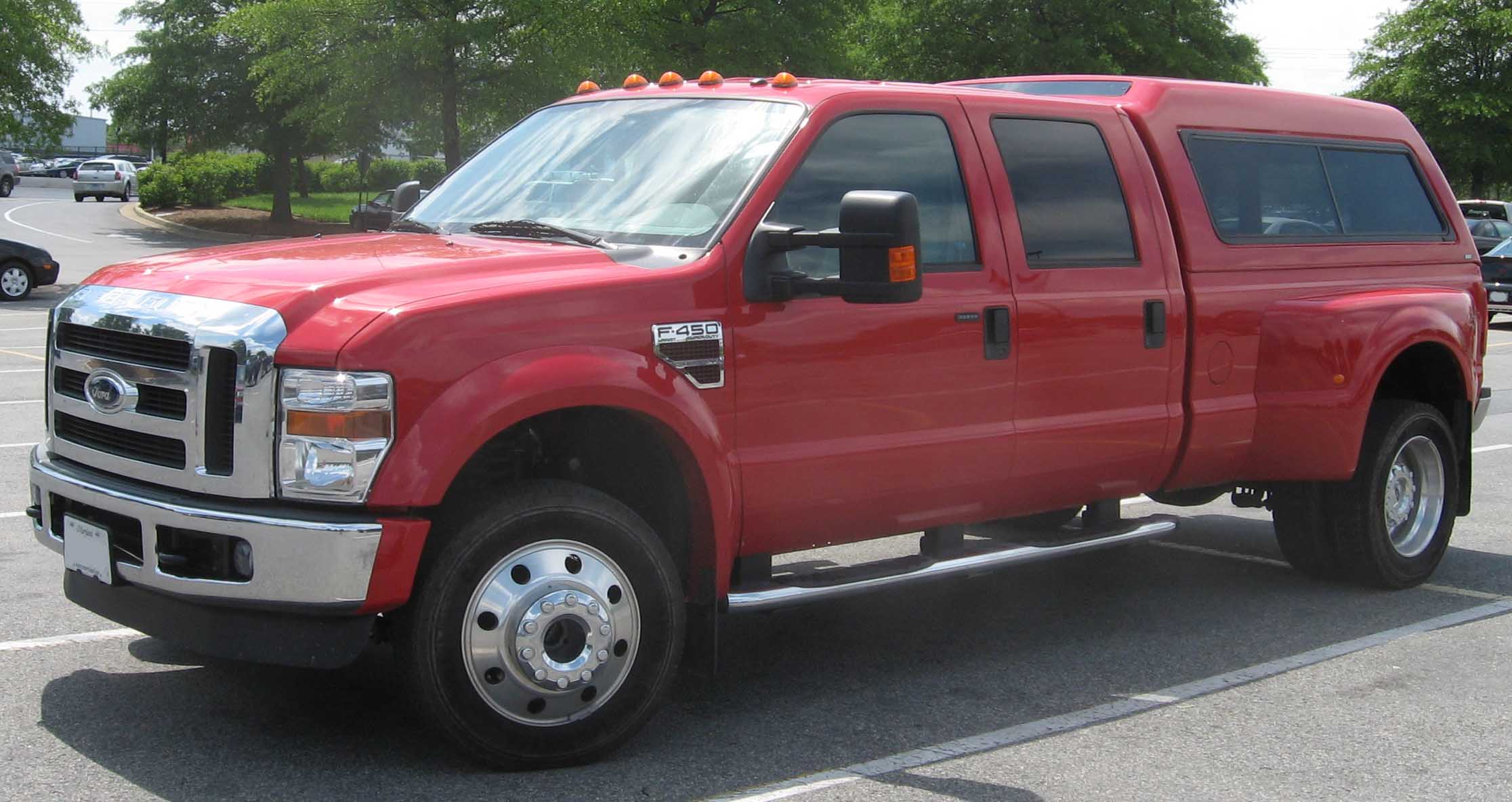
Ford F450
"So it's bigger than like when you see a Super Duty F-450 or 550. This is like the next level."
The Ford F-450 is a heavy-duty pickup truck made for work like towing and carrying heavy loads. It’s larger and stronger than regular trucks. People talk about it in terms of “levels” because different versions can be set up for different kinds of heavy-duty jobs.
The Ford F-450 is a heavy-duty pickup truck in the Super Duty family, built for higher towing and payload than standard trucks. It’s significant because it’s commonly used for commercial work where you need serious hauling capability. In the podcast context, it’s described as being bigger than the typical F-450/F-550 you might see, emphasizing how far up the heavy-duty ladder it can go depending on configuration.
brake control recall
"Steve in Indiana has a 2000 RAM brake control recall. Dealers said they couldn't get parts."
A brake control recall is when the maker says there’s a problem with something that helps control the brakes. Owners are supposed to get it fixed, but sometimes dealers can’t get the parts right away.
A brake control recall means the manufacturer is asking owners to have a specific braking-related control system inspected or repaired. These recalls typically address safety-critical issues in components that manage braking behavior, and parts availability can affect how quickly owners get the fix.
factory recall
"Factory recall. If truly a factory recall, the dealer is required to if it's a safety recall, they're required to get a part and replace it."
A factory recall means the car maker admits there’s a problem and tells owners to get it fixed. If it’s a safety issue, the dealer usually has to fix it and provide the parts as part of the recall process.
A factory recall is when a vehicle manufacturer identifies a safety-related (or sometimes emissions/other) issue and issues an official recall. For safety recalls, dealers are typically required to obtain the correct parts and perform the repair at no cost to the owner.
safety recall
"if it's a safety recall, they're required to get a part and replace it."
A safety recall is a recall for something that could affect how safe the car is to drive. That’s why the fix is treated as urgent and handled through the official recall process.
A safety recall is a recall specifically tied to a risk of injury or a safety defect (like braking or steering issues). Because it’s regulated as a safety matter, the repair is generally handled through official dealer channels with required parts and procedures.
analog brake control
"Oh gosh, yes. If it's an analog brake control or something like that. Either one could fall into that."
Analog brake control is a way of controlling brakes using older-style electronics that don’t rely on digital computer logic. The exact setup depends on the car, but it’s describing the type of brake-control system involved.
Analog brake control typically means a braking control system that uses continuous, non-digital signal processing (as opposed to fully digital/ECU-based control). In practice, the exact architecture varies by vehicle, but the key point is that the control logic and components may differ from newer digital systems.
outside of the factory channel
"They found another vendor that's rebuilding them, making them outside of the factory channel. It's available if you want to get the problem fixed."
This means the part is being obtained from a different supplier than the one the car maker normally uses. It can help when the dealer can’t get the part quickly, but you’d want to confirm it’s the correct fix for the recall issue.
“Outside of the factory channel” means the replacement part isn’t sourced through the manufacturer’s official supply/recall pipeline. Instead, a different vendor may rebuild or supply the component, which can be useful when dealer availability is limited, but it raises questions about fit, warranty, and whether it matches the recall remedy.
factory one
"Or you can wait for the factory one. That's a thought. Okay, yeah, that makes sense."
They’re talking about using the exact part the car maker intended for that model. It usually fits right and matches the car’s specs better than cheaper alternatives.
“Factory one” usually means the original equipment manufacturer (OEM) part that’s made for the vehicle. It’s typically designed to match the car’s fitment and specifications more closely than generic aftermarket options.
manufacturer
"I don't know what the manufacturer would think about that. That's interesting. And some manufacturers at times will go outside of the normal channels."
Here, “manufacturer” means the car company that built the vehicle. They set the rules for what parts are considered acceptable for repairs.
In this context, “manufacturer” refers to the automaker that designed the vehicle and controls its approved repair parts and procedures. Their policies affect whether shops can substitute parts during shortages or for safety repairs.
safety repairs
"They'll go outside of the normal channels to find parts to do safety repairs. And like even during COVID, when we couldn't get parts, remember Mercedes..."
Safety repairs are the kinds of fixes that keep the car safe to drive. If something affects braking, steering, or crash protection, the rules for parts are usually more strict.
“Safety repairs” are fixes required to restore a vehicle to safe operating condition—often involving critical systems like brakes, steering, suspension, or structural components. Because these repairs affect crashworthiness and control, manufacturers may have stricter approval rules for parts substitutions.
Mercedes
"And like even during COVID, when we couldn't get parts, remember Mercedes in one of those craziest things. Well, there was others that were doing it. But for Mercedes to do it, blew us away."
They’re talking about Mercedes-Benz and how the company handled parts shortages. The takeaway is that Mercedes approved using other parts so repairs could still be done safely.
Mercedes-Benz is referenced here as an automaker that, during parts shortages, authorized substitutions beyond the usual supply channels. The point is that even a major brand may approve alternate or used parts to keep safety repairs moving.
OEM part
"Even some used parts. Which they should. It's an OEM part. It's just off another car that works."
An OEM part is the “factory-style” part made to match your car. If it’s OEM, it’s the right design for the job, even if it came from a different car.
An OEM part is an original equipment manufacturer component—made to the same specifications as the part that came on the car from the factory. Even when an OEM part is sourced from another car, it can still be the correct design and fitment for the repair.
VIN
"They got the part and then ran his VIN. Sorry, your VIN is not included even though it's the same model number."
VIN is your car’s unique ID number. Shops use it to look up whether your exact car qualifies for a recall fix.
VIN stands for Vehicle Identification Number, a unique 17-character code assigned to each car. Service systems use the VIN to check whether that specific vehicle is covered by a recall or warranty campaign, even when multiple cars share the same model number.
lawsuit coverage gaps
"It just wasn't in the lawsuit. Which happens a lot. There's the same part used on dozens of cars. It's only recalled on this model vehicle for some reason."
In some cases, which cars get a free fix depends on what was included in legal action. So even if the same part is used in many cars, only some may be covered.
Sometimes recall eligibility is shaped by legal outcomes, such as what was included in a lawsuit settlement or court order. That can create situations where a part is used across many cars, but only a subset is covered because of how the legal scope was defined.
non-hydraulic setup
"Rodney sent me a link to Brembo Breaks with the first non-hydraulic setup on brakes in a road car."
A non-hydraulic brake system is one that doesn’t use brake fluid pressure like most cars do. It uses electronics to control the brakes instead, which can change how the system is designed and tuned.
A non-hydraulic brake setup refers to braking systems that don’t use the traditional hydraulic fluid pressure to transmit pedal force to the calipers. Instead, they typically rely on electronic actuation and sensors to control braking more precisely.
Brembo
"Rodney sent me a link to Brembo Breaks with the first non-hydraulic setup on brakes in a road car. Okay. Brembo is let's see, in the early 20s, first production with hydraulic brakes rolled off the Dusenberg assembly line."
Brembo is a company that makes brake parts for cars. They’re known for performance braking, and here they’re talking about a newer type of braking that doesn’t rely on traditional hydraulic fluid.
Brembo is a well-known brake brand that supplies brake components to performance cars and racing. In this segment, the hosts discuss Brembo’s move toward non-hydraulic braking tech, which is a big shift from the traditional brake-by-hydraulics approach.
hydraulic brakes
"Brembo is let's see, in the early 20s, first production with hydraulic brakes rolled off the Dusenberg assembly line."
Hydraulic brakes are the normal kind of car brakes that use brake fluid. When you press the pedal, the fluid pressure helps push the brakes to slow the car down.
Hydraulic brakes use brake fluid and pressure to move brake components when you press the pedal. This is the conventional system most road cars use, and it’s what non-hydraulic designs are trying to replace or reduce.
electric brakes
"Electric brakes are causing changes in how braking systems are developed."
Electric brakes are brakes that use electronics (and often motors) to help apply the braking force. Because of that, engineers can design the braking control differently than with traditional brake fluid systems.
Electric brakes generally means braking systems where an electric motor/electronic control provides or assists the force at the calipers rather than relying solely on hydraulic pressure. This can affect how braking feel, control logic, and development are approached.
Sensify
"Brembo now has Sensify, Brembo's intelligent braking system that does away with hydraulics."
Sensify is a Brembo braking technology. The point is to make braking smarter and to do it without relying on traditional hydraulic brake fluid.
Sensify is Brembo’s branded “intelligent braking system” mentioned in the segment. The key idea is that it’s designed to reduce or eliminate hydraulics by using electronic control to manage braking behavior.
brake system
" [2461.8s] of a brake system [2463.3s] that was self-regenerating, did not [2466.0s] have any wear parts"
Your brake system is what makes the car slow down when you press the pedal. It turns your foot pressure into force at the wheels so the car can stop.
A brake system is the set of components that slows or stops a vehicle. In most cars, it converts the driver’s pedal force into hydraulic pressure that clamps brake pads against rotors or drums.
self-regenerating
" [2463.3s] that was self-regenerating, did not [2466.0s] have any wear parts [2467.3s] and did not use hydraulic fluid."
“Self-regenerating” here sounds like a brake design that can renew itself instead of wearing out like normal brakes. Most brakes use pads that slowly wear down over time.
“Self-regenerating” in a brake context usually means the system can restore or renew its braking capability without typical consumable wear items. That’s a big claim because conventional brakes rely on friction material that gradually wears down.
hydraulic fluid
" [2467.3s] and did not use hydraulic fluid. [2469.6s] So his partner killed him to get the money, [2472.0s] you know, of course."
Hydraulic fluid is the liquid that helps your brake pedal push the brakes. It carries the force through the brake lines to the wheels.
Hydraulic fluid is the incompressible liquid used in most car brake systems to transmit force from the master cylinder to the brake calipers. If you remove hydraulic fluid, you generally need a different actuation method to move the brakes.
master cylinder
" [2504.6s] If you get rid of the [2506.0s] hydraulic fluid, you don't have the master cylinder"
The master cylinder is the part that “creates” the braking pressure when you press the brake pedal. If the system doesn’t use hydraulic fluid, it usually can’t use the normal master-cylinder setup.
The master cylinder is the component that converts brake pedal movement into hydraulic pressure. If a design eliminates hydraulic fluid, it typically also eliminates the need for a conventional master cylinder.
regenerative braking
"If you're not driving, in town driving, slow, it'll stop itself just fine. It is weird how quickly you get used to that too."
Regenerative braking is when the electric car slows down and also recharges the battery at the same time. That’s why lifting off the gas can slow the car without using the brake pedal as much.
Regenerative braking is how an electric vehicle slows down while turning some of its motion back into electricity. That recovered energy is stored in the battery, and it’s a key reason one-pedal driving can work so well in stop-and-go traffic.
modulate
"Because it's the first time you drive one pedal, you're like, well, how am I going to be able to modulate that?"
To modulate just means to control something smoothly. Here it’s about using the pedal in a gentle, precise way so the car slows the way you want.
In driving, to modulate means to smoothly and precisely control how much you’re asking the car to do—like how gently you lift or press the pedal. With one-pedal driving, modulation is especially important because small pedal changes can produce noticeable deceleration.

Mach-E
"I was using that most of the way in that Mach-E we had when we were on the trip to Barrett Jackson and it because it was already in that mode."
The Ford Mustang Mach-E is an electric car. The way you drive it can let you slow down mostly by lifting off the gas, which is why the brake pedal can feel less necessary.
The Ford Mustang Mach-E is an electric crossover that can be driven with one-pedal driving. In this mode, lifting off the accelerator triggers strong deceleration, which can make brake-pedal use feel unnecessary in city traffic.
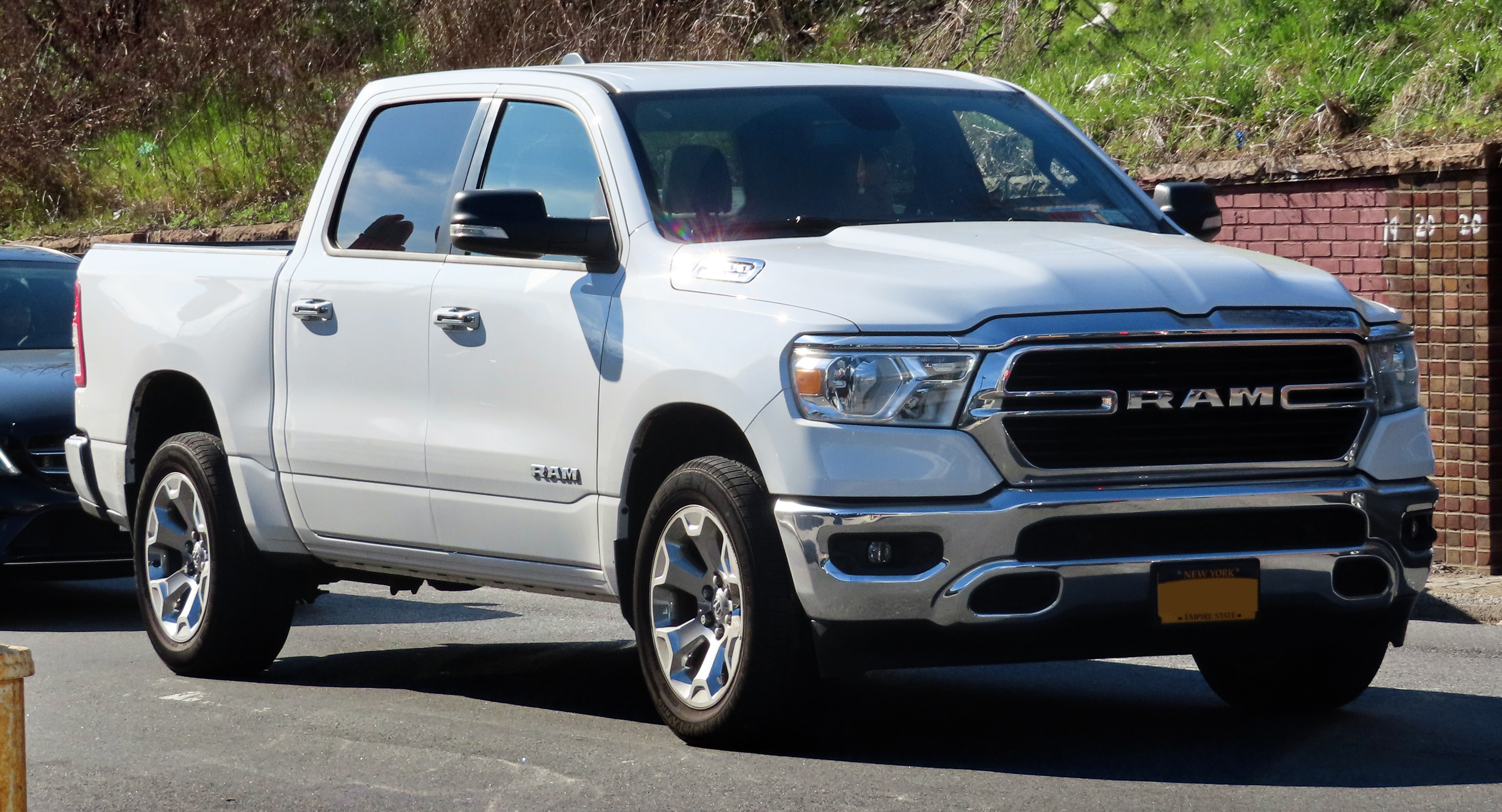
2019 Ram 1500
"I got a 2019 Ram 1500 and something going on with my so I think it was last year it started right around when it got started getting really cold outside..."
This is a 2019 Ram 1500 pickup truck. The person talking says it has a problem where the car’s sensors don’t always communicate correctly, and it seems to get worse in cold weather.
The Ram 1500 is a full-size pickup from Ram (Stellantis) known for its modern comfort and available powertrains. In this segment, the 2019 Ram 1500 is the specific vehicle experiencing intermittent sensor communication problems that change with temperature.
sensor communication
"once the temperature dropped about like 32 or colder it started to losing sensor communication but then once it got warmer the sensors came back..."
“Sensor communication” means the car’s sensors are sending information to the computer. If that stops working in the cold, it often comes down to wiring, a connector, or the sensor itself not behaving reliably.
“Sensor communication” refers to the data link between a vehicle’s sensors and the engine/body control modules. If communication drops out in cold temperatures, it can point to issues like sensor wiring/connectors, sensor failure, or problems with the vehicle’s control electronics.
32 or colder
"once the temperature dropped about like 32 or colder it started to losing sensor communication..."
They’re saying the problem shows up when it gets to freezing temperatures. Cold weather can make electrical connections and sensors act up, especially if something is slightly loose or failing.
The speaker ties the fault to a specific temperature threshold (“32 or colder”), which suggests a temperature-sensitive electrical or sensor/wiring issue. Cold can increase resistance in connections, affect sensor behavior, or expose marginal wiring/ground problems.
sensor that's not communicating
"It's not just hanging on to one sensor that's not communicating. Now is that like a module or is that like some sensors that I need to get replaced?"
If a sensor isn’t communicating, the car isn’t getting the signal it expects from that sensor. The problem could be the sensor, the power/voltage it gets, or the wires connecting it.
When a sensor is “not communicating,” the ECU isn’t receiving expected electrical signals from that sensor. This can be caused by the sensor itself, the reference voltage supply, or the wiring/connection between them.
reference circuit
"Well, it could be either one or even wiring. There's what they call a reference circuit, usually a 5 volt reference circuit and there can be many of them or one depending on what kind of vehicle you have..."
A reference circuit is like a steady “power source” the car gives to sensors. It helps the car read sensor signals correctly because the starting voltage stays consistent.
A reference circuit is a dedicated electrical supply the car uses to provide a stable voltage to sensors. That way, the sensor’s output can be interpreted consistently even as other vehicle voltages fluctuate.
5-volt reference
"keep a steady 5 volts to this thing and I've seen some as low as 3 volts but if you've got a fault in that circuit little corrosion little open in the circuit you can reduce that voltage quite a bit and it'll throw all the sensors into disarray"
The car often gives sensors a steady 5-volt signal to measure with. If that signal gets weak or interrupted, the sensors can start “reading wrong,” and the engine computer can get confused.
Many modern engines power multiple sensors with a shared 5-volt reference from the ECU. If that reference voltage drops (for example from corrosion or an open circuit), the sensors can output incorrect readings and the ECU may misinterpret engine conditions.
open circuit
"but if you've got a fault in that circuit little corrosion little open in the circuit you can reduce that voltage quite a bit and it'll throw"
An open circuit is like a broken wire—electricity can’t travel through it. With sensor wiring, that can make the sensor signal weak or wrong.
An open circuit means the electrical path is broken, so current can’t flow properly. In sensor wiring, an open can cause the 5-volt reference to drop or become unstable, leading to faulty sensor outputs.
ECU
"reduce that voltage quite a bit and it'll throw all the sensors into disarray now with that said any one of the sensors on this truck that are shorted can short the reference line of that signal"
The ECU is the engine computer. It sends signals to sensors and uses their readings to control things like fuel and timing—so wrong sensor data can trigger warning codes and poor running.
ECU stands for Engine Control Unit, the car’s main computer for engine management. It supplies the 5-volt reference to sensors and uses sensor signals to decide how the engine should run; if sensor signals are corrupted, the ECU can log faults and affect drivability.
shorted
"any one of the sensors on this truck that are shorted can short the reference line of that signal so if we pull off a map sensor and put on a shorted one every signal that uses that 5 volt signal is going to have a weird signal"
A short is when wires touch or fail in a way that lets electricity flow where it shouldn’t. That can mess up the signals from several sensors at once.
A short (described here as a sensor being “shorted”) means the wiring or sensor has an unintended low-resistance path, often to power or ground. That can drag down or interfere with the shared reference line, causing multiple sensors that rely on that line to report weird values.
MAP sensor
"so if we pull off a map sensor and put on a shorted one every signal that uses that 5 volt signal is going to have a weird signal"
The MAP sensor measures how much air pressure is in the engine’s intake. The engine computer uses that info to decide how to run the engine, so a bad signal can cause problems.
A MAP sensor (Manifold Absolute Pressure sensor) measures the engine’s intake manifold pressure. Its readings help the ECU calculate load and fuel/ignition strategy, so if it’s shorted or the 5-volt reference is off, it can cause incorrect engine behavior and diagnostic trouble codes.
wireless interface module
"you'd be looking at the wireless interface in the vehicle and that can be interrupted by any sensor in the vehicle"
This is the car’s receiver for the tire sensors. If the receiver has trouble, the car might not get the correct tire sensor information.
The wireless interface module is the vehicle component that receives signals from the TPMS sensors in the tires. If its reception is disrupted, the scanner may show confusing results even when the tire sensors themselves are fine.
data bus
"then you need to go look at other things and see if you got anything in that data bus that's causing issues with that wireless scanner"
Think of the data bus as the car’s internal communication network. If that network is acting up, different modules (including TPMS-related ones) may not talk correctly.
A data bus is the network of electronic communication lines inside a vehicle that lets modules share information. If something is wrong on the data bus, it can cause communication problems that affect how TPMS readings are processed or displayed.
tire sensors
"tire sensors all of that ... if you mix and match sensors you could have a problem ... even if you've got a spare tire ... replace just one at a time and you don't use a factory sensor we have had some issues"
Tire sensors are small devices in/for the tires that tell the car information about the tires. The episode says using the wrong type of sensor (or mixing brands) can make the car think something is wrong.
Tire sensors are part of a tire-monitoring system that measures tire-related data (commonly pressure) and sends it to the vehicle. The hosts warn that mixing and matching sensors—especially aftermarket ones—can cause the system to misread or flag faults, even if each sensor is working individually.
factory sensor
"even if you've got a spare tire ... replace just one at a time and you don't use a factory sensor we have had some issues"
A factory sensor is the same type of tire sensor the car came with. They’re saying swapping in a non-factory sensor (even just one) can cause problems with the car’s tire monitoring.
A factory sensor is the original equipment (OEM) tire sensor designed specifically for that vehicle’s tire-monitoring system. The hosts imply that replacing only one tire sensor with a non-factory unit can create compatibility issues, because the car may expect specific sensor behavior or identification.

Toyota
"we have had some issues on some vehicles Toyota seem to be the worst that have the sensors in them"
Toyota is the brand they say they see tire-sensor problems with more often. The main idea is that sensor issues can be more common on some Toyota setups.
Toyota is the vehicle brand the hosts single out as having more tire-sensor faults in their experience. They’re not naming a specific model here, but the takeaway is that some Toyota applications may be more sensitive to sensor compatibility or sensor failure.

Honda
"some cars like the Hondas they don't even use a sensor"
Honda is mentioned as a brand that may not use tire sensors the same way. The point is that different cars handle tire monitoring differently.
Honda is mentioned as a contrast to Toyota regarding tire-sensor usage. The hosts say some Hondas don’t even use a sensor, implying different tire-monitoring strategies across brands/models.
Request an Explanation
Heard something you'd like explained? We'll add it to this episode.
Sign in to request explanations for terms you heard.
Want to learn more?
Browse our glossary for plain-English explanations of automotive terms, jargon, and concepts.
Help improve this episode
See something that's not quite right? Our annotations are AI-generated and can sometimes miss the mark. Click the flag icon on any annotation to suggest a correction.